Abstract
Intervention for students with Autism Spectrum Disorder (ASD) in public schools is a key to unlocking the potential of young students. Evidence-based practice is used in a variety of differing ways to provide the best intervention. The purpose of this paper is to conduct a literature review on the current literature of communication interventions for early education students with autism spectrum disorder and determine what makes these treatments effective. Six intervention methods were chosen to be focused on in this literature review: (a) TEACCH, (b) Visual Schedules, (c) ABA, (d) Augmentative and Alternative Communication, (e) Verbal Behavior Therapy, and (f) Social Skills. A literature review of 19 studies was conducted to answer the research questions in the current review. All 19 of the studies included the analysis of one of the listed intervention methods. The literature review revealed that there are two key factors in ensuring success in ASD intervention in public schools: consistency and opportunity. Providing consistency across the environments of the student and opportunity for appropriate intervention sets up a prospect for success. While there were a number of limitations in the current literature review, the gathered data should still be interpreted. Moving into future
research, more research needs to take place directly in the public school setting as this is such an important place for school-age children with ASD.
Table of Contents
Chapter 1: Introduction………...1
Chapter 2: Methodology………...9
Chapter 3: Literature Review………..……...12
TEACCH Approach to ASD………..12
Visual Schedules Approach to ASD………..20
Applied Behavioral Analysis Approach to ASD………...25
Augmentative and Alternative Communication Approach to ASD………31
Verbal Behavior Approach to ASD………...36
Social Skills Approach to ASD……….……….41
Chapter 4: Results…..……….…………...46
Chapter 5: Discussion………...………...51
Findings………...51
Implications………...52
Limitations………...54
Future Research………..55
Conclusion.………...56
Chapter 1: Introduction
The United States Centers for Disease Control and Prevention (CDC) released a study in 2018 that reported one in 59 children will be diagnosed with Autism Spectrum Disorder. This prevalence rate displays a 15 percent increase from the prevalence rates previously reported in 2016. This increase in the number of children affected by autism means an increase in the number of students with autism the public school setting. In response to the growing population, public schools must accommodate for the increase in the number of children qualifying for Individualized Education Plans (IEPs) being implemented in their system. Public schools are the primary setting that these children receive not only their education but also therapies, 1:1
training, and social skills. Each incoming student presents with a unique set of educational needs from the last. It takes preparation and readiness from all professionals involved to provide the best possible plan for each student that enters the public school system. Fewer than 10% of school-based treatment programs for children with autism are classified as evidence-based practice (EBP) (Hess, 2007). In order to provide the best plan of care, in an IEP, to the students that are reliant on the system, the school system needs to implement evidence-based practice for their students’ with autism.
This thesis will contain a literature review of six EBP for students with ASD. The thesis is organized by five chapters: introduction, methodology, literature review, results, and
What is Autism Spectrum Disorder?
The American Psychiatric Association’s Diagnostic and Statistical Manual, Fifth Edition
(DSM-5) is the criteria that is followed to assess and diagnose for Autism Spectrum Disorder. The DSM-5 follows the following diagnostic criteria when diagnosing for ASD:
1. Persistent deficits in social communication and social interaction across multiple contexts 2. Restricted, repetitive patterns of behavior, interests, or activities
3. Symptoms must be present in the early developmental period (but may not become fully manifest until social demands exceed limited capacities, or may be masked by learned strategies in later life).
4. Symptoms cause clinically significant impairment in social, occupational, or other important areas of current functioning.
5. These disturbances are not better explained by intellectual disability (intellectual
developmental disorder) or global developmental delay. Intellectual disability and autism spectrum disorder frequently co-occur; to make comorbid diagnoses of autism spectrum disorder and intellectual disability, social communication should be below that expected for general developmental level.
The current literature review aimed to understand communication deficits faced by students with autism and research specific evidence-based practices often used by a speech-language
pathologies in a public school. The purpose of this paper is to conduct a literature review on the current literature of communication interventions for early education students with autism spectrum disorder and determine what makes these treatments effective. The following research questions will be addressed:
2) Which EBPs are most effective in advancing communication in students with ASD? Language Delay in Autism
The American Speech-Language Hearing Association (ASHA) provides information on the language delay observed in individuals diagnosed with ASD. ASHA states that, “Social communication deficits include impairments in aspects of joint attention and social reciprocity, as well as challenges in the use of verbal and nonverbal communicative behaviors for social interaction. Restricted, repetitive behaviors, interests, or activities are manifested by stereotyped, repetitive speech, motor movement, or use of objects; inflexible adherence to routines; restricted interests; and hyper- and/or hypo-sensitivity to sensory input.”
Each of these communication difficulties manifest in a variety of ways. Communication impairments observed in autism spectrum disorder are a defining feature, as stated by ASHA. While autism presents differently in every individual, so do the communication barriers faced by that individual. All different ranges of needs and abilities are addressed by a speech-language pathologist.
The Role of a Speech-Language Pathologist in the Schools
As described by the American Speech-Language-Hearing Association, “Speech-language pathologists (SLPs) work to prevent, assess, diagnose, and treat speech, language, social
communication, cognitive-communication, and swallowing disorders in children and adults.” For the purposes of this research paper, the main focus will be on the role of an SLP in the public school setting. A speech-language pathologist in the public school setting has many roles. While working with all different ranges of disorders and levels, these SLPs must balance the
an SLP. In order to choose a treatment plan that will best benefit the child, the SLP must be knowledgeable of all intervention options available specifically those found to be evidence based.
If a communication intervention is needed, the IEP team will work together to determine what the best option for the individual. There are many empirically supported intervention methods available for the multidisciplinary team. The difficulty is determining what intervention methods are most successful for the particular population. For the early education population, the students’ position on the spectrum must be taken into account when choosing an intervention. Once the therapist has narrowed down the scope of interventions, they then determine what might work best.
Impact on the Student
The early childhood stage is a critical period for advancement in language. There can be many goals met during this time if the proper plans are put into place. The public school is the setting in which children with autism receive the majority of their services (Locke, 2019). Unfortunately, many of the services received by these students have no empirical base or any historical reference that provides for a promising outlook (Heflin and Simpson, 1998). The result of this is an inefficient use of monetary funding, resources, and time. Furthermore, the impact had on the child will not be as positive as it could have been with proper implementation of EBP early in their development.
A study conducted by Zirkel et al. (2018), assessed the quality of programs for children with autism. This study contributed to the discussion by providing a tangible resource, the
identify limitations and improve the current program (Zirkel, 2011). The linkage between intervention and evidence based practice must still be met in order to provide the intervention with the most promising outlook.
Interventions
The interventions selected in the current study were chosen due to the work of previous studies and the most commonly used practices in public schools today. In order to be included in the study, an intervention must be commonly used in the school. Ruled out were the
interventions that did not have a significant use percentage or did not affect communication goals in the IEP. The interventions chosen for analysis are:
1) Structured Teaching – Treatment and Education of Autistic and Communication Related Handicapped Children (TEACCH)
2) Visual Schedules
3) Applied Behavior Analysis (ABA)
4) Augmentative and Alternative Communication (AAC) 5) Verbal Behavior Therapy (VBT)
6) Social Skills
Table 1
Interventions Focused on in this Literature Review
Intervention Percentage Use Key Intervention Focus Professionals Involved
Structured Teaching (TEACCH) 8.11 Physical organization, Individualized schedules, Work (Activity) systems,
Visual structure of materials in tasks and
activities
Special education teachers, Residential care providers, Psychologists, Social workers,
Speech therapists
Visual
Schedules 8.65
Visual strengths, Increasing Independence
Occupational therapists, behavioral therapists, speech therapists, school psychologists,
general education teachers, health and PE teachers, many
other direct care staff
ABA 32*
Behavior and reinforcement: 1. Antecedent
2. Behavior 3. Consequences
Board-certified behavior analyst (BCBA) provides ABA therapy
services.
AAC 2.7 Communication, speech,
social development Speech-language pathologist
VBT 5.95 Language, requests,
connecting words
Psychologist, Behavior specialist (BCBA), Special education teacher, Speech and
language pathologist Social Skills/Social Stories 11.89 Enhancing everyday communication, breakdown of social
concepts
occupational therapists, behavioral therapists, speech
therapists, school psychologists, general education teachers, health/PE
teachers, many other direct care staff
Note. Percentage Use: by Hess et al. (2005) Professionals Involved: by Autism Speaks
Justification of Research Problem
In a 2007 study, Hess et al. identified the types of treatments, therapies, and interventions that are being used by teachers working with students with ASD in Georgia’s public schools. This study provided a quantitative view as to what strategies are being used most by teachers. Strategies that teachers reported using in their classrooms were reported on a scale of: (a) scientifically based, (b) promising practice, (c) limited supporting information, (d) not
recommended. Analysis of this coding demonstrated that fewer than one-third of teachers use evidence-based practice in their classrooms. Hess et al. explains that, “Controversial and unsupported treatments plague the field of autism, resulting in wasted time, energy, and funds” (2007). This is relevant to the current study in relation to the importance of implementing evidence based practice. Without implementation of this type of practice, the current study shows illustrates the possible negative effects.
A study from Dr. Anagnostou et al. aimed to evaluate the outcomes of adults with ASD that have been receiving services. An outcome of the study claimed that, “Some improved outcomes may be because of more inclusive and specialized educational programs. The level of verbal communication and IQ before five years of age are the strongest predictors of outcome” (Anagnostou, 2014). This study emphasizes the importance of evidence-based practice at an early age to predict the best outcome in the future. The researchers acknowledge the deficit in matching the best interventions to the child and their family. This is an area that the research team suggests should be worked on in future research.
programs were found to be: picture exchange communication, applied behavioral analysis, discrete trial training, and floor time. This study did not analyze which interventions provided the best outcome. This study reported that, “participants expressed a desire to use methods that have been shown to be effective, they had not analyzed the research base for the programs they used” (Stahmer, 2005).
Purpose
The current literature review aimed to understand communication deficits faced by students with autism and research specific evidence-based practices often used by a speech-language pathologies in a public school. The purpose of this paper was to perform a review on the current literature of communication interventions for early education students with autism spectrum disorder and determine why these treatments are most effective. The following research question will be addressed:
Chapter 2: Methodology
The current study is a thorough literature review of journal articles that examine the chosen evidence-based interventions as used in early education for children with autism and administered by the speech-language pathologist. There are six evidence-based interventions that have been chosen for review. Early education will be defined as young children up to the age eight. In this review of the literature, the main focus will lie within the scope of:
1) Structured Teaching (TEACCH) 2) Visual Schedules
3) Applied Behavior Analysis (ABA)
4) Augmentative and Alternative Communication (AAC) 5) Verbal Behavior Therapy (VBT)
6) Social Skills Scope of Literature
The studies chosen for review were obtained through ASHA Evidence Maps, Google Scholar, PsycINFO, and ERIC.
The following searches were used to obtain the literature used in this review:
“Autism Spectrum Disorder+speech therapy”, “ASD+TEACCH”, “ASD+Visual Schedules”, “ASD+ABA”, “ASD+AAC”, “ASD+VBT”, and “ASD+Social Skills Training.”
In addition to the literature found through the above searches, references in the found literature were analyzed to provide additional articles.
Inclusion and Exclusion Criteria
included in the current analysis. The reason that this inclusion criteria was chosen was because the main focus of this study was on current trends in the field of intervention. Allowing studies beyond the year 2004 would not provide the most accurate current trends.
Only evidence-based practice interventions were included in the analysis. The reason for this criteria was so that only standard practice was compared. Intervention methods that are not evidence based were excluded from this literature review. Assessing only evidence-based practice is standard care for the helping professionals and a growing trend.
For studies to be included in this review of literature, they must address the topic of Autism Spectrum Disorder interventions in the early education setting. Interventions for other developmental disabilities or in other settings were primarily excluded from the study. There are three studies exempt from this that will be explained below. The main focus of this paper was to focus on efficacy of early education interventions for students with autism. Allowing
intervention outcomes from other settings and disabilities would not provide for the most accurate data.
participants in the study included professionals that are involved in ABA therapy. This study was included for the purpose of evaluating the effectiveness of ABA. These studies were included so that the outcomes of these early education intervention methods could be analyzed to the full extent. Therefore, these studies will be included because they provide contributable context to the results of this literature review.
Changes in Diagnostic Criteria
Over the years covered in the current study, 2004-2019, there have been changes in the autism diagnostic criteria. The latest American Psychiatric Association (APA) publication of the DSM was in 2013. DSM-5 provides a more accurate diagnosis of ASD by removing the four pervasive developmental disorders (PDD) that were outlined in DSM-IV. These disorders included: Asperger’s disorder, childhood disintegrative disorder, or the catch-all diagnosis of pervasive developmental disorder (APA, 2013). Under the new criteria, early diagnosis is encouraged rather than school-age diagnosis as presented in DSM-IV. The variations in
symptoms are well-represented in the spectrum as defined by the DSM-5 criteria. These changes are important to recognize due to the fact that this change occurred during the course of the years covered in this review of literature.
Analysis Plan
Chapter 3: Literature Review
Autism Spectrum Disorder is classified as a lifelong disorder that affects the individual’s ability to communicate and interact with their environment (CDC). The challenges faced by individuals with ASD typically include difficulties in the following categories: (a)
communication, (b) sociability, (c) sensory, and (d) health (Shirian et al., 2015). For children in the early intervention age range (up to 8-years-old), the lowest ATEC scores are displayed in the categories of communication and sensory (Shirian et al., 2015). The challenges and range of difficulty differ greatly among each person with ASD. Communication, for example, can be displayed as typical, limited, or absent. Examples of communication challenges include, but are not limited to, the following: (a) delayed speech and language skills, (b) repeat words or phrases (echolalia), (c) reversed pronouns, (d) gives unrelated answers to questions, and (e) talks in a flat, or sing-song voice (CDC). Interventions may be used by a range of service providers to address the given challenges for each individual.
Evidence-Based ASD Interventions
The following literature review contains 19 studies that, together, aim to provide a greater understanding of the effectiveness of intervention methods for children with Autism Spectrum Disorder (ASD). Each of the studies have been assigned to the category of their respective intervention method and ordered in the way in which they were introduced. Then, the six categories of intervention have been distributed into themes within the research.
TEACCH approach to Autism Spectrum Disorder. TEACCH is a program
the world. For the purpose of the current literature review, clinical services provided by
TEACCH will be the main focus. The program also offers training and consultation for service providers. Clinical services provided through TEACCH include initial referral, consultation, diagnostic evaluation, family consultation sessions, parent support groups, social play, recreation groups, individual counseling for higher-functioning clients, and employment services.
TEACCH promotes the following four types of structure: (a) physical, (b) organization and communication, (c) organization of individual tasks, and (d) linking individual tasks into a sequence (Mesibov & Shea, 2009, p. 572). Using this structure, plans are made and implemented to best fit the individual needs of a child with ASD.
TEACCH overview. Mesibov and Shea (2009) observed the TEACCH program as an example of evidence based practice (EBP). In the case, Mesibov and Shea (2009) defined evidence based practice as, “the integration of the best available research and clinical expertise within the context of patient characteristics, culture, values, and preferences” (p. 570). TEACCH is EBP due to the fact that it is based on evidence and observation (Mesibov & Shea, 2009). The research team devotes the successes of the program to the following evidence-based practices: clinical expertise, individualization, real-life measures, and generalizability (Mesibov & Shea, 2009, p.576). Series of studies on TEACCH have been completed to highlight the effectiveness of the program. Literature reviews have also been conducted to, additionally, add to the
knowledge regarding the effectiveness of TEACCH. Since its launch in 1972, the TEACCH Program has served over 9,500 clients and families of individuals with ASD (Mesibov & Shea, 2009, p. 576). TEACCH has proven to be an example of EBP in the realm of autism
TEACCH benefits. D’Elia et al. (2014) conducted a longitudinal study to gain knowledge on the benefits of low intensity TEACCH intervention as observed in preschool aged children with ASD. Low intensity intervention is defined as less than 20 hours of intervention per week for over 2 years. This study consisted of 30 preschool children with ASD or Pervasive
Developmental Disorders-Not Otherwise Specified (PDD-NOS) (D’Elia et al., 2014). For the purpose of this literature review, only data reported on children with ASD will be evaluated. Participants were aged 2.0 to 6.11 years and the study was conducted over a period of 24 months (D’Elia et al., 2014). The TEACCH intervention was administered in both the home and school environment. Over the 24-month period, assessments were conducted at: baseline, after 6 months, after 12-15 months, and after 24-months. Parenting stress was an additional factor studied by the research team (D’Elia et al., 2014).
The intervention administered to the children was the low intensity TEACCH program. The program was administered based on an Individualized Education Program (IEP) for each child. Goals were created within the areas of language, emotional control, and self-help (D’Elia et al., 2014). Educators were responsible for carrying out the intervention in the school
environment while parents/guardians were responsible for carrying out the program at home (D’Elia et al., 2014). A single therapist worked with the child in both environments to mediate. The control group experienced “usual treatment” that included: psychomotor therapy and speech therapy (D’Elia et al., 2014). These treatments were administered weekly with 2 hours of each type of therapy (D’Elia et al., 2014).
The following evaluation results are listed below in Table 2: Autism Diagnostic
CBCL included categories including, but not limited to: aggressive behavior attention problems, anxiety problems, emotionally reactiveness, and anxious/depressed (D’Elia et al., 2014).
Table 2
Results of Low Intensity TEACCH Intervention
Experimental Group Control Group
Autism Severity T0 T1 T2 T3 T0 T3
ADOS social
interaction 8 (2.6) 7.1 (2.6) – 6.1 (3.1) 9.1 (3) 7.9 (3) ADOS
communication 5 (2.3) 3.2 (1.4) – 2.5 (1.1) 4.7 (2.1) 3.9 (1.5) ADOS total
language skills 13 (4.1) 10.2 (3.5) – 8.1 (4.5 13.7 (4.5) 11.8 (4.3) CDI
comprehension 55 (32) 72 (23) 89 (17) 88 (20) 64 (28) 82 (23) CDI production 38 (45) 50 (40) 65 (39) 68 (36) 31 (37) 51 (42)
VABS (age equivalent in
years)
Communication 1.4 (0.6) 2.3 (1.2) 2.9 (1.7) 3.6 (2) 1.7 (0.8) 3.1 (1.6) Daily living 1.9 (0.6) 2.4 (0.6) 3.2 (1.4) 3.7 (0.9) 1.8 (0.5) 3.3 (1.3) Socialization 1.6 (0.5) 2.1 (0.6) 2.9 (1.1) 3 (1.4) 1.6 (0.8) 2.4 (0.9) Motor 2.4 (0.8) 3 (0.6) 3.9 (1.2) 4.5 (1) 2.3 (1) 4.1 (1.8) CBCL Total
Problems 60 (6) 56 (6.8) 50 (10.3) 53 (9.1) 62 (10.8) 59 (8)
autism, language and adaptive functioning) in which significant differences were lacking, provides information regarding moving forward. In the future, the research team suggests that intensity and length must be increased for optimal results (D’Elia et al., 2014).
TEACCH effectiveness. Abshirini, Khafaie, Bahrani, Rayshahri, and Khafaie (2016) conducted an quasi-experimental study to compare the effectiveness of Sensory Integration Therapy (SIT) and TEACCH. For the purpose of this literature review, the focus will remain on the effectiveness of the TEACCH approach. Sixty participants were obtained from an autism center in Bushehr city, Iran (Abshirini et al., 2016). The participants were aged 3 to 9 and all had been diagnosed with ASD (Abshirini et al., 2016). SIT and TEACCH were administered for a 6-month period for the experimental group and the control group received no intervention during the 6-month period (Abshirini et al., 2016).
For intervention purposes, the children were observed for a 1-month period to develop a greater understanding of their abilities (Abshirini et al., 2016). The categories observed included: educational information and history, ability/interest, inability/weaknesses, skills to organize, and social interaction. Based on this assessment, a structured program was individualized for each child to be carried out through the 60-session intervention that was to be given (Abshirini et al., 2016). It should be noted that there was a reward system implemented which included occasional rewards after the completion of a task or activity.
organizing the classroom with the goal of reducing stimulants and preparing a visual framework with images and drawings. The final section(s) of intervention (sessions 25 to 60) were activity-focused (Abshirini et al., 2016). “First-then” activities were presented to the children. The sequence was often based on completing a “less preferred” activity results in the following of a more pleasant activity. An example of this approach is “tying shoelaces and then playing computer game” (Abshirini et al., 2016).
This quasi-experimental study concluded that the intervention methods showed
significant improvement in the Autism Treatment Evaluation Checklist (ATEC) score (Abshirini et al., 2016). ATEC is scored as follows:
The first subscale, Speech/Language/Communication, contains 14 items where the score ranges from 0–28 points. The Sociability subscale contains 20 items and participants can score from 0–40. The third subscale, Sensory/Cognitive awareness, has 18 items and scores range from 0–36. Finally, the Health/Physical/Behavior subscale contains 25 items. The scores from each subscale are combined in order to calculate a Total Score, which ranges 0–179 points. A lower score indicates a lower severity of ASD symptoms. (Mahapatra, 2018).
concluded that TEACCH is more effective than the SIT program and no intervention method. Also proven is that TEACCH is effective across the Iranian culture (Abshirini et al., 2016).
TEACCH real-world application. Orellana, Martínez-Sanchis, and Silvestre (2014) conducted a study that aimed to evaluate the effectiveness of the TEACCH approach by measuring compliance with a clinical dental assessment. Routine dental checks are often complicated by the sensory difficulties displayed in autism spectrum disorder. Because of this, “most are treated under general anesthesia or unnecessary sedation” (Orellana et al, 2014). The study focused on children (aged 4–9 years) and adults (aged 19–41) (Orellana et al, 2014). For the purpose of this literature review, only data from the children will be reviewed for this literature review.
Thirty-eight children that were already receiving clinical and/or educational support for autism and/or an intellectual disability were chosen to participate in the study (Orellana et al, 2014). The inclusion criteria was as follows: (a) having being diagnosed with autism, Asperger Syndrome or Pervasive Developmental Disorder-Not Otherwise Specified, (b) children aged 4– 10 years old (c) understanding visual or simple verbal instructions, (d) failure to undergo the 10 components of the oral assessment during the pre-intervention session, meaning intervention was necessary, and (e) written informed parental consent (Orellana et al., 2014).
in the dental chair, 3) lying back in the chair, 4) tolerating direct light on the face, 5) opening the mouth, 6) tolerating manipulation of the mouth with gloves, 7) examination with the mouth mirror, 8) examination with the probe, 9) examination with mirror and probe, and 10) dental occlusion (Orellana et al., 2014).
Behavioral training strategies used during the study were derived from the TEACCH Program. Successive approaches adopted into the training program included: Tell—Show— Feel—Do (TSFD), visual pedagogy, in vivo modeling, audio-visual modeling, behavioral trials, and auto-modeling (Orellana et al., 2014). Training was administered in five 20-minute sessions, twice a week for three consecutive weeks (Orellana et al., 2014).
Overall, positive results were found in children of all variants of intellectual capabilities (Orellana et al, 2014). A greater number of components were achieved post-test for: high
functioning children (z = −3.744, p < 0.001) and in children with mild (z = −2.677, p < 0.01) and severe intellectual disability (z = −2.701, p < 0.01) (Orellana et al., 2014). Behavior was recoded pre- and post-test showing statistically significant differences as well in the children
(z = −4.970, p < 0.001) (Orellana et al., 2014). Behavior was evaluated by means of the Frankl scale. In the pre-test, 73.7% of children displayed a reluctant behavior in comparison to the post-test in which 81.6% showed positive behavior (Orellana et al., 2014). The TEACCH-based training program as used by the research team was deemed to be effective in increasing compliance in children with ASD (Orellana et al, 2014).
Visual Schedules approach to Autism Spectrum Disorder. Use of visual schedules is a commonly used intervention support for children with autism that aims to remove the element of surprise from the child’s day-today activities. Schedules may be used for varying reasons that may include: (a) eliminate problem behavior from transitions, (b) to perform a series of tasks independently, (c) follow a sequence of tasks in a work or school setting, or (d) take charge of leisure time (Mesibov et al., 2002). The planning of schedules is just as important as the intervention itself. To provide the most successful intervention, the professional must tailor the schedule to meet the needs of each child (Mesibov et al., 2002). The main goals from this implementation are improvement of self-initiation, autonomy, generalization, and a decrease in problem behavior (Mesibov et al., 2002) The following three studies encompass the visual schedules approach to benefit the academic performance of children with ASD.
Visual Schedule overview. Spriggs, van Dijk, and Mims (2015) compiled literature to summarize the use of visual activity schedules (VAS) and how they are used. The use of VAS is, “considered EBP for increasing on- task, on-schedule, and transition behaviors for school-age children with ASD” (Spriggs, p.31, 2013). Importance of VAS are highlighted through the importance of a structured environment someone with ASD. Particularly in the school setting, VAS, “can be beneficial for students that have difficulty with organization, working memory, or changes in routine” (Spriggs, 2013, p.21). Previous literature has shown an increase in the following skills: daily living skills, physical activities, on task behaviors, vocational skills, leisure skills, and academic skills (Spriggs, 2013, p.21). In addition to the increase in positive behaviors, a decrease in negative behaviors have also been recorded in previous studies.
Students with visual impairments and students who are at the pre-symbolic
communication level may benefit more from a schedule where each activity corresponds with an object (e.g. a pre-k schedule where a block represents the block center, a fork lunch, and a blanket nap time). (p. 22)
In order to identify the current symbolic ability of the user, Browder et al. (2008) developed an assessment for teachers to administer. Administration of this assessment ensures that the student is using a system that is most beneficial to them.
In order to create a schedule that is individualized to the student, Spriggs et al. (2013) recommend that the following is considered: (a) use of age appropriate representations, (b) knowing where, when, and how they will be used, and (c) facilitated environment in which the VAS will be used (pp. 23-24). Both high-tech and low-tech options are available for use depending on resources available to the user.
After designing the VAS, decisions must be made as to how implementation will take place. Implementation is designed based on (a) the type of schedule chosen, (b) the environment, and (c) the practicality for teachers and students (Spriggs et al., 2013). Routines must be
Visual Schedules effectiveness. Pierce, Spriggs, Gast, and Luscre (2013) conducted an experimental study to evaluate the effectiveness of visual schedules in the independent classroom setting. The participants included four students who had been diagnosed with moderate ASD and were in a self-contained classroom (Spriggs et al., 2013). Ages of the participants included: 11.1 years, 9.10 years, 10.5 years, and 10.3 years (Spriggs et al., 2013).
Intervention consisted of sessions that occurred daily, five days a week, and lasted for 30 minutes (Spriggs et al., 2013). Areas of the classroom were labeled as “centres” that included: mathematics, fine motor, literacy, and reading (Spriggs et al., 2013). The four students were given a visual activity schedule (VAS) book with pictures that represented the centre activities (Spriggs et al., 2013). The activities were represented by geometric shapes with colors specific to each centre (Spriggs et al., 2013). Sequencing of the centres was ordered to represent the steps that were to completed in the given time (Spriggs et al., 2013). An example sentence strip might have included the following example sequence, with visuals: stop, clean up, stand up, STAR (image only – meaning computer), sit (Spriggs et al., 2013).
Social validity data, as recorded by three people who worked with the students, was obtained for the purpose of this study. Five questions were asked to study the objectives and outcomes of VAS. The following opinions were observed followed by their respective mean Likert scale answer (one = strongly disagree, five = strongly agree):
• VAS are useful tools for teaching classroom independence to students with autism (mean = 5).
• Participants increased independent behavior with the use of VAS (mean = 4.7). • VAS use generalized to novel tasks (mean = 4.7) and novel pictures (mean = 4.7). • VAS were a socially acceptable method for teaching independence within the
classroom and outside the classroom (mean = 5) (Pierce et al., 2013, p. 265).
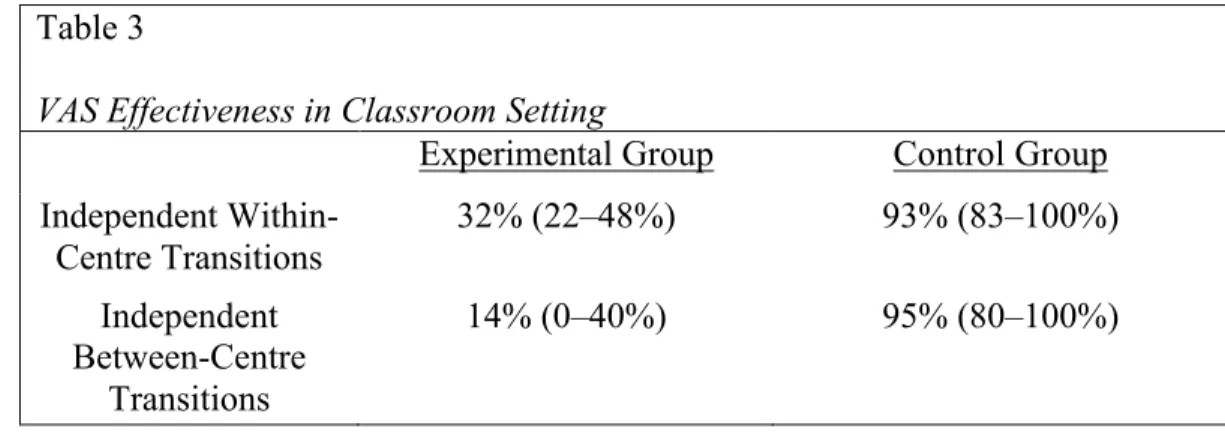
Table 3 has been complied to represent the data as found by Pierce et al. (2013, p. 265). Increases in transition behaviors can be observed in both within-centre and between-centre activities.
Table 3
VAS Effectiveness in Classroom Setting
Experimental Group Control Group
Independent Within-Centre Transitions
32% (22–48%) 93% (83–100%)
Independent Between-Centre
Transitions
14% (0–40%) 95% (80–100%)
To increase independence in the school setting, the VAS framework is recommended by the research team (Spriggs et al., 2013).
2014). All participants had been diagnosed with autism and enrolled in a preschool program that provided behavior-analytic instruction (Brodhead et al., 2014). Given that this type of instruction included the use of activity schedules, the participants were already accustomed to the use of activity schedules.
The linked activity schedule contained the following: (a) “small three-ring binder that contained four laminated pages” and (b) “[t]wo pages [with] discriminative stimuli for hider behavior, and two pages [with] stimuli for seeker behavior” (Brodhead et al., 2014, p. 647). Each participant played the role of the hider and seeker twice each. A response chain was provided that prompted the participants to complete the tasks (Brodhead et al., 2014). A sequential list for the hider condition was as follows: 1) open schedule, 2) attend to hiding place, 3) put “oh, no!” script on wrist, 4) arrive at hiding place, 5) wait at hiding place, 6) say, “oh no!,” 7) return to schedule, 8) place “oh, no!” script on schedule, 9) turn page, and 10) say “Thanks for playing!” (Brodhead et al., 2014).
At the baseline assessment, all participants displayed game play that was not deemed appropriate (Brodhead et al., 2014). The same findings were displayed in the schedule probe
the baseline assessment) (Brodhead et al., 2014). For this session, results appeared very similar to that of the baseline phase (Brodhead et al., 2014).
While the results of the study demonstrated that linked activity schedules can positively influence a child’s behavior in appropriate gameplay, there are additional takeaways to be noted. The results shown from the no-schedule probe session indicate that a child will not benefit from the training of activity schedules without the presence of the schedule (Brodhead et al., 2014). If the goal of intervention is for the activity schedule to be a temporary support, success might not be as promising (Brodhead et al., 2014). However, the research team notes that, “…for many individuals with autism and related disabilities, activity schedules could be considered a type of permanent support, such as a planner, that is not meant to be faded” (Brodhead et al., 2014, p. 649).
Outcome. The use of visual schedules as an intervention method has been deemed successful (Pierce et al., 2013; Spriggs et al., 2015; Brodhead et al., 2014), but not without err (Brodhead et al., 2014). The use of visual schedules must be met with some kind of permanent support to provide a lifelong benefit of the intervention; should the visual schedules ever be taken away (Brodhead et al., 2014).
ABA from a parental and professional perspective. Dillenburger, Keenan, Doherty, Byrne, and Gallagher (2012) conducted a study to gain a greater understanding of parental and professional opinions on ABA intervention through their own experience. The participants included 95 parents/primary caregivers and 67 professionals. Of the 95 parents, data was gathered on 100 children (some parents had multiple children diagnosed with ASD)
(Dillenburger et al., 2012). Professionals that participated in the study included: speech-language therapists, ABA tutors, social workers, clinical psychologists, occupational therapists, autism therapists, child ward managers, behavior support workers, educational psychologists, learning disability nurses, education director, teacher, health visitor, learning disability coordinator, pediatrician, behavior analyst, psychiatrist, and liaison (Dillenburger et al., 2012. p.115).
To gather information, two questionnaires were distributed via mail or email attachment (Dillenburger et al., 2012). The Family Autism Needs Questionnaire (FAN-Q) included 69 questions for parents that inquired about: “family background and demographics, diagnosis and forward planning, educational provision, staff/parent training, finance, home and respite support, parental views and experiences, impact on family life, and assessment of future needs”
(Dillenburger et al., 2012, p.115). The Professional Autism Needs Questionnaire (PAN-Q) included 29 questions for professionals that asked about: “professional background, training and experience, educational provision and ASD services, perception of parental and family
special school, 29% attended mainstream school, and 27% attended ABA-based school (Dilenburger et al., 2012, p.117). In reference to appropriateness of education:
Of parents whose children attended mainstream or eclectic special schools, 45% felt that their child’s education was always appropriate; 48% of these parents felt that their child’s education was only sometimes appropriate; 6% felt their child’s education was never appropriate; and one parent was unsure of the appropriateness of their child’s educational provision. Of the parents whose child attended ABA-based schools, 67% felt their child’s education was always appropriate; while 30% felt their child’s education was sometimes appropriate. None of these parents felt their child’s educational provisions were not appropriate, and one parent was unsure of the appropriateness of her child’s education provision (Dillenburger et al., 2012, p.118).
99% of parents and 57% of professionals felt that there should be more opportunities for ABA schooling in the future (Dillenburger et al., 2012). The desire for future growth highlights the parent’s needs of children with ASD and professionals in the field.
ABA effectiveness. Eikeseth, Smith, Jahr, and Eldevik (2007) conducted a study that focused on the effects of ABA treatment for children with ASD that extended the results of a 2002 study. Participants in the study met the following requirements: (a) a diagnosis of
2007). Participants from the 2002 study continued receiving either the ABA or eclectic treatment since the previous study (Eikeseth et al., 2007). The current follow-up assessment measured the functioning of participants at an average age of 8 years.
The administered behavioral treatment was built using the UCLA Model of Early Intervention while the eclectic treatments was meant to show the most common practices in autism intervention (alternative communication, sensory-motor, TEACCH, total communication, clinical experience, etc.) (Eikeseth et al., 2007). The current assessment asked therapists to report the number of hours the child received treatment weekly in addition to the number of hours the child was mainstreamed in his/her classroom (Eikeseth et al., 2007). Functioning levels were measured via the WPPSI-R (Wechsler, 1989), Wechsler Intelligence Scale for Children-Revised (Wechsler, 1974), or Bayley Scales of Infant Development-Revised (Bayley, 1993) and adaptive behavior was measured via the Vineland Adaptive Behavior Scales (Sparrow, Balla, & Cicchetti, 1984) (Eikeseth et al., 2007). In the follow-up assessment, the child’s teacher completed the Achenbach Child Behavior Checklist—Teacher Report Form (TRF; Achenbach, 1991) to measure behavioral problems (Eikeseth et al., 2007).
deviation of the mean on IQ at follow-up” while only 17% of children in the eclectic group did the same (Eikeseth et al., 2007).
This follow-up study reported on the progress of the children from the Eikeseth et al. (2002) study. Now, at a mean age of 8.2 years, the participants of the behavioral treatment group displayed a larger increase in scores (IQ, adaptive functioning, communication, daily living skills, and socialization skills), and a decrease in negative behavior (Eikeseth et al., 2007). At a mean age of 8.2 years, the eclectic group displayed the following results: +7 points in IQ, –10 points in adaptive functioning, –7 points in communication, –6 points in daily living skills, and – 12 points in socialization (Eikeseth et al., 2007).
An increase in the difference between groups suggests that ABA should be administered beyond the Year 1 time point to provide maximum benefits (Eikeseth et al., 2007). An interesting finding of this study is that, “age at intake predicted neither treatment outcome nor gains in treatment for children in the behavioral group, suggesting that this variable may not be as important for outcome as previously thought” (Eikeseth et al., 2007). The Eikeseth et al. (2007) study suggests that children aged 4 to 7 years who use ABA intervention have the opportunity to achieve greater improvement in comparison to receiving other practices typically received by children with ASD (Eikeseth et al., 2007).
and (f) displayed average expressive and receptive language capabilities (Leaf et al., 2017). After the screening process, the study included 15 participants (Leaf et al., 2017).
The intervention took place in a private clinic in a room that resembled a kindergarten classroom (Leaf et al., 2017). The study included a pretest and posttest in addition to four assessment periods (T1, T2, T3, and T4) throughout intervention (Leaf et al., 2017). Group A received intervention between T1 and T2 (early treatment) and Group B received intervention between T2 and T3 (late treatment) (Leaf et al., 2017). During assessment periods, there were group probe and community probe sessions. Group probe consisted of, “semi- structured group sessions that were similar to the SSG sessions with regard to activity type and group composition and were run by the SSG teachers and a support teacher,” while community probes, “ were left to vary in setting, structure, activity, materials, location” (Leaf et al., 2017, p.246). Each group probe session lasts 2 hours and was administered two times per group per each assessment period (Leaf et al., 2017). Community probe observations occurred for 20 minutes in the environment in which the participant spent most of their day (Leaf et al., 2017).
Social skills groups (SSGs) are defined by the research team as, “an intervention strategy in which three or more students, sometimes including students diagnosed with autism spectrum disorder (ASD), come together and are simultaneously taught a variety of social behaviors” (Leaf et al., 2017, p. 243). ABA models were used to construct the intervention sessions (Leaf et al., 2017). Intervention was based on: 1) student deficits, 2) group deficits, 3) deficits as displayed on the assessments, and 4) parent concerns (Leaf et al., 2017).
remaining three assessments display the same growth; Group A displayed their main progression during the time of intervention (T1 to T2) while Group B displayed their main progression during their time of intervention (T2 to T3) (Leaf et al., 2017). These results show that
significant improvement was only gained during times of ABA-based SSG intervention (Leaf et al., 2017).
Outcome. Combined, the three research studies tell a successful story of ABA therapy. It has been made known that there is an increased need for proper schooling for children with ASD and that parents and professionals recommend that there are more opportunities for ABA
schooling (Dillenburger et al., 2012). In order to be successful, ABA must be administered continuously (Eikeseth et al., 2007). Contrary to what was previously thought to be true,
Eikeseth et al. made the claim that, “age at intake predicted neither treatment outcome nor gains in treatment for children in the behavioral group, suggesting that this variable may not be as important for outcome as previously thought” (2007). Finally, progression through intervention was displayed only during the time of ABA intervention (Leaf et al., 2017).
Effects of AAC on social-communication. Kristy Logan, Teresa Iacono, and David Trembath (2017) conducted a systematic review of research into aided AAC to increase social-communication functions in children with autism spectrum disorder. The aims of the systematic review are as follows: “…examine the extent to which communicative functions other than object requests have been targeted in AAC interventions … and determine whether outcomes have been evaluated in terms of maintenance, generalization, and the social validity of goals, procedures and outcomes” (Logan et al., 2017, p.53). The research team searched a total of four databases (Education Resources Information Center (ERIC), Cumulative Index to Nursing and Allied Health (CINAHL), Web of Science, Linguistic and Language Behavior Abstracts (LLBA), and PsycInfo) to locate their articles that were to be included in the review (Logan et al., 2017). On the four databases, inclusion criteria was applied and the search was narrowed from 913 articles to 30 that were included in the review (Logan et al., 2017).
Twenty-four of the studies included in the review were single-case experimental designs (SCEDs) and six were group studies (Logan et al., 2017). The studies included the following types of AAC systems: (a) dedicated SGDs (n = 5; 21%), and (b) the iPad/iPod Touch
configured as SGDs (n = 7; 29%), and (c) low-tech aids incorporating pictures (n = 11; 46%) and d) photos (n = 3; 13%) (Logan et al., 2017).
(Logan et al., 2017). The focus of communication in the current review was focused around the areas of communication that are typically problematic for children diagnosed with ASD for clinical implication purposes. This systematic review concluded that, “AAC interventions can be used to teach a variety of communication functions to children with ASD” (Logan et al., 2017, p.59).
Application of AAC. Jamy H. Meeks (2017) conducted a single subject design study intended to explore the effects that communication applications have on improving
communication. The participants of the study were two preschool students that attended a public preschool and had been previously diagnosed with ASD. The participants met the following criteria: “(a) qualified for special education services with an ASD, (b) were between the ages of 3 and 5 years, (c) demonstrated deficits in communication; and (d) were physically able to reach out and touch icons on an iPad” (Meeks, 2017, p. 171).
Intervention was provided in the form of a speech generated device (SGD), an iPad, with a communication application called Go Talk Now (Meeks, 2017). After training was completed, the participant received intervention in the special education classroom during snack time
(Meeks, 2017). Data from these sessions were recorded until five consecutive points were at 80% or higher (Meeks, 2017). At this point, intervention as then completed in the general education classroom during center time (Meeks, 2017). The device was presented with the following: “four pages, one for snack and one for centers for each student. Each page contained four pictures of snack choices for snack time and four pictures of high frequency center activities for center time” (Meeks, 2017, p.174).
picture became highlighted or generated speech. Incorrect responses were when the student selected an item via the iPad then refused to complete the selection. (Meeks, 2017). Baseline I was determined by data collection when showing the student the iPad and then asking what they wanted for snack. Training was then completed by means of a hand-over-hand type learning environment. Once training was complete and intervention could begin, the following order was followed.: 1) Intervention I, 2) Baseline II, 3) Intervention II, 4) Generalization (Meeks, 2017).
Results shown for the first participant, Aiden, were obtained during a total of 36 sessions. Starting with a baseline mean of 0 (meaning that he did not attempt to use the communication application), Aiden completed the final intervention phase with a mean of 89 and an increase in behavior by 47% (Meeks, 2017). Results shown for the other participant, Kasie, were obtained over the course of 40 sessions. Kasie began, at baseline, with a mean of 0 and progressed to a mean of 90.2 in behaviors by the final intervention phase (Meeks, 2017). In addition to use of the communication application , Kasie began verbalizing requests during the Intervention I session (Meeks, 2017). Due to the fact that both participants displayed an increase in communication due to the use of the iPad, the study proved that, “a positive correlation between SGD and increased communication among students with ASD is probable” (Meeks, 2017, p.180).
strives to provide ongoing support for the participants. The study included 10 participants in which all previously participated in a language sampling study (Binger, Ragsdale, & Bustos, 2016). Participants met the following criteria:
(a) be between the ages of 3;0 and 4;11 at the onset of the study, (b) have receptive language within normal limits, (c) have a severe speech impairment as defined by less than 50% intelligible speech and (d) have an expressive vocabulary of at least 25 words via any communication mode (Binger et al., 2017, p.1948).
Participants were provided with an iPad that had the application Proloquo2Go
downloaded. In the application were vocabulary and synthesized speech (voice output) (Binger et al., 2017). Sessions took place within 60-minute increments (Binger et al., 2017). Trials given to the participant included: (a) agent-action-object, (b) entity-attribute, and (c) possessor-entity (Binger et al., 2017). Probes were used throughout intervention to mediate data collection (Binger et al., 2017) The following is an example of an administered probe: “a clip depicting Mickey Mouse chasing Minnie Mouse was shown, and the examiner then provided an elicitation prompt (“What’s happening?”) and provided the child with time to produce “Mickey chase Minnie”” (Binger et al., 2017, p.1951). Results of the study showed that, during DA, 89% of responses were produced correctly at least once with cueing (Binger et al., 2017). During the intervention stage, mastery was demonstrated at 86% (Binger et al., 2017). The current study evaluated not only the effects of AAC but also the additional effects casued by added dynamic assessment. The study provides support to DA task-structure to assist in the formation of expressive syntax for children who use AAC (Binger et al., 2017).
communication functions to children with ASD” (Logan et al., 2017, p.59). A study resulted in the finding that, due to the use of an iPad, there was an increase in communication (Meeks, 2017). In addition, the study proved that, “a positive correlation between SGD and increased communication among students with ASD is probable” (Meeks, 2017, p.180). The final
empirical source displayed how DA performs in relation to AAC, proving that: DA task-structure is effective in assisting the formation of expressive syntax for children who use AAC (Binger et al., 2017).
Verbal Behavior Therapy Approach to Autism Spectrum Disorder. The Verbal Behavior (VB) approach to communication and language uses aspects of ABA. The verbal behavior approach to autism falls under the categories of ABA and Early Intensive Behavior Therapy (EIBI). The VB approach, “views language functionally with each verbal response defined by its unique antecedent and consequences” (LeBlanc et al., 2006). To teach language, this approach focuses on the why. VB hopes to allow children to understand, “whywe use words and how they are useful in making requests and communicating ideas” (“Verbal Behavior
Therapy”). The following three studies encompass the Verbal Behavior Therapy (VBT) approach to benefit the academic performance of children with ASD.
development and consisted of singing the instructions (Lim et al., 2011). Songs and texts, as provided in intervention, contained 30 target words (Lim et al., 2011). Pre- and post-tests were administered to gather the child’s production of target words (Lim et al., 2011). Correct
responses contained the following four components: semantics, phonology, pragmatics, and prosody (Lim et al., 2011).
T-tests were conducted in order to determine intervention effect. Music training produced the following scores: M = 34.45, SD = 14.77 (Lim et al., 2011). The scores for music training were higher than speech training: M = 32.91, SD = 15.53 (Lim et al., 2011). Both of the
preceding scores were higher than that of the no training condition which produced: M = 25.22, SD = 14.51 (Lim et al., 2011). The results found in the t-tests articulate that both music and speech training had a positive effect on verbal production of target words in comparison to the no training condition. There was not a significant difference found between music and speech training. When testing covariance, it was found that, “music training was most effective in echoic production… and speech training was most effective in tact production” (Lim et al., 2011, p.542). The findings of the current study support the use of both music and speech training interventions for children with ASD (Lim et al., 2011). The findings supporting music are rooted in the Applied Behavioral Analysis Verbal Behavior Therapy Approach.
Comparison of VBT and Pivotal Response Treatment. For the purpose of the current literature review, focus will remain on the findings related to VBT. Stock, Mirenda, and Smith (2013) conducted a quasi-experimental study that centered around a Comparison of community-based verbal behavior and pivotal response treatment programs for young children with autism
diagnosis, (b) a chronological age of less than 6 years, and (c) the absence of serious problem behaviors that required 1:1 dedicated support” (Stock et al., 2013, p.1170). The participant pool included 14 children aged 37-59 months (Stock et al., 2013). Fourteen participants were also in the Pivotal Response Treatment (PRT) group (Stock et al., 2013). Eligible for participation in the study were children enrolled in an autism intervention program (NS EIBI) in Canada and had a previous diagnosis of ASD and were aged 2-6 years (Stock et al., 2013).
Data measures were taken at baseline and 12 months later for both sets of participants (Stock et al., 2013). The following tests were administered to measure language and
communication, cognitive ability, adaptive behavior, problem behavior, and parenting stress:
Preschool Language Scale, Merrill-Palmer-Revised Scales, Vineland Adaptive Behavior Scales,
Child Behavior Checklist, and Parenting Stress Index Short Form (Stock et al., 2013).
Intervention for the VBT condition was based on target skills that, “were identified for each child in domains that included visual performance skills, receptive language, imitation, manding, tacting, and intraverbals…. also included skills for independence such as toilet training, self-dressing, and feeding, as well as group skills” (Stock et al., 2013, p.1172). Intervention took place using Intensive Teaching (IT) and Natural Environment Teaching (NET) (Stock et al., 2013). For the PRT condition, intervention was based on, “… goals with an emphasis on
Table 4
Verbal Behavior and Pivotal Response Treatment Programs
GABA Group NS EIBI Group
Cognitive Scores
Gained 8.42 points
Increase – 11 participants Decrease – 3 participants
Gained 13.15 points
Increase – 10 participants Decrease – 4 participants
Receptive Language
Gained 10.36 months
Increase – 14 participants Decrease – 0 participants
Gained 9.22 months
Increase – 13 participants Decrease – 1 participants
Expressive Language
Gained 7.07 months
Increase – 12 participants No change – 2 participants
Gained 10.35 months
Increase – 14 participants Decrease – 0 participants
Adaptive Behavior
Gained 2.72 points
Increase – 8 participants Decrease – 4 participants No Change – 2 participants
Gained 5.5 points
Increase – 10 participants Decrease – 4 participants
Problem Behavior
Decreased 4.79 points
Decrease – 12 participants Increase – 2 participants
Decreased 2.62 points
Decrease – 10 participants Increase – 3 participants
Parenting Stress
Decreased 1.8 points
Decrease – 6 participants Increase – 4 participants
Decreased 3.1 points
The study presents much similarity in the outcomes of both intervention programs. For the purpose of the literature review, the outcomes for the GABA group should be capitalized. There were positive changes established in all categories; however, changes as presented in the adaptive behavior and parenting stress categories were not significant. As presented in the study, Verbal Behavior Therapy, in addition to Pivotal Response Therapy, is a recommended
intervention approach to ASD.
VBT approach. Chu (2016) conducted a study that considered family-centered applied behavior analysis verbal behavior intervention for young Taiwanese children with disabilities.
The participants included one child with autism (C1) and two children with developmental delays (C2 and C3). For the purpose of this literature review, focus will be on the child that has ASD. Aside from a diagnosis of ASD, the child additionally met the following criteria: (a) “the child’s family and/or teacher indicated at least one area of language that the child was unable to perform in certain contexts,” and (b) “agreement by the child’s family to participate” (Chu, 2016, p.83).
Intervention took place in the Child Development Center at a university in Taiwan and consisted of the child being seated with two interns; one intern performed the intervention and one intern collected data (Chu, 2016). Family-centered practice guidelines were followed throughout intervention as a centering principle (Chu, 2016). The parent-professional
(a) identifying functional vocabulary words…, (b) selecting functional vocabulary words as the targeted words or phrases, (c) using repetition and review, (d) incorporating errorless learning to ensure the child’s success, (e) expanding the child’s communication and language, (f) providing a variety of materials, (g) providing many learning trials, and (i) facilitating interaction using the child’s motivation (Chu, 2016, p.84).
The Assessment of Basic Language and Learning Skills-Revised (ABLLS-R) was used to collect data in relation to operant production (Chu, 2016). Participant C1 showed increase in all four verbal operant domains (Chu, 2016). The Receptive and Expressive Vocabulary Test (REVT) was used to collect data. Results from pre- and post-test conditions of ABLLS-R are listed, respectively: visual performance – 36%, 61%, receptive – 30%, 50%, imitation – 36%, 73%, request – 14%, 28%, labelling – 5%, 30% (Chu, 2016). Overall, participant C1 displayed increase in all operants. Interpreting this study to only include one participant limited the amount of gathered data. The data from this study is still useful to the current literature review due to the fact that it conveys intervention effects.
Outcome. In summary, VBT was recommended by all studies. It was found that, “music training was most effective in echoic production… and speech training was most effective in tact production” (Lim et al., 2011, p.542). Verbal behavior therapy was found to provide
improvement in the following categories: (a) cognitive scoring, (b) receptive language, (c) expressive language, and (d) problem behavior (Stock et al., 2013). VBT was found to have no significant effect on adaptive behavior and parenting stress (Stock et al., 2013). VBT has the strength to increase all operant domains (Chu, 2016).
approach and improve this deficit through instruction. The following three studies encompass the Social Skills approach to benefit the academic performance of children with ASD.
Peer-Mediated social skills intervention. Maich, Hall, van Rhijn, and Squires (2018) conducted a study that evaluated A Peer-Mediated Social Skills Intervention for Young Children
with Autism Spectrum Disorder and Other Social Challenges. The study contained a
peer-mediated social skills program, Stay, Play, and Talk, (Maich et al., 2018). Phase 1 of the study contained three children aged between 4 and 6 years old and had a previous diagnosis of ASD (Maich et al., 2018). Two of the participants (Bradley and Lance) were enrolled in a full-day kindergarten program (Maich et al., 2018). The third participant (Tanner) was in an IBI program in which intervention took place primarily in the child’s home and a child care center (Maich et al., 2018). During baseline testing, educators completed a questionnaire in order for the research team to gather information regarding the child’s current social skills abilities (Maich et al., 2018). The same questionnaire was administered following intervention for assessment (Maich et al., 2018). Intervention occurred using the following schedule: “Data collection occurred twice weekly, in three 10-minute intervals across two hours per day, and during pre-arranged situations in which opportunities for social interaction skills existed; more specifically, during either
structured activities, informal interactions with peers, or child-directed play” (Maich et al., 2018, p. 90).
al., 2018). Phase 2 of the current study will not be included in this literature review because it contains children that have not received a diagnosis of ASD. The current study shows the impact that setting can have on intervention methods. While the same intervention method was
implemented, different results were found due to the difference in setting. To set up a successful intervention method, the research team found that, “the structure, intensity, and teaching
methodology utilized may be important to consider when using this approach for individuals with social communication difficulties” (Maich et al., 2018, p. 100).
Social Skills application in public school. Licciardello, Harchik, and James Luiselli (2008) conducted a study that focused on Social Skills Intervention for Children with Autism During Interactive Play at a Public School. Participants included three boys (Andrew, Wes, and Mike) and one girl (Carrie) who met had a previous diagnosis of ASD (Licciardello et al., 2008). The ages of the participants are as follows: 6 years old, 7 years old, and two 8 year olds
(Licciardello et al., 2008). Data was gathered from daily recess time when the children were interacting with each other and an additional 150 typically-developing students (Licciardello et al., 2008). Social initiation and social response were the measures taken during this time (Licciardello et al., 2008). These measures are defined, by the research team, as follows:
A social initiation was defined as a participant requesting attention by verbalizing to, looking at, or touching appropriately the body of a peer… social response was defined as any verbal or physical behavior by a participant that immediately followed an initiation from a peer and was acceptable (Licciardello et al., 2008, p.29).
All participants social initiations and social responses increased from baseline. For Carrie, social initiations increased from 1.4% to 19.6% and social responses increased from 11.0% to 39.8%. Andrew’s social initiations increased from 4.4% to 43.9% and social responses increased from 6.2% to 26.7%. Wes’s social initiations increased from 4.8% to 20.7% and social responses increased from 31.8% to 45.1%. Mike’s social initiations increased from 3.7% to 29.6% and social responses increased from 16.5% to 37.0% (Licciardello et al., 2008). The study found that, in regards to social skills intervention, “intervention combining preteaching, prompting, praise, and rewards increased social initiations and social responses of four children with autism” (Licciardello et al., 2008, p. 33).
Social Skills training program. Chung, Reavis, Mosconi, Drewry, Matthews, and Tasse ́(2007) conducted a study that applied. “a peer-mediated social skills training (SST) program combined with video feedback, positive reinforcement and token system,” to test the effectiveness of peer-mediated SST (p. 423). Participants in the study included four children that had a previous diagnosis of ASD (Chung et al., 2007). The following criteria was additionally met by participants:
(a) were between the ages of 6 and 7 years, (b) met criteria for the DSM-IV diagnosis of ASD, (c) did not meet criteria for mental retardation, (d) were able to engage in at least two turns of back and forth verbal communication with basic listening skills (Chung et al., 2007, p. 425).
structures as follows: “explanation of skill of the day, teaching/didactic time, practice time, snack time, video time, and wrap-up” (Chung et al., 2007, p. 427).
Results gathered from the data found that: (a) Michael increased his appropriate talking and decreased inappropriate talk, (b) Steven increased his use of appropriate phrases and showed no change in his rate of inappropriate talking, (c) Joshua increased use of appropriate talking and decreased inappropriate talk, (d) Richard slightly increased appropriate talk and slightly
decreased inappropriate talk (Chung et al., 2007). This study concluded that, in combination with video feedback and behavior management, social skills training is an effective intervention to increase communication skills in children with high-functioning autism (Chung et al., 2007). The research team notes the importance of criteria to be met prior to the start of training (Chung, 2007). The prerequisite skills that should be used in this intervention are as follows: “ability to attend and listen to others, turn-taking, and appropriate voice volume” (Chung et al., 2007, p.434).
Results
The results chapter presents the data gathered in the current literature review. The data will be presented in the form of a table. Table presentation was chosen in order to condense the information and display in a straightforward way. The table below has been compiled to
represent the findings of the current literature review. The table is separated into the following categories: (a) intervention, (b) study, (c) setting, (d) participant age and size, (e) professional performing intervention, (f) effects on communication, and (g) outcomes. The 19 studies