Radioactive Waste Management
2015
S
takeholder Involvement
in Decision Making:
A Short Guide to Issues,
Approaches and Resources
Radioactive Waste Management
Stakeholder Involvement in Decision Making:
A Short Guide to Issues, Approaches and Resources
© OECD 2015 NEA No. 7189
ORGANISATION FOR ECONOMIC CO-OPERATION AND DEVELOPMENT The OECD is a unique forum where the governments of 34 democracies work together to address the economic, social and environmental challenges of globalisation. The OECD is also at the forefront of efforts to understand and to help governments respond to new developments and concerns, such as corporate governance, the information economy and the challenges of an ageing population. The Organisation provides a setting where governments can compare policy experiences, seek answers to common problems, identify good practice and work to co-ordinate domestic and international policies.
The OECD member countries are: Australia, Austria, Belgium, Canada, Chile, the Czech Republic, Denmark, Estonia, Finland, France, Germany, Greece, Hungary, Iceland, Ireland, Israel, Italy, Japan, Korea, Luxembourg, Mexico, the Netherlands, New Zealand, Norway, Poland, Portugal, the Slovak Republic, Slovenia, Spain, Sweden, Switzerland, Turkey, the United Kingdom and the United States. The European Commission takes part in the work of the OECD.
OECD Publishing disseminates widely the results of the Organisation’s statistics gathering and research on economic, social and environmental issues, as well as the conventions, guidelines and standards agreed by its members.
This work is published on the responsibility of the Secretary-General of the OECD.
NUCLEAR ENERGY AGENCY
The OECD Nuclear Energy Agency (NEA) was established on 1 February 1958. Current NEA membership consists of 31 countries: Australia, Austria, Belgium, Canada, the Czech Republic, Denmark, Finland, France, Germany, Greece, Hungary, Iceland, Ireland, Italy, Japan, Korea, Luxembourg, Mexico, the Netherlands, Norway, Poland, Portugal, Russia, the Slovak Republic, Slovenia, Spain, Sweden, Switzerland, Turkey, the United Kingdom and the United States. The European Commission also takes part in the work of the Agency.
The mission of the NEA is:
• to assist its member countries in maintaining and further developing, through international
co-operation, the scientific, technological and legal bases required for a safe, environmentally friendly and economical use of nuclear energy for peaceful purposes;
• to provide authoritative assessments and to forge common understandings on key issues, as input
to government decisions on nuclear energy policy and to broader OECD policy analyses in areas such as energy and sustainable development.
Specific areas of competence of the NEA include the safety and regulation of nuclear activities, radioactive waste management, radiological protection, nuclear science, economic and technical analyses of the nuclear fuel cycle, nuclear law and liability, and public information.
The NEA Data Bank provides nuclear data and computer program services for participating countries. In these and related tasks, the NEA works in close collaboration with the International Atomic Energy Agency in Vienna, with which it has a Co-operation Agreement, as well as with other international organisations in the nuclear field.
This document and any map included herein are without prejudice to the status of or sovereignty over any territory, to the delimitation of international frontiers and boundaries and to the name of any territory, city or area.
Corrigenda to OECD publications may be found online at: www.oecd.org/publishing/corrigenda. © OECD 2015
You can copy, download or print OECD content for your own use, and you can include excerpts from OECD publications, databases and multimedia products in your own documents, presentations, blogs, websites and teaching materials, provided that suitable acknowledgment of the OECD as source and copyright owner is given. All requests for public or commercial use and translation rights should be submitted to [email protected]. Requests for permission to photocopy portions of this material for public or commercial use shall be addressed directly to the Copyright Clearance Center (CCC) at [email protected] or the Centre français d'exploitation du droit de copie (CFC) [email protected].
FOREWORD
Foreword
Radioactive waste management is embedded in broader societal issues such as the environment, risk management, energy, health policy and sustainability. In all these fields, there is an increasing demand for public involvement, participation and engagement. Involvement may take different forms at different phases and can include sharing information, consulting, dialoguing or deliberating on decisions with relevant stakeholders. Stakeholder involvement should be seen as a meaningful part of formulating and implementing public policy. There is no single approach for organising engagement; initiatives must respond to their context and to stakeholders’ particular needs. As the number of stakeholder involvement approaches and publications describing them continues to grow, new horizons are opening up through social media.
This guide outlines the steps and issues associated with stakeholder involvement that will assist practitioners and facilitate access to useful online resources (handbooks, toolboxes and case studies). It will also provide non-specialists with an idea of what is needed to select an approach when involving stakeholders in decision making. This 2015 update of Stakeholder Involvement
Techniques: Short Guide and Annotated Bibliography is considerably enriched with
experiences and extensive references to the literature.
The Nuclear Energy Agency (NEA) Forum on Stakeholder Confidence (FSC), created under a mandate from the NEA Radioactive Waste Management Committee (RWMC) to facilitate the sharing of international experience in addressing the societal dimension of radioactive waste management, oversaw the updating of the 2004 publication.
The FSC explores means of ensuring an effective dialogue among all stakeholders and considers ways to strengthen confidence in decision-making processes. This short guide demonstrates to conveners in many fields that involvement initiatives must be sensitive to and serve the specific context and that relevant stakeholders must be associated in the co-framing of engagement issues. Because the FSC focuses on societal confidence in radioactive waste management, examples are drawn from this field. However, these are provided simply as illustrations as there is no “one-size-fits-all” approach to stakeholder engagement, and the FSC does not support one specific methodology over another presented in this guide. Information is provided for the sake of enhancing awareness about existing literature and resources. Complementing the guide is a separate annotated bibliography published online so as to facilitate regular updating (NEA, 2015).
ACKNOWLEDGEMENTS
4 STAKEHOLDER INVOLVEMENT IN DECISION MAKING, NEA No. 7189, © OECD 2015
Acknowledgements
The Core Group of the Forum on Stakeholder Confidence oversaw the update of this guide with the assistance of the Institut Symlog.
The FSC would like to thank the Group Chair, Holmfridur Bjarnadottir, from the Swedish National Council for Nuclear Waste, for leading the discussions and approval of this report at the 15th Regular Meeting of the FSC in November 2014.
TABLE OF CONTENTS
Table of contents
List of abbreviations and acronyms ... 7
Executive summary ... 9
Envisioning stakeholder involvement ... 9
Planning ... 11
Implementation and assessment ... 14
Conclusions and areas for future development ... 15
1. Envisioning stakeholder involvement ... 17
1.1. Stakeholder involvement: A requirement and a benefit ... 17
1.2. Who are the stakeholders? ... 20
1.3. Levels of stakeholder involvement ... 22
1.4. Potential effects of stakeholder involvement initiatives and rationales for engagement ... 26
2. Planning ... 31
2.1. An overview of phases ... 31
2.2. Co-framing the issues: Early involvement ... 32
2.3. Setting criteria for approach selection and assessment ... 35
2.4. Choosing an approach ... 36
2.5. Approaches available for intensive or extensive involvement ... 37
3. Implementation and assessment ... 45
3.1. Looking towards implementation ... 45
3.2. Assessment: Checking satisfaction and compliance ... 47
4. Conclusions and areas for future development ... 51
4.1. The new media context ... 51
4.2. The evolving participation context ... 52
4.3. The increasing role of political commitment, innovation and advocacy ... 52
4.4. Continued relevance and recognition of ethical dimensions ... 53
4.5. Addressing differing standards of accountability ... 53
TABLE OF CONTENTS
6 STAKEHOLDER INVOLVEMENT IN DECISION MAKING, NEA No. 7189, © OECD 2015 List of boxes
1. The need to clarify the level of stakeholder involvement ... 23
2. “How we are shaping the agenda” by the C20... 34
3. Commonly cited approaches for informing deliberation through stakeholder involvement ... 38
4. Alternative dispute resolution ... 41
5. Combination approaches ... 42
6. Citizen engagement in developing well-being statistics: An example of good practice ... 43
7. Advice from the United States National Academy of Sciences on integrating science into public participation processes ... 47
List of figures 1. The risk management escalator... 25
2. Five-stage stakeholder engagement framework... 32
List of tables 1. A public involvement continuum, the level of expected outcomes and the “promise” made by the convener ... 22
2. Guidance on choosing different levels of public involvement ... 24
3. Potential positive effects of participatory approaches ... 27
LIST OF ABBREVIATIONS AND ACRONYMS
List of abbreviations and acronyms
AA1000SES AccountAbility AA1000 Stakeholder Engagement Standard 2011 Aarhus
Convention UNECE Convention on Access to Information, Public Participation in Decision-making and Access to Justice in Environmental Matters
C20 Civil Society 20
FSC Forum on Stakeholder Confidence G20 Group of Twenty
IRGC International Risk Governance Council MAP Measures of Australia's Progress NEA Nuclear Energy Agency
NRC United States Nuclear Regulatory Commission
OECD Organisation for Economic Co-operation and Development UNECE United Nations Economic Commission for Europe
EXECUTIVE SUMMARY
Executive summary
Envisioning stakeholder involvement
Stakeholder involvement: A requirement and a benefit
Radioactive waste management issues are embedded in broader societal issues such as the environment, risk management, sustainability, energy and health policy. In all these fields, there is an increasing demand for stakeholder involvement, participation and engagement.
Involvement may take different forms at different phases and could include sharing information, consulting, dialoguing or deliberating on decisions. It should always be seen as a meaningful part of formulating and implementing good public policy. Stakeholder involvement approaches should not be viewed as convenient tools for public relations, image building or winning acceptance for a decision taken behind closed doors.
In certain contexts, the times and the means for involvement are outlined by law, while in other contexts, a specific player may have to create the opportunity and the means for involving other stakeholders. Under legal frameworks, compliance with stakeholder involvement requirements becomes an important issue for those responsible for the corresponding plans, programmes or specific activities. The Aarhus Convention is increasingly used as a support for stakeholder engagement. It lays out citizens’ rights to information, participation and justice. While compliance is important, it is not sufficient as a proportionate commitment is needed that will allow for the integration of stakeholder engagement in organisational governance, strategy and operations management.
Practitioners and scholars are developing, applying and evaluating various approaches for stakeholder involvement. A vast range of such approaches exists and continues to grow, as does the number of publications describing them. New horizons are also opening up as the use of social media expands.
The present guide is designed to assist practitioners by outlining the steps and issues associated with stakeholder involvement, and facilitating access to useful online resources (handbooks, toolboxes and case studies). It will also provide non-specialists with an idea of what is needed to choose an approach. An annotated bibliography of references, which was issued separately by the Forum on Stakeholder Confidence (FSC), is available on the NEA website (NEA, 2015).
EXECUTIVE SUMMARY
10 STAKEHOLDER INVOLVEMENT IN DECISION MAKING, NEA No. 7189, © OECD 2015
Who are the stakeholders?
The term “stakeholder” may be understood as any actor – institution, group or individual – with an interest or a role to play in a societal decision-making process. When convening a stakeholder involvement initiative, it is usually necessary to more precisely identify the target population. This target population may be very broad in the early stages of decision making (at the level of policy, plans or programmes) and then become more precise as decisions come to bear upon local projects or activities. Stakeholders have both different contributions to make and different involvement needs at each stage of a decision-making process. While stakeholders may be statutory, they cannot be defined in purely administrative terms. The involvement initiative should also consider the strategic dimension and the community affected. The definition of “community” could include different criteria such as spatial or geographic, political, economic, cultural and emotional criteria.
Stakeholders may have different interests, and engagement should be adjusted to contexts which create differing needs, programme phases or formal requirements, as well as to national or local processes and cultures. When considering which stakeholders to engage, at a minimum the planner should identify institutions, groups or individual groups towards whom the organisation has legal, financial or operational responsibilities; institutions, groups or individuals who are affected by the organisation’s operations; and, finally, institutions, groups or individuals who are likely to influence the organisation’s performance.
Levels of stakeholder participation or involvement
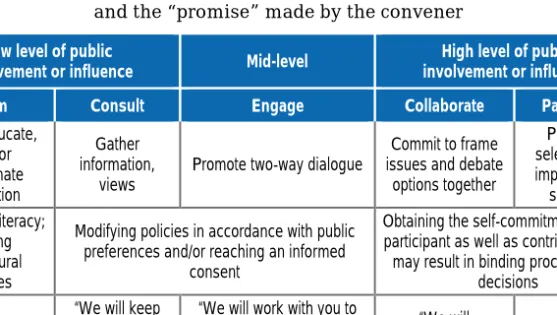
Not all participation is alike. Different levels of stakeholder participation or involvement are offered through different approaches. One simple approach may be to transmit information to a passive stakeholder audience. At the other end of the scale, an approach may significantly empower stakeholders within the decision-making process. There is a clear trend towards higher levels of engagement by organisations seeking win-win outcomes with a greater diversity of stakeholders. Table 1 describes how a given level of involvement may be chosen according to the situation or to the objectives sought.
Planners should be aware that stakeholders may desire, expect or be entitled to a particular level of involvement. Preliminary discussion, contact with or observation of target stakeholder groups, as well as a review of statutory requirements, will help determine the appropriate level. How much involvement the organisation will – or wishes to – offer must be clearly defined. This should be communicated to potential stakeholders at the outset of the initiative. Explicit information must be provided about constraints likely to affect the extent of possible influences or how input from engagement will be used.
In statutory processes, such as those conducted under the Aarhus Convention, due account is an important requirement. The convener is accountable, i.e. must show how the input has influenced the decision-making process, and stakeholders have a right to verify this information.
EXECUTIVE SUMMARY
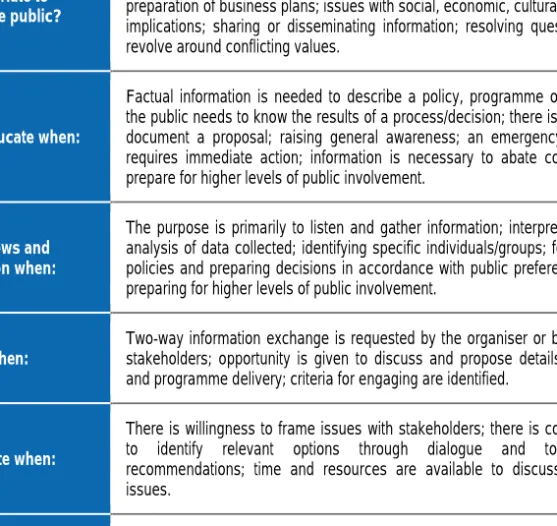
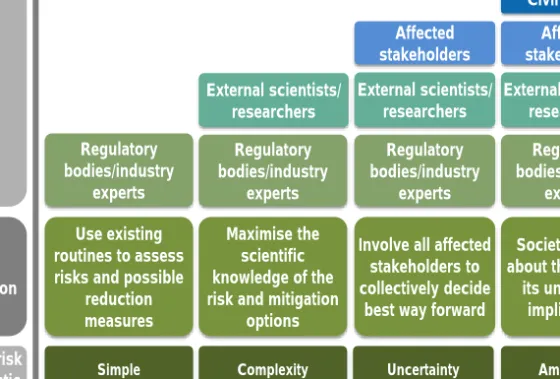
Table 2 and Figure 1 provide guidance on matching the different levels of public involvement to the needs of the situation.
Potential effects of stakeholder involvement initiatives
Guidance to public authorities generally indicates that they must allow public participation to occur in order to carry out their responsibilities to the fullest.
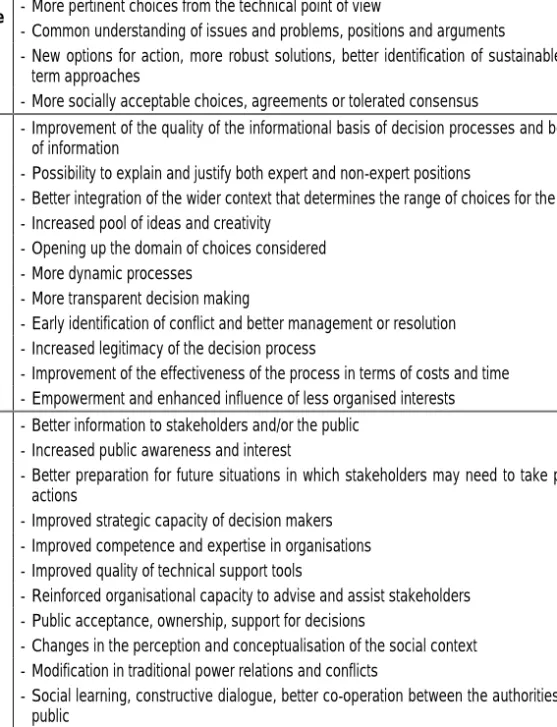
Bottom-up, inclusive approaches for information gathering and deliberation are likely to enhance the credibility of the decision-making processes. This is not the only type of positive effect that may be expected from a well-run stakeholder involvement initiative. Three classes of effects may result from the application of consultation and deliberation techniques. Substantive effects include: better, more acceptable choices from the environmental, economic and technical points of view. Procedural effects include: better use of information; better conflict management; and increased legitimacy of the decision-making process. Contextual effects include: better information to stakeholders and/or the public; improvement of strategic capacity of decision makers; reinforcement of democratic practices; and increased confidence in institutional players. Table 3 lists the potential positive effects of stakeholder participation, which may also be quoted as justifications for involving stakeholders in policy decisions.
Potential drawbacks of public participation in decision making may include: conflict, delay, and/or resource demand.
Conveners should carefully consider not only the effects sought, but also the dominant rationales underlying the decision to involve stakeholders (for instance, legitimacy, effectiveness, efficiency or representation). This is a way to clarify goals and to avoid – both inside and outside the organisation – miscommunication and disappointment.
Planning
An overview of phases
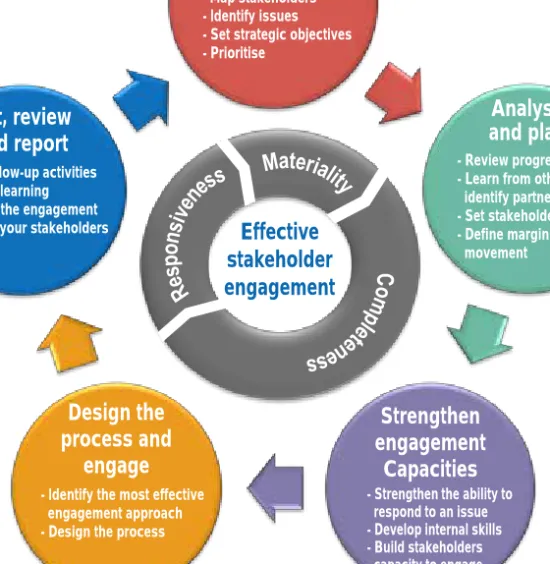
Several integrated phases are involved when planning, executing and evaluating a stakeholder involvement initiative and equal importance should be given to each phase. Figure 2 depicts a cycle of effective engagement which moves through strategic thinking; analysis and planning; strengthening engagement capacities; designing the process and engaging stakeholders; and finally acting reviewing and reporting, which in turn can spark a new strategic phase.
A cyclical vision is consistent with the needs of decision making about long-term technological and societal endeavours. New decision points emerge over time, influenced by earlier decisions and requiring public participation in turn. Continuity in engagement contributes to the sustainability of solutions. It implies not only a palette of instrumental procedures and involvement methods, but also, strengthening stakeholder capacity to engage.
EXECUTIVE SUMMARY
12 STAKEHOLDER INVOLVEMENT IN DECISION MAKING, NEA No. 7189, © OECD 2015
Co-framing the issues: Early involvement
International guidance and best practice publications on facility siting, societal risk management and environmental decision making often point out that stakeholders should be involved early. This does not simply entail the calendar or chronology of a specific decision. In binding treaties mandating public involvement in environmental decision making, early also means that stakeholders should be involved upstream, while options are still wide open.
Organisations can take the initiative to communicate with stakeholders and to obtain their input, even in the absence of a formal requirement. Early involvement, whether or not it entails direct participation in decision making, is a component of institutional transparency.
Early involvement also means engaging the spectrum of interested and affected parties in formulating the issues for consultation, evaluation or decision, to the extent possible in a given context. Co-operating on co-framing is of particular importance to achieve quality and legitimacy, especially in contentious situations. The first steps of a successful engagement process may include a concern assessment, which will identify relevant or significant (material) concerns held by the organisation and/or by stakeholders.
Today, even high-level intergovernmental processes are influenced by broad-based stakeholder input at an early stage. Early involvement also corresponds to preparedness and may make a vital contribution to achieving the objectives of safety and security which are of interest to governments, institutions and all of society.
Setting criteria for approach selection and assessment
The approach that will be suitable for a particular situation will depend on the stakeholders that are engaged, and the aims and objectives of the consultation. Planners of stakeholder involvement will need to consider these aspects and decide on the most appropriate approach to use. In order to achieve this, the organisation must develop selection criteria. The same criteria may serve at a later stage to evaluate the involvement initiative.
The appropriate level of involvement is a fundamental criterion, and should be carefully set and communicated to potential participants. Other types of criteria include desired effects and goals, as well as constraints. Criteria based on both desires and constraints should be listed. Since they will be quite diverse, it is unlikely that any approach will ideally suit all requirements. Therefore, a pilot group of members of the organisation that will engage the stakeholders should discuss the lists generated and rank the criteria by order of importance. Several guides and templates exist to facilitate this process. Stakeholder representatives may also be invited to co-operate in this criteria setting.
Choosing an approach
Stakeholder involvement approaches can usually be applied to a broad range of issues. No particular approach can be considered superior to another. The selection criteria developed in response to a specific context, constraints, desired
EXECUTIVE SUMMARY
goals and effects, will certainly differ between organisations. Experience shows that the success of a particular approach will also depend on external factors, for example the phase of the decision-making process, as well as the political and cultural context. Therefore, a definitive matrix matching approaches to criteria does not exist. However, manuals do describe different approaches in terms of generic criteria (such as the level of involvement, scale of consultation – intensive vs. extensive involvement, representative character, inclusiveness or deliberative qualities).
Handbooks and online platforms can help the convener match approaches to the basic selection criteria identified by the organisation. When a set of potentially suitable approaches has been identified, more detailed sources may be consulted.
It will be of great value for the planner to contact and discuss experiences with persons who have already conducted involvement initiatives. In some cases, the planner will consult and/or retain the services of a professional to set up and conduct the initiative. In such cases, following the steps to identify the right family of approaches can prepare the organisation for a more fruitful dialogue with the professional.
Approaches available for intensive or extensive involvement
Some approaches corresponding to the higher levels of stakeholder involvement (i.e. discussing, engaging, and partnering) are listed in Box 3. These approaches have features of two-way, deliberative dialogues. It is up to the convener to ensure that the outcomes of the engagement effort do effectively influence decisions, and provide due account of that influence. Box 4 highlights related conflict resolution approaches, while Box 5 describes combination approaches (which may be particularly appropriate when the dialogue issue has both a national and a local dimension).
These lists of approaches are by no means exhaustive. In addition, the short generic descriptions may not correspond exactly to specific examples that may be familiar to each reader. This is largely because, under a single approach label, field practitioners may design slightly different implementations or adapt them to the context. Even a highly defined and structured approach needs to be adapted for application to a particular national process and local circumstances.
New information and communication technologies offer an enlarged potential to engage citizens (although it is doubtful that these media offer “higher-level involvement” opportunities). Such methods can be appropriate when the engagement issue has broad geographic impact. Digital applications for virtual meetings and crowd-sourced idea gathering may be particularly attractive to the rising generation, for whom social media is a highly familiar, everyday instrument. Box 6 presents a success story in Australia. Nonetheless, the biggest disadvantage of relying on information technologies and new media to support involvement may be the difficulty of engaging groups who do not regularly use the Internet, and even with appropriate target audiences it may be difficult to guarantee an adequately high rate of participation.
EXECUTIVE SUMMARY
14 STAKEHOLDER INVOLVEMENT IN DECISION MAKING, NEA No. 7189, © OECD 2015 Implementation and assessment
Looking towards implementation
Implementation advice ranges from “best practice” tips to flow charts and worksheets that can be printed. Decisions implied by actual implementation are beyond the scope of this short guide, but insight is offered on preparing and publicising initiatives targeting different levels of involvement.
The organisational goal of informing or educating implies developing appropriate public information materials. Information materials will be useful only if they can be understood and interpreted by their intended audience. The Aarhus Convention recognises that this is a necessary, foreground condition, as well as a right. Today, gathering information from stakeholders is often achieved by the use of social media tools. It may also be accomplished by large-scale public consultation approaches (polls or surveys). Higher levels of involvement usually imply that participants will have the opportunity to communicate their views and judgements in detail, as well as to learn from other stakeholders. Nevertheless, the planner may find preparatory small-scale studies or consultations useful for scoping the issues or identifying target stakeholder groups.
When the dialogue issue is embedded in a complex or long-term decision-making process, public agencies or other conveners will need to support competence building in stakeholder representatives. The Aarhus Convention highlights this as an important background condition to ensure participation rights and continuity. One response to this need is the partnership model of involvement.
Conveners of stakeholder involvement in technological subjects will probably benefit from advice on communicating about risks, translating complex information into a readily accessible form and interacting with a range of stakeholders who may not have specialised training.
Finally, a planner may wish to make a broad announcement of stakeholder involvement initiatives, or publicise outcomes using mass media. Useful handbooks are cited in this short guide and in the annotated bibliography on the NEA website (NEA, 2015).
Assessment: Checking satisfaction and compliance
Post hoc assessment of stakeholder involvement initiatives is a duty to all those who have participated in good faith and a must for learning and improving the next involvement initiative. The targeted goals and outcomes should be translated into aspects that can be measured or, at least, listed and clarified so that the different participants (stakeholders and conveners alike) can judge how well these criteria were achieved.
Assessment may focus on whether compliance with statutory requirements was achieved; whether the decision-making process gained in credibility; whether information input by stakeholders was of high quality; or whether some standard of democracy was effectively achieved. Different players and participants in a single initiative may hold very different rationales and value different criteria. Therefore, the assessment should embrace a range of criteria. Both immediate
EXECUTIVE SUMMARY
effects and later impacts should be captured by the assessment. Useful handbooks are indicated in this regard.
There may be several (and perhaps overlapping) reasons why a stakeholder involvement initiative gives unsatisfactory results. Factors could relate to the behaviours or intentions of participants. When initiatives appear to be dominated by interest-driven participation, it is useful for the process to separate phases to gather information on what is “true” (including preferences and concerns) from evaluation and management phases in which value judgements are made about what is “desirable”. On the side of conveners and design process, an assessment may prove to negative overall when participation was convened as a superficial formality or without adequate support from decision makers. This configuration increases public distrust of government. Finally, structural, pragmatic and attitudinal factors may result at country level in insufficient respect for the requirements of public participation. Publications are cited that may be consulted to assist with these factors and better adjust initiatives to their context.
Conclusions and areas for future development
As the demand for stakeholder involvement in decision making continues to rise, several challenges remain. These challenges will shape the ongoing development of new approaches and guidance. Topics identified include the new media context; the need for continuity of participation and support for capacity building; the need for political commitment, innovation and advocacy for involvement; ethical dimensions; standards of accountability; simultaneous co-ordination and the independence of institutions.
ENVISIONING STAKEHOLDER INVOLVEMENT
1. Envisioning stakeholder involvement
This first chapter of the short guide explains that, in many cases, stakeholder involvement in complex decision making is both a statutory requirement and a clear benefit. It reviews the various ways to identify relevant stakeholders and the levels of participation to be offered. The potential effects of stakeholder involvement initiatives are listed and light is shed on the corresponding organisational rationales.
1.1. Stakeholder involvement: A requirement and a benefit
Radioactive waste management issues are embedded in broader societal issues such as environment, risk, sustainability, and energy and health policy. In all these fields there is an increasing demand for stakeholder involvement (participation or engagement). Managers in both the public and private sector find that such involvement can improve the quality and the sustainability of policy decisions. Best practice in radioactive waste management has therefore shifted from the traditional “decide, announce and defend” model, for which the focus was almost exclusively on technical content, to one of “engage, interact and co-operate”, for which both technical content and quality of process are of comparable importance (Kotra, 2000). Time spent on dialoguing and bringing stakeholder input into the organisation and into the waste management programme is now understood as indispensable well-spent time.
Involvement (participation or engagement) covers the full range of efforts to understand and involve stakeholders in a given organisation’s activities and decisions. “Engagement can help organisations meet tactical and strategic needs ranging from gathering information and spotting trends that may impact their activities to improving transparency and building the trust of the individuals or groups whose support is critical to an organisation’s long-term success, to sparking the innovation and organisational change needed to meet new challenges and opportunities” (AccountAbility, 2006: 13).
Involvement may be a moral and pragmatic imperative in far from nominal situations. For instance, when analysing the local consequences of a nuclear accident, it was found that a key role of the helping professional is to engage with the affected people to assist them in implementing actions that enhance their quality of life (NEA, 2006).
Together with openness, accountability, effectiveness and coherence, participation is recognised as one of the five principles of good governance (EC,
ENVISIONING STAKEHOLDER INVOLVEMENT
18 STAKEHOLDER INVOLVEMENT IN DECISION MAKING, NEA No. 7189, © OECD 2015
2001). Good governance relies on policies designed on the basis of reasonable decisions that are well communicated and discussed with the public (NEA, 2002a).
Furthermore, public information, consultation and/or participation in environmental or technological decision making – and radioactive waste management in particular – are required by a number of international texts or treaties. These include the Joint Convention on the Safety of Spent Fuel Management and on the Safety of Radioactive Waste Management.1 In Europe, the
directives on environmental impact assessment2 and strategic environmental
assessment3, as well as the United Nations Economic Commission for Europe’s
Espoo Convention4 with its Kiev Protocol5 are particularly relevant. Public
involvement is considered a core element of these decisional assessment procedures, which are increasingly used as umbrella tools to address issues going beyond purely environmental matters (UNECE, 2014b).
The Aarhus Convention6 is gaining particular attention as a support for
stakeholder involvement (e.g. REC, 2013; UNECE, 2013). The convention and its accompanying guidance (UNECE, 2014a; UNECE, 2014b) lay out the conditions under which concerned publics will access their right to effective influence on environmental decision making. In decision processes, opportunities for involvement must be provided early enough so that options still remain open and the decision authority must show that due account of the input has been taken. Participation should be continuous along the chain of related decisions (rather than one-shot occurrence or confined to a small window of opportunity). Reasonable time frames for input must be provided during the different phases, supported by access to the full range of needed information as well as preparation and competence building for the stakeholder participants. Public access is guaranteed to courts of justice, empowered to review whether the spirit as well as the letter of these requirements have been respected.
When the first edition of the short guide was published in 2004, the growing trend towards integrating stakeholder involvement was typified, for example by Law n° 108-153 regarding nanotechnology research and development enacted by the US Congress in 2003. This law states that societal concerns must be identified
1. www.iaea.org/sites/default/files/infcirc546.pdf.
2. Directive 85/337/EEC on the assessment of certain public and private projects on the environment as amended (http://ec.europa.eu/environment/eia/eia-legalcontext.htm). 3. Directive 2001/42/EC on the assessment of the effects of certain plans and programmes
on the environment (http://eur-lex.europa.eu/legal-content/EN/ALL/?uri=CELEX:32001 L0042).
The word “strategic” does not appear in the directive. It is widely used however to distinguish the application at the level of plans and programmes which may give rise to localised projects for which the environmental impact assessment is applicable.
4. UNECE Convention on Environmental Impact Assessment in a Transboundary Context (www.unece.org/env/eia/welcome.html).
5. The Kiev (or Kyiv) Protocol on Strategic Environmental Assessment to the UNECE Espoo Convention adopted in 2003 (www.unece.org/env/eia/sea_protocol.html).
6. UNECE Convention on Access to Information, Public Participation in Decision-making and Access to Justice in Environmental Matters (www.unece.org/env/pp).
ENVISIONING STAKEHOLDER INVOLVEMENT
through “public input and outreach to be integrated […] by the convening of regular and ongoing public discussions, through mechanisms such as citizens’ panels, consensus conferences, and educational events, as appropriate”.7 At the
time of the second edition in 2015, European directives affecting nuclear activities show that participation is a recognised norm. The Council Directive 2011/70/Euratom of 19 July 2011,8 establishing a community framework for the
responsible and safe management of spent fuel and radioactive waste, contains special articles on transparency and participation, and requires member states to effect relevant measures.
Under such legal frameworks, compliance with stakeholder involvement requirements becomes an important issue for those responsible for the corresponding plans, programmes or specific activities. While compliance is important, it is not sufficient. The first international quality standard for stakeholder engagement AA1000SES (AccountAbility, 2011) shows that a commitment is needed that will integrate stakeholder engagement with organisational governance, strategy and operations management.
Engagement initiatives may be triggered by legal requirements for participation, compliance with international conventions or agreements, pre-requisites for securing funding, etc. Legal frameworks may impart the times and the means for involvement. In contrast, in other contexts a specific player desiring to involve stakeholders takes responsibility for creating the opportunity and choosing the means.
Stakeholder involvement is an integral part of a stepwise process of decision making (NEA, 2004). At different phases, involvement may take the form of sharing information, consulting, dialoguing or deliberating on decisions. It should always be seen as a meaningful part of formulating and implementing good policy. Specific involvement initiatives may be seen as part of an ongoing relationship among the different societal partners who are concerned by issues relating to, for e.g. radioactive waste management. Stakeholder involvement approaches should not be viewed as convenient tools for public relations, stakeholder management, image building, or winning acceptance for a decision taken behind closed doors.
Practitioners and scholars are developing, applying, and evaluating various approaches for stakeholder involvement. There is a vast range of approaches, as well as a great number of publications describing them. New horizons are opened as experience with social media grows. This short guide aims to help non-specialists form an idea of what is needed to choose an approach and find their way to pertinent documents.
This publication is intended for a general readership of persons considering stakeholder involvement. It refers to these persons indifferently as organisers, planners, practitioners or conveners.
7. Section 2 (10). thomas.loc.gov/cgi-in/bdquery/z?d108:SN00189:|TOM:/bss/d108query.html. 8. http://eur-lex.europa.eu/legal-content/EN/TXT/?uri=CELEX:32011L0070.
ENVISIONING STAKEHOLDER INVOLVEMENT
20 STAKEHOLDER INVOLVEMENT IN DECISION MAKING, NEA No. 7189, © OECD 2015
Chapter 1, envisioning stakeholder involvement, shows how relevant stakeholders can be identified. Because all participation is not equivalent, insight is offered on the different levels of involvement. The positive effects that may result from stakeholder involvement arrangements are listed, and rationales for engagement are analysed.
Chapter 2, planning, provides an overview of the phases of involvement and emphasises the need for early involvement when decision options are still open. Pointers are then provided for setting criteria that will frame first the choice of approach for a given situation and then the assessment of the involvement process. A list is provided of typical approaches for engaging stakeholders in deliberation (a higher level of involvement that corresponds to fully airing issues and viewpoints and exploring options). The use of social media is considered.
Chapter 3, implementation and assessment, signals relevant documents and frameworks. Also considered are the limits of involvement (whether on the side of conveners or of participants).
Chapter 4 presents conclusions and areas for future development. Chapter 5 lists the references cited in this publication.
Those who wish to go farther can consult the stand-alone annotated bibliography of references (NEA, 2015) which is maintained separately by the NEA Forum on Stakeholder Confidence (FSC). It is intended to help the reader choose among the wealth of handbooks and scholarly references on planning, implementing and evaluating a tailor-made involvement initiative.
1.2. Who are the stakeholders?
The FSC uses the term “stakeholder” as a label for any actor – institution, group or individual – with an interest or a role to play in the societal decision-making process around radioactive waste management. Different stakeholders may have different interests. Engagement strategies should thus be adjusted to context: differing needs, programme phases, formal requirements, as well as national process and national and local culture.
The Aarhus Convention gives participation rights in environmental decision making to the “public concerned”. The public concerned is defined as those affected or likely to be affected by, or having an interest in, the decision making, including non-governmental organisationspromoting such interests and meeting national requirements. The population of stakeholders might be very broad in early stages of decision making (at the level of policy, plans or programmes) and then narrow down as decisions bear on more localised projects or activities. Long-term management issues like radioactive waste management also imply that some stakeholders are not born yet. Consequently, there must be a reflection on how to represent the interests of absent stakeholders in present-day engagement and decision making.
The International Risk Governance Council distinguishes four main stakeholder groups. These are political, business, scientific and civil society representatives (to the extent that they are socially organised). Additionally, other
ENVISIONING STAKEHOLDER INVOLVEMENT
groups that play a role in governance processes can be defined: the media, cultural elites and opinion leaders, and the general public, either in their role as non-organised affected public or as the non-organised observing public (IRGC, 2013; Aven and Renn, 2010).
In radioactive waste management, a list of possible stakeholders (Webster, 2000) might include: the general public; demographic groups (such as young people); nearby residents; owners of land, property and rights; concerned representatives or elected officials of local communities; national/regional government ministries/departments; regulators; national/local non-governmental or civil society organisations;9 local pressure groups; trade unions; the media; the
scientific research community; implementing organisations; the nuclear industry; contractors; waste producers; neighbouring countries; and international organisations.10
Stakeholders may be community, statutory or strategic (UNECE, 2014b). The European part-funded action research project Community Waste Management in Practice (CIP)11 investigated definitions of the affected community in the case of
waste management facility siting. Several overlapping factors make up a community’s identity: these are spatial or geographic, political, economic, cultural and emotional. Stakeholders cannot be defined in purely administrative terms; instead, the planner with a duty towards an affected community must also look into experiential aspects bringing people together in the place where they work and live. A two-step process is proposed to assist in identifying stakeholders affected by any facility siting (Wylie, 2010).
Stakeholders have both different contributions to make and different involvement needs at each stage of a decision process. When considering which stakeholders to engage, at a minimum, the planner should identify people towards whom the organisation has legal, financial or operational responsibilities; people who are affected by the organisation’s operations; and people who are likely to influence the organisation’s performance. The AccountAbility practitioner’s handbook (AccountAbility, 2006: Vol. 2) accompanies this advice with a simple downloadable dynamic template (T8) to assist in creating a stakeholder profile. This template asks realistic questions about each stakeholder group and their representatives, such as preferred level of involvement, legitimacy to engage, competence, access to funding, etc. In cases where the organisation has to make a special outreach effort to attain particular groups, this template may facilitate internal discussion and planning.
To identify stakeholders in a policy reform context, more detailed systematic approaches and guidance exist (Schmeer, 1999; World Bank, n.d.). Stakeholder
9. Civil society organisations may also be called associations and may range in scale and mandate from e.g. neighbourhood organisations to professional organisations or academic societies.
10. For example, European Union member states have information obligations to the European Commission under the Treaty establishing the European Atomic Energy Community (Article 37). http://europa.eu.int/abc/obj/treaties/en/entoc38.htm.
ENVISIONING STAKEHOLDER INVOLVEMENT
22 STAKEHOLDER INVOLVEMENT IN DECISION MAKING, NEA No. 7189, © OECD 2015
analysis is a process of systematically gathering and analysing qualitative information to determine whose interests should be taken into account when developing and/or implementing a policy or programme. It “provides a detailed understanding of the political, economic and social impact of reform on interested groups, the hierarchy of authority and power among different groups and the actual perceptions of the reform among different groups, all of which are important for reform advocates to consider” (World Bank, n.d.).
1.3. Levels of stakeholder involvement
Participation is rarely ever alike, as each country and each situation require different methods and tools. In the first place, it can be observed that different levels of stakeholder participation or involvement are enabled by different approaches. One approach may simply transmit information to a passive stakeholder audience. At the other end of the scale, an approach may significantly empower stakeholders within the decision-making process. This section reviews guidance on selecting and communicating the right level of involvement depending on context – remembering that several other criteria will come into play as well (as explained in the following sections).
Starting with the “ladder of citizen participation” presented by Sherry Arnstein in 1969 (Arnstein, 1969), many practitioners have referred to a public involvement
continuum. The different involvement activities seen in Table 1 may blend into each
other; no strict line can be drawn between adjacent activities.
Table 1. A public involvement continuum, the level of expected outcomes, and the “promise” made by the convener
Low level of public
involvement or influence Mid-level involvement or influence High level of public
Inform Consult Engage Collaborate Partnering
Inform, educate, share or disseminate information Gather information,
views Promote two-way dialogue
Commit to frame issues and debate
options together Partner in selecting and implementing solutions Increasing literacy; inducing behavioural changes
Modifying policies in accordance with public preferences and/or reaching an informed
consent
Obtaining the self-commitment of each participant as well as contributions that may result in binding processes and
decisions
“We will keep you informed”
“We will keep you informed, listen to you, and provide feedback
on how your input influenced
the decision”
“We will work with you to ensure your concerns are considered and reflected in
the alternatives, and provide feedback on how your input influenced the
decision” “We will incorporate your advice and recommendations to the maximum extent possible” “We will implement what we decided together” Source: Adapted from IRGC, 2013; Health Canada, 2000; Abelson and Gauvin, 2006.
ENVISIONING STAKEHOLDER INVOLVEMENT
Progressively higher levels of stakeholder involvement have been achieved in the radioactive waste management area (NEA, 2010a). The authors of the first stakeholder engagement standard AA1000SES (AccountAbility, 2011) identified three general trends: spread of engagement from large high-profile organisations to previously invisible organisations; increase in stakeholder diversity and complexity and the range of issues they raise or champion; and increasingly sophisticated approaches to engagement by organisations seeking win-win outcomes with stakeholders. As organisations gain experience and confidence, “their approach tends to shift from one-way channels of communication designed to spread information, to interactive tools for consultation and dialogue. These may then mature into multi-stakeholder partnerships and alliances” (AccountAbility, 2006: 22).
Planners should be aware that stakeholders may desire, expect or be entitled to a particular level of involvement. Preliminary discussion, contact with or observation of target stakeholder groups, as well as review of statutory requirements, will help determine the appropriate level. How much involvement the organisation can – or wishes to – offer must be clearly defined. Explicit information must be given about constraints likely to affect the extent of influence possible or how the input from engagement will be used (National Research Council, 2008). Box 1 gives insight from the FSC experience.
Box 1. The need to clarify the level of stakeholder involvement
Reports by FSC member organisations (Vári, 2004) confirm the need to clarify the level of involvement, and the degree of two-way communication that can be expected by participants:
• It is important to be clear on the type of issues or decisions that can be influenced by a consultation process, as extensive consultation with limited opportunity for influence can result in frustration/lead to disillusion/dissatisfaction.
• The basis for the decision must be clearly understood.
• It is important to be clear about the information sought and the feedback to be provided by the decision maker.
• People want to see that they have influenced the process and have had a meaningful impact on the outcome.
Note that in statutory processes, for example those conducted under the Aarhus Convention, due account is an important requirement. The convener is accountable, i.e. must show how the input has influenced the decision process, and stakeholders have a right to verify this. The demonstration of due account may range from a general statement of the concerns and values that have been incorporated, to a record of how submissions have been answered, to a line-by-line comparison of the decision text before and after incorporating input, with a justification of each omission.
ENVISIONING STAKEHOLDER INVOLVEMENT
24 STAKEHOLDER INVOLVEMENT IN DECISION MAKING, NEA No. 7189, © OECD 2015
In Table 2, guidance is offered on fitting the different levels of public involvement to the needs of the situation.
Table 2. Guidance on choosing different levels of public involvement
In which cases may it be appropriate to involve the public?
In matters of health, safety and local impacts of radioactive waste management activities; development and implementation of legislation and regulations; development of policies, statutes and new programmes; preparation of business plans; issues with social, economic, cultural or ethical implications; sharing or disseminating information; resolving questions that revolve around conflicting values.
Inform/educate when:
Factual information is needed to describe a policy, programme or process; the public needs to know the results of a process/decision; there is a need to document a proposal; raising general awareness; an emergency or crisis requires immediate action; information is necessary to abate concerns or prepare for higher levels of public involvement.
Gather views and information when:
The purpose is primarily to listen and gather information; interpretation and analysis of data collected; identifying specific individuals/groups; formulating policies and preparing decisions in accordance with public preferences; and preparing for higher levels of public involvement.
Engage when: Two-way information exchange is requested by the organiser or by relevant stakeholders; opportunity is given to discuss and propose details of policy and programme delivery; criteria for engaging are identified.
Collaborate when:
There is willingness to frame issues with stakeholders; there is commitment to identify relevant options through dialogue and to respect recommendations; time and resources are available to discuss complex issues.
Partner when: Institutions are ready to empower stakeholders to co-develop solutions; there is a formal/informal agreement to implement solutions generated with stakeholders.
Source: Adapted from Health Canada, 2000.
Informing and educating is an important duty and should not be neglected because it is low on the involvement scale. Fulfilling this duty is part of early involvement (Section 2.2) by organisations whose statutory role in a decision-making process comes later. Informing and educating not only transmits knowledge, it also creates relationships and helps the organisation to gradually build its own competence that will be useful when it is time to take a more active and interactive role. This was the experience of the US Nuclear Regulatory Commission early on in the framework of radioactive waste management
ENVISIONING STAKEHOLDER INVOLVEMENT
processes, before the regulator had a statutory service to render (NEA, 2014: 34-35). Public and private sector organisations in Europe should also be aware that the Aarhus Convention creates information access rights and judicial review may determine that the label of confidentiality will be restricted to fewer materials.
Much research and development have been undertaken on involving stakeholders in decisions about risk. The risk management escalator (IRGC, 2013) shown in Figure 1 can help conveners discern the level of participation that may be required to come to closure as function of the type of issue under discussion.
Figure 1 suggests that “simple” issues may not require elaborate involvement procedures. As issues (or risks) become more complex, a different set of procedures and a larger set of actors are needed to respond. “Ambiguous” issues are situated at the highest end of the escalator and call for the most inclusive, face-to-face response. In such contexts, broader as well as higher-level involvement is justified, in order to air the competing perspectives and concerns.
Figure 1. The risk management escalator
Source: IRGC, 2013. Civil society Regulatory bodies/industry experts Use existing routines to assess risks and possible
reduction measures Simple External scientists/ researchers Regulatory bodies/industry experts Maximise the scientific knowledge of the risk and mitigation
options Complexity Affected stakeholders External scientists/ researchers Regulatory bodies/industry experts Involve all affected
stakeholders to collectively decide
best way forward
Uncertainty Affected stakeholders External scientists/ researchers Regulatory bodies/industry experts Societal debate about the risk and
its underlying implications
Ambiguity
As the dominant characteristic changes, so also will the type of stakeholder involvement need to change Actors
Type of participation Dominant risk characteristic
ENVISIONING STAKEHOLDER INVOLVEMENT
26 STAKEHOLDER INVOLVEMENT IN DECISION MAKING, NEA No. 7189, © OECD 2015
Ambiguity is found when different societal visions and values exist in regard to the issue, producing debate and controversy. There may also be disagreement among the stakeholders regarding the uncertainty and ambiguity. A useful short discussion of uncertainty, complexity and controversy, and a “lens” to help choose a participatory technology assessment approach in this light, are found in Laes and Meskens (2006).
High-level participation may include “legal deliberations as well as novel approaches to include stakeholders and representatives of the public at large. If value conflicts are associated with measures to mitigate or reduce the impacts of [hazards], it is not enough to demonstrate that public planners are open to public concerns and address the issues that many people wish them to take care of. The process of assigning trade-offs between each of the options needs to be open to public input and new forms of deliberation” (Wachinger and Renn, 2010).
1.4. Potential effects of stakeholder involvement initiatives and rationales for engagement
The preamble of the Aarhus Convention lays out the reasons for elevating freedom of information and public participation to the status of guaranteed rights: “In the field of the environment, improved access to information and public participation in decision making enhance the quality and the implementation of decisions, contribute to public awareness of environmental issues, give the public the opportunity to express its concerns and enable public authorities to take due account of such concerns, aiming thereby to further the accountability of and transparency in decision making and to strengthen public support for decisions on the environment” (UNECE, 2014b).
Substantial evidence indicates that public participation is more likely to improve than to undermine the quality of decisions. Studies show that public participation also tends to increase the legitimacy of decisions, which, in turn, raises the likelihood that they can be implemented effectively and efficiently. The process itself builds citizens’ knowledge of technical and scientific aspects, e.g. on environmental issues, which increases their ability to engage in future decisions (National Research Council, 2008).
Three classes of effects may result from the application of bottom-up, inclusive approaches, as well as consultation and deliberation techniques. These are:
• substantive (concrete decision outcomes);
• procedural (modifications to the process of deciding);
• contextual (outcomes).
Table 3 lists the potential positive effects of stakeholder participation. These may also be quoted as justifications for involving stakeholders in policy decisions.
ENVISIONING STAKEHOLDER INVOLVEMENT
Table 3. Potential positive effects of participatory approaches
Category Potential effects
Substantive effects
-More pertinent choices from the environmental point of view -More pertinent choices from the economic point of view -More pertinent choices from the technical point of view
-Common understanding of issues and problems, positions and arguments
-New options for action, more robust solutions, better identification of sustainable longer-term approaches
-More socially acceptable choices, agreements or tolerated consensus
Procedural effects
-Improvement of the quality of the informational basis of decision processes and better use of information
-Possibility to explain and justify both expert and non-expert positions
-Better integration of the wider context that determines the range of choices for the decision -Increased pool of ideas and creativity
-Opening up the domain of choices considered -More dynamic processes
-More transparent decision making
-Early identification of conflict and better management or resolution -Increased legitimacy of the decision process
-Improvement of the effectiveness of the process in terms of costs and time -Empowerment and enhanced influence of less organised interests
Contextual effects
-Better information to stakeholders and/or the public -Increased public awareness and interest
-Better preparation for future situations in which stakeholders may need to take particular actions
-Improved strategic capacity of decision makers -Improved competence and expertise in organisations -Improved quality of technical support tools
-Reinforced organisational capacity to advise and assist stakeholders -Public acceptance, ownership, support for decisions
-Changes in the perception and conceptualisation of the social context -Modification in traditional power relations and conflicts
-Social learning, constructive dialogue, better co-operation between the authorities and the public
-Strengthened co-operation, communication and co-ordination between institutions and with stakeholders, for future actions that will necessarily affect or involve stakeholders -Reinforcement of democratic practices and citizens’ involvement in public domains -Increased confidence in citizen problem-solving capacity, in institutional players and in
institutional arrangements
Source: Adapted from UNECE, 2014b; Laes and Meskens, 2006; van den Hove, 2003; Renn and Schweizer, 2009; and NEA, 2010b.
ENVISIONING STAKEHOLDER INVOLVEMENT
28 STAKEHOLDER INVOLVEMENT IN DECISION MAKING, NEA No. 7189, © OECD 2015
Substantive, procedural and contextual levels of effects are described elsewhere as effects on decision quality, legitimacy and capacity. Best practices in public participation may improve all three levels of effect simultaneously; however, this does not imply that a standard set of guidelines will lead to achieve all three objectives in all situations. “In some situations, particular issues require special attention. For example, when the interested and affected parties to a decision seriously mistrust each other or the responsible public authority, special attention to building legitimacy may be necessary. When the relevant science is known to be in dispute, special attention to issues of scientific quality may be necessary. When certain critical parties lack sufficient scientific understanding to participate effectively, technical assistance to these parties may be essential to any desirable outcome” (National Research Council, 2008: 92). On the other hand, it must be ascertained that this is not seen as an effort to manipulate “views”. Trust is needed in order to avoid this.
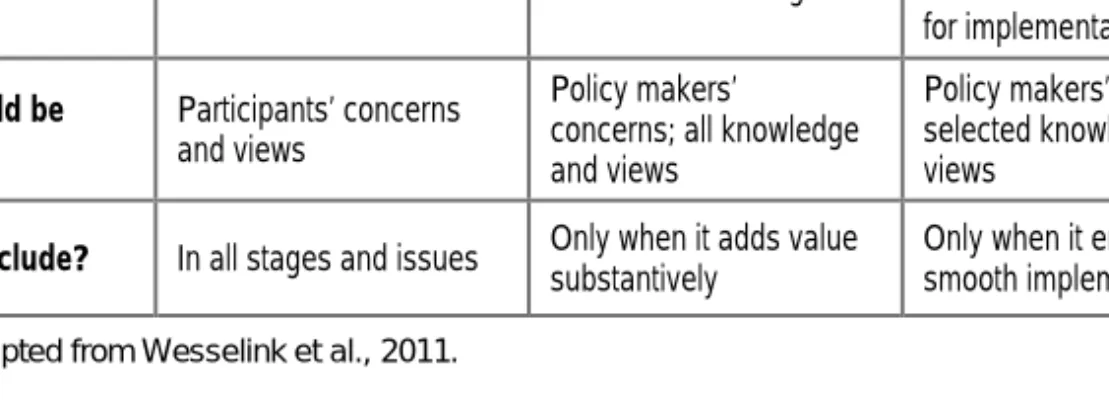
Conveners should carefully consider not only the effects sought, but also the dominant rationales underlying the decision to involve stakeholders. This is a way to clarify goals and to avoid – both inside and outside the organisation – miscommunication and disappointments. “What are we trying to achieve? Is this legitimacy, effectiveness, efficiency or representation? Do all relevant actors agree? Is participation necessarily the best way to realise these goals? What if actors have different purposes and resources? [...W]hile participation is considered a solution by many, the existence of separate participation rationales indicates that the problems they are trying to solve are very different” (Wesselink et al., 2011). Three major participation rationales (differing slightly from the above classification of effects) are:
• Instrumental (or functionalist): effective participation makes decisions more legitimate and improves results. It aims to restore public credibility, diffuse conflicts, justify decisions and limit future challenges to implementation by creating so-called ownership. Policy goals are not open for discussion, only the details are (to a lesser or greater extent). Instrumental participation supports incumbent interests. This is a minimalist and tactical kind of participation arrangement.
• Substantive: non-experts see problems, issues and solutions that experts miss. Participation aims to increase the breadth and depth of information and thereby improve the quality of decisions; it ignores power issues, e.g. related to problem framing. Unlike in the instrumental rationale, a substantive rationale permits the modification of policy goals.
• Normative: democratic ideals call for maximum participation. It aims to counter the power of incumbent interests and allows all who are affected by a decision to have influence.
Table 4 summarises these rationales and the consequences for designing participation.
ENVISIONING STAKEHOLDER INVOLVEMENT
Table 4. Participation rationales and design choices for participation
Normative rationale Substantive rationale Instrumental rationale
Who should be
included? Those who have a stake Those who have additional knowledge
Those who have blocking power and those who are needed for implementation
What should be
included? Participants’ concerns and views
Policy makers’ concerns; all knowledge and views
Policy makers’ concerns; selected knowledge and views
When to include? In all stages and issues Only when it adds value substantively Only when it ensures smooth implementation Source: Adapted from Wesselink et al., 2011.
General and potential drawbacks of public participation in decision making are acknowledged by the guide for implementing the Aarhus Convention (UNECE, 2014b):
• the potential conflicts may cause delay in implementation;
• conflicts have to be managed and solved;
• may prolong some of the phases of decision making;
• needs, attention, and resources (time, funds, human resources and expertise).
Despite such possible impediments, the guide states that the treaty’s articles requiring public participation in many plans, programmes and activities “serve as a reminder to public authorities that it is vitally important to allow public participation to do its job fully. While it may be tempting to cut corners to reach a result that might appear on the surface to be the best, there are countless cases where unexpected or hidden factors became apparent only through a public participation process, with the result that potentially costly mistakes were avoided. Furthermore, even where the original proposal is not substantially changed as a result of public participation, the successful implementation of the final decision can be promoted through the active and real participation of the public during the decision making. Conversely, public participation that is merely pro forma – i.e. that takes place when options are already closed – can injure the chances for successful implementation of a decision because of the questionable legitimacy of the process. It must be emphasized that public participation requires more than simply following a set of procedures; it involves public authorities genuinely listening to public input and being open to the possibility of being influenced by it. Ultimately, public participation should result in some increase in the correlation between the views of the participating public and the content of the decision. In other words, the public input should be capable of having a tangible influence on the actual content of the decision. When such influence can be seen in the final decision, it is evident that the public authority has taken due account of public input” (UNECE, 2014b: 115-116).
PLANNING
2. Planning
This chapter clarifies the phases of engagement and points out the need for early involvement of stakeholders in co-framing the issues. It reviews how to set criteria that will serve in both selecting appropriate engagement approaches and, later, evaluating the initiative. Finally, this chapter explains how to match an approach to a context and provides an extensive listing of commonly used approaches.
2.1. An overview of phases
Planning, executing and evaluating a stakeholder involvement initiative imply several integrated phases. These are portrayed in Figure 2 below by the authors of the first international stakeholder engagement standard AA1000SES (AccountAbility, 2011). The approach gives equal importance to all phases. Engagement is not an isolated action that simply fulfils a requirement. Instead, stakeholder engagement stems from strategic thinking by the organisation. It should address material concerns which are significant to both the organisation and the stakeholders (see Section 2.2).
Analysis and planning help align strategic goals and future actions (as discussed in Section 1.4). Both the strategic and the planning phases emphasise that identifying stakeholders, their concerns and issues are at the heart of engagement (Section 1.2). For engagement to be effective, the organisational capacity to listen and respond must be strengthened.
Designing the actual engagement process includes specifying the intensity (Section 1.3) and the form of engagement (Section 2.3). Outputs from the involvement initiative should then feed both action and reflection, which, in turn, will lead to new strategic assessments.
This cyclical vision is consistent with the needs of the long-term technological and societal endeavour of radioactive waste management. New decision points emerge over time, influenced by earlier decisions and requiring public participation in their turn. Stepwise decision making is needed in this context, incorporating flexibility and the possibility to reverse decisions if necessary (NEA, 2002b). The Aarhus Convention also highlights that public involvement in environmental decision making should be regularly revisited. Continuity in engagement contributes to the sustainability of environmental solutions. It implies not only a palette of instrumental procedures and involvement methods, but also, strengthening stakeholder capacity to engage (see Chapter 4).
PLANNING
32 STAKEHOLDER INVOLVEMENT IN DECISION MAKING, NEA No. 7189, © OECD 2015 Figure 2. Five-stage stakeholder engagement framework
Source:Adapted from AccountAbility, 2006.
2.2. Co-framing the issues: Early involvement
International guidance and best practice publications on facility siting, societal risk management and environmental decision making often point out that stakeholders should be involved early.
Early involvement does not only refer to the calendar or chronology of a specific decision. In binding treaties mandating public involvement in environmental decision making, early involvement also means that stakeholders should be involved upstream, while options are still wide open.According to the
Think
strategically
Analyse
and plan
Strengthen
engagement
Capacities
Design the
process and
engage
Act, review
and report
-Plan follow-up activities - Ensure learning - Review the engagement - Assure your stakeholders
- Identify the most effective engagement approach - Design the process
- Strengthen the ability to respond to an issue - Develop internal skills - Build stakeholders
capacity to engage
- Review progress - Learn from others and
identify partners - Set stakeholder objectives - Define margins of
movement
-Map stakeholders - Identify