2016 | VOLUME 12 |247 © ARCHIVES OF BUDO | SCIENCE OF MARTIAL ARTS
This is an open-access article distributed under the terms of the Creative Commons Attribution-NonCommercial 4.0 International (http://creativecommons.org/licenses/by-nc/4.0),
Relationship between body composition indicators
and physical capacity of the combat sports athletes
Krzysztof Durkalec-Michalski
1,2ABCDE, Tomasz Podgórski
3CD, Marek Sokołowski
4CD,
Jan Jeszka
1ADE1 Department of Hygiene and Human Nutrition, Dietetic Division, Poznań University of Life Sciences, Poznan, Poland 2 Polish Wrestling Federation, Warsaw, Poland
3 Department of Biochemistry, Poznan University of Physical Education, Poznan,Poland 4 Department of Modern and Defensive Sports,Poznan University of Physical Education, Poland
Received: 27 July 2016; Accepted:31 August 2016;Published online:20 September 2016
AoBID: 11240
Abstract
Background and Study Aim: In combat sports a modification of body weight should be based on an appropriate regulation of body
compo-sition, preferably after establishing the optimal level of tissue components. In view of the above the aim of this study was the relationship between body composition indicators and physical capacity of the combat sports athletes with prospect of most advantageous exercise-induced adaptation.
Material and Methods: The study involved 120 athletes, with the mean age of 22 years. Body composition of the athletes was anal-ysed by electrical bioimpedance. Aerobic capacity was determined using exercise tests with increasing intensi-ty using a Cosmed K4b2 ergospirometer. Blood concentrations of biochemical markers were determined using a COBAS® 6000 analyser.
Results: A reduction of maximal oxygen consumption (VO2max) was recorded with an increase in fat mass (FM).The highest VO2max and ventilatory threshold (VT) was observed in athletes with the lowest FM. Assayed levels of biochemical blood markers were ambiguous, although at a low FM the anabolic-catabolic status seems the most advantageous. Among other things, correlations were found between FM and VO2max, HR at VT, and also FFM and VO2max, HR at VT and cortisol.
Conclusions: The levels of tissue components are significantly correlated with aerobic capacity and they may affect the lev-el of biochemical adaptation. This indicates the importance of an appropriate regulation of body composition already in the training period, which would facilitate increased efficiency of the training procedure and elimi-nate the risk of reduced exercise capacity at a rapid weight loss before competitions.
Key words: adipose tissue • biochemical markers • body weight • maximal oxygen consumption • ventilatory threshold
Copyright: © 2016 the Authors. Published by Archives of Budo
Conflict of interest: The authors of this study declare that they have no conflicts of interest.
Ethical approval: The study was approved by the Bioethics Committee at Poznan University of Medical Sciences (Poland) was
granted for this study (decision No. 584/09 of 18 June 2009)
Provenance & peer review: Not commissioned; externally peer reviewed
Source of support: Departmental sources
Author’s address: Krzysztof Durkalec-Michalski; Department of Hygiene and Human Nutrition, Dietetic Division, Poznań University of Life Sciences. Wojska Polskiego 31, 60-624 Poznan, Poland; email: [email protected] Authors’ Contribution:
A Study Design
B Data Collection
C Statistical Analysis
D Manuscript Preparation
IntroductIon
Contemporary combat sports requires from ath-letes a high training level and adaptation to var-ious types of physical exercise under variable environmental conditions. However, in order to achieve the above a professional training strat-egy needs to be developed, comprising regular assessment of physical capacity, the state of nutri-tion, mental preparation and optimal biological renewal in athletes [1-7]. This is true particularly for the sports disciplines with weight categories, in which intensive weight loss before competi-tions is a common practice, which may have a negative effect on the results [8, 9]. During rapid weight loss it is impossible to reduce it rationally, i.e. by optimal reduction of fat mass constitut-ing a certain burden, potentially contributconstitut-ing to reduced exercise capacity of athletes [10-12]. It needs to be stressed that methods to reduce body weight practiced by athletes before competitions are most frequently incorrect, as they include e.g. limited consumption of food and drink (includ-ing fast(includ-ing), use of vapour-impermeable cloth(includ-ing, extended periods spent in a sauna or administra-tion of pharmaceuticals, which leads to dehydra-tion of the organism, disturbed thermoreguladehydra-tion, depletion of muscle glycogen, electrolyte imbal-ance, muscle protein degradation and an increased risk of injury and infection [11, 13-15].
We frequently neglect the fact that the above mentioned negative effects of incorrect weight loss methods may completely thwart the results of the preparations of several months, leading to reduced physical capacity, exercise capacity, motivation and the fighting spirit, as well as pose a threat to athletes’ health and life [8, 12, 15]. Particularly adverse consequences may be con-nected with the reduction of aerobic potential, which in combat sports makes it possible to fight longer and more efficiently in terms of endurance, while at the same time provides a faster regenera-tion of the organism during competiregenera-tions, when athletes have only short breaks between rounds or have to participate in several high-intensity fights at short intervals [16, 17].
Especially in the pre-competition period it is essential to maintain an adequate training and nutrition strategy, ensuring the desirable compe-tition body weight thanks to a gradual and ratio-nal weight loss, based on the modification of the athlete’s body composition, particularly reduc-tion of fat mass [2, 3, 12]. In sports it facilitates
a decrease in body weight, at the limitation of excessive weakening of the organism and main-tenance of fat-free body mass, required when performing muscular work [18]. It is not recom-mended to excessively reduce the fat mass level, as it may be connected with slowed regeneration rate, hormonal imbalance and disorders in the function of certain organs [13]. At a rational reg-ulation of body composition in athletes it thus seems necessary to determine the profile, indicat-ing levels of tissue components, at which the ath-lete would reach the highest efficiency.
This would make it easier for both coaches and athletes to properly plan and incorporate in the training procedure the most effective weight mod-ification strategy both in the competition period and in the pre-competition period. What is more, thanks to such objective recommendations based on scientific findings the common practices con-nected with rapid and excessive body weight loss should be limited [11, 12].
In view of the above mentioned aspects of great importance, at a lack of sufficient scientific data concerning e.g. recommendation of the optimal body composition for athletes in terms of physical and exercise capacity, was the aim of this study was to the relationship between body composition indi-cators and physical capacity of the combat sports athletes with prospect of most advantageous exer-cise-induced adaptation.
MaterIalandMethods
Participants
The study involved 120 male athletes aged 22 ±5 years (from 16 to 35 years of age), with body weight of 80.9 ±12.3 kg (from 53.4 to 117.5 kg) and 179 ±6 cm tall (from 166 to 192 cm) practicing combat sports belonging to the fol-lowing category: a) throws and grips of immo-bilisation of opponent’s body: wrestling (n = 27), judo (n = 36), Brazilian jiu-jitsu (n = 42); b); hits (strokes): karate (n = 15). All athletes training at sports clubs in the Wielkopolska region, Poland. Criteria qualifying for this study included e.g. meeting requirements concerning good health, having a currently issued medical certificate confirming their capacity to practice sports, at least a 5-year training period and a minimum of 4 training units a week connected with the prac-ticed sports discipline. Analyses were conducted in the years 2009-2014, including athletes in Combat sport – noun a sport in
which one person fights another, e.g. wrestling, boxing and the martial arts [44].
Division of the combat sports under forms of the direct confrontation – workings of weapons; hits (strokes); throws and grips of immobilisation of opponent’s body [45].
Strike in combat sports and martial arts – can be strike weapons (fencing, kendo, etc.), hands (boxing), legs (savate), arms and legs (karate, kick-boxing,
taekwondo, muay thai, etc.); in
terms of the general strike hand to “punch” and synonyms, strike his leg a “kick” and synonyms [45].
Marker noun 1. in games such as football and hockey, a player who stays close to an attacking player in the opposing team to prevent him or her from receiving the ball or scoring 2. a substance which reveals the use of a banned substance, found in drugs testing [44]
Biochemical marker – any biochemical compound such as an antigen, antibody, abnormal enzyme, or hormone that is sufficiently altered in a disease to serve as an aid in diagnosing or in predicting susceptibility to the disease [46].
Body weight loss – reduction of the total body mass. In combat sports, it is used for a preparation to start in a lower weight category.
Body composition – the amount of fat, fat-free mass and total water content, whose proportions in the body can significantly affect sporting performance.
Bioimpedance analysis – a method of estimating body composition.
Biochemical indexes – any hormone, enzyme, or other metabolite that is detected in blood and may serve as a sign of training adaptation and muscle metabolism.
|
different periods of the year in order to elimi-nate the potential effect of variable annual train-ing cycles on the recorded results. In accordance with the Declaration of Helsinki all the partici-pants expressed their free and conscious consent to participate in research procedures [19]. Procedures
Participants in this study were weighed and their height was measured using a WPT 60/150 OW
medical anthropometer by RADWAG® (Poland).
Body composition was analysed by determin-ing values of body’s electrical resistance and reactance using bioelectrical impedance with a BIA 101S analyser by AKERN-RJL (Italy) and the Bodygram 1.31 computer programme by AKERN-RJL (Italy). Body composition measure-ments were taken maintaining the recommended testing conditions, e.g. in the morning and in the fasting state. Athletes also declared abstain-ing from coffee, strong tea, caffeine-containabstain-ing products and alcohol for at least 24 h preceding the test, as well as refraining from physical exer-cise for a minimum 18 h before measurements. Exercise tests assessing selected physical capacity indexes were conducted on athletes in the morn-ing hours at the Exercise Test Laboratory of the Dietetics Division, the Department of Human Nutrition Hygiene, the Poznan University of Life Sciences. Each time prior to the test athletes were thoroughly informed of the objective, procedure and method of exercise tests. The level of aero-bic capacity of athletes was assessed based on the
recorded maximal oxygen consumption (VO2max)
and ventilatory threshold (VT) using an exercise test consisting in the performance of exercise of increasing intensity on a Kettler X1 cycloergom-eter (Germany) following recommendations for such tests [20]. During exercise tests respiratory indexes were recorded, e.g. the volume of oxygen uptake (VO2), the volume of exhaled carbon
diox-ide (VCO2) and respiratory minute volume (VE)
and heart rate (HR) using a portable K4b2 ergospi-rometer (Cosmed, Italy) and the COSMED CPET Software Suite (ver. 9.1b, 2010). In this study reaching maximal exercise was interpreted at the moment of a lack increase in oxygen uptake (VO2) and heart rate (HR) and/or refusal of the athlete to continue exercising.In order to determine the ventilatory threshold (VT) the V-slope method was applied, based on the analysis of linear regression for the curve of increasing CO2 exhalation in rela-tion to the curve of increasing O2 uptake.
Blood sampling
Activity of selected enzymes (creatine kinase, lactate dehydrogenase) and concentrations of hormones (testosterone, cortisol) and lactate were assessed based on quantitative analyses in blood plasma of athletes in the fasting state performed using commercial diagnostic tests in cooperation with the Labo-Med Medical Diagnostics Laboratory based in Poznan. At 20-25 minutes after the exercise test of increas-ing intensity blood samples were collected from the examined athletes from the ulnar vein to two closed-system evacuated test tubes of 2.7 ml, with lithium heparine and sodium fluoride as
anticoagulants (Sarstedt Monovette®, Germany),
with collected plasma being subjected to further laboratory analyses on the same day. Activity of creatine kinase (CK) and lactate dehydroge-nase (LDH) and concentration of lactate were assayed by a standardised colorimetric enzymatic
method using a COBAS® 6000 analyser (module
c 501, Roche Diagnostics, USA). Concentrations of testosterone and cortisol in blood plasma were assayed by ECLIA electrochemiluminescence
using a COBAS® 6000 analyser (module e 601,
Roche Diagnostics, USA). Statistical analysis
All statistical calculations were performed using the Statistica 9.0 package (StatSoft, Inc., USA). Basic descriptive statistics were calculated for tested indicators. Results are presented as arith-metic means (x-), standard deviations (± SD) and median. In order to verify the potential rela-tionship between body composition and val-ues of individual indicators the recorded results were analysed after classifying athletes to indi-vidual groups depending on their fat mass lev-els. The Shapiro-Wilk test was applied in order to determine whether the random sample comes from a population with a normal distribution. Significance of differences between levels of inves-tigated indicators and body composition of ath-letes was determined based on parametric tests (ANOVA, Tukey’s test) and non-parametric tests (Kruskal-Wallis H-test). The relationship between analysed indicators was established using Spearman’s correlation coefficients.
results
Assessment of investigated indicators depending on fat mass of athletes (Table 2) showed statis-tically significant differences in values of maxi-mal oxygen consumption between groups. The highest VO2max was recorded in athletes with the lowest fat mass level (61.6 ±6.6 ml·kg–1·min–1), while a significantly lower VO2max (p<0.05) by 11% to 16% was recorded in athletes with FM >18%. Already in the group with FM of 15.1% to 18.0% values of this aerobic capacity index were by 6% lower in comparison to athletes with FM <10%. However, it is of great importance that with an increase in fat mass a significant and
reg-ular reduction in VO2max was observed, which
lowest values (51.5 ml·kg–1·min–1) were found in the group with the highest FM. Moreover, in ath-letes with a lower percentage of fat mass VT was recorded at a higher heart rate (HRVT), although significant 7% differences in HRVT (p<0.05) were shown only between athletes with the lowest and elevated FM levels (18.1% to 20.0%).
Assessment of biochemical blood markers depending on fat mass of athletes showed sta-tistical significance only in the case of hormonal status.
Testosterone concentration was comparable in groups with different FM levels, although con-siderable differences (23.6%) were shown only between groups with FM = 10% to 12.5% and FM = 12.6% to 15.0%. In the case of the testos-terone: cortisol ratio (T/C ratio) between ath-letes with FM of 10% to 12.5% and those with
lower (<10%) and slightly higher FM (12.6% to 15.0%) the recorded differences were 34.3% and 32.6% at p<0.02. Despite a lack of statistical sig-nificance we need to stress here that in athletes with the lowest level of FM <10%, blood corti-sol concentration was on average lower by over 20% in comparison to athletes with fat mass lev-els exceeding 18.1% body mass.
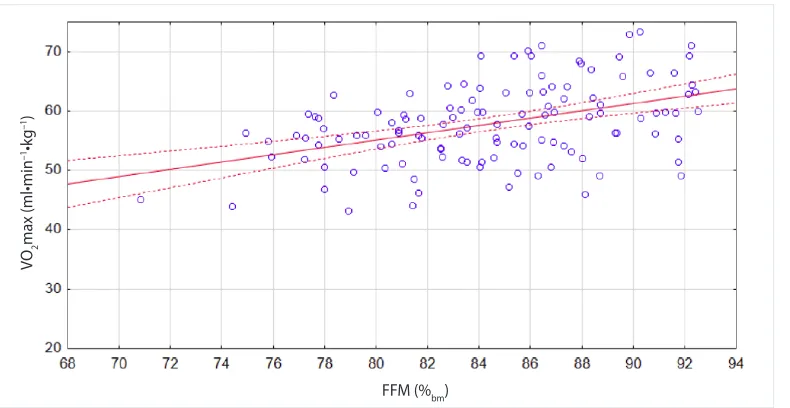
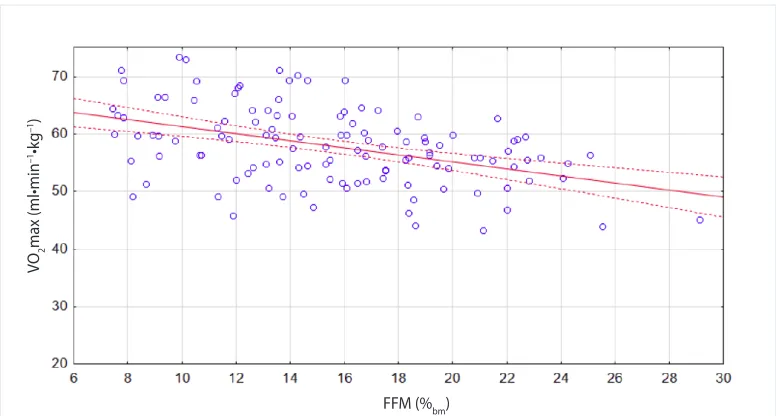
In turn, the conducted analysis of correlations between analysed variables showed significant dependencies between body composition of ath-letes and the investigated indicators, e.g.: FFM (%) and VO2max (r = 0.44, p<0.001, Figure 1), FFM (%) and HR at VT r = 0.23, FFM (%) and cortisol r = –0.18 (both factors p<0.05, Table 3); FM (%) and VO2max (r =–0.43, p<0.001, Figure 2), FM (%) and HR at VT (r = 0.21, p<0.05, Table 3); FM (%) and VO2max (r = –0.43, p<0.001, Figure 1), FM (%) and HR at VT (r = –0.21, p<0.05, Table 3); testosterone and t at VT r = 0.23, cortisol and HR at VO2max r = 0.23 (both factors p<0.05, Table 4).
dIscussIon
This study showed that body composition is con-nected with levels of aerobic capacity indicators and biochemical blood markers, which may con-siderably affect exercise capacity of athletes. What is more, athletes with the lowest fat mass level seem to have the most advantageous exercise-induced adaptation. It is particularly significant in the sports disciplines with weight categories
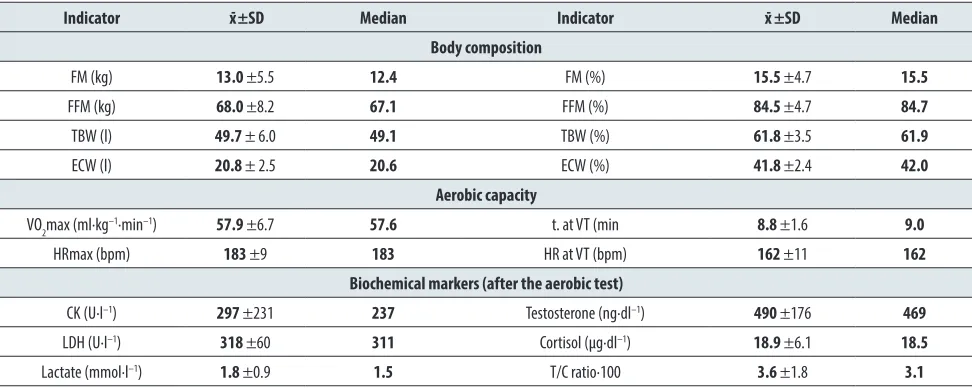
Table 1. Characteristics of the body composition, aerobic capacity and biochemical markers testing of combat sports athletes (n = 120)
Indicator x-±SD Median Indicator x- ±SD Median
Body composition
FM (kg) 13.0 ±5.5 12.4 FM (%) 15.5 ±4.7 15.5
FFM (kg) 68.0 ±8.2 67.1 FFM (%) 84.5 ±4.7 84.7
TBW (l) 49.7 ± 6.0 49.1 TBW (%) 61.8 ±3.5 61.9
ECW (l) 20.8 ± 2.5 20.6 ECW (%) 41.8 ±2.4 42.0
Aerobic capacity
VO2max (ml·kg–1·min–1) 57.9 ±6.7 57.6 t. at VT (min 8.8 ±1.6 9.0
HRmax (bpm) 183 ±9 183 HR at VT (bpm) 162 ±11 162
Biochemical markers (after the aerobic test)
CK (U·l–1) 297 ±231 237 Testosterone (ng·dl–1) 490 ±176 469
LDH (U·l–1) 318 ±60 311 Cortisol (μg·dl–1) 18.9 ±6.1 18.5
Lactate (mmol·l–1) 1.8 ±0.9 1.5 T/C ratio·100 3.6 ±1.8 3.1
TBW total-body water; CK creatine kinase; ECW extracellular water; FFM fat free mass; FM fat mass; HRmax maximum heart rate; LDH lactate
|
Table 2. Characteristics of physical capacity and levels of biochemical blood markers depending on fat mass level of combat sports athletes (n = 120)
FAT MASS (%)
Range of FM (%) FM<10.0(1) 10. to 12.5(2) 12.6 to 15.0(3) 15.1 to 18.0 (4) 18.1 to 20.0(5) 20.1 to 23.0(6) 23.1 to 29.0(7)
Number of tested
individuals (n) 17 16 24 25 17 15 6
Aerobic capacity indicators
VO2max (ml·kg-1·min-1) 61.6 ±6.6*.†.‡ 60.4 ±7.9§ 59.6 ±7.0 57.8 ±5.4 54.8 ±5.1* 54.4 ±5.2† 51.5 ±5.5‡.§
HR at VO2max bpm) 183 ±10 181 ±13 182 ±5 184 ±11 178 ±9 186 ±11 181 ±10
HR at VT (bpm) 165 ±9† 163 ±10 164 ±9 163 ±11 154 ±11†.‡ 163 ±13‡ 156 ±10
Levels of selected biochemical indicator (after aerobic test)
CK (U·l-1) 308 ±209 273 ±178 237 ±129 275 ±157II 400 ±333II 337 ±357 263 ±234
LDH (U·l-1) 337 ±58 317 ±49 330 ±56 288 ±61 327 ±62 327 ±67 305 ±74
Lactate (mmol·l-1) 1.8 ±0.9 1.7 ±0.7 1.5 ±0.5 2.0 ±1.3 1.8 ±0.4 2.2 ±0.8 1.6 ±0.3
Testosterone (ng·dl-1) 512 ±320 405 ±145†† 530 ±130†† 483 ±137 473 ±117 518 ±152 510.5 ±172.8
Cortisol (μg·dl-1) 16.0 ±5.0 19.6 ±6.5 18.8 ±7.2 18.6 ±5.4 19.9 ±4.3 20.2 ±7.7 20.4 ±5.9
T/C ratio·100 4.28 ±2.28ś 2.81 ±1.28ś.** 4.17 ±2.27** 3.60 ±1.70 3.09 ±0.98 3.68 ±1.92 3.27 ±1.21
For comparisons ANOVA (Tukey’s post-hoc test) was applied †,‡ §: p<0.05; *: p<0.01
For multiple comparisons the Kruskal-Wallis H-test was applied: II: p<0.043; ś, **: p<0.02
CK creatine kinase; HR heart rate; LDH lactate dehydrogenase; T/C ratio testosterone/cortisol ratio; VO2max maximal oxygen uptake; VT ventilatory threshold
Figure 1. Correlation (r = 0.44, p<0.001) between maximal oxygen uptake (VO2max) and fat free mass (FFM) combat sports athletes (n = 120)
VO
2
max (ml•min
–1•kg –1)
Figure 2. Correlation (r = −0.43, p<0.001) between maximal oxygen uptake (VO2max) and fat mass (FM) combat sports athletes (n = 120)
Physical capacity indicators Body composition indicators
FFM (%) FM (%)
Hrmax (bpm) 0.01 –0.01
HR at VT (bpm) 0.21* –0.21*
Cortisol (μg·dl–1) –0.18* 0.14
FFM fat free mass; FM fat mass; HRmax maximum heart rate; VT time at ventilatory threshold; * p<0.05
Table 4. Correlations between physical capacity indicators and biochemical blood markers of combat sports athletes (n = 120)
Biochemical bloodmarkers
Physical capacity indexes
VO2max
(ml·kg–1·min–1) HR at VO2max (bpm) t at VT(min) HR at VT (bpm)
CK (U· l–1) –0.05 –0.19* 0.01 –0.22
LDH (U· l–1) 0.11 –0.21* 0.02 –0.14
Testosterone (ng·dl–1) 0.07 0.01 0.23* 0.02
Cortisol (μg·dl–1) 0.12 0.23* 0.02 0.10
T/C ratio ·100 –0.01 –0.10 –0.01 –0.09
Lactate (mmol · l–1) –0.01 0.14 0.18 0.02
CK creatine kinase; HR heart rate; LDH lactate dehydrogenase; t at VT time at ventilatory threshold; T/C ratio testosterone/
cortisol ratio; VO2max maximal oxygen uptake; * p<0.05
Table 3. Correlations between body composition and selected physical capacity indicators of combat sports athletes
(n = 120)
VO
2
max (ml•min
–1•kg –1)
|
for contestants, such as combat sports, where the results may be determined e.g. by body weight and composition of athletes [10, 21].
Observations recorded in this study as well as those presented by other authors indicate that athletes reducing their body weight before com-petitions do not pay sufficient attention to proper modification and regulation of body composition, which should be based mainly on decreasing fat mass levels [2, 3, 8, 9, 11-13, 18]. It was shown in literature on the subject that the proportions of fat-free and fat body mass have a significant effect on exercise tolerance of the organism [10, 21-23]. Athletes participating in this study had fat mass levels of 15.5 ±4.7%, which was sim-ilar to the results reported by other authors in well-trained combat sports athletes [10, 21, 22, 24, 25]. Moreover, the analysed group had
a high level of aerobic capacity (VO2max: 57.9
±6.7 ml·kg–1·min–1), corresponding with that reported in studies involving athletes
practic-ing combat sports (mean VO2max: 51-65 ml·kg–
1·min–1) [10, 12, 26].
In this study the greatest aerobic potential was found in athletes with a low fat mass profile, par-ticularly below 12.5% body mass. What is more, interesting findings are connected with correla-tions between levels of aerobic capacity indexes and both FFM and FM, showing a significant role of body composition. In a study conducted with the participation of Iranian female judoists a neg-ative correlation was found between maximal oxy-gen consumption and fat mass level (r = –0.63; p<0.01) [27]. Also in Brazilian judoists an inverse
dependence was shown between VO2max values
(estimated based on the results of the Cooper test) and FM percentage (r = –0.83) [10]. We emphasize that in the above mentioned study Franchini et al. [10] showed a negative correla-tion (r = –0.70) between FM and specific exercise capacity in combat sport judo which is qualified to the category throws (and grips of immobilisa-tion of opponent’s body) assessed using the throw test (Special Judo Fitness Test – SJFT). Moreover, they showed a close relationship between SJFT results and VO2max values (r = 0.79), which con-firmed earlier, similar observations by Sterkowicz et al. [22].
Additionally, Katralli et al. [21] also found an inverse correlation between fat mass in Indian judoists and SJFT results (r = –0.69; p<0.001).
The above observations concerning the rela-tionship between body composition and aero-bic capacity in combat sports are also confirmed by studies conducted by Beekley et al. [28], in which in well-trained sumo athletes a negative correlation was recorded between fat mass per-centage and VO2max (r = –0.75, p<0.05). What is more, in some studies differences in results e.g. between women and men were attributed by the authors to the sex-related difference in body composition [26, 28]. Moreover, a correlation was shown between fat-free body mass level and max-imal oxygen consumption as well as other specific physical capacity indicators in combat sports, such as e.g. speed, force, mean and maximal power as well as functional threshold power, which may be significant factors determining sports successes of athletes [10, 27, 29, 30].
Thus it seems that an increase in fat-free body mass and a reduction of fat mass level as well as an increase in aerobic potential of the organ-ism, observed in elite athletes, result from proper adaptation of the organism to effective perfor-mance of exercise in practiced sports disciplines [21, 31]. This is confirmed also by studies on Polish wrestlers, in which athletes participat-ing in international competitions had lower fat mass in comparison to athletes competing at the national level (FM: 11.4% vs. 12.9%) [25]. Thus the above mentioned studies as well as observa-tions recorded in this study show a significant role of an adequate proportion of tissue com-ponents and the related high aerobic potential, which may directly determine success of athletes in these sports, in which weight categories are binding.
In professional sport a significant role in the assessment of adaptation of the organism and sys-temic homeostasis is also played by monitoring of selected biochemical markers. Studies conducted with the participation of 821 men showed a neg-ative correlation between testosterone concentra-tion and fat mass, as well as a positive relaconcentra-tionship between the concentration of this hormone and fat-free body mass [32].
season the resting testosterone concentration decreased by almost 15% during the season, par-ticularly in wrestlers participating in sports com-petitions (on average by approx. 25%). Moreover, a greater reduction of fat mass was recorded in the group of athletes participating in competi-tions (2.6% vs. 0.9%). In the competitive sea-son wrestlers were also found to have the T/C ratio lower by 17.9%. In contrast, no consider-able changes were recorded in blood cortisol con-centrations and hematocrit values.
The above observations confirm the results of studies by Roemmich and Sinning [34], in which lower testosterone levels were recorded in wres-tlers during the competitive season (3.6 ±0.4 ng·ml–1) in comparison to the values both before the season (4.9 ± 0.4 ng·ml–1) and after the
sea-son (5.7 ±0.4 ng·ml–1). However, they were not
accompanied by significant changes in blood cor-tisol levels [34]. It needs to be mentioned here that the authors of the above mentioned study associated changes in levels of analysed biochem-ical markers mainly with nutritional restrictions introduced by the athletes and the related weight loss. Even a short-term reduction of body mass may lead to considerable disturbances in the ana-bolic status of the organism. In elite wrestlers applying rapid weight loss (2-3 weeks: 8.2 ±2.3%) a reduction of fat mass (–16%) and fat-free body mass (–7.9%) was recorded, which was accom-panied by a decrease (p<0.001) in the concentra-tions of testosterone (–63%) and the luteinizing hormone (–54%) [35]. Moreover, the above men-tioned studies showed a correlation between the volume of body weight loss and a decrease in tes-tosterone concentration in blood serum (r = 0.53; p=0.02).
The above observations were also confirmed by Yanagawa et al. [36], who in the course of a 12-day intensive weight loss before the compe-titions (on average by 3.7 kg), accompanied by reduction of fat mass from 8.6 ±5.0 kg to 8.5 ±5.0 kg (8 days before weigh-in) and 6.5 ±4.7 kg (the weigh-in day; p<0.001), recorded a reduc-tion of testosterone concentrareduc-tion from 6.8 ±1.5 ng·ml–1 to 5.8 ±1.6 ng·ml–1 (8 days; p<0.05) and 4.4 ±1.9 ng·ml–1 (the weigh-in day; p<0.001). Additionally, after the next 9 days (from the weigh-in day) it was found in athletes that with the return of body weight to initial values an increase was recorded in testosterone concentra-tion (7.0 ± 1.7 ng·ml–1; p<0.001), although it was
not accompanied by a significant increase in fat mass (7.1 ± 4.5 kg). Similar observations were made in the case of judoists, as after 7-day period of a 5% reduction of body mass (FFM: –2.3 kg; FM: –0.8%) their testosterone concentration and T/C ratio were lower by 22% and 25%, respec-tively, on the day of a simulated competition exercise test [37]. Moreover, their cortisol level increased by 24%, which seems to confirm the inverse correlation observed in this study between the concentration of this hormone and fat-free body mass of athletes.
The specific character of training loads may also influence the anabolic-catabolic status to a greater extent (than only the body composition profile). The above thesis seems to be confirmed by a study of Purge et al. [38], who showed a corre-lation between the training level and concentra-tions of testosterone (r = 0.42; p<0.01), cortisol (r = 0.53; p<0.001) and creatine kinase activity. These observations also confirm examinations of wrestlers, as an increase was observed in the concentrations of testosterone, cortisol and cre-atine kinase activity after the fight in relation to the values assayed before it [39]. In the course of successive fights (2nd to 5th fight) mean post-exercise concentrations of testosterone decreased, whereas opposite dependencies were shown in the case of cortisol and the activity of creatine kinase. In turn, in judoists Umeda et al. [40] recorded a significant increase (p<0.05) in the activity of cre-atine kinase at 1 day before the competition both in the group with rapid and in that with slight body weight loss, with its high values being main-tained for as long as almost 7 days.
The significant importance of a proper hormonal status of the organism in sports seems to be con-firmed by studies, in which higher testosterone levels (by 31%) and T/C ratio values (43%) as well as lower concentrations of cortisol (15%) and lactate (19%) [41] were assayed in boxer winning their fights. Similar observations were also con-ducted in tennis players: both in males T (testos-terone): +27%; C (cortisol): +1%, and females: T +27%; C –3%. What is more, in athletes los-ing their fights opposite dependencies were shown (males: T –16%; C +30%; females: T –11%, C +31%) [42].
|
physical capacity and levels of biochemical mark-ers, reflecting e.g. their hormonal status, energy processes taking place in muscles and the degree of their damage. Unfortunately, there are few available studies on dependencies between levels of these indicators and body composition in ath-letes in the training period, in which the organ-ism is not additionally burdened with intensive weight loss. They seem necessary for the develop-ment of proper recommendations for trainers and athletes, concerning conscious and rational reg-ulation of not only body weight, but particularly body composition [43]. By making it possible to reach an adequate level of tissue components, it would facilitate reaching an optimal exercise adaptation and qualification to individual weight categories, at the same time avoiding excessive weakening of the organism, reduced physical capacity, a disturbed anabolic-catabolic status as well as an increased risk of injury or other health problems in athletes.
conclusIons
Athletes with the body composition profile char-acterised by a lower fat mass exhibit higher aero-bic capacity, which decreases with an increase in the share of this tissue component in the organ-ism. In turn, analysis of biochemical blood mark-ers does not show a clear relationship with the body composition profile, although some results concerning e.g. the anabolic-catabolic status seem to indicate advantageous thresholds in ath-letes with the lowest fat mass level. However, the most interesting finding is connected with the
correlations between analysed indexes and body composition in athletes, as well as selected aer-obic capacity indexes and levels of biochemical blood markers. This suggests that in terms of exercise adaptation the most effective approach is to reach a profile with a low fat mass level. Thus it seems crucial to consider potential advantages of enhanced efficiency of the training regime thanks to a conscious regulation of body composition in athletes both in the competitive period and in the training period.
PractIcalaPPlIcatIons
Based on the results of this study trainers and athletes practicing combat sports and other sports disciplines with binding weight categories should focus on reaching an optimal body composition profile and regulating tissue component levels, connected mainly with the rational reduction of fat mass already in the training period. This will not only facilitate qualification to a specific weight category thanks to weight loss, but it may also contribute to the maintenance of systemic homeostasis, increased aerobic capacity and exer-cise capacity of the organism, as well as provide a desirable physiological response of the organism, assessed e.g. using biochemical blood markers.
acknowledgeMents
The authors wish to thank coaches and athletes for their help and participation in the research project. The authors report no conflicts of inter-est with this study.
references
1. Kormanowski A, Padilla EL, Harasymowicz J. Metabolic effects of a zen meditation and qigong training program in experienced medi-tation instructors. Arch Budo 2008; 4(1): 59-64 2. Boguszewski D, Kwapisz E. Sports massage and local cryotherapy as a way to reduce nega-tive effects of rapid weight loss among kickbox-ing contestants. Arch Budo 2010; 6(1): 45-51 3. Drummond MDM, Couto BP, Eufrásio RJS et
al. Energy balance in taekwondo athletes during pre-competition. Arch Budo 2014; 10: 195-199 4. Rossi L, Torigoe CY, Ferreira EST et al.
Nutritional assessment of Brazilian sumo wres-tlers. Arch Budo 2014; 10: 287-293
5. Berengüí Gil R, Garcés de Los Fayos Ruiz EJ, López-Gullón JM et al. Psychological skills and burnout in sports performance – an analysis of Olympic wrestling. Arch Budo Sci Martial Art Extreme Sport 2015; 11: 81-87
6. Chaabene H, Tabben M, Mkaouer B et al. Amateur Boxing: Physical and Physiological Attributes. Sports Medicine 2015; 45(3): 337-352 7. Montero-Carretero C, Moreno-Murcia JA,
Amado D et al. Self-confidence and flow in judo. Arch Budo Sci Martial Art Extreme Sport. 2015; 11: 47-55
8. Marttinen RH, Judelson DA, Wiersma LD et al. Effects of self-selected mass loss on perfor-mance and mood in collegiate wrestlers. J Strength Cond Res 2011; 25: 1010-1015
9. Pettersson S, Ekström MP, Berg CM. The food and weight combat. A problematic fight for the elite combat sports athlete. Appetite 2012; 59: 234-242
10. Franchini E, Nunes AV, Moraes JM et al. Physical fitness and anthropometrical profile of the Brazilian male judo team. J Physiol Anthropol 2007; 26: 59-67
11. Coufalová K, Cochrane DJ, Malý T et al. Changes in body composition, anthropometric indicators and maximal strength due to weight reduction in judo. Arch Budo 2014; 10: 159-164 12. Yang WH, Grau M, Kim P et al. Physiological
and psychological performance of Taekwondo Athletes is more affected by rapid than by gradual weight reduction. Arch Budo 2014; 10: 169-174 13. Oppliger RA, Case HS, Horswill CA et al.
American College of Sports Medicine position stand. Weight loss in wrestlers. Med Sci Sports Exerc 1996; 28(6): ix-xii
14. Filaire E, Maso F, Degoutte F et al. Food restric-tion, performance, psychological state and lipid values in judo athletes. Int J Sports Med 2001; 22(6): 454-459
Cineantropom Desempenho Hum 2006; 8(2): 92-101
16. Legaz-Arrese A, Munguia-Izquierdo D, Nuviala AN et al. Average VO2max as a function of run-ning performances on different distances. Sci Sport 2007; 22: 43-9
17. Tocilj Z, Erceg M, Karnincic H. Physiological predictors to lactate dynamics during a wrestling match. Arch Budo Sci Martial Art Extreme Sport 2015; 11: 207-212
18. Roemmich JN, Sinning WE. Sport-seasonal changes in body composition, growth, power and strength of adolescent wrestlers. Int J Sports Med 1996; 17: 92-99
19. Harriss DJ, Atkinson G. Update – ethical stan-dards in sport and exercise science research. Int J Sports Med 2011; 32: 819-821
20. Åstrand PO, Rodahl K, Dahl H et al. Textbook of Work Physiology. Physiological Bases of Exercise. 4th ed. Champaign: Human Kinetics; 2003 21. Katralli J, Goudar SS. Anthropometric profile
and special judo fitness levels of Indian judo players. Asian J Sports Med 2012; 3: 113-118 22. Sterkowicz S, Zuchowicz A, Kubica R. Levels of
anaerobic and aerobic capacity indices and results for the special fitness test in judo competitors. J Hum Kinet 1999; 20: 1-22
23. Izquierdo-Gabarren M, Expósito RG, de Villarreal ES et al. Physiological factors to predict on tra-ditional rowing performance. Eur J Appl Physiol 2010; 108(1): 83-92
24. Franchini E, Takito MY, Bertuzzi RCM. Morphological, physiological and technical vari-ables in high-level college judoists. Arch Budo 2005; 1: 1-7
25. Sterkowicz-Przybycień K, Sterkowicz S, Zarów RT. Somatotype, body composition and propor-tionality in Polish top Greco-Roman wrestlers. J Hum Kinet 2011; 28: 141-154
26. Hübner-Woźniak E, Kosmol A, Gajewski J.
Aerobic fitness of elite female and male wres-tlers. Biol Sport 2009; 26(4): 339-348 27. Ali PN, Hanachi P, Nejad NR. The relation of
body fats, anthropometric factor and physiological functions of Iranian female national judo team. Modern Appl Sci 2010; 4(6): 25-29
28. Beekley MD, Abe T, Kondo M et al. Comparison of normalized maximum aerobic capacity and body composition of sumo wrestlers to athletes in combat and other sports. J Sport Sci Med 2006; 5(CSSI): 13-20
29. Gierczuk D, Hübner-Woźniak E, Długołęcka B. Influence of training on anaerobic power and capacity of upper and lower limbs in young Greco-Roman wrestlers. Biol Sport 2012; 29: 235-239 30. Starosta W, Baić M. Battery of tests for evalu-ation level of motor abilities in high advanced wrestlers from perspective of 32 years of using in practice. Arch Budo Sci Martial Art Extreme Sport 2015; 11: 213-220
31. Borowiak W, Norkowski H, Woźniak M et al. Effect of five-week preparatory training period on aerobic and anaerobic performance of male judo athletes. J Combat Sports Martial Arts 2012; 3(1): 11-14
32. Gates MA, Mekary RA, Chiu GR et al. Sex steroid hormone levels and body composition in men. J Clin Endocrinol Metab 2013; 98(6): 2442-2450
33. Ratamess NA, Hoffman JR, Kraemer WJ et al. Effects of a competitive wrestling season on body composition, endocrine markers, and anaerobic exercise performance in NCAA collegiate wres-tlers. Eur J Appl Physiol 2013; 113(5): 1157-1168 34. Roemmich JN, Sinning WE. Weight loss and
wrestling training: effects on growth-related hor-mones. J Appl Physiol 1997; 82(6): 1760-1764 35. Karila TA, Sarkkinen P, Marttinen M et al. Rapid
weight loss decreases serum testosterone. Int J Sports Med 2008; 29(11): 872-877
36. Yanagawa Y, Morimura T, Tsunekawa K et al.
Oxidative stress associated with rapid weight reduction decreases circulating adiponectin con-centrations. Endocr J 2010; 57(4): 339-345 37. Degoutte F, Jouanel P, Bègue RJ et al. Food
restriction, performance, biochemical, psycho-logical, and endocrine changes in judo athletes. Int J Sports Med 2006; 27(1): 9-18
38. Purge P, Jürimäe J, Jürimäe T. Hormonal and psychological adaptation in elite male rowers during prolonged training. J Sports Sci 2006; 24(10): 1075-1082
39. Barbas I, Fatouros IG, Douroudos II et al. Physiological and performance adaptations of elite Greco-Roman wrestlers during a one-day tournament. Eur J Appl Physiol 2011; 111(7): 1421-1436
40. Umeda T, Nakaji S, Shimoyama T et al. Adverse effects of energy restriction on myogenic enzymes in judoists. J Sports Sci 2004; 22(4): 329-338 41. Obmiński Z, Hübner-Woźniak E, Łakomiec S.
Hormonal and metabolic blood status in box-ers after a 3-round match. Pol J Sport Tourism 2009; 16: 221-228
42. Jiménez M, Aguilar R, Alvero-Cruz JR. Effects of victory and defeat on testosterone and cor-tisol response to competition: evidence for same response patterns in men and women. Psychoneuroendocrinology 2012; 37(9): 1577-1581
43. Calvo Rico B, García García JM, Monteiro LF et al. Kinematic indicators in combat sports athletes in a pre-competitive dehydrated sta-tus. Arch Budo Sci Martial Art Extreme Sport 2015; 11: 181-188
44. Dictionary of Sport and Exercise Science. Over 5,000 Terms Clearly Defined. London: A & B Black; 2006
45. Kalina RM. Teoria sportów walki. Warszawa: COS [in Polish]
46. The Free Dictionary by Farlex, Inc. Available from URL:http://www.thefreedictionary.com/