*Corresponding Author: Seyyede Maryam Bechashk, Social Determinants of Health Research Center, Research Institute for Health Development, Kurdistan University of Medical
Sciences, Sanandaj, Iran.
Tel: +x98- 087-52221635, E-mail: [email protected]
Methicillin-Resistant
Staphylococcus aureus
Using Broth Micro Dilution
Method in Iran: A Meta-Analysis (2007-2016)
Ghobad Moradi
1, Seyyede Maryam Bechashk
1*,
Nader Esmailnasab
1,
Behzad Mohsenpour
2,
Rashid Ramazanzadeh
3,
Daem Roshani
4,
Ebrahim Ghaderi
41 Social Determinants of Health Research Center, Research Institute for Health Development, Kurdistan University of Medical Sciences,
Sanandaj, Iran.
2 Department of infectious Disease, Faculty of Medicine, Kurdistan University of Medical Sciences, Sanandaj, Iran.
3 Cellular and Molecular Research Center and Microbiology Department, Faculty of Medicine, Kurdistan University of Medical Sciences,
Sanandaj, Iran.
4
Department of Epidemiology and Biostatistics, Medical School, Kurdistan University of Sciences, Sanandaj, Iran.
Please cite this paper as:Moradi G, Bechashk SM, Esmailnasab N, Mohsenpour B, Ramazanzadeh R, Roshani D, Ghaderi E. Methicillin-Resistant Staphylococcus aureus using Broth Micro Dilution method in Iran: A meta-analysis (2007-2016). J Med Bacteriol. 2018; 7 (3, 4): pp.17-29.
ARTICLE INFO ABSTRACT
Article type: Original Article
Background: Methicillin-resistant Staphylococcus aureus (MRSA) is one of the most signifuicant pathogens in Iran; it is one of the WHO-declared microbial resistance emergencies; and also one of the most important challenges facing the prevalence of resistance. The aim of this study was to detect MRSA using Broth Micro Dilution method and meta-analysis in Iran from 2007 to 2016.
Methods: Persian databases (including Magiran, Irandoc, and SID) and International databases (including pubmed, science direct, and scopus) were searched during this period (2007-2016), such that the high heterogeneity (50% < I2) in this study was analyzed using the DerSimonian Laird method. Data were categorized into subgroups based on year of study and province. Due to the high validity of the diagnosis of organisms and quantitative results, antimicrobial susceptibility test (AST) was used to detect MRSA. Data analysis was performed using statsdirect software.
Results: Based on the available data in medical databases, 678 articles were selected. In total, 29 remaining studies entered the meta-analysis phase. In this study, the overall prevalence of MRSA using MIC is 53% (95% CI: 0.42.31, 63.90); in 2016 it was 77.56% (95% CI: 76.07, 78.99) and in 2007 was 57.49% (95% CI: 53.17, 61.72). The heterogeneity was estimated to be 98.5% (95% CI: 98.4, 98.6). Conclusion: Based on the results, there is an increasing prevalence of MRSA in Iran. These may be due to the failure or lack of infection control activities and antimicrobial selection pressure.
Article history:
Received: 11 Jun 2018 Revised: 17 Jun 2018 Accepted: 15 Jul 2018 Published: 06 Oct 2018 Keywords:
Antimicrobial resistance (AMR), Iran, Methicillin-resistant Staphylococcus aureus, Methicillin, MRSA, Staphylococcus aureus.
J Med Bacteriol. Vol. 7, No. 3, 4 (2018): pp.17-29 jmb.tums.ac.ir 18
Introduction
Today, the resistance of microorganisms to antibiotics is a major global problem and is considered as a disturbing threat by the World Health Organization (WHO). When discussing about the increase in microbial resistance in the world, the WHO has a frequent and consistent recommendation for the control and care of important antibiotics resistant microbes (1-3). One
of the most important microbes is Staphylococcus
aureus, which is a compromised organism and part of the normal flora of the skin and nose (4). Today methicillin-resistant S. aureus is one of the most prevalent causes of infections in nosocomial and community is hospital (5, 6).
Staphylococcal resistance to beta-lactam family antibiotics is related to the mec-A gene, which is an indicator of the resistance of MRSA. The risk of
S. aureus in the intensive care unit (ICU), burn, surgery, and dermatology units is higher. The prevalence of MRSA in different parts ranged between 50 and 73% and multiple drug resistance (MDR) increases by 30 to 80% (5, 7). According to WHO, the burden of microbial disease in hospitals and general population of developing countries is increasing (8). More than 59% of the MRSA cases in Iran have been detected in over 50-years old people (9).
Transmission of S. aureus varies, based on the climatic, cultural, and social conditions of each country (10). According to the resent estimations over 53 million people carry MRSA. The first MRSA resistance was reported in England in 1961 (11). In USA, MRSA caused deaths of between 11,000 and 18,000 people each year (12). The incidence of MRSA in Iran has also been shown to be increasing (13). According to a meta-analysis published in 2012, the average prevalence of MRSA in Iran was 52.7% (14).
In the past two decades, infection with S. aureus
has increased and the mortality rate had been between 15 and 60% (15, 16). The MIC method was considered in this study because of its ease of usage and quantitative presentation of results.
In recent years, the WHO has warned against determining the microbial resistance of important pathogens, including MRSA (17-20). Considering the concern of the WHO regarding increased microbial resistance and identification of targeted
microbes (Escherichia coli, Klebsiella pneumonia,
Methicillin-resistant S. aureus, Streptococcus
pneumonia, Non-typhi Salmonella, Shigella
species, Neisseria gonorrhoeae, Clostridium
difficile, and Pseudomonas), this study examined the prevalence of MRSA. So far, no meta-analysis has been conducted on the prevalence of MRSA using the MIC method in Iran.
The purpose of this study was to determine the prevalence of MRSA using the MIC antibiotic method in studies conducted in Iran.
Materials and Methods
Search strategy
The present research was conducted based on the available data in the domestic and either
international databases. Persian databases
including www.magiran.com, www.Irandoc.ac.ir, and www.sid.com were searched. For Persian databases, a search strategy was developed from 2007 to 2016 with a combination of phrases and
keywords (including Staphylococcus aureus,
Golden Staphylococcus, Staph, Microbial
resistance, Antimicrobial resistance, Antibiotic resistance, and Microbial susceptibility). The
English databases including pubmed,
sciencedirect, and scopus were searched over the mentioned period and with terms and keywords
including ("Staphylococcus aureus") and
("antimicrobial") or ("anti-infective agents") and
("resistant") and ("prevalence") or
("epidemiology") and ("Iran").
Inclusion and exclusion criteria
J Med Bacteriol. Vol. 7, No. 3, 4 (2018): pp.17-29 jmb.tums.ac.ir 19
on human samples based on the population of the hospital, non-migrant, and community were included.
Articles that did not estimated the prevalence of MRSA and were not related to the topic and title of study were excluded. Non-cross-sectional studies (review, meta-analysis, case-control, and cohort) performed on non-humane samples; studies with duplicate data were also deleted. Also, studies that estimated the incidence of MRSA with a non-MIC method and articles that did not qualify for a qualitative study were also excluded.
Selection of studies
Collected data
Among the selected cross-sectional studies performed on human samples, information about the author's name, date of publication, year, geography, type of study, sample size, gender, mean age, antibiotic resistance, antibiotic groups, and finally antibiogram methods were extracted.
Quality of studies
In this study, Strob's checklist was used to assess probabilistic bias and quality assessment of studies (21). Strob's checklist consists of 22 items categorized into seven.
Items used in the Strobe checklist: The exact reference to the study design, the exact expression of the method of exposure and outcome measurement, the method for calculating the sample size, the flowchart for selecting the subjects, the reference to the time of data collection, and reference to inclusion and exclusion criteria.
After evaluating the aforementioned cases, the studies were divided into three groups: high, moderate, and low bias. Low-bias and high-quality studies are studies that had followed all the seven items listed in Strob's statement. Studies with moderate bias and quality are studies that had followed six of the provisions of Strob's statement. Studies with high bias and low quality were studies
that have not followed two or more provisions of the Strob’s statement. The criteria used to measure the bias in the researcher's studies include: bias in outcome evaluation, bias in exposure assessment, sample size calculation, information bias, and selection bias. All stages of the quality evaluation of the articles were also conducted independently by two researchers. PRISMA checklist (2009) was used to assess the quality of the reporting of structured browsing studies and meta-analysis (22).
Information analysis
The index studied in this study was the prevalence that was calculated as P(ratio) with a confidence interval (CI) of 95%. To test heterogeneity, Q test was used at an error level of less than 10% and its quantity was satisfied with index I2. I2 is for estimation of variance within the study. T2 method was used to estimate the variance between studies. If I2>50% (p-value<0.1), then the heterogeneity is significant (23). Based on the results of heterogeneity of studies, two statistical models of constant and random effects were used at 95% confidence level for data analysis. Based on the high heterogeneity (50%<I2) in this study, the data was analyzed using the DerSimonian Laird method. Analysis in subgroups was based on the province of residence and year of study. The Begg rank correlation test (24) and Eggers regression test (25) were used to measure the bias rate. If p-value <0.1 indicates a significant bias. In order to evaluate the propagation bias, a funnel plot was used. Also, in bilateral statistical tests, a significant level (α = 0.05) was considered (26). After extracting the information from the articles in question using the Statsdirect software, a meta-analysis was performed on the data of the articles.
Results
J Med Bacteriol. Vol. 7, No. 3, 4 (2018): pp.17-29 jmb.tums.ac.ir 20
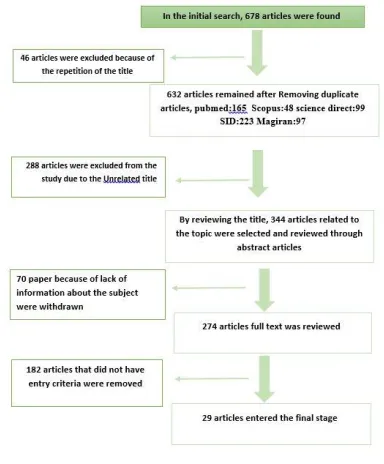
remaining articles, 288 were excluded from the study due to the fact that their titles were not relevant to the study. Then, reviewing the titles and abstracts of articles, 344 articles related to the topic were selected, of which 70 were excluded due to the inaccessibility of the full text and lack of information on the subject. Finally, the full text of 274 articles was reviewed and 182 articles that had not met the criteria were deleted. At the end, the 29 remaining studies entered the meta-analysis phase. All studies were reviewed at each stage of the study (Figure 1).
Study features
Twenty-nine studies entered the meta-analysis phase. All these studies were conducted in Iran and the prevalence of MRSA in the provinces of Ardebil, Kerman, Isfahan, Tehran, Khuzestan, Bandar Abbas, Chaharmahal and Bakhtiari, Khorasan, Fars, Qom, Kermanshah, Golestan,
Mazandaran, Central and Hamedan. The
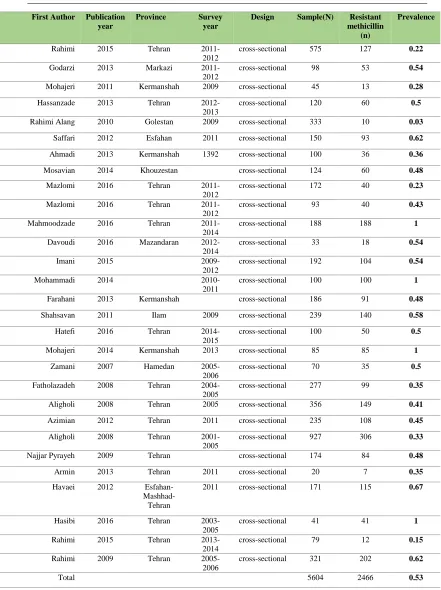
Antibiogram method was used for the MIC and the sample size varied from 20 to 927 (Table 1).
MRSA prevalence using MIC
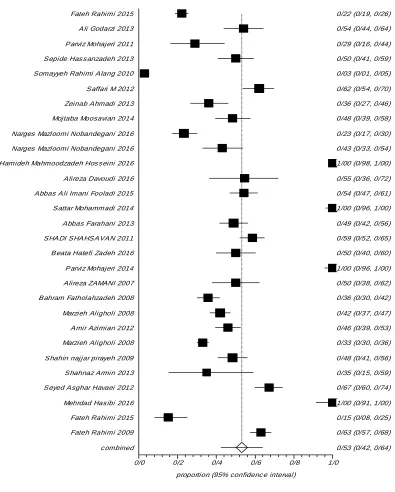
29 studies reported the prevalence of methicillin resistance using MIC in Iran from 2007 to 2016. The prevalence of MRSA was calculated using MIC antibiogram. The results of the analysis of these studies showed that the prevalence of MRSA using the MIC method is 53% (95% CI: 42.31, 63.90). The level of heterogeneity in the prevalence rates is 98.5%, which is according to the Cochrane division in 2008; this amount is
normally classified as heterogeneous (27). For subsequent studies, the random effects model was used. Based on this model, it was assumed that the observed difference resulting from the different samplings and the differences in the measured parameters of the MRSA prevalence were studied in different studies.
J Med Bacteriol. Vol. 7, No. 3, 4 (2018): pp.17-29 jmb.tums.ac.ir 21
Table 1. Characteristics of studies on the prevalence of MRSA MIC.
J Med Bacteriol. Vol. 7, No. 3, 4 (2018): pp.17-29 jmb.tums.ac.ir 22
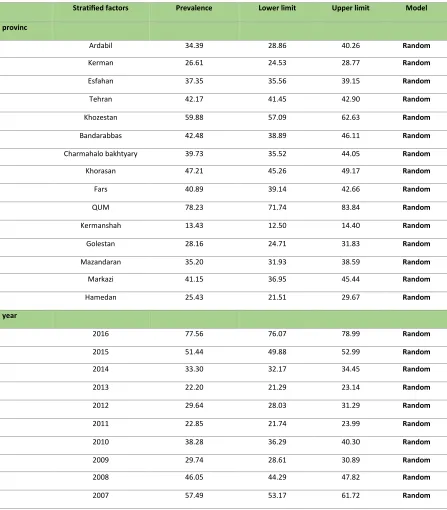
Based on the analysis subgroup of population and the year of publication of the articles showed that the overall prevalence was calculated as 40% (95% CI: 30.37, 51.18). The highest incidence rate is 77.5% (95% CI: 76.07, 78.99) in 2016 and the lowest incidence rate is 22.2% (95% CI: 21.29, 23.14) in 2013 and the heterogeneity among studies (p<0.001, I2 = 99.8%) in the quantitative evaluation of Begg test (z = 0.4, p- value = 0.07) and Egger test (z = 36.4, p-value = 0.1) was calculated. Based on provincial analysis, the overall prevalence was calculated as 39% (95% CI: 31.94, 46.40). The highest prevalence was found in Qom province as 78.2% (95% CI: 71.74, 83.84) and the least prevalence was found in Kermanshah province as 13.4% (95% CI: 12.50, 14.44) and the heterogeneity between studies was reported (p < 0.001, I2 = 99.4%). In the quantitative evaluation, the distribution bias of Begg test (z = -0.08, p-value = 0.6) and Egger test (z = 5.04, p-value = 0.4) was calculated (Table 2).
Subgroups analysis
Based on the year of publication, the incidence of MRSA in 2016 was 77.56% (95% CI: 76.07, 78.99) and in 2007, it is 57.49% (95% CI: 53.17, 61.72). From the province of study, the prevalence of MRSA in Qom was estimated about 78.23% (95% CI: 71.74, 83.84) and in Kermanshah it was estimated around 13.23% (95% CI: 12.50, 14.40).
Bias distribution
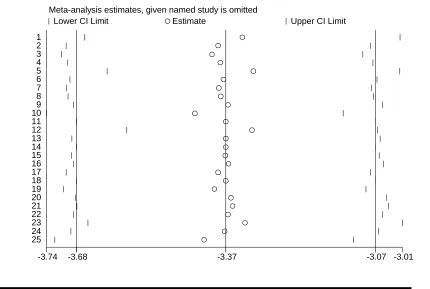
In studies of the prevalence of MRSA, the bias distribution was shown by a funnel graph (Figure 3). The Egger and Begg tests (Manzumdar) were used for the quantitative evaluation of the propagation bias. Egger's regression model considers the effect of size ratio on the standard error (Z-score) as an associated variable and predicts its value using the reverse of the standard error. The Begg method was used to calculate the Kendal tau nonparametric correlation coefficient between the standard index and the relevant criterion error in this study. Based on the results obtained in this study, Begg test (z = 10.83, p-value = 0.4) and Egger test (z = -13.22, p = 0.01) were calculated showing the bias propagation.
Discussion
J Med Bacteriol. Vol. 7, No. 3, 4 (2018): pp.17-29 jmb.tums.ac.ir 23
Pro po rti on m eta -a na l ysi s p lo t [ran do m effe cts]
0/0 0/2 0/4 0/6 0/8 1/0
c ombined 0/53 (0/42, 0/64)
Fateh Rahimi 2009 0/63 (0/57, 0/68)
Fateh Rahimi 2015 0/15 (0/08, 0/25)
Mehrdad Has ibi 2016 1/00 (0/91, 1/00)
Seyed Asghar Havaei 2012 0/67 (0/60, 0/74)
Shahnaz Armin 2013 0/35 (0/15, 0/59)
Shahin najjar pirayeh 2009 0/48 (0/41, 0/56)
Marzieh Aligholi 2008 0/33 (0/30, 0/36)
Amir Azimian 2012 0/46 (0/39, 0/53)
Marzieh Aligholi 2008 0/42 (0/37, 0/47)
Bahram Fatholahzadeh 2008 0/36 (0/30, 0/42)
Alireza ZAMANI 2007 0/50 (0/38, 0/62)
Parviz Mohajeri 2014 1/00 (0/96, 1/00)
Beata Hatefi Zadeh 2016 0/50 (0/40, 0/60)
SHADI SHAHSAVAN 2011 0/59 (0/52, 0/65)
Abbas Farahani 2013 0/49 (0/42, 0/56)
Sattar Mohammadi 2014 1/00 (0/96, 1/00)
Abbas Ali Imani Fooladi 2015 0/54 (0/47, 0/61)
Alireza Davoudi 2016 0/55 (0/36, 0/72)
Hamideh Mahmoodzadeh Hos s eini 2016 1/00 (0/98, 1/00)
Narges Mazloomi Nobandegani 2016 0/43 (0/33, 0/54)
Narges Mazloomi Nobandegani 2016 0/23 (0/17, 0/30)
Mojtaba Moosavian 2014 0/48 (0/39, 0/58)
Zeinab Ahmadi 2013 0/36 (0/27, 0/46)
Saffari M 2012 0/62 (0/54, 0/70)
Somayyeh Rahimi Alang 2010 0/03 (0/01, 0/05)
Sepide Has s anzadeh 2013 0/50 (0/41, 0/59)
Parviz Mohajeri 2011 0/29 (0/16, 0/44)
Ali Godarzi 2013 0/54 (0/44, 0/64)
Fateh Rahimi 2015 0/22 (0/19, 0/26)
proportion (95% confidenc e interval)
J Med Bacteriol. Vol. 7, No. 3, 4 (2018): pp.17-29 jmb.tums.ac.ir 24 Model Upper limit Lower limit Prevalence Stratified factors provinc Random 40.26 28.86 34.39 Ardabil Random 28.77 24.53 26.61 Kerman Random 39.15 35.56 37.35 Esfahan Random 42.90 41.45 42.17 Tehran Random 62.63 57.09 59.88 Khozestan Random 46.11 38.89 42.48 Bandarabbas Random 44.05 35.52 39.73 Charmahalo bakhtyary Random 49.17 45.26 47.21 Khorasan Random 42.66 39.14 40.89 Fars Random 83.84 71.74 78.23 QUM Random 14.40 12.50 13.43 Kermanshah Random 31.83 24.71 28.16 Golestan Random 38.59 31.93 35.20 Mazandaran Random 45.44 36.95 41.15 Markazi Random 29.67 21.51 25.43 Hamedan year Random 78.99 76.07 77.56 2016 Random 52.99 49.88 51.44 2015 Random 34.45 32.17 33.30 2014 Random 23.14 21.29 22.20 2013 Random 31.29 28.03 29.64 2012 Random 23.99 21.74 22.85 2011 Random 40.30 36.29 38.28 2010 Random 30.89 28.61 29.74 2009 Random 47.82 44.29 46.05 2008 Random 61.72 53.17 57.49 2007
J Med Bacteriol. Vol. 7, No. 3, 4 (2018): pp.17-29 jmb.tums.ac.ir 25
to 58%, India was 40%, United States was 25 to 50%, and Portugal is 54% (33, 34). The prevalence rates in hospitals in the USA and Europe were between 29 and 35%. In countries in Southeast Asia, the prevalence of MRSA was high (Sri Lanka 86.5%, South Korea 77.6%, Vietnam 74%, Taiwan 65%, Thailand 57%, Hong Kong 56%, India 22.6%, and Philippine 38.1% (35). Iran has a higher prevalence of MRSA than neighboring countries in the Eastern Mediterranean region (except Iraq) (36). This difference in the prevalence of MRSA can be due to a high prevalence as a result of the differences in economic, social, antibiotic consumption, lack of a reviewing system, lack of national program to deal with microbial resistance, and lack of appropriate control measures.
According to the systematic review of Olga, the incidence rate of MRSA in the South African
region was on average 46%. In this region, the prevalence of MRSA in Tanzania had risen from 12 to 82% in Egypt (36). It has been shown that the prevalence in Iran was higher as compared to the European and American countries, but was lower than in African and Southeast Asian countries. This difference showed increased microbial resistance. The differences of the prevalence rate among countries can be due to a difference in the geographical situation. In Europe, due to the north-south geographic gradient, the prevalence of MRSA in Scandinavia was lower, but higher in Southern Europe (33). In the study of Lin (24), which was performed as a meta-analysis in Taiwan, the incidence of MRSA was estimated to be about 4.4%. Comparing the results of the present study with other studies suggests a high prevalence of MRSA in Iran. This difference and increase in different regions of Iran could be due to
-3.74 -3.68 -3.37 -3.07 -3.01
1 2 3 4 5 6 7 8 9 10 11 12 13 14 15 16 17 18 19 20 21 22 23 24 25
Lower CI Limit Estimate Upper CI Limit
Meta-analysis estimates, given named study is omitted
J Med Bacteriol. Vol. 7, No. 3, 4 (2018): pp.17-29 jmb.tums.ac.ir 26
differences in the provision of health services, increasing the arbitrary use of antibiotics, type of patients, and access to accurate and standard laboratory methods. It was necessary to prevent the
phenomenon of increased resistance, and
consequently, increased mortality and morbidity through extensive and accurate planning, such as training on the correct use of antibiotics, the implementation of periodic care every 3 or 4 years, and the need to submit and accurately record antibiotic use statistics in the country.
WHO has recently focused on the microbial resistance and antibiotic usage in recent years, and had identified it as a major public health concern. This study, like all other studies had some limitations. Among the limitations of this research, two points were worth mentioning. In all provinces of the country, no study had been performed on the prevalence of MRSA using the MIC antibiogram method, but an overall estimation in the country can be obtained from the prevalence in the fifteen provinces studied. In meta-analysis studies, there is always the possibility of losing some articles and it should be predicted. In this study, the highest prevalence was related to four studies, with an incidence of MRSA of 100%. In a study by Mahmoudzadeh et al. (2016) performed in Tehran with a sample size of 188 patients, the prevalence of 100% (95% CI: 98.05, 100) was estimated (30). In the study by Mohammadi et al. (2014) with a sample size of 100, the prevalence of 100% (95% CI: 96.37, 100) was estimated (31). In the study of Mohajeri et al. (2014) with a sample size of 85 in Kermanshah, the prevalence of this study was 100% (95% CI: 95.75, 100) (32). In a study by Hasibi et al. (2016) with a sample size of 41 in Tehran, the prevalence of this study was 100% (95% CI: 91.39, 100) (37). The lowest prevalence was related to the study of Rahimi et al. (2010) performed in Golestan in 2010 with a sample size of 333 and the prevalence of MRSA was 3% (95% CI: 1.44, 5.45) (29). The overall prevalence rate in Iran was 53.18% (95% CI: 42.31, 63.90). The results of these studies showed that 29 studies were conducted over the period of 2007 to 2016 in the provinces of the country to determine the incidence
of MRSA using the MIC method. The sample size varied from 20 to 927. The lowest sample size was in the province of Qom and the highest in Tehran province. The prevalence rate in 2016 was the highest for these 10 years, showing an increase in resistance to antibiotics in recent decades. The highest prevalence in 2016 was 77.56% (95% CI: 76.07, 78.99) and the lowest incidence rate was 22.2% in 2013 (95% CI: 21.29, 23.14).
Conclusion
The results of this study showed that the prevalence of MRSA in Iran has a rising trend, which is a significant warning of public health problem. Considering that the resistance process in microorganisms is faster than the discovery of new and effective antibiotics, planning for the design of a national program to deal with microbial resistance, training and implementation of control measures for all parts of the society should be considered as an integral part of the healthcare system programs of the country.
Acknowledgments
This research is the result of a Master's degree in Epidemiology with the identification code No
ir.muk.rec.1395.359 from the Kurdistan
University of Medical Sciences, sponsored by Kurdistan University of Medical Sciences.
Conflict of interest
There is no conflict between the authors.
References
1. Ryu S, Head MG, Kim BI, et al. Are we
investing wisely? A systematic analysis of nationally funded antimicrobial resistance projects in Republic of Korea, 2003–2013.
JGAR 2016; 6:90-4.
2. Jabalameli F, Mirsalehian A, Sotoudeh N, et
J Med Bacteriol. Vol. 7, No. 3, 4 (2018): pp.17-29 jmb.tums.ac.ir 27
tandem repeats (VNTR) fingerprinting (MLVF) and antibacterial resistance profiles of extended spectrum beta lactamase
(ESBL) producing Pseudomonas
aeruginosa among burnt patients in Tehran.
Burns 2011; 37(7):1202-7.
3. Planta MB. The role of poverty in
antimicrobial resistance. J Am Board Fam
Med 2007; 20(6):533-9.
4. Chambers HF, DeLeo FR. Waves of
resistance: Staphylococcus aureus in the
antibiotic era. Nat Rev Microbiol 2009;
7(9):629-41.
5. Motamedi H, Mirzabeigi H, Shirali T.
Determining of antibiotic resistance profile in Staphylococcus aureus isolates. Asian Pac J Trop Dis. 2010; 3(9):734-7.
6. Mahdiyoun SM, Ahanjan M, Goudarzi M, et
al. Prevalence of Antibiotic Resistance in
Methicillin-resistant Staphylococcus aureus
and Determining Aminoglycoside
Resistance Gene by PCR in Sari and Tehran
Hospitals. JMUMS 2015; 25(128):97-107.
7. Hassanzadeh S, Pourmand M, Hadadi A, et
al. Frequency and Antimicrobial Resistance
Patterns of Methicillin-Resistant
Staphylococcus aureus in Tehran. J Med Bacteriol 2015; 2(3-4):41-6.
8. Wise R. Antimicrobial resistance: priorities
for action. J Antimicrob Chemother 2002;
49(4):585-6.
9. Ghasemian A, Mirzaee M. Methicillin
Resistant Staphylococcus aureus (MRSA) Strains and the Staphylococcal Cassette
Chromosome mec Types in Iran. Infect
Epidemiol Microbiol 2016; 2(3):31-4.
10.Shinde RV, Pawar SK, Mohite RV, et al.
Study of nasal carriage of Staphylococcus
aureus with special reference to methicillin
resistance among nursing staff. Arch Clin
Microbiol 2016; 7(7):1-6.
11.Asadollahi P, Delpisheh A, Maleki MH, et
al. Enterotoxin and Exfoliative Toxin Genes
Among Methicillin-Resistant
Staphylococcus aureus Isolates Recovered
From Ilam, Iran. Avicenna J Clin Microb
Infec 2014; 1(2).
12.Morgenstern M, Erichsen C, Hackl S, et al.
Antibiotic resistance of commensal
Staphylococcus aureus and coagulase-negative staphylococci in an international cohort of surgeons: a prospective
point-prevalence study. PLOS One. 2016;
11(2):e0148437.
13.Askarian M, Zeinalzadeh A, Japoni A, et al.
Prevalence of nasal carriage of
methicillin-resistant Staphylococcus aureus and its
antibiotic susceptibility pattern in healthcare
workers at Namazi Hospital, Shiraz, Iran. Int
J Infect Dis 2009; 13(5):e241-e7.
14.Askari E, Soleymani F, Arianpoor A, et al.
Epidemiology of mecA-methicillin resistant
Staphylococcus aureus (MRSA) in Iran: a
systematic review and meta-analysis. Iran J
Basic Med Sci 2012; 15(5):1010.
15.Klevens RM, Morrison MA, Nadle J, et al.
Invasive methicillin-resistant
Staphylococcus aureus infections in the
United States. Jama. 2007; 298
(15):1763-71.
16.Ekrami A, Kayedani A, Jahangir M, et al.
Isolation of common aerobic bacterial pathogens from the environment of seven
hospitals, Ahvaz, Iran. Jundishapur J
Microbiol 2011; 4(2):75-82.
17.Morens DM, Fauci AS. Emerging infectious
diseases: threats to human health and global
stability. PLOS Pathog. 2013;
9(7):e1003467.
18.Spellberg B, Powers JH, Brass EP, et al.
Trends in antimicrobial drug development:
implications for the future. Clin Infect Dis
2004; 38(9):1279-86.
J Med Bacteriol. Vol. 7, No. 3, 4 (2018): pp.17-29 jmb.tums.ac.ir 28
methicillin-resistant Staphylococcus aureus.
Clin Infect Dis 2008;
46(Supplement_5):S344-S9.
20.Lenton S, Single E. The definition of harm
reduction. Drug Alcohol Rev 1998;
17(2):213-20.
21.Von Elm E, Altman DG, Egger M, et al. The
Strengthening the Reporting of
Observational Studies in Epidemiology
(STROBE) Statement: guidelines for
reporting observational studies. Int J Surg
2014; 12(12):1495-9.
22.Moher D, Liberati A, Tetzlaff J, et al.
Preferred reporting items for systematic reviews and meta-analyses: the PRISMA
statement. PLOS Med. 2009; 6(7):e1000097.
23.Higgins JP, Thompson SG, Deeks JJ, et al.
Measuring inconsistency in meta-analyses.
BMJ. 2003; 327(7414):557.
24.Lin J, Peng Y, Xu P, et al.
Methicillin-Resistant Staphylococcus aureus Nasal
Colonization in Chinese Children: A Prevalence Meta-Analysis and Review of
Influencing Factors. PLOS One. 2016;
11(7):e0159728.
25.Deng J, Wan C, Mu D, et al. Nasal carriage
of community-acquired Staphylococcus
aureus and drug sensitivity tests in healthy
children in Chengdu. Sichuan Da Xue Xue
Bao Yi Xue Ban. 2012; 43(3):391-4.
26.Sterne JA, Egger M, 2005. Regression
methods to detect publication and other bias in analysis, Publication bias in
meta-analysis: Prevention, assessment and
adjustments. Hannah R. Rothstein,
Alexander J. Sutton, Michael Borenstein, John Wiley & Sons, Chichester, England. pp. 99-110.
27.Higgins J, Thompson S, Deeks J, et.al.
Statistical heterogeneity in systematic reviews of clinical trials: a critical appraisal
of guidelines and practice. J Health Serv Res
Policy 2002; 7(1):51-61.
28.Carlet J, Jarlier V, Harbarth S, et, al. Ready
for a world without antibiotics? The pensières antibiotic resistance call to action.
Antimicrob Resist Infect Control 2012;
1(1):11.
29.Rahimi-Alang S, Asmar M, Cheraghali F, et
al. Frequency of methicillin resistant
Staphylococcus aureus in health care.
Zahedan J Res Med Sci 2011; 13(1):17-22.
30.Mahmoodzadeh Hosseini H, Kiyani N, et, al.
Distribution of high-level mupirocin
resistance among clinical MRSA. J
Chemother 2017; 29(4):215-9.
31.Mohammadi S, Sekawi Z, Monjezi A, et al.
Emergence of SCCmec type III with variable antimicrobial resistance profiles and spa
types among methicillin-resistant
Staphylococcus aureus isolated from
healthcare-and community-acquired
infections in the west of Iran. Int J Infect Dis
2014; 25:152-8.
32.Mohajeri P, Farahani A, Davoodab A.
Prevalence of vancomycin resistance in
methicillin-resistant Staphylococcus aureus.
Kerman Univ Med Sci 2014; 21(5).
33.Stefani S, Varaldo P. Epidemiology of
methicillin‐resistant staphylococci in
Europe. Clin Microbiol Infect 2003;
9(12):1179-86.
34.Kali A, Stephen S, Sivaraman Umadevi SK,
et, al. Changing trends in resistance pattern
of methicillin resistant Staphylococcus
aureus. J Clin Diagn Res 2013; 7(9):1979.
35.Stefani S, Chung DR, Lindsay JA, et al.
Meticillin-resistant Staphylococcus aureus
(MRSA): global epidemiology and
harmonisation of typing methods. Int J
Antimicrob Agents 2012; 39(4):273-82.
36.Perovic O, Iyaloo S, Kularatne R, et al.
Prevalence and trends of Staphylococcus
J Med Bacteriol. Vol. 7, No. 3, 4 (2018): pp.17-29 jmb.tums.ac.ir 29
in South Africa, 2010 to 2012: laboratory-based surveillance mapping of antimicrobial resistance and molecular epidemiology.
PLOS One. 2015; 10(12):e0145429.
37.Hasibi M, Iravani B. Prevalence of
Methicillin and Vancomycin resistant
Staphylococcus aureus colonization in
nasopharynx Amir-Alam hospital, 2005.