Available online at http://jddtonline.info
REVIEW ARTICLE
SOLUBILITY ENHANCEMENT BY SOLID DISPERSION METHOD: A REVIEW
Singh Jaskirat*, Walia Manpreet, Harikumar S L
Rayat and Bahra Institute of Phamacy, Sahauran, Kharar, District Mohali, Punjab, India-140104
*Corresponding Author’s E-mail: [email protected], Contact No: +91-8968590808
INTRODUCTION:
The oral route of drug administration is the most common and preferred method of delivery due to convenience and ease of ingestion. From a patient’s perspective, swallowing a dosage form is a comfortable and a familiar means of taking medication. As a result, patient compliance and hence drug treatment is typically more effective with orally administered medications as compared with other routes of administration1. Limited drug absorption resulting in poor bioavailability is paramount amongst the potential problems that can be encountered when delivering an active agent via the oral route. Hence, two areas of pharmaceutical research that focus on improving the oral bioavailability of active agents include enhancing solubility and dissolution rate of poorly water-soluble drugs and enhancing permeability of poorly permeable drugs2. Other methods, such as salt formation, complexation with cyclodextrins, solubilization of drugs in
solvent(s), and particle size reduction have also been utilized to improve the dissolution properties of poorly water soluble drugs3,4,5 .In the Biopharmaceutical Classification System (BCS) drugs with low aqueous solubility and high membrane permeability are categorized as Class II drugs. Therefore, solid dispersion technologies are particularly promising for improving the oral absorption and bioavailability of BCS Class II drugs6.
SOLID DISPERSION7:
The term solid dispersion refers to a group of solid products consisting of at least two different components, generally a hydrophilic matrix and a hydrophobic drug. The matrix can be either crystalline or amorphous7. The drug can be dispersed molecularly, in amorphous particles (clusters) or in crystalline particles.
Table 1: BCS calssification system6
Class Solubility Permeability Example of drugs
Class I High solubility High permeability Benzapril, Loxoprofen, Sumatriptan etc.
Class II High solubility Low permeability Valsartan,Nimesulide,Loratadine,Aceclofenac, Glimepiride etc Class III Low solubility High permeability Gabapentine, Topiramate, Atropine etc.
Class IV Low solubility Low permeability Hydrochlorthiazide,Furosemide,Meloxicam etc.
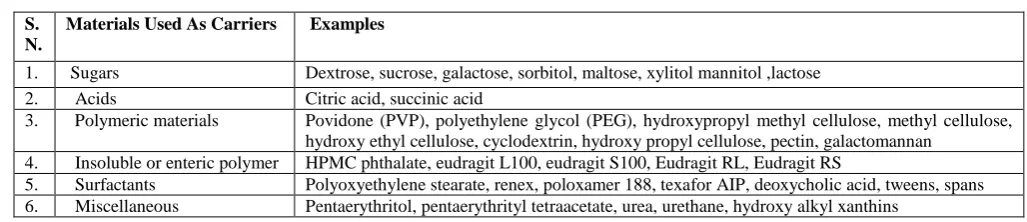
Table 2: Materials used as carrier for solid dispersion7
S. N.
Materials Used As Carriers Examples
1. Sugars Dextrose, sucrose, galactose, sorbitol, maltose, xylitol mannitol ,lactose
2. Acids Citric acid, succinic acid
3. Polymeric materials Povidone (PVP), polyethylene glycol (PEG), hydroxypropyl methyl cellulose, methyl cellulose, hydroxy ethyl cellulose, cyclodextrin, hydroxy propyl cellulose, pectin, galactomannan
4. Insoluble or enteric polymer HPMC phthalate, eudragit L100, eudragit S100, Eudragit RL, Eudragit RS
5. Surfactants Polyoxyethylene stearate, renex, poloxamer 188, texafor AIP, deoxycholic acid, tweens, spans 6. Miscellaneous Pentaerythritol, pentaerythrityl tetraacetate, urea, urethane, hydroxy alkyl xanthins
ABSTRACT
Solid dispersions have attracted considerable interest as an efficient means of improving the dissolution rate and hence bioavailability of a range of hydrotrophic drugs. Up to 40% of new chemical entities discovered by the pharmaceutical industry today are poorly soluble or lipophilic compounds. Solid dispersions of poorly water-soluble drugs with water-soluble carriers reduce the incidence of these problems and enhanced dissolution. Solid dispersion is one of the most promising approaches for solubility enhancement. The term solid dispersion refers to a group of solid products consisting of at least two different components, generally a hydrophilic matrix and a hydrophobic drug. The matrix can be either crystalline or amorphous. As per biopharmaceutical classification system class II drugs are with low solubility and high permeability and are the promising candidates for improvement of bioavailability by solid dispersion. Some of the practical aspects to be considered for the preparation of solid dispersions, such as selection of carrier, molecular arrangement of drugs in solid dispersions are discussed in this article. This article reviews the various preparation techniques for solid dispersion, characterization and compiles some of the recent technology transfers. Availability of a wide variety of polymers that are themselves poorly soluble or which swell under aqueous conditions suggests that solid dispersions have tremendous potential in the area of controlled release dosage forms.
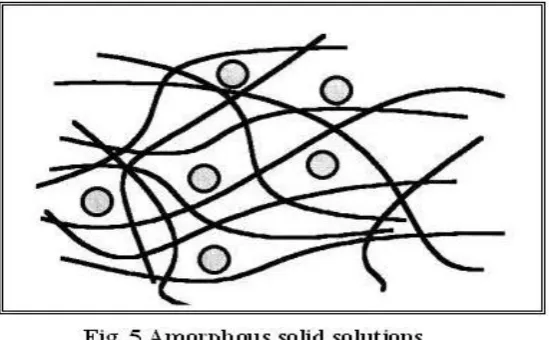
Solid solution: Solid solutions are comparable to liquid solutions, consisting of just one phase irrespective of the number of components. In the case of solid solutions, the drug's particle size has been reduced to its absolute minimum viz. the molecular dimensions14 and the dissolution rate is determined by the dissolution rate of the carrier. Classified according to their miscibility (continuous versus discontinuous solid solutions) or second, according to the way in which the solvate
molecules are distributed in the solvendum
(substitutional, interstitial or amorphous). Continuous solid solutions:
In a continuous solid solution, the components are miscible in all proportions. Theoretically, this means that the bonding strength between the two components is stronger than the bonding strength between the molecules of each of the individual components. Solid
that of the solvent molecules . Classical solid solutions have crystalline structure, in which the solute molecules can either substitute for solvent molecules in the crystal lattice or fit into the intrsticies between the solvent molecule.
Interstitial solid solutions:
In interstitial solid solutions, the dissolved molecules occupy the interstitial spaces between the solvent molecules in the crystal lattice. Solute molecule diameter should be less than 0.59 times than that of solvent molecular diameter.16
Glass solution and suspensions
Table 3: Types of Solid Dispersion18
S.No Solid Dispersion Type Matrix* Drug** Remarks No phases Reference
1. Eutectics C C The first type of solid dispersion
prepared
2 (Chiou and
Riegelman, 1971)
2. Amorphous
precipitations in crystalline matrix
C A Rarely Encountered 2 (Breitenbach AH,
2002); (Mullins and Macek, 1960)
3. Solid solutions
A. Continuous Solid
Solutions
C M Miscible at all composition,
never prepared
1 (Goldberg et
al., 1965]
B Discontinuous solid
solutions
C M Partially miscible, 2 phases even
though drug is molecularly
dispersed
2 Sekiguchi K and
Obi N (1961)
C Substitutional solid
solutions
C M Molecular diameter of drug
(solute) differs less than 5% from the matrix (solvent) diameter. In that case the drug and matrix are substitutional. Can be continuous
or discontinuous. When
discontinuous: 2 phases even though drug is molecularly dispersed
1or 2 (Rastogi and
Verma,1956); (Wilcox et al., 1964)
D Interstitial solid solutions
C M Drug (solute) molecular diameter
less than 59% of matrix (solvent)
diameter. Usually limited
miscibility, discontinuous.
2 (Chiou and
Riegelman,1971);
(Chiou and
Riegelman, 1969)
4. Glass suspension A C Particle size of dispersed phase
dependent on cooling/evaporation rate. Obtained after crystallization of drug in amorphous matrix
2 Riegelman,
1971);
(Sarkari M et al., 2002)
5. Glass suspension A A Particle size of dispersed phase
dependent on cooling/evaporation rate many solid dispersions are of this type
2 Riegelman,
1971);
(Sarkari M et al., 2002)
6. Glass solution A M Requires miscibility OR solid
solubility, complex formation or upon fast cooling OR evaporation during preparation, many (recent) examples especially with PVP
1 Simonelli APet
al., 1969
*A: matrix in the amorphous state, C: matrix in the crystalline state
Chemically compatible with the drug and not form a strongly bonded complex with the drug.
FIRST GENERATION CARRIERS:
Example: Crystalline carriers: Urea, Sugars, Organic acids20.
SECOND GENERATION CARRIERS:
Example: Fully synthetic polymers include povidone
(PVP), polyethyleneglycols (PEG) and
polymethacrylates19.Natural product based polymers are mainly composed by cellulose derivatives, such as hydroxypropylmethylcellulose (HPMC), ethylcellulose or hydroxypropylcellulose or starch derivates, like cyclodextrins21.
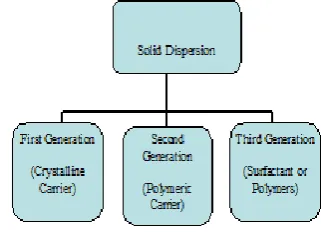
Figure 6: Classification of solid dispersion
SELECTION OF SOLVENTS:
Solvent to be included for the formulation of solid dispersion should have the following criteria:
Both drug and carrier must be dissolved.
Toxic solvents to be avoided due to the risk of residual levels after preparation e.g. chloroform and dichloromethane22.
Ethanol can be used as alternative as it is less toxic. Water based systems are preferred.
Surfactants are used to create carrier drug solutions but as they can reduce glass transition temperature, so care must be taken in to consideration.
Table 4: List ofSolvents Used In Solid Dispersion22
S.NO SOLVENT MELTINGPOINT (°C) BOILINGPOINT (°C)
1 Water 0 100
2 Methanol -93.9 65
3 Ethanol -117 78.5
4 Acetic acid 17 118
5 1-propanol -85 97.4
6 2-propanol -127 82.4
7 Chloroform -63 62
8 DMSO 19 189
ADVANTAGES OF SOLID DISPERSION:
Particles with Reduced Particle Size
Molecular dispersions, as solid dispersions, represent the last state on particle size reduction, and after carrier dissolution the drug is molecularly dispersed in the dissolution medium. Solid dispersions apply this principle to drug release by creating a mixture of a poorly water soluble drug and highly soluble carriers. A high surface area is formed, resulting in an increased dissolution rate and, consequently, improved bioavailability23.
Particles with Improved Wettability
Carriers with surface activity, such as cholic acid and bile salts. When used, can significantly \increase the wettability property of drug. Even carriers without any surface activity, such as urea, improved drug wettability. Carriers can influence the drug dissolution profile by direct dissolution or co-solvent effects.
Particles with Higher Porosity
Particles in solid dispersions have been found to have a higher degree of porosity. The increase in porosity also depends on the carrier properties; for instance, solid dispersions containing linear polymers produce larger and more porous particles than those containing reticular polymers and, therefore, result in a higher dissolution rate. The increased porosity of solid dispersion particles also hastens the drug release profile.
Drugs in Amorphous State
can be obtained by choosing carriers, which exhibit specific interactions with them.
DISADVANTAGES OF SOLID DISPERSION:
The major disadvantages of solid dispersion are related to their instability. Several systems have shown changes in crystallinity and a decrease in dissolution rate with aging. The crystallization of ritonavir from the supersaturated solution in a solid dispersion system was responsible for the withdrawal of the ritonavir capsule (Norvir, \Abboft) from the market25.
Moisture and temperature have more of a deteriorating effect on solid dispersions than on physical mixtures. Some solid dispersion may not lend them to easy handling because of tackiness.
APPLICATIONS OF SOLID DISPERSION IN PHARMACEUTICAL FIELD:
Apart from absorption enhancement, the solid dispersion
technique may have numerous pharmaceutical
applications, which should be further explored. It is possible that such a technique be used:
To obtain a homogeneous distribution of a small amount of drug in solid state.
To stabilize the unstable drug26.
To dispense liquid (up to 10%) or gaseous compounds in a solid dosage.
To formulate a fast release primary dose in a sustained released dosage form.
To formulate sustained release regimen of soluble drugs by using poorly soluble or insoluble carriers. To reduce pre systemic inactivation of drugs
likemorphine and progesterone27.
Polymorphs in a given system can be converted into isomorphous, solid solution, eutectic or molecular addition compounds28.
MECHANISM OF BIOAVAILABILITY
ENHANCEMENT:
The enhancement in dissolution rate because of solid dispersion formation, relative to pure drug, varies from as high as 400 fold to less than two fold29. The increase in dissolution rate can be attributed to myriad factors and it is very difficult to show experimentally that any one particular factor is more important than the other. Solid dispersions increase the dissolution rate of poorly watersoluble drugs by one of the following mechanisms30 .
Reduction in particle size
Improvement in wettability and dispersibility
Changing crystalline form of drug to amorphous form Reduction in aggregation and agglomeration of drug
particles.
POLYMERS USED IN SOLID DISPERSIONS:
Polyethylene Glycol (PEG):
The term polyethylene glycol refers to compounds that are obtained by reacting ethylene glycol with ethylene oxide. PEGs whose molecular weight is above 300000 are commonly termed as polyethylene oxides3031
Phospholipids:
The complexity of glycerides advances by modification of the terminal hydroxyl with phosphate linked head groups to form phospholipids, common phospholipid head groups include choline, ethanolamine, serine, inositol and inositol phosphate, and glycerol esters32. As with the triglycerides, numerous species are possible by various combinations of different head groups and fatty acyl substitution at the first and second positions of the glycerol backbone, fluidity differences are evident as a function of the gel to liquid crystalline transition temperatures. Solubility of phospholipids is intimately linked to the confirmation of the aggregate material rather than strictly a chemical function of the molecule. Monoacyl phospholipids, which tend to form micelles, are usually more readily soluble in aqueous solutions31
Polyvinyl Pyrrolidone (PVP):
PVP has a molecular weight ranging from 10000 to 700000. It is soluble in solvents like water, ethanol, chloroform and isopropyl alcohol. PVP is not suitablefor preparation of solid dispersions prepared by melt method because of its melt at a very high temperature above 275, where it becomes decomposed.
Effect of PVP Molecular Weight:
The effect of molecular weight of PVP on the rate of dissolution of a drug is more consistent than for PEG. An increase in molecular weight of PVP will decrease the dissolution rate of most drugs.32 An increase in viscosity of PVP solution due to an increase in molecular weight decreases diffusion of drug molecules from the surface of viscous material into the dissolution medium, lower molecular weight PVP has a short swelling time prior to dissolution resulting in an increase in dissolution n rate of the polymer and drug.
Cyclodextrins:
Cyclodextrins are primarily used to enhance solubility, chemical protection, taste masking \and improved handling by the conversion of liquids into solids by entrapment33,34.
Advantages of Cyclodextrins:
Increasing the stability of the drug Release profile during gastrointestinal transit through modification of drug Release site and time profile35. Decreasing local tissue irritation. Masking unpleasant taste.
METHODS OF PREPARATION OF SOLID
DISPERSION:
Melting method:
solvents37.
However, some disadvantages are associated with this method such as
The higher cost of preparation.
The difficulty in completely removing liquid solvent. The possible adverse effect of traces of the solvent on
the chemical stability
The selection of a common volatile solvent. The difficulty of reproducing crystal form.
In addition, a super saturation of the solute in the solid system cannot be attained except in a system showing highly viscous properties.
Melting solvent method (melt evaporation):
It involves preparation of solid dispersions by dissolving the drug in a suitable liquid solvent and then incorporating the solution directly into the melt of polyethylene glycol, which is then evaporated until a clear, solvent free film is left. The film is further dried to constant weight. The 5 – 10% (w/w) of liquid compounds can be incorporated into polyethylene glycol6000 without significant loss of its solid property37. It is possible that the selected solvent or dissolved drug may not be miscible with the melt of the polyethylene glycol. Also the liquid solvent used may affect the polymorphic form of the drug, which precipitates as the solid dispersion. This technique possesses unique advantages of both the fusion and solvent evaporation methods. From a practical standpoint, it is only limited to drugs with a low therapeutic dose e.g. below 50 mg.
Melt extrusion method:
The drug/carrier mix is typically processed with a twin-screw extruder. The drug/carrier mix is simultaneously melted, homogenized and then extruded and shaped as tablets, granules, pellets, sheets, sticks or powder. The intermediates can then be further processed into conventional tablets. An important advantage of the hot melt extrusion method is that the drug/carrier mix is only subjected to an elevated temperature for about 1 min, which enables drugs that are somewhat thermo labile to be processed.Solid dispersion by this method is composed of active ingredient and carrier, and prepare by hot-stage extrusion using a co-rotating twin-screw extruder. The concentration of drug in the dispersions is always 40% (w/w). The screw-configuration consist of two mixing zones and three transport zones distribute over the entire barrel length, the feeding rate is fix at 1 kg/h and the screw rate is set at 300 rpm. The five temperature zones are set at
Melt Agglomeration Process :
This technique has been used to prepare SD wherein the binder acts as a carrier. In addition, SD(s) are prepared either by heating binder, drug and excipient to a temperature above the melting point of the binder (melt- in procedure) or by spraying a dispersion of drug in molten binder on the heated excipient (spray-on procedure) by using a high shear mixer38. A rotary processor has been shown to be alternative equipment for melt agglomeration. The rotary processor might be preferable to the high melt agglomeration because it is easier to control the temperature and because a higher binder content can be incorporated in the agglomerates19. The effect of binder type, method of manufacturing and particle size are critical parameters in preparation of SD(s) by melt agglomeration. Since these parameters result in variations in dissolution rates, mechanism of agglomerate formation and growth, agglomerate size, agglomerate size distribution and densification of agglomerates. It has been investigated that the melt in procedure gives a higher dissolution rates than the spray-on procedure with PEG 3000, poloxamer 188 and gelucire 50/13 attributed to immersion mechanism of agglomerate formation and growth. In addition the melt in procedure also results in homogenous distribution of drug in agglomerate. Larger particles results in densification of agglomerates while fine particle cause complete adhesion to the mass to bowl shortly after melting attributed to distribution and coalescence of the fine particles.
The use of surfactant :
The utility of the surfactant systems in solubilization is well known. Adsorption of surfactant on solid surface can modify their hydrophobisity, surface charge, and other key properties that govern interfacial processes such as flocculation/dispersion, floatation, wetting, solubilization, detergency, enhanced oil recovery and corrosion inhibition. Surfactants have also been reported to cause solvation/plasticization, manifesting in reduction of melting the active pharmaceutical ingredients, glass transition temperature and the combined glass transition temperature of solid dispersions. Because of these unique properties, surfactants have attracted the attention of investigators for preparation of solid dispersions..
Electrospinning :
a conductive capillary attaching to a reservoir containing a polymer solution or melt and a conductive collection screen. Upon increasing the electrostatic field strength up to but not exceeding a critical value, charge species accumulated on the surface of a pendant drop destabilize the hemispherical shape into a conical shape (commonly known as Taylor s cone). Beyond the critical value, a charged polymer jet is ejected from the apex of the cone (as a way of relieving the charge built-up on the surface of the pendant drop). The ejected charged jet is then carried to the collection screen via the electrostatic force. The Coulombic repulsion force is responsible for the thinning of the charged jet during its trajectory to the collection screen. The thinning down of the charged jet is limited by the viscosity increase, as the charged jet is dried 39. This technique has tremendous potential for the preparation of nanofibres and controlling the release of biomedicine, as it is simplest,the cheapest 25 this technique can be utilized for the preparation of solid dispersions in future.
Super Critical Fluid (Scf) Technology:
This technology has been introduced in the late 1980s and early 1990s, and experimental proofs of concept are abundant in the scientific literature for a plethora of model compounds from very different areas such as drugs and pharmaceutical compounds, polymers and biopolymers, explosives and energy materials, superconductors and catalyst precursor’s dyes and biomolecules such as proteins and peptides. From the very beginning of supercritical fluid particle generation research, the formation of biocompatible polymer and drug-loaded biopolymer micro-particles for pharmaceutical applications has been studied intensively by a number of researcher groups38 CFs either as solvent: rapid expansion from supercritical solution (RESS) or antisolvent: gas antisolvent (GAS), supercritical antisolvent (SAS), solution enhanced dispersion by supercritical fluids (SEDS) and/or dispersing fluid: GAS, SEDS, particles from gas-saturated solution (PGSS). Conventional methods, i.e. Spray drying, solvent evaporation and hot melt method often result in low yield, high residual solvent content or thermal degradation of the active substance39 the supercritical fluid antisolvent techniques, carbon dioxide is used as an antisolvent for the solute but as a solvent with respect to the organic solvent. Different acronyms were used by various authors to denote micronization processes: aerosol solvent extraction system (ASES), precipitation with a compressed fluid antisolvent (PCA), gas anti-solvent (GAS), solution enhanced dispersion by supercritical fluids (SEDS) and supercritical anti-solvent (SAS). The SAS process involves the spraying of the solution composed of the solute and of the organic solvent into a continuous supercritical phase flowing cocurrently 38 use of supercritical carbon dioxide is advantageous as it is much easier to remove from the polymeric materials when the process is complete, even though a small amount of carbon dioxide remains trapped inside the polymer; it poses no danger to the patient. In addition the ability of carbon dioxide to plasticize and swell polymers can also be exploited and the process can be carried out near room temperature 39 Moreover, supercritical fluids are used to lower the temperature of melt dispersion process by reducing the melting temperature of dispersed active agent. The reason for this depression is the solubility of the lighter component (dense gas) in the forming phase (heavier component)40.
MARKETED PRODUCTS:
Gris-PEG, a griseofulvin-PEG fusion method solid dispersion, was manufactured initially by
Dorsey / Sandoz and reached the market in the mid- 1970s.Gris-PEG was developed as tablet product, and this led to two USP monographs for griseofulvin tablets. Griseofulvin solid dispersion.tablets are currently marketed by a number of manufacturers and contain corn starch, lactose, magnesium stearate, PEG, and sodium lauryl sulfate as inactive ingredients41.
Cesamet, a nabilone-PVP solvent method solid dispersion manufactured by Eli Lilly and Co. has been marketed internationally since 1982. Eli Lilly discontinued marketing Cesamet contains PVP and corn starch as inactive ingredients and is presented as a capsule product42.
Solid dispersion formulation of Troglitazone (Rezulin) is marketed by Parke-Davis.
Solid Solutions of lopinavir and ritonavir in
polyvinylpyrrolidone-vinyl acetate. copolymer
successfully enabled a reformulation of "Kaletra" ( Abbott Laboratories, Abbott Park, IL). In addition to reducing the dosage burden from six softgel capsules to four tablets, tablets made with the solid solutions eliminate the need for refrigeration.
"Sporanox" (Janssen Pharmaceutica, Titusville, NJ) is a solid dispersion of itraconazole in hypromellose that has been layered onto sugar spheres.
The most recently approved product is the nonnucleoside reverse transcriptase inhibitor"Intelence" ( Tibotec, Yardley, PA), an amorphous, spray-dried solid dispersion of etravirine, hypromellose, and microcrystalline cellulose.
CHARACTERIZATION OF SOLID DISPERSION:
Many methods are available that can contribute information regarding the physical nature of solid dispersion system. A combination of two or more methods is required to study its complete picture43.
Thermal analysis. Spectroscopic method. X-ray diffraction method. Dissolution rate method. Microscopic method.
Thermodynamic method.
Modulated temperature differential scanning calorimetry Environmental scanning electron microscopy
Dissolution testing
RECENT ADVANCES AND FUTURE TRENDS:
Solid dispersion has great potential both for increasing the bioavailability of drug and developing controlled release preparations. Thus, to solve bioavailability issues with respect to poorly water-soluble drugs, solid dispersion technology has grown rapidly. The dosage form can be developed and prepared using small amounts of drugs substances in early stages of the drug development process, the system might have an advantage over such other commonly used bioavailability enhancement techniques as micronization of drugs and soft gelatin encapsulation.
CONCLUSION:
solubility of roxithromycin, Int. J.Pharm.,2006; 22-32.
5. Chaudhari P.D., Current trend in solid dispersion techniques, www.pharmainfo.net,2006; 2-12,
6. Amidon GL, Lennernas H, Shah VP, Crison JR, Theoretical basis for a biopharmaceutical drug classification: the correlation of in vitro drug product dissolution and in vivo bioavailability, Pharm Res, 2(3), 1995, 413-420
7. Dhirendra k, solid dispersions: a review, pak. j. pharm. sci., vol.22, no.2, April 2009, pp.234-246
8. Sekiguchi K, Obi N, Studies on Absorption of Eutectic Mixture. I. A comparison of the behaviour of eutectic mixture of sulfathiazole and that of ordinary sulfathiazole in man, Chem. Pharm. Bull, 9, 1961, 866-872.
9. Chiou WL, Riegelman S, Pharmaceutical applications of solid dispersion systems, J. Pharm. Sci, 60, 1971, 1281-1302
10.Chiou WL, Riegelman S, Preparation and dissolution characteristics of several fast-release solid dispersions o fgriseofulvin, J. Pharm. Sci, 58(12),1969, 1505-1510.
11. Goldberg AH, Gibaldi M, Kanig JL, Increasing dissolutionrates and gastrointestinal absorption of drugs via solid solutions and eutectic mixtures II - experimental evaluation of a eutectic mixture: urea-acetaminophen system, J.
Pharm. Sci. 55,1966, 482-487
12. Castellan GW, Physical Chemistry, Addison-Wesley, Menlo Park, CA, 1983, 324-336
13. Swarbrick J, Encyclopedia of Pharmaceutical Technology,ed 3, 2006, 775-777.
14. Goldberg AH, Gibaldi M, Kanig JL, Increasing dissolutionrates and gastrointestinal absorption of drugs via solidsolutions and eutectic mixtures. I. Theoreticalconsiderations and discussion of the literature, J. Pharm. Sci , 54(8), 1965, 1145-1148.
15. Hume-Rotherly W, Raynor GV, The Structure of Metals and Alloys, Institute of Metals, London, 1954.
16. Reed-Hill RE, Physical Metallurgy Principles, Van-Nostrand, Princetown, NJ, 1964.
17.Arunachalam A, Karthikeyan M, Konam K, Prasad P, Sethuraman S, Ashutoshraman S, Solid dispersions: a review, CPR, 2010, 1:82-90.
18. Chiou WL, Riegelman S. Pharmaceutical application of solid dispersion system. J Pharm Sci 1971; 60:1281-1302.
19. Kumar DS et al. Solubility improvement using solid dispersion; strategy,mechanism and characteristics: responsiveness and prospect way outs.International Research Journal of Pharmacy, 2011, Vol. 2, p.55-60.
20. Sharma D, Soni M, Kumar S and GuptaGD. Solubility Enhancement –Eminent Role in Poorly Soluble Drugs. Research Journal of Pharmacy and Technology,2009, Vol. 2, p. 220-224. 21. Vasconcelos TF, Sarmento B and Costa P.Solid dispersion as
strategy to improve oral bioavailability of poor water soluble drugs. Drug Discovery Today, 2007, Vol.12, p. 1068-1075. 22. Kamalakkannan V, Puratchikody A,Masilamani K and
Senthilnathan B,Solubility enhancement of poorly solubledrugs by solid dispersion technique – Areview. Journal of Pharmacy Research,2010, Vol. 3, p. 2314-2321.
23. Remingtons Pharmaceutical Sciences, 1980.vol.1 &2
24. D.Nagasamy Venkatesh and S.Sangeetha: Solid dispersions-A review; International Journal of Pharma Research, 2008, 1, 5-12
Rutgers, NJ. [Serial online] 2009 june [cited 2011 feb 27]. Available from: URL: http://www.njbiomaterials.org.
28. Liu R, editor Water insoluble drug formulation. Library of Congress Cataloging-in- Publication Data; 2007.
29.Craig DQM. The mechanism of drug release from solid dispersion in water soluble polymers. Int J Pharm. 2002; 231:131-144. 30. Arise MJ, Gines JM, Moyano JR, Perez M. Influence of
preparation method of solid dispersions their dissolution rate; Study of triamterene d-mannitol system. Int J Pharm. 1995; 123:25-31
31Price JC. Polyethylene glycol. In: Wade A, Weller PJ, Ed. Handbook of Pharmaceutical Excipients, Washington DC/London: American Pharmaceutical Association/The Pharmaceutical Press, 1994, 355-361.
32. Shah JC, Chen JR, Chow D, Preformulation study of etoposide, increased solubility and dissolution rate by solid-solid dispersions, Int J Pharm, 1995, 103-111.
33. Walking WD. Povidone. In: Wade A, Weller PJ, Ed. Handbook of Pharmaceutical Excipients, Washington DC/London: American Pharmaceutical Association/The Pharmaceutical Press, 1994, 392-399.
34. Sekiguchi K, Obi N, Studies on Absorption of Eutectic Mixture, A comparison of the behaviour of eutectic mixture of sulfathiazole and of ordinary sulfathiazole in man, Chem Pharm Bull, 1961, 866-872.
35. Sharma A, Jain CP, Solid dispersion: A promising technique to enhance solubility of poorly water soluble drug, International Journal of Drug Delivery, 2011, 149-170
36. Serajuddin A. Solid Dispersion Technique.J.Pharm.Sci., 1999; 88(10); 891-900
37. Narang A, Shrivastava A. Drug Dev. Ind. Pharm. 2002; 26(8): 111-115.9.
38. Zhang, W., Yan, E., Huang, Z., Wang, C., Xin, Y., Zhao, Q., and Tong, Y., 2007. Preparation and study of PPV/ PVA nanofibers via electrospinning PPV precursor alcohol solution. Europ. Poly., 43: 802-897.
39. Taki, S., Badens, E., and Charbit, G., 2001. Controlled release system formed by supercritical anti-solvent coprecipitation of a herbicide and a biodegradable polymer. J. Supercrit. Fluids., 21: 61-70.
40. Dohrn, R., Bertakis, E., Behrend, O., Voutsas, E., and Tassios, D., 2007. Melting point depression by using supercritical CO2 for a novel melt dipersionmicronization process. J. Mol. Liq., 131-132, 53-59. 92.
41. Breitenbach J, Magerlein M. Melt Extruded Molecular Dispersion. In: Sellassie IG, Martin C, editors Pharmaceutical Extrusion Technology. Informa Health care; 2003. p.246. 42.URL:http://www.pharmtech.findpharma.com/pharmtech/.../article
/...529177