R E V I E W
Open Access
Micro-CT
–
a digital 3D microstructural
voyage into scaffolds: a systematic review
of the reported methods and results
Ibrahim Fatih Cengiz
1,2*, Joaquim Miguel Oliveira
1,2,3and Rui L. Reis
1,2,3Abstract
Background:
Cell behavior is the key to tissue regeneration. Given the fact that most of the cells used in tissue
engineering are anchorage-dependent, their behavior including adhesion, growth, migration, matrix synthesis, and
differentiation is related to the design of the scaffolds. Thus, characterization of the scaffolds is highly required.
Micro-computed tomography (micro-CT) provides a powerful platform to analyze, visualize, and explore any portion
of interest in the scaffold in a 3D fashion without cutting or destroying it with the benefit of almost no sample
preparation need.
Main body:
This review highlights the relationship between the scaffold microstructure and cell behavior, and
provides the basics of the micro-CT method. In this work, we also analyzed the original papers that were published
in 2016 through a systematic search to address the need for specific improvements in the methods section of the
papers including the amount of provided information from the obtained results.
Conclusion:
Micro-CT offers a unique microstructural analysis of biomaterials, notwithstanding the associated
challenges and limitations. Future studies that will include micro-CT characterization of scaffolds should report the
important details of the method, and the derived quantitative and qualitative information can be maximized.
Keywords:
Systematic review, Microstructure, Mineral density, Scaffolds, Tissue engineering
Background
In nature, structural materials including animal and
hu-man tissues have complex hierarchical architectures at
multiple scales from nano to macro [
1
]. To achieve the
regeneration of functional tissues, as in nature, complete
understanding and biomimicry of those 3D architectures
are necessary. Differences in the design of 3D scaffolds
[
2
] such as composition, surface chemistry, architecture,
and mechanical properties, can yield to almost countless
different scaffolds. Scaffolds host and interact with cells,
and the design of a scaffold affects the entire behavior of
the cells including adhesion, growth, migration,
differenti-ation, and matrix synthesis [
3–8
]. Certainly, the functional
performance of a scaffold
in vivo
not only depends on its
microstructure but also on all other factors involved in
tis-sue engineering which are very complex and probably not
yet completely known [
9
].
Tomography is defined as a method by which an object
’
s
3D image that corresponds to its internal structure is
ob-tained. Micro-computed tomography (micro-CT) [
10
,
11
]
is a high-resolution CT that has a pixel size typically
between 1
μm and 50
μm, and allows to investigate the
microstructure of samples using X-rays. Conventionally,
the samples can be analyzed almost without any sample
preparation process generally in a non-destructive way.
Today, a search on
“
micro-CT
”
in PubMed yields more
than 10,000 items by being used in many fields. Within
the field of tissue engineering it has a place in many
ap-plication domains including (i) scaffold characterization
[
12–15
], (ii)
in vivo
small laboratory animal tissue
characterization [
16–19
] including assessment of bone
turnover using 4D micro-CT data [
20
], and tumor
detec-tion [
19
], (iii)
ex vivo
characterization of human tissues
* Correspondence:[email protected]
13B’s Research Group, I3Bs–Research Institute on Biomaterials,
Biodegradables and Biomimetics, University of Minho, Headquarters of the European Institute of Excellence on Tissue Engineering and Regenerative Medicine, AvePark, Parque de Ciência e Tecnologia, Zona Industrial da Gandra, Barco, 4805-017 Guimarães, Portugal
2ICVS/3B’s–PT Government Associate Laboratory, Braga/Guimarães, Portugal
Full list of author information is available at the end of the article
[
21
,
22
] and animal tissues [
23–27
]. Micro-CT has
fre-quently been used in bone studies, and typically, the
in-vestigated parameters include volume, microstructural
features, and mineral density. The investigation of soft
tissues is relatively challenging due to their low contrast
in conventional micro-CT imaging; thus it may require
an extra effort such as employing high-atomic-number
element probes [
28
] or contrast agents [
29–32
].
3D Microstructural metrology of scaffolds used in tissue
engineering with tomography
Given the critical role of microstructure on the
perform-ance of scaffolds, characterization of the microstructure
is indispensable, and Micro-CT is an outstanding
instru-ment to characterize the microstructure of scaffolds. A
large surface area assists cell attachment and
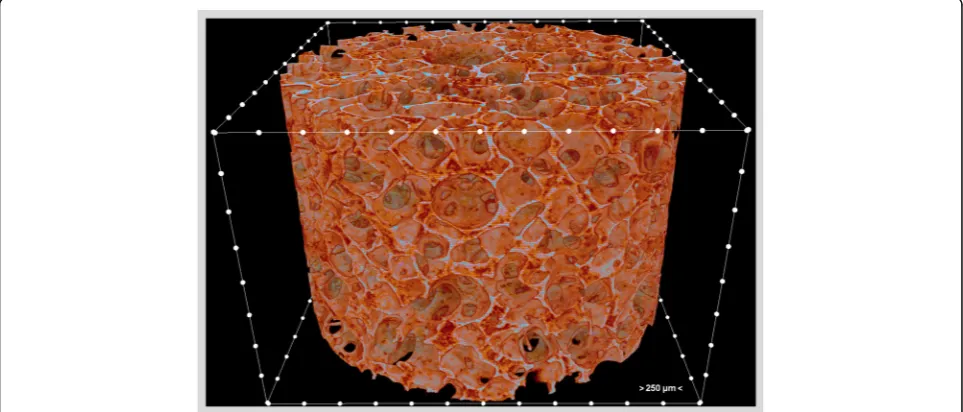
prolifera-tion. Porosity and pore size define the surface area per
volume (Fig.
1
) [
33
]. High porosity assists nutrient and
waste diffusion that is one of the critical factors for
vascularization and tissue ingrowth [
34
,
35
].
Addition-ally, porosity needs to be controlled for each application
since an increase in porosity leads to a relative decrease
in the mechanical properties [
36
]. The interconnection
of the pores is also an important parameter that defines
the effects of porosity and pore size [
35
,
37
]. Given a
scaffold with constant porosity, a decrease in the mean
pore size will cause pore channels to narrow, which may
inconvenience cell migration despite an increase in the
surface area [
38
]. Relatively smaller pores and larger
specific surface area assist cell attachment as shown in a
study with collagen-glycosaminoglycan scaffolds that
at-tachment of osteogenic cells was increased with
decreas-ing mean pore size and increasdecreas-ing specific surface area
[
39
]. Regarding the mobility of cells in a scaffold, it is
not affected by the pore size alone, but also scaffolds
’
mechanical properties and adhesiveness [
40
]. Cell
arrange-ment and morphology are influenced by scaffolds
’
archi-tecture and topography [
41
], and it was shown that cell
morphology has a role in the cell function [
42–45
].
Sur-face roughness may lead cells to have a round morphology
while flat surfaces lead to an increased cell spreading [
41
].
Presence of aligned structures can facilitate cell alignment,
for example, designing concave microgrooves in scaffolds
can also be effective to align cells, and has implications in
muscle tissue engineering by facilitating the formation of
layered bundle tissues [
46
].
In a study with osteoblast-like cells, increased cell
in-growth was observed in the scaffolds with relatively
smaller pores among the scaffolds with different mean
pore sizes ranging from 100
μm to 200
μm [
47
]. In
an-other study, a scaffold with gradually changing pore sizes
from 88
μm to 405
μm was examined, and the pore
range of 380
–
405
μm provided higher chondrocyte and
osteoblast proliferation while the range between 186
–
200
μm was more suitable for fibroblast proliferation
[
48
]. On the other hand, new bone formation occurred
faster in the scaffolds with the pore size range of 290
–
310
μm than in the other scaffolds [
48
]. Scaffolds with a
mean pore size of 250
μm had higher fibrous tissue
in-growth
in vivo
than that of other scaffolds with mean
pore sizes of 30
μm, 60
μm, 110
μm, 350
μm and 700
μm [
38
]. The scaffolds with mean pore sizes of 30
μm
and 60
μm had no tissue ingrowth even though pore
sizes are larger than the size of a fibroblast [
38
]. The size
of the pores can affect the osteogenic differentiation and
proliferation of stem cells oppositely [
49
]. Ceramic scaffolds
with a pore size of 200
μm and 500
μm were found to
pro-vide a relatively higher rate of osteogenic differentiation,
and proliferation, respectively, when compared to each
other [
49
]. Both surface chemistry and pore size can
signifi-cantly affect the lineage-specific differentiation of stem cells
while the effect of surface chemistry found to be relatively
larger if the pore size is smaller than 300
μm [
50
].
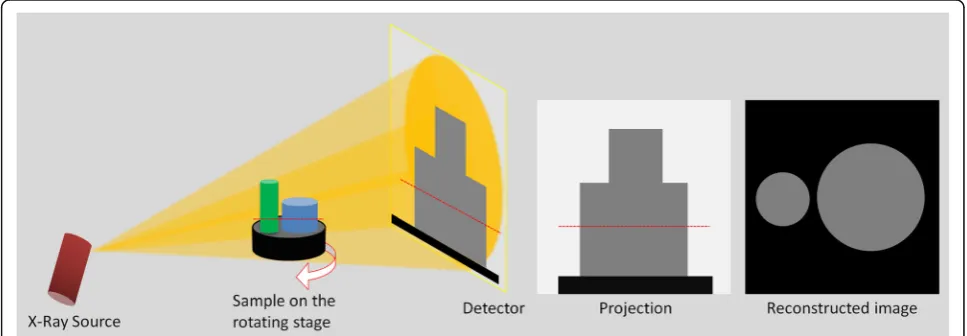
Micro-CT characterization comprises three major
sequen-tial processes: acquisition, reconstruction, and analysis [
13
].
The X-rays are generated by the source and emitted to the
target sample. When passing through the sample, the X-rays
are attenuated based on the properties of a sample that is
being scanned (
e.g.
, its density, thickness, and composition).
The acquisition is completed by collecting 2D projection
im-ages (radiographs) from many viewing angles. In the
conven-tional micro-CT instruments, the X-ray system is fixed, and
the sample stage rotates, while in the instruments for live
small animals the stage is fixed, and the X-ray system rotates
to scan the animal. The projection images are reconstructed
by a computer using algorithms [
51–53
] to obtain the
cross-sectional 2D images in the transverse plane (Fig.
2
).
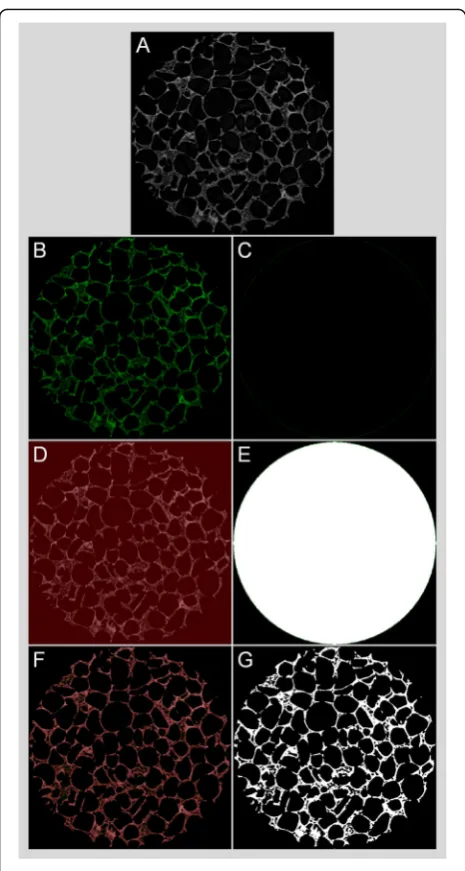
Binarization is the process by which the pixels that belong to
sample are discriminated in the reconstructed images that
are in a contrast scale of 0-255, and the images are made
black and white (Fig.
3
). Typically, white indicates the
mater-ial while black indicates empty space. Volume, porosity, pore
size, and suchlike results can be quantified using the binary
image dataset. Commercial micro-CT instruments come
with the manufacturers
’
software while an external software
such as ImageJ (
https://imagej.nih.gov/ij/index.html
)
could also be used.
Systematic search of the papers that were published in 2016
A systematic search was performed on the papers that
were published in a predetermined year, 2016, to answer
these questions: (i) what type of data was reported in the
papers,
i.e.
, quantitative or qualitative, or both, (ii) what
kind of quantitative results were reported (such as
micro-structure (
e.g.
, porosity, pore size, wall thickness), volume,
and mineral density if relevant), and (iii) whether the
reporting of the methods were adequate including the
in-formation on pixel size, number of replicates, rotation step
or number of obtained projections, voltage and current
values, and use of any filter). A search was performed on
the electronic databases of Scopus, Web of Science, and
PubMed using the term
“
micro-CT
”
with
“
scaffold
”
to
identify the relevant original research papers in English
that were published in 2016. The year 2016 was selected
in the current work because it was presumed as a
repre-sentative period. The papers that involve micro-CT
characterization of scaffolds were considered as eligible.
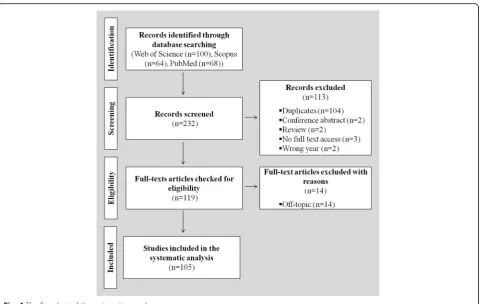
The papers were screened, selected as shown in the
flow-chart that is presented in Fig.
4
, and analyzed to answer
the aforementioned questions.
Findings of the systematic search and discussion
A total of 105 papers [
54–158
] were included in the
systematic analysis. The data indicated that micro-CT
was used only qualitatively in around 15% of the papers
[
63
,
74
,
75
,
79
,
95
,
102
,
106
,
108
,
112
,
116
,
122
,
129
,
133
,
146
,
149
,
158
], and only quantitatively in 9.5% of
the papers [
55
,
78
,
83
,
85
,
98
,
111
,
125
,
131
,
137
,
155
].
Micro-CT was used both qualitatively and
quantita-tively in the rest of the papers [
54
,
56–62
,
64–73
,
76
,
77
,
80–82
,
84
,
86–94
,
96
,
97
,
99–101
,
103–105
,
107
,
109
,
110
,
113–115
,
117–121
,
123
,
124
,
126–128
,
130
,
132
,
134–136
,
138–145
,
147
,
148
,
150–154
,
156
,
157
].
Only around 29% of the papers reported the number of
replicates (
i.e.
,
“
n
”
) they analyzed, and around 77% of
the papers reported the used pixel size. Among the
papers that reported n, the mean size of n was 4.4 with a
standard deviation (SD) of 2.8. The mean used pixel size
was 16.8
μm with an SD of 13.3. The analysis also showed
that less than 3% of the papers used the term
“
spatial
reso-lution
”
, and around 14% of the papers used the term
“
reso-lution
”
which might get confused with
“
pixel size
”
as it was
discussed below. As Fig.
5
illustrates, volume
measure-ments, microstructural characterization, and mineral
dens-ity determination are the three most frequent quantitative
results. The results categorized as
“
other
”
include
histo-grams, area/distance measurements such as tissue
thick-ness, bone contact area or graft diameter, callus index and
intensity signals. The rotation step, or the number of
ob-tained projections, is not mentioned in over 68% of the
pa-pers. The information on the used voltage and current was
not reported in around 26% of the papers, while around
73% of the papers did not report whether they used a filter
or not. One paper was identified that the term
“
in vivo
imaging
”
was used when only explants were characterized.
The internal architecture of a scaffold has major roles in
the cell behavior and thus on the overall performance of
the construct, the characterization of its macro (> 100
μm)
and micro (0.1
μm - 100
μm) structure is inherently of
interest. With the demonstrated use and advantages of
micro-CT, it has been a valuable instrument in research
laboratories with its challenges that are summarized in
Table
1
.
Micro-CT has been considered as the gold standard
for bone explants
’
microstructure and morphology study
[
25
]. In the case of scanning live animals, excessive
ex-posure to radiation [
159–161
] can be a problem for the
survival of the animal, tumorigenesis, and ethics. Using a
pixel size less than 50
μm may be fine to prevent
exces-sive exposure to radiation [
11
].
From the results of this systematic analysis, two major
points can be emphasized to be resolved in future studies
that will use micro-CT: (i) methods section from
acquisi-tion to analysis should be complete, and (ii) informaacquisi-tion
obtained should be maximized. The methods part should
cover the used pixel size, voltage and current, number of
replicates, scanning medium, use of any filter, rotation step/
number of projections, and use of any specific image
pro-cessing. Various results can be derived from a Micro-CT
characterization. These results can be quantitative or
quali-tative, and obtained in a 2D or 3D fashion. Qualitative
results include X-ray and reconstructed image of the
sam-ple, mineral density color map, pores size color map, and
structure thickness color map, and thus, provide valuable
information. Quantitative results include quantification/
proportion of volumes, microstructural features (mean pore
size, mean wall thickness, and their distribution and change
vertically across the sample), mineral density, histograms,
quantification of surface area, and surface:volume ratio. It
should be noted that some of these parameters are relevant
only for certain studies. For instance, bone mineral density
is related only with scaffolds for bone tissue engineering.
Therefore, this is a factor affecting the outcome of the
systematic analysis.
CT experts may accept that resolution is a quite
sensi-tive topic among authors by being a measure of image
quality. As the outcome of the systematic analysis shows,
some authors including some of the CT experts prefer
to use terms
“
resolution
”
and
“
spatial resolution
”
instead
of
“
pixel size
”
or
“
voxel size
”
, while some micro-CT
sys-tem manufacturers prefer to communicate the size of
the pixels or voxel of the images. Additionally, there is
no standardized approach for spatial resolution reporting
accepted by the micro-CT system manufacturers [
25
].
The definitions of these terms are presented in Table
2
.
The studies that report a value for resolution need to
show how they quantify the resolution whether it is the
pixel size given by the scanner software or they
quanti-fied it with calibrated thickness wires [
162
]. Given the
definitions of the terms, the images that have the same
number of pixels would contain different information if
their pixel sizes are not identical. It is noteworthy to
know that a smaller pixel size does not necessarily
pro-vide a better image, for instance, the image does not
im-prove when the pixel size is smaller than the X-ray spot
size [
162
,
163
]. Some other factors [
25
,
162
,
164
,
165
]
are needed to be considered as well, regarding X-ray
(
e.g.
, energy, geometry, and focal-spot size), sensitivity of
detector, use of filter, integration time of X-ray with the
sample per projection, characteristics of the sample (
e.g.
,
composition and size), scanning medium, noise and
arti-facts. The attenuation of the X-rays depends on the
char-acteristics of the sample such as its density and thickness.
The level of the X-ray energy,
i.e.
, the source voltage and
current, should be tuned for the sample (denser samples
require higher energy) since the obtained the images are in
gray-scale and associated with the X-ray absorption that is
linked with the sample
’
s electron density [
163
]. Therefore,
the reconstructed images are quantitatively densitometric.
The pixel size and rotation step can have significant
influ-ences on the quantitative and qualitative results of the
μ-CT characterization of scaffolds, as well as the size of
Fig. 4The flowchart of the systematic search
the generated data and the duration of the characterization
[
13
]. Integration time is the duration of each projection. A
longer integration time provides more photos to be
de-tected and affect the micro-CT image [
166
]. The use of a
filter can improve the characterization of thick/dense
sam-ples by attenuating the low-energy X-rays and minimizing
the beam hardening effect [
25
]. Spatial resolution depends
on the geometry of the X-ray, and detector [
10
]. Cone
beam X-rays and flat panel detectors provide significantly
shorter scanning times because the data for multiple slices
is obtained in each rotation step, while fan beam X-rays
and linear detectors provide less scatter effects for
thick samples [
167
] and higher accuracy [
164
].
Re-construction method also depends on the geometry
of the source. The scanning medium (
e.g.
, air, water,
phosphate-buffered saline, or ethanol) influences the
characterization results since different media affect
the X-ray attenuation differently [
25
,
168
].
Conclusion
The microstructure of tissue engineering scaffolds
greatly influence the behavior of cells, and the
perform-ance of the tissue engineering construct; therefore, the
characterization of the scaffolds
’
microstructure is of
Table 1
Challenges in the conventional micro-CT characterization
Challenge Potential solution Reference Artifacts and noise. Detailed in Table1of Ref. [162] [162,164,169,170] Soft tissue characterization is not aseasyas a dry-state
porous scaffold.
Using contrast agents or high-atomic-number element probes can help.
[28–32] Operator-determined acquisition parameters may affect
the results.
Parameters should be optimized during the preliminary study.
[13] Harsh acquisitions may damage/alter the sample/tissue
(for example, discoloring of a biomaterial or tumorigenesis in animals); and radiation exposure of animals in live animal studies, lethal dose 50/30 (both ethical and scientific considerations).
Long scans (either due to very low rotation step, frame averaging, or long exposure time) should be avoided, and/or X-ray energy could be decreased.
[11,159–161]
Comparing micro-CT results of different studies is not easy if the used parameters are not identical.
There is a need to establish a protocol with determined values for parameters.
[13] Issues with very dense/thick samples resulting in a dataset
of almost only black images.
This is because there will be no contrast since no X-ray can pass; however, use of a filter may resolve the problem, but it may greatly increase the acquisition time. The sample can be cut to its smaller representative volume. If it is not possible, then another instrument could be used such as a scanning electron microscope. Issues with very thin/light samples or a hydrogel, then no
contrast will be obtained (this gives a dataset of images with very low contrast).
Contrast agents can be used. [29–32]
A limited volume of sample that can be analyzed at once (the images have a certain number of pixels with a certain size of a pixel).
Display matrix size and/or pixel size can be adapted. The representative portion of the sample can be pre-determined.
Overlaps in gray-scale values in multi-material samples (i.e.,scaffold-bone explants or composites).
Advanced segmentation protocol can be used. [171] Considerations on the maintenance and sharing of micro-CT data. During the preliminary study, the duration of the
micro-CT characterization and the disc space requirements can be estimated.
[13]
Table 2
Terms that are associated with the micro-CT images,
and their definitions
Term Definition
Pixel size Size of the 2D discrete parts that make up a 2D micro-CT image. Usually, expressed as a single value,e.g., 10μm, indicating the size of each pixel is 10μm × 10μm.
Voxel size The 3D equivalent of pixel size indicates the size of each voxel, Typically, micro-CT images isotropic (identical size in all dimensions),e.g., 10μm × 10μm × 10μm, in which case pixel size and voxel size provide identical information.
Resolution ▪Smallest perceptible detail (complete and exact definition can be found in Ref. [164])
▪Resolution of an image can indicate the number of pixels in an image (such as 800 × 600). The second definition is referred to the display matrix size in the standard guide of ASTM International: E1441-11.
Spatial resolution ▪Smallest displacement that can be measured in the measurement direction [164]
keen interest. Micro-CT is an outstanding instrument for
the quantitative 2D and 3D analysis and visualization of
scaffolds. The analysis results showed that the methods
sections of the majority of the analyzed papers are in need
of improvement in reporting the details of micro-CT
characterization. Moreover, the amount of quantitative and
qualitative information from micro-CT characterization
can be maximized. Given the fact that the obtained results
from micro-CT characterization significantly depend on
several parameters, the important acquisition related
de-tails should be clearly provided in the papers. It is
recom-mended that the parameters include the used pixel size,
rotation step, X-ray energy, scanning medium, use of filter,
as well as the number of samples analyzed since the
omit-ted data complicate the reproducibility of the experiments.
Acknowledgments
This work is a result of the project FROnTHERA (NORTE-01-0145-FEDER-000023) supported by the Norte Portugal Regional Operational Programme (NORTE 2020) under the Portugal 2020 Partnership Agreement, through European Regional Development Fund (ERDF). IFC thanks the Portuguese Foundation for Science and Technology (FCT) for the Ph.D. scholarship (SFRH/BD/99555/2014). JMO also thanks the FCT for the funds provided under the program Investigador FCT 2012 and 2015 (IF/00423/2012 and IF/01285/2015).
Funding
FROnTHERA Project (NORTE-01-0145-FEDER-000023) within the Norte Portugal Regional Operational Programme (NORTE 2020) under the Portugal 2020 Partnership Agreement, through ERDF, and Portuguese Foundation for Science and Technology (SFRH/BD/99555/2014, IF/00423/2012, and IF/01285/2015).
Author’s contributions
All authors wrote and revised the manuscript. All authors read and approved the final manuscript.
Ethics approval and consent to participate Not applicable.
Consent for publication Not applicable.
Competing interests
The authors declare that they have no competing interests.
Publisher
’
s Note
Springer Nature remains neutral with regard to jurisdictional claims in published maps and institutional affiliations.
Author details
13B’s Research Group, I3Bs–Research Institute on Biomaterials,
Biodegradables and Biomimetics, University of Minho, Headquarters of the European Institute of Excellence on Tissue Engineering and Regenerative Medicine, AvePark, Parque de Ciência e Tecnologia, Zona Industrial da Gandra, Barco, 4805-017 Guimarães, Portugal.2ICVS/3B’s–PT Government
Associate Laboratory, Braga/Guimarães, Portugal.3The Discoveries Centre for Regenerative and Precision Medicine, Headquarters at University of Minho, AvePark, Parque de Ciência e Tecnologia, Zona Industrial da Gandra, Barco, 4805-017 Guimarães, Portugal.
Received: 12 June 2018 Accepted: 3 September 2018
References
1. Wegst UG, Bai H, Saiz E, Tomsia AP, Ritchie RO. Bioinspired structural materials. Nat Mater. 2015;14(1):23–36.
2. Lee J, Cuddihy MJ, Kotov NA. Three-dimensional cell culture matrices: State of the art. Tissue Eng Part B-Re. 2008;14(1):61–86.
3. Baker BM, Chen CS. Deconstructing the third dimension - How 3D culture microenvironments alter cellular cues. J Cell Sci. 2012;125(13):3015–24. 4. Cengiz IF, Pereira H, de Girolamo L, Cucchiarini M, Espregueira-Mendes J,
Reis RL. Oliveira JM Orthopaedic regenerative tissue engineering en route to the holy grail: disequilibrium between the demand and the supply in the operating room. J Exp Orthop. 2018;5(1):14.
5. Chew SY, Low WC. Scaffold-based approach to direct stem cell neural and cardiovascular differentiation: An analysis of physical and biochemical effects. J Biomed Mater Res A. 2011;97(3):355–74.
6. Kim K, Yeatts A, Dean D, Fisher JP. Stereolithographic bone scaffold design parameters: Osteogenic differentiation and signal expression. Tissue Eng Part B-Re. 2010;16(5):523–39.
7. Yamamoto M, Rafii S, Rabbany SY. Scaffold biomaterials for nano-pathophysiology. Adv Drug Del Rev. 2014;74:104–14.
8. Zhang B, Xiao Y, Hsieh A, Thavandiran N, Radisic M. Micro-and nanotechnology in cardiovascular tissue engineering. Nanotechnology. 2011;22(49):494003.
9. Cengiz IF, Pereira H, Espregueira-Mendes J, Oliveira JM, Reis RL. Treatments of meniscus lesions of the knee: Current concepts and future perspectives. Regen Eng Transl Med. 2017;3(1):1–19.
10. Landis EN. Keane DT X-ray microtomography. Mater Charact. 2010;61(12): 1305–16.
11. Ritman EL. Micro-computed tomography - Current status and developments. Annu Rev Biomed Eng. 2004;6:185–208.
12. Cengiz IF, Pitikakis M, Cesario L, Parascandolo P, Vosilla L, Viano G, Oliveira J, Reis R. Building the basis for patient-specific meniscal scaffolds: From human knee MRI to fabrication of 3D printed scaffolds. Bioprinting. 2016;1:1–10.
13. Cengiz IF, Oliveira JM, Reis RL. Micro-computed tomography characterization of tissue engineering scaffolds: Effects of pixel size and rotation step. J Mater Sci Mater Med. 2017;28(8):129.
14. Ho ST, Hutmacher DW. A comparison of micro-CT with other techniques used in the characterization of scaffolds. Biomaterials. 2006;27(8):1362–76. 15. Jones AC, Arns CH, Sheppard AP, Hutmacher DW, Milthorpe BK, Knackstedt
MA. Assessment of bone ingrowth into porous biomaterials using Micro-CT. Biomaterials. 2007;28(15):2491–504.
16. Lienemann PS, Metzger S, Kiveliö A-S, Blanc A, Papageorgiou P, Astolfo A, Pinzer BR, Cinelli P, Weber FE, Schibli R. Longitudinal in vivo evaluation of bone regeneration by combined measurement of multi-pinhole SPECT and micro-CT for tissue engineering. Scientific Reports. 2015;5:10238.
17. Luu Y, Lublinsky S, Ozcivici E, Capilla E, Pessin J, Rubin C, Judex S. In vivo quantification of subcutaneous and visceral adiposity by micro-computed tomography in a small animal model. Med Eng Phys. 2009;31(1):34–41. 18. Paulus MJ, Gleason SS, Kennel SJ, Hunsicker PR, Johnson DK. High resolution
X-ray computed tomography: An emerging tool for small animal cancer research. Neoplasia. 2000;2(1-2):62–70.
19. Waarsing J, Day J, Van der Linden J, Ederveen A, Spanjers C, De Clerck N, Sasov A, Verhaar J, Weinans H. Detecting and tracking local changes in the tibiae of individual rats: A novel method to analyse longitudinal in vivo micro-CT data. Bone. 2004;34(1):163–9.
20. Birkhold AI, Razi H, Weinkamer R, Duda GN, Checa S, Willie BM. Monitoring in vivo (re) modeling: A computational approach using 4D microCT data to quantify bone surface movements. Bone. 2015;75:210–21.
21. Hildebrand T, Laib A, Müller R, Dequeker J, Rüegsegger P. Direct three-dimensional morphometric analysis of human cancellous bone: Microstructural data from spine, femur, iliac crest, and calcaneus. J Bone Miner Res. 1999;14(7):1167–74.
22. Pereira H, Caridade S, Frias A, Silva-Correia J, Pereira D, Cengiz IF, Mano J, Oliveira JM, Espregueira-Mendes J, Reis R. Biomechanical and cellular segmental characterization of human meniscus: Building the basis for Tissue Engineering therapies. Osteoarthritis Cartilage. 2014;22(9):1271–81. 23. Batiste DL, Kirkley A, Laverty S, Thain LM, Spouge AR, Holdsworth DW. Ex
vivo characterization of articular cartilage and bone lesions in a rabbit ACL transection model of osteoarthritis using MRI and micro-CT. Osteoarthritis Cartilage. 2004;12(12):986–96.
25. Bouxsein ML, Boyd SK, Christiansen BA, Guldberg RE, Jepsen KJ, Müller R. Guidelines for assessment of bone microstructure in rodents using micro-computed tomography. J Bone Miner Res. 2010;25(7):1468–86.
26. Cardeira J, Gavaia PJ, Fernández I, Cengiz IF, Moreira-Silva J, Oliveira JM, Reis RL, Cancela ML, Laizé V. Quantitative assessment of the regenerative and mineralogenic performances of the zebrafish caudal fin. Scientific Reports. 2016;6:39191.
27. Layton MW, Goldstein SA, Goulet RW, Feldkamp LA, Kubinski DJ, Bole GG. Examination of subchondral bone architecture in experimental osteoarthritis by microscopic computed axial tomography. Arthritis Rheumatol. 1988; 31(11):1400–5.
28. Mizutani R, Suzuki Y. X-ray microtomography in biology. Micron. 2012; 43(2):104–15.
29. Lusic H, Grinstaff MW. X-ray-computed tomography contrast agents. Chem Rev. 2012;113(3):1641–66.
30. Pauwels E, Van Loo D, Cornillie P, Brabant L, Van Hoorebeke L. An exploratory study of contrast agents for soft tissue visualization by means of high resolution X-ray computed tomography imaging. J Microsc. 2013; 250(1):21–31.
31. Xing R, Wilde D, McCann G, Ridwan Y, Schrauwen JT, Steen AF, Gijsen FJ, Heiden K. Contrast-enhanced micro-CT imaging in murine carotid arteries: A new protocol for computing wall shear stress. Biomed Eng Online. 2016; 15(2):156.
32. Young S, Kretlow JD, Nguyen C, Bashoura AG, Baggett LS, Jansen JA, Wong M, Mikos AG. Microcomputed tomography characterization of
neovascularization in bone tissue engineering applications. Tissue Eng Part B-Re. 2008;14(3):295–306.
33. Yang S, Leong K-F, Du Z, Chua C-K. The design of scaffolds for use in tissue engineering. Part I. Traditional factors. Tissue Eng. 2001;7(6):679–89. 34. Karande TS, Ong JL, Agrawal CM. Diffusion in musculoskeletal tissue
engineering scaffolds: Design issues related to porosity, permeability, architecture, and nutrient mixing. Ann Biomed Eng. 2004;32(12):1728–43. 35. Mastrogiacomo M, Scaglione S, Martinetti R, Dolcini L, Beltrame F,
Cancedda R, Quarto R. Role of scaffold internal structure on in vivo bone formation in macroporous calcium phosphate bioceramics. Biomaterials. 2006;27(17):3230–7.
36. Karageorgiou V, Kaplan D. Porosity of 3D biomaterial scaffolds and osteogenesis. Biomaterials. 2005;26(27):5474–91.
37. Freyman T, Yannas I, Gibson L. Cellular materials as porous scaffolds for tissue engineering. Prog Mater Sci. 2001;46(3):273–82.
38. Yamamoto M, Tabata Y, Kawasaki H, Ikada Y. Promotion of fibrovascular tissue ingrowth into porous sponges by basic fibroblast growth factor. J Mater Sci Mater Med. 2000;11(4):213–8.
39. O’Brien FJ, Harley B, Yannas IV, Gibson LJ. The effect of pore size on cell adhesion in collagen-GAG scaffolds. Biomaterials. 2005;26(4):433–41. 40. Peyton SR, Kalcioglu ZI, Cohen JC, Runkle AP, Van Vliet KJ, Lauffenburger
DA, Griffith LG. Marrow-derived stem cell motility in 3D synthetic scaffold is governed by geometry along with adhesivity and stiffness. Biotechnol Bioeng. 2011;108(5):1181–93.
41. Clegg JR, Wechsler ME, Peppas NA. Vision for functionally decorated and molecularly imprinted polymers in regenerative engineering. Regen Eng Transl Med. 2017;3(3):166–75.
42. Folkman J, Moscona A. Role of cell shape in growth control. Nature. 1978; 273(5661):345.
43. Kumar G, Tison CK, Chatterjee K, Pine PS, McDaniel JH, Salit ML, Young MF, Simon CG Jr. The determination of stem cell fate by 3D scaffold structures through the control of cell shape. Biomaterials. 2011;32(35): 9188–96.
44. Kumar G, Waters MS, Farooque TM, Young MF, Simon CG Jr. Freeform fabricated scaffolds with roughened struts that enhance both stem cell proliferation and differentiation by controlling cell shape. Biomaterials. 2012; 33(16):4022–30.
45. McBeath R, Pirone DM, Nelson CM, Bhadriraju K, Chen CS. Cell shape, cytoskeletal tension, and RhoA regulate stem cell lineage commitment. Dev Cell. 2004;6(4):483–95.
46. Chen S, Nakamoto T, Kawazoe N, Chen G. Engineering multi-layered skeletal muscle tissue by using 3D microgrooved collagen scaffolds. Biomaterials. 2015;73:23–31.
47. Chen J, Paetzell E, Zhou J, Lyons L, Soboyejo W. Osteoblast-like cell ingrowth, adhesion and proliferation on porous Ti-6Al-4V with particulate and fiber scaffolds. Mater Sci Eng, C. 2010;30(5):647–56.
48. Oh SH, Park IK, Kim JM, Lee JH. In vitro and in vivo characteristics of PCL scaffolds with pore size gradient fabricated by a centrifugation method. Biomaterials. 2007;28(9):1664–71.
49. Mygind T, Stiehler M, Baatrup A, Li H, Zou X, Flyvbjerg A, Kassem M, Bünger C. Mesenchymal stem cell ingrowth and differentiation on coralline hydroxyapatite scaffolds. Biomaterials. 2007;28(6):1036–47.
50. Zhao Y, Tan K, Zhou Y, Ye Z, Tan W-S. A combinatorial variation in surface chemistry and pore size of three-dimensional porous poly (ε-caprolactone) scaffolds modulates the behaviors of mesenchymal stem cells. Mater Sci Eng, C. 2016;59:193–202.
51. Faridani A. Results, old and new, in computed tomography. In: Inverse Problems in Wave Propagation. New York: Springer; 1997. p. 167–93. 52. Feldkamp L, Davis L. Kress J Practical cone-beam algorithm. JOSA A. 1984;
1(6):612–9.
53. Gordon R, Herman G. Three-dimensional reconstruction from projections: A review of algorithms. Int Rev Cytol. 1974;38:111–51.
54. Adamzyk C, Kachel P, Hoss M, Gremse F, Modabber A, Hölzle F, Tolba R, Neuss S, Lethaus B. Bone tissue engineering using polyetherketoneketone scaffolds combined with autologous mesenchymal stem cells in a sheep calvarial defect model. J Craniomaxillofac Surg. 2016;44(8):985–94. 55. Almela T, Brook IM, Moharamzadeh K. Development of three-dimensional
tissue engineered bone-oral mucosal composite models. J Mater Sci Mater Med. 2016;27(4):65.
56. Altamura D, Pastore SG, Raucci MG, Siliqi D, De Pascalis F, Nacucchi M, Ambrosio L, Giannini C. Scanning small-and wide-angle X-ray scattering microscopy selectively probes ha content in gelatin/hydroxyapatite scaffolds for osteochondral defect repair. ACS Appl Mater Inter. 2016;8(13): 8728–36.
57. Amini AR, Xu TO, Chidambaram RM, Nukavarapu SP. Oxygen tension-controlled matrices with osteogenic and vasculogenic cells for vascularized bone regeneration in vivo. Tissue Eng Pt A. 2016;22(7-8):610–20. 58. Arabnejad S, Johnston RB, Pura JA, Singh B, Tanzer M, Pasini D.
High-strength porous biomaterials for bone replacement: A strategy to assess the interplay between cell morphology, mechanical properties, bone ingrowth and manufacturing constraints. Acta Biomater. 2016;30:345–56.
59. Araujo-Pires AC, Mendes VC, Ferreira-Junior O, Carvalho PSP, Guan L, Davies JE. Investigation of a novel PLGA/CaP scaffold in the healing of tooth extraction sockets to alveolar bone preservation in humans. Clin Implant Dent R. 2016;18(3):559–70.
60. Arifvianto B, Leeflang M, Zhou J. Characterization of the porous structures of the green body and sintered biomedical titanium scaffolds with micro-computed tomography. Mater Charact. 2016;121:48–60.
61. Barui S, Chatterjee S, Mandal S, Kumar A, Basu B. Microstructure and compression properties of 3D powder printed Ti-6Al-4V scaffolds with designed porosity: Experimental and computational analysis. Mater Sci Eng, C. 2017;70:812–23.
62. Beck A, Murphy DJ, Carey-Smith R, Wood DJ, Zheng MH. Treatment of articular cartilage defects with microfracture and autologous matrix-induced chondrogenesis leads to extensive subchondral bone cyst formation in a sheep model. Am J Sport Med. 2016;44(10):2629–43.
63. Bolaños RV, Cokelaere S, McDermott JE, Benders K, Gbureck U, Plomp S, Weinans H, Groll J, van Weeren P, Malda J. The use of a cartilage decellularized matrix scaffold for the repair of osteochondral defects: The importance of long-term studies in a large animal model. Osteoarthr Cartil. 2017;25(3):413–20.
64. Carlisle PL, Guda T, Silliman DT, Lien W, Hale RG, Brown Baer PR. Investigation of a pre-clinical mandibular bone notch defect model in miniature pigs: Clinical computed tomography, micro-computed tomography, and histological evaluation. J Korean Assoc Oral Maxillofac Surg. 2016;42(1):20–30.
65. Chamieh F, Collignon A-M, Coyac BR, Lesieur J, Ribes S, Sadoine J, Llorens A, Nicoletti A, Letourneur D, Colombier M-L. Accelerated craniofacial bone regeneration through dense collagen gel scaffolds seeded with dental pulp stem cells. Sci Rep. 2016;6:38814.
66. Chandran S, Babu SS, Varma H, John A. Osteogenic efficacy of strontium hydroxyapatite micro-granules in osteoporotic rat model. J Biomater Appl. 2016;31(4):499–509.
68. Chang Y-L, Lo Y-J, Feng S-W, Huang Y-C, Tsai H-Y, Lin C-T, Fan K-H, Huang H-M. Bone healing improvements using hyaluronic acid and
hydroxyapatite/beta-tricalcium phosphate in combination: an animal study. BioMed Res Int. 2016;2016:8301624.
69. Chen G, Yang L, Lv Y. Cell-free scaffolds with different stiffness but same microstructure promote bone regeneration in rabbit large bone defect model. J Biomed Mater Res A. 2016;104(4):833–41.
70. Costantini M, Colosi C, Mozetic P, Jaroszewicz J, Tosato A, Rainer A, Trombetta M,Święszkowski W, Dentini M, Barbetta A. Correlation between porous texture and cell seeding efficiency of gas foaming and microfluidic foaming scaffolds. Mater Sci Eng, C. 2016;62:668–77.
71. Crica LE, Wengenroth J, Tiainen H, Ionita M, Haugen HJ. Enhanced X-ray absorption for micro-CT analysis of low density polymers. J Biomater Sci Polym Ed. 2016;27(9):805–23.
72. Cui W, Sun G, Qu Y, Xiong Y, Sun T, Ji Y, Yang L, Shao Z, Ma J, Zhang S. Repair of rat calvarial defects using Si-doped hydroxyapatite scaffolds loaded with a bone morphogenetic protein-2-related peptide. J Orth Res. 2016;34(11):1874–82.
73. Ding M, Henriksen SS, Theilgaard N, Overgaard S. Assessment of activated porous granules on implant fixation and early bone formation in sheep. J Orthop Transl. 2016;5:38–47.
74. Dumont VC, Mansur AA, Carvalho SM, Borsagli FGM, Pereira MM, Mansur HS. Chitosan and carboxymethyl-chitosan capping ligands: Effects on the nucleation and growth of hydroxyapatite nanoparticles for producing biocomposite membranes. Mater Sci Eng, C. 2016;59:265–77. 75. Dumont VC, Mansur HS, Mansur AA, Carvalho SM, Capanema NS,
Barrioni BR. Glycol chitosan/nanohydroxyapatite biocomposites for potential bone tissue engineering and regenerative medicine. Int J Biol Macromol. 2016;93:1465–78.
76. Erdogan O, Supachawaroj N, Soontornvipart K, Kheolamai P. Treatment of peri-implant defects in the rabbit’s tibia with adipose or bone marrow-derived mesenchymal stems cells. Clin Implant Dent R. 2016;18(5):1003–14. 77. Fang X, Xie J, Zhong L, Li J, Rong D, Li X, Ouyang J. Biomimetic gelatin
methacrylamide hydrogel scaffolds for bone tissue engineering. J Mater Chem B. 2016;4(6):1070–80.
78. Fortier LA, Chapman HS, Pownder SL, Roller BL, Cross JA, Cook JL, Cole BJ. BioCartilage improves cartilage repair compared with microfracture alone in an equine model of full-thickness cartilage loss. Am J Sport Med. 2016;44(9):2366–74.
79. Frohbergh ME, Guevara JM, Grelsamer RP, Barbe MF, He X, Simonaro CM, Schuchman EH. Acid ceramidase treatment enhances the outcome of autologous chondrocyte implantation in a rat osteochondral defect model. Osteoarthr Cartil. 2016;24(4):752–62.
80. Geng H, Todd NM, Devlin-Mullin A, Poologasundarampillai G, Kim TB, Madi K, Cartmell S, Mitchell CA, Jones JR, Lee PD. A correlative imaging based methodology for accurate quantitative assessment of bone formation in additive manufactured implants. J Mater Sci Mater Med. 2016;27(6):112. 81. Giuliani A, Manescu A, Mohammadi S, Mazzoni S, Piattelli A, Mangano F,
Iezzi G, Mangano C. Quantitative kinetics evaluation of blocks versus granules of biphasic calcium phosphate scaffolds (HA/β-TCP 30/70) by synchrotron radiation X-ray microtomography: A human study. Implant Dent. 2016;25(1):6–15.
82. Gong W, Lei D, Li S, Huang P, Qi Q, Sun Y, Zhang Y, Wang Z, You Z, Ye X. Hybrid small-diameter vascular grafts: Anti-expansion effect of electrospun polyε-caprolactone on heparin-coated decellularized matrices. Biomaterials. 2016;76:359–70.
83. Goodrich LR, Chen AC, Werpy NM, Williams AA, Kisiday JD, Su AW, Cory E, Morley PS, McIlwraith CW, Sah RL. Addition of mesenchymal stem cells to autologous platelet-enhanced fibrin scaffolds in chondral defects: Does it enhance repair? J Bone Joint Surg Am. 2016;98(1):23.
84. Hassana OB, Guessasma S, Belhabib S, Nouri H. Explaining the difference between real part and virtual design of 3D printed porous polymer at the microstructural level. Macromol Mater Eng. 2016;301(5):566–76. 85. He S, Lin KF, Sun Z, Song Y, Zhao YN, Wang Z, Bi L, Liu J. Effects of
Nano-hydroxyapatite/poly (dl-lactic-co-glycolic acid) Microsphere-based Composite Scaffolds on Repair of Bone Defects: Evaluating the Role of Nano-hydroxyapatite Content. Artif Organs. 2016;40(7):128–35. 86. Hirota M, Shima T, Sato I, Ozawa T, Iwai T, Ametani A, Sato M, Noishiki Y,
Ogawa T, Hayakawa T. Development of a biointegrated mandibular reconstruction device consisting of bone compatible titanium fiber mesh scaffold. Biomaterials. 2016;75:223–36.
87. Huang X, Li Y, Xu J, Liu K, Yu X, Cheng X, Xu D, Li Z. Restoration of murine femoral segmental defect using CTGF-overexpressing MC3T3-E1 cells. Am J Transl Res. 2016;8(3):1530.
88. Huynh NC-N, Everts V, Nifuji A, Pavasant P, Ampornaramveth RS. Histone deacetylase inhibition enhances in-vivo bone regeneration induced by human periodontal ligament cells. Bone. 2017;95:76–84.
89. Hwang PT, Lim D-J, Fee T, Alexander GC, Tambralli A, Andukuri A, Tian L, Cui W, Berry J, Gilbert SR. A bio-inspired hybrid nanosack for graft vascularization at the omentum. Acta Biomater. 2016;41:224–34. 90. Jang JY, Park SH, Park JH, Lee BK, Yun J-H, Lee B, Kim JH, Min BH, Kim
MS. In vivo osteogenic differentiation of human dental pulp stem cells embedded in an injectable in vivo-forming hydrogel. Macromol Biosci. 2016;16(8):1158–69.
91. Jaroszewicz J, Kosowska A, Hutmacher D, Swieszkowski W, Moskalewski S. Insight into characteristic features of cartilage growth plate as a physiological template for bone formation. J Biomed Mater Res A. 2016; 104(2):357–66.
92. Jia P, Chen H, Kang H, Qi J, Zhao P, Jiang M, Guo L, Zhou Q, Qian ND, Zhou HB. Deferoxamine released from poly (lactic-co-glycolic acid) promotes healing of osteoporotic bone defect via enhanced angiogenesis and osteogenesis. J Biomed Mater Res A. 2016;104(10):2515–27.
93. John L, Janeta M, Rajczakowska M, Ejfler J, Lydzba D, Szafert S. Synthesis and microstructural properties of the scaffold based on a 3-(trimethoxysilyl) propyl methacrylate-POSS hybrid towards potential tissue engineering applications. RSC Advances. 2016;6(70):66037–47.
94. Kerckhofs G, Chai Y, Luyten F, Geris L. Combining microCT-based characterization with empirical modelling as a robust screening approach for the design of optimized CaP-containing scaffolds for progenitor cell-mediated bone formation. Acta Biomater. 2016;35:330–40.
95. Khan PK, Mahato A, Kundu B, Nandi SK, Mukherjee P, Datta S, Sarkar S, Mukherjee J, Nath S, Balla VK. Influence of single and binary doping of strontium and lithium on in vivo biological properties of bioactive glass scaffolds. Sci Rep. 2016;6:32964.
96. Kim HJ, Lee S, Yun H-W, Yin XY, Kim SH, Choi BH, Kim YJ, Kim MS, Min B-H. In vivo degradation profile of porcine cartilage-derived extracellular matrix powder scaffolds using a non-invasive fluorescence imaging method. J Biomater Sci Polym Ed. 2016;27(2):177–90.
97. Kim J-A, Lim J, Naren R, H-s Y, Park EK. Effect of the biodegradation rate controlled by pore structures in magnesium phosphate ceramic scaffolds on bone tissue regeneration in vivo. Acta Biomater. 2016;44:155–67. 98. Krueger E, Chang AN, Brown D, Eixenberger J, Brown R, Rastegar S, Yocham
KM, Cantley KD, Estrada D. Graphene foam as a three-dimensional platform for myotube growth. ACS Biomater Sci Eng. 2016;2(8):1234–41.
99. Kumpová I, Vavřík D, Fíla T, Koudelka P, Jandejsek I, Jakůbek J, KytýřD, Zlámal P, Vopálenský M, Gantar A. High resolution micro-CT of low attenuating organic materials using large area photon-counting detector. J Instrum. 2016;11(02):C02003.
100. Lappalainen O-P, Karhula S, Haapea M, Kyllönen L, Haimi S, Miettinen S, Saarakkala S, Korpi J, Ylikontiola LP, Serlo WS. Bone healing in rabbit calvarial critical-sized defects filled with stem cells and growth factors combined with granular or solid scaffolds. Childs Nerv Syst. 2016;32(4):681–8. 101. Lappalainen O-P, Karhula SS, Haapea M, Kauppinen S, Finnilä M, Saarakkala
S, Serlo W, Sándor GK. Micro-CT analysis of bone healing in rabbit calvarial critical-sized defects with solid bioactive glass, tricalcium phosphate granules or autogenous bone. J Oral Maxillofac Res. 2016;7(2):e4. 102. Lee DY, Park SA, Lee SJ, Kim TH, Oh SH, Lee JH, Kwon SK. Segmental
tracheal reconstruction by 3D-printed scaffold: Pivotal role of asymmetrically porous membrane. Laryngoscope. 2016;126(9):e304.
103. Lee JY, Son SJ, Son JS, Kang SS, Choi SH. Bone-healing capacity of PCL/ PLGA/duck beak scaffold in critical bone defects in a rabbit model. BioMed Res Int. 2016;2016:2136215.
104. Levingstone TJ, Thompson E, Matsiko A, Schepens A, Gleeson JP, O’Brien FJ. Multi-layered collagen-based scaffolds for osteochondral defect repair in rabbits. Acta Biomater. 2016;32:149–60.
105. Li H, Fan J, Sun L, Liu X, Cheng P, Fan H. Functional regeneration of ligament-bone interface using a triphasic silk-based graft. Biomaterials. 2016; 106:180–92.
107. Liang Y, Wen L, Shang F, Wu J, Sui K, Ding Y. Endothelial progenitors enhanced the osteogenic capacities of mesenchymal stem cells in vitro and in a rat alveolar bone defect model. Arch Oral Biol. 2016;68:123–30. 108. Lin W-J, Zhang D-Y, Zhang G, Sun H-T, Qi H-P, Chen L-P, Liu Z-Q, Gao R-L,
Zheng W. Design and characterization of a novel biocorrodible iron-based drug-eluting coronary scaffold. Mater Des. 2016;91:72–9.
109. Liu X, Bao C, Xu HH, Pan J, Hu J, Wang P, Luo E. Osteoprotegerin gene-modified BMSCs with hydroxyapatite scaffold for treating critical-sized mandibular defects in ovariectomized osteoporotic rats. Acta Biomater. 2016;42:378–88.
110. Lovati A, Lopa S, Recordati C, Talò G, Turrisi C, Bottagisio M, Losa M, Scanziani E, Moretti M. In vivo bone formation within engineered hydroxyapatite scaffolds in a sheep model. Calcif Tissue Int. 2016;99(2):209–23.
111. Lv X, Li Z, Chen S, Xie M, Huang J, Peng X, Yang R, Wang H, Xu Y, Feng C. Structural and functional evaluation of oxygenating keratin/silk fibroin scaffold and initial assessment of their potential for urethral tissue engineering. Biomaterials. 2016;84:99–110.
112. Maiti SK, Ninu AR, Sangeetha P, Mathew DD, Tamilmahan P, Kritaniya D, Kumar N, Hescheler J. Mesenchymal stem cells-seeded bio-ceramic construct for bone regeneration in large critical-size bone defect in rabbit. J Stem Cells Regen Med. 2016;12(2):87.
113. Majumdar S, Pothirajan P, Dorcemus D, Nukavarapu S, Kotecha M. High field sodium MRI assessment of stem cell chondrogenesis in a tissue-engineered matrix. Ann Biomed Eng. 2016;44(4):1120–7.
114. Manescu A, Giuliani A, Mohammadi S, Tromba G, Mazzoni S, Diomede F, Zini N, Piattelli A, Trubiani O. Osteogenic potential of dualblocks cultured with human periodontal ligament stem cells: In vitro and synchrotron microtomography study. J Periodontal Res. 2016;51(1):112–24. 115. Meininger S, Mandal S, Kumar A, Groll J, Basu B, Gbureck U. Strength
reliability and in vitro degradation of three-dimensional powder printed strontium-substituted magnesium phosphate scaffolds. Acta Biomater. 2016; 31:401–11.
116. Namli H, Erdogan Ö, Gönlüsen G, Kahraman OE, Aydin HM, Karabag S, Tatli U. Vertical bone augmentation using bone marrow–derived stem cells: An in vivo study in the rabbit calvaria. Implant Dent. 2016;25(1):54–62. 117. Nau C, Henrich D, Seebach C, Schröder K, Fitzsimmons S-J, Hankel S, Barker
JH, Marzi I, Frank J. Treatment of large bone defects with a vascularized periosteal flap in combination with biodegradable scaffold seeded with bone marrow-derived mononuclear cells: An experimental study in rats. Tissue Eng Pt A. 2015;22(1-2):133–41.
118. Neves N, Campos BB, Almeida IF, Costa PC, Cabral AT, Barbosa MA, Ribeiro CC. Strontium-rich injectable hybrid system for bone regeneration. Mater Sci Eng, C. 2016;59:818–27.
119. Novajra G, Boetti NG, Lousteau J, Fiorilli S, Milanese D, Vitale-Brovarone C. Phosphate glass fibre scaffolds: Tailoring of the properties and
enhancement of the bioactivity through mesoporous glass particles. Mater Sci Eng, C. 2016;67:570–80.
120. Offeddu G, Ashworth J, Cameron R, Oyen M. Structural determinants of hydration, mechanics and fluid flow in freeze-dried collagen scaffolds. Acta Biomater. 2016;41:193–203.
121. Olubamiji AD, Izadifar Z, Si JL, Cooper DM, Eames BF, Chen DX. Modulating mechanical behaviour of 3D-printed cartilage-mimetic PCL scaffolds: Influence of molecular weight and pore geometry. Biofabrication. 2016;8(2): 025020.
122. Park HJ, Min KD, Lee MC, Kim SH, Lee OJ, Ju HW, Moon BM, Lee JM, Park YR, Kim DW. Fabrication of 3D porous SF/β-TCP hybrid scaffolds for bone tissue reconstruction. J Biomed Mater Res A. 2016;104(7):1779–87. 123. Pilipchuk SP, Monje A, Jiao Y, Hao J, Kruger L, Flanagan CL, Hollister SJ,
Giannobile WV. Integration of 3D printed and micropatterned polycaprolactone scaffolds for guidance of oriented collagenous tissue formation in vivo. Adv Healthc Mater. 2016;5(6):676–87.
124. Poudel SB, Bhattarai G, Kim J-H, Kook S-H, Seo Y-K, Jeon Y-M, Lee J-C. Local delivery of recombinant human FGF7 enhances bone formation in rat mandible defects. J Bone Miner Metab. 2017;35(5):485–96.
125. Pripatnanont P, Praserttham P, Suttapreyasri S, Leepong N, Monmaturapoj N. Bone regeneration potential of biphasic nanocalcium phosphate with high hydroxyapatite/tricalcium phosphate ratios in rabbit calvarial defects. Int J Oral Maxillofac Implants. 2016;31(2):294–303.
126. Przekora A, Palka K, Ginalska G. Biomedical potential of chitosan/HA and chitosan/β1, 3glucan/HA biomaterials as scaffolds for bone regeneration -A comparative study. Mater Sci Eng, C. 2016;58:891–9.
127. Qi X, Huang Y, Han D, Zhang J, Cao J, Jin X, Huang J, Li X, Wang T. Three-dimensional poly (ε-caprolactone)/hydroxyapatite/collagen scaffolds incorporating bone marrow mesenchymal stem cells for the repair of bone defects. Biomed Mater. 2016;11(2):025005.
128. Qi X, Zhang J, Yuan H, Xu Z, Li Q, Niu X, Hu B, Wang Y, Li X. Exosomes secreted by human-induced pluripotent stem cell-derived mesenchymal stem cells repair critical-sized bone defects through enhanced angiogenesis and osteogenesis in osteoporotic rats. Int J Biol Sci. 2016;12(7):836. 129. Saito K, Anada T, Shiwaku Y, Chiba S, Miyatake N, Suzuki K, Tsuchiya K,
Suzuki O. Dose-dependent enhancement of octacalcium phosphate biodegradation with a gelatin matrix during bone regeneration in a rabbit tibial defect model. RSC Advances. 2016;6(69):64165–74.
130. Schouman T, Schmitt M, Adam C, Dubois G, Rouch P. Influence of the overall stiffness of a load-bearing porous titanium implant on bone ingrowth in critical-size mandibular bone defects in sheep. J Mech Behav Biomed. 2016;59:484–96.
131. Shahgholi M, Oliviero S, Baino F, Vitale-Brovarone C, Gastaldi D, Vena P. Mechanical characterization of glass-ceramic scaffolds at multiple characteristic lengths through nanoindentation. J Eur Ceram Soc. 2016;36(9):2403–9. 132. Sharma S, Sapkota D, Xue Y, Sun Y, Finne-Wistrand A, Bruland O, Mustafa K.
Adenoviral mediated expression of BMP2 by bone marrow stromal cells cultured in 3D copolymer scaffolds enhances bone formation. PloS one. 2016;11(1):e0147507.
133. Sheikh FA, Ju HW, Moon BM, Lee OJ, Kim J-H, Park HJ, Kim DW, Kim D-K, Jang JE, Khang G. Hybrid scaffolds based on PLGA and silk for bone tissue engineering. Tissue Eng Regen M. 2016;10(3):209–21.
134. Shi J, Sun J, Zhang W, Liang H, Shi Q, Li X, Chen Y, Zhuang Y, Dai J. Demineralized bone matrix scaffolds modified by CBD-SDF-1αpromote bone regeneration via recruiting endogenous stem cells. ACS Appl Mater Inter. 2016;8(41):27511–22.
135. Suliman S, Sun Y, Pedersen TO, Xue Y, Nickel J, Waag T, Finne-Wistrand A, Steinmüller-Nethl D, Krueger A, Costea DE. In vivo host response and degradation of copolymer scaffolds functionalized with nanodiamonds and bone morphogenetic protein 2. Adv Healthc Mater. 2016;5(6):730–42.
136. Sun Y, Liu S, Fu Y, Kou X-X, He D-Q, Wang G-N, Fu C-C, Liu Y, Zhou Y-H. Mineralized Collagen Regulates Macrophage Polarization During Bone Regeneration. J Biomed Nanotechnol. 2016;12(11):2029–40.
137. Tagliabue S, Rossi E, Baino F, Vitale-Brovarone C, Gastaldi D, Vena P. Micro-CT based finite element models for elastic properties of glass-ceramic scaffolds. J Mech Behav Biomed. 2017;65:248–55.
138. Tan H, Yang S, Liu W, Dai P, Tang T, Li W. Calcium sulfate cement combined with silica-based mesoporous material for bone regeneration: in vitro and in vivo study. Int J Clin Exp Med. 2016;9(11):20907–18.
139. Tang W, Lin D, Yu Y, Niu H, Guo H, Yuan Y, Liu C. Bioinspired trimodal macro/micro/nano-porous scaffolds loading rhBMP-2 for complete regeneration of critical size bone defect. Acta Biomater. 2016;32:309–23.
140. Tansik G, Kilic E, Beter M, Demiralp B, Sendur GK, Can N, Ozkan H, Ergul E, Guler MO, Tekinay AB. A glycosaminoglycan mimetic peptide nanofiber gel as an osteoinductive scaffold. Biomater Sci. 2016;4(9):1328–39.
141. Tao Z-S, K-k T, Huang Z-L, Zhou Q, Sun T, Xu H-M, Zhou Y-L, Lv Y-X, Cui W, Yang L. Combined treatment with parathyroid hormone (1–34) and beta-tricalcium phosphate had an additive effect on local bone formation in a rat defect model. Med Biol Eng Comput. 2016;54(9):1353–62.
142. Tu S, Hu F, Cai W, Xiao L, Zhang L, Zheng H, Jiang Q, Chen L. Visualizing polymeric bioresorbable scaffolds with three-dimensional image reconstruction using contrast-enhanced micro-computed tomography. Int J Cardiovas Imag. 2017;33(5):731–7.
143. Vuornos K, Björninen M, Talvitie E, Paakinaho K, Kellomäki M, Huhtala H, Miettinen S, Seppänen-Kaijansinkko R, Haimi S. Human adipose stem cells differentiated on braided polylactide scaffolds is a potential approach for tendon tissue engineering. Tissue Eng Pt A. 2016;22(5-6):513–23. 144. Wang H, He X-Q, Jin T, Li Y, Fan X-Y, Wang Y, Xu Y-Q. Wnt11 plays an
important role in the osteogenesis of human mesenchymal stem cells in a PHA/FN/ALG composite scaffold: possible treatment for infected bone defect. Stem Cell Res Ther. 2016;7(1):18.
146. Xia Y, Zhou P, Wang F, Qiu C, Wang P, Zhang Y, Zhao L, Xu S. Degradability, biocompatibility, and osteogenesis of biocomposite scaffolds containing nano magnesium phosphate and wheat protein both in vitro and in vivo for bone regeneration. Int J Nanomed. 2016;11:3435.
147. Xie Q, Wang Z, Zhou H, Yu Z, Huang Y, Sun H, Bi X, Wang Y, Shi W, Gu P. The role of miR-135-modified adipose-derived mesenchymal stem cells in bone regeneration. Biomaterials. 2016;75:279–94.
148. Yang L, Lu W, Pang Y, Huang X, Wang Z, Qin A, Hu Q. Fabrication of a novel chitosan scaffold with asymmetric structure for guided tissue regeneration. RSC Advances. 2016;6(75):71567–73.
149. Yi S, Yu M, Yang S, Miron RJ, Zhang Y. Tcf12, a member of basic helix-loop-helix transcription factors, mediates bone marrow mesenchymal stem cell osteogenic differentiation in vitro and in vivo. Stem Cells. 2017;35(2):386–97. 150. Yu W, Zhao H, Ding Z, Zhang Z, Sun B, Shen J, Chen S, Zhang B, Yang K, Liu M. In vitro and in vivo evaluation of MgF2 coated AZ31 magnesium alloy porous scaffolds for bone regeneration. Colloids Surf B Biointerfaces. 2017; 149:330–40.
151. Yuan X, Smith RJ Jr, Guan H, Ionita CN, Khobragade P, Dziak R, Liu Z, Pang M, Wang C, Guan G. Hybrid biomaterial with conjugated growth factors and mesenchymal stem cells for ectopic bone formation. Tissue Eng Pt A. 2016; 22(13-14):928–39.
152. Zhang J, Wang H, Shi J, Wang Y, Lai K, Yang X, Chen X, Yang G.
Combination of simvastatin, calcium silicate/gypsum, and gelatin and bone regeneration in rabbit calvarial defects. Scientific Reports. 2016;6:23422. 153. Zhang J, Yang Y, Chen Y, Liu X, Guo S, Zhu L, Wang Y. An in situ
phototriggered-imine-crosslink composite hydrogel for bone defect repair. J Mater Chem B. 2016;4(5):973–81.
154. Zhang Y, Yang S, Zhou W, Fu H, Qian L, Miron RJ. Addition of a synthetically fabricated osteoinductive biphasic calcium phosphate bone graft to BMP2 improves new bone formation. Clin Implant Dent R. 2016;18(6):1238–47. 155. Zhou Q, Yu B-H, Liu W-C, Wang Z-L. BM-MSCs and Bio-Oss complexes
enhanced new bone formation during maxillary sinus floor augmentation by promoting differentiation of BM-MSCs. In Vitro Cell Dev Biol Anim. 2016; 52(7):757–71.
156. Zidek J, Vojtova L, Abdel-Mohsen A, Chmelik J, Zikmund T, Brtnikova J, Jakubicek R, Zubal L, Jan J, Kaiser J. Accurate micro-computed tomography imaging of pore spaces in collagen-based scaffold. J Mater Sci Mater Med. 2016;27(6):110.
157. Zimmerer R, Jehn P, Kokemüller H, Abedian R, Lalk M, Tavassol F, Gellrich N-C, Spalthoff S. In vivo tissue engineered bone versus autologous bone: Stability and structure. Int J Oral Maxillofac Surg. 2017;46(3):385–93.
158. Zo SM, Singh D, Singh D, Han SS. Altering kinetics of polymerization can modulate mesenchymal stem cells interaction with 3D matrix. Sci Adv Mater. 2016;8(8):1688–95.
159. Boone JM, Velazquez O, Cherry SR. Small-animal X-ray dose from micro-CT. Mol Imaging. 2004;3(3):15353500200404118.
160. Figueroa SD, Winkelmann CT, Miller WH, Volkert WA, Hoffman TJ. TLD assessment of mouse dosimetry during microCT imaging. Med Phys. 2008; 35(9):3866–74.
161. Willekens I, Buls N, Lahoutte T, Baeyens L, Vanhove C, Caveliers V, Deklerck R, Bossuyt A, de Mey J. Evaluation of the radiation dose in micro-CT with optimization of the scan protocol. Contrast Media Mol I. 2010;5(4):201–7.
162. Du Plessis A, Broeckhoven C, Guelpa A, Le Roux SG. Laboratory X-ray micro-computed tomography: A user guideline for biological samples.
GigaScience. 2017;6(6):1–11.
163. Ritman EL. Current status of developments and applications of micro-CT. Annu Rev Biomed Eng. 2011;13:531–52.
164. Kruth JP, Bartscher M, Carmignato S, Schmitt R, De Chiffre L, Weckenmann A. Computed tomography for dimensional metrology. CIRP Ann-Manuf Techn. 2011;60(2):821–42.
165. Stock SR. Microcomputed tomography: Methodology and applications. Boca Raton, FL: CRC press, 9; 2008.
166. Morris DE, Mather ML, Simon CG Jr, Crowe JA. Time-optimized X-ray micro-CT imaging of polymer based scaffolds. J Biomed Mater Res B Appl Biomater. 2012;100((2):360–7.
167. De Chiffre L, Carmignato S, Kruth J-P, Schmitt R, Weckenmann A. Industrial applications of computed tomography. CIRP Ann-Manuf Techn. 2014;63(2):655–77.
168. Nazarian A, Snyder BD, Zurakowski D, Müller R. Quantitative micro-computed tomography: a non-invasive method to assess equivalent bone mineral density. Bone. 2008;43(2):302–11.
169. Barrett JF, Keat N. Artifacts in CT: Recognition and avoidance. Radiographics. 2004;24(6):1679–91.
170. Boas FE, Fleischmann D. CT artifacts: Causes and reduction techniques. Imaging Med. 2012;4(2):229–40.