Scholarship at UWindsor
Scholarship at UWindsor
Electronic Theses and Dissertations Theses, Dissertations, and Major Papers
Winter 2014
Improving and maintaining prediction accuracy in agent based
Improving and maintaining prediction accuracy in agent based
modeling systems under dynamic environment
modeling systems under dynamic environment
Inderjeet Singh Dogra
University of Windsor
Follow this and additional works at: https://scholar.uwindsor.ca/etd
Recommended Citation Recommended Citation
Dogra, Inderjeet Singh, "Improving and maintaining prediction accuracy in agent based modeling systems under dynamic environment" (2014). Electronic Theses and Dissertations. 5022.
https://scholar.uwindsor.ca/etd/5022
This online database contains the full-text of PhD dissertations and Masters’ theses of University of Windsor students from 1954 forward. These documents are made available for personal study and research purposes only, in accordance with the Canadian Copyright Act and the Creative Commons license—CC BY-NC-ND (Attribution, Non-Commercial, No Derivative Works). Under this license, works must always be attributed to the copyright holder (original author), cannot be used for any commercial purposes, and may not be altered. Any other use would require the permission of the copyright holder. Students may inquire about withdrawing their dissertation and/or thesis from this database. For additional inquiries, please contact the repository administrator via email
ENVIRONMENT
by
INDERJEET SINGH DOGRA
A Thesis
Submitted to the Faculty of Graduate Studies
through the School of Computer Science
in Partial Fulfillment of the Requirements for
the Degree of Master of Science at the
University of Windsor
Windsor, Ontario, Canada
2013
c
ENVIRONMENT
by
INDERJEET SINGH DOGRA
APPROVED BY:
M. Hlynka, External Reader Department of Mathematics and Statistics
D. Wu, Internal Reader School of Computer Science
Z. Kobti, Advisor School of Computer Science
This thesis includes one original paper that has been previously published in peer reviewed
conference proceeding, as follows:
Thesis Chapter Full Citation Publication Status
Chapters 3, 4 and
5
Dogra, I. S. and Kobti, Z. 2013.
Improv-ing prediction accuracy in agent based
mod-eling systems under dynamic environment. In
IEEE Congress on Evolutionary Computation
(CEC), 2013. IEEE, 2114-2121.
Published
I certify that I have obtained a written permission from the copyright owner(s) to
include the above published material in my thesis. I certify that the above material describes
work completed during my registration as graduate student at the University of Windsor.
I declare that, to the best of my knowledge, my thesis does not infringe upon
anyone’s copyright nor violate any proprietary rights and that any ideas, techniques,
quota-tions, or any other material from the work of other people included in my thesis, published
or otherwise, are fully acknowledged in accordance with the standard referencing
prac-tices. Furthermore, to the extent that I have included copyrighted material that surpasses
the bounds of fair dealing within the meaning of the Canada Copyright Act, I certify that I
have obtained a written permission from the copyright owner(s) to include such material in
my thesis.
I declare that this is a true copy of my thesis, including any final revisions, as
approved by my thesis committee and the Graduate Studies office, and that this thesis has
The dynamic and complex nature of real world systems makes it difficult to build an
accu-rate artificial simulation. Agent Based Modeling Simulations used to build such simulated
models are often oversimplified and not realistic enough to predict reliable results. In
ad-dition to this, the validation of such Agent Based Model (ABM) involves great difficulties
thus putting a question mark on their effective usage and acceptability. One of the major
problems affecting the reliability of ABM is the dynamic nature of the environment. An
ABM initially validated at a given time stamp is bound to become invalid with the inevitable
change in the environment over time. Thus, an ABM not learning regularly from its
en-vironment cannot sustain its validity over a longer period of time. This thesis describes a
novel approach for incorporating adaptability and learning in an ABM simulation, in order
to improve and maintain its prediction accuracy under dynamic environment. In addition,
it also intends to identify and study the effect of various factors on the overall progress of
the ABM, based on the proposed approach.
I would like to dedicate this thesis to my family, especially my mother, whose prayers and
immense patience and faith in me have got me this far in my life. Also, I am grateful to the
Almighty God for his blessings.
I would like to thank my supervisor, Dr. Ziad Kobti, for giving me the opportunity to get an
exposure of the research field. It has been a great experience working under his guidance,
which got me a publication, which otherwise would have been impossible. His constant
motivation, support and faith guided me in successful completion of my thesis. I would
also like to appreciate him for all the financial support he has given, which helped me focus
on my work and took care of my expenses.
My sincere gratitude goes to Mrs. Gloria Mensah, secretary to the director, who
has always helped setup meetings with my supervisor and ensured that he always meets
me, despite his busy schedule. In addition, my sincere thanks to Ms. Mandy Turkalj, who
has always been there to take care of other issues related to my master’s degree.
Finally, I would like to thank my parents, especially my mother who has gone
through all the ups and downs; I faced during my research, along with me.
Declaration of Previous Publication iii
Abstract v
Dedication vi
Acknowledgements vii
List of Tables xii
List of Figures xiii
1 Introduction 1
1.1 ABM and Validation . . . 2
1.2 Current Research Motivation . . . 3
1.3 Thesis Contribution . . . 5
1.4 Thesis Outline . . . 6
2 Literature Review 8 2.1 ABM and Data Mining . . . 8
2.1.1 Agent Based Modeling Simulation . . . 9
2.1.1.1 Defining Agents in ABM . . . 10
2.1.1.2 Designing ABM . . . 12
2.1.1.3 Applications of ABM . . . 14
2.1.2 Data Mining . . . 15
2.1.2.1 Data Mining Techniques . . . 16
2.1.2.2 Applications of Data Mining . . . 17
2.1.3 Integrating ABM and Data Mining . . . 19
2.1.3.1 Application of Data Mining in ABM . . . 20
2.1.3.2 Related Work . . . 23
2.2 Data Mining and Machine Learning . . . 26
2.2.1 Machine Learning Techniques . . . 26
2.2.2 Measuring Similarity between Decision Trees . . . 29
2.2.2.1 Related Work . . . 30
2.3 Other Background Study . . . 32
3 Solution Framework 37 3.1 Incorporating Learning into Agents . . . 38
3.1.1 Review of Previous Work . . . 38
3.1.2 Proposed Approach . . . 39
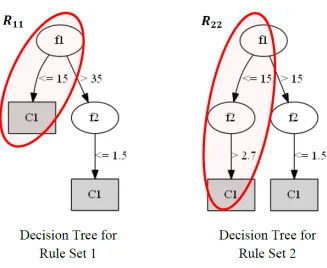
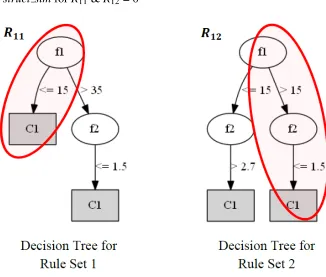
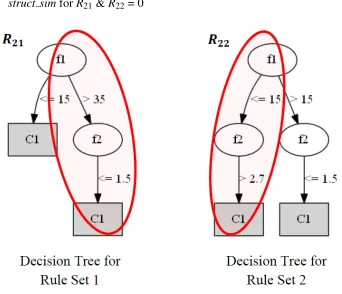
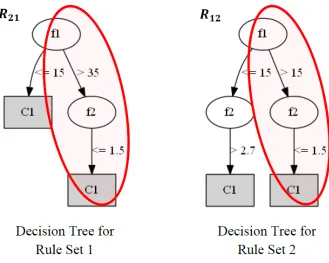
3.2 Measuring Similarity between Decision Trees . . . 43
3.2.1 Review of Previous Work . . . 43
3.2.2 Proposed Approach . . . 44
4 Case Study 58
4.1 Referred Case Studies . . . 60
4.1.1 Robocup Rescue Simulation . . . 61
4.1.2 Ozone Level Detection . . . 62
4.1.3 Climate Data . . . 63
4.1.4 Enron Email Dataset . . . 64
4.2 Selected Case Study: Golf Play . . . 64
4.2.1 Synthetic Data Generator . . . 66
4.2.2 Realistic Modeling of Attributes . . . 68
4.3 Experimental Setup . . . 68
4.3.1 Case Study based ABM . . . 69
4.3.2 Repast: The Simulation Platform . . . 75
4.3.3 Weka: The Data Mining Software . . . 77
4.3.4 Model Parameters . . . 79
5 Results and Discussion 83 5.1 Demonstrating and Validating the Proposed Approach . . . 84
5.1.1 Effect of Memory Length on Agents’ Learning Rate . . . 85
5.1.2 Effect of SMT on Agents’ Synchronization Level . . . 90
5.1.3 Validating the proposed method . . . 95
5.2 Studying the effects of realistic Model Parameters . . . 97
5.2.1 Effect of Retention Rate . . . 98
5.2.2 Effect of Acceptance Rate . . . 99
6 Conclusion and Future Work 104
References 108
A Copyright Permission 116
4.1 Golf Play Dataset . . . 65
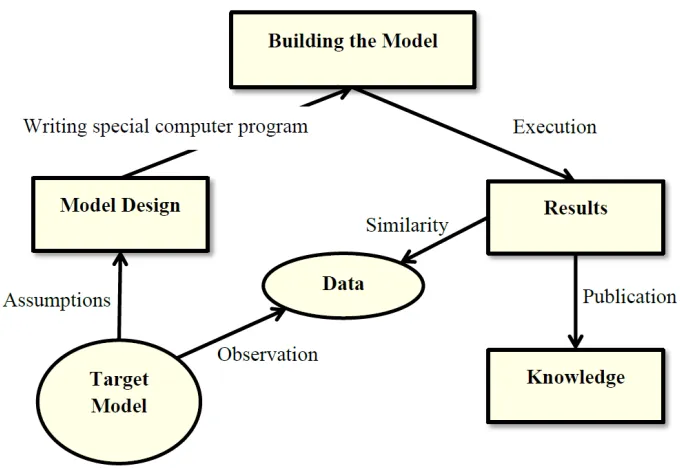
2.1 The computer simulation design process as described by Drogoul et al.
(2003); Gilbert and Troitzsch (1999). . . 13
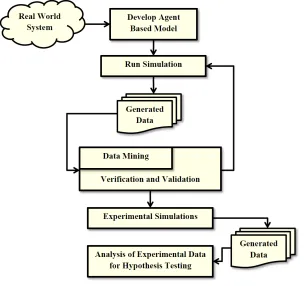
2.2 “Applying data mining for the verification and validation of agent based models”(Baqueiro et al., 2009). . . 21
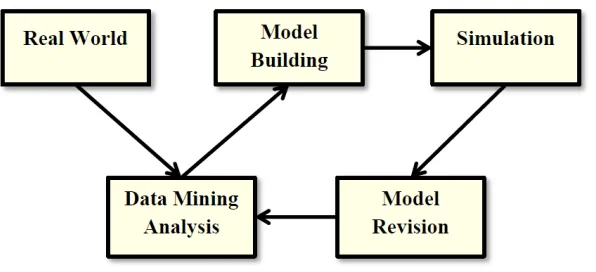
2.3 “Data mining revision process applied to agent-based simulation”(Remondino and Correndo, 2005). . . 23
3.1 An agent in the proposed approach. . . 41
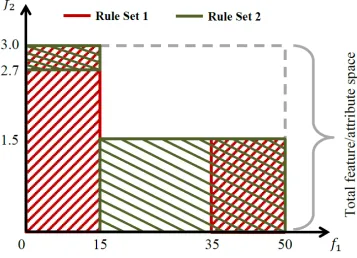
3.2 A plot of subspace covered by rule sets 1 and 2 in the feature/attribute space. 50 3.3 Comparing rulesR11andR22for structural similarity. . . 51
3.4 Comparing rulesR11andR12for structural similarity. . . 52
3.5 Comparing rulesR21andR22for structural similarity. . . 53
3.6 Comparing rulesR21andR12for structural similarity. . . 54
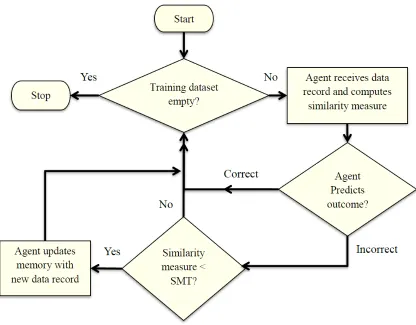
3.7 Flowchart for the working of integrated approach. . . 55
4.1 Synthetic Data Generator. . . 67
4.2 Experimental Setup. . . 71
4.3 Decision Tree Editor. . . 73
5.1 Population of agents synchronized with environment for ABM-60. . . 86
5.2 Average similarity measure of agents for ABM-60. . . 86
5.3 Population of agents synchronized with environment for ABM-170. . . 87
5.4 Average similarity measure of agents for ABM-170. . . 88
5.5 Population of agents synchronized with environment for ABM-120. . . 89
5.6 Average similarity measure of agents for ABM-120. . . 89
5.7 Population of agents synchronized with environment for ABM-60. . . 91
5.8 Average similarity measure of agents for ABM-60. . . 92
5.9 Population of agents synchronized with environment for ABM-170. . . 93
5.10 Average similarity measure of agents for ABM-170. . . 93
5.11 Population of agents synchronized with environment for ABM-120. . . 94
5.12 Average similarity measure of agents for ABM-120. . . 94
5.13 Average Prediction Accuracy for all three ABMs. . . 96
5.14 Average similarity measure of agents for different values of retention rate for ABM-120. . . 99
5.15 Average similarity measure of agents for different values of acceptance rate for ABM-120. . . 100
Introduction
Agent Based Modeling Simulation is considered as a powerful methodology for simulating
real world complex systems and has proved its worth in a wide variety of disciplines, such
as Social Sciences (Doran, 1998); Economics (Palmer et al., 1994); Business (Robertson,
2003) and Health Care (Kobti et al., 2006). The Agent Based Model (ABM) allows
re-searchers and domain experts to gain an insight into the working and behavior of complex
systems and provides them with immense knowledge in return. This knowledge though
is an approximation of the exact knowledge, yet it highly facilitates the in-depth
under-standing of the modeled system (Remondino and Correndo, 2005). Over the past years,
ABM has been increasingly used both at the research level and at the industry level in
modeling various complex frameworks, as a solution to real world problems. Among all
the applications, ABM has developed interest for itself in the area of predictive modeling
(Garcia, 2005). In other words, they are used to predict the behavior of real world systems
for unseen situations. Some attempts towards building predictive ABM, as mentioned by
Garcia (2005), includes predicting the success of a movie, predicting human behavior in
a social gathering etc. However, the lack of sophisticated calibration techniques raises a
question mark on their successful predictions. This highlights that the overall acceptability
and usage of an ABM highly depends on the validation and reliability of its results.
There-fore, an ABM for a real world problem giving same or similar results for a given set of
input situations/conditions does not guarantee its overall correctness for all situations. The
real system may act in a totally different manner when exposed to different circumstances.
Thus, validation of an ABM becomes a critical and at the same times a difficult task, owing
to the dynamic nature of a real system where the environment/conditions changes over time
and so does the systems behavior.
1.1
ABM and Validation
Remondino and Correndo (2006) suggests that validation in ABM can be broadly divided
into three categories:Empirical Validation,Predictive ValidationandStructural Validation.
Empirical Validationcompares the results obtained from ABM simulation with those
ob-served in real world system, thus giving an idea of how correct the model is for some given
situations. However, it does not guarantee delivering accurate results for all situations that
can be observed in real world, for the modeled system. Predictive Validation focuses on
reliability of the outcomes produced by an ABM, for unseen situations that are not directly
observable in real world. This kind of validation plays an important role in studying the
behavior of real world system for situations that are non-repeatable. Structural Validation
ensures that the processes used by an ABM to generate the outcome comply with those used
in the real world system. This kind of validation involves examining and decomposing the
model to make sure that all interacting parts are the same as the corresponding real ones.
Of the three validations discussed,Predictive Validationhas been realized in this research
From our research perspective, we have identified two important aspects for
keep-ing an ABM consistently validated against its environment. These includeImprovingand
Maintaining. Since we are measuring the validation of an ABM in terms of successful
pre-dictions it makes, therefore the termsImprovingandMaintainingare used along with the
prediction capability.Improvinghere refers to the process of improving prediction
capabil-ity of an ABM, after it loses its validation due to an inevitable change in the environment.
TheMaintainingaspect refers to maintaining the capability of correct predictions after the
change has been absorbed by ABM. This aspect plays an important role in forcing an ABM
to be consistently in synchronization with its environment.
Before proceeding further, we consider it necessary to provide the context in which
the term “learning” has been used with ABM, in order to avoid any misinterpretations. In
our thesis work, we intend to look at this term from the perspective of acquiring new
in-formation, in the form of rules. More precisely, the phrase “Incorporating learning into
agents” describing section 3.1, refers to incorporating adaptability in agents, so as to make
them capable of updating their existing rules/decision tree corresponding to the changes
occurring in their simulation environment. Therefore, the term “learning” is used in
ref-erence with the updations that an agent makes to its existing set of rules/decision tree, in
order to absorb the changes occurring in the simulation environment.
1.2
Current Research Motivation
The above discussion highlights that validation is an important player in determining the
widespread acceptability of any ABM. Thus, no matter how correctly an ABM models a
the nature of the problem, we identified two factors that tend to affect the validation and
reliability of an ABM. These are briefed as below:
1. Dynamic nature of environment: The environment in a real world system changes
over time in an unpredictable manner and so does the systems behavior. Under such
circumstances, an ABM validated against initial environment conditions is bound to
become invalid, over time, and hence loose reliability of its results. E.g. an ABM
learns a rule “if weather is sunny then play golf ” at timestamp t1. This rule gets
changed to“if weather is sunny and its raining then don’t play golf ”, at timestamp
t2. Since the ABM does not accommodate this change, therefore it continues to use
the original rule and hence becomes invalid after timestampt2.
2. Amount of data available related to environmental changes: Prediction of correct
outcomes by an ABM largely depends upon the amount of data it is trained upon.
E.g. if there is a rule saying that“if weather is snowy or rainy or foggy or windy then
don’t fly helicopter”. However, if the weather for an input situation reports volcanic
clouds then what will be the outcome of ABM? In real world,snowy, rainy, foggy,
windyand volcanic clouds can be categorized as bad weather conditions, therefore
one should not fly helicopter. Since ABM did not experience such a situation during
its training, therefore it may end up making a random guess about the outcome. Thus,
lack of sufficient training data again affects the reliability of an ABM.
Of the two highlighted problems, this research is motivated to handle the issue of
Dynamic nature of environmentso as:
1. To improve and maintain the overall reliability of an ABM, in terms of making
2. To enable an ABM to be consistently in synchronization with its environment, at all
times by absorbing environmental changes.
1.3
Thesis Contribution
In this research, we introduced an approach for developing a predictive ABM that more
re-alistically enacts and adapts according to the dynamically changing environment. The
dy-namic environment here refers to the incrementally updating training dataset, upon which
the ABM is trained. In order to realize this goal, an ABM’s agent should possess
cog-nitive capabilities to be able to learn from its past experiences and accordingly update its
behavior. It should also be able to detect a change in the environment, following which
it can start synchronizing with the changed environment. Considering these requirements,
an integrated approach has been developed that takes care of the following two individual
aspects, to improve and maintain the overall reliability of ABM:
1. Incorporating intelligence in agents by using decision tree as the data mining
tech-nique, thereby making them capable to learn from their past experiences and update
their knowledge to absorb environmental changes.
2. Using decision tree similarity measure to detect environmental changes and
deter-mine an agent’s synchronization level with the environment. The later one helps in
monitoring the learning behavior of agents, thus keeping a check on computational
costs.
The case study described in chapter 4 demonstrates the implementation of this
above approach, the other goals of this research include:
1. Study the effect of factors such as, memory length, similarity measure threshold,
retention rate and acceptance rate, on the learning rate of agents and the
synchro-nization level attained by them.
2. Study the dependency of the factors, memory length and similarity measure
thresh-old, on the nature of the application environment, which can be either dynamic or
static.
3. Study the impact of incorporating social interactions among the agents, through the
use of social influence factor, on their learning rate.
1.4
Thesis Outline
Considering our research motivation and aim, described in the previous two sections, the
work done in this thesis is structured into following chapters.
Chapter 2 proceeds with a background study introducing important concepts
re-lated to agent based modeling and data mining. It is then followed by a review of the work
done in the field of integrating both of them, focusing specifically on the application of
data mining in ABM. It is then followed by a background study done in the field of
mea-suring similarity between two different decision trees. Lastly, a brief study related to the
second problem associated with validation and reliability of an ABM, i.e. Amount of data
available related to environmental changes, is presented.
integrating learning into agents and measuring similarity between two decision trees.
Fol-lowing this, a flowchart is used to describe the overall working of the integrated approach.
Chapter 4 initially goes through some of the case studies that were referred before
selecting the Golf playas the case study, highlighting the issues associated with each of
them. It then describes theGolf playdataset along with some pre-processing done to make
it suitable to be used as the case study. Following this, the experimental setup along with its
components is discussed in detail that was used to implement and demonstrate the proposed
approach.
Chapter 5 presents the experimental results obtained from different ABM
simula-tion runs and discusses the effect of various factors on the learning rate and synchronizasimula-tion
level of agents.
Finally, the last chapter outlines the conclusion and presents some of the possible
Literature Review
This chapter presents the work that was surveyed to accomplish our research work.
Ac-cording to the research objectives, outlined in chapter 1, we consider it useful dividing the
background study into two broad categories. The first category, ABM and Data Mining,
focuses on the related work done in the field of applying data mining techniques in ABM
for various purposes. The second category,Data Mining and Machine Learning, covers the
work done in the area of comparing two decision trees for computing similarity of
knowl-edge, represented by them. In addition, this chapter includes one more heading, i.e. Other
Background Study, which describes the research done while pursuing this thesis. Though
it is not exactly related to the research described here, but considering its importance and
the time spent investigating it, we consider including it in this thesis.
2.1
ABM and Data Mining
This section provides a detailed discussion on the concepts of Agent based modeling
sim-ulation and Data mining, which forms the basis of our work. While doing so, various
important aspects related to them are explored, such as“What are agents in an ABM?”,
“How to design ABM?”, “What are the different data mining techniques?” and “What
are their respective applications?”. Lastly, this section throws light on integrating the two
methodologies to surpass their limitations, of which, the application of data mining in ABM
is considered in detail, covering the related work done in the field.
2.1.1
Agent Based Modeling Simulation
As stated by Drogoul et al. (2003), ABM has gained immense popularity in a wide
vari-ety of disciplines, replacing the traditional technologies such as micro simulation (Orcutt,
1957), object oriented simulation (Troitzsch, 1997) and individual based simulations (Harding,
1999). The authors also highlight that different level of representation is required for
enti-ties, in order to model different scenarios. A simple object oriented design may be adequate
for simple computational entities; however for modeling complex entities that react to the
modeling environment or the entities that are cognitive and autonomous in nature, an agent
oriented design becomes necessary. Agent oriented software design and complex system
design are becoming very common these days. Macal and North (2005) attributes the wide
spread usage of ABM to the following reasons:
1. Nowadays the systems have become more complex, in terms of their
interdependen-cies. Due to this it has become really difficult to analyze and model them effectively,
using the traditional modeling tools.
2. ABM allows a more realistic modeling of the systems, which have always been too
complex to be adequately modeled. Economic markets are one such example of these
systems, where a large number of heterogeneous entities interact with each other in
3. Data is now being organized into databases at finer levels of granularity, thus enabling
micro-data to support micro-simulations.
4. The computation of large-scale micro-simulation models is now possible due to the
availability of substantial computational power, these days.
Baqueiro et al. (2009) defines ABM as a methodology to map a real world system
into a computer program, where real world processes are expressed in terms of algorithms
and mathematical formulae. These algorithms and formulae are implemented as code in a
programming language. The authors also state that ABMs allow the design of experiments
to test the developed models and theoretical frameworks, under different scenarios with
different parameter configurations. These experiments enable the testing of the behavior
of the modeled systems for a given set of assumptions (Banks, 1998). In addition, this
experimentation also provides designer with an insight of certain aspects of a complex
system which otherwise are not possible to analyze using mathematical analysis.
2.1.1.1 Defining Agents in ABM
An agent is the basic component of any ABM that represents an autonomous entity, capable
of reasoning about a given situation and taking decisions independently. However, there is
no universally accepted definition for the term “agent” (Macal and North, 2005). Different
modelers look at it from different perspectives. E.g. Bonabeau (2002) defines agent as an
independent component whose behavior can vary from primitive reactive decision rules to
complex adaptive intelligence. Mellouli et al. (2004) on the other hand, defines an agent
to be any independent component whose behavior must be adaptive for it to be able to
of the agents is provided by Jennings (2000), highlighting essential characteristic of its
autonomous behavior.
An agent can have different behaviors depending upon the real world system being
modeled (Wooldridge, 2002). However, for an agent to be active and be able to make
independent decisions, it should possess the following properties (Wooldridge et al., 1995):
1. Reactivity: the ability of an agent to correctly perceive its modeling environment and
respond to the changes occurring in it, in a timely fashion.
2. Pro-activity: the ability of an agent to take initiative in showcasing the behavior that
will satisfy the requirements of its particular objectives.
3. Sociability: the ability of an agent to interact with its modeling environment and with
other co-existing agents to fulfill its objectives.
4. Flexibility: the ability of an agent to possess a range of different methods, which can
be used to achieve a given objective and to recover from a failure.
5. Autonomy: the ability of an agent to operate without direct human intervention and
possess some kind of control over its behavior and internal state.
Another important aspect of an agent is its architecture, which can be classified
into four categories: Logic based agents, Reactive agents, Belief-Desire-Intention agents
and Layered architectures. A detailed discussion about these architectures and their
2.1.1.2 Designing ABM
As described in (Fishwick, 1997), the general design of an ABM consists of three
interde-pendent stages which are described as below:
1. Designing Model: This stage involves constructing a model that is a near replica of
the real system under investigation. This stage utilizes the data collected from real
world observations, in the form of numerical values and abstract concepts, to build
the model. These concepts and data are then formalized using formal mathematical
logic.
2. Executing Model: This stage involves the conversion of mathematical model,
con-structed in the previous stage, into computer algorithms followed by their execution.
This stage produces numerical outputs, which can be referred to as simulated data.
3. Analyzing Outcome: This stage deals with the comparison of simulated data with the
data produced by the mathematical model.
The author states that the three stages work in close connection with each other
and that the entire simulation process comprises of a finite number of iterations among
them.
Although the design stages defined by Fishwick (1997) seems to be complete from
the perspective of an ABM design, but as pointed out by Doran (1997) an important step
that would have provided a link between the design and implementation of the model is
missing. This is because the task of converting a mathematical model into its corresponding
Figure 2.1: The computer simulation design process as described by Drogoul et al. (2003); Gilbert and Troitzsch (1999).
refine this design process by introducing a model building stage into it. Figure 2.1 depicts
the refined design process, as referred from (Drogoul et al., 2003).
This design process turns out to be more practical in the sense that it describes the
mathematical model in terms of available assumptions. The developers can write special
programs for converting the theoretical model into its corresponding computer
interpreta-tion. The data generated by executing such model can be compared with the data observed
from other independent sources for the purpose of validation. If the generated data set does
not conform to the observed data, the entire process can be repeated with altered
2.1.1.3 Applications of ABM
The increased popularity of ABM has motivated its use across diverse fields of discipline.
As Macal and North (2005) states, the applications of ABM vary from minimalist academic
models to large-scale decision support systems. Minimalist models capture only the most
salient features of a system, based on a set of idealized assumptions. Decision support
models tend to be large-scale applications, which are designed to answer real-world policy
questions. Following are a few specific examples of ABM applied in different fields of
research:
1. Social Science: Yamada et al. (2006) proposed a software platform for developing
applications that required the use of socially intelligent agents. Such agents possess
the capability to recognize social emotions and act accordingly. The authors justified
their work by implementing an application of socially intelligent agents for
eLearn-ing.
2. Business and Economics: Palmer et al. (1994) presented an ABM of artificial stock
market. The overall market behavior is represented by the collective behavior,
emerg-ing from interactions among individual autonomous and adaptive agents. This is in
contrast to the traditional models which employ rational expectations approaches.
Another ABM for banking management and strategy development is presented by
Robertson (2003). This model targets to explore the strategy development process
for a Bank in order to maximize its output while competing with other networked
banking institutions.
3. Health Care research: An ABM has been proposed by Kobti et al. (2006) that targets
re-straint usage, on highway. The model incorporates the use of evolutionary algorithms
to achieve its objectives.
4. Manufacturing Industry: Jennings and Bussmann (2003) discussed on the
applicabil-ity of ABM in Complex Control Systems of Manufacturing industries such as vehicle
assembly plants. The authors justified their idea by stating multiple scenarios where
agent based software model can be applied to control complex control systems. In
addition, they also highlighted the motivation behind such applications.
2.1.2
Data Mining
Data mining is the process of extracting valuable and meaningful information from
tremen-dous amount of data, using data analysis and discovery algorithms (Kantardzic, 2011;
Fayyad et al., 1996). It is one of the significant steps in the overall process of knowledge
discovery in databases (KDD), where other steps like data cleaning, data pre-processing
etc. are coupled with it to identify potentially useful and comprehensible patterns in data.
In the literature, the terms “Data Mining” and “KDD” are generally used synonymously.
Kantardzic (2011) defines data mining in a more formal manner as: “Data
min-ing is a process of discovermin-ing various models, summaries, and derived values from a given
collection of data.” , where the author highlights that the data mining process generally
con-sists of five steps which are executed iteratively to extract the required knowledge. These
steps include: defining problem statement, collecting data, preprocessing data, selecting
appropriate data mining techniquesandinterpreting results. Based on the most common
usage of data mining in different fields, it can be categorized into two broad classes as
1. Predictive data mining: It focuses on building a model that maps a situation, in terms
of conditions describing it, to its corresponding output. Such a model can then be
used to predict the outcome for unseen or future situations.
2. Descriptive data mining: It involves constructing a model that is capable of drawing
out useful patterns from data, but in human understandable format. It tends to provide
a description for data that is easy to comprehend.
2.1.2.1 Data Mining Techniques
Data mining consists of different methods to achieve the primary goals identified in the
previous discussion. A brief introduction to some of the important methods is presented
next (Kantardzic, 2011; Fayyad et al., 1996):
1. Classification: It is the process of determining a mapping function that can be used
for classifying a new or existing data item into one of the several predefined classes,
accurately (Weiss and Kulikowski, 1990). In order to construct such a
classifica-tory function for each class, this method requires a dataset that relates data items to
their corresponding classes. For example, classification of trends in financial
mar-kets (Apte and Hong, 1996), identifying objects of interest in large image databases
(Fayyad, Djorgovski, and Weir, 1996) are some of its applications. Some of the
classification algorithms include K-nearest neighbors (Cover and Hart, 1967), Na¨ıve
Bayes classifier (McCallum et al., 1998), Support Vector Machine (Cortes and
Vap-nik, 1995) and decision trees (Quinlan, 1986).
2. Regression: It is the process of determining a mapping function that can effectively
in-volves analyzing the change in the value of dependent variable by varying the value
of one of the independent variables and fixing others. It also assists in
understand-ing the relationship that can exist between the dependent variable and one or more
of the independent variables. Some of the applications include, but are not limited
to, predicting the amount of biomass present in a forest using remotely sensed
mi-crowave measurements, predicting consumer demand for a new product relative to
the advertising expenditure.
3. Clustering: It is identified as one of the unsupervised learning methods in data
min-ing. This technique works by grouping similar objects into one subset representing
a distinct class (Hegland, 2004). These subsets can be mutually exclusive and
ex-haustive and can even be hierarchical or overlapping in nature. Example applications
include identifying groups of similar costumers in marketing databases,
identify-ing subcategories of spectra from infrared sky measurements (Cheeseman and Stutz,
1996). Hegland (2004) identifies four broad categories into which clustering
algo-rithms can be divided. These includePartitioning methods, Hierarchical clustering
methods, Density based methods andModel based methods. A detailed discussion
about each of these categories, along with approaches they include, is presented in
his work. The author also mentions that clustering is generally used in conjunction
with classification for various data mining tasks.
2.1.2.2 Applications of Data Mining
Over the recent years, data mining has emerged as a powerful tool to analyze large amounts
of data. Today, many different fields such as healthcare, research and business are
(2011) in his research throws light on some of the areas where data mining has and is being
applied.
Telecommunication industry is using data mining to answer questions like“How
to retain customers when other companies offer lucrative offers and low rates?”, “What
offers should be made to the customers to convince them into buying additional services?”
etc. Big companies likeWorldcom,BBC TV andBell Atlanticare mining customer related
data to improve their selling power, determine the best time for broadcasting a program and
selecting a suitable technician for resolving customer issues depending upon their severity.
Retail industry is another area where retailers are looking for data mining models
that could tell them the latest product trend, types of product that can be sold together, the
ways to retain profitable customers, customer buying behavior etc. Some of the retail
com-panies that are utilizing the power of data mining to unveil answers to these questions are
Safeway(UK, grocery),RS Components(UK, electronics)andKroger Co.(USA, grocery).
Healthcare and biomedical research is another important area where data mining
is used to analyze large amounts of patient related data and data associated with medicinal
research. This area becomes critical due to the involvement of human life and hence,
expects data mining tools to be more accurate with lowest possible errors. For example,
the continuous analysis of time stamped data associated with a patients health can provide
important information on the progress of the disease. The concept of neural networks was
used by NeuroMedicalSystems and Vysis Company to perform a pap smear diagnostic aid
2.1.3
Integrating ABM and Data Mining
Despite the widespread use of ABM and data mining, there are still some issues associated
with each of these methodologies that hinder their effective implementation in any field of
discipline. Baqueiro et al. (2009) in their work highlight the open problems/limitations of
these approaches and propose to integrate them in order to overcome their limitations, to
some extent. A detailed discussion about these issues is presented next.
In ABM, one of the major issues is the lack of standard techniques for its
verifica-tion and validaverifica-tion. Due to this, the researchers from fields other than the computer science
are very reluctant to use ABM as a tool to model real world systems. The verification
process takes care of correct transformation of the abstract theoretical model into the
com-puter program. Validation, on the other hand, ensures that the comcom-puter based model is an
accurate representation of the modeled real world system. It does this by comparing their
respective behaviors. Thus, verification and validation together adds credibility to an ABM
and make its results trustable. Further, the high complexity of modeled systems makes it
difficult to establish some standards for verification and validation. Despite this limitation,
each model can still be verified and validated using techniques specifically designed for it.
Although there exists several pitfalls in data mining, but lack of relevant data for
mining is the most significant of them. Though different organizations have abundant data,
but how much of this data is readily usable for analysis is a big question. Relevant data,
in terms of data mining, means the data with minimum noise, inconsistency, distortion
and error. However, expecting such data for mining is a big thing because most of the
data stored in data warehouses and organizational databases contains noise and is highly
the data and preparing it for mining. Thus, it is very difficult to accurately detect and
correct erroneous data. The quality of data is further damaged when it undergoes automated
processes like data integration and data pre-processing.
Following are the two ways, as introduced by the authors, in which the two
ap-proaches can be integrated to overcome each other’s limitations.
1. Applying data mining in ABM: The authors claim that some sort of validation process
can be formalized by the use of data mining in ABM. Further details on this topic are
covered under the next heading of“Application of data mining in ABM”.
2. Applying ABM in data mining: With this approach, ABM can be used to generate
sufficient amount of data (simulation results) for a domain specific data mining task,
when real data is not available. In addition, this approach intends to promote the use
of various data mining techniques in different application domains, without having
to worry about the availability of real data. Thus, the use of ABM in data mining
should be able to handle the data issue to a great extent, as claimed by the authors.
Since a part of our research focus on incorporating some sort of intelligence in
agents, using data mining techniques, therefore a detailed discussion on the approach
“Ap-plying data mining in ABM” is presented next, along with related work done in the field.
2.1.3.1 Application of Data Mining in ABM
The authors in (Baqueiro et al., 2009) believe that some sort of validation process can be
formalized for ABM by using data mining techniques in it. More precisely, they propose
on the data obtained from ABM simulation, to extract a high level behavior of the model. In
other words, they intend to draw meaningful information from the simulation results using
data mining techniques. Such information or behavior would be more easy and
straight-forward to compare with that observed in the corresponding real world system. Here, the
focus is on working at the abstract level rather than looking at the low level data values.
This would make the task of validation in ABM much easier, provided the outcome data is
of good quality and suitable data mining techniques are used. Figure 2.2 diagrammatically
represents the inclusion of data mining in ABM at the verification and validation level.
Figure 2.2: “Applying data mining for the verification and validation of agent based
Remondino and Correndo (2005) further classify the application of data mining
techniques in ABM intoendogenousandexogenousmodeling.
1. Endogenous modeling: This type of modeling works at micro-level of ABM, i.e. at
the individual agent level. In this approach, some kind of intelligence is assigned
to each agent using data mining techniques, making them capable of analyzing and
processing the data collected from previous simulation runs. This enables an agent to
learn from its historic data and evolve according to the environment in which it acts,
in much the same way as humans do. This further helps them reach a local maximum
by tuning in some of the ABM simulation’s initial parameters (Remondino, 2003).
Classification is one such data mining technique that can be used by the agents to
learn a classification model from their previously collected experience. This
tech-nique can be implemented by using decision tree learning as the machine learning
algorithm.
2. Exogenous modeling: This class of modeling deals with macro-level of ABM,
collec-tively looking at agents as an artificial society. Here, data mining techniques can be
used to reveal interesting and unknown patterns from the simulation data and study
the behavior emerging from interactions among the agents. This information can
then be used to revise the model and validate it against the modeled system. The
authors further elaborate this process using the diagram shown in Figure 2.3. In the
first phase, data mining is used to construct a hypothesis over the real world system.
Based on this hypothesis, a model is build which is then implemented and executed
to produce sufficient amount of simulated data. In the second phase, data mining
is again used to construct another hypothesis, but over the simulated data this time.
Figure 2.3:“Data mining revision process applied to agent-based simulation”(Remondino and Correndo, 2005).
the original one to validate the model. Depending upon the results of comparison,
the model can be revised to make it map the real world system as closely as possible.
This process can be repeated until the model reaches a desired convergence.
2.1.3.2 Related Work
Although, not much work has been done in the field of applying data mining in ABM
(Arroyo et al., 2010), however this section still tries to cover a significant portion of the
relevant work done. The work described here also forms the basis of our research.
The work done by Remondino and Correndo (2006) demonstrates the use of
ex-ogenous modeling. In their work, the authors intend to handle the problem of “parameter
sensitivity” in ABMs, using data mining. The outcome of an ABM run strongly depends
upon the selection of parameter values. Even a slight variation in one of the parameters
value can lead to an entirely different set of results. Therefore, the model parameters need
to be selected very carefully. In addition, selecting correct parameter values for the model
ap-proach called “Parameters Tuning by repeated execution”. In this apap-proach, the simulation
is run multiple times with different set of parameter values. The outcome obtained in each
run is analyzed using data mining techniques to determine if it conforms to the expected
behavior. If it does then the selected parameter values are considered to be the suitable one,
otherwise simulation is run with different parameter values. This approach helps in
identi-fying unknown dependencies between the parameters and the final outcome. In addition, it
also helps in determining the best parameter values that would ensure more realistic results,
given an existing situation and enables the implementation of other important things like
the what-if analysis and simulation of unreal situations. The authors use an ABM
simulat-ing the biological phenomena for some species of cicadas to highlight the worksimulat-ing of their
proposed approach.
Gostoli (2008)’s work is an example of endogenous modeling, in which the author
intends to work at micro-level of ABM by empowering individual agents with a data mining
technique to analyze their collected experiences. As described, an ABM is constructed for
establishing common and socially shared meanings for a set of symbols, among a society of
agents. These symbols are not assigned any meanings in the beginning and the agents are
expected to determine their meanings by socially interacting amongst themselves. Here,
each agent is assigned a decision tree learning algorithm to analyze and process the data
it has collected over time. All agents are made to play a game in pairs of two. In each
pair, one of the agents is marked as sender and the other one as listener. The sender agent
predicts the meaning for a symbol and sends it to the listener agent, which then checks it
for correctness. If it is incorrect, then listener agent sends back the correct meaning to the
sender agent following which the sender agent update its memory, otherwise the sender
guessing the meanings for symbols. After a few runs, when enough experience has been
collected by each agent, they start analyzing it using decision tree learning algorithm.
Fol-lowing this, each agent is able to formulate a set of rules, over time, guiding the assignment
of meaning to a particular symbol. After sufficient number of simulation runs, the ABM
reaches a stage where all agents share same meaning for each symbol, with small
varia-tions.
Arroyo et al. (2010)’s work is another example highlighting the use of
exoge-nous modeling for the development and improvement of ABMs. The authors present a
methodological approach describing the use of data mining techniques, along with
statisti-cal methods, in designing and initializing the model and validating it against the modeled
system. In model building stage, data mining is used to construct a hypothesis of the real
world by analyzing and mining the data collected from different sources such as surveys,
interviews etc. During this process, the authors suggest the involvement of domain expert
to ensure that data analysis results comply with domain theory. Data mining is again used
to analyze the simulation results to confirm that the model behaves in the expected
man-ner. The model undergoes modifications if the resulting hypothesis does not conform to
the initial one. This process is repeated multiple times to refine the model so that it closely
follows the real world system. The authors demonstrate each stage of their proposed
ap-proach using the case study of Mentat model, the details for which are mentioned in their
work.
Ahmed et al. (2011) describe yet another approach which makes use of data
min-ing in initializmin-ing various parameters of an ABM, with relevant data instead of usmin-ing some
with relevant values contained in a real world survey data, thus making the ABM mimic
a given real world condition as closely as possible. Since these values are not explicitly
mentioned in a survey data, therefore they emphasize on using decision tree as the data
mining technique to discover them. This would ensure, to some extent, a more realistic
be-havior of the model and hence simulation results, with a certain degree of correctness, can
be expected. The authors summarize their approach using an architecture that integrates
data mining and ABM.
2.2
Data Mining and Machine Learning
This section, briefly covering the relationship between data mining and machine learning,
provides a detailed discussion on different machine learning algorithms that can be used
to achieve data mining tasks in various fields. Further, using decision tree as the machine
learning algorithm for accomplishing the task of data mining in our research, it covers the
related work done in the field of measuring similarity between two decision trees.
2.2.1
Machine Learning Techniques
Data mining and Machine learning go hand in hand as most of the data mining techniques
such as classification, clustering etc., are implemented using different machine learning
algorithms. Although data mining looks at a bigger picture of extracting meaningful
in-formation from vast amounts of data, but it uses machine learning algorithms as the core
component of this bigger process (Mitchell, 1999). Therefore, in this section we briefly
introduce some of the popular machine learning algorithms that are being used in different
of them, Decision tree Learning, Artificial neural networks and Support vector machines.
1. Decision tree learning: This represents a divide-and-conquer approach for data
min-ing tasks of classification and regression. It generally falls in the category of
pdictive data mining because of its extensive use in building prepdictive models by
re-vealing and learning unseen patterns in large databases (Myles et al., 2004). Though
simple, yet it is a powerful methodology that can be used both for exploratory data
analysis and predictive modeling. Moreover, models constructed using decision tree
learning algorithms are easy to interpret and understand which makes this approach
stand apart from other pattern recognition techniques in the field. The decision trees
are constructed in an iterative manner, every time selecting a set of attributes from
among the remaining ones, on the basis of some test. These selected attributes
con-stitutes the internal nodes of a decision tree, known as the test nodes. The test nodes
can be selected in more than one ways, but approach given by Quinlan (1993) is the
most popular one. According to this approach, in every iteration, the attributes which
result in maximum information gain are selected as the test nodes. Every value of the
test node, in a decision tree, is represented by a branch protruding out from it. All
classes are represented as leaf nodes in the decision tree. Moreover, each path from
root to leaf node in a decision tree corresponds to a rule, thus a rule set can be derived
from the decision tree by traversing all its paths. These rules are generally known as
the classification rules. In addition, this approach is covered under the category of
supervised learning methods, which requires a set of training examples to construct
a predictive model.
2. Artificial neural networks: This approach takes its inspiration from the structure and
a computational model. With this, it tends to take a big step towards replicating the
cognitive capabilities of a human brain. In other words, artificial neural networks aim
at generalizing the mathematical models that define the biological nervous systems
(Abraham, 2005). Neurons are the basic element of any neural network, which are
interlinked using connection weights so as to correctly modulate the effect of
associ-ated input signals. A weighted sum of all the input signals is calculassoci-ated, over time,
in order to generate a neuron impulse. The learning capability of an artificial neuron
strongly depends upon the connection weights and the learning algorithm chosen.
These connection weights can be assigned either explicitly using different methods
or by the neural network itself. The learning algorithms come into play when neural
networks have to be trained, to make them capable of selecting these weights in order
to produce the expected output. In this regard, neural networks can be trained using
three classes of learning algorithms, i.e. supervised, unsupervised and reinforcement
learning, the details for which are mentioned in the referred work. In addition, the
architecture of neural networks is generally classified into two categories, namely
forward networks and recurrent networks. Besides other differences, the
feed-forward network does not have any feedback connections whereas they are present
in the recurrent networks. More details about these architectures and the design of
neural networks can be referred from (Abraham, 2005).
3. Support vector machines: This is yet another supervised learning method,
intro-duced by Vladimir Vapnik and colleagues, for binary classification (Boswell, 2002).
In addition to the classification tasks, this method can also be used for regression
analysis. The concept underlying the working of support vector machines requires
at-tributes/features describing each record in the training example set. During training,
each example is mapped onto this space as a point and a hyperplane or a gap, wide
enough, is determined that clearly separates the two classes in the space. Here,
find-ing such a hyperplane is one of the major tasks, which requires the data in example
set to be linearly separable. After this, a new or unseen data record can be classified
into one of the two classes by plotting it onto this space and determining the class
category it is closer to. Although this approach works well with linearly separable
data, however it can also be used for non-linear classification task by using “kernel
induced feature space”. In this method, the data is plotted into a higher dimensional
space, enabling the clear separation of data despite its non-linear characteristics. An
advantage for support vector machines is that their performance on unseen data can
be measured using VC-dimension, which is not possible in other learning methods
like neural networks. Further details on this approach can be referred from (Boswell,
2002).
2.2.2
Measuring Similarity between Decision Trees
While reviewing the work done in the field of applying data mining in ABM, it was
ob-served that most of the approaches make use of decision tree as the data mining technique.
Closely following the related work, we also plan to use decision tree as the data mining
technique, to enable agents in the ABM to learn from their previous experiences. Thus,
each agent uses a decision tree learning algorithm to mine the data it has collected over time
and represent the resulting knowledge in terms of decision tree. Since one of our research
objectives requires comparing the knowledge of an agent with the knowledge reflected by
the related work done in the field of comparing two decision trees for similarity.
2.2.2.1 Related Work
The following paragraphs describe some of the relevant work done in the field of measuring
similarity between two decision trees. In all the works described here, it is assumed that
the two decision trees are obtained over the same set of features/attributes.
Serpen and Sabhnani (2006) propose to measure the similarity of knowledge
rep-resented by two decision trees by comparing the corresponding rule sets obtained from
them. In this process, the rule sets are plotted into ann-dimensionalfeature space, where
ncorresponds to the total number of features/attributes, describing the rule sets. For each
rule in both the rule sets, a hyperplane is established by referring the conditions described
in the rule antecedent. The intersection points of these hyperplanes are used to calculate
the hyper-volume of the corresponding partition/subspace of the feature space. Thus, the
total hyper-volume for each of the two rule sets, computed separately, represents the
par-tition of the feature space covered by it. Among these parpar-titions, there are some that are
commonly covered by both the rules sets. The hyper-volume of these common partitions
together with the hyper-volumes of both rule sets gives a measure of similarity between the
two rule sets and hence the two decision trees. This similarity is computed with respect to
a particular decision class; therefore the procedure should be repeated for every class of
in-terest. The authors present a detailed algorithm outlining the approach and explain it using
examples. They also demonstrate its working using a benchmark problem from computer
security domain. Although this approach is quite simple and interesting, but it incurs high
The work done by Pekerskaya et al. (2006) deals with the problem of detecting
changing regions between any two snapshots of spatial data, taken at different time
in-stants. Since the access to original data is mostly limited by some constraints, therefore the
authors intend to use cluster-embedded decision trees to summarize the temporal snapshots
of data. These decision trees are stored in a separate database enabling the queries,
regard-ing the change detection between any two snapshots of data, to be answered effectively and
efficiently without requiring the access to actual data at those time instants. With this, the
problem of detecting changing regions between two different snapshots of data is reduced
to comparing two different time-stamped cluster-embedded decision trees. Therefore, the
authors present an approach for comparing two cluster-embedded decision trees, a part of
which involves deriving the rule sets from both the trees and computing the intersecting
region between them. While computing the intersecting region, all rules from both rule
sets are compared against each other to find the region commonly covered by them. The
complete details about the overall approach, along with its implementation on synthetic
and real data are mentioned in the referred work.
Perner (2011), apart from explaining“How to Interpret Decision Trees”, presents
yet another approach for detecting a change in the original data set that might have occurred
over the time. They intend to do this by modeling the data sets at two different time stamps
as decision trees and comparing them using the concept of substructure mining. In this
approach, all rules in both rule sets (derived from two decision trees) are decomposed into
their respective substructures and are then compared against each other to determine the
similarity. The author introduces a formula for calculating the overall similarity using this
concept, the details for which are mentioned in the paper. Also included in the paper is the
In addition, some other work done in the field includes: the approach given by
Bhatt and Rao (2008) for computing the overlap between two different firewall rule sets,
to ensure that the desired changes are incorporated into the new firewall rule set; the work
done by Liu and Hsu (1996), as mentioned in (Serpen and Sabhnani, 2006), in which they
propose a fuzzy matching technique to compare two different rule sets, one obtained from
a rule induction algorithm and the other one gathered from a domain expert. This gives a
measure of similarity of knowledge, extracted from the original data set and the one
pos-sessed by the domain expert. Moreover, it also helps detect any change that might have
occurred in the original data since last modification. Although their approach is effective,
however capturing the beliefs of a domain expert, in fuzzy terms, may involve some
diffi-culties.
2.3
Other Background Study
This study includes the research that was done in relation to the second problem associated
with the validation and reliability of an ABM, i.e. Amount of data available related to
environmental changes, as mentioned in section 1.2. We believe that the work described
here has essential ingredients to further improve the current approach, by making it respond
more accurately and realistically to the environmental changes, for which there is very little
or no data available. This would make the ABM map the real world situations more closely,
by predicting the changes, with decent accuracy, before they actually happen or in parallel
to the situation under consideration. However, due to the lack of a good and relevant
case study we were not able to pursue it, but still keep it as a future work for our further
research. Although, this work is not exactly related to our present research, but considering
following paragraphs present a very brief introduction to this study.
For any given situation (seen or unseen), a person makes decision by using both the
general knowledge and the specialized knowledge, gained from experience (Prentzas and
Hatzilygeroudis, 2007). Here, the general knowledge refers to the set of rules, which the
person develops over time from what he/she has known or gets to know about the domain of
given situation. The specialized knowledge refers to the collection of specific experiences,
which the person had in the past and which he/she can relate to the present situation.
Con-sidering this, Prentzas and Hatzilygeroudis (2007) state that the human thinking process,
under complex situations, can be mimicked by integrating two knowledge representation
approaches, namely rule-based reasoning and case-based reasoning. A brief description of
these approaches is presented next.
Rule-based reasoning (RBR), as the name suggest, represents the knowledge in
terms of facts and rules that can be reasoned using an inference engine (Prentzas and
Hatzi-lygeroudis, 2007). This type of reasoning approach is generally used in expert systems to
capture the domain knowledge effectively; MYCIN, an expert system used for medical
di-agnosis, is one such example of this approach. Since for a given situation, RBR uses logical
reasoning on given facts and rules to deduce the outcome, therefore it is categorized as the
deductive reasoning approach(Chi and Kiang, 1991).
Case-based reasoning (CBR) on the other hand is classified asinductive reasoning
approach, where a generalization is made from a given set of specific cases. This
gener-alized result can then be applied to an input situation to determine the decision/outcome
for it (Chi and Kiang, 1991). In CBR, the knowledge base, generally known as case
new/unseen situation is handled using the case library by finding a set of previous cases
that are, to great extent, similar to the given situation (Prentzas and Hatzilygeroudis, 2007).
One of the cases from this set, having the maximum similarity measure, is selected and its
solution is applied to the given situation with some modifications. The authors present a
detailed discussion about the advantages and disadvantages of RBR and CBR, along with
different ways in which they can be integrated to produce hybrid approaches, to overcome
their individual shortcomings.
Although RBR and CBR can be integrated in many different ways to replicate the
human thinking process, however following paragraphs mention some of this work that,
either directly or indirectly, aims at handling the situations for which either no data was
available to train upon or which were never faced earlier.
Kumar et al. (2009) present a hybrid reasoning approach combining RBR and
CBR, with CBR as the core system for knowledge representation and RBR as one of its
module. In their approach, the authors intend to make clinical decision support system,
for all domains of ICU, independent of the domain knowledge. This would considerably
reduce the time spent in the collection of not so obvious domain knowledge. Further, they
state that the proposed approach will be able to handle the problems of high complexity and
changing medical conditions, associated with the use of purely rule-based methods. With
this approach, they also intend to handle the unseen situations, for which there may not be
any rules defined in the rule-base. The authors demonstrate their approach using the real
data, collected from the ICU department of Sir Sunderlal Hospital.
Another approach that integrates RBR and CBR is given by Lee (2008). In this
another, for internal auditing of the bank. There are two broad stages defined in the overall
process, i.e. the screening stage and the auditing stage. The screening stage is handled
by RBR, where suspicious transactions are screened using standard guidelines defined for
the department. CBR is used at the auditing stage to determine the punishment for the
employees who are involved in the suspicious transactions. This approach requires the
involvement of a domain expert for the case adaptation process. Case adaptation is the
process in which the solution of the case, found most similar to the current situation, is
reviewed and modified so as to make it applicable to the current situation. The authors
highlight the working of their approach using the internal regulations and transaction data
from K-bank in South Korea.
Golding and Rosenbloom (1996) present another approach for integrating RBR
and CBR to increase the overall reasoning accuracy of the system, taking into account the
knowledge from different sources. RBR and CBR are used as independent modules, with
CBR as the evaluator of the results produced by RBR. Initially, RBR module is used to
determine the rule that is most suitable for the given input situation. This rule, instead
of being applied to the situation, is critiqued by the CBR module using the negative
ex-emplars. This critiquing process is performed in the combination modulewhere negative
exemplars are used to highlight that the selected rule is not applicable to the input situation.
The working details of thecombination moduleare covered in the paper, with elaborative
examples. The authors tested their proposed approach in the domain of name
pronuncia-tion, which is an important problem in text-to-speech synthesis. They name the resulting
system asAnapron.
are some other efforts, done towards integrating RBR and CBR for tackling various issues,