University of South Carolina
Scholar Commons
Theses and Dissertations
5-2017
Supporting Immersion Teachers: An
Autoethnography
Lauren Speece
University of South Carolina
Follow this and additional works at:https://scholarcommons.sc.edu/etd Part of theEnglish Language and Literature Commons
This Open Access Dissertation is brought to you by Scholar Commons. It has been accepted for inclusion in Theses and Dissertations by an authorized administrator of Scholar Commons. For more information, please [email protected].
Recommended Citation
Speece, L.(2017).Supporting Immersion Teachers: An Autoethnography.(Doctoral dissertation). Retrieved from
S
UPPORTINGI
MMERSIONT
EACHERS:
A
NA
UTOETHNOGRAPHYby
Lauren Speece
Bachelor of Arts
University of North Carolina at Charlotte, 2000
Master of Arts
University of South Carolina, 2003
Submitted in Partial Fulfillment of the Requirements
For the Degree of Doctor of Philosophy in
Language and Literacy
College of Education
University of South Carolina
2017
Accepted by:
Lucy Spence, Major Professor
Victoria Oglan, Committee Member
Christie Martin, Committee Member
Paul Mahlovr, Committee Member
DEDICATION
This dissertation is dedicated to immersion teachers.
The important work you do each day is what inspired me to write,
ACKNOWLEDGEMENTS
My sincerest thanks to Dr. Lucy Spence, without whom, I would not have
finished this epic journey. Your open-mindedness, encouragement, and dedication to my
writing process have been invaluable.
I would also like to acknowledge my committee members, Dr. Victoria Oglan, Dr.
Christie Martin, and Dr. Paul Mahlovr. Your dedication of time and wisdom has helped
me become a scholar.
Finally, I acknowledge my friends, family and colleagues who have supported me
through this long and often tiresome process. And to my precious son Jake, you keep me
ABSTRACT
Immersion programs face a variety of challenges that are common to the
field, such as lack of materials appropriate for students’ language abilities, assessment,
teacher recruitment and retention, balancing content and language, and relevant, high
quality professional development for teachers. However, within specific micro-contexts,
other issues can affect the success of immersion programs. Since the teacher’s role is
critical in all aspects of the immersion classroom, more emphasis needs to be placed on
talking with teachers about their experiences in order to provide better professional
development, and to build a stronger community of support.
This narrative autoethnography examines my journey both as immersion teacher
and teacher coach, as well as the insights of six current immersion teachers in a relatively
large Spanish immersion program, spanning four different schools. Based on interviews,
reflections, observations, field notes, and narrative inquiry, this study sought to better
understand the lived experiences of immersion teachers in order to answer the questions:
1. How do teachers’ stories help us understand the context of immersion teachers in
one school district?
2. How does this understanding lead to better support of immersion teachers?
Findings indicate that in certain micro-contexts, issues of marginalization,
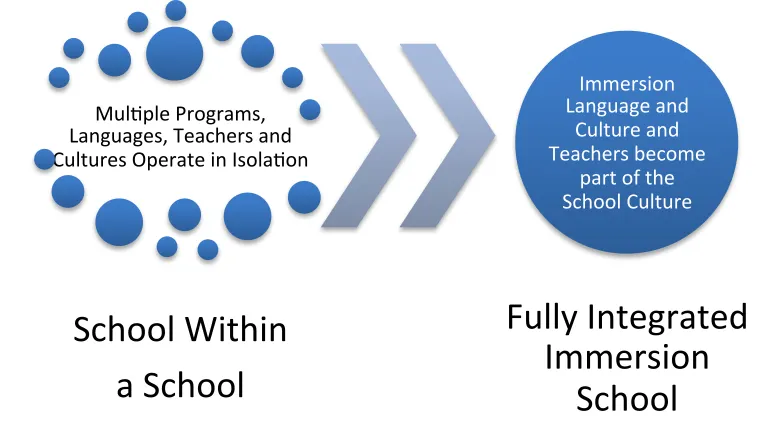
devaluing of the second language, and a school within a school dichotomy can occur.
given a voice. Using liminal theory to re-frame the discussion of language value and
marginalization, this study reports teachers’ stories of classroom success, professional
support, language and content integration and becoming. By re-framing the dialogue,
immersion teachers and administrators should be able to gain agency to confront the
social and political dominance of a monolingual education system. Furthermore,
continuous, embedded professional development with a focus on sociocultural theory and
practice is another manner to address the need for high quality, ongoing professional
PREFACE
To preface this work, I want to acknowledge that no educational program is
perfect, or without room for improvement. The program I have written about is
exceptional, but due to the unique challenges of immersion education, still has room for
change and improvement. Acknowledging issues or concerns that do exist, does not take
away from the strength and success of a program or the teachers, administrators, district
support, students or parents who make it possible. Instead, I believe it demonstrates a
dedication to growth and the continued pursuit of excellence. Any critique in this work is
shared with a spirit of respect and admiration for everyone involved in immersion
TABLE OF CONTENTS
DEDICATION ... iii
ACKNOWLEDGEMENTS ... iv
ABSTRACT ...v
PREFACE ... vii
LIST OF TABLES ... ix
LIST OF FIGURES ...x
CHAPTER 1 INTRODUCTION ...1
CHAPTER 2 REVIEW OF THE LITERATURE ...6
CHAPTER 3 METHODS ...36
CHAPTER 4 THE VALUE OF A SECOND LANGUAGE AND STORIES OF SUCCESS ...60
CHAPTER 5 MARGINALIZATION AND STORIES OF SUPPORT ...74
CHAPTER 6 SCHOOL WITHIN A SCHOOL: A THRESHOLD EXPERIENCE ...85
CHAPTER 7 IMPLICATIONS ...97
CHAPTER 8 BECOMING STORIES ...104
LIST OF TABLES
Table 3.1 Participant Information ...46
LIST OF FIGURES
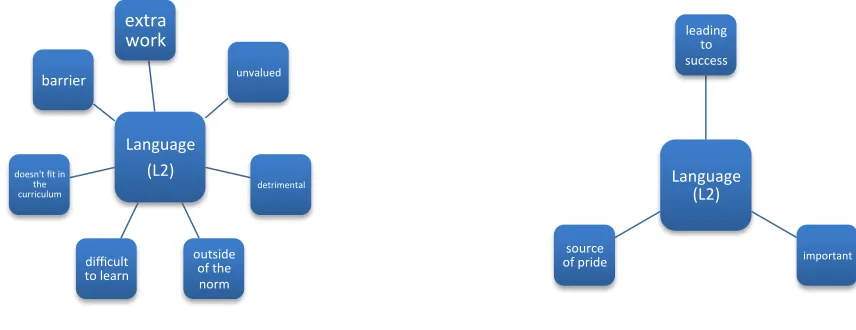
Figure 4.1 De-valuing and Valuing Descriptions of the L2 ...60
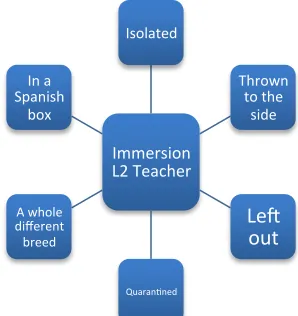
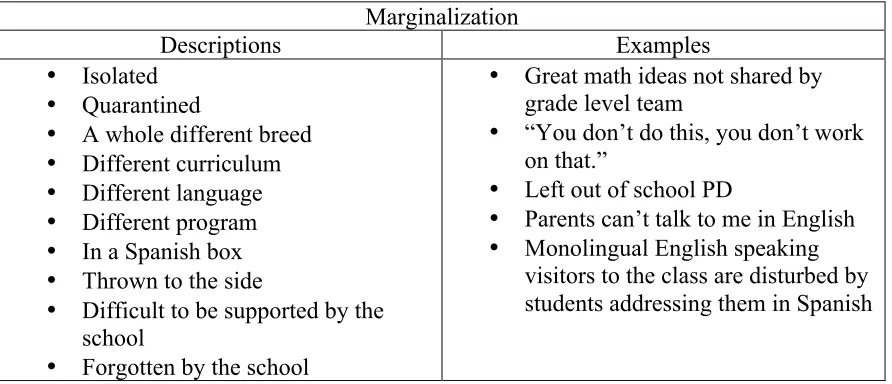
Figure 5.1 Descriptions of Marginalization ...74
CHAPTER
1
INTRODUCTION
“When I sit down to write, I find the story behind the memories; I then begin to make
sense of those memories, their meaning for me and for others”
(Giorgio, 2013, p. 406).
Looking back at my first year of immersion teaching, I still feel overwhelmed.
Teaching a new language and new academic content at the same time is a true challenge,
not only because of the academic rigor involved, but also due to the variety of
sociopolitical issues that affect language teaching in the United States (Cummins, 2000).
Only in existence in the United States since 1971 (Curtain & Dahlberg, 2004), immersion
education is still relatively new on the educational landscape and can be defined simply
as an approach to teaching another language in which students are immersed in that
language during the school day (Fortune & Tedick, 2003). Research has confirmed its
usefulness in achieving higher levels of second language acquisition than other school
models (Campbell, Gray, Rhodes & Snow, 1985; Harley, et al., 1990; Curtain &
Dahlberg, 2010; Forrest, 2007, 2011; Lindholm, Leary & Howard, 2008; Fortune, 2012).
Other benefits corresponding to full bilingualism, which is the goal of immersion
education, (Fortune, 2012) include strong critical and divergent thinking, (Bialystock,
Mizokawa, 1991), and a greater ease in learning other languages (Cenoz & Valencia,
1994; Sanz, 2000).
However, research has also shown that there are complex issues that result from
the particular micro-contexts in which any immersion program is established and that
heavily impact the perception and functioning of immersion programs, even down to the
uniqueness of each individual classroom and teacher (Swain & Johnson, 1997; Walker &
Tedick, 2000). Understanding the micro-contextual challenges that my colleagues and I
face as immersion educators is a primary goal of this study.
Our district follows a partial immersion model, which means that only part of the
academic day is taught in the second language (L2). In this model, most of the students
are English speaking Americans who receive science and math instruction in the L2. We
are located in the southeastern United States, in a large public school district known for
its focus on language learning and the global citizen. As a former teacher in the program,
my insider status led me to choose autoethnography as my method of inquiry. An
ethnographic form of research written from a first person perspective, autoethnography
draws upon the narrative inquiry approach with an emphasis on story as a means of
knowing (Marshall & Rossman, 2006; Bochner, 2012; Connelly & Clandinin, 1990). It
is typically chosen because it gives the researcher freedom to fully acknowledge her own
subjectivity, and use that to help interrogate her understanding and representation of the
experiences being studied.
I came in at the beginning of the year with a goal of getting my students to read,
write and speak in Spanish. This was my biggest goal, and I think the first half of
the year, I might have sacrificed some of the content, in order to get them
speaking more Spanish. During one of the collaborative planning sessions with
the other immersion teachers, I realized that teaching content is really the most
important part of our job. The Spanish is secondary in the eyes of the school.
This is difficult because for me to adequately teach the content, they simply
MUST know the Spanish. So this is a difficult conundrum.
Personal Teaching Reflection: Speece, Week 2
I’ve had them create a Spanish folder, and I think I’m going to do a weekly
vocabulary quiz in Spanish…
I gave the first vocab test and then I realized I don’t have a grade for Spanish. If
it doesn’t fit under science or math, then I can’t really take a grade…hmmm…
…Everything I teach is going to have to be so well articulated into the content
area…
These personal reflections illustrate the initial struggle I faced as I tried to understand my
role as a Spanish immersion teacher, in the Southeastern United States. I was a third
grade science and math teacher, however my students were not yet proficient in the
language I was using to teach math and science. I was being asked to develop bilingual
learners, but the larger educational system did not seem to support my efforts.
After a year and a half in the immersion classroom, I began a new job in the
professional development that was relevant and effective for the needs of our immersion
teachers and students. I turned to research in immersion to guide me in this endeavor,
only to find out that the existing literature on immersion points to a need for professional
development that is specialized for the unique challenges presented by teaching content,
language and literacy in an L2 (Lyster & Ballinger, 2011; Fortune, Tedick & Walker,
2008; Fortune, 2012). I also noticed a trend in the research that sought to understand and
emphasize the experiences of immersion teachers themselves, and to give them a voice in
the development of the field (Cammarata & Tedick, 2012; Fortune, Tedick & Walker,
2008; Walker & Tedick, 2000).
As I continued to work with immersion teachers as a coach, I became more and
more passionate about the need for their input in all areas of the program. What I had
noticed while I was still a teacher, throughout a variety of interactions with colleagues in
the immersion program was a general desire to implement more effective strategies,
particularly with regard to L2 development. It seemed that the majority of teachers were
so overwhelmed in keeping up with the multitude of demands on time and effort, myself
included, that we often felt ineffective and discouraged. Moving into the role of teacher
coach, I became very curious about how other immersion programs function, how to
provide meaningful professional development, and about the experiences of other
immersion teachers. All of these wonderings led me to the central questions of my
doctoral study:
1. How do teachers’ stories contribute to understanding the language immersion
The rest of this autoethnography will be devoted to describing how I have sought to
answer these particular questions, as I use personal experience to examine the larger
CHAPTER 2
REVIEW OF THE LITERATURE
In reflecting on my journey as a teacher, student, coach and researcher, it is
important to consider not only my memories and experiences, but also the theoretical
underpinnings that shape how I teach, coach, write and research. My choice to use
autoethnography as a method of inquiry into the immersion context of my school district
is tied closely to my theoretical beliefs. In this chapter I will delineate my own
methodological and theoretical beliefs, and also situate this investigation within the
literature on immersion education. It is important to note that while this is my story, I
believed that in order to better understand my own experiences, I needed to talk with
other current immersion teachers about the questions I was exploring. Therefore, many
voices are represented in this study.
Autoethnography
Born to anthropology and raised by feminist and critical thought,
autoethnography is a qualitative research method that enables the researcher to tell his or
her own story giving voice to the insider and heralding story as a legitimate means of
understanding. Autoethnography gives the great life narrative its rightful place within the
educational research. Within this style of research, we recognize that our own experience
and bias greatly affect not only our classroom practices, but also our research and writing
about classroom practices (Davies, 1999). Kuby (2013) states, “Writing is a way to
unpack stories across time and spaces and intentionally try to understand ideologies,
experiences, and memories that influence teaching, learning, and researching.” The
narrative format of autoethnography, or research through storytelling (Connelly and
Clandinin, 1990) is an appropriate method of classroom research as it focuses on
reflection and the voice of the writer (Duncan, 2004; Wall, 2006) and how that personal
experience affects teaching and learning. Other defining features of autoethnographic
study include breaking from the familiar pattern of research practice by bringing insider
knowledge into the forefront, confronting and examining pain, confusion or uncertainty,
and making research more accessible (Jones, Adams & Ellis, 2013).
Personal Reflection: Speece, January 2017
I have always been curious about language. I remember lying on the floor of my
parent’s bathroom counting to 10 in Spanish when I was in the third grade. I’m
not sure where I learned it, but I practiced and practiced, trying to get the accent
just perfect. I also remember singing “Frere Jacques” over and over again when I
was just a young child, trying to copy a French accent. Later on when I got to
high school, I finally began to study Spanish, and I fell in love immediately.
Many years later, I am fluent in Spanish, have taught Spanish at almost every
level, from Pre-K to college, including Spanish immersion. My son is in
world language teachers in my school district. In many ways I have come full
circle, and yet I’m still in the middle of my journey.
Why do I share these memories? “The burden of the social science story teller is
to make meaning out of all the stuff of memory and experience” (Bochner, 2012, p. 161).
That is exactly my aim in this autoethnography, to make meaning out of significant
memories that relate to my own experiences as an immersion teacher and teacher coach,
while examining the cultural practice of immersion education. I will highlight my own
reflection and experiences in order to understand how I connect with the context I am
studying (Ngunjiri et al., 2010), and how I connect with other immersion teachers. Based
on my insider status, I will explore the lived experiences of six other immersion teachers
alongside my own and attempt to make meaning that will help support immersion
educators in the future. Finally, I recognize that sharing my own story can potentially
create more openness with my readers (Ngunjiri et al., 2010) and thus allow greater
possibility for change.
Theoretical Framework
Perhaps in an attempt to better understand my current position as neophyte
researcher, I decided to peruse my collection of notebooks from the classes I took in my
course of study. In so doing, I came across two documents that were part of my
qualifying exam to become a Ph.D. candidate. I was surprised to see how closely they
still fit within my framework of beliefs, and I share them as a type of reflective
My passion has always been helping through the church and in the non-profit
community. The study of critical literacy is illuminating how my role as an
educator fits with my desire to change the world, not only in my personal
interactions with students in helping them to succeed in life, but in helping them
to think critically about issues of life, power and transformation. Sometimes it’s
hard to believe there was a time when I didn’t know what I now see so clearly
through the study of Freire, Gee, and the Frankfurt School. But I think it’s
important to always remember that reflection, action and transformation should be
a continual part of my journey as an educator. I should never think of myself as
having arrived.
The second section that is resoundingly germane to the study at hand has to do with
reflection:
And finally, through studying the art of teaching, the true importance of reflection
became clear as well. Nieto (2003) stresses the need for adult conversations
amongst teachers. There is danger in isolation. Since learning is a social process,
it only makes sense that teachers learn through personal reflection and discussion
with others. Parker Palmer (2007) also stresses the importance of both personal
reflection, and safe conversations with colleagues to help us improve our teaching
and refresh ourselves personally, as this is truly exhausting and weighty work.
Palmer stresses the connection of heart and mind in a both/and model, stating,
“What I want is a richer, more paradoxical model of teaching and learning than
binary thought allows, a model that reveals how the paradox of thinking and
My story and my work with immersion teachers are situated within a critical,
socio-cultural framework. My beliefs about how children learn also affect my choice of
professional development and curriculum, which affect teachers. Similarly, taking a
critical perspective in my research causes me to focus on issues of power and privilege,
which also affects how I approached the over-all design of the study as well as how I
made sense out of the data.
Critical Theory
Critical Theory is a social theory focused on critiquing and changing society as a
whole, therefore questions regarding relationships between self and society, and the
individual and structure, saturate Critical Theory. From this perspective, and drawing
upon the work of critical theorists such as Freire (1973), Volosinov (1989), and the
Frankfurt School (Benjamin, 1989; Habermas, 1989; Horkheimer, 1989; Marcuse, 1989)
in approaching this autoethnographical study of immersion teaching, I am continually
examining situations and texts for issues of power and position, as well as instances of
oppression. Furthermore it is also important to consider how language itself can be used
to dominate, marginalize and exploit others (Cummins, 2001; Gee, 2008). For example,
Cummins (2001) studies in-depth the role of relations of power within schools in
response to which students are encouraged to achieve bilingualism and which are not.
Similarly, Apple (2000) examines how societal power structures heavily influence what
content is deemed worthy to be included in curricula and considers that educators should
Socio-cultural Theory
At the heart of socio-cultural theory is the idea that historical and cultural contexts
cannot be divorced from learning and development. Lev Vygotsky (1978), the father of
socio-cultural theory (SCT) wrote about language as a tool. He suggested that the mind
is mediated by a variety of tools, most importantly language. These tools mediate our
relationship with the world, and set us apart from the animals. Vygotsky offered a new
way of thinking about human mental development, which is applicable to educators, and
more particularly, language educators. According to Vygotsky (1978), participating in
life’s social activities is how children learn language, and furthermore most important
cognitive development occurs through this interaction. Central to an understanding of
this perspective are the ideas of mentoring and participation as crucial to development
and learning (Vygotsky, 1978; Wells, 1999; Rogoff, 2003), and the belief that there are
many types of literacies, beyond the traditional idea of literacy (Rogoff, 2003), such as
technological literacy or even social literacy.
Especially critical to language learning from a socio-cultural perspective is
Vygotsky’s construct of the ZPD (1978) or Zone of Proximal Development. Vygotsky
envisioned an imaginary plane within a learner in which what he or she is able to do
alone intersects with what he or she is able to do with the help of a mentor. The resulting
area is known as the ZPD and it represents where learning actually occurs. It is within
this interaction between expert and novice that dialogue and communication allow for the
novice to accomplish tasks otherwise unattainable independently, including
As a bilingual educator who has worked for many years in the public school
system, in higher education, and as a university supervisor to student interns, my
experiences have led me to embrace the belief that people of all ages learn best when
their history, perspectives and experiences are believed to be a valuable part of who they
are and how they make sense of new ideas, also known as “funds of knowledge”
(González, Moll & Amanti, 2005).
As a critical socio-cultural theorist, it is important to consider what type of
immersion program is being offered, who is given access to it, and how it evolved
(Cummins, 2001). In the case of my current school district, the primary reasons for
strong support of second language learning K-12, and particularly the inclusion of partial
immersion programs has to do with supporting academic achievement, providing
cognitive benefits to students, and affecting attitudes and beliefs about other cultures.
Part of the district’s mission is to prepare students to participate in a global society;
therefore language learning is a vital part of that pursuit. Questions I might ask as I
analyze this statement from a critical perspective might be: How are immersion teachers
marginalized and which languages are valued? These are issues that concern me as a
critical theorist.
Liminal Theory Applied to Education
Another theoretical construct that influences how I make meaning of data is the
concept of liminality or liminal theory, which was explored by Victor Turner. Turner
(1967, 1969, 1974) was a British cultural anthropologist who studied the Ndembu tribe in
change. He became known for two particular concepts: liminality and ‘communitas’.
Turner draws from the work of Van Gennep’s (1960) ‘rites of passage’ in which he
suggests that every change of state or social position is marked by three phases:
separation, margin and reaggregation. It is the marginal state that he also refers to as the
‘limen,’ which is the Latin word for threshold, and signifies a crossing over that is in
process but has not yet occurred (Turner, 1974). The term liminal is derived from the
Latin, ‘limen.’ According to Turner, (1974), Gennep’s three parts could be applied even
to events that were not rituals, rather to a variety of situations in which a group or
individual changes from one state to another. Most astonishing is the belief that during
the liminal phase, the passage itself, individuals were liberated from the usual norms of
culture and society. Turner states, “In this gap between ordered worlds, almost anything
may happen” (p. 13). This is the point in which some researchers recognize the potential
for transformation occurring through and as a result of liminal experiences.
Furthermore, the idea of “communitas” (Latin for community) refers to a quality
of relationship that is achieved in liminality in which groups are freed from conformity to
general, societal norms (Alexander, 1991). It is further described as “unstructured
communion of equal individuals” (Turner, 1969). “Communitas” is an abstract concept
used to describe social relationships outside of the usual limits of social structures.
Turner’s understanding of the liminal state also grew from his study of the rites of
passage of the young Ndembu male tribe members. To the Ndembu, becoming a man
required a time of seclusion in which the initiates were neither boys, nor men. Turner
describes the liminal being as one who defies structural classification. Throughout the
as a means of easing a transitional experience (Hoffman & Voloch, 2012; Bosetti,
Kawalilak & Patterson, 2008; Sinner, 2012). Others apply liminal theory simply as a
way to describe and understand the transition under study (Rice, 1991; McCadden, 1996;
Bettis, 1996; Pierce, 2007; Coffman et al., 2012; Connor, 2012; Humphrey & Simpson,
2012; Wilkins et al., 2012; Field & Lynch, 2015). Of the first group, those who sought to
ease a transitional experience, Bosetti, Kawalilak & Patterson (2008) write about their
personal journeys as females in academia navigating the transition into positions of
leadership. Exploring their liminal state during transition allowed them to share common
experiences and build a support network. On the other hand, in a case study of one
student, Sinner (2012) conceptualizes the student teacher’s transition to becoming a
teacher that occurs during the field experience. She describes this time in the life of this
student as a liminal state rather than an apprenticeship because the experience was not a
positive one for the student, and she wanted to raise awareness to the variety of
experiences student teachers have during field experiences. Yet another application of
liminal theory comes from Hoffman & Voloch (2012) who seek to better understand the
liminal space of dual enrollment in order to ease the transition of students from high
school to college. I found these studies to be insightful, and they gave me a better
understanding of liminal theory applied to an educational setting, but none of them
pertained directly to the way I was conceptualizing liminality within our immersion
program.
Another facet of liminality is the idea of social limbo, or existing between social
or cultural identities. In further description of communitas, Turner (1969) states, “The
ambiguous, since this condition and these persons elude or slip through the network of
classifications that normally locate states and positions in cultural space” furthermore,
they are “‘Neither here nor there’, betwixt and between the positions assigned and
arrayed by law, custom, convention, and ceremony” (Turner, 1969, p. 95).
Reflections and connections to liminality, “communitas,” and immersion
The liminal phase is described as marginal, invisible, secluded, paradoxical and
confusing (Turner, 1967). The liminal being is simultaneously no longer classified and
not yet classified. I was first introduced to the concept of liminality in a course on
curriculum and change and I immediately made a personal connection with the theory. In
the majority of my Spanish teaching jobs, I had felt like I did not quite belong, or like I
was working toward a different goal than the rest of the teachers were. What I could
achieve with students in their L2 was vastly different than what other teachers could
achieve with students in their L1. Then again when I entered the doctoral program in
Language and Literacy, I began to feel a similar tension. I was in a program that was
designed for English language arts teachers, but my experiences were in second language
and literacy teaching. While the majority of my classmates had very different
backgrounds in teaching and experience than I did, I still found the coursework to be
relevant to my own experiences. However, I did often feel like a hybrid in the program.
I had one foot on the literacy and language side of the threshold, and the other foot on the
teaching a second language side. It was not until I encountered the work of Victor Turner
(1967, 1969, 1974), that I was able to name this experience of liminality, and understand
it through a perspective of living in the freedom between, rather than feeling like an
When I started teaching in immersion, I began to understand the liminal
experience in yet a different manner. Once again I was a teacher, but I was unlike the
others. Was I a content teacher or a language teacher? In my heart I was a language
teacher, but in the system, I was required to be a content area teacher. I did not believe
that the general education teachers experienced this same dilemma, and therefore I felt set
apart. I interpreted this feeling of marginalization as isolation, but when I considered
applying liminal theory to my situation in the immersion classroom, it re-framed the
experience, and made it seem less negative and more fluid, as if there were potential for
growth and change.
While my intuition and prior experiences led me to believe that this concept of the
liminal being, someone who exists in the threshold or intersection of different stages, was
applicable to my research, it wasn’t until I continued a thorough review of the literature
on liminality in education that I felt justified in applying liminal theory to my study of
immersion teachers. While none of the literature I explored on liminal theory in
education was applied directly to an immersion program, I did find several studies that
used liminality to understand the experiences of adults learning English as a second
language in other countries. For example, Baker (2009) studied relationships between
language and culture in the ESOL classroom in a university in Thailand, and Horiguchi &
Imoto (2015) explored transformation within an alternate learning space for Japanese
University students studying ESOL. Similarly Baynham & Simpson (2010) researched
I found that the majority of studies used liminal theory to understand transition,
ranging from the experiences of newcomer teachers (Rice, 1991), to new teachers
(Pierce, 2007; Wilkins et al., 2012) as well as the study of kindergarten ethics as a rite of
passage (McCadden, 1996) and doctoral students’ transition to researcher and scholar
(Humphrey & Simpson, 2012; Coffman et al., 2016). Bettis (1996) investigates the
transitions of socioeconomic change for urban youth, while Connor (2012) focuses on
Special Education administrators’ attempts to transition from pre-accountability era
education to post-accountability era education.
While each of these studies led me to a deeper understanding of the usefulness of
examining threshold experiences in education, there were two other groups of studies that
conceptualized liminality similarly to my own vision of the liminal experience of
immersion teaching. Viewing liminality as a means to reframe otherness (Mansary,
2006; Rollock, 2012; Kasun, 2014), as well as the liminal experience as transformational
or positioning the liminal being as an agent of change (Jackson, 2006; Cook-Sather &
Alter, 2011; Chavez, 2012; Junker, 2013; Busher et al., 2015; Felux, 2015; Salazar,
Martinez & Ortega, 2016). These studies connected to the critical potential of liminal
theory in education. For example, Cook-Sather and Alter (2011) capitalize on the
agentive aspects of the liminal being who occupies a position of great potential for social
and cultural change in their discussion of change in higher education. This study
examines the use of student consultants in a faculty development program. Student
consultants are seen as liminal beings because they are neither a traditional student, nor a
faculty member rather they serve as a bridge between the two because of their fluid and
transformative process between clearly established roles, particularly student and teacher,
and thus as a potential change agent in higher education learning and teaching practices.
Rollock (2012) presents a counter-narrative to illustrate her liminal experience as a black
female in the white world of private schools and the academy. She uses her liminal
position as an alternative to understanding existing positions of other and marginality of
black middle class engagement with the education system.
These studies highlight some of the powerful, critical aspects of liminality, drawn
from Turner’s (1967) comparison of the liminal stage to gestation. He states, “Undoing,
dissolution, and decomposition are accompanied by processes of growth, transformation,
and the reformulation of old elements in new patterns” (Turner, 1967, p. 99). However,
these studies do not highlight the experience of “communitas” which I believe has the
greatest potential for change. Therefore I apply both concepts of “liminality” and
“communitas” to better understand the experiences of immersion teachers.
Immersion Education
What is immersion education and why is it a struggle to develop and maintain an
immersion program in the United States? The rising popularity of language study for
communicative purposes, along with the rise of language diversity within the United
States, has led to an increase of immersion programs for language acquisition and
language preservation (Swain & Johnson, 1997). Full and partial immersion programs
focus on the addition of a second language (L2) through the teaching of content, such as
math or science. Students in a full immersion program receive the majority of their
student’s academic instruction is given in the L2 (Fortune & Tedick, 2008). This
emphasis on bilingualism within the regular elementary school classroom, places
immersion programs, teachers, administrators, parents and students, outside of the normal
school experience, and therefore leads to a variety of challenges worthy of investigation.
First I will review issues in immersion regarding challenges. Next, I will explore
the literature outlining the struggle for recognition and self-efficacy within immersion
education. Finally, I will examine the literature on professional development within
immersion or content-based language teaching.
Issues in Immersion
Having received a Masters Degree in Teaching Foreign Languages in 2003, I
understood the foundations of immersion teaching, but at the time I actually began
teaching immersion and at the time of writing my comprehensive exams, I had not yet
delved deeply into the most current research. In my quest to understand my own
experience as an immersion teacher, I found the articles that spoke most clearly to my
situation came from CARLA (Center for Advanced Research on Language Acquisition),
a part of the University of Minnesota. As I read the literature on immersion I learned that
the most heavily researched areas of immersion had to do with the benefits and
challenges of immersion, as well as pedagogical strategies to improve immersion
teaching.
In regards to the challenges of immersion teaching, I was quickly finding those
out on my own. I was a little surprised to learn that access to materials that are
documented concern (Fortune, 2012), along with teacher recruitment and retention
(Fortune, 2012). It seemed to me that in a relatively established program, we would have
better access to relevant materials. However, I found that I, along with most of my
colleagues, was still translating materials that would be best suited to our classrooms. I
also was struggling to find a classroom assessment that would work to evaluate student
language proficiency rather than content knowledge.
Amidst the articles that gave information about immersion programs in general,
there was one particular article that spoke to me as an immersion teacher when I was
struggling to find the balance between teaching language, and teaching content, and as I
was experiencing feelings of isolation. As I read, I became convinced that someone had
snuck into my classroom, read my personal teaching reflections, and secretly published
them. Due to its pivotal place in my own development as a teacher, as well as its
influence in the development of the methodology of this study, I will spend more time
discussing this article, first in how it impacted me as a teacher, then by how it influenced
the methodology of this study, and finally how it shaped a great deal of my work as a
teacher coach.
Balancing Content and Language
The article titled, “Balancing Content and Language in Instruction: The
Experience of Immersion Teachers,” is a study of three immersion teachers which
attempts to understand their experience in trying to balance content and language in
The following quote from one of the teachers in the article resonated with my own
personal experience:
[To balance language and content] is still not entirely realistic as an
immersion teacher because there are so many things going on that when
you sit down to plan…to look at language standards and [content]
standards it’s difficult…it’s just time. (Teacher A, Int. #1, p. 32) p. 259,
2012.
Personal Teaching Reflection: Speece, Week 1
“I’m overwhelmed with trying to learn the new content material, learn
how to present it to the kids and make it comprehensible. I’ve never
taught science or math, so I’ve basically just defaulted into being a
Spanish teacher.”
Another of the participant quotes that I could relate to, but almost in reverse, had to do
with envisioning herself on a content-language continuum.
She says:
I found that really valuable to think about…my own teaching practice, that I’m
really at this really far end of this continuum on the content side…but I can put
myself way down there and say, ‘Oh, I need to really bring myself to the middle,”
[between content and language] because that’s where, I think, it’s an important
As I said, my experience was the opposite, but relates because we both found ourselves at
different ends of the content-language continuum. I identified so heavily with the
teachers in the article because clearly we were all feeling the struggle of how to teach
language and content simultaneously.
My reflections show how early on in the teaching process, I was clearly more
likely to sacrifice content in order to teach language, but I also realized that while I was
not yet capable of finding the balance, I was aware that I needed to work toward it, and to
do so quickly.
Finding that article led to an epiphany for me as teacher, because it validated the
feelings and the struggles that I faced each day with the overwhelming task of improving
language, which takes time, but staying on schedule with content. The strong connection
I made to this article as a teacher, resurfaced when I was designing my own study.
Moving past my interaction with the Cammarata & Tedick article as a teacher,
when I began to design my research study for my dissertation, I went back to the same
study, but with new eyes. Remembering how powerful it had been for me to hear what
immersion teachers from other programs had to say, I decided that interviewing
immersion teachers in our district would be central to my collection of data. In this
reading of the article, I focused more on the methodology. My over-arching question of
study was how can we best support partial immersion teachers, particularly in the
integration of content and literacy? Cammarata & Tedick (2012) cite a lack of
knowledge regarding immersion teachers’ actual lived experiences as a barrier that keeps
research design. Since I was an immersion insider, I decided to focus my study on my
own lived experience as an immersion teacher, through the autoethnographic method.
When I had the fortune to get the job of teacher coach, it changed my study design, in
that I felt that including the voices of my colleagues alongside my own, would provide
information that is currently lacking from the field. Therefore I set up my study similarly
to theirs, based on lived experiences of immersion teachers. However, rather than simply
seeking to better understand their experiences, I took my study a step further, and asked
not only about their experiences with language and content integration, but also with their
professional development experiences, including suggestions they had for more helpful
professional development and support.
Language Theory in Immersion
All of the struggle teachers experience around balancing content and language
leads to an important question. Why are immersion programs structured the way many of
them are if students did not seem to be acquiring language through the content area
without a more specific focus on language structure and vocabulary? I began to delve
further into the language theory behind immersion programs and how it has evolved over
the years. In an overview of immersion, one of the original major immersion efforts in
North America is the St-Lambert, Quebec’s French immersion program in Canada and
Miami-Dade County, Florida’s Spanish/English bilingual program in the US. Initially it
was believed that students would naturally acquire the L2 with enough exposure to it
(Fortune, Tedick & Walker, 2008). Therefore, the majority of immersion programs are
set up similarly to ours in that the content areas are taught in the L2, rather than teaching
range of forms and functions of language that students will be exposed to through
content-based instruction (Swain, 1988; Lyster, 1994). More recent advice to immersion
programs has called for a more systematic approach to language and literacy instruction
(Met, 2008; Fortune, Tedick & Walker, 2008). Until finding and digesting these articles,
I had felt that there might be something terribly wrong with our immersion program
because the students weren’t producing language as accurately and abundantly as I had
imagined they would. Finding out that these are documented issues and concerns across
the field, helped me as a coach, relax a little on the one hand because it meant we were
not as behind the curve as I thought. It also empowered me to design professional
development expereiences that I believed would be truly meaningful for our immersion
teachers.
Isolation
In the cafeteria I stayed beside my students and did not socialize with the other
third grade teachers. I couldn’t speak English in front of my students. In the hallways, I
could only briefly say “Hola” to the other teachers because I couldn’t speak English in
front of my students. I started to feel like I lived inside a little Spanish box, and it was
keeping me from being able to connect with the rest of the school. Being a very social
person, a true extrovert, I found that this struggle had been bothering me on a deeply
personal level. I felt lonely in my job even though I was constantly surrounded by
people. It wasn’t until I read that other immersion teachers also experienced this
struggle, that I was able to truly identify the struggle I was feeling and begin to
In Cammarata & Tedick’s (2012) study, one teacher explained:
I find lots of times that if I want to get rid of that feeling like I’m an island, I’m
the one who needs to go to my English-speaking math teachers. They’re not
gonna come to talk to me about it or anything. And they don’t need to; they just
keep turning the pages of their provided curriculum. They don’t think…honestly,
they are not thinking at all about how I can incorporate language into my lesson.
Not at all.
(Teacher B, Int #2, p. 32, 2012, p. 259).
This quote reminded me of a time when the third grade lead teacher began
photocopying a master copy of all of her math worksheets to distribute to all of the other
third grade teachers in case they wanted to use them as enrichment. I didn’t realize until
halfway through the semester that she was not including me because she didn’t think I
would be able to use them. I had to ask her specifically to include me so that I would
have a better idea of what they were doing and how they were presenting the information
to students, even if I couldn’t use the actual worksheets because of the English. The
combination of research, practice and reflection led me to ask questions about our
immersion program such as: Why don’t the other teachers think we can use their
materials and ideas? Why don’t they offer and include us more?
Cammarata & Tedick (2012) go on to mention two analogies used by teachers to
describe their isolation: an island, and a single candle in the wind that could blow out at
any moment. “The second analogy…underscores the risks involved in attempting to
instructional balancing act” (p. 260). As a teacher I had often wondered if other
immersion teachers felt the same way, but until I was able to name the feeling of
isolation, and read that others had experienced it too, it continued to disturb me on a
subconscious level and undoubtedly detracted from my work. Once I was able to name it
and categorize it as part of immersion teaching, it was less confusing, but also helped me
to understand that I might not be able to teach immersion long term, based on my
personality and my need for connection.
Professional Development of Immersion Teachers
In a review of five studies of Content Based Language Teaching (CBLT)
programs, Lyster and Ballinger (2011) determine that the teacher’s role in (CBLT), is
critical in the areas of influencing students’ language choice, structuring engaging lessons
which merge content and language, planning collaborative tasks, supporting written
discourse, and engaging students in discipline specific pedagogies. Therefore they
advocate high quality professional development in which teachers are given enough time
and opportunities for peer coaching.
Fortune, Tedick & Walker (2008) involved immersion teachers in a study of their
own practices of integrating language and content through observing videos of
themselves teaching and reflecting on these specific experiences. Teachers described
feeling like they were always teaching language, but that content takes precedence. They
also struggled with a constant concern for being the only language model the students
have, which placed a significant amount of pressure on them to be accurate at all times in
were using, namely questions and cues, and finally they recognized that in order to
adequately teach language, they would need to plan specifically for language teaching. It
would not come about as a by-product of their content teaching. This adds yet another
layer to the already complicated planning, and time for planning needed for high quality
language and content integration in the classroom. They concluded that while the
teachers learned a great deal about their language use and planning in the classroom
through the videotaping, reflection and discussions that were implemented through the
study, there is still a need for professional development experiences that help teachers
identify and attend to the specific language features that are being taught in their
content-focused lessons. Furthermore, Fortune (2012) cites inadequate teacher preparation as one
of the leading challenges for immersion programs. She goes on to recommend
professional development that is specialized for the unique challenges presented by
teaching content, language and literacy in an L2.
The next section outlines my own journey toward self-efficacy as a teacher,
researcher and coach. I also connect immersion literature with a study focused on
university level English as a Foreign Language (EFL) teachers in Mexico, literacy
teachers in the United States, and self-efficacy and recognition theories often applied in
adult education and professional development research.
Struggle for Recognition and Self-Efficacy
Self-efficacy is defined as one’s belief in his or her ability to manage prospective
situations (Bandura, 1997). The construct is different from self-confidence because of its
new, or take a risk, if they have high self-efficacy, meaning they believe they will be
successful. As a doctoral student conducting research at the university, and teaching in
the immersion program, I felt that I had a healthy amount of self-efficacy. I was
overwhelmed with the nature of classroom teaching, and the learning curve of a new
school, new curriculum, and job demands from parents and administrators that I had not
experienced while teaching Spanish at the college level. However, my broad experiences
in teaching, which had included education courses as a Teaching Assistant in the College
of Education as well as literacy courses, and supervising of student teachers, all gave me
a sense of personal agency. I was confident in my knowledge of pedagogical strategies
and particularly in my theory and practice of literacy.
Another characteristic that set me apart from some of my immersion colleagues
was my constant connection to theory and research in the fields of language teaching and
literacy as a result of my dual identity as teacher and graduate student. As I came across
difficult and confusing situations, I approached them from the lens of a
researcher-practitioner, seeking out studies and theory that would guide my classroom practice. I
also had developed a strong practice of reflexivity, which enabled me to discern what did
and didn’t work in the classroom, let go of strategies that did not work, and appropriate
and implement new ideas that might be useful, particularly in the area of content and
language integration.
As I mentioned in the introduction of this study, I had noticed a general desire
amongst my immersion colleagues to implement more effective strategies. Also a
non-immersion teachers did. I also got the feeling that there was a general sense of
powerlessness to do anything to change the situation.
I believed that incorporating time for the study of language through literacy
(particularly reading and writing) was the only chance I had at improving students’
language skills without detracting from the core subjects I was supposed to be teaching.
So I went to talk to another expert in language teaching, my partner teacher. In our
program, the Spanish teacher teaches science and math, while the English speaking
teacher is responsible for English language arts (ELA) and social studies. We are
partners. We share two homeroom classes, and switch homerooms half way through the
day so that both classes get half of the day’s instruction in Spanish and half of the day’s
instruction in English.
Amanda and I were both new to immersion teaching. Perhaps that is what caused
us to bond so closely that year. She was a mentor to me in many ways, and we navigated
through the joys and challenges of bilingual education in a monolingual school system
together. She had taught first grade for many years prior to teaching third grade
immersion on the ELA side. She had extensive experience teaching reading and writing,
and also had a deep knowledge of the literacy skills of our students. She was in charge of
testing, assessing and developing their reading, writing and comprehension abilities in
English, therefore I concluded that she would be the ideal person to help me improve
their Spanish literacy and language.
In her class, amongst other strategies, they used a model of language study in
form, it is a workshop rotation in which students get to choose what kind of independent
work they do to practice the language strategy they are learning about in class. The five
general options she used included: 1) reading to self, 2) reading to a partner, 3) working
with words, 4) listening to reading, or 5) writing. Both classes loved the independent
literacy learning stations and would often mention them to me and talk excitedly about
the projects they were working on. I went to Amanda, and asked her to show me her
classroom practice and help me figure out if I could do a modified Spanish version of
these literacy stations that would give my students a chance to interact with language in
meaningful ways that would improve their overall production and fluency of the L2. On
the printed out copy of my reflections from that year, I scrawled in pen out to the side,
“Literacy stations became a turning point.” And it is true. Because I was incorporating
the Spanish language and vocabulary that they did know, from Math and Science, they
were connecting to the structures they already knew and were familiar with in English,
but using the Spanish they had acquired.
Personal Teaching Reflection: Speece, Week 5
Literacy Integration Stations have been the best thing to incorporate into my
classroom…They really like having a choice of what to do, and they also seem to
really like working independently or with a partner. It’s challenging to keep it
quiet enough in the room for my liking, but the good news is that they enjoy what
While this was my attempt to begin dealing with a problem, lack of productive language,
particularly speaking and writing, it was not perfect as is evidenced by my reflections that
year.
Personal Teaching Reflection: Speece, Week 6
I’ve started displaying for the class, the work of students during Integration
Stations. It’s interesting. I’ve noticed that once I display a good paragraph, or
someone that’s written a book, during the following class periods, I get many
more that are similar. I’ve also given them the idea to use books in my library as
mentor texts to help them find the vocabulary and structures that they need. It’s
exhausting for me because they are using me like a giant personal dictionary.
Personal Teaching Reflection: Speece, Week 8
One challenge with Daily 5 is keeping that time from turning into arts and crafts.
They have already used up all of my craft paper, and yet they’ve not produced as
much as I would have hoped in terms of reading and writing. They also spend a
lot of time stapling and taping things. Amanda and I are reminding them to write
first and illustrate second, also to not use the stapler or the tape unless they ask us
first. We’ll see if this helps.
Personal Teaching Reflection: Speece, January
Some of my kids are blowing me away with their work during Integration
The more I’ve read and investigated about content area literacy, the more I’m
finding ways to incorporate Science and Math into our Integration Stations. I’ve
also been asked by my supervisor to present on content area literacy to the other
immersion teachers. I’m excited to share what I’m learning and what I’ve already
started implementing.
Personal Teaching Reflection: Speece, March
I also got to place my literacy order. So exciting. I bought lots of informational
texts for science and math. My studies for comps have really motivated my
teaching and helped me figure out how to incorporate more content while still
focusing on language and literacy. While I still don’t love teaching math and
science, I do love figuring out how to incorporate language and literacy and to be
more effective in those areas.
Looking back on these reflections, it seems that my willingness to try something new in
the immersion classroom, even though none of my colleagues were doing it, and no one
had told me to try it, is what is known as personal agency. I was also grounded in
socio-cultural theory so I knew the value of what I was seeing Amanda do with language arts,
even though I did not necessarily articulate it at the time.
From my work as a coach and writing about all of these experiences as a
researcher, I am coming to new understandings about what else was going on during my
time in the immersion classroom. The process of identifying and naming the strategies
from it and compare it to the experiences of others. Therefore in this section, I will
continue identifying and naming what I think was going on during that time in the hopes
that it will be transferable to other immersion educators. While qualitative research is not
generalizable in the sense that quantitative research is considered to be generalizable, I
hope that through reading my story other practitioners, administrators, researchers or
policymakers will be confronted with ideas, thoughts, experiences or suggestions that
cause them to interrogate their own thoughts or behaviors in regards to immersion
education. In this way, autoethnography adds to the research and builds on what has
gone before.
In a study on self-efficacy beliefs and teacher effectiveness, Bray-Clark and Bates
(2003) make the argument that teacher self-efficacy is an important factor in teacher
effectiveness and should therefore play an important role in the professional development
of teachers. They suggest that personal agency aids in teacher effectiveness and state,
“The link between personal agency and a teacher’s efficacy beliefs lies in personal
experience and a teacher’s ability to reflect on that experience and make decisions about
future courses of action” (p. 14).
As I was teaching and trying to implement a structure for improving student
language and literacy, I did not see the bigger picture. It wasn’t until I began to read
research about professional development of foreign language teachers and literacy
teachers that I began to make thematic and theoretical connections. As I read, an
important theme emerged: the importance of self-efficacy and recognition. Gillings de
Gonzalez (2011) conducted a life history study within a university setting in Mexico.
teachers from 1989-2003 who engaged in educational change including curriculum
design and teacher development and professionalization. She described how their lack of
formal pre-service training initially led to isolation and insecurity, but ended up
motivating them toward active professional development which led to institutional
change. As I read I made notes to myself in the margins of the study such as,
“similarities to immersion = no initial certification” (p. 76) and “Perceived limitations:
lack of training, language limitations, isolated from TEFL community and University
community” (p. 79). I was noticing how the experience of these EFL teachers in Mexico
mirrored some of the experiences of immersion teachers in the United States.
Basing her study in the theory of self-efficacy (Bandura, 1997), and interpreting
her data through Honneth’s (1995a) theory of recognition, helped her make sense of the
experiences she and her colleagues had on their journey to transforming their professional
identities. She describes how the faculty members within their own team started by
recognizing each other’s strong work ethic, honesty, reliability and commitment. This led
to recognition of professional self by others and finally to a sense of professional
self-esteem. Interestingly, they no longer felt isolated within their context once they had
achieved wide recognition of their social identity.
Research in literacy also shows that teachers with a strong sense of teaching
effectiveness are more likely to persist in progressive writing instruction. In a study of 18
elementary school writing teachers, (McCarthy, 2008) one of the teachers resisted
high-stakes testing and mandated curriculum by persisting in her use of integrated curriculum
teachers’ epistemologies, beliefs, and actions. The study found that teachers with a strong
sense of general teaching efficacy adapted their instruction and implemented more key
elements of writing workshop. These studies suggest having a strong theory of teaching
and learning leads to feelings of teaching effectiveness that can withstand administrative
and political pressure. When teachers develop a sense of teaching efficacy they may
continue effective practices even in the face of pressure to adopt less effective practices.
Through my research and experience, when I became the teacher coach of world
language teachers, I had become convinced that self-efficacy and recognition were
important to the development of all teachers, but particularly immersion teachers due to
the isolating nature of our work, the lack of initial certification status in immersion, and
the general lack of knowledge, interest and experience with bilingualism in the
monolingual education system. My next question was how could I increase teachers’
belief in their own abilities to solve problems and try new strategies in the classroom?
I decided to survey immersion teachers to find out what literacy practices they
were currently employing in the classroom and what areas they wanted to learn more
about. From there, I decided to build teacher’s knowledge base in literacy, through an
online “Immersion Literacy Kit” that I created and offer a few strategies that they could
try as an option. DuFour et. al (2006) emphasize the increase in teacher self-efficacy
through the setting of achievable school wide goals and the consequent celebration when
those goals are met. They also suggest that the expectation of success leads to action and
effort. As I went to teacher’s classrooms to observe, I found that many of them had
begun to employ the strategies we were working on, and so I took pictures, wrote about
publicize the good work in L2 literacy that was going on in immersion classrooms across
the district. We also set aside regular time in our Cross-Site collaborative planning
meetings to celebrate success in literacy, and to share ideas and strategies that were
CHAPTER 3
METHODS
The following excerpt from an observation of one of our new immersion teachers,
illustrates the uniqueness of the variety of settings in which this story unfolds. This is
only one immersion classroom in one immersion school, but it represents the type of
learning that goes in on all of our immersion classrooms.
Professional Reflection: Speece, November 2016
While watching Marina teach Science (in Spanish) with a lens toward language
and literacy, I am amazed at the layered learning that is taking place in this
classroom. This teacher to me is the epitome of teaching. She is transmitting and
developing so many things at the same time. I can practically see the thought
bubbles over each student’s head where such complex processes are taking place.
Next door I hear “You’re a Grand Old Flag” sung passionately by children in their
music class preparing for the Veteran’s Day celebration. In this moment I feel at
the core of my being that there is no greater joy or honor than being an immersion
teacher. We truly are building multi-lingual citizens, in spite of and along with
hardships and difficulties. With triumphs and defeats, seguimos adelente/we keep
moving forward, “From sea to shining sea.” This is the beauty of our country. We
at the front of the class and it reminds me that we can express our patriotism in
many voices and in many languages. Yo prometo lealtad a la bandera de los
Estados Unidos de America…/I pledge allegiance, to the flag, of the United States
of America…
Walker & Tedick (2000) suggest that the micro-contexts of immersion programs
are the schools, the teachers and the students. After extensive research with immersion
teachers they conclude that while looking at the macro-contexts of immersion education
and issues that tend to affect all programs is valuable, it is more useful to understand
individual programs and their micro-contexts “from the inside out” (p. 24). Therefore,
choosing the method of autoethnography for my study makes perfect sense. One of the
most important facets that sets qualitative research apart from quantitative, particularly
autoethnography, is its contextualized nature.
Autoethnography is driven by curiosity and wonder, an attempt to understand any
phenomenon from an insider’s perspective by situating the research in context and
allowing it to develop from a natural setting. As previously mentioned, I have chosen to
call this an autoethnography because I am telling my own story while weaving in the
stories of other immersion teachers. The larger narrative that emerges from this blending
will illuminate aspects of teaching language and literacy through content that are difficult
to understand outside of their true context. While some research on macro-contexts is
helpful, what works in a Chinese immersion school in Utah might not work in a French
This study takes place within the southeastern United States, in a large public
school district. The emphasis is on my own experiences as a third grade immersion
teacher and coach, along with the stories and insights of six other teachers within this
district. While students are mentioned collectively or individually, no student is named,
or is a direct participant of this study.
In all of the four schools where teachers were surveyed, Spanish is the language
of the immersion classroom. The district also has Mandarin, French and German
immersion schools. For the purpose of this study, I limited my research to the Spanish
speaking elementary immersion schools, since Spanish is my language and where my
greatest experience and expertise is found. School and teacher names are fictitious, to
respect privacy. Within the setting of this story, I will introduce you to each school and
each teacher as I remember encountering them.
Context
Meadow Brook Elementary
“Good morning. Welcome to Meadow Brook. We’re so glad you’re here.” Said
the friendliest school secretary I have ever met. “We have snacks and drinks set up for
your students already, and we have a sign-in sheet for them right here,” she continued as
she ushered me through the hallway and into the classroom we would be using for the
university course I was co-teaching with my advisor. It was a literacy class, and we had
an on-site component for our pre-service teachers to experience working with elementary
school students so they could try some of the teaching strategies they were learning about