Smallholder Cocoa Farmers Access to On/Off-Farm Support Services and its
Contribution to Output in the Eastern Region of Ghana
Justina A. Onumah, Portia Adade Williams, Wilhelmina Quaye and Mavis Akuffobea CSIR-Science and Technology Policy Research Institute, Accra, Ghana
Edward, E. Onumah
Department of Agricultural Economics and Agribusiness, University of Ghana, Legon, Accra, Ghana
Abstract
It has been established that smallholder farmers have minimal access to various support services that would have otherwise enabled them to increase their output levels. The focus of this paper is to identify and quantify the impact of various support services on the production levels of cocoa in the Eastern region of Ghana. A cross sectional survey of 190 cocoa farmers was obtained using a two-stage sampling technique (purposive and random). Descriptive statistics and an OLS regression model were used to analyse and discuss the results of the study. The various support services identified included labour services, financial services, technical assistance, farmer group support services, Research and Development (R&D) institutional support services, extension services and input support services. The services that significantly influenced output levels of cocoa were extension services, labour supply and technical assistance, among other variables including farm size and quantity of agrochemical used. It is recommended that access to these support services be improved in order to realise an increase in output for the smallholder cocoa farmer.
Keywords:Smallholder, cocoa, support services, Ghana
Introduction
1Most developing countries are pursuing their comparative productive advantage to foster growth in the face of rapid globalization and food crisis. This pursuit is expected to increase performance of major commodity exports in order to generate foreign exchange and promote economic growth (Nkamleu et al., 2010). Cocoa is one of the major foreign exchange earners for some countries in Africa such as Ghana, Cote d’Ivoire, Nigeria, and Cameroon. According
Corresponding author’s Name: Justina A. Onumah
Email address: [email protected]
to the World Cocoa Foundation (2009), the dominant supplier of cocoa currently is West Africa with three countries adding up to 60% of global cocoa production (Cote d’Ivoire; 32%, Ghana; 16% and Nigeria; 12%). Ghana is the world’s second largest supplier of cocoa.
It is important to note that, approximately 86% of the world’s cocoa production is grown by smallholder farmers. Smallholder farmers are the backbone of the cocoa sector upon which millions of Ghanaians depend for income (Anim-Kwapong and Frimpong, 2005). Cocoa contributes about 70-100% of the annual household income of smallholder farmers. Other actors such as input Asian Journal of Agriculture and Rural Development
distributors, Licensed Cocoa Buying companies (LCB’s) and chemical companies also depend largely on cocoa for markets of their products, employment and income (Asamoah and Baah, 2003). The sales of cocoa beans have been one of the major sources of foreign exchange for Ghana but the sector in recent times have seen some setbacks reflecting in the negative growth rate of 6.9% in 2012 (ISSER, 2013).
Until recently, the average national annual yield of cocoa in Ghana was 400 kilograms per hectare (kg/ha) and this value has been fluctuating over the years. The Ghana Cocoa Board (COCOBOD) in 2008 attributed this to a number of factors. These factors included the low adoption of cocoa technologies by farmers, increased diseases and pests attack, declining soil fertility, poor agronomic practices and limited access to support services including credit availability as well as inadequately informed farmers. It is believed that improved access to support services among these smallholder cocoa farmers could lead to improved productivity. World Bank (2011) suggested that supporting smallholder farming is the most effective way of stimulating economic development, reducing poverty and improving productivity. Wegner (2012) also postulates that, cocoa farming can become a viable business for smallholders if Good Agricultural Practices (GAP) training, stronger farmers’ aggregation and new financial mechanisms are leveraged. Additionally, Fesenberg (2012) observed that the low income and productivity of cocoa farmers is as a result of inefficiencies in the value chain, including poor access to quality inputs and technology, lack of knowledge of best practices, insufficient organizational capacity, and poor access to buyers and market information.
According to Fesenberg (2012) majority of cocoa farmers are not organized in cooperatives, infrastructure and input finance are inadequate, there is lack of understanding of quality requirements with limited knowledge of improved production
techniques, farm management skills are inadequate, little access to market information and high transport costs. Therefore in order for smallholder cocoa farmers to improve their output and livelihood as well as contribute progressively to the cocoa subsector, considerable increase in access to support services as noted and suggested earlier would be required. On/off farm support services such as financial services, Farmer Based Organization (FBO) support services, extension services, Research and Development (R&D) support and input suppliers need to be heavily leveraged.
The overall objective of this paper is therefore to assess the role that access to off-farm and on-off-farm institutional support such as extension services, financial services, technical assistance and R&D play in increasing the production level of cocoa farmers. Specifically, the paper seeks to: profile the socio economic characteristics of the smallholder cocoa farmer in Eastern Ghana; identify and describe the various support services available to the cocoa farmers and their effect on production levels; and finally to quantify the effect of support services to the total output of cocoa in the Eastern Region of Ghana.
Methodology
Data and method of collection
the East Akim Municipality. A two-stage sampling technique was used where the first stage involved a purposive sampling of the study area and the second stage considered a random sampling technique to identify the various respondents for the survey. A sample size of 190 was obtained for the study. A list of farmers was obtained by the Cocoa Swollen Shoot Virus Disease (CSSVD) offices in the various districts. The farmers were then randomly selected based on the list given and the number chosen reflected their proportion to the total sample. Data collection methods included personal interviews with the farmers with the aid of questionnaire administration, and key informant interviews. The personal interviews were with the cocoa producers and other stakeholders in the cocoa industry. Key informant interviews were conducted with the management and staff of the CSSVD control offices. It also involved the various leaders of the various farmers’ group in the study area. The questionnaire was pre-tested to suit the field condition and inconsistencies corrected before administering.
Data analysis
The first two objectives were analysed using descriptive statistics and results presented in tables and charts. The last objective was however analysed using an Ordinary Least Squares (OLS) estimation approach using STATA.
Factors contributing to production levels among the cocoa farmers
In analysing and quantifying the effect of the identified support services on production levels, an Ordinary Least Squares (OLS) multiple regression linear model was considered and specified in model (1).
𝑄 = 𝛽0+ 𝛽1 𝑋1+ 𝛽2 𝑋2+ 𝛽3 𝑋3+ 𝛽4𝑋4+ 𝛽5 𝑋5+ 𝛽6 𝑋6+ 𝛽7 𝑋7+ 𝛽8 𝑋8+ 𝛽9 𝑋9+ 𝛽10 𝑋10+ 𝛽1 1𝑋11+ 𝜀……… (1)
Where:
Q = the level of production measured in kilograms;
β0 = Intercept term
β1-β11are the estimates’ coefficients;
X1 = Labour supply (measured in man days);
X2 = farm size (hectares);
X3 = Access to extension services (measured
in the frequency of contacts);
X4= Access to technical assistance
(measured as a dummy where 1=access and 0 = no access);
X5 = Quantity of Agrochemicals used
(Litres);
X6 = FBO membership (measured as a
dummy where 1 = member and 0 = otherwise);
X7 = Access to R&D support;
X8 =Access to financial services (measured
as a dummy where 1 = access and 0 = no access);
X9 = Land ownership (measured as a dummy
where 1 = owned and 0 = otherwise) X10 =
Educational level;
X11 = Gender of the farmer (measured as a
dummy where 1 = male and 0 = female); and
ε is the error term of the model capturing other noise effects
This method was considered because a lot of the variables used in the model were dummies and hence by applying the principle of parsimony, the linear OLS model was chosen. Also, this model does not require the transformation of variables into logarithms as it is done in other non-linear models.
Results and discussion
Socio-demographic characteristics of cocoa farmers in the study area
a concern in existing strategy documents of the cocoa sub-sector.
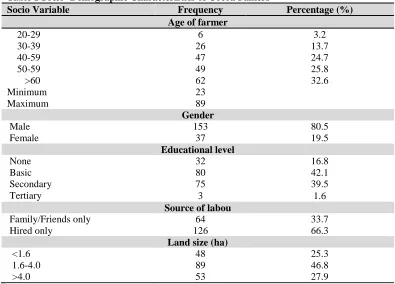
Table 1 Socio- Demographic Characteristics of Cocoa Famers
Socio Variable Frequency Percentage (%)
Age of farmer
20-29 6 3.2
30-39 26 13.7
40-59 47 24.7
50-59 49 25.8
>60 62 32.6
Minimum 23
Maximum 89
Gender
Male 153 80.5
Female 37 19.5
Educational level
None 32 16.8
Basic 80 42.1
Secondary 75 39.5
Tertiary 3 1.6
Source of labou
Family/Friends only 64 33.7
Hired only 126 66.3
Land size (ha)
<1.6 48 25.3
1.6-4.0 89 46.8
>4.0 53 27.9
Cocoa production in the study area is dominated by males although females also take active part. Out of the 190 farmers interviewed, about 80% were males whilst females accounted for only 20%. Despite the fact that only about 20% of the farmers interviewed were females, female non-cocoa farm owners also played a supporting role in cocoa production, especially in the gathering of cocoa pods after harvesting for the extraction of beans. They are also mostly responsible for the carting of the fermented cocoa beans from the farm to the house together with other household and non-household members.
Land is one of the most important and basic inputs used in production. The size of land may influence the level of input used and also the quantity of output produced from it. The average farm size of the cocoa farms was 2.98 hectares. It can be inferred that generally, cocoa producers operate on a
small scale level. Although more output can be expected from bigger farms, the limitation of large farms is the issue of proper management. When management becomes a problem, then additional input invested may result in decline of output level. Further discussion on the effect of the scale on production is given in subsequent sub-sections.
population respectively. The results imply that male cocoa producers have larger land holdings than their female counterparts. This is a very typical situation of the land ownership and acquisition system in Ghana. Land ownership is dominated by males whereas very few females have complete ownership of lands for agricultural purposes.
Consistent with results obtained by Vigneri (2007), cocoa producers in the study area generally had2low level of education. Out of
the 190 producers interviewed, only 1 percent had attained tertiary level of education whereas 42.8% have had some form of basic education. On the other hand, 37.4% have had secondary level of education whilst 18.7 percent of them have no level of education in any form at all.
Farmers access to support services The various off-farm and on farm support services identified during the study included labour services, financial services, technical assistance from Non-Governmental Organisations and projects, farmer group support services, Research and Development (R&D) institutional support services, extension services and input support services. The various services are discussed in the following sub sections.
Labour services and cocoa production According to a UNDP (2010)’s scoping paper, cocoa production demands a lot of manual labour works since most modern day machines are not suited for cocoa. This explains why none of the respondents used machinery for their labour activities. The source of labour a producer gets access to may either increase or decrease the cost of production. Productivity levels to some extent are influenced by the source of labour a producer decides to use. Heshmati and
2 The lowest form of education is basic
education with the highest form being tertiary and majority of the respondents only had basic education as their highest level of education. Vigneri (2007) also reports that the highest level of education among cocoa farmers in Ghana is the primary level.
Mulugeta (1996) observed that both hired and family source of labour was unequally productive. However, Onumah et al. (2010) observed that in the fish farm industries in Ghana, both hired and family source of labour were equally productive. Cocoa farms in the study area consider family, hired and most of the time, a combination of the two for their production activities. For the purposes of this study, only hired and family labour were considered as farmers were ask to rank in terms of priority the kind of labour that is most applicable to them. The results indicate that majority (66%) of the cocoa farmers interviewed however uses mostly hired labour for their production activities.
Figure 1: Percentage of farmers who had access to some support services
Financial services
Most agricultural production is by nature seasonal and depends on access to quality resource base else it would be vulnerable to pests and spoilage leading to low productivity. For smallholder farmers to achieve higher productivity, timely access to short-term finance for inputs such as seeds, fertilizer, pesticides, herbicides, machine services, transport, labour, and fuel is fundamental. Smallholder farmers in developing countries however often face extreme barriers to finance (Grossman and
51.6
74.2 83.7
Tarazi 2014). Financial service providers face liquidity management and challenges due to covariant risks from these farmers. Farmers usually have low financial capability but higher transaction costs and financial needs. Poor access and high costs of credit constitute a major constraint to farmers in Ghana. The seasonality nature of cocoa production implies that all input costs are incurred before the harvest and farmers sometimes need to borrow up to 60 percent of their harvest income upfront since they are usually liquidity constrained and need credit (Lundstedt and Pärssinen, 2009). Due to the financial risks, this type of finance is often unavailable to cocoa farmers and it usually holds back productivity and product quality, as well as the farmers’ capacity to adopt better technologies and build their businesses.
A survey conducted by the World Bank (2011) concluded that, there is insufficient access to affordable credit as vast majority of cocoa farmers in Ghana are at subsistence level and have limited working capital for the purchase of needed inputs and to cover intra-seasonal household needs. According to the survey, few farmers gain access to loan and even face exorbitant interest rates from financial institutions that consider farmers as high risk borrowers. Smallholder farmers therefore have unfulfilled credit needs for input (seasonal) finance. If farmers are to increase their outputs, they must be able to do more than survive from year to year on their harvest by gaining easy access to credit support.
According to the results of the study, the cocoa farmers in Eastern Ghana obtained financial support from various sources for their production and post-production activities. The various sources included rural financial institutions, local money lenders, family support, and personal savings, among others. However, the most prominent sources of finance for these farmers were mainly personal savings and that from family/friends. It can be said that cocoa producers in the study area do not really have greater access to financial services,
especially those from financial institutions as the study sought to identify. Only about 20% of the respondents interviewed reported they had access to financial services provided by microfinance companies within the region as shown in Figure 1. The bulk of the credits they received from the financial institutions were channelled into paying for labour services. Majority (80%) of the farmers who are unable to access financial services reported that the lack of any form of collateral hinders them from accessing these services. Financial institutions are therefore encouraged to extend more of their services to these farmers for them to be able to increase production for to improve upon their income security.
Technical assistance and FBO support services
In the rural communities where cocoa production dominates, a much stronger form of support is usually received from Farmer Based Organisations (FBOs). According to Onumah et al. (2007), rural farmers have a tradition of performing certain agricultural productive activities as a group rather as individual. Members of these FBOs then enjoy various benefits including group solidarity and leveraging. These farmers leverage on the successes of each other to improve upon their own production and post-harvest practices for a higher yield. A number of Non-Governmental Organisations assist these farmers in terms of providing them with technical assistance such as good agricultural practices that will help improve their productivity and efficiency levels. These NGOs usually target farmers in groups when they are sending technical assistance to them, hence belonging to a farmer group is very crucial to assessing any form of technical assistance.
cocoa farmers however have resulted in farmers’ inability to mobilize themselves to demand or access production support services. Contrary to studies by the World Bank (2011) that suggested that less than 10% of cocoa farmers in Ghana are members of a cooperative or other farmer association this study proves otherwise. In Figure 1, the study revealed that about 74% of cocoa farmers in the study area belonged to an FBO. Salifu et al. (2010) observed that FBOs have increasingly diverse range of collective activities this he cited the Ministry of Food and Agriculture (MoFA) which distinguishes between production, processing, marketing and multipurpose FBOs for an array of collective services. Building self- managing capacity and improving organization of FBOs is therefore important to ensure a better organization of farmers to access production support services.
From the study, the various types of assistance that the members of the group rendered to each other were identified to be labour supply, information dissemination, financial support, best production and post-harvest practices, among others. Onumah et al. (2013) observed that individual cocoa farmers who belonged to a farmer group and had received some form of support in terms of labour supply, knowledge transfer and financial aid were more technically efficient compared to their counterparts who did not have any support. This implies that it is not all about belonging to a farmer group but as to whether there is mutual benefit in terms of providing support to each other when needed. The results therefore suggest that FBOs is one critical way by which farmers can help themselves and reduce the inefficiencies associated with production.
A study by the Natural Resources Institute and Concern Worldwide in 2012 indicated that for smallholder farmers to increase productivity for their income and food security to be enhanced, among other things, they should be eencouraged to form cooperatives. This they said will support them in the provision of training on savings
and loans based on rotation credit of small groups and harnessed production of key crops that would otherwise not be produced by a single farmer.
Extension services
In Ghana, the extension services are not the preserve of extension institutions alone but rather research institutions, input distributors, produce buying agencies, as well as Non- Governmental Organisations (NGOs), among others (Baah and Anchirinah, 2011). The Cocoa Research Institute of Ghana (CRIG), though is primarily concerned with the development of sustainable cocoa production technologies, has stepped up its extension activities in recent times to meet the needs of farmers with activities such as farmer educational campaigns on farm and on radio, the use of farmer field schools, active involvement in government control of cocoa pest and disease programme, introduction of the cocoa farmer’ newspaper, and on farm studies.
extension services in the cocoa sector of Ghana.
Studies on the effects of extension services on cocoa production (Onumah et al., 2013; Nyagaka et al., 2010 and Binam et al., 2008) suggested that cocoa farmers who had higher frequency of extension contacts and visits are able to increase their productivity compared to those who had no access to extension services. Nompozolo (2000) has also suggested that for good performance, a reasonable access to extension services and information is necessary to back up agricultural productivity and output hence extension officers must be trained in indigenous knowledge relevant to the farming communities they serve whether an individual farmer has contact with the extension service or not. This implies that effective extension visits and supervision will go a long way to improve farmers’ production level and performance and hence should be taken seriously.
Input support services
In some cocoa-producing countries, many of the farmers lack affordable access to the inputs and farm implement necessary to produce a high yielding, sustainable crop. Improving farmers’ access to necessary inputs such as fertilisers, fungicides/insecticides, spraying machines, wellington boots and farm tools such as pruners and rakes is vital to ensure that they are able to grow a high yielding and good quality crop year-on-year. Wegner (2012) suggests that, the pressing issues in the cocoa sector lie on access to farming inputs as well as access to finance as mentioned previously.
Generally, input suppliers sell their products nearly exclusively on a “cash-and-carry” basis, viewing cocoa farmers in particular as high credit risk. This limits the number of farmers who get access to their services as the high cost of inputs often places them out of reach, for most farmers. Few input suppliers offer training or after sales support related to the products they sell though government’s subsidy program on
fertilizers, sometimes make it difficult for them to compete with open market-priced alternatives. Some also have limited sales among cash-strapped cocoa farmers (World Bank 2011). Input supply in Ghana is for the most part in the hands of the private sector. However, the World Bank (2011) reveals that the Government of Ghana (GOG) through COCOBOD retains an active role through subsidized input distribution programs targeting cocoa farmers, in line with its strategy to raise productivity and output. Nonetheless, the farmers bear the bulk of the cost of production.
To support this, the study further ascertained that the Cocoa Disease and Pest Control (CODAPEC) unit of the Ghana COCOCBOD also supplies cocoa farmers with agro-chemicals, which usually comes through a GOG initiative called the Mass Spraying Exercise. However, the farmers were at liberty to apply additional levels of agrochemicals if necessary. Farmers explained that not all of them get access to services of CODAPEC so they consider the services of hired labour for the application which the cost is bore by them. Some also reported that they always have to treat pest and disease attack even after treatment by CODAPEC since it is not sufficient. A study by Hainmueller et al. (2011) also revealed that, cocoa farmers in Ghana have limited access to affordable and timely inputs that would otherwise help to increase their yields and reduce losses to pests and diseases with only 14% of farmers having ready access to fertilizers and other agrochemicals when they needed. To this end, it is important for government to repackage the exercise for farmers to take full advantage. Also private input suppliers can provide inputs to the farmers at a fare rate given their resource constraints.
Research and development (R&D) institutional support
cocoa farmers with technical innovations that improve yields, identify new processing techniques and marketable consumer products and by-products and ensuring effective transfer of research findings, new technologies and agronomic practices to farmers (Baah and Anchirinah 2011). The Cocoa Swollen Shoot Virus Disease Control Unit (CSSVDCU) is responsible for the survey and control of the Cocoa Swollen Shoot Virus Disease (CSSVD). The unit's activities include the removal and destruction of diseased cocoa trees from farms and supply of disease-tolerant hybrids (pod and saplings) for replanting. The Seed Production Unit (SPU) is responsible for the multiplication and distribution of improved cocoa planting materials to farmers. SPU maintains seed gardens at 23 cocoa stations in the seven cocoa-growing regions of Ghana. The Unit multiplies high-yielding, early-bearing hybrid cocoa types and distributes them to farmers as seed pods and saplings at a subsidized cost. The national Cocoa Diseases and Pest Control (CODAPEC) assists cocoa farmers across Ghana to combat cocoa mirids and black pod diseases as well as train farmers and technical personnel on the cultural and chemical methods of pests and diseases control and educate and train local sprayers on safe pesticides usage. Quality Control Company (QCC) is also responsible for maintaining quality standards and overseeing quality control measures at all stages of the cocoa supply chain (World Bank, 2011).
The study however indicated that less than 30% (Figure 1) of the cocoa farmers interviewed reported they receive direct technical support from the R&D institutions in the country including the Council for Scientific and Industrial Research (CSIR) and their very own, CRIG. According to a World Bank report in 2011, smallholder farmers have not benefited enough from the available research and technological support in the industry and that not all farmers get access to these services. It further explains that, smallholder cocoa farmers in Ghana are among the least productive with declining average yields well below that of other major cocoa producers such as Cote d’Ivoire. It is important therefore to raise output while maintaining quality standards hence the R&D institutions, especially CRIG should step up their efforts in order to make their services available to all farmers to ensure increased productivity.
Results of the regression model
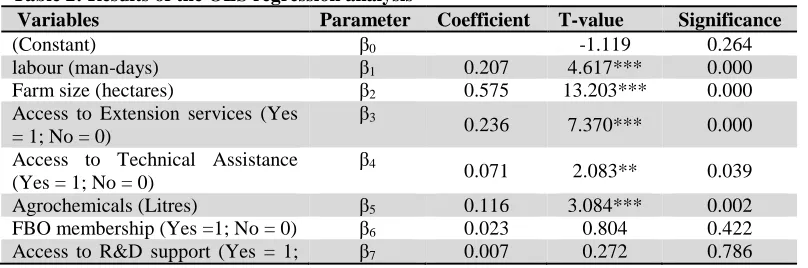
In order to quantify the impact that support services, among other variables have on the output levels of cocoa, an OLS regression model was analysed and the results presented in Table 2. The results shown indicate that about 88% of the variation in the output levels of cocoa in the study area is explained by the various variables specified in the model. This further implies that the combined effects of the variables chosen rightly explain the variation in output and hence gives an indication of the fitness of the model specified.
Table 2: Results of the OLS regression analysis
Variables Parameter Coefficient T-value Significance
(Constant) β0 -1.119 0.264
labour (man-days) β1 0.207 4.617*** 0.000
Farm size (hectares) β2 0.575 13.203*** 0.000
Access to Extension services (Yes = 1; No = 0)
β3 0.236 7.370*** 0.000
Access to Technical Assistance (Yes = 1; No = 0)
β4
0.071 2.083** 0.039
Agrochemicals (Litres) β5 0.116 3.084*** 0.002
FBO membership (Yes =1; No = 0) β6 0.023 0.804 0.422
No = 0)
Access to Financial services (Yes = 1; No = 0)
β8
-0.006 -0.222 0.825
Land ownership (Owned = 1; otherwise = 0)
β9 0.041 1.569* 0.118
Educational level (levels) β10 0.019 0.691 0.490
Gender (Male = 1; female = 0) β11 0.121 0.420 0.675
R-square value=0.882 F-Statistic value=149.132***
Dependent variable=Output (Kilograms)
***, ** and * represents 1%, 5% and 10% significance levels respectively
The results of the regression model support the discussion in the descriptive analysis carried out in the previous sub sections. All the variables except access to financial services contributed positively to the level of output produced in the study area. This finding may be as result of the fact that farmers are not using the credit they access from financial institutions for their production activities. The farmers interviewed reported that they sometimes use the credit they access to cater for other household expenditure. Therefore, this could be the reason why financial services do not contribute significantly to output and even the few who receive such services have lower outputs. Farmers should be sensitized on the need to adequately use the credit and support they receive from financial service providers for the purposes of production and post-production activities and not to channel them into catering for household needs. This if done will increase the credit worthiness of farmers and hence financial service providers will be willing to extend their services to more farmers.
The variables that significantly impacted positively on the output levels of cocoa in the study area were found to be the level of labour services employed, size of farm under production, access to extension services, access to technical assistance from Non-Governmental Organisations’ programmes and activities, the level of agrochemical used to control pest and diseases and finally being the self-ownership of land on which the production takes place.
This suggests that all things being equal, increases in the level of use or access to the aforementioned inputs and services will result in a significant change in output. Even though it can be observed that variables such as FBO membership, R&D support and having a higher education did not significantly influence output, the impact is positive. Hence with the right support, access to these variables will help improve upon the output levels of farmers, and consequently productivity. In summary having access to various support services coupled with the right combination of input mix will enhance the production levels of cocoa producers in the region.
Conclusion
yields. Additionally, characteristics of a successful smallholder farmer are not only determined by what is embodied in the farmer himself but by other external factors as mediocre support services and lack of continuity in policies. Extension service is key to the performance of the cocoa industry in Ghana and hence should be of a national priority. Farmers should be encouraged to form groups in order to leverage on each other’s strength and capabilities and also support each other in times of need. Farmers who have complete ownership of the land on which cocoa production takes place are also able to increase their output level compared to tenant farmers. This could be due to the fact that, having complete ownership of land gives the farmer total control over the management of the farm and hence the ability to adopt several best practices that ensures higher output. This implies that land tenure is one important driver that should be addressed in order to realise the potential output of the cocoa sector in Ghana.
References
Anim-Kwapong, G. J., & Frimpong, E. B. (2005). Vulnerability of agriculture to climate change: Impact of climate change on cocoa production. Cocoa research institute, Ghana cocoa draft. Asamoah, M., & Baah, F. (2003). Improving
research-farmer linkages: The role of CRIG. A paper submitted at the 4th international seminar on Cocoa-pests and diseases (INCOPED), Accra, Ghana.
Baah, F., & Anchirinah, V. (2011). A review of cocoa research institute of Ghana extension activities and the management of cocoa pests and diseases in Ghana. American Journal of Social and Management Sciences, 2(1), 196-201.
Barham, J., & Chitemi, C. (2009). Collective action initiatives to improve marketing performance: Lessons from farmer groups in Tanzania. Food Policy, 34, 53-59.
Bernard, T., & Spielman, D. J. (2009). Reaching the rural poor through rural producer organizations? A study of agricultural marketing cooperatives in Ethiopia. Food Policy, 34(1), 60–69. Bernard, T., Collion, M. H., DeJanvry, A.,
& Rondot, P. (2008). Do village organizations make a difference in African rural development? A study for Senegal and Burkina Faso. World Development, 36(11), 2188-2204. Binam, J. N., Gockowski, J., & Nkamleu, G.
B. (2008). Technical efficiency and productivity potential of cocoa farmers in West Africa countries. The Developing Economics, 3, 242–263. Concern, Worldwide (2012). Farming for
impact – a case study of smallholder agriculture in Rwanda. A report by Concern Worldwide and Natural Resources Institute of the University of Greenwich, UK. Available atwww.concern.net/resources. Fesenberg, C. (2012). Cocoa Value Chain
Development. SFRAS available at
www.swisscontact.org.
Ghana Cocoa Board (2008). Cocoa production statistics 2006. Research Department, Ghana cocoa board (COCOBOD).
Grossman, J., & Tarazi, M. (2014). Serving Smallholder Farmers. Recent developments in digital finance. Focus Notes No. 94, available at
Hainmueller, J., Hiscox, M., & Tampe M. (2011). Sustainable development for cocoa farmers in Ghana. MIT and Harvard University.
Heshmati, A., & Mulugeta, Y. (1996). Technical efficiency of Ugandan Matoke farms. Applied Economics Letters, 3, 491–494.
ISSER (2013). The State of the Ghanaian Economy in 2012. Institute of statistical, social and economic research, University of Ghana, Legon-Accra.
economics at the University of Lund, Minor field study series No. 198, ISSN 0283-1589
Nkamleu, G. B., Nyameck, J., & Gockowski, J. (2010). Technology gap and efficiency in cocoa production in west and central Africa: Implication for cocoa sector development. Working papers series No. 104, Africa development bank, Tunis, Tunisia.
Nompozolo, S. (2000). An analysis of the characteristics and constraints of smallholder commercial farmers in the Transkei region, the eastern cape, south Africa. Unpublished M. Agric (Agricultural extension) dissertation, University of Fort Hare, Alice. Nyagaka, D. O., Obare G. A., Omiti, J. M.,
& Ngoyo, W. (2010). Technical efficiency in resource use: evidence from smallholder Irish potato farmers in Nyandaura North District, Kenya. Africa Journal of Agricultural Research, 5, 1179–1186.
Onumah, E. E., Brummer, M., & Horstgen-Schwark G. (2010). Productivity of hired and family labour and Determinants of technical inefficiency in Ghana’s fish farms. Agricultural Economics – Czech, 56, 79–88.
Onumah, G. E., Davis, J. R., Kleih U., & Proctor, F. J. (2007). Empowering
smallholder farmers in markets: Changing agricultural marketing systems and innovative responses by producer organizations. ESFIM Working Paper 2: IFAD, CTA, AGRICORD.
Onumah, J. A., Al-Hassan, R. M., & Onumah, E. E. (2013). Productivity and technical efficiency of cocoa production in eastern Ghana. Journal of Economics and Sustainable Development, 4(4), 106-117.
Salifu, A., Francesconi, G. N., & Kolavalli, S. (2010). A Review of collective action in rural Ghana. IFPRI Discussion Paper 00998.
The World Bank (2011). Supply chain risk assessment: Cocoa in Ghana. Agriculture and rural development
(ARD). Available at
www.worldbank.org/ard.
United Nations Development Programme (UNDP) (2010). Green commodities; cocoa scoping paper. An internal working document, June 2010. Vigneri, M. (2007). Drivers of cocoa
production growth in Ghana. ODI Project Briefing, No.4. overseas development institute, London. Wegner, L. (2012). Cocoa fact sheet.