Title: Developing a reference protocol for expert elicitation in healthcare decision making
Authors: Laura Bojke,1 Marta Soares,1 Karl Claxton,1 Abigail Colson,2 Aimée Fox,1 Chris Jackson,3 Dina Jankovic,1 Alec Morton,2 Linda Sharples,4 Andrea Taylor5
Affiliations:
1 Centre for Health Economics, University of York, York, UK
2 The Department of Management Science, University of Strathclyde, Glasgow, UK 3 MRC Biostatistics Unit, University of Cambridge, Cambridge, UK
4 London School of Hygiene and Tropical Medicine, London, UK 5 Leeds University Business School, Leeds, UK
Corresponding Author: Laura Bojke,
Centre for Health Economics, University of York, Heslington, York, YO10 5DD, UK [email protected]
00441904321416
Conflict of Interest:
Competing interests: AM declares private consulting for AstraZeneca and Office of Health
Economics, not related to the current work. AM and AC were previously supported by a European Union FP7 project which received in-kind support from pharmaceutical companies, including Astellas, Roche and AstraZeneca. LB declares private consulting for Bresmed and Roboleo, not related to the current work.
Key words:
Abstract Background
Many decisions in healthcare aim to maximise health, requiring judgements about interventions that may have higher health effects but potentially incur additional costs (cost-effectiveness framework). The evidence used to establish cost-effectiveness is typically uncertain and it is important that this uncertainty is characterised.
In situations where evidence is uncertain, the experience of experts is essential. The process by which the beliefs of experts can be formally collected in a quantitative manner is structured expert elicitation (SEE). There is heterogeneity in the existing methodology used in healthcare decision making (HCDM). A number of guidelines are available for SEE. It is not clear if any of these are appropriate for HCDM.
Objectives
The overall aim was to establish a protocol for SEE to inform HCDM. The objectives are: Provide clarity on methods for collecting and using experts judgements.
Consider where alternative methodology may be required in particular contexts. Establish preferred approaches for elicitation on a range of parameters.
Determine which elicitation methods allow experts to express uncertainty. Determine the usefulness of the reference protocol developed.
Methods
A mixed methods approach was used: systemic review, targeted searches, experimental work and narrative synthesis. A review of existing guidelines for SEE was conducted. This identified the approaches used in existing guidelines (the “choices”) and determined if dominant approaches exist. Targeted review searches where conducted for: selection of experts, level of elicitation, fitting and aggregation, assessing accuracy of judgements and heuristics and biases.
Results
For many elements of SEE, there was a lack of consistency across the existing guidelines.
In almost all choices, there was a lack of empirical evidence supporting recommendations and in some circumstances the principles are unable to provide sufficient justification for discounting particular choices. It is possible to define reference methods for Health Technology Assessment (HTA). These include: a focus on gathering experts with substantive skills, eliciting observable quantities and individual elicitation of beliefs. Additional considerations are required for decision makers outside of HTA, for example at a local level, or for early technologies. Access to experts may
be limited and in some circumstances group discussion may be needed to generate a distribution.
Limitations
The major limitation of the work conducted here, lies not in the methods employed in the current work, but the evidence available from the wider literature relating to how appropriate particular methodological choices are.
Conclusions
The reference protocol is flexible in many choices. This may be a useful characteristic, as it is possible to apply this reference protocol across different settings. Further applied studies, which use the choices specified in this reference protocol, are required.
Table of Contents
Table of Contents...iii
List of Tables...iii
List of Figures...iii
Glossary...iii
Abbreviations...v
Plain English Summary...vii
Scientific Summary...viii
Chapter 1 Background...1
Chapter 2 Good practice in SEE: Learning from the available guidance...8
Section 2.1 Introduction...8
Section 2.2 Methods...8
Section 2.3 Included SEE guidelines...9
Section 2.4 Analysis of the elicitation process...9
Section 2.5 Identifying elicitation variables...23
Section 2.5.1 What quantities to elicit...23
Section 2.5.2 Encoding judgements...24
Section 2.6 Identifying and selecting experts...25
Section 2.7 Training and preparation...26
Section 2.8 Conducting the elicitation...26
Section 2.8.1 Mode and level of elicitation...26
Section 2.8.2 Feedback and revision...27
Section 2.8.3 Interaction...27
Section 2.8.4 Rationales...28
Section 2.9 Post-elicitation...28
Section 2.9.1 Aggregation...28
Section 2.9.2 Fit to distribution...30
Section 2.9.3 Other post-elicitation components...30
Section 2.10 Managing heuristics and biases...31
Section 2.11 Considering the validity of the process and results...31
Section 2.12 Conclusions...32
Chapter 3 Expert elicitation in different decision making contexts...33
Section 3.1 Introduction...33
Section 3.2.1 Individual practitioners and local ‘population level’ decision makers...34
Section 3.2.2 National decision makers...36
Section 3.2.3 Research commissioners...39
Section 3.3 Conclusions...40
Chapter 4 Challenges in structured elicitation in HCDM...42
Section 4.1 Introduction...42
Section 4.2 Methods...42
Section 4.3 Aspects related to the design of the SEE...42
Section 4.4 Experiences with the conduct of the exercise...44
Section 4.5 Experiences with the analyses and interpretation of elicited evidence...44
Section 4.6 Conclusions...45
Section 4.7 Discussion...45
Chapter 5 Reviewing the evidence: expert selection, level of elicitation, fitting and pooling...47
Section 5.1 Introduction...47
Section 5.2 Identifying literature...47
Section 5.3 Selection of experts...48
Section 5.4 Level of elicitation (individual versus group)...50
Section 5.5 Fitting & pooling...54
Section 5.5.1 Distribution choice and fitting...54
Section 5.5.2 Mathematical aggregation...56
Section 5.6 Assessing the expected accuracy of experts judgements...57
Section 5.7 Conclusion...59
Chapter 6 Reviewing the evidence: Heuristics and biases...62
Section 6.1 Introduction...62
Section 6.2 Cognitive and motivational biases...63
Section 6.2.1 Cognitive biases...63
Section 6.2.2 Motivational biases...64
Section 6.2.3 Overconfidence bias...64
Section 6.3 Addressing psychological biases in in SEE...64
Section 6.4 Technical bias reduction strategies...65
Section 6.5 Behavioural bias reduction strategies with consistent support...65
Section 6.5.1 Consider more information...65
Section 6.5.2 Feedback...66
Section 6.5.3 Avoid unnecessary anchors...67
Section 6.6 Behavioural bias reduction techniques with conflicting evidence...68
Section 6.6.1 Bias warnings and training...68
Section 6.6.2 Fixed value versus fixed probability methods...68
Section 6.6.3 Face-to-face versus online elicitation...69
Section 6.7 Conclusions...69
Chapter 7 Quantities to elicit...70
Section 7.1 Introduction...70
Section 7.2 Overview of probability-, rate- and hazard-type parameters...71
Section 7.2.1 Simple probability and conditional probability parameters...71
Section 7.2.2 Transition probability parameters in discrete-time STMs...71
Section 7.2.3 Time to event and survival...72
Section 7.2.4 Continuous time-to-event decision models...73
Section 7.2.5 Repeated event rates...74
Section 7.3 Eliciting probability, rate and hazard-related parameters...74
Section 7.4 Current practices in elicitation...75
Section 7.4.1 Identification of examples...75
Section 7.4.2 Simple and conditional probability or odds...76
Section 7.4.3 Transition probability parameters in discrete-time STMs...77
Section 7.4.4 Time to event and survival...78
Section 7.4.5 Treatment effects on time-to-event distributions...79
Section 7.4.6 Elicitation of hazards or of parameters of a time to event distribution directly...81
Section 7.5 Steps and considerations in defining the quantities to elicit...81
Section 7.6 Discussion...83
Chapter 8 Three methodological experiments on the elicitation of subjective probabilistic belief...85
Section 8.1 Introduction...85
Section 8.2 General approach to the experiments...86
Section 8.3 Methods...87
Section 8.3.1 Overview of the experimental approach...87
Section 8.3.2 Experiment 1: comparing different methods of elicitation...89
Section 8.3.3 Experiment 2: Are individuals’ able to ‘extrapolate’ from their knowledge-base? 90 Section 8.3.4 Experiments 3: To understand how individuals review their own probabilistic assessments when presented with Delphi-type summaries...92
Section 8.4 Methods of analyses...94
Section 8.4.1 Outcomes and metrics used...94
Section 8.5 Results...97
Section 8.5.1 Description of the sample recruited...97
Section 8.5.2 Experiment 1...98
Section 8.5.3 Experiment 2...101
Section 8.5.4 Experiment 3.1...102
Section 8.5.5 Experiment 3.2...105
Section 8.6 Conclusions...107
Section 8.6.1 Key findings from the experiments...107
Section 8.6.2 Limitations and suggestions for future research (using the same experimental approach)...109
Section 8.6.3 Experimental approach vs. using almanac quantities...110
Chapter 9 Consideration of the methodological choices emerging from existing guidelines...111
Section 9.1 Introduction...111
Section 9.2 Principles underpinning the use of SEE to inform HCDM...111
Section 9.2.1 Principle 1. Transparency...112
Section 9.2.2 Principle 2. Fitness for purpose...113
Section 9.2.3 Principle 3. Consistency, but respecting constraints of the decision making context ...113
Section 9.2.4 Principle 4. Reflecting uncertainty at the individual expert level...113
Section 9.2.5 Principle 5. Recognising and acting on biases...113
Section 9.2.6 Principle 6. Suitability for experts who possess substantive skills, who are less likely to be normative...114
Section 9.2.7 Principle 7. Recognising where adaptive skills are required...114
Section 9.2.8 Principle 8. Recognising and act on between-expert variation...114
Section 9.2.9 Principle 9. Promoting high performance...115
Section 9.3 How do SEE elements and methodological choices reflect the principles underpinning healthcare?...115
Section 9.3.1 Selecting quantities (preparation and design)...115
Section 9.3.2 Methods to encode judgements (preparation and design)...117
Section 9.3.3 Selecting experts...118
Section 9.3.4 Pilot exercise...119
Section 9.3.5 Training and preparation for experts...119
Section 9.3.6 Level of elicitation (elicitation)...120
Section 9.3.7 Mode of Administration (elicitation)...121
Section 9.3.8 Feedback to experts and revision (elicitation)...121
Section 9.3.10 Feedback from experts on process (elicitation)...123
Section 9.3.11 Rationales (elicitation)...123
Section 9.3.12 If/how to aggregate (aggregation, analysis and post-elicitation)...124
Section 9.3.13 Fit to distribution (aggregation, analysis and post-elicitation)...125
Section 9.3.14 Adjusting judgements (aggregation, analysis and post-elicitation)...126
Section 9.3.15 Documentation (aggregation, analysis and post-elicitation)...126
Section 9.3.16 Managing biases...127
Section 9.3.17 Validation...127
Section 9.4 Conclusions...128
Chapter 10 Reference protocol for expert elicitation in healthcare...130
Section 10.1 Evidence in support of a reference protocol for HCDM...130
Section 10.2 How the evidence is used to generate a reference protocol for SEE in HCDM...131
Section 10.3 Reference protocol for SEE in HTA...131
Section 10.4 Important considerations for decision makers outside of the HTA setting...133
Section 10.5 Conclusions...134
Chapter 11 Applied evaluation of developed reference protocol...136
Section 11.1 Background...136
Section 11.2 The evaluation topic...136
Section 11.2.1 Diagnosis of asthma...137
Section 11.2.2 Diagnostic model developed...137
Section 11.3 Description of elicited parameters...138
Section 11.3.1 Time until correct diagnosis...138
Section 11.4 Application of developed reference protocol...139
Section 11.4.1 Selecting the quantities (preparation and design stage)...140
Section 11.4.2 Methods to encode judgements (preparation and design stage)...141
Section 11.4.3 Validation (preparation and design stage)...141
Section 11.4.4 Selecting experts (preparation and design stage)...141
Section 11.4.5 Pilot exercise (preparation and design stage)...142
Section 11.4.6 Training and preparation for experts (preparation and design stage)...142
Section 11.4.7 Level of elicitation (elicitation stage)...142
Section 11.4.8 Mode of administration (elicitation stage)...142
Section 11.4.9 Feedback to experts and revision (elicitation stage)...143
Section 11.4.10 Opportunity for interaction (elicitation stage)...143
Section 11.4.11 Feedback from experts on process (elicitation stage)...143
Section 11.4.13 Fit to distribution (aggregation, analysis and post-elicitation)...144
Section 11.4.14 Data Protection and Anonymity (aggregation, analysis and post-elicitation)...144
Section 11.5 Results...144
Section 11.5.1 Elicitation Results...146
Section 11.6 Feedback from experts on the process (including rationales and validation)...146
Section 11.6.1 Observability of the quantity asked...146
Section 11.6.2 Completion of exercise...146
Section 11.6.3 Wording of the question...147
Section 11.6.4 Value of interaction...147
Section 11.6.5 Value of facilitator...147
Section 11.6.6 Experts rationales...147
Section 11.6.7 General feedback from experts...148
Section 11.6.8 Practicality of conducting the SEE process...148
Section 11.7 Conclusion...148
Chapter 12 Discussion & conclusions...150
Section 12.1 Conclusions on evidence generated...150
Section 12.2 Key considerations for using the reference protocol in HCDM...152
Section 12.3 Key areas for further research...154
Section 12.4 Limitations of the work conducted...156
Chapter 13 Acknowledgements...158
Chapter 14 Contributions of authors...159
Chapter 15 Patient and public involvement...160
List of Tables
Table 1 Summary of the elicitation elements, components, and choices described in SEE guidelines 10
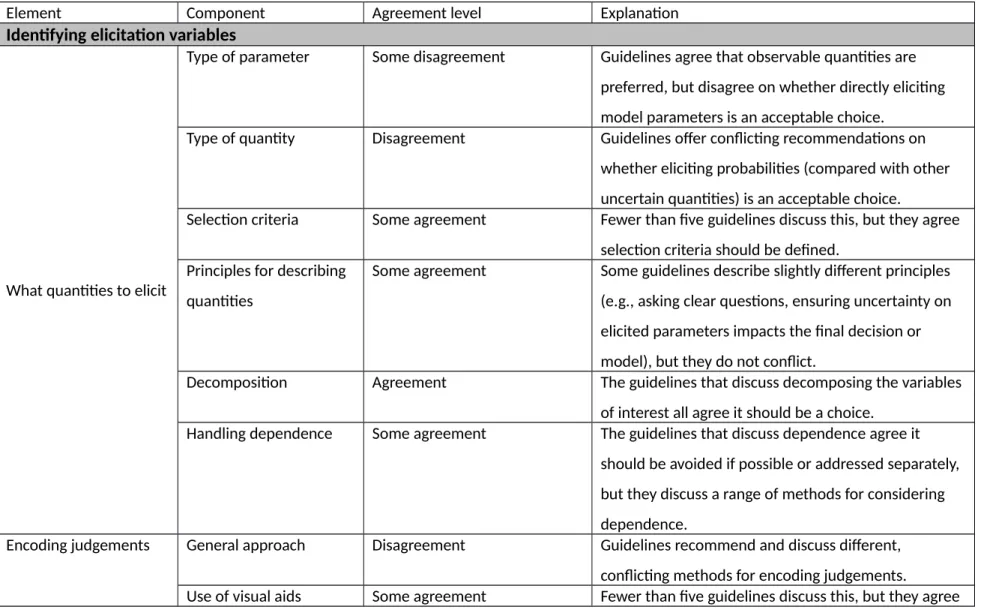
Table 2 Level of agreement on recommendations and choices in SEE guidelines...18
Table 3: Summaries of selected survival distributions...73
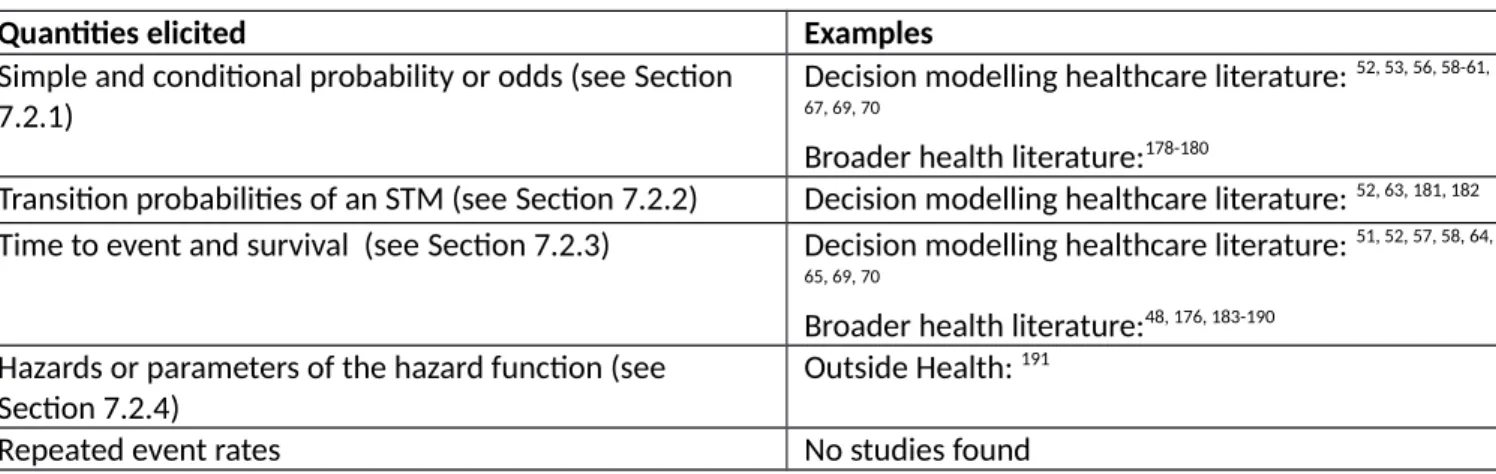
Table 4: List of published examples of eliciting probability, rate and time to-event parameters...76
Table 5 : Wording of questions in experiment 2...91
Table 6 Sample characteristics...97
Table 6 Response to question 1 about the ease of completion...100
Table 7 Response to question 2 about method preference...100
Table 8 Proportion of participants who revised their priors...103
Table 9 Accuracy of initial priors compared between participants who did and did not revise their priors: mean (SD) [median and (interquartile range)] of accuracy metric over participants...103
Table 10 Proportion of participants who revised their priors...105
Table 11 Results of experiment 3.2: Outcomes in participants who did and did not revise their priors. ...106
Table 12 Key principles of SEE in HCDM...111
Table 13 A reference case for HTA...132
Table 14 Additional issues in generating a reference case outside of HTA...133
Table 15 Application of reference case: Parameters elicited in DAR196...138
Table 16 Application of reference case: Summary of experts recruited...145
Table 17 Application of reference case: Elicitation Results...145
List of Figures
Figure 1 General schematic for SEE...4
Figure 2 Summary of project activities...5
Figure 3 The elicitation process...10
Figure 4 Levels of expert elicitation*...51
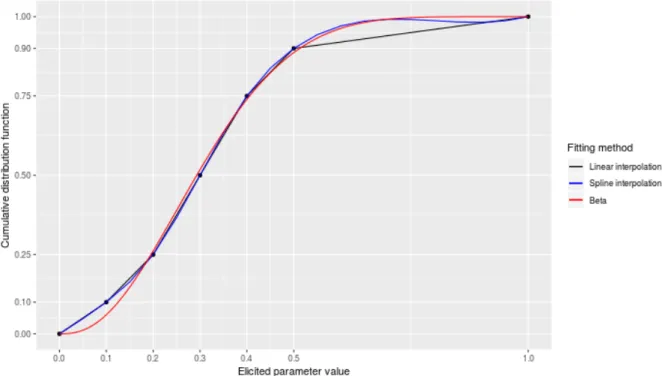
Figure 5 Elicited points on a cumulative distribution function (CDF) and alternative fitted distributions...55
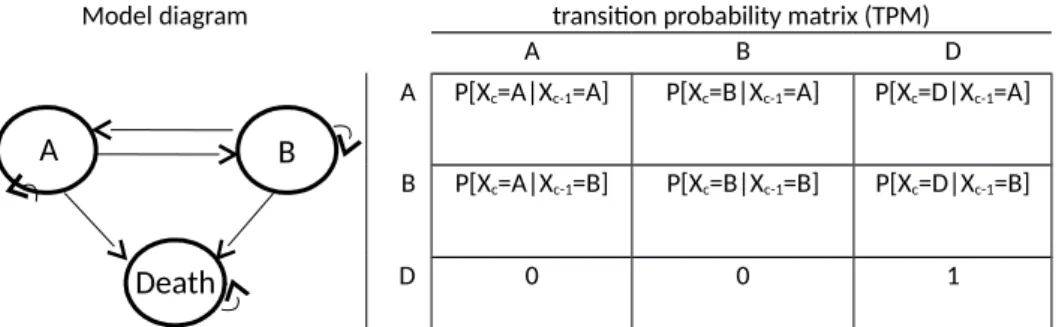
Figure 6 Example of a transition diagram for a state-transition model (STM)...72
Figure 7 Example of eliciting conditional probabilities for a decision tree...77
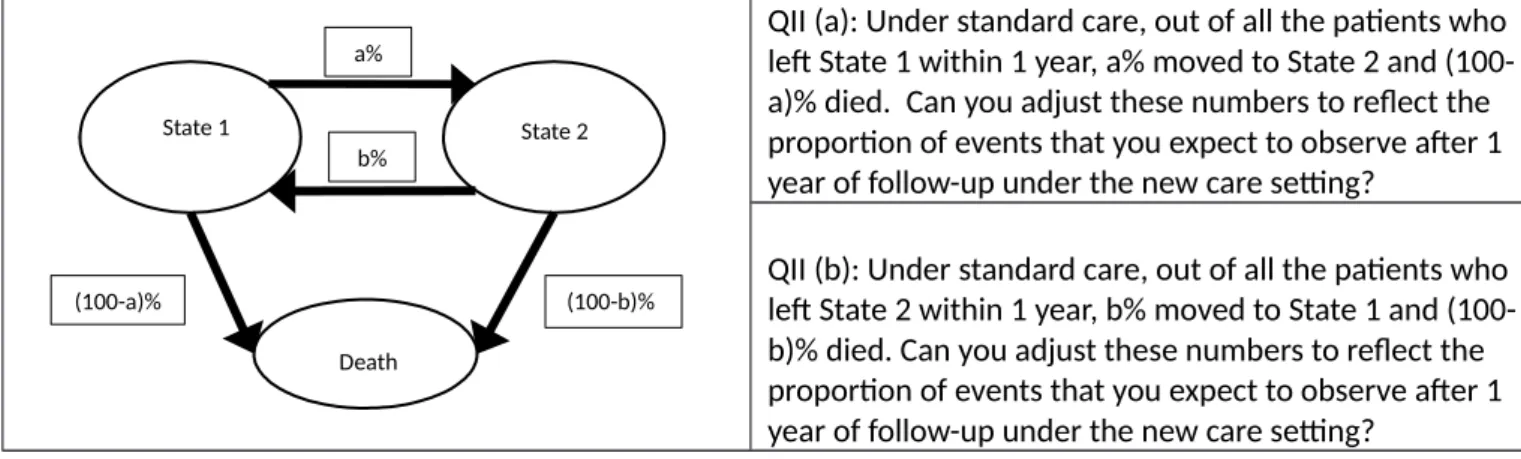
Figure 8 Example of eliciting transition probabilities for a novel setting in a discrete-time STM...78
Figure 9 Snapshot of the R shiny app (1)...87
Figure 10 Snapshot of the R shiny app (2)...87
Figure 11 Snapshot of the R shiny app (4)...91
Figure 12 Snapshot of the R shiny app (5)...91
Figure 13 Illustrative example of the scenarios evaluated in experiment 3.1...93
Figure 14 Illustration of the scenarios defined for experiment 3.2...94
Figure 15 Distribution of bias, lnSDR and lnKL. (SDR= SD elicited / SD true)...98
Figure 16 Within-participant comparison of accuracy when different elicitation methods were used, for each precision scenario...100
Figure 17 Within-participant comparison of accuracy with and without extrapolation, for different levels of extrapolation...102
Figure 18 Within-participant comparison of accuracy to initial priors and extent of revision, for different types of group summaries...104
List of supplementary material
Supplementary material 1: Review of SEE guidelines
Supplementary material 2: Design of the experiments
Supplementary material 3: Analysis of the experiments
Supplementary material 4: Applying choices to the principles for HCDM
Glossary
Adaptive expertise
The expert’s ability to adapt their knowledge to new situations for which they do not have prior experience, such as entirely new medical interventions or patients with different characteristics.
Aleatory uncertainty
Uncertainty due to randomness. Inherently irreducible and unpredictable in nature.
Behavioural aggregation
The process of grouping together individual experts to generate an overall, consensus aggregate distribution
Beta-binomial
The binomial distribution in which the probability of success at each trial is fixed but randomly drawn from a beta distribution.
Biases
Systematic errors in the processes that people use to make judgements. The biases most commonly referred to in SEE are cognitive and motivational biases.
Bisection method
A method of elicitation that can be used for any type of continuous univariate distribution. The expert is asked to divide the interval into two equally likely intervals, for example the interval containing the minimum and the median.
Calibration
A process to determine the accuracy of a probabilistic judgement. Estimates of expected calibration can be used to weight expert judgements.
Central tendency
A measure of the “centre” or typical value for a probability distribution. Examples are the mean, median and the mode.
Chips and bins
A graphical representation of the fixed interval method for elicitation Experts are asked to give an interval for an uncertain quantity and then place ‘chips’ in ‘bins’ which divide this interval. The chips represent the weight of their belief.
Choice(s) See Elements Consensus
The act of reaching agreement. In SEE this refers to agreement between experts on a distribution.
Credible range
A summary of a probability distribution for an uncertain quantity, describing an interval within which the quantity falls with a particular probability.
Delphi method
A structured communication technique based on several rounds of questionnaires, feedback and revision. The modified Delphi (EFSA) is a form of Delphi method used to elicit an uncertain quantity.
Dependence
A statistical relationship between two random variables.
Domain-specific
Relating to a particular discipline, e.g. health, education, engineering, or subdivision, e.g. oncology, geriatrics.
Disaggregation
Dividing into constituent parts. In SEEE this refers to decomposition of a complex quantity into less complex, observable quantities.
Element(s)
The SEE process comprises numerous elements which encompass several possible components for which choices need to be made. The selection of experts is an example of a SEE element for which the analyst needs to make choices regarding the different components such as how many expert to include, how to recruit the experts and the type of expertise the expert should possess and so on.
Epistemic uncertainty
Uncertainty which arises primarily from limited or imperfect knowledge. It is, in principle, reducible by obtaining more or better information.
Expert
The individual (s) from whom subjective beliefs are sought. Experts may be defined as such on the basis of their substantive, normative or adaptive expertise.
Facilitator
An unbiased, impartial individual that works with experts to obtain their subjective beliefs. This may involve coordinating active discussion between experts to achieve a
consensus, or less hands-on guidance to enable individuals to provide their own judgements.
Fit for purpose
Here ‘fir for purpose’ relates to the suitability of a technique or results for its designated role or purpose. In the context of HCDM this will often involve future statistical analysis or modelling.
Fixed interval method
A method of elicitation in which experts are presented with an interval and asked to assess the probability that the quantity will fall into that interval.
Frequencies
The observed number of successes or failures out of a finite number of trials.
Hazard
Kullback-Liebler
A measure of the difference between two distributions. In the context of elicitation, this is a measure of the information lost when the true distribution is approximated by the elicited distribution13.
Level of elicitation
Describes either an elicitation conducted at the individual level (which may be followed by mathematical aggregation) or at the group level (behavioural aggregation).
Heuristics
Mental shortcuts that ease the cognitive load of making a decision, e.g. rule of thumb, an educated guess, an intuitive judgment, a “guesstimate”, profiling, or common sense.
Linear opinion pooling
A mechanistic rule for combining probabilities or distributions elicited from two or more sources into a single probability or distribution. In linear opinion pooling the single distribution is calculated as the unweighted linear average of individual distributions.
Mathematical aggregation
Combining the beliefs of individual experts using a mathematical rule, such as linear opinion pooling.
Model based economic evaluation (MBEE)
An evaluation of cost-effectiveness which employs some form of decision model or statistical model.
Normative expertise
The expert’s ability to accurately assess and clearly communicate their beliefs in probabilistic form.
Observable quantities
A quantity that could be estimated as a simple function of observed data, if that data were available. For example, the probability of an outcome, which can be estimated by the observed frequency of the outcome. This contrasts with composite quantities such as odds ratios which are complex functions of observable data and generally more difficult for an expert to conceptualise.
Parameters
A variable within an analysis, for example a MBEE or a regression model.
Precision
A measure of statistical variability or statistical bias. Repeated measures are said to be precise if the values are close together. Calculated as the reciprocal of the variance.
Probabilistic
Relating to probabilities. Involving quantities whose values are uncertain, or which may take multiple possible values. Probabilistic sensitivity analysis is used to explore the consequences of uncertainty in parameter inputs in MBEE.
Probability
Proportion
The number of something in comparison to the whole, e.g. the proportion of females in the population. Can take values between 0 and 100%.
Quantiles
Points on a probability distribution which divide it into continuous intervals. The 50th quantile is known as the median.
Relative risk
The ratio of the probability of an event occurring in the exposed or treated group versus the probability of the event occurring in the non-exposed group.
Structure Expert Elicitation (SEE)
Refers to a formal documented process by which experts beliefs (priors) are obtained in a quantitative form.
Subjective beliefs
An individual’s own beliefs/opinions about an uncertain quantity, which may be expressed as a distribution. If this is prior to data collection/availability, this is called a “prior” distribution.
Substantive expertise
An expert is said to be a substantive expert if they possess skills/knowledge pertaining to a particular domain or subject within that domain.
Survival function
Defined as the probability that the time T that an event (e.g. death) occurs is greater than t, P[T>t]. It
can be defined as S(t)=exp{−
∫
0 th(u)du}=exp{H(t) },where
∫
0 th(u) is the cumulative hazard
function, H(t). Survival can alternatively be described using the probability density function for the survival times, f(t), using the following relationship: S(t) = 1 - F(t)= 1 -f(t)dt , where f(t)dt is the cumulative distribution function, F(t). The hazard and the probability density functions can also be used together to determine survival S(t) = f(t)/ h(t).
Variance
A measure of the spread of a random variable.
Variable interval method
A method to elicit a distribution. The expert is asked to express the quartiles or credible intervals of a distribution, e.g. tertiles are used in the bisection method.
Validity
Abbreviations
HTA Health Technology Assessment
NICE National Institute for Health and Clinical Excellence RCT Randomised Control Trial
SEE Structured Expert Elicitation SHELF Sheffield Elicitation Framework HCDM Healthcare decision-making DAR Diagnostic Assessment Report EFSA European Food Safety Authority EPA Environmental Protection Agency IFA Institute and Faculty of Actuaries NRC Nuclear Regulation Commission
GP General Practitioner
CCG Clinical Commissioning Group
LA Local Authority
DHSC Department of Health and Social Care MRC Medical Research Council
PHE Public Health England IFR Individual Funding Request SMC Scottish Medicines Consortium AMWSG All Wales Medicines Strategy Group HPA Health Protection Agency
PHP Public Health Programme STA Single Technology Appraisal
NIHR National Institute for Health Research MBEE Model Based Economic Evaluation FIM Fixed Interval Method
VIM Variable Interval Method
PEGs Prior Elicitation Graphical Software GEM Generalised Expertise Measurement E-SQ Expert-Selection Questionnaire
IDEA Investigate, Discuss, Estimate, Aggregate CDF Cumulative Distribution Function
DES Discrete Event Simulation HRQoL Health Related Quality of Life TPM Transition Probability Matrix CrIs Credible Intervals
KL Kulback Leibler
MCMC Markov Chain Monte Carlo SDR Standard Deviation Ratio lnSDR Log of Standard Deviation Ratio lnKL Log of Kulback Leibler
SCHARR Sheffield School of Health and Related Research FeNO Fractional Exhaled Nitric Oxide
BTS British Thoracic Society
Plain English Summary
BackgroundDecisions in health care aim to maximise health, requiring judgements about treatments. The evidence used to make these judgement is typically uncertain.
In these situations, the experience of experts is essential. Structured expert elicitation (SEE) collects beliefs from experts. There are different guidelines available for SEE, however it is not clear if any of these be can be used in healthcare decision making (HCDM), for example in considering if a
treatment should be made available in the NHS. This project aimed to develop a guidance for SEE to inform HCDM.
Methods
Reviews and experimental techniques were used to gather a list of methods to conduct SEE. The suitability of these choices in HCDM was then determined by comparing these with a set of standards that support the use of SEE in HCDM was generated.
Results
Different guidelines prefer different approaches to conduct SEE. There is a lack of evidence available to determine which of these methods is most appropriate across the whole of HCDM.
It is possible to define reference protocol methods that could be used in a particular type of HCDM, Health Technology Assessment (HTA). This includes: gathering experts with knowledge of the clinical area, asking experts about things that they observe in clinical practice and asking experts individually for their beliefs. For decision makers working outside of HTA, for example at a local level, or for treatments that are not yet available to patients, these choices may not be appropriate.
Conclusions
Scientific Summary
Background
At the forefront of decisions in healthcare is the aim of maximising health, requiring judgements about interventions that may have higher health effects but potentially incur additional costs. The evidence used to establish cost-effectiveness is typically uncertain, for example the evidence may not be on ‘final’ outcomes (e.g. cancer products licensed on evidence of progression-free survival), or the evidence base may not be well developed (e.g. in diagnostics, medical devices, early access to medicines scheme). It is important that the uncertainty in this evidence is characterised. If not, any analysis using this evidence may give decision makers a misleading view of the risks associated with their decision.
In situations where evidence is subject to uncertainty, the experience of experts may be necessary essential. To ensure accountability in the decision, these expert judgements should be made explicit and incorporated transparently into the decision making process. The process by which the beliefs of experts can be formally collected in a quantitative manner is structured expert elicitation (SEE). If conducted in an appropriate manner, SEE can characterise uncertainties associated with the cost-effectiveness of competing interventions and assess the value of further evidence. This may be the approach best suited to a transparent decision making process.
There is an increasing interest in SEE as new technologies are assessed progressively closer to their launch on the market. SEE is also valuable for ‘early modelling’ of new interventions or unknown diseases for which little or no evidence is available. A review of applied studies in health care decision making (HCDM) found heterogeneity in methodology used and a lack of consideration for any existing guidance on the topic. 1
Objectives
The overall aim of this report was to establish a reference protocol or guideline for the elicitation of experts judgements to inform HCDM. To achieve this overall aim, the report focussed on the following objectives:
1. Providing clarity on the methods for collecting and using experts judgements within an assessment of cost-effectiveness.
2. Exploring where alternative methodology may be required in particular context/constraints e.g. time.
3. Establishing preferred approaches for elicitation for a range of parameters and a range of decision-making contexts.
4. Determining which elicitation methods allow experts express parameter uncertainty as opposed to variability.
5. Determining the applicability and usefulness of the reference protocol developed within a case-study application.
For (4), statistical experiments were conducted. The aim of these experiments was threefold: (1) to evaluate alternative methods of elicitation and how they perform in representing parameter uncertainty; (2) to explore individuals’ ability to extrapolate from their knowledge base; and (3) to explore how individuals revise their answers when presented with group summaries.
Methods
To achieve these objectives, a mixed methods approach was used, combining formal systematic review, targeted searches, experimental work and narrative synthesis. Specifically, first a systematic review of existing guidelines for formal elicitation, published in either the peer-reviewed or grey literature, was conducted. This identified the approaches used in existing guidelines (the “choices”) and determined if dominant approaches evolve. Less formal, targeted searches were also conducted to determine the state of the evidence on choices relating to: the selection of experts, level of elicitation, fitting and aggregation, assessing expected accuracy of experts judgements and heuristics and biases. The advantages and disadvantages of each available choice for these elements were extracted from the papers and potential constraints to their application in HCDM determined.
be conducted, is therefore discussed in detail and conclusions made regarding the use of a reference protocol for SEE. Alongside this, a systematic review of SEE applications in cost-effectiveness
modelling was undertaken. This details the challenges that were reported by the authors conducting these analyses. When available, the basis for the methodological choices made in each application is extracted. This also provided a view of the current scope of the landscape with regards to applied SEE in HCDM.
When designing a SEE, deciding what quantities to elicit is a major challenge. There is no guidance covering the spectrum of quantities that may be appropriate to elicit to inform HCDM, including measures of treatment effects and baseline event rates. To address this lack of guidance, a review was undertaken of alternative quantities that can be elicited to inform the probability-related or time to event-related parameters commonly used in HCDM.
The statistical experiments, conducted to explore multiple uncertainties in SEE methodology, utilised a simulated learning process (e.g. Wang 2002). Individual’s knowledge was determined by recorded observations. The ‘dataset’ observed then determines participants’ belief about the quantity of interest, from which accuracy can be measured. This approach allows the conditions of the experiment to be defined, e.g. equal vs different knowledge-base, and isolate potential
determinants, e.g. precision. Participants were shown random observations from a statistical model representing an abstract medical problem. Following this they were asked to express their beliefs’ regarding treatment effectiveness. All participants (72) were students at the University of York, the large majority of which were undergoing clinical training. The exercises was delivered face-to-face and financial incentives were offered according to accuracy. The experiments measured:
• Bias: difference in the means of the true and elicited (and fitted) distributions; • Uncertainty: ratio of the SDs of the two distributions.
• Kullback-Leibler divergence (KL): information lost when one distribution is approximated by
anotheranother13.
• Participants preference for alternative methods.
The work also included an applied evaluation of the developed reference protocol. This uses an existing cost-effectiveness model, in which SEE was used to generate initial estimates of uncertain parameters. In addition to demonstrating the usefulness of the reference protocol in navigating the SEE process, the practicality of SEE is determined using narrative feedback form experts and by generating estimates of resources required to design and conduct the SEE.
Finally, a dissemination workshop was convened, which explored the usefulness, and challenges in using SEE in HCDM. It was also used to refine, using discussion, a set of recommendations for further research.
Results
A comprehensive list of elements and choices for SEE was developed by reviewing existing protocols (work package 1). This covered the design, implementation and analysis stages of SEE. The review showed that for many elements of the SEE, there was a lack of consistency across the existing guidelines. Targeted searches also revealed that the majority of choices are not supported by any empirical evidence, both specific to HCDM and more generally.
In order to sift through the available choices, a set of principles that underpin the use of SEE in HCDM was defined using evidence generated from targeted searches, experimental evidence on methods to encode judgements and consideration of the constraints on the decision making processes in health (work package 1). These nine principles are:
1. Transparency 2. Fitness for purpose
3. Consistency, but respecting constraints of the decision making context 4. Reflecting uncertainty at the individual expert level
5. Recognising and acting on biases
6. Suitability for substantive experts who are less likely to be normative 7. Recognising where adaptive skills are required
8. Recognising between-expert variation 9. Promoting high performance
Not all principles for SEE in HCDM were relevant for all elements. The most relevant principles for each element and components within SEE were considered.
In almost all choices, there is a lack of empirical evidence and in some circumstances the principles are unable to provide sufficient justification for discounting particular choices (work package 1). It is, however, possible to define reference methods that could be used in a more narrowly defined area of HCDM, namely HTA. These include:
Focus on gathering substantive expertise or experience. Normative skills can be developed during the training session as part of the SEE.
Simple observable quantities should be elicited where possible; ratios or complex parameters such as regression coefficients should not be elicited directly.
Minimize and record conflicts of interest among the experts. Include experts external to the SEE task, i.e. not those involved in developing the task.
Dependence between variables should be captured in SEE. Expressing dependent variables
in terms of independent variables is preferable when experts do not have strong normative skills.
Use of either VIM or FIM work well, however decision makers should aim for consistency across applications.
Following fitting, a summary of the individual distributions should be obtained using linear pooling.
Interaction should be face-to-face where possible to allow a facilitator to deliver training to the expert.
Training is crucial and should focus on avoiding bias and expressing uncertainty. All methodological choices for the SEE must be documented and justified.
Additional considerations are required for decision makers outside of HTA, for example at a local level, or for early technologies that have yet to progress through the regulatory process. Access to
experts may be limited and in some circumstances, group discussion may be needed to generate a
distribution.
The application of the case-study, a diagnostic model for asthma, explored practical issues. This highlighted sufficient information needs to be presented to the experts. The level of information presented to the experts and the wording of this information is paramount in ensuring that the quantity of interest is observable to the expert. When deciding on the information to provide to experts it may be useful to consult existing policies. With regards to time constraints, the applied evaluation was undertaken over a 7 month period and involved 3 analysts in varying proportions. Overall this equated to 5 months full time equivalent researcher time.
Limitations
The major limitation of the work conducted here, lies not in the methods employed, but the
evidence available from the wider literature, on which to base the set of choices and determine how appropriate these are. Concluding on the suitability of the choices available from the existing guidelines is challenging due to the lack of empirical evidence to support specific choices. Instead, it was necessary to develop principles for SEE in HCDM, using the sources of evidence as described above and published guidelines for good SEE. Using only the principles, in the absence of empirical evidence, meant that it was not always possible to give definitive conclusions on choices.
Areas for further research
Which methods for expert recruitment are most practical and what are the challenges? What training strategies can be used to minimise bias?
Which methods for eliciting dependent quantities work best for non-normative experts? Which consensus approach works best in HCDM in practice and for which types of quantities
and decision makers?
Should individual priors be combined when there is significant expert variation? If so, how?
At the dissemination workshop, participants were asked to discuss areas for further research, specifically considering what decision makers in HCDM may require when determining a reference protocol for SEE for use within their setting. Participants were not asked to define which research topics are highest priority for their setting. Selecting experts, minimising bias, adaptation to specific setting in which SEE may be applied, for example choosing individual or group elicitation,
appropriate wording of questions, methods for multivariate elicitation and what information should be presented to the experts to help them formulate their beliefs. Some of these topics would benefit from empirical research and others may be resolved though application of the proposed reference protocol to HCDM, including in settings with a range of constraints.
Conclusions
SEE can offer opportunities in HCDM, particularly reimbursement decisions supported by model based economic evaluation (MBEE). SEE allows the uncertainty in the evidence used to populate these models to be characterised, or where evidence is completely lacking, provides additional information needed to reach a decision.
The work described in this report has attempted to generate evidence which is useful for analysts and decision makers in HCDM. SEE conducted in this context to date, has not used a set of consistent methods, and above all, has not considered the implications of the choices made when designing and conducting a SEE. To improve the accountability of HCDM the procedure used to derive expert judgements should be transparent.
Funding details
Chapter 1 Background
In the UK, decisions about the use of health care interventions are made by various NHS organisations as well as the immediate beneficiaries, namely patients. In England, these NHS organisations include the National Institute for Health and Care Excellence (NICE), NHS England and Public Health England. At the forefront of these decisions is the aim of maximising health, calling for judgements about the interventions that are expected to lead to higher health effects. Where resources are limited, additional costs incurred will impact on access to care for other patients, and health foregone in this way should also be taken into account (a cost-effectiveness framework).2
Although Randomized Control Trials (RCTs) have been described as the principle source of evidence for such decision-making, RCTs have considerable limitations including a lack of external validity, short study periods to assess long-term treatment effect and invalid generalizations of findings outside the study group.3-5 Also RCTs are not possible or ethical in some situations.
These limitations also impact the use of RCTs for urgent health issues for which decisions need to be made promptly on the basis of limited and often imperfect available data.6 Health Technology Assessments (HTAs) traditionally use decision-modelling methods that gather different forms of evidence by defining mathematical relationships between a varied set of input parameters, in a way that describes aspects of the history of the disease of interest and the impact of the intervention.
Uncertainty in the evidence is pervasive in cost-effectiveness modelling and the analysis may be biased if uncertainty in the model inputs is not reflected. Uncertainty can be distinguished as epistemic or aleatory.7, 8 Aleatory uncertainty arises due to randomness i.e. unpredictable variation in a process and expert knowledge cannot reduce this type of uncertainty.7 Therefore, it is
sometimes referred to as irreducible uncertainty. Epistemic uncertainty is due to imperfect knowledge and it can be reduced with sufficient study and therefore, expert judgement may be useful in its reduction.7 Additional evidence can reduce uncertainty and provide a more precise estimate of cost-effectiveness. By quantifying uncertainty, it is possible to assess the potential value of additional evidence, inform the types of evidence that might be needed, and consider restricted use until the additional evidence becomes available.9
areas of diagnostics, medical devices, early access to medicines scheme, or public health). In these situations, judgements are required for a decision to be reached regarding that parameter. To ensure accountability in the decision, these judgements should be made explicit and incorporated transparently into the decision making process, an inherently Bayesian view on decision-making. Formal methods to quantify prior beliefs in the form of experts judgements exist, and are termed Structure Expert Elicitation (SEE) methods.8
Structural Expert Elicitation (SEE) is a process that allows experts to express their beliefs in a statistical, quantitative form. If conducted in an appropriate manner, SEE is the best approach to characterise uncertainties associated with the cost-effectiveness of competing interventions and assess the value of further evidence. SEE methods have been used in disciplines including weather forecasting and reliability analysis within engineering10 but the research findings in these disciplines are often interpreted as contradictory, in particular the appropriateness of generating consensus amongst experts.11 In terms of SEE in healthcare, NICE uses expert judgement across all guidance-making programmes but, expert elicitation (compared to expert opinion) is used less frequently.12 Existing timelines and consequent time constraints are reported as the common obstacles when conducting expert elicitation in healthcare.12
There is an increasing interest in SEE, as HTAs are conducted progressively closer to the launch of the intervention of interest.13 SEE is also essential for ‘early modelling’ of new interventions or unknown diseases for which little or no evidence is available.
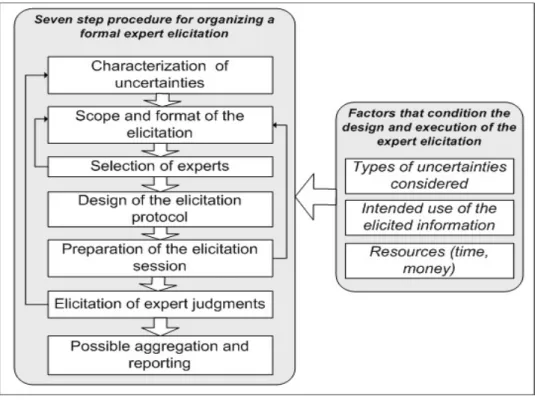
While generic processes have been applied in HTA (Figure 1), there is an absence of a published guidance that is specific to HTA. Certain elements of the generic guidance may not be appropriate in a HTA context due to resource and time constraints that are inherent in HTA.
At present, an analyst needs to be aware of a number of key issues to consider when designing, conducting and analysing an elicitation exercise. In terms of the design, the analyst must decide what quantities to elicit. This will largely be informed by the requirements of the decision model. As a rule, experts should be asked to express their beliefs about observable quantities such as
probabilities rather than unobservable quantities i.e. moments of a distribution or covariates. Once the quantities have been chosen, the next choice will be based on which method(s) will be employed to express the parameters. Possible methods include fixed or variable interval methods. The analyst must then choose which experts should be recruited to elicit these judgements. Once the beliefs have been elicited, a decision must be made on how to synthesis the beliefs.
Figure 1 General schematic for SEE
The overall aim of this report was to establish a reference protocol or guideline for the elicitation of experts judgements to inform healthcare decision-making (HCDM). To achieve this overall aim, the report will focussed on the following objectives:
Providing clarity on the methods for collecting and using experts judgements within an assessment of cost-effectiveness.
Demonstrating where alternative methodology may be required in particular context/constraints e.g. time.
Establishing preferred approaches for elicitation for a range of parameters and a range of decision-making contexts.
Determining which elicitation methods allow experts express parameter uncertainty as opposed to variability.
Determining the applicability and usefulness of the reference protocol developed within a case study application.
The initial research protocol outlined two additional objectives: to establish the accuracy of consensus-based methods in generating representations of uncertainty, and to establish the
objectives were subsequently refined to explore individual factors that can affect the accuracy of consensus-based methods, in particular: to explore individuals’ ability to extrapolate from their knowledge base, and to explore how individuals revise their answers when presented with group summaries. Further details on the reason for these deviations is provided in Chapter 8 .
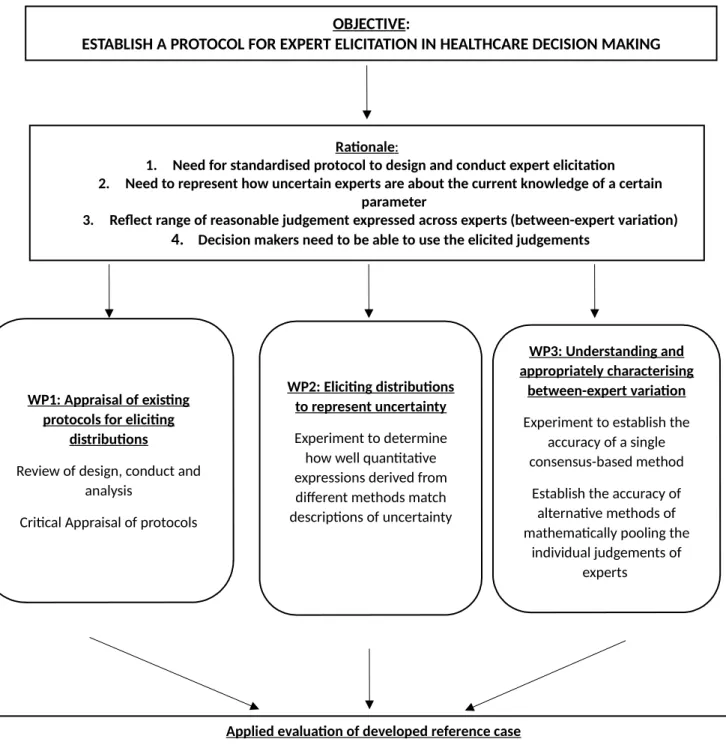
To achieve these objectives, the activities of this project were split into three work packages and an evaluation. The activities of the project are summarised below in Figure 2.
Figure 2 Summary of project activities
OBJECTIVE:
ESTABLISH A PROTOCOL FOR EXPERT ELICITATION IN HEALTHCARE DECISION MAKING
Rationale :
1. Need for standardised protocol to design and conduct expert elicitation 2. Need to represent how uncertain experts are about the current knowledge of a certain
parameter
3. Reflect range of reasonable judgement expressed across experts (between-expert variation) 4. Decision makers need to be able to use the elicited judgements
WP1: Appraisal of existing protocols for eliciting
distributions
Review of design, conduct and analysis
Critical Appraisal of protocols
WP2: Eliciting distributions to represent uncertainty
Experiment to determine how well quantitative expressions derived from different methods match descriptions of uncertainty
WP3: Understanding and appropriately characterising
between-expert variation
Experiment to establish the accuracy of a single consensus-based method
Establish the accuracy of alternative methods of mathematically pooling the
individual judgements of experts
Applied evaluation of developed reference case
- Apply the reference case in a retrospective manner to a case-study - Explore any practical issues throughout the SEE process
Specifically the remaining chapters in this report provide the following:
Chapter 2 reviews existing guidelines for formal elicitation (SEE). This review identifies the
approaches used in existing guidelines and aims to identify whether dominant approaches evolve in terms of the choices that need to be made in the elicitation process.
In light of this review, Chapter 3 considers contexts for structured elicitation in HCDM. Different contexts may influence the requirements and feasibilities of expert elicitation and so Chapter 3 discusses this in detail and identifies the potential constraints in decision-making in healthcare and discusses the implications for expert elicitation methodology.
Chapter 4 is a review of SEE applications in cost-effectiveness modelling. The chapter summarises the basis for the methodological choices made in each application and details the challenges that were reported by the authors.
Chapter 5 reviews the evidence on the potential choices that are available for different components of the elicitation process. This focuses on the elements: selection of experts, level of elicitation, fitting and aggregation and adjusting judgements. This chapter discusses the advantages and
disadvantages of each available choice and identifies any potential constraints to their application in cost-effectiveness analyses.
Heuristics and biases are concerns that are predominant across all elements in SEE and SEE should be conducted in such a way that minimises these errors. Chapter 6reviews the existing evidence on heuristics, biases and de-biasing techniques that are of most relevance to HCDM.
Chapter 7 discusses what quantities to elicit. This chapter provides a list of alternative quantities that can be elicited to inform certain types of parameters that are commonly used in healthcare. This is particularly relevant in cost-effectiveness analyses, as parameters are often complex constructs, such as relative treatment effects or time to events, which experts will not directly observe in practice. Chapter 7 compiles a list of alternative quantities that may be elicited to inform specific parameters.
elicitation and how they perform in representing parameter uncertainty; (2) to explore individuals’ ability to extrapolate from their knowledge base; and (3) to explore how individuals revise their answers when presented with group summaries. The results and interpretation of these experiments is then presented.
Chapter 9 discusses the methodological choices for each of the different components of SEE: design, conduct and analysis. Managing biases and validity assessment are then considered as overarching concerns for throughout the SEE process. In order to conclude on their suitability for HCDM, Chapter 9 first presents a set of principles that underpin the use of expert elicitation in HCDM. Available choices are considered in light of these principles and any empirical evidence available to support the choices.
Chapters 2 to 9 are then used to generate a reference protocol for HCDM (Chapter 10). This presents the choices that are supported by the principles for HCDM, and/or empirical evidence in this
domain. Given the paucity of empirical evidence relating to HCDM, it was necessary to define this for a specific type of HCDM, HTA. Considerations when using the reference protocol outside of this context are also presented.
Chapter 11 describes the applied evaluation of the developed reference protocol. This uses an existing cost-effectiveness model, in which SEE was used to generate initial estimates of uncertain parameters. In addition to demonstrating the usefulness of the reference protocol in navigating the SEE process, the practicality of SEE is determined using narrative feedback form experts and by generating estimates of resources required to design and conduct the SEE.
Chapter 2 Good practice in SEE: Learning from the available guidance
Section 2.1 Introduction
Over the last few decades, SEE has been used in areas such as natural hazards, environmental management, food safety, healthcare, security and counterterrorism, economic and geopolitical forecasting, and risk and reliability analysis. All of these areas require consequential decisions be taken in the face of significant uncertainty about future events or scientific knowledge.
How judgements are elicited is critical to the quality of the resulting judgements and hence the ultimate decisions and policies. Methods for SEE should be suitable for specific contexts and understood by content experts to be useful to decision makers. Example applications and recommended practices do exist in certain fields, but the specifics vary.
In developing a reference protocol for SEE specific to the needs of HCDM, the methodological recommendations and choices, which exist in other fields, need to be understood. This chapter surveyed existing best practices for SEE as reflected in published elicitation guidance to identify areas of consensus, places where no consensus exists, and other gaps. Identifying areas of commonality across current guidance can support elicitation practice in areas that lack context-specific guidance such as HCDM. The recommendations and choices for the SEE process identified in this chapter are further explored in Chapter 5, Chapter 6, Chapter 7 and Chapter 8, and their
suitability for HCDM is considered in Chapter 9.
Section 2.2 Methods
To identify areas of agreement and disagreement in elicitation practice, both domain-specific and generic elicitation guidelines were systematically reviewed according to the search strategy and screening process detailed in Error: Reference source not found. A SEE guideline is defined as a document, either peer-reviewed or in the grey literature, that advises on the design, preparation, conduct, and analysis of a structured elicitation exercise. The review focussed on SEE guidelines rather than applications to determine a full list of the possible methodological options rather than relying on the partial reporting available in applications.
To constrain the scope of this review, guidelines needed to concern explicitly probabilistic
similar recommendations, only one version was included. An extraction template was used to collect information from each guideline. The extracted data was analysed to create an overview of all the stages, elements, and choices involved in an elicitation and to understand where current advice across guidelines conflicts or agrees. Where the guidelines agree, we assume this represented best practice which can be taken forward within the HCDM context, as applicable. Where the guidelines disagree, we sought additional evidence to support the development of a reference protocol for HCDM (Chapters 3-8). .
Section 2.3 Included SEE guidelines
The searches identified 16 unique SEE guidelines (Error: Reference source not found, Table 2). Five of the guidelines are generic and aim to inform practice across disciplines, and 11 focus on specific domains. Six of the domain-specific guidelines are agency white papers or agency-sponsored peer-reviewed articles and are tailored to the specific decision-making processes the agencies govern. Agencies issuing guidelines include the European Food Safety Authority (EFSA), U.S. Environmental Protection Agency (EPA), the Institute and Faculty of Actuaries (IFA), and the U.S. Nuclear Regulatory Commission (NRC). Both the IFA and NRC have published two distinct guidelines. The 10 guidelines not connected to agencies are based on reviews of existing evidence and practice about elicitation methods (two guidelines), reflections on personal experience and practice (three guidelines), or combinations of review and reflection (five guidelines).
Two of the agency SEE guidelines were included with caveats. First, the EFSA guideline covers three distinct elicitation methods, but the Classical Model and SHELF are presented in other guidelines, so only the portions of the EFSA document related to the EFSA Delphi method are included in this review.17 Second, the EPA guideline is a White Paper released for public review that was not
intended to be the final agency report on the subject.18 However, a final version was never released, and thus the document is widely cited in elicitation literature and has served as a de facto guideline as nothing has superseded it.
Section 2.4 Analysis of the elicitation process
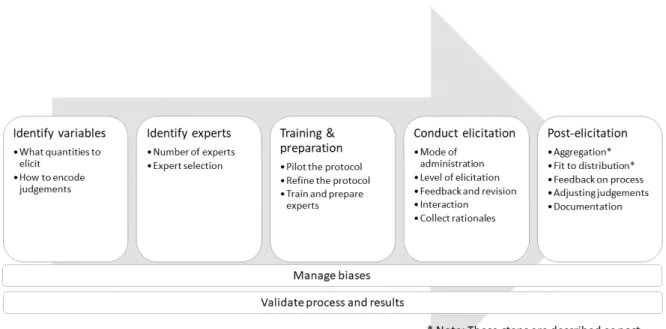
Figure 3 The elicitation process
At each step of the elicitation process, analysts are faced with a variety of methodological choices. Table 1 provides the full list of choices described in the 16 guidelines, and Table 2 summarises the level of agreement in the recommendations and choices discussed for each element. The following sections discuss the variety of methodological recommendations for each stage made across the guidelines. See Supplementary material 1, Tables 4-15 for further detail.
Table 1 Summary of the elicitation elements, components, and choices described in SEE guidelines
Element Component Choices
Identifying elicitation variables
What quantities to elicit
Type of parameter 1. Elicit observable quantities
2. Elicit required model parameters directly
Type of quantity 1. Proportions
2. Frequencies 3. Probabilities 4. Odds ratios
Selection criteria 1. Define selection criteria (probabilities, consequences, constraints, etc) 2. Minimal assessment of each possible
quantities 2. Ask questions in a manner consistent with how experts express their knowledge
3. Uncertainty in the elicited variables should impact the model and/or decision 4. Use neutral wording
Decomposition/disaggregation 1. Decompose variables of interest to aid experts in the elicitation task
2. Don’t decompose variables for the experts
Handling dependence 1. Express dependent variables in terms of independent variables
2. Use conditional probabilities 3. Use other dependence elicitation
methods
Encoding judgements
General approach 1. Fixed interval method:
Roulette or chips and bins method Ask for % that falls within a specific
range
2. Variable interval method:
Quantiles (Quartiles, Tertiles, 5%, 95% & median, 17%, 83% & median, other)
Bisection
Plausible probabilities (Lowest plausible probability, Highest plausible probability, Best guess for the probability)
Plausible quantities (Upper and lower plausible bounds, best guess, degree of belief)
NUSAP (Numeral, Unit, Spread, Assessment, Pedigree)
3. Hybrid fixed/variable interval methods 4. Summary statistics, moments, measures
of central tendency
5. Elicit evidence, not parameter values, and analyst/facilitator defines probability distribution that reflects the body of evidence
6. Other
Use of visual aids 1. Use to aid elicitation task 2. Do not use
Identifying and selecting experts
Number ofexperts
Number of experts 1. Depends on application
1. Options mentioned in different
4; 8 a “rule of thumb”; 5-9
Selecting experts
Roles within SEE 1. Facilitator (assessor, analyst, coordinator): prepare and conduct elicitation
2. Expert (technical expert, specialist, subject-matter expert): provide judgments (and/or evidence)
3. Generalists: may provide judgments, advise on design, or help with the elicitation
Desired characteristics for those providing judgements
1. Normative expertise 2. Substantive expertise
3. Willingness (interest and availability) to participate
4. Ability to understand questions 5. Ability to apply skills
6. Notability
Identification procedure 1. Recommendations by peers, either formally or informally
2. Research outputs 3. Known experience 4. RFP to seek out experts
5. Profile matrix to identify types of expertise required
Selection procedure 1. Disclosure of personal and financial interests
2. Pursue diversity in opinions, specialisation, area, institution, etc. 3. Pursue diversity in age, gender, culture 4. Formal selection criteria developed and
applied
5. Send potential experts a questionnaire 6. Review CVs of possible experts and have
a committee select accordingly
7. Match possible experts against profile matrix
Possible selection criteria 1. Reputation
2. Experience and qualifications 3. Publication history
4. Diversity in background 5. Conflicts of interest 6. Awards
7. Balancing different viewpoints and managing group dynamics
8. Peer assessment (such as GEM) 9. Convenience
Pilot the protocol Pilot exercise 1. Pilot
2. No mention of pilot
Training and preparation for experts
What to cover in training 1. Probability, including subjective probability, and related concepts 2. Motivation for elicitation
3. Description of what is required from experts
4. How results will be used 5. Elicitation questions
6. Example and practice questions 7. Review of potential biases
8. Relevant background information, data, and sources
9. Review assumptions and definitions used in the elicitation
10. Description of performance assessment (if relevant)
11. Introduction to dependence (if relevant)
Conducting the elicitation
Mode of administration
Location 1. Face-to-face
1-on-1 Group Plenary
1. Remote (web, mail, email, phone, video conference, etc)
Level of elicitation
Level of elicitation 2. Individual 3. Group
4. Combination (individual assessment followed by group discussion and assessment)
Feedback and revision
Type of feedback 1. Graphical feedback 2. Fitted distributions
3. Written description of the expert’s rationale
4. Rationales from other experts 5. Data collected in the future 6. Discussion of elicited values 7. The expert’s performance scores 8. Result of using elicited values in the
model
9. Decision resulting from the expert judgment
10. Draft elicitation report What to feed back 1. The individual’s judgments
2. Aggregated group judgments
3. Judgments from other individual experts Opportunity for revision 1. Iterate elicitation/feedback rounds
3. Update for revisions/clarifications after circulating draft elicitation report
Interaction
Opportunity for interaction 1. No interaction
2. Group discussion prior to individual elicitation
3. Group discussion and group elicitation 4. Group discussion following individual
elicitation (with opportunity for revision)
5. Remote, anonymized interaction
Rationales
Rationales 1. Collect/record rationales from experts (about how they made their judgments) 2. Collect/record rationales from decision
makers (about how they used the expert judgments)
Aggregation
Aggregation 1. Aggregate
2. Don’t aggregate
Analyst provides a distribution that captures knowledge from all experts (the Kaplan approach)
Only use individual distributions Aggregation approach 1. Mathematical
Opinion pool: equal-weighting, performance-based weighting (with seed questions), analyst-defined weighting (based on rationales, expert qualifications, or other criteria)
Bayesian aggregation 2. Behavioural
3. Combination 4. Other
Fit to distribution
Fit 1. Fit to parametric distribution
2. Use non-parametric approaches 3. Don’t fit at all
Distribution 1. Uniform
2. Triangular
3. Uniform over elicited intervals 4. Normal/beta/other parametric
distribution
Fitting method 1. Minimum least squares
2. Method of moments 3. Other
Post-elicitation Feedback on process
Feedback from experts on process
2. Ask experts to appraise the elicitation exercise after completing it
Adjusting judgements
Methods for adjusting judgments
1. Do not adjust experts’ assessments 2. Possible adjustments
Calibrate experts’ assessments Adjust to improve coherence
(described by Lindley et al. (1979)) Small adjustments allowed, if they
are fed back to the experts Drop an expert from the panel
Documentation
What to include 1. Elicitation questions
2. Responses from individual experts (if elicited)
3. Description of process and assumptions for fitting a distribution
4. Discussion of elicitation procedure (and justification for choices made)
5. Rationales
6. Evidence related to elicited quantities 7. Aggregated judgements and/or
consensus curves
8. Discussion of use/impact of elicitation results
9. Recording of session(s) 10. List of experts
11. Definitions and assumptions
12. The process for updating judgments
Managing heuristics and biases
Managing heuristics and biases
Biases relevant for SEE 1. Cognitive biases Overconfidence Representativeness Availability
Anchoring and adjustment Conservatism
“law of small numbers” Hindsight bias
Discrepancy between expert’s beliefs and responses (conscious or
unconscious) Location errors Tacit assumptions Inconsistency 2. Motivational biases
Management bias Expert bias Social pressure Group think
Misinterpretation Misrepresentation Bias elimination or reduction
strategies
1. Give experts practice and feedback 2. Identify biases through discussion with
experts
3. Provide training on biases
4. Frame questions to minimize biases and ambiguity
5. Provide relevant background evidence 6. Ask for upper/lower bounds first 7. Ask experts to specify the credible
interval they have provided
8. Minimize and record conflicts of interest among the experts
9. Require the experts address conflicting information
10. Collect rationales from experts 11. Report anonymous results 12. Anticipate likely biases
13. Ask experts about evidence, not the probability
14. Avoid numbers in questions
Considering the validity of the process and results
Validation
Characteristics of validity and supporting actions
1. Faithfully capturing experts’ beliefs Provide feedback (graphical feedback
often mentioned)
Calibration could be a pragmatic proxy
Test that the question is understood 2. Fitness for purpose
3. Calibration
Ask questions with realizations (i.e., seed questions) that allow calibration to be tested
4. Calibration and informativeness scoring on seed questions (i.e., the Classical Model)
Score experts according to calibration and informativeness Use scores as basis for
performance-based weights (related to Aggregation choices)
Score both individual experts and combinations of experts
5. Coherence
Ask for sets of probabilities that allow coherence to be tested