ABSTRACT
GIERDOWSKI, DANA COCKRUM. Geographies of a Writing Space: The Study of a Flexible Composition Classroom. (Under the direction of Dr. Susan Miller-Cochran).
Empirical research on the impact of innovative learning spaces in higher education has been ongoing in the areas of Science, Technology, Engineering, and Math (STEM) and Library Sciences; however, there is a dearth of research in the Humanities in the area of Composition Studies. This ethnographic study examined the role that a “flexible” classroom design played in a first-year writing course at a large southeastern university. The flexible room included mobile furnishings, mobile whiteboards, and multiple LCD screens for display and is a space where students used their own laptop computers. The goal of the flexible design was to give instructors more flexibility with their pedagogy and engage students more in the writing process. Participants in this study included an instructor,
Geographies of a Writing Space: The Study of a Flexible Composition Classroom
by
Dana Cockrum Gierdowski
A dissertation submitted to the Graduate Faculty of North Carolina State University
in partial fulfillment of the requirements for the degree of
Doctor of Philosophy
Communication, Rhetoric, and Digital Media
Raleigh, North Carolina 2013
APPROVED BY:
______________________________ Dr. Susan K. Miller-Cochran Chair of Advisory Committee
________________________________ _______________________________
Dr. Christopher M. Anson Dr. Deanna P. Dannels
________________________________ ________________________________
DEDICATION To Mike
BIOGRAPHY
Dana C. Gierdowski is a scholar with research interests in writing studies, learning spaces, and pedagogy. Her work explores how innovative, technology-rich learning spaces impact student writers and instructors. Dana’s research interests stem from her twelve-plus years of experience as an instructor of writing in both high school and higher education. Before coming to North Carolina State University, she obtained her Master’s Degree in Professional Writing at the University of Massachusetts at Dartmouth (2005) and her Bachelor’s Degree in English from Berry College (1995). As part of her doctoral work at North Carolina State University, she has done research on higher education learning spaces such as writing centers, multiliteracy centers, and learning commons spaces in libraries, and has been involved in projects related to professional development for faculty. In addition, she managed the First-Year Writing Program’s “flexible” classroom project, which involved classroom redesign and mixed methods research. She has authored the book chapter
“Studying Learning Spaces: A Review of Selected Empirical Studies” in the edited collection
Cases on Higher Education Spaces (IGI Global) and is co-author with Susan Miller-Cochran of the article “Making Peace with the Rising Costs of Writing Technologies: Flexible
ACKNOWLEDGEMENTS
I am extremely appreciative for all the support I have received from mentors, friends, and family as I developed and completed my dissertation. I am so thankful for the guidance I received from my committee chair, Dr. Susan Miller-Cochran, who has been a wonderful mentor to me during my doctoral studies. She not only helped me shape this study and guided me through the process, but entrusted me with the management of the First-Year Writing Program’s “flexible classroom” project. Our design team of Justin Daves, Bob Kadle, and Angela Lord has been a critical part of the project’s success. Without their commitment and hard work, there would be no flexible classroom to study. I am so proud of the work we have done, as it has had positive effects on writing students and instructors and has sparked interest in designing more active learning spaces at NCSU. I would also like to acknowledge the time and attention I received from my committee members Dr. Chris Anson, Dr. Robert Beichner, Dr. Deanna Dannels, and Dr. Vicki Gallagher, as I analyzed data and wrote this dissertation. Their assistance throughout the various stages of this project has been invaluable. Additionally, I would like to thank Dr. Ken Zagacki for his interest in my work and encouragement during my first year at NCSU – a time when I had far more self-doubt than confidence. I am also grateful to Dr. Steve Wiley, who listened and offered helpful advice during my second year as I navigated a sea of interdisciplinary directions so that I could find my niche.
thank Wendi Sierra and Lauren Clark – my Pink Ladies – who helped me work through critical parts of my dissertation when I was stuck, held me accountable for writing goals, performed numerous reliability checks to my data, and offered sympathetic ears when I just needed to complain.
Finally, and most importantly, I would like to acknowledge my incredible husband Mike. There is no way I could have made it through the last four years without his
TABLE OF CONTENTS
LIST OF TABLES... ix
LIST OF FIGURES ... x
CHAPTER 1: INTRODUCTION AND REVIEW OF LITERATURE ... 1
Review of Literature...11
Learning Theory... 12
Place Studies in Composition Studies & Human Geography... 22
Learning Spaces ... 29
Studying a Flexible Composition Classroom...37
CHAPTER 2: METHODS... 41
Learning Outcomes Model...41
An Ethnographic Approach ...44
An Ethnographic Study of a Composition Classroom ...48
Site ...49
Data Collection and Participants ...56
Mapping Exercises...60
Field Observations...63
CHAPTER 3: RESULTS: INSTRUCTOR’S USE AND PERCEPTIONS OF THE FLEXIBLE CLASSROOM SPACE... 66
RESEARCH QUESTION 1: HOW DOES THE INSTRUCTOR/TA UTILIZE THE FURNISHINGS, SPACE, AND TECHNOLOGY IN A FLEXIBLE CLASSROOM?... 66
To Check In...77
RESEARCH QUESTION 2: HOW DOES THE INSTRUCTOR/TA PERCEIVE THE FURNISHINGS, SPACE, AND TECHNOLOGY IN A FLEXIBLE CLASSROOM?... 84
A Tool for Engagement ...84
An Obstacle to Teaching...92
An Opportunity for Distraction...99
An Inspiration for Reflection ... CHAPTER 4: RESULTS: STUDENT USES AND PERCEPTIONS OF THE FLEXIBLE CLASSROOM SPACE... 109
RESEARCH QUESTION #3: HOW DO STUDENTS UTILIZE THE FURNISHINGS, SPACE, AND TECHNOLOGY IN A FLEXIBLE CLASSROOM?... 109
To Receive Course Content...110
To Accomplish a Task ...112
To Manage Physical Comfort ...117
To Cooperate in Small Groups ...129
To Engage with the Entire Class ...132
RESEARCH QUESTION #4: HOW DO STUDENTS PERCEIVE THE FURNISHINGS, SPACE, AND TECHNOLOGY IN A FLEXIBLE CLASSROOM?... 136
Occupies Attention...136
Allows for Control ...138
Affords Comfort ...143
Facilitates Interaction...146
Hinders Learning...151
CHAPTER 5: ANALYSIS AND DISCUSSION ... 167
Addressing Varying Social Dynamics in the Flexible Classroom ...168
Comfort versus Comfort Zones ...171
Space, Pedagogy, and Social Dynamics: Not Mutually Exclusive ...176
Scope and Limitations...181
Conclusions and Suggestions for Future Research ...185
REFERENCES ... 194
APPENDICES ... 204
Appendix A: Instructor Interview Questions ...204
LIST OF TABLES
LIST OF FIGURES
Figure 1.1: Floor plan for the pilot “bring-your-own-laptop” room... 6
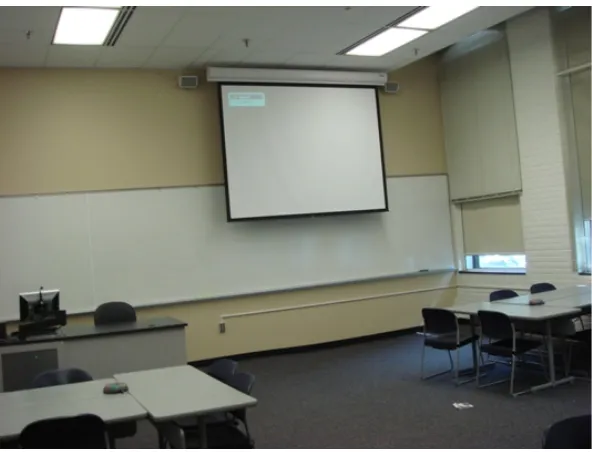
Figure 1.2: Pilot BYOL classroom, view of classroom front. ... 6
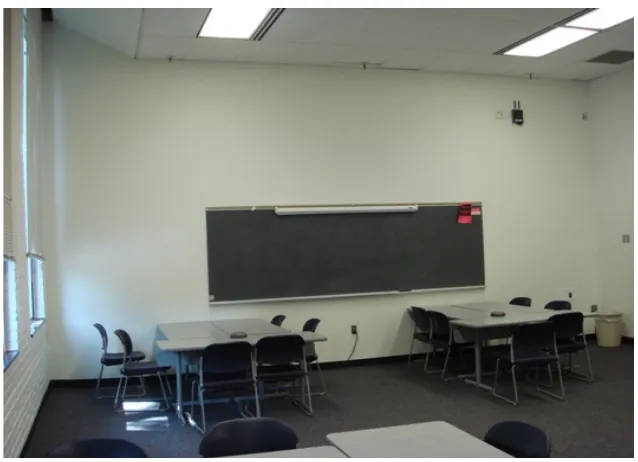
Figure 1.3: Pilot BYOL classroom, view of back... 7
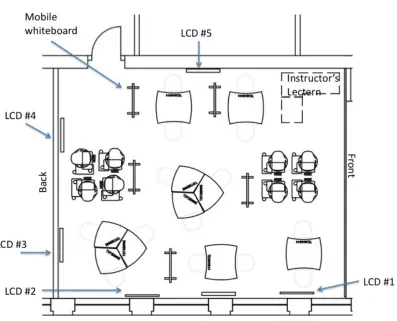
Figure 2.1: Diagram of the flexible classroom layout redesigned with mobile furnishings... 54
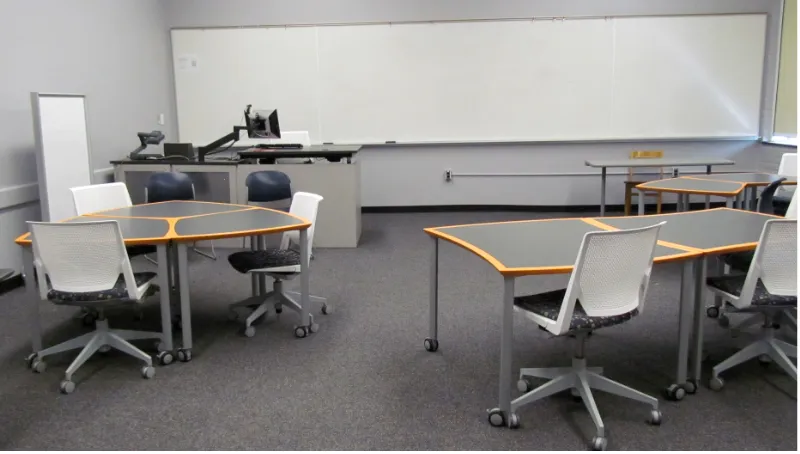
Figure 2.2: Photo of flexible classroom, view from front... 55
Figure 2.3: Photo of flexible classroom, view from back... 55
Figure 3.1: Typical layout with mobile furnishings situated around the perimeter of the room and near LCD screens. ... 72
Figure 3.2: Instructor “checking in” with Alison, Deirdre, and Meredith... 79
Figure 3.3: Mobile whiteboards used for recording ideas and as a partition... 89
Figure 3.4: Student mobile whiteboard presentation ... 90
Figure 3.5: Boardroom-style layout arranged by the previous instructor, before the instructor invited students to move furnishings. ... 94
Figure 4.1 Meredith’s seating position on the day her usual spot was taken by Tyler... 121
Figure 4.2 Configuration on the day I took photos... 125
Figure 4.3 Classroom arranged for photos, view from entrance... 126
Figure 4.4 Classroom arranged for photos, view from back... 126
Figure 4.5 Configuration after Carrie and Brad moved the furnishings to their usual spots.127 Figure 4.6. Laura’s preferred layout of the flexible classroom, with no furnishings at the front of the room or near the instructor’s lectern... 159
Figure 4.7. Matt’s preferred layout of the flexible classroom, with no tables or chairs placed near the instructor’s lectern... 160
CHAPTER 1: INTRODUCTION AND REVIEW OF LITERATURE
Room 12 in Winston Hall was in the basement: a narrow, windowless classroom with dim fluorescent lighting and cramped rows of creaking, oak tablet-arm chairs. I was a first-year writing instructor new to this college, and as I stood in the doorway of Winston 12, I took a mental inventory of other classrooms I had taught in over the years at different institutions. There was the room that was equipped with a 1970s-era overhead projector and heavy, immovable floor-to-ceiling drapes that covered all the windows, blocking any
As I stood in the doorway considering the shortcomings of the classrooms in my years of teaching, Winston 12 seemed like a significant downgrade. According to university records, the space seated 30 students, which felt like an enormous number given the small square footage of the room. In order to accommodate 30 seats, the heavy, tablet-arm chairs were arranged end-to-end in cramped rows from the front of the room to the back wall. Our first-year writing classes were capped at 22 seats, and even with this smaller class size the room was still restrictive, as we struggled to maneuver around extra seating in a room that was already compact. No space was available around the periphery of the room or between the desks, and the aisles were so tight that my students had to file in movie theater-style, bumping into each other and stepping on backpacks and other personal effects. My students and I resorted to unpacking the room of any unused desks and lining them up in the hallway so that we would have more room to move the seats into clusters for our peer workshops and other collaborative assignments.
after my class was a sweat-inducing workout, as I pushed it as fast and as safely as possible back to the office so it could be used by other instructors. While I appreciated having access to this equipment, I found that much of my lesson planning had to be done well in advance to account for the days I would check out the technology cart (which required a reservation); as a result, this advanced planning requirement began to supersede the organic pace of the class and the needs of my students. Modifying my lessons on the fly to accommodate the more immediate needs of the class and address questions I had not anticipated was often difficult without access to a networked computer, where texts such as online articles, websites, and videos have become a critical resource for my own pedagogy. Having consistent access to a networked computer helps me relate mainstream online media to academic rhetorical
situations to students, and as a result, those teachable moments increase.
While I still asked students to work in groups to do peer review with their classmates on draft papers, I found myself assigning fewer active learning, group activities (i.e.
To my delight, the following semester “the cart” was permanently installed in room 12, which gave me daily access to a networked, laptop computer, DVD and VHS player, and document camera, which increased the flexibility I had in designing class activities and lessons. Yet the narrow space of the room and the height of the equipment on the cart made it difficult for students to see the front projector and chalkboard, and also obscured my view of them. Even having access to the digital technologies that I found so critical to my own teaching could not overshadow the cramped, dim quarters. I daydreamed of a classroom that would combine access to digital technology with more square footage and better sightlines, one that would give me greater flexibility to incorporate more active learning and group activities into my teaching, and would facilitate more collaboration and engagement with my students - one that would encourage a community within the space itself.
As an instructor new to the university, I quickly learned that room 12 was infamous – the classroom pariah in our program. When learning of my room assignment, other
do different kinds of activities involving various furniture configurations, de-center the classroom by getting out into the space among students, or switch gears to adapt to the needs of the class, frequently struggled against the space itself. Our experiences seemed to align with the ideas of learning space scholar Peter Jamieson (2008), who noted:
in order to adopt alternative practices, teachers and students have to overcome the original design intentions that underpin the classroom setting. In doing this, the experience and the outcome may be compromised as a result, possibly reducing the likelihood of further attempts to work in new ways and improve the student learning experience (p. 23).
When our department put out the call for volunteers to teach in a pilot networked room designed for students who owned their own laptop computers, I volunteered without hesitation just to avoid being assigned to room 12 the next year. The pilot room was much larger, equipped with an instructor’s lectern (which included a computer, projector, DVD player, and document camera), and had newer furniture arranged into pod configurations for group seating. The pods, each seating six students, provided ample space for student
Figure 1.3: Pilot BYOL classroom, view of back.
Having access to this technology on a daily basis, combined with students bringing their own computers, gave our class greater flexibility and freedom. Students were able to access research databases and digital texts as the need would arise, share their work electronically, and move about the space with ease, laptops in tow.
the tables also forced some students to sit with their backs to the front of the classroom or to other students who sat at different pods. My teaching experiences in this room were a vast improvement over those I had in room 12 or any other room I had taught in for that matter. Conversations with other instructors who also taught in this classroom revealed that they, too, felt a sense of freedom due to the resources in the room, which demonstrated that we were even closer to a workable solution to less-than-ideal classrooms in our program. Consistent access to digital technologies for ourselves and for our students was a large piece of the puzzle; yet some instructors believed that more flexibility with the material
affordances in the classroom itself would further enhance the space – more specifically, we wanted furniture that was not tied down and was easy to move. Such flexibility would allow instructors to configure the space to support a variety of activities from whole class to small groups. Due to varying pedagogical styles, no one space can meet the individual needs of every instructor or student. As Jamieson (2008) pointed out, “One-size does not fit all when it comes to creating authentic and appropriate environments for particular learners in specific contexts” (p. 23). However, after talking with other teachers and reflecting on my own experiences, I kept coming back to the same question: Would a classroom with movable furniture allow instructors to customize the layout to suit an active learning pedagogy and engage students more in the writing process?
participatory my students were in their own learning. My own ideological notions about teaching writing – that I taught a process and not a product (Murray, 2003) – shaped the way I chose to use a space; if it did not easily accommodate group work and active learning, I would do my best to “hack” the space (Walls, Schopieray, & DeVoss, 2009) to make it work. As I recognized the impact of learning spaces on my own pedagogy, practice, and psyche, I also started to think more critically about how students felt about the campus spaces where writing and writing instruction occurred.
As a result of their engagement with technology and a need to feel connected (Brown, 2005), the twenty-first century learner’s conception of a learning space is evolving to include any space where she might connect to a network (Hochman & Palmquist, 2009). While learning has the potential to happen anywhere on campus, we must not ignore the physical design of learning spaces as a result of our ability to connect any time and anywhere. Fleming (2008) pointed out that we are “embodied” physical creatures who are “situated and sensitive to proximity” (p. 15). He explained that new technologies have made place even more important in our daily lives, as we seek out physical connections to others that are best achieved in a situated location. In other words, place matters.
The design of learning spaces on higher education campuses has received increased attention in recent years, particularly in the design of libraries and STEM classrooms (Beichner et al., 1999; Dori & Belcher, 2005; Foster & Gibbons, 2007; Gaffney, Housley-Gaffney, & Beichner, 2010; Nixon, Tompkins, & Lackie, 2008). However, little research exists on how the design of learning spaces influences student writers, particularly students in first-year writing classes. In most colleges and universities, introductory composition
courses are compulsory, which means that most students will take a writing course during the first year. Instructors teaching these courses have access to incoming students in numbers that teachers in many other disciplines do not; as a result, we have the opportunity to help students build a foundation for their writing and to orient them to the rhetorical situations they are likely to face in future classes and professions. Given that our pedagogy in
conversation taking place in other fields and disciplines on how the design of learning spaces impacts student writers, as well as the pedagogy of writing instructors. If we ascribe to scholars’ assertions that environments are critical to the learning processes of writing (Reynolds, 1998, 2004; Weisser & Dobrin, 2001), we must pay attention to researching learning spaces so that we might better understand what learning looks like in those spaces. Research and assessment of learning spaces for Rhetoric and Composition has been
neglected, as there is a dearth of empirical studies in this area. With this in mind, the logical place to start is the space of the composition classroom itself.
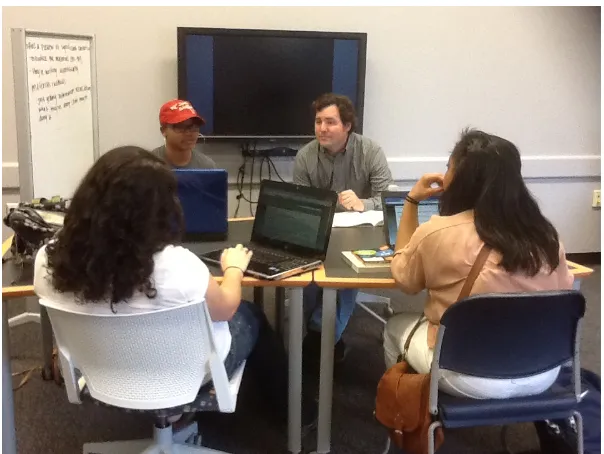
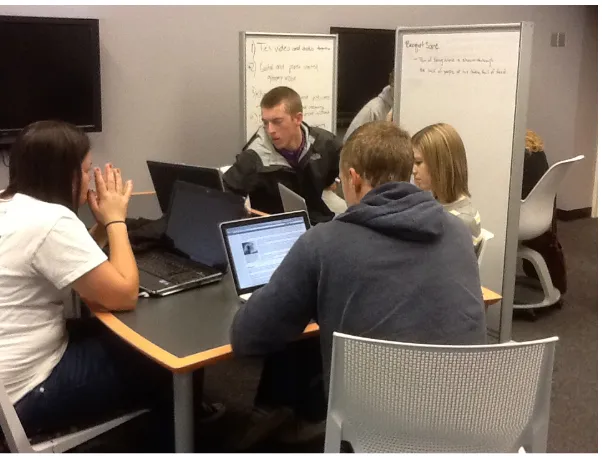
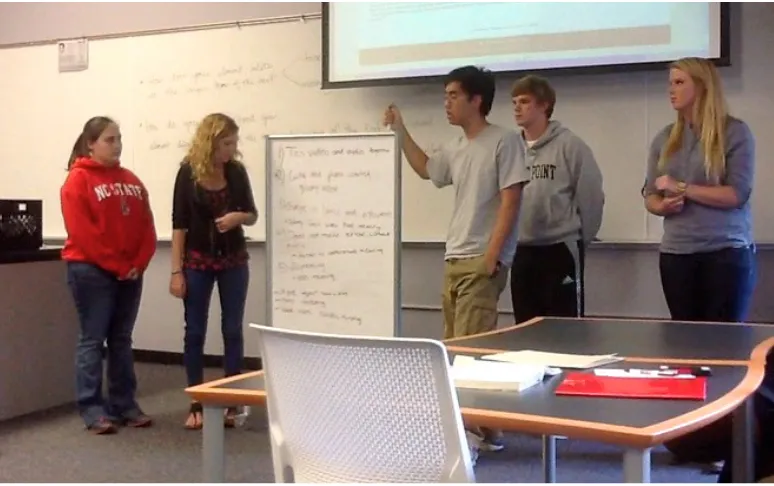
To answer the call for more attention to learning spaces, this dissertation presents the findings from a semester-long study of a “flexible” composition classroom, which was designed to allow instructors more physical and pedagogical flexibility and engage students more in the writing process. In this space, students brought their own laptop computers to a classroom that was outfitted with mobile furnishings, mobile whiteboards, and multiple LCD screens.
Review of Literature
Learning Theory
When the term learning space is mentioned in the context of higher education, common images may be called to mind of the traditional classroom or lecture hall. In these spaces, seats with tablet-arm desks are often neatly aligned (perhaps even bolted to the floor), a chalkboard or whiteboard hangs at the front of the room, and the instructor is situated before the students as the veritable “sage on the stage” (Papert, 1994). In his book The Children’s Machine, computer scientist and educator Seymour Papert (1994) presented a thought experiment that pointed to the outdated design of schools, and by extension,
education in the U.S. He asks us to imagine two groups of people – surgeons and teachers – who travel through time from a hundred years ago to witness the changes in the professions. The surgeons would be “bewildered” by the advancements made in their field and would likely not recognize the tools being used and the procedures being performed on a patient. The teachers, he wrote:
would respond very differently to a modern elementary school classroom. They might
be puzzled by a few strange objects. They might notice that some standard techniques
had changed - and would likely disagree among themselves about whether the
changes they saw were for the better of the worse - but they would fully see the point
of most of what was being attempted and could quite easily take over the class. (pp.
1-2)
traditional spaces speaks to objectivist pedagogical models that position the instructor, and by extension the institute itself, in an all-knowing position of power, and the students as empty vessels waiting to be filled. However, in recent years, the concept of a learning space in higher education is starting to evolve with paradigm shifts that are happening in both economies and pedagogies.
Changes in our economy and the values associated with those changes have been reflected in educational models and their associated spaces for many years. As we moved out of the Agrarian Age and into the Industrial Revolution, the focus of the economy went from farms to factories, where the valued skills were those that involved organizing and overseeing workers in mass production settings. With the growth of urbanization, advances in transportation, and an explosion in immigration, education reformers sought to systematize schools and looked to American industry as an ideal. Rury (2012) wrote that manufacturing was considered:
a marvel of rationality, efficacy, and speed. Workers were required to conform to the demands of production, to be prompt, to follow orders, and occasionally solve
away from schools, many educators emulated the industrial system as a model for their new organization. (p. 79)
For the age, the necessary literacy skills were reading, writing, and calculating, and “knowing” was associated with recall and repetition (Brown, 2005). As a result, the educational model matched this economy (Cornell, 2002) with a pattern of “assembly-line learning”; that is, the one-room school house design of the Agrarian era was expanded and repeated with individual classrooms under one roof. The presentation of material was hierarchical – passed down from teacher to students – and the building and room design emphasized efficiency and linear movement, where students migrated from one room to the next to be filled with knowledge (Scott-Webber, 2004, p.31). Thomas and Brown (2011) described this “mechanistic” approach to learning “as a series of steps to be mastered, as if students were being taught how to operate a machine or even in some cases, as if students themselves were being programmed to accomplish tasks” (p. 35). Nair (2011) characterized lecture-style, row-and-column classrooms as “relic[s]…left over from the Industrial
Revolution,” which are “based on the erroneous assumption that efficient delivery of content is the same as effective learning” (para. 4-5).
stage”) model that worked during the Agrarian and Industrial ages has been challenged by research in recent years that sheds light on the social nature of learning, particularly
constructivist theory, which rejects the idea that learning involves the direct transmission of information to a passive recipient. On the contrary, learning is active, contextual, and social, and learners bring varying levels of knowledge and prior experience with them into
educational settings (Brown, 2005; Chism, 2006). King (1993) explained that constructivist learning theory ascribes to the idea that:
knowledge does not come packaged in books, or journals, or computer disks (or professors’ and students’ heads) to be transmitted intact from one to another. Those vessels contain information, not knowledge. Rather, knowledge is a state of
understanding and can only exist in the mind of the individual knower; as such, knowledge must be constructed – or reconstructed – by each individual knower through the process of trying to make sense of new information in terms of what the individual already knows…When students are engaged in actively processing information by reconstructing that information in such new and personally meaningful ways, they are far more likely to remember it and apply it in new situations. (p. 30)
Thomas and Brown (2011) argued that before twenty-first century technologies and communication networks, knowledge was considered static. The design of learning spaces was based on the idea that learning happened in only a few ways, and classroom
However, this is not the case today, as technological advancements demonstrate that knowledge is in a constant state of flux, and learning can happen any time, anywhere (Brown, 2005; Chism, 2006).
Experiential or “active learning” is a key component to constructivist theory, which emphasizes the importance of active engagement and that interaction is necessary for learning to take place (Bonwell & Eison, 1991; Dewey, 1938; Kolb & Fry, 1975). Bonwell and Eison (1991) wrote that active learning is characterized by students doing more than just listening to information; in an active learning environment, students are writing, discussing, practicing higher-order thinking, and they are encouraged to examine their own ideas and attitudes. In short, active learning is anything that “involves students in doing things and thinking about the things they are doing” (p.2).
Social constructivists in Composition Studies believe “individual writers compose not in isolation but as members of communities whose discursive practices constrain the ways they structure meaning” (Nystrand, Greene, & Wiemelt, 1993, p. 289). The primary tenet behind this learning theory is that social interaction and participation, particularly with instructors, peers, and other members of the knowledge community, have a significant impact on learning (Chism, 2006; Lave & Wenger, 1991; Wenger, 1998). A number of scholars (Beichner et al., 2007; Bruffee, 1998; Panitz, 1999) have noted the importance of peer interaction and collaborative learning in higher education. Lave (1991) asserted,
[Collaborative Learning] promotes mastery while passive acceptance of information from an outside expert often promotes a sense of helplessness and reliance on others to grasp concepts. In a typical college classroom that emphasizes lecturing there is little time for reflection and discussion of students’ errors or misconceptions. In the CL paradigm, students are continuously discussing, debating and clarifying their understanding of concepts. (p. 60)
Thomas and Brown (2012) have taken this concept further, asserting that a new learning culture has emerged based on the idea that transmission learning theory is incapable of keeping up with an ever-changing world; that peer-to-peer learning is more innate due to our access to new forms of media; and that “peer-to-peer learning is amplified by emerging technologies that shape the collective nature of participation with those new media” (p. 50, emphasis in original). Similarly, Brown (2005) argued that students of the “Net Generation” have a “symbiotic” relationship with information technology – they are social, connected, and mobile. Information technology has also become a liberator of sorts for teachers, as it “is allowing instructors to finally remove the yoke of expository lecture, freeing them to work with students in more intellectually challenging ways” (Graetz & Goliber, 2002, p. 20).
that in collaborative invention, writers “negotiate a text in conversation with others…who may suggest ideas, who respond to what we are thinking and writing, and without whom composing cannot move forward” (p. 24). Writing, then, “is not merely a process of
classroom have the power of their written expression neutralized” (p. 106). Similarly, Murray (2003) bluntly argued that we motivate a student to go through an active writing process time and again:
First by shutting up. When you are talking he isn’t writing. And you don’t learn a process by talking about it, but by doing it. Next by placing the opportunity for discovery in your student’s hands. When you give him an assignment you tell him what to say and how to say it, and thereby cheat your student of the opportunity to learn the process of discovery we call writing…We have to be quiet, to listen, to respond. We are not the initiator or the motivator; we are the reader, the
recipient…We are coaches, encouragers, developers, creators of environments in which our students can experience the writing process for themselves. (p. 5)
Adopting active learning and collaborative approaches into one’s writing pedagogy gives students the opportunity to construct their own learning.
Bakhtin, “communication takes shape and utterances gain meaning only dynamically through the interaction of conversants” (p. 296); in other words, meaning is constructed through the dialogue and “interaction between users” (p. 300).
The theories discussed above are reflective of and communicated through classroom design. In her book In Sync: Environmental Behavior Research and the Design of Learning Spaces, Lennie Scott-Webber (2004) made the point that “Understanding how knowledge is created facilitates our ability to determine behaviors and how to design for intended
("Built Pedagogy" section, n.p.). In other words, the space itself embodies a particular kind of educational theory or philosophy that ranges between discipline and autonomy:
On the disciplinary side, [spaces] can restrict learning possibilities by not allowing for certain movements of flows. For example, desks bolted to the ground make flexible interpretations of spatial use extremely difficult, and they impose directions for how space should be used. In the middle of the discipline/autonomy spectrum, there are built pedagogies that enable but do not require flexible behaviors: movable partitions and desks illustrate space left open to interpretive use. Finally, on the autonomy end, open classrooms invite and almost demand that individuals appropriate space to their perceived needs. ("Built Pedagogy" section, n.p.)
The concept of built pedagogy and its continuum is also discussed in the literature of educational architecture and design (although it is not called “built pedagogy”). For
example, Scott-Webber (2004) classified the design of educational spaces by archetypes based on desired or intended behaviors, such as Environments for Delivering Knowledge (EDK), Environments for Applying Knowledge (EAK) and Environments for Creating Knowledge (ECK).2 As Chism (2006) noted, a classroom with chairs in rows that face the instructor communicates a transmission pedagogy. This aligns with Scott-Webber’s
archetype of EDK, which states that knowledge comes from only one source; therefore, the design of the space is such that the audience’s attention is directed towards the classroom front. On the other hand, Environments for Creating Knowledge (ECK) must support
2 Additional archetypes include Environments for Communicating Knowledge (ECmK) and
students’ creative processes, where they go through “messy,” iterative stages where the result is “an innovation” (Scott-Webber, 2004, p.58). She argued that these creative spaces must be more fluid and adaptable, allowing individuals to have more control over the physical setting itself. These spaces are frequently characterized by adaptable furnishings that can
accommodate individual (reflection) areas, as well as collaborative spots. Resources in the space (such as digital technologies, white boards, and flipcharts) allow for spontaneous movement and action to help generate creative and critical thinking. The behavioral goal in an ECK is to encourage learners to go through the steps between “knowledge and abstract reality; from an idea to a product” (p. 59), which sounds very much like the process
pedagogy that is practiced and encouraged in the teaching of writing. That is, we ask students to engage in conversations in class, brainstorm and refine their ideas, share their writing about those ideas with others, and revise their work based on peer responses; this iterative process typically results in an original, polished (we hope) piece of writing.
Place Studies in Composition Studies & Human Geography
The scholarly conversations in Composition Studies regarding learning spaces have largely been involved in the discussion of metaphor, as well as the pedagogical approaches that are useful in a variety of learning environments. Scholars in the field have suggested approaches that encourage us to be more mindful of place and space, including a
2009; Gruenewald, 2003; Lauer, 2009; Mauk, 2006; Shepley, 2009). In “Hacking Spaces: Place as Interface,” Walls, Schopieray, and DeVoss (2009) wrote that scholars in computers and writing have focused on issues of space related to software, access, virtual space, and physical design. However, they argued, “Physical space is perhaps one of the most
important, yet often overlooked, issues of interface that we negotiate as writers, researchers, and teachers” (2009, p. 273). Inspired by the point made by Wysocki and Jasken that “the design of software is thus also the design of users” they asserted, “the design of spaces is thus also the design of users – and, importantly, also the design of the uses of particular spaces” (p. 273, emphasis in original).
situating themselves, by locating themselves in a particular space/context” (p. 8). Similarly, Nedra Reynolds (2004) wrote that we should not ignore the physicality and materiality of learning environments, asserting that “places are hugely important to learning processes and to acts of writing because the kinds of spaces we occupy determine, to some extent, the kinds of work we can do or the types of artifacts we can create” (emphasis added, p. 157).
Reynolds (1998) pointed out that the territorial metaphors (such as frontier, city, and cyberspace) that have been historically associated with Rhetoric and Composition are imagined and, as a result, mask the politics of space and place, such as institutional power, gender, race, and cultural inequalities. In other words, such metaphors can be a challenge for students to relate to given the diverse backgrounds from which they come. The consequence, then, is the neglect of “material spaces and actual practices” (Reynolds, 1998, p.14). Tangible space is very much tied to the discursive spaces of instruction, and these areas deserve
critical attention.
colonization” (p. 556). Nagelhout and Blalock (2004) have similar views, as they argued that learning environments are often devalued at the university level; classrooms “situate students in specific physical spaces, constraining or restraining the movement of students and
teachers” ( p. 135).
Nagelhout and Blalock’s ideas about the constraining nature of classroom spaces are addressed by Mirtz (2004) as well, who has discussed the physicality of writing classrooms in terms of furnishings and mobility. She wrote:
The movement and nonmovement of the classroom furniture is as much a function of what the teacher and students believe about classroom behavior, and thus about classroom control, authority, and resistance, as about the furniture itself. Because of that dual dynamic, the movement of classroom furniture can not only support but push the teaching and learning taking place…movement itself causes changes in the perception of authority and in the resistance behavior in both teachers and students. (p. 16)
The mobility (or lack thereof) of furnishings in a classroom space, as well as students’ and teachers’ willingness to move within these spaces are physical manifestations of traditional power relationships in higher education. Murray (1982) acknowledged that simply
When at last I found that I could remain in my seat, sitting at the samelevel as my
students, I listened in a different way, and perhaps they wereable to speak to me in a
different way when I was not looking down at themand they were not looking up at
me. (p. 183)
Mirtz argued that spaces are used to control – that is, instructors establish and uphold their authority with spatial arrangements (sometimes unconsciously) in classrooms. She added that institutions set up a hierarchy of classrooms that denote a hierarchy of courses and faculty, which aligns with Grego and Thompson’s (2007) idea that academia is based on a hierarchy of locations. Mirtz also pointed out that students, as well, position themselves physically in a classroom in order to control the extent to which they engage. Thus, the ability to move within the space is important; movement in a learning space is directly tied to thought, and ignoring this idea “is to ignore movement’s ability to foster new relationships, which can lead to critical thinking” (Mirtz, 2004, p. 21) – and by extension, more thoughtful, productive writing.
transmission of knowledge and reinforces the idea that the instructor is the exclusive holder of information. For writing conversations to take place with ease, both students and teachers must be able to move freely about the room. Ideas about movement in spaces have also been discussed by humanistic and cultural geographers who study the human experience in space and place (Cresswell, 1996; Massey, 1994; Tuan, 1977). Yi-Fu Tuan (1977) wrote that the movement a space allows creates a strong sense of place for people; “ideas develop out of movement” (p. 52), and architectural space “articulates a social order” (p. 116). Massey (1994, 2005) theorized that place is a product of interrelations and is always under
construction; places continue to change by our constant movement through them. A place is “always unfixed, contested, and multiple” and has no singular identity or history (Massey, 1994, p. 5). As a result, places are socially constructed. These ideas align with Mirtz’s argument that, “Learning is movement and change. Movement creates new social relationships in the classroom” (p. 27).
The power relationships expressed regarding movement in places and spaces have also been discussed at length by scholars in Human and Cultural Geography. In her discussion of the concept of power geometry, geographer Doreen Massey (1994) asserted:
Similarly, Cresswell (1996) argued that controlling movement is important to those
concerned with preserving “their own definition of order” (p. 87). When we consider these ideas in terms of classroom space, we recognize that teachers have traditionally controlled students’ movement in the classroom, and “Spatially, the teacher’s pedagogical authority is reinforced by a physically central position in the classroom” (Kent-Drury, 1998, p. 392). Further, the design of the room (which is frequently implemented by departments and persons who do not actually use the space) can limit an instructor’s mobility, which can influence the pedagogical choices he makes, as well as the level of social interaction between students in the class.
Bruffee (1998) pointed out that specific classroom designs are particularly supportive of collaborative learning, such as those outfitted with movable seats and tables. He argued that the traditional computer lab layout (with fixed desktop computers in rows) is an obstacle to dialogue and group work. Similarly, Bemer, Moeller, and Ball (2009) noted that traditional computer labs may limit collaboration, while the material conditions of a “mobile” computer lab (furnished with laptop computers and modular furnishings) can be viewed as
“affordances to collaboration” (p. 140). For example, desktop computers with sizable towers or monitors can create unwanted visual barriers that interfere with students’ sightlines
classroom, which in turn “changes the nature of the authority the teacher exercises” (Bruffee, 1998, p. 69). Other composition scholars have also noted furnishings and equipment can influence social relationships in the classroom (Kent-Drury, 1998; Meeks, 2004).
Furnishings not only have ergonomic concerns, but are also a “maker of power dynamics” (Meeks, 2004, n.p.).
Scholars in computers and writing have also discussed a space’s built pedagogy. For example, Bemer, Moeller, and Ball (2009) argued that the physical layout of a computer lab has the ability to influence “the relationships and work scenarios that take place within them” (p. 141). They added, “As often as we tell students that good writing is collaborative, they will likely believe it more when they see it reinforced in the thoughtful design of the workspaces we have under our control” (p. 141). If this is our pedagogy in writing studies, and if we accept that knowledge construction has changed over time, then our learning spaces should both reflect our pedagogical practice and support the needs of twenty-first century learners.
Learning Spaces
Polytechnic Institution in the early 1990s, which involved a curriculum overhaul of the school’s large enrollment classes where traditional instructor lectures were replaced with an active learning model in a technology-rich environment (Wilson & Jennings, 2000).
The work of Robert Beichner and his colleagues (Beichner et al., 1999; Beichner et al., 2007) is of particular note, as their development and research of the SCALE-UP
Researchers at the Massachusetts Institute of Technology (MIT) have done similar empirical research in their Technology-Enabled Active Learning (TEAL) project, which was adapted from the SCALE-UP model. In the TEAL model, first-year physics students work in a studio environment in teams where they use visualization software to learn introductory concepts. In their study, Dori and Belcher (2005) examined how the learning environment affected students from social, affective, and cognitive perspectives using mixed
methodologies. Similar to the findings of Beichner, Bernold et al. (1999), the researchers concluded that the social interactions between the students in their teams played a key role in how they grasped concepts and built knowledge. Their findings also indicated that students working in the TEAL model made statistically significant improvements in understanding concepts compared to those students taught in a traditional lecture class. The findings from the research of both the SCALE-UP and TEAL initiatives support the social constructionist and collaborative learning models discussed above.
The SCALE-UP model has also been researched from other perspectives outside of learning outcomes, which has shed light on how students respond to a nontraditional learning space and active learning pedagogy. Gaffney, Housley-Gaffney, and Beichner (2010)
examined students’ expectations when working with the reformed pedagogy that is the foundation of SCALE-UP. Gaffney et al. surveyed physics students at three universities regarding their expectations about having class in a SCALE-UP room, which the researchers posited could be a “jarring reality for a college student entering a classroom that is not only physically different, but also promotes participation in ways that are unfamiliar or
expected a lecture-style class that would not require them to share their work or communicate regularly with their peers. Although their expectations were not met, the quantitative results indicate that students responded positively to this different pedagogical model.
While Gaffney, Housley-Gaffney, and Beichner (2010) explored student
expectations, Taylor (2008) examined the effect of the classroom space on the instructor’s pedagogy. She argued that research from this perspective is particularly significant as more campuses adopt studio classrooms. Taylor examined a freshman Astronomy course and a graduate-level Genetics course both taught in a studio classroom. Unlike the fixed
and the other in a traditional lecture room. They found that “despite the professor’s explicit attempts to conduct the same learning activities in both sections, he behaved quite differently in the two classrooms, lecturing significantly more in the traditional room and conducting discussion significantly more in the ALC” ("Space Impacts Instructor and Student Behavior" section, n.p.). The findings from Taylor (2008) and Whiteside, Brooks, and Walker (2010) vary from Hunley and Schaller’s (2009) findings from their study of different classroom layouts and pedagogical practices, where they found that instructors not comfortable with varying their pedagogy were inclined to arrange even the most “innovative spaces so that rooms would have a ‘lecture room’ feel” (p. 30).
The results from several studies on active learning/flexible classrooms also indicated that instructors perceived their relationships with students as more egalitarian (Taylor, 2008) and more equitable (Dittoe, 2002), as well as a change in their role from that of teacher to facilitator or coach (Whiteside, Jorn, Duin, & Fitzgerald, 2009). These studies suggest that power dynamics between the instructor and students can be impacted by the learning space and the kinds of pedagogy practiced within it. Hunley and Schaller (2009) wrote that students in their study reported feeling less responsibility to participate in a traditional
Given the varying results related to instructor perceptions and use represented in these studies, we should consider how writing pedagogies might be encouraged or discouraged based on classroom design, as well as the perceptions of both instructors and students who inhabit these spaces. Additionally, the instructor’s own teaching and learning philosophy, and how deeply rooted he or she is in that philosophy must also be considered when
active learning approach combined with a nontraditional physical environment in STEM disciplines, then social cohesion could also increase in writing classrooms.
While some studies and published articles regarding learning spaces reported favorable results on learning outcomes and student engagement (Beichner et al., 1999; Brooks, 2011; Taylor, 2008; Whiteside et al., 2010), some learning space scholars (Boys, 2011) argued that the field is an area that is under-researched, “worryingly under-theorised” (p. 4), and often grounded in myths that “have become the ‘common sense’ we think with
rather than about (p. 3, emphasis in original). For example, Boys (2011) emphasized that one of these myths is that “formal” and “informal” learning are binaries, which can be
particularly problematic:
the use of the terms ‘formal’ and ‘informal’ learning often ‘jump’ from describing differences between educational sectors inside and beyond the university to describing types of spaces within a university, to, by implication, describing better and worse kinds of education. This problem can be exacerbated when ‘formal’ and ‘informal’ modes of learning are simplistically translated into spatial/representational design metaphors, rather then related through specific, situated learning and teaching practices” (p. 3).
spaces” (p. 3). As a result, more research is needed that interrogates these assumptions and sheds light on the usefulness (or perceived usefulness) of flexible classrooms, especially in Composition Studies, where collaborative, active learning pedagogies are valued and practiced.
Adopting a critical stance involves questioning those “common sense” assumptions and requiring evidence for support. Tom, Voss, and Scheetz (2008) noted that many of the published reports on learning spaces contain positive “assertions of effectiveness rather than evidence” (p. 46). In discussing future research, Taylor (2008) encouraged us to think more critically about the elements in learning spaces that are the most important for teaching and learning. To answer this call, greater specificity with our targets, such as focusing on specific types of furnishings, technologies, or disciplinary activities may also reveal more about the relationship between space and learning. For example, Taylor (2008) mentioned that a small percentage of students in her study reported that the studio classroom made them uncomfortable due to the changing layout of the room. She also reported that one student in the study was bothered that there was no traditional front in the room and that the space was not set up for lecture. In a pilot study at the University of Minnesota, a hearing-impaired student who read lips reported that following the instructor’s comments and class discussion in a studio classroom was a challenge (Whiteside et al., 2009). In addition, prior classroom experiences inform students’ expectations which have the potential to affect their
furnishings “does not automatically mean that students will feel empowered or that equipment will be moved…it depends on the conventions and assumptions – the ordinary social and spatial practices – that participants bring to a space, the activity and the context” (p. 129-130). These experiences and social practices could be influenced by a number of variables, including differences in age, race, gender, ability, class, and/or culture, not only for students, but also for instructors. Exploring student perceptions of learning spaces may allow us to better understand students who learn differently.
Studying a Flexible Composition Classroom
The scholarship coming from Rhetoric and Composition regarding physical
most detractors do to support cases against them” (p. 11-12, emphasis in original). Reynolds (1998) argued for a specific focus on place in Composition Studies, where she called for a shift from the study of identity to asking questions about boundaries, movement,
“locatedness, surveillance, and sense of place” (p. 138).
Scholars studying learning spaces have recognized the lack of research in this emerging area (Boys, 2011; Temple, 2008), and have called for an increase in the sharing of knowledge, conversation across the disciplines, “and more rigorous research into the
appropriate conceptual frameworks and methodologies for analyzing and improving learning spaces” (Boddington & Boys, 2011, p. xii). Boys (2011), who argued that space and
This dissertation is a response to the call for more empirical research of learning spaces and the growing need for systematic study of classrooms designed for writing
instruction. Through an ethnographic study of a “flexible” first-year composition classroom, one that is technology-rich and equipped with mobile furnishings and displays, I will explore both instructor and student behaviors and perceptions in the space and will address the following research questions:
RQ1: How does a composition instructor utilize the furnishings, space, and technology in a flexible classroom?
RQ2: How does the instructor perceive the furnishings, space, and technology in a flexible classroom?
RQ3: How do composition students utilize furnishings, space, and technology in a flexible classroom?
RQ4: How do students perceive furnishings, space, and technology in a flexible classroom?
mobile whiteboards as additional examples, as these material affordances have the potential to increase both the flexibility of instructors with their teaching, and assist students with their learning. Theorists in Human Geography and Phenomenology (Cresswell, 1996; Massey, 1994, 2005; Seamon, 2000; Tuan, 1977) have made varying distinctions between the terms “place” and “space,” and these distinctions are the subject of ongoing, scholarly debate. While exploring the difference between these terms (as well as the problematic binaries that are often set up between them) is an important area of research, making a complex distinction between “place” and “space” is beyond the scope of this study. For the purpose of this
CHAPTER 2: METHODS
In order to design a study that most effectively explores the research questions posed in Chapter 1, a brief review of other methods in learning space research design is useful. There is a growing body of literature in the area of learning space design, and the subject has been studied across the disciplines, particularly in Science, Technology, Engineering, and Math (STEM), architecture and design, environmental behaviorism, library sciences, and the scholarship of teaching and learning. Additionally, learning spaces have been studied from a variety of perspectives, such as how a space impacts learning outcomes, student engagement, pedagogy, and student/instructor perception.
Learning Outcomes Model
The only student characteristics considered statistically significant in the two classes were their composite ACT scores, with students in the traditional classroom having a higher score.i Brooks explained that since most individuals in these courses were first-year, first-semester students, composite ACT scores were the “only consistent and standardized measure of students’ academic ability” (p. 722).ii The final course grades were compared to the
composite standardized test scores, and the researchers concluded that students in the ALC (who had lower ACT scores) “learned at a higher rate” than students in the traditional classroom (p. 724). Brooks wrote that the findings from this portion of the study “are the first to demonstrate that controlling for nearly all other factors, physical space alone can improve student learning even beyond students’ abilities as measured by standardized test scores” (p. 725). Such work, he added, surpasses the limitations of studies done by Beichner, et al. (1999), and Dori and Belcher (2005), which “obscured the effects of the physical space by combining redesigns of learning spaces with comprehensive curricular revisions”
(Brooks, 2011, p. 725).
do so is to over-simplify and potentially misunderstand” (p. 129). While Brooks’ study emphasized the impact of the learning space itself, it does not account for other factors that may be too nuanced to control. For example, although the instructor reported teaching the same way, there is no discussion in this publication of how the space might have affected the teaching or how the instructor’s relationship with two different classes might have played a part in his choice of teaching methods. In addition, the use of composite ACT scores also assumes that standardized testing is an accurate predictor of a student’s college performance, a position that continues to be contested (Gilroy, 2007; McDermott, 2008). The study
considered students holistically as a class, which does not account for any individual differences in abilities, race, culture, gender, previous educational experiences, or other variables that could have affected their learning outcomes. Bligh and Pearshouse (2011) commented directly on the methods discussed in Brooks’ 2011 report:
As a piece of research, this work is useful in demonstrating that physical space can
improve learning, yet as a technique for [Learning Space evaluation] this work is problematic both in its construction (we design learning spaces with the
understanding that tutor behaviour, teaching session duration etc. will change) and in its intensiveness of labour…(p. 8)
Brooks (2012) cautioned that we should “be suspicious of over-simplified interpretations of these results that might attribute agency to what is really an inert physical space, thereby suggesting that the space directly caused increased levels of learning” (“Space and Consequences,” Literature Review section, n.p.). Brooks’ 2011 report gives us one lens through which to view a learning space – a lens that focuses on grades and test scores. However, learning environments are highly complex, and qualitative methods can give researchers a deeper understanding of the social, cultural, and environmental factors that shape how teachers and students both use and perceive learning spaces.
An Ethnographic Approach
experiences inform students’ expectations which have the potential to affect their
“satisfaction, motivation, and perhaps even their ability to learn” (p. 2). Learning spaces can be studied from an outcomes perspective; however, student affect and perceptions are also variables that reveal critical information that influence how innovative learning spaces are designed and how instructors teach in them. From the work of Gaffney et al., we see that student perceptions and attitudes can be revealed through quantitative methods; however, an ethnographic approach using interviews and observations can yield researchers more
information-rich data on the relationship between users and the learning space by capturing individual voices. An ethnographic study offers participants an opportunity to unpack their responses, which can lead to further triangulation with quantitative survey data.
Research on the relationship between physical spaces and people “should be entered into free of any ‘a priori’ theory and concepts or predetermined methodological procedures” (Melhuish, 2011a, p.26). Phenomenological geographer David Seamon (2000) would likely agree with Melhuish, as he argued for a “radical empiricism” in the study of the human
could be based on a number of factors including types of learners, types of instructors, the discipline being studied, and institutional culture.
Boys (2011) pointed out that an ethnographic approach “is as much about observing what people do, as about what they say, with ‘embodied’ enactments as well as discursive reflections” (p. 86). Drawing on the work of urban studies scholar and philosopher Jean-Francois Augoyard, Melhuish (Melhuish, 2010) wrote:
Walking, movement, and the associated process of verbally naming, or describing, different elements of the environment, reveals much about the way different
individuals relate to spaces and environments and embodies the social dimension which activates and deconstructs the original formal intentions mapped out on the drawing board. (p. 9)
Similarly, de Certeau (1984) argued that the most effective way to explore the human experience in place is to experience that place for oneself; for example, by walking in a city, subjective and objective experiences are woven together so that we might better understand how humans take ownership of spaces and appropriate them for their own needs. Based on these ideas, a qualitative approach to the study of learning spaces has the potential to reveal complex and nuanced perceptions of the spaces, as well as our own preconceived ideas about how students learn. In turn, the typologies that can potentially be discovered through
that allowed them to triangulate and verify their data; in particular, they noted that photo surveys combined with student interviews helped them see their “students as individuals with different personalities, preferences, and unique environments” (p. 45). Their thoughts on the individual nature of this method supports Boys’ (2011) assertions about the benefits of ethnography, as she wrote that these methods capture the “sophistication of participant responses” versus simple “likes and dislikes” of the physical properties of the space (p. 87).
An Ethnographic Study of a Composition Classroom
classroom. I also paired these observations with personal interviews with the class instructor, teaching assistant, and a sample of the students as a means of triangulating the data obtained from observations. Interviewing users of the space is of particular importance, as Melhuish (2010) wrote, “Different individuals’ experience of embodiment within particular settings, and their perception and response of the same settings may differ considerably, reflecting differences in age, gender, personality, physical characteristics, and cultural and social experience” (p. 7). Combining interviews with observations as “mutually reinforcing
qualitative techniques is a bridge to understanding the fundamental people-oriented nature of qualitative inquiry” (Patton, 2002, p. 27-28). In the same vein, Becker and Geer (1957) argued, “Participant observation makes it possible to check description against fact and, noting discrepancies, become aware of systematic distortions made by the person under study; such distortions are less likely to be discovered by interviewing alone” (p. 139).
Site
The site of this study was a first-year composition classroom at a large, southeastern public university. Student enrollment, including both undergraduates and graduates, is approximately 34,000; 44.2 percent of enrolled students are female, and 16.2 percent are underrepresented minorities ("Student Statistics," 2012).3 The first-year writing course at
this institution, English 101: Academic Writing and Research, is a four-hour, one-semester required course that is taken primarily by incoming freshmen. The class follows a “writing-in-the-disciplines” curriculum, where students are asked to generate texts in a variety of
3 Underrepresented minorities include students who are African-American, Asian, Hispanic,
disciplinary genres so that they might be more prepared for the academic writing they will do past their first year of college. Students may opt to take the program’s introductory course, English 100, if they feel they need additional preparation with college-level writing before enrolling in English 101.iii Taught almost exclusively by non-tenure track faculty and graduate teaching instructors, English 101 classes are capped at 22 students per section.
The objectives for this course focus on learning the rhetorical principles of audience and purpose as they relate to differing forms of “inquiry and writing across academic disciplines” ("First Year Writing Program Faculty Handbook,") as well as the evaluation of print and digital texts, argument development, and the practice of analytical reading
strategies. Of particular note is the program’s emphasis on active learning and the peer review process. Listed first in the program’s faculty handbook under Practicesand Principles of Instruction for first-year courses is the principle that:
Writing instruction is student-centered. Extended lecturing is rare. Instruction is participatory, designed to engage students in active examination of the purposes and critical features of new kinds of writing and to refine and adapt their developing skills for a range of rhetorical purposes. Varied instructional approaches are used to
promote active engagement with writing, including independent work and learning in collaborative groups. ("First Year Writing Program Faculty Handbook,")
and collaborating effectively with other writers throughout the writing process” ("First Year Writing Program Faculty Handbook,", "Learning Outcomes" section). The program’s focus on active learning pedagogies makes the site of a first-year classroom at this institution well suited for studying how instructors and students use and perceive a flexible learning space, as small-group peer workshops are standard pedagogical practice. It stands to reason that if students are routinely participating in activities that involve varied instructional approaches and collaborative learning, then a flexible classroom could support this pedagogy.
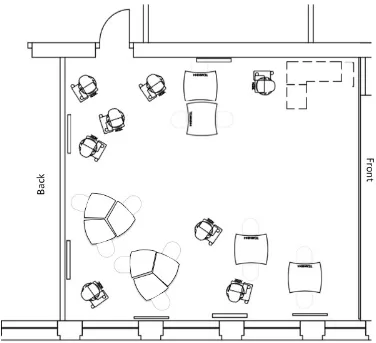
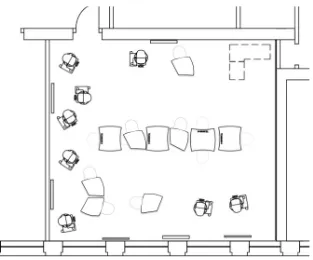
The space that was studied for this dissertation was a newly redesigned BYOL room. This room was the first BYOL room of its kind in the program and was the focus of a pilot study several years prior to this writing (see Chapter 1). Over the course of about three years, the department converted several traditional classrooms (which contained tablet-arm chairs, but no technology for students) to BYOL rooms. This particular space is the largest used for first-year writing courses in the program, measuring 711 square feet; it has 12-foot ceilings and contains four floor-to-ceiling windows. Before the redesign, the room included four fixed group tables, which seated six students each; an instructor’s lectern (approximately 7 feet x 2 feet) which housed a computer, document camera, DVD and VCR players at the classroom front; a ceiling-mounted projector and screen; a large wall-mounted whiteboard at the front of the class; and a wall-mounted chalkboard on the back wall of the classroom (see Figures 1.1-1.3).
screen was outfitted with external video input cables4 that, in addition to displaying content from the instructor’s lectern, allows students to hook up their laptops for displaying and sharing content on their own machines.
In this course, class size is capped at 22 students per section; however, more space was needed for the flexible environment to accommodate different sizes and styles of tables and to allow for the reconfiguration of the furnishings. As a result, it was decided by the design team that the class cap should be dropped from 22 to 20 students in the room to allow for the mobility needed to achieve a variety of layouts and give students adequate square footage for personal space. The new furniture for the room included several different types of tables and chairs, all on casters. Four of the tables, manufactured by Izzy, were square-like with two concave sides and two convex sides (approximately 24”x 60”), which allowed them to fit into multiple configurations; when configured individually, each of these tables
accommodated four student seats. Six smaller, Izzy diamond-shaped tables (measuring 40”x 32”) were also placed in the room; three diamond tables could be put together to create a larger table, which sat three to four students. The chairs paired with these tables were armless office-style chairs with upholstered seats that swiveled 360 degrees. In addition to these tables and chairs, the team also decided to provide self-contained seating in the room with the addition of eight contemporary, tablet-arm chairs (four Node chairs designed by Steelcase and four Learn2 chairs by KI), which included tablet desk surfaces that swivel to the side or back of the chair, and have cup holders and under-seat storage for student gear.
4 VGA, HDMI, and DVI-D input cables with display port or mini DVI adapter for students
Both styles of the tablet-arm chairs swivel 360 degrees. Based on user research I conducted at the institution’s main library, we also opted to include six double-sided, mobile
whiteboards (measuring approximately 2.5 feet by 4 feet) in the roomiv (Figures 2.1-2.3). Since the new furnishings did not arrive until approximately three weeks into the semester (after the course had started), the instructor, TA, and students used the existing fixed pod tables and chairs without casters (Figures 1.1-1.3) during this time.
Figure 2.2: Photo of flexible classroom, view from front
Data Collection and Participants
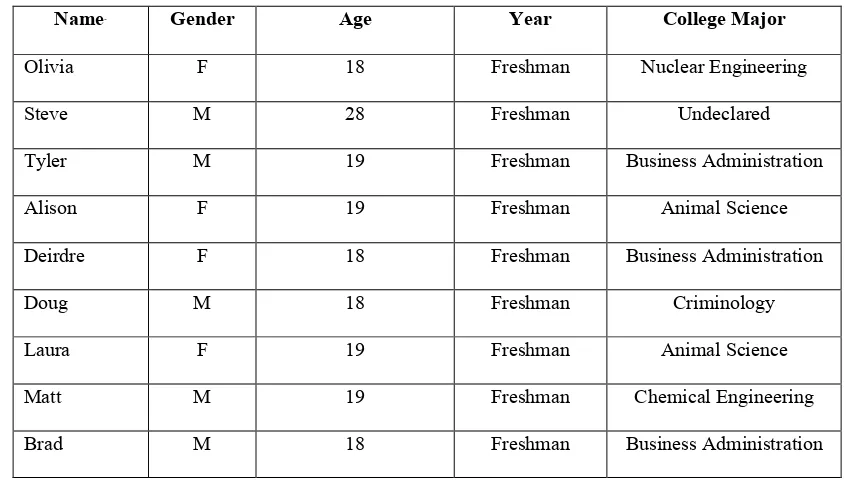
The participants in this study included the instructor, teaching assistant, and students in one section of English 101 during the Spring semester of the 2011-2012 academic year. The class met two times a week in 100-minute periods for fourteen weeks. Since each section of this course follows a set of standardized objectives, and since the course is a general education requirement, I employed typical case sampling to illustrate the most common uses and perceptions of the space in the sample. In other words, the class section was chosen because it was not “in any way atypical, extreme, deviant or intensely unusual” (Patton, 2002, p. 236). One instructor and his teaching assistant were approached and
informed about the study, and they agreed to participate. I chose to include the instructor and teaching assistant in the study – versus examining students alone – based on the ideas
discussed earlier in this chapter about the problems with treating space as a variable that can be isolated. Although her study emphasized the spatial and material characteristics of specific learning spaces, Melhuish (2011b) argued that “spatial and social interactions cannot be artificially separated” and that perceptions are influenced by broader “institutional agendas and through the immediate context of particular learning environments” (p. 90-91). Hunley and Schaller (2006) would likely agree, as they wrote, “Institutions that assess the use of learning spaces on their campuses must also ascertain pedagogical practices that yield
selecting students for individual interviews; this sampling technique “aims at capturing and describing the central themes that cut across a great deal of variation” (Patton, 2002, p. 234-235). Since attitudes, biases, and personal backgrounds of the participants vary, this sampling technique enabled me to document a student’s unique qualities, as well as patterns of use and perceptions that emerged across the subject sample.