
MULTIFINGERED ROBOT HAND ROBOT OPERATES USING TELEOPERATION
MOHD KHAIRUL IKHWAN BIN AHMAD
A thesis submitted in
fulfilment of the requirement for the award of the Master of Electrical Engineering
Faculty of Electrical and Electronic Engineering Universiti Tun Hussein Onn Malaysia
ABSTRACT
ABSTRAK
Tujuan kajian terhadap manipulasi kelincahan perilaku adalah untuk membangunkan perilaku tangkas robot tangan yang mana menghampiri kebolehan dan pemahaman robot tangan dengan cara teleoperasi yang dapat berkomunikasi dalam urusan Master-Slave. Sarung tangan beroperasi sebagai bahagian Master manakala tangan robot pelbagai jari adalah sebagai Slave. Medium komunikasi antara operator dengan tangan robot pelbagai jari adalah melalui Modul Bluetooth SKKCA:KC-21. Modul Bluetooth tanpa wayar dibangunkan menggunakan motor arus terus logam mikro 5V dengan nisbah gear 298:1 yang dikawal menggunakan pemacu motor L293D dan aktuator mengawal pergerakan robot tangan digabungkan bersama kemampuan ketangkasan tangan manusia dengan mikropengawal PIC18F4520. Komponen bahagian Slave lima jari direka dengan 15 darjah kebebasan (DOF) dengan 3 darjah kebebasan (DOF) pada setiap jari. Rekaan jejari mengunakan IGUS 07-16-038-0 enclosed zipper lead E-Chain® Cable Carrier System, yang telah diubahsuai,
TABLE OF CONTENTS
CHAPTER ITEM PAGE
TITLE vii
DECLARATION vii
DEDICATION vii
ACKNOWLEDGEMENT iv
ABSTRACT v
ABSTRAK vi
TABLE OF CONTENTS vii
LIST OF TABLES vii
LIST OF FIGURES vii
LIST OF ABBREVIATIONS AND SYMBOLS vii
LIST OF APPENDICES vii
CHAPTER 1 INTRODUCTION 1
1.1 Project Background 1
1.2 Problem Statements 3
1.3 Project Objectives 3
CHAPTER 2 LITERATURE REVIEW 5
2.1 Robotic Hand Technology Developments
5
2.2 Journals/Article Review 14
2.3 Summary 20
CHAPTER 3 METHODOLOGY 22
3.1 Introduction 22
3.2 System Operation 24
3.3 Flow of the process 26
3.4 Block diagram of the process 27
3.5 Hardware tools/Setup 28
3.5.1 SK40C Circuit Board 28
3.5.1.1 SK40C details description 31
3.5.1.1.1 Hitachi 16x2 LCD Pin connection 33 3.5.1.1.2 Crystal oscillator pin connection 34 3.5.1.1.2 Switch/Button pin connection 34
3.5.1.1.3 UART pin connection 34
3.5.2 MASTER Circuit Pin Assignment 35
3.5.3 SLAVE Circuit Pin Assignment 36
3.5.4 Microcontroller 37
3.5.4.1 Microcontroller Description 37 3.5.4.2 Selection of PIC Microcontroller
Unit (MCU)
38
3.5.5 Universal Asynchronous Synchronous Receive Transmit (USART)
39
3.5.5.2 LOW and HIGH baud 42 3.5.6 Analog to Digital Configuration 45
3.5.7 SKKCA-KC21 Bluetooth Module 48
3.5.7.1 Connection between PIC and BT Module
50
3.5.8 Motor Selections 51
3.5.8.1 Direct Current Motors 52
3.5.8.2 Motor Driver Circuit 53
3.5.9 Bend Sensor 55
3.6 Software Programs/ Tools 56
3.6.1 Software Developments 56
3.6.2 Microchip MPLAB IDE 56
3.6.3 Boot Loader/ ICSP PIC Programmer 58
3.6.4 Microchip PICKit v2.55 59
3.6.5 Circuit Design Using Computer Aided Design (CAD)-PROTEUS7-
60
3.6.6 Hardware Design Using Computer Aided Design
(CAD)-SOLIDWORKS
64
3.6.7 Mechanism: Design 68
3.6.7.1 Modified Igus 69
3.6.8 Multi-fingered robot hand 70
CHAPTER 4 RESULT AND DISCUSSION 81
4.1 Experiment 1 81
4.2 Experiment 2 84
4.3 Experiment 3 87
4.4 Experiment 4 91
4.5 Experiment 5 94
4.6 Experiment 6 98
4.7 Overall System 100
CHAPTER 5 CONCLUSION AND RECOMMENDATION 104
5.1 Conclusions 104
5.2 Recommendation 104
REFERENCES 105
APPENDIX A 107
Definition 107
APPENDIX B 108
Microcontroller 108
APPENDIX C 109
SolidWorks 109
APPENDIX D 111
Ghant Chart 1 and 2 111
APPENDIX E1 & E2 112/113
Master Receive/Slave Transmit 112/113
APPENDIX F1 & F2 114/116
LIST OF TABLES
3.1 Overall Description of Multi-finger Robot 24
3.2 Basic description of SK40C 31
3.3 LCD connection and pin assignment of SK40C 33 3.4 Crystal oscillator pin assignment of SK40C 34
3.5 Switch/Button pin assignment of SK40C 34
3.6 UART pin assignment of SK40C 34
3.7 Pin Assignment in Master Circuit 35
3.8 Pin Assignment in Slave Circuit 36
3.9 Key features of PIC18F4520 39
3.10 Key features of PIC18F4520 (continued) 39
3.11 C18 USART Library 42
3.12 Table of BRGH=0 43
3.13 Table of BRGH=1 43
3.14 Sensor pin assignment 47
3.15 ADCON0 and ADCON1 Register used 47
3.16 Micro-Metal DC geared motor 53
3.17 Pin configuration of motor driver and direction application.
54
3.18 Design of Multi-fingered robot hand 66
3.19 IGUS E-Chain state before and after modification 70
4.1 Bluetooth Channel Analysis 83
4.2 Basic terms used in overall experiments 85
4.3 Configuration of Master-Slave connection by wireless 88 4.4 Analysis of sending data and display at LCD 89 4.5 Analysis of signal strength due to several distance 91
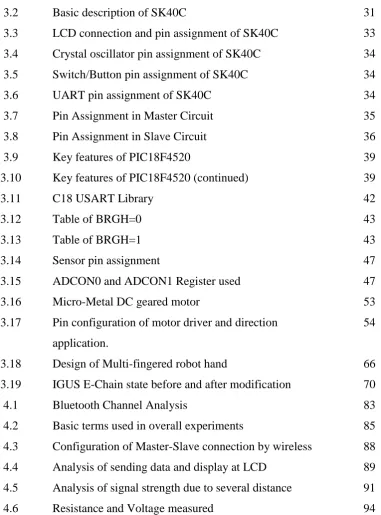
[image:8.595.134.516.240.756.2]4.7 Degree vs Voltage 94
4.8 Degree vs Resitance 95
4.9 ADC data description 96
4.10 ADC calculation by voltage due to degree of bending 96 4.11 Different bending response of Slave display to LCD 97 4.12 Data sampling of ADC in 10 segment with
STOP,UPWARD, and DOWNWARD movement
LIST OF FIGURES
2.1 Hirose Soft Gripper 2.2 Belgrade / USC hand 2.3 Stanford/JPL hand 2.4 Utah / MIT hand 2.5 Barrett hand 2.6 Gifu hand 2.7 DLR/HIT hand 2.8 Shadow hand 2.9 Robonaut hand 2.10 U.Tokyo hand 2.11 SBC hand 2.12 SDM hand 2.13 ACT hand 2.14 iLimb 2.15 Cyber hand
2.16 DEKA (Dean Kamen)
2.17 Developed five-fingered robot hand
2.18 Dual-Arm Robots and its Multi-Fingered Hand 2.19 HIT/DLR hand with Dataglove and CyberGrasp 2.20 The robot hand with tactile and capacitive sensors 2.21 Kinetic Humanoid
2.22 A complete Shifterbot
3.1 Flowchart of project methodology
3.2 Architecture of Multi-fingered Robot Hand 3.3 Overview Flow chart of the System
3.4 Overview block diagram of the Master-Slave system 3.5 40 Pins PIC Start-Up Kit
3.6 SK40C Pins Diagram 3.7 SK40C with label 3.8 LCD (2x 16 characters) 3.9 LCD attached to SK40C
3.10 Functional block of Master Circuit 3.11 Functional block of Slave Circuit
3.12 Microchip PIC18F4520 Microcontroller pin diagram 3.13 Pin assignment of Rx and Tx of PIC18F4520
3.14 USART transmit block diagram 3.15 USART receive block diagram 3.16 USART Configuration
3.17 OpenUSART Library
3.18 C Code for OpenUSART Library
3.19 ADRESH:ADRESL code apply in this project 3.20 ADCON0 Register
3.21 ADCON1 Register 3.22 KC-21 Bluetooth Module 3.23 SKKCA-21 packaging list 3.24 SKKCA-21 parts
3.25 Interfacing between SKKCA-KC21 and PIC18F4520 3.26 Micro-Metal DC geared motor and specifications 3.27 Micro-Metal DC geared motor array with bracket 3.28 L293D Motor Driver Schematic
3.31 MPlab IDE C18 Procedure 3.32 MPlab IDE Program Layout
3.33 UIC00A USB ICSP PIC Programmers 3.34 PICKit2 Programmer Dialog interface
3.35 ISIS Schematic of L293D motor driver simulation 3.36 ISIS Schematic of L293D motor driver circuit 3.37 ISIS Schematic of L293D motor driver circuit with
label
3.38 ARES Layout of L293D motor driver circuit -Double Sided board
3.39 PCB Top and Right 3D preview
3.40 ARES 3D preview of L293D motor driver circuit board with label
3.41 Parts of Multi-fingered robot hand design 3.42 First prototype generation
3.43 Specification of series 07 Igus E-Chain 3.44 Attachment of string at fingers
3.45 Specification of Glove and robot hand (continued) 3.46 Specification of Glove and robot hand
3.47 Master and slave of robot in varies perpective view 3.48 Initial grasping mechanism
3.49 Connection of SKKCA with USB cable 3.50 HyperTerminal Dialog
3.51 Location Information 3.52 COMPort connection 3.53 COMPort setting
3.54 HyperTerminal Workspace
3.55 Initial Mode Setting with CommandMode and BDAddress
3.57 ByPassMode Configuration
4.1 Command Mode and BDAddress of Master and Slave 4.2 Input data “Master” text from Master HyperTerminal
and appeared at Slave HyperTerminal box
4.3 Input data “Slave” text from Slave HyperTerminal and appeared at Master HyperTerminal box
4.4 Flow chart for microcontroller to communicate with Bluetooth Tranceiver
4.5 Segment finger position of data taken by a unit of bend sensor
4.6 10 segment ADC sample by Upward and Downward movement
4.7 Communication data intergration of between Master and Slave
LIST OF ABBREVIATIONS AND SYMBOLS
ADC Analog to Digital Converter
AN Analog pin of PIC
AT Attention Command
BD Bluetooth Device
Bps Bits Per Second
BT Bluetooth
COM Computer
DOF Degree of Freedom
EM Electromagnetic
I Current
ISM Integrated System for Mobile Communications
PC Personal Computer
PIC Programmable/Peripheral Integrated Circuit PWM Pulse Width Modulation
R Resistance
Rx Receive
SPP Serial Port Profile
Tx Transmit
UART Universal Asynchronous Receiver and Transmiter
USART Universal Synchronous-Asynchronous Receiver and Transmiter
V Voltage
° Degree
K Kilo
LIST OF APPENDICES
APPENDIX TITLE PAGE
A Definition 107
B Microcontroller 108
C SolidWorks 109
D
INTRODUCTION
1.1 Project Background
A robot hand is defined as that can mimic the movements of a human hand in operation. Stable grasping and fine manipulation with the multi fingered robot hand are playing an increasingly important role in manufacturing and other applications that require precision and dexterity, see APPENDIX A. Nowadays, most of robotics hand with multi-fingered used as service robot, human friendly robot and personal robotics.
Teleoperation is the controlling of a robot or system over a distance where a human and a robot collaborate to perform tasks and to achieve common goal. The operator is the human controlling entity, whereas the teleoperator refers to the system or robot being controlled. Traditional literature divides tele-operation into two fields: direct teleoperation, with the operator closing all control loops and supervisory control, if the teleoperator (a robot) exhibits some degree of control itself [1].
Tele-presence means that the operator receives sufficient information about the tele-operator and the task environment, displayed in a sufficiently natural way, that the operator feels physically present at a remote site [1]. The feeling of presence plays a crucial role in teleoperation, the better he can accomplish a task.
robot, in order to get the precise and accurate grasp of the robotic hand. It is approximate the versatility and sensitivity of the human hand. Nowadays these are various types of robotics hand and its application. The most important aspects to be considered are their stability, reliability and economically. Main parts are a characteristic of robot hand is not the same as human. All of robot hand mechanism totally related to the cost. Simplifying the robot mechanism with less cost which is similar to human is most challenging task. Therefore, design and fabrication of human hand will be done in this research especially for master-slave with Bluetooth communication network.
1.3 Project Objectives
The main objective of this project is to investigate the characteristic and performance of the development of an artificial robot hands to mimic the human hand on manipulating the objects by introducing the teleoperation system.
1.4 Project Scopes
This project is primarily concerned with the artificial robots hands applied with sensors mimic to the human hands. The scope of this project involves two parts which is hardware and software implementation. In the hardware part, there are two
other sub parts which is categories as hardware design and circuit design.The scopes of this project are:
of robot end effectors grasping problem and robot reprogramming difficulty
c) To control the movement by using glove to integrate with hand and teleoperate by Bluetooth wireless module.
LITERATURE REVIEW
2.1 Robotic Hand Technology Developments
[image:19.595.165.511.501.632.2]Robotics technology nowadays moves forward until now. The technology developments since 70‟s era until now are rapidly changing the robotic hand engineering history. Existing hand now can divided into four types where are; Robot hands of 80‟s, Commercial hands, Research hands and Prosthetics. Development of robot hands early 80‟s start with, Soft gripper in Figure 2.1- Hirose Soft Gripper by Shigeo Hirose from Tokyo Inst. Technology. This development began late 70‟s with 1 DOF when it graduated pulleys at joints and create evenly distributed forces [2].
Figure 2.1: Hirose Soft Gripper [2]
Figure 2.2: Belgrade / USC hand [2]
In the same era, more development and research done for this field to upgrade the prototypes and technologies. For example Stanford/JPL hand in Figure 2.3 prototype with nine DOF designed. Others feature such as four tendons or finger also designed for fingertip manipulation is combined with strain gauge fingertip sensors [2].
Figure 2.3: Stanford/JPL hand [2]
[image:20.595.205.434.402.612.2]Figure 2.4: Utah / MIT hand [2]
Hence the research and development in this disciplined increased and move towards, more of prototypes being commercialize being robotic hand products due to highly demand in industries or another platform also commercialize . Barrett hand from Barrett Technology in Figure 2.5, Incorporated used 4 motors, one motor
per finger for three finger and plus another spread motor for palm. The breakaway technology allows fingers to adapt to object geometry. It‟s also including the optical encoder for position sensing. This hand capability to maintain up to 3.3 lb. fingertip force and the weight of this hands about 1.18 kg. Finally, this commercial hand sells about 30K US Dollar [2].
Figure 2.5: Barrett hand [2]
[image:21.595.157.522.525.678.2]size and its sensor not too sensitive [2].
Figure 2.6: Gifu hand [2]
Another commercial hand is DLR / HIT hand in Figure 2.7 developed by Gerhard Hirzinger, This hand sold by Schunk Company about USD 60K. This hand
larger than human size which is capability to maintain up to 1.5 lb. fingertip force with Hall Effect sensors and the weight of this hand about 2.2 kg. It has 13 controlled DOF (last two joints of each finger are coupled) [2].
Figure 2. 7: DLR/HIT hand [2]
[image:22.595.191.449.503.687.2]highly back driveable embedded with low inertia electric motors. That‟s why; it used by British for research into bomb disposal for example cutting wires [2].
Figure 2.8: Shadow hand [2]
Robonaut hand in Figure 2.9 developed between Robert Ambrose and
Figure 2.9: Robonaut hand [2]
Refer to figure 2.10, Akio Namiki and Masatoshi Ishikawa from University Tokyo produced U.Tokyo hand. This research hand has 14 DOF and mount with joint force sensors. Special features of this hand is accuracy about 1ms cycle time for vision based control of entire system [2].
Figure 2.10: U.Tokyo hand [2]
[image:24.595.114.548.389.494.2]Figure 2.11: SBC hand [2]
Another research hand developed shown in Figure 2.12 is SDM hand by Aaron Dollar and Robert Howe from Harvard. This hand features is single controlled DOF for 8 joints which is have compliant joints and finger pads. Others is its shape deposition manufacturing, robust, light weight and inexpensive. Multi sensors which are embedded sensor such as Hall Effect position and optical contact force sensor [2].
[image:25.595.120.520.504.698.2]human control of hand movements because this hand passive and active dynamics consistent with human hand [2].
Figure 2.13: ACT hand [2]
Figure 2.14: iLimb [2]
[image:27.595.181.462.466.650.2]Figure 2.15: Cyber hand [2]
Figure 2.17: Developed five-fingered robot hand [3]
Figure 2.18: Dual-Arm Robots and its Multi-Fingered Hand [4]
Hiroyuki Nakai, Minori Yamataka, Toru Kuga, Sachiko Kuge, Hiroyuki
Tadano,Hidenobu Nakanishi, Masanobu Furukawa and Hideshi Ohtsuka, presented
Figure 2.19: HIT/DLR hand with Dataglove and CyberGrasp [5]
Refer to figure 2.19, Haiying Hu, Jiawei Li, Zongwu Xie, Bin Wang, Hong Liu and Gerd Hirzinger, describes a master-slave tele-operation system which is
Figure 2.20: The robot hand with tactile and capacitive sensors [6]
Nicolas Gorges, Andreas J. Schmid, Dirk Gager and Heinz Warn discussed
Figure 2.21: Kinetic Humanoid [8]
Tetsuya Mouri, Haruhisa Kawasaki, and Katsuya Umebayashi presented the
Figure 2.22: A complete Shifterbot [9]
2.3 Summary
A great number of robotics technologies nowadays are competing among researches to widen their expertise in developing anthropomorphic dexterous multi-finger robot either wired or by wireless teleoperation. Teleoperation have been done successfully previous researches and industries. Many others model of teleoperation are like U.Tokyo hand, SBC hand, ACT hand, and DEKA hand. Data collected summarize in Figure 2.23 below.
Figure 2.23: Characteristic of previous robot hand.
[image:34.595.115.533.518.607.2]and design.
METHODOLOGY
This chapter describes the methodology employed and considerations taken into account for this project. It begins with the discussion of the project flow, followed by the system design procedure, techniques and tools utilized in this work. A economical, suitable and good material selection plays an important role in determining a successful and perfect project. Here, it is very important to choose the most appropriate components with correct specifications in order to establish well-operated circuits. The idea applies for the hardware construction and software development.
3.1 Introduction
whether it is appropriate with the project and when the idea is fit and suitable, the project can be started to assemble. The circuitry for the hardware is going to be developed. During this time, experimenting is the most important. If there is any incompatibility during interfacing with the hardware, the cause of it must be tracked in order to make sure those circuits are fully functional.
[image:37.595.117.491.484.677.2]For the software part, the PIC microcontroller needs to be program to interface the hardware part in order to control the whole project. After the integration or interfacing of the hardware and the software, test and debug the system and make the verification of the outcome. The most important element in this stage is to integrate the hardware as those circuits may behave differently when they are assembled together. If there is any problem occurred, the system need to be troubleshoot in order to find the causes of the problem. On the contrary, the project can proceed to the final report. The methodology flowchart of the project discussed above shown in Figure 3.1
using SKKCA v1.2 Bluetooth module embedded with KC-11 radio data communication and glove as interface device. After review overall of others literature in fields of robotics and teleoperation, some method to tackle have to be discussed.
Table 3.1: Overall Description of Multi-finger Robot
Table 3.1 above show the overall components needed in this project. Every single part of this project encountered and listed depends on demand and usage in this research. Most overall parts in this project still using updated software and hardware which is suitable in this project.
In order to build up robotic hand in this project it consists of a controller for Master and Slave part, glove embedded with bend sensor at each finger for operator usage, Cytron SKKCA v1.2 Bluetooth wireless Module and 298:1 micro metal DC geared motor. The controller using Microchip PIC18F4520 microcontrollers embedded system and Cytron SK40C circuit boards being developed to integrate with Bluetooth wireless modules. Bluetooth wireless modules as communication platform between two board Master and Slave.
Multi-Fingered Robot Hand
Parameter Description Unit
Master Hand Glove : Bell Type Motorcycle Rider Glove 1
Slave Finger Robot: Igus Energy Cable Chain 1
Controller Microchip PIC18F4520 2
Teleoperation KC-21 Bluetooth Module: SKKCA v1.2 2
Sensor Flex Sensor: Bend Sensing Resistance 10
Hardware 298:1 Micro metal DC geared motor 5
Software MPLab IDE v8.43, Proteus7, SOLIDWORK 2010 x64
-
[1] Hannes Fillipi (2007)“Wireless Teleoperation of Robotics Arms”,Lulea University of Technology: Master Thesis
[2] Hands Overview Slideshow Slide (2010),: Retreived August 23 ,2010; from:http://graphics.cs.cmu.edu/nsp/course/16-899/.
[3] Ikuo Yamano and Takashi Maeno “Five-fingered Robot Hand using Ultrasonic Motors and Elastic Elements” IEEE Proceeding International Conference on Robotics and Automation Barcelona, Spain (2005)
[4] Hiroyuki Nakai, Minori Yamataka, Toru Kuga, Sachiko Kuge, Hiroyuki Tadano, Hidenobu Nakanishi, Masanobu Furukawa & Hideshi Ohtsuka, “Development of Dual-Arm Robot with Multi-Fingered Hands” IEEE International
Symposium on Robot and Human Interactive Communication (RO-MAN06), Hatfield, UK, (2006)
[5] Haiying Hu, Jiawei Li, Zongwu Xie, Bin Wang ,Hong Liu, & Gerd Hirzinger “A Robot Arm/Hand Teleoperation System with Telepresence and Shared Control”
Proceedings of the 2005 IEEE/ASME International Conference on Advanced Intelligent Mechatronics Monterey, California, USA, (2005)
[6] Nicolas Gorges, Andreas J. Schmid, Dirk Gager and Heinz Warn “Grasping and Guiding a Human with a Humanoid Robot” 8th IEEE-RAS International
Conference on Humanoid Robots , Daejeon, Korea, (2008)
[7]O. Kerpa, D. Osswald, S. Yigit, C. Burghart, and H. Woem, "Arm- handcontrol by tactile sensing for human robot co-operation" in Proceedings of Humanoids
(2003)
[8] Tetsuya Mouri, Haruhisa Kawasaki, & Katsuya Umebayashi, Developments of New AnthropomorphicRobot Hand and its Master Slave System” IEEE/RSJ
International Conference on Intelligent Robots and Systems.(2005)
[11] Zulhilmi Bin Sabri , (Tele-Operation Four Omni Wheel Mobile Robot).Thesis Bachelor of Electrical Engineering, Universiti Tun Hussein Onn Malaysia (2011).
[12] Khairul Azlan Ab. Rahman, (Wireless Connection System on Mobile Robot for Air Quality Data Capture: Popo-Bot).Thesis Master of Electrical-Robotics
Engineering, Universiti Tun Hussein Onn Malaysia (2011).
[13] Mohd Khairul Ikhwan Bin Ahmad, (Manual-Autonomous Cooperation Robot using Sonar).Thesis Bachelor of Electrical Engineering, Universiti Tun Hussein
![Figure 2.1: Hirose Soft Gripper [2]](https://thumb-us.123doks.com/thumbv2/123dok_us/8778227.902671/19.595.165.511.501.632/figure-hirose-soft-gripper.webp)
![Figure 2.3: Stanford/JPL hand [2]](https://thumb-us.123doks.com/thumbv2/123dok_us/8778227.902671/20.595.150.487.85.233/figure-stanford-jpl-hand.webp)
![Figure 2.4: Utah / MIT hand [2]](https://thumb-us.123doks.com/thumbv2/123dok_us/8778227.902671/21.595.157.522.525.678/figure-utah-mit-hand.webp)
![Figure 2.6: Gifu hand [2]](https://thumb-us.123doks.com/thumbv2/123dok_us/8778227.902671/22.595.191.449.503.687/figure-gifu-hand.webp)
![Figure 2.8: Shadow hand [2]](https://thumb-us.123doks.com/thumbv2/123dok_us/8778227.902671/23.595.181.458.194.458/figure-shadow-hand.webp)
![Figure 2.9: Robonaut hand [2]](https://thumb-us.123doks.com/thumbv2/123dok_us/8778227.902671/24.595.114.548.389.494/figure-robonaut-hand.webp)
![Figure 2.12: SDM hand [2]](https://thumb-us.123doks.com/thumbv2/123dok_us/8778227.902671/25.595.167.472.84.326/figure-sdm-hand.webp)
![Figure 2.13: ACT hand [2]](https://thumb-us.123doks.com/thumbv2/123dok_us/8778227.902671/26.595.117.535.190.334/figure-act-hand.webp)
![Figure 2.16: DEKA (Dean Kamen) [2]](https://thumb-us.123doks.com/thumbv2/123dok_us/8778227.902671/27.595.181.462.466.650/figure-deka-dean-kamen.webp)
