(19)
1+1
CanadianIntellectual Property Office
An Agency of Industry Canada
(12)
(21) 2 344 755 22 18.04.2001
Office de la Propri,t, Intellectuelle du Canada Un organisme d'industrie Canada
(51) In!. CI. 7:
(11 )
CA 2344755
(40) 26.11.2001(43) 26.11.2001
G01N 3/00, G01N 11/00,
G01 N 19/00
(30) 09/580,024 US 26.05.2000 (72) (71 )
SYMYX TECHNOLOGIES, INC., 3100 Central Expressway, SANTA CLARA, XX (US).
(74)
FREITAG, J. CHRISTOPHER (US). KOSOLOV, OLEG (US).
HAJDUK, DAMIAN (US). CARLSON, ERIC (US). EVERITT, PETER R.
(13)
A1
(54) INSTRUMENT A GRANDE CAPACITE POUR MESURER LES PROPRIETES PHYSIQUES DE MATERIAUX ET MODE D'EMPLOI
(54) INSTRUMENT FOR HIGH THROUGHPUT MEASUREMENT OF MATERIAL PHYSICAL PROPERTIES AND METHOD OF USING SAME
(57)
An apparatus and method for screening combinatorial libraries of materials by measuring the response of individual library members to mechanical perturbations is described. The apparatus generally includes a sample holder for containing the library members, an array of probes for mechanically perturbing individual library members, and an array of sensors for measuring the response of each of the library members to the mechanical perturbations. Library members undergoing screening make up a sample array, and individual library members constitute elements of the sample array that are confined to specific locations on the sample holder. During screening, the apparatus mechanically perturbs individual library members by displacing the sample array (sample holder) and the array of probes. Typically, all of the elements of the sample array are perturbed simultaneously, but the apparatus also can also perturb individual or groups of sample array elements sequentially. The flexible apparatus and method can screen libraries of materials based on many different bulk physical properties, including Young's modulus (flexure, uniaxial extension, biaxial compression, and shear); hardness (indentation), failure (stress and strain at failure, toughness), adhesion (tack, loop tack), and flow (viscosity, meltflow indexing, and rheology), among others.
100
.+.
Office de la Propriete Intellectuelledu Canada Un organisme d'industne Canada
Canadian
I ntellectual Property Office
An agency of Industry Canada
(22) Date de depllUFiling Date: 2001/04/18
(41) Mise
a
la disp. pub.lOpen to Public Insp.: 2001/11/26(30) Priorite/Priority: 2000/05126 (091580,024) US
CA 2344755 A1 2001/11/26
(21)
2 344 755
(12) DEMAN DE DE BREVET CANADIEN
CANADIAN PATENT APPLICATION
(13) A 1
(51) Cllnt7/1ntCL7 G01N 3/00, G01N 19/00, G01N 11/00
(71) Demandeur/Applicant:
SYMYX TECHNOLOGIES, INC, US
(72) Inventeurs/lnventors: KOSOLOV, OLEG, US;
FREITAG, J. CHRISTOPHER, US; CARLSON, ERIC, US;
HAJDUK, DAMIAN, US
(74) Agent: EVERITT, PETER R.
(54) Titre: INSTRUMENT A GRANDE CAPACITE POUR MESURER LES PROPRIETES PHYSIQUES DE MATERIAUX ET MODE D'EMPLOI
(54) Title: INSTRUMENT FOR HIGH THROUGHPUT MEASUREMENT OF MATERIAL PHYSICAL PROPERTIES AND METHOD OF USING SAME
(57) Abrege/Abstract:
An apparatus and method for screening combinatorial libraries of materials by measuring the response of individual library members to mechanical perturbations is described. The apparatus generally includes a sample holder for containing the library
C
ana a
d
·+·
J1ttp:!/opk.gc,ca· Ottawa-Hull KIA OC9' htrp:/!cipo.gc.caOPIC . C!PO 191
CA 2344755 A1 2001/11/26
(21 )
2 344 755
(13) A 1
(57) Abrege(suite)/Abstract(continued):
members, an array of probes for mechanically perturbing individual library members, and an array of sensors for measuring the response of each of the library members to the mechanical perturbations. Library members undergoing screening make up a sample array, and individual library members constitute elements of the sample array that are confined to specific locations on the sample holder. During screening, the apparatus mechanically perturbs individual library members by displacing the sample array (sample holder) and the array of probes Typically, all of the elements of the sample array are perturbed simultaneously, but the apparatus also can also perturb individual or groups of sample array elements sequentially. The flexible apparatus and method can screen libraries of materials based on many different bulk physical properties, including Young's modulus (flexure, uniaxial extension, biaxial compression, and shear); hardness (indentation), failure (stress and strain at failure, toughness), adhesion (tack, loop tack), and flow (viscosity, melt flow indexing, and rheology), among others.
-2-CA 02344755 2001-04-18
ABSTRACT
EMLN: EL493560553US A1tomey Docket No. 65304-0155 Symyx 99-90
An apparatus and method for screening combinatorial libraries of materials by
measuring the response of individual library members to mechanical perturbations is
described. The apparatus generally includes a sample holder fbr containing the library
5 members, an array of probes for mechanically perturbing individual library members, and an
array of sensors for measuring the response of each of the library members to the mechanical
perturbations. Library members undergoing screening make up a sample array, and
individual library members constitute elements of the sample array that are confined to
specific locations on the sample holder. During screening, the apparatus mechanically
10 perturbs individual library members by displacing the sample array (sample holder) and the
array of probes. Typically, all of the elements 6fthe sample array are perturbed
simultaneously, but the apparatus also can also perturb individual or groups of sample array
elements sequentially. The flexible apparatus and method can screen libraries of materials
based on many different bulk physical properties, including Young's modulus (flexure,
15 uniaxial extension, biaxial compression, and shear); hardness (indentation). failure (stress and
strain at failure, toughness), adhesion (tack, loop tack), and flow (viscosity, melt flow
indexing, and rheology), among others .
CA 02344755 2001-04-18
iii
EMLN: EL493560553US Attorney Docket No. 65304-0155
Symyx99-90
INSTRUMENT FOR HIGH THROUGHPUT MEASUREMENT OF MATERIAL
PHYSICAL PROPERTIES AND METHOD OF USING SAME
BACKGROUND
Technical Field
5 The present invention relates to an apparatus and method for determining physical
characteristics of an array of materials as functions of mechanical perturbations and
environmental conditions.
Discussion
Combinatorial chemistry generally refers to methods and materials for creating
10 collections of diverse materials or compounds--commonly known as libraries-and to
techniques and instruments for evaluating or screening libraric~s for desirable properties.
Combinatorial chemistry has revolutionized the process of drug discovery, and has enabled .
researchers to rapidly discover and optimize many other useful materials.
Scientists realized that efficient screening techniques were essential for any successful
15 combinatorial research effort. However, since much of the original work in combinatorial
chemistry focused on biologically active compounds, early researchers typically employed
conventional biological assays as screening methods. Many of these assays were ideally
suited for screening combinatorial libraries because they required little or nQsample
preparation and they could generate useful results using small sample sizes (a mg or less)
20 generally produced in a combinatorial synthesis.
But as researchers began applying combinatorial methods to develop novel
non-biological materials, they increasingly found that conventionall instruments and methods for
characterizing materials were often unsatisfactory for screening. For example, instruments
for characterizing physical properties of materials-viscometers, rheometers, dynamic
25 analyzers, ~d other mechanical property test instruments-ar4~ generally unsuitable for
screening purposes because they were designed to process Olle sample at a time. Although
the throughput of these serial instruments would likely benefit from automation, many
mechanical property test instruments require time-consuming sample preparation, demand
more sample than is ordinarily prepared in a high speed resea.n~h program, and exhibit
30 sluggish environmental control, making such instruments impractical for use as screening
-CA 02344755 2001-04-18
ill
EMLN: EL493560553US Attorney Docket No. 65304-0155 Symyx99-90
tools. Furthellllore, the long time scales associated with mea:mring mechanical properties of polymers, ceramics and other engineered materials often make serial approaches unsuitable as screening methods.
Moreover, competitive pressures are forcing scientists to continually expand their set 5 of screening tools. Many material scientists have embraced combinatorial methodologies
because the techniques allow them to develop novel materials in a fraction of the time as conventional discovery methods. This has allowed researchers to tackle a wider range of material design challenges and to consider a broader set of characteristics that ultimately translates into improved material perfonnance. Of course, new design challenges and
10 additional screening criteria mean that laboratories must acquire more screening tools, which if purchased as separate instruments, might offset cost savings. associated with combinatorial
•
methods.
Thus, there exists a need for versatile instruments and techniques for screening combinatorial libraries, and especially instruments and methods for measuring physical 15 properties of materials. The present invention, at least in part, satisfies that need ..
SUMMARY OF THE INVENTION
The present invention provides an apparatus and m~thCld for screening combinatorial libraries that addresses many of the problems encountered whe:n using conventional
instruments. For example, the disclosed apparatus can measure physical properties of library 20 memberS in parallel and can perfonn tests on small amounts of material, which are easily
prepared by automated liquid and/or solid handling techniques. Compared to conventional instruments, the disclosed apparatus affords faster sample loading and unloading, for
example, through the use of disposable sample arrays and test probes. The present invention
is operationally flexible, and pennits a single instrument to perfonn many different material 25 tests through proper selection of sample array fonnat and test probe design. Rapid serial
measurements may also be perfonned.
Thus, one aspect of the present invention provides and apparatus for measuring bulk physical properties of
an
array of material samples. The apparatus includes a moveable sample holder for containing the array of material samples, and an airay of probes for 30 mechanically perturbing the array of material samples. The apparatus also includes anactuator for translating the moveable sample holder and the array ofmaterial samples. The
-CA 02344755 2001-04-18
II'
EMLN: EL493560553US Attorney Docket No. 65304-0155 Syrnyx 99-90
actuator moves the array of material samples in a direction normal to a plane defined by the ends of the probes so that the material samples contact the probes. In addition, the apparatus includes a sensor for monitoring the response of the materials to mechanical perturbation by theprobes. Typical sensors include force sensors.
5 A second aspect of the present invention provides a system for screening a
combinatorial library of materials by measuring bulk physical properties of the materials. The system includes an array of material samples and probes for mechanically perturbing the samples. Depending on the particular physical property being tested, the array includes materials deposited at predefined regions on flexible or rigid substrates, or materials
10 contained in a group of vessels. The system also includes an actuator for translating the array of material samples in a direction normal to a plane defined by the ends of the probes so the material samples contact the probes. The system also includes a sensor for monitoring the response of the array of material samples to mechanical perturhations by the probes.
A third aspect of the invention provides a method of screening a combinatorial library 15 of materials. The method includes providing an array of material comprising at least five
individual samples, and mechanically perturbing the array of materials by contacting at least two of the material samples with probes simultaneously. In addition, the method includes monitoring responses of the samples during the mechanical perturbations. Depending on type of mechanical perturbatiori, the method can screen libraries of materials based on
20 measurements of many different bulk physical properties. For ,example, the inventive method can measure physical properties related to Young's modulus-including flexure, uniaxial extension, biaxial compression, and shear.
In
addition, the metl~od can measure physical properties related to hardness (indentation), failure (stress and strain at failure, toughness), adhesion (tack, loop tack), and flow (viscosity, melt flow indexing. and rheology), among25 others.
BRIEF DESCRIPTION OF THE DRA WINOS .
Fig. 1 is a perspective view of one embodiment of a parallel dynamic mechanical analyzer (PDMA).
Fig. 2 shows a cross-sectional view of an isolation block module that separates the 30 probe test fixtures and the sample array from the force sensors.
-Iii
CA 02344755 2001-04-18
.:,:.-.
EMLN: EL493560553US
Attorney Docket
No.
65304-0155Symyx99-90
Fig. 3 shows a close-up cross sectional view of the probe shown in Fig. 2. and
illustrates the use of a permanent magnet to attach the test fixture to the threaded cylindrical
core of the composite shaft.
Fig. 4 shows a cross sectional view of two adjacent isolation block modules. and
5 illustrates interactions of probes and force sensors.
Fig. 5 shows a perspective bottom view of one of the se:nsor boards.
. Fig. 6 shows a top view of a portion of one of the sensor boards.
Fig. 7 is a flow chart for the data acquisition control.
Fig. 8 shows a cross-section view of representative components of material sample·
10 array and test fixtures that the PDMA of Fig. 1 can use to screen libraries of materials based
on flexure measurements.
Fig. 9 shows typical results of a flexure measurement fCira single element of a
material sample array.
Fig. 10 shows typical results of flexure measurements made in a "direct" mode.
15 Fig. 11 shows typical results of flexure measurements made in an "oscillatory" mode.
Fig. 12 shows a graph of stiffness versus displacement of the first translation actuator
(coarse stage).
Fig. 13 shows a cross-section view of a portion of a mat,mal sample array and test
fixtures that the PDMA can use to screen libraries of materials based on uniaxial extension or
20 biaxial compression measurements.
Fig. 14 shows a cross-section view of representative components of material sample
array and test fixtures that the PDMA of Fig. 1 can use to screen libraries of materials based
on shear force measurements.
Fig. 15 shows a cross-section view of a portion of a matmial sample array and a
25 representative test fixture that the PDMA of Fig. 1 can use to screen libraries of materials
based on indentation measurements.
Fig. 16 shows force-displacement curves for indentation measurements
afmelt-pressed polystyrene samples mounted on a rigid substrate.
Fig. 17 shows a cross-sectional view of a portion of a material sample array and a
30 representative test fixture that the PDMA of Fig. 1 can use to screen libraries of materials
based on viscosity or viscosity~related measurements.
jli
CA 02344755 2001-04-18
EMLN: EL493560553US Attorney Docket No. 65304-0155
Symyx 99-90
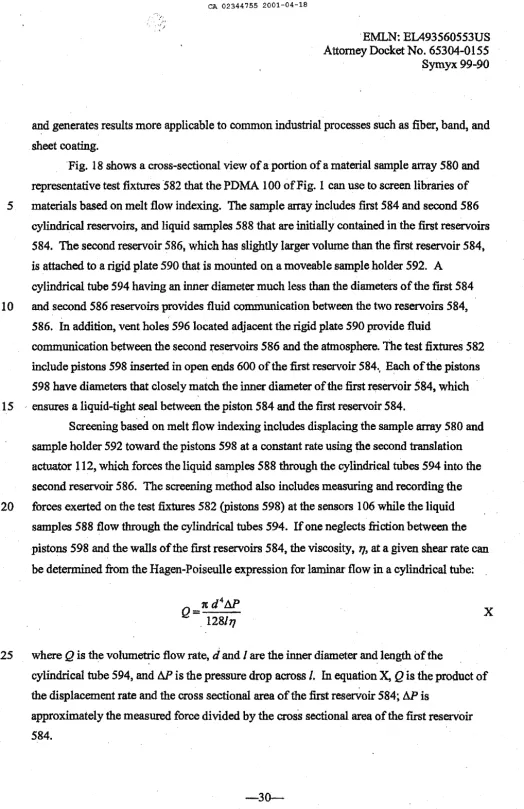
Fig. 18 shows a cross-sectional view of a portion of a material sample array and
representative test fixtures that the PDMA of Fig. 1 can use to screen libraries of materials
based on melt flow indexing.
Fig. 19 shows real and imaginary parts, F'(w) and F"(w), of the force exerted on
test
5 fixtures by fluid motion of a polyisobutylene sample.
Fig. 20 shows F'( (1) for three polyisobutylene standards.
Fig. 21 shows a perspective view of test fixture for an embodiment for adhesive
failure.
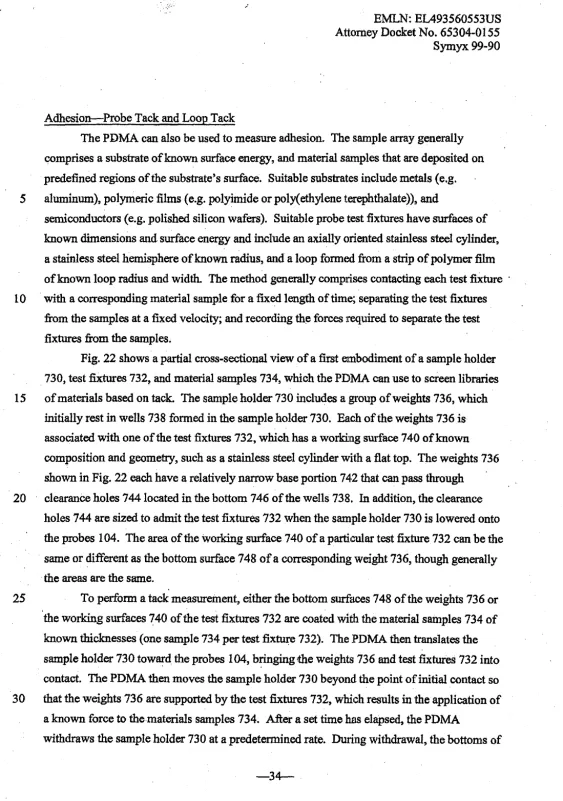
Figs. 22 shows a cross-sectional view of a first embodiment of a sample holder, a
10 material sample array, and test fixtures that the PDMA of Fig. I can use to screen libraries of
materials based on adhesion.
Fig. 23 shows a partial cross-sectional view of a second embodiment of a sample
holder, a material sample array. and test fixtures that the PDMA of Fig. 1 can use to screen
libraries of materials based on adhesion.
15 Fig. 24 shows a representative plot offorce and sample holder displacement versus
time for adhesion measurements using the sample holder, the material sample array and test
fixtures shown in Fig. 22.
Fig. 25 is a graph of the results from the example.
DETAILED DESCRIPTION OF THE PREFERRED EMBODIMENTS
20 Overview of Apparatus and Method
The present invention comprises a system and method for screening combinatorial
libraries of materials by measuring the response of individual library members to mechanical
perturbations. Throughout and in accord with this specification, the number of member of a
combinatorial library of materials may vary depending on the embodiment being practiced.
25 Generally, an array of materials comprises a phirality of materials for which a property
measurement is desired. In some embodiments, an array of materials will comprise 8 or
more, 16 or more, 24 or more or 48 or more materials, each of which is different from the
others. Arrays of materials and methods of making such arrays are described in detail, for
example. U.S. Patent Nos. 6,004,617 and 6,030,917 and U.S. Pat.:mt Application No.
30 09/227,558, filed January 8, 1999, all of which are incorporated herein by reference for all
purposes. The materials in the arrays may be any type of material for which a property
. 5
===~-~---CA 02344755 2001-04-18
EMLN: EL493560553US Attorney Docket No. 65304-0155 Symyx 99-90
measurement is desirable. Examples of the types ofrnaterials that may be in an array include
non-biological polymers (such as polyethylene, polypropylem:, polystyrene,
polymethacrylicacid, polyacrylamide, polymethylmethacrylatc, and the like, including
copolymers or higher order polymers of the same monomers), metals (including all types of
5 alloys), composites, etc. The materials in the array may be in various forms, including
amorphous, crystalline and mixtures thereof. The only limitation on the type of material is
that the material must he capable of being deposited in a manner compatible with the property
testing described herein. Those of skill in the
art
will appreciate from this specification thatmembers of the array may be the same or different materials. Also, standards (such as
10 calibration standards) or blanks may be employed in the array for known scientific purposes.
Relative comparison of the properties of members of the array is a particularly useful
embodiment of this invention.
Throughout this specification, the specific embodiment discussed in detail is a
ninety-six parallel embodiment. This particularly preferred embodime:nt has many detailed features,
15 which may.not be necessary in other embodiments of this inVeIlltion. For example, force
sensors are placed remotely to the samples and are set at certain, spacing. Those of skill in the
art
can easily modify such design parameters for other embodiments, such as by placing thesensors at other spacing, not placing the sensors substantially in a plane and not placing the
samples remote to the sensors (e.g., using an integrated probe aIld sensor). These are design
20 choices for the present invention and describe other embodiments of the invention.
Those of skill in the
art
will also appreciate that lower or higher throughput may servethe needs of a particular application of this invention. Thus, 8 or more, 16 or more, 24 or
more or 48 or more test probes in parallel are within the scope of this invention. These
probes may all be in the same test fixture or in multiple test fixtures. Also. different types of
25 probes described herein may be in a single test fixture. In terms ofthroughput~ a single
material (e.g., a sample) may have up to ten different properties measured simultaneously. In
~'
addition, up to 96 materials may have one or more properties measured simultaneously in 10
minutes or less, preferably 5 minutes or less and even more preferably in 1 minute or less. In
some embodiments, throughput of 30 seconds or less or even 10 :seconds or less may be
30 accomplished for an array of the sizes discussed herein, e.g., up t~) 96 materials in the array.
Generally, the samples are associated with specific1ocations or regions of the sample
CA 02344755 2001-04-18
EMLN: EL493560553US Attorney Docket No. 65304-0155
Symyx99-90
contained by the sample holder, placed on the specific locations of the' sample holder or fixed
to the sample holder (e.g., if the sample holder is replaceable) or otherwise specifically
located. The method of knowing the location of an individual sample is not critical to this
invention and is described herein based on the samples being contained in the sample holder
5 for illustration purposes only. Also generally, preferred embodiments of attachment means
are described for various parts (such as clamping, threading, magnetic coupling, springs, etc.),
but those of skill in the art will appreciate that this is simply a matter of design choice and the
invention herein is not limited to the specific embodiments des,cribed in detail.
As used in this disclosure, the term ''mechanical perturl)ations" generally refers to
1 0 controlled straining andlor shearing of a library member. The actual displacement of the
,
material may be small (for example, about thirty ~ or less). The system generally includes
a sample holder for containing or securing the library members, one or more probes for
mechanically perturbing individual library members, and one or more sensors for measuring
the response of each oftbe library members to the mechanical perturbations. Library
15 members undergoing screening make up a sample array, and individual library members
constitUte elements of the sample array that are confined to spedfic locations on the sample
holdet. Although the system can screen libraries of varying size, a most preferred
embodiment is a library comprising an eight-by-twelve rectangular array of material sampies
in which, similar to a standard ninety-six well microtiter plate, the centers of adjacent array
20 elements are spaced nine--mm apart.
During screening, the probes mechanically interact with the elements of the sample
array. In some ,embodiments the probes have about the same lateral spacing as the elements
of the sample array so that there is a one-to-one correspondence between individual probes
and sample array elements.
In
addition, since the sample array and the ends bfthe probes25 also define two generally planar surfaces, the system can perturb all of the sample array
elements simultaneously by displacing the sample array (sample holder) and/or the probes in
a direction normal to the two surfaces. If adapted to perturb all of the elements
simultaneously, the system may include a rectilinear translation stage tbat is attached
to
thesample holder or, the probes. In other embodiments, the system may perturb individual or
30 groups of sample array elements.
In
these embodiments, the system may include atranslation mechanism capable of three-dimensional motion, which is attached to a single
probe, to a group of probes, or to the sample holder.
7
---CA 02344755 2001-04-18
·EMLN: EL493560553US
Attorney Docket No. 65304-01 SS
Symyx99-90
Since the bulk physical properties of materials can depend strongly on environmental
conditions-temperature, pressure, ambient gas composition (including humidity), electric
and magnetic field strength, and so on-the screening system may include a control system
for regulating environmental conditions. Useful control systems include an environmental
S chamber that encloses the sample holder, the sample array, and the probes. As discussed
below, the system may locate the sensors outside of the environmental chamber if their
perfonnance is strongly influenced by any of the environmental control variables, such as
temperature.
The system uses software running on a generaI-purpose~ computer to control the
10 mechanical perturbations and to acquire and record the response of the saniple array elements
to the mechanical perturbations. Computer software also regulates conditions in the
environmental chamber, if present. As discussed below, one or more data acquisition boards,
which are under the direction of the software,
link
the computer to the peripheral controlelements, sensors. and so on.
15 The versatile system can screen libraries of materials bused on many different bulk
physical properties. For example, the system can meaSure phy:;ical properties related to
Young's modulus-including flexure. uniaxial extension, biaxial compression, and shear. In
addition, the system can measure physical properties related to hardness (indentation), failure
(stress and strain at failure, toughness), adhesion (tack, loop tac:k), and flow (viscosity, melt
20 flow indexing, and rheology), among others. As described below, the system can choose
from among many screening criteria or physical properties by selecting the proper sample
array format and probe design.
Parallel Dynamic Mechanical Analyzer (PDMA)
Fig. 1 shows a prospective view of a parallel dynamic mechanical analyzer (PDMA)
2S 100 that can be used to screen a library of materials by measurillg responses of the materials
to mechanical perturbations. The PDMA 100 includes a sample holder 102 for containing or
securing the library members, probes 104 for perturbing individual library members, and
sensors 106 (e.g., force sensors) for measuring the response of eiach of the library members to
the mechanical perturbations. The library members comprise a sample array (not shown) in
30 which individual library members constitute elements of the satnple array that are confined to
specific locations 108 on the sample holder 102. The particular sample holder 102 shown in
Fig. 1 contains a sample array comprised of an eight-by-twelve rectangular array of material
-CA 02344755 2001-04-18
il!
EMLN: EL493560S53US Attorney Docket No. 65304-0155 Symyx 99-90
samples located on nine-rom centers. But in general, the PDMA can analyze sample arrays
having two or more elements, and preferably, at least eight elements to ensure adequate
screening throughput. The PDMA 100 generally has as many probes 104 as desired, for
example there may be as many as there are samples in the array, although for clarity, Fig. 1
5 shows only two probes 104. In the embodiment shown in Fig. I, each of the probes 104 has
about the same lateral spacing as the elements of the sample array so that one probe 104 is
associated with one sample array element. Alternatively, the P'DMA may employ fewer
probes 104 than sample array elements, so that a probe or group of probes perturbs multiple
sample array elements. Alternatively, there may be more prohes than samples.
10 The PDMA 100 includes first 110 and second 112 tran:dation actuators for displacing
the sample array in a direction normal 114 to surfaces containhlg the sample array and the
ends of the probes 104. The first translation actuator 110, whicm is attached to the sample
holder 102 viaa housing 116 that surrounds the second translation actuator 112, provides
relatively coarse displacement of the sample holder 102. A usc~ful first translation actuator
15 110 includes a motorized translation stage available from POLYTEC PI under the trade name
M-126 Translation Stage, which has a translation range of twenty-five mm and a resolution of,
0.1 ).Lm. The second translation actuator 112, which is attached directly to the sample holder 102, provides relatively fine displacement of the sample holder 102. A useful second
translation actuator 112 includes a preloaded piezoelectric stack available from Polytec PI
20 under the trade name P-753 LISA Linear PZT Stage Actuator. which has a translation range
of 30 ).Lm and can provide an 100-N pushing force and a 20-N pulling force; Other
embodiments for these parts will be within the scope of those of skill in the art. The PDMA
100 typically controls the first 110 and second 112 translation actuators using a DC motor
controller and an amplifier/position servo controller, respectively, which are linked to a
25 general-purpose computer (not shown). In an alternative embodiment, the first 110
translation actuator is mounted on an x-y translation stage (not shown), which allows
movement of the sample holder 102 in a direction about parallel to the surfaces containing the
sample array and the ends of the probes 104. This latter embodiment is useful when the
sample holder 102 must be moved laterally to align clifferent groups of sample array elements
30 with the probes 104 during screening-i.e., when the PDMA employs fewer probes 104 than
sample array elements and the probes 104 are stationary.
-CA 02344755 2001-04-18
ill
EMLN: EL493560553US . Attorney Docket No. 65304-0155 Symyx99-90
Each of the probes 104 includes a test fixture 118 that contacts one of the sensors 106
through a solid or composite shaft 120 shown in phantom in Fig. 1. Each shaft 120 passes
through an aperture 122 in an isolation block module 124 that separates the probe test fixture
118 from the sensor 106. For clarity, Fig. 1 shows only two isolation block modules 124,
5 although this embodiment of the PDMA 100 ordinarily includes twelve such modules
124-one isolation block module 124 for each row of eight probes 104. Alternatively, the PDMA
may include a single isolation block for separating the probe tlest fixtures 118 from the sensors 106. For reliable measurements, each test fixture 118 should contact its associated
sample array element in a specific location 108 on the sample holder 102. This requires a
10 mechanism for locating the composite shaft 120 along a line extending from the center 126 of
a particular sensor 106, nonnal to the surface of the sample an:ay. Although conventional
linear bearings can be used to align the composite shaft 120, fiiction between the linear
bearings and the shaft 120 limits the displacement resolution at low force levels. In addition,
the PDMA can also use air bearings, but the size and expense iQf air bearings often make them
15 impractical for use with a PDMA employing relatively large numbers of probes 104.
Fig. 2, which illustrates the use of two flexure strips 150 to align the probes 104 with
the sample array elements, shows a cross-sectional view of one of the isolation block modules
124 as seen through a cutting plane containing centerlines of the apertures 122 shown in Fig.
1. The flexure strips 150 are sandwiched between generally planar surfaces of upper 152 and
20 intennediate 154 segments of the isolation block module 124 fLIld between generally planar
surfaces of the intermediate 154 and lower 156 segments of thle isolation module 124. The
two flexure strips 150 shown in Fig. 2 comprise relatively thin (from about 101 Jlm to about
102 Jlm) rectangular membranes having spacoo-apart holes that are substantially aligned with each composite shaft 120 within the apertures 122 of the isolation block modules 124.
25 As shown in Fig. 2, the composite shaft 120 is comprised of a rigid, substantially
cyliltdrical core 158 and a thermally insulating outer sheathing having upper 160,
intennediate 162, and lower 164 sections that are threaded onto the core 158. When installed
in the apertures 122, the abutting ends of the upper 160 and intermediate 162 sections of the . sheathing and the intermediate 162 and lower 164 sections' of the sheathing lie in planes
30 . containing the two flexure strips 150. Since the diameters of the core 158 and the holes in the
flexure strips 150 are about the same, the periphery of the holes are clamped between the
abutting ends of the upper 160, intermediate 162, and lower sec~tions of the sheathing. The
-10-CA 02344755 2001-04-18
!I!
EMLN: EU93560553US Attorney Docket No. 65304-0155
Symyx99-90
flexure strips 150 are also clamped along the periphery of each aperture 122, adjacent
interfaces between the upper 152, intermediate 154, and lower segments 156 of the isolation
block module 124. The resulting clamped membranes or diaphragms 166, which span
annular gaps 168 between the shafts 120 and the isolating blm::k module 124, support and .
5 align the probes 104.
The geometry of the diaphragms 166 makes each of the flexure strips 150 compliant
for displacements normal 114 to the surface supporting or containing the sample array, but
mechanically stiff for displacements parallel to the sample array. The use of two flexure
strips 150 also makes each combination of shaft 120 and diaphragms 166 mechanically stiff
10 for angular displacements away from the direction normal 114 to the surface of the sample
array. Moreover, thro].lghproper selection of materials and dimensions, the flexure strips 150
exhibit effective spring constants--for displacements normal ll14 to the sample
array-substantially less than effective constants of the sensors 106. ][n this way, the flexure strips
150 ordinarily exert minimal influence on the measured respOIlses to mechanical
15 perturbations, unless they are used to "pre-load" the sensors 106 as discussed below. Useful
materials for the flexure strips 150 include metallic and polymeric films. For example, one
particularly useful flexure strip material is polyimide film, which is available from DuPont
under the trade name KAPTON in thickness ranging from about from about thirteen pm to
about one hundred twenty five /-lm. Other useful flexure materials include stainless steel foil,
20 diaphrams (in general) and corrugated bronze, for example, the: flexure may be mechanically
machined staiIJless steel. Since the effective spring constants cfthe diaphragms 166 and
typical sensors 106 are temperature--dependent, the use of thermally insulating sheathing 160,
162,164 on the shafts 120 permits the PDMA 100 to vary the temperature of the sample
arrays without significantly affecting the measured response .
. 25 As noted previously, an important feature of the PDMA 100 is its ability to screen
materials based on many different physical properties. One way the PDMA 100 achieves this
flexibility is by using interchangeable (and, in some embodiments, disposable) test fixtures
118 with an appropriate sample array format and sample holder 102. For example, one
. screening method may employ a probe 104 equipped with a ball-tip indenter test fixture 118
30 to rank the hardness of material samples arrayed on a rigid plate. Another screening method
may employ a probe 104 fitted with a flat-tip stylus test fixture 118 to deduce Young's
modulus from flexure measurements of material samples arrayed on a flexible substrate. In
-11-CA 02344755 2001-04-18
II!
EMLN: EL493560553US Attorney Docket No. 65304-0155 Symyx99-90
either case, the PDMA 100 should provide a mechanism for removing and securely attaching
the test fixtures 118. Suitable attachment mechanisms include mechanical and
electromagnetic couplings, as well as devices employing permanent magnets.
Fig. 3 shows a close-up cross sectional view of the probe 104 shown in Fig. 2, and
5 illustrates the use of
a
permanent magnet 190 to attach the test :fixture 118 to the threaded core 158 of the composite shaft 120. As shown in Fig. 3, the pmbe 104 includes a base 192having first 194 and second ends 196 that adjoin, respectively, the test fixture 118 and the
upper section 160 of the thermally insulating outer sheathing. A substantially cylindrical
bore 198 extends partway into the base 192 and is sized and threaded to connect the core 158
10 of the shaft 120 to the second end 196 of the base 192. The test fixture 118 is removably
attached to the first end 194 of the base 192 by magnetic flux originating from the permanent
magnet 190 that is embedded in the base 192 of the probe 104.· A tubular magnetic shield
200, which typically has a lower modulus than either the probe base 192 or the permanent
magnet 190, is wedged into an annular space between the probE: base 192 and the permanent
15 magnet 190. The shield 200, which helps secure the magnet 190 within the probe base 192,
extends outward from the first end 194 of the base 192 and mates with a substantially circular
slot 202 formed in the test fixture 104. The slot 202 is sized to receive the tubular shield 200
with minimal interference, and the shield 200 has a tapered end 204 that helps guide it into
the slot 202 during attachment of the test fixture 118 to the probe base 192. In the
20 embodiment shown in Fig. 3, the test fixture 118 and the probe base 192 include flanges 206,
. 208 for accessing them during removal or attachment.
As can be seen in Fig. 3, the test fixture 118, the base 192, and the shield 200 enclose
the permanent magnet 190, which helps minimize stray magnetiic
flux
that may influence sample measurements of nearby probes 104. Generally, the probe 104 components are made25 from materials having a high magnetic permeability-a relative permeability substantially
greater than unity-to ensure effective magnetic shielding. Suitable materials include nickel~
iron alloys containing copper, molybdenum, or chromium. and mixtures thereof. A particularly useful shielding material is available under the tradtl name HI-PERM 49 from
Carpenter Technology. Other useful shielding materials include: cold-rolled steel that has
30 been chrome-plated to resist corrosion. The permanent magnet 190 should be fabricated from
a material that provides sufficient force to secure the t~st fixture 118 to the probe base 192
-12-CA 02344755 2001-04-18
EMLN: EL493560553US Attorney Docket No. 65304-0155 Symyx 99-90
during screening. Useful permanent magnets 190 include samarium cobalt magnets, ceramic ferrite magnets, aluminum-nickel-cobalt magnets, and neodymium-iron-boron magnets.
Fig. 4 illustrates interactions of the probes 104, the sensors 106, and a material sample array 230. Fig. 4 shows a cross sectional view of the PDMA 100 of Fig. 1 taken from a plane 5 that cuts through the two isolation block modules 124 and contains centerlines of two
adjacent probes 104. During screening, each test fixture 118 portion of the probes 104 interacts with one element of the sample 230 array, which is positioned at a predefined location 108 of the sample holder 102. Movement of the sample holder 102 in a direction· nonnall14 to the surface of the sample array 230 results in forces that are transmitte~ to the 10 sensors 106 via each probe test fixture 118, probe base 192, and composite shaft 120. Each
composite shaft 120, which includes a rigid core 158 and thermally insulating outer sheathing 160, 162, 164, contacts the force sensor 106 directly or indire,ctly as discussed below.
The relatively large footprint of each sensor 106 shown in Fig. 4 makes it
impracticable to mount all of the sensors 106 on a single plane while maintaining nine-mm 15 spacing between centers 126 of adjacent sensors 106. Of course, using sensors with smaller
footprints may allow for mounting in a single plane. To prov:ide nine-nun spacing, the PDMA 100 employs sensors 106 mounted on first 232 and second 234 sensor boards, which rest on upper 236 and lower 238 rigid support plates, respectively. Both support plates 236, 238 include holes that extend from top surfaces 240, 242 of the plates 236,238
to
bottom 20 surfaces 244, 246 of the plates 236, 238 .. The holes are arrayed on nine-mm centers, and areeither threaded or non-threaded. Non-threaded holes 248 in the upper support plate 236 are substantially aligned with through-holes 250 in the first sensor board 232. The non-threaded holes 248 and the through-holes 250 are sized to provide pass.ageways for rods 252 that transmit forces from the composite shafts 120 to sensors 106 mounted on the second (lower) 2S sensor board 234. The PDMA 100 thus maintains the most preferred spacing by distributing
the force sensors 106 among'two boards 232, 234-thereby doubling the surface area available .to mount the force sensors 106--and by arranging the sensors 106 so their centers 126 are nine-mm apart when projected on the surface of the smnple array 230. When using smaller sensors or when rune-nun spacing is not desired, the PUMA may dispense with one 30 oithe two sensor boards. As many sensor boards as is practical for a particular embodiment
may be employed.
-CA 02344755 2001-04-18
EMLN: EL493560553US Attorney Docket No. 65304-0155 Symyx99-90
Fig. 5 and Fig. 6 provide further details of the sensors 106 and sensor boards 232,
234, showing respectively, a bottom perspective view and a close-up top view of the first
sensor board 232. The first 232 and second 234 sensor boards generally comprise a flexible
multi-layer dielectric sheet 270 (e.g., polyimide) and a rigid fr'ame 272 (e.g., FR-4 epoxy
5 glass laminate) that is bonded to the periphery of the dielectri() sheet 272. Electrically
conductive traces 274 are embedded on top 276 or bottom surfaces 278 of the dielectric sheet
270, or between layers of the flexible sheet 270, forming a double-sided flex circuit 280.
,Each sensor 106 is mounted on the top surface 276 of the flex circuit 280, and leads'282 on '
the sensors 106 are connected to conductive traces 274 that teJminate at a standard card edge
10 connector 284., Conventional ribbon cables can be used to link the card-edge connector 284
with peripheral recording and control devices (not shown) allowing communication between
the sensors 106 and the peripheral devices.
As shown in Fig. 5, the first 232 and second 234 sensor boards include generally
planar stiffeners 286 (e.g., FR-4 epoxy glass laminates) attached to the bottom surface 278 of
15 the sensor boards 232,234 directly below the sensors 106. Ea.ch of the stiffeners 286 has
about the same footprint as the sensors 106, and helps distribute loads on, and prevent
bending of, the sensors 106. Note however, the stiffeners 286 do not prevent movement of
the sensors 106 in a direction normal 114 to the sample array 230 since the sensors 106 are
mounted on the flexible dielectric sheet 270. Although other cmlbodiments can use
rigidly-20 mounted sensors, the PDMA 100 shown in Fig. 1 uses sensors 106 mounted on the flex
circuit 280 to allow ''pre-loading'' of the sensors 106 as discussed below. Pre-loading may of
course be performed by other methods, which those of skill in the art will appreciate from a
review of this specification;
The first sensor board 232 shown in Fig. 6 also includ~~sa plurality of through-holes
25 250 that are located between the sensors 106. Following assembly of the PDMA 100, the
'through-holes 250 are substantially aligned with unthreaded holes 248 in the upper support
plate 236 (Fig. 4). As noted above, the unthreaded holes 248 in the upper support plate 236
provide passageways for rods 252 that transmit forces from th~~ composite shafts 120 to
sensors 106 mounted on the second (lower) sensor board 234. Thus, the centers 126 of the
30 sensors 106 and the through-holes 250 of the first sensor board 232 are arrayed on nine-mm
centers.
-14-CA 02344755 2001-04-18
,I,
EMLN: EL493560553US Attorney Docket No. 65304-0155 Symyx 99-90
Referring to Fig. 4-6, threaded holes 288, 290 in the upper 236 and lower 238 support
plates are sized to receive set-screws 292 that the PDMA 100 can use to pre-load each of the
sensors 106 mounted on either the first 232 or second 234 sensor boards. As noted in the
description of Fig. 2, the flexure strips 150 used to align the probes 104, are compliant for
5 displacements normal 114 to the plane containing the sample array 230, but are mechanically
stiff for displacements in other directions. Moreover, the effec.tive spring constants of the
flexure strips 150 are substantially less than the spring constants of the sensors 106 so that the
flexure strips 150 ordinarily exert minimal influence on the measured responses of the sample
array 230 to mechanical perturbations. However, since the sensors 106 are mounted on the
10 flex circuit 280, the set-screw!! 292 can apply a force to the stiffeners 286 and the sensors 106
in absence of a force on the test fixture 118. A force recorded by the sensors 106 will
therefore be the sum of the force acting on the test fixture 118 and the pre-load force. Since
many commercial force sensors can detect only tensile or compressive loads, pre-loading
permits a compressive sensor to detect small tensile loads, or Ii tensile sensor to record small
15 compressive loads, expanding the capabilities of the PDMA 100. Note that the lower support
plate 238 and the second sensor board 234 both include unthrc~aded holes 294, 296 that
provide access to the set-screws 292 in the upper support platc~ 236.
The PDMA 100 can use a wide variety of sensors 106, including miniature force
sensors. Most of the sensors 106 incorporate signal conditioning electronics. Suitable force
20 sensors include piezoresistive micromachined silicon strain gauges that form a leg of a
conventional Wheatstone bridge circuit. A useful low-compliant force sensor is available
from Honeywell under the trade name FSL05N2C. The Honeywell force sensor has a 500-g
range (4.9 N full scale), which is suitable for most of the scref:ning methods described in
subsequent sections. As noted earlier, many force sensors can. tolerate only modest variation
25 in temperature without compromising accuracy and p~ecision. The use of a composite shaft
120 having an insulating sheathing 160, 162, 164 (Fig. 2) permits substantial temperature
variation of the sample array 230 without significantly affecting the temperature and accuracy
of the sensors 106.
In an alternative embodiment, force sensors are incorporated into the flexure strips
30 150 by placing strain gages on the diaphragms 166 (Fig. 2) .. Strain resulting from the
application of a known force-typically a deadweight load applied to the rigid shaft 120-is
recorded and used to develop a calibration curve for the force :sensor. The principal
-15-CA 02344755 2001-04-18
Iii
·EMLN: EL493560553US Attorney Docket No. 65304-0155 Symyx 99-90
disadvantage of this approach is the extensive signal conditioning requirements associated
with strain gage measurements.
Referring again to Fig. 1 and Fig. 2, the PDMA 100 may include an environmental
chamber (not shown) that encloses the sample holder 102, the probes 104, and ,the upper 152
5 0 r intennediate 154 segments of the isolation block modules 124. The chamber may be filled
with a gas of known composition to study its influence on bulk physical properties of the
sample array 230 elements. Or the chamber may be filled with an inert gas to reduce
oxidation of the sample array 230 elements during screening. Generally, the annular gap 168
between the composite shafts 120 and the cylindrical aperture8 122 is minimized
to
limit the 10 flow of gas out of the isolation block modules 124. In addition, the flexures 150 in theannular gaps 168 restrict gas efflux from the isolation block m.odules 124.
Alternatively, the environmental chamber may comprise a substantially gas-tight
enclosure that surrounds the sample holder 102, the probes 104, the isolation block modules
124, and the sensors 106. The enclosure may be further separated into two
compartments-15 one that encloses the sample holder 102 and the material samples 230, and one that encloses
the sensors 106 and the isolation block modules 124. The lattl;)!' embodiment allows
. blanketing the sample holder 102 and material samples 230 wllth a first gas that is different
than a second gas blanketing the sensors 106. In this way, the PDMA can vary the
environment of the material samples 230 independently of the sensors 106, while maintaining
20 the sensors 106 at conditions different than or the same as the laboratory environment.
The environmental chamber may include devices for rc~gulating and/or monitoring the
temperature of the sample array 230 elements. Useful devices include one or more heating or
cooling elements placed within a gas stream that feeds the environmental chamber containing
the sample array 230. Other useful devices include an array of radiant heaters positioned
25 adjacent to the sample array 230. Alternatively, the PDMA 100 may include resistance
heaters or thennoelectric devices that are attached to the sampJle holder 102, which heat or
cool individual or groups of sample array 230 elements. The PDMA 100 may also include
devices such as thermocouples, thermistors, or resistive thenna! devices (RID) for
monitoring the temperature of individual sample array 230 elements. In some embodiments,
30 the PDMA 100 includes a temperature controller, such as a data acquisition board, for
subjecting the sample array 230 to a desired temperature-time profile. The temperature
controller automatically adjusts the power supplied to the heating and cooling devices in
-16-,-CA 02344755 2001-04-18
'II
EMLN: EL493560S53US Attorney Docket No. 65304-0155 Symyx 99-90
response to signals received from the temperature monitoring devices. Typically, software
running on an external computer communicates and coordinat,es functions of the temperature
controller and the temperature monitoring devices.
PDMA Control and Data ACquisition
5 Fig. 7 shows schematically a system 300 for data acquisition and control of the
PDMA. As noted in the discussion of Fig. 1, the PDMA 100 includes first 110 and second
112 translation actuators for displacing the sample array 230 (Fig. 4) in a direction nonnal
114 to the probes 104. The first translation actuator 110 provides relatively coarse
displacement of the sample holder 102; it positions the elements of the sample array 230 near
10 the probe 104 test fixtures 118, and can be regulated using a DC motor controller (not
shown). The second translation actuator 112 provides relatively fine displacement of the
sample holder 102 and is responsible for carrying out me~hanical perturbations of the sample
array 230 elements.
The second translation actuator 112 shown in Fig. 7 comprises a piezoelectric
15 translation stage. A primary data acquisition board 302 (e.g., National Instruments 6030E),
which is located in an external computer 304, controls the operation of the second translation
actuator 112. The pri.rD.ary board 302 generates a voltage, VI> which is proportional to the
desired displacement of the actuator 112 (and sample holder 102). This voltage is
fed
to apiezoelectric amplifier 306 that monitors the position of the actuator 112 via a capacitive
20 position sensor 308. In response to VI' the piezoelectric amplifiier 306 varies the charge, V2,
which it supplies to the actuator 112 to move the sample holder 102 to its desired position.
The position sensor 308 generates a voltage, ~, which is read by the amplifier 306 and
indicates the actual position of the second translation ~ctuator 112.
As shown in Fig. 7, the primary data acquisition board 302 and the external computer
25 304, respectively, read and record V3• In response
to
the value of V.i' the primary board 302updates VI as necessary and generates a timing pulse, which triggers acquisition of V] from
the position sensor 308, thereby synchronizing signals VI and
Vii'
The acquisition of VJ alsogenerates a second timing 'pulse, Vii' which triggers acquisition ofvoltages Vs.i> V6.f' and V7."
from the sensors 1 06. Secondary data acquisition boards 310 acquire VS.I' V6,i> and V7,J' where
30 subscript ''i'' refers to a particular data line (channel) of the data acquisition board 310. Thus,
measurements of the response of the sample array 230 to mechanical perturbations is
synchronized with the motion of the second translation actuator 112 (and sample holder 102),
-17-CA 02344755 2001-04-18
EMLN: EL493560553US Attorney Docket No. 65304-0155
Symyx99-90
and the measurement of the actuator 112 position. Althoughthe system 300 shown in Fig. 7
uses three secondary data acquisition boards 310 having 32 channels each, the number of
boards 310 will depend on the number of available data chanrlels and sensors 1 06~
Alternatively, the PDMA may use a single data acquisition board to control the actuator 112
5 position and to acquire sensor 106 data, assuming the board h,as a sufficient number of data
channels and output signals.
Software running on the computer 304 coordinates the: activiti.es of the boards 302,
310 and allows the user to specify screening parameters including positions of the first 110
and second 112 translation actuators at any given time, the number of sample array 230
10 elements, and so on. Operation of the data acquisition and cOlltrol system 300 with respect to
specific physical property tests is discussed below.
Screening Methods, Sample Arrays and Holders, Probe TeSt Fixtures
The PDMA 100 of Fig. 1 is designed to screen material sample arrays 230 based on
measurements of many different bulk physical properties. For example, the PDMA 100 ·can
15 measure properties related to Young's modulus, which includc~s flexure, uniaxial extension,
biaxial compression, and shear. The PDMA 100 can also measure physical properties of
material samples 230 related to hardness (indentation), failure (stress and strain at failure,
toughness), adhesion (tack, loop tack), and flow (viscosity, me:1t flow indexing, and
rheology), among others .
. 20 As described in the next sections, the screening criteria or measurement techniques
depend on selection and use of appropriate sample array 230 fbrmat, sample holder 102
configuration, and probe 104 test fixture lIS design. We use different reference numbers to
distinguish between separate embodiments of the sample array 230, sample holder 102,
probes 104 and test fixtures 118. For example. probe 104 test fixtures 118 shown gellerally in
25 Fig. 1 are labeled 322 in Fig. S (flexure); 422 in Fig. 13 (uniaxial and biaxial compression);
462 in Fig. 14 (shear); 402 in Fig. 15 (indentation), 542 in Fig. 17 (viscosity and rheology);
and the like.
Determination of Young's Modulus from Flexure Measurements-"Push-Pill Test"
Fig. 8 shows a cross-section view of representative components of a material sample
30 array 320 and test fixtures 322 that the PDMA 100 can use to screen libraries of materials
based Oll flexure measurements. The sample array 320 generally includes a flexible substrate
-CA 02344755 2001-04-18
,II
EMLN: EL493560553US Attorney Docket No. 65304-0155 Symyx99-90
324 clamped between perforated plates 326, 328 that comprise a sample holder 330 .. One or
both sides of the flexible substrate 324 are coated with material samples 332 at discrete,
predefined regions on the substrate 324. The predefined regions generally correspond to
unclamped portions of the flexible substrate 324, which in Fig. 8, coincide with circular
5 perforations 334 in the plates 326, 328. Each of the test fixtures 322 has a hemispherical end
336 of known radius that contacts the sample array 320 over a surface area that is
substantially less than the unclamped area of the flexible subs1rate 324. Useful substrate 324
materials include polyimide films, which generally range in thickness from about 1 01 ~m to
about 102 J.UU. The material samples 332 have comparable thilckness, and are typically twenty
10 j.lm or so thiclc.
In some cases, clamping may be insufficient to secure the flexible substrate 324
between the perforated plates 326, 328. Thus, in an a1tern:ativc~ embodiment, the flexible
substrate 324 is bonded to one of the perforated plates 326, 328 using a pressure sensitive
adhesive. The adhesive should be less compliant than the flexible substrate 324, and during
15 its application, care should be taken to ensure a uniform bond line adjacent to the circular
perforations 334. Washers or similar shim stock (not shown) C~ be used to define a standoff
between the two perforated plates 326, 328.
Various methods can be used to make the sample arrays 320. For example, a sample
array 320 comprised of polymers can be prepared by depositing known amounts of solid
20 samples 332 at predefined regions on the flexible substrate 324. Following deposition, the
samples 332 and substrate 324 are compressed under melt-flow conditions to create polymer
films of requisite thickness. Alternatively, the polymer sampl(~s 332 can be dissolved in one
or more solvents and deposited at predefmed regions on the fle:xible substrate 324 using
conventiona1liquid handling techniques such as automated pipetting. To prevent liquid
25 samples 332 from spreading beyond their respective predefined regions, the flexible substrate
324 is pretreated-e.g., by selective etching or by silane treatment-to modify the surface
energy of the substrate 324 in or out of the predefined regions. See, for example, co-pending
U.S. Patent Application entitled ''Formation of Combinatorial Arrays of Materials Using
Solution-Based Methodologies," Serial No. 09/156,827, filed Sept. 18, 1998, and co-pending
30 U.S. patent application, "Polymer Libraries on a Substrate, Method for Forming Polymer
Libraries on a Substrate and Characterization Methods With Same," serialo no. 09/567,598,
filed May 10, 2000, all of which is herein incorporated by reference. Upon deposition, the
-19-CA 02344755 2001-04-18
:11
EMLN: EL493560553US Attorney Docket No. 65304-0155 Symyx. 99-90
liquid samples 332 are confined to regions having like surfac~: energies, and fonn solid films following evaporation of the solvent. After brief annealing under vacuum to remove residual solvent, the thickness at the center of each sample 332 can be measured using a variety of known techniques, including optical reflection profilometry and optical interference
5 profilometry. Finally, metallic or organometallic compounds can be directly deposited on the flexible substrate 324 by chemical vapor deposition, physical vapor deposition, or similar techniques.
In some instances, the size and placement of the material samples 332 on the flexible substrate 324 can affect the physical measurements. For example, as shown in Fig. 8, each of 10 the material samples' 332 covers a substantial portion but not all of the substrate 324
delineated by the circular perforations 334 in the sample hold~n' 330 plates 326, 328. -Although films made by solution deposition techniques often have relatively unifonn
thickness near their centers, they exhibit substantial variation away from their centers, which can influence flexural measurements. TO minimize edge effects, material samples 332 made 15 by solution deposition techniques should generally extend beyond the regions defined by the circular perforations 334. In addition, the material samples 332 shown in Fig. 8 are typically deposited on one side of the substrate 324, and generally on the side of the substrate 324 facing away from the test fixtures 332. This helps eliminate forces resulting from adhesion between the test fixtures 322 and the samples 332 and from plastic defonnation of the 20 samples 332 at the contact points between the test fixtures 322 and the sample array 320.
Samples 332 may be located on the side of the flexible substrate 324 facing the test fixture 322 as long as plastic defonnations are unlikely or combined measurements of adhesion and flexural modulus are desired.
Fig. 9 shows
results
of a flexure measurement for a single element of the material 25 sample array 320 shown in Fig. 8. Flexure measurements or "push-pin" tests, generallycomprise translating the sample holder 330 and material sample array 320 in a direction 114.
nonnal to a plane containing the flexible substrate 324, and recording the forceexened on the test fixtures 322
as
a function of the displacement of the array 320 (or second translation actuator 112). An analysis of the resulting force-displacement curve 360 in the absence of a 30 material sample 332 coating yields the elastic modulus, E}, of the substrate 324. Comparisonofforce-displacement curves 362, 360 obtained with and without the coating yields the ratio of the sample 332 elastic modulus, E], to the substrate 324 elastic modulus. As described
-20-CA 02344755 2001-04-18
.- -.
:: .. : ". :~:
:1';
EMLN: EIA93560553US Attorney Docket No. 65304-0155 Symyx99-90
below, the analysis of the force-displacement curves employs well-known analytical and
numerical models for the behavior of a clamped membrane.
Fig. 10 and Fig. 11 show, respectively, results of flexure measurements made in a
"direct" mode or an "oscillatory" mode. In terms of the PDMA components shown in Fig; 8,
,5 the direct mode comprises initially translating the sample holder 330 and material sample
array 320 against the test fixtures 322 at a known rate until thl~ sample 332 reaches a given
maximum deflection or normal 114 displacement. The method includes reversing the
displacement until the sample 332 returns to its original position, and analyzing the resulting
force-displacement curve to characterize the mechanical prop€m:ies of the sample 332. Fig.
10 10 shows representative force-displacement curves 380 for th~~ initial 382 and return 384
displacements of 13.7-JlIU thick polyimide (KAPTON) films \mdergoing strain rates ranging
from 25 ~mls to 250 ~m/s. As expected, the force-displacemcm.t curves 380 are independent
of strain rate.
Like the direct measurements, the oscillatory mode cOmprises translating the sample
15 holder 330 and material sample array 320 against the test fixtures 322 at a known rate until
the sample 332 reaches a given maximum deflection or norrnall14 displacement. However,
fol]owing the initial displacement, the method includes translating the sample holder 330 and
sample array 320 along the deflection direction 114 in an oscillatory motion of known
amplitude and frequency. As described in detail below, the amplitude and initial
20 displacement are typically chosen to ensure that, throughout the entire motion, the sample
332 or substrate 324 deflections remain in a linear deflection regime defined below.
Fig. 11 shows oscillatory force-displacement curves 400, 402 for, respectively, a
50-~m thick polyimide (KAPTON) substrate 324 with and without a 30-J.i:m thick polystyrene
coating (sample 332). The oscillatory technique yields frequency-dependent modUlus values
25 that for some samples 332 relate to characteristic modes of molecular deformation. Thus, the
oscillatory technique is often called "dynamic mechanical spectroscopy" because, it is
analogous to conventional spectroscopic measurements, which identify characteristic
frequencies of electronic transitions. One advantage of the oscillatory technique over the
direct method is that, if the measurements are perfonned in the linear deflection regime, the
30 force-displacement curve is also sinusoidal, exhibiting the samf~ frequency as the test fixture
322 or probe deflection. As a result, the effective bandwidth of the measurement is
comparatively low, and the associated signal-to-noise ratio is comparatively high.
-21-ill
CA 02344755 2001-04-18
EMLN: EL493560553US Attomey Docket No. 65304-0155
Symyx99-90
To measure modulus using the oscillatory method, the sample holder 330 is'ttached
to the second translation actuator 112, and the test fixtures 322 are attached to the probes 104.
The fIrst (coarse) translation actuator 110 positions the sample holder 330 near the probes
104,
but at a sufficient distance so that none of the test fixtures 322 contact the flexible 5 substrate 324 or any elements 332 of the sample array 320. Using the second translationactuator 112, the PDMA 100 makes initial stiffuess measurem~:nts (force per displacement
amplitude) oithe sample array 320 elements 332. Next, the first actuator 110 translates the
sample holder 330 closer to the test fixtures 322 by a predetennined amount-typically,
a
step size of one half of the oscillatory displacement amplitude used in measuring
stiffuess-10 and the PDMA 100 repeats the stifihess measurementS. The PDMA 100 continues this
process until all of the material samples 332 of the array 320 ar4~ in contact with the test
fIxtures 332.
The stiffuess measurements can be understood by reference to Fig. 7 and Fig. 12.
Referring first to Fig. 7, software running on the computer 304 directs the primary data
15 acquisition board 302 to generate a sinusoidally varying output 'Voltage, Vs. The output voltage corresponds to a typical second translation actuator 112 oscillation amplitude of, for
example, five J.l1n, at a fixed frequency (e.g., ten Hz) and for a fixed number of cycles (e.g.,
sixty six). The amplitude of oscillation is chosen so as to produ4::e a reasonably large signal at
the sensors 106 for the samples 332 of interest. The first two wflvefonns are usually
20 discarded to eliminate transients. The remaining data are Fourier transfonned to extract the
actual amplitude of the oscillation of the second translation actuator 112 (or sample holder
330) and the amplitude of the force recorded by the sensors 106 at the drive frequency.
I;>ividing the force amplitUde by the motion amplitude yields the stiffuess (N/m). The raw data for each sensor 106 may also be cross-correlated against the raw data for the actual
25 second translation actuator 112 motion in to extract the relative phase of the two signals.
This phase serves as a measure of the character of the deformation (elastic versus viscous)
and can be used to separate the measured stiffuess into an elastic or storage contribution and a
viscous or loss contribution.
Fig. 12 shows a representative stiffuess-displacement 406 curve measured at a drive
30 frequency often Hz, an oscillation amplitude of 5 lim, and a coarse stage (first translation
actuator 11) displacement step size of2.5 !-tm. The material sample 332 is a thin film ofa
polystyrene-poly(ethene-co-butene)-polystyrene block copolymer, which has been deposited