1
The London School of Economics and Political Science
Rhythms of Information Infrastructure
Cultivation: The Case of e-Mobility in
Berlin
Ayesha Khanna
A thesis submitted for the degree of Doctor of Philosophy
The London School of Economics and Political Science Information Systems and Innovation Group
Department of Management
2
Declaration
I certify that the thesis I have presented for examination for the MPhil/PhD degree of the London School of Economics and Political Science is solely my own work other than where I have clearly indicated that it is the work of others (in which case the extent of any work carried out jointly by me and any other person is clearly identified in it).
The copyright of this thesis rests with the author. Quotation from it is permitted, provided that full acknowledgement is made. This thesis may not be reproduced without the prior written consent of the author.
I warrant that this authorization does not, to the best of my belief, infringe the rights of any third party.
3 This PhD is dedicated to Aba and Ami, my loving parents
Javed and Farida Malik …
4
Abstract
This thesis investigates the importance of temporal rhythms in the study of
information infrastructures (IIs), responding to the call to address an II’s “biography” by focusing on its evolution over time. It enriches understanding of how socially constructed rhythms, a temporal structure under-examined in the II literature,
influence II cultivation. A strategic niche project to develop an e-mobility II in Berlin is used as the case study and reveals the influence of rhythm in disciplining
(constraining) and modeling (motivating) II cultivation. It demonstrates how the intermediary may mediate these influences through the interventions of harmonising, riffing and composing. Based on these interventions, the study develops the concept of facilitated II cultivation, which adds to the emergent literature exploring the tension between planned and emergent infrastructure work. In doing so, the study presents a framework that helps combine short-term implementation concerns (strategic
5
Acknowledgements
I would like to thank my excellent advisor Will Venters for his supervision and encouragement throughout my PhD study at the London School of Economics.
I would like to thank the Information Systems and Management Department for providing an invaluable learning environment of critical thinking, debate and insight, and the stakeholders of the BeMobility project for their time.
My thanks also to my parents-in-law Manjula and Sushil Khanna and my extended family for their support.
6
Index
Declaration ... 2
Abstract ... 4
Acknowledgements ... 5
Index ... 6
Table of Contents ... 6
List of Figures ... 10
List of Tables ... 11
Table of Contents
1. Introduction ... 121.1. Motivation and Scope ... 14
1.2. Research Project ... 18
1.2.1. Theoretical Framework and Research Questions ... 18
1.2.2. Case Study ... 20
1.2.3. Contributions ... 22
1.3. Thesis Outline ... 24
2. Literature Review ... 29
2.1 Introduction ... 29
2.2 Conceptualising Information Infrastructures (IIs) ... 30
2.2.1 The Challenge of Complexity in IIs ... 31
2.2.2 The Weight and Cultivation of the Installed Base ... 33
2.2.3 Technology Traps and Lock-in ... 35
2.2.4 The Bootstrapping Problem ... 37
2.2.5 Tensions Between Managed and Bottom-up Cultivation ... 39
2.3 CSCW Research on IIs ... 43
2.3.1 II Cultivation as Emergent and Highly Contextualised ... 44
2.3.2 The Role of People ... 47
2.3.2 The Role of Materiality ... 48
2.3.3 The Role of Temporality ... 50
2.3.4 The Role of the Urban Context ... 54
2.4 Strategic Niche Management Research on Urban IIs ... 56
2.4.1 The Concept of the Strategic Niche ... 57
7
2.5 Summary and Research Questions ... 65
3. Theoretical Framework ... 68
3.1 Introduction ... 68
3.2 Sociomaterial Perspective ... 69
3.3 Trichordal Temporal Approach to Digital Coordination ... 72
3.3.1 The Mangle of Practice ... 73
3.3.2 The Trichordal View of Temporality ... 76
3.3.4 A Rhythmic View of Time ... 79
3.4 Exploring Temporal Rhythms ... 80
3.4.1: Perceptions of Time ... 81
3.4.2: Conceptualising Rhythms ... 84
3.5. An Enriched Theoretical framework ... 91
3.5.1 Relationship between Conceptual Concepts ... 93
3.5.2 Refined Research Questions ... 94
3.6 Conclusion ... 95
4.Methodology ... 96
4.1 Introduction ... 96
4.2 Epistemology: Social Constructionism ... 97
4.3 Theoretical Perspective ... 99
4.3.1 Interpretivism ... 99
4.3.2 The Processual Approach ... 100
4.4 Methodology: Case Study Research ... 103
4.4.1 The Case Study Approach ... 103
4.4.2 Choice of Case Study ... 104
4.4.3 Research Design ... 108
4.5 Methods: Data Collection ... 113
4.5 Methods: Data Analysis ... 118
4.5.1 Thematic Analysis ... 118
4.5.2 Narrative Strategy and Temporal Bracketing ... 120
4.5.3 Generalising and Theory-Building ... 124
4.6. Summary ... 125
5. Case Study ... 127
5.1 Introduction ... 127
5.2 Energiewende ... 128
5.2.1 A National Platform for e-Mobility ... 128
5.2.2 Electric Mobility Showcases ... 130
5.3 BeMobility for Berlin ... 132
8
5.3.1 Stakeholders ... 136
5.3.3 Project Coordination ... 139
5.3.4 Headquarters: EUREF Campus ... 141
5.3.5 II Components Under Investigation ... 141
5.4 BeMobility 1.0 ... 144
5.4.1 BeMobility Suite ... 145
5.4.2 Smart Mobility Card ... 147
5.4.3 User Research ... 148
5.4.4 Phase 1 Results ... 149
5.5 BeMobility 2.0 ... 150
5.5.1 BeMobility Suite ... 153
5.5.2 Smart Mobility Card ... 155
5.5.3 Micro Smart Grid ... 156
5.5.4 User Research ... 159
5.5.6 Phase 2 Results ... 161
5.6 Summary ... 162
6. Analysis – Part 1 ... 164
The Influence of Rhythms on the Mangle of Practice ... 164
6.1 Introduction ... 164
6.2 Key Process Events ... 166
6.3 II Tuning in the Present ... 169
6.3.1 Riffing: A Pattern of Accommodation ... 179
6.4 The Trichordal Tensions of Past and Future Rhythms ... 179
6.4.1 Disciplining Influences of Past Rhythms ... 181
6.4.2 Modeling Influences of Future Rhythms ... 189
6.5 Summary ... 197
7. Analysis – Part 2 ... 199
Rhythm Interactions and II Trajectories ... 199
7.1 Introduction ... 199
7.2 Rhythm Interactions ... 199
7.2.1 Eurhythmia ... 199
7.2.2 Arrhythmia ... 200
7.3 Intermediary and II Trajectories ... 202
7.3.1 A Changing Biographical Rhythm ... 202
7.3.2 Interventions in II Cultivation ... 208
7.4 Summary ... 220
9
8.1 Introduction ... 223
8.2 Findings and Generalisation ... 224
8.2.1 Answering the Research Questions ... 225
8.2.2 The Generalisation Process ... 230
8.3 Using Rhythm in II Research ... 232
8.4 The Concept of Facilitated II Cultivation ... 233
8.5 The Rhythmic Intermediary ... 237
8.6 Temporal Rhythms in Sociomaterial Studies ... 241
8.7 Summary ... 243
9. Conclusion ... 245
9.1. Introduction ... 245
9.2. Theoretical Implications ... 249
9.3 Methodological Implications ... 251
9.4 Practical Implications ... 252
9.5. Areas of Further Research ... 256
9.6 Limitations ... 257
9.7 Summary ... 258
Appendices ... 262
Appendix A: Interview List ... 262
Appendix B: Interview Protocol ... 265
Appendix C: Document List ... 267
Publications ... 270
List of Acronyms ... 271
10
List of Figures
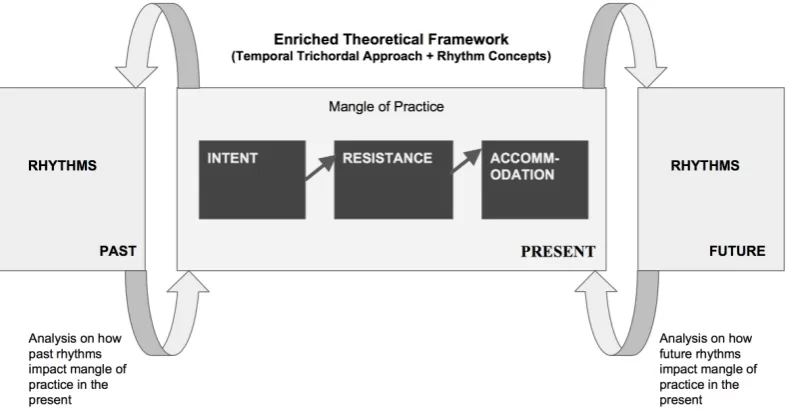
Figure 1: Enriched theoretical framework for this study ... 92
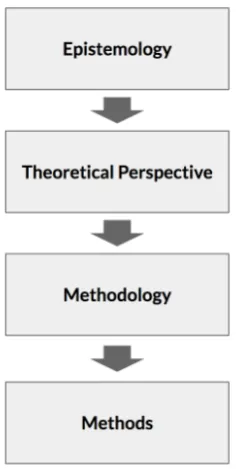
Figure 2: Structuring social research ... 97
Figure 3: Integration of different functions in the BeMobility Suite ... 154
Figure 4: Micro Smart Grid modular architecture ... 158
Figure 5: Planned seamless access to and integration with data sources ... 169
Figure 6: Analysing events using processual approach and theoretical framework .. 180
Figure 7: The ways in which temporal rhythms influence II cultivation ... 198
Figure 8: The ways in which the intermediary intervenes in temporal rhythms ... 219
11
List of Tables
Table 1: Characteristics of IIs and the installed base ... 38
Table 2: Different cultivation strategies explored in the literature ... 43
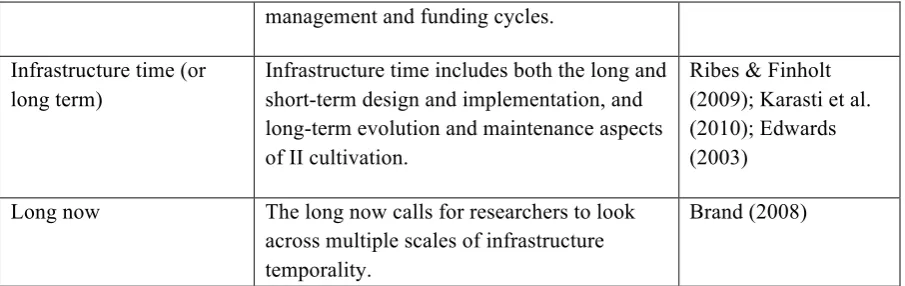
Table 3: How temporality is conceptualised in IIs ... 54
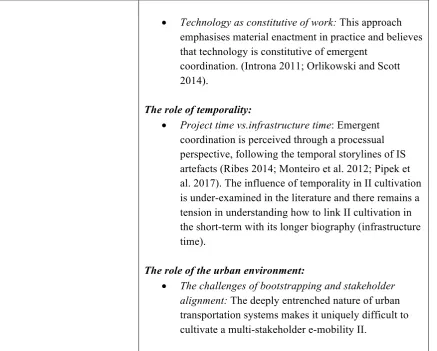
Table 4: How CSCW has conceptualised emergent coordination ... 56
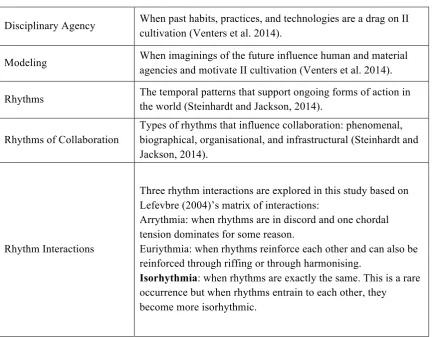
Table 5: Key theoretical concepts used in this study ... 93
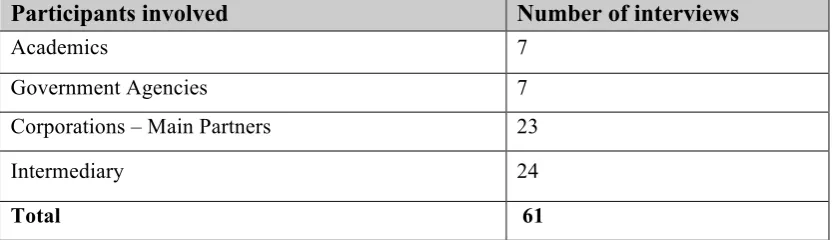
Table 6: Summary of interviews conducted ... 112
Table 7: Details of data collection activities ... 118
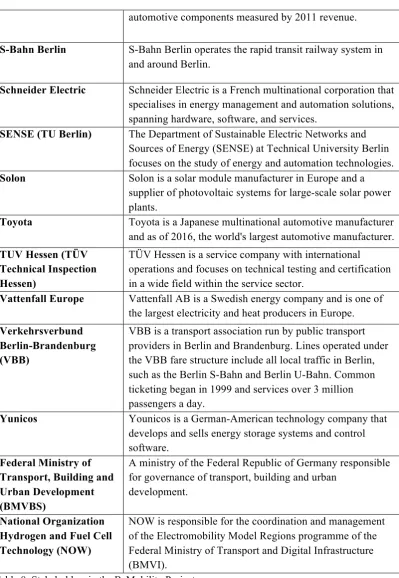
Table 8: Stakeholders in the BeMobility Project ... 139
Table 9: Overview of BeMobility Phases ... 144
Table 10: Data requirements for e-mobility II components ... 168
Table 11: Pattern of building to accommodate resistance to access data ... 173
Table 12: Pattern of transferring to accommodate resistance to access data ... 175
Table 13: Pattern of outsourcing to accommodate resistance to access data ... 177
Table 14: Disciplining influence of temporal rhythms ... 189
Table 15: Modeling influence of temporal rhythms ... 197
Table 16: Different kinds of rhythm interactions ... 201
Table 17: Evolution of Intermediary's technical skills ... 206
Table 18: How Intermediary evolved its biographical rhythm ... 207
Table 19: How Intermediary reinforced rhythms by harmonising ... 212
Table 20: How Intermediary composed future rhythms ... 215
Table 21: How Intermediary supported data integration by riffing ... 218
12
1. Introduction
The topic of heterogeneous large-scale information systems known as Information Infrastructures (IIs) has received attention in the IS field in the last few years. Characterised by their complexity (Hanseth & Ciborra 2007; Kallinikos 2007), researchers have acknowledged that such IT systems have “been continuously growing as existing systems, new and old, have been increasingly integrated with each other” (Hanseth 2014). The Software Engineering Institute (SEI) at Carnegie-Mellon University states that the emergence of such ultra-large-scale (ULS) systems “require a broad new conception of both the nature of such systems and new ideas for how to develop them” (Northrop et al. 2006). Integrated large IS systems are also emerging in urban settings under the umbrella of “smart city” initiatives. Smart cities are defined by their use of ICT to improve efficiency, sustainability and quality of service in sectors such as transportation, governance, and healthcare.
IS scholars have found that complex integrated systems like IIs cannot be developed using traditional top-down design approaches (Henningsson & Hanseth 2011).
Existing ICT systems, processes, and practices, collectively referred to as the installed base, heavily influence an II's development. Developing an II is better understood as the cultivation of this installed base (Aanestad & Jensen 2011; Ciborra & Hanseth 2000; Grisot et al. 2014), a process that involves integrating heterogeneous
sociotechnical components into the existing foundation rather than building the II from scratch. The II constantly grows as components are added to this installed base, “fixed in modular increments, not all at once or globally” (Star & Ruhleder 1996).
13
unpredictability of II growth, this thesis starts with the question: “How do IIs cultivate over time?”
The thesis relies on The Trichordal Temporal Approach to Digital Coordination (henceforth referred to as the Trichordal Temporal Approach) (Venters et al. 2014) as its theoretical foundation to investigate this broad research question. The theory conceives the coordination of digital grids as an emergent process that unfolds as human and material agencies interact. It is notable because it pays attention to the role of materiality and temporality in the coordination of IIs, which have hitherto received limited attention in studies. It views both human and material agencies as temporally embedded, influenced in the present by the past and the future.
While temporality in coordination has been receiving more critical attention in IS research (Orlikowski & Yates 2002; Ancona & Chong 2006; Staudenmayer et al. 2002; Ancona et al. 2001), the literature has still to address a nuanced and rich examination of temporality in II cultivation. This thesis extends the Trichordal Temporal Approach (Venters et al. 2014) to focus on the role of socially constructed rhythms (Jackson et al. 2011) in this area. It refines the research question to: how do temporal rhythms influence the mangle of human and material agencies during the process of II cultivation?
14
largely by the German federal government, the BeMobility project was part of the country’s national strategy to pivot its transportation system to a more sustainable mobility system and to establish Germany’s automotive industry as a leader in next-generation mobility approaches.
The study of BeMobility in Berlin serves as a means to understand II cultivation and to gain insights into the evolution of IIs. Even though the project was a “proof-of-concept," this thesis views the journey of the project as providing an ideal case study for examining the factors that influence II development.
1.1. Motivation and Scope
A deep interest in sustainable transportation motivated the researcher to pursue this topic along with a desire to mitigate the adverse effect of current transportation systems on climate change as vast areas of the world rapidly urbanise.
The 21st century has been referred to as the “urban millennium” by Kofi Annan, Secretary-General of the United Nations (UN): over 70% of the world’s population will live in cities by 2050 (Handwerk, 2008). The number of migrants is staggering: the next 15 years will see 350 million Chinese migrate from the rural to the urban areas, while the next 30 years will see 400 million Indians do the same. The UN estimates over 9000 new cities will have to be built by 2050 to accommodate urban migrants, while almost every major city will have to expand its infrastructure and services (United Nations 2014). Urbanisation puts severe pressure on existing, often dilapidated, urban infrastructures and rapidly increases the carbon footprint of cities.
15
become a major challenge for cities (Moriarty & Honnery 2008; Banister et al. 2011; Geels et al. 2011). The smog and greenhouse gas emission also present serious public health concerns: World Health Organization (WHO) estimates that air pollution causes seven million premature deaths annually and urban transit is one of the significant drivers of air pollution1.
Given how much pollution is driven by urbanisation, it is not surprising that many believe that “the battle for sustainability will be won or lost in cities” (Bai et al. 2010). The question of how to build a sustainable transportation or mobility system for cities is the starting point of this study.
The key to sustainable mobility is first to discourage private ownership as far as possible and to instead move to a system based on the sharing economy in the private sector (for example, car sharing and bike sharing) integrated with public transport (Canzler & Knie 1994; Canzler & Knie 2011). Second, different transportation modes should be mostly electric and powered by renewable energy sources like solar and wind, further reducing greenhouse gas emissions.
Information systems (IS) are viewed as a key enabler of electric mobility concepts such as car-sharing (Hildebrandt et al. 2015). A platform of integrated mobility would require the digitisation and integration of multiple parts of the existing infrastructure. For the end consumer, all modes of transportation (public and private) would be conveniently available through a single smartphone app. At the backend, however, the digital features of this e-mobility infrastructure would manifest themselves as
complex information systems that span several industries, including public transport,
1 “7 million premature deaths annually linked to air pollution”, World Health Organization, March 24, 2014
16
car parking lots, automobile manufacturers, and energy providers. The IS literature describes such large sociotechnical systems that are open, heterogeneous and continually evolving (Hanseth & Monteiro 1998; Hanseth 2006) as information infrastructures (IIs).
The new integrated approach to transportation represents radical innovation in the current system, and the II is a core enabler of how different modes of transport are integrated seamlessly and made available through one application to the consumer. In recent months, research scholars and the industry have increasingly referred to
integrated multi-modal systems as Mobility-as-a-Service (MaaS) (Brendel & Mandrella 2016).
“Mobility as a service (MaaS) is arguably an idea that has already arrived, via services such as car-sharing and wider solutions involving multiple modes of transport booked through a single provider.” (KPMG 2014)
When cities experiment with radical innovation such as MaaS, they conduct
investigations in protected spaces known as strategic niches, which are the “creation, development and controlled break-down of test-beds (experiments, demonstration projects) for promising new technologies and concepts” (Weber & Truffer 1999). These test beds provide a learning environment for the stakeholders and users to understand the viability of innovations (Schot & Geels 2008).
This study explores the development of a sustainable e-mobility II by observing a strategic niche experiment that aims to prototype such an innovative system. It seeks to fill a gap in the IS and strategic niche management literature (SNM) that has under-examined the development of e-mobility IIs in cities.
17
in-depth on how an urban-scale ICT system or II is coordinated and integrated. For e-mobility systems, for example, studies have concentrated more on features such as geography (Xue et al. 2016), policy (Wee et al. 2012), competition (Bakker et al. 2012) and business models (Christensen et al. 2012) rather than on the design and implementation of ICT.
The IS literature has covered such large-scale systems albeit in other sectors such as healthcare (Aanestad et al. 2014) and cloud computing (Zheng et al. 2011). It is to this literature that the thesis looks to provide the analytical framework and research
approach necessary to investigate mobility infrastructures in cities. In particular, the thesis uses the II and CSCW (Computer-Supported Cooperative Work) literature on the coordination of large-scale systems to understand the phenomena of urban infrastructure innovation. The literature frames II cultivation as an emergent process and reveals a gap in the understanding the temporal context of this process.
The impetus to study a MaaS-type e-mobility II is even more urgent now than at the start of this study six years ago. At the beginning of this research, integrated mobility did not exist on an urban scale. However, in the last two years, several MaaS-type prototypes have been launched including in Helsinki by the company MaaS Global2 and in Singapore by the public transportation company SMRT3. This study can provide valuable insights for these projects on how such e-mobility IIs develop.
2 Nanette Byrnes, MIT Technology Review, “Helsinki Hopes This App Will Make People Ditch Their Cars,”
November 17, 2016 (Source: http://bit.ly/2f2VrjQ)
3 The Straits Times, “SMRT teams up with NTU, JTC to collaborate on transport research,” Feb 13, 2017 (Source:
18 1.2. Research Project
The researcher launched this PhD study in September 2011 motivated by the reasons outlined in the previous section. This section presents the main components of the research, including the theoretical framework and research questions, the case study and field work, and the contributions of the study.
1.2.1. Theoretical Framework and Research Questions
As stated, the goal of this study is to investigate II cultivation in the context of urban e-mobility. The theoretical framework devised to understand this phenomenon is based on The Trichordal Temporal Approach (Venters et al. 2014), which explains the coordination of large-scale information systems through the interaction of
temporally embedded material and human agencies. The theory developed by Venters et al. (2014) lies in the broader domain of sociomaterial practice, which is appropriate for studying IIs since they are complex networks of both human and material actors (Orlikowski 2007) and represent an “inextricable interlinking of technology, work and organisation” (Walsham 2012). Using the sociomaterial lens, Venters et al. (2014) examine how material agency, in addition to human agency, plays a critical role in digital grid coordination. According to the theory, digital infrastructures evolve when there is “a mangling of human and material agency” (ibid). Material actors, such as software systems and hardware charging stations, are fundamental to e-mobility IIs and it is essential to understand their role in II cultivation. The sociomaterial
approach uses a relational ontology that privileges neither technology nor humans in its analysis (Orlikowski 2009).
19
decades as the city builds up its municipal and private transportation systems. Also, radical innovations, such as new technologies like electric cars and sensor networks, will dramatically change future mobility systems in previously unimagined ways. The literature review identifies a gap in the examination of II cultivation against this background of experienced past and anticipated future, especially when considering temporality in the form of rhythms. This study extends Venters et al. (2014)’s approach with two analytical concepts: first, a categorisation of rhythms of collaboration (Jackson et al. 2011) and second, a matrix of rhythm interactions (Lefebvre 2004). It uses these extensions to create a richer theoretical framework for examining how rhythmic time influences II cultivation. The study broadly categorises past and future temporal rhythms as organisational, biological, infrastructural and phenomenal (Jackson et al. 2011). Phenomenal and infrastructural rhythms represent the material forces that affect the temporal structure and “account for the role of non-human forces and actors in the shaping of time” (Jackson et al. 2011). Each of these rhythms influences the way human and material agencies entangle during II
cultivation.
This enriched theoretical framework is employed to investigate the research objectives of this study. The desire to examine time in richer detail is not without precedence in the IS literature. Researchers have begun to emphasise that “time also matters” (Reddy et al. 2006), and advocated a deeper understanding of the temporal aspects of work in large-scale collaborations (Karasti et al. 2010). The extended framework helps refine the study’s research questions on the cultivation of urban e-mobility IIs as below.
• How do temporal rhythms impact the process of II cultivation? • How do these rhythms interact with each other during II cultivation? • Why does one rhythm dominate and direct the II’s trajectory when there is
20 1.2.2. Case Study
To study e-mobility IIs, the researcher searched for a strategic niche involved in prototyping new urban mobility infrastructures. The researcher identified a strategic niche project called BeMobility (short for “Berlin elektromobil”) in Germany that had embarked on a program to design and prototype an e-mobility infrastructure to
integrate public and private transport services. The project, which would ultimately last for four years, was already underway when it became the case study for this thesis in November 2011.
The German government launched BeMobility in September 2009 as part of a larger strategy to become the market leader in e-mobility markets. The
government-sponsored the project to specifically investigate and demonstrate how to build a next-generation transportation system for Berlin, which could become a model for the world and a showcase of German mobility providers. The project would provide Berlin residents with multiple transport options while limiting individual car ownership and environmental pollution. Specifically, the project aimed to integrate electric car-sharing and bike-sharing schemes into Berlin’s public transport system of rail and buses.
The project started with the hypothesis that urban residents are agnostic about using different mobility vehicles, for example, a car or a train, so long as they can
21
mobility options and payment. It would also be sustainable if the vehicles were electric or hybrid, and powered by renewable energy instead of fuel or diesel.
Such an integrated e-mobility infrastructure would have a significant role for
information technologies. Developing this e-mobility II would require the integration of the different information systems or installed base that existed across the various stakeholders (for example, parking, train, bus, and car-sharing operators). The II’s complexity would be further intensified by the large multitude of stakeholders and the implementation of new technologies and would need extensive coordination.
Over thirty-two stakeholders participated in BeMobility over four years with
Deutsche Bahn AG as the lead partner and InnoZ as the research institute tasked with project coordination. Deutsche Bahn AG is the largest provider of public transport in Germany, and its portfolio includes several means of passenger transport such as high-speed trains, city buses and car-sharing and bicycle-sharing.
Multiple organizations participated from the following sectors: energy and charging infrastructure providers (eg. Vattenfall and RWE); academia (eg. TU Berlin, LSE and MIT); car manufacturers or OEMs (Original Equipment Manufacturer) (eg. Daimler, Honda, and Toyota); public transport companies (eg. Deutsche Bahn AG, BVG); car part suppliers (eg. Bosch); electricity management (eg. Schneider Electric); public and private parking providers (eg. City of Berlin and Contipark); government agencies (eg. federal government and EMO); and startups (eg, Salon).
22
The project was carried out in two phases in Berlin: the first phase focused on
integrating public and private transportation services, while the second phase focused on integrating the energy infrastructure with transportation systems to drive
sustainable mobility. The BeMobility project represented a typical strategic niche set up by the government to experiment with new technologies. As discussed earlier in this chapter, strategic niches are “protected” from existing monopolistic forces that resist innovation (Hodson & Marvin 2009). They involve a diverse group of stakeholders from the industry, government and research universities, and derive lessons from deploying technologies in real-world settings.
Infrastructure related strategic niches sometimes include the creation of an integrated large-scale information system built upon the existing systems of multiple
stakeholders. However, these niches (e.g. including those with electric vehicles in Germany from 1992-1996, Switzerland after 1995, and Norway after 1991) largely assumed ICT was a static entity (Hoogma et al. 2002). BeMobility placed priority on the integration of information systems as part of the e-mobility infrastructure
development. The emphasis on information systems made the project particularly relevant to the research objectives of this study.
1.2.3. Contributions
This thesis set out to answer research questions on the nature of II cultivation and the influence of temporal rhythms on this process. At the conclusion of the research, the study makes a contribution to both the literature on IIs and to the policy efforts to build sustainable e-mobility systems in cities.
23
physical settings in which it emerges. The thesis uses the concept of the rhythmic temporality of past, present, and future (Jackson et al. 2011) to examine how the temporal orientations of human and material agencies influence II cultivation in the present. The findings demonstrate that past rhythms can influence the mangle of practice through diluting, stalling or blocking II cultivation. Meanwhile, future rhythms can influence it through motivating the combining, extending, and replacing of II modules so that it can grow. These findings add to the literature on how II cultivation in the short term (known as project time) relates to the longer biography of the II from its experienced past to its imagined future (known as infrastructure time). To build an explanatory framework, the researcher delved deeper into the question of II trajectories when multiple rhythms are influencing the present. The study found that when there is discord between rhythms, the intermediary will sometimes intervene and mediate their influence. The intermediary employs the intervention techniques of harmonising, riffing or composing, and the evidence supports the scholarly work on strategic intervention in II cultivation. The intermediary’s ability to mediate rhythmic influences contributes to the debate in the II literature between controlled and
emergent cultivation, making a case that it is possible to intervene and guide the evolution of the II incrementally.
The study also adds to the strategic niche management (SNM) literature ( Geels 2012; Geels & Schot 2007; Kemp et al. 1998) that has largely treated information systems development as a black box, by providing a lens to understand the development of large-scale complex ICT systems in cities. It adds to the SNM literature on
intermediaries, which traditionally limits their role by viewing them only as
arbitrators between innovators and users ( Canzler et al. 2017; Howells 2006; Stewart & Hyysalo 2008). This research highlights their role as active participants through their ability to harness temporal rhythms to influence II cultivation.
24
recommendations to help policymakers successfully prototype e-mobility IIs based on the analysis of how rhythms influence II cultivation. For instance, given the
motivating influence of seeing the technical viability of the II in the future, it is advisable to develop an innovation lab where stakeholders can visit to see new and integrated technologies in action. Intermediaries should also research the profile of the future user so that stakeholders can appreciate the commercial business models that will justify investing in the efforts to develop the II. Understanding the impact of past rhythms is also important for policymakers who should anticipate the disciplinary inertia of the past, and make plans to counter it. For example, one way to reduce the drag on II integration by the installed base is to help companies build APIs
(application programming interfaces) that allow legacy systems from multiple stakeholders to communicate with each other.
The intermediary emerges as a strong partner to policymakers in harnessing or countering temporal rhythms to cultivate the II. Traditionally considered as only a project manager and liaison with the government, the intermediary is capable of a larger role in multi-stakeholder strategic niches. Given its vantage point and ability to view the project holistically, unlike individual stakeholders whose work is limited to their working groups, the intermediary can adeptly recognise and harness temporal rhythms to drive II integration. By illustrating the inner workings of an II’s
cultivation, this study makes a case for policymakers to appreciate and work more closely with intermediaries in strategic niches for urban IIs.
1.3. Thesis Outline
This thesis has eight chapters. Chapter 1 discusses the inspiration that motivated the research interests and introduces the study's theoretical framework, research
25
systems. The goal of the study is stated as an investigation to understand the development of urban e-mobility IIs by examining them through the lens of II cultivation.
Chapter 2 reviews the literature and situates the study in its research domain, which is the study of II cultivation in strategic niches. This chapter evaluates three critical areas starting with large-scale complex information systems known as information infrastructures (IIs). The II literature shows that traditional design methodologies are inadequate for understanding II evolution and IIs instead “grow” through the
coordination efforts that cultivate their installed base. The chapter delves deeper on the concept of II cultivation, turning to the CSCW literature on large-scale system collaboration. This review illustrates that II cultivation can be conceptualised as emergent and unfolding over time, but the study of II cultivation is still in its nascent stages, particularly concerning the examination of the role of the temporal context in II cultivation. Finally, since the e-mobility II studied in this thesis resides in cities, the chapter reviews the strategic niche management (SNM) literature, which examines urban infrastructure prototyping in protected spaces. The SNM literature reveals that information systems are widely taken as a black box in SNM research and not examined closely. The chapter concludes by describing the general problem area of the influence of temporality on II cultivation, which will be refined using a theoretical framework to generate specific research questions.
Chapter 3 outlines this study’s theoretical framework, which is based on a
sociomaterial ontology and the Trichordal Temporal Approach (Venters et al. 2014). This approach provides a framework for understanding II cultivation based on the interaction of temporally embedded human and material agencies. The theory is appropriate for the study of urban e-mobility IIs for three reasons: it addresses the coordination of large-scale digital infrastructures; it recognizes that material agency is as influential as human agency in the study of IIs; and it surfaces the role of
26
the present. This study enriches the Trichordal Temporal Approach (Venters et al. 2014) by introducing concepts related to temporal rhythms and their categorization (Jackson et al. 2011) and their interactions (Lefebvre 2004). This enriched theoretical framework guides the research questions and helps refine the problem area to the specific research problem of understanding how temporal rhythms influence II cultivation in a sociomaterial context.
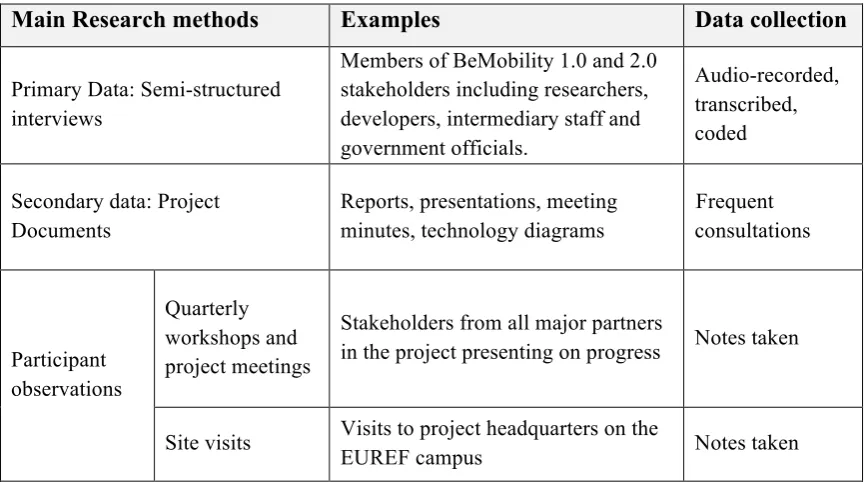
Chapter 4 illustrates the research methodology employed in this study. The chapter explains the philosophical assumptions that have structured the research, starting with the choice of the social constructionist epistemology. Within this epistemology, the chapter describes the selection of interpretivism and the processual approach (Langley 1999) as the theoretical perspective and the case study method (Yin 1994) as the research methodology. It explains the choice of a single case study as the optimal methodology for investigating urban e-mobility IIs. The chapter then introduces the various data collection and analysis methods that are consistent with the theoretical perspective and methodology. It explains why the primary mode of data in this thesis is semi-structured interviews which are examined using a combination of thematic analysis and the narrative and temporal bracketing strategies of the processual approach. The chapter presents some limitations to the research methodology and recommendations on how to overcome issues through cross-checking and
triangulation with other data sources. Finally, the chapter explains how to generalise case study research.
27
integration of energy and mobility networks for sustainable transportation. The chapter introduces the major participants in BeMobility and describes the different goals, stages and results of each of the two phases of the project.
Chapter 6 and Chapter 7 describe the data analysis of the evidence gathered from the case study. Part 1 of the analysis (Chapter 6) focuses on answering the first research question, which is related to understanding the influence of temporal rhythms on II cultivation. The analysis illustrates the sociomaterial entanglement in the present during data integration efforts, showing how temporal rhythms influence II cultivation through several ways: they discipline the e-mobility II through diluting, stalling and
blocking II development, and they model the II through combining, extending and
replacing parts of the installed base. Part 2 of the analysis (Chapter 7) addresses the remaining two research questions on what happens when temporal rhythms interact, and why one rhythm dominates another to direct II cultivation towards a particular trajectory. The analysis demonstrates that the intermediary intervenes in the influence of temporal rhythms through the three interventions of harmonising, composing and
riffing and therefore, exercises some control over II cultivation. It also shows that the intermediary increases its own capabilities by changing its biographical rhythm to become more technically proficient.
Chapter 8 discusses the main themes brought forth by the analysis of the data and interprets the findings in the context of the current literature. The chapter uses the two-step process of analytic generalisation described by Yin (2003) to confirm the theoretical approach taken by the thesis and to identify findings that can be
28
Chapter 9 summarises the findings of the study and outlines the theoretical,
methodological and practical contributions of this study. On a theoretical level, the thesis makes a contribution to the emerging II literature on temporality and
29
2. Literature Review
2.1 Introduction
This chapter provides a critical review of the academic literature relevant to the research domain, which is concerned with the development of sustainable urban mobility systems. With this research objective in mind, the chapter has the following parts.
Section 2.2 reviews the literature on large-scale information systems known as
Information Infrastructures (IIs). It draws upon the research related to their nature and the difficulties in designing them due to their complexity. The section describes the key role of the installed base and the ramifications of its path dependency. It frames the problem of II cultivation as one of emergent coordination, underscoring that the II is always in a state of "becoming".
Section 2.3 examines the CSCW literature on emergent coordination and the emphasis on context as a key influencer. It summarises the recent work by CSCW scholars on collaborative design and the concept of infrastructuring as an "unfolding, longitudinal process" (Pipek et al. 2017). The section delves deeper into the
literature related to the temporal context of II cultivation, revealing a gap and providing a refinement of the research focus.
Section 2.4 reviews the strategic niche management (SNM) literature to study the impact of the urban context on emergent II coordination. Strategic niches are protected spaces set up by governments to tackle the challenges of motivating alignment amongst multiple stakeholders and bootstrapping the II. The SNM
30
Section 2.5 synthesises the literature and highlights opportunities for the thesis to contribute. It also outlines the research guidelines that emerged from the literature review: the researcher should use a theoretical framework that acknowledges material agency and employ a research methodology that studies infrastructure “in the
making” as a process in the flow of time.
Section 2.6 summarises the chapter.
2.2 Conceptualising Information Infrastructures (IIs)
Despite recognition of information systems (IS) as a critical enabler of new kinds of urban mobility, the mobility literature has been mostly limited to their net benefits (Alessandrini et al. 2015; Wagner et al. 2014) and design and implementation are rarely discussed (Brendel & Mandrella 2016). This lack of in-depth investigation of infrastructures is not unprecedented. People tend to take infrastructure for granted, and it only becomes visible only when there is a breakdown (Star & Ruhleder 1996). The process of designing, implementing and maintaining infrastructure remains largely hidden, and the politics, struggles, and choices involved often remain unpacked (Bowker et al. 1995; Hanseth & Monteiro 1997). Researchers have called for deeper examination, emphasising that “understanding the nature of infrastructural work involves unfolding the political, ethical, and social choices that have been made throughout its development” (Bowker et al. 2010). Studying infrastructure requires investigating it "in the making" (Star & Bowker 2002), and foregrounding its elements or using “infrastructural inversion” (Bowker 1994).
31
section aims to bring elements of the e-mobility II to the foreground and provide a basis for understanding its development. The section has four subsections:
Section 2.2.1 introduces the concept of IIs in the IS literature, highlighting their complexity and dynamism and the challenges of designing them.
Section 2.2.2 explains the influence of the installed base on II evolution and illustrates related issues such as the bootstrapping problem and technology lock-ins. It highlights the tension between managed and bottom-up infrastructure emergence as researchers try to understand II cultivation. It also discusses the role of materiality in IIs and the importance of having a theoretical framework that takes it into account.
2.2.1 The Challenge of Complexity in IIs
The defining characteristic of an II is its complexity. IIs are large-scale complex information systems with dynamic and interdependent heterogeneous components (Hanseth & Lyytinen 2010; Star & Ruhleder 1996; Hanseth & Monteiro 2008; Gal et al. 2008; Turner et al. 2006).
These components are socio-technical, which means they include organisations, humans, technologies and institutions (Kling & Scacchi 1982; Edwards et al. 2007). An e-mobility II is similarly complicated given the multitude and diversity of its components: stakeholders from sectors such as energy, transportation, government, and academia; users with differing preferences, needs, and habits; and a range of mobility modes such as car sharing, taxis, buses, and trains (Hildermeier & Villareal 2014).
32
non-technological elements (individual, social, organisational and institutional) that are necessary to sustain and operate the infrastructure” (Hanseth & Lyytinen 2004).
IIs represent ever growing ecologies of networks: they are recursively composed of other infrastructures and technical elements and are recursively organised from a social standpoint because they are both the outcomes and conditions of design actions (Hanseth & Lyytinen 2010). While diversity and scale are not unprecedented in other parts of IS research, IIs stand out for their “unbounded openness” (Hanseth &
Lyytinen 2010). If complexity is the product of the number of "types of components, the number of types of links, and the speed of change" (Hanseth et al. 2006), then IIs exhibit significant complexity in their makeup. Researchers agree that this complexity makes it difficult to design or manage them using the classical model of IT
management (Orlikowski & Hofman 1997).
Traditionally, the design phase is a time-bound event with the goal of building applications with predefined contexts, functional goals and predetermined developer and user groups (Ross & Schoman Jr 1977; Agresti 1986; Walls et al. 1992).
However, IIs have distributed control (Star & Ruhleder 1996) that make top-down design specifications challenging (Edwards et al. 2007; Freeman 2007) and the success of managerial control unlikely (Hanseth & Monteiro 1997; Tilson et al. 2010a).
33
The complexity of integrating multiple systems into the II (Hanseth & Ciborra 2007; Kallinikos 2007) has made it necessary for IS researchers to rethink II development approaches, which have not adapted to account for this complexity (Henningsson & Hanseth 2011). IS researchers have consequently come to view II development as an evolutionary, rather than controlled, process (Edwards et al. 2009).
To understand II evolution, researchers need to explore how planned structures intersect and interact with locally emergent structures (Star & Ruhleder 1996). The nascent research in this area needs further investigation both from a theoretical and empirical perspective. Henfridsson & Bygstad (2013) write that “little, if any, research has been geared toward developing a comprehensive understanding of the range and contingencies of causal structures in [digital infrastructure] evolution.” IS researchers should investigate the black box of II development just as they were once urged to open the black box of information systems development and closely examine IT development (Orlikowski & Iacono 2001).
This section next examines the installed base, one of the key concepts in IIs, to expose the inner workings of II processes.
2.2.2 The Weight and Cultivation of the Installed Base
The installed base is a core concept in understanding information infrastructures (IIs). It not only represents the technical components of an II but represents all the existing systems, people, organisations and practices upon which the information
infrastructure is built (Hanseth & Lyytinen 2004; Star & Ruhleder 1996). The installed base is relational in that it only becomes real to different groups in the
34
stable enough to allow expansion (Tilson et al. 2010b), and at the same time, it also needs to be sufficiently flexible to allow innovation. Such is the importance of the installed base that an II is defined as a shared, evolving, open, heterogeneous and evolving installed base (Hanseth & Lyytinen 2010)(emphasis added).
The installed base is practically difficult and economically expensive to replace (Rönnbäck et al. 2006; Jackson et al. 2007). Additions must have backward
compatibility with existing technology components, neighbouring infrastructures and user skills and learning (Grindley 1995; Star & Ruhleder 1996; Hanseth & Monteiro 1997; Porra 1999; Edwards et al. 2009). The literature calls this “path dependency” (Hughes 1987; Star & Ruhleder 1996; Porra 1999), given the high level of integration and interdependence between an II's parts and its installed base.
An II is never built from scratch and always adds to the existing sociotechnical base. Edwards et al. (2007) suggest that instead of using the word “building an
infrastructure,” scholars should consider the term “growing” which would capture the existence of the installed base and the “sense of an organic unfolding within an existing (and changing) environment.” Instead of II development, researchers refer to its evolution as II “installed base cultivation” (Hanseth & Lyytinen 2010), which draws attention to how IIs evolve incrementally over long periods of time with extensions and modifications to the installed base (Aanestad and Jensen, 2011). The concept of cultivation stands in contrast to any planning-based approach for IIs and “stresses how evolution is shaped by initial choices and how “what is already in place” (i.e., existing technologies, work practices, routines, assumptions,
organizational structures) enables or constrains possibilites of adapting, interconnecting, or creating new components.” (Grisot et al. 2014)
35
and on the other hand, it exerts inertia and is resistant to change (Igira & Aanestad 2009; Hanseth & Monteiro 1998). This means that an II will not “jump” between old and new versions but that the process will be one of cultivation or “gradual and step-wise transition” (Aanestad and Jensen, 2011). In fact, understanding and specifying the transition process is critical to the II’s success, even more so than outlining any specific goals at the initial outset (Hanseth and Aanestad, 2003).
A cultivation approach is, therefore, useful because it “acknowledges the existence of the installed base, and it seeks to address change in an incremental and gradual manner” (Grisot et al. 2014). The next two sections describe the distinctive problems faced in working with the installed base due to its complexity and unpredictability.
2.2.3 Technology Traps and Lock-in
Technology decisions made without sufficient consideration can become impossible to unlock, constraining II cultivation and becoming technology traps or reverse salients (Hughes 1987). In regards to this study’s focus, keeping a mobility
infrastructure open to different types of modes (such as bike-sharing and autonomous vehicles) requires an adaptive architecture, and technology traps are dangerous to the longevity of the II. The two common strategies of using standards and modularisation to build information systems can paradoxically also lead to technology lock-ins for IIs.
IS research has long recognised standards as crucial building blocks for software development that increase interoperability (Star & Ruhleder 1996; Edwards et al. 2007). This is also the case in IIs where “layered interoperable standards and common definitions of application and service interfaces are essential for the infrastructure’s use and growth” (Tilson et al. 2010b). In the case of the installed base, they are useful but can also paradoxically make the II resistant to change in the long run (Hanseth et al. 1996; Egyedi 2002). This inflexibility arises because a large installed base
36
further reinforces the existing design (Grindley 1995). Such “self-reinforcing
mechanisms” (Arthur 1989) increase the embeddedness of the current design as more organisations and systems use it, creating a lock-in of the existing form. One way to tackle this challenge is to use flexible standards that are regularly updated, which can help avoid design stagnation that may result from using standards that only cater to the needs of the global infrastructure instead of appreciating local contexts (Braa et al. 2007). Alternatively, policymakers can also use gateways that link systems on
different communication protocols instead of standards (Hanseth 2001; Hanseth et al. 2006).
Modularization or the division of software into independent functional units (Hanseth & Lyytinen 2004) is another principle used in IS development to streamline
combination and interoperability of different components. Modules make extensions easier as they have "the potential to remove the tight couplings between information types and their storage, transmission, and processing technologies” (Tilson et al. 2010b).The principle of modularity can also partially address the technology lock-in issue as new services are added locally and incrementally in small components, avoiding major changes that reverberate across the entire II (Hanseth & Lyytinen 2010; Aanestad & Jensen 2011).
However, a closer look at modularised digital objects reveals that their “functional simplification” (the basic function any other object can elicit from them) can potentially limit the kinds of complex functions they can participate in (Kallinikos 2006). Even as simplification enables modules to be chained together to form procedural sequences (Luhmann 1993; Nardi & Kallinikos 2007), it can also make them closed to diverse types of extension. One possible strategy to limit II
37 2.2.4 The Bootstrapping Problem
The ability to attract users to an installed base is essential to the II's growth. The II's value grows as its user base grows and attracts others, a phenomenon called the network effect (Shapiro & H. Varian 1998). The bootstrapping problem is the challenge of meeting the needs of early adopters so that they share and extend the II to attract more users (Hanseth & Aanestad 2003; Hanseth & Lyytinen 2010). If the initial design of the II does not appeal to users, the II will cease to grow and exist. Hanseth & Lyytinen (2010) advocate a design theory to meet the bootstrapping challenge. Their recommendations include designing initially for usefulness, drawing upon the existing installed base, deploying persuasive tactics to attract users, and making the architecture modular with layers and gateways. However, one or all of these intentions can be side-tracked because of the unpredictability of component interactions (Kallinikos 2005), and the design theory does not adequately explain the causal links that drive the II's development (Koutsikouri & Henfridsson 2017).
When II designers define II components to meet the needs for an initial set of users, they might also inadvertently make the infrastructure inflexible in meeting the requirements of future users not yet considered or encountered (Hanseth 2014). This tension is referred to as the adaptability problem of II design (Hanseth and Lyytinen 2010, Edwards et al. 2007).
The challenges of technology lock-ins, bootstrapping and adaptability make it
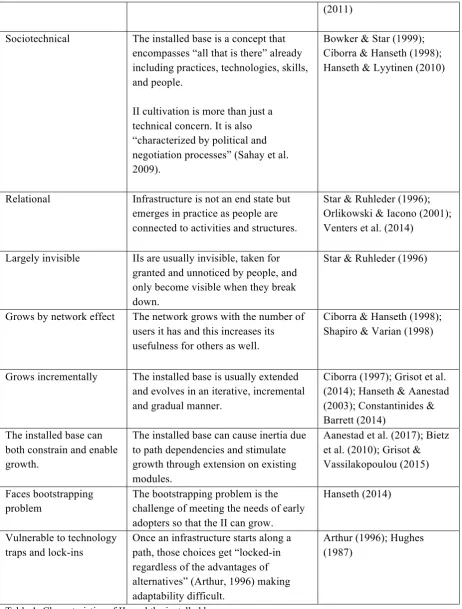
difficult to use traditional management approaches to cultivate the II. The table below explains the characteristic features of IIs and the installed base, which “wrestles with the inertia of the installed base and inherits strengths and limitations from that base” (Star & Ruhleder 1996).
Characteristic Explanation Papers
Complex and unpredictable
IIs are complex and dynamic which leads to unintended consequences.
Hanseth (2006);
38
(2011)
Sociotechnical The installed base is a concept that
encompasses “all that is there” already including practices, technologies, skills, and people.
II cultivation is more than just a technical concern. It is also “characterized by political and negotiation processes” (Sahay et al. 2009).
Bowker & Star (1999); Ciborra & Hanseth (1998); Hanseth & Lyytinen (2010)
Relational Infrastructure is not an end state but
emerges in practice as people are connected to activities and structures.
Star & Ruhleder (1996); Orlikowski & Iacono (2001); Venters et al. (2014)
Largely invisible IIs are usually invisible, taken for granted and unnoticed by people, and only become visible when they break down.
Star & Ruhleder (1996)
Grows by network effect The network grows with the number of users it has and this increases its usefulness for others as well.
Ciborra & Hanseth (1998); Shapiro & Varian (1998)
Grows incrementally The installed base is usually extended and evolves in an iterative, incremental and gradual manner.
Ciborra (1997); Grisot et al. (2014); Hanseth & Aanestad (2003); Constantinides & Barrett (2014)
The installed base can both constrain and enable growth.
The installed base can cause inertia due to path dependencies and stimulate growth through extension on existing modules.
Aanestad et al. (2017); Bietz et al. (2010); Grisot & Vassilakopoulou (2015)
Faces bootstrapping problem
The bootstrapping problem is the challenge of meeting the needs of early adopters so that the II can grow.
Hanseth (2014)
Vulnerable to technology traps and lock-ins
Once an infrastructure starts along a path, those choices get “locked-in regardless of the advantages of alternatives” (Arthur, 1996) making adaptability difficult.
[image:38.595.85.548.89.699.2]Arthur (1996); Hughes (1987)
39
2.2.5 Tensions Between Managed and Bottom-up Cultivation
Given the path dependency of the installed base, it is clear that “the installed base of the existing infrastructure and its scope and complexity influences how the new infrastructure can be designed” (Hanseth & Lyytinen 2004). As this installed base grows, network effects take over “and growth becomes self-reinforcing, through cultivation” (Bygstad et al. 2017). For this study, another key to understanding installed base cultivation is analysing when it is successful.
Before delving into this question, it is necessary first to define the criteria for successful cultivation. Rolland (2014)’s research on failure to cultivate an installed base provides a useful matrix by which to evaluate II cultivation. This study reframes his three criteria for II failure as prerequisites for success as below:
• For II cultivation to be successful, all relevant parts of the installed base must be combined in new solutions. “Relevant parts” here refers to the need that
both the social and material aspects of the installed base must be cultivated and combined to grow the II. For example, while technical interoperability through APIs and gateways is necessary for combining parts of the II, so is cultural fit (Bartis & Mitev 2008).
• For II cultivation to be successful, different modules of the installed base must be extended. Developing new functionality through extension aligns well with IIs that have a “multi-layered character” (Hanseth & Lyytinen 2010).
40
where the II is extended by adding new modules to enrich the functionality of existing modules.
• For II cultivation to be successful, installed base modules that are reverse salients must be replaced. It is necessary to replace technologies and design choices that are causing technology lock-ins or are reverse salient (Hughes 1987) which may regress the entire II. This is akin to the concept of “internal replacement” of infrastructures (Arthur 2009) where modules are replaced and connections rearranged.
Success in the long term for an II is driven by its continued existence and growth from a global perspective. However, localised success may be perceived differently by various social groups. For example, in an e-mobility II, bike-sharing users may find the booking module of the II more useful than the e-scooter users, which will result in one part of the II becoming stagnant while the other continues to grow.
Between the two extremes of completely replacing modules and combining existing modules, researchers have found that the installed base resists radical change and projects that have attempted to achieve replacement have met with poor results (Aanestad & Jensen 2011; Monteiro & Hepso 2001; Rolland & Monteiro 2007). Trying to replace the installed base has been referred to as installed base-hostile (Hanseth et al. 1996). On the other hand, extending the installed base or being installed-base friendly by working with existing components has resulted in better outcomes (Grisot et al. 2014). One potential issue is that being too installed-base friendly can also result in technology lock-ins and result in “over-fitting” (Aanestad et al. 2017) as the current version of the II’s design gets reinforced. As discussed in the last section, this can be detrimental to the longevity and success of the II as it
becomes less adaptable to new users and demands. These issues show that
41
(per Rolland (2014)’s criteria) the installed base is a complicated and uncertain undertaking, further underscoring the gravity of the question about how to manage it.
As discussed earlier, II scholars agree that given the complexity of IIs, it is impossible to manage them in the traditional top-down manner of strategic management
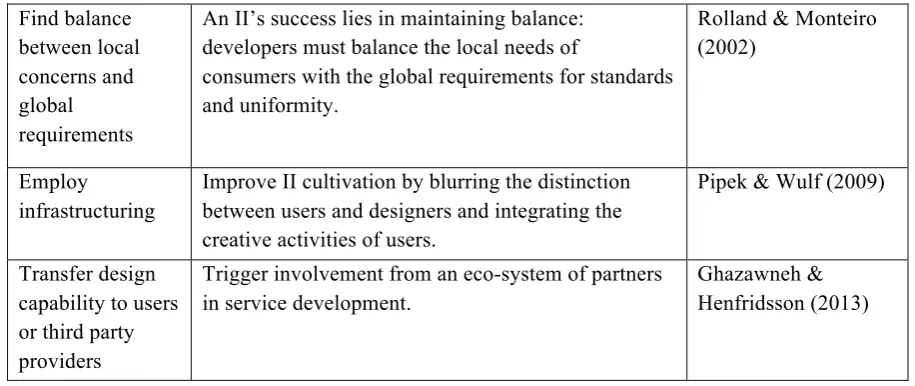
advocated by scholars such as Weill et al. (2002). There is consensus that a preferable cultivation approach would include “monitoring and intervention activities over strict control and ongoing adjustments over rigid preplanning” (Aanestad et al. 2017). However, a literature review shows there is disagreement between the best way to intervene in II cultivation and the extent to which it is possible (Henningsson et al. 2017). On the one hand, there has been scepticism about the ability to have any control over the implementation of complex IT systems with many case studies of failed projects and unintended consequences (Ciborra et al. 2000; Hanseth & Ciborra 2007; Perrow 2008). On the other hand, there is also a stream of literature on strategic intervention that runs the gamut of papers that advocate a relatively top-down process of initial design principles (Hanseth & Lyytinen 2010) to a relatively bottom-up process of empowering users to contribute to design (Ghazawneh & Henfridsson 2013). Table 2.2 categorises these different intervention approaches below.
Strategy Cultivation Strategy Paper
Manage strategically
Top performing managers can identify initiatives to invest in that create agility.
Weill et al. (2002)
Design for bootstrapping
Growth can be driven and users acquired by using simplicity, usefulness and persuasiveness (Hanseth & Lyytinen 2010) Stakeholders should invite and persuade the most motivated users to join and show them immediate benefits so that they can spread the word for others to join. (Hanseth & Aanestad 2003)
Hanseth & Aanestad (2003); Hanseth & Lyytinen (2010)
Develop standards
Standardisation increases compatibility between heterogeneous modules (Hanseth et al. 1996). However, standards should be flexible so that they can streamline integration in the present, but are checked at each stage for their adaptability and alternative ways are kept open for discussion
42 (Edwards et al. 2007). Design for
openness
The growth of the installed base is incremental and adaptive, which requires a technical design that supports openness. Vassilakopoulou & Marmaras (2017) Generate contextual triggers
Guide infrastructure growth by pursuing actions that create generative impulses, including by adding service value, creating design attractors, and lowering infrastructure barriers.
The paper by Koutsikouri & Henfridsson (2017) is one of the few IS studies on digital infrastructures for urban mobility as it examines the digitisation of the Stockholm public transport system.
Koutsikouri & Henfridsson (2017)
Pursue modularity and incremental strategies
Decouple components to reduce complexity in implementation (Hanseth & Lyytinen 2010). Create a modular implementation strategy that lowers costs and stakeholder hesitance by relying on “stable intermediary” solutions in a step-wise growth plan (Aanestad & Jensen 2011).
Hanseth & Lyytinen (2010); Aanestad & Jensen (2011)
Develop gateways Develop interfaces or APIs that connect different parts of the network achieved through facilitating coordination amongst stakeholders.
Jackson et al. (2007); Hanseth (2001)
Remain flexible to accommodate politics
Appreciate interplay of political and technical configuration of IIs and develop flexible
configurations needed to adapt to changing power relations (Sahay et al. 2009).
Sahay et al. (2009)
Use grafting Actors in control of certain parts of the infrastructure should effectively merge goal-oriented information system innovation with existing socio-technical arrangement.
Sanner et al. (2014)
Exercise controlled devolution
Strategically give control to actors and then let them relinquish control to others when the responsibilities to build the technology becomes too much to handle (to prevent inertia).
Nielsen & Aanestad (2006)
Adopt polycentric governance
Use bottom-up governance of information
infrastructures through engaging stakeholders. (This strategy may increase complexity and lead to a divergence from the initial vision, and “spillovers” as one stakeholder’s governance affects another).
43 Find balance between local concerns and global requirements
An II’s success lies in maintaining balance: developers must balance the local needs of
consumers with the global requirements for standards and uniformity.
Rolland & Monteiro (2002)
Employ
infrastructuring
Improve II cultivation by blurring the distinction between users and designers and integrating the creative activities of users.
Pipek & Wulf (2009)
Transfer design capability to users or third party providers
Trigger involvement from an eco-system of partners in service development.
[image:43.595.81.539.89.282.2]Ghazawneh & Henfridsson (2013)
Table 2: Different cultivation strategies explored in the literature
The debate on different cultivation strategies outlined in the table above shows that the study requires more in-depth exploration of how cultivation or the coordination of integrating sociotechnical components into the installed base occurs. The CSCW literature has focused on the coordination of large-scale information systems and the next section reviews this literature to examine the cultivation process more closely.
2.3 CSCW Research on IIs
The integration of sociotechnical components to the installed base involves collaboration between different stakeholders and investigating this coordination is crucial to understanding the cultivation of e-mobility IIs. The CSCW literature broadly addresses the coordination problem of information systems (Schmidt & Bannon 2013), and this section reviews the literature to gain insights into II cultivation in four sub-sections (described below).
44
Section 2.3.2 describes how emergent practices of people contribute to emergent cultivation, and how people change practices to find alternative ways to meet their projected goals.
Section 2.3.3 describes the importance of materiality on II cultivation, where
materiality refers not only to the technology components in their present form but also the weight of II’s installed base (Star & Ruhleder 1996). The section discusses how to consider materiality as constitutive of emergent coordination instead of distinct from it.
Section 2.3.4 reviews the influence of temporality on II cultivation. It reviews how temporality has been considered in the CSCW and II literature and the tensions
between the influence of project time and infrastructure time, identifying a critical gap and highlighting the need for deeper examination.
Section 2.3.5 describes why building IIs in cities that have deeply entrenched
infrastructures makes it particularly hard to bootstrap the II and motivate stakeholders to align efforts. The next section (Section 2.4) examines the strategic niche
management (SNM) literature on the urban context and its impact on II cultivation.
2.3.1 II Cultivation as Emergent and Highly Contextualised
45
structure is highly contextualised and not managed at the II’s global level. Third, there is a high level of dependency on the response from other teams across the multi-stakeholder ecosystem as IS products must integrate with each other to add to the II, which also perpetuates unpredictability. Fourth, an II’s environment is relatively fast-paced since specific components of the II must be built within the timeframe of a project, especially as further funding is often dependent on showing results at each stage. Finally, the nature of technologies can change during the project and require specialists as new team members. Coordinating the activities of multiple stakeholders to contribute to II cultivation is extremely challenging in such a dynamic
environment. The CSCW literature’s work on the nature of increasingly complex and distributed work (Faraj & Xiao 2006; Okhuysen & Bechky 2009) is helpful in
understanding how this occurs.
The CSCW literature has evolved over the years with the scholarly understanding of the workplace. Researchers began studying coordination formally with the emergence of railroads and large-scale manufacturing (Scott & Davis 2007). Initially,
coordination was analysed using an information processing paradigm (Thompson 1967; Galbraith 1977) that assumed a predictable environment in which coordination models could be designed, shared and implemented across an organisation.
Researchers believed that ICT technologies could significantly improve organisational coordination (Malone & Crowston 1990) and also emphasised managing interdependence amongst resources and activities (Malone & Crowston 1994; Malone et al. 1999). However, the environment in which actors interacted was unrealistically assumed to be predictable, with the belief that predefined mechanisms could aid coordination (Faraj & Xiao 2006). As organisations moved from
manufacturing to service-based companies (Davis 2003), the limitations of this
46
Unexpected changes in the workplace could also derail meticulous planning, including the addition of geographically dispersed and interdisciplinary teams of specialists (Child & McGrath 2001; DeSanctis & Monge 1999) and new forms of collaboration devised on the fly as teams interacted with each other and with technologies (Faraj & Xiao 2006). Some environments were also, by their nature, unpredictable or “fast-response” (Faraj & Xiao 2006) where coordination emerged as specialists were brought together to work on a problem. Also, the nature of work itself could change rapidly with technology disruptions in the domain making it necessary for coordination management to change accordingly (Faraj & Xiao 2006). Formalized solutions to the problem of integrating work meant that there was no room to account for the work that resulted as unplanned contingencies in response to coordination challenges (Okhuysen & Bechky 2009).
This gap between the traditional view of coordination as structured and the reality of coordination as an ongoing process of interrelated actions in complex and highly contextualised settings has stimulated new research in the field. Researchers are moving away from studying how to optimise structures for coordination efficiency and instead focusing on coordination as it happens (Okhuysen & Bechky 2009). They began to view coordination as emergent and highly conceptualised. Based on the similarities between an II’s context and the dynamic and fast-paced organisations described in recent CSCW papers, this study subscribes to the CSCW definition of coordination as a “temporally unfolding and contextualised process of input