Efficient Vertical Handoff in Management in LTE
Cellular Networks
Ritu Kumari1
1
Electronics & Communication Engineering, DPGITM, GURGAON, MDU,ROHTAK.
Abstract: Vertical handover gain great importance because of the improvements in mobility fashions by way of the Fourth generation (4G) technologies. A handover choice scheme in LTE networks both primarily based on single or more than one criterion. The number of criteria is at once depending on the overall handover time. Similarly, the time required for choosing a target community during handover is also elevated with the boom in some of parameters. Conventional handover selection processes are specifically primarily based at the single parameter. However, with the creation of heterogeneous wi-fi networks, the performance of these single parameter choice schemes is surprisingly decreased. Therefore, researchers introduce multi-standards handover selection schemes. To cope with those demanding situations, a familiar vertical handover control scheme for heterogeneous wireless networks is proposed is needed. We proposed a Neuro-fuzzy based vertical handover selection model with the intention to enhance QoS in heterogeneous wi-fi networks.
Keywords: LTE, QoS, Vertical Handover, Fuzzy Based Handover Scheme.
I. INTRODUCTION
Long term Evolution is the next-era 4G era for each worldwide device for cellular verbal exchange (GSM) and Code department multiple get admission to (CDMA) mobile companies. Authorized in 2008 with down load speeds of up to 173 Mb/sec, LTE changed into described by means of the 3G Partnership mission in the 3GPP launch 8 specification. LTE uses a different air interface and packet shape than the preceding 3G systems, together with GSM's UMTS: Wideband CDMA (W-CDMA) and excessive speed Packet get admission to (HSPA), and CDMA's Evolution-statistics Optimized (EV-DO). However, it is envisioned that each one GSM and CDMA2000 carriers will in the end migrate to LTE to offer an interoperable mobile gadget international. LTE is a set of upgrades to the UMTS which become brought in 3GPP release eight. a whole lot of 3GPP release eight focuses on adopting 4G cell conversation technologies, which includes an all internet Protocol (IP) flat networking architecture.
Similarly to the above, different LTE requirements and targets are listed beneath:
1) Bandwidth: Scalable bandwidth of one.25, 2.five, five, 10, 15, and 20 MHz shall be supported
2) Interworking: Interworking with present UTRAN/ GSM superior data quotes for worldwide Evolution Radio get right of entry to network (GERAN) systems and non-3GPP machine shall be ensured. Interruption time for handover among evolved UMTS Terrestrial Radio gets entry to network (E-UTRAN) and UTRAN/GERAN shall be less than 300ms for RT services, and less than 500ms for NRT offerings.
3) Multimedia Broadcast Multicast offerings (MBMS): MBMS will be similarly improved and is then known as advanced-MBMS (e-MBMS).
4) Price: reduced Capital Expenditure (CAPEX) and Operational Expenditure (OPEX) consisting of backhaul will be executed. cost effective migration from launch 6 UTRA radio interface and architecture will be feasible. All the interfaces unique shall be open for multi-dealer system interoperability.
5) Mobility: Optimized for low cellular speed (0~15km/h). higher cell speeds shall be supported (inclusive of high velocity train) 6) Spectrum allocation: Operation in paired Frequency department Duplexing (FDD) and unpaired spectrum Time department
Duplexing (TDD) is viable.
7) Co-lifestyles: Co-existence inside the identical geographical location and co-area with GERAN/UTRAN will be ensured 8) High-quality of provider (QoS): Give up-to-stop QoS will be supported.
9) Network synchronization: Time synchronization of different network web sites shall not be mandated
II. MIMOOFDM
statistics rate within the tough radio ecosystem, a singular suggestion used to be proposed to make use of the more than one detail Array (MEA) at each ends of the Wi-Ficommuniqué methods. these Wi-Fi techniques had been referred as a couple of enter multiple Output (MIMO) techniques having multiple transmit and a couple of acquire antennas in literature in difference with single input unmarried Output (SISO) antenna structures [1].
III. MULTIPLEACCESSTECHNOLOGYINLTE
Downlink and uplink transmission in LTE are based totally on the use of more than one get entry to technology: specifically, orthogonal frequency department multiple get right of entry to (OFDMA) for the downlink, and single-service frequency division multiple get entry to (SC-FDMA) for the uplink. The downlink is taken into consideration first. A. Downlink OFDMA is a variation of orthogonal frequency department multiplexing (OFDM), a virtual multi-provider modulation scheme this is extensively used in wi-fi systems but tremendously new to mobile. as opposed to transmitting a high-price circulate of data with a unmarried service, OFDM uses a large number of intently spaced orthogonal subcarriers which are transmitted in parallel. every subcarrier is modulated with a conventional modulation scheme (inclusive of Quadrature phase-shift keying (QPSK), sixteen-Quadrature amplitude modulation (QAM), or sixty four-QAM) at a low image price. The mixture of masses or hundreds of subcarriers enables facts rates just like conventional single-service modulation schemes in the same bandwidth. despite the fact that OFDM has been used for many years in communication structures, its use in cell devices is greater 396.
A. Downlink
OFDMA is a variant of orthogonal frequency division multiplexing (OFDM), a virtual multi-service modulation scheme that is widely used in Wi-Fi systems however noticeably new to mobile. Rather than transmitting an excessive-rate flow of facts with a single carrier, OFDM makes use of a big variety of carefully spaced orthogonal subcarriers which might be transmitted in parallel. each subcarrier is modulated with a conventional modulation scheme (such as Quadrature segment-shift keying (QPSK), 16-Quadrature amplitude modulation (QAM), or 64-QAM) at a low image charge.
While in comparison to the CDMA generation upon which UMTS is based, OFDM offers some of wonderful advantages: 1) OFDM can without difficulty be scaled up to huge channels that are extra resistant to fading.
2) OFDM channel equalizers are an awful lot less complicated to enforce than are CDMA equalizers, as the OFDM sign is represented inside the frequency area instead of the time area.
OFDM can be made completely immune to multi-path put off spread. this is possible because the long symbols used for OFDM may be separated by using a protect c program languageperiod called the cyclic prefix (CP). The CP is a copy of the quit of a symbol inserted at the start. by sampling the obtained signal on the most advantageous time, the receiver can eliminate the time area interference between adjacent symbols resulting from multi-direction delay unfold inside the radio channel.
B. Uplink
The excessive top-to-common ratio (PAR) related to OFDM led 3GPP to search for a different transmission scheme for the LTE uplink. SC-FDMA was chosen because it combines the low PAR techniques of single-provider transmission structures, inclusive of GSM and CDMA, with the multi-course resistance and bendy frequency allocation of OFDMA. A brief description of SC-FDMA is as follows: statistics symbols inside the time area are converted to the frequency domain the use of a discrete Fourier transform (DFT); then in the frequency domain they are mapped to the preferred place within the normal channel bandwidth earlier than being transformed lower back to the time domain using an inverse FFT (IFFT). Eventually, the CP is inserted. due to the fact SC-FDMA uses this approach, it's far every so often known as discrete Fourier transform spread OFDM or (DFT-SOFDM).
IV. VARIETIESOFHANDOVER
Fig 1: Classification of handover
A. Handover based on the community worried
This sort of handover can be characterizedin approaches:
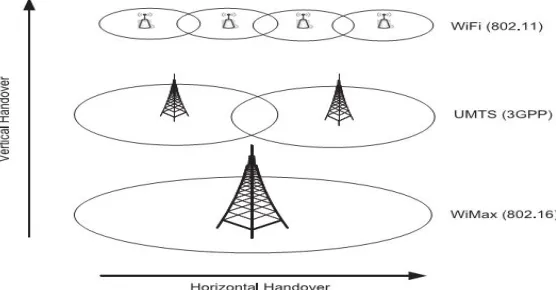
1) Horizontal handover: The horizontal transfer is the transfer method induced for the duration of an alternate of the get right of entry to point in the same technology [1]. it's miles generally completed in homogeneous cell networks when a cellular movements between two cells of the same get admission to era. This manner is normally required because of the mobility and the impossibility to maintain connection. discern 2 indicates the exchange of
2) Vertical handover: The vertical handover is the transfer method among two networks of various technologies. As an instance: among WIFI to WiMAX or UMTS to LTE. This method is necessary inside the discipline of heterogeneous networks. the use of handover can also stem from the need of the person who seeks a higher excellent of connection, in place of connectivity issue. as an instance, the cell terminal may want to hook up with some other community for a higher first-class of connection even though the connection to the old network continues to be viable.
Fig 2: Horizontal and vertical handovers
[image:4.612.169.447.393.538.2]V. VERTICALHANDOVERMETHOD
Vertical handover refers to all operations carried out to enable a cellular terminal to transport from one network to any other without lack of connection.
as an example, in a cellular community handover mechanism allows roaming between cells or operators. some of the reasons that create a need for handover, we can point out [4]:
1) The cell node leaves the insurance location of the modern-day mobile and communicates thru a new cell.
2) The cellular node undergoes enormous interference at the modern-day cell subsequently the need to go on any other cell (on the identical network or an exceptional community), where there is less interference.
3) The number of cellular nodes in a cell is very big main to a saturation of bandwidth and thereby inflicting deterioration of the quality of carrier. The mobile can pick out to go in much less congested neighboring cells.
In trendy, the handover method is carried out in three predominant steps:
A. Segment1: Handover records amassing
In this stage of handover’s training and initiation, the cell terminal detects available networks and their essential traits along with the signal power, the extent of interference and the bit errors charge. any other information may also be useful such the user’s velocity, the performance’s terminal, and battery’s charging price.
Taking handover selection can be based in these facts. The test this data may be either periodic or prompted by activities [5].
B. Phase2 : Handover decision
At some stage in the handover, the transfer’s selection is the most crucial step that might have an effect on the normal progress of the conversation. Mistaken decision can degrade the high-quality of provider and even interrupt the conversation in progress. In general, this step video display units the reference to the modern network, it permits comparing the want for handover, selecting a brand new network and estimating the accurate transfer time.
thinking about person possibilities and characteristics of available networks, the adopted choice strategy allows each user to pick out the most suitable community get right of entry to from the ones available. This step leads to the instructions important for the implementation phase.
VI. RELATEDWORK
A. Chang, Ben-Jye et al. (2008) [1]
In this paper, a heterogeneous wireless network consists of various wireless networks [e.g., Worldwide Interoperability for Microwave Access (WiMAX) and Wireless Fidelity (WiFi)] and cellular communications [e.g., beyond the third generation (B3G) and the fourth generation (4G)]. Vertical handoff is an important mechanism for achieving continuous seamless transmissions in these networks. In contrast to horizontal handoff, vertical handoff considers not only the received signal strength (RSS) but also the service-class mapping between handoff-in and handoff-out networks. Most previous works have adopted the RSS-based mechanism to determine handoff thresholds, which causes a serious ping-pong effect that increases unnecessary handoff. Although integrating the RSS-based mechanism with a hysteresis method reduces the unnecessary handoff, it suffers from high dropping [i.e., high Sum of Weighted Grade of Service (SWGoS)] and low utilization. Therefore, this paper proposes a cross-layer-based adaptive vertical handoff algorithm with predictive RSS to reduce the unnecessary handoff while significantly increasing utilization and decreasing connection dropping. The proposed approach determines the optimal target network in two phases, i.e., polynomial regression RSS prediction and Markov decision process analysis. Furthermore, fast changes in bandwidth caused by vertical handoff result in inaccurate Transmission Control Protocol (TCP) congestion control and, thus, reduce the TCP good put. The cross-layer scheme provides a TCP receiver to reply to the TCP sender with the wireless network's protocol type. By using the cross-layer information, the TCP sender can accurately predict the available bandwidth and increase the network good put. Numerical results indicate that the proposed cross-layer-based approach outperforms the other approaches in the number of vertical handoffs and SWGoS while yielding competitive utilization. In addition, the cross-layer scheme cooperates with existing TCP algorithms to increase good put by up to 18%.
B. Shenoy, Nirmala et al. (2008) [2]
prime concern. However, given the busy schedules of humans today and the tremendous growth rate in travelling professionals, wireless networks are gaining popularity and arc becoming an integral part of our lives. Research in innovative wireless technologies continues in the academia and industry as we seek to provide enriched wireless services to cater to the requirements of the variety of roaming users. Restricting the movement of a roaming user to a certain zone or service provider or interrupting a service because the user moved out of the administrative domain of a wireless network will no more be attractive, especially since wireless networks today span the globe and offer a rich variety of services. Hence, providing continued connectivity as users roam across different wireless networks with acceptable quality of service continues to be a topic of intense interest.
C. Xiuhua, Qing et al. (2008) [3]
In this paper, 4G will be the certain path to the future radio and mobile communication system. This paper discussed some core technologies of 4G mobile system included security strategy, hybrid network and adaptive network in 4G. This paper also compares 3G and 4G from network structure, core network mobile terminal and the core technology. Moreover, the paper introduced the research status in quo. It is significant to research and construct 4G to a certain extent
D. Boysen, ElinSundby et al. (2008) [4]
In this paper, in some areas, overlapping networks provide alternative wireless links like WLAN, GSM, 3G etc. Ideally, the user should be connected to the most attractive network any time according to predefined priorities. This is accomplished with automatic handover. The most likely commercial application of this type is designed for speech, and is using SIP to set up VoIP calls through WLAN networks or mobile networks. To make the handover time as short as possible is essential to make it attractive. This is best done by preparing the alternative networks before the handover is needed. This is called proactive handover. This paper suggests changes to some of the basic SIP messages that open for proactive handover in SIP and help reduce the delays when roaming.
E. Alam, Zahangir, et al. (2008) [5]
In this paper, fourth generation (4G) mobile systems and services will mainly be characterized by a horizontal communication model, where different access technologies such as cellular, cordless, wireless local area network (WLAN), short-range connectivity, and wired systems will be combined on a common platform to complement each other optimally for different service requirements and radio environments. To access different wireless networks, multimode user terminals are essential. The most promising way of implementing multimodal user terminals is to adopt the software radio approach. The current software radio technology does not meet the requirements of different wireless networks; because it is impossible to have just one antenna and one LNA (Low Noise Amplifier) to serve the wide range of frequency bands. The software radio devices, after scanning the available networks, will load the required software and reconfigure themselves for the selected network. Each downloading method has its own advantages and disadvantages with respect to speed, accuracy, resource usage, and convenience. In this paper, the authors propose a novel idea using CI/OFDM (Carrier Interferometry-OFDM) to access multiple networks using a wireless terminal. The physical size of the wireless terminal proposed in the present work, will be smaller than the terminal with software radio device, and enough memory can be inserted in the terminal device to store software for all networks.
F. Chang, Ben-Jye et al. (2009) [6]
In this paper, in a heterogeneous wireless network (HWN) that consists of various wireless networks (e.g., WiMAX and WiFi) and cellular communications (e.g., B3G and 4G), vertical handoff acts as an important mechanism for achieving continuous seamless transmissions and improving grade of service. This work thus proposes an adaptive vertical handoff algorithm with predictive RSS to reduce unnecessary handoff while increasing utilization and decreasing connection dropping significantly. The proposed approach determines the optimal target network in two phases: polynomial regression RSS prediction and Markov decision process analysis. Numerical results indicate that the proposed adaptive approach outperforms other approaches in the number of vertical handoffs and SWGoS while yielding competitive utilization.
G. Janevski, Toni. et al. (2009) [7]
Personal Area Network (WPAN) and wireless networks for digital TV and radio broadcast. Then, the concepts of 4G is already much discussed and it is almost certain that 4G will include several standards under a common umbrella, similarly to 3G, but with IEEE 802.xx wireless mobile networks included from the beginning. The main contribution of this paper is definition of 5G (Fifth Generation) mobile network concept, which is seen as user-centric concept instead of operator-centric as in 3G or service-centric concept as seen for 4G. In the proposed concept the mobile user is on the top of all. The 5G terminals will have software defined radios and modulation scheme as well as new error-control schemes can be downloaded from the Internet on the run. The development is seen towards the user terminals as a focus of the 5G mobile networks. The terminals will have access to different wireless technologies at the same time and the terminal should be able to combine different flows from different technologies. Each network will be responsible for handling user-mobility, while the terminal will make the final choice among different wireless/mobile access network providers for a given service. The paper also proposes intelligent Internet phone concept where the mobile phone can choose the best connections by selected constraints and dynamically change them during a single end-to-end connection. The proposal in this paper is fundamental shift in the mobile networking philosophy compared to existing 3G and near-soon 4G mobile technologies, and this concept is called here - the 5G.
H. TwitchellJr, et al. (2009) [8]
In this paper, multiple standards based radio (“SBR”) devices, each having a high-gain directional antenna, are utilized in a remote sensor interface (“RSI”) unit to optimize detection and reception by the RSI of radio signals from gateway controllers, hopping radios, and other wireless devices.
I. Salameh, Haythem A. Bany, et al. (2009) [9]
In this paper, LTE deployment is one of the promising solutions to meet the increasing demands on wireless services and applications. Based on deploying LTE within the already-existing Macrocells, LTE can improve indoor coverage and increase both spectral efficiency and data rate. This improvement can be achieved by reusing the available spectrum assigned for the Macrocells, and being closer to the users. However, LTE deployment faces many challenges. One of the most challenging issues is the interference management issue. In this paper, a power-control channel assignment algorithm to manage the interference between LTE and Macrocell networks is proposed. The proposed algorithm allows frequency reuse among LTE users (FUEs) to provide better throughput performance. Simulation results have shown an improvement in throughput by up to 90% compared to previous schemes.
J. Gao, Feng. et al. (2009) [10]
In this paper, worldwide Interoperability for Microwave Access (WiMAX) is a broadband wireless technology based on IEEE 802.16-2004 and IEEE 802.16e-2005. This thesis is a study of WiMAX technology and market. The background of WiMAX development is introduced and opportunities and challenges for WiMAX are analyzed in the beginning. Then the thesis focuses on an overview of WiMAX technology, which addresses the physical layer, MAC layer and WiMAX network architecture. The deployment status is investigated in the fourth chapter. Both product development situation and market status are discussed in this section. In the last chapter, the future development trend of WiMAX is addressed.
VII. HANDOVERDECISIONSINLTENETWORK
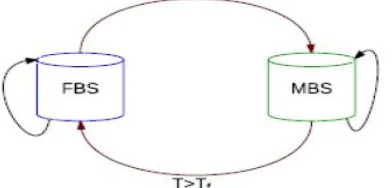
[image:7.612.217.413.625.719.2]The real handover between BS is a choice and the diverse schemes are categorized in keeping with who makes a decision, based totally on which parameter and while is it achieved. Most of the handover classifications right here are parameter pushed, in order that they make a selection based totally on the signs we mentioned inside the preceding section.
As proven within the Fig. above, we come upon the numerous handovers situations between FBS and MBS. In a group of LTE underlying a MBS, handover from a LTE to macrocell is simpler as there are handiest few alternatives. enough making plans is needed to transfer a user to one of a group LTE in particular while maximum of them can offer pleasant service and are available for aid allocation. In an open-get admission to LTE network, user may depart its serving MBS and transfer to one of the FBSs. while large quantity of neighboring LTE are available, a person has more than one choices for a new connection and some selections are higher than others. as a consequence, it is required to investigate a technique for cellular choice at some stage in a handover process in an effort to maximize benefits of won potential and elimination of redundant handovers.
A. Tough/smooth Handovers
Normally one imagines a transfer of the consumer with the aid of connecting to the subsequent BS after breaking its gift BS. This is known as a hard handover. A few services can not manage to pay for an interruption among handovers. gentle handovers join the person to the next BS earlier than breaking the service from the existing BS. Consequently the person receives services from a couple of BSs simultaneously.
B. Network/cell managed
The popularity of the prevailing servicing channel needs to be continuously monitored. Almost all centralized networks have dedicated nodes to faucet in records like congestion and bearer channels that carry control alerts, synchronization sequences. Those are community controlled handovers in which the decision is based totally at the facts with the aid of the network on my own. From time to time consumer sends the popularity of the existing BS's signal great, different alerts from acquaintances or its function. This is greater correct because the fact is actual-time and vicinity based totally than predictive. Although for gather this records, the UE desires to be clever and feature processing functionality. these sort of handovers aren't exactly called cell managed because the operator has to still cope with the switch among BSs. we are able to classify them as mobile assisted handovers.
C. Predictive Rerouting
Even though many parameters influence the first-rate of hyperlinks, prediction is a strong useful resource for planning. The look at of statistical information approximately handovers primarily based on region, BS and analyzing for styles enables make predictive handovers. Place primarily based take a look at should display a few areas to have many users and multiple handovers. A robust BS handles more requests from customers than a weaker BS. Even the look at of routes taken often allows design congestion free networks. This is predictive rerouting.
VIII. RESULTANDANALYSIS
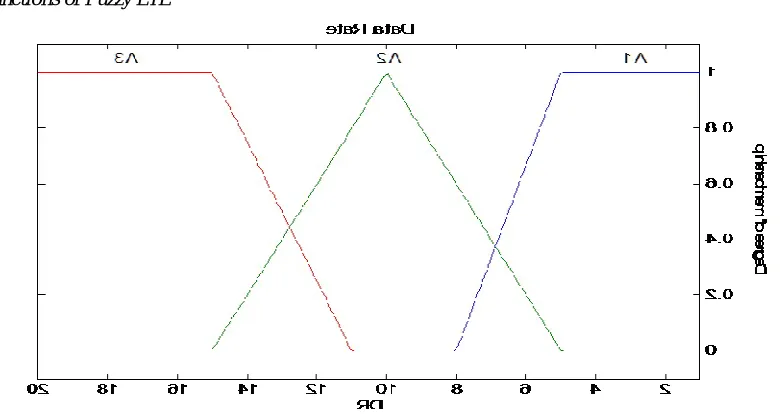
[image:8.612.122.514.498.705.2]1) Membership Functions of Fuzzy LTE
Fig 5: Handover Decisions at LTE Cell 1
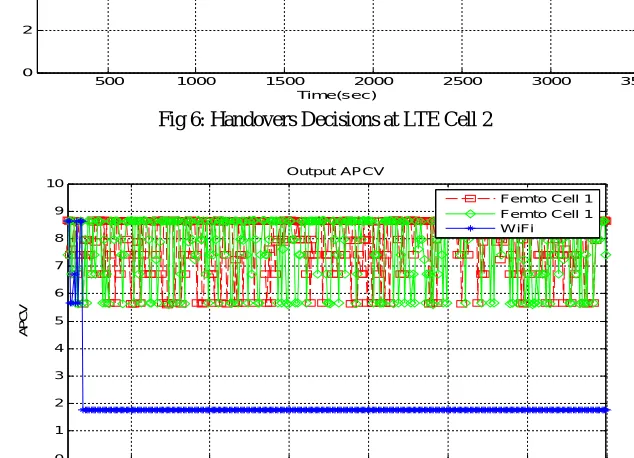
Fig 6: Handovers Decisions at LTE Cell 2
Fig 7: Combined Decisions in Multiple Signals using Fuzzy Handover Decision Maker
IX. CONCLUSIONANDFUTUREWORK
Use of the reactive handovers for all handover processes can drastically lessen the range of handovers in an urban LTE community surroundings but for extraordinary users of variable velocities it'll bring about a miles greater call drop opportunity as the delay in handover might be too long for the decision to hold with lowering signal to interference and noise ratio (SINR). However, use of all proactive handovers to reduce the call drop opportunity will considerably boom the quantity of handovers. So an optimization set of rules desires to be devised using the proactive, reactive and everyday handovers which has been proposed later within the paper the use of the velocities of the users and their respective live times within the beyond cells.
in this work the innovative idea of Fuzzy primarily based handover choice for LTE Networks broadband cellular networks changed into proposed. We selected 3 distinctive Access points namely AP 1, AP 2 and WIFI. The FIS Handover machine became built on
500 1000 1500 2000 2500 3000 3500
0 1 2 3 4 5 6 7 8 9 10 Time(sec) A P C V
APCV (Femto Cell 1)
500 1000 1500 2000 2500 3000 3500
0 2 4 6 8 10 Time(sec) A P C V
APCV (Femto Cell 2)
500 1000 1500 2000 2500 3000 3500
0 1 2 3 4 5 6 7 8 9 10 Time(sec) A P C V Output APCV
[image:9.612.151.468.348.577.2]MAMDANI FIS device. The Inference gadget was capable of efficiently find appropriate access factor for incoming traffic, especiallybetween special traffic kinds.
Mixed effect of perspective of arrival (AoA) and velocity on wireless channel. Channel data is affected significantly through AoA and velocity. Which will higher identify and estimate the channel parameters inclusive of lineofsight (LOS), the blended effect of AoA and speed may be investigated. Moreover, a brand new manner of searching on the mobility idea in wireless network, that's called movement depth, can be incorporated into the analyzes of identifying and estimating numerous other wireless channel parameters. Visitors type recognition. In particular in multi-access wireless communications systems, traffic type awareness becomes more critical. Being aware about site visitors kind allows schedulers higher adapt themselves to converting interference conditions.
REFERENCES
[1] Chang, Ben-Jye, and Jun-Fu Chen. "Cross-layer-based adaptive vertical handoff with predictive RSS in heterogeneous wireless networks." IEEE
Transactions on vehicular technology 57, no. 6 (2008): 3679-3692.
[2] Shenoy, Nirmala, and Sumita Mishra. "Vertical handoff and mobility management for seamless integration of heterogeneouswireless access technologies."
In Heterogeneous Wireless Access Networks, pp. 1-33. Springer US, 2008.
[3] Xiuhua, Qing, Cheng Chuanhui, and Wang Li. "A study of some key technologies of 4G system." In Industrial Electronics and Applications, 2008. ICIEA
2008. 3rd IEEE Conference on, pp. 2292-2295. IEEE, 2008.
[4] Boysen, ElinSundby, HkonEydeKjuus, and TorleivMaseng. "Proactive handover in heterogeneous networks using SIPs." In Networking, 2008. ICN 2008.
Seventh International Conference on, pp. 719-724. IEEE, 2008.
[5] Alam, Zahangir, ChowdhurySajadul Islam, and M. AbdusSobhan. "A Novel idea to combat 4G challenges to establish all wireless internet services." In Broadband Multimedia Systems and Broadcasting, 2008 IEEE International Symposium on, pp. 1-6. IEEE, 2008.
[6] Chang, Ben-Jye, Jun-Fu Chen, Cheng-Hsiung Hsieh, and Ying-Hsin Liang. "Markov decision process-based adaptive vertical handoff with RSS prediction in
heterogeneous wireless networks." In Wireless Communications and Networking Conference, 2009. WCNC 2009. IEESSE, pp. 1-6. IEEE, 2009.
[7] Janevski, Toni. "5G mobile phone concept." In Consumer Communications and Networking Conference, 2009. CCNC 2009. 6th IEEE, pp. 1-2. IEEE, 2009.
[8] TwitchellJr, Robert W. "Using wake-up receivers for soft hand-off in wireless communications." U.S. Patent 7,529,547, issued May 5, 2009.
[9] Salameh, Haythem A. Bany, RawanShabbar, and Ahmad Alshamali. "A Power-control Interference Management Mechanism for LTE-based Networks."
(2009).