Providing Best Quality Of Video Streaming Using Ames
Method
Harikoti Raj Venkat1,Vahiduddin Shariff2 1M.Tech, Department of Computer Science and Engineering,
Sir C R Reddy College of Engineering, Eluru, West Godavari District Andhra Pradesh, India - 534007
2Assistant Professor, Department of Computer Science and Engineering,
Sir C R Reddy College of Engineering, Eluru, West Godavari District Andhra Pradesh, India - 534007
[email protected], [email protected]
Abstract: In wireless networks(mobile networks) the wireless link capacity cannot be stable with the demand of traffic over the networks. Due to the gap between the traffic demand and the link capacity it results in poor service quality of video streaming over mobile networks. Long buffering time and intermittent disruptions results in poor service quality of video streaming. Hence we propose a new mobile video streaming framework, dubbed AMES-Cloud, which consists of two main parts namely AMoV (adaptive mobile video streaming) and ESoV(efficient social video sharing). To provide efficient video streaming services for each mobile user AMoV and ESoV construct a private agent. AMoV lets her private agent adaptively adjust her streaming flow with scalable video coding technique based on the feedback of link quality. Likewise ESoV lets her private agents to pre-fetch video content in advance and also monitors the social network interactions among mobile users.
Keywords: Scalable video coding, Adaptive video streaming, Mobile networks, social sharing, Cloud computing
1. Introduction:
Cloud computing is the lease of the resources through which the users can use the resources depending upon the requirement and pay base on the usage through cloud computing the user can decrease the cost and can use the resource at any time.
There are many issues between user data protection and rich computation in the cloud. User wants to maintain control of their data, but also want to benefit from rich services provided by application developers using that data. At present, there is little platform-level support and standardization for verifiable data protection in the cloud. On the other hand, user data protection while enabling rich computation is challenging. It requires specialized expertise and a lot of resources to build, which may not be readily available to most application developers. It is argued that it is highly valuable to build in data protection solutions at the platform layer: The platform can be a great place to achieve economy of scale for security, by amortizing the cost of maintaining expertise and building sophisticated security solutions across different applications and their developers.
2. Aspects to improve service quality of video streaming:
2.1 Scalability:
Mobile video streaming services should support a wide spectrum of mobile devices; they have different video resolutions, different computing powers, different wireless links (like 3G and LTE) and so on. Also the available link capacity of a mobile device may vary over time and space depending on its signal strength, other users’ traffic in the same cell, and link condition variation. Storing multiple versions (with different bit rates)of the same video content may incur high overhead in terms of storage and communication. To address this issue, the Scalable Video Coding (SVC) technique (Annex G extension) of the H.264AVC video compression standard defines a base layer (BL) with multiple enhance layers (ELs). These sub-streams can be encoded by exploiting three scalability features: (i) spatial scalability by layering image resolution(screen pixels), (ii) temporal scalability by layering the frame rate, and (iii) quality scalability by layering the image compression. By the SVC, a video can be decoded / played at the lowest quality if only the BL is delivered. However, the more ELs can be delivered, the better quality of the video stream is achieved. 2.2 Adaptability:
Traditional video streaming techniques designed by considering relatively stable traffic links between servers and users, perform poorly in mobile environments. Thus the fluctuating wireless link status should be properly dealt with to provide ‘tolerable” video streaming services. To address this issue, we have to adjust the video bit rate adapting to the currently time-varying available link bandwidth of each mobile user. Such adaptive streaming techniques can effectively reduce packet losses.
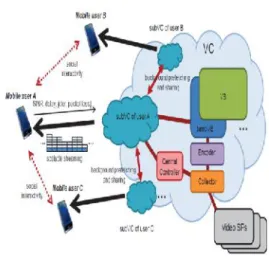
Figure 1. An illustration of the AMES-Cloud framework
A.Adaptive Video Streaming Techniques:
In the adaptive streaming, the video traffic rate is adjusted on the fly so that a user can experience the maximum possible video quality based on his or her link’s time-varying bandwidth capacity. There are mainly two types of adaptive streaming techniques, depending on whether the additivity is controlled by the client or the server. The Microsoft’s Smooth Streaming is a live adaptive streaming service which can switch among different bit rate segments encoded with configurable bit rates and video resolutions at servers, while clients dynamically request videos based on local monitoring of link quality. Adobe and Apple also developed client-side HTTP adaptive live streaming solutions.
B.Mobile Cloud Computing Techniques:
The cloud computing has been well positioned to provide video streaming services, especially in the wired Internet because of its scalability and capability. For example, the quality-assured bandwidth auto-scaling for VoD streaming based on the cloud computing is proposed , and the CALMS framework is a cloud-assisted live media streaming service for globally distributed users. However, extending the cloud computing-based services to mobile environments requires more factors to consider: wireless link dynamics, user mobility, the limited capability of mobile devices. More recently, new designs for users on top of mobile cloud computing environments are proposed, which virtualize private agents that are in charge of satisfying the requirements (e.g.QoS) of individual users such as Cloudlets and Stratus.
The Video usage and images plays a vital role in communication. The usage of traditional networking and service providers lacks to provide the quality centered and reliable service to the mobile users concerning with the media data. The problems that leads to the poor services from the service providers would be low bandwidth which affects the efficient transfer of video to the user, the disruption of video streaming also occurs due to the low bandwidth. The buffer time of the video over mobile devices which moves from place to place affects the smooth streaming and also sharing of video from one user to another user over social media. Our survey shows the functioning of various methods
and architecture which used cloud to provide effective solution for providing better service to the users. AMES is cloud architecture built specially to provide video service to the user. The study has came up with a optimal solution, proposing with video cloud, which collects the video from video service providers and providing the reliable service to the user. The network providers YouTube provide video downloads but it provides some delays due to network dynamics so this technique is used to remove jitters and provide video on demand. cloud centered streaming solutions for different mobile which shows my realistic work relevant to streaming methods with RTMP protocols family and solutions for iPhone, Android, Smart mobile phones, Window and Blackberry phones etc.
3. Methodology:
Loud computing promises lower costs, rapid scaling, easier maintenance, and service availability anywhere, anytime, a key challenge is how to ensure and build confidence that the cloud can handle user data securely. A recent Microsoft survey found that “58percent of the public and 86 percent of business leaders are excited about the possibilities of cloud computing. But more than 90 percent of them are worried about security, availability, and privacy of their data as it rests In the cloud.
In this technique we propose an adaptive mobile video streaming and sharing framework, called AMES-Cloud, which efficiently stores videos in the clouds (VC), and utilizes cloud computing to construct private agent (sub VC) for each mobile user to try to offer “non-terminating” video streaming adapting to the fluctuation of link quality based on the Scalable Video Coding technique. Also AMES-Cloud can further seek to provide “no buffering” experience of video streaming by background pushing functions among the VB, subVBs and localVB of mobile users. We evaluated the AMES-Cloud by prototype implementation and shows that the cloud computing technique brings significant improvement on the adaptivity of the mobile streaming. We ignored the cost of encoding workload in the cloud while implementing the prototype.
4. Literature Survey:
Streaming and Sharing of Videos in Mobile Network:
4.1 Cloud Computing Technique:
Cloud computing techniques are used to flexibly provide scalable resources to content, service providers, and process off loading to mobile users. Thus, cloud data centers can easily provision for large-scale real-time video services as. Several studies on mobile cloud computing technologies have proposed to generate personalized intelligent agents for servicing mobile users, hence, in the cloud, multiple agent instances or multithreads can be maintained dynamically and efficiently depending on the time-varying user demands. 4.2 Scalable Video Coding (SVC):
network can be controlled by using TCP friendly rate control. The streams are encoded using the SVC extension of the H.264/AVC standard. Adding or removing the layers is decided based on the TFRC during varying channel conditions of the mobile network. SVC provides a high quality multimedia communication services in heterogeneous network environment, especially when the client processing power, system resources, and network state unknown. The SVC video streams have flexible, Scalability and high quality coding efficiency.
4.2.1 TFRC (TCP-friendly rate control):
The bit rate of the stream can be dynamically adapted to the changing channel conditions which greatly improve all performance indicators such as interruption time, loss rate, and delay and buffer requirements. This also implies that more users could be admitted to the cell and it would still be able to guarantee certain service qualities. This is especially true in loaded situation where there are not enough radio resources to combat bad reception quality to some users. However, since the TFRC was not designed for a mobile environment, we expect that it can be further optimized.
4.2.2 H.264/SVC:
In the scalable video coding extension of theH.264/AVC standard, an exhaustive search technique is used to select the best coding mode for each macro block. This technique achieves the highest possible coding efficiency, but it demands ahigher video encoding computational complexity which constrains its use in many practical applications. This proposes combined fast sub-pixel motion estimation and a fast mode decision algorithm for inter-frame coding for temporal, spatial, and coarse grain signal-to-noise ratio scalability. The correlation is used between the macro block and its enclosed partitions at different layers. It has been observed that there is a high correlation between the MB and its enclosed partitions when estimating the motion at different resolutions. Therefore a two step fast sub–pixel motion estimation scheme based on this observation has been developed. a) In the first step, if the 16×16 MB finds a best match in the full-pixel motion search that does not change after performing the sub-pixel motion search(cond_1), then the sub-pixel motion search for all the enclosed 16×8 and 8×16 blocks is disabled. b) Similarly, if in the second step the 8×8 block partitions of the 16×16 MB find the same best match in the full and sub-pixel motion searches (cond_2), the sub-pixel motion search for all the enclosed 8×4, 4×8 and 4×4 sub-blocks is disabled. We motivate the use of non reference video quality evaluation metrics which can be deployed in future for on-the-fly video evaluation which can used as part of a video quality assessment system in commercial deployments.
4.2.3 Quality for video services:
Any issues that degrade a network’s ability to deliver packets will, as a consequence, degrade the quality of any real-time services of customers currently connected to the network. In the case of video services this degradation is likely to take on the following forms: pausing of playback due to buffer starvation, macro blocking in the case of lost (bi-) predictive frames or full loss of picture in the case of lost Intra-frames.
4.3 Video Streaming:
In streaming procedure, it clip data file is sent to the end individual in a (more or less) continuous flow. It is simply a strategy for shifting information such that it can be prepared as a stable and ongoing flow and it is known as Streaming or encoded movie that is sent across information system is known as Streaming. Streaming movie is a series of "moving images" that are sent in compacted form over the Internet and shown by the audience as they appear. If a web individual is getting the information as sources then he/she does not have to wait around to obtain a large data file before viewing it clip or enjoying the sound.
4.3.1 Streaming Principle:
Real-time video applications require media packets to arrive in a timely manner; excessively delayed packets are useless and are treated as lost. In streaming programs it is necessary for the information packets to reach their location in regular basis because the wait can cause the network blockage, and can result in the decrease in all those packets suffering from extreme wait. This causes decrease in quality of information, the synchronization between customer and hosting server to be damaged and mistakes to distribute in the provided movie. There are two types of steaming, one is real-time and other is prerecorded streaming. The protocol used for streaming purpose is UDP (User Datagram Protocol), which delivers the multimedia flow as a sequence of small packets. The majority of transport protocols perform over an RTP stack, which is implemented transport for video streaming.
4.3.2 Video Streaming Architecture:
A cloud based source implements a streaming hosting server which is responsible for retrieving, sending and adapting it clip flow. Depending on the application, it clip may be protected on-line for a real-time broadcasting or pre-encoded and stored for broadcasting an on demand. Programs such as interactive movie, live broadcast, mobile movie streaming or interactive online games require real time encoding. However, applications such as movie on-demand require pre-encoded movie. When the multicast session is initialized, the streaming hosting server retrieves the compressed movie and begins the loading with the adequate bit rate stream.
4.4 Video Streaming Techniques:
There are various streaming techniques for different Mobiles and Smartphone are described below
4.4.1 Progressive Download:
4.4.2 HTTP Live Streaming:
HTTP Live streaming (also known as HLS) is an HTTP based media streaming communications protocol implemented by Apple Inc. as part of their QuickTime X and phone. Apple’s HTTP Live Streaming protocol (HLS),is an adaptive streaming video delivery protocol for ions devices. It utilizes the H.264 video codec, which is segmented and encapsulated in MPEG2 transport streams, and .M3U8 index files to deliver live and on-demand video. The device automatically selects the most appropriate stream given available bandwidth, CPU and platform constraints, downloads a manifest for that stream, and then downloads segmented chunks to the buffer for the playback. HLS streaming provides the best user experience, but its benefits also include good IT practices and important business considerations:
a) The best user experience. b) Reach more viewers. c) Save on data transfer. d) Secure video content.
Cloud Front uses Adobe Flash Media Server 4.5 to stream on-demand content with Adobe's Real-Time Messaging Protocol (RTMP). Cloud Front accepts RTMP requests over port 1935 and port 80. Cloud Front supports the following variants of the RTMP protocol:
a) RTMP—Adobe's Real-Time Message Protocol. b) RTMPT—Adobe streaming tunneled over HTTP. c) RTMPE—Adobe encrypted over HTTP.
d) RTMPTE—Adobe encrypted tunneled over HTTP. To secure it, just use the RTMPE protocol instead of the regular RTMP.
4.4.3 Peer streaming:
Peer streaming general architecture follows a client/server scheme and the P2P network helps the server in distributing the media content. In addition, when a peer has viewed the media, it gets at the same time a copy on its local hard-drive. Now it can provide the media to other requesting peers, lightening the load on the server. Any peer in the network could then provide the whole or part of the media to a client. It is important to design lightweight peers, which are not so dependent on each other. A peer helping the server delivering the data should perform simple operation with low CPU load since the peer might perform some other tasks in parallel. The client has more responsibility and should perform more complex tasks: co-coordinating the peers, retrieving the media from multiple peers, performing load balancing, handling peers online/offline status and displaying the media in real-time. It is primordial to understand that servers, serving peers and clients are all nodes in the overlay network. A server is a peer, which has the data and sends it to the client, a serving peer is a machine in the P2P overlay, which has also the data or part of it and sends it to the client. A client is a peer, which requests data from the network. Peer-To-Peer (P2P) network is at the moment one of the most effective solution to improve the bandwidth and distribute streaming data within a large scale overlay, involving potentially thousands of nodes.
4.4.4 Cool Streaming:
Cool Streaming is a data-driven overlay network. This application coded in Python language creates its own overlay P2P network following a mesh topology. Its architecture is
divided into three layers: network layer, streaming layer and display layer. Using an efficient scheduling algorithm to fetch video segments from each peer and a strong buffering system, Cool Streaming achieves a smooth video playback and a very good scalability as well as performance. The system has been extensively tested over the Planet Latest-bed. Their technical report shows that the overall streaming rate and playback continuity of Cool Streaming system is proportional to the amount of peers online at any given time. The Peer Streaming application has been tested in two ways, with and without embedded coded media. Embedded coding is a special feature of the Microsoft DirectShow framework in both tests; the streaming rate is between 16 and 128 kbps.
4.5 Metrics Affecting Streaming Quality: 4.5.1 Attributes of Streaming Quality:
The streaming quality is a prerequisite for users to watch videos smoothly without interruptions, and thus directly impacts the human subjective perception. The access time that a user experiences before the start of an on-demand video playback represents the overall responsiveness of the video proxy. The latencies incurred at both trans coding and streaming components can contribute to the access time. Video freezes are caused by the unavailability of new video data at their scheduled playback time due to the combined contribution of trans-coding and streaming jitters. The user side buffering time should be large enough to accommodate the maximum streaming jitter in order to avoid video freezes. The video decoding time is negligible at both the trans coding component and the user.
4.5.2 Metrics Characterizing Video Content:
The characteristics of the video content can affect the trans coding speed which decides the streaming quality. We use two cost-effective metrics to describe the video content heterogeneity: the temporal motion metric (TM) and the spatial detail metric (SD). TM can be captured by the differences of pixels at the same spatial location of two pictures, while SD is computed from the differences of all spatially neighboring pixels within a picture. Generally speaking, frequent scenery changes (large TM) affect the computation demand on video encoding by reducing the dependencies among the temporal successive pictures and increasing the number of pictures being intra-coded in response to a scenery change. Pictures with large SD can also increase the encoding computation overhead because of a demand for greater information and video clips have been returned.
5. Implementation:
5.1 Matching Algorithm between BW and Segments:
i = 0 BW0 = RBL
Transmit BL0 Monitor BW0 practical
repeat Sleep for Twin
Obtain pi, RTTi, SINRi etc., from client’s report Predict BW i+1
repeat k++
if k >= j break
BWEL=BWEL + RELk until BWEL >= BW i+1 estimate- RBL
Transmit BLi+1 and EL1 i+1, EL2
i+1, Elk-1 i+1
Monitor BWi+1 practical i++
until All video segments are transmitted. 5.2 Module Description:
1.Admin Module 2. User1 Module 3. User2 Module
1. Admin Module: In this module, Admin have three sub modules. They are,
Upload Video: Here Admin can add a new video. It is used for user for viewing more collections.
User Details:Admin can view the user those have registered in this site.
Rate videos:This module for avoiding unexpected videos from users. After accept/reject videos then only user can/cannot view their own videos.
2. User1 Module:In this module, it contains the following sub modules and they are,
News Feed: Here user of this social site can view status from his friends like messages or videos.
Search Friends:Here they can search for a friends and send a request to them also can view their details.
Share Video: They can share videos with his friends by adding new videos also they share their status by sending messages to friends.
Update Details:In this Module, the user can update their own details.
3. User2 Module: In this module, user can register their details like name, password, gender, age, and then. Here the user can make friends by accept friend request or send friend request. They can share their status by messages also share videos with friends and get comments from them.
6. Conclusions:
Here proposed is an adaptive mobile video streaming and sharing framework, called AMES-Cloud, which efficiently stores videos in the clouds (VC), and utilizes cloud computing to construct private agent (sub VC) for each mobile user to tryto offer “non-terminating” videostreaming adapting to the fluctuation of link quality based on the Scalable Video Coding technique. Also AMES-Cloud can further seek to provide “non buffering” experience ofvideo streaming by background pushing functions among the VB, sub VBs and local VB of mobile users. The AMES-Cloud by prototype implementation shows that the cloud computing technique brings significant improvement on the adaptivity of the mobile streaming. The focus of this paper is to verify how cloud computing can improve the transmission adaptability and pre-fetching for mobile users. The cost of encoding workload in the cloud while implementing the prototype is ignored. As one important future work, the SNS-based
pre-fetching, and security issues in the AMES-Cloud can improved.
References:
[1]A survey on efficient video sharing and streaming in cloud environment using VC, M.Sona, D.Daniel.
[2] AMES-Cloud A Framework of Adaptive Mobile Video Streaming and Efficient Social Video
[3]Cloud Stream: delivering high-quality streaming videos through a cloud-based SVC proxy, Zixia Huang, ChaoMei, Li Erran Li,Thomas.
[4] CISCO, “Cisco VisualNetworking Index: Global Mobile Data Traffic Forecast Update , 2011-2016,” Tech. Rep., 2012.
[5] Y. Li, Y. Zhang, and R. Yuan, “Measurement and Analysis of a Large Scale Commercial Mobile Internet TV System,” in ACM IMC,pp. 209–224, 2011.
[6] J. Fernandez, T. Taleb, M. Guizani, and N. Kato, “Bandwidth Aggregation-aware Dynamic QoS Negotiation for Real-Time Video Applications in Next-Generation Wireless Networks,” in IEEE Transaction on Multimedia, vol. 11, no. 6, pp. 1082–1093, 2009.
[7] T. Taleb, K. Kashibuchi, A. Leonardi, S. Palazzo, K.Hashimoto, N. Kato, and Y. Nemoto, “A Cross-layer Approach for An Efficient Delivery of TCP/RTP-based Multimedia Applications in Heterogeneous Wireless Networks,” in IEEE Transaction on Vehicular Technology, vol. 57, no. 6, pp. 3801–3814, 2008.
[8] K. Zhang, J. Kong, M. Qiu, and G.L Song, “Multimedia Layout Adaptation Through Grammatical Specifications,” in ACM/Springer Multimedia Systems, vol. 10, no. 3, pp.245– 260, 2005.