Study on Equal Learning Opportunities for
Students with Disabilities under
the Integrated Education System
Report
This project is commissioned by
Equal Opportunities Commission
to
Centre for Special Educational Needs and
Inclusive Education
The Hong Kong Institute of Education
Contents
Executive Summary ... i Chapter 1 Overview ... 1 1.1 Introduction ... 1 1.2 Objectives ... 2 1.3 Research Questions ... 2 1.4 Research Team ... 4Chapter 2 Literature Review ... 5
2.1 Implementation of Integrated Education in Hong Kong ... 5
2.2 Implementation of Inclusive Education in Overseas Countries/ Regions .. 10
2.3 Implications ... 26
Chapter 3 Research Design and Methodology ... 29
3.1 Research Instruments and Procedures ... 29
3.2 Sample of Main Study ... 30
3.3 Supplementary Information ... 32
Chapter 4 Results and Analysis of Questionnaire Survey ... 33
4.1 Introduction ... 33
4.2 Understanding of Inclusive Education ... 35
4.3 Acceptance of SEN Students ... 41
4.4 Comparison of views of primary and secondary school respondents towards inclusive education ... 43
4.5 School Organization and Management ... 45
4.6 Student Support ... 48
4.7 Difficulties Encountered in Learning and Teaching ... 51
4.8 Performace of SEN Students ... 53
4.9 Students’ Views on School Life ... 60
4.10 Summary ... 65
Chapter 5 Results and Analysis of Case Study ... 68
5.1 Overview of Sample ... 68
5.2 Focus Group Interview and Lesson Observation ... 68
5.3 Summary of Interview Data of Primary School Respondents ... 68
5.4 Summary ... 88
Chapter 6 Discussion, Conclusion and Recommendations ... 91
6.1 Discussion ... 91
6.2 Conclusion and Recommendations ... 95
References ... 100
Appendix A Summary of Interview Data of Secondary School Respondents ... 106
Appendix B Consultative Focus Group Discussion ... 122
Appendix C Questionnaires ... 125
Appendix D Focus Group Discussion Guidelines ... 154
Executive Summary
Background
1. The Equal Opportunities Commission (EOC) has commissioned the Centre for Special Educational Needs and Inclusive Education of The Hong Kong Institute of Education to conduct a research project “Study on Equal Learning Opportunities for Students with Disabilities under the Integrated Education System”. The study aims at eliciting the stakeholders’ understanding of Integrated Education1
(IE) policy and attitudes towards integrators, discerning the stakeholders’ perception of difficulties encountered with respect to students with different categories/ degrees of disabilities, and collecting opinions from the stakeholders towards allocation of resources, provision of professional training and support from the community.
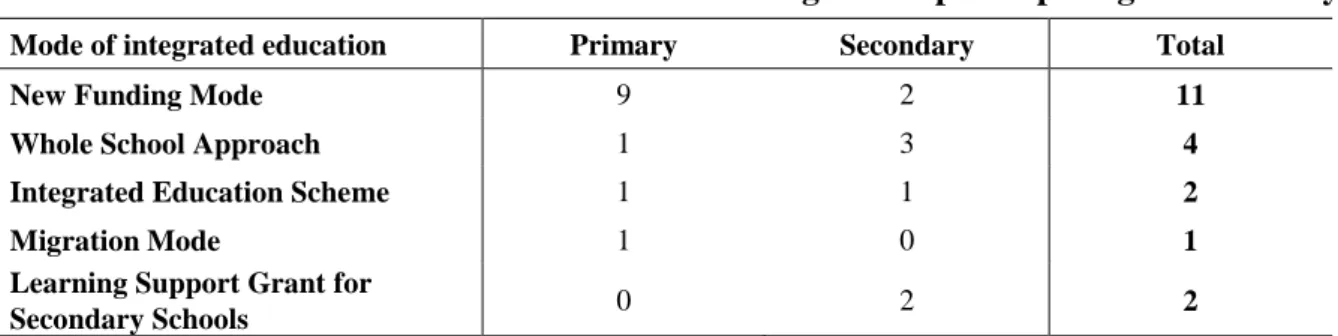
2. The fieldwork which consists of questionnaire survey and case study was undertaken from September 2010 to November 2011. Various stakeholders including principals, teachers, professionals (e.g. social workers, counselors, therapists), students with special educational needs (SEN), regular students, parents of SEN students, and parents of regular students were involved. In the quantitative questionnaire survey, 230 schools comprising 139 primary schools and 91 secondary schools completed the questionnaires, and a total of 5,136 stakeholders participated. To collect qualitiative data, 475 stakeholders from 20 schools were interviewed in the case study. These 20 schools have adopted the New Funding Mode2 to care for their SEN students.
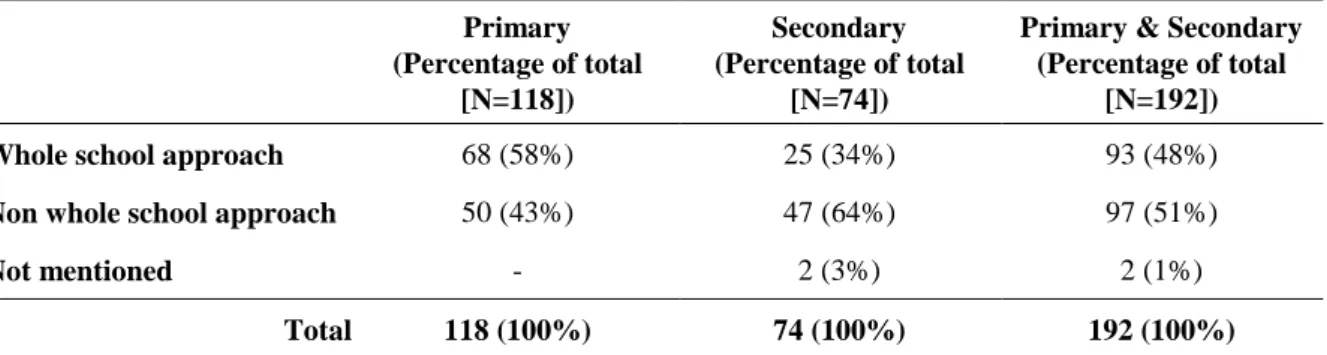
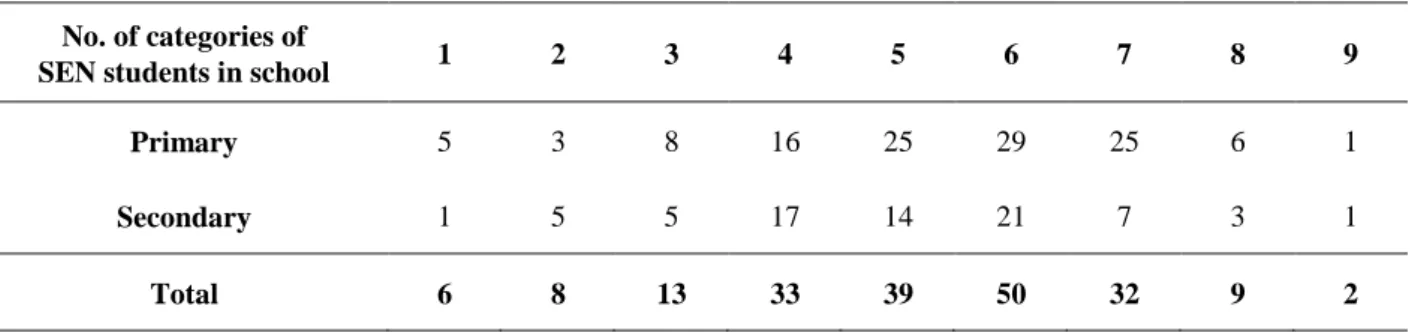
3. Even though IE program has been implemented for over a decade, there is still room for attaining the ideal that 100% of the mainstream schools will admit SEN students and provide equal learning opportunities for them. The findings show that among the 230 schools participating in the questionnaire survey, only 192 schools (83%) have admitted SEN students. Of these 192 schools, 48% of them have adopted the “whole-school approach” in caring for SEN students. The data show that 75% of these schools have no more than 10% SEN students. The types of SEN students include: Attention Deficit and Hyperactivity Disorders (ADHD), Autistic Spectrum Disorders (ASD), Communication Difficulties (CD), Emotional and Behavioural Difficulties (EBD), Hearing Impairment (HI), Intellectual Disability (ID), Physical Disabilities (PD), Specific Learning Difficulties (SLD), and Visual Impairment (VI). The number of types of SEN students commonly ranges from 4 to 7 in each school.
1
Integrated education is generally linked to a process of placing students with special educational needs in ordinary schools which constitute the majority of so called “mainstream/mainstreaming schools”, whereas inclusive education is defined by UNESCO in 2009 as a process of strengthening the capacity of the education system to reach out to all learners. The Education Bureau of HKSAR adopts the term “integrated education” in its official documents but the research team adopts the idealation of “inclusive education” that is commonly embraced by educators.
2 The Government introduced the New Funding Mode plan in 2003/2004, under which schools were granted
subsidies according to the number of SEN students in each school and the severity of the problem of individual students.
Key Findings of the Quantitative Questionnaire Survey
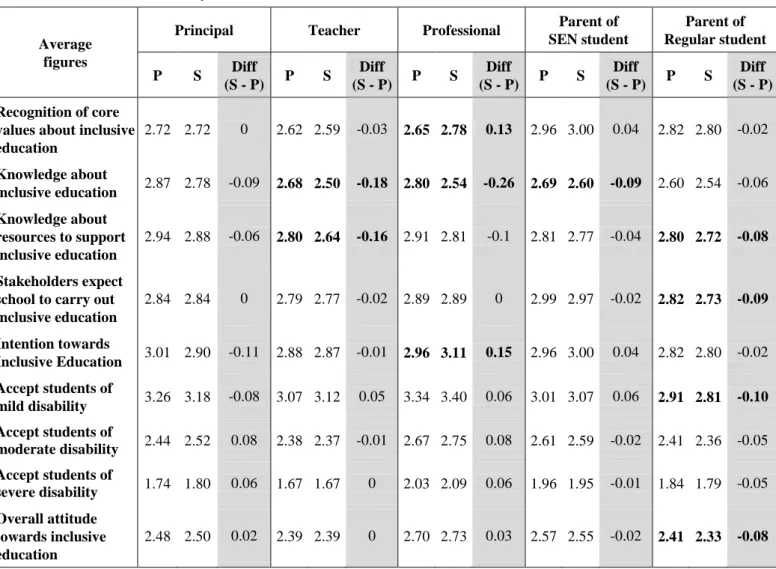
4. As for the 192 schools which have admitted SEN students, about 70-90% of the respondents opine that implementation of inclusive education mainly comes from the government, parents of SEN students and the general public. However, most parents of SEN students speculate that teachers are the key stakeholders to expect schools to implement inclusive education. In contrast, only about half of the principals and teachers agree that the momentum comes from teachers themselves, which shows a big gap in aspirations from what parents expect.
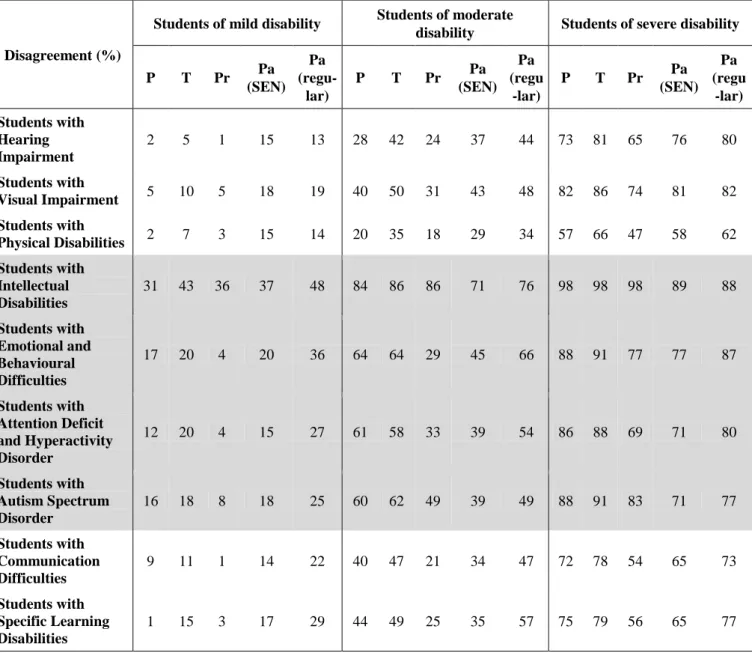
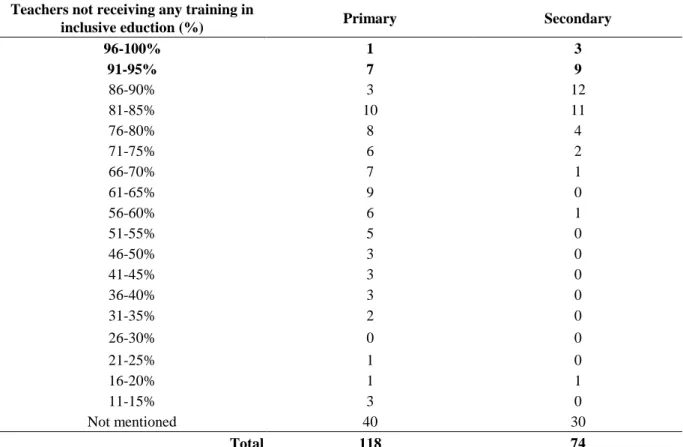
5. The numbers of trained principals and teachers in schools of inclusive education are not satisfactory. The percentage of teachers without special education training3 is high. Some schools do not meet the policy requirement of having 10% of teachers with special education training. Nearly 40% of the interviewed teaching staff (particularly teachers) lack knowledge about inclusive education. Around 10-20% of the principals, teachers and professionals do not agree that SEN students can participate in all kinds of activities and that they should be provided with accommodation measures. Furthermore, taking heed of inadequate training and resources provided for school personnel, 30-50% of the respondents disagree with accepting and supporting students with severe disabilities.
6. Interviewed schools offer different support measures in enhancing the development of SEN students. These support measures include making special arrangement in examination (88%), providing professional therapy/counseling (82%), providing additional tutorials after school (77%), parent education (73%), writing up an individual education plan (IEP) (70%), and appointing teaching assistants (67%). As for learning and teaching for different types of SEN students, the principals, teachers and professionals consider that there are difficulties in teaching students with ID (24%), EBD (23%), ADHD (21%) or ASD (20%). Although efforts are made by schools in the arrangements of learning and teaching, more than 20% of the parents of SEN students show dissatisfaction. In this respect, the teaching practices in schools have not come up to the expectations and demands of parents of SEN students.
7. With respect to academic performance, 37% of the respondents (principals, teachers and professionals) generally consider SEN students having different learning difficulties, including grasping learning skills (44%), learning on their own (43%), being motivated to learn (41%), understanding what teachers are teaching in the classroom (36%), performances in examinations meeting expectation (33%), and developing multiple intelligences (23%). In relation to academic performance of different types of students with disabilities, approximately 80% of the principals, teachers and professionals show greater agreement about academic performance of students with HI, VI or PD. Most respondents are concerned with academic performance of students with ID, SLD, EBD, ADHD and ASD.
3 Special education training courses are offered in relevant undergraduate and post-graduate programs which
are catered to teachers who work in mainstream schools (for implementation of inclusive education) or special schools.
8. Nearly half of the SEN students (48%) reveal that their examination results are not satisfactory when compared to 26% of regular students. Approximately 30% of SEN students cannot grasp a range of learning skills (e.g. note-taking, problem-solving) and learn independently whereas 17% of regular students do so. About 20% of SEN students indicate that they cannot understand what teachers are teaching in the classroom, while 11% of regular students do so. Furthermore, many parents of SEN students (46%) indicate that the academic performance of their children does not meet their expectation. Up to one-third to a half of the parents think that their SEN children are not concentrated in the classroom for grasping a range of learning skills and what teachers are teaching, and it is hard for them to learn actively and independently. This reflects that parents of SEN students who commonly embrace higher expectation tend to have more negative comments on their children’s academic performance. 9. Notwithstanding there are non-hostile views, many parents of regular students still comment on behaviours of SEN students including disturbing others’ learning (59%), occupying so many school resources (39%), having special arrangements (30%) and bullying other students (27%). Parents of regular students in secondary schools have more negative views about inclusive education than those in primary schools, probably because secondary school students have to face with the challenges of public examinations and their parents are therefore under stress. These parents might not comprehend how the schools care for the needs of SEN students and are worried about their own children’s learning being dragged by SEN students in class.
10. As for social performance of various types of SEN students, principals, teachers and professionals generally opine that SEN students have peers and social activities. The majority of principals, teachers and professionals (around 90%) show positive views on emotional performance of students with HI, PD and SLD. However, about 30-70% of respondents consider that students with EBD, ADHD, ID and ASD cannot concentrate on learning in class, disturb classmates’ learning and possess negative self-concept. As regards “relationship with staff”, “relationship with peers”, “interaction with peers” and “academic, social and emotional performance”, most SEN students think that they have poorer performance than regular students in various aspects.
11. Regarding relationship with peers, over 80% of SEN students consider that their classmates are friendly to them. They will help and learn from each other, and appreciate individual differences. However, around 30% of SEN students indicate that they are bullied (26%) and teased (31%) by their classmates. For regular students, 18% and 24% of them indicate that they have the same experiences, respectively. It shows that more SEN students than regular students are bullied and teased in schools and the situation appears worrying.
Key Findings of the Qualitative Case Study
12. Concluding from the results of case study, most respondents indicate they are influenced by the education policy so as to recognize core values of inclusive education. Some schools have implemented inclusive education to increase the enrolment of more SEN
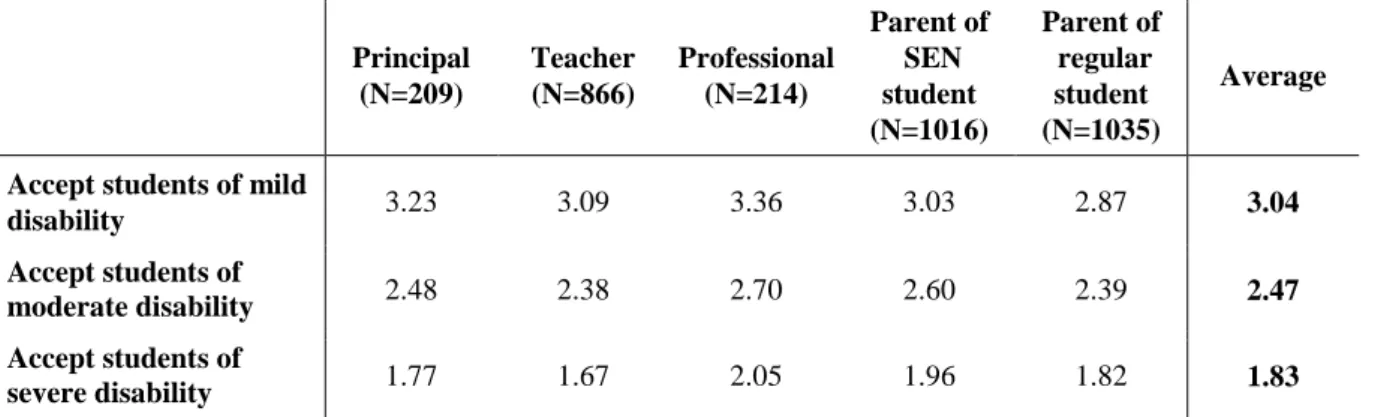
students in order to avoid school closure. However, this policy has brought many difficulties and challenges to schools. They include: insufficient knowledge of inclusive education, shortage of resources, inadequate manpower, great workload and a lack of collaboration. 13. Based on the degree that SEN students impact on others and the capacity that schools can take care of them, school stakeholders hold different views on different types of SEN students and their severity. Respondents are not willing to accept students with ID, ASD or ADHD, and those with moderate or severe disabilities. It is easier for most schools to accept students with HI, VI and PD.
14. Class placement in schools is mostly based on students’ abilities or random allocation. However, for some schools with small numbers of classes, SEN students with low academic performance, behavioral problems and special needs of caring might be allocated to the same class. For most interviewed schools which receive support from NGOs and special schools, students on average appear to have fair academic performance. However, some schools are concerned about the potential drop of overall teaching quality.
15. Although home-school cooperation is generally smooth, some teachers think that certain parents do not disclose the situation of their SEN children and are not willing to cooperate with schools. However, some parents of SEN students consider that schools do not provide sufficient information and they are worried about the labeling effects on their children. Parents of regular students complain that more resources are allocated for SEN students. 16. To facilitate the implementation of inclusive education, teacher training is a matter of concern. Most interviewed teaching staff (particularly teaching assistants and social workers) reveal that there is not sufficient training for them. The causes are: (1) Administrative arrangements of schools do not allow a considerable number of teachers to receive training each year; (2) As there is a small number of SEN students in school, caring of these students and related teacher training are not pivotal for school development; (3) The training contents cover broadly and lack practical information and follow-up guidance; (4) Even if teachers can afford to have further studies, their first choices are usually degree or post-graduate courses, rather than those professional development courses in special education; (5) There are already too many types of SEN students for inexperienced teachers who lack proper training to juggle with; and (6) The mobility of teaching assistants is so great that training is forever needed every year. In the long run, all teachers should receive pre-service training in special education so that their negative views about SEN students could be changed.
17. There are different reasons that parents of SEN students let their children study in the mainstream schools. For some parents, their children are transferred to the existing school as the original school has not met their children’s special educational needs. Some parents are rejected by many schools and only the existing schools are willing to accept their SEN children. Furthermore, some parents expect their children to be treated fairly, and are worried that if their children attend special schools, they will be negatively labeled in the society and cannot have better development. Most parents of SEN students are satisfied with their children’s learning in schools but some parents show disagreements and make complaints to
schools. Complaint cases are mainly about insufficient support for SEN students as their parents expect schools to provide more resources and support for their children. Moreover, some parents of SEN students have great expectation on their children and when there is a gap between their expectation and the reality, they express dissatisfaction to the schools.
18. The majority of interviewed SEN students have expressed that they like their schools and get along well with their teachers and classmates. However, some SEN students think that they are regarded as bad students in the eyes of their teachers. They are sometimes bullied (teased or beaten up) by classmates. Interviewed SEN students have mentioned that there are after-school counseling and assessment adaptation. However, a few students need private tutorials to solve their learning problems.
19. Most interviewed regular students reveal that they are willing to get along with SEN students or offer assistance to them. Regular students in secondary schools are more considerate and tolerant towards SEN students than those in primary schools. Nevertheless, some regular students find that sometimes it is difficult to get along with SEN students, mainly because of their impolite and unacceptable manners. Schools have made efforts to reduce bullying but cases of bullying among students still exist. There are more verbal abuses than physical bullying.
20. Parents of regular students do not have much understanding of inclusive education in schools. However, interviewed parents generally agree or accept SEN students to study along with their children in schools. They find that their children study happily. They indicate that there could be a win-win situation with inclusive education: SEN students will receive assistance while their children can study with classmates with different abilities. They also acquire attitudes of tolerance and acceptance, learn to care for others, build up senses of responsibility and empathy, and develop the characters of helpfulness. All these will be beneficial to their future life. However, a few parents of regular students have expressed worries that some deviant behaviours of SEN students will have negative influences on their children.
Conclusion and Recommendations
21. Concluding from the data of questionnaire survey and case study, there are problems in the system, policy and implementation of inclusive education in Hong Kong. They are summarized as follows:
(a) The identification of SEN students is criticized to be too sloppy and simple. The assessment reports do not cover enough details. Although the complaints might be due to parents’ concerns and high expectations, it should be understood that these assessment outcomes could have life-long impacts on SEN students such as school selection and placement. It would also affect allocation of public resources by the government.
(b) If schools are going to implement inclusive education, they have to reform (e.g. changes in physical facilities and pedagogic adaptation) in order to cater for the needs of SEN students. However, survey data reveal that about 20% of the principals, teachers and professionals express disagreement about adopting some necessary modification measures. Even worse, there are around half of the respondents who disagree to accept and support students with severe disabilities. It is a great concern if schools are not determined to make necessary changes to meet the needs of SEN students, SEN students will face with the ever increasing learning difficulties.
(c) Survey findings show that many principals (61%), teachers (43%) and professionals (49%) and parents of SEN students (37%) consider that schools do not receive enough government subsidies/ resources to implement inclusive education, particularly in funding amount, teacher training, manpower allocation and professional support. Many respondents indicate that teachers have heavy workload and do not have sufficient time to support different types of SEN students.
(d) The findings of questionnaire survey show a worrying situation that around 20% of the principals, and 50% of the teachers and professionals are not familiar with the “Code of Practice on Edcuation under the Disability Discrimination Ordinance” and “Indicators for Inclusion 2008: A Tool for School Self-evaluation and School Development”. They also express that they do not know much about the development of inclusive education and related support resources. It is disappointing to note that resources are allocated but outcomes are far from what stakeholders expect, and this will be an obstacle to the development of inclusive education.
(e) In the case study, the majority of SEN students report that they have good relationship with teachers who encourage, help and care for them. However, survey data reveal that around 10% of the SEN students hold opposite views. 14% of the SEN students feel that they are not treated fairly in schools whereas 9% think that teaching staff, being unfriendly, do not actively take care of them.
(f) There is a large discrepancy in the perception toward the sufficiency and appropriateness of support given by schools to SEN students. Teachers generally believe that their schools perform well in providing various measures and strategies to help SEN students. However, survey findings reveal that 20% or more of the parents of SEN students are dissatisfied with teaching, adaptation of curriculum and assessment, teachers’ professional knowledge, and support provided by teaching assistants. Parents of regular students also express disagreement with the extra support given to SEN students, considering it as unfairness. They worry that SEN students disturb classroom orders and slow down teaching progress. It demonstrates that the communication between schools and parents is insufficient so that it affects the effectiveness of inclusive education as well as assistance provided for SEN students.
(g) In terms of relationship with peers, 16% of SEN students do not have good peer relationship and they are often teased (31%) and bullied (26%). From the case study,
interviewees generally think that bullying among students is not severe. In most occasions, students with emotional and behavioral problems (e.g. student with ADHD) may bully against regular students or regular students bully against SEN students verbally. It is rare to see physical bullying. However, even for the subtle hitting and scolding which have been neglected by teachers and parents, it may cause psychological stress to regular students or SEN students, causing them to feel unhappy and helpless. (h) In accordance with the development of the new senior secondary curriculum, applied
learning courses are offered in some of the schools with special curricula, special schools and mainstream secondary schools. Some interviewed teachers are concerned about further education and career path of SEN students.
(i) In general, schools receive funding through the New Funding Mode to support SEN students. Schools often contact NGOs to acquire support services which include purchased services, organizing activities or talks, providing consultation or collaborative projects. Most interviewed schools report that these support services have certain effectiveness. However, some respondents point out that the effects vary due to a lack of continuity in the support services, frequent changing supporting organizations, high mobility of supporting staff, insufficient communication between organizations and schools, and poor home-school cooperation.
22. In response to the afore-mentioned problems in the system, policy and implementation of inclusive education, the research team proposes the following recommendations with reference to overseas implementation experiences of inclusive education:
(1) Identification of SEN students
For early intervention, assessment should be taken in the stage of pre-school education. A comprehensive and detailed assessment report should be provided to parents, teachers and professionals. It not only helps parents understand the development needs of their children and right of their choices, but also provides useful information for the follow-ups in education and therapies.
(2) Initiatives of schools to implement inclusive education
Schools should be proactive in making changes or reform to cater for SEN students’ needs. This can be achieved by formulating long-term plans and policy on the curricula and accommodation for SEN students. Furthermore, they should try to achieve consensus in the directions and goals among stakeholders in schools.
(3) Allocation of resources and manpower
In view of student cases with moderate or severe disabilities in mainstream schools, the shortage of manpower and limitation of resources are noted. Currently, mainstream schools take care of students with mild disabilities whereas special schools care for students with moderate or severe disabilities. This is a dual-track mode of the implementation of “mainstream integrated education and special education”. For
effective implementation, the Education Bureau (EDB) should issue guidelines that include clear procedures of referral and ways of professional collaboration to mainstream schools and special schools so that the dual-track mode can be strengthened.
(4) Preparation and training of school staff
School staff’s knowledge in integrated education, special education, and existing support services needs to be strengthened. All school staff, including principals, teachers, teaching assistants should be encouraged to take training in special education. Pre-service teacher training programs in tertiary institutions should include special education as a core module as well as exposure or attachment in inclusive settings. The government should provide incentives for teaching staff to have further studies in special education programs. For example, the completion of further studies in special education programs will be one of the prerequisites in the career promotion.
(5) Appointment of designated SEN coordinators
The government should consider setting up a functional post at management level in school, viz. a designated teacher, to deal with matters of SEN students, instead of the current practice of an added-on duty. In this respect, schools can constantly evaluate and prioritize the development of integrated education, identification of special education needs, organization of support measures, and management of resources. Schools may also connect with other schools which have rich experiences in integrated education for support and advice.
(6) Whole school approach
In some mainstream schools, SEN students may be confined to the same classes given that class placement is based on students’ academic performance. It is recommended that schools should handle class placement of SEN students so as to reduce segregation and discrimination. The research team is also concerned about the ideas of selective acceptance of SEN students, as students with certain disabilities (e.g. ID, ADHD and ASD) are commonly not welcomed. There are guidelines in the Whole School Approach in School provided by the Education Bureau. Schools should refer to the guidelines in the processes of student admission and class placement.
(7) Specialized and long-term IEP for SEN students
Some teaching staff too much emphasize uniformity that the learning effectiveness of IEP has been neglected. Therefore, the EDB should consider allocating more resources, and delineating the function and implementation format of IEP. With reference to overseas experiences of the learning rights of SEN students and legislation of IEP, schools should be requested to provide specialized and long-term IEP for diagnosed SEN students in order to protect their rights of receiving appropriate educational arrangements. The enforcement of IEP to all SEN students will be a proactive measure to guarantee equal learning opportunities of all SEN students.
(8) Caring Campus
The cultivation of a caring campus is an essential foundation of integrated education. Teaching staff should develop the spirit of education for all, reduce the rejection of SEN students and let them feel respected, cared and concerned. Schools should help students understand the importance of mutual respect and elimination of discrimination through public education, small group activities and individual counseling. To promote peer relationship, schools should hold peer counseling/ learning partnership programs and other group activities to enhance SEN students’ social skills. Stakeholders should have zero tolerance towards any form or degree of bullying, no matter it is direct or indirect, physical or verbal.
(9) Home-school communication and cooperation
Schools have the responsibilities to notify parents about their integrated education policy and support, so as to eliminate parents’ mistrust and worries. Parents of SEN students should recognize their rights of participation and giving opinions. Apart from parent-teacher association, IEP meeting is a good platform for communication between parents and schools. The EDB may allocate more resources on publicity through different media (e.g. TV and internet), in order to raise the public’s and the parents’ knowledge of integrated education and their respect for human rights.
(10) Community support
Schools may build up long-term collaborative relationship with organizations (e.g. NGOs, professional organizations, special schools with resource centres, and integrated education resource schools) which provide support services for SEN students’ learning and staff training. The EDB should publicize more extensively about the availability of resources and support.
(11) Way forward for SEN students
For further education and career development of SEN students, the government and related organizations should offer a wide range of appropriate study courses, related manpower and resources for SEN students who will truly experience equal learning opportunities of post-secondary education. Moreover, universities and tertiary educational institutions should set up well-defined practices in providing adjusted admission criteria, flexible duration of study and adaptation of support measures, in meeting the needs of SEN students.
Chapter 1
Overview
1.1
Introduction
The concept of integrated education, inclusive education and mainstreaming were first introduced to Hong Kong in the 1970s. Mainstreaming refers to the process of placing students with special educational needs (SEN) in ordinary or mainstream schools. While both integration education and inclusive education involve mainstreaming, they differ in the approach of education provided to SEN students. Integrated education focuses on fitting SEN students into the existing school arrangement (Hall, 1997), while inclusive education emphasizes more on the equipping the school environment to fit the needs of SEN students. Hong Kong has implemented the mode of integrated education whereas the research team adopts the idealation of “inclusive education” that is commonly embraced by educators. It should be noted that the terms integrated education and inclusive education will be used interchangeably throughout the report unless specifications are required.
Initially, the practice of integrated education (IE) in Hong Kong took the form of special classes and special programs in ordinary schools to cater for students with special educational needs. In 1997, the IE pilot project with an emphasis on whole-school approach was launched in relation to the 1994 Salamanca Statement and Framework for Action on Special Needs Educationthat called upon governments to give inclusive education the highest policy and budgetary priority so as to include all children in mainstream schools regardless of individual differences or difficulties. From 1999 onwards, the IE program was officially implemented in a number of primary and secondary schools across the territories. In 2001, the Code of Practice on Education was issued by the EOC under the Disability Discrimination Ordinance to ensure that persons with disabilities have equal opportunities in access to, and meaningful participation in, local education.
The implementation of IE over the past decade has led to the involvement of a wider group of teachers and increased public awareness of IE, bringing about heightened parental expectations and increased pressure on schools and teachers. Over the years, IE has been extended to cover disabilities including Attention Deficit and Hyperactivity Disorders (ADHD), Autistic Spectrum Disorders (ASD), Communication Difficulties (CD), Emotional and Behavioural Difficulties (EBD), Hearing Impairment (HI), Intellectual Disability (ID), Physical Disabilities (PD), Specific Learning Difficulties (SLD), and Visual Impairment (VI). A wide range of professional/specialist support at school, teacher and student levels is provided to schools. The support resources are either directly provided by the Education Bureau (EDB) or via principals, teachers, counselors, therapists, social workers and teaching assistants in schools. The list of resources include educational psychology service, speech therapy service, student guidance service, enhanced advisory service for schools, teacher professional development, and support for parents in making school choices. When implementing these measures, the assumption is that the measures are effective for IE and can enhance the learning of SEN students. Yet this assumption needs to be verified.
To advance the IE program and balance the benefits for all stakeholders, this survey was conducted to investigate the pros and cons of controlled segregation (e.g. grouping SEN students into one class) and desegregation of SEN students (e.g. distributing SEN students to different classes) in mainstream schools4, and how operations can properly be administered with respect to different categories and/or degrees of disabilities. Furthermore, the provision of resources/ intervention should be consulted so that all the stakeholders can play their roles in a timely manner to enhance the learning ability of both SEN and regular students.
1.2
Objectives
The study aims at understanding the general attitudes of educators and school teachers in acknowledging the necessity of integrated education to disabled students and how ready they are to educate them in their own schools. It also investigates difficulties encountered by stakeholders (including principals, teachers, professionals, parents of SEN students, parents of regular students, SEN students and regular students) and solicits their opinions on current status and ways and means to further advance the implementation effectively. The objectives are listed below.
(a) To conduct a literature review on the existing studies on the subject of integrated/ inclusive/ special education of students with disabilities in Hong Kong and overseas. (b) To elicit the stakeholders’ understanding of IE policy and attitudes towards students
with SEN in mainstream schools in relation to controlled segregation and desegregation approaches.
(c) To discern the stakeholders’ perception of difficulties encountered under the four domains (viz. school management and organization, learning and teaching, student support and school ethos, and student performance) in educating SEN students and able-bodied students in the IE program, with respect to different categories/degrees of disabilities.
(d) To collect opinions from the stakeholders towards allocation of resources, provision of professional training, and support from the community. The functional roles and inter-relationship of IE program in mainstream schools, skills opportunity schools (SOSs), special schools and career-oriented training courses are examined.
1.3
Research Questions
While this study probes for the development of integrated education in various aspects, the research team has focused on the following questions:
4 School practices vary so much that some schools will group SEN students at the same grade-level in a class
of small size whereas some schools will allocate SEN students to different classes, and some practices are in between.
(a) To conduct a literature review on the existing studies on the subject of integrated/ inclusive/ special education of students with disabilities in Hong Kong and overseas. 1. What are the characteristics and significance in the policy and development of
integrated/ inclusive/ special education of students with disabilities in Hong Kong? 2. What are the literature and research on integrated/ inclusive/ special education of
students with disabilities in Hong Kong?
3. What are the stages of development and issues encountered in USA, UK, Australia and some Asian countries?
4. What are the implications for Hong Kong with respect to overseas experiences in inclusive education?
(b) To elicit the stakeholders’ understanding of IE policy and attitudes towards SEN students in mainstream schools in relation to controlled segregation and desegregation approaches. 1. What are the core values of inclusive education?
2. How do schools put the ideas into practice?
3. Are schools prepared to take care of SEN students? 4. What support measures have been formulated in schools?
5. In relation to controlled segregation and desegregation approaches, how do schools administer these support measures?
(c) To discern the stakeholders’ perception of difficulties encountered under the four domains (viz. school management and organization, learning and teaching, student support and school ethos, and student performance) in educating SEN students and able-bodied students in the IE program, with respect to different categories/degrees of disabilities.
1. What changes are found in school management and organization under the IE system? 2. What difficulties are found in learning and teaching in classes with students of
different learning abilities?
3. How sufficient and adequate are the support measures for SEN students?
4. How is it to proceed to the holistic development of SEN students, including emotional, social and academic aspects?
5. What are the major problems encountered when inclusive education is implemented? (d) To collect opinions from the stakeholders towards allocation of resources, provision of
professional training, and support from the community. The functional roles and inter-relationship of IE program in mainstream schools, skills opportunity schools, special schools and career-oriented training courses are examined.
1. How is the professional training for principals, teachers and teaching assistants? 2. Are existing resources sufficient and adequate for the needs of schools and SEN
students?
3. How can non-profit-making organizations provide sufficient and adequate support to schools?
4. What are the roles played by skills opportunity schools, special schools and career-oriented training courses when inclusive education is implemented?
1.4
Research Team
This study is undertaken by the Centre for Special Educational Needs and in Inclusive Education (CSENIE). The research team includes Dr. Kenneth SIN Kuen Fung, Prof. Chris FORLIN, Dr. HO Fuk Chuen, Dr. AU Mei Lan, Dr. YAN Zi (early stage of preparation and compilation of data) and Dr. LUI Ming (later stage of compilation of data and report writing). Furthermore, the teaching staff, administrative staff, and research assistants at CSENIE, have also assisted in different aspects of this research study.
Chapter 2
Literature Review
2.1
Implementation of Integrated Education in Hong Kong
With respect to topics on inclusive education and special education of SEN students, the research team has conducted a review of recent development, experiences and research studies in Hong Kong and overseas countries/ regions. The information is summarized below.
2.1.1 Types of disabilities
Hong Kong has a population of over 7 million in 2011, among which there are 360,000 people with disabilities. In the Rehabilitation Program Plan in 2007, the types of disabilities have increased from 8 to 10, including: attention deficit/hyperactive disorder, autism, hearing impairment, intellectual disabilities, mental illness, physical disabilities, specific learning difficulties, speech impairment, visceral disability and visual impairment. Different bureaus of government formulated policies, budgets, education, services and support measures in response to meeting the needs of people with disabilities.
2.1.2 Policies on integrated education
It was highlighted in the item 6 of the “School Education in Hong Kong: A Statement of Aims (1993)” that “every school should help all of its students, whatever their level of ability, including those with special educational needs, to develop their potential as fully as possible in both academic and non-academic directions.” The Hong Kong Government reiterated the policy of integrated education in Hong Kong in the 1995 White Paper on Rehabilitation. In the “Reform Proposal for the Education System in Hong Kong” commissioned in 2000, the Education Bureau also emphasized catering for the needs of students with learning disability, and, through counseling services and assistance, to provide SEN students, the opportunity to maximize their potentials. The Equal Opportunities Commission likewise formulated the Code of Practice on Education under the Disability Discrimination Ordinance in 2001 to lay down guidelines for private and public educational establishments in preventing and eliminating disability discrimination for the sake of universal equal opportunity. The guidelines included the provision of: non-restrictive learning environments; formulation of appropriate admission procedures; tailoring the curriculum, teaching methods, assessment; counseling support to ensure that the individual needs of the SEN students can be satisfied. The Chinese Government deposited the instrument of ratification with the United Nations on 1 August 2008, and then became the thirty-third signatory of the Convention on the Rights of Persons with Disabilities. On 31 August of the same year, the Convention entered into force in China as well as in Hong Kong SAR and Macau SAR, and its obligations covered education, rehabilitation and employment, and hence engendering deep-rooted impacts on the development of integrated education.
2.1.3 Development of integrated education
In 1997/98, the former Education Department launched a two-year pilot project on integrated education to assist students with five types of SEN students in mainstream schools, including students with: hearing impairment; visual impairment; physical disabilities; mild intellectual disabilities and autism (those with average intelligence). Thereafter, under the development of integrated education, eight types of SEN students could study in mainstream schools, namely: specific learning disabilities; intellectual disability; autism; attention deficit and hyperactive disorder; visceral disability; visual impairment; hearing impairment; speech impairment. The Government introduced the New Funding Mode plan in 2003/2004, under which schools were granted subsidies according to the number of SEN students in each school and the severity of the problem of individual students.
According to the list of participating schools in the New Funding Mode scheme (2007/08), there were 282 primary schools participating in the scheme. However, since the number of SEN students keeps increasing, the subsidy of $550,000 could not satisfy the needs of the schools with a large number of SEN students. Starting from the school year of 2008/09, the Education Bureau changed the funding arrangement of the New Funding Mode. The amount of subsidy remains unchanged for schools admitting students with the need of tier-2 support, i.e. they receive $10,000 per year for each student admitted. However, for the first 1 to 6 students with the need of tier-3 support, each school would receive an annual subsidy of $120,000; for 7 or more students with the need of tier-3 support, the school would receive $20,000 for each additional student admitted. The upper limit of fund received per year for each school increased from $550,000 to one million (Education Bureau, 2008). Starting from 2009, secondary school could also receive funding under the New Funding Mode scheme. For career training, there are 4 tertiary institutions offering pre-service teacher training. Before 2009, only one institution included special education as one of the core courses of the program (Office of the Ombudsman Hong Kong, 2009). At present, all pre-service teacher training programs include the contents about special educational needs. In terms of in-service teacher training, teachers who taught SEN students were arranged to attend training in special education, and received subsidies for the training. Starting from 1993, teachers could enroll in the 2-year Special Education Teacher Training Program (one year full-time course work and one-year practicum of teaching) offered by The Hong Kong Institute of Education (HKIEd). However, the program was terminated in the year of 2004/2005 and was replaced by a program of teacher professional development program, which includes a 120-hour special education training course and a course related to ASD and specific learning difficulties in 2005/2006 (Education Commission, 1996; Education Bureau, 2006). In the Bachelor of Education (BEd) and Postgraduate Diploma in Education (PGDE) programs at tertiary institutes (e.g. HKIEd, HKU), special education is offered as the minor study. The running of the BEd (Special Needs), Professional Development Program (Catering for Diverse Learning Needs) and specialized study about special education in the postgraduate degree programs will also provide training opportunities at different educational levels.
The Education Bureau formulated a “5-year teacher professional development framework for integrated education” in 2007. Within 5 years starting from 2007/2008, the Education Bureau
requires that: each regular school should have at least 10% of the teachers who have finished 30 hours of training in basic courses about caring students with different educational needs and learning how to provide high-quality classroom teaching; at least 3 teachers should have finished 90 hours of training in advanced courses to learn how to provide additional support; at least 1 teacher should have finished 60 hours of training in thematic courses to learn about the needs of specific types of students according to the types of students in their own schools; at least one Chinese subject teacher and one English subject teacher should have finished the thematic course about specific learning difficulties. The Education Bureau has arranged workshops and training courses for principals and teaching assistants, as well as talks, seminars, experience sharing meetings (Education Bureau, 2007). In the coming 5 years after 2012, teachers will be trained up in these commissioned programs. The goal is to attain 15% trained teachers in each school.
2.1.4 Whole school approach to cater for students’ individual differences
Under the prevailing policy to adopt the whole school approach to cater for student differences, the Education Bureau resorts to the 3-Tier Intervention Model in providing individualized support to students with special educational needs. Tier-1 support, through high-quality teaching in the regular classroom, caters for students with transient or mild learning difficulties, so as to avoid further deterioration. Tier-2 support deploys additional resources towards students with persistent learning difficulties, including those with special educational needs. Tier-3 support provides enhanced intensive individual support for students with severe learning difficulties.
2.1.5 Characteristics of integrated education
To conclude, the development of integrated education in Hong Kong is originated from the policy stated in the White Paper on Rehabilitation in 1977. Since the pilot program in 1997, the substantial development has gone through a period of 15 years. The current policy strategy emphasizes the respect on parents’ choices, and the implementation of both special education and integrated education. Through providing additional funding support, teacher training, professional consultation and support provided by external bodies, schools are encouraged to adopt the school-based strategies of “whole-school approach”, early identification, early intervention, cross sectors collaboration and home-school cooperation, in order to support the SEN students in their schools.
2.1.6 Research studies about integrated education in Hong Kong
Many scholars or organizations have conducted research studies on the topic of integrated education/ inclusive education/ special education in Hong Kong, and provided suggestions. The research projects conducted in these 10 years include: “Report of the Subcommittee to Study Issues Relating to the Provision of Boarding Places, Senior Secondary Education and Employment Opportunities for Children with Special Educational Needs.”; “Case studies of four integrated schools in Hong Kong.”; “Report of the difficulties and challenges of the students with visual impairments in Hong Kong mainstreaming schools”; “Report of the difficulties and challenges of the integrators with hearing impairment in Hong Kong schools”;
“Research Report of the Integrated Education Implementation in Hong Kong Primary Schools”; and “Report on studying the all-round development of students with visually impairment in Hong Kong Schools”. There are also reports from some education organizations, scholastic journals, and books which discuss about related issues, difficulties and suggestions. They are not described in details here.
2.1.7 A study on students with visual impairment in regular schools
The Hong Kong Society for the Blind and the Centre for Special Educational Needs and Inclusive Education of The Hong Kong Institute of Education collaborated on a survey study which was completed in 2012. The aim of the study was to examine the education and rehabilitation services for people with visual impairment, and the learning difficulties faced by students with visual impairment in regular schools. The research team identified the following factors which may directly or indirectly affect students’ learning: quality of visual equipment, learning support, home-school cooperation, and teachers’ professional competencies. Suggestions were given about the improvement of visual equipment to increase the efficiency of learning, the enhancement of support to students with visual impairment to expand their scope of learning, the enhancement of home-school cooperation, and the development of professional training for teachers teaching students with visual impairment.
2.1.8 A study on students with hearing impairment in regular schools
The “Report of the Difficulties and Challenges of the Integrators with Hearing Impairment in Hong Kong Schools” conducted by the Hong Kong Society for the Deaf in 2009 points out that many teachers lack an understanding about students’ hearing impairment. For example, they underestimated the severity of students’ hearing impairment, or overestimated the effectiveness of the hearing aids, or neglected the needs of students with hearing impairment. This affected the arrangements of learning and teaching, and deprived students of their equal learning opportunities. The proportion of students with hearing impairment studying in schools not participating in the project of integrated education or receiving the New Funding Mode is increasing. The students’ severity of hearing impairment ranges from mild to severe, and there are also students with other types of disabilities. Because of hearing impairment, students’ ability of comprehension is low; their confidence in learning will be affected. All these lead to unsatisfactory learning performance. There is also reporting of discrimination by peers and bullying on students with hearing impairment. Efforts should be enhanced in the adaptation of classroom teaching, individual education plan (IEP), regular meetings with parents, home visits and consultation, the promotion of inclusive culture in schools, and the elimination of bullying behavior among peers.
2.1.9 Other relevant research studies
The “Subcommittee Report on Study Issues Relating to the Provision of Boarding Places, Senior Secondary Education and Employment Opportunities for Children with Special Educational Needs” by the Legislative Council in 2008 revealed existing problems of the development of special education and integrated education in Hong Kong and overseas
countries. Social acceptance of people with disabilities is a key factor for them to embrace equal opportunities.
A survey conducted by the Chinese University of Hong Kong in 2002 (Lau, 2002) indicated that about 70% of the respondents believed that people with disabilities were discriminated, and 50% of the respondents believed that the discrimination has reached a moderate or severe degree. One important point to note is that the respondents believed that apart from TV advertisement or publicity activities to promote the understanding of people with disabilities, personal interaction with people with disabilities would reduce discrimination against people with intellectual disabilities or mental illness. This implies that the implementation of integrated education might probably reduce public attitudes of discrimination against people with disabilities in Hong Kong.
Moreover, the “Baseline Survey on Public Attitudes towards Persons with a Disability 2010” conducted by the Equal Opportunities Commission revealed that more than 50% of the respondents perceived that persons with specific disabilities implied having some forms of inability or dependence on others, and about 30% considered that they were likely unable to lead a happy and fulfilling life. However, most respondents had no regular contact with persons with disabilities to substantiate their viewpoints.
A survey study conducted by the Department of Social Work of the Chinese University of Hong Kong about student bullying in integrated education schools. The Education Convergence also carried out a questionnaire study about integrated education in 2006. The data showed that respondents generally believed that integrated education slowed down the teaching progress. Schools admitted different types of SEN students so that it was difficult to take care of all their needs. Regular teachers could not handle SEN students and they generally did not grasp the methods of teaching them. The Education Bureau should reduce the number of students for classes with SEN students, and limit the number of types of SEN students in regular schools.
In 2005, the Special Education Society of Hong Kong and the Hong Kong Primary Education Research Association collaborated on a project titled “Research Report of the Integrated Education Implementation in Hong Kong Primary Schools”. The aim of this research was to evaluate the implementation of the integrated education in Hong Kong primary schools. The research collected opinions about integrated education from principals, teachers, parents, and students (the total number of respondents was 1,688), particularly about the implementation of integrated education, and how the implementation affected learning & teaching and administration in schools. Some suggestions of improvement, particularly in the area of SEN coordinator, effective school management, curriculum accommodation and teacher empowerment, were also given.
2.2
Implementation of Inclusive Education in Overseas Countries/
Regions
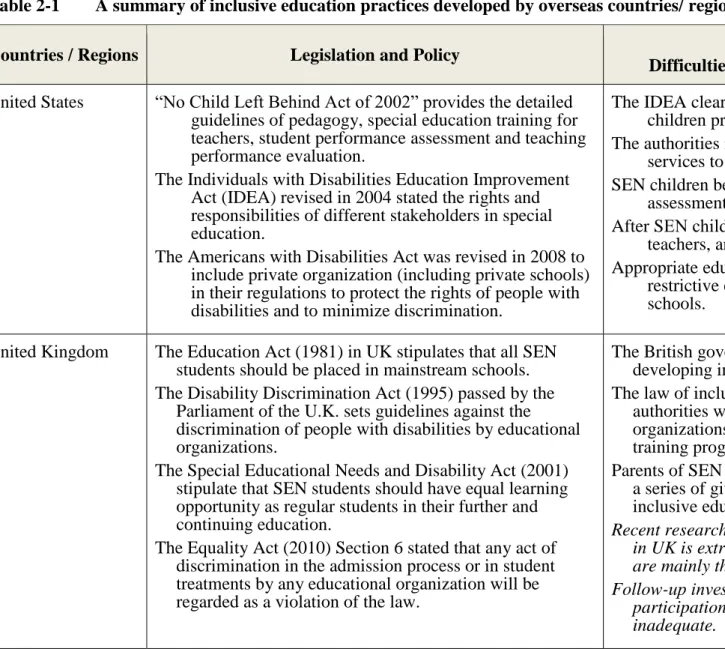
In the book “Approaches of inclusive education” (edited by Sin, K. F., Hui, L. H. & Chui, L. C., 2010), views, research and implementation experiences of scholars on inclusive education are compiled. Authors from different regions examined the development of inclusive eduction in their own countries (including Canada, South Africa, Hong Kong, Russia, Finland, Norway, Turkey, U.S., Korea and some developing countries in Asia-Pacific region). They pointed out that there were obstacles in implementing inclusive education and different implementation models were described. Such difficulties may be resources, manpower, attitude, discrimination, equal learning opportunities and the modes of support. Suggestions on formulating policies and ways of successful attainment in technological support, positive school culture, barriers removal, legislation and teacher empowerment, were also provided. In addition, the research team summarizes the development of inclusive education in the countries/ regions below as well as shown in Table 2-1.
2.2.1 United States
Legislation in Special Needs
The Individuals with Disabilities Education Improvement Act (IDEA) revised in 2004 stated the rights and responsibilities of different stakeholders in special education. Following a campaign named “Funding the Individuals with Disabilities Education Act”, the President Obama signed the American Recovery and Reinvestment Act of 2009, which allocated an additional fund of $12.2 billion for SEN children’s education.
The IDEA clearly defines the following categories of SEN children as children protected by law: autism, visual impairments, hearing impairments, intellectual disability, orthopedic impairments, serious emotional disturbance, speech or language impairments, multiple disabilities, specific learning disabilities, traumatic brain injury, and other types of physical disabilities. The IDEA stated that the authorities in each state should provide early intervention services to 0-3 year-old infants, for example, occupational therapy, psychological assessment and therapy, physiotherapy, and other medical services. SEN children between the age of 3 and 21 should be provided assessment services and appropriate special education. The expenses are covered by the government fund and also payment by service users. On 6 September 2011, the Department of Education in the U.S. announced the latest revision of part C of IDEA about early intervention. The revision focuses on providing a fund of US$436 millions for the early intervention services of 0-2 year-old infants with developmental disabilities or with diagnosed physical or mental conditions which may lead to developmental disabilities.
To facilitate the implementation of different special education policies, each state should gather the statistics of 0-21 year-old children and adolescents with special educational needs through different types of media (e.g. websites and telecommunication). This is known as the “Child Find System”. The SEN children/adolescents who are identified with this system will be assessed and evaluated by the multi-disciplinary unit in schools. There are clinical
psychologists, special education teachers, regular teachers and school administrative staff in the unit. After the assessment, the Individual Education Program (IEP) team will design curriculums which fit the needs of the SEN children protected by the IDEA.
The “No Child Left Behind Act of 2002” provides the detailed guidelines of pedagogy, special education training for teachers, student performance assessment and teaching performance evaluation, in order to protect poor students’ and SEN students’ equal learning opportunities. The Americans with Disabilities Act signed by the President Bush in 1990 was revised in 2008 to include private organization (including private schools) in their regulations to protect the rights of people with disabilities and to minimize discrimination.
Implementation of Special Education
If the authority believes there is a need of assessment for a particular student, parental consent should be obtained first. If the parents believe there is any fault in the assessment, or their child is discriminated for any reason, they can complain to the U.S. Commission on Civil Rights. Each state has its law protection system to assist the parents to find law professionals and resources because of their rights.
According to the IDEA, after SEN children’s assessment, schools will invite parents, teachers, and professionals to attend an IEP meeting. The IDEA makes sure parents have amble opportunity to participate in their children’s IEP, as schools are required to notify parents ahead of time about the meeting time and venue and to seek their consent (Yell, 2006). Schools should also notify parents the objectives and agenda of the meeting. If there is any change or revision in the IEP, parental consent should be sought. The IDEA also sets clear requirements on the selection of IEP committee members (Yell, 2006). There should be at least one special education teacher, one regular teacher, one representative from an educational organization (should have the qualification to supervise the implementation of IEP, and is familiar with regular education curriculum and the existing resources of the school), one person who can evaluate the outcome of IEP (can be former IEP committee member), the student himself/herself (if appropriate). The committee should not include the student’s teachers.
The IDEA sets clear requirements on the necessary content of IEP (Yell, 2006): • The student’s current academic performance and functional performance; • The student’s annual goal on academic and functional performance;
• The method to measure the student’s progress and the time to provide parents the student’s regular progress report;
• Provide evidence-based special education services and supplementary assistance to the student, and the program revision and support provided by school staffs;
• If the student could not participate in activities together with regular students in certain extent, provide explanations;
• Give explanations if the student could not be evaluated by regular assessment scheme; explain how alternative assessment methods or adaptation of assessment methods are designed;
• The measurable goal of post-secondary school arrangement; the assessment services and transition services during the transition period according to student’s age (should be provided to all students above the age of 16), in order to help students achieve their goals.
The IDEA suggests that appropriate education should be carried out in the least restrictive environment (LRE). It suggests that SEN students should receive education together with regular students (Yell, 2006). The LRE is not only in a certain circumstance, it should be applied in the mainstream educational environment, no matter it is private or public school. Special class, segregated teaching or keeping SEN students from regular educational environment should only be applied when regular educational environment could not offer satisfactory supporting facilities and services (IDEA, 20 U.S.C. 1412). The IDEA also defines the degree of restriction: institutions specifically designed for disabled people are the most restrictive environment; regular mainstream school is the least restrictive environment.
However, there are also scholars believing that the LRE could be different for different students. The key is what environment could provide the most appropriate education for children (McLaughlin & Jordan, 2005, p.104). The law only encourages but not forces the placement of all SEN students in regular classrooms (Bateman & Linden, 1998). There were legal cases posing restrictions on inclusive education arrangement, for example, keeping students with violence tendency and those who affected classmates’ learning out of the regular classrooms (Light vs Parkway 41 F.3rd 1223 [8th Cir 1994]).
2.2.2 United Kingdom
The Disability Discrimination Act passed by the Parliament of the U.K. in 1995 sets guidelines against the discrimination of people with disabilities by educational organization. Local educational departments should provide annual reports to parents, stating the children’s learning plan and the arrangements made by schools to make sure students have equal learning opportunity. The Special Educational Needs and Disability Act 2001 stipulate that SEN students should have equal learning opportunity as regular students in further and continuing education. Therefore, tertiary institutions should provide facilities and measures to facilitate SEN students’ learning.
Special education system in England differs from that in the United States. England does not have a specialized education system based on the identification of different types of SEN students (Dyson & Gallannaugh, 2008). The reason of not categorizing people with disabilities is to reduce the effect of a conscious identity of disability and the labeling effect. Students in England are provided supporting services according to their individual special educational needs. The Education Act 1981 in UK stipulates that all SEN students should be placed in mainstream schools. Inclusive education has since been the mode of special education in England. Apart from people with developmental disabilities (e.g. Autism Spectrum Disorders and intellectual disabilities), people with behavioral and emotional difficulties are also the target of services. The Equality Act 2010 Section 6 stated that if there is any act of discrimination involved in the admission process or student treatment (for example, facilities and services) by any educational organization, it is regarded as a violation
of the law. The Centre for Inclusive Education in the U.K. pointed out that inclusive education aims at providing high-quality learning opportunity to students with different educational needs. Based on the principle of elimination of discrimination, a system with justice and fairness should be set up to let people of different races, genders, and level of disabilities have the opportunity to explore their potentials.
(1) Resources
To provide students with education that fits their needs, IEP should be set up. The government should make sure enough teaching resources and different types of facilities are provided. The British government has set up multiple funds for the promotion of inclusive education, including funds related to special education, community inclusion, extra-curricular activities, school implementation and additional educational reward.
(2) Teacher Training
The law of inclusive education (Department for Education and Skills (DfES), 2004) states that the related authorities will collaborate with teacher training organization and tertiary institutions to set up teacher training programs. All teachers are expected to be well-equipped to be teachers of SEN students (Lambe, 2007). However, the recent statistics show that special education teacher training in UK is still lacking. The statistics in 2007 revealed that only 29% of the tertiary institutions in England have required courses of special education in the teacher training degree programs (Vickerman, 2007). Only 42% of the institutions offer selective courses (non-required courses) of special education. Half of the courses are mainly theory-based teaching. The pre-service teacher training in special education in the U.K. should be strengthened.
(3) Home-school Cooperation
The Education Act 1981 states that parents of SEN students have the following rights: (a) The right of receiving relevant information
The school district should notify parents their rights protected by law, and the names of people involved in their children’s education, including teachers, professionals, and related government officials. If the schools have any arrangements for students (for example, arrangement of assessment), they should first notify the parents with formal letter and seek their consents. Parents have the right to examine students’ educational records (including results of assessment, progress report of learning, etc.). If a parent’s first language is not English, he/she can request the schools to provide translation service.
(b) Their children’s right of receiving assessment
If students have not been assessed in the past 6 months, their parents have the right to request for an assessment. If the parents have any doubts about the assessment methods and the outcomes given by an organization, they can request for a re-assessment by another organization, or multiple re-assessments, to make sure their children’s special educational needs to be thoroughly considered. Parents also have the right to accept or reject any assessment on their children.