CHALLENGES ON SECURITY ATTACKS IN WIRELESS SENSOR NETWORK: AN ASSESSMENT
Meena Chaudhary1, Dr. Rajeev Kumar2 Department of Computer Science and Engineering 1,2
Sri Venkateshwara University, Gajaraula (Amroha), U.P. India
Abstract
A remote sensor organize (WSN) has imperative applications, for example, remote natural checking and
target following. This has been empowered by the accessibility, especially inrecent years, of sensors that
are littler, less expensive, and shrewd. These sensors are furnished with remote interfaces with which
they can speak with each other to shape a system. In this paper we manage the security of the remote
sensor systems. Gazing with a short review of the sensor arranges, and talks about the present condition
of the security assaults in WSNs. Different sorts of assaults are examined and their countermeasures
exhibited. A concise talk on the future heading of research in WSN security is additionally included
Keywords: Wireless Sensor Networks (WSNs), Attacks, Security, Threats.
1. INTRODUCTION
Remote sensor systems (WSNs) are inventive
extensive scale remote systems that comprise
of dispersed, self-governing, low-control,
minimal effort, little size gadgets utilizing
sensors to agreeably gather data through
infrastructure less specially appointed remote
system. The improvement of remote sensor
systems was initially propelled by military
applications, for example, war zone
observation. Notwithstanding, remote sensor
systems are currently utilized as a part of
numerous regular citizen application ranges,
including condition and natural surroundings
checking, medicinal services applications, home
computerization, and activity control. Security
assumes a major part in numerous remote
sensor arrange applications.
Since sensor systems posture interesting
difficulties, security procedures utilized as a
part of routine systems can't be
straightforwardly connected to WSNs due to its
extraordinary attributes. To start with, sensor
hubs are extremely delicate of creation cost
since sensor systems comprise of an extensive
number of sensor hubs. [1] Contended that the
cost of a sensor hub ought to be considerably
less than one dollar all together for sensor
systems to be doable. In this way, most sensor
memory, calculation, and correspondence
capacities. Typically sensor hubs are fueled by
batteries, and reviving batteries are infeasible
much of the time. Vitality utilization turns into a
key thought for most sensor system
conventions [2].
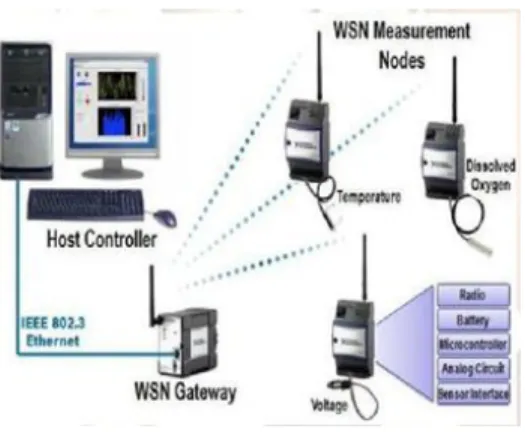
Figure 1: Common Wireless Sensor Network Architecture
2. CONSTRAINTS IN WIRELESS SENSOR
NETWORKS
A remote sensor arrange comprises of a
substantial number of sensor hubs which are
intrinsically asset obliged. These hubs have
restricted handling ability, low stockpiling limit,
and compelled correspondence transfer speed.
These constraints are because of restricted
vitality and physical size of the sensor hubs.
Because of these requirements [3],a portion of
the real imperatives of a WSN are recorded
underneath.
Energy constraints:Vitality is the greatest
limitation for a WSN. When all is said in done,
vitality utilization in sensor hubs can be ordered
in three sections:
(i) energy for the sensor transducer,
(ii) energy for correspondence among
sensor hubs, and
(iii) Energy for chip calculation.
3. SECURITY REQUIREMENTS
The objective of security administrations in
WSNs is to shield the data and assets from
assaults and rowdiness [4]. The security
requirements in WSNs include:
Availability, which
guarantees that the fancied
system administrations are
accessible even within the
sight of
Authorization, which
guarantees that exclusive
approved sensors can be
included in giving data to
network administrations
• Authentication, which
ensures that the
correspondence beginning
with one center point then
onto the following center
point is true blue, that is, a
malevolent center can't go
up against the presence of
a put stock in framework
center point
• Confidentiality, which
ensures that a given
message can't be fathomed
by anyone other than the
needed recipients
• Integrity, which ensures
that a message sent
beginning with one center
then onto the following is
not changed by pernicious
transitional centers
4. SECURITY GOALS
Wireless sensor systems are helpless against
many assaults in view of communicate nature
of transmission medium, asset constraint on
sensor hubs and uncontrolled conditions where
they are left unattended. Like other
correspondence frameworks [5], WSNs have
the following general security goals:
Confidentiality: shielding mystery data
from unapproved elements
Integrity: guaranteeing message has not
been changed by malevolent hubs -
Data Origin Authentication: confirming
the wellspring of message;
-Entity Authentication: verifying the
client/hub/base - station is for sure the
substance whom it cases to be
Efficiency: stockpiling, taking care of
and correspondence requirements on
sensor center points must be
considered
5. CHALLENGES
Providing efficient data aggregation while
preserving data privacy and integrity is a
challenging problem in wireless sensor
networks due to the following factors:
1. Trust administration in WSN is
extremely testing. Clients in the remote
sensor systems can be exceptionally
inquisitive to take in others' private
open available remote connections,
subsequently the information gathering
is helpless against assaults which
undermine the security [6]. Without
legitimate assurance of security, the
correspondence of privacy sensitive
information over nonmilitary personnel
remote sensor systems is viewed as
unrealistic.
2. During in-system collection, enemies
can without much of a stretch adjust
the halfway conglomeration result and
make the last total outcome veer off
from the genuine esteem
extraordinarily. Without assurance of
information trustworthiness [7], the
information accumulation result is not
dependable.
3. Data accumulation over remote sensor
systems does not depend on committed
foundation. Much of the time, the
quantity of hubs noting an inquiry is
obscure before the information
accumulation is directed.
6. CONCLUSION
Security is turning into a noteworthy sympathy
toward vitality obliged remote sensor arrange
due to the expansive security-basic uses of
WSNs. Therefore, security in WSNs has pulled in
a great deal of consideration in the current
years. The remarkable components of WSNs
make it exceptionally difficult to plan solid
security conventions while as yet keeping up
low overheads. In this paper, we present sensor
arranges, its related security issues, dangers,
dangers and attributes. Arrange security for
WSNs is still an exceptionally productive
research bearing to be further investigated.
REFERENCES
1. I.F. Akyildiz, W. Su, Y.
Sankarasubramaniam, and E. Cayirci. A
review on sensor frameworks. IEEE
Communications Magazine, 40(8):102–
114, 2002.
2. Wireless sensor masterminds: an
outline I.F. Akyildiz, W. Su*, Y.
Sankarasubramaniam, E. Cayirci
3. J. Slant, R. Szewczyk, A. Beguile, S.
Hollar, D.E. Culler, and K. Pister,
"Structure plan headings for
masterminded sensors", In Proceedings
of the ninth International Conference
on Architectural Support for
Programming Languages and Operating
Systems, New York, ACM Press, 2000,
pp. 93-104.
4. S. Slijepcevic, M. Potkonjak, V. Tsiatsis,
correspondence security in remote off
the cuff sensor frameworks", In
Proceedings of eleventh IEEE
International Workshop on Enabling
Technologies: Infrastructure for
Collaborative Enterprises (WETICE'02),
2002, pp. 139-144.
5. L. Yuan and G. Qu, "Arrange space
examination for essentialness beneficial
secure sensor frameworks", In
Proceedings of IEEE International
Conference on ApplicationSpecific
Systems, Architectures, and Processors,
July 2002, pp. 88-100.
6. http://www.xbow.com/wireless_home.
aspx, 2006.
7. A. Perrig, R. Szewczyk, V. Wen, D.E.
Culler, and J.D. Tygar,"SPINS: Security
traditions for sensor frameworks",
WirelessNetworks, Vol.8 , No. 5, pp.