SYNTHESIS, STRUCTURAL CHARARCTERIZATION, ANTIMICROBIAL ACTIVITY AND
DNA CLEAVAGE OF TRANSITION METAL (II) COMPLEXES DERIVED FROM 5
HYDRAZONOINDOLIN-2-ONE,
AND 2,2
*
Siddappa
Department of Studies and Research in Chemistry, Gulbarga University,
ARTICLE INFO ABSTRACT
A new series of transition metal complexes of Co(II), Ni(II), Cu(II), Zn(II), Cd(II) and Hg(II) have been synthesized from the Schiff base (L) derived from
aminoethyl)amino)quinoxalin
were characterized in the light of elemental analysis, molar conductance, FT IR, UV thermal and powder X
and Hg(II) complexes
screened for the antibacterial activities towards bacteria antifungal activities towards fungi
revealed that the free ligand and its metal complexes showed significant antimicrobial potency. DNA cleavage studies have al
Co(II), Ni(II), Cu(II), Zn(II), Cd(II) shows complete DNA cleavage activity whereas Hg(II) show partial DNA cleavage in the presence of H
Copyright © 2015 Siddappa, et al. This is an open access article distributed under the Creative Commons Att distribution, and reproduction in any medium, provided the original work is properly cited.
INTRODUCTION
Schiff base ligand has been widely studied in the field of coordination chemistry mainly because of their facile synthesis, easy availability, electronic properties, and good solubility in common solvents (Smita Revankar et al., 2014). Schiff bases and their coordination compounds are well known to be biologically important. The presence of nitrogen and other donor atoms in its structure makes it biologically active. Recent literature has explored the biological importance of various structural derivatives of heterocyclic compounds. Schiff’s bases, the condensed products of aromatic amines with aromatic aldehydes, have been known to possess a wide variety of biological applications like antibacterial, antifungal, antitumor, analgesic and anti-inflammatory activities (Yildirim
et al., 2014). Thus, in recent years Schiff bases and their metal complexes have attained much attraction
extensive biological activities (Priya et al., 2013). Keeping the above fact in our mind and in continuation of our earlier work on transition metal complexes with Schiff bases, the ligand has
been synthesized (Noorjahan begum et al
article, we report the synthesis, structural characterization
*Corresponding author: Siddappa, K.
Department of Studies and Research in Chemistry, Gulbarga University, Gulbarga-585106, Karnataka, India.
ISSN: 0975-833X
Article History:
Received 17th October, 2014 Received in revised form 14th November, 2014 Accepted 10th December, 2014 Published online 23rd January,2015
Key words: Schiff base, Metal complexes, Spectral studies, Antimicrobial activity, DNA cleavage.
RESEARCH ARTICLE
SYNTHESIS, STRUCTURAL CHARARCTERIZATION, ANTIMICROBIAL ACTIVITY AND
DNA CLEAVAGE OF TRANSITION METAL (II) COMPLEXES DERIVED FROM 5
ONE, 3-((2-AMINOETHYL) AMINO) QUINOXALIN
AND 2,2-DIMETHYL-1,3-DIOXANE-4,6-DIONE
Siddappa, K. and Mayana Nabiya Sultana
Department of Studies and Research in Chemistry, Gulbarga University,
ABSTRACT
A new series of transition metal complexes of Co(II), Ni(II), Cu(II), Zn(II), Cd(II) and Hg(II) have been synthesized from the Schiff base (L) derived from 5-bromo
aminoethyl)amino)quinoxalin-2(1H)-one and 2,2-dimethyl-1,3-dioxane
were characterized in the light of elemental analysis, molar conductance, FT IR, UV thermal and powder XRD studies. Analytical data reveal that the
and Hg(II) complexes possess 1:1 metal–ligand ratios. The ligand and its complexes have been screened for the antibacterial activities towards bacteria E. coli,
antifungal activities towards fungi A. flavus, C. albicans and F. solani
revealed that the free ligand and its metal complexes showed significant antimicrobial potency. DNA cleavage studies have also been carried out on Calf-thymus DNA and it is observed that these Co(II), Ni(II), Cu(II), Zn(II), Cd(II) shows complete DNA cleavage activity whereas Hg(II) show partial DNA cleavage in the presence of H2O2 and UV light.
is an open access article distributed under the Creative Commons Attribution License, which distribution, and reproduction in any medium, provided the original work is properly cited.
Schiff base ligand has been widely studied in the field of coordination chemistry mainly because of their facile synthesis, vailability, electronic properties, and good solubility in , 2014). Schiff bases and their coordination compounds are well known to be biologically important. The presence of nitrogen and other structure makes it biologically active. Recent literature has explored the biological importance of various structural derivatives of heterocyclic compounds. Schiff’s bases, the condensed products of aromatic amines with to possess a wide variety of biological applications like antibacterial, antifungal, inflammatory activities (Yildirim , 2014). Thus, in recent years Schiff bases and their metal complexes have attained much attraction because of their , 2013). Keeping the above fact in our mind and in continuation of our earlier work on transition metal complexes with Schiff bases, the ligand has
et al., 2014). In this article, we report the synthesis, structural characterization
Department of Studies and Research in Chemistry, Gulbarga
and biological studies of
2,2-based tetra dentate heterocyclic Schiff base derived from 5-bromo-3-hydrazonoindolin-2
amino)quinoxalin-2(1H)-one and its complexes with Co(II), Ni(II), Cu(II), Zn(II), Cd(II) and Hg(II) metal ions.
MATERIALS AND METHODS
All the used chemicals and solvents were of analytical grade. All the reagents used for the preparation of the Schiff bases was obtained from Sigma Aldrich. Metal salts were purchased from Fluka.
Synthesis of Schiff base
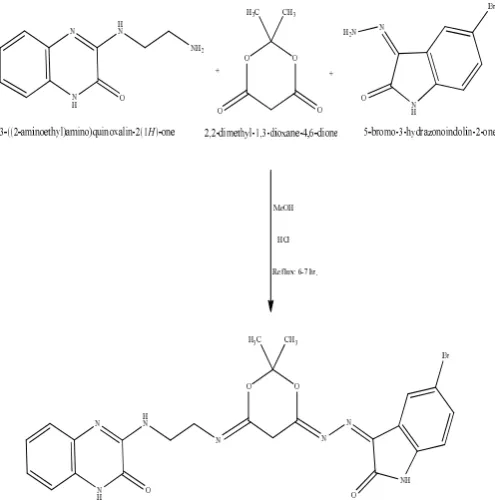
The Schiff base has been synthesized by refluxing the equimolar mixture of hot methanolic solution of 2,2
1,3-dioxane-4,6-dione (0.001 mol), hot methanolic sol 5-bromo-3-hydrazonoindolin-2
3-((2-aminoethyl)amino)quinoxalin
6-7 h in presence of catalytical amount of conc. HCl. After completion of the reaction, the resultant mixture was coole room temperature, filtered and reduced nearly half of its volume. It was then allowed to stay at room temperature for 3 h which resulted in the solid product. It was filtered, washed with
Available online at http://www.journalcra.com
International Journal of Current Research
Vol. 7, Issue, 01, pp.11349-11354, January, 2015
INTERNATIONAL
z
SYNTHESIS, STRUCTURAL CHARARCTERIZATION, ANTIMICROBIAL ACTIVITY AND
DNA CLEAVAGE OF TRANSITION METAL (II) COMPLEXES DERIVED FROM
5-BROMO-3-QUINOXALIN-2(1
H
)-ONE
-585106, Karnataka, India
A new series of transition metal complexes of Co(II), Ni(II), Cu(II), Zn(II), Cd(II) and Hg(II) have bromo-3-hydrazonoindolin-2-one
3-((2-dioxane-4,6-dione. All the complexes were characterized in the light of elemental analysis, molar conductance, FT IR, UV-VIS, magnetic, Analytical data reveal that the Co(II), Ni(II), Cu(II), Zn(II), Cd(II) The ligand and its complexes have been
E. coli, P. vulgaris and S. pyogones, and
and F. solani. The results of these studies revealed that the free ligand and its metal complexes showed significant antimicrobial potency. The thymus DNA and it is observed that these Co(II), Ni(II), Cu(II), Zn(II), Cd(II) shows complete DNA cleavage activity whereas Hg(II) show
ribution License, which permits unrestricted use,
-dimethyl-1,3-dioxane-4,6-dione
based tetra dentate heterocyclic Schiff base derived from 2-one and 3-((2-aminoethyl)
one and its complexes with Co(II), Ni(II), Cu(II), Zn(II), Cd(II) and Hg(II) metal ions.
MATERIALS AND METHODS
All the used chemicals and solvents were of analytical grade. All the reagents used for the preparation of the Schiff bases from Sigma Aldrich. Metal salts were purchased
The Schiff base has been synthesized by refluxing the equimolar mixture of hot methanolic solution of
2,2-dimethyl-dione (0.001 mol), hot methanolic solution of
2-one (0.001 mol) and
aminoethyl)amino)quinoxalin-2(1H)-one (0.001 mol)for
7 h in presence of catalytical amount of conc. HCl. After completion of the reaction, the resultant mixture was cooled to room temperature, filtered and reduced nearly half of its volume. It was then allowed to stay at room temperature for 3 h which resulted in the solid product. It was filtered, washed with
methanol and finally recrystallized from methanol to afford Schiff base as shown in Fig. 1. The purity of the compound has been checked by TLC.
Fig. 1. Schematic representation of Schiff base
Synthesis of metal complexes
Hot ethanolic solution of Co(II), Ni(II), Cu(II), Cd(II), Zn(II) and Hg(II) chlorides and solution of respective ligand were mixed in 1:1 molar ratio. The resulting solution was refluxed with stirring for 4-5 h. Then, to the reaction mixture sodium acetate was added to adjust the pH to 6.0–7.0, after which immediately solid, intense colored complexes precipitated out. The formed complexes were filtered, collected and then washed with hot ethanol until the filtrate becomes colourless. The complexes were dried in a desiccators. Elemental analysis data has been shown in Table 1. The complexes were analyzed for their metal and chloride contents by standard methods (Vogel, 1968).
Physical measurements
Elemental analysis carbon, hydrogen and nitrogen analysis was carried out using a Heracus Carlo Erba 1108 CHN analyzer at STIC, Cochin. The IR spectra of the Schiff base and its Co(II),
Ni(II), Cu(II), Zn(II), Cd(II) and Hg(II) complexes were recorded in KBr pellets in the region of 4000-450 cm−1 on a Perkin Elmer 783 FT-IR spectrophotometer. The electronic spectra of the Co(II), Ni(II) and Cu(II) complexes were recorded on an ELICO SL-164 double beam UV-visible
spectrophotometer in the range of 200-1200 nm in DMF (10−3
M) solution. Magnetic susceptibility measurements were made at room temperature on a Gouy balance using Hg[Co(NCS)4]
as the calibrant. Molar conductivity measurements were recorded on an ELICO CM-180 conductivity bridge in DMF solution (10−3 M) using a dip-type conductivity cell fitted with a platinum electrode. The 1H-NMR spectra were recorded in
DMSO-d6 on a Bruker 500 MHz spectrophotometer using TMS
as an internal standard. The mass spectra were recorded on a JEOL GC mate mass spectrophotometer. The ESR spectrum of the Cu(II) complex in the polycrystalline state was recorded on a Varian-E-4X band EPR spectrophotometer using TCNE as the ‘g’marker (g = 2.00277) at room temperature. Thermal analyses were measured from room temperature to 1000°C in
N2 on a perkin Elmer, Diamond TG/DTA model thermal
analyzer at STIC, Cochin, with a heating rate of 10°C min-1. The XRD patterns of the Cu(II) complex were recorded on a
Bruker AXS D8 Advance X-ray diffractometer using Cu Kα = 1.5404 radiation (λ Å).
Pharmacology
In vitro antimicrobial activity
Antimicrobial activity of the ligand and its complexes were tested in vitro against the bacterial species E. coli, P. vulgaris
and S. pyogones, fungal species, A. flavus, C. albicans and F. solani by the disc diffusion method (Bauer et al., 1966). Ciprofloxacin was used as the standard antibacterial agent whereas nystatin was used as the standard antifungal agent. The stock solution of each compound was prepared by dissolving 10 mg of each test compound in 10 mL of freshly distilled DMSO. The various concentrations of the test compounds (100, 75, 50, 25 and 12.5 μg/mL-1) were prepared by diluting the stock solution with the required volume of freshly distilled DMSO. The MIC was measured after 24 h in case of antibacterial activity, 48 h for antifungal activity (Siddappa and Nabiya sultana mayana, 2014).
DNA cleavage activity
The compounds were added separately to the Calf-thymus DNA sample (Sambrook et al., 1989). The samples mixtures were performed under aerobic conditions with H2O2 as an
Table 1. Physical and analytical data of the ligand and its metal (II) complexes
Compound Molecular formula Yield
(%)
Found (Calculated) % Ωm
(Ω-1 cm2 mol-1) µ eff (BM)
C H N M Cl
L C24H22N7O4Br 82 52.18 (52.01) 4.01 (3.92) 17.75 (17.64) - - - -
[CoLCl2] [CoC24H22N7O4BrCl2] 72 42.25 (42.10) 3.25 (3.11) 14.37 (14.22) 8.63 (8.59) 5.19 (5.11) 15.26 4.75
[NiLCl2] [NiC24H22N7O4BrCl2] 78 42.27 (42.13) 3.25 (3.18) 14.38 (14.22) 8.60 (8.53) 5.19 (5.11) 17.77 2.80
[CuLCl2] [Cu C24H22N7O4BrCl2] 69 41.97 (41.82) 3.23 (3.17) 14.28 (14.10) 9.25 (9.08) 5.16 (4.94) 19.22 1.99
[ZnLCl2] [Zn C24H22N7O4BrCl2] 65 41.86 (41.74) 3.22 (3.15) 14.24 (14.19) 9.49 (9.39) 5.14 (4.94) 22.27 -
[CdLCl2] [Cd C24H22N7O4BrCl2] 68 39.18 (39.00) 3.01 (3.00) 13.33 (13.28) 15.27 (15.14) 4.81 (4.78) 23.99 -
[HgLCl2] [Hg C24H22N7O4BrCl2] 70 34.99 (34.87) 2.69 (2.55) 11.90 (11.85) 24.34 (23.56) 4.30 (4.28) 28.88 -
11350 Siddappa and Mayana Nabiya Sultana, Synthesis, structural chararcterization, antimicrobial activity and dna cleavage of transition metal (ii)
[image:2.595.41.561.589.687.2]oxidant by incubation at 37 oC for 2h. The electrophoresis of the samples was done according to the following procedure. CT DNA 50 μM of Schiff base and its complexes, 50 μM of H2O2 in 0.05 M Tris–HCl buffer (pH = 7.2). After incubation,
1 μL of loading buffer (bromophenol blue in H2O) was added
to each tube and the mixed samples were loaded on 1 % agarose gel. The samples were electrophoresed at a constant voltage (50 V) for 2 h in Tris–acetic acid–EDTA buffer (pH 8.3). After electrophoresis, the gel was stained for 30 min by
immersing it in 1 μg / cm3 ethidiumbromide (EB) solution. The
cleavage was visualized by viewing the gel under UV light and photographed (Nagajothi et al., 2012).
RESULTS AND DISCUSSION
The analytical data of the complexes are given in Table 1. All these complexes are analyzed for 1:1 stoichiometry of the type MLCl2. On the basis of these characterizations it has been
found that all the complexes are non-hygroscopic, stable at room temperature, insoluble in water but fairly soluble in DMSO and DMF. The molar conductance values in DMF
(10-3M) solution at room temperature shows all the complexes
are non electrolytes (Geary, 1971).
Electronic spectral and magnetic studies
The magnetic moments and electronic spectral bands of the complexes are summarized in Table 2. The electronic spectrum of the Co(II) complex exhibit absorption bands at 16129 and 21276 cm-1 corresponding to ν2 and ν3 transitions, respectively
4
T1g (F) → 4A2g (F) (ν2) and 4T1g (F) → 4T2g (P) (ν3) The ν1
transition is not observed in these Co(II) complex because of its proximity to the strong ν3. Cobalt (II) complex display a
magnetic moment value of 4.75 BM, which is within the range of 4.46-5.53 BM which correspond to high spin octahedral environment around the metal ion (Methaq, 2014).
The Ni(II) complex show two bands at 15625 and 25641 cm-1
assigned to 3A2g (F) → 3T1g (F) (ν2), 3A2g (F) → 3T1g (P) (ν3)
transitions, respectively, in an octahedral environment. The lowest band ν1 was not observed due to limted range of the
instrument used. Ni(II) complex showed the magnetic moment value of 2.80 BM, which is within the range of 2.7-3.3 BM suggesting consistency with their octahedral environment (Priya and Lakshmi, 2014).
The Cu(II) complex a band observed at 14705–17271 cm-1 was
assigned to the transitions 2B1g → 2A2g, (ν1), 2B1g → 2Eg (ν2) and
2
B1g → 2B2g (ν3), which is characteristic of octahedral
geometry. The Cu(II) complex showed magnetic moment value of 1.99 BM, which is within the range of 1.75–2.20 BM is consistent with octahedral geometry (Prakash et al., 2008). The ligand field parameters Dq, B’,,%, ν2/ ν1, LFSE have been
calculated using the procedure given by Drago (Drago, 1968).
IR spectral studies
The important IR spectral data are given in Table 3. On
complexation the bands at 1590 and 1594 cm-1 for the N-N=C
and CH2-N=C groups in the free ligand was shifted to lower
frequency in the range ~1580-1566 and ~1590-1561 cm-1
indicating the coordination of the C=N nitrogen atom to the metal ion (Usharaniet al., 2013). The sharp bands at 1689 cm-1
for indole C=O group and 1680 cm-1 for C=O of the free ligand
has been shifted to ~1671-1665 and 1675-1660 cm-1 in the
complex indicating the linkage between the metal ion and carbonyl oxygen atom (Disha et al., 2013). Bands of indole
NH, C-NH and O=C-NH and ring C=N remains almost
unafected indicating the non participation of these groups in coordination (Ajaykumar et al., 2009). Further, the spectrum of all the metal complexes show new bands in the 445–477 and 350-377 cm-1 region, which may probably be due to the formation of M-N and M-Cl bonds, respectively (Aurora
et al., 2014).
Mass spectral studies
The mass spectrum of the Schiff base showed a molecular ion peak at m/Z 552, which is equivalent to its molecular weight. The mass spectrum of Zn(II) complex showed a molecular ion peak at m/Z 688 which is equivalent to its molecular weight of the complex. Hence supporting the suggested structre for the complex.
1
H-NMR spectral studies
1
H-NMR spectra of the ligand and its Zn(II) complex was recorded in DMSO-d6. The proton NMR spectra of Schiff base displayed singlet each at 2.2, 2.4, 10.1, 10.2, 10.4 ppm
and 1.37 ppm respectively, due to the 2 proton of –CCH2C-, 2
protons of H2C-N=C, one protons of C-NH, one proton of
[image:3.595.68.530.499.551.2]indole NH, one proton of O=C-NH and six protons of 2
Table 2. Electronic spectral bands and ligand field parameters of the Co(II), Ni(II) and Cu(II) complexes in DMF (10-3 M) solution
Complexes
Transitions in cm-1
Dq (cm-1) B’ (cm-1)
% ν2/ ν1 LFSE (k cal)
ν1 ν2 ν3
[CoLCl2] 7389 16129 21276 873 1015 0.97 2.32 2.18 14.98
[NiLCl2] 9705 15625 25641 970 810 0.77 22.11 1.60 32.27
[CuLCl2] - 14705-17271 - 1598 - - - - 27.40
Table 3. IR spectral bands of the ligand and its metal complexes (cm-1)
Tentative assignments L [CoLCl2] [NiLCl2] [CuLCl2] [ZnLCl2] [CdLCl2] [HgLCl2]
N-N=C 1590 1580 1575 1568 1575 1566 1578
CH2-N=C 1594 1590 1561 1577 1583 1588 1583
Indole ν(C=O) 1689 1671 1666 1678 1665 1678 1680
ν(C=O) 1680 1670 1668 1660 1671 1675 1673
ν(M-N) - 445 451 450 452 461 477
ν(M-Cl) - 350 355 351 358 370 377
[image:3.595.73.527.579.649.2]methyl groups. The aromatic protons of Schiff base resonated as multiplets in the region 7.3-7.9 ppm (m, 7H). The aromatic protons singles in the spectrum of the Zn(II) complex is shifted downfield compared to the ligand (Siddappa and Nabiya sultana, 2014).
Thermo gravimetric analysis
Thermal analyses (TGA and DTA) of the Cu(II) complex is used to get information about the thermal stability of this copper complex and suggest a general scheme for thermal decomposition of this copper complex. In the present
investigation, heating rates were suitably controlled at 10°C /min under nitrogen atmosphere, and the weight loss was
measured from the ambient temperature up to 40–750°C (Gehad geindy et al., 2006). The complex is stable up to 200°C and exhibits a two step decomposition pattern, as is evident from the TG-DTA profile. The mass loss in the first step occurred at 289.14°C which can be attributed to the loss of
chloride molecule. The complex exhibited second
decomposition step at 370.91°C which can be attributed to the loss of ligand moiety further leaving behind the metal oxide residue. The complex shows gradual degradation upto 708.9°C (Prasad et al., 2011).
ESR spectrum of Copper complex
ESR spectrum of copper complex has been recorded. The Cu(II) complex exhibit typical axial behavior with slightly different g|| and g⊥ values. The geometric parameter G, which
is a measure of exchange interaction between the copper centres in the polycrystalline compounds, is calculated by using the expression G = (g||- 2.00277) / (g⊥- 2.00277) (Lekha
et al., 2013). For copper complex, g|| = 2.177 g⊥ = 2.058, gav =
2.058 and G = 3.122 have been observed at room temperature. The axial symmetry parameter G is less than 4 indicating considerable exchange interaction in the solid complex (Kiran
et al., 2014).
Powder X-ray diffraction
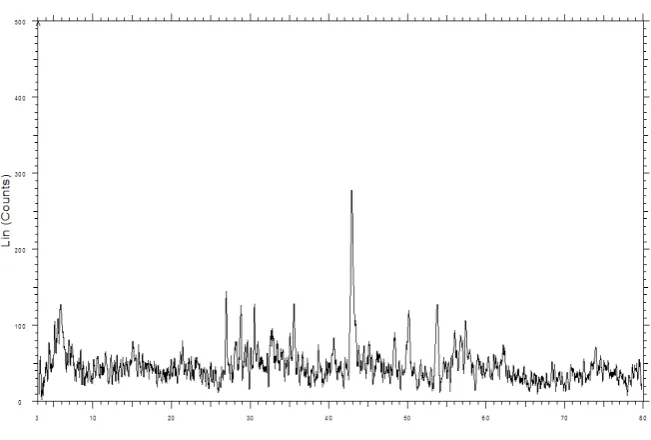
[image:4.595.138.464.336.556.2]The x-ray powder diffraction patterns for the new Cu(II) complex is depicted in Fig. 2. There are 8 reflections (2θ) between 26.915 to 79.550 with maxima at 2θ = 40.608 corresponding to the value of d = 2.219. The XRD data of Cu(II) complex is given in the Table 4.
Fig. 2. Powder XRD pattern of Cu(II) Complex
Table 4. X-ray diffraction data of Cu(II) Complex
Peak no. 2θ θ Sin θ Sin2 θ h2+k2+l2 hkl d Value a in Å
abs Cal
1 26.915 13.457 0.2327 0.0541 1 1 0 0 3.3099 3.3086 3.308
2 28.811 14.405 0.2487 0.0618 1.1427 (1) 1 0 0 3.1710 3.0950 3.308
3 28.743 14.371 0.2482 0.6160 1.1374 (1) 1 0 0 3.1034 3.1022 3.308
4 30.514 15.257 0.2631 0.0692 1.2785 (1) 1 0 0 2.9272 2.9260 3.308
5 32.777 16.388 0.2821 0.0796 1.4698 (1) 1 0 0 2.7301 2.7290 3.308
6 35.544 17.772 0.3052 0.0931 1.7201 (2) 1 1 0 2.5236 2.5226 3.308
7 38.687 19.343 0.3312 0.1097 2.0257 (2) 1 1 0 2.3255 2.3246 3.308
8 40.608 20.304 0.3470 0.1204 2.2232 (2) 1 1 0 2.2198 2.2190 3.308
9 42.917 21.458 0.3658 0.1338 2.4709 (2) 1 1 0 2.1056 2.1048 3.308
10 48.371 24.185 0.4096 0.1678 3.0990 (3) 1 1 1 1.8801 1.8794 3.308
11 50.182 25.091 0.4240 0.1798 3.3202 (3) 1 1 1 1.8164 1.8157 3.308
12 53.783 26.891 0.4523 0.2045 3.7772 (4) 2 2 0 1.7030 1.7024 3.308
13 56.803 28.405 0.4756 0.2262 4.1772 (4) 2 2 0 1.6194 1.6188 3.308
14 57.417 28.708 0.4803 0.2307 4.2602 (4) 2 2 0 1.6036 1.6029 3.308
15 79.550 39.775 0.6397 0.4093 7.5573 (8) 2 2 0 1.2038 1.2035 3.308
11352 Siddappa and Mayana Nabiya Sultana, Synthesis, structural chararcterization, antimicrobial activity and dna cleavage of transition metal (ii)
[image:4.595.58.544.606.769.2]The interplanar spacing (d value, Angstrom) has been calculated. The values of d value (the volume average of the crystal dimension normal to diffracting plane) full width at half maximum of prominent intensity peak and particle size of Cu(II) complex was estimated. The h2+k2+l2 values of the copper complex were found to be 1, 1, 1, 1, 2, 2, 2, 2, 3, 3, 4, 4, 4, 8. The absence of forbidden number indicates that the Cu(II) complex may belongs to cubic symmetry (Foziah, 2014).
Pharmacology Results
In vitro antimicrobial screening results
The in vitro antimicrobial screening results are given in Table 5. The synthesized Schiff base has an inhibitory effect
(MIC values of 75–100 mg mL-1) on growth of the tested bacterial strains. All complexes showed greater bactericidal activities against E. coli (MIC 12.50–50 μg mL-1), P. vulgaris
(MIC 12.50–50 μg mL-1) and S. pyogones (MIC 12.50–50 μg mL -1) than the ligand.In the fungal studies, the ligand had an
inhibitory effect (MIC values in range 50–100 μg mL -1) on the
growth of the tested strains and complexes again showed greater fungicidal activities against A. flavus (MIC 12.50–25 μg mL-1), C. albicans (MIC 12.50–50 μg mL -1)and F. solani
[image:5.595.345.522.209.310.2](MIC 12.50–50 μg mL -1). Cd(II) and Hg(II) complexes had greater bacterial and fungal activities than the ligand. All of the tested compounds showed good biological activity against microorganism. The results of the investigations account for the antipathogenic behavior of the compounds and this efficacy is positively modified on complexation (Fakruddin et al., 2014).
Fig. 3. Gel picture showing the cleavage analysis of samples
DNA cleavage activity results
Agarose gel electrophoresis experiment using Calf-thymus DNA were performed with Schiff base and its Co(II), Ni(II), Cu(II), Cd(II), Zn(II) and Hg(II) complexes in the presence of H2O2 as an oxidant. From Fig. 3, it is evident that the Co(II),
Ni(II), Cu(II), Cd(II) and Hg(II) complexes cleave DNA completely whereas the Zn(II) show partial cleavage activity in the presence of H2O2 (Jeena and Abbs, 2014). Probably this
may be due to the formation of redox couple of the metal ions and its behaviour. Further, the presence of a smear in the gel diagram indicates the presence of radical cleavage (Raman
et al., 2007).
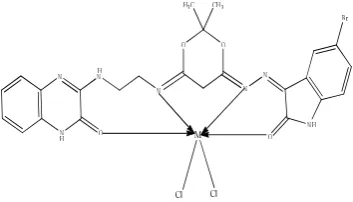
Fig. 4. Proposed structure of M = Co(II), Ni(II), Cu(II), Zn(II), Cd(II) and Hg(II) metal complexes
Conclusion
In this research article, we have synthesized a new Schiff base and its metal complexes. The bonding of ligand to the metal ions has been confirmed by the analytical data and various spectral studies.
The Cd(II) and Hg(II) complexes have exhibited an enhanced antimicrobial activity whereas Co(II), Ni(II), Cu(II) and Zn(II) complexes have shown a moderate activity than its ligand. The DNA cleavage studies revealed that the metal complexes showed good efficiency towards DNA cleavage. On the basis of above mentioned studies we proposed the octahedral geometry for the metal complexes (Fig. 4).
Acknowledgement
[image:5.595.57.540.437.536.2]The authors are thankful to the Professor and Chairman, Department of Studies and Research in Chemistry, Gulbarga University, Gulbarga, for encouragement and facilities. One of the authors (NSM) is thankful to UGC New Delhi for the grant of research fellowship in science for Minority students Under MANF Scheme. We are also thankful to IIT Chennai, IIT Bombay, STIC Cochin and Central University of Hydrabad for providing Spectral data.
Table 5. Antimicrobial activity of ligand and its metal (II) complexes evaluated by MIC (μg mL -1)
Compounds E. coli P. vulgaris S. pyogones A. flavus C. albicans F. solani
L 75 75 100 50 75 100
[CuLCl2] 50 50 12.50 25 12.50 50
[CoLCl2] 25 50 50 25 50 25
[NiLCl2] 50 25 12.50 25 25 12.50
[HgLCl2] 12.50 12.50 12.50 12.50 12.50 12.50
[CdLCl2] 12.50 12.50 12.50 12.50 12.50 12.50
[ZnLCl2] 25 50 25 25 25 25
Ciprofloxacin 12.50 12.50 12.50 - - -
Nystatin - - - 12.50 12.50 12.50
[image:5.595.46.293.457.720.2]REFERENCES
Ajaykumar, D.K., Sangamesh, A.P. and Prema, S.B. 2009. Electrochemical properties of some transition metal
complexes: Synthesis, characterization and In-vitro
antimicrobial studies of Co(II), Ni(II), Cu(II), Mn(II) and Fe(III) complexes. Int. J. Electro. Chem. Sci., 4: 717 – 729.
Aurora, R., Mariana, C.C., Emilia, A. and Cezar, I.S. 2014. Transition Metal(II) Complexes with Cefotaxime-derived
Schiff Base: Synthesis, Characterization, and
Antimicrobial Studies. Bioinorg. Chem. Appl., 1-17. Bauer, A.W., Kirby, W.M. M., Sherries, J.C. and Truck, M.
1966. Antibiotic susceptibility testing by a standardized single disk method. Am. J. Clin. Pathol.,45: 493-496.
derived from
4-(2-chloro-6-fluorobenzylideneamino)-3-mercapto-6-methyl-5-oxo-1,2,4-triazine:antimicrobial, spectroscopic, thermal and fluorescence studies. Int. J. Inorga. Bioinorg. Chem., 4: 9-15.
Drago, R.S. 1968. Physical Methods in Inorganic Chemistry, Reinhold Publishing Corporation, New York.
Fakruddin ali ahamed, M. and Desalegn gebremariam, K. 2014. Synthesis, characterization and antimicrobial studies of novel ligand( diethyl 5-amino 4-methyl thiophene
3,5-dicarboxylate-2,6-diaminopyridine) and its metal
complexes.World J. Pharm. Res., 3: 915-928.
Foziah, A.A. 2014.Spectroscopic elucidation, conductivity and
activation thermodynamic parameters studies on Pt(IV), Au(III) and Pd(II)
1,5-dimethyl-2-phenyl-4-[(thiophen-2-ylmethylene)-amino]-1,2-dihydro-pyrazol-3-one Schiff
Base complexes. Int. J. Electrochem. Sci., 9: 398 – 417. Geary, W.J. 1971. The use of conductivity measurements in
organic solvents for the characterization of coordination
compounds. Coord. Chem. Rev.,7: 81–122.
Gehad geindy, M., Mohamed Mohamed, O. and Ahmed
Mohamed, H. 2006. Metal complexes of Schiff bases: preparation, characterization, and biological activity. Turk. J. Chem., 30: 361 – 382.
Jeena, P. and Abbs fen reji, T.F. 2014. Synthesis,
characterization, antimicrobial and DNA cleavage studies
on some metal complexes incorporating 4-
chlorobenzaldimine 4-aminoantipyrine and
2-aminophenol. Int. J. Pharm. Chem. Res., 3: 16-23. Kiran, S., Sunita, R. and Chetan, S. 2014. Co(II), Ni(II), Cu(II)
and Zn(II) complexes
Lekha, L., Kanmaniraja, K., Rajagopal, G., Sivakumar, D. and
Easwaramoorthi, D. 2013. Synthesis, spectral
characterization and antimicrobial assessment of Schiff base ligand derived from amino acid and its transition metal complexes. Int. J. Chem. Pharm. Sci., 4: 48-54. Mahasin, A., Huda, K. and Carolin, S. 2014. Synthesis,
physical characterization and biological evaluation of
Schiff base M(II) complexes. J. Ass. Arad. Uni. Basic App.
Sci., 15: 28-34.
Methaq, S.M. 2014. Preparation, identification and spectral studies of divalent metal of Co, Ni, Cu and Zn with Schiff base. J. Sci. Res. Pharm.,3: 68-71.
Nagajothi, A., Kiruthika, A. and Chitra S Parameswari, K. 2012. Synthesis and characterization of tetradentate Co(II) Schiff base complexes : antimicrobial and DNA cleavage studies. Int. J. Res. Pharm. Biomed. Sci., 3: 1768-1778.
Noorjahan begum, T., Jaya raju, A., Nageswara reddy, G. and
Sreeramulu, J. 2014. Spectroscopic characterization and
biological evolution of ortho vanillin pramipexole Schiff
base metal complexes.Der Pharm. Chem., 6: 51-58.
Omar, B.I., Mahmoud, A.M. and Moamen, S.R. 2014. Nano sized Schiff Base complexes with Mn(II), Co(II), Cu(II), Ni(II) and Zn(II) metals : synthesis, spectroscopic and medicinal studies Cana. Chem. Trans.,2: 108-121. Prakash, G.A, Sangamesh, A.P. and Prema, S.B. 2008.
Synthesis, spectral, thermal, solid state D. C. electrical conductivity and biological studies of Co(II), Ni(II) and Cu(II) complexes with 3-substituted-4-amino
(indole-3-aldehydo)-5-mercapto-1,2,4-trizole Schiff bases. J. Coord.
Chem., 61: 1884-1896.
Prasad, S., Jayaseelan, P. and Rajavel, R. 2011. Synthesis, spectral, DNA cleavage and antimicrobial studies of homo trinuclear Cu(II), Ni(II) and Mn(II) complexes. Int. J. Chem. Sci., 9: 1711-1724.
Priya, B.D. and Lakshmi, S.S. 2014. Synthesis, spectral and antimicrobial investigation of some ternary Schiff base transition metal complexes. Int. J. Chem. Tech. Res., 6: 87-94.
Priya, S., Senthil Kumaran, J., Jayachandramani, N. and Mahalakshmi, S. 2013. Antibacterial studies of transition metal complexes of tetradentate thiazole based Schiff Base. Am. J. Pharm. Tech. Res., 3: 607-616.
Raman, N., Dhaveethu raja, J. and Sakthivel. 2007. Synthesis, spectral characterization of Schiff base transition metal complexes: DNA cleavage and antimicrobial activity studies. Am. J. Chem. Sci., 119: 303–310.
Sambrook, J., Fritsch, E.F. and Miniatis, T. 1989. Molecular cloning, a laboratory manual, 2nd edn. Cold spring harbour Laboratory, New York.
Siddappa, K. and Nabiya sultana Mayana. 2014. Synthesis, spectroscopic characterization, and biological evaluation
studies of
5-Bromo-3-(((hydroxy-2-methylquinolin-7-yl)methylene)hydrazono)indolin-2-one and its metal (II)
complexes. Bioinorg. Chem. Appl., 1-11.
Siddappa, K., Nabiya sultana, M. 2014. Synthesis,
spectroscopic characterization and biological evaluation studies of Schiff base derived from 5-bromo-3-hydrazonoindolin-2-one with 5,5- dimethylcyclohexane-1,3-dione and its metal complexes, Int. J. Res. Chem. Environ., 4: 78-84.
Smita revankar, D., Jyoti, C.A., Revanasiddappa, M., Veerabhadra swamy, M. and Shankar, S. 2014. Synthesis, characterization, and biological studies on riluzole Schiff
base metal complexes. J. Appl. Chem., 3: 1447-1459.
Usharani, M., Akila, E., Rajavel, R. 2013. Dinuclear Cu(II),
Co(II), Ni(II) and Mn(II) complexs framework based on 1-(2-hydroxyphenyl)ethanone ligand: Synthesis, structural investigation and biological properties. Int. J. Pharm. Sci. Rev. Res., 21: 274-280.
Vogel, A.I. 1968. A text book of quantitative inorganic
analysis, 3rd edn. Longman ELBS, London.
Yildirim, I., Karagoz, Z. and Karatepe, M. 2014. Synthesis and characterization of new Schiff base and its metal (Cu, Ni,
Co, Zn, Mn) complexes. Pak. J. Chem., 4: 67-71.
*******
11354 Siddappa and Mayana Nabiya Sultana, Synthesis, structural chararcterization, antimicrobial activity and dna cleavage of transition metal (ii)