International Research Journal of Engineering and Technology (IRJET)
e-ISSN: 2395-0056 Volume: 06 Issue: 07 | July 2019 www.irjet.net p-ISSN: 2395-0072i-STROLLER(ROBOT)
DANYA S
1, ASMABEGAM M
2, HARISH V
3, KATHIRVEL P
41,2,3
B.E Student, Dept. of Electronics & Instrumentation Engineering, Dr.Mahalingam College of Engg. and Tech,
Pollachi, Tamilnadu.
4
Asst.Prof, Dept of EIE, Dr.Mahalingam College of Engg. and Tech, Pollachi, Tamilnadu.
---***---Abstract — Driving a manual wheelchair or crutches is a difficult task for a patient and past invented automatic chairs are not available in present market that can be brought and used for physically disabled persons. In general disabled people are suffering to drive the wheelchair on their own and they need additional support to complete their tasks. The basic design of wheelchair also requires human intervention. This project is to design an autonomous self-driving intelligent wheelchair which follows a line by using a line follower robot and operates along a path and uses ultrasonic sensor that produces control signal in to avoid collision in real time and also to protect the user. We propose a simple, robust and real time digital encoder and decoder are used to find the path and directs the wheelchair to reach its desired target along with its capability of obstacle avoidance in the 3D dynamic world. Smart Wheel Chair is a device that's designed to have self-mobility with the help of the consumer command, resulting in a discount of the user’s human effort.
Keywords: Line follower robot, ultrasonic Sensor, Digital encoder and decoder
INTRODUCTION:
Several studies have shown that both children and adults benefit substantially from access to a means of independent mobility. While the needs of many individuals with disabilities can be satisfied with traditional manual or powered wheelchairs, a segment of the disabled community finds it difficult or impossible to use wheelchairs independently. To accommodate this population, researchers have used technologies originally developed for mobile robots to create "smart wheelchairs. "The system consists of one ultrasonic sensor which is mounted on front of the wheelchair, two infrared sensors are used for the line follower, RF transmitter module, receiver module. The controller takes corresponding moving actions based on the output responses of ultrasonic sensor, IR sensors and RF receiver module. Line follower robot is an autonomous robot which follows either black line in white or white line in black area that robot must be able to detect particular line and keep following it.
The main objective of the project is,
To avoid manual operation of controlling wheelchair.
To increase the mobility of disabled peoples in hospitals.
To reduce the human intervention with wheelchair.
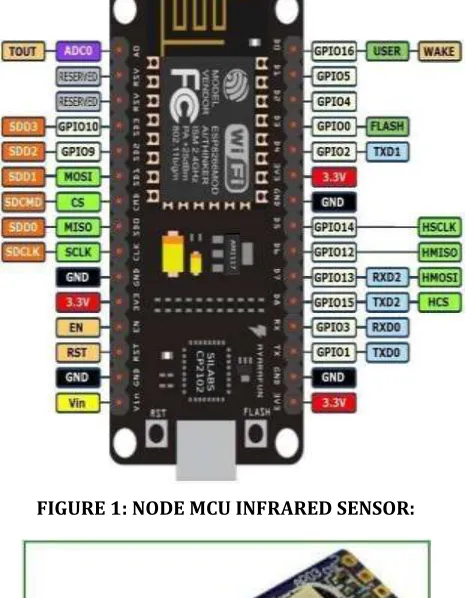
To automate the process of obstacle avoidance and navigation. Node MCU:Node MCU is an open source IoT platform. It includes firmware which runs on the ESP8266 Wi-F and hardware which is based on the ESP-12 module. The term "Node MCU" by default refers to the firmware that uses language.
International Research Journal of Engineering and Technology (IRJET)
e-ISSN: 2395-0056 Volume: 06 Issue: 07 | July 2019 www.irjet.net p-ISSN: 2395-0072FIGURE 1: NODE MCU INFRARED SENSOR:
FIGURE 2: INFRARED SENSOR
An infrared sensor is an electronic instrument that is used to sense certain characteristics of its surroundings. It does this by either emitting or detecting infrared radiation. Infrared sensors are also capable of measuring the heat being emitted by an object and detecting motion. Infrared waves are not visible to the human eye. In the electromagnetic spectrum, infrared radiation can be found between the visible and microwave regions. The infrared waves typically have wavelengths between 0.75 and 1000µm.Infrared sensors can be active or passive and they can be split into two main types, Thermal infrared sensors and Quantum infrared sensors. An IR sensor can measure the heat of an object as well as detects the motion. These types of sensors measures only infrared radiation, rather than emitting it that is called as a passive IR sensor. Usually in the infrared spectrum, all the objects radiate some form of thermal radiations. These types of radiations are invisible to our eyes, that can be detected by an infrared sensor. The emitter is simply an IR LED (Light Emitting Diode) and the detector is simply an IR photodiode which is sensitive to IR light of the same wavelength as that emitted by the IR LED. When IR light falls on the photodiode, the resistances and these output voltages, change in proportion to the magnitude of the IR light received.
ULTRASONIC SENSOR:
International Research Journal of Engineering and Technology (IRJET)
e-ISSN: 2395-0056 Volume: 06 Issue: 07 | July 2019 www.irjet.net p-ISSN: 2395-0072FIGURE3: ULTRASONIC SENSOR
Ultrasonic sensor have a detecting range of 3cm to 4.5m, direction angle of 30 degree. It operates under 5v dc power supply. The operating frequency of ultrasonic is 40 kHz and it has global current consumption of 15 mA.
WIRELESS TRANSMITTER AND RECEIVER USING RF MODULE:
The range of RF communication is very high when compared to IR communication. In this project, a wireless transmitter and receiver system using RF modules (RF Transmitter and RF Receiver) is implemented. An RF Transmitter and Receiver pair is used for wireless communication. The wireless data transmission is done using 433 MHz Radio Frequency signals that are modulated using Amplitude Shift Keying (ASK) Modulation technique.
In order to implement the wireless transmitter and receiver, we use an encoder IC HT12E and a decoder IC HT12D.
FIGURE 4:HTI2E AND HT12D
RF Transmitter and Receiver Modules: The wireless communication between transmitter and receiver sections is achieved using RF modules. A 433 MHz transmitter and receiver pair are used in this project.
HT12E:
It is an encoder IC that converts the 4-bit parallel data from the 4 data pins into serial data in order to transmit over RF link using transmitter.
HT12E Encoder IC will convert the 4 bit parallel data given to pins D0 – D3 to serial data and will be available at DOUT. This output serial data is given to ASK RF Transmitter. Address inputs A0 – A7 can be used to provide data security and can be connected to GND (Logic ZERO) or left open (Logic ONE). Status of these Address pins should match with status of address pins in the receiver for the transmission of the, Data will be transmitted only when the Transmit Enable pin (TE) is LOW. 1.1MΩ resistor will provide the necessary external resistance for the operation of the internal oscillator of HT12E.
HT12D:
International Research Journal of Engineering and Technology (IRJET)
e-ISSN: 2395-0056 Volume: 06 Issue: 07 | July 2019 www.irjet.net p-ISSN: 2395-0072L298N MOTOR DRIVER MODULE:
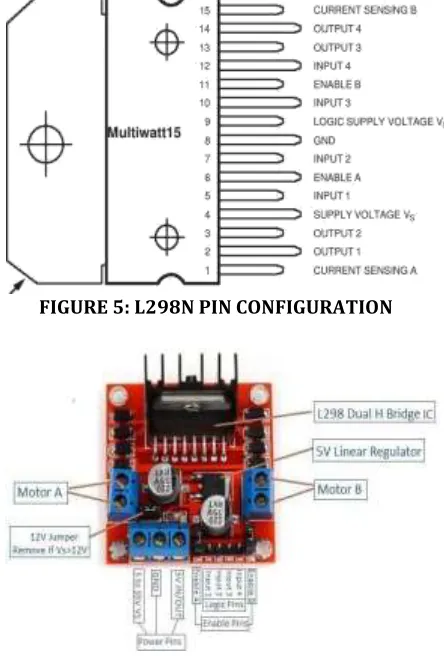
[image:4.595.190.412.159.487.2]The L298N is an integrated monolithic circuit in a 15- lead Multiwatt and PowerSO20 packages. It is a high voltage, high current dual full-bridge driver de-signed to accept standard TTL logic level sand drive inductive loads such as relays, solenoids, DC and stepping motors. Two enable inputs are provided to enable or disable the device independently of the in-put signals.
FIGURE 5: L298N PIN CONFIGURATION
FIGURE 6:L298N DRIVER MODULE
BLOCK DIAGRAM:
WORKING PROCESS:
[image:4.595.187.417.544.732.2]International Research Journal of Engineering and Technology (IRJET)
e-ISSN: 2395-0056 Volume: 06 Issue: 07 | July 2019 www.irjet.net p-ISSN: 2395-0072the desired area. The line is indicated by white line on a black surface or black line on white surface. This application depends upon the infrared sensor output. Infrared sensor consists of active infrared sensor and passive infrared sensor, in which passive infrared sensor is used, which does not emit waves, it does only absorb the waves, whereas black substance does not emit waves and so infrared sensor does not absorb any wave.
The working condition of it is when the left IR sensor and the right IR sensor are placed in the ends of the black line. Once, either the left IR sensor or right IR sensor get interfaced with the black line, then the left motor and right motor gets stop respectively. Only it stops when both the IR sensor gets interfaced with the black line. Ultrasonic sensor also used to avoid obstacle at the front. In case of any presence of obstacle stops the wheelchair until the obstacle gets clear.
The sound wave is produced by ultrasonic transmitter and it is received by ultrasonic receiver. Based on the time taken to reach the receiver of the ultrasonic sensor, it gives the distance of obstacles for the wheelchair from its present location. The distance value is signal conditioned to voltage and it is given to the controller.
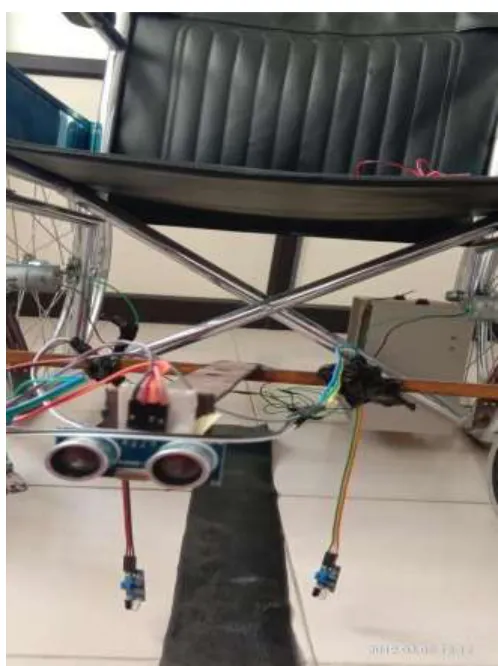
Also, wireless RF transmitter and receiver signal modules are used to locate the desired location. When the 433 MHz signal is passed from the wireless RF transmitter module, then the RF receiver module which is attached to the Node MCU controller that receives the 433 MHz transmitted signal and then gets stopped by assuming that as the desired location. Also the 433 MHz signal can be transmitted by the wheelchair user or by any other controller user. . This automatic wheelchair is designed with the line follower robot technology to move along the line to reach its various destination, ultrasonic sensor for obstacle avoidance and digital encoder and decoder to find its desired destination. The system consists of one ultrasonic sensor which is mounted on front of the wheelchair, two infrared sensors are used for the line follower, RF transmitter module, receiver module used and having an enclosure box in which battery, and relay driver circuit is placed for driving the motor.
International Research Journal of Engineering and Technology (IRJET)
e-ISSN: 2395-0056 Volume: 06 Issue: 07 | July 2019 www.irjet.net p-ISSN: 2395-0072CONCLUSION& FUTURE SCOPE:
Automatic wheelchair (i-STROLLER) for disabled people and patients with high traumatic conditions has been designed and ran successfully with simple components at low cost.
This project can be extended by using a user panel which is attached to the wheelchair which is used by the user to select their destination in hospitals.
This project also can be extended in an advanced model which is completely a autonomous self-driving intelligent wheelchair and with high efficiency which operates in dynamic environment and adapts to the control signal, in real time to avoid collision and also to protect the user. We propose a simple, robust and real time autonomous navigation module that finds the shortest path and directs the wheelchair to reach its desired target along with its capability of obstacle avoidance in the 3D dynamic world. In autonomous system, the user indicates the final desired destination and the wheelchair system takes complete control of the navigation from the current location to the goal destination.
From this project a multipurpose robotic vehicle which can be dedicated for differently abled people is made. It can be used as a pick and place robot, can be implemented in wheel chair, Scavenger and also a bomb diffuser.
This project can be extended by placing an arm to the vehicle and also object detection and distance recognition can be implemented in this project by including ultrasonic sensor and flex sensor for the above purposes.
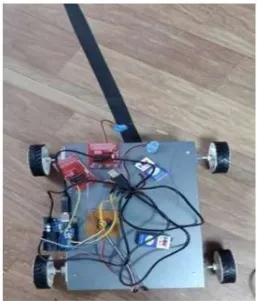
[image:6.595.170.427.331.632.2]PROTOTYPE MODEL:
International Research Journal of Engineering and Technology (IRJET)
e-ISSN: 2395-0056 Volume: 06 Issue: 07 | July 2019 www.irjet.net p-ISSN: 2395-0072FIGURE 8: WHEELCHAIR SETUP
REFERENCES
1. YassineNasri, Vincent titled “ROS- based Autonomous Navigation Wheelchair using Omnidirectional Sensor”, developed by ESIGELEC laboratory. Computer applications (0975-8887), Volume133-No.6, January 2016.
2. Gabriel Pires and UrbanoNunes, titled “Brain Computer Interface approaches to control mobile robotic devices”, August, 2008.it dealt with brain computer interface to steer a wheelchair, a visual based P300 paradigm with electro encepelography (EEG).
3. Sandeepkumar and P. Raja, titled “Ultrasonic sensor with accelerometer based smart wheelchair using microcontroller”, Volume: 2, Issue: 09, Dec-2015 2014, it accords that the system is divided by two main unit as MEMS sensor and wheelchair control.
4. G. Pires, N. Honorio, C. Lopes, U. Nunes and A.T Almedia ,Institute of System and Robotics, University of Coimbra, titled “Autonomous wheelchair for disabled people”, Symposium on industrial electronics(ISIE97).