RESEARCH ARTICLE
SPECTRUM AWARE CLUSTER BASED ROUTING PROTOCOL (SACBRP)
*Ramesh Palanisamy and Mathivanan, V.
AMET University, Chennai, TamilNadu, India
ARTICLE INFO ABSTRACT
Wireless networking is the recent wonder in current communication era. This provides a vast scope of infrastructure less networking arena called as cognitive radio mobile ad hoc systems shortly coined as CRAHNs. This part of doctoral research emphasize in proposing a spectrum aware cluster based routing protocol (SACBRP). SACBRP contains a node joining appliance by which making a non-clustered node to become a member in a cluster. Cluster head election is then carried out followed up with routing. Simulations are performed using NS2 network simulator. Performance metrics such as packet delivery ratio, end-to-end latency and primary user’s activity (PU) are permitted out and the results depicts that the proposed SACBRP implementsimproved.
Copyright©2016, Ramesh Palanisamy and Mathivanan. This is an open access article distributed under the Creative Commons Attribution License, which
permits unrestricted use, distribution, and reproduction in any medium, provided the original work is properly cited.
INTRODUCTION
Cognitive radio (CR) is a drawing in advancement that permits cognitive clients to take a shot at the void parts of the spectrum apportioned to essential clients. CR is thoroughly considered as a promising advancement that approaches with the spectrum inadequacy issue accomplished by the present rigid spectrum-section technique. It is readied for recognizing its radio surroundings and adaptively identifying to pick transmission parameters as indicated results, which upgrades CR structure execution and avoids interrupting with Discharge. Late research exercises drove in CR have fundamentally centered on wise spectrum access and spectrum use. In any case, CR improvement will have huge effect on upper layer execution in remote systems, especially in adaptable phenomenally assigned systems (MANETs), which draw in remote contraptions to continuously, create systems without on an exceptionally fundamental level utilizing a settled base. Positively, issues in non-cognitive MANETs in light of present circumstances are still of excitement for the CR viewpoint. Notwithstanding, some unmistakable qualities of CRs acquaint new nontrivial issues with CR-MANETs. Yet a few endeavours have been done to the medium access control (Macintosh) layer issues, routing is still one of the especially fundamental systems administration issues in CR-MANETs. From a routing viewpoint, it is normal that information packs are coordinated by strategy for a persevering and strong way to deal with abstain from unending rerouting issues coming about *Corresponding author: Ramesh Palanisamy,
AMET University, Chennai, TamilNadu, India.
to dynamic rerouting may prompt show storms to the system, abuse the uncommon radio resources, and savage end-to-end system execution, for example, throughput and postponement. Separated and standard MANETs, a way in CRMANETs is especially frail since it is influenced by the portability of CUs and in addition by the hindrance to Discharge also. There are a substantial number of routing protocols proposed in established MANETs, for example, destination-sequenced distance vector routing, dynamic source routing (DSR), and ad hoc on-demand distance vector (AODV) routing. Be that as it may, it is hard to apply them straightforwardly to CR-MANETs because of the unmistakable qualities portrayed previously. On the other hand, it may not be alluring to outline another routing convention devoted to CR-MANETs because of the development and accessibility of existing routing protocols.
LITERATURE REVIEW
In Vizziello et al., 2013, a localization algorithm was developed to calculate PUs position and a novel location based CR (LCR) routing protocol was proposed. LCR routing protocol acts in two steps: intra-cluster and inter-cluster. In Ghive et al., 2014 RESS was proposed which helps to maintain theinter and intra cluster connectivity so that robustness can be strengthened between the nodes. In Shirke, N et al., 2014, Energy Efficient Cluster based Routing protocol was proposed, which works in distributed manner in mobile CR adhoc network. The objective was to provide efficient energy level to network nodes; so that it can relief the problem
ISSN: 0975-833X
International Journal of Current Research Vol. 8, Issue, 11, pp.42188-42194, November, 2016
INTERNATIONAL JOURNAL OF CURRENT RESEARCH
Article History:
Received 06thAugust, 2016 Received in revised form 10thSeptember, 2016 Accepted 21stOctober, 2016 Published online 30thNovember, 2016
Key words:
Cognitive, Spectrum, CRAHN, SACBRP, Routing, Clustering.
Citation: Ramesh Palanisamy and V. Mathivanan, 2016. Spectrum aware cluster based routing protocol (SACBRP)”,International Journal of Current Research, 8, (11), 42188-42194.
RESEARCH ARTICLE
SPECTRUM AWARE CLUSTER BASED ROUTING PROTOCOL (SACBRP)
*Ramesh Palanisamy and Mathivanan, V.
AMET University, Chennai, TamilNadu, India
ARTICLE INFO ABSTRACT
Wireless networking is the recent wonder in current communication era. This provides a vast scope of infrastructure less networking arena called as cognitive radio mobile ad hoc systems shortly coined as CRAHNs. This part of doctoral research emphasize in proposing a spectrum aware cluster based routing protocol (SACBRP). SACBRP contains a node joining appliance by which making a non-clustered node to become a member in a cluster. Cluster head election is then carried out followed up with routing. Simulations are performed using NS2 network simulator. Performance metrics such as packet delivery ratio, end-to-end latency and primary user’s activity (PU) are permitted out and the results depicts that the proposed SACBRP implementsimproved.
Copyright©2016, Ramesh Palanisamy and Mathivanan. This is an open access article distributed under the Creative Commons Attribution License, which
permits unrestricted use, distribution, and reproduction in any medium, provided the original work is properly cited.
INTRODUCTION
Cognitive radio (CR) is a drawing in advancement that permits cognitive clients to take a shot at the void parts of the spectrum apportioned to essential clients. CR is thoroughly considered as a promising advancement that approaches with the spectrum inadequacy issue accomplished by the present rigid spectrum-section technique. It is readied for recognizing its radio surroundings and adaptively identifying to pick transmission parameters as indicated results, which upgrades CR structure execution and avoids interrupting with Discharge. Late research exercises drove in CR have fundamentally centered on wise spectrum access and spectrum use. In any case, CR improvement will have huge effect on upper layer execution in remote systems, especially in adaptable phenomenally assigned systems (MANETs), which draw in remote contraptions to continuously, create systems without on an exceptionally fundamental level utilizing a settled base. Positively, issues in non-cognitive MANETs in light of present circumstances are still of excitement for the CR viewpoint. Notwithstanding, some unmistakable qualities of CRs acquaint new nontrivial issues with CR-MANETs. Yet a few endeavours have been done to the medium access control (Macintosh) layer issues, routing is still one of the especially fundamental systems administration issues in CR-MANETs. From a routing viewpoint, it is normal that information packs are coordinated by strategy for a persevering and strong way to deal with abstain from unending rerouting issues coming about *Corresponding author: Ramesh Palanisamy,
AMET University, Chennai, TamilNadu, India.
to dynamic rerouting may prompt show storms to the system, abuse the uncommon radio resources, and savage end-to-end system execution, for example, throughput and postponement. Separated and standard MANETs, a way in CRMANETs is especially frail since it is influenced by the portability of CUs and in addition by the hindrance to Discharge also. There are a substantial number of routing protocols proposed in established MANETs, for example, destination-sequenced distance vector routing, dynamic source routing (DSR), and ad hoc on-demand distance vector (AODV) routing. Be that as it may, it is hard to apply them straightforwardly to CR-MANETs because of the unmistakable qualities portrayed previously. On the other hand, it may not be alluring to outline another routing convention devoted to CR-MANETs because of the development and accessibility of existing routing protocols.
LITERATURE REVIEW
In Vizziello et al., 2013, a localization algorithm was developed to calculate PUs position and a novel location based CR (LCR) routing protocol was proposed. LCR routing protocol acts in two steps: intra-cluster and inter-cluster. In Ghive et al., 2014 RESS was proposed which helps to maintain theinter and intra cluster connectivity so that robustness can be strengthened between the nodes. In Shirke, N et al., 2014, Energy Efficient Cluster based Routing protocol was proposed, which works in distributed manner in mobile CR adhoc network. The objective was to provide efficient energy level to network nodes; so that it can relief the problem
ISSN: 0975-833X
International Journal of Current Research Vol. 8, Issue, 11, pp.42188-42194, November, 2016
INTERNATIONAL JOURNAL OF CURRENT RESEARCH
Article History:
Received 06thAugust, 2016 Received in revised form 10thSeptember, 2016 Accepted 21stOctober, 2016 Published online 30thNovember, 2016
Key words:
Cognitive, Spectrum, CRAHN, SACBRP, Routing, Clustering.
Citation: Ramesh Palanisamy and V. Mathivanan, 2016. Spectrum aware cluster based routing protocol (SACBRP)”,International Journal of Current Research, 8, (11), 42188-42194.
RESEARCH ARTICLE
SPECTRUM AWARE CLUSTER BASED ROUTING PROTOCOL (SACBRP)
*Ramesh Palanisamy and Mathivanan, V.
AMET University, Chennai, TamilNadu, India
ARTICLE INFO ABSTRACT
Wireless networking is the recent wonder in current communication era. This provides a vast scope of infrastructure less networking arena called as cognitive radio mobile ad hoc systems shortly coined as CRAHNs. This part of doctoral research emphasize in proposing a spectrum aware cluster based routing protocol (SACBRP). SACBRP contains a node joining appliance by which making a non-clustered node to become a member in a cluster. Cluster head election is then carried out followed up with routing. Simulations are performed using NS2 network simulator. Performance metrics such as packet delivery ratio, end-to-end latency and primary user’s activity (PU) are permitted out and the results depicts that the proposed SACBRP implementsimproved.
Copyright©2016, Ramesh Palanisamy and Mathivanan. This is an open access article distributed under the Creative Commons Attribution License, which
permits unrestricted use, distribution, and reproduction in any medium, provided the original work is properly cited.
INTRODUCTION
Cognitive radio (CR) is a drawing in advancement that permits cognitive clients to take a shot at the void parts of the spectrum apportioned to essential clients. CR is thoroughly considered as a promising advancement that approaches with the spectrum inadequacy issue accomplished by the present rigid spectrum-section technique. It is readied for recognizing its radio surroundings and adaptively identifying to pick transmission parameters as indicated results, which upgrades CR structure execution and avoids interrupting with Discharge. Late research exercises drove in CR have fundamentally centered on wise spectrum access and spectrum use. In any case, CR improvement will have huge effect on upper layer execution in remote systems, especially in adaptable phenomenally assigned systems (MANETs), which draw in remote contraptions to continuously, create systems without on an exceptionally fundamental level utilizing a settled base. Positively, issues in non-cognitive MANETs in light of present circumstances are still of excitement for the CR viewpoint. Notwithstanding, some unmistakable qualities of CRs acquaint new nontrivial issues with CR-MANETs. Yet a few endeavours have been done to the medium access control (Macintosh) layer issues, routing is still one of the especially fundamental systems administration issues in CR-MANETs. From a routing viewpoint, it is normal that information packs are coordinated by strategy for a persevering and strong way to deal with abstain from unending rerouting issues coming about *Corresponding author: Ramesh Palanisamy,
AMET University, Chennai, TamilNadu, India.
to dynamic rerouting may prompt show storms to the system, abuse the uncommon radio resources, and savage end-to-end system execution, for example, throughput and postponement. Separated and standard MANETs, a way in CRMANETs is especially frail since it is influenced by the portability of CUs and in addition by the hindrance to Discharge also. There are a substantial number of routing protocols proposed in established MANETs, for example, destination-sequenced distance vector routing, dynamic source routing (DSR), and ad hoc on-demand distance vector (AODV) routing. Be that as it may, it is hard to apply them straightforwardly to CR-MANETs because of the unmistakable qualities portrayed previously. On the other hand, it may not be alluring to outline another routing convention devoted to CR-MANETs because of the development and accessibility of existing routing protocols.
LITERATURE REVIEW
In Vizziello et al., 2013, a localization algorithm was developed to calculate PUs position and a novel location based CR (LCR) routing protocol was proposed. LCR routing protocol acts in two steps: intra-cluster and inter-cluster. In Ghive et al., 2014 RESS was proposed which helps to maintain theinter and intra cluster connectivity so that robustness can be strengthened between the nodes. In Shirke, N et al., 2014, Energy Efficient Cluster based Routing protocol was proposed, which works in distributed manner in mobile CR adhoc network. The objective was to provide efficient energy level to network nodes; so that it can relief the problem
ISSN: 0975-833X
International Journal of Current Research Vol. 8, Issue, 11, pp.42188-42194, November, 2016
INTERNATIONAL JOURNAL OF CURRENT RESEARCH
Article History:
Received 06thAugust, 2016 Received in revised form 10thSeptember, 2016 Accepted 21stOctober, 2016 Published online 30thNovember, 2016
Key words:
Cognitive, Spectrum, CRAHN, SACBRP, Routing, Clustering.
of energy consumption that arises due to packet generation and formation of cluster. In Dutta, N et al., 2014 a novel clustering approach for cognitive nodes in CRN based Ad Hoc Networks (CRAHNs) was proposed namely Signal to Interference plus Noise Ratio (SINR). It was produced by Primary Users (PUs) on collocated Cognitive Users (CUs) along with Expected Transmission Time (ETT) among CUs is taken into account in order to form the clusters. Mansoor, N et al., 2013 proposed a time slotted based broadcasting protocol for the clustered architecture. For effective routing and load balancing, it divides Ad-hoc architecture into clusters. Kok-Lim Alvin Yau et al., 2014 reviewed clustering algorithms, and they were characterized by clustering objectives, metrics and the number of hops in each cluster. It also present complexity analysis, performance enhancements achieved by the clustering algorithms, as well as open issues, in order to establish a foundation for further research and to spark new research interests in this area.Athina Bourdena et al., 2014 proposed a resource intensive traffic-aware scheme, incorporated into an energy-efficient routing protocol that enables energy conservation and efficient data flow coordination, among secondary communicating nodes with heterogeneous spectrum availability in distributed cognitive radio networks. Majid Ashouri et al., 2015 designed a prediction-based approach, named PDC, to mainly contribute in data-aware clustering. It exploited both spatial and temporal correlations to form highly stable clusters of nodes sensing similar values.
Spectrum Aware Cluster Based Routing Protocol (SACBRP)
Every secondary user (SUs) is in non-clustered state at the beginning stage. Cluster arrangement makes legitimate gatherings (or clusters) comprises of cluster heads and part nodes. At first, each SU-scans each of the accessible channels for a brief timeframe duration , during which a node may get clustering message CH data from its neighbouring nodes (e.g., clustered and non-clustered nodes), and keep up its neighbour table.
Node joining
Node joining is the procedure of partner a non-clustered node with a cluster. SACBRP satisfies the accessibility of a sure number of regular diverts in a cluster upon node joining with a specific end goal to expand solidness. A SU scans the rundown of accessible diverts in a consecutive way, and every channel is examined for , span. After examining all the available channels in the list ℎ , if a SU gets CH data, it stores the sender of CH data and the individual data in its neighbour table. To some extent II of Calculation 1(a), there are two circumstances in which a SU decides to join a cluster head. Initial, a SU has gotten clustering message CH information from a solitary cluster head (i.e., . ), thus this cluster headis picked. Second, a SU has gotten more than one clustering message CH info from different cluster heads (i.e., . ), then it positions the expert channels of the cluster heads taking into account channel limit metric . The cluster heads are positioned such that a cluster head has the most elevated rank (i.e., . ) if its expert channel has the most astounding channel limit among the channel limits of expert channels of other neighbouring cluster heads (i.e., > ∈ ⊂ ∈ ). Also, other cluster heads are positioned as second, third et
cetera. At long last, the node chooses a cluster head j with the most elevated rank (i.e., . ).. Next, in both circumstances, a SU sends a cluster joining solicitation ( , ) to the chose cluster head j, and sits tight for its reaction inside of a period duration . . On the off chance that a SU i gets an acknowledgment reaction ( , ) from cluster head j, it turns into the part node , of the particular cluster (i.e., ← , ); generally, the next cluster head with the most astounding rank utilizing its expert channel is picked. Next, we concentrate on the condition in which a cluster head receives , message from a non-clustered node . The cluster head just acknowledge a sending so as to join solicitation back cluster joining acknowledgment ( , ) message if the quantity of basic channels in its cluster fulfils the limit for the base number of basic directs in a cluster (i.e., , . ) upon node joining with a specific end goal to amplify cluster security. Else, it decays the sending so as to join solicitation back cluster joining decrease ( , ) message to the SU i.
Cluster head election
SACBRP utilizes a clustering metric that chooses a node with the most elevated number of accessible channels as cluster head amid cluster head decision so as to stay away from successive re-choosing. A cluster head likewise procedures cluster joining solicitation from non-clustered nodes. In SACBRP, a cluster head must en-beyond any doubt that its cluster satisfies the prerequisite on the base number of regular channels upon any new node joining with a specific end goal to expand cluster solidness. A SU may not get clustering message CHinfo from any cluster head if there is absence of cluster head in its neighborhood, thus it stays in non-clustered state. It begins to shape a cluster with non-clustered SU neighbor nodesN ∈ .
There are two circumstances. In the first place, there is absence of non-clustered SU neighbor nodes of SU N ∈ , and so SU frames a cluster itself and turns into a cluster head (i.e., nodeState i← ). Second, there is no less than a solitary non-clustered SU neighbor node (i.e.,N_(NN_(I∈NB_(i ) )≥1), and so SU i turns into a cluster head in the event that it has the most noteworthy clustering metric, particularly the most noteworthy number of accessible channels
(
≥
∈ ∈
)
,
among its non-clustered SURouting in SACBRP
This segment presents directing plan of SACBRP which keeps running on a clustered system. The cluster-construct steering plan is based with respect to a RL-based directing model known as Q-directing, which was proposed by Boyan and Littman, 1994. Q-steering is propelled by a RL methodology known as Q-learning (R.S.Sutton and Barto, 1998). The primary goal of the directing plan is to give stable courses higher OFF-state probabilities of diverts along the courses with a specific end goal to decrease SUs' transmission intrusion because of the re-appearance of Discharge's exercises, especially the quantity of channel switches and the event of re-steering. This leads to upgraded SUs' system execution thus it is relied upon to add to the change of SUs' vitality proficiency. Our methodology is not the same as the traditional Q-directing methodology which depends on end-to-end delay (Boyan and Littman, 1994), as our methodology depends on OFF-state likelihood of the bottleneck channel of a course. To the best of our insight, the utilization of RL to cluster based directing in CRNs is novel in its methodology. In SACBRP, the Q-directing model is implanted in each SU in light of the fact that it stands an equivalent chance to serve as a cluster head. The steering choice (i.e., SU next-hop neighbour node choice) is made by the cluster head of a SU source node and the middle of the road cluster heads in view of channel determination performed by clustering. The essential representations in the RLmodel are for a specialized state andactivity. State represents the choice making elements, which influence the prize (or system execution), saw by a specialists from the working environment. Activity speaks to an operators ′ activity, which may change or influence the state (or working environment) and compensate (or arrange execution), thus the specialists figures out how to take ideal activities at the greater part of the times. Reward ( )represents the positive or negative impacts got at time + 1of an operators' activity on its working surroundings taken at time t. At choice age t, a specialists watches its working surroundings to focus its present state . Taking into account the state , the specialists picks an activity , Next, at choice age + 1, the state changes to as an activity's outcome ,, and the operators
gets reward ( ).
In SACBRP, the state represents the SU destination node and the action represents SU i’s next-hop neighbour node that transfers parcels toward SU destination node . At time , a cluster head i assesses the Q-esteem ( , ) for each and every SU neighbour node , which demonstrates the OFF-state likelihood of the bottleneck channel along a course and redesigns its steering table of Q-qualities. The bottleneck channel is the channel of a connection having the minimum OFF-state likelihood for the next time opening along a course. Utilizing the OFF-state likelihood of channels serves to diminish the dynamicity's impacts of divert accessibility in CRNs by selecting stable courses that have directs with higher OFF-state likelihood keeping in mind the end goal to amplify the use of white spaces. It demonstrates a SU neighbour node of the SU source node , while every line demonstrates a destination node . Every cell speaks to the Q-estimation of a next-hop neighbor node at chose by SU source node to achieve the SU destination node . A cluster head figures Q-esteem for each SU neighbour node, while SU middle of the road node computes the OFF-state likelihood of the jug neck channel from itself toward the destination node and advances
this likelihood to an upstream node in RREP message. A cluster head i makes course choice by selecting a SU next-hop neighbour node = as follows:
Q(s,a)←((1-α) × Q(s,j)+[α× min (γ (j), max ∈ Q(s,k))]
where 0 ≤ ≤ 1 addresses the learning rate, (j) is the OFF-state probability of the working channel between SU and SU neighbor center point , ( , ) is the OFF-state probability of the bottleneck channel along a course from SU center point k∈ (i.e., a SU next-hop neighbor node of SU j) to SU destination nodes , and min represents( ( ), ∈ ( , ) is the OFF-state probability of one of the bottleneck channels among( ( ) ∈ ( , ). This infers that either the connection connecting SU i and SU j, or one of the connections in the course settled between SU j and SU destination center is the bottleneck join. Using this model, SUs get some answers concerning the courses on the fly. Due to assorted levels of Release's activities, the courses may have particular OFF-state probabilities of channels. Along these lines, the picked course will have higher OFF-state probabilities of channels which will make the way steady when contrasted with other available way.
SACBRP is expected for ad hoc CRN which is depicted by the dynamicity of channel openness as a result of unmistakable levels of Release's activities. The trading of RREQ and RREP messages is a profitable way to deal with discovers dynamic paths in SACBRP. In SACBRP, RREQ message is used to find a path from a SU source center point to a SU destination center point if the SU source center is not aware of any path or the present path toward the SU destination center point is slipped by. RREP message is used to light up the SU path center point around a course toward a SU destination center point and the OFF-state probability of the bottleneck channel along the path. Since a SU part center sends its information to its gathering head, which serves as a condition of methodology for each and every part center in its pack, we consider a SU gathering head as the path center point. Accept, a gathering head doesn't know a course to destination center point = l (i.e.,
,=∅),, so it triggers course revelation. It makes a RREQ
the opposite route that the RREQ message navigates with the goal that it achieves.
Algorithm 1 RREQ propagation and RREP processing at SU node m.
/* Part I: RREQ propagation */
Ifreceive RREQ and m /∈ , ,then
, , ← , ,∪m;
Ifm = l then
/* l is the destination node */ Create RREP;
Send RREP using the reverse path in , ,; Else
Rebroadcast RREQ; end if
/* Part II: RREP handling */ else if receive RREP from n then ifm = i then
/* i is the source node */ Update (l, n) ; Else
Calculate likelihood of bottleneck channel (l, n); Insert Q-esteem in RREP;
Forward RREP; end if
end if
Performance evaluation
In this section, we evaluate SACBRP using simulations. There are no publicly available implementations of existing CRMANET or CRAHN routing protocols [G.Cheng et al., 2007, A.Sampath et al., 2008, G.M.Zhu et al., 2008, K.Chowdhury and I.Akyildiz.,2011, A.Cacciapuoti et al., 2012]. Also, many key implementation details are not clear enough for us to truthfully realize the functionalities they provide. The simulation code was written in C++. Initially, we tried the NS2 simulator and found that SACBRP has similar packet delivery ratio (PDR) to that of TIGHT in small-scale CRAHN. In terms of end-to-end latency, SACBRP only slightly outperforms TIGHT due to the small network scale. Since NS2 is known to have a poor performance in simulating large-scale CRAHN, we opted for C++ simulations to see the performance of SACBRP in large-scale networks. The fidelity of C++ simulations for SACBRP and TIGHT is still very high. Specifically, the routing of every packet in both SACBRP and TIGHT depends on the spontaneous network topology only. Therefore, we can simply evaluate the performance of SACBRP and TIGHT under node random walk mobility by sending packets over a number of randomly generated network topologies. We chose to compare TIGHT with GPSR which sends packets over the secondary channel only. The default simulation settings are as follows: We simulate an area of 4,000 × 3,000 with 6 PUs and 1,334 SUs. The transmission range of PUs and SUs is 250 m. We run the simulation 8,000 times, and the PUs and SUs are uniformly distributed at random with a different random seed in each simulation run. We fix 30 pairs of source and destination PUs with random relative locations in each simulation run. SACBRP is used only when the source and destination SUs are both outside of any PU region; otherwise, TIGHT is used to send packets over the secondary channel only. Each source SU sends one packet of 512 bytes to its destination SU in each simulation run. Therefore, totally 8,000 packets are sent between each source destination SU pair, and each data point
in subsequent figures represents the average for 240 thousand packets (unless stated otherwise).
RESULTS AND DISCUSSION
[image:4.595.317.552.181.453.2]Figure 5.1 shows the performance evaluation of the proposed SACBRP protocol in terms of number of secondary users versus packet delivery ratio. It is evident that the proposed SACBRP attains better packet delivery ratio. The numerical results are also presented in Table 1.
Figure 1. Impact of different numbers of SU’s on
packet delivery ratio
[image:4.595.316.552.489.774.2]Table 1. Impact of different numbers of SU’s on
packet delivery ratio
No of SU’s Greedy TIGHT Optimal TIGHT SACBRP
1200 0.961 0.971 0.975 1300 0.969 0.978 0.982 1400 0.974 0.983 0.987 1500 0.978 0.986 0.989 1600 0.979 0.989 0.993
Table 2. Impact of different numbers of PUs on packet delivery ratio
No of PU’s Greedy TIGHT Optimal TIGHT SACBRP
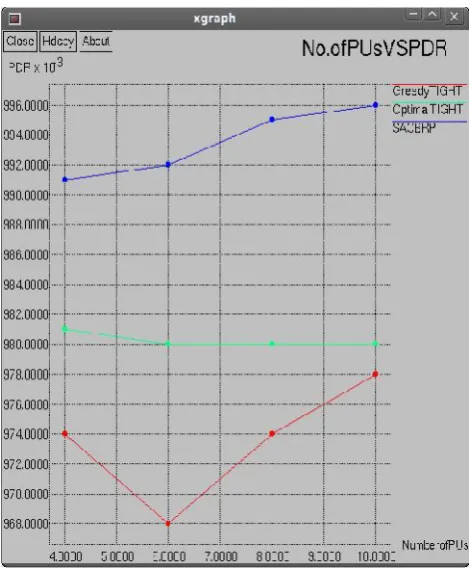
[image:5.595.42.288.317.604.2]4 0.974 0.981 0.991 6 0.968 0.980 0.992 8 0.974 0.980 0.995 10 0.978 0.980 0.996
Figure 2. Projects the performance evaluation of the proposed SACBRP protocol in terms of number of primary users versus packet delivery ratio. It is apparent that the proposed SACBRP attains better packet delivery ratio. The numerical results are also presented in Table 2.
Figure 3. PDR enhancement of TIGHT in overall channel
[image:5.595.312.554.462.772.2]Figure 3. Emphasizes the performance evaluation of the proposed SACBRP protocol in terms of packet delivery ratio in overall channel. It is palpable that the proposed SACBRP attains better packet delivery ratio. The numerical results are also presented in Table 3.
Table 3. PDR enhancement of TIGHT in overall channel
Optimal TIGHT SACBRP 0 0.980 0.990 50 0.989 0.993 100 0.992 0.995 150 0.993 0.996 200 0.994 0.997
(Whereβis a system parameter no larger than R(radius)
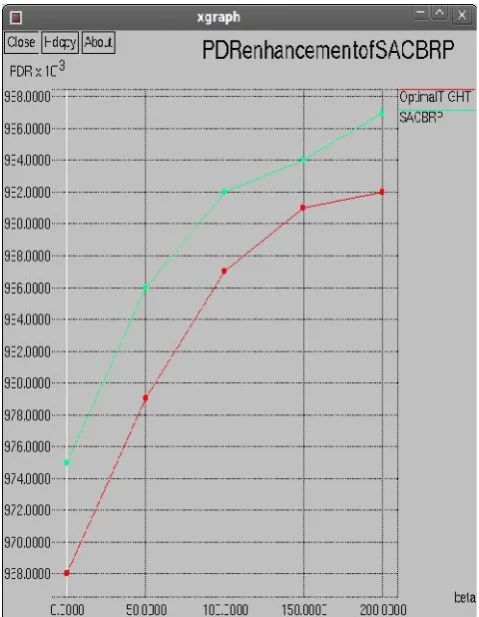
Figure 4. PDR enhancement of TIGHT in primary channel
Figure 4. Envisions the performance evaluation of the proposed EZBRP protocol in terms of packet delivery ratio in primary channel. It is overt that the proposed SACBRP attains better packet delivery ratio. The numerical results are also presented in Table 5.4.
[image:5.595.96.227.719.784.2]Table 4. PDR enhancement of TIGHT in primary channel
Optimal TIGHT SACBRP 0 0.968 0.975 50 0.979 0.986 100 0.987 0.992 150 0.991 0.994 200 0.992 0.997
(Whereβis a system parameter no larger than R(radius)
[image:6.595.43.285.227.619.2]Figure 5. Shows the performance evaluation of the proposed SACBRP protocol in terms of end-to-end delay. It is flagrant that the proposed SACBRP attains lesser end-to-end delay. The numerical results are also presented in Table 5.5.
Table 5. End-to-end latency
Bandwidth Ratio Optimal TIGHT Greedy TIGHT SACBRP
2 12 11 8
3.7 14 13 10
5.5 20 19 14
7.3 23 22 18
11 34 33 28
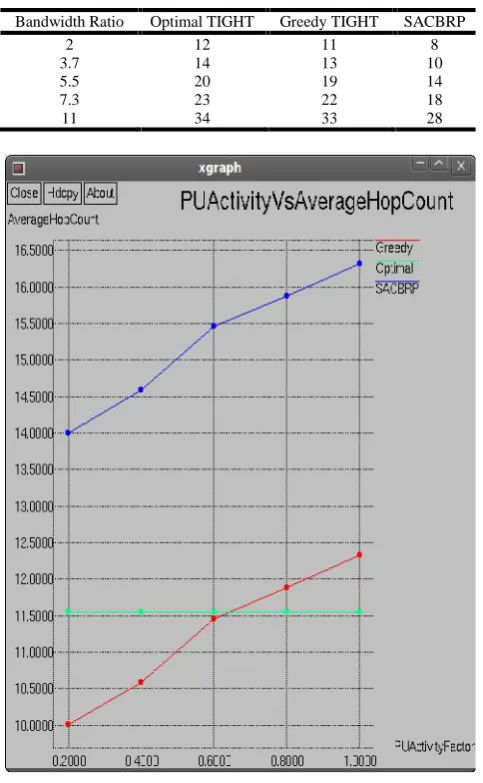
Figure 6. PU activity
[image:6.595.37.288.730.793.2]Figure 5.6 portrays the performance evaluation of the proposed SACBRP protocol in terms of average number of hops. It is palpable that the proposed SACBRP attains better average number of hop count. The numerical results are also presented in Table 5.6.
Table 6. PU activity
PU Activity Factor Greedy TIGHT Optimal TIGHT SACBRP 0.2 10.00215 11.54323 14.00201 0.4 10.58962 11.54321 14.58942 0.6 11.45621 11.54320 15.45609 0.8 11.87965 11.54316 15.87943 1.0 12.32145 11.54314 16.32126
Conclusion
This research work is the second phase of the doctoral research work. The proposed protocol is named as spectrum aware cluster based routing protocol (SACBRP) which is hybridized in nature. SACBRP has a node joining mechanism by which making a non-clustered node to become a member in a cluster. Cluster head election is then carried out followed up with routing. An adaptive route request and route reply algorithm is proposed. Simulations are performed using NS2 network simulator. Performance metrics such as packet delivery ratio, end-to-end latency and primary user’s activity are carried out and the results depicts that the proposed SACBRP outperforms well in cognitive radio mobile ad hoc scenario.
REFERENCES
Athina Bourdena, Constandinos X. Mavromoustakis, George Kormentzas, Evangelos Pallis, George Mastorakis, Muneer Bani Yassein, A resource intensive traffic-aware scheme using energy-aware routing in cognitive radio networks, Future Generation Computer Systems, Volume 39, October 2014, Pages 16-28
Cacciapuoti,A., M.Caleffi, and L.Paura, “Reactive routing for mobile cognitive radio ad hoc networks,” Ad Hoc Netw., vol. 10, no. 5, pp. 803–815, Jul. 2012.
Cheng,G., W.Liu, Y.Li, and W.Cheng, “Spectrum aware on -demand routing in cognitive radio networks,” in Proc. IEEE DYSPAN, Dublin, Ireland, Apr. 2007, pp. 571–574. Chowdhury, K. and I.Akyildiz, “CRP: A routing protocol for
cognitive radio Ad Hoc networks,” IEEE J. Sel. Areas Commun., vol. 29, no. 4, pp. 794–804, Apr. 2011.
Dutta, N.,Sarma, H.K.D.; Srivastava, A., Verma, S. "A SINR Based Clustering Protocol for Cognitive Radio Ad Hoc Network (CRAHN)," in Information Technology (ICIT), 2014 International Conference on , vol., no., pp.69-75, 22-24 Dec. 2014
Ghive, S., Patil, K., Kulkarni, S., Markande, S. "Cluster based routing algorithm for robustness," in Networks & Soft Computing (ICNSC), 2014 First International Conference on , vol., no., pp.241-247, 19-20 Aug. 2014
Kok-Lim Alvin Yau, Nordin Ramli, Wahidah Hashim, Hafizal Mohamad, Clustering algorithms for Cognitive Radio networks: A survey, Journal of Network and Computer Applications, Volume 45, October 2014, Pages 79-95 Majid Ashouri, Hamed Yousefi, Javad Basiri, Ali Mohammad
Afshin Hemmatyar, Ali Movaghar, PDC: Prediction-based data-aware clustering in wireless sensor networks, Journal of Parallel and Distributed Computing, Volumes 81–82, July 2015, Pages 24-35
Mansoor, N., Islam, A.K.M.M., Baharun, S., Komaki, S., Wada, K. "CoAd: A cluster based adhoc cognitive radio networks architecture with broadcasting protocol," in Informatics, Electronics & Vision (ICIEV), 2013 International Conference on , vol., no., pp.1-6, 17-18 May 2013
RameshPalanisamy, V. Mathivanan “Efficient Zone Based Routing Protocol (EZBRP)” International Journal of Computer Science and Information Security (IJCSIS), Vol. 14, No. 5, May 2016.
RameshPalanisamy, V. Mathivanan “The Wireless Security Survey of India” Volume 5, Issue12, December 2015 ISSN: 2277 128X International Journal of Advanced Research in Computer Science and Software Engineering. RameshPalanisamy, V. Mathivanan“Performance Evaluation
of SACBRP Based on End to End Latency”International Journal of Computer Trends and Technology (IJCTT) – Volume 35 Number 2- May 2016 ISSN: 2231-2803 Page 96.
Sampath, A., L.Yang, L.Cao, H.Zheng, and B.Zhao, “High throughput spectrum-aware routing for cognitive radio networks,” in Proc.CROWNCOM, Singapore, May 2008, pp. 1–6.
Shirke, N., Patil, K., Kulkarni, S., Markande, S., "Energy efficient cluster based routing protocol for distributed Cognitive Radio Network," in Networks & Soft Computing (ICNSC), 2014 First International Conference on , vol., no., pp.60-65, 19-20 Aug. 2014
Vizziello, A., Kianoush, S., Favalli, L., Gamba, P., "Location based routing protocol exploiting heterogeneous primary users in cognitive radio networks," in Communications (ICC), 2013 IEEE International Conference on , vol., no., pp.2890-2894, 9-13 June 2013
Zhu,G.M., I.Akyildiz, and G.S.Kuo, “STOD-RP: A spectrum-tree based on-emand routing protocol for multi-hop cognitive radio networks,” in Proc. IEEE GLOBECOM, Nov. 2008, pp. 1–5.