Study on Use of Carbon Black Powder in Bitumen
Rohit S. Datir1, Siddharth P. Gaikwad2
1
Bachelor of Engineering Student, 2Assistant Professor, Department of Civil Engineering, Pimpri Chinchwad College of Engineering, Akurdi, Maharashtra
Abstract: The increasing number of vehicles has increased the load on flexible pavement. The demand for the better pavement to withstand extreme condition is increased. Bitumen is a byproduct of petroleum which is a non-renewable resource hence to reduce the burden on natural resources waste product Carbon Black Powder is selected. This paper will emphasize on study of performance of Carbon Black Powder as an additive in bitumen.
Keywords: Carbon black powder, bitumen, experiment, waste.
I. INTRODUCTION
For a country like India an efficient road network is necessary for national integration, industrial development and as well as for socio-economic development. Due to the increasing population there is an increasing demand for sugar which is the reason for increase in dumping of carbon black powder in the surrounding. Carbon black powder is the waste product which is trapped from gases which are formed during the process of conversion of sugarcane to sugar. As the gases are formed during this process, they are passed through the Electrostatic precipitator which traps the carbon particles and leave out the clean air free from carbon. This carbon black powder which is trapped is later dumped in the ground causing ground pollution. So an attempt is made for improving the properties of bitumen by blending it with carbon black powder and ultimately a new method can be introduced to reduce pollution problems and protect our environment. However, with the use of carbon black powder in bitumen, it will definitely be environmentally beneficial, it can improve the bitumen binder properties and durability, and it will also have a potential to be cost effective. The objectives of this experimental work were as follows:
1) To study properties of Carbon Black Powder obtained from different materials.
2) To blend Carbon Black Powder in different proportions with conventional bitumen and perform necessary tests.
3) To finalize a feasible proportion of Carbon Black Powder in bitumen.
II. LITERATURE REVIEW
Use of carbon black power in flexible pavement is an emerging area in which experimentation has been done by few researchers and the same has been reviewed for carrying out experimental work. Reviewing papers helped in determining and limitation and the scope of the study.
III. METHODOLOGY
Carbon black powder Sample Collection
A. Tests On Carbon Black Powder
1) Specific Gravity Test: IS 2720 (Part-3/Sec 1) 1964 Objective
a) To Determine The Specific Gravity Of Carbon Black Powder
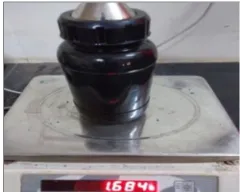
[image:1.612.263.383.620.716.2]The Pycnometer is used for determination of specific gravity of soil particles of both fine grained and coarse grained soils. The determination of specific gravity of soil will help in the calculation of void ratio, degree of saturation and other different soil properties.
Sr. No. Contents Sample 1
1 Pycnometer Number 1
2 Mass of empty Pycnometer (M1) gm 723
3 Mass of Pycnometer + Carbon Black Powder (M2) gm 779
4 Mass of Pycnometer + Carbon black Powder + distilled water (M3) gm 1684
5 Mass of Pycnometer + distilled water (M4) gm 1685
6 Specific gravity
=(M2-M1)/ (M4-M1) - (M3-M2)
[image:2.612.66.538.87.201.2]0.97
Table 3.2.1: Specific Gravity Tests
B. Tests on Bitumen
Following four laboratory tests were carried out on the conventional bitumen and three samples of carbon black powder modified bitumen with 1%, 2% and 5% carbon black powder composition.
1) Penetration Test: IS Code: IS 1203-1978 Objectives
a) To determine the consistency of bituminous material.
b) To assess the suitability of bitumen for use under different climatic conditions and various types of construction.
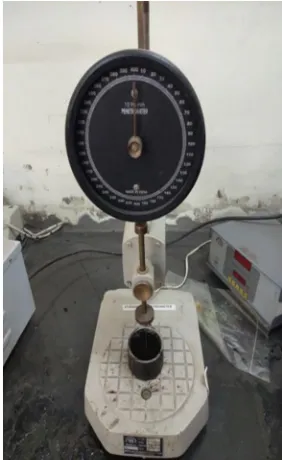
[image:2.612.235.376.365.595.2]Penetration value is a measure of hardness or consistency of bituminous material. It is the vertical distance traversed or penetrated by the point of a standard needle in to the bituminous material under specific conditions of load, time and temperature. This distance is measured in one tenths of a millimeter. This test is used for evaluating consistency of bitumen materials.
Fig. 3.3.1: Penetration Test
Table 3.3.1: Observations of Penetration test
Sample Replacement Penetration value
A 0% 52
B 1% 62
C 2% 45
2) Ductility Test: IS Code: IS 1208-1978 Objectives
a) To measure the ductility of a given sample of bitumen.
b) To determine the suitability of bitumen for its use in road construction.
[image:3.612.194.422.197.362.2]The ductility test gives a measure of adhesive property of bitumen and its ability to stretch. In flexible pavement design, it is necessary that binder should form a thin ductile film around aggregates so that physical interlocking of the aggregates is improved. Binder material having insufficient ductility gets cracked when subjected to repeat traffic loads and it provides pervious pavement surface. Ductility of a bituminous material is measured by the distance in centimeters to which it will elongate before breaking when two ends of standard briquette specimen of material are pulled apart at a specified speed and specified temperature.
Fig. 3.3.2: Ductility Test
Table 3.3.2: Observations of Ductility test
3) Softening Point Test: IS Code: IS 1205-1978 Objective
a) To determine the softening point of bitumen/ tar.
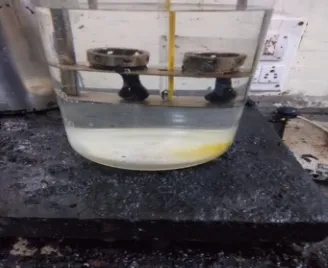
[image:3.612.225.389.585.719.2]The Softening Point of bitumen or tar is the temperature at which the substance attains particular degree of softening. As per IS: 334-1982, it is the temperature in ºC at which a standard ball passes through a sample of bitumen in a mould and falls through a height of 2.5 cm, when heated under water or glycerine at specified conditions of test. The binder should have sufficient fluidity before its applications in road uses. The determination of softening point helps to know the temperature up to which a bituminous binder should be heated for various road use applications. Softening point is determined by ring and ball apparatus.
Fig. 3.3.3: Softening Point Test
Sample Replacement Failure value (cm)
A 0% 49
B 1% 51
C 2% 37
Table 3.3.3: Observations of Softening point test
C. Selection of Bitumen Grade
For the study, we shall select bitumen grade as 30 (penetration & softening point test) generally used as a Paving Grade Bitumen suitable for construction of bases and wearing courses of flexible pavements with superior properties as thermoplastic property causing the material to soften at high temperatures and to harden at lower temperatures. This unique temperature/ viscosity relationship is important while determining the performance parameters of bitumen.
D. Composition of Materials For Carbon Black Powder Modified Bitumen
1) Sample no-1 with 1 % of carbon black powder by weight of bitumen
2) Sample no-2 with 2% of carbon black powder by weight of bitumen
3) Sample no-3 with 5% of carbon black powder by weight of bitumen
IV. RESULTS AND DISCUSSIONS
A. Results
By performing various tests by taking appropriate weight of bitumen sample and corresponding weights of carbon black powder sample (1%, 2%, 5% carbon black powder by weight of bitumen) the following results are obtained. Comparison of results obtained from conventional bitumen and carbon black powder modified bitumen with 1%, 2% and 5% carbon black powder by weight of bitumen is shown below.
Sr. no Prop. tested Con. Bitumen 1% of carbon
black powder
2% of carbon black powder
5% of carbon black powder
1. Penetration (cm) 52 62 45 38
2. Ductility
(cm) 49 51 37 25
3. Softening Point (oC) 51 50 49 47
Table 4.1.1: Comparison of Results
After performing laboratory test on three samples of Bitumen with different carbon black powder composition, it is found that the addition of 5% carbon black powder in the conventional bitumen gives better results.
As we increase the percentage of carbon black powder in conventional bitumen following changes are observed:
1) Penetration value decreases
2) Ductility value decrease
3) Softening point decreases in permissible limit
4) It shows that with the increase of proportion of carbon black powder in bitumen, improves the properties conventional bitumen
5) Addition of carbon black powder have reduced the bitumen content and also give better way of carbon black powder disposal
6) Use of carbon black powder in flexible pavements shows good result when compared with conventional flexible pavements
B. Discussions
1) Carbon black powder gives the satisfactory results than the conventional bitumen
2) Penetration is the measurement of hardness or consistency of bitumen. Due to addition of carbon black powder, hard bitumen
obtained which is preferred in warm regions
Sample Replacement Temperature (oC)
A 0% 51
B 1% 50
C 2% 49
3) The ductility test gives a measure of adhesive property of bitumen and its ability to stretch. Therefore, bitumen with low ductility values cannot be used in cold regions as there is a chance of cracking
4) Due to low ductility value, the pavement may crack
5) Softening point test gives an idea of temperature at which the bituminous material attains a certain viscosity. So bitumen with
higher softening point (50°C to 60°C) preferred in warmer place
6) Huge amount of carbon black powder is generated from surroundings which can totally be used for this purpose by reusing it
and solving the problem of disposal of carbon black powder waste and its waste generation
7) Also the problems like bleeding of the bitumen due to high temperature can be reduced
8) Addition of carbon black powder have reduced the bitumen content which results in the reduction of cost construction and also
a better way of carbon black powder disposal
9) Addition of 5% carbon black powder giver result similar the bitumen grade VG40.
V. CONCLUSIONS
A. The carbon black powder was procured from Sant Tukaram Sugar Factory. Specific gravity of carbon black powder obtained is
0.97. Result obtained from hydrometer test could not be found out as this test is carried out for particles having specific gravity more than 1
B. Carbon black powder was blended in 1%, 2%, 5% with bitumen and tests were carried out
C. After conducting various tests blending 5% of carbon black powder showed satisfactory results as value obtained satisfied VG
40 criteria
REFERENCES
[1] Dr. Kiran Kumar B V & Saritha N, “A Study on use of Carbon Black Powder in Bituminous Road Construction”, International Journal of Engineering Research & Technology, ISSN:2278-0181 (2015)
[2] Perviz Ahmedzade & Tacettin Geckil, “Influence of Carbon Black on the mechanical and electrical properties of asphalt mixtures”, Indian Journal of Engineering & Materials Sciences, pp. 358-364 (2007)
[3] Saad Abdulqader Ali, “Pavement Performance with Carbon Black and Natural Rubber (Latex)”, International Journal of Engineering and Advanced Technology (IJEAT)ISSN: 2249- 8958,Volume-2, Issue-3, February 2013
[4] Chuangmin Li, Ziran Fan 2, Shaopeng Wu, Yuanyuan Li,Youwei Gan and Aoming Zhang “Effect of Carbon Black Nanoparticles from the Pyrolysis of Discarded Tires on the Performance of Asphalt and its Mixtures”, Applied Sciences (ISSN 2076-3417) Published: 17 April
[5] Haopeng Wang, Guoyang Lu 2, Shuyin Feng, Xiaobo Wen and Jun Yang “Characterization of Bitumen Modified with Pyrolytic Carbon Black from Scrap Tires”, Sustainability (ISSN 2071-1050) Published: 18 March 2019
[6] Muhammad Faizan ul Haq, Naveed Ahmad, Muhammad Ali Nasir, Jamal, Murryam Hafeez, Javaria Rafi, Syed Bilal Ahmed Zaidi and Waqas Haroon “Carbon Nanotubes (CNTs) in Asphalt Binder: Homogeneous Dispersion and Performance Enhancement”, Applied Sciences (ISSN 2076-3417) Published: 17 December 2018