Developing Genetic Variability of Quinoa (Chenopodium
quinoa Willd.) with Gamma Radiation for Use in Breeding
Programs
Luz Rayda Gomez-Pando, Ana Eguiluz-de la Barra
Cereal and Native Grain Research Program, National Agricultural University La Molina, Lima, Peru. Email: [email protected]
Received November 22nd, 2012; revised December 23rd, 2012; accepted December 31st, 2012
ABSTRACT
Quinoa (Chenopodium quinoa Willd.) is a staple food produced mainly by small-scale subsistence farmers in Peru’s
highland. Dry seeds (cv. Pasankalla) were irradiated with doses of 150 Gy, 250 Gy and 350 Gy. In the M1 generation,
the germination process was delayed with increasing radiation dose; seedling height, root length and leaf development were most reduced at 250 Gy and at 350 Gy, no plants survived. In M2, the maximum spectrum of chlorophyll muta-
tions corresponded to 150 Gy and the maximum frequency to 250 Gy. The chlorine mutation was predominant, fol- lowed by xantha. Changes were registered for branch number, pedicel length, plant height, life-cycle duration, stem and foliage colour, and leaf morphology at the two doses, with improvements in plant type. More than one mutation per plant was found, especially at 250 Gy. In M3, the same spectrum of mutations was observed, along with a valuable
change in grain colour.
Keywords:Chenopodiun quinoa; Gamma Rays; Mutant
1. Introduction
Quinoa (Chenopodium quinoa Willd.) is native crop of
the Andes. Quinoa is cultivated in Peru by small farmers in plots below of 1 ha [1]. Its tolerance to drought, frost and saline soils makes it important in highland farming systems [2,3]. This annual crop belongs to the Chenopo- diaceae (goosefoot) family. Quinoa has an exceptionally nutritious balance of protein, fat, oil and starch. Grains average 16% protein, higher than common cereals. More- over, the protein is of unusually high quality, and is close to the FAO standard for human nutrition. Quinoa protein is high in the essential amino acids lysine, methionine and cystine, making it complementary to both other grains (deficient in lysine) and legumes (deficient in methionine and cystine) [4-6].
Quinoa is planted mostly in Puno to altitudes of over 3800 m. Due to the stressful climatic conditions and the technology in use there, productivity is low; for many years it ranged from 900 to 1100 kg/ha [1]. There are many ways to improve crop performance: one of them is genetic improvement via mutation induction. According to the IAEA database, there are more than 2500 mutant varieties of more than 170 different species [7]. There are many reports of improved morphological and physio- logical characteristics in cereals, grain legumes, oil seeds,
fiber crops, vegetables and ornamentals following muta- tion induction, with gamma rays being the preferred agent, and plant type and yield are the traits most com- monly reported [8-10]. Although the quality of many crops has been improved thru mutation induction [11], to the best of our knowledge, this technique has not been applied in quinoa to improve its agricultural performance in the marginal conditions of the Peruvian highlands but it was applied in barley and Amaranthus [12].
The Cereal and Native Grain Research Program at the National Agricultural University La Molina (Peru) is making efforts to improve the early cultivar Pasankalla- INIA, which has a growing period of 140 days; the plant can measure up to 120 cm in height; its panicle is light purple, and it has a glomerular inflorescence of interme- diate density. Seeds have a reddish-brown pericarp and the episperm (seed coat) is lead-colored.
2. Materials and Methods
2.1. Plant Material
be delivered for irradiation to a nuclear centre. Such cen- tres have been established in most countries or at IAEA Headquarters in Vienna.
2.2. Percent of Germination in M1 Generation
To establish percent of germination, 100 seeds per Petri dish (Ø: 10 cm, height: 2 cm) were placed on filter paper and covered with tissue paper. Each treatment included four Petri dishes (replicates) (for a total of 400 seeds per treatment). Distilled water (5 ml) was added at the begin- ning of the experiment. Every dish was then irrigated daily with 1 ml water to maintain moisture. The experiment was conducted under a photosynthetic photon flux density of 458 µmol/m2s (12 h/day) at 20˚C. The germination per-
centage was recorded on days 3, 5, 7, 9, 11 and 15.
2.3. Physiological Damage in M1 Generation
To determine the physiological damage or somatic ef- fects caused by the irradiation, seedling height and root length were measured in 1-month-old plants using the “sandwich blotter” technique [17]. Thirty seeds from each treatment were used in this experiment in four rep- licates (for a total 120 seeds per treatment). The level of somatic effects after mutagenic treatment can be evalu- ated on the basis of various parameters, including delay in seed germination; level of disturbances in the cell cy- cle; reduced seedling emergence; reduced seedling and plant growth; appearance of chlorophyll defects; and reduced fertility and plant survival. The term “reduced” indicates change in expression of a particular character in relation to the control, usually the parent cultivar or the breeding line whose seeds were treated with a mutagen [14]. The rest of the seeds from each treatment were sown in beds under field conditions following the proto- col described for quinoa crop in Peru [15]. The formation of cotyledonal and true leaves and percent of survival were evaluated. Individual heads or inflorescences of the M1 generation were harvested. Data were analyzed using
a completely randomized design.
2.4. Evaluation of M2 Generation
The M2 population was cultivated in the field, one inflo-
rescence per row. The following traits were evaluated: chlorophyll mutations, life-cycle duration, plant height, and morphological characteristics. Putative mutants were identified and harvested separately as individual plants. This generation was cultivated following the protocol described for different crops under isolated field condi- tions [14].
2.5. Evaluation of M3 Generation
The selected putative M2 mutants were cultivated as row/
plant (in the field, one plant per row) for progeny deter- mination and homozygosity testing. This generation was cultivated following the protocol described for different crops under field conditions planted in a row or rows depending on the amount of seed [14].
[image:2.595.336.507.540.719.2]2.6. General Experimental Scheme
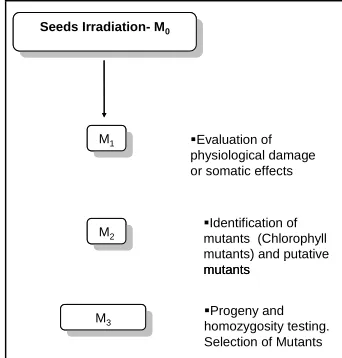
Figure 1 shows the experimental scheme followed in this
research.
2.7. Data Analysis
The Statistical Package for Social Sciences (Version 17.0 for Windows, SPSS Inc.) was used to perform ANOVA and Tukey tests (p ≤ 0.05).
3. Results and Discussion
3.1. Analysis of M1 Generation
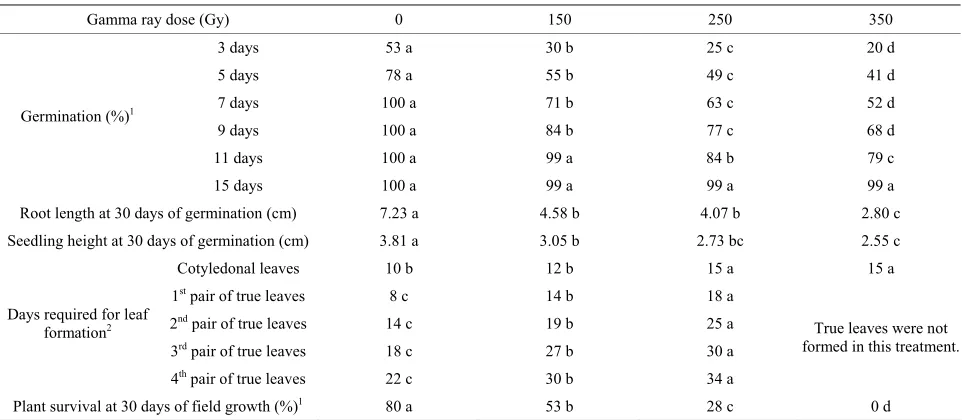
Germination of the control, non-irradiated seeds was normal, reaching 100% at 7 days. In contrast, the germi- nation process was slow in the irradiated seeds, becom- ing slower as the dose increased (Table 1). At 15 days,
germination of all treated seeds had reached 99%. The effect of the radiation was evident only during the ger- mination process.
Radiosensitivity was also evaluated by looking for physiological damage in the developing seedlings. Statis- tical differences were found by One-Way ANOVA and Tukey tests in root length and seedling height among the controls and all evaluated treatments (150, 250 and 350 Gy) (Table 1).
Under field conditions, using a scale that reflects the phenological stages of quinoa development during vege- tative growth [16], differences were observed among the treated plants and controls (Table 1). The control plants
M3 M3 M2 M2 M1 M1
Seeds Irradiation- M0
Seeds Irradiation- M0
Identification of mutants (Chlorophyll mutants) and putative mutants
Evaluation of physiological damage or somatic effects
Progeny and homozygosity testing. Selection of Mutants
M3 M3 M2 M2 M1 M1
Seeds Irradiation- M0
Seeds Irradiation- M0
Identification of mutants (Chlorophyll mutants) and putative mutants
Evaluation of physiological damage or somatic effects
Progeny and homozygosity testing. Selection of Mutants
Table 1. Germination and early growth of quinoa (Chenopodium quinoa Willd.) cv. Pasankalla following gamma-irradiation treatment.
Gamma ray dose (Gy) 0 150 250 350
3 days 53 a 30 b 25 c 20 d
5 days 78 a 55 b 49 c 41 d
7 days 100 a 71 b 63 c 52 d
9 days 100 a 84 b 77 c 68 d
11 days 100 a 99 a 84 b 79 c
Germination (%)1
15 days 100 a 99 a 99 a 99 a
Root length at 30 days of germination (cm) 7.23 a 4.58 b 4.07 b 2.80 c
Seedling height at 30 days of germination (cm) 3.81 a 3.05 b 2.73 bc 2.55 c
Cotyledonal leaves 10 b 12 b 15 a 15 a
1st pair of true leaves 8 c 14 b 18 a
2nd pair of true leaves 14 c 19 b 25 a
3rd pair of true leaves 18 c 27 b 30 a
Days required for leaf formation2
4th pair of true leaves 22 c 30 b 34 a
True leaves were not formed in this treatment.
Plant survival at 30 days of field growth (%)1 80 a 53 b 28 c 0 d
In each row, results with the same letter are not statistically different (One-Way ANOVA, Tukey, p > 0.05). 1For statistical analyses only, percentages were transformed according to y’ = 2 arcsine ((y/100)0.5). 2For statistical analyses only, the numbers of days required for leaf formation were transformed according to y’ = y0.5.
and the plants from the 150 and 250 Gy treatments ad- vanced from germination to vegetative growth, but the 350 Gy-treated plants did not. In this latter treatment, the plants did not form leaves and none of them survived. Number of days to leaf development increased with in- creasing dosage of gamma rays. We observed 80% sur- vival in the control, 53% survival in the 150 Gy treat- ment and 28% survival in the 250 Gy treatment.
3.2. Analysis of M2 Generation
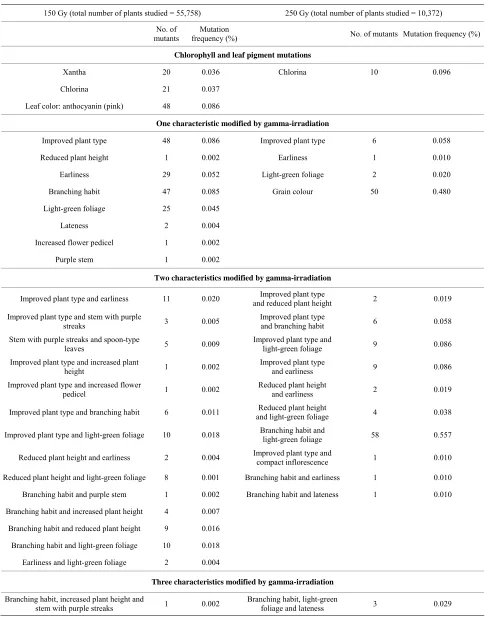
Table 2 presents the frequency and spectrum of chloro-
phyll mutations: the maximum spectrum corresponded to 150 Gy and the maximum frequency to 250 Gy. The chlorina mutation was predominant, followed by the xantha mutation. The frequency of chlorophyll mutations increased with increasing dosage. Leaf pigment muta- tions were observed at 150 Gy, as a change in cotyledon leaf color from green to pink, at a frequency of 0.086% (Table 2).
Table 2 also presents the entire spectrum of morpho-
logical and physiological mutations observed among the irradiated plants. Changes were registered for branch number and pedicel length, stem and foliage color, plant height and life cycle (both reduced), leaf morphology (spoon type) and plant type (improved).
In the 150 Gy treatment, the highest frequencies cor- responded to vigorous plant (growth) and branching (Ta- ble 2). In the 250 Gy treatment, higher frequencies were
found for plants with cream-colored grains and light green foliage. A similar frequency spectrum was found at
each dose, but there were more mutations per plant at the higher doses. Some of the possible mutant plants did not give seeds.
3.3. Analysis of M3 Generation
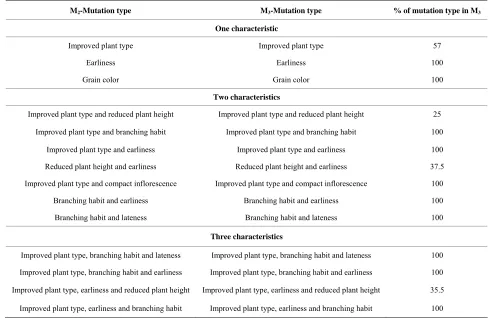
The changes in morphological and physiological charac- teristics identified in the M2 generation, in general, were
observed in the M3 generation, confirming the mutations
(Table 3). The light green foliage observed in M2; almost
phosphorescent, was not observed at M3 generation. The
most valuable changes were those of grain color on the pericarp from reddish-brown to cream and on the epi- sperm (seed coat) from lead to cream and plant height reduction.
The response observed in quinoa to gamma ray irradi- ation treatments showed similar somatic effects to that reported to other crops at M1 generation. The root length
and seedling height of generation M1 decreased propor-
tionally to dosage amount (Table 1), as reported for
other crops [14,17] and the identification of irradiation dosage limit of 350 Gy for cv. Pasankalla [18]. One pe- culiar response of quinoa to the damage of irradiation is the longer time for true leaf formation and the absence of them at high dose finishing with the death of the seed- lings.
In similar way, radiation genetic effects were observed in generation M2 and M3. Mutation of different characters
were founded (Tables 2 and 3) as reported in other crops
Table 2. Spectrum and frequency of mutations in M2 generation of quinoa (Chenopodium quinoa Willd.) cv. Pasankalla
fol-lowing gamma-irradiation treatment at doses of 150 and 250 Gy.
150 Gy (total number of plants studied = 55,758) 250 Gy (total number of plants studied = 10,372)
No. of
mutants frequency (%)Mutation No. of mutants Mutation frequency (%)
Chlorophyll and leaf pigment mutations
Xantha 20 0.036 Chlorina 10 0.096
Chlorina 21 0.037
Leaf color: anthocyanin (pink) 48 0.086
One characteristic modified by gamma-irradiation
Improved plant type 48 0.086 Improved plant type 6 0.058
Reduced plant height 1 0.002 Earliness 1 0.010
Earliness 29 0.052 Light-green foliage 2 0.020
Branching habit 47 0.085 Grain colour 50 0.480
Light-green foliage 25 0.045
Lateness 2 0.004
Increased flower pedicel 1 0.002
Purple stem 1 0.002
Two characteristics modified by gamma-irradiation
Improved plant type and earliness 11 0.020 and reduced plant height Improved plant type 2 0.019
Improved plant type and stem with purple
streaks 3 0.005
Improved plant type
and branching habit 6 0.058
Stem with purple streaks and spoon-type
leaves 5 0.009
Improved plant type and
light-green foliage 9 0.086
Improved plant type and increased plant
height 1 0.002
Improved plant type
and earliness 9 0.086
Improved plant type and increased flower
pedicel 1 0.002
Reduced plant height
and earliness 2 0.019
Improved plant type and branching habit 6 0.011 and light-green foliage Reduced plant height 4 0.038
Improved plant type and light-green foliage 10 0.018 Branching habit and light-green foliage 58 0.557
Reduced plant height and earliness 2 0.004 Improved plant type and compact inflorescence 1 0.010
Reduced plant height and light-green foliage 8 0.001 Branching habit and earliness 1 0.010
Branching habit and purple stem 1 0.002 Branching habit and lateness 1 0.010
Branching habit and increased plant height 4 0.007
Branching habit and reduced plant height 9 0.016
Branching habit and light-green foliage 10 0.018
Earliness and light-green foliage 2 0.004
Three characteristics modified by gamma-irradiation
Branching habit, increased plant height and
stem with purple streaks 1 0.002
Branching habit, light-green
Continued
Branching habit, light-green foliage and
reduced plant height 1 0.002
Improved plant type,
branching habit and lateness 2 0.019
Improved plant type,
branching habit and earliness 1 0.010
Improved plant type, branching
habit and light-green foliage 4 0.038
Improved plant type, earliness
and reduced plant height 2 0.020
Improved plant type, compact inflorescence and light-green
foliage 1 0.010
Improved plant type, reduced plant
height and light-green foliage 1 0.010
Improved plant type, earliness and
branching habit 5 0.048
Branching habit, earliness and
light-green foliage 2 0.019
Four characteristics modified by gamma-irradiation
Improved plant type, branching habit,
earliness and light-green foliage 1 0.010
Branching habit, light-green foliage,
[image:5.595.51.540.419.737.2]lateness and reduced plant height 2 0.019
Table 3. Spectrum and percentage of plants showing mutation in M3 generation of quinoa (Chenopodium quinoa Willd.) cv.
Pasankalla following gamma-irradiation treatment at doses of 150 and 250 Gy.
M2-Mutation type M3-Mutation type % of mutation type in M3
One characteristic
Improved plant type Improved plant type 57
Earliness Earliness 100
Grain color Grain color 100
Two characteristics
Improved plant type and reduced plant height Improved plant type and reduced plant height 25
Improved plant type and branching habit Improved plant type and branching habit 100
Improved plant type and earliness Improved plant type and earliness 100
Reduced plant height and earliness Reduced plant height and earliness 37.5
Improved plant type and compact inflorescence Improved plant type and compact inflorescence 100
Branching habit and earliness Branching habit and earliness 100
Branching habit and lateness Branching habit and lateness 100
Three characteristics
Improved plant type, branching habit and lateness Improved plant type, branching habit and lateness 100
Improved plant type, branching habit and earliness Improved plant type, branching habit and earliness 100
Improved plant type, earliness and reduced plant height Improved plant type, earliness and reduced plant height 35.5
of mutation occurrence, similar to sesame, where four types of chlorophyll mutations have been reported: xan- tha, chlorina, striate and xantha viridis [21].
4. Conclusions
It is important to highlight valuable agronomic changes observed in this population thru mutation, considering that this crop was neglected by many decades and a minimum genetic improvement work was made until now. The farmers are still using land races with very long cycle and very high height plants [22], being these characters negative limiting factors for the introduction of quinoa to modern agricultural systems. Identified mutants with reduced life cycle, could be beneficial considering that some of the actual cultivars growing have long-cycle reaching over 7 months in the field with the flowering and grain maturity time under adverse weather conditions (drought and frost) that significantly reduce the performance. In similar way the identified mutants with reduction in plant height will be very useful considering that will reduce the high tendency to lodging and could improve the yield in similar way to that achieved in wheat [23-25].
The mutation in grain color of quinoa will be very important for some industrial use. This change also was reported in wheat, where light-colored grain mutants have been obtained from Pusa Lerma [26], Tonari 71 [27] and Sonora 64 [9] and were very appreciated by the end users.
Other important aspect observed in this study was that cv. Pasankalla explodes when roasted, similar to popcorn. This feature is retained in the mutants, with the added value of a final product that has a more appealing com- mercial appearance. The selected mutants will be evalu- ated for their agronomic performance in the next genera- tions.
5. Acknowledgements
This research was supported by: IAEA-PROJECT PER/ 5/30 “Genetic Improvement of Quinoa (Chenopodium quinoa) and Kiwicha (Amaranthus caudatus) using Mu-
tation Induction and Biotechnology”, INCA-GRO-PERU: Sub-Proyecto “Mejoramiento Genético de la Quinua para el desarrollo sostenible del cultivo en la sierra central” and Program IUC/VLIR-UNALM: Development of va- lue chains for biodiversity conservation and improve- ment of rural livelihoods. Thanks to Mrs. Camille Vain- stein for professional language editing of the manuscript.
REFERENCES
[1] Peruvian Ministry of Agriculture, 2012.http://www.minag.gob.pe/estadistica-agraria-mensual/htm
[2] C. J. Risi and N. W. Galwey, “The Chenopodium Grains
of the Andes: Inca Crops for Modern Agriculture,” Ad- vanced and Applied Biology, Vol. 10, 1984, pp. 145-216.
[3] S. E. Jacobsen, A. Mujica and C. R. Jensen, “The Resis- tance of Quinoa (Chenopodium quinoa Willd.) to Ad-verse Abiotic Factors,” Food Reviews International, Vol.
19, No. 1-2, 2003, pp. 99-109. doi:10.1081/FRI-120018872
[4] R. E. Aluko and E. Monu, “Functional and Bioactive Properties of Quinoa Seed Protein Hydrolysates,” Journal of Food Science, Vol. 68, No. 4, 2003, pp. 1254-1258.
doi:10.1111/j.1365-2621.2003.tb09635.x
[5] R. Repo-Carrasco, C. Espinoza and S. E. Jacobsen, “Nu- tritional Value and Use of the Andean Crops Quinoa (Chenopodium quinoa) and Kañiwa (Chenopodium pal- lidicaule),” Food Reviews International, Vol. 19, No. 1-2, 2003, pp. 179-189. doi:10.1081/FRI-120018884
[6] L. Abugoch, E. Castro, C. Tapia, M. C. Añón, P. Gajardo, and A. Villarroel, “Stability of Quinoa Flour Proteins (Chenopodium quinoa Willd.) during Storage,” Interna- tional Journal of Food Science & Technology, Vol. 44,
No. 10, 2009, pp. 2013-2020. doi:10.1111/j.1365-2621.2009.02023.x
[7] IAEA, 2012. http://www-mvd.iaea.org/MVD/default.htm [8] B. S. Ahloowalia, M. Maluszynski and K. Nichterlein,
“Global Impact of Mutation-Derived Varieties,” Euphy- tica, Vol. 135, No. 2, 2004, pp. 187-204.
doi:10.1023/B:EUPH.0000014914.85465.4f
[9] V. L. Chopra, “Mutagenesis: Investigating the Process and Processing the Outcome for Crops Improvement,”
Current Science, Vol. 89, No. 2, 2005, pp. 353 -359.
[10] H. W. Fu, Y. F. Li and Q. Y. Shu, “A Revisit of Mutation Induction by Gamma Rays in Rice: Implications of Mi-crosatellite Markers for Quality Control,” Molecular Breeding, Vol. 22, No. 2, 2008, pp. 281-288.
doi:10.1007/s11032-008-9173-7
[11] O. F. Adekola and F. Oluleye, “Influence of Mutation Induction on the Chemical Composition of Cowpea Vigna unguiculata (L.) Walp,” African Journal of Biotechnology,
Vol. 6, 2007, pp. 2143-2146.
[12] L. Gómez-Pando, A. Eguiluz, J. Jimenez, J. Falconí and E. Heros, “Barley (Hordeun vulgare) and Kiwicha ( Ama-ranthus caudatus) Improvement by Mutation Induction in
Peru,” In: Q. Y. Shu, Ed., Induced Plant Mutations in the Genomics Era, Food and Agriculture Organization of the
United Nations, Rome, 2009, pp. 371-374.
[13] R. R. Myhill and C. F. Konzak, “A New Technique for Culturing and Measuring Barley Seedlings,” Crop Sci- ence, Vol. 7, No. 3, 1967, pp. 275-277.
doi:10.2135/cropsci1967.0011183X000700030038x [14] M. Maluszynsski, I. Szarejko, Ch. Bathia, K. Nichterlein,
and P. Lagoda, “Methodologies for Generating Variabil- ity. Part 4: Mutation Techniques,” In: Plant Breeding and Farmer Participation, Food and Agriculture Organization
of the United Nations, Rome, 2009. 159 -194
Dirección General de Investigación Agraria, Lima, 1997, p. 130.
[16] H. Limburg and H. D. Mastebroek, “Breeding High Yielding Lines of Chenopodiumquinoa Willd. with Sa-
ponin Free Seed,” Small Grain Cereals and Pseudo Cere- als Workshop: Crop Development for the Cool and Wet Regions of Europe, The Royal Veterinary and Agricul-
tural University, Copenhagen, 1996, pp. 103-114. [17] A. A. Cheema and B. M. Atta, “Radiosensitivity Studies
in Basmati Rice,” Pakistan Journal of Botany, Vol. 35,
No. 2, 2003, pp. 197-207.
[18] J. N. Tabosa, W. Colaco, O. V. Reis, J. B. Simplicío and F. M. Dias, “Sorghum Genotypes Tolerant to Soil Salin- ity-Progenies Developed under Gamma Ray Doses,” E Journal.icrisat.org, Vol. 5, No. 1, 2007, pp. 1-5.
[19] J. Encheva, M. Christov, N. Nenov, F. Tsvetkova, P. Ivanov, P. Shindrova and V. Encheva, “Developing Ge- netic Variability in Sunflower (Helianthus annuus L.) by
Combined Use of Hybridization with Gamma Radiation or Ultrasound,” Helia, Vol. 26, No. 38, 2003, pp. 99-108.
doi:10.2298/HEL0338099E
[20] Y. Chen, L. S. Lee, H. Hill, R. Henry and C. Banos, “Rough Texture of Mungbean (Vigna radiata L.) First
True Leaves Induced by Gamma Irradiation,” Plant Mut Rep, Vol. 2, No. 1, 2008, pp. 39-43.
[21] A. Sheeba, S. M. Ibrahim, S. Yogameenakshi and S. Babu, “Mutagen Induced Polygenic Variability in Sesame
(Sesamum indicum L.),” Madras Agricultural Journal, Vol. 91, No. 1-3, 2004, pp. 75-78.
[22] M. E. Tapia, “Cultivos Andinos Subexplotados y Su Aporte a la Alimentación,” 2nd Edition, Oficina Regional de la FAO para America Latina y el Caribe, Santiago, 2000.
[23] Y. Zhou, Z. H. He, X. X. Sui, X. C. Xia, X. K. Zhang, and G. S. Zhang, “Genetic Improvement of Grain Yield and Associated Traits in the Northern China Winter Wheat Region from 1960 to 2000,” Crop Science, Vol. 47,
No. 1, 2007, pp. 245-253.
doi:10.2135/cropsci2006.03.0175
[24] J. Rutger, “Induced Semidwarf Mutants,” Rice Genetics Newsletter, Vol. 1, 1984, pp. 92-93.
[25] A. Sasaki, M. Ashikari, M. Ueguchi-Tanaka, H. Itoh, A. Nishimura, D. Swapan, K. Ishiyama, T. Saito, M. Koba- yashi, G. S. Khush, H. Kitano and M. Matsuoka, “Green Revolution: A Mutant Gibberellin-Synthesis Gene in Rice,”
Nature,Vol. 416, No. 6882, 2002, pp. 701-702. doi:10.1038/416701a
[26] M. S. Swaminathan, “Biological Effects of Neutron Irra-diations,” Current Science, Vol. 33, 1964, pp. 299-300.
[27] R. N. Sawhney, V. L. Chopra, K. Rajinder and H. R. Mo- hindroo, “Radiation Induced Amber-Grained Mutants in Variety Tonari 71 of Wheat,” Current Science, Vol. 46,