http://www.scirp.org/journal/ojpsych ISSN Online: 2161-7333
ISSN Print: 2161-7325
DOI: 10.4236/ojpsych.2017.74031 Oct. 11, 2017 374 Open Journal of Psychiatry
Effects of Depth of Needle Insertion with
Risperidone Long-Acting Injectable in
Persons with Schizophrenia:
A Randomized Double-Blind Study
Yueren Zhao
1*, Tetsuya Tanioka
2, Yuko Yasuhara
2, Kensaku Takase
3, Soji Tsuboi
4,
Kiyoshi Fujita
4, Rozzano C. Locsin
2, Nakao Iwata
11Department of Neuropsychiatry, Fujita Health University School of Medicine, Aichi, Japan
2Department of Nursing, Institute of Biomedical Sciences, Tokushima University Graduate School, Tokushima, Japan 3Department of Rehabilitation, Tokushima Prefectural Central Hospital, Tokushima, Japan
4Okehazama Hospital Fujita Kokoro Care Center, Aichi, Japan
Abstract
In some cases, if the insertion depth is shallower than expected, intramuscular (IM) injection of risperidone long-acting injectable (RLAI) may not penetrate the muscle fascia. However, if needle insertion depth is deeper than antic-ipated, needle penetration may cause damage to nerves, arteries and veins. Few clinical studies were done to evaluate the depth of needle length insertion reaching the intended gluteal muscle. The aim of this study was to evaluate the suitable depth of injecting RLAI. Twenty-six patients with schizophrenia were treated with RLAI, and randomly divided into two groups: 50 mm needle inserted group (Group-D, deep insertion, n = 13) and 20 mm needle insertion group (Group-S, shallow insertion, n = 13). For Group-S, the needle length was marked with a spacer at exactly 20 mm. Injections were performed by the psychiatrist or nurse, alternating between the two gluteal sites by double-cross method every two weeks. Clinical psychotic symptoms and in-jection site reactions were recorded throughout the study period. Experienced psychologists who were blinded from the needle-length experimental variable evaluated patients’ psychotic symptoms using the Positive and Negative Syn-drome Scale (PANSS) every two weeks. The plasma 9-hydroxyrisperidone (9-OH-RIS) concentrations were measured every two weeks; comparison data were determined on the 8th week and the 14th week. No significant difference was observed in 9-OH-RIS concentrations, psychotic symptoms, injection site skin reactions of subjects in both groups. However, in Group-D, injection site How to cite this paper: Zhao, Y., Tanioka,
T., Yasuhara, Y., Takase, K., Tsuboi, S., Fujita, K., Locsin, R.C. and Iwata, N. (2017) Effects of Depth of Needle Insertion with Risperidone Long-Acting Injectable in Per-sons with Schizophrenia: A Randomized Double-Blind Study. Open Journal of Psy-chiatry, 7, 374-385.
https://doi.org/10.4236/ojpsych.2017.74031
Received: September 1, 2017 Accepted: October 8, 2017 Published: October 11, 2017
Copyright © 2017 by authors and Scientific Research Publishing Inc. This work is licensed under the Creative Commons Attribution International License (CC BY 4.0).
DOI: 10.4236/ojpsych.2017.74031 375 Open Journal of Psychiatry adverse reactions were confirmed in two subjects (15%). In Group-S, injection site reactions were confirmed in six subjects (46%). Although effective 9-OH-RIS concentrations were obtained with the insertion using both depth, it was concluded that the 50 mm insertion length was more suitable for dor-sogluteal IM injections in adult patients with schizophrenia as demonstrated by the incidence of local adverse skin reactions.
Keywords
Inserted Depth of Injection Needle, Long-Acting Injectable, Persons with Schizophrenia, Randomized Double-Blind Study, 9-Hydroxyrisperidone Pharmacokinetics
1. Introduction
Relapses prevention constitutes one of the primary treatment goals for the suc-cessful long-term management of schizophrenia [1] [2]. Similarly, poor medica-tion adherence contributes to negative treatment response, symptom relapse, and frequent re-admissions of schizophrenic patients [3] [4]. Increasing medica-tion adherence is critical to improving outcomes among these patients. A long-acting injectable (LAI) antipsychotic medication is one of the most effective methods for enhancing treatment adherence and decreasing re-hospitalization rates in patients with schizophrenia [5] [6] [7].
First- and second-generation antipsychotic LAI therapies may improve medi-cation adherence compared to oral antipsychotics [8] [9]. Evidence has been es-tablished that LAI antipsychotics demonstrate distinct benefits in the mul-ti-episode, non-adherent, “revolving door” patient [10]. In previous research, discussion focused on the LAI’s kinetic properties, relationships between plasma concentrations with clinical effects, and conversion from oral to injectable ther-apy [11]. However, for the second-generation LAI, there were only few reports on the method to determine the suitability of injection sites of RLAI, which takes into consideration injection needle insertion depth, plasma 9-hydroxyrisperidone (9-OH-RIS) concentration, psychotic symptoms and injection site reactions.
DOI: 10.4236/ojpsych.2017.74031 376 Open Journal of Psychiatry the most appropriate method for RLAI administration.
2. Purpose
The aim of this study was to determine an appropriate injection needle penetra-tion depth of RLAI by examining pharmacokinetic differences, psychotic symp-toms, injection site reactions, and depth of needle insertion.
3. Methods
3.1. Data Collection Methods
3.1.1. Measurement by Ultrasonography
For all patients receiving RLAI, IM injection and ultrasonography were per-formed in advance following this procedure: Nurse Investigators who have used the “Double Cross” method to determine the gluteal muscle injection site per-formed the procedure thereby ensuring consistency in the insertion method. The “Double Cross” method divides the buttocks with an imaginary cross, and then divides the upper outer quadrant by another imaginary cross [14]. The DEUF, and distance from the epidermis to the iliac bone (DEI) at bilateral gluteal sites were assessed using a standardized ultrasonography [12]. Results of ultrasonographic measurements were done based on the recorded ultrasonographic images. All ultrasonographic measurements were performed by an experienced Sonographer using a 7.5 MHz linear and convex array transducer and real-time-B-mode ul-trasonography diagnostic system (Hitachi Medical Corporation, Japan). Ultra-sonographic images were made at the dorsogluteal injection site. DEUF and DEI measurements were made above and outside a line drawn from the posterior superior iliac spine to the greater trochanter of the femur. The ultrasonography probe was held at a right angle to the skin at the gluteal region.
3.1.2. Measurement Items and Analysis Method
Clinical psychotic symptoms and injection site reactions were recorded throughout the study period. Also, two experienced psychologists evaluated pa-tients’ psychotic symptoms using the Positive and Negative Syndrome Scale (PANSS) every two weeks. All evaluators and clinicians were not informed about subject belongs which group.
DOI: 10.4236/ojpsych.2017.74031 377 Open Journal of Psychiatry start of this study.
It was confirmed that there is no difference between age, body mass index (BMI), and dose of RLAI in both groups. The Wilcoxon signed rank test was used in comparing clinical symptoms determined by the total score of PANSS, the 9-OH-RIS concentrations, and aforementioned measurement items.
The injection site reactions (redness, swelling, and a palpable mass) were compared using Fisher’s exact test and Chi square test between two groups. Sta-tistical analyses of data were performed using PASW Statistics (Ver. 18.0J). P value of <0.05 level was considered statistically significant.
3.1.3. Study Period
The study was conducted from December 2013 to May 2014.
3.1.4. Spacer Device for the Injection Needle
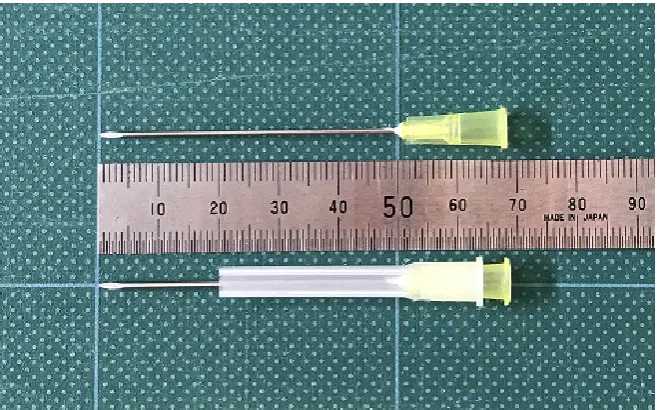
Needle-length insertion was also guided by the spacer device for the injection needle devised to accurately insert only 20 mm length of the needle (Figure 1). Plastic caps attached to unused RLAI-specialized needles collected through sani-tary procedure were cut off. It was processed so that the needle could be inserted accurately to a depth of 20 mm from the tip of the needle. Autoclave sterilization was done and the needles and caps were discarded.
3.2. Subjects and Study Location
3.2.1. Subjects [image:4.595.210.539.474.679.2]There were twenty-six adult patients diagnosed with schizophrenia of whom 18 were men and 8 were women, those were already prescribed RLAI. These sub-jects were recruited from Okehazama Hospital Fujita Kokoro Care Center, Ai-chi, Japan.
DOI: 10.4236/ojpsych.2017.74031 378 Open Journal of Psychiatry 3.2.2. Inclusion and Exclusion Criteria
The subjects were patients meeting all of the following inclusion criteria, namely: Out/In-patients, 20 years of age or older at the time the informed consent was obtained; Patients with schizophrenia who met the DSM-IV-TR diagnostic cri-teria; Patients who required treatment with RLAI, as well as all those who were being administered RLAI regularly for more than 8 weeks from the base line date of the study; and Patients who personally gave written informed consent to participate in the study. The exclusion criteria were: Patients with a prior history of hypersensitivity to risperidone; and those PANSS total score was equal to or higher than 130.
Meanwhile, the patients whose severity scores of Positive and Negative Syn-drome Scale (PANSS) was less than 130 points participated in this research out of those whose total scores were between 30 - 210 points. The participants were those patients who could maintain daily life activities at home or in the hospital environment, of single status or who received the support of care-givers such as family members despite having symptoms from mild to moderate based on the PANSS.
3.2.3. Determination of Insertion Depth of Injection Needle
Zaybak et al. [19] measured subcutaneous tissue thickness at the dorsogluteal area to determine optimal needle length for dorsogluteal IM injections in adults with BMI of more than 24.9 kg/m2. They concluded that a needle longer than 1.5 inches should be used in women whose BMI is more than 24.9 kg/m2, however, the dorsogluteal site may be used in patients who are overweight and in obese men. The ventrogluteal site may be used only among overweight men.
As generally observed among nurses practicing IM injection in the real world of clinical practice in Japan and based on the results of a questionnaire survey, IM injection is often performed using the ordinary injection needle with a length of 38 mm, with the injection needle being inserted 1/2 or 2/3 of its length [20]. The length of the RLAI-specialized injection needle is 50 mm. The designated injection needle on the buttocks for the second-generation anti-psychotic agent LAI (Paliperidone palmitate) is 38 mm. Therefore, in this study, we set the inser-tion depth of Group-D to 50 mm which is the same as that of the RLAI-specialized 50 mm injection needle, and the one of Group-S to a length of 1/2 or more of the 38 mm injection needle, that is, 20 mm. Applying the Hochstetter and Clark’s point measurement method on the injection sites reveals that the distance from epidermis to iliac bone (DEI) is short [21]. So, it was judged that the tip of the injection needle for RLAI might touch an iliac bone. In this study, therefore, the double cross method was applied for the method to determine the injection site. It was confirmed by ultrasonic examination that DEI from injection sites by double cross method was more than 50 mm in all subjects.
3.3. Ethical Considerations
DOI: 10.4236/ojpsych.2017.74031 379 Open Journal of Psychiatry consents were obtained from the prospective subjects of the study. Patient con-sent for ultrasonography images was also obtained. The concon-sent also included a statement of understanding that images may be used for educational purposes, lectures, and publications. A double blind trial without disclosure of assignment contents was conducted.
[image:6.595.211.538.601.699.2]4. Results
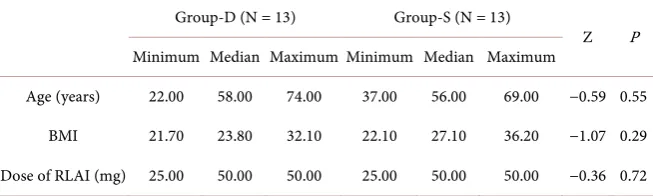
Table 1 is a comparison result for confirming that both groups have the same conditions. It was confirmed that there was no significant difference in age, BMI, dose of RLAI in both groups.
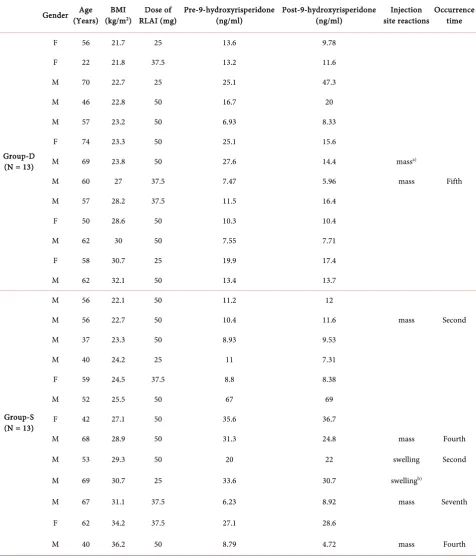
Table 2 shows the parameters of the variables such as characteristics of injec-tion site reacinjec-tion, RLAI dose and risperidone plasma concentrainjec-tion from the start of the study to the seventh occasion of RLAI administration. During the study period, patients in Group-D showed injection site reactions in two subjects out of 13 (15%). The injection site reactions were palpable and circumscribed masses beneath the subcutaneous tissue for both subjects. This palpable mass was found in a subject four times during the second, third, fourth and sixth data collection time. In Group-S patients, the injection site reactions were confirmed in six subjects out of 13 (46%). The injection site reactions were palpable masses for four subjects and apparent swellings for two more patients. Palpable masses were observed twice in a subject at the fifth and seventh data collection time. However, there was no significant difference in the incidence rate of injection site reaction in both groups (Chi-square value = 1.55, p = 0.21).
There was no significant difference in the transition of risperidone plasma concentration and psychotic symptoms in both groups (Table 3).
5. Discussion
Risperidone is a second-generation antipsychotic agent commonly prescribed and used in the treatment of patients with schizophrenia. Despite its common use, there is limited documentation available on its pharmacokinetics in a natu-ralistic setting [22]. Only recently, a paper was published in which the 9-OH-RIS concentration of RLAI was measured and its relationship with injection needle
Table 1. Comparison results between Group-D and Group-S regarding patients age, BMI and dose of RLAI.
Group-D (N = 13) Group-S (N = 13)
Z P
Minimum Median Maximum Minimum Median Maximum
Age (years) 22.00 58.00 74.00 37.00 56.00 69.00 −0.59 0.55
BMI 21.70 23.80 32.10 22.10 27.10 36.20 −1.07 0.29
Dose of RLAI (mg) 25.00 50.00 50.00 25.00 50.00 50.00 −0.36 0.72
DOI: 10.4236/ojpsych.2017.74031 380 Open Journal of Psychiatry
Table 2. Demographic and clinical characteristics of 26 patients.
Gender Age (Years) (kg/mBMI 2) RLAI (mg) Dose of Pre-9-hydroxyrisperidone (ng/ml) Post-9-hydroxyrisperidone (ng/ml) site reactions Injection Occurrence time
Group-D (N = 13)
F 56 21.7 25 13.6 9.78
F 22 21.8 37.5 13.2 11.6
M 70 22.7 25 25.1 47.3
M 46 22.8 50 16.7 20
M 57 23.2 50 6.93 8.33
F 74 23.3 50 25.1 15.6
M 69 23.8 50 27.6 14.4 massa)
M 60 27 37.5 7.47 5.96 mass Fifth
M 57 28.2 37.5 11.5 16.4
F 50 28.6 50 10.3 10.4
M 62 30 50 7.55 7.71
F 58 30.7 25 19.9 17.4
M 62 32.1 50 13.4 13.7
Group-S (N = 13)
M 56 22.1 50 11.2 12
M 56 22.7 50 10.4 11.6 mass Second
M 37 23.3 50 8.93 9.53
M 40 24.2 25 11 7.31
F 59 24.5 37.5 8.8 8.38
M 52 25.5 50 67 69
F 42 27.1 50 35.6 36.7
M 68 28.9 50 31.3 24.8 mass Fourth
M 53 29.3 50 20 22 swelling Second
M 69 30.7 25 33.6 30.7 swellingb)
M 67 31.1 37.5 6.23 8.92 mass Seventh
F 62 34.2 37.5 27.1 28.6
M 40 36.2 50 8.79 4.72 mass Fourth
Group-D: 50 mm needle inserted group, Group-S: 20mm needle inserted group. M = male, F = female. During the test period, in Group-D, injection site
reactions were confirmed in two patients out of 13 (15%). In Group-S, injection site reactions were confirmed in six patients out of 13 (46%). a)The palpable
mass was recognized in a patient four times at second, third, fourth and sixth time. b)The injection site reactions were palpable masses for four patients and
DOI: 10.4236/ojpsych.2017.74031 381 Open Journal of Psychiatry
Table 3. Pre- and post-injection 9-hydroxyrisperidone concentrations and psychiatric states in Group-D and Group-S.
Minimum Median Maximum Z P
Group-D (N = 13)
Pre-9-OH-RIS (ng/ml) 6.93 13.40 27.60
−0.31 0.75 Post-9-OH-RIS (ng/ml) 4.72 12.00 69.00
Pre-PANSS 68.00 86.00 118.00
−0.71 0.48
Post-PANSS 67.00 83.00 113.00
Group-S (N = 13)
Pre-9-OH-RIS (ng/ml) 6.23 11.20 67.00
−0.10 0.92 Post-9-OH-RIS (ng/ml) 5.96 13.70 47.30
Pre-PANSS 64.00 79.00 103.00
−0.35 0.73
Post-PANSS 70.00 76.00 102.00
Group-D: 50 mm needle inserted group, Group-S: 20 mm needle inserted group. Wilcoxon Signed-rank Test, PANSS: Positive and Negative Syndrome Scale, 9-hydroxyrisperidone (9-OH-RIS). Pre: Measurement data at the fourth visit (8 weeks) from the start of this study. Post: Measurement data at the seventh visit (14 weeks) from the start of this study.
insertion depth, psychotic symptoms and injection site reaction were discussed. However, there has been no study in which an ultrasonic determination was im-plemented before the examination and the relationship analyzed. Probably, that kind of research is the first-time study was conducted in the world. Nevertheless, in this research, measuring plasma 9-OH-RIS concentration and following up its effects using ultrasonic examination were found to be significant.
In this current study, the subjects were divided two groups by the needle in-sertion depth of 50 mm and of 20 mm. There was no significant difference found in plasma 9-OH-RIS concentration, psychotic symptoms, injection site reaction and BMI in both groups.
RLAI is an aqueous suspension in which the active drug substance is encapsu-lated in a microsphere of polylactide-co-glycolide polymer. After injection, a small amount of risperidone (<1%) is released by diffusion within 24 hours [23]. It was presumed that even if RLAI was injected into subcutaneous tissue, no sig-nificant difference would have been recognized in 9-OH-RIS concentration.
DOI: 10.4236/ojpsych.2017.74031 382 Open Journal of Psychiatry In this current study, however, injection site reactions during the test period, of patients in Group-D were found to have injection site reactions (palpable mass in both subjects) confirmed in two subjects out of 13 (15%). Patients in Group-D were observed to show subcutaneous swelling in four occasions. Dur-ing the test period among patients in Group-S, their injection site reactions (palpable masses and swellings) were confirmed in six subjects out of 13 (46%). Although there was no statistically significant difference in injection site reaction incidence, it was suggested that according to the incidence rate, inserting the in-jection needle deep into the muscle can possibly reduce the incidence of injec-tion site reacinjec-tions.
In most cases, injection-site reactions of two weeks post-injections were re-solved thereafter. The case that had a palpable mass was observed to have the mass four times. The mass was considered a case-based incidence. In Group-D, insertion length site reactions were considered safe as compared with the pa-tients’ situation for those in Group-S.
The information that the injection needle should not be inserted up to its base came from cases wherein the needle came off and remained in the body when this injection needles were removed. This occurred during the times when injec-tion needles were reusable [26]. However, recent disposable injection needles are improved so that even if an injection needle is inserted up to its base, there is no danger of the needle remaining in the body.
From a safety perspective, it is suggested that an optimal needle length for dorsogluteal IM injections in adults with BMI of more than 24.9 kg/m2 is a needle longer than 1.5 inches [19] [27]. The length of the injection needle (22 gauge) for gluteal muscle injection designated for second-generation atypical an-tipsychotic LAI is 38 mm, both in the case of paliperidone and of aripiprazole. In this study, it is also considered that it is preferable to insert the needle up to its base of about 38 mm for the aforementioned patients.
5.1. Limitations
The study has several limitations. One of these is the small sample size which may limit the generalization derived from the findings. Likewise, the researchers failed to equalize the numbers of people in the gender groups. It takes about 20 minutes per case to conduct IM injection while conducting an ultrasonic ex-amination. It was difficult to conduct the latter while actual clinical work was being performed. However, if the ultrasonic examination could be carried out before all the IM injections, the reliability of the result would increase further.
Nevertheless, in the double-blind trial [28], consideration should be given to various reactions to patients occurring with a 20 mm IM injection needle in rou-tine care settings.
5.2. Implications for Future Research
DOI: 10.4236/ojpsych.2017.74031 383 Open Journal of Psychiatry at the time of each injection. Moreover, if the relationship between the status of RLAI injection into the muscle and plasma concentration of risperidone can be investigated, then test results with further reliability can be obtained.
Performing a morphological investigation before LAI is injected is encour-aged, as this type of investigation targeting buttock muscles using ultrasonic di-agnostic equipment has become an inexpensive and convenient non-invasive diagnostic instrument. Since it is possible to examine not only buttock muscles but also the positional relationship among other tissues existing between skin and iliac bones and their anomalies such as arteriovenous anomalies, this mor-phological investigation is very useful not only to ensure the efficacy of the in-jection drug to be injected into the buttock muscles, but also for the reduction of risks posed by a needle’s erroneous piercing of bone or of a blood vessel.
6. Conclusions
No significant difference was observed in the 9-OH-RIS concentration, psychot-ic symptoms, injection site reaction between the group of shallow insertion and that of deep insertion. However, in Group-D, injection site adverse reactions were confirmed in two subjects out of 13 (15%). In Group-S, injection site reac-tions were confirmed in six subjects out of 13 (46%).
Although effective 9-OH-RIS concentration can be obtained with the inser-tion of more than 20 mm needle inserinser-tion length, it was concluded that 50 mm insertion length is more suitable for dorsogluteal IM injections in adult patients with schizophrenia, from the view point of possible local skin adverse reactions.
Acknowledgements
The authors would like to thank the subject patients and all the staff members of the hospital who have helped us with this research. Especially, we also wish to thank Associate Professor Akihiro Hirakawa from Tokyo University for his ad-vice on research planning; and we also sincerely thank Assistant Professor To-shiko Tanaka and Professor Reiji Yoshimura from University of Occupational and Environmental Health for their participation in this study and for helping us with risperidone plasma concentration analysis.
References
[1] Porcelli, S., Bianchini, O., De Girolamo D.G., Aguglia, E., Crea, L. and Serretti, A. (2016) Clinical Factors Related to Schizophrenia Relapse. International Journal of Psychiatry in Clinical Practice, 20, 54-69.
https://doi.org/10.3109/13651501.2016.1149195
[2] Spaniel, F., Novak, T., Motlova, L., Capkova, J., Slovakova, A., Trancik, P., Matejka, M. and Höschl, C. (2015) Psychiatrist’s Adherence: A New Factor in Relapse Pre-vention of Schizophrenia. A Randomized Controlled Study on Relapse Control through Telemedicine System. Journal of Psychiatric and Mental Health Nursing, 22, 811-820. https://doi.org/10.1111/jpm.12251
DOI: 10.4236/ojpsych.2017.74031 384 Open Journal of Psychiatry
Patients Diagnosed with Schizophrenia. Journal of Managed Care & Specialty Pharmacy, 22, 1349-1361. https://doi.org/10.18553/jmcp.2016.22.11.1349
[4] Tarutani, S., Kikuyama, H., Ohta, M., Kanazawa, T., Okamura, T. and Yoneda, H. (2016) Association between Medication Adherence and Duration of Outpatient Treatment in Patients with Schizophrenia. Psychiatry Investigation, 13, 413-419.
https://doi.org/10.4306/pi.2016.13.4.413
[5] Wang, S.M., Han, C., Lee, S.J., Patkar, A.A., Masand, P.S. and Pae, C.U. (2014) Schizophrenia Relapse and the Clinical Usefulness of Once-Monthly Aripiprazole Depot Injection. Neuropsychiatric Disease and Treatment, 10, 1605-1611.
[6] Marcus, M.C., Zummo, J., Pettit, A.R., Stoddard, J. and Doshi, J.A. (2015) Antipsy-chotic Adherence and Rehospitalization in Schizophrenia Patients Receiving Oral Versus Long-Acting Injectable Antipsychotics Following Hospital Discharge. Jour-nal of Managed Care & Specialty Pharmacy, 21, 754-769.
https://doi.org/10.18553/jmcp.2015.21.9.754
[7] Piccinni, C., Piazza, A., Poluzzi, E., Tarricone, I., Koci, A., Berardi, D., Fioritti, A. and de Ponti, F. (2015) Social and Clinical Descriptors of Antipsychotic Prescrip-tion. The International Journal of Psychiatry in Medicine, 49, 45-62.
https://doi.org/10.2190/PM.49.1.d
[8] Nielsen, J., Jensen, S.O.W., Friis, R.B., Valentin, J.B. and Correll, C.U. (2015) Com-parative Effectiveness of Risperidone Long-Acting Injectable vs First-Generation Antipsychotic Long-Acting Injectables in Schizophrenia: Results from a Nation-wide, Retrospective Inception Cohort Study. Schizophrenia Bulletin, 41, 627-636.
https://doi.org/10.1093/schbul/sbu128
[9] Pilon, D., Joshi, K., Tandon, N., Lafeuille, M., Kamstra, R.L., Emond, B. and Lefeb-vre, P. (2017) Treatment Patterns in Medicaid Patients with Schizophrenia Initiated on a First- or Second-Generation Long-Acting Injectable versus Oral Antipsychotic.
Patient Preference and Adherence, 11, 619-629.
https://doi.org/10.2147/PPA.S127623
[10] Agid, O., Foussias, G. and Remington, G. (2010) Long-Acting Injectable Antipsy-chotics in the Treatment of Schizophrenia: Their Role in Relapse Prevention. Expert Opinion on Pharmacotherapy, 11, 2301-2317.
https://doi.org/10.1517/14656566.2010.499125
[11] Spanarello, S. and Ferla, T.L. (2014) The Pharmacokinetics of Long-Acting Anti-psychotic Medications. Current Clinical Pharmacology, 9, 310-317.
https://doi.org/10.2174/15748847113089990051
[12] Sakamaki, S., Yasuhara, Y., Motoki, K., Takase, K., Tanioka, T. and Locsin, R. (2013) The Relationship between Body Mass Index, Thickness of Subcutaneous Fat, and the Gluteus Muscle as the Intramuscular Injection Site. Health, 5, 1443-1448.
https://doi.org/10.4236/health.2013.59196
[13] Masuda, S., Sakamaki, S., Yasuhara, Y., Zhao, Y., Takase, K., Kai, Y., Tanioka, T. and Locsin, R.C. (2016) Explanatory Variables as Evidence for Precision in Intra-muscular Long-Acting Injections of Patients with Schizophrenia. Open Journal of Psychiatry, 6, 125-134. https://doi.org/10.4236/ojpsych.2016.61015
[14] Cocoman, A. and Murray, J. (2008) Intramuscular Injections: A Review of Best Practice for Mental Health Nurses. Journal of Psychiatric and Mental Health Nurs-ing, 15, 424-434. https://doi.org/10.1111/j.1365-2850.2007.01236.x
DOI: 10.4236/ojpsych.2017.74031 385 Open Journal of Psychiatry
[16] Ikai, S., Suzuki, T., Mimura, M. and Uchida, H. (2016) Plasma Levels and Estimated Dopamine D2 Receptor Occupancy of Long-Acting Injectable Risperidone during
Maintenance Treatment of Schizophrenia: A 3-Year Follow-Up Study. Psycho-pharmacology, 233, 4003-4010. https://doi.org/10.1007/s00213-016-4428-1
[17] Rainer, M.K. (2008) Risperidone Long-Acting Injection: A Review of Its Long Term Safety and Efficacy. Neuropsychiatric Disease and Treatment, 4, 919-927.
https://doi.org/10.2147/NDT.S3311
[18] Thyssen, A., Rusch, S., Herben, V., Quiroz, J. and Mannaert, E. (2010) Risperidone Long-Acting Injection: Pharmacokinetics Following Administration in Deltoid versus Gluteal Muscle in Schizophrenic Patients. The Journal of Clinical Pharma-cology, 50, 1011-1021. https://doi.org/10.1177/0091270009355156
[19] Zaybak, A., Güneş, U.Y., Tamsel, S., Khorshid, L. and Eşer, I. (2007) Does Obesity Prevent the Needle from Reaching Muscle in Intramuscular Injections? Journal of Advanced Nursing, 58, 552-556. https://doi.org/10.1111/j.1365-2648.2007.04264.x
[20] Kikuchi, K., Takahashi, Y., Ishida, Y., Oyama, N., Takano, N., Murakami, S. and Kikuchi, K. (2007) Difficulty and Practical Knowledge of Intramuscular Injections by Nurses in Hospitals. Journal of the Faculty of Nursing, Iwate Prefectural Univer-sity, 9, 53-63.
[21] Masuda, S., Yasuhara, Y., Tanioka T., Atsuta, A., Motoki, K., Takase, K. and Locsin, R.C. (2016) Comparison of Gluteal Muscle Intramuscular Injection Sites of Japanese Healthy Subjects: Considerations for Optimal Insertion of Injection Needle Length.
Open Journal of Psychiatry, 6, 203-212. https://doi.org/10.4236/ojpsych.2016.62025
[22] Castberg, I. and Spigset, O. (2005) Serum Concentrations of Risperidone and 9-Hydroxyrisperidone after Administration of the Long-Acting Injectable Form of Risperidone: Evidence from a Routine Therapeutic Drug Monitoring Service. The-rapeutic Drug Monitoring, 27, 103-106.
https://doi.org/10.1097/00007691-200502000-00019
[23] Alphs, L., Gopal, S., Karcher, K., Kent, J., Sliwa, J.K., Kushner, S., Nuamah, I. and Singh, J. (2011) Are the Long-Acting Intramuscular Formulations of Risperidone or Paliperidone Palmitate Associated with Post-Injection Delirium/Sedation Syn-drome? An Assessment of Safety Databases. Current Drug Safety, 6, 43-45.
https://doi.org/10.2174/157488611794480070
[24] Lindenmayer, J.P., Jarboe, K., Bossie, C.A., Zhu, Y., Mehnert, A. and Lasser, R. (2005) Minimal Injection Site Pain and High Patient Satisfaction during Treatment With Long-Acting Risperidone. International Clinical Psychopharmacology, 20, 213-222. https://doi.org/10.1097/00004850-200507000-00004
[25] Quiroz, J.A., Rusch, S., Thyssen, A., Palumbo, J.M. and Kushner, S. (2011) Deltoid Injections of Risperidone Long-Acting Injectable in Patients with Schizophrenia.
Innovations in Clinical Neuroscience,8, 20-28.
[26] Fukuda, K., Ed. (1968) Kango no Kiso (Foundation of Nursing). Bunkodo Co. LTD, Tokyo. (In Japanese)
[27] Tanioka, T., Sakamaki, S., Yasuhara, Y., Tomotake, M., Takase, K., Watari, C., Ma-kiguchi, K., Locsin, R., Motoki, K. and Inui, T. (2013) Optimal Needle Insertion Length for Intramuscular Injection of Risperidone Long-Acting Injectable (RLAI).
Health, 5, 1939-1945. https://doi.org/10.4236/health.2013.512262