warwick.ac.uk/lib-publications
Original citation:Jannat, Shopan, Mou, Haipeng, Zhang, Lili, Zhang, Changtong, Ma, Weiwei, Walsh, John A., Hu, Zhongyuan, Yang, Jinghua and Zhang, Mingfang. (2017) Eukaryotic translation initiation factor 2B-beta (eIF2B β), a new class of plant virus resistance gene. The Plant Journal. http://dx.doi.org/10.1111/tpj.13519
Permanent WRAP URL:
http://wrap.warwick.ac.uk/86804
Copyright and reuse:
The Warwick Research Archive Portal (WRAP) makes this work by researchers of the University of Warwick available open access under the following conditions. Copyright © and all moral rights to the version of the paper presented here belong to the individual author(s) and/or other copyright owners. To the extent reasonable and practicable the material made available in WRAP has been checked for eligibility before being made available.
Copies of full items can be used for personal research or study, educational, or not-for profit purposes without prior permission or charge. Provided that the authors, title and full bibliographic details are credited, a hyperlink and/or URL is given for the original metadata page and the content is not changed in any way.
Publisher’s statement:
"This is the peer reviewed version of the following article: Jannat, Shopan, Mou, Haipeng, Zhang, Lili, Zhang, Changtong, Ma, Weiwei, Walsh, John A., Hu, Zhongyuan, Yang, Jinghua and Zhang, Mingfang. (2017) Eukaryotic translation initiation factor 2B-beta (eIF2B β), a new class of plant virus resistance gene. The Plant Journal. which has been published in final form at http://dx.doi.org/10.1111/tpj.13519 . This article may be used for non-commercial
purposes in accordance with Wiley Terms and Conditions for Self-Archiving." A note on versions:
The version presented here may differ from the published version or, version of record, if you wish to cite this item you are advised to consult the publisher’s version. Please see the ‘permanent WRAP URL’ above for details on accessing the published version and note that access may require a subscription.
Accepted
Article
This article has been accepted for publication and undergone full peer review but has not been through the copyediting, typesetting, pagination and proofreading process, which may lead to differences between this version and the Version of Record. Please cite this article as doi: 10.1111/tpj.13519
This article is protected by copyright. All rights reserved.
Received Date : 08-Jul-2016 Revised Date : 14-Feb-2017 Accepted Date : 15-Feb-2017 Article type : Original Article
Eukaryotic translation initiation factor
2B-beta
(
eIF2B
β
), a new class of
plant virus resistance gene
Jannat Shopan1, Haipeng Mou1, Lili Zhang1, Changtong Zhang1, Weiwei Ma1, John A. Walsh4,
Zhongyuan Hu1,2,3, Jinghua Yang1,2,3*,Mingfang Zhang1,2,3
1
Laboratory of Germplasm Innovation and Molecular Breeding, Institute of Vegetable Science, Zhejiang University, Hangzhou, 310058, China
2
Key laboratory of Horticultural Plant Growth, Development & Quality Improvement, Ministry of Agriculture, Hangzhou, 310058, China
3
Zhejiang Provincial Key Laboratory of Horticultural Plant Integrative Biology, Hangzhou, 310058, China
4
Accepted
Article
This article is protected by copyright. All rights reserved.
*
For correspondence: [email protected]
Corresponding author:
Jinghua Yang
Laboratory of Germplasm Innovation and Molecular Breeding, Institute of Vegetable Science, Zhejiang University, Hangzhou, 310058, China; TEL: +86-571-88982123; Email:
Email addresses:
Jannat Shopan: [email protected]
Haipeng Mou: [email protected]
Lili Zhang: [email protected]
Changtong Zhang: [email protected]
Weiwei Ma: [email protected]
John A. Walsh: [email protected]
Zhongyuan Hu: [email protected]
Accepted
Article
This article is protected by copyright. All rights reserved.
Running title: eIF2Bβ a new class of plant virus resistance gene
Key words: Brassica juncea, Turnip mosaic virus, eIF2Bβ, virus resistance, mustard, new
resistance gene
SUMMARY
Recessive resistances to plant viruses in the Potyvirus genus have been found to be based on mutations in the plant eukaryotic translation initiation factors, eIF4E and eIF4G or their isoforms. Here we report that natural, monogenic recessive resistance to the potyvirus
Turnip mosaic virus (TuMV) has been found in a number of mustard (Brassica juncea) accessions. Bulked segregant analysis and sequencing of resistant and susceptible plant lines
indicated the resistance is controlled by a single recessive gene, recessive TuMV resistance 03 (retr03), an allele of the eukaryotic translation initiation factor 2B-beta (eIF2Bβ).
Silencing of eIF2Bβin a TuMV-susceptible mustard plant line and expression of eIF2Bβ from a TuMV-susceptible linein a TuMV-resistant mustard plant line confirmed the new
resistance mechanism. A functional copy of a specific allele of eIF2Bβ is required for efficient TuMV infection. eIF2Bβrepresents a new class of virus resistance gene conferring resistance to any pathogen. eIF2B acts as a guanine nucleotide exchange factor (GEF) for its
GTP-binding protein partner eIF2 via interaction with eIF2·GTP at an early step in translation
Accepted
Article
This article is protected by copyright. All rights reserved.
in the N-terminal region of eIF2Bβ was responsible for the TuMV resistance. A reproducible marker has been developed, facilitating marker-assisted selection for TuMV resistance in B. juncea. Our findings provide a new target for seeking natural resistance to potyviruses and new opportunities for the control of potyviruses using genome editing techniques targeted
on eIF2Bβ.
INTRODUCTION
Turnip mosaic virus (TuMV) is a member of the Potyvirus genus and has a very broad host range of plant species, including not only many species in the Brassicaceae, but also legumes, ornamentals and weed plants (Edwardson and Christie, 1991). TuMV is a
positive-sense RNA virus with a genome of approximately 9830 nucleotides encoding 11
functional proteins that facilitate its translation and amplification in host plants (Chung et al., 2008; Ohshima et al., 1996; Walsh and Jenner, 2002). The virus is transmitted by aphids in the non-persistent, stylet-borne manner and is the major virus infecting Brassica crops, causing significant economic losses worldwide (Walsh and Jenner, 2002).
The development and use of plant varieties that are resistant to TuMV is the preferred
strategy to tackle the problems associated with TuMV infection. TuMV-resistant germplasm
has been identified in several species (Hughes et al., 2002; Robbins et al., 1994; Walsh et al.,
1999). In Brassica species, a number of TuMV resistance genes have been mapped, mainly from Brassicanapus and Brassicarapa (Chung et al., 2014; Hughes et al., 2003; Jin et al.,
Accepted
Article
This article is protected by copyright. All rights reserved.
including the mechanisms of dominant resistance genes, recessive resistance genes, as well
as viral defence based on RNA silencing (Nicaise, 2014; Revers and Nicaise, 2014). Recessive
virus resistance is more common for potyviruses than for viruses of other families; 63.8% of
the examples of recessive resistance to plant viruses listed in one review corresponded to
potyviruses (Diaz-Pendon et al., 2004).
Recessive resistance is usually achieved through the absence of factors that are required
for the virus to complete its life cycle in its host. Over the past decade, a number of
recessive resistance genes have been shown to encode eukaryotic translation initiation
factors (eIFs), mostly eIF4E and eIF4Gand their isoforms, eIF(iso)4E and eIF(iso)4G (Nicaise,
2014; Revers and Nicaise, 2014). In vitro assays have shown that the viral protein
genome-linked (VPg) of potyviruses interacts with plant eIF(iso)4E (Wittmann et al., 1997), indicating the mechanism might relate to recruitment of the translation initiation complex
to the viral RNA (Robaglia and Caranta, 2006). However, it has also been suggested that the
mechanism might relate to virus cell-to-cell movement (Gao et al., 2004). Mutations in eIF4E
or eIF(iso)4E in a range of plant species have been shown to confer resistance to some potyviruses (Duprat et al., 2002; Lellis et al., 2002; Robaglia and Caranta, 2006) and
mis-splicing of eIF(iso)4E in B. rapa has been shown to result in recessive resistance to TuMV (Nellist et al., 2014). A core set of eIFs is conserved to facilitate the assembly of a
translation-competent ribosome at the initiation codon of an mRNA (Hinnebusch and
Accepted
Article
This article is protected by copyright. All rights reserved.
translation machinery for virus translation initiation in some plant-virus interactions appears
to be essential for viral survival; a block in any step of this translation initiation process can
result in virus resistance.
B. juncea (AABB) is an allopolyploid/amphidiploid species originating from hybridisation and chromosome doubling between B. rapa (AA) and Brassicanigra (BB) (U, 1935). In allopolyploid species, virus resistance becomes more complicated because of the presence
of multiple copies of genes resulting from genome duplication, particularly in the case of
recessive resistance. B. juncea plant lines with resistance to TuMV were identified. Bulked segregant analysis by resequencing was used to map the resistance to TuMV in B. juncea. This identified one copy of eIF2Bβ as the gene involved in the resistance. Silencing of eIF2Bβ
in a TuMV-susceptible plant line and expression of eIF2Bβ from a TuMV-susceptible linein a TuMV-resistant mustard plant line confirmed the new resistance mechanism. eIF2Bβ is one of the sub-units of eIF2B, hence mutations in eIF2Bβ might affect eIF2B’s role in guanine nucleotide exchange for its GTP-binding protein partner eIF2 and hence regulation of
protein synthesis. Further genotyping indicated that a single non-synonymous substitution
(A120G) in the N-terminal region of eIF2Bβ was responsible for the TuMV resistance and this provided the basis for a reproducible marker for future marker-assisted selection for TuMV
Accepted
Article
This article is protected by copyright. All rights reserved.
RESULTS
Identification of TuMV-resistant B. juncea germplasm
A TuMV isolate (ZJ) from Zhejiang Province of China with close Coat Protein (CP) nucleotide homology to the CHN4 and CHN3 TuMV isolates (Ohshima et al., 2002) (Supplementary Figure S1) provided inoculum for experiments. Following inoculation of plants with TuMV ZJ,
visual assessments, RT-qPCR detection of the CP gene and ELISA (enzyme-linked
immunosorbent assay) were performed to assess 35 B. juncea accessions for resistance. Visual assessments (Supplementary Figure S2) indicated that ten accessions were resistant,
Quantitative reverse transcription polymerase chain reaction (RT-qPCR) (Supplementary
Figure S3) indicated eight were resistant and ELISA (Supplementary Figure S4) indicated nine
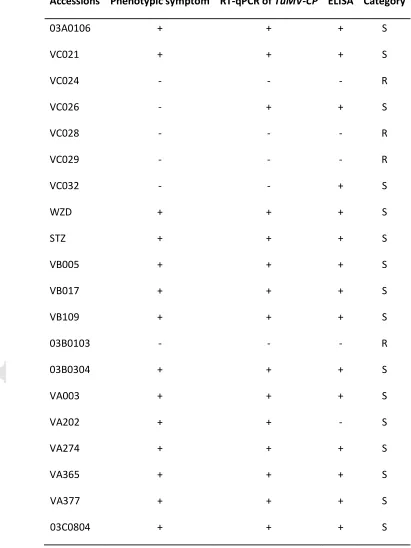
were resistant. Seven of the B. juncea accessions showed resistance based on all three of the tests (Table 1).
TuMV resistance is controlled by a recessive gene in B. juncea
The TuMV-resistant line (VC029) was crossed with two TuMV-susceptible lines (STZ and
WZD) (Figure 1 and Table 2) to develop segregating populations. Following challenge with
TuMV ZJ, 20 F1 plants from both crosses showed stunting and chlorotic symptoms typical of
TuMV infection; high TuMV-CP gene expression and high virus titres were detected by
RT-qPCR and ELISA. Of 226 F2 plants derived from a cross between VC029 and STZ, 55 were
Accepted
Article
This article is protected by copyright. All rights reserved.
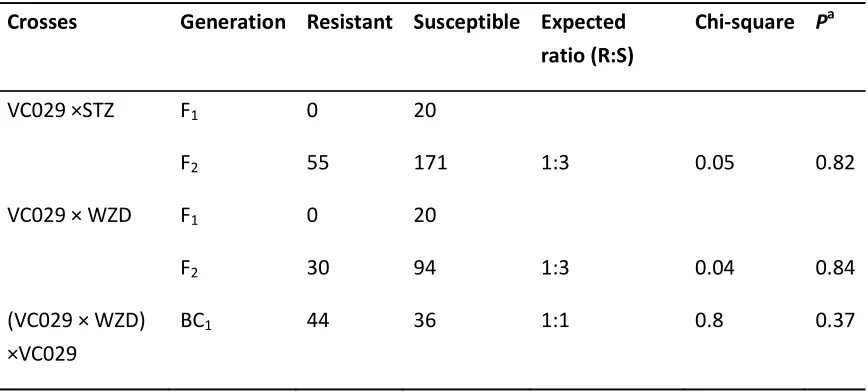
and WZD, 30 were resistant and 94 susceptible (Table 2). Of 80 BC1 plants from the VC029
backcross [(VC029 × WZD) × VC029], 44 were resistant and 36 susceptible (Table 2). These
results are not significantly different from a 1:3 ratio (χ2 = 0.05 and P = 0.82 for the VC029 ×
STZ cross and χ2 = 0.04 and P = 0.84 for the VC029 × WZD cross) for the F2 populations and a
1:1 ratio (χ2 = 0.8 and P = 0.37) for the BC1 population, indicating monogenic recessive
resistance.
Bulked segregant analysis by whole-genome resequencing identifies eIF2Bβ as the
candidate resistance gene
The TuMV-resistance gene was mapped by whole-genome resequencing of F2 resistant and
susceptible bulks (49 resistant and 49 susceptible plants) from the VC029 x STZ cross. In
total, approximately 181 and 190 million clean reads were generated for susceptible and
resistant pools respectively from Illumina Hiseq2500 (Supplementary Table S1). The
resequencing data showed a stochastic distribution on all chromosomes (Supplementary
Figure S5). Referring to the reference genome, we identified more than 3 million single
nucleotide polymorphisms (SNPs) for each susceptible and resistant pool, including
transitions and transversions (Supplementary Table S2). Over 3 million SNPs were collected
between susceptible and resistant pools and located on the B. rapa A genome. Of these, 147,000 were non-synonymous (Supplementary Table S3). Using association analysis based
on SNP index, fifteen regions associated with the resistance were identified on
Accepted
Article
This article is protected by copyright. All rights reserved.
enrichment analysis of the genes in the associated regions using nr, Swissprot, GO (Gene
Ontology) and COG (Cluster of orthologous groups) (Supplementary Table S5 and
Supplementary Figure S6 and S7), we identified a eukaryotic translation initiation factor
family protein (BjuA006209) on chromosome 1 of the A genome of B. juncea as the candidate resistance gene (Figure 2b). In the gene coding and intergenic regions of
BjuA006209,84 SNPs showed the expected segregation between susceptible and resistant pools (Figure 2b). BjuA006209 has 93% amino acid homology with the eukaryotic translation initiation factor 2B-beta (eIF2Bβ) from Arabidopsis (At3G07300). There were 30 SNPs in the coding sequence of susceptible (STZ) and resistant (VC029) plants, of which only one SNP
(A120G) was non-synonymous (Supplementary Figure S8 and S9).
eIF2Bβ genotyping analysis in B. juncea and evolution in Brassicaceae
Orthologues of eIF2Bβfrom B. rapa, B. nigra, B. juncea and Arabidopsis spp. were identified and a phylogenetic tree constructed (Figure 3a). Following genome triplication in the
evolution of the diploid brassica species, two orthologues of Arabidopsis (At3G07300)
eIF2Bβwere identified in B. rapa (Bra040371 and Bra029637) and two in B. nigra
Accepted
Article
This article is protected by copyright. All rights reserved.
juncea revealed that all seven susceptible lines (STZ, WZD, MF, 03C0804, 03C0909, VB109 and VA003) had the amino acid Ala at the non-synonymous SNP (A120G). Of the seven
resistant plant lines genotyped, four (VC029, VC028, VC024, and WT-28) had the amino acid
Gly at this non-synonymous substitution and three (03B0103, 03D0102 and 4D101) had the
amino acid Trp at this position (Figure 3c).
BjuA006209 (eIF2Bβ) and BjuB006522 appear to be newly formed homologues in the allopolyploid B. juncea genome, and their amino acid homology was 99% (Figure 3a). In the susceptible line STZ, both of these eIF2Bβhomologues have the amino acid Ala at the non-synonymous substitution SNP (A120G). In the resistant line VC029, the candidate
resistance gene (BjuA006209) has Gly and the homologue (BjuB006522) has Ala (Figure 3d).
Functional analysis of eIF2Bβ confirms it as a new virus resistance gene
To further investigate the role of eIF2Bβ (BjuA006209) in the resistance / susceptibility of B. juncea to TuMV, Turnip yellow mosaic virus (TYMV)-induced gene silencing (VIGS) (Pflieger
et al., 2008) was used to silence eIF2Bβ (BjuA006209) in the TuMV-susceptible B. juncea line STZ. Plants treated with infection buffer only, the empty pTY-S silencing vector, or
pTY-PDS-IR expressing the phytoene desaturase gene (Pflieger et al., 2008) served as mock, empty vector and positive controls, respectively. pTY-PDS-IR-treated STZ plants displayed a
mosaic of white spots / patches on the leaves one week post challenge, indicating that the
pTY-S vector was capable of infecting B. juncea systemically (Figure 4a and 4b). eIF2Bβ
Accepted
Article
This article is protected by copyright. All rights reserved.
designed to silence eIF2Bβ (pTY-S/eS) (Figure 4c), whereas the expression of BjuB006522
and BjuA020776 were not significantly affected (Figure 4d). TuMV isolate ZJ was inoculated to Control, pTY-S- and pTY-S/eS-treated plants. Control and pTY-S-treatedplants began to
show symptoms of TuMV infection in their leaves 2 weeks post-inoculation of TuMV,
whereas pTY-S/eS-treated plants grew normally (Figure 4a and 4b). Expression of eIF2Bβ
(BjuA006209) was kept to a relatively low level in pTY-S/eS-treated plants (Figure 4e). Twelve pTY-S/eS-treated plants were resistant to TuMV and 6 plants showed TuMV
symptoms (Supplementary Table S6). TuMV infection / susceptibility was related to eIF2Bβ
(BjuA006209) expression levels in pTY-S/eS-treated plants; decreased expression of eIF2Bβ
(BjuA006209)resulted in resistance to TuMV, whereas normal expression of eIF2Bβ
(BjuA006209)resulted in susceptibility to TuMV (Supplementary Figure S11). No significant differences between the pTY-S- and pTY-S/eS-treated plants were seen, indicating that the
pTY-S/eS treatment had no obvious / significant effects on the growth of plants (Figure 4a).
TuMV-CP gene expression and TuMV titre were checked for all treatments by RT-qPCR and ELISA. TuMV-CP gene expression levels and TuMV titres agreed well with virus symptom expression (Figure 4f and 4g). The results demonstrated that eIF2Bβ(BjuA006209) was responsible for TuMV resistance in B. juncea; the resistance locus was named retr03
(recessive TuMV resistance locus 03).
We used the VIGS vector pTY-S to generate pTY-S/eC to express eIF2Bβfrom STZ in VC029 plants. VC029 plants were mock-inoculated with PBS buffer. Both mock- and empty pTY-S
vector-inoculated plants were included as controls (Figure 5a and 5b). TuMV isolate ZJ was
Accepted
Article
This article is protected by copyright. All rights reserved.
inoculated control and pTY-S-inoculated plants grew normally, whereas pTY-S/eC-inoculated
plants challenged with TuMV showed symptoms of TuMV infection in their leaves 2 weeks
post-inoculation (Figure 5a and 5b). Expression of eIF2Bβfrom STZ in VC029 was confirmed by sequencing of the eIF2Bβfragment with the SNP variation (C/G) in pTY-S/eC-inoculated plants. Seven clones with C and three clones with G were observed in ten clones of two
pTY-S/eC-treated plants (Figure 5c). Among the thirty pTY-S/eC-treated plants, twenty-five
plants displayed TuMV symptoms of TuMV infection (Supplementary Table S6). Moreover,
the pTY-S/eC plants were significantly accumulating TuMV as revealed by TuMV-CP
expression and ELISA (Figure 5d and 5e). These results confirmed eIF2Bβfunction using expression of eIF2Bβfrom the susceptible line in the resistant plant line.
TuMV resistance selection using an eIF2Bβ-based molecular marker in B. junceaDuring
gene mapping, we identified 84 SNPs linked to TuMV resistance in the intergenic and gene
coding regions of eIF2Bβ(BjuA006209). The eIF2Bβ gene comprises 9 exons and 8 introns. A 90 bp insertion was identified in the 3rd intron of the susceptible B. juncea line (STZ)
compared to the resistant line (VC029) (Figure 6a, Supplementary Figure S10). Based on this
variation, degenerate primers were designed to amplify PCR fragments of different lengths.
Fragments of 799 bp and 709 bp were amplified from the susceptible and resistant lines,
Accepted
Article
This article is protected by copyright. All rights reserved.
To check the molecular marker, it was used to genotype plants from the F2 and BC1
populations derived from the VC029 x WZD cross. In the F2 population, all 55 resistant plants
displayed the 709 bp fragment and 171 susceptible plants displayed both the 799 bp and
709 bp fragments (heterozygotes) or just the 799 bp fragment (Figure 6c). The marker was
also consistent with TuMV resistance and susceptibility phenotypes in the BC1 population
(Figure 6d). The marker was then used to screen further resistant (VC029, VC028, VC024,
03D0102 and WT-28) or susceptible (STZ, WZD, VA003, 03C0909 and MF) B. juncea
accessions. This revealed that all resistant accessions displayed the 709 bp fragment and all
susceptible accessions displayed the 799 bp fragment indicating the marker may have wider
use for identifying B. juncea lines with this form of resistance to TuMV (Figure 6e and Supplementary Figure S12).
DISCUSSION
A single recessive gene (retr03) conferring resistance in mustard (B. juncea) to an isolate of TuMV has been identified as one of the copies of eIF2Bβ (BjuA006209) by using
Accepted
Article
This article is protected by copyright. All rights reserved.
broad-spectrum resistance to TuMV. The mechanism involves the mis-splicing of the
eukaryotic initiation factor iso 4E (eIF(iso)4E). B. rapa var. pekinensis has three copies of
eIF(iso)4E, however results have clearly shown that only one copy (BraA.eIF(iso)4E.a) is involved in the life-cycle of TuMV (Nellist et al., 2014). The TuMV-resistant plant line VC029 has three copies of eIF2Bβ, two in the A sub-genome (retr03/BjuA006209 on chromosome 1 and BjuA020776 on chromosome 5) and one in the B sub-genome (BjuB006522 on
chromosome 11). Similar to the eIF(iso)4E-based resistance, it appears only one of the copies of eIF2Bβin the B. juncea lines analysed is involved in the life-cycle of TuMV, the suggestion being that retr03/BjuA006209 is non-functional for TuMV in VC029 and results in the virus being unable to translate its RNA genome. The results indicate that the specific
mutation of eIF2Bβ,gene loss of one homologue gene and the inability of TuMV to use eukaryotic initiation complexes associated with the two other homologues of eIF2Bβare required for the recessive resistance in the allopolyploid B. juncea VC029 line.
Viruses recruit cellular translation factors to translate their RNA and regulate replication
and systemic movement. In addition to the eukaryotic initiation factors that have been
found to be involved in recessive resistance to plant viruses (eIF4E and eIF4G and their isoforms, eIF(iso)4E and eIF(iso)4G) (Diaz-Pendon et al., 2004), other components from the translational machinery have been found to be involved in virus infection in some plants,
Accepted
Article
This article is protected by copyright. All rights reserved.
mechanisms for antiviral strategies including via genome editing techniques and targeting
induced local lesions in genomes (TILLING).
Eukaryote translation initiation is a highly regulated and complex stage of gene
translation, which requires the action of at least 13 core initiation factors and 5 auxiliary
factors (Hinnebusch and Lorsch, 2012; Jackson et al., 2010). eIF2B is a multi-subunit protein critical for protein synthesis initiation and its control, it comprises 5 distinct subunits (α-ε)
(Bogorad et al., 2014; Jennings and Pavitt, 2014). The eIF2Bα subunit has been shown to be required for translation suppression of vesicular stomatitis virus, suggesting its regulatory
role in virus infection in mammals (Elsby et al., 2011). The association of eIF2Bβ with TuMV resistance is the new example of this gene acting as a resistance gene to a plant virus. eIF2B
acts as a guanine nucleotide exchange factor (GEF) for its GTP-binding protein partner eIF2
via interaction with eIF2·GTP at an early step in translation initiation (Jennings and Pavitt,
2014). Mutations in eIF2B subunits impact on the stability of the eIF2B complex, or appear
to alter the interaction with eIF2 in some cases (Jennings and Pavitt, 2014). It is possible that
the mutation A120G affects the eIF2B-mediated interaction with eIF2, possibly the guanine
nucleotide exchange for its GTP-binding protein partner eIF2. The SNP genotyping analysis
demonstrated that the amino acid alanine at position 120 is required for TuMV
susceptibility. The presence of the amino acids glycine, or tryptophan at this position in the
resistant plant lines appears to be the determinant of resistance. The B. juncea lines investigated in this study were all landraces and of various types including oilseed, leafy
vegetable and root; the resistant plant lines were root, or oilseed types originating from
Accepted
Article
This article is protected by copyright. All rights reserved.
resistant and susceptible types in order to look at the origin and evolution of the resistance.
The presence of multiple copies of eIF2Bβin brassicas allows redundancy, this along with the fact TuMV only seems to be able to use, or access one eukaryotic translation initiation
complex (Nellist et al., 2014) facilitates recessive TuMV resistance in brassicas without the mutations resulting in plant death, or affecting the general growth of the plant. The genome
multiplication event in brassicas resulted in high gene content and facilitated the gene
redundancy, although substantial genome reshuffling and gene loss also occurred
(Chalhoub, 2014; Lysak et al., 2005; Wang et al., 2011).
Recessive virus resistance in the allopolyploid brassicas is very rare. Despite a lot of
research on one of the other allopolyploid species, B. napus, only dominant resistance has been found (Walsh and Jenner, 2002). The presence of recessive resistance in so many B. juncea accessions might suggest some big difference(s) in the evolution of these two allopolyploid species, perhaps related to selection pressure from different levels of
exposure to TuMV and / or how long ago the two species originated from hybridisation
between their respective diploid progenitors.
TuMV causes serious losses in Brassica crops and was considered to be the second most important virus infecting field vegetables (Tomlinson, 1987); most varieties of B. juncea are particularly susceptible to TuMV. The discovery of eIF2Bβ-mediated resistance to TuMV provides a new opportunity for the genetic control of this virus. RNA viruses have a high
mutation frequency due to the low efficiency of proofreading-repair associated with RNA
Accepted
Article
This article is protected by copyright. All rights reserved.
durable plant resistance able to withstand the genetic plasticity of viruses therefore
represents a challenge for the coming years. The discovery of retr03 (eIF2Bβ) provides an extra target for the identification of resistance genes to a range of viruses, particularly the
largest group of plant viruses the Potyviridae, many of which are known to be dependent on the eukaryotic translation complex for completing their life cycles (Robaglia and Caranta,
2006). More specifically, as retr03 exists in the brassica A genome, there is the potential to deploy it in the other brassica species possessing the A genome, B. rapa and B. napus. It will also be possible to combine it with retr01 which has been shown to confer broad-spectrum resistance to TuMV (Rusholme et al., 2007; Walsh et al., 2002) to potentially increase the durability of both resistance genes.
EXPERIMENTAL PROCEDURES
Plant material and virus isolate
A collection of 35 lines of B. juncea were evaluated for TuMV resistance. The resistant accession VC029 was crossed with the susceptible accessions STZ and WZD to generate F1,
F2 and BC1 populations for phenotypic and genetic analysis. The F2 population from the cross
between accessions VC029 and STZ was used for bulked segregant analysis by resequencing.
The susceptible accession STZ was used for functional analysis. The TuMV isolate ZJ was
Accepted
Article
This article is protected by copyright. All rights reserved.
TACAACTTCATAACCCCTGAACGC reverse (Supplementary Table S7), the product sequenced
and compared with those of other (Ohshima et al., 2002) TuMV isolates.
TuMV resistant germplasm identification and genetic analysis
To identify the TuMV-resistant B. juncea germplasm, plants at the 2-3 true-leaf stage were mechanically inoculated with the TuMV ZJ isolate (Jenner and Walsh, 1996). In order to
reduce the chance of any escapes, a second inoculation was performed 3-5 days after the
first inoculation. The mosaic, chlorotic, or necrotic symptoms of TuMV infection in
inoculated plants were visually assessed 4 weeks after the second inoculation. Plants not
showing symptoms were tested using a double antibody sandwich (DAS) enzyme-linked
immunosorbent assay (ELISA) (Agdia, USA) to confirm the absence of TuMV. RT-qPCR was
also used to check TuMV-CP gene expression following inoculation with TuMV. Plants with no obvious symptoms and that were negative in ELISA and RT-qPCR tests were classified as
resistant and the others as susceptible (Walsh et al., 1999). For genetic analysis, segregation ratios of resistant and susceptible phenotypes in F2 and BC1 families were analysed using the
chi-square test for goodness of fit to the expected segregation ratio for the predicted
Accepted
Article
This article is protected by copyright. All rights reserved.
Bulked segregant analysis by resequencing
Resistant (49) and susceptible (49) plants from the F2 population of the cross between
accessions VC029 and STZ were selected. Total DNA was extracted from each plant and
mixed equivalently to build the resistant (R) and susceptible (S) pools. The DNA from the R
and S pools and accessions VC029 and STZ were submitted for pair-end (PE125) sequencing
using Illunima Hiseq2500 according to the Illumina protocol. Filtered clean reads were
mapped to the B. juncea genome to estimate insert size of the sequencing library and calculate read depth and distribution in the genome (Yang et al., 2016) using the BWA program (Li and Durbin, 2009). Duplicated reads were removed using SAMtools (Li et al.,
2009) and single nucleotide polymorphisms (SNPs) were detected using the GATK toolkit in
each pool and between pool referred to genome (McKenna et al., 2010). SNPs linked to TuMV resistance were then identified through an association study using the Δ (SNP_index)
(Fekih et al., 2013; Takagi et al., 2013). Regression and fitting analysis of the Δ (SNP_index) for SNPs markers in the same chromosome was used to decide the threshold of the Δ
(SNP_index) (Hill et al., 2013). The threshold (0.151181810500557) of Δ (SNP_index) was determined for the 99% quantile in this analysis. We annotated all genes in associated
regions using nr, Swissprot, GO (Gene Ontology), COG (Cluster of orthologous groups) and
Accepted
Article
This article is protected by copyright. All rights reserved.
Functional analysis of eIF2Bβ
The eIF2Bβ gene (BjuA006209) was silenced in 30 day old STZ seedlings by using the
one-step TYMV-based VIGS system (Pflieger et al., 2008). Palindromic 40nt oligonucleotides including inverted 40nt repeats (total 80nt) were designed from the target gene
(BjuA006209),
5’-TTAATGGGAAAGGGATTGGGTATCCTGCGATGTCTGCGGCGCCGCAGACATCGCAGGATACCCA
ATCCCTTTCCCATTAA-3’. The pTY-S VIGS vector plasmid was digested with the SnaBI
restriction enzyme. The self-hybridised custom oligonucleotide was ligated with the
linearised vector. Amplification of a TYMV-CP gene of the expected size (560nt) was used to identify positive clones. For virus infiltration, 3 μg of purified pTY-S carrying the target gene
plasmid DNA in 8 μL was diluted in 25 μL ddH2O and infiltrated into 2-4 fully expanded plant
line STZ leaves. The plants infiltrated with the empty pTY-S vector were used as a control.
The pTY-PDS-IR vector used as a positive control causes photo-bleaching because of
silencing of the phytoene desaturase gene. Infiltrated plants were maintained at 20/22 ºC
with a 16h/8h light/dark cycle in a growth chamber. Three weeks post infiltration, the plants
were inoculated with TuMV as described above and phenotypes were assessed 3 weeks
post inoculation. Primers used for detecting the clone used to silence the eIF2Bβ gene (BjuA006209) are listed in supplementary Table S7.
Accepted
Article
This article is protected by copyright. All rights reserved.
the SmaI restriction enzyme site and CTACCGGTCATCACCAAATCATCAGCGGA as the reverse primer with the AgeI restriction enzyme site. Products were cloned into the pTY-S
virus-derived vector containing the CaMV 35S promoters to generate pTY-S- eIF2Bβ using
the T4-DNA ligase system (Clontech TaKaRa, USA). The pTYCP-F: TCCACCCTCACCACCTTC and
pTYCP-R: CCCTAATTCCCTTATCTGGG primer pair was used to check for the presence of
eIF2Bβ in the clone. The TuMV isolate and inoculation procedure were as described above.
eIF2Bβwas cloned from VC029 plants inoculated with the TYMV vector pTY-S/eC expressing
eIF2Bβ fromthe susceptible plant line STZ.
Genotyping analysis of eIF2Bβ
We identified eIF2Bβorthlogs in B. rapa, B. nigra, B. juncea and Arabidopsis using Blastn. After alignment by ClustalW, a Maximum Likelihood tree was constructed by using MEGA
5.0, with 1000 as the number of bootstrap replications. Because of the genome triplication
event in the diploid brassica species and the subsequent duplication during the evolution of
B. juncea,the alleles of eIF2Bβ (BjuA006209)from TuMV-resistant and TuMV-susceptible B. juncea lines were analysed. A specific fragment including the non-synonymous eIF2Bβ SNP was amplified by PCR from plants of 7 resistant lines (VC029, VC028, VC024, WT-28,
03B0103, 03D0102, 4D101) and 7 susceptible lines (STZ, WZD, MF, 03C0804, 03C0909,
Accepted
Article
This article is protected by copyright. All rights reserved.
Molecular marker development based on eIF2Bβ
To identify the genomic variation between resistant (R) and susceptible (S) B. juncea plant lines at the BjueIF2Bβ loci, genomic DNA was extracted from 100-200 mg of leaves using the DNeasy kit (Qiagen) and genes were amplified and genomic sequences obtained. Full
genomic sequences were aligned and variation analysed using Clustalx. Based on indel
variation between genomic sequences of resistant (R) and susceptible (S), degenerate
primers (BjTuR, forward: GTTAATGGGAAAGGGATTGGGTATCCTTG and Reverse:
ATAGCTTGCTCGGCGATCTGCTCAT) were used to amplify specific fragments with different
lengths for resistant and susceptible plants (Supplementary Table S7).
ACKNOWLEDGEMENTS
We would like to thank Dr. C.W. Zhang and Prof. I. Jupin for the pTY-S vector. This work was
supported by grants from the Science and Technology Program of ZHEJIANG Province
(2015C32046) and a specific grant from a Special Fund from the Ministry of Agriculture of
China (09162130135252).
Accepted
Article
This article is protected by copyright. All rights reserved.
SUPPORTING INFORMATION
Figure S1. A phylogenetic tree of the coat protein nucleotide sequences of Turnip mosaic virus
(TuMV) isolates including the isolate used in this study (TuMV_ZJ).
Figure S2. Plant (Bar=5 cm) and leaf (Bar=4 cm) symptoms in 35 Brassicajuncea accessions after inoculation with Turnip mosaic virus isolate ZJ.
Figure S3. Turnip mosaic virus (TuMV) Coat Protein (CP) gene expression in 35 Brassicajuncea
accessions following virus inoculation, determined using qRT-PCR.
Figure S4. Measurement of CP accumulation by ELISA as a proxy for virus accumulation of 35
Brassicajuncea accessions after Turnip mosaic virus inoculation, determined by enzyme-linked
immunosorbent assay (ELISA).
Figure S5. Distribution of coverage depth of resequencing data on Brassica juncea chromosomes. A, susceptible F2 bulk. B, resistant F2 bulk.
Figure S6. GO (Gene Ontology) analysis of genes linked to Turnip mosaic virus resistance in Brassica juncea from the association study.
Figure S7. COG (Cluster of orthologous groups) analysis of genes linked to Turnip mosaic virus resistance in Brassica juncea from the association study.
Accepted
Article
This article is protected by copyright. All rights reserved.
Figure S9. Alignment of eIF2Bβ (BjuA006209) putative amino acid sequences from a Turnip mosaic
virus resistant (R) and a susceptible (S) line of Brassica juncea.
Figure S10. Alignment of eIF2Bβ (BjuA006209) genomic sequences between Turnip mosaic virus resistant (R) and susceptible (S) Brassica juncea lines.
Figure S11. Turnip mosaic virus (TuMV) infection and eIF2Bβ (BjuA006209) expression levels in
Brassica juncea STZ plants following silencing with pTY-S/eS and challenge with Turnip mosaic virus
isolate ZJ. (a) Expression levels of eIF2Bβ(BjuA006209) in plants showing different susceptibilities to TuMV. (b) Leaf symptoms of plants showing different susceptibilities to TuMV. Mock, buffer only inoculation of STZ plants; R, Resistant; MS, intermediate level of susceptibility; S, Susceptible. Bar=4cm.
Figure S12. Indel variation between Turnip mosaic virus resistant and susceptible lines of Brassica juncea.
Table S1. Resequencing of Turnip mosaic virus resistant and susceptible Brassica juncea F2 bulks.
Table S2. Statistics of single nucleotide polymorphisms (SNPs) in Turnip mosaic virus resistant and susceptible Brassica juncea F2 bulks.
Table S3. Statistics of single nucleotide polymorphisms (SNPs) between Turnip mosaic virus resistant and susceptible Brassica juncea gene pools.
Table S4. Chromosome regions associated with Turnip mosaic virus resistance in Brassica juncea.
Accepted
Article
This article is protected by copyright. All rights reserved.
Table S6. Turnip mosaic virus resistance and susceptibility in Brassica juncea plant line STZ
inoculated with the VIGS vector.
Table S7. Primers used in this study.
REFERENCES
Bogorad, A.M., Xia, B., Sandor, D.G., Mamonov, A.B., Cafarella, T.R., Jehle, S., Vajda, S., Kozakov, D. and Marintchev, A. (2014) Insights into the architecture of the eIF2Balpha/beta/delta regulatory
subcomplex. Biochemistry, 53, 3432-3445.
Chalhoub, B. (2014) Early allopolyploid evolution in the post-Neolithic Brassica napus oilseed genome (vol 348,
1260782, 2014). Science, 345, 1255-1255.
Chung, B.Y.W., Miller, W.A., Atkins, J.F. and Firth, A.E. (2008) An overlapping essential gene in the
Potyviridae. Proceedings of the National Academy of Sciences of the United States of America, 105,
5897-5902.
Chung, H., Jeong, Y.M., Mun, J.H., Lee, S.S., Chung, W.H. and Yu, H.J. (2014) Construction of a genetic map based on high-throughput SNP genotyping and genetic mapping of a TuMV resistance locus in
Brassica rapa. Molecular Genetics and Genomics, 289, 149-160.
Diaz-Pendon, J.A., Truniger, V., Nieto, C., Garcia-Mas, J., Bendahmane, A. and Aranda, M.A. (2004) Advances
in understanding recessive resistance to plant viruses. Mol Plant Pathol, 5, 223-233.
Duprat, A., Caranta, C., Revers, F., Menand, B., Browning, K.S. and Robaglia, C. (2002) The Arabidopsis eukaryotic initiation factor (iso)4E is dispensable for plant growth but required for susceptibility to
potyviruses. The Plant Journal, 32, 927-934.
Edwardson, J.R. and Christie, R.G. (1991) The potyvirus group. Vols. I-IV. Florida Agricultural Experiment
Station Monograph., 16.
Elsby, R., Heiber, J.F., Reid, P., Kimball, S.R., Pavitt, G.D. and Barber, G.N. (2011) The alpha subunit of eukaryotic initiation factor 2B (eIF2B) is required for eIF2-mediated translational suppression of
vesicular stomatitis virus. Journal of virology, 85, 9716-9725.
Accepted
Article
This article is protected by copyright. All rights reserved.
Kamoun, S. and Terauchi, R. (2013) MutMap+: genetic mapping and mutant identification without
crossing in rice. PloS one, 8, e68529.
Hill, J.T., Demarest, B.L., Bisgrove, B.W., Gorsi, B., Su, Y.C. and Yost, H.J. (2013) MMAPPR: mutation mapping
analysis pipeline for pooled RNA-seq. Genome Res, 23, 687-697.
Hinnebusch, A.G. and Lorsch, J.R. (2012) The mechanism of eukaryotic translation initiation: new insights and
challenges. Cold Spring Harbor perspectives in biology, 4.
Hughes, S.L., Green, S.K., Lydiate, D.J. and Walsh, J.A. (2002) Resistance to Turnip mosaic virus in Brassica
rapa and B-napus and the analysis of genetic inheritance in selected lines. Plant Pathol, 51, 567-573.
Hughes, S.L., Hunter, P.J., Sharpe, A.G., Kearsey, M.J., Lydiate, D.J. and Walsh, J.A. (2003) Genetic mapping of
the novel Turnip mosaic virus resistance gene TuRB03 in Brassica napus. Theor Appl Genet, 107,
1169-1173.
Hwang, J., Oh, C.S. and Kang, B.C. (2013) Translation elongation factor 1B (eEF1B) is an essential host factor
for Tobacco mosaic virus infection in plants. Virology, 439, 105-114.
Jackson, R.J., Hellen, C.U.T. and Pestova, T.V. (2010) The mechanism of eukaryotic translation initiation and
principles of its regulation. Nat Rev Mol Cell Bio, 11, 113-127.
Jenner, C.E. and Walsh, J.A. (1996) Pathotypic variation in turnip mosaic virus with special reference to
European isolates. Plant Pathol, 45, 848-856.
Jennings, M.D. and Pavitt, G.D. (2014) A new function and complexity for protein translation initiation factor
eIF2B. Cell Cycle, 13, 2660-2665.
Jin, M., Lee, S.S., Ke, L., Kim, J.S., Seo, M.S., Sohn, S.H., Park, B.S. and Bonnema, G. (2014) Identification and
mapping of a novel dominant resistance gene, TuRB07 to Turnip mosaic virus in Brassica rapa. Theor
Appl Genet, 127, 509-519.
Lellis, A.D., Kasschau, K.D., Whitham, S.A. and Carrington, J.C. (2002) Loss-of-susceptibility mutants of
Arabidopsis thaliana reveal an essential role for eIF(iso)4E during potyvirus infection. Current biology :
CB, 12, 1046-1051.
Li, H. and Durbin, R. (2009) Fast and accurate short read alignment with Burrows-Wheeler transform.
Bioinformatics, 25, 1754-1760.
Accepted
Article
This article is protected by copyright. All rights reserved.
Li, Z., Gonzalez, P.A., Sasvari, Z., Kinzy, T.G. and Nagy, P.D. (2014) Methylation of translation elongation factor 1A by the METTL10-like See1 methyltransferase facilitates tombusvirus replication in yeast and
plants. Virology, 448, 43-54.
Lysak, M.A., Koch, M.A., Pecinka, A. and Schubert, I. (2005) Chromosome triplication found across the tribe
Brassiceae. Genome Res, 15, 516-525.
McKenna, A., Hanna, M., Banks, E., Sivachenko, A., Cibulskis, K., Kernytsky, A., Garimella, K., Altshuler, D., Gabriel, S., Daly, M. and DePristo, M.A. (2010) The Genome Analysis Toolkit: A MapReduce
framework for analyzing next-generation DNA sequencing data. Genome Res, 20, 1297-1303.
Nellist, C.F., Qian, W., Jenner, C.E., Moore, J.D., Zhang, S.J., Wang, X.W., Briggs, W.H., Barker, G.C., Sun, R.F. and Walsh, J.A. (2014) Multiple copies of eukaryotic translation initiation factors in Brassica rapa facilitate redundancy, enabling diversification through variation in splicing and broad-spectrum virus
resistance. Plant Journal, 77, 261-268.
Nicaise, V. (2014) Crop immunity against viruses: outcomes and future challenges. Frontiers in plant science, 5, 660.
Ohshima, K., Tanaka, M. and Sako, N. (1996) The complete nucleotide sequence of turnip mosaic virus RNA
Japanese strain - Brief report. Arch Virol, 141, 1991-1997.
Ohshima, K., Yamaguchi, Y., Hirota, R., Hamamoto, T., Tomimura, K., Tan, Z., Sano, T., Azuhata, F., Walsh, J.A., Fletcher, J., Chen, J., Gera, A. and Gibbs, A. (2002) Molecular evolution of Turnip mosaic virus:
evidence of host adaptation, genetic recombination and geographical spread. J Gen Virol, 83,
1511-1521.
Pflieger, S., Blanchet, S., Camborde, L., Drugeon, G., Rousseau, A., Noizet, M., Planchais, S. and Jupin, I.
(2008) Efficient virus-induced gene silencing in Arabidopsis using a 'one-step' TYMV-derived vector.
Plant Journal, 56, 678-690.
Qian, W., Zhang, S., Li, F., Zhang, H., Wu, J., Wang, X., Walsh, J.A. and Sun, R. (2013) Mapping and
candidate-gene screening of the novel Turnip mosaic virus resistance gene retr02 in Chinese cabbage
(Brassica rapa L.). Theor Appl Genet, 126, 179-188.
Revers, F. and Nicaise, V. (2014) Plant resistance to infection by viruses. In: eLS. John Wiley & Sons, Ltd:
Chichester., DOI: 10.1002/9780470015902.a0000757.pub3.
Robaglia, C. and Caranta, C. (2006) Translation initiation factors: a weak link in plant RNA virus infection.
Trends in plant science, 11, 40-45.
Robbins, M.A., Witsenboer, H., Michelmore, R.W., Laliberte, J.F. and Fortin, M.G. (1994) Genetic mapping of
Accepted
Article
This article is protected by copyright. All rights reserved.
Rusholme, R.L., Higgins, E.E., Walsh, J.A. and Lydiate, D.J. (2007) Genetic control of broad-spectrum
resistance to turnip mosaic virus in Brassica rapa (Chinese cabbage). J Gen Virol, 88, 3177-3186.
Sasvari, Z., Izotova, L., Kinzy, T.G. and Nagy, P.D. (2011) Synergistic roles of eukaryotic translation elongation
factors 1Bgamma and 1A in stimulation of tombusvirus minus-strand synthesis. PLoS pathogens, 7,
e1002438.
Sonenberg, N. and Dever, T.E. (2003) Eukaryotic translation initiation factors and regulators. Current opinion
in structural biology, 13, 56-63.
Steinhauer, D.A., Domingo, E. and Holland, J.J. (1992) Lack of Evidence for Proofreading Mechanisms
Associated with an Rna Virus Polymerase. Gene, 122, 281-288.
Takagi, H., Abe, A., Yoshida, K., Kosugi, S., Natsume, S., Mitsuoka, C., Uemura, A., Utsushi, H., Tamiru, M., Takuno, S., Innan, H., Cano, L.M., Kamoun, S. and Terauchi, R. (2013) QTL-seq: rapid mapping of quantitative trait loci in rice by whole genome resequencing of DNA from two bulked populations.
The Plant journal : for cell and molecular biology, 74, 174-183.
Tomlinson, J.A. (1987) Epidemiology and Control of Virus Diseases of Vegetables. Ann Appl Biol, 110, 661-681.
U, N. (1935) Genome analysis in Brassica with special reference to the experimental formation of B. napus and
peculiar mode of fertilization. Japanese Journal of Botany, 7, 389-452.
Walsh, J.A. and Jenner, C.E. (2002) Turnip mosaic virus and the quest for durable resistance. Mol Plant Pathol,
3, 289-300.
Walsh, J.A., Rusholme, R.L., Hughes, S.L., Jenner, C.E., Bambridge, J.M., Lydiate, D.J. and Green, S.K. (2002)
Different classes of resistance to turnip mosaic virus in Brassica rapa. Eur J Plant Pathol, 108, 15-20.
Walsh, J.A., Sharpe, A.G., Jenner, C.E. and Lydiate, D.J. (1999) Characterisation of resistance to turnip mosaic
virus in oilseed rape (Brassica napus) and genetic mapping of TuRB01. Theor Appl Genet, 99,
1149-1154.
Accepted
Article
This article is protected by copyright. All rights reserved.
S.R., Lee, T.H., Fan, W., Zhao, X., Tan, X., Xu, X., Wang, Y., Qiu, Y., Yin, Y., Li, Y.R., Du, Y.C., Liao, Y.C., Lim, Y., Narusaka, Y., Wang, Y.P., Wang, Z.Y., Li, Z.Y., Wang, Z.W., Xiong, Z.Y. and Zhang, Z.H. (2011)
The genome of the mesopolyploid crop species Brassica rapa. Nat Genet, 43, 1035-U1157.
Wittmann, S., Chatel, H., Fortin, M.G. and Laliberte, J.F. (1997) Interaction of the viral protein genome linked
of turnip mosaic potyvirus with the translational eukaryotic initiation factor (iso) 4E of Arabidopsis
thaliana using the yeast two-hybrid system. Virology, 234, 84-92.
Yang, J., Liu, D., Wang, X., Ji, C., Cheng, F., Liu, B., Hu, Z., Chen, S., Pental, D., Ju, Y., Yao, P., Li, X., Xie, K., Zhang, J., Wang, J., Liu, F., Ma, W., Shopan, J., Zheng, H., Mackenzie, S.A. and Zhang, M. (2016) The
genome sequence of allopolyploid Brassica juncea and analysis of differential homoeolog gene
Accepted
Article
[image:31.612.79.490.155.703.2]This article is protected by copyright. All rights reserved.
Table 1. Identification of Turnip mosaic virus-resistant Brassica juncea germplasm
Accessions Phenotypic symptom RT-qPCR of TuMV-CP ELISA Category
Accepted
Article
This article is protected by copyright. All rights reserved.
03C0909 03C1112 4D101 4D105 4D106 03D0102 03D0110 VE001 VE002 JCX WT-6 WT-8 WT-12 WT-14 WT-28 + + - - + - + + + + + + + + - + + - + + - + + + + + + + + - + + - - + - + + + + + + + + - S S R S S R S S S S S S S S R
Accepted
Article
[image:33.612.91.525.145.341.2]This article is protected by copyright. All rights reserved.
Table 2. Inheritance of Turnip mosaic virus resistance in Brassica juncea
Crosses Generation Resistant Susceptible Expected ratio (R:S)
Chi-square Pa
VC029 ×STZ F1 0 20
F2 55 171 1:3 0.05 0.82
VC029 × WZD F1 0 20
F2 30 94 1:3 0.04 0.84
(VC029 × WZD) ×VC029
BC1 44 36 1:1 0.8 0.37
Phenotypic observation was used to determine resistance/susceptiblity to TuMV infection in plants 19 days after inoculation.
aObserved segregation ratios are statistically consistent with expected ratios (Chi-square
test, P > 0.05).
FIGURE LEGENDS
Figure 1. Phenotypes of Brassica juncea lines VC029 and STZ and F1 plants following Turnip mosaic virus (TuMV) ZJ inoculation. (a) Leaf symptoms (Bar=1 cm). (b)TuMV-coat protein
(CP) expression in leaves 2 weeks after TuMV inoculation. (c) TuMV isolate concentration in leaves 2 weeks after TuMV inoculation determined by enzyme-linked immunosorbent assay
Accepted
Article
This article is protected by copyright. All rights reserved.
Figure 2. Mapping of Turnip mosaic virus (TuMV) resistance candidate genes using bulked
segregant analysis by resequencing. (a) SNP-index statistics of resistant (R) and susceptible
(S) gene pools. (b) SNP distribution of candidate genes in R and S gene pools.
Figure 3. Genotyping analysis of the Turnip mosaic virus resistance candidate gene
(BjuA006209). (a) Alignment of BjuA006209 with its orthologues from Arabidopsis thaliana,
Brassica rapa, Brassica nigra and Brassica juncea. (b) Schematic diagram of eIF2Bβ during the Brassicaceae triplication event (WGT). Only two copies of eIF2Bβ were found in B. rapa
and B. nigra indicating that both species had lost one copy. The blue copies in B. rapa (r) and in B. nigra (n) have the highest amino acid homology with the single copy in Arabidopsis, whereas the red copies are thought to have resulted from genome duplication. Of the three
copies of eIF2Bβ in B. juncea, homologies indicate that the two copies with highest
homology to Arabidopsis originated from B. rapa and B. nigra and the copy originating from the duplication event came from B. rapa. (c) Genotyping of the non-synonymous
substitution (A120G) of BjuA006209 in resistant (R) and susceptible (S) lines of Brassica juncea. (d) Genotyping of the non-synonymous substitution (A120G) of BjuA006209 and its homologue gene (BjuB006522) in resistant (R) and susceptible (S) B. juncea plants. WGD, whole genome duplication; WGT, whole genome triplication.
Figure 4. Phenotypes of Brassica juncea plant lines inoculated with the eIF2Bβ (BjuA006209) VIGS vector following Turnip mosaic virus (TuMV) ZJ inoculation. (a) Plant growth (Bar=5
Accepted
Article
This article is protected by copyright. All rights reserved.
inoculation. (d) eIF2Bβ(Bju020776 and BjuB006522) expression 2 weeks after TuMV ZJ inoculation. (e)eIF2Bβ(BjuA006209) expression 2 weeks after TuMV ZJ inoculation. (f) TuMV-CP expression 2 weeks after TuMV ZJ inoculation. (g) TuMV isolate ZJ content 2 weeks after TuMV inoculation. MOCK, inoculation buffer only; TuMV, Turnip mosaic virus
(TuMV) ZJ isolate inoculation; pTY-S, TYMV-derived vector inoculation; pTY-S/TuMV,
TYMV-derived vector inoculation followed by TuMV ZJ isolate inoculation; pTY-S/eS,
TYMV-derived vector with eIF2Bβ silencing construction inoculation; pTY-S/eS/TuMV, TYMV-derived vector with eIF2Bβ silencing construction inoculation followed by TuMV ZJ inoculation.
Figure 5. Phenotypes of the resistant plant line (VC029) following expression of eIF2Bβ
(BjuA006209) from the susceptible plant line (STZ) and challenge with Turnip mosaic virus (TuMV) ZJ isolate. (a) Plant growth (Bar=1 cm). (b) TuMV symptoms in leaves (Bar=1 cm). (c)
Confirmation of the presence of eIF2Bβ from STZ in VC029 following pTY-S/eC inoculation by sequencing eIF2Bβ clones from VC029 plants. Seven clones with C and three clones with G were observed. (d) TuMV-CP expression 2 weeks after TuMV ZJ inoculation. (e) TuMV
isolate ZJ content 2 weeks after TuMV inoculation determined by ELISA. MOCK, buffer
inoculation of VC029 plants; TuMV, Turnip mosaic virus (TuMV) ZJ isolate inoculation of
VC029 plants; pTY-S, TYMV-derived vector inoculation of VC029 plants; pTY-S/TuMV,
TYMV-derived vector inoculation of VC029 plants followed by TuMV ZJ isolate inoculation;
Accepted
Article
This article is protected by copyright. All rights reserved.
plants; pTY-S/eC/TuMV, TYMV-derived vector expressing eIF2Bβfrom STZ plants inoculation of VC029 plants followed by TuMV ZJ isolate inoculation.
Figure 6. Molecular marker-assisted selection of Turnip mosaic virus (TuMV) resistance in
Brassica juncea. (a) Genomic sequence comparison of eIF2Bβ(BjuA006209) alleles from resistant (R) and susceptible (S) lines showing the non-synonymous SNP and Indel variation.