Cognitive-Behavioral Treatment Program
Prepared by:
LeCroy & Milligan Associates, Inc. 4911 East Broadway, Suite 100 Tucson, Arizona 85711
(520) 326-5154 FAX (520) 326-5155 www.lecroymilligan.com
Prepared for:
Colorado State Court Administrator’s Office Division of Probation Services
101 West Colfax Avenue Suite 500
Denver, Colorado 80202
The Colorado State Court Administrator’s Office
Division of Probation Services
Cognitive-Behavioral Treatment Program
Annual Evaluation Report
Acknowledgements
LeCroy & Milligan Associates, Inc. gratefully acknowledges the efforts of staff members from the Colorado State Court Administrator’s Office, Division of Probation Services for their assistance with this project. Eileen Kinney (Manager, Evaluation Unit), Dana Wilks (Management Analyst), and Susan Jones (Education Specialist) provided leadership, background information, assistance with data collection, and many valuable details about the cognitive-behavioral program for probationers in Colorado. We are appreciative of the Chief Probation Officers and Probation Officers from the probation districts throughout Colorado whose cooperation and efforts in collecting and providing important information for this evaluation were invaluable. Probation clients also gave their time to provide valuable perspectives and information about their experiences with cog groups.
The LeCroy & Milligan Associates, Inc. evaluation team included Jeff Pfeifer, Ph.D., M.Leg.St., Kerry Milligan, MSSW, Craig LeCroy, Ph.D., Darlene Lopez, M.A., Olga Valenzuela, B.A., and Karen Thies, MSW.
Suggested Citation: LeCroy & Milligan Associates, Inc. (2010). Colorado State Court Administrator’s Office – Division of Probation Services: Cognitive-Behavioral
Treatment Program Annual Evaluation Report. LeCroy & Milligan Associates, Inc., Tucson, AZ.
Table of Contents
Executive Summary ... 4
Introduction ... 14
Background Information ... 15
Program & Theoretical Context ... 15
Overview of Evaluation Plan ... 17
Summary of 2009 Implementation Study Report ... 19
Overview of Fidelity and Outcome Studies (Years 2-3) ... 22
Framework & Methodology ... 22
Fidelity Evaluation ... 24
Fidelity Data Collection ... 24
Preliminary Fidelity Results ... 25
Outcome Evaluation... 30
Development of Outcome Measures ... 30
Process for Gathering Outcome Data ... 34
Preliminary Outcome Results ... 34
Conclusions and Next Steps ... 38
References ... 39
Appendix A: Lesson Information Sheets ... 40
Appendix B: Thinking for a Change Referral Form ... 42
Appendix C: Pre/Post-Treatment Client Survey ... 43
Appendix D: Consent Forms ... 52
Appendix E: Post Treatment Behavioral Assessment ... 55
Appendix F: Pre/Post-Treatment Tracking Sheets... 57
Appendix G: Client Exit Survey ... 60
Appendix H: Facilitator Exit Survey ... 62
Appendix I: Facilitator Handbook ... 64
Appendix J: Survey Administration Protocol ... 77
List of Exhibits
Exhibit 1: Description of Thinking for a Change and Why Try ... 16
Exhibit 2: 2009 Implementation Study Findings ... 20
Exhibit 3: Preliminary Lesson Information Sheet Data ... 28
Exhibit 4: Pre/Post-Treatment Client Survey Scales ... 32
Exhibit 5: Preliminary Pre-Treatment Client Survey Data Demographics ... 35
Executive Summary
IntroductionSince the early 1990s the Colorado Division of Probation Services (DPS) has been committed to implementing cognitive-behavioral programming as part of their service delivery to probation clients. In the fall of 2008, the State Court Administrator’s Office contracted with LeCroy & Milligan Associates, Inc. (LMA) to conduct a three-year implementation and outcome evaluation of the cognitive-behavioral programs being delivered to probation clients across the state’s 22 judicial districts. The first year of the evaluation included a literature review of cognitive-behavioral programs and an implementation analysis. The second and third years of the project involve an evaluation of fidelity and outcomes for the two major cognitive-behavioral treatment programs: Thinking for a Change and Why Try.
Background Information
This section of the report seeks to provide context by: (1) providing background on the Colorado DPS’s adoption of cognitive-behavioral programming, (2) describing the overarching three-year evaluation plan, and (3) summarizing the findings of the 2009 Implementation Study Report provided by LeCroy & Milligan Associates.
Program & Theoretical Context – Colorado Probation offers a variety of “cognitive skills training” programs. These programs teach skills such as problem solving, creative reasoning, critical thinking, negotiation, and social skills (e.g., asking for help, responding to anger, dealing with an accusation) using a step-by-step process of demonstration and practice. Cognitive skills programs are based on the idea that offenders lack the thinking skills for effective pro-social living, and that with the acquisition of these skills they will begin to behave pro-socially. Cognitive restructuring programs assume that criminal behavior arises from the content of an offender’s thinking, and that change requires a fundamental restructuring of thinking. For the past several years, Colorado’s Division of Probation Services has used a wide variety of curricula, including two of the more widely-used programs: Thinking for a Change and Why Try.
Overview of Evaluation Plan – The overarching evaluation plan was
established to respond to five research questions developed by the Evaluation Unit of the DPS and designed to investigate a variety of issues surrounding the implementation and impact of the Thinking for a Change and Why Try
Research Questions Question 1:
With what degree of fidelity are Thinking for a Change and Why Try being implemented in Colorado probation? If modifications are made, the nature of those changes and why they were made will be explored.
Question 2:
What are the intermediate and long-term outcomes of those probationers who participate in Thinking for a Change or Why Try (e.g. attitudinal changes, problem solving skills, increased self-control, recognition of feelings, social cognitive biases, change in risk scores, successful completion rates of probation, recidivism rates during supervision)?
Question 3:
What is the level of satisfaction with the programs among probationers who participate in Thinking for a Change or Why Try?
Question 4:
What is the level of satisfaction with the programs among probation officers who facilitate Thinking for a Change or Why Try groups?
Question 5:
What resources are necessary for and what benefits are gained from the implementation of Thinking for a Change and Why Try?
In order to provide feedback regarding the above research questions, LeCroy & Milligan Associates proposed a three-year strategy which included a literature review, implementation analysis, and outcome evaluation.
Summary of 2009 Implementation Study Report – During the first year of the project, a literature review and implementation study was conducted by
LeCroy & Milligan Associates and the subsequent results of the analysis were compiled in a report (LeCroy & Milligan Associates, Inc., 2009). The purpose of the study was to determine the extent, type, and characteristics of cognitive-behavioral groups that were being provided by probation departments in Colorado and to obtain basic and essential information that would help the evaluators design the subsequent fidelity and outcome analysis for the second and third years of the project. Both qualitative and quantitative methods were used for the implementation study in order to triangulate information sources with the goal of increasing data validity. Program documents, such as
curricula, training manuals, and other supportive materials were reviewed from each judicial district. Surveys and semi-structured interviews were conducted
to obtain information not available through documents, or to cross-verify document information. Focus groups were also implemented with both probation officers and probationers who participated in cognitive-behavioral programs. Finally, observations of cognitive-behavioral program leader training sessions were conducted. As detailed in the 2009 Report, the implementation analysis resulted in a number of findings with regard to the program, personnel, and probation clients (see Exhibit 2 on p. 20). A number of the findings related to program structure, groups, curriculum, facilitators, training and post-training support, and stakeholder perceptions have direct implications for the fidelity and outcome evaluations.
Year Two & Three Overview
The overarching goal of the second and third year of this project is to conduct an evaluation of fidelity and outcomes associated with the cognitive-behavioral programs delivered by the staff of Colorado probation departments. To accomplish this, a multi-method/multi-measure quasi-experimental design was implemented to allow for an empirical analysis of program effectiveness on the attitudes, cognitions, and behaviors of probation clients.
Framework – In order to best assess fidelity and outcomes, it was necessary to create a framework to guide the various steps involved in the collection and analysis of data. A number of meetings were held with staff from the Colorado DPS in order to review the findings of the 2009 Implementation Study Report and to address a number of issues regarding the work for the second and third years of the project, including: (1) how data collection might best reflect the Research Questions, (2) the development of assessment tools, (3) the
identification of the research sample, and (4) the development of a procedure for data collection. As a result of these meetings, it was agreed that the focus for the remainder of the project would be on addressing Research Questions #1 (program fidelity) and #2 (attitudinal and behavioral impacts) as they relate to the Thinking for a Change and Why Try programs. In addition, it was agreed that a number of assessment tools would have to be developed in order to empirically document the impact of these programs on probation client attitudes and behaviors. It was also agreed that the research sample would include groups being run in a variety of judicial districts across Colorado and would include both male and female probation clients as well as adult and juvenile probation clients. A work plan was initiated that included the development of assessment tools as well as a process for data collection.
Information was also gathered regarding when groups would begin so that the data collection process could be put in place. By mid-January 2010, the assessment tools and data collection procedures were finalized and the first group began. As of the writing of this report, data collection has been in place for approximately four months and, as such, there is a limited amount of empirical information available.
Fidelity Evaluation
In terms of evaluating the fidelity of the Thinking for a Change and Why Try
programs, based on Research Question #1 it was determined that the focus would be on examining Structure (i.e., recruitment of probation clients, length of sessions, termination guidelines, and use of extra-curricular activities) and Delivery (i.e.,
examination of the extent and type of modifications being made to lesson plans). After consultations with staff of DPS as well as a number of facilitators, a data collection process was created and implemented in mid-January 2010. This process involved conducting a focus group as well as developing a Lesson Information Sheet that would track modifications made to the lesson plans.
Fidelity Data Collection – Fidelity data was collected through a facilitator focus group as well as through completion of Lesson Information Sheets.A focus group was organized and attended by nine facilitators who were currently delivering either a Thinking for a Change or Why Try course. Participants were informed that the purpose of the focus group was to allow them to share their perceptions of the program across a number of areas related to fidelity. In order to provide a framework for the focus group, five points of reference were identified for discussion: (1) course materials (e.g., lesson plans), (2) training, preparation, and post-training support (i.e., any elements related to ensuring that they as facilitators are prepared for running a group), (3) logistical factors impacting the delivery of courses (e.g., resource
challenges), (4) modifications to the course (including alterations to the lesson plans and/or the addition of activities to the course), and (5) delivery
challenges (including the materials provided for the course).To formally track the modifications being made to the proscribed lesson plans, Lesson
Information Sheets were developed for facilitators. A separate version of the
Lesson Information Sheet was needed to track the delivery of Thinking for a Change and Why Try due to the fact that the Why Try program allows facilitators to choose from a menu of options for each lesson while the
Facilitators are asked to complete a Lesson Information Sheet after each session. These sheets provide information regarding any modifications that the facilitator is making to a lesson (including providing a rationale for the
modification) as well as any additions being made to the lesson in order to enhance the experience of probation clients.
Preliminary Fidelity Results – Data collected regarding fidelity included the results of the focus group as well as the preliminary results from the Lesson Information Sheets. The focus group discussion provided a number of interesting and informative insights into all five of the reference points
employed as a framework to guide the fidelity evaluation. Specific information provided for each of the reference points included the following:
• Course Materials – there were a number of concerns raised with regard
to the fact that both the Thinking for a Change and Why Try materials were “out-dated”.
• Training, Preparation, and Post-Training Support – facilitators
indicated that although the training was comprehensive and effective, there was very little post-training support other than through informal channels (e.g., personally contacting trainers to ask questions). In addition, there was a discussion regarding the extent to which supervision should be mandated for facilitators running their first course. Some individuals believed that at the very least the first course should be taught with a co-facilitator. Other participants pointed to the fact that although it would be useful to co-facilitate the first group, there were often resource issues to be considered, especially for the smaller offices (e.g., number of probation officers in the office).
• Logistic Factors Impacting the Delivery of Courses – participants
indicated that they had for the most part been able to secure facilities and equipment for the delivery of courses. In some cases there was difficulty securing some equipment relating to the delivery of materials such as overhead projectors.
• Modifications to the Course – it was reported that a number of
modifications are made to the Thinking for a Change program by facilitators and that these modifications tend to fall into one of two categories: (1) modifications to the lesson plans, and (2) additions to the course that do not directly relate to lesson plans but are
implemented in order to enhance the experience of probation clients. For lesson plan modifications, the majority of alterations relate to materials that are out-dated. In terms of the additions to courses,
according to information provided by facilitators, these are made in order to either maintain the interest of probation clients or to enhance retention rates. A number of creative practices have been developed to increase interest. For example, one facilitator has incorporated a drum circle into the group. As for the modifications related to retention rates, six of the nine facilitators reported implementing some sort of incentive program for attendance (e.g., a chance to win a gift card).
• Delivery Challenges – Apart from the challenges associated with
materials being out-dated, facilitators report that one of the greatest challenges is that there are so few individuals willing to run groups and, as such, they are often in a position where they have to run a number of groups every year. This concern was augmented by the fact that there appeared to be very little “reward” for facilitating other than the gratification of assisting probation clients. Specifically, facilitators indicated that the running of a group did not impact their case load or other duties. A number of facilitators indicated that it would be worthwhile to formally investigate why many of those trained to deliver courses do not subsequently conduct a course.
In terms of the Lesson Information Sheet data, it is important to note that although the fidelity data collection process has been in place since mid-January 2010, only a small amount of the desired information has been accumulated. As such, though informative, the following observations should be viewed as preliminary.
Observations – Although data collection is limited at this point, there are a number of preliminary observations that can be made:
• Post-Training Support – according to the comments provided by
facilitators, there is a need to consider providing a mechanism for post-training support.
• Lesson Modification – it appears that a significant number of
modifications are being made to lesson plans, including some lessons being skipped altogether. Unfortunately, at this point in the data collection, we are unable to identify whether these modifications revolve around similar aspects of lessons or not.
• Retention – based on the feedback provided by facilitators it is clear
that retention is a significant concern. There is some indication that retention rates may be related to the lack of any detailed formal
recruitment process, and at least one facilitator is attempting to address this through the implementation of a Referral Form. It should be noted that information regarding a client’s reason for not completing a course is currently being amassed as part of the data collection process and will be reported in the 2011 Report.
Outcome Evaluation
In order to address the issue of measuring outcomes, the LeCroy & Milligan Associates evaluation team (in consultation with members of DPS) developed and implemented a formalized data collection process that included a number of
assessment tools. The process was designed to allow for the collection of data related to specific outcome measures including: cognitive and behavioral changes in
probation clients, changes in risk scores, successful completion rates of probation, and recidivism rates during supervision.
Development of Outcome Measures
• Cognitive Changes in Probation Clients – In order to assess the degree
of cognitive change in probation clients participating in either the
Thinking for a Change or Why Try programs, it was necessary to first identify the specific cognitive factors that the program should be targeting. The identification of these factors was informed by a number of sources and culminated in the creation of a Pre/Post-Treatment Client Survey to assess the impact of programs on five specific cognitive factors: locus of control, problem solving, self-control, recognition of feelings, and cognitive biases/decision-making. These five cognitive factors were tapped through adapted versions of a number of published scales. Adaptations were made based on a variety of factors including: confusing wording, the need to have a standard response format (i.e., 7-point semantic differential scale), and a
recognition that standardized scales sometimes need to be modified for use in a corrections environment (see e.g., Delisi, Hochstetler & Murphy, 2003). The final version of the survey contained a total of 71 statements and probation clients were asked to indicate their level of agreement with each statement on a scale of 1 (Strongly Disagree) to 7 (Strongly Agree). Before completing the Pre-Treatment Client Survey, all respondents signed a consent form.
• Behavioral Changes in Probation Clients – In addition to assessing
the cognitive changes in probation clients, it was also deemed useful to attempt to assess the behavioral changes exhibited by those completing
Why Try or Thinking for a Change. In order to do so, a Post-Treatment Behavioral Assessment Questionnaire was developed. The instrument was designed to allow Supervising Probation Officers to assess the degree of behavioral change in their clients after completion of the program on five dimensions: locus of control, problem solving abilities, self-control, recognition of feelings, and cognitive biases/decision-making.
• Changes in Risk Score – Given that a number of studies indicate that
cognitive-behavioral treatments may have an impact on risk scores (see e.g., Friendship, Blud, Erikson, Travers & Thornton, 2003), a Pre/Post-Treatment Tracking Sheet was developed in order to record the Level of Supervision Inventory (LSI) and Colorado Young Offender Level of Service Inventory (CYOLSI) scores.
• Early Exit Information – Based on the challenges associated with
program retention rates, a Client Exit Survey and Facilitator Exit Survey were developed in order to gain additional insight into the reasons why a probation client does not complete the course. The development of these surveys was informed by the McMurren and McCullogh (2007) study which identified a variety of reasons for client discontinuance in cognitive-behavioral programs.
• Successful Completion of Probation – rates of successful completion
of probation will be amassed and assessed through the use of DPS records.
• Recidivism Rates During Supervision – rates of recidivism during
supervision will be amassed and assessed through the use of DPS records.
Process for Gathering Outcome Data – The process for gathering outcome data was developed with a number of factors in mind. First, it was recognized that the process must be one that would allow for fidelity of implementation across sites. Second, it was recognized that the process must be both concise and easy to follow in order to not impinge on the time and energies of facilitators. Finally, it was recognized that the process must include a clear administrative aspect, allowing for the effective tracking of data. Based on these factors, an 8-Step Process was developed and implemented. The process
outlined all stages of data collection as well as the roles of various individuals with regard to the administration of surveys. A description of the process was distributed to all facilitators in the form of a Facilitator Handbook. In addition, a Survey Administration Protocol was developed detailing the steps for
gathering data from probation clients.
Preliminary Outcome Results – The implementation of the data collection process began in mid-January 2010 and, as such, this report includes only the data collected during the first four months of the project. A complete analysis and evaluation of data will be presented in the 2011 Annual Report (including changes in risk scores, successful completion rates of probation, and
recidivism rates during probation). The 2011 Annual Report will also include comparison data in order to allow for an assessment of the program’s impact across populations. Since mid-January 2010, ten groups (1 Why Try and 9
Thinking for a Change) have begun delivery of programs to probationers (two of these groups are now completed). Due to the short period of collection, the only outcome data available for presentation at this time is the Pre-Treatment Client Survey data. To date a total of 100 probation clients have completed the
Pre-Treatment Client Survey. Clients include males and females as well as adults and juveniles from four judicial districts.Descriptive analysis of the
Pre-Treatment Client Survey data indicates a number of interesting trends developing in terms of the cognitive factors being tapped. For example, the findings relating to Locus of Control appear to reflect those in the literature with regard to gender, with female offenders having a more internal locus of control than male offenders. It is also important to note that there are a number of other trends in the data that reflect those found in the literature such as a gender difference in temper, with men being less likely to control their temper than women. Although these findings are preliminary, they warrant a degree of attention in terms of informing a possible need to shift program emphasis based on gender and/or age. That is, if the above trends are confirmed by the collection of additional data, facilitators may want to assess the level of emphasis they place on certain lessons based on whether their group is all male, all juvenile, etc.
Conclusions and Next Steps
The information contained in this report provides a solid starting point for both the fidelity and outcome evaluations, especially in terms of addressing Research
Questions 1 and 2. A review of the fidelity data collected to date indicates that there are some emerging trends with regard to the modifications of lesson plans. Subsequent data collection will allow for a detailed examination of these trends in the 2011
Report. Preliminary fidelity data also indicates that retention rates are a significant concern for facilitators and this concern has culminated in the development and implementation of a number of creative responses including the addition of extra-curricular activities (e.g., a drum circle), incentive programs for attendance (e.g., gift card draws), and the use of a Client Referral Form (see Appendix B). Although further investigation into this finding is beyond the scope of the current project, subsequent examination of the use of extra-curricular activities should certainly be conducted.
Similarly, the preliminary outcome evaluation data also provides some interesting trends. For example, in addition to providing a baseline, the Pre-Treatment Client Survey scores collected to date also appear to parallel a number of research findings related to gender and age, including a higher internal locus of control for female offenders than male offenders and gender difference in temper (i.e., males being less likely to control their tempers than females). The continued collection of data will provide additional support for these findings as well as indicate what specific
cognitive and behavioral factors are being impacted by the programs. This impact will be assessed through comparison group data. This data, as well as data relating to risk scores and recidivism will be presented in the 2011 Report.
Introduction
Since the early 1990s the Colorado Division of Probation Services (DPS) has been committed to implementing cognitive-behavioral programming as part of their service delivery to probation clients. This commitment was accompanied by an
acknowledgement of the need to provide staff with training and support for the development of an evidence-based cognitive-behavioral treatment model. In the fall of 2008, the State Court Administrator’s Office contracted with LeCroy & Milligan Associates to conduct a three-year implementation and outcome evaluation of the cognitive-behavioral programs being delivered to probation clients across the state’s 22 judicial districts. The first year of the evaluation included a literature review of cognitive-behavioral programs delivered in correctional settings published separately (LeCroy & Milligan Associates, 2009), and an implementation study designed to provide an in-depth description of the programs being implemented with both adult and juvenile populations. The second and third years of the project involve an
evaluation of fidelity and outcomes for the two major cognitive-behavioral treatment programs; Thinking for a Change and Why Try.
Background Information
This section of the report seeks to provide context by: (1) providing background on the Colorado DPS’s adoption of cognitive-behavioral programming, (2) describing the overarching three-year evaluation plan, and (3) summarizing the findings of the 2009 Implementation Study Report provided by LeCroy & Milligan Associates.
Program & Theoretical Context
Cognitive-behavioral interventions are becoming the cornerstone of evidence-based practice across a number of fields and, in particular, within probation departments. Among other things, cognitive-behavioral treatment programs and curricula are designed to help offenders identify thinking patterns that lead to trouble and develop new thinking skills and new behavioral skills. A combination of approaches is used to modify an offender’s thinking style in conjunction with teaching new social skills to confront problematic interpersonal encounters. Cognitive-behavioral treatment programs focus on teaching methods of restructuring the thought process and using
cognitive skills to aid in basic decision-making and promote systematic problem solving. Cognitive-behavioral theory comes from a well-developed body of work by researchers who suggest that how an individual thinks about an external event, not the event itself, triggers feelings that can lead to criminal acts. The fundamental premise of a cognitive restructuring program is that offenders hold antisocial beliefs, attitudes, and mental habits that lead them to commit criminal offenses. A primary objective of cognitive restructuring is to teach offenders how to replace their antisocial beliefs with pro-social beliefs. Cognitive restructuring guides offenders through a process of increased awareness of thoughts, as well as the connection between one’s thoughts, emotions and criminal acts. Other researchers have identified social skills that offenders need to learn to become more pro-social people and better connected with their communities. The overarching goal of cognitive skills is to teach offenders to manage their own behavior by engaging in processes that develop self-control, making them responsible for and in charge of their actions no matter how stressful the
situation. These specific skills include problem solving, social skills training (learned behaviors that enable one to interact with others in ways that elicit positive responses), anger management, and empathy training.
Colorado Probation offers a variety of “cognitive skills training” programs that teach skills such as problem solving, creative reasoning, critical thinking, negotiation, and social skills (e.g., asking for help, responding to anger, dealing with an accusation) using a step-by-step process of demonstration and practice. Cognitive skills programs are based on the idea that criminals lack the thinking skills for effective pro-social living, and that with the acquisition of these skills they will begin to behave pro-socially. Cognitive restructuring programs assume that criminal behavior arises from the content of an offender’s thinking, and that change requires a fundamental
restructuring of thinking. For the past several years, Colorado’s Division of Probation Services has used a wide variety of curricula, including two of the more widely-used programs: Thinking for a Change and Why Try (a description of these programs is provided in Exhibit 1).
Exhibit 1: Description of Thinking for a Change and Why Try
Curricula Name Number of Sessions/Lessons Recommended Length (# weeks)
Thinking for a Change
22 sessions
(1-1/2 to 2 hours per session)
11 or 22 weeks
(once or twice per week) Key Concepts
Thinking for a Change (T4C) (Bush, Glick & Taymans, 1997)– The T4C curriculum uses problem solving as its core, enhanced by cognitive restructuring and social skill interventions. The curriculum is appropriate for adult and youthful offenders. The cognitive restructuring concepts are introduced and emphasized during the initial eleven lessons, interspersed with critical social skills, which support the cognitive restructuring process. Then, in lessons 16-21, problem-solving techniques are taught, supported by cognitive self-change and social skill development.
Why Try Varies Varies
Key Concepts
The Why Try Program was developed by C. Moore and is a strength-based approach to helping youth overcome their challenges and improve outcomes in the areas of truancy, behavior, and academics. It is based on principles from Solution Focused Brief Therapy, Social and Emotional Intelligence, and multi-sensory learning. The program teaches social and emotional principles to youth using a series of ten pictures (visual analogies). Each visual teaches a discrete principle, such as resisting peer-pressure, obeying laws and rules, and that decisions have consequences. The visual components are then reinforced by music and physical activities. The major learning styles—visual, auditory, and body-kinesthetic are all addressed. The developers have adapted materials for elementary, secondary and adult age groups.
Overview of Evaluation Plan
The overarching evaluation plan was designed to respond to five research questions developed by DPS. These questions were designed to investigate a variety of issues surrounding the implementation and impact of the Thinking for a Change and Why Try
programs. The questions were as follows:
Research Questions Question 1:
With what degree of fidelity are Thinking for a Change and Why Try being
implemented in Colorado probation? If modifications are made, the nature of those changes and why they were made will be explored.
Question 2:
What are the intermediate and long-term outcomes of those probationers who participate in Thinking for a Change or Why Try (e.g. attitudinal changes, problem solving skills, increased self-control, recognition of feelings, social cognitive biases, change in risk scores, successful completion rates of probation, recidivism rates during supervision)?
Question 3:
What is the level of satisfaction with the programs among probationers who participate in Thinking for a Change or Why Try?
Question 4:
What is the level of satisfaction with the programs among probation officers who facilitate Thinking for a Change or Why Try groups?
Question 5:
What resources are necessary for and what benefits are gained from the implementation of Thinking for a Change and Why Try?
In order to provide feedback regarding the above research questions, LeCroy & Milligan Associates proposed a three-year, four-phase, strategy which included a literature review, implementation analysis, and outcome evaluation. Details regarding the four phases are provided below:
Phase 1: Literature Review of Evidence-Based Practices in Cognitive-Behavioral Treatment Programs with Probationers (Year 1) - Completed
This phase consisted of a literature review of the cognitive-behavioral
programs designed for delivery by probation or other correctional officers and included a review of: publications from peer-reviewed journals; technical reports from criminal justice reference services and clearing-houses available over the internet, and articles from books.
Phase 2: Assessment of the Implementation of Cognitive-Behavioral Treatment with Both Adult and Juvenile Probationers (Year 1) - Completed
This phase consisted of a detailed description and analysis of the cognitive-behavioral treatment programs in each of the 22 judicial districts, including descriptions of: the characteristics of the programs currently offered, the numbers and types of officers and staff who provide the programs, the program referral processes, and the numbers and types (e.g., juvenile or adult, risk and need level) of probationers who participate in the programs. Analysis included specific descriptions, assessments, and recommendations regarding: (a)
program implementation, (b) recruitment, referral, and retention, (c) program leader characteristics, (d) chief probation officer perspectives, (e) cognitive group facilitator training, and (f) perspectives from probationers.
Phase 3: Design and Initiate an Evaluation to Determine the Fidelity of the Cognitive-Behavioral Treatment Programs as Implemented in Probation (Year 2 & 3) – In Process
This phase consists of evaluating the fidelity of the Thinking for a Change and
Why Try programs with regard to modifications made and the impact of these modifications. In addition to examining the fidelity of the programs,
information will also be collected with regard to actual and/or perceived obstructions for attaining fidelity.
Phase 4: Design and Initiate an Evaluation of the Cognitive-Behavioral Treatment Program Outcomes (Year 2 & 3) – In Process
This phase consists of designing and initiating an evaluation, using a quasi-experimental framework, to assess the outcomes of the program, especially with regard to: probation clients who have experienced either Thinking for a Change or Why Try (including those who complete the course as well as those who discontinue before completion), course facilitators, and other
stakeholders. The outcome evaluation will include a multi-method/multi-measure approach that will include survey data, data on changes in risk scores, completion rates of probation, recidivism data, interviews, observations, and focus groups.
As indicated above, Phases 1 and 2 were completed during the first year of the project while Phases 3 and 4 represent the focus of this report as well as the Final Report to be completed in 2011. It should be noted that although the evaluation of program fidelity is a significant part of the present report, an abundance of information on this topic was collected as part of the implementation study. Among other things, this
information was used to design and implement the subsequent fidelity evaluation as well as to help determine the focus of the fidelity and outcome study (e.g., site selection, etc.). As such, it is important to provide a summary of the 2009
Implementation Study Report and identify how the findings specifically inform the fidelity and outcome evaluations.
Summary of 2009 Implementation Study Report
The implementation study was designed to describe the following aspects of the cognitive-behavioral treatment initiative implemented by the Colorado DPS:
Program Structure – a description of the planned and actual structure of cognitive-behavioral treatment programs for probationers in Colorado,
including a description of the specific courses implemented (e.g., Thinking for a Change and Why Try);
Groups – a description of the number and characteristics of groups being conducted;
Curriculum– a description of all the curricula currently used in Colorado, including Thinking for a Change and Why Try;
Facilitators – a description of the characteristics of program facilitators including their years of experience running cognitive programs, their reasons for becoming a facilitator, and their perceptions of issues such as incentives and supervision;
Training and Post-Training Support – a description of facilitator training, including structure and content; and
Stakeholder Perceptions – a description of stakeholder (i.e., Chief Probation Officers, Probation Officers, and probation clients) perceptions of programs, including perceptions of satisfaction, delivery challenges, and issues regarding training and supervision.
Methodology – Both qualitative and quantitative methods were used for the implementation study in order to triangulate information sources with the goal of increasing data validity. Program documents, such as curricula, training manuals, and other supportive materials were reviewed from each judicial district. Surveys and semi-structured interviews were conducted to obtain information not available through documents, or to cross-verify document information. Focus groups were also
implemented with both probation officers and probationers who participated in
cognitive-behavioral programs. Finally, observations of cognitive-behavioral program leader training sessions were conducted.
Findings, Observations, and Recommendations – As detailed in the 2009 Report, the implementation study resulted in a number of findings with regard to the program, personnel, and probation clients. Although a complete summary of the findings goes beyond the scope of this report, it is important to highlight the findings that have a direct relationship to the fidelity and outcome evaluations (see Exhibit 2).
Exhibit 2: 2009 Implementation Study Findings
Area Key Findings Relationship to
Fidelity & Outcome Evaluation
Program Structure
Type & Number of Courses – Although Colorado Probation has used a total of eight different cognitive-behavioral curricula in the last three years, officers reported that Thinking for a Change (n=32) and Why Try (n=7) are the most frequently used curricula.
Thinking for a Change is used the most with different types of caseloads, both for juveniles and adults. The
Why Try curriculum is used primarily with juvenile intensive and sex offender caseloads.
Judicial Districts Implementing Programs - Thirteen of the 23 departments are implementing cognitive-behavioral groups in Colorado. The judicial districts with the highest number of officers conducting groups are in the Denver metropolitan area (i.e., Districts 1, 2, & 17).
Barriers to Implementation - Lack of staff was the barrier to program implementation most frequently reported by Chief Probation Officers.
Based on this finding, as well as discussions with DPS staff, it was decided to focus on Thinking for a Change
and Why Try for the fidelity and outcome evaluations.
Based on this finding, it was decided to concentrate data collection on Districts 1, 2 (adult), 4, 8, 10, 17, & 21.
Further investigation of the barriers to program implementation is being conducted as part of the fidelity evaluation.
Groups Referral Process - Participant referrals primarily originate from the facilitator’s own caseload, and secondarily from other probation officers through email correspondence and staff meetings. Referral criteria appear to be unclear and inconsistent across districts.
Retention - It may take up to three months to fill a group. The majority (71%) of facilitators over-enroll to compensate for clients dropping out. Some facilitators expect nearly one-third to one-half of clients to drop out of their group.
Sanctions & Incentives - A mix of sanctions and incentives are employed to increase retention with most groups adhering to an attendance policy that stipulates termination after three absences.
The fidelity outcome will examine the process and provide suggestions for its improvement.
Retention is being examined as part of the outcome evaluation through the use of a client exit survey.
The use of sanctions and incentives is being examined as part of the fidelity evaluation.
Curriculum Facilitator Perceptions of the Curriculum - Reported concerns about the curriculum include some lessons being confusing, the length and intensity of the course, and travel (due to budgetary constraints).
Modifications - 22% of officers report modifying the curriculum.
As part of the fidelity evaluation, facilitators are being asked to provide feedback on curriculum.
Data is being collected on the number of facilitators making modifications as well as the types of modifications being made.
Training & Post-Training Support
Facilitator Selection - Officers must meet course prerequisites to attend the Thinking for a Change
course. However, there is no pre-training assessment of officers’ training needs, for example in group process and facilitation.
Post-Training Support - Follow-up with new trainees is only done on an ad-hoc basis that is initiated by the new trainee, and no refresher trainings currently exist. Departmental support and feedback appears limited, with only 31% of officers reporting that they received feedback from their department about their performance in running groups.
Information is being collected on the issue of pre-training assessment of officer needs.
Information is being collected regarding possible procedural changes to address this issue.
Stakeholder Perceptions
Positive Impact - Probation clients listed a variety of skills learned including thinking before acting, being more positive, managing conflict more calmly, and refusing alcohol and drugs in pressure situations.
Data is being collected examining the impact of the program on probation clients.
Overview of Fidelity and Outcome Studies (Years 2-3)
The overarching goal of the second and third year of this project is to conduct an evaluation of fidelity and outcomes associated with the cognitive-behavioral programs delivered by the Colorado probation departments. In order to accomplish this, a multi-method/multi-measure quasi-experimental design was implemented to allow for an empirical analysis of program effectiveness on a number of levels, including the behavioral and attitudinal impact on probation clients. It was determined that the evaluation of probation client impact would be assessed in accordance with a cognitive-based theory of change model that reflects the stage of change movement philosophy described in the initial documentation regarding this project. The social-cognitive theory of change model is one of the more current approaches to assessing the impact of a program on attitudes, behaviors, and their inter-relationship. This model suggests that a change in behavior is only possible through a number of linear steps. First, the individual’s attitude must be addressed. Once this is accomplished, it is suggested that the next phase revolves around assessing the impact of this attitude change on decision-making (especially with regard to the use of cognitive biases). This model is an especially effective one for this project as it is cognitively–based and, as such, fits in nicely with the cognitive emphasis of programs like Thinking for a Change and Why Try.
Framework & Methodology
In order to best assess fidelity and outcomes, it was necessary to create a framework to guide the various steps involved in the collection and analysis of data. Meetings were held with staff from the Colorado DPS in order to review the findings of the 2009 Report and to address a number of issues regarding the work for the second and third years of the project, including: (1) how data collection might best reflect the Research Questions, (2) the development of assessment tools, (3) the identification of the research sample, (4) the development of a procedure for data collection, and (5) collection of comparison group data.
As a result of these meetings, it was agreed that the focus for the remainder of the project would be on addressing Research Questions #1 (program fidelity) and #2 (attitudinal and behavioral impacts) as they relate to the Thinking for a Change and
Why Try programs.1 In addition, it was agreed that a number of assessment tools could
1
Although the focus will be on addressing Research Questions 1 & 2, data will also be collected to supplement the findings of the Implementation Study with regard to Research Questions 3 & 4 (i.e., satisfaction of probation clients and officers regarding the programs. In addition, the findings and observations will also aid in addressing Research Question 5 (i.e., what resources are necessary to run an effective program and what are the benefits of doing so).
be developed in order to empirically document the impact of these programs on probation client attitudes and behaviors. It was also agreed that the research sample would include groups being run in a variety of judicial districts across Colorado and would include male and female as well as adult and juvenile probation clients. As a first step toward data collection, staff from LeCroy & Milligan Associates travelled to Colorado and met with DPS representatives as well as a number of
facilitators. The purpose of the visit was twofold. First, it was necessary to finalize the data collection plan for years 2 and 3. Second, it was important to meet with
facilitators in order to provide them with feedback regarding the results of the 2009 Implementation Study Report as well as provide them with the data collection plan for the next two years. As part of the meeting, facilitators were asked to share any
concerns they might have with the evaluation so that these might be addressed by staff from either DPS or LeCroy & Milligan Associates.
Subsequent to the site visit, a work plan was initiated that included the development of assessment tools as well as a process for data collection. In addition, information was gathered regarding when groups would begin so that the data collection process could be put in place. By mid-January 2010, the assessment tools and data collection
procedures were finalized and the first group began.
As of the writing of this report, data collection has been in place for approximately four months and, as such, there is a limited amount of empirical information available. The preliminary data is presented below along with a number of observations.
Fidelity Evaluation
Research Question #1 (i.e., with what degree of fidelity is Thinking for a Change and
Why Try being implemented in Colorado probation? If modifications are made, the nature of those changes and why they were made will be explored) provided the focus for the fidelity study. The following specific aspects of the program were examined:
Structure – The level of fidelity among factors related to the structure of courses (e.g., recruitment of clients, length of sessions, termination guidelines, and use of extra-curricular activities); and
Delivery – The level of fidelity in the delivery of lessons (i.e., examination of the extent and type of modifications being made to lesson plans).
A data-collection plan was developed that allowed facilitators to provide information regarding their courses in a manner that they perceived to be confidential and non-invasive. After consultations with members of the DPS as well as a number of
facilitators, a process was created and implemented in mid-January 2010. This process involved conducting a focus group as well as developing a Lesson Information Sheet
that would track modifications made to lesson plans.
Fidelity Data Collection
The focus of data collection was informed by the observations made in the 2009 LeCroy & Milligan Associates Implementation Study Report (see Exhibit 2). Fidelity data was collected through a facilitator focus group as well as through completion of
Lesson Information Sheets.
Facilitator Focus Group – A focus group was organized and attended by nine facilitators who were currently delivering either a Thinking for a Change
or Why Try course. The group consisted of five females and four males representing five Judicial Districts. Participants were informed that the
purpose of the focus group was to allow them to share their perceptions of the program across a number of areas related to fidelity. In order to provide a framework, five points of reference were identified for discussion: (1) course materials (e.g., lesson plans), (2) training, preparation, and post-training support (i.e., any elements related to ensuring that they as facilitators are prepared for running a group), (3) logistical factors impacting the delivery of courses (e.g., resource challenges), (4) modifications to the course (including alterations to the lesson plans and/or the addition of activities to the course), and (5) delivery challenges (including the materials provided for the course).
Lesson Information Sheet – In order to formally track the modifications being made to the proscribed lesson plans, Lesson Information Sheets were developed for facilitators (see Appendix A: Lesson Information Sheets). A separate version of the Lesson Information Sheet was needed to track the delivery of Thinking for a Change and Why Try due to the fact that the Why Try program allows facilitators to choose from a menu of options for each lesson while the Thinking for a Change program is more structured in terms of lesson content. Facilitators are asked to complete a Lesson Information Sheet after each session. These sheets provide information regarding any modifications that the facilitator is making to a lesson (including providing a rationale for the modification) as well as any additions being made to the lesson in order to enhance the experience of probation clients. Once collected, this information will provide data for a number of issues related to fidelity, including:
• Modification of Specific Lessons (Thinking for a Change) – an
analysis of the data will allow for the identification of specific lessons that are modified across facilitators. This information may be
employed to identify specific lessons which may need to be altered or addressed with more emphasis during training. Information collected will also include facilitator feedback regarding the number of lessons delivered (e.g., 11 or 22) and length of lesson (e.g., 1 or 2 hours).
• Selection of Menu Options for Each Lesson (Why Try) – an analysis
of the data will provide information regarding whether there are certain options that are deemed more effective for use in Colorado.
• Addition of Activities – an analysis of the data will allow for the
identification of activities that have been developed and implemented by facilitators in order to enhance the experience of probation clients.
Preliminary Fidelity Results
Data collected regarding fidelity included the results of the focus group as well as the preliminary results from the Lesson Information Sheets.
Facilitator Focus Group – the focus group was comprised of nine participants (including one facilitator who provided responses to the questions by email and another who was unable to attend was interviewed separately), all of whom were currently facilitating (or co-facilitating) a group. Of the nine facilitators providing information, eight were running Thinking for a Change groups while
one was running a Why Try group. All facilitators appeared comfortable discussing issues relating to the fidelity of the programs and were candid in their responses. The focus group discussion provided a number of interesting and informative insights into all five of the reference points employed as a framework to guide the fidelity evaluation and as a gauge of facilitator satisfaction (i.e., Research Question #4). Specific information provided for each of the reference points included the following:
• Course Materials – there were a number of concerns raised with regard
to the fact that both the Thinking for a Change and Why Try materials were “out-dated”. These concerns included the fact that many of the examples used in the materials relate to events from 10-15 years ago and that activities were still presented via transparencies (rather than through the use of more modern means including PowerPoint). It should be noted that although facilitators reported that some Why Try
materials were outdated, the situation did not appear to be as
problematic due to the fact that each lesson includes a menu of options to choose from.
• Training, Preparation, and Post-Training Support – facilitators
indicated that although the training was comprehensive and effective, there was very little post-training support other than through informal channels (e.g., personally contacting trainers to ask questions). In addition, there was a discussion regarding the extent to which supervision should be mandated for facilitators running their first course. Some individuals believed that at the very least the first course should be taught with a co-facilitator. Other participants pointed to the fact that although it would be useful to co-facilitate the first group, there were often resource issues to be considered, especially for the smaller offices.
• Logistic Factors Impacting the Delivery of Courses – participants
indicated that they had for the most part been able to secure facilities and equipment for the delivery of courses. In some cases there was difficulty securing some equipment relating to the delivery of materials such as overhead projectors.
• Modifications to the Course – it was suggested that a number of
alterations are made to both Why Try and Thinking for a Change course materials by facilitators and that these tend to fall into one of two categories: (1) modifications to the lesson plans, and (2) additions to the course that do not directly relate to lesson plans but are
implemented in order to enhance the experience of probation clients. For lesson plan modifications, the majority of alterations relate to materials that are out-dated.2 In terms of the additions to both the Why Try and Thinking for a Change courses, according to information provided by facilitators, these are made in order to either maintain the interest of probation clients or to enhance retention rates. A number of creative practices have been developed to increase interest. For
example, one facilitator has incorporated a drum circle into the group as a way of enhancing the experience of probation clients. As for the modifications related to retention rates, six of the nine facilitators reported implementing some sort of incentive program for attendance (e.g., drawings for gift cards).
• Delivery Challenges – Apart from materials being out-dated,
facilitators report that one of the greatest challenges is that there are so few individuals willing to run groups and, as such, they are often in a position where they have to run more than one group per year. This concern was augmented by the fact that there appeared to be very little “reward” for facilitating other than the gratification of assisting
probation clients. Specifically, facilitators indicated that the running of a group did not impact their case load or other duties. A number of facilitators indicated that it would be worthwhile to formally investigate why many of those trained to deliver courses do not subsequently conduct a course.
Lesson Information Sheets – It is important to note that although the fidelity data collection process has been in place since mid-January 2010, only a small amount of the desired information has been accumulated. For example,
although ten courses have begun since mid-January, only two have reached completion (1 Why Try and 1 Thinking for a Change), providing us with only two full sets of Lesson Information Sheets. As such, though informative, the following results and observations should be viewed as preliminary.
2
It should be noted that the complete analysis of the Lesson Plan Sheets for the 2011 Report will provide a significant amount of detail regarding the extent and types of modifications being made.
Exhibit 3: Preliminary Lesson Information Sheet Data Lesson Number Total Number of Potential Deliveries3 Number of Facilitators Modifying the Lesson N (%) Number of Facilitators Skipping the Lesson N (%) Number of Facilitators Delivering the Lesson Unmodified N (%) 1 6 4 (66%) 0 2 (33%) 2 6 3 (50%) 1 (17%) 2 (33%) 3 6 3 (50%) 2 (33%) 1 (17%) 4 6 4 (66%) 1 (17%) 1 (17%) 5 6 3 (50%) 0 3 (50%) 6 6 2 (33%) 0 4 (66%) 7 6 3 (50%) 0 3 (50%) 8 6 1 (17%) 0 5 (83%) 9 6 2 (33%) 0 4 (66%) 10 6 2 (33%) 0 4 (66%) 11 5 1 (20%) 0 4 (80%) 12 4 2 (50%) 0 2 (50%) 13 3 1 (33%) 0 2 (66%) 14 2 1 (50%) 0 1 (50%) 15 2 1 (50%) 0 1 (50%) 16 2 0 0 2 (100%) 17 1 0 0 1 (100%) 18 1 0 0 1 (100%) 19 1 0 0 1 (100%) 20 1 1 (100%) 0 0 21 1 1 (100%) 0 0 22 1 0 1 (100%) 0
Though preliminary, the above data indicates a number of emerging trends that will bear careful consideration for the 2011 Report. For example, it appears that facilitators tend to modify the early lessons more than later lessons (including skipping lessons). It will be interesting to see whether this trend is supported by subsequent data
collection and, if so, to investigate why the early lessons are selected more often for modification.
3
It should be noted that this column represents the total number of times that a lesson could possibly have been delivered given the number of groups running at the time this report was prepared . In addition it should also be noted that there will be a differential in potential total deliveries due to the fact that the Why Try program is 11 lessons and the Thinking for a Change program is 22 lessons.
Observations
Although data collection is limited at this point, there are a number of preliminary observations that can be made:
• Post-Training Support – according to the comments provided by
facilitators, there is a need to consider providing a mechanism for post-training support. This may be done through either expanding the mandate of training to include post-training support or through the development of a new program to address this issue. Other possibilities include peer-to-peer support and mentoring.
• Lesson Modification – the above data, though preliminary in nature,
indicates a significant amount of modification being made to lesson plans. Unfortunately, at this point in the data collection, we are unable to identify whether these modifications revolve around similar aspects of lessons or not. There is also some indication that certain lessons are skipped, subsequent data will clarify whether this is a trend or not.
• Retention – based of the feedback provided by facilitators it is clear
that retention is a significant concern. For example, a number of facilitators have implemented “extra-curricular” elements (e.g., drum circles) in order to increase retention rates and six of the nine
facilitators providing information for the focus group indicated that they had implemented some sort of incentive to attempt to increase retention rates. There is some indication that retention rates may be related to the lack of any detailed formal recruitment process, and at least one facilitator is attempting to address this through the
implementation of a Referral Form (see Appendix B: Thinking for a Change Referral Form). It should be noted that information regarding a probation client’s reason for not completing a course is currently being collected as part of the data collection process and will be reported in the 2011 Report.
Outcome Evaluation
In addition to an evaluation of fidelity, the goal of this report is to also present the preliminary findings related to Research Question #2,
What are the intermediate and long-term outcomes of those probationers who participate in Thinking for a Change or Why Try (e.g., attitudinal changes, problem solving skills, assertiveness, increased self-control, recognition of feelings, social cognitive biases, change in risk scores, successful completion rates of probation, recidivism rates during supervision)?
In order to address this research question, LeCroy & Milligan Associates staff (in consultation with members of DPS) developed a quasi-experimental design similar to other projects evaluating programs such as Thinking for a Change (see e.g.,
Lowenkamp, Hubbard, Makarios & Latessa, 2009). The design included a formalized data collection process with a number of assessment tools related to specific probation client outcomes:
• Cognitive Changes in Probation Clients • Behavioral Changes in Probation Clients • Changes in Risk Scores
• Successful Completion Rates of Probation • Recidivism Rates During Supervision Development of Outcome Measures
Cognitive Changes in Probation Clients – In order to assess the degree of cognitive change in probation clients participating in either the Thinking for a Change or Why Try programs, it was necessary to first identify the specific cognitive factors that the program should be targeting. The identification of these factors was informed by a number of sources, including:
(1) Thinking for a Change and Why Try program information on the specific cognitive factors targeted by the program,
(2) research identifying specific cognitive factors that are impacted by cognitive-behavioral treatment programs in general, and
(3) input from DPS staff (including those involved in training) as to what cognitive factors are being targeted by the Colorado program.
A review of the Why Try and Thinking for a Change programs indicated that the targeted core cognitive factors are problem solving, social skills, and recognition of feelings (e.g., resistance to peer pressure) (Bush, Glick & Taymans, 1997; Moore, 1996). A review of the research literature indicated that although the focus for the majority of research studies on cognitive-behavioral programs is on recidivism (see e.g., Hollin, McGuire, Hounsome, Hatcher, Bilby & Palmer, 2008; Lowenkamp, Hubbard, Makarios & Latessa, 2009), a number of other cognitive factors have been identified as being important for the rehabilitation of offenders. For example, Pettit (2007) found that locus of control scores were significantly related to “readiness to change” in both male and female offenders. In addition, DeLisi, et al. (2008) found a relationship between low levels of self-control and an array of negative outcomes (e.g., physical assaults against correctional staff, substance abuse) in male parolees (see also, Delisi, Hochstetler & Murphy, 2003). Finally, a number of recent studies have also begun to examine the role that cognitive biases such as the fundamental attribution error (i.e., the belief that the negative actions of others are based on their personality while our own negative actions are based on the situation) play in the decisions of offenders (Maruna & Mann, 2006).
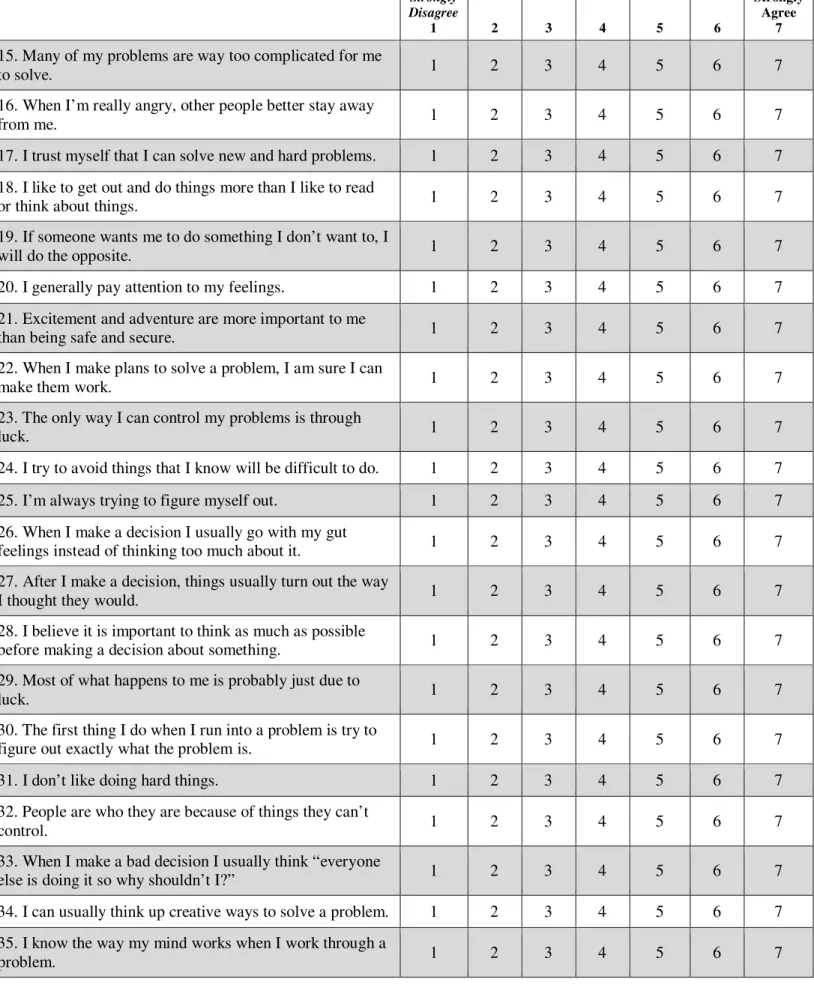
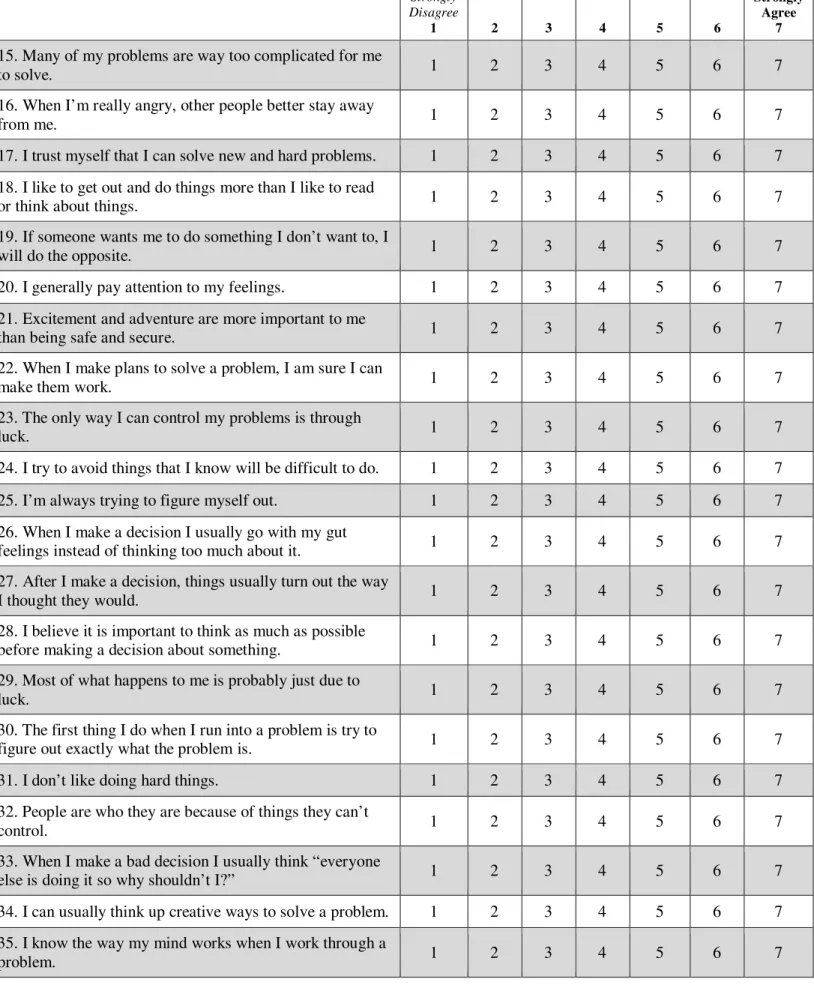
Based on the above information, a Pre/Post-Treatment Client Survey was developed to assess the impact of programs on five specific cognitive factors: locus of control, problem solving, self-control, recognition of feelings, and cognitive biases/decision-making (see Appendix C: Pre/Post-Treatment Client Survey). These five cognitive factors were tapped through adapted versions of a number of published scales.
Adaptations were made based on a variety of factors including: confusing wording, the need to have a standard response format (i.e., 7-point semantic differential scale), and a recognition that standardized scales sometimes need to be modified for use in a corrections environment (see e.g., Delisi, Hochstetler & Murphy, 2003). The final version of the survey contained a total of 71 statements and probation clients were asked to indicate their level of agreement with each statement on a scale of 1 (Strongly Disagree) to 7 (Strongly Agree). Additional information regarding the survey scales is presented below in Exhibit 4. It should be noted that before completing the Pre-Treatment Client Survey, all respondents signed a consent form4 (see Appendix D: DPS Consent Forms).
4
Juvenile client consent was obtained through the signatures of both the juvenile and his or her parent/guardian.