IOS Press
A pilot study of functional electrical
stimulation cycling in progressive multiple
sclerosis
John N. Ratchford
a, Wendy Shore
b, Edward R. Hammond
a, J. Gregory Rose
b, Robert Rifkin
a,
Pingting Nie
a, Kevin Tan
a,d, Megan E. Quigg
a,e, Barbara J. de Lateur
aand Douglas A. Kerr
a,c,f,∗a
Department of Neurology, Johns Hopkins University School of Medicine, Baltimore, MD, USA b
Department of Physical Medicine and Rehabilitation, Johns Hopkins University School of Medicine, Baltimore, MD, USA
c
Department of Molecular Microbiology and Immunology, Johns Hopkins University School of Medicine, Baltimore, MD, USA
d
Department of Neurology, National Neuroscience Institute, Singapore e
Department of Neurology, University of Texas, Southwestern, Dallas, TX, USA f
Biogen-IDEC, Cambridge, MA, USA
Abstract. Background: Functional electrical stimulation (FES) cycling is used by spinal cord injury patients to facilitate neurologic recovery and may also be useful for progressive MS patients.
Objective: To evaluate the safety and preliminary efficacy of home FES cycling in progressive MS and to explore how it changes
cerebrospinal fluid (CSF) cytokine levels.
Methods: Five patients with primary or secondary progressive MS were given an FES cycle for six months. Main outcome
measures were: Two Minute Walk Test, Timed 25-foot Walk, Timed Up and Go Test, leg strength, Expanded Disability Status Scale (EDSS) score, and Multiple Sclerosis Functional Composite (MSFC) score. Quality-of-life was measured using the Short-Form 36 (SF-36). Cytokines and growth factors were measured in the CSF before and after FES cycling.
Results: Improvements were seen in the Two Minute Walk Test, Timed 25-foot Walk, and Timed Up and Go tests. Strength
improved in muscles stimulated by the FES cycle, but not in other muscles. No change was seen in the EDSS score, but the MSFC score improved. The physical and mental health subscores and the total SF-36 score improved.
Conclusions: FES cycling was reasonably well tolerated by progressive MS patients and encouraging improvements were seen
in walking and quality-of-life. Larger studies of FES cycling in progressive MS are indicated.
Keywords: Multiple sclerosis, electric stimulation, rehabilitation, cerebrospinal fluid, physical therapy modalities
1. Introduction
Extraordinary progress has been made in the treat-ment of relapsing-remitting multiple sclerosis in the last two decades. However, attempts to treat progressive
∗Address for correspondence: Douglas A. Kerr, MD, PhD, Biogen-IDEC, 14 Cambridge Center, Building 6, Office S16, Cam-bridge, MA 02142, USA. Tel.: +1 617 679 2788; Fax: +1 617 679 2726; E-mail: [email protected].
forms of MS, primary progressive MS (PPMS) and sec-ondary progressive MS (SPMS), have been disappoint-ing. There remains a vital need to identify treatments with the potential to improve disability and stimulate neural repair in these patients.
Functional electrical stimulation (FES) is an activity-based rehabilitation modality that uses transcutaneous patch electrodes to stimulate leg or arm muscles. FES devices have been used in the treatment of foot drop [3] and in the rehabilitation of spinal cord injury (SCI)
tients. As a rehabilitation modality, FES can be used to stimulate leg muscles to pedal a cycle or to enable par-tial weight-supported walking. This provides SCI pa-tients with the benefits of exercise, including increased muscle mass, improved blood flow, increased bone den-sity, and improved bowel and bladder function [2,12,19, 23,24]. FES cycling has been reported to temporarily improve spasticity in SCI and MS patients [13,14], and there is accumulating evidence that FES cycling may promote spontaneous recovery following injury [9,17]. Animal studies demonstrated improved recovery from SCI after voluntary wheel running in mice [10] and treadmill training in rats [18]. Exercise elevates brain-derived neurotrophic factor levels in the brain [21] and enhances neurogenesis in the hippocampus [11]. Fur-thermore, in an animal model of SCI, FES-evoked ac-tivity increased proliferation of new cells in the spinal cord [4]. These findings suggest that activity-based re-habilitation with FES could potentially stimulate neural repair.
Patients with PPMS and SPMS usually develop a progressive myelopathy leading to difficulty walking, sensory loss, and bowel and bladder dysfunction. We hypothesized that similar to effects in SCI patients, FES cycling may reduce disability and improve function in progressive MS patients. Furthermore, we speculated that decreased CNS inflammation and/or stimulation of reparative mechanisms could partially underlie the benefit observed with FES. To evaluate this possibili-ty we measured changes in the levels of cerebrospinal fluid (CSF) growth factors and cytokines (molecules secreted by immune cells). We plan to test these hy-potheses in two phases. The first phase is a pilot study to evaluate the safety of FES cycling in this population, to generate preliminary efficacy data, and to perform an exploratory CSF analysis of the effect of FES cycling on CSF growth factor and cytokine levels. The second phase will be a larger study that is powered to deter-mine if FES cycling is superior to standard rehabilita-tion in progressive MS. This paper reports the results of the first phase study: a 6-month prospective pilot study using home-based FES cycling therapy in a small cohort of patients with progressive MS. We measured neurologic function, quality of life, and CSF cytokine, chemokine, and growth factor levels pre- and post-FES cycling. Data from this study will be used to calculate the sample size needed for a larger comparative efficacy study.
2. Methods
2.1. Patients
Participants with SPMS or PPMS were recruited from the Johns Hopkins MS Center. The study was approved by the local Institutional Review Board and all participants provided written informed consent. In-clusion criteria were age 18–75 years and Expanded Disability Status Scale (EDSS) score between 5.0 and 7.0, inclusive. Patients were excluded if they were on chronic immunomodulatory treatment or if they had coronary artery disease, congestive heart failure, un-controlled hypertension, epilepsy, a pacemaker or im-planted defibrillator, or unstable fractures.
Paired pre- and post-FES CSF samples from four study completers were evaluated. In addition, CSF data from five non-participating SPMS patients were pooled with the pre-FES data from the four study completers, and this group of untreated MS patients was compared to seven patients with the following non-inflammatory diseases: headache (n =3), hydrocephalus (n =2),
encephalopathy (n=1), and spinal cord stroke (n=
1).
2.2. FES cycling
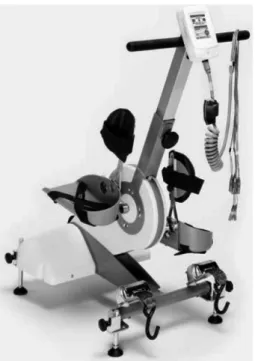
After enrollment in the study and completion of base-line testing, participants were trained to use an FES cycle (RT300, Restorative Therapies Inc., Baltimore, Maryland, USA; Fig. 1) and the device was installed in their home. Initial settings were: waveform sym-metric biphasic, phase duration 250 microseconds ran-domized±25%, pulse rate 33 to 45 pulses per second. We selected the quadriceps, hamstrings, and gluteals for FES. Patients were asked to use the cycle at least 3 times per week for one hour per session.
2.3. Neurologic testing
Testing was performed at baseline, month three, and month six. The predetermined main neurologic out-come was walking ability as measured by three tests: 1) Two-Minute Walk Test (which measures distance covered in two minutes) [6], 2) Timed 25-Foot Walk Test [7], and 3) Timed Up and Go Test (a measure of the time needed to stand up from a chair, walk 3 meters, return to the chair, and sit down) [6,22].
The following secondary neurologic outcome mea-sures were also assessed:
Fig. 1. The RT-300 FES cycle.
– EDSS score [15]. This is a standard measure used in MS research to rate the level of disability. Scores are derived from a neurological examina-tion and range from 0 (no disability) to 10 (death due to MS).
– Multiple Sclerosis Functional Composite (MSFC) Score, which is a combination of three tests: timed 25-foot walk, 9-hole peg test, and Paced Auditory Serial Addition Test (PASAT) [7]. A composite Z-score for the MSFC was computed using the study population as the baseline.
– Leg strength was measured using a hand-held dy-namometer (MicroFET 2, Hoggan Health Indus-tries, West Jordan, Utah, USA) [5]. Two trials were performed and the mean value was deter-mined for the following motions: hip flexion and extension, knee flexion and extension, and foot dorsiflexion.
– Quantitative vibratory sensation was measured in the feet using the Two Alternative Forced Choice Procedure with a Vibratron II device (Physitemp Instruments, Clifton, New Jersey, USA) [1]. – Tone was measured using the Lower Limb
Spastic-ity Measurement System (LLSMS) at baseline and six months [16]. For this test participants placed one foot at a time into a specialized boot. The device oscillated the boot at varying frequencies while recording the muscle tone at the ankle joint.
– Gait was further evaluated at baseline and six months using the GAITRite Portable Walkway and Gait Analysis System (CIR Systems, Inc., Havertown, Pennsylvania, USA). This device uses a 3.66-meter long mat that automatically records spatial and temporal gait parameters including self-selected walking speed, double support time (i.e. time that both feet are touching the ground), and step length coefficient of variation (an indica-tor of gait irregularity) [20].
– At baseline and six months, quality-of-life was measured using the Short Form-36 (SF-36) [26] and psychiatric functioning was evaluated with the Symptom Checklist-90 (SCL-90) [8].
2.4. CSF analysis
Lumbar punctures were performed at baseline and after three months of FES cycle use to obtain CSF. The CSF concentrations of 120 cytokines, chemokines, and growth factors were measured using a quantitative ELISA microarray. Each CSF sample was measured on one well of one Quantibody Human Cytokine Antibody Array 2000 kit (RayBiotech, Norcross, Georgia, USA) per the manufacturer’s protocol. The following sam-ples were tested: pre- and post-FES samsam-ples from the four study completers, five other SPMS patients, and seven non-MS controls. The slides were scanned using a GenePix 4200A 01 Autoloader machine (excitation: 532 nm) and GenePix Pro 6.1.0.4 software (Molecular Devices, Sunnyvale, California, USA). GenePix Array List files provided by RayBiotech were used to gather luminescence data from the images and RayBio Q An-alyzer software (RayBiotech) was used to convert these data to concentrations.
2.5. Statistical analysis
This pilot study was designed to investigate the safe-ty and preliminary efficacy of home FES cycling in pro-gressive MS. Data on neurologic outcomes were col-lected to estimate the effect size of the intervention, but formal statistical tests were not performed on these data as the study was not powered to demonstrate clinical efficacy.
For CSF data, unpaired two-tailed Student’s t-tests with unequal variance were performed for each cy-tokine measured in the CSF on the following groups: patients with progressive MS who have not received FES cycling treatment (n=9, including 4 study
in the study) and patients without neuroinflammatory disease (n = 7). Paired two-tailed Student’s t-tests
were used to compare pre- and post-FES samples of the four study completers for each cytokine. No cor-rection for multiple comparisons was done, as these data are considered exploratory. Statistical analyses were performed using Excel XP (Microsoft, Seattle, Washington, USA).
3. Results
Five participants (three male and two female) initi-ated the study. Three participants had SPMS and two had PPMS. The median age was 50 years (range 46– 60 years) and mean duration of disease was 13 years (range 6–21 years). The median number of MS relaps-es was 3 (range 0–10). At baseline, the median EDSS score was 6.5 (range 6.0–6.5), indicating use of either a unilateral or bilateral assistive device. Patients with this disability level were selected because they are able to ride a stationary cycle, but generally are unable to fully participate in standard exercise regimens. One participant dislocated a shoulder during a fall that was unrelated to the study intervention after two months in the study. He was unable to continue participation in the study. Data for this participant were included in the safety analysis but not the efficacy or CSF analyses.
3.1. FES cycle usage
Study participants were asked to use their home FES cycle at least three times per week for one hour per session for the six month duration of the study. Usage data were captured by the cycle and transmitted to an internet database. The mean number of sessions per week was 3.8 (range 3.1–5.1). In the first two weeks of cycle use, the mean distance per session was 9.9 miles and the mean power output was 3.2 watts per session. In the last two weeks of use the mean distance per session was 10.6 miles and the mean power output was 4.6 watts per session.
3.2. Safety analysis
No serious adverse events were reported. Three ad-verse events were reported during the study. As de-scribed above, one participant dislocated a shoulder during a fall that was unrelated to the study interven-tion and was not able to continue in the study due to difficulty placing the electrodes with one arm
immo-bilized in a sling. One participant reported increased spasticity requiring an increase in the dose of baclofen. A participant with irritable bowel syndrome reported episodes of bowel incontinence with cycle use. Effects on the autonomic nervous system and bowel function have been observed in spinal cord injury patients us-ing FES cycles. The participant’s bowel incontinence improved with continued use of the cycle, scheduled voiding, and adjustments to the bowel regimen.
3.3. Neurologic outcomes
The main neurologic outcomes were three measures of mobility: Two Minute Walk Test, Timed 25-Foot Walk Test, and Timed Up and Go Test (Table 1). In the Two Minute Walk Test, the mean distance covered improved by 13% (from 35.4 m [SD 20.4] to 39.9 m [SD 10.4]). In the Timed 25-Foot Walk Test, the mean time improved by 36% (from 27.3 seconds [SD 13.8] to 17.4 seconds [SD 5.2]). In the Timed Up and Go Test, the mean time improved by 22% (from 36.5 seconds [SD 20.4] to 28.4 seconds [SD 11.9]).
The median EDSS score did not change during the study (Table 1). Leg strength measured using a hand-held dynamometer improved modestly in muscles that were stimulated by the FES electrodes (knee flexors, knee extensors, and hip extensors), but declined in mus-cles that were not stimulated by the FES electrodes (hip flexors and foot dorsiflexors). We observed a mean improvement in each of the three ambulation vari-ables measured with GAITRite: self-selected walking speed, double support time, and step length coefficient of variation. The LLSMS identified no definite trend in the spasticity level. The threshold for vibratory sen-sation was measured quantitatively in the great toes and showed a 12% improvement from baseline to six months.
3.4. Quality-of-life measures
The SF-36 was used to assess quality-of-life. The physical health subscore improved by 20%, the men-tal health subscore improved by 12%, and the over-all SF-36 score improved by 13% (Table 1). Psychi-atric function was measured using the SCL-90 ques-tionnaire. No notable change was found in the SCL-90 Global Severity Index score.
Table 1
Clinical outcomes. Improvement is highlighted. N/A=not applicable, MSFC=Multiple Sclerosis Functional Composite, PASAT=Paced Auditory Serial Addition Test, EDSS=Expanded Disability Status Scale, LLSMS=Lower Limb Spasticity Measurement System, SF-36=
Short Form-36, SCL-90=Symptom Checklist-90
Variable Baseline 3 month Change from % change 6 month Change from c% change
mean mean baseline to from baseline to mean baseline to from baseline to
(SD) (SD) 3 months 3 months (SD) 6 months 6 months
2 Minute Walk, in meters 35.4 (20.4) 38.4 (20.1) 3.05 8.6% 39.9 (10.4) 4.57 13%
Timed Up and Go, in seconds
36.5 (20.4) 28.0 (11.6) −8.5 −23% 28.4 (11.9) −8.1 −22%
MSFC
Timed 25-Foot Walk, in seconds
27.3 (13.8) 23.5 (11.5) −3.8 −14% 17.4 (5.24) −9.9 −36%
9 hole peg test, dominant hand, in seconds
39.4 (19.4) 32.2 (8.5) −7.2 −18% 32.3 (7.2) −7.1 −18%
9 hole peg test, non-dominant hand, in seconds
32.8 (3.1) 31.9 (6.2) −0.9 −2.7% 32.0 (3.2) −0.8 −2.4%
PASAT, # correct 48.3 (11.5) 50.5 (8.4) 2.2 4.6% 52.5 (7.5) 4.2 8.7%
Z-score 0.00 (0.67) 0.34 (0.66) 0.34 N/A 0.50 (0.50) 0.50 N/A
Dynamometry, in pounds Hip flexion 14.4 (12.7) 8.4 (7.8) −6 −42% 10.1 (7.0) −4.3 −30% Hip extension 8.3 (16.5) 4.9 (9.9) −3.4 −41% 11.1 (9.3) 2.8 34% Knee extension 40.8 (18.7) 47.5 (17.1) 6.7 16% 46.9 (16.6) 6.1 15% Knee flexion 22.7 (15.3) 26.7 (13.8) 4 18% 27.1 (16.3) 4.4 19% Foot dorsiflexion 24.8 (27.4) 16.9 (15.3) −7.9 −32% 20.2 (18.2) −4.6 −19% EDSS score 6.375 (0.25) 6.375 (0.25) 0 0% 6.375 (0.25) 0 0% Vibration threshold, in vibration units 11.8 (6.2) − − − 10.4 (2.8) −1.4 −12% GAITRite Self-selected walking speed, meters/minute 15 (3.8) − − − 20.3 (7.2) 5.3 35%
Double support time, in seconds
1.74 (0.45) − − − 1.41 (0.60) −0.33 −19%
Step length coefficient of variation, % 11.8 (4.0) − − − 8.9 (4.1) −2.9 −25% LLSMS, in Newton-meters/radian 117 (136) − − − 137 (133) 20 17% SF-36
Physical health subscore 28.8 (16.1) − − − 34.5 (13.7) 5.8 20%
Mental health subscore 48.8 (16.4) − − − 54.8 (12.1) 6.0 12%
Total 41.8 (14.8) − − − 47.3 (10.0) 5.5 13%
SCL-90, Global Severity Index
60.8 (4.2) − − − 61.5 (2.5) 0.8 1.2%
3.5. CSF outcomes
The concentrations of 120 cytokines, chemokines, and growth factors were measured in the CSF of 1) study participants with complete data (n =4) before
and after FES use, 2) non-participants with SPMS (n=
5), and 3) patients without neuroinflammatory disease (n=7). The goals of this exploratory analysis were
to compare the cytokine profile in MS and non-MS pa-tients and to compare the cytokine profile before and after FES cycle use. A decrease in pro-inflammatory cytokines would suggest that FES cycling may have a beneficial effect on the immunophenotype of MS pa-tients. Similarly, an increase in important nerve-related growth factors could suggest stimulation of a CNS
re-pair mechanisms. CSF findings are shown in Tables 2 and 3.
Compared to patients without neuroinflammatory disease, progressive MS patients who have not re-ceived FES cycle treatment have elevated CSF levels of interleukin-8 (IL-8,p=0.02), macrophage
inflamma-tory protein-1 alpha (MIP-1α,p =0.02),
interferon-gamma (IFNγ,p=0.03), and Glial Cell-Derived
Neu-rotrophic Factor (GDNF,p=0.04). Monocyte
Chemo-tactic Protein-1 (MCP-1) decreased after FES cycling (p=0.03). The changes in the CSF profile were too
modest in this small study to draw definite conclusions about what effect FES might have on CNS inflamma-tion and growth factor levels. However, these
prelimi-Table 2
Mean CSF cytokine concentrations comparing patients without MS (n=7) and patients with MS (n=9, including 4 FES study participants at baseline) selected from an ELISA microarray of 120 cytokines
Mean CSF concentrations (pg/ml) of neurologic patients
Cytokine Without neuroinflammatory With MS Fold P-value† disease (n=7) (n=9) difference CTACK 1.0×10² 1.0×10² 1.0 0.97 EGF R 4.6×10³ 6.8×10³ 1.5 0.33 FGF-7 6.2×100 1.2×101 2.0 0.05 GDNF 1.5×100 2.8×100 1.9 0.04* HCC-4 1.1×10³ 9.4×10² 0.8 0.54 IFN-γ 1.8×10⁻⁵ 2.2×100 1.2×10⁵ 0.03* IL-31 3.6×10² 3.0×10² 0.8 0.84 IL-5 2.5×10⁻¹ 1.1×100 4.2 0.14 IL-7 2.4×10⁻¹ 2.0×100 8.3 0.08 IL-8 2.9×101 5.1×101 1.8 0.02* IP-10 4.8×10² 9.4×10² 2.0 0.07 MCP-1 1.7×10³ 1.8×10³ 1.0 0.51 MIP-1α 9.3×100 1.0×10² 11 0.02* MIP-3β 1.8×10³ 2.0×10³ 1.1 0.65 NT-4 1.9×101 1.2×101 0.6 0.39 PARC 3.1×10³ 1.7×10³ 0.6 0.08 PIGF 7.7×101 5.8×101 0.8 0.29 TGF-α 2.7×10² 2.7×10² 1.0 0.99 TGF-β3 9.4×100 2.3×100 0.2 0.35 VEGF R2 7.2×10² 1.1×10³ 1.5 0.15
†P-values obtained by unpaired Student’s t-test; * indicatesp <0.05.
Table 3
Mean concentrations of selected cytokines in the CSF of study participants (n=
4) pre- and post-FES cycle treatment Mean CSF concentrations (pg/ml) of study participants
Cytokine pre-FES (n=4) post-FES (n=4) Fold change P-value†
CTACK 2.2×10² 2.4×10² 1.1 0.82 EGF R 1.2×10⁴ 1.2×10⁴ 1.0 0.75 FGF-7 1.8×101 1.9×101 1.1 0.81 GDNF 2.6×100 3.2×100 1.2 0.49 HCC-4 6.3×10² 7.5×10² 1.2 0.10 IFN-γ 3.6×100 1.2×100 0.3 0.07 IL-31 6.7×10² 7.6×10² 1.1 0.77 IL-5 2.4×100 1.2×100 0.5 0.14 IL-7 4.5×100 3.6×100 0.8 0.49 IL-8 6.0×101 6.2×101 1.0 0.69 IP-10 7.8×10² 7.1×10² 0.9 0.68 MCP-1 1.7×10³ 1.6×10³ 0.9 0.03* MIP-1α 6.6×101 6.2×101 0.9 0.74 MIP-3β 1.6×10³ 2.1×10³ 1.4 0.06 NT-4 5.9×100 1.5×101 2.6 0.15 PARC 1.2×10³ 1.3×10³ 1.1 0.80 PIGF 4.9×101 4.9×101 1.0 0.99 TGF-α 3.0×10² 3.1×10² 1.0 0.81 TGF-β3 4.5×100 1.2×101 2.6 0.12 VEGF R2 1.8×10³ 1.9×10³ 1.1 0.65
nary data will be used for planning CSF analyses in a future study.
4. Discussion
The development of treatment and rehabilitation strategies for progressive MS patients remains a major unmet medical need. In this pilot study we tested the use of an FES cycle in progressive MS patients with the goal of determining the relative safety and prelim-inary efficacy in this patient population. We also per-formed an exploratory CSF analysis to identify which CSF factors might be affected by FES cycling.
In our cohort we did not identify any unexpected adverse events. Patients did not show any decline in neurologic function. Instead, participants showed im-provements in walking speed, walking distance, and strength in muscles that were stimulated by the FES cy-cle. The SF-36 quality-of-life overall score improved along with both the physical and mental health sub-scores. This study was designed to test the safety and feasibility of home FES cycling in progressive MS, and to estimate the effect size of changes in neurologic function and levels of CSF cytokines. This study was not designed or powered to prove that FES cycling is superior to conventional physical therapy, but these da-ta will be used to estimate the sample size needed for a larger, controlled trial of FES cycling. Though we cannot demonstrate efficacy of this new rehabilitation modality based on these results, it is very reassuring that improvement was seen in virtually all measures that might be expected to improve. This suggests that the intervention may be efficacious and supports fur-ther study of the application of this technology to MS patients.
The mechanism of potential benefit of FES cycling in MS is unknown but may be multifactorial. Increased strength and endurance could partially or completely be the cause of any observed improvement. However, it is also possible that an electrical stimulation-based rehabilitation modality like FES cycling could reduce inflammation and encourage neuronal repair. To ex-plore this possibility a CSF analysis was performed which identified changes in levels of several cytokines and growth factors. However, the changes in the CSF profile following FES cycling were too modest in this small sample to make definite conclusions. Nonethe-less, these data will be used for planning larger studies exploring the effects of FES cycling.
The effect of FES cycling on progressive MS patients has been evaluated in one other study [25]. Szecsi et al. identified short-term reductions in spasticity, but no significant change in strength, walking, or long-term spasticity. However, patients in that study were only treated for six sessions with 6 minutes of stimulation per session, so the treatment duration may have been too short to see an effect. The strengths of our study are the relative length of treatment duration (6 months for at least 3 hours per week), the use of multiple quantitative neurologic outcome measures, and the accompanying CSF analysis that explores the potential mechanism of benefit of FES cycling. Moreover, we evaluated the effect of long-term FES cycle use in the home, a treatment option that is more convenient than use of an FES cycle in a rehabilitation center. The main limitation of our study is the small sample size, though this study was designed to test safety and feasibility rather than to demonstrate efficacy. Based on these results, we plan to initiate a larger study comparing FES cycling to standard physical therapy. This study will also include analysis of CSF to try to determine the underlying biologic mechanism for improvement. Given the lack of efficacious treatments for SPMS and PPMS, we hope that further study will prove that FES cycling can delay the progression of disability in these patients.
Acknowledgements
The authors gratefully acknowledge Robert Snyder for his support of this study. Scott Simcox and T. Ann McElroy from Restorative Therapies, Inc. provided technical assistance with the FES cycles. Chitra Krish-nan provided advice on study design. Daniel Becker provided expert advice on FES cycle usage. Restora-tive Therapies, Inc. provided use of FES cycles for the study.
References
[1] J.C. Arezzo, H.H. Schaumburg and C. Laudadio, The Vi-bratron: A simple device for quantitative evaluation of tac-tile/vibratory sense, Neurology 35 (1985), 169.
[2] J.C. Baldi, R.D. Jackson, R. Moraille and W.J. Mysiw, Muscle atrophy is prevented in patients with acute spinal cord injury using functional electrical stimulation, Spinal Cord 36 (1998), 463–469.
[3] C. Barrett, G. Mann, P. Taylor and P. Strike, A randomized trial to investigate the effects of functional electrical stimulation and therapeutic exercise on walking performance for people with multiple sclerosis, Multiple Sclerosis 15 (2009), 493–504.
[4] D. Becker, W.M. Grill and J.W. McDonald, Functional elec-trical stimulation helps replenish neural cells in the adult CNS after spinal cord injury, Abstract: American Academy of Neu-rology Meeting, 2003.
[5] R.W. Bohannon, Reference values for extremity muscle strength obtained by hand-held dynamometry from adults aged 20 to 79 years, Archives of Physical Medicine and Rehabilita-tion 78 (1997), 26–32.
[6] D. Brooks, A.M. Davis and G. Naglie, Validity of 3 physi-cal performance measures in inpatient geriatric rehabilitation, Archives of Physical Medicine and Rehabilitation 87 (2006), 105–110.
[7] G.R. Cutter, M.L. Baier, R.A. Rudick et al., Development of a multiple sclerosis functional composite as a clinical trial outcome measure, Brain 122 (1999), 871–882.
[8] L.R. Derogatis, R.S. Lipman and L. Covi, SCL-90: an outpa-tient psychiatric rating scale–preliminary report, Psychophar-macology Bulletin 9 (1973), 13–28.
[9] N. Donaldson, T.A. Perkins, R. Fitzwater, D.E. Wood and F. Middleton, FES cycling may promote recovery of leg function after incomplete spinal cord injury, Spinal Cord 38 (2000), 680–682.
[10] C. Engesser-Cesar, A.J. Anderson, D.M. Basso, V.R. Edgerton and C.W. Cotman, Voluntary wheel running improves recovery from a moderate spinal cord injury, Journal of Neurotrauma 22 (2005), 157–171.
[11] J. Farmer, X. Zhao, H. van Praag, K. Wodtke, F.H. Gage and B.R. Christie, Effects of voluntary exercise on synaptic plasticity and gene expression in the dentate gyrus of adult male Sprague-Dawley rats in vivo, Neuroscience 124 (2004), 71–79.
[12] H.L. Gerrits, A. de Haan, A.J. Sargeant, H. van Langen and M.T. Hopman, Peripheral vascular changes after electrically stimulated cycle training in people with spinal cord injury, Archives of Physical Medicine and Rehabilitation 82 (2001), 832–839.
[13] P. Krause, J. Szecsi and A. Straube, Changes in spastic muscle tone increase in patients with spinal cord injury using function-al electricfunction-al stimulation and passive leg movements, Clinicfunction-al Rehabilitation 22 (2008), 627–634.
[14] P. Krause, J. Szecsi and A. Straube, FES cycling reduces spas-tic muscle tone in a patient with multiple sclerosis, NeuroRe-habilitation 22 (2007), 335–337.
[15] J.F. Kurtzke, Rating neurologic impairment in multiple
scle-rosis: an expanded disability status scale (EDSS), Neurology 33 (1983), 1444–1452.
[16] J.F. Lehmann, R. Price, B.J. deLateur, S. Hinderer and C. Traynor, Spasticity: quantitative measurements as a basis for assessing effectiveness of therapeutic intervention, Archives of Physical Medicine and Rehabilitation 70 (1989), 6–15. [17] J.W. McDonald, D. Becker, C.L. Sadowsky, S. Jane JA, T.E.
Conturo and L.M. Schultz, Late recovery following spinal cord injury: Case report and review of the literature, Journal of Neurosurgery 97 (2002), 252–265.
[18] S. Multon, R. Franzen, A.L. Poirrier, F. Scholtes and J. Schoe-nen, The effect of treadmill training on motor recovery after a partial spinal cord compression-injury in the adult rat, Journal of Neurotrauma 20 (2003), 699–706.
[19] M.S. Nash, B.M. Montalvo and B. Applegate, Lower extrem-ity blood flow and responses to occlusion ischemia differ in exercise-trained and sedentary tetraplegic persons, Archives of Physical Medicine and Rehabilitation 77 (1996), 1260–1265. [20] A.J. Nelson, D. Zwick, S. Brody et al., The validity of the GaitRite and the Functional Ambulation Performance scoring system in the analysis of Parkinson gait, NeuroRehabilitation 17 (2002), 255–262.
[21] H.S. Oliff, N.C. Berchtold, P. Isackson and C.W. Cotman, Exercise-induced regulation of brain-derived neurotrophic factor (BDNF) transcripts in the rat hippocampus, Brain Re-search 61 (1998), 147–153.
[22] D. Podsiadlo and S. Richardson, The timed “Up & Go”: a test of basic functional mobility for frail elderly persons, Journal of the American Geriatrics Society 39 (1991), 142–148. [23] A.M. Scremin, L. Kurta, A. Gentili et al., Increasing muscle
mass in spinal cord injured persons with a functional electrical stimulation exercise program, Archives of Physical Medicine and Rehabilitation 80 (1999), 1531–1536.
[24] R.B. Stein, Functional electrical stimulation after spinal cord injury, Journal of Neurotrauma 16 (1999), 713–717. [25] J. Szecsi, C. Schlick, M. Schiller, W. Pollmann, N. Koenig
and A. Straube, Functional electrical stimulation-assisted cy-cling of patients with multiple sclerosis: biomechanical and functional outcome–a pilot study, Journal of Rehabilitation Medicine 41 (2009), 674–680.
[26] J. Ware, K.K. Snow, M. Kosinski and B. Gandek, SF-36 Health Survey Manual and Interpretation Guide, The Health Institute, New England Medical Center, Massachusetts, 1993.