of Terrestrial Environments Workshop
March 26–27, 2014Germantown, Maryland Convened by
U.S. Department of Energy
Office of Science
Office of Biological and Environmental Research
Organizing CommitteeCo-Leads
Members
Writing Team
Organizers
Climate and Environmental Sciences Division
David Moulton
Los Alamos National Laboratory Tim ScheibePacific Northwest National Laboratory Carl Steefel Lawrence Berkeley National Laboratory
Mike Heroux
Sandia National Laboratories
Lois Curfman McInnes
Argonne National Laboratory
Stephen Long
University of Illinois, Urbana- Champaign Jonathan Lynch Pennsylvania State University
Peter Thornton
Oak Ridge National Laboratory
David Moulton
Los Alamos National Laboratory
Tim Scheibe
Pacific Northwest National Laboratory
Jonathan Lynch
Pennsylvania State University
Mike Heroux
Sandia National Laboratories
Eoin Brodie
Lawrence Berkeley National Laboratory
Carl Steefel
Lawrence Berkeley National Laboratory
Scott Painter
Oak Ridge National Laboratory
Stephen Long
University of Illinois, Urbana-Champaign
Lois Curfman McInnes
Argonne National Laboratory
David Weston
Oak Ridge National Laboratory
David Lesmes
[email protected] Paul Bayer[email protected]
Mission
The Office of Biological and Environmental Research (BER) advances world-class fundamental research programs and scientific user facilities to support the Department of Energy’s energy, environment, and basic research missions. Addressing diverse and critical global challenges, the BER program seeks to understand how genomic information is translated to functional capabilities, enabling more confident redesign of microbes and plants for sustainable biofuel production, improved carbon storage, or contaminant bioremediation. BER research advances understanding of the roles of Earth’s biogeochemical systems (the atmosphere, land, oceans, sea ice, and subsurface) in determining climate so that it can be predicted decades or centuries into the future, information needed to plan for energy and resource needs. Solutions to these challenges are driven by a foundation of scientific knowledge and inquiry in atmospheric chemistry and physics, ecology, biology, and biogeochemistry.
Cover Credit
Meandering stream in East River Catchment, Gunnison County, Colorado (Roy Kaltschmidt, Lawrence Berkeley National Laboratory).
Suggested citation for this report: U.S. DOE. 2015. Building Virtual Ecosystems: Computational Challenges for Mechanistic Modeling of Terrestrial Environments; Workshop Report. DOE/SC-0171. U.S. Department of Energy Office of Science. http://doesbr.org/VirtualEcosystems/.
Building Virtual Ecosystems:
Computational Challenges for Mechanistic
Modeling of Terrestrial Environments
Workshop Report
Published: February 2015
DOE/SC-0171
Executive Summary ... v
1. Introduction ... 1
2. Motivation and Grand Challenges ... 5
2.1 Plant-Soil Systems ... 5
2.2 Biogeochemical Cycling ... 6
2.3 Watershed Hydrology and Ecosystem Dynamics ... 8
3. Research Opportunities ...11
3.1 Models of the Coupled Plant-Soil System (Virtual Plant-Soil System) ...11
Sidebar – Virtual Plant-Soil Framework: Integrating Phenotypic Data with Genomic Predictions ...12
Sidebar – Microbial Genomic and Metagenomic Information ...13
3.2 Virtual Plot ...14
3.3 Virtual Watershed ...17
4. Software Infrastructure for Virtual Ecosystems ...19
4.1 Managing Complexity in Process-Rich Applications ...19
4.2 Disruptive Changes in Computer Hardware and Software ...21
4.3 Interdisciplinary Teams and Training ...21
4.4 Software Lifecycles and Business Models...22
4.5 Leveraging New Programs in Software Productivity ...23
4.6 Phased Development of Virtual Systems ...24
5. Conclusion and Summary ...27
Acknowledgements ...28
Appendices ...29
Appendix A. Workshop Agenda ...31
Appendix B. Workshop Organizers, Participants ...33
Appendix C. References ...35 Acronyms and Abbreviations ...Inside back cover
Executive Summary
T
he mission of the Climate and EnvironmentalSciences Division of the Office of Biological and Environmental Research (BER) within the U.S. Department of Energy’s (DOE) Office of Science is “to advance a robust, predictive understanding of Earth’s climate and environmental systems and to inform the development of sustainable solutions to the nation’s energy and environ mental challenges.” This formidable challenge requires quanti fication of stocks and controls on states, fluxes, and residence times of water, carbon, and other key elements through all components of the terrestrial system. These components include vegetation, soils, the deep vadose zone, groundwater, and surface water. To achieve this level of predictive under standing, a new generation of multiscale, multiphysics models is needed for terrestrial systems—models that incorporate process couplings and feedbacks between various “pools” (i.e., vegetation, soils, subsurface aquifers, and surface waters) across wide ranges of spatial and temporal scales.
To explore the potential of a new generation of multiscale, multiphysics models for revolutionizing the understanding of terrestrial ecosystem dynamics, BER held the Compu tational Challenges for Mechanistic Modeling of Terres trial Environments workshop on March 26–27, 2014, in Germantown, Maryland. The workshop brought together 29 researchers with diverse expertise, including hydrologists, environmental scientists, ecologists, microbiologists, plant scientists, and computational scientists. Through a combi nation of invited talks, breakout sessions, and reportback discussions, workshop attendees identified challenges and research opportunities needed to develop a more seamless and continuous framework for mechanistic modeling of terrestrial environments extending from the bedrock to the atmospheric boundary layer and from singleplant systems to fields of crops to watersheds and river basins.
Three broad scientific challenges were identified. At the scale of individual plants, a more robust, predictive capability requires greater focus on integrating, at the wholeorganism level, the rapidly developing mechanistic understanding of plant growth, form, function, and interactions with the surrounding biotic and abiotic environment in the soil and rhizosphere. At the scale of catchments and water sheds, the central challenge is to develop highresolution
watershedscale models of the hydrological, carbon, and nutrient cycles with tractable representations of the inte grated vegetationhydrologicalbiogeochemical systems. Cutting across the disparate spatial and temporal scales is the third challenge of improving models for biogeo chemical cycling, including more realistic descriptions of microbiological communities and their function and better representations of the effects of smallscale processes and heterogeneities at field scales. These three individual chal lenges are interlinked, emphasizing the multiscale, interdisci plinary nature of the overarching challenge.
To meet these three challenges, three research opportu nities were identified: (1) a virtual plant-soil model that
combines mechanistic models of plant growth, form, and function with highresolution models of hydrological and biogeochemical processes in the surrounding soil and rhizosphere; (2) a virtual plot model that combines multiple
virtual plants or parameterizations of individual plants with detailed representations of belowground processes; and (3) a virtual watershed model that tracks fluxes and storage
of water, energy, carbon, and nutrients on the surface and in a threedimensional subsurface. The third opportunity should take into account the effects of smallscale processes and heterogeneity and employ more sophisticated and comprehensive treatments of hydrological, elemental, and nutrient cycling in subsurface and surface waters, which is mediated by vegetation and exchanges between the atmo sphere and land surface.
Just as progress in experimental science depends on tech nological advances in instrumentation, progress in compu tational science requires advances in hardware, software, and algorithms. A new generation of multiscale, multi physics models for terrestrial systems will require careful attention to software design, productivity tools, and programming models. Recent trends in hardware design raise uncertainty about programming models and the actual performance of application codes. Moreover, soft ware development tools and programming models have not kept pace with changes in hardware, creating signifi cant uncertainty for domain and computational scien tists. This confluence of disruptive trends in computer hardware with the drive toward predictive, multiscale
simulations is putting immense pressure on the scien tific community to find new ways to maintain its scien tific productivity. However, these challenges also create opportunities, which led the DOE Office of Advanced Scientific Computing Research (ASCR) to convene an interdisciplinary workshop, Software Productivity for ExtremeScale Science, in January 2014. An important finding of that productivity workshop was that signifi cant improvements in development practices and library interoperability could underpin a shift toward a more agile collection of highquality composable components, ulti mately maintaining or even enhancing productivity. This paradigm shift to an agile collection of interacting compo nents, which the ASCR workshop participants coined a “software ecosystem,” expresses the need to go beyond the modularity of traditional multiphysics codes to a higher level of interoperability.
To meet BER’s programmatic goals as outlined in several recent documents (workshop reports, strategic plans, and advisory council reports), the BER scientific community will need to adopt this paradigm shift. Doing so presents an exciting opportunity to establish a new community approach to modeling and simulation, in which multidisci plinary domain scientists work closely with computational scientists to develop interoperable modules that can be assembled in flexible configurations within a common framework, making possible the simulation of the multi scale structure and function of a variety of terrestrial envi ronments. This report concludes that adopting this new approach is necessary to overcome the challenges associated with increasing model complexity and the disruptive effects of new computer architectures. The result will be a signifi cant improvement in the scientific productivity of a BER research portfolio that is increasingly focused on predictive simulation tools as an integrative science outcome.
1. Introduction
T
he mission of the Climate and Environmental Sciences Division (CESD) of the Office of Biolog ical and Environmental Research (BER) within the U.S. Department of Energy’s Office of Science is “to advance a robust, predictive understanding of Earth’s climate and environmental systems and to inform the development of sustainable solutions to the nation’s energy and environ mental challenges.” This formidable challenge requires quantification of stocks and controls on states, fluxes, and residence times of water, carbon, and other key elements through all components of the terrestrial system. These components include vegetation, soils, the deep vadose zone, groundwater, and surface water. To achieve this level of predictive understanding, a new generation of multiscale, multiphysics models is needed for terrestrial systems— models that take into account process couplings and feed backs between the various “pools” (i.e., vegetation, soils, subsurface aquifers, and surface waters). In addition, these models must incorporate multiple spatial scales, given that the region of interest is potentially large (e.g., the dynamics of an entire river system); at the same time, critical inter faces within the larger watershed often require a finescale resolution of spatial gradients to calculate water, nutrient, and elemental fluxes correctly. Multiple timescales typi cally need to be resolved as well because the ultimate aim is to enable projection of ecosystem dynamics over longer climaterelated timescales while resolving some variables like temperature (especially in soils and vegetation) at timescales as short as diurnal.From prehistoric times, humans have observed their envi ronment, developing knowledge of correlative and cause andeffect relationships. Over time, this process developed into the first pillar of science—experimental observation, in which humans manipulated conditions and observed outcomes to gain empirical knowledge. As the scientific method matured, a second pillar of science developed, in which humans generalized their empirical knowledge in terms of mathematical models and theories. Recently, a third pillar has emerged (e.g., Oden and Ghattas 2014), in which computational numerical methods are used to simulate complex interacting processes in a manner that integrates theory and experimental observation, often with a level of process detail far beyond what can be achieved
with purely analytical mathematical treatments (Steefel, DePaolo, and Lichtner 2005).
Numerical modeling extends classical scientific approaches in a number of ways. Numerical simulations can be used to explore system behaviors in situations where experi ments and observations may be too controversial (e.g., drug discovery), too hazardous (e.g., natural disasters), prohibited by law or treaty (e.g., nuclear detonations), geographically difficult to apply instrumentation (e.g., subsurface, ocean, or space environments), expensive (e.g., highenergy physics), or require too much observation time (e.g., climate change; Keyes 2012). Scientific computation can reconstruct past events and utilize inverse methods to infer past causes of observed phenomena, as well as extend experimental results to other scenarios in lieu of additional experiments (Oden and Ghattas 2014). Scientific computation also can be used to evaluate the consequences of both parametric uncertainty (e.g., uncertainty quantification and sensitivity analysis) and model inadequacy (e.g., multimodel assessment). When used appropriately, modeling can extend fundamental scien tific discoveries to largerscale natural systems, for example, those characterizing the Earth’s crust (Steefel, DePaolo, and Lichtner 2005).
The use of modeling to augment the understanding produced by traditional empirical and theoretical perspec tives is particularly valuable for untangling complex interactions in environmental systems (e.g., Larsen et al. 2014), with perhaps the greatest potential in advancing the understanding of various interacting processes—hydrology, biogeochemistry, microbiology, and vegetation dynamics— that operate at the Earth’s surface. Collectively, these critical zone processes mediate the interaction between the Earth’s
surface and its atmosphere, thus controlling a wide range of environmental services and processes of interest to society, such as water supply and quality and the terrestrial carbon cycle and its effect on atmospheric carbon dioxide. For example, the quality and redox status of groundwater aqui fers, as well as the flux of constituents from these aquifers into surface waters (rivers and lakes) and in some situations back into the atmosphere, are the result of a complex set of interactions between hydrologically induced nutrient fluxes, reactive mineral phases in the subsurface, and the
resident microbial communities. The subsurface, in turn, is connected to the atmosphere through the relatively thin veneer called soil, with exchanges (both water and gas) mediated predominantly by vegetation. Vegetation has a large impact on hydrology at the watershed scale through transpiration, while the hydrology itself influences or controls which vegetation type dominates or whether plants even survive. All these complex process couplings and feed backs operate at multiple scales ranging from the watershed to the individual plant and its root zone (see Fig. 1. Large Range of Scales in Terrestrial Ecosystems, this page). Although steady progress has been made in mechanistic modeling and simulation of key terrestrial processes in
isolation, the development of models that couple multiple processes across temporal and spatial scales to provide a more complete picture of critical zone functioning remains largely unrealized. Applicationscale simulations of the performance of new bioenergy crops and the effects of future climate still rely heavily on empirical calibration, leading to lack of confidence in their predictive capability. This situation provides great impetus for new multiscale and multiphysics modeling approaches that will improve the mechanistic representations of complex systems. Part of the challenge is that coupled physical, chemical, and biological processes take place in an environment that is highly heterogeneous across a wide range of spatial scales,
potentially giving rise to emergent phenomena not readily predicted on the basis of concat enation of individual processes alone. For example, incorporating subgrid mechanisms and properties in a way that adequately accounts for local mixing of reacting agents (or lack thereof) is a major challenge in reactive transport modeling (Steefel, DePaolo, and Lichtner 2005). Current understanding of mecha nisms that determine interscale relationships and the theory for how numerical models should best repre sent poorly resolved multiscale processes are still rudimentary. In addition, technical challenges associated with managing model complexity in simula tions that combine many process models, along with looming disruptive changes in computer
Fig. 1. Large Range of Scales in Terrestrial Ecosystems. From the watershed, to the individual
hydrological catchment, to the plot, and finally to the individual plant, tree, or root system, these diverse scales call for a new terrestrial modeling framework that can incorporate feed-backs among surface and subsurface hydrology, vegetation, soils, and the atmosphere. The grand challenge is to capture the larger system behavior while accurately representing the smaller-scale fluxes, processes, and system features in highly heterogeneous terrestrial systems. [Watershed-scale image courtesy Christine Pribulick and Reed Maxwell, Colorado School of Mines. Catchment- and plot-scale images courtesy Lawrence Berkeley National Laboratory. Root interaction images (left) reprinted by permission of John Wiley and Sons Ltd.: Nuccio, E. E., et al. 2013. “An Arbuscular Mycorrhizal Fungus Significantly Modifies the Soil Bacterial Commu-nity and Nitrogen Cycling During Litter Decomposition,” Environmental Microbiology 15(6),
1. Introduction
hardware, combine to make these needed advances in simulation far from inevitable.
Fortunately, these challenges create an exciting opportu nity to establish a new community approach to modeling and simulation. In this approach, hydrologists, earth and environmental scientists, ecologists, plant scientists, and microbiologists work together with computational scientists to develop interoperable modules that can be assembled in flexible configurations within a common framework to simulate the multiscale structure and function of a variety of terrestrial environments.
CESD’s Environmental System Science (ESS) program encompasses the Terrestrial Ecosystem Science and Subsurface Biogeochemical Research activities. The ESS program’s goal is to “advance
a robust, predictive
under-standing of terrestrial
ecosystems from bedrock to atmosphere and from global
to molecular scales using an iterative approach to model driven experimentation and observation.” The ESS program’s science strategy is intended to address predic tive modeling of “systems of systems,” in which system complexity and diversity increase with the scale of consideration (see Fig. 2. BER Field Research Activi ties, this page). This focus on robust, predictive under standing emphasizes the need for incorporating mech anistic understanding from small scales (i.e., molecular, pore, plant, and plot) into predictions at larger scales (i.e., watershed, basin, and global). Fig. 2 shows major BER field research efforts that span the range of scales of interest, serving both as motivation and as potential use cases for developing a
new community modeling framework. In contrast to this vision, the current modeling landscape comprises many distinct and unconnected models, with each application typically at a single scale and informed by limited data describing complex systems with multiscale heterogeneity. A recent BER Advisory Committee (BERAC) report noted that the “…fragmentation of science, technologies, and predictive capabilities among [and within] disciplines and the focus on studying mostly individual, scalebased system components…[lead] to fundamental uncertainties about how coupled subsystems interact with each other and respond to environmental changes across different space and timescales. The lack of sufficient sciencebased capabili ties to predict these interactions and responses hinders the
Fig. 2. BER Field Research Activities. Office of Biological and Environmental Research
(BER) field activities extend across a wide range of ecosystems and scales (plants to plots to watersheds). These well-characterized and highly instrumented field “laboratories” enable multidisciplinary teams of scientists to test and advance fundamental understanding of key processes and interactions in the context of overall system behavior. The research conducted at these sites is informed by and informs BER research efforts at both smaller scales [e.g., Department of Energy (DOE) Systems Biology Knowledgebase or KBase] and larger scales (e.g., DOE Accelerated Climate Modeling for Energy or ACME). The need for a more seamless modeling framework that enables the interoperability of multiscale, multiphysics modeling components has been identified as a priority by several previous BER workshops and reports. The field research activities represented in this figure are supported by the following BER projects: DOE Bioenergy Research Centers or BRCs, Next-Generation Ecosystem Experiments or NGEE, Scientific Focus Areas or SFAs (national laboratory research projects), Spruce and Peatland Responses Under Climatic and Environmental Change or SPRUCE, Atmospheric Radiation Measurement–Southern Great Plains site or ARM-SGP, and the AmeriFlux Network.
ability to sustainably manage and mitigate energy and envi ronmental problems” (BERAC 2013).
To explore the vision of a multiscale, multiphysics commu nity framework for modeling terrestrial systems relevant to bioenergy applications and climate science, BER held the Computational Challenges for Mechanistic Modeling of Terrestrial Environments workshop on March 26–27, 2014, in Germantown, Maryland. This workshop brought together 29 researchers with diverse expertise, including hydrologists, environmental scientists, ecologists, micro biologists, plant scientists, and computational scientists. A combination of invited talks on key fields and lightning talks
on specific research topics or simulation codes was used to set the stage for three parallel breakout sessions. The break outs were organized with common themes: (1) science challenges and opportunities, (2) multiscale frameworks for mechanistic modeling, and (3) prioritization of research needs. Through the various sessions and breakout group presentations and discussions, workshop participants iden tified challenges and research opportunities for developing a more seamless and continuous framework for mechanistic modeling of terrestrial environments extending from the bedrock to the atmospheric boundary layer and from single plant systems to fields of crops to watersheds and river basins. This report summarizes these findings.
2. Motivation and Grand Challenges
2.1 Plant-Soil Systems
T
he 21st century challenge of sustaining more than 10 billion people with a declining natural resource base and a changing climate creates a strong need for crops and crop production systems with greater produc tivity, resource efficiency, resilience, and stress tolerance. For most of human history the improvement of food crops has relied on empirical selection for obvious phenotypic traits such as yield and quality. Although contemporary food crops represent centuries of selection and a huge investment over the past 50 years, crops for sustainable bioenergy production barely differ from the wild plants from which they were selected. Recent scientific advances, however, have enabled development of plants with entirely new traits or with novel combinations of traits by direct manipulation of the plant genome.An overarching challenge is to develop predictive under standing of the plant phenome, including several processes that are essential to food and bioenergy crop performance, knowledge that is needed to guide manipulation of the plant genome to meet productivity and efficiency objec tives. Underlying this challenge are several critical scien tific questions:
• What controls tolerance to environmental stresses such as drought, heat, and low soil fertility?
• How are plant resources partitioned to diverse processes and organs in time and space, including respiration, alloca tion to roots and rhizosphere, and reproduction and yield?
• How do root traits and processes control the acquisition of water and nutrients and the rhizodeposition of carbon?
• How does the plant microbiome, including rhizosphere communities, mycorrhizal symbioses, and endophytes, contribute to plant performance?
As the primary component of terrestrial ecosystems, plants also mediate the exchange of mass and energy between the Earth’s surface and the atmosphere. Equally important to the crop development challenge is better understanding of the role of vegetation in the Earth system and how it will change in a changing climate. The representation of
vegetation in current landsurface and watershed models is greatly simplified and based largely on empirical and phenomenological information. These models, therefore, fail to match the mechanistic strength of models of physico chemical processes in the soil and atmosphere, yet represent a key link between these two parts of the Earth system. Plant feedstocks (biofuels) are a promising alternative to fossil fuels, but the development of a bioenergyfocused agricul tural system will lead to significant changes in the plantsoil microbe ecosystem, with further complexities introduced by climate change and variability (U.S. DOE 2013b). Although empirical and semiempirical models may be reliably cali brated in current climates and current ecosystem and crop compositions, the lack of a mechanistic basis introduces great uncertainty in projecting plant responses to changing crop compositions and climatic environments.
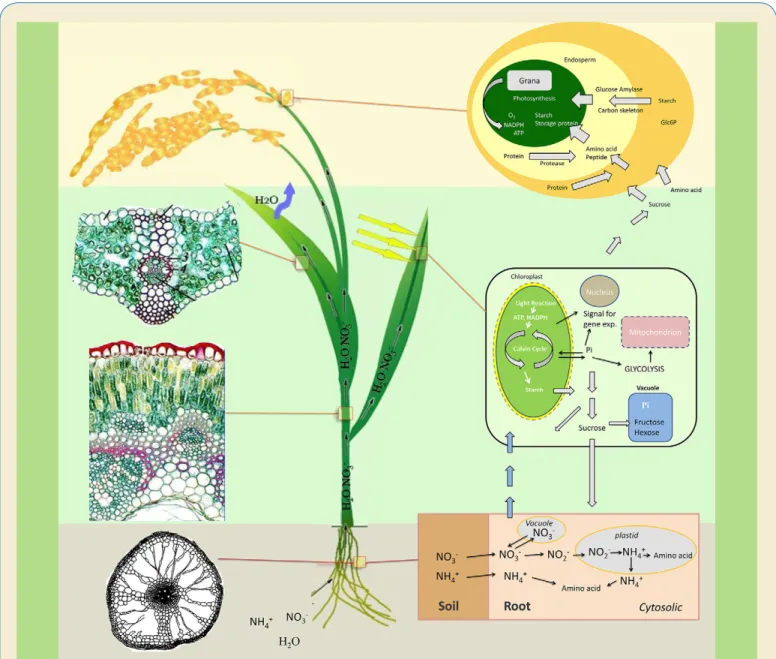
The use of empirical representations of vegetation in land surface and watershed models and the optimization of crops and crop systems have not taken full advantage of significant advances in the mechanistic understanding of plant func tion, growth, and form. Among the improved mechanistic models that have been developed (see Fig. 3. Components of a Mechanistic Rice Production Model, p. 6) are models for the complete photosynthetic process from biochemistry (Zhu et al. 2013; Wang, Long, and Zhu 2014) to the plant canopy (Song, Zhang, and Zhu 2013), growth regulator fluxes in development (Steinacher, Leyser, and Clayton 2012; Bennett, Hines, and Leyser 2014), shoot patterning (Domagalska and Leyser 2011), flowering (Song et al. 2012), root structural and functional dynamics (Lynch et al. 1997; Lynch 2013; Dyson et al. 2014), and linkage to gene regulatory networks (Hill et al. 2013; Chew et al. 2014). Emerging efforts to develop mechanistic models, largely confined to single laboratories or consortia, often rely on heritage code. Research thus is dispersed and often dupli cated. The resulting disparity in algorithms and software design modalities and software development practices creates formidable barriers to integration. Moreover, mechanistic models of plant function at molecular and cellular scales have not been successfully integrated at the wholeorganism scale, much less at the level of plant interaction with microbes and the rhizosphere. The challenge, then, is to effectively integrate
the rapidly developing mechanistic models at distinct scales into a virtual plant model that can be linked with models of abiotic and biotic environments. Not only will this integration provide a much stronger plant component to bioenergy crop and natural ecosystems, but also will allow the application of optimization algorithms to identify more resource efficient ideotypes to guide breeding of emerging sustainable bioen ergy crops (e.g., Drewry, Kumar, and Long 2014).
2.2 Biogeochemical Cycling
Soils and subsoils are the largest repository of organic carbon in the terrestrial environment, with the top three meters estimated to contain about 2,344 Pg of carbon, more than the atmosphere and plants combined (Jobbágy and Jackson 2000). Subsoils, although they contain lower concentrations than surface soils, nevertheless also
Fig. 3. Components of a Mechanistic Rice Production Model. Components include the (1) biochemistry and biophysics
of photosynthesis and closely related carbon, water, and nitrogen metabolism at the leaf level; (2) microclimates inside the canopy; (3) use of photosynthate and nutrients in organ (including leaf, stem, root, and grain) development; and (4) root uptake of nutrients and water from soil. The complex interactions among processes of plants, soil and its resident microbial communities, and the surrounding atmosphere indicate the need for a new modeling framework at this critical interface. [Image courtesy Xinguang Zhu, Shanghai Institute of Biological Sciences. Adapted from Zhuet al. 2011]
2. Motivation and Grand Challenges
comprise a significant pool of organic carbon. Changes in the water cycle and climate will significantly impact existing soil and subsoil pools, carbon dynamics, and carbon and elemental cycling, but an open and pressing question remains as to the nature of that influence as a function of ecosystem type. In turn, how will those changes affect ecosystem and crop system function and productivity, water distribution and fluxes, and green house gas fluxes to the atmosphere?
An overarching challenge is predicting carbon cycle responses to changing climate and the role of belowground processes in modulating climate change impacts on ecosystems and bioenergy crop systems. Underlying this challenge are several critical scientific questions:
• How will soil carbon stores and carbon fluxes between soils and the atmosphere and surface waterbodies change in a changing climate?
• How do soil and rhizosphere processes, including microbial processes, influence plant function, produc tivity, and dynamics, and will those controls change in a changing climate?
• How will landuse changes, longterm climate trends, and changes in frequency, duration, and magnitude of extreme climate events affect nutrient export from watersheds?
• How do microbial community dynamics change as a result of climate stresses and watershedwide biogeo chemical cycling, and to what extent can metagenomics and functional response models (e.g., soil community, litter community, and rootassociated community) be used to improve the representations of these dynamics?
• How do macropores and associated preferential flow created by the effects of roots, bioturbation, freeze and thaw cycles, swelling and shrinking clays, and other mechanical processes affect carbon and nutrient transport? Subsurface flow and reactive transport models have devel oped to a fairly high level of sophistication, particularly at pore, laboratory, and local field scales, but the ability to connect process understanding across these scales and to larger scales (watershed to regional and global scales) remains a significant gap (Scheibe et al. 2015; see Fig. 4. Sophisticated Reactive Transport Models at Local Field Scales, this page ). Broadly stated, the critical technical challenges are associated with how best to measure and model the ecosystem scale manifestations of complex coupled processes controlled by highly heterogeneous local environmental conditions: (1) analysis of the degree of complexity and parsimony needed for robust, predictive understanding; (2) develop ment of specific algorithms for upscaling or coupling nested
Fig. 4. Sophisticated Reactive Transport Models at Local Field Scales. (a) An unstructured grid used in simulations of
groundwater flow and reactive transport at the F-Area Seepage Basins at the Department of Energy’s (DOE) Savannah River site (Aiken, South Carolina) is shown. Unstructured grids efficiently capture topography and stratigraphy, as well as site features such as the engineered flow barriers present here, using local refinement as needed. [Image courtesy Terry A. Miller, Los Alamos National Laboratory] (b) Distribution of reactive facies in a section of the DOE Rifle (Colorado) Field Study site’s alluvial floodplain aquifer is used to simulate uranium migration during a biostimulation experiment. [Image reprinted by permission of Elsevier: Yabusaki et al. 2011. “Variably Saturated Flow and Multicomponent Biogeochemical Reactive Transport Modeling of a Uranium Bioremediation Field Experiment,” Journal of Contaminant Hydrology 126(3–4), 271–90]
model scales; and (3) assimilation of diverse data and valida tion against observations across a range of scales.
Moreover, while continuum subsurface flow and reac tive transport models have reached a new level of maturity (Steefel et al. 2014), the incorporation of realistic descrip tions of microbiological communities and their function into these models is still only in its first stages (Bouskill et al. 2013). Treatments of the role of microbes in mediating subsurface reaction rates typically have assumed steadystate conditions, or microbial communities were represented simply as noncompeting communities that grew according to a fixed growth yield. The dynamic treatment of micro bial community composition and function, including the partitioning between catabolic (energy) and anabolic (i.e., biomass growth or enzyme synthesis) pathways, leads to complex biogeochemical reaction networks, in which elec tron acceptors, donors, and the microbial community itself need to be considered as evolving quantities. The challenge now is to incorporate the diversity of microbial communities known to exist in the subsurface and to relate community composition to function (reaction rates) by developing physi ological models tied to environmental conditions (see Fig. 5. Schematic Showing Coupling Between Local Geochemical Environment and Microbial Physiology Responsible for Determining Community Assemblage, this page).
In addition to the need to include more sophisticated treatments of the interactions and couplings between a microbial community’s composition and function and its geochemistry, a number of computational issues crosscut these process modeling challenges. Model testing and vali dation require developing linkages to experimental systems and existing databases to establish community benchmark problems. Quantification of model uncertainty and of how uncertainties propagate across scales is fundamental to developing the mechanistic underpinning for predictive models and requires significant attention. Efficient and reliable simulation of such complex systems requires the development of tools for automated hierarchical and unit testing, specification of interfaces among components (and associated data models), data management and provenance capture, model setup and execution, and analysis and visual ization of complex model outputs.
2.3 Watershed Hydrology
and Ecosystem Dynamics
Watersheds and their associated ecosystems provide a variety of critical climate regulating and hydrological services, including carbon biosequestration, regulation of surface energy balances, supply of water for household
use and energy production, mitigation of extreme precipitation events, and water quality protection. The hydrological behavior of a particular watershed depends not only on the physical features of topog raphy and subsurface permeability, which require appropriate representation and spatial resolution in models (Wood et al. 2011; Kollet and Maxwell 2008), but also on the nature and state of the associ ated ecosystem. For example, plant root uptake and the resulting transpiration are dominant components of the water cycle in many watershed ecosystems (Brutsaert 1988; Voepel et al. 2011). Terrestrial ecosystem composition, health, and climate regulation function depend, in turn, on available water. The water cycle and ecosystem function thus are tightly coupled and must be considered as an integrated, multiscale system for better
Fig. 5. Schematic Showing Coupling Between Local Geochemical Environment and Microbial Physiology Responsible for Determining Community Assemblage. The coupled nature of microbial processes
and the local biogeochemistry suggests the need for a coupled modeling approach. [Image courtesy Nicholas Bouskill, Lawrence Berkeley National Laboratory. Adapted from Mick Follows, darwinproject.mit.edu/]
2. Motivation and Grand Challenges
understanding of the terrestrial carbon cycle and impact of human activity and climate change on watershed services. Using current watershed models, the scientific community’s ability to project watershed response under novel climate conditions is limited because many important processes associated with plantsoil hydrological interactions are repre sented with highly parameterized (reduced complexity) models at the watershed scale (e.g., Jarvis 1989). Although parameterized representations of coupled plantsoil
hydrology can be calibrated reliably in current climate condi tions, the lack of a strong mechanistic foundation brings into question their predictive capability in future climate conditions that lack a presentday analog (“no analog future;” Williams and Jackson 2007). More generally, calibrated models may not provide accurate predictions of system response under any conditions that differ from those to which the model was calibrated (e.g., modified landuse and crop patterns, changes in groundwater pumping rates, or river flow regulation patterns). The enormous complexity and ubiquitous multiscale heterogeneity of natural systems likely will limit the degree of mechanistic detail that can be realisti cally accommodated in watershedscale models, making cali bration of effective parameters necessary. However, increased mechanistic detail in the process representations may still result in a more robust, predictive capability by guiding selec tion of model structure and otherwise providing insights to constrain calibrated watershedscale models.
One limitation of reduced complexity models calibrated in current climates is that they may not adequately represent plant transpiration in future drought conditions when flow from dry soil to the plant roots becomes the ratelimiting process. A second concern is that models based on calibrated empirical parameters implicitly presume that ecosystem composition is static. Without a more mechanistic represen tation, changes in ecosystem composition caused by changing climate will be difficult to include in projections of watershed response. A third limitation is that the current generation of models has limited capability to address geochemical cycling at the watershed scale. Improved models of geochemical transport and reaction at the watershed scale, including interaction between surface and subsurface, are needed to better understand how ecosystem function and productivity and greenhouse gas fluxes to the atmosphere will change in a changing climate. Such improvements also are needed to better understand nutrient export from watersheds and the resulting eutrophication of downstream surface waterbodies.
Finally, watershed models generally lack the capability to represent surface water temperatures, an important parameter both for its control of geochemical cycling and energy balance and for its impact on downstream energy production.
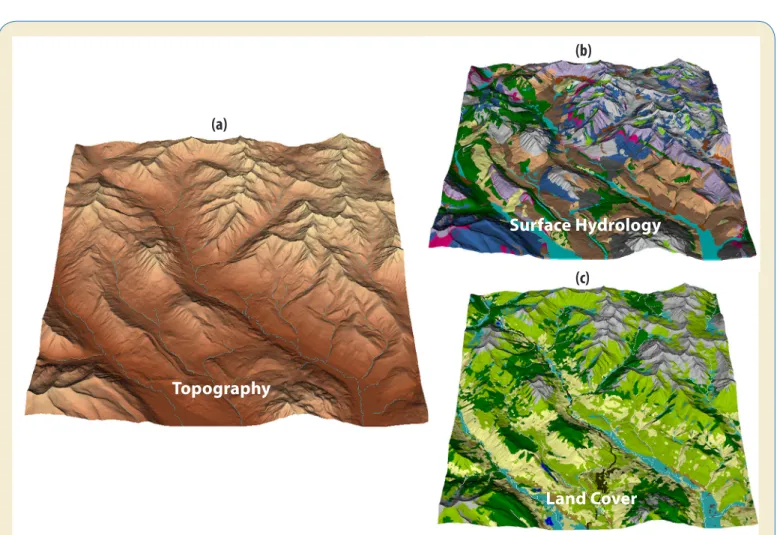
Consequently, highresolution watershedscale models with improved representations of the integrated vegetation hydrologicalgeochemical systems are needed to meet the Office of Biological and Environmental Research goal of a robust, predictive capability for terrestrial systems. Very highresolution models have been identified as key to research needs in the global landsurface modeling context (Wood et al. 2011), and similar research needs exist for individual watersheds. Such a capability must go beyond the threedimensional, variably saturated subsurface flow models coupled to surface flow based on highresolution digital elevation maps (see Fig. 6. HighResolution Digital Elevation Maps, p. 10] to include nutrient transport and associated biogeochemical reactions, thermal processes, and more robust mechanistic models of plant interaction with the environment, vegetation dynamics, and vegetation diversity. Because terrestrial plant productivity is almost universally limited by edaphic constraints—including suboptimal availability of water and nutrients, soil acidity, alkalinity, and physical barriers to root growth—better representation of the plantsoil interface is a key consid eration. This system is intrinsically multiscale because the natural scales for representing plantsoil interactions are much smaller than a typical grid cell in a wholewatershed model. This system also is intrinsically multiphysics involving many coupled processes of varying complexity. Important to note is that the level of complexity in this multiscale, multiphysics challenge is unprecedented in terrestrial systems modeling, which typically has coupled a small number of process models in predefined coupling modes. The central challenges are to (1) develop tractable, watershedscale representations or simulation approaches for smallerscale processes such as plant growth and func tion and mass transfer between soil and roots, including hydraulic redistribution and nutrient uptake, and (2) effec tively manage the unprecedented level of model complexity associated with coupled highfidelity models of hydrology, biogeochemical cycling, vegetationsoil interactions, and ecosystem dynamics.
(a)
Topography
Fig. 6. High-Resolution Digital Elevation Maps. Shown at similar resolution, a typical analysis might begin with (a)
high-resolution topography from the East River Catchment, Gunnison County, Colorado, which is used to develop coupled surface-subsurface hydrological flow models. These flow models then are expanded by incorporating (b) surface hydrology (rock type) and (c) land cover (vegetation) distributions, which then interact with the atmosphere. [Images courtesy Christine Pribulick and Reed Maxwell, Colorado School of Mines]
Surface Hydrology
Land Cover
(b) (c)Land Cover
Surface Hydrology
3. Research Opportunities
A
dvances in processlevel understanding acrossmultiple disciplines, software design, and computing hardware performance create the opportunity for a transformative multiscale, multiphysics simulation framework. Using highresolution, highfidelity representations of plants and plantsoil interactions at the small scale, the framework would inform watershedscale representations of hydrology, ecosystem dynamics, and carbon and nutrient cycling. Researchers envision that these models will be informed at all scales by plant genomics and microbiome genomics (see sidebars, Virtual PlantSoil Framework, p. 12, and Microbial Genomic and Metagenomic Information, p. 13).
Three characteristic spatial scales are envisioned for the simulation framework. At the smallest scales, a framework that couples a representation of an entire plant including roots with highresolution representations of processes in the surrounding soil could be used to study plant interac tions with the rhizosphere and surrounding soil (virtual plant). The next level of complexity would include multiple virtual plants in virtual soil to better understand interactions among plants (virtual plot). Finally, results of the virtual plant and virtual plot models would inform nextgeneration watershed models (virtual watershed).
Cutting across the three spatial scales are two science issues: (1) incorporating microbiome genomic information into reactive transport models to better represent soil microbial controls on carbon and nutrient cycling and (2) transferring information across scales. Discussions of these two issues are integrated into the three scalefocused subsections that follow. Two crosscutting technical issues—software design to help manage model complexity in models that combine large numbers of process representations and how to design for future computing hardware architectures—are discussed in Chapter 4, Software Infrastructure for Virtual Ecosys tems, p. 19.
3.1 Models of the Coupled Plant-Soil
System (Virtual Plant-Soil System)
Advances in plant genomics, modeling of plant growth and function, computing power, and software design create the opportunity to build a virtual representation of plant growth,development, productivity, and interactions that is consistent with current understanding of the underlying mechanisms. In other words, the opportunity exists to grow whole plants and study their interactions with the environment in silico. This
model is expected to go beyond a virtual plant representa tion to also include mechanistic representations of transport, biogeochemical, and microbial processes in the surrounding soil. The mechanistic nature of such a virtual plantsoil (VPS) system would enable integration of gene function to cellular, organismic, and ecosystem scales, thereby leveraging the Department of Energy’s efforts in plant and microbiome genomics. The higherfidelity representations enabled by a VPS framework would represent a reliable, predictive approach beyond the empirical experience base and also provide a better basis for interpreting new observations. A virtual plantsoil system framework would represent an important transformational shift in the development of mathematical models of plants and vegetation, from dispa rate and largely empirical models to an integrated commu nity of mechanistic models that interact to capture emergent properties of plant systems across a range of scales, from the genome to plant communities. As currently envisioned, the VPS system would provide a sustainable and flexibly configured framework to integrate models of key processes, providing a shared community platform to facilitate incor poration, testing, and curation of new process models, with the goal of continually improving models of the plantsoil system. No one monolithic model could capture the relevant biology across the range of spatiotemporal scales needed. Instead, this framework would be a collection of process models that are implemented as interoperable components interacting with each other as needed to resolve specific research questions. Realizing such a framework will require interoperable libraries, toolkits and frameworks, and data and software standards (see Chapter 4, p. 19); most impor tantly, such a framework needs the support of an organized community of scholars skilled in the relevant domain exper tise as well as in the coordination and curation of modern software ecosystems.
A VPS framework would have multiple applications. For example, it could be used to more reliably predict plant response to a changing climate, a capability that will help
Virtual Plant-Soil Framework: Integrating Phenotypic Data
with Genomic Predictions
A
n important aspect of the virtual plantsoil (VPS) system is the transition from largely empirical models to a group of coupled mechanistic models that capture complex system behavior across spatial and temporal scales. At the organismic level, this virtual system will provide a much needed framework for investigating gene and pathway function, as well as in silico simulations for novel root and shoot phenotypes and environmental combinations usefulfor bioenergy feedstock design under future climate scenarios. The VPS system also will enable assessment of the vast array of genetic diversity present within and among plant populations and the consequences of unique allelic combina tions on functional phenotypes. Such a strategy will provide a critical intermediate step in understanding genotype to phenotype associations by illuminating possible mechanisms.
A similar strategy, especially for dominant keystone species in more natural ecosystems, may become possible as DNA sequencing, wholeplant physiology, phenotype trait databases, and modeling efforts continue to develop. Populus, for
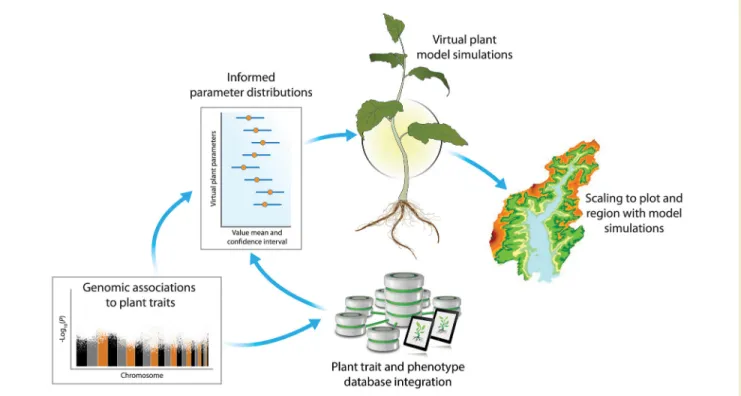
example, is a recognized bioenergy feedstock, yet it exists in vast ranges as a keystone genus and species throughout North America, contributing substantially to regional carbon and nutrient cycling. Currently, a major limitation in predicting terrestrial carbon fluxes is an inaccurate representation of plant photosynthesis and growth in land models because of the uncertainty in parameter values for these characteristics. The VPS framework (see Fig. 7. GenomeEnabled Parameterization of a Virtual Plant Model, this page) presents a unique opportunity to reduce this uncertainty by using genomic predictions for keystone species and extending these predictions to additional species using communitybased stored and measured phenotype values (e.g., Leaf Web, leafweb.ornl.gov; TRY, www.trydb.org). The scaling of nutrient and carbon fluxes from organismic to plot and regional levels remains a critical challenge. However, the use of sophis ticated sequencing data to assess genetic variation—and the predicted consequences of that variation on functional phenotypes—through the VPS system modeling framework holds great potential.
Fig. 7. Genome-Enabled Parameterization of a Virtual Plant Model. Schematic showing the use of phenotyping, trait
data-bases, and genomic predictions for constraining virtual plant model parameter values and simulations. [Image courtesy Oak Ridge National Laboratory]
3. Research Opportunities
Microbial Genomic and Metagenomic Information
A
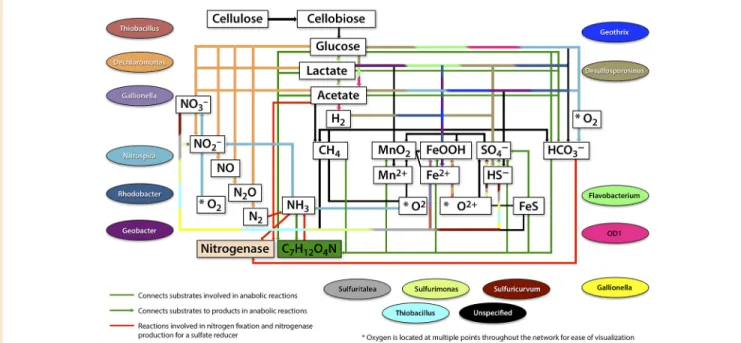
n important opportunity is associated with the representation of microbial community composition and function in the plantsoil system. Plants exert a strong selection on the growth and activity of soil microorganisms through factors such as rhizodeposition and litter composition. In turn, microorganisms play a key role in the mobilization or fixation of nutrients that regulate plant productivity and species distributions and also are key regulators of the fate of carbon in soils. This intrinsic linkage of these two system components in nature should be reflected in their treatment in modeling frameworks. Yet significant challenges remain for model representations of this linkage. The complexity of soil microbiota is vast, and key ecosystem and biogeochemical functions are associated with microorganisms that currently are unknown to biology. However, with recent technological advances these organisms can be identified and profiled in terms of their metabolic potential, making use of genomeresolved metagenomics combined with functional informa tion. The microbial genome properties can inform key model parameters such as growth rate and temperature adaption; genomic information from selected sites can be catalogued to build thermodynamic biogeochemicalmicrobial reaction networks (see Fig. 8, Schematic of a Microbially Mediated Biogeochemical Reaction Network, this page). Over time, through resources such as the Department of Energy’s Systems Biology Knowledgebase (KBase), the assimilation of microbial information from multiple ecosystems could lead to generalizable distributions of microbial functional traits and their genomic linkages. This advance would enable the innovative treatment of microbial communities as fully dynamic components of the coupled plantsoil system that ultimately exert an important control on carbon and nutrient transformation; the speciation of redoxsensitive constituents; and their sequestration within, or mobilization from, soil, aquifer, or watershed systems. Complementary ecological modeling approaches can add value by characterizing ecological factors that govern microbial community composition, namely (1) selection (growth constrained by environ mental conditions), (2) dispersal (movement or transport of organisms), and (3) drift (random or stochastic growth and decline of populations). Recent work (e.g., Stegen et al. 2013) has defined new ways of distinguishing the degree of control these ecological factors have on a given community and relating them to hydrological and biogeochemical processes. Quantitative ecological analysis provides tools for mapping ecological factors based on observed measure ments and then relating them to model properties such as geological facies type.Fig. 8. Schematic of a Microbially Mediated Biogeochemical Reaction Network. The network shows a range of solid and
dissolved organic carbon compounds reacting with terminal electron-accepting components. Colored ovals refer to the microbe responsible for mediating portions of the network. [Image courtesy Eric King, Eoin Brodie, and Carl Steefel, Lawrence Berkeley National Laboratory]
improve representations of the terrestrial carbon cycle in Earth system models (ESMs). Also, it would help improve ecosystem representation in watershed models (see Section 3.2, Virtual Plot, below), therein improving the identifica tion and mitigation of potential climateinduced threats to water supply and water quality. This new capability also would be useful for interpreting remote sensing and other data streams. For example, spectroscopic remote sensing (otherwise known as “hyperspectral” remote sensing) of plants and regions has become routine, yet the connection between molecular mechanisms affecting leaf and canopy properties and spectroscopic remote sensing is poorly understood. Representation of the full photosynthetic process in plant canopies would enable prediction of spec tral changes in different environmental conditions, thus informing remote sensing of the key spectral shifts that can be expected and understood in mechanistic terms at the plant level. This framework also would be an invaluable tool in elucidating the rhizosphere, the zone of soil around roots, which is central to understanding and managing the carbon cycle in soil and nutrient transformations that determine water quality as well as ecosystem productivity.
A key opportunity for the virtual plantsoil system concept is to enable the efficient integration of models with data streams from plant sequencing, genomics, and high throughput phenotyping programs. This approach could provide a novel and powerful analytical framework for understanding gene function at the organismic scale in diverse phenotypic and environmental contexts. Indeed, one important potential application of this framework would be to improve understanding of how genetic varia tion translates to system behavior at greater scales. This application highlights the need for the underlying models to be sufficiently mechanistic to accurately capture the emergent properties of the plantsoil system.
A VPS framework could have both predictive and heuristic utility. When existing models are sufficiently robust, as is the case, for example, with canopy photosynthesis or plant hydraulics, this framework can be employed to address broader research questions and as an element of models at greater scale. In cases where the relevant biology is poorly understood, such as with plantsoil interactions, rhizosphere dynamics, or multicellular signaling networks, this framework can function as a heuristic research tool to explore poorly understood processes and guide empirical research.
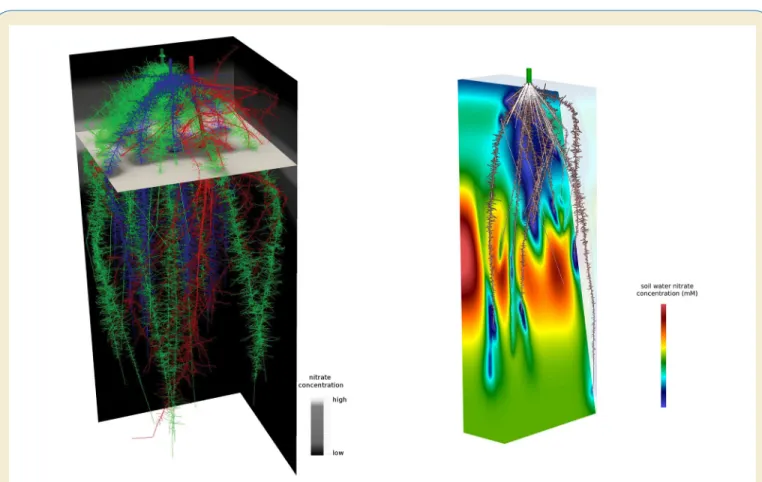
The VPS framework could be applied to biofuel crops for developing ideotypes or ideal phenotypes to guide crop breeding. Modeling is uniquely valuable in ideotype development because it permits the evaluation of numerous potential phenotypes in many different environments, including phenotypes and environments that do not yet exist in nature, such as future climate scenarios. Modeling also enables the analysis of how distinct traits and the genes that control them interact to affect crop performance at the level of plants, fields, and watersheds (see Fig. 9. Functional Structural Modeling in SimRoot, p. 15). The complexity of these systems and the large number of phenotypic permutations of interest exceed the capabilities of empirical research and, indeed, require evolutionary optimization algorithms or other approaches to accommodate very large decision spaces.
The virtual plantsoil system has the potential to be a break through discovery platform for understanding plants as hier archies of interrelated systems at multiple scales. It would be an unparalleled tool for analyzing how genetic variation affects the properties of whole plants interacting with their environment; how plant traits are integrated to form func tional phenotypes; how specific phenotypes are suited to target environments; and how processes modeled at smaller scales (e.g., soil pores) and larger scales (e.g., vegetation stands and watersheds) interact with plant function.
3.2 Virtual Plot
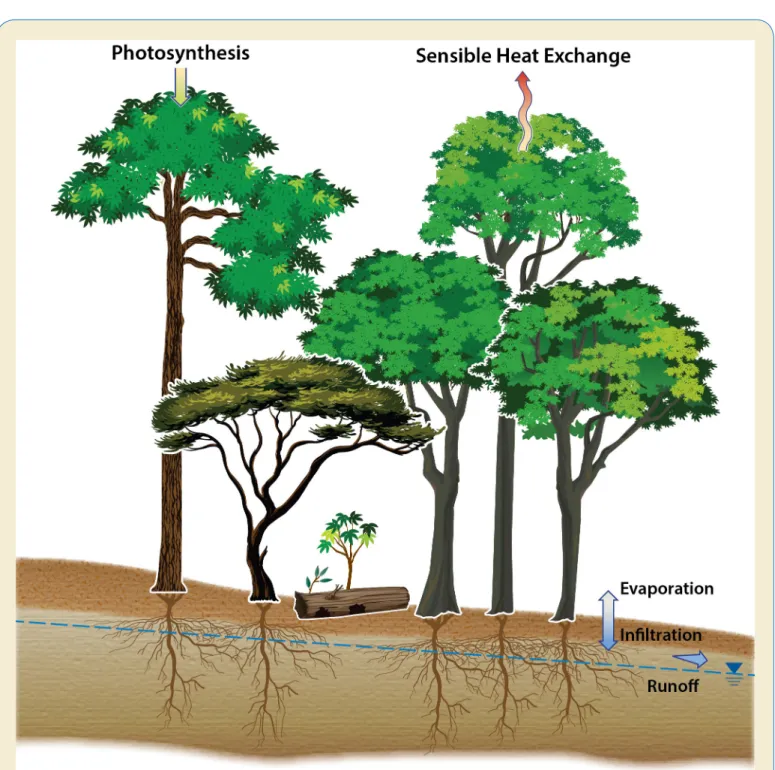
A virtual plot would extend the virtual plant concept to include assemblages of individual plants with explicitly resolved interactions between each plant and its above and belowground environments. Such a virtual plot capability would help bridge the gap between the scale of an indi vidual plant and that of a crop, hillslope, or watershed. Multiple options exist for virtual plot models depending on the intended use, spatial scale of interest, and degree of parameterization of dynamics within individual plants and microbial groups.
One option for the virtual plot concept, applicable at the low end of the scale range, would be to include multiple instances of the virtual plant model within the same soil region. This approach would be most applicable to agricultural systems such as bioenergy crops, in which there is low diversity of plant types but important variability in other system states
3. Research Opportunities
Fig. 9. Functional-Structural Modeling in SimRoot. (Left) The belowground architecture of the ancient “Three Sisters”
polyculture consisting of maize (green), bean (blue), and squash (red) competing for a leaching front of nitrate (grey, with the peak nitrate concentration shown as a plane; nitrate depletion zones are evident surrounding the roots in this plane). Results showed that this polyculture has better nitrate capture than the component monocultures because of complementary soil exploration by the contrasting root architectures of the three species. Better soil resource capture may be one reason for the success of this ancient cropping system, suggesting avenues for improving soil resource capture in modern agriculture.
(Right) A single maize root system capturing nitrate from a leaching front, showing the dynamic capabilities of this model.
[Images courtesy Johannes Postma. For more information, see Postma and Lynch 2012] such as soil moisture content or organic matter distribution.
Such a virtual plot representation could highly resolve three dimensional (3D) soil processes in a manner that couples nonisothermal flow and microbiome genomics–informed reactive transport models with multiple instances of the virtual plant. Bringing together mechanistically resolved plant dynamics based on fundamental physical and meta bolic constraints with explicitly resolved soil processes would provide an unprecedented opportunity to advance under standing of belowground interactions among individuals. Such a capability is expected to be invaluable for developing tractable representations of tradeoff surfaces associated with different physical, metabolic, and life history strategies that are grounded in wellresolved theory and observations.
Another option that would be applicable at the upper end of the virtual plotscale range (i.e., thousands of square meters and timescales associated with plant successional dynamics) would be to include more competing individuals with less detail in the process representations and without explic itly resolving spatial location (see Fig. 10. Interactions in a Virtual Plot Model, p. 16), using simple emergent principles and properties [e.g., as for water acquisition (Couvreur et al. 2014; Couvreur, Vanderborght, and Javaux 2012)]. Such an approach would represent an end member of the ecosystem demography class of models with cohorts coinciding with individuals. This envisioned model would be coupled with an appropriately parameterized representation of below ground processes and used to advance understanding of the complex ecological dynamics and interactions that occur at
Fig. 10. Interactions in a Virtual Plot Model. A virtual plant model that includes assemblages of individual plants with
explicitly resolved interactions between each plant and its above- and belowground environments would help bridge the gap between the scale of an individual plant and that of a crop, hillslope, or watershed. [Image courtesy Lawrence Berkeley National Laboratory]
the gridcell scale in a watershed model, taking into account the stochastic dynamics that arise among the individuals. The virtual plot model could be used, for example, to address a key uncertainty accompanying climate change— the degree to which changes to carbon stores in terrestrial
ecosystems will amplify or mitigate global warming. Models continue to predict large uncertainties in the magnitude of these feedback processes (Friedlingstein et al. 2006; 2014). Much of this uncertainty arises from the unknown response of plant and soil processes as ecosystems respond to shifting biome boundaries and the emergence of novel climates.
3. Research Opportunities
Current ESMs represent plant diversity via a small number of plant functional types (PFTs), defined with static traits that encompass both categorical and continuous plant prop erties, and only allow plant trait changes to occur through shifting PFT boundaries. However, plasticity of continuous traits may occur at multiple levels of ecosystem structure, from individuals to intra and interspecies compositional changes. For example, a large fraction of potential carbon losses arise as a result of tropical forests warming beyond the thermal optimum for photosynthetic uptake, and the ability of plants to acclimate to such changes is not well constrained. One possibility is that the distributions of plant and micro bial traits within a given community may shift to favor individuals whose traits and strategies are more competitive in the new environment, thus giving rise to a continuously optimizing ecosystem response to climate change. However, key uncertainties for this are (1) the degree to which such traits can and will optimize under a changing climate; (2) the predictability of such shifts given the complexity of ecological interactions, lack of understanding of the tradeoffs associated with these shifts, and multifaceted nature of global change; and (3) the timescale required for these shifts to occur (Higgins and Scheiter 2012).
A particular challenge, when expanding the range of resolved plant traits, is to understand the tradeoffs that underlie the diversity of plant communities; such tradeoffs will reflect both physical limits, such as mass conservation or fundamental metabolic rates, as well as more emergent relationships by which only certain trait combinations are competitive—and therefore occur—in a given environment. Categorical traits, such as tree versus shrub form, may be better represented by the current PFT paradigm, but, even in this case, model predictions of PFT shifts should be based on fundamental process representation rather than on the empir ical bioclimatic rules currently prescribed in global models. A virtual plot model, which is mechanistic and modular in its formulation, could be used to run millions of in silico experi
ments with varying conceptual formulations of the system structure and function and with varying parameter values to robustly assess the ecosystem response to a changing climate. Because the range of environmental conditions that can be explored in ecosystem experiments and manipulations is very limited, and all ecosystem experiments are site specific, the use of mechanistic models to support the design, interpreta tion, and extrapolation of field experiments is vital (e.g., see Fig. 2, p. 3).
3.3 Virtual Watershed
Although the challenges outlined in Section 2.3, p. 8, are significant, research addressing individual process under standing is maturing rapidly. The confluence of this enabling research with anticipated advances in computing hardware, software design, and computational algorithms presents an unprecedented opportunity for a comprehensive community watershed simulation framework. The modeling framework envisioned would be applicable from the hillslope to water shed and riverbasin scales and be driven by weather and other environmental inputs on subdiurnal timescales over periods of years to decades. The starting point for such a capability would likely be 3D, variably saturated subsurface flow models coupled to surface flow models. The modeling system would extend this 3D surfacesubsurface capability to track fluxes and storage of water, energy, carbon, and nutri ents in surface and subsurface flows. Outputs from the water shed scale would be most useful if structured to pass fluxes of each conserved quantity to larger scales as atmospheric, surface, or subsurface flows to adjacent reservoirs (including other instances of the watershed model). Such a framework would enable the evaluation of system behavior across a range of spatial and temporal contexts, including future climate and management scenarios.
As a nextgeneration capability, a key component would be the integration of dynamic vegetation models with the thermal hydrogeochemical model. This integration is neces sary to track the effects of changing climate and disturbances caused by fires, floods, insects, windthrow, and timber harvests on the hydrology, carbon, and nutrient cycles. Effective coupling between hydrogeochemical system and ecosystem representation requires attention to the plant soil interface. A tractable coupling across these two scales is achievable with a flexible software design that enables coupling with finerscale mechanistic models of individual plants, plantsoil interface, rhizosphere, and surrounding microbial environments. The framework will be most useful if it presents developers and users with options for imple menting coupling strategies that range from subgrid models informed by finescale mechanistic models to explicitly coupled, multiscale models using nested and adaptive meshes. Significant improvements in the watershedscale represen tation of the carbon and nutrient cycles should be achiev able by placing reactive transport models in a multiscale framework capable of more accurately representing fluxes
at the larger scales, taking into consideration smallerscale heterogeneity of natural surface and subsurface materials. Three general approaches are suggested to achieve high fidelity upscaling of reactive transport processes: (1) high resolution deterministic modeling that captures gradients of small to largescale features directly, perhaps with the use of adaptive mesh refinement methods; (2) stochastic approaches based on multiple runs at finer scales to generate probability distribution functions for use in largerscale simulations; and (3) reducedorder methods (Pau, Zhang, and Finsterle 2013). A multiscale frame work would make comparing observations and modeling results possible at multiple scales within a single aquifer or watershed system. To test the different approaches, ideal catchments have smallerscale features that potentially could impact largerscale fluxes. A potential example is the stream meander system at the East River site in Gunnison County, Colorado, where hyporheic zone flow through organic carbon–rich sediments over the meter scale may
have a large impact on integrated carbon cycling in the river system (see Fig. 11. Meandering Stream in East River Catchment, Gunnison County, Colorado, this page). A multiphysics, multiscale watershed model that includes a more mechanistic representation of the associated ecosystem likely will require a combination of directly measurable input (i.e., highresolution topography and weather) and data model integration techniques to infer model inputs from spatially and temporally integrated measurements (i.e., eddy covariance flux, runoff, and remotesensing products). Coor dinated and colocated observations of weather, biophysical, geochemical, soil, and subsurface processes clearly are needed, as are proven and welldocumented procedures to perform the modeldata integration. Significant opportunities exist for leveraging multiple experimental and sensor research efforts [e.g., National Science Foundation’s National Ecological Observatory Network and Critical Zone Observatories] and coordinated geospatial and temporal “Big Data” efforts from
multiple agencies (i.e., satellites, lidar, and reanalysis). Moreover, the modeling frame work envisioned will interface with existing tools that facilitate parameter estimation.
Fig. 11. Meandering Stream in East River Catchment, Gunnison County, Colorado. One hypothesis
is that hyporheic zone flow through organic carbon–rich sediments between meanders may have a large impact on integrated carbon cycling in the river basin. This occurrence suggests the need to capture hydrological and biogeochemical gradients at the fine scale (<1 m) and then upscale these gradients to the larger kilometer-scale length of the river. Clearly a computational challenge, this process will require a new terrestrial modeling software framework. [Image courtesy Roy Kaltschmidt, Lawrence Berkeley National Laboratory]
4. Software Infrastructure for Virtual Ecosystems
4.1 Managing Complexity
in Process-Rich Applications
T
o realize the exciting potential of the virtual systems highlighted in Chapter 3 (p. 11), these systems must be able to leverage existing mechanistic and parameterized models as components of new models that target specific scientific questions. In addition, scientists must be able to add new models to this collection of compo nents as scientific understanding is advanced. This ability to select models from a collection, independent of theiroriginal simulation code, and to configure and couple them in specific ways at runtime to answer explicit questions is why this new paradigm is referred to as a software ecosystem of interoperable components. This interoperability is critical
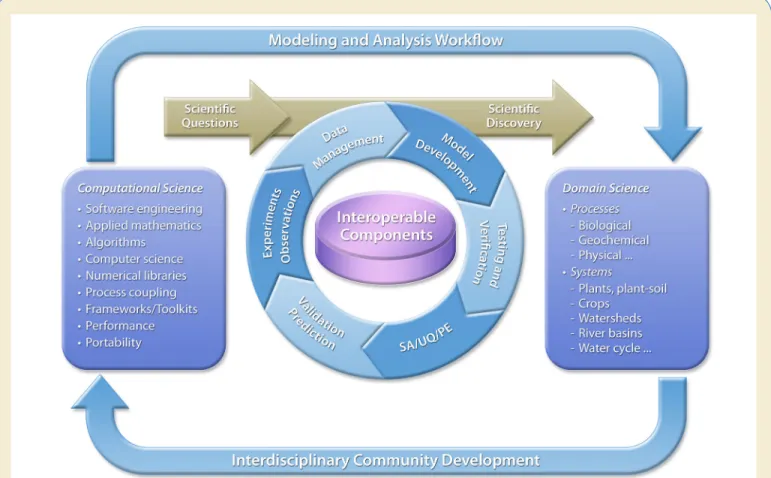
for sharing models across application teams and for teams to benefit from the advances in numerical libraries and advanced computer architectures. This software ecosystem represents a critical step in realizing the “BER virtual labora tory” (BERAC 2013) and is shown schematically in Fig. 12. Schematic Showing Integrated Software Ecosystem Needed to Realize Potential of Virtual Systems, this page.
Fig. 12. Schematic Showing Integrated Software Ecosystem Needed to Realize Potential of Virtual Systems. Here, as
envi-sioned in Chapter 3 (p. 11), productivity of the modern scientific workflow (center ring) is enhanced because the critical phases of model development, simulation, and analysis leverage expertise and capability from the interdisciplinary community. Model development leverages interoperable components generated by multiple projects and contributes new model components to this collection within a flexible framework. Similarly, significant gains in the efficiency of the analysis phase, which includes sensitivity analysis (SA), uncertainty quantification (UQ), and parameter estimation (PE) are realized through more flexible and modular designs that enable efficient collaboration between the computational science and domain science communities. [Image courtesy David Moulton, Los Alamos National Laboratory]