IJASR International Journal of Academic and Scientific Research
Volume X, Issue X
www.ijasrjournal.org
Are Parenting Interventions Effective in Improving Parental Functioning in Parents of
Children with ASD? A Meta-analysis
Alyaa Hemdi
1,2 3; David Daley
1,3,41. Division of Psychiatry & Applied Psychology, School of Medicine, University of Nottingham, UK
2. Special Education department, Institute of Educational Graduate Studies, King Abdulaziz University, Saudi Arabia. 3. Institute of Mental Health, University of Nottingham, UK
4. Theme lead for Neurodevelopmental Disorders, NIHR MindTech Healthcare Technology Cooperative, Institute of Mental Health, University of Nottingham, UK.
Abstract:
This meta-analysis (M-A) evaluated the effectiveness of parenting interventions on parental functioning in parents of children with autism spectrum disorder (ASD). Electronic searches of Pub Med, Psyc INFO, and Web of Knowledge databases identified controlled and pre to post trials evaluating the effectiveness of parenting interventions on parental functioning, Eleven studies that met the inclusion criteria were included in this M-A. A random effect M-A estimated pooled standard mean difference (SMD) for parenting interventions on measures of stress, sense of competence, parenting practices, depression and anxiety. Analyses revealed medium but significant effects of interventions on parents’ stress pre-post intervention. This effect remained medium and significant when controlled studies were analysed and also following sensitivity analyses removing non-randomised trials. Moreover, the analyses showed a large and significant effect of interventions on parental sense of competence pre-post intervention. The effect decreased to medium and significant for sense of competence when controlled studies were analysed and remained medium and significant after sensitivity analyses removing non-randomised trials.Keywords-
Autism Spectrum Disorder, ASD, Parent, Interventions, Functioning.
1.
Introduction
According to international guidelines, training should be provided for children with autism spectrum disorder (ASD) to help them meet their social, educational, and emotional demands [1]. There are many available interventions for children with ASD that cover the entire range of behavioural and developmental difficulties associated with the disorder [2]. The efficacy of these interventions in enhancing the skills of children with ASD and improving their deficiencies has been demonstrated in previous meta-analyses [3, 4]. A meta-analysis by Flippin, Reszka [5] which explored the
effectiveness of the Picture Exchange Communication System (PECS) demonstrated the positive impact of PECS intervention on the communication skills of children with ASD. However international guidelines also recommend the provision of training and support for parents of children with ASD to specifically enhance parental functioning, well-being and to provide skills to help the parents manage their children with ASD [1]. These parent-mediated interventions focusing on enhancing the children’s skills are widely available, and their efficacy has been well documented in the literature with many studies showing their effectiveness [6]. A systematic review by McConachie and Diggle [7] of studies evaluating the effectiveness of parent implemented interventions for children with ASD and their parents found a significant effect of such interventions on maternal depression. However, the review included studies in which the main aim of the interventions was to train parents as therapists to deliver skills’ based interventions (e.g., ABA techniques or TEACCH) to their children with ASD.
Meta Analysis of parenting interventions for parents of children with ASD
To date, there has been no meta-analysis, to the researchers’ knowledge, that has evaluated the effectiveness of parenting interventions on parental functioning specifically in case of parents of children with ASD. Therefore, the main aim of this meta-analysis was to quantitatively evaluate the effectiveness of parenting interventions on parental functioning.
2.
Methods
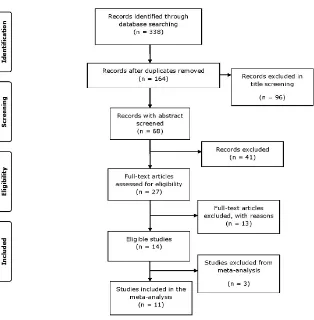
The Preferred Reporting Items for Systematic Reviews and Meta-Analyses (PRISMA) by Moher, Liberati [10] guided the planning, conduction, and report of this meta-analysis.
2.1 Study Eligibility
The study eligibility criteria have been reported in accordance with the PICOS principles for reporting systematic reviews and meta-analyses [11]; Population, Intervention, Comparison, Outcomes and Study designs.
2.1.1 Population. The population of interest was parents of children aged between 18 months
and 12 years of age (infancy to primary school age), with a confirmed diagnosis of ASD. Studies including parents of children with ASD with unusual or unique co-morbidities (e.g., children with ASD who were blind) were not included.
2.1.2 Intervention. Interventions of interest were any parental intervention that gave parents
strategies to enhance their parental functioning, whether these strategies targeted elements in the parents themselves (e.g., stress reduction techniques) or in the parents’ relationship with their children (e.g., behavioural management techniques). Studies that explored the effect of medical or
pharmaceutical interventions on parents of children with ASD were not included.
2.1.3 Comparison group. Comparison groupsof interest in the controlled studieswere those
in which parents did not receive anything except the usual care and services that other parents in the intervention groups were offered.
2.1.4 Outcomes. All outcomes related to parental functioning were considered of interest.
These included parental well-being (e.g., stress and depression), parental sense of competence (e.g., efficacy and satisfaction), and parenting practices (e.g., adaptability and laxness). Parenting practices were found in previous studies to be related to parental well-being and child behaviour problems [12, 13]. Studies of parental interventions that only reported child outcomes were not included.
2.1.5 Study designs. Studies of interest were classified into two categories: controlled studies
and pre to post studies. Studies were considered to be controlled if they were either randomised controlled or a controlled non-randomised trials. A randomised controlled trial (RCT) is where participants were randomly allocated to either an active treatment group or a controlled non-treatment group, while in a controlled trial, there is no random allocation of participants to the intervention group. A study was classified as pre to post if it contained only a treatment group assessed before and after treatment or if it compared multiple treatment groups without a control group for any of the treatments.
Only studies published in peer-reviewed journals and in English were included.
2.2 Search Methods
The following databases were searched: Pub Med, Psyc INFO, and Web of Knowledge from 1994 (publication of DSM IV where autism was lastly defined before the emergence of DSM 5 in 2013) until 1st August 2016. Search terms included: "Autism" , “ASD” , “Autism Spectrum Disorder” , “Autistic disorder” , “training” , “intervention*” , “programme*” , “parent*” , “maternal” , “function*” , “well-being” , “stress” , “depression” , “anxiety” , “sense of competence” , “efficacy” , “confidence” , “satisfaction” , “adaptability” , “cohesion”.
2.3 Data Extraction and Study Quality
The researchers independently extracted the data, and variations in data extraction were resolved through discussion. Inter-rater agreement on the coding of the variables of interest was 90.9 % and disagreements between the coders were resolved by referring back to the original study.
Meta Analysis of parenting interventions for parents of children with ASD
studies in reviews including mixed methods studies [14, 15]. The MMAT has criteria for appraising RCTs, non-randomised studies (NRS), observational studies, and qualitative studies and, therefore, was believed to be the best tool to appraise the quality of the included RCTs and NRS in this meta-analysis.
Risk of bias in the included RCTs was assessed using the criteria specified by the Cochrane Collaboration for assessing risk of bias in RCTs [16]. On the other hand, risk of bias in the included NRS was assessed using the criteria specified by the Cochrane Collaboration tool (ACROBAT) for assessing risk of bias in NRS [17].
2.4 Process for Meta-Analysis
Outcomes were analysed in two sub-groups: 1) pre-post intervention in all the included studies; 2) intervention vs. inactive control in controlled studies only. For controlled studies, a sensitivity analysis was conducted which removed the non-randomised studies. If a controlled trial contained more than one active intervention arm then the data from the arm in which parents were more actively involved in an intervention was inputted into analysis. Analyses were run for an outcome as long it had been measured by an appropriate measuring scale, in at least three included studies.Post and pre intervention means and standard deviations (SDs) data from relevant outcome measures were extracted for pre to post studies, and post and pre intervention means and SDs for both intervention and control arms in controlled studies, were all inputted into the RevMan software where effect sizes were calculated [18]. Random Effects Models (RAM) as recommended by Field and Gillett [19] with 95% confidence intervals (CI) were applied throughout the analysis. The I2 statistic was calculated to explore heterogeneity and is expressed as a percentage indicating its degree; 25% indicates low heterogeneity, 50% suggests moderate and 75% is a threshold marker for high heterogeneity [20]. The Q statistic was also calculated and provided the statistical significance of heterogeneity. RevMan was used to calculate effect sizes in pre-post studies and to enable the calculation of confidence intervals (CIs), and calculations were checked using an online Hedges’g calculaton. Due to the small number of studies included in this analysis, it was not possible to investigate the effects of publication bias using funnel plots. It has been suggested that analyses need to include substantially more than 10 studies to begin interpreting publication bias [17, 21].
3.
Results
Meta Analysis of parenting interventions for parents of children with ASD
Figure 1. Flowchart of studies for meta-analysis
3.1 Participants
Sample sizes ranged between 11 [30] and 105 [27], with a total of 576 participants. The mean age of participants’ children with ASD ranged from mean=22.5 months (SD=13.4) [22] to mean=8.3 years [25]. Most studies included both parents even though the majority of participants were mothers, except [23] which included only mothers.
3.2 Intervention
Some interventions included psychoeducation [25, 27, 30, 32, 33]; others helped parents by enhancing their understanding of ASD and communications skills with their children [22, 24, 34, 35]; and some provided behavioural strategies and training of The Stepping Stones Triple P (SSTP) [26, 28]. Only few interventions were held at the participants’ homes [22, 24, 29], while the majority were held at universities or in community settings. The length of interventions ranged from six [25] to 12 weeks [22] with the duration of interventions lasting from 15 [26] to 120 minutes [24, 30, 31].
3.3 Outcome Measures
Meta Analysis of parenting interventions for parents of children with ASD
Health Questionnaire (GHQ) by Goldberg and Williams [39]; and by using DASS-21 in [26]. Sense of competence was measured using [40] Parenting Sense of Competence Scale in [24, 28]; Parent Self-Efficacy Questionnaire by [41] in [31]; the Parenting Tasks Checklist by Sanders and Woolley [42] in [26]; the Confidence degree questions for families (CDQ) by Okuno, Nagai [43] in [30]; and the using Parental self-efficacy in the management of Asperger Syndrome questionnaire created by the authors of the article for the purpose of the study [25]. Parenting practices were measured using The Parenting Scale by Arnold, O'Leary [44] in [26, 28]; and the Family Adaptability and Cohesion Evaluation Scales II (FACES II) by Olson [45] in [29]. In Tellegen and Sanders [26] where stress was measured using two scales in the same study, DASS-21 score was included in this analysis as the measure has good psychometric properties and is widely used in the literature to measure stress.
3.4 Effect of Intervention
3.4.1 Stress. Eight studies (five controlled and three post studies) were analysed based on a
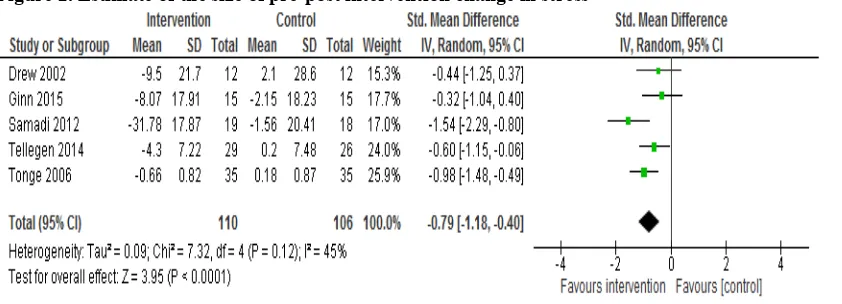
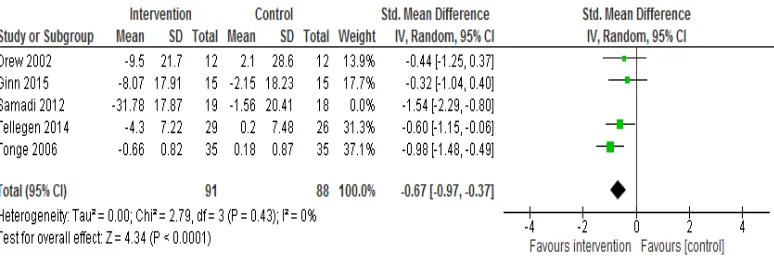
pre-post effect of intervention . The analysis revealed a medium and significant effect of parenting interventions on parents’ reports of stress (SMD= -0.60, 95% CI=[ -0.92- -0.28], z = 3.67, p< 0.001) (Figure ). However, a significant amount of heterogeneity amongst the studies was also found (X2 [7] = 16.42, p= 0.02, I2 = 57%). Five controlled studies were analysed based on a controlled effect of intervention including 216 participants. The analysis revealed a medium and significant effect of parenting interventions on parent report of stress (SMD= -0.79, 95% CI=[ -1.18- -0.40], z = 3.95, p< 0.001) (Figure ). No significant amount of heterogeneity was found amongst the studies (X2 [4] = 7.32, p= 0.12, I2 = 45%). A sensitivity analysis that excluded controlled but non-randomised studies revealed a reduced yet still medium and significant effect of parenting interventions on parent report of stress SMD= -0.67, 95% CI=[ -0.97- -0.37], z = 4.34, p< 0.001). Removal of studies
[image:5.595.74.495.526.678.2]involving non-randomised interventions reduced heterogeneity (X2 [3] = 2.79, p= 0.43, I2 = 0%) (Figure ).
Figure 2. Estimate of the size of pre-post intervention change in stress
Meta Analysis of parenting interventions for parents of children with ASD
Figure 4. Forest plot showing estimate of the size of change in stress in randomised interventions only
3.4.2 Sense of competence. Six studies (four controlled and two pre-post studies) were analysed based
on a pre-post effect of intervention including 162 participants. The analysis revealed a large and significant effect of parenting interventions on parent sense of competence (SMD= 0.83, 95% CI =[0.50 – 1.16], z = 4.88, p< 0.001) (Figure ). No significant amount of heterogeneity was found amongst the studies (X2 [7] = 10.04, p= 0.07, I2 = 50%). Four controlled studies were analysed based on a controlled effect of intervention on sense of competence including 218 participants. The analysis revealed a medium and significant effect of parenting interventions on sense of competence (SMD= -0.54, 95% CI=[ -0.85 - -0.23], z = 3.42, p< 0.001) (Figure ). No significant amount of heterogeneity was found amongst the studies (X2 [3] = 3.82, p= 0.28, I2 = 21%). A sensitivity analysis that excluded controlled but non-randomised studies revealed a reduction in the effect size from medium to small yet still significant (SMD= -0.48, 95% CI =[-0.88 -0.08], z = 2.36, p=0.02) (Figure ). Removal of studies involving non-randomised interventions slightly reduced heterogeneity but not to a significant level (X2 [2] = 3.25, p= 0.20, I2 = 38%).
Figure 5. Estimate of the size of pre-post intervention change in sense of competence
Meta Analysis of parenting interventions for parents of children with ASD
Figure 7. Forest plot showing estimate of the size of change in sense of competence in randomised interventions only
3.4.3 Parenting practices. Three studies (two controlled and one pre-post study) were analysed based
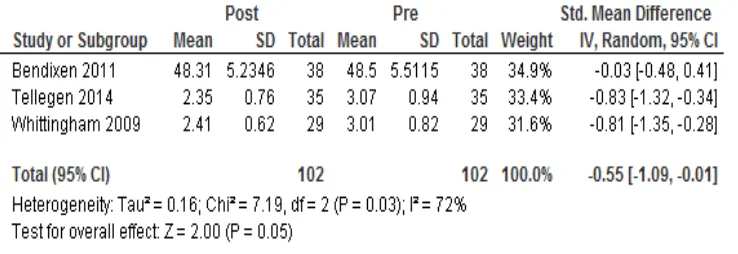
on a pre-post effect of intervention including 102 participants. The analysis revealed a medium and significant effect of parenting interventions on parenting practices (SMD= -0.55, 95% CI = [-1.09 – -0.01], z = 2.00, p=0.05) (Figure ). However, a significant amount of heterogeneity was found amongst the studies (X2 [2] = 7.19, p= 0.03, I2 = 72%). No analysis was performed for parenting practices on controlled studies as only two studies were available.
Figure 8. Estimate of the size of pre-post intervention change in parenting practices
3.4.4 Depression. Three studies (controlled) were analysed based on a pre-post effect of intervention
[image:7.595.74.443.323.450.2]Meta Analysis of parenting interventions for parents of children with ASD
[image:8.595.76.447.409.514.2]Figure 9. Estimate of the size of pre-post intervention change in depression
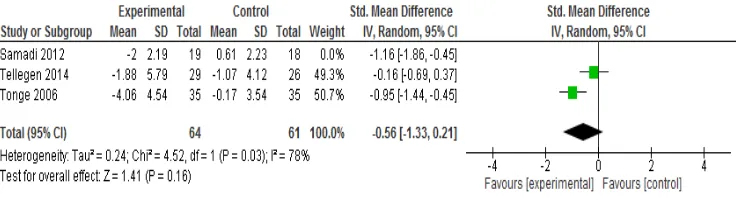
Figure 10. Forest plot showing estimate of the size of controlled intervention change in depression
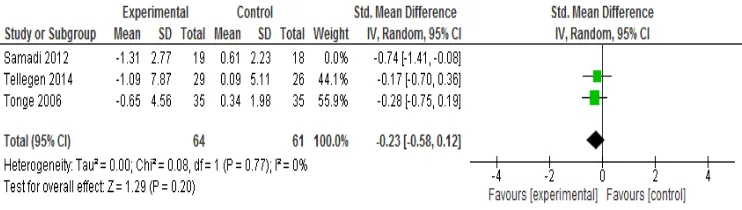
Figure 1. Forest plot showing estimate of the size of change in depression in randomised interventions only
3.4.5 Anxiety. Three studies (controlled) were analysed based on a pre-post effect of intervention
Meta Analysis of parenting interventions for parents of children with ASD
Figure 2. Estimate of the size of pre-post intervention change in anxiety
Figure 3. Forest plot showing estimate of the size of controlled intervention change in anxiety
Figure 4. Forest plot showing estimate of the size of change in anxiety in randomised interventions only
3.5 Methodological Quality and Risk of bias
[image:9.595.78.446.406.506.2]Meta Analysis of parenting interventions for parents of children with ASD
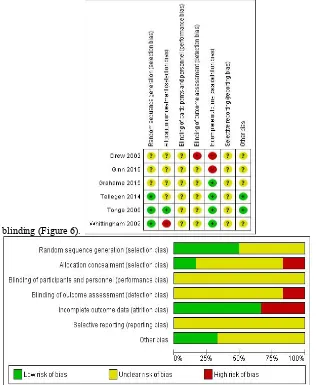
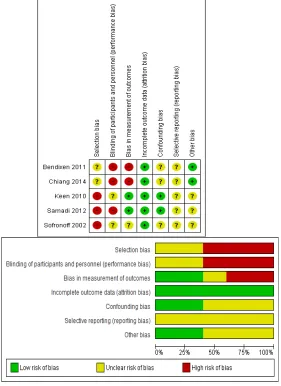
the majority of NRS were unclear with the highest risk of bias being due to selection of participants and lack of
[image:10.595.70.393.85.470.2]blinding (Figure 6).
Meta Analysis of parenting interventions for parents of children with ASD
Figure 6. Risk of bias for NRS
4.
Discussion
Given the potential of parenting interventions to enhance parental functioning, this meta-analysis aimed to establish the efficacy of parenting interventions for parents of children with ASD. Analyses revealed medium but significant effects of interventions on parents’ stress pre-post intervention. This effect remained medium and significant when controlled studies were analysed and also following sensitivity analyses removing
non-randomised trials. Moreover, the analyses showed a large and significant effect of interventions on parental sense of competence pre-post intervention. The effect decreased to medium and significant for sense of competence when controlled studies were analysed and remained medium and significant after sensitivity analyses removing non-randomised trials.
The findings of this meta-analysis are in line with and extend the findings of a meta-analysis by Barlow, Coren [47] which found a significant effect of parenting interventions on parental stress, depression, and anxiety in parents of TDC. The findings in this analysis that stress was significantly reduced post
interventions in parents of children with ASD contradicts the results of Oono, Honey [48] who did not report a significant reduction in parental stress following their intervention for parents of children with ASD. However, this could be due to the fact that Oono, Honey [48] intervention was child–focused and not parent-focused intervention and the involvement of parents was mainly to enhance children’s acquisition of skills. In addition, Oono, Honey [48] analysis of parental stress included only two studies in which study selection bias may have influenced the results. The finding that parents’ sense of competence was significantly enhanced post
Meta Analysis of parenting interventions for parents of children with ASD
The challenges of trying to enhance child language competence and the slow rate of improvement may help to explain why small intervention improvements in child language skills in Estes, Vismara [50] were not accompanied by enhancements in parental sense of competence. McConachie and Diggle [7] found in their systematic review that the quality of parental interactions was significantly increased post interventions in parents of children with ASD; a finding that is in line with the results of Koegel, Bimbela [51] as well as this study which found significant positive effects of interventions on parental practices in parents of children with ASD. The small but significant effect of interventions on depression found in this analysis concurs with Singer et al meta-analysis which also found small but significant effects of intervention on parental depression. This finding was also found to agree with results of McConachie and Diggle [7] review and Bristol, Gallagher [52] which found significant effect of interventions on parental depression in parents of children with ASD. This study displayed a significant effect of interventions on anxiety, which was also found in Barlow, Powell [53] who found a significant positive effect of parenting intervention on parents’ anxiety in parents of children with disabilities including ASD. The lack of a significant effect on depression and anxiety after the removal of the non-randomised study could be possibly attributed to study characteristics as only two RCTS were included in that analysis, or it may be related to study design. However, the current analysis is not able to extrapolate further. The small decrease in effect sizes in sense of competence, depression and anxiety between pre-post and controlled analyses could be due to the fact that pre-post effect sizes may be inflated by events that controlled studies are able to eliminate.
.
4.1 Limitations
The findings should be considered in light of some considerations. First, all outcomes are based on responses from the most proximal informants (parents) where it was not possible to control for the efforts involved in participation in the intervention and its impact on parental perceptions. [25-27, 31] included follow-up assessment of outcomes and therefore due to insufficient data, only post-intervention outcomes were analysed and it is unclear to what extent treatment effects were maintained. There were only few studies to investigate in this analysis which highlights the lack of literature in the area. In addition, it was not possible to examine different modes of delivery (e.g., group vs. individual training). It was also not possible to explore implementation fidelity of the interventions, as insufficient information about fidelity was provided in case of most studies. Finally, the inclusion of NRS increased the risk of bias in this meta-analysis, but the knowledge gained provides a valuable insight into existing interventions and parental outcomes, which warrants their inclusion. It was argued that evidence from observational studies as well as from RCTs would complement each other specifically in well conducted observational studies, which is extremely important in a developing research field with a large number of uncontrolled studies and relatively few RCTs [54, 55].
5.
Conclusion
This meta-analysis has displayed that parenting interventions are somehow effective in enhancing parental functioning in parents of children with ASD. It was evident from the significant changes in the effect sizes pre to post interventions that these interventions are helpful in enhancing parental well-being and sense of competence. Future research needs to explore trials with larger sample sizes and consider evaluating the differing modes of delivering parenting interventions and how can they affect outcomes.
References
Meta Analysis of parenting interventions for parents of children with ASD
2. Lovaas, O.I., Behavioral treatment and normal educational and intellectual functioning in young autistic children. Journal of Consulting and Clinical Psychology, 1987. 55(1): p. 3-9.
3. Kokina, A. and L. Kern, Social Story™ Interventions for Students with Autism Spectrum Disorders: A Meta-Analysis. Journal of Autism and Developmental Disorders, 2010. 40(7): p. 812-826.
4. Virues-Ortega, J., F.M. Julio, and R. Pastor-Barriuso, The TEACCH program for children and adults with autism: A meta-analysis of intervention studies. Clinical Psychology Review, 2013. 33(8): p. 940-953.
5. Flippin, M., S. Reszka, and L.R. Watson, Effectiveness of the Picture Exchange Communication System (PECS) on communication and speech for children with autism spectrum disorders: a meta-analysis. American Journal of Speech - Language Pathology (Online), 2010. 19(2): p. 178-195.
6. Bibby, P., et al., Progress and outcomes for children with autism receiving parent-managed intensive interventions. Research in developmental disabilities, 2002. 23(1): p. 81-104.
7. McConachie, H. and T. Diggle, Parent implemented early intervention for young children with autism spectrum disorder: a systematic review. Journal of Evaluation in Clinical Practice, 2007. 13(1): p. 120-129.
8. Pillay, M., et al., Autism Spectrum Conditions--enhancing Nurture and Development (ASCEND): an evaluation of intervention support groups for parents. Clinical child psychology and psychiatry
2011. 16(1): p. 5-20.
9. Singer, G.H.S., B.L. Ethridge, and S.I. Aldana, Primary and secondary effects of parenting and stress management interventions for parents of children with developmental disabilities: A meta-analysis. Mental Retardation and Developmental Disabilities Research Reviews, 2007. 13(4): p. 357-369. 10. Moher, D., et al., Preferred Reporting Items for Systematic Reviews and Meta-Analyses: The PRISMA
Statement. PLoS Med, 2009. 6(7): p. e1000097.
11. Petticrew, M. and H. Roberts, Systematic reviews--do they 'work' in informing decision-making around health inequalities? Health economics, policy, and law, 2008. 3(Pt 2): p. 197-211.
12. Emerson, E., Challenging Behaviour: Analysis and Intervention in People with Severe Intellectual Disabilities. 2001: Cambridge University Press.
13. Greenberg, J.S., et al., Bidirectional effects of expressed emotion and behavior problems and symptoms in adolescents and adults with autism. American Journal on Mental Retardation, 2006. 111(4): p. 229-249.
14. Pluye, P., et al. Proposal: A mixed methods appraisal tool for systematic mixed studies
reviews. [ ] 2011 [cited 2014 8th October ]; Available from: http://mixedmethodsappraisaltoolpublic.pbworks.com
15. Pace, R., et al., Testing the reliability and efficiency of the pilot Mixed Methods Appraisal Tool (MMAT) for systematic mixed studies review. International journal of nursing studies
2012. 49(1): p. 47-53.
16. Higgins, J.P., et al., The Cochrane Collaboration’s tool for assessing risk of bias in randomised trials. BMJ, 2011. 343.
17. Sterne, J., J. Higgins, and B. Reeves. A Cochrane risk of bias assessment tool: for non-randomized studies of interventions (ACROBAT-NRSI). 2011 [cited 2016; Available from:
http://www.riskofbias.info. .
18. Cochrane Collaboration, Review Manager (RevMan) (Version 5.2) 2012: Copenhagen: The Nordic Cochrane Centre
19. Field, A.P. and R. Gillett, How to do a meta-analysis. British Journal of Mathematical and Statistical Psychology, 2010. 63(3): p. 665-694.
20. Higgins, J.P., et al., Measuring inconsistency in meta-analyses. BMJ, 2003. 327(7414): p. 557-60. 21. Ioannidis, J.P.A., Interpretation of tests of heterogeneity and bias in meta-analysis. Journal of
Evaluation in Clinical Practice, 2008. 14(5): p. 951-957.
22. Drew, A., et al., A pilot randomised control trial of a parent training intervention for pre-school children with autism - Preliminary findings and methodological challenges. European Child & Adolescent Psychiatry, 2002. 11(6): p. 266-272.
23. Ginn, N.C., et al., Child-Directed Interaction Training for Young Children With Autism Spectrum Disorders: Parent and Child Outcomes. J Clin Child Adolesc Psychol, 2015: p. 1-9.
24. Keen, D., et al., The effects of a parent-focused intervention for children with a recent diagnosis of autism spectrum disorder on parenting stress and competence. Research in Autism Spectrum Disorders, 2010. 4(2): p. 229-241.
Meta Analysis of parenting interventions for parents of children with ASD
26. Tellegen, C.L. and M.R. Sanders, A Randomized Controlled Trial Evaluating a Brief Parenting Program With Children With Autism Spectrum Disorders. Journal of Consulting and Clinical Psychology, 2014. 82(6): p. 1193-1200.
27. Tonge, B., et al., Effects on parental mental health of an education and skills training program for parents of young children with autism: A randomized controlled trial. Journal of the American Academy of Child and Adolescent Psychiatry, 2006. 45(5): p. 561-569.
28. Whittingham, K., et al., Stepping Stones Triple P: An RCT of a Parenting Program with Parents of a Child Diagnosed with an Autism Spectrum Disorder. Journal of Abnormal Child Psychology, 2009.
37(4): p. 469-480.
29. Bendixen, R.M., et al., Effects of a Father-Based In-Home Intervention on Perceived Stress and Family Dynamics in Parents of Children With Autism. American Journal of Occupational Therapy, 2011.
65(6): p. 679-687.
30. Chiang, H.-M., A Parent Education Program for Parents of Chinese American Children With Autism Spectrum Disorders (ASDs) A Pilot Study. Focus on Autism and Other Developmental Disabilities, 2014. 29(2): p. 88-94.
31. Grahame, V., et al., Managing Repetitive Behaviours in Young Children with Autism Spectrum Disorder (ASD): Pilot Randomised Controlled Trial of a New Parent Group Intervention. J Autism Dev Disord, 2015.
32. Samadi, S.A., R. McConkey, and G. Kelly, Enhancing parental well-being and coping through a family-centred short course for Iranian parents of children with an autism spectrum disorder. Autism, 2013. 17(1): p. 27-43.
33. Bendixen, R.M., et al., Effects of a father-based in-home intervention on perceived stress and family dynamics in parents of children with autism. Am J Occup Ther, 2011. 65(6): p. 679-87.
34. Grahame, V., et al., Managing Repetitive Behaviours in Young Children with Autism Spectrum Disorder (ASD): Pilot Randomised Controlled Trial of a New Parent Group Intervention. Journal of autism and developmental disorders
2015.
35. Ginn, N.C., et al., Child-Directed Interaction Training for Young Children With Autism Spectrum Disorders: Parent and Child Outcomes. Journal of clinical child and adolescent psychology, 2015: p. 1-9.
36. Abidin, R.R., Parenting Stress Index: Professional Manual. 3rd ed. 1995, Odessa, FL: Psychologucal Assessment Resources.
37. Epstein, N.B., L.M. Baldwin, and D.S. Bishop, THE McMASTER FAMILY ASSESSMENT DEVICE*. Journal of Marital and Family Therapy, 1983. 9(2): p. 171-180.
38. Lovibond, P.F. and S.H. Lovibond, The structure of negative emotional states: Comparison of the Depression Anxiety Stress Scales (DASS) with the Beck Depression and Anxiety Inventories. Behaviour Research and Therapy, 1995. 33(3): p. 335-343.
39. Goldberg, D. and P. Williams, A User_s Guide to the GHQ. 1988, Berkshire, UK: NFER Nelson. 40. Johnston, C. and E.J. Mash, A Measure of Parenting Satisfaction and Efficacy. Journal of Clinical
Child Psychology, 1989. 18(2): p. 167-175.
41. Sofronoff, K. and M. Farbotko, The effectiveness of parent management training to increase self-efficacy in parents of children with Asperger syndrome. Autism, 2002. 6(3): p. 271-86.
42. Sanders, M.R. and M.L. Woolley, The relationship between maternal self-efficacy and parenting practices: implications for parent training. Child: care, health and development, 2005. 31(1): p. 65-73. 43. Okuno, H., et al., Effectiveness of modified parent training for mothers of children with Pervasive
Developmental Disorder on parental confidence and children's behavior. Brain & development, 2011.
33(2): p. 152-60.
44. Arnold, D.S., et al., The Parenting Scale: A measure of dysfunctional parenting in discipline situations. Psychological Assessment, 1993. 5(2): p. 137-144.
45. Olson, D.H., Circumplex Model VII: Validation Studies and FACES III. Family Process, 1986. 25(3): p. 337-351.
46. Karst, J.S. and A.V. Van Hecke, Parent and Family Impact of Autism Spectrum Disorders: A Review and Proposed Model for Intervention Evaluation. Clinical Child and Family Psychology Review, 2012.
15(3): p. 247-277.
47. Barlow, J., E. Coren, and S. Stewart-Brown, Meta-analysis of the effectiveness of parenting
programmes in improving maternal psychosocial health. The British Journal of General Practice, 2002.
52(476): p. 223-233.
Meta Analysis of parenting interventions for parents of children with ASD
49. Dunn, W., et al., Impact of a Contextual Intervention on Child Participation and Parent Competence Among Children With Autism Spectrum Disorders: A Pretest–Posttest Repeated-Measures Design. American Journal of Occupational Therapy, 2012. 66(5): p. 520-528.
50. Estes, A., et al., The impact of parent-delivered intervention on parents of very young children with autism. Journal of Autism and Developmental Disorders, 2014. 44(2): p. 353-365.
51. Koegel, R.L., A. Bimbela, and L. Schreibman, Collateral effects of parent training on family interactions. Journal of Autism and Developmental Disorders, 1996. 26(3): p. 347-359.
52. Bristol, M.M., J.J. Gallagher, and K.D. Holt, Maternal depressive symptoms in autism: Response to psychoeducational intervention. Rehabilitation Psychology, 1993. 38(1): p. 3-10.
53. Barlow, J., L. Powell, and M. Gilchrist, The influence of the training and support programme on the self-efficacy and psychological well-being of parents of children with disabilities: A controlled trial. Complementary Therapies in Clinical Practice, 2006. 12(1): p. 55-63.
54. Barton, S., Which clinical studies provide the best evidence? : The best RCT still trumps the best observational study. BMJ : British Medical Journal, 2000. 321(7256): p. 255-256.