Proceedings of the 2019 Conference on Empirical Methods in Natural Language Processing
2463
Language Models as Knowledge Bases?
Fabio Petroni1 Tim Rockt¨aschel1,2 Patrick Lewis1,2 Anton Bakhtin1
Yuxiang Wu1,2 Alexander H. Miller1 Sebastian Riedel1,2
1Facebook AI Research
2University College London
{fabiopetroni, rockt, plewis, yolo, yuxiangwu, ahm, sriedel}@fb.com
Abstract
Recent progress in pretraining language mod-els on large textual corpora led to a surge of improvements for downstream NLP tasks. Whilst learning linguistic knowledge, these models may also be storing relational knowl-edge present in the training data, and may be able to answer queries structured as
“fill-in-the-blank” cloze statements. Language
models have many advantages over structured knowledge bases: they require no schema en-gineering, allow practitioners to query about an open class of relations, are easy to extend to more data, and require no human supervision to train. We present an in-depth analysis of the relational knowledge already present (without fine-tuning) in a wide range of state-of-the-art pretrained language models. We find that (i) without fine-tuning, BERT contains rela-tional knowledge competitive with tradirela-tional NLP methods that have some access to ora-cle knowledge, (ii) BERT also does remark-ably well on open-domain question answer-ing against a supervised baseline, and (iii) cer-tain types of factual knowledge are learned much more readily than others by standard lan-guage model pretraining approaches. The sur-prisingly strong ability of these models to re-call factual knowledge without any fine-tuning demonstrates their potential as unsupervised open-domain QA systems. The code to
re-produce our analysis is available at https:
//github.com/facebookresearch/LAMA.
1 Introduction
Recently, pretrained high-capacity language mod-els such as ELMo (Peters et al.,2018a) and BERT
(Devlin et al., 2018a) have become increasingly
important in NLP. They are optimised to either predict the next word in a sequence or some
masked word anywhere in a given sequence (e.g.
“Dante was born in [Mask] in the year 1265.”).
The parameters of these models appear to store
Memory Query Answer
Symbolic KB Memory Access
Neural LM Memory Access (Dante,born-in,X)
“Dante was born in[Mask].”
Dante
Florence born-in
Florence
Florence
KB
LM
[image:1.595.309.526.222.359.2]e.g.ELMo/BERT
Figure 1: Querying knowledge bases (KB) and lan-guage models (LM) for factual knowledge.
vast amounts of linguistic knowledge (Peters et al.,
2018b;Goldberg,2019;Tenney et al.,2019)
use-ful for downstream tasks. This knowledge is
usually accessed either by conditioning on latent context representations produced by the original model or by using the original model weights to initialize a task-specific model which is then fur-ther fine-tuned. This type of knowledge transfer is crucial for current state-of-the-art results on a wide range of tasks.
In contrast, knowledge bases are effective so-lutions for accessing annotated gold-standard re-lational data by enabling queries such as (Dante,
born-in,X). However, in practice we often need toextractrelational data from text or other
modal-ities to populate these knowledge bases. This
in [Mask]”, as illustrated in Figure1. In this
set-ting, language models come with various attractive properties: they require no schema engineering, do not need human annotations, and they support an open set of queries.
Given the above qualities of language models as potential representations of relational knowledge, we are interested in the relational knowledge al-ready present in pretrainedoff-the-shelf language models such as ELMo and BERT. How much re-lational knowledge do they store? How does this differ for different types of knowledge such as facts about entities, common sense, and general question answering? How does their performance without fine-tuning compare to symbolic knowl-edge bases automatically extracted from text? Beyond gathering a better general understand-ing of these models, we believe that answers to these questions can help us design better unsuper-vised knowledge representations that could trans-fer factual and commonsense knowledge reliably to downstream tasks such as commonsense (vi-sual) question answering (Zellers et al.,2018;
Tal-mor et al.,2019) or reinforcement learning (
Brana-van et al., 2011; Chevalier-Boisvert et al., 2018;
Bahdanau et al.,2019;Luketina et al.,2019).
For the purpose of answering the above
ques-tions we introduce the LAMA(LAnguage Model
Analysis) probe, consisting of a set of knowledge
sources, each comprised of a set of facts. We
define that a pretrained language model knows a
fact (subject,relation, object) such as (Dante,
born-in, Florence) if it can successfully predict
masked objects in cloze sentences such as “Dante
was born in ” expressing that fact. We test
for a variety of types of knowledge: relations be-tween entities stored in Wikidata, common sense relations between concepts from ConceptNet, and knowledge necessary to answer natural language questions in SQuAD. In the latter case we man-ually map a subset of SQuAD questions to cloze sentences.
Our investigation reveals that (i) the largest
BERT model from Devlin et al. (2018b)
(BERT-large) captures (accurate) relational
knowledge comparable to that of a knowledge
base extracted with an off-the-shelf relation
extractor and an oracle-based entity linker from a corpus known to express the relevant knowl-edge, (ii) factual knowledge can be recovered surprisingly well from pretrained language
mod-els, however, for some relations (particularly
N-to-M relations) performance is very poor,
(iii) BERT-large consistently outperforms other language models in recovering factual and com-monsense knowledge while at the same time being more robust to the phrasing of a query, and (iv) BERT-large achieves remarkable results for open-domain QA, reaching 57.1% precision@10 compared to 63.5% of a knowledge base con-structed using a task-specific supervised relation extraction system.
2 Background
In this section we provide background on language models. Statistics for the models that we include in our investigation are summarized in Table1.
2.1 Unidirectional Language Models
Given an input sequence of tokens w =
[w1,w2, . . . ,wN], unidirectional language models
commonly assign a probability p(w) to the
se-quence by factorizing it as follows
p(w)=Y
t
p(wt|wt−1, . . . ,w1). (1)
A common way to estimate this probability is
us-ing neural language models (Mikolov and Zweig,
2012;Melis et al.,2017;Bengio et al.,2003) with
p(wt|wt−1, . . . ,w1)=softmax(Wht+b) (2)
whereht ∈Rkis the output vector of a neural net-work at position t andW ∈ R|V| ×k is a learned
parameter matrix that maps ht to unnormalized
scores for every word in the vocabulary V.
Var-ious neural language models then mainly differ in how they computeht given the word history,e.g.,
by using a multi-layer perceptron (Bengio et al.,
2003; Mikolov and Zweig, 2012), convolutional
layers (Dauphin et al.,2017), recurrent neural net-works (Zaremba et al.,2014;Merity et al.,2016;
Melis et al., 2017) or self-attention mechanisms
(Radford et al., 2018; Dai et al., 2019; Radford
et al.,2019).
fairseq-fconv: Instead of commonly used recur-rent neural networks, Dauphin et al. (2017) use
multiple layers of gated convolutions. We use
the pretrained model in the fairseq1 library in our study. It has been trained on the WikiText-103 cor-pus introduced byMerity et al.(2016).
Model Base Model #Parameters Training Corpus Corpus Size
fairseq-fconv (Dauphin et al.,2017) ConvNet 324M WikiText-103 103M Words
Transformer-XL (large) (Dai et al.,2019) Transformer 257M WikiText-103 103M Words
ELMo (original) (Peters et al.,2018a) BiLSTM 93.6M Google Billion Word 800M Words
ELMo 5.5B (Peters et al.,2018a) BiLSTM 93.6M Wikipedia (en) & WMT 2008-2012 5.5B Words
BERT (base) (Devlin et al.,2018a) Transformer 110M Wikipedia (en) & BookCorpus 3.3B Words
[image:3.595.76.523.64.153.2]BERT (large) (Devlin et al.,2018a) Transformer 340M Wikipedia (en) & BookCorpus 3.3B Words
Table 1: Language models considered in this study.
Transformer-XL: Dai et al. (2019) introduce a large-scale language model based on the
Trans-former (Vaswani et al., 2017). Transformer-XL
can take into account a longer history by caching previous outputs and by using relative instead of absolute positional encoding. It achieves a test perplexity of 18.3 on the WikiText-103 corpus.
2.2 Bidirectional “Language Models”2
So far, we have looked at language models that predict the next word given a history of words. However, in many downstream applications we mostly care about having access to contextual rep-resentations of words, i.e., word representations that are a function of the entire context of a unit of text such as a sentence or paragraph, and not only conditioned on previous words. Formally, given an input sequence w = [w1,w2, . . . ,wN]
and a position 1 ≤ i ≤ N, we want to
esti-matep(wi)= p(wi|w1, . . . ,wi−1,wi+1, . . . ,wN)
us-ing the left and right context of that word.
ELMo: To estimate this probability, Peters et al.
(2018a) propose running a forward and backward
LSTM (Hochreiter and Schmidhuber, 1997),
re-sulting in→−hiand
←−
hi which consequently are used
to calculate a forward and backward language model log-likelihood. Their model, ELMo, uses multiple layers of LSTMs and it has been pre-trained on the Google Billion Word dataset. An-other version of the model, ELMo 5.5B, has been trained on the English Wikipedia and monolingual news crawl data from WMT 2008-2012.
BERT: Instead of a standard language model
ob-jective, Devlin et al. (2018a) propose to sample positions in the input sequence randomly and to learn to fill the word at the masked position. To this end, they employ a Transformer architecture and train it on the BookCorpus (Zhu et al.,2015) as well as a crawl of English Wikipedia. In
addi-2Contextual representation models (Tenney et al.,2019) might be a better name, but we keep calling them language models for simplicity.
tion to this pseudo language model objective, they use an auxiliary binary classification objective to predict whether a particular sentence follows the given sequence of words.
3 Related Work
Many studies have investigated pretrained word representations, sentence representations, and
lan-guage models. Existing work focuses on
un-derstanding linguistic and semantic properties of word representations or how well pretrained sen-tence representations and language models trans-fer linguistic knowledge to downstream tasks. In contrast, our investigation seeks to answer to what extent pretrained language models store factual and commonsense knowledge by comparing them with symbolic knowledge bases populated by tra-ditional relation extraction approaches.
Baroni et al. (2014) present a systematic
com-parative analysis between neural word represen-tation methods and more traditional count-based distributional semantic methods on lexical seman-tics tasks like semantic relatedness and concept categorization. They find that neural word rep-resentations outperform count-based distributional methods on the majority of the considered tasks.
Hill et al.(2015) investigate to what degree word
representations capture semantic meaning as mea-sured by similarity between word pairs.
Marvin and Linzen (2018) assess the
gram-maticality of pretrained language models. Their dataset consists of sentence pairs with a grammat-ical and an ungrammatgrammat-ical sentence. While a good language model should assign higher probability to the grammatical sentence, they find that LSTMs do not learn syntax well.
abilities of pretrained models for understanding short pieces of text, it provides little insight into whether these models can compete with traditional approaches to representing knowledge like sym-bolic knowledge bases.
More recently, McCoy et al. (2019) found that for natural language inference, a model based on BERT learns to rely heavily on fallible syntac-tic heurissyntac-tics instead of a deeper understanding of the natural language input. Peters et al. (2018b) found that lower layers in ELMo specialize on lo-cal syntactic relationships, while higher layers can learn to model long-range relationships. Similarly,
Goldberg (2019) found that BERT captures
En-glish syntactic phenomena remarkably well.
Ten-ney et al. (2019) investigate to what extent
lan-guage models encode sentence structure for diff er-ent syntactic and semantic phenomena and found that they excel for the former but only provide small improvements for tasks that fall into the lat-ter category. While this provides insights into the linguistic knowledge of language models, it does not provide insights into their factual and com-monsense knowledge.
Radford et al.(2018) introduce a pretrained
lan-guage model based on the Transformer which they termed generative pretraining (GPTv1). The first version of GPT (Radford et al., 2018) has been trained on the Book Corpus (Zhu et al.,2015) con-taining 7000 books. The closest to our investiga-tion is the work by Radford et al. (2019) which introduces GPTv2 and investigates how well their language model does zero-shot transfer to a range
of downstream tasks. They find that GPTv2
achieves an F1 of 55 for answering questions in
CoQA (Reddy et al.,2018) and 4.1% accuracy on the Natural Questions dataset (Kwiatkowski et al., 2019), in both cases without making use of anno-tated question-answer pairs or an information re-trieval step. While these results are encouraging and hint at the ability of very large pretrained lan-guage models to memorize factual knowledge, the large GPTv2 model has not been made public and the publicly available small version achieves less than 1% on Natural Questions (5.3 times worse than the large model). Thus, we decided to not include GPTv2 in our study. Similarly, we do not include GPTv1 in this study as it uses a limited lower-cased vocabulary, making it incompatible to the way we assess the other language models.
4 The LAMA Probe
We introduce theLAMA(LAnguage Model
Anal-ysis) probe to test the factual and commonsense knowledge in language models. It provides a set of knowledge sources which are composed of a corpus of facts. Facts are either subject-relation-object triples or question-answer pairs. Each fact is converted into a cloze statement which is used to query the language model for a missing token. We evaluate each model based on how highly it ranks the ground truth token against every other word in a fixed candidate vocabulary. This is similar to ranking-based metrics from the knowledge base completion literature (Bordes et al., 2013;Nickel
et al.,2016). Our assumption is that models which
rank ground truth tokens high for these cloze state-ments have more factual knowledge. We discuss each step in detail next and provide considerations on the probe below.
4.1 Knowledge Sources
To assess the different language models in Sec-tion 2, we cover a variety of sources of factual and commonsense knowledge. For each source, we describe the origin of fact triples (or question-answer pairs), how we transform them into cloze templates, and to what extent aligned texts exist in Wikipedia that are known to express a partic-ular fact. We use the latter information in super-vised baselines that extract knowledge representa-tions directly from the aligned text.
4.1.1 Google-RE
The Google-RE corpus3contains∼60K facts
man-ually extracted from Wikipedia. It covers five re-lations but we consider only three of them, namely “place of birth”, “date of birth” and “place of death”. We exclude the other two because they contain mainly multi-tokens objects that are not supported in our evaluation. We manually define a template for each considered relation,e.g., “[S] was born in [O]” for “place of birth”. Each fact in the Google-RE dataset is, by design, manually aligned to a short piece of Wikipedia text support-ing it.
4.1.2 T-REx
The T-REx knowledge source is a subset of
Wikidata triples. It is derived from the T-REx
3https://code.google.com/archive/p/
dataset (Elsahar et al., 2018) and is much larger than Google-RE with a broader set of relations. We consider 41 Wikidata relations and subsam-ple at most 1000 facts per relation. As with the Google-RE corpus, we manually define a tem-plate for each relation (see Table 3 for some ex-amples). In contrast to the Google-RE knowledge source, T-REx facts were automatically aligned to Wikipedia and hence this alignment can be noisy. However,Elsahar et al.(2018) report an accuracy of 97.8% for the alignment technique over a test set.
4.1.3 ConceptNet
ConceptNet (Speer and Havasi, 2012) is a multi-lingual knowledge base, initially built on top of Open Mind Common Sense (OMCS) sentences. OMCS represents commonsense relationships
be-tween words and/or phrases. We consider facts
from the English part of ConceptNet that have
single-token objects covering 16 relations. For
these ConceptNet triples, we find the OMCS sen-tence that contains both the subject and the object. We then mask the object within the sentence and use the sentence as template for querying language models. If there are several sentences for a triple, we pick one at random. Note that for this knowl-edge source there is no explicit alignment of facts to Wikipedia sentences.
4.1.4 SQuAD
SQuAD (Rajpurkar et al.,2016) is a popular ques-tion answering dataset. We select a subset of 305 context-insensitive questions from the SQuAD de-velopment set with single token answers. We man-ually create cloze-style questions from these ques-tions,e.g., rewriting “Who developed the theory of relativity?” as “The theory of relativity was
devel-oped by ”. For each question and answer pair,
we know that the corresponding fact is expressed in Wikipedia since this is how SQuAD was cre-ated.
4.2 Models
We consider the following pretrained case-sensitive language models in our study (see Ta-ble 1): fairseq-fconv (Fs), Transformer-XL large (Txl), ELMo original (Eb), ELMo 5.5B (E5B), BERT-base (Bb) and BERT-large (Bl). We use the natural way of generating tokens for each model by following the definition of the training objec-tive function.
Assume we want to compute the generation for the token at positiont. For unidirectional language models, we use the network output (ht−1) just
be-fore the token to produce the output layer soft-max. For ELMo we consider the output just be-fore (→−ht−1) for the forward direction and just after
(←−ht+1) for the backward direction. Following the
loss definition in (Peters et al.,2018a), we average forward and backward probabilities from the cor-responding softmax layers. For BERT, we mask the token at positiont, and we feed the output vec-tor corresponding to the masked token (ht) into the
softmax layer. To allow a fair comparison, we let models generate over a unified vocabulary, which is the intersection of the vocabularies for all con-sidered models (∼21K case-sensitive tokens).
4.3 Baselines
To compare language models to canonical ways of using off-the-shelf systems for extracting sym-bolic knowledge and answering questions, we consider the following baselines.
Freq: For a subject and relation pair, this baseline ranks words based on how frequently they appear as objects for the given relation in the test data. It indicates the upper bound performance of a model that always predicts the same objects for a partic-ular relation.
RE: For the relation-based knowledge sources, we consider the pretrained Relation Extraction (RE)
model of Sorokin and Gurevych (2017). This
model was trained on a subcorpus of Wikipedia annotated with Wikidata relations. It extracts rela-tion triples from a given sentence using an LSTM-based encoder and an attention mechanism. Based on the alignment information from the knowledge sources, we provide the relation extractor with the sentences known to express the test facts. Using these datasets, RE constructs a knowledge graph of triples. At test time, we query this graph by finding the subject entity and then rank all ob-jects in the correct relation based on the confi-dence scores returned by RE. We consider two ver-sions of this procedure that differ in how the
en-tity linking is implemented: REn makes use of a
na¨ıve entity linking solution based on exact string matching, whileREouses an oracle for entity
sen-tence x, s0 will be linked to s and o0 to o. In practice, this means RE can return the correct so-lution o ifany relation instance of the right type was extracted fromx, regardless of whether it has a wrong subject or object.
DrQA:Chen et al.(2017) introduce DrQA, a
pop-ular system for open-domain question answering. DrQA predicts answers to natural language ques-tions using a two step pipeline. First, a TF/IDF information retrieval step is used to find rele-vant articles from a large store of documents (e.g. Wikipedia). On the retrieved topkarticles, a neu-ral reading comprehension model then extracts
an-swers. To avoid giving the language models a
competitive advantage, we constrain the predic-tions of DrQA to single-token answers.
4.4 Metrics
We consider rank-based metrics and compute re-sults per relation along with mean values across all relations. To account for multiple valid objects for a subject-relation pair (i.e., for N-M relations), we follow Bordes et al.(2013) and remove from the candidates when ranking at test time all other valid objects in the training data other than the one we test. We use the mean precision at k (P@k). For a given fact, this value is 1 if the object is ranked among the top k results, and 0 otherwise.
4.5 Considerations
There are several important design decisions we
made when creating the LAMA probe. Below
we give more detailed justifications for these de-cisions.
Manually Defined Templates For each relation we manually define a template that queries for the object slot in that relation. One can expect that the choice of templates has an impact on the re-sults, and this is indeed the case: for some rela-tions we find both worse and better ways to query for the same information (with respect to a given model) by using an alternate template. We argue
that this means we are measuring alower bound
for what language models know. We make this argument by analogy with traditional knowledge
bases: they only have a single way of querying
knowledge for a specific relation, namely by us-ing the relation id of that relation, and this way is used to measure their accuracy. For example, if the relation ID isworks-Forand the user asks for
is-working-for, the accuracy of the KG would
be 0.
Single Token We only consider single token ob-jects as our prediction targets. The reason we in-clude this limitation is that multi-token decoding adds a number of additional tuneable parameters (beam size, candidate scoring weights, length nor-malization, n-gram repetition penalties, etc.) that obscure the knowledge we are trying to measure. Moreover, well-calibrated multi-token generation is still an active research area, particularly for bidi-rectional models (seee.g.Welleck et al.(2019)).
Object Slots We choose to only query object slots in triples, as opposed to subject or
rela-tion slots. By including reverse relations (e.g.
containsandcontained-by) we can also query subject slots. We do not query relation slots for two reasons. First, surface form realisations of relations will span several tokens, and as we dis-cussed above, this poses a technical challenge that is not in the scope of this work. Second, even if we could easily predict multi-token phrases, rela-tions can generally be expressed with many dif-ferent wordings, making it unclear what the gold standard pattern for a relation should be, and how to measure accuracy in this context.
Intersection of Vocabularies The models that we considered are trained with different
vocabu-laries. For instance, ELMo uses a list of ∼800K
tokens while BERT considers only∼30K tokens.
The size of the vocabulary can influence the per-formance of a model for the LAMA probe. Specif-ically, the larger the vocabulary the harder it would be to rank the gold token at the top. For this
rea-son we considered a common vocabulary of∼21K
case-sensitive tokens that are obtained from the intersection of the vocabularies for all considered models. To allow a fair comparison, we let every model rank only tokens in this joint vocabulary.
5 Results
We summarize the main results in Table2, which
shows the mean precision at one (P@1) for the dif-ferent models across the set of corpora considered. In the remainder of this section, we discuss the re-sults for each corpus in detail.
Corpus Relation Statistics Baselines KB LM
#Facts #Rel Freq DrQA REn REo Fs Txl Eb E5B Bb Bl
Google-RE
birth-place 2937 1 4.6 - 3.5 13.8 4.4 2.7 5.5 7.5 14.9 16.1 birth-date 1825 1 1.9 - 0.0 1.9 0.3 1.1 0.1 0.1 1.5 1.4
death-place 765 1 6.8 - 0.1 7.2 3.0 0.9 0.3 1.3 13.1 14.0
Total 5527 3 4.4 - 1.2 7.6 2.6 1.6 2.0 3.0 9.8 10.5
T-REx
1-1 937 2 1.78 - 0.6 10.0 17.0 36.5 10.1 13.1 68.0 74.5
N-1 20006 23 23.85 - 5.4 33.8 6.1 18.0 3.6 6.5 32.4 34.2
N-M 13096 16 21.95 - 7.7 36.7 12.0 16.5 5.7 7.4 24.7 24.3
Total 34039 41 22.03 - 6.1 33.8 8.9 18.3 4.7 7.1 31.1 32.3
ConceptNet Total 11458 16 4.8 - - - 3.6 5.7 6.1 6.2 15.6 19.2
[image:7.595.307.525.298.448.2]SQuAD Total 305 - - 37.5 - - 3.6 3.9 1.6 4.3 14.1 17.4
Table 2: Mean precision at one (P@1) for a frequency baseline (Freq), DrQA, a relation extraction with na¨ıve
entity linking (REn), oracle entity linking (REo), fairseq-fconv (Fs), Transformer-XL large (Txl), ELMo original
(Eb), ELMo 5.5B (E5B), BERT-base (Bb) and BERT-large (Bl) across the set of evaluation corpora.
obtain a 2.2 and 2.9 respective average accuracy improvement over the oracle-based RE baseline. This is particularly surprising given that with the gold-aligned Google-RE source we know for cer-tain that the oracle RE baseline has seen at least one sentence expressing each test fact. Moreover, the RE baseline was given substantial help through an entity linking oracle.
It is worth pointing out that while BERT-large does better, this does not mean it does so for the right reasons. Although the aligned Google-RE sentences are likely in its training set (as they are part of Wikipedia and BERT has been trained on Wikipedia), it might not “understand” them to produce these results. Instead, it could have learned associations of objects with subjects from co-occurrence patterns.
T-REx The knowledge source derived from Google-RE contains relatively few facts and only three relations. Hence, we perform experiments on the larger set of facts and relations in T-REx. We find that results are generally consistent with Google-RE. Again, the performance of BERT in retrieving factual knowledge are close to the per-formance obtained by automatically building a knowledge base with an off-the-shelf relation ex-traction system and oracle-based entity linking. Broken down by relation type, the performance of BERT is very high for 1-to-1 relations (e.g., capi-tal of) and low for N-to-M relations.
Note that a downstream model could learn to make use of knowledge in the output representa-tions of a language model even if the correct an-swer is not ranked first but high enough (i.e.a hint
0 10 20 30 40 50 60 70 80
100 101 102
mean P@k
k Fs
Txl Eb
E5B Bb Bl
Figure 2: Mean P@k curve for T-REx varying k. Base-10 log scale for X axis.
about the correct answer can be extracted from the
output representation). Figure 2shows the mean
P@k curves for the considered models. For BERT, the correct object is ranked among the top ten in around 60% of the cases and among the top 100 in 80% of the cases.
SM OM LPFP SOCS ST SWP SM
subject mentions
OM object mentions
LPFP log probability first prediction
SOCS subject object vectors cosine similarity
ST subject tokens
SWP subject word pieces
P@1
-0.0048
-0.075 0.074
0.12 -0.051 0.2
-0.18 0.042 0.052 0.11
-0.23 0.04 0.056 -0.21 0.52
-0.05 0.2 0.42 0.31 0.12 0.035
[image:8.595.74.288.60.228.2]0.4 0.2 0.0 0.2 0.4
Figure 3: Pearson correlation coefficient for the P@1
of the BERT-large model on T-REx and a set of met-rics: SM and OM refer to the number of times a sub-ject and an obsub-ject are mentioned in the BERT training
corpus4respectively; LPFP is the log probability score
associated with the first prediction; SOCS is the co-sine similarity between subject and object vectors (we
use spaCy5); ST and SWP are the number of tokens in
the subject with a standard tokenization and the BERT WordPiece tokenization respectively.
slightly with the number of tokens in the subject.
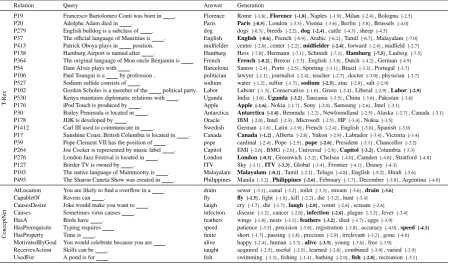
Table 3 shows randomly picked examples for
the generation of BERT-large for cloze template queries. We find that BERT-large generally pre-dicts objects of the correct type, even when the predicted object itself is not correct.
To understand how the performance of a pre-trained language model varies with different ways of querying for a particular fact, we analyze a maximum of 100 random facts per relation for which we randomly select 10 aligned sentences in Wikipedia from T-REx.6 In each of the sentences, we mask the object of the fact, and ask the model to predict it. For several of our language models this also tests their ability to memorize and recall sentences from the training data since as the mod-els have been trained on Wikipedia (see Table1).
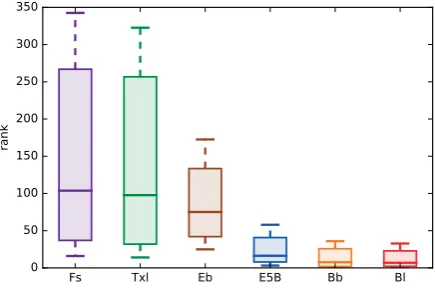
Figure 4 shows the average distribution of the
rank for ten queries per fact. The two BERT mod-els and ELMo 5.5B exhibit the lowest variabil-ity while ranking the correct object close to the top on average. Surprisingly, the performance of ELMo original is not far from BERT, even though this model did not see Wikipedia during train-ing. Fairseq-fconv and Transformer-XL
experi-5The original training corpus is not available, we created our version using the same sources.
5https://spacy.io
6We exclude all facts with less than 10 alignments.
Fs Txl Eb E5B Bb Bl
0 50 100 150 200 250 300 350
[image:8.595.308.526.62.207.2]rank
Figure 4: Average rank distribution for 10 different
mentions of 100 random facts per relation in T-REx. ELMo 5.5B and both variants of BERT are least sen-sitive to the framing of the query but also are the most likely to have seen the query sentence during training.
ence a higher variability in their predictions. Note that BERT and ELMo 5.5B have been trained on a larger portion of Wikipedia than fairseq-fconv and Transformer-XL and may have seen more sen-tences containing the test queries during training.
ConceptNet The results on the ConceptNet cor-pus are in line with those reported for retriev-ing factual knowledge in Google-RE and T-REx. The BERT-large model consistently achieves the best performance, and it is able to retrieve com-monsense knowledge at a similar level to factual
knowledge. The lower half of Table3shows
gen-erations by BERT-large for randomly sampled ex-amples. Some of the concepts generated by the language models are surprisingly reasonable in ad-dition to being syntactically correct.
SQuAD Next we evaluate our system on open-domain cloze-style question answering and com-pare against the supervised DrQA model. Table
2 shows a performance gap between BERT-large
and the DrQA open-domain QA system on our cloze SQuAD task. Again, note that the pretrained language model is completely unsupervised, it is not fine-tuned, and it has no access to a
ded-icated information retrieval system. Moreover,
when comparing DrQA and BERT-large in terms of P@10, we find that gap is remarkably small (57.1 for BERT-large and 63.5 for DrQA).
6 Discussion and Conclusion
We presented a systematic analysis of the factual and commonsense knowledge in publicly
Relation Query Answer Generation
T
-Re
x
P19 Francesco Bartolomeo Conti was born in . Florence Rome[-1.8],Florence[-1.8], Naples[-1.9], Milan[-2.4], Bologna[-2.5] P20 Adolphe Adam died in . Paris Paris[-0.5], London[-3.5], Vienna[-3.6], Berlin[-3.8], Brussels[-4.0] P279 English bulldog is a subclass of . dog dogs[-0.3], breeds[-2.2],dog[-2.4], cattle[-4.3], sheep[-4.5] P37 The official language of Mauritius is . English English[-0.6], French[-0.9], Arabic[-6.2], Tamil[-6.7], Malayalam[-7.0] P413 Patrick Oboya plays in position. midfielder centre[-2.0], center[-2.2],midfielder[-2.4], forward[-2.4], midfield[-2.7] P138 Hamburg Airport is named after . Hamburg Hess[-7.0], Hermann[-7.1], Schmidt[-7.1],Hamburg[-7.5], Ludwig[-7.5] P364 The original language of Mon oncle Benjamin is . French French[-0.2], Breton[-3.3], English[-3.8], Dutch[-4.2], German[-4.9] P54 Dani Alves plays with . Barcelona Santos[-2.4], Porto[-2.5], Sporting[-3.1], Brazil[-3.3], Portugal[-3.7] P106 Paul Toungui is a by profession . politician lawyer[-1.1], journalist[-2.4], teacher[-2.7], doctor[-3.0], physician[-3.7] P527 Sodium sulfide consists of . sodium water[-1.2], sulfur[-1.7],sodium[-2.5], zinc[-2.8], salt[-2.9] P102 Gordon Scholes is a member of the political party. Labor Labour[-1.3], Conservative[-1.6], Green[-2.4], Liberal[-2.9],Labor[-2.9]
P530 Kenya maintains diplomatic relations with . Uganda India[-3.0],Uganda[-3.2], Tanzania[-3.5], China[-3.6], Pakistan[-3.6] P176 iPod Touch is produced by . Apple Apple[-1.6], Nokia[-1.7], Sony[-2.0], Samsung[-2.6], Intel[-3.1]
P30 Bailey Peninsula is located in . Antarctica Antarctica[-1.4], Bermuda[-2.2], Newfoundland[-2.5], Alaska[-2.7], Canada[-3.1]
P178 JDK is developed by . Oracle IBM[-2.0], Intel[-2.3], Microsoft[-2.5], HP[-3.4], Nokia[-3.5]
P1412 Carl III used to communicate in . Swedish German[-1.6], Latin[-1.9], French[-2.4], English[-3.0], Spanish[-3.0] P17 Sunshine Coast, British Columbia is located in . Canada Canada[-1.2], Alberta[-2.8], Yukon[-2.9], Labrador[-3.4], Victoria[-3.4] P39 Pope Clement VII has the position of . pope cardinal[-2.4], Pope[-2.5],pope[-2.6], President[-3.1], Chancellor[-3.2] P264 Joe Cocker is represented by music label . Capitol EMI[-2.6], BMG[-2.6], Universal[-2.8],Capitol[-3.2], Columbia[-3.3] P276 London Jazz Festival is located in . London London[-0.3], Greenwich[-3.2], Chelsea[-4.0], Camden[-4.6], Stratford[-4.8]
P127 Border TV is owned by . ITV Sky[-3.1],ITV[-3.3], Global[-3.4], Frontier[-4.1], Disney[-4.3]
P103 The native language of Mammootty is . Malayalam Malayalam[-0.2], Tamil[-2.1], Telugu[-4.8], English[-5.2], Hindi[-5.6] P495 The Sharon Cuneta Show was created in . Philippines Manila[-3.2],Philippines[-3.6], February[-3.7], December[-3.8], Argentina[-4.0]
ConceptNet
AtLocation You are likely to find a overflow in a . drain sewer[-3.1], canal[-3.2], toilet[-3.3], stream[-3.6],drain[-3.6]
CapableOf Ravens can . fly fly[-1.5], fight[-1.8], kill[-2.2], die[-3.2], hunt[-3.4]
CausesDesire Joke would make you want to . laugh cry[-1.7], die[-1.7],laugh[-2.0], vomit[-2.6], scream[-2.6] Causes Sometimes virus causes . infection disease[-1.2], cancer[-2.0],infection[-2.6], plague[-3.3], fever[-3.4]
HasA Birds have . feathers wings[-1.8], nests[-3.1],feathers[-3.2], died[-3.7], eggs[-3.9]
HasPrerequisite Typing requires . speed patience[-3.5], precision[-3.6], registration[-3.8], accuracy[-4.0],speed[-4.1]
HasProperty Time is . finite short[-1.7], passing[-1.8], precious[-2.9], irrelevant[-3.2], gone[-4.0]
MotivatedByGoal You would celebrate because you are . alive happy[-2.4], human[-3.3],alive[-3.3], young[-3.6], free[-3.9] ReceivesAction Skills can be . taught acquired[-2.5], useful[-2.5], learned[-2.8], combined[-3.9], varied[-3.9]
[image:9.595.75.529.63.327.2]UsedFor A pond is for . fish swimming[-1.3], fishing[-1.4], bathing[-2.0],fish[-2.8], recreation[-3.1]
Table 3: Examples of generation for BERT-large. The last column reports the top five tokens generated together with the associated log probability (in square brackets).
that BERT-large is able to recall such knowledge better than its competitors and at a level remark-ably competitive with non-neural and supervised
alternatives. Note that we did not compare the
ability of the corresponding architectures and ob-jectives to capture knowledge in a given body of text but rather focused on the knowledge present in the weights of existing pretrained models that are being used as starting points for many researchers’ work. Understanding which aspects of data our commonly-used models and learning algorithms are capturing is a crucial field of research and this paper complements the many studies focused on the learned linguistic properties of the data.
We found that it is non-trivial to extract a knowl-edge base from text that performs on par to di-rectly using pretrained BERT-large. This is de-spite providing our relation extraction baseline with only data that is likely expressing target facts, thus reducing potential for false negatives, as well
as using a generous entity-linking oracle. We
suspected BERT might have an advantage due to the larger amount of data it has processed, so we added Wikitext-103 as additional data to the re-lation extraction system and observed no signif-icant change in performance. This suggests that while relation extraction performance might be difficult to improve with more data, language
mod-els trained on ever growing corpora might become a viable alternative to traditional knowledge bases extracted from text in the future.
In addition to testing future pretrained language models using the LAMA probe, we are interested in quantifying the variance of recalling factual knowledge with respect to varying natural lan-guage templates. Moreover, assessing multi-token answers remains an open challenge for our evalu-ation setup.
Acknowledgments
We would like to thank the reviewers for their thoughtful comments and efforts towards improv-ing our manuscript. In addition, we would like to acknowledge three frameworks that were used in our experiments: AllenNLP7, Fairseq8 and the
Hugging Face PyTorch-Transformers9library.
References
Dzmitry Bahdanau, Felix Hill, Jan Leike, Edward Hughes, Pushmeet Kohli, and Edward Grefenstette. 2019. Learning to understand goal specifications by
7https://github.com/allenai/allennlp 8https://github.com/pytorch/fairseq 9https://github.com/huggingface/
modelling reward. In International Conference on Learning Representations (ICLR).
Marco Baroni, Georgiana Dinu, and Germ´an
Kruszewski. 2014. Don’t count, predict! A
systematic comparison of context-counting vs. context-predicting semantic vectors. InProceedings of the 52nd Annual Meeting of the Association for Computational Linguistics, ACL 2014, June 22-27, 2014, Baltimore, MD, USA, Volume 1: Long Papers, pages 238–247.
Yoshua Bengio, R´ejean Ducharme, Pascal Vincent, and
Christian Janvin. 2003. A neural probabilistic
lan-guage model. Journal of Machine Learning Re-search, 3:1137–1155.
Antoine Bordes, Nicolas Usunier, Alberto Garc´ıa-Dur´an, Jason Weston, and Oksana Yakhnenko.
2013. Translating embeddings for modeling
multi-relational data. InAdvances in Neural Information Processing Systems 26: 27th Annual Conference on Neural Information Processing Systems 2013. Pro-ceedings of a meeting held December 5-8, 2013, Lake Tahoe, Nevada, United States., pages 2787– 2795.
S. R. K. Branavan, David Silver, and Regina
Barzi-lay. 2011. Learning to win by reading manuals in a
monte-carlo framework. InThe 49th Annual Meet-ing of the Association for Computational LMeet-inguis- Linguis-tics: Human Language Technologies, Proceedings of the Conference, 19-24 June, 2011, Portland, Ore-gon, USA, pages 268–277.
Danqi Chen, Adam Fisch, Jason Weston, and Antoine
Bordes. 2017. Reading wikipedia to answer
open-domain questions. CoRR, abs/1704.00051.
Maxime Chevalier-Boisvert, Dzmitry Bahdanau,
Salem Lahlou, Lucas Willems, Chitwan Saharia, Thien Huu Nguyen, and Yoshua Bengio. 2018.
Babyai: First steps towards grounded language learning with a human in the loop. CoRR,
abs/1810.08272.
Zihang Dai, Zhilin Yang, Yiming Yang, Jaime G. Carbonell, Quoc V. Le, and Ruslan
Salakhutdi-nov. 2019. Transformer-xl: Attentive language
models beyond a fixed-length context. CoRR,
abs/1901.02860.
Yann N. Dauphin, Angela Fan, Michael Auli, and
David Grangier. 2017. Language modeling with
gated convolutional networks. InProceedings of the 34th International Conference on Machine Learn-ing, ICML 2017, Sydney, NSW, Australia, 6-11 Au-gust 2017, pages 933–941.
Jacob Devlin, Ming-Wei Chang, Kenton Lee, and
Kristina Toutanova. 2018a. BERT: pre-training of
deep bidirectional transformers for language under-standing.CoRR, abs/1810.04805.
Jacob Devlin, Ming-Wei Chang, Kenton Lee, and
Kristina Toutanova. 2018b. BERT: Pre-training
of Deep Bidirectional Transformers for Language Understanding. arXiv:1810.04805 [cs]. ArXiv: 1810.04805.
Hady Elsahar, Pavlos Vougiouklis, Arslen Remaci, Christophe Gravier, Jonathon Hare, Frederique Laforest, and Elena Simperl. 2018. T-rex: A large scale alignment of natural language with knowledge
base triples. InProceedings of the Eleventh
Interna-tional Conference on Language Resources and Eval-uation (LREC-2018).
Yoav Goldberg. 2019. Assessing bert’s syntactic
abili-ties.CoRR, abs/1901.05287.
Felix Hill, Roi Reichart, and Anna Korhonen. 2015.
Simlex-999: Evaluating semantic models with (gen-uine) similarity estimation. Computational
Linguis-tics, 41(4):665–695.
Sepp Hochreiter and J¨urgen Schmidhuber. 1997.
Long short-term memory. Neural Computation, 9(8):1735–1780.
Tom Kwiatkowski, Jennimaria Palomaki, Olivia
Rhinehart, Michael Collins, Ankur Parikh, Chris Al-berti, Danielle Epstein, Illia Polosukhin, Matthew Kelcey, Jacob Devlin, et al. 2019. Natural questions: a benchmark for question answering research.
Jelena Luketina, Nantas Nardelli, Gregory Farquhar, Jakob Foerster, Jacob Andreas, Edward Grefen-stette, Shimon Whiteson, and Tim Rockt¨aschel.
2019. A Survey of Reinforcement Learning
In-formed by Natural Language. In Proceedings of
the Twenty-Eighth International Joint Conference on Artificial Intelligence, IJCAI 2019, August 10-16 2019, Macao, China.
Rebecca Marvin and Tal Linzen. 2018. Targeted
syn-tactic evaluation of language models. In Proceed-ings of the 2018 Conference on Empirical Methods in Natural Language Processing, Brussels, Belgium, October 31 - November 4, 2018, pages 1192–1202.
R. Thomas McCoy, Ellie Pavlick, and Tal Linzen. 2019. Right for the wrong reasons: Diagnosing syn-tactic heuristics in natural language inference.
G´abor Melis, Chris Dyer, and Phil Blunsom. 2017.On
the state of the art of evaluation in neural language models. CoRR, abs/1707.05589.
Stephen Merity, Caiming Xiong, James Bradbury, and
Richard Socher. 2016. Pointer sentinel mixture
models. CoRR, abs/1609.07843.
Tomas Mikolov and Geoffrey Zweig. 2012. Context
Maximilian Nickel, Kevin Murphy, Volker Tresp, and
Evgeniy Gabrilovich. 2016. A review of relational
machine learning for knowledge graphs. Proceed-ings of the IEEE, 104(1):11–33.
Matthew E. Peters, Mark Neumann, Mohit Iyyer, Matt Gardner, Christopher Clark, Kenton Lee, and Luke
Zettlemoyer. 2018a. Deep contextualized word
rep-resentations. In Proceedings of the 2018 Confer-ence of the North American Chapter of the Associ-ation for ComputAssoci-ational Linguistics: Human Lan-guage Technologies, NAACL-HLT 2018, New Or-leans, Louisiana, USA, June 1-6, 2018, Volume 1 (Long Papers), pages 2227–2237.
Matthew E. Peters, Mark Neumann, Luke Zettlemoyer,
and Wen-tau Yih. 2018b. Dissecting contextual
word embeddings: Architecture and representation. InProceedings of the 2018 Conference on Empirical Methods in Natural Language Processing, Brussels, Belgium, October 31 - November 4, 2018, pages 1499–1509.
Alec Radford, Karthik Narasimhan, Tim Salimans, and Ilya Sutskever. 2018. Improving language under-standing by generative pre-training.
Alec Radford, Jeffrey Wu, Rewon Child, David Luan,
Dario Amodei, and Ilya Sutskever. 2019. Language models are unsupervised multitask learners.
Pranav Rajpurkar, Jian Zhang, Konstantin Lopyrev, and
Percy Liang. 2016. SQuAD: 100,000+ Questions
for Machine Comprehension of Text. In Proceed-ings of the 2016 Conference on Empirical Methods in Natural Language Processing, pages 2383–2392, Austin, Texas. Association for Computational Lin-guistics.
Siva Reddy, Danqi Chen, and Christopher D. Manning.
2018. Coqa: A conversational question answering
challenge.CoRR, abs/1808.07042.
Daniil Sorokin and Iryna Gurevych. 2017.
Context-aware representations for knowledge base relation extraction. In Proceedings of the 2017 Confer-ence on Empirical Methods in Natural Language Processing, EMNLP 2017, Copenhagen, Denmark, September 9-11, 2017, pages 1784–1789.
Robert Speer and Catherine Havasi. 2012. Represent-ing general relational knowledge in conceptnet 5. In
LREC, pages 3679–3686.
Mihai Surdeanu and Heng Ji. 2014. Overview of the English Slot Filling Track at the TAC2014 Knowl-edge Base Population Evaluation. page 15.
Alon Talmor, Jonathan Herzig, Nicholas Lourie, and
Jonathan Berant. 2019. Commonsenseqa: A
ques-tion answering challenge targeting commonsense knowledge. InProceedings of the 2019 Conference of the North American Chapter of the Association for Computational Linguistics: Human Language Technologies, NAACL-HLT 2019, Minneapolis, MN, USA, June 2-7, 2019, Volume 1 (Long and Short Pa-pers), pages 4149–4158.
Ian Tenney, Patrick Xia, Berlin Chen, Alex Wang, Adam Poliak, R Thomas McCoy, Najoung Kim, Benjamin Van Durme, Sam Bowman, Dipanjan Das,
and Ellie Pavlick. 2019. What do you learn from
context? probing for sentence structure in contextu-alized word representations. InInternational Con-ference on Learning Representations.
Ashish Vaswani, Noam Shazeer, Niki Parmar, Jakob Uszkoreit, Llion Jones, Aidan N. Gomez, Lukasz
Kaiser, and Illia Polosukhin. 2017. Attention is all
you need. InAdvances in Neural Information Pro-cessing Systems 30: Annual Conference on Neural Information Processing Systems 2017, 4-9 Decem-ber 2017, Long Beach, CA, USA, pages 6000–6010.
Alex Wang, Amanpreet Singh, Julian Michael, Fe-lix Hill, Omer Levy, and Samuel R. Bowman.
2018. GLUE: A multi-task benchmark and
anal-ysis platform for natural language understand-ing. In Proceedings of the Workshop: Analyz-ing and InterpretAnalyz-ing Neural Networks for NLP, BlackboxNLP@EMNLP 2018, Brussels, Belgium, November 1, 2018, pages 353–355.
Sean Welleck, Kiant´e Brantley, Hal Daum´e III, and
Kyunghyun Cho. 2019. Non-monotonic sequential
text generation.arXiv preprint arXiv:1902.02192.
Wojciech Zaremba, Ilya Sutskever, and Oriol Vinyals.
2014. Recurrent neural network regularization.
CoRR, abs/1409.2329.
Rowan Zellers, Yonatan Bisk, Ali Farhadi, and Yejin
Choi. 2018. From recognition to cognition: Visual
commonsense reasoning.CoRR, abs/1811.10830.
Yukun Zhu, Ryan Kiros, Richard S. Zemel, Ruslan Salakhutdinov, Raquel Urtasun, Antonio Torralba,
and Sanja Fidler. 2015.Aligning books and movies: