INFLUENCE MITOCHONDRIAL DNA DIVERSITY IN AN IMMIGRANT BASQUE POPULATION
by
Michael Christopher Davis
A thesis
submitted in partial fulfillment of the requirements for the degree of
Master of Science in Biology Boise State University
December 2010
© 2010
Michael Christopher Davis
ALL RIGHTS RESERVED
DEFENSE COMMITTEE AND FINAL READING APPROVALS
of the thesis submitted by
Michael C. Davis
Thesis Title: Ancient and Recent Demographic Events Influence Mitochondrial DNA Diversity in an Immigrant Basque Population
Date of Final Oral Examination: 22 October 2010
The following individuals read and discussed the thesis submitted by student Michael Christopher Davis, and they also evaluated his presentation and response to questions during the final oral examination. They found that the student passed the final oral examination, and that the thesis was satisfactory for a master’s degree and ready for any final modifications that they explicitly required.
Greg Hampikian, Ph.D. Co-Chair, Supervisory Committee Stephen J. Novak, Ph.D. Co-Chair, Supervisory Committee James F. Smith, Ph.D. Member, Supervisory Committee Troy T. Rohn, Ph.D. Member, Supervisory Committee
The final reading approval of the thesis was granted by Greg Hampikian, Ph.D., and Stephen J. Novak, Ph.D., Co-Chairs of the Supervisory Committee. The thesis was approved for the Graduate College by John R. Pelton, Ph.D., Dean of the Graduate College.
v
To the memory of Dr. Adriel Johnson (1957-2010), my undergraduate advisor and professor of Biology at the University of Alabama in Huntsville. His life of service, teaching, and research was (and remains) an example for us all.
vi
First, I must thank my advisors, Dr. Greg Hampikian and Dr. Stephen Novak, for their many hours of teaching, guidance, and encouragement. I have been enriched, both intellectually and personally, by our conversations. To my committee members, Dr.
James Smith and Dr. Troy Rohn, I am grateful for your comments, assistance, and instruction.
I am grateful to the individuals of the Basque community, for their participation in, and enthusiasm for, this research. Thanks to the many volunteers who helped with swab collection and lab work, especially Dawn Engle and Katherine Kindy. I am especially thankful to Jason Besecker—for all his work in the early stages of the project. I thank my fellow graduate students, for their advice, assistance, and moral support. I am grateful to Laura Bond, for helping me to properly apply and interpret the statistical tests in my analyses. For answering a question regarding comparisons of genetic diversity, I thank Dr. Masatoshi Nei, professor at The Pennsylvania State University.
To the administrative assistants Diane Smith and Beth Gee, and the excellent staff of the BSU Biology Department, thanks for all your service.
I am indebted to Thomas Krawzak, for providing material support, thoughtful conversations, and encouragement; and to Howard Jones, for his friendship and heartening exhortations. Thanks to the members of the Grace and Boise Churches of Christ, for providing a loving community that embraces both faith and scholarship. I thank my family for fostering in me a love of truth and an appreciation of nature. Thanks
vii
were extremely helpful, both intellectually and emotionally. To all others who helped me along the way—thank you!
This thesis was supported in part by the US Department of Defense contract W81XWH-07-1-000, and by funds from Boise State University.
viii
The Basques are an ancient people, considered by many anthropologists to represent the oldest extant European population. Because of this, they have been the subject of numerous sociological and biological investigations. The Basque Diaspora, a relatively recent demographic expansion of the Basque population, has until now been overlooked in molecular genetic studies. Samples were taken from 53 individuals with Basque ancestry in Boise, Idaho, and the mitochondrial DNA (mtDNA) sequence variation of the first and second hypervariable regions were determined. Thirty-six mtDNA haplotypes were detected in the sample. Comparing the genetic diversity in the Idaho sample with other Basque populations, signatures of founder effects were
observed, consistent with both the recent and ancient history of Basque mitochondrial lineages. There has been a marked alteration of haplogroup frequency and diversity, and there is a slight reduction in other measures of diversity in the immigrant Basque
population sampled compared to the native Basque population. I have found a relatively high percentage of the Cambridge Reference Sequence (rCRS) haplotype for
hypervariable regions I and II, which is absent in previous studies of Basque mtDNA, and rare in other Spanish populations. The amount of nucleotide diversity is consistent with a sample that is predominantly haplogroup H, which is especially common in the Basque regions of Europe, due to ancient migrations and expansions out of glacial refugia. This is the first report of mtDNA diversity in an immigrant Basque population, and I find that the diversity in Basques of the Northwestern U.S.A. can be explained by the recent
ix haplogroups.
x
ACKNOWLEDGEMENTS ... vi
ABSTRACT ... viii
LIST OF TABLES ... xii
LIST OF FIGURES ... xiii
INTRODUCTION ... 1
SUBJECTS AND METHODS ... 6
Participants ... 6
DNA Extraction and Sequencing ... 6
Genetic Data Analysis... 8
RESULTS ... 13
mtDNA Diversity in Immigrant and European Basques ... 13
Haplotype Networks ... 16
Genetic Differentiation Between Immigrant and Source Populations ... 16
DISCUSSION ... 18
mtDNA Diversity in NW Basques: Evidence for Founder Effects ... 18
Co-Ancestry in Immigrant and Source Basque Populations... 22
Haplogroup Distribution in Basque Populations ... 23
NW Basques and Other European Immigrant Populations... 24
Conclusions ... 27
xi
Appendix ... 63 The Questionnaire Distributed to Study Volunteers to Determine Mode of Basque Ancestry
xii
Table 1 HVS-1 sequence diversity in the NW Basque
and other populations ... 42 Table 2 HVS-1 plus HVS-2 sequence diversity in the NW Basque
and other populations ... 44
xiii
LIST OF FIGURES
Figure 1 Map of Western U.S.A. and the Basque Country ... 45
Figure 2 HVS-1 Polymorphic Sites ... 47
Figure 3 HVS-1 and HVS-2 Polymorphic Sites ... 49
Figure 4 Pairwise Mismatch Distributions ... 51
Figure 5 Histogram of Haplogroup Frequencies ... 53
Figure 6 Median-joining Network of HVS-1 haplotypes ... 55
Figure 7 Median-joining Network of HVS-1 plus HVS-2 haplotypes ... 57
Figure 8 NJ Tree of population genetic distances ... 59
Figure 9 Principal Components Analysis based on Haplogroup Distribution .... 61
v
Migration and colonization events have genetic consequences (Dobzhansky and Wright 1943; Slatkin 1985). Colonization events can lead to an alteration and/or reduction in genetic diversity (i.e., genetic drift) through founder effects or genetic bottlenecks (Nei et al. 1975). Alternatively, sufficient gene flow (via immigration) can counter the force of genetic drift (Novak and Mack 2005). These consequences are influenced by several factors: the level and structure of genetic diversity within and among native populations, founder population size, and the number of discrete migration/colonization events that have occurred (Novak 2010). The demography of Homo sapiens has been characterized by recent population growth and multiple
expansions out of Africa (Jobling et al. 2004) and colonization events of various
magnitudes (Ramachandran et al. 2005; Richards et al. 2000). The genetic signatures of ancient migrations have been studied with phylogeographic analyses—studies of the patterns of genetic diversity and differentiation within and between major populations, and the geographic distribution of genetic lineages (Avise 2000). The genetic
consequences of relatively recent migrations and colonization have been studied in cultural and religious population isolates (Adams et al. 2008; Puffenberger 2003), island communities (Santos et al. 2003), the forced migration of African slaves (Salas et al.
2004), and the European colonization of the Americas (Bedoya et al. 2006; Salas et al.
2008). The Basque are an ethnic group inhabiting northeastern Spain and southwestern France, and are considered by some researchers to have the greatest degree of genetic
continuity with the “original” Europeans, Paleolithic hunter-gatherers (Bertranpetit et al.
1995; Douglass and Bilbao 1975; Iriondo et al. 2003; Richards et al. 2000). One of the most distinguishing characteristics of the Basque is their language (Euskara), a non-Indo- European isolate that has resisted classification. Although once hypothesized to be related to ancient Egyptian (Chambers 1844), and now considered by some to be connected with Caucasian languages, Euskara is not currently considered a member of any extant language family (Arnaiz-Villena et al. 1999). Since language families tend to group along with ethnic categories (Cavalli-Sforza and Cavalli-Sforza 1995), it was natural to propose a genetic discontinuity for the Basques, given such a unique language.
Studies of Basque genetic diversity began with observations of extreme frequencies of specific blood types in Basque populations both in Europe and in America (Boyd and Boyd 1937; Etcheverry 1945). Basque populations are characterized by the relatively high frequency of Rh-negative blood types, among the highest in Europe (Boyd and Boyd 1937; Chalmers et al. 1949), and a relatively low frequency of type B blood (Alberdi et al. 1957; Nijenhuis 1956). Because of these features, the Basque became one of the most thoroughly studied populations in Europe, hypothesized to be a genetically isolated remnant of an ancient population (Calafell and Bertranpetit 1994; Cavalli-Sforza 1988).
The results of numerous studies based on protein polymorphisms (Calderon et al. 1998;
Comas et al. 1998; Manzano et al. 1996) and molecular genetic markers (Alonso and Armour 1998; Calderon et al. 2003; de Pancorbo et al. 2001; Iriondo et al. 1997; Zlojutro et al. 2006) have demonstrated that the Basque are indeed genetic outliers, yet only in the context of the European gene pool: more related to neighboring Europeans than other world populations (Garagnani et al. 2009; Laayouni et al. 2010; Li et al. 2008). Although
the evidence does not support genetic isolation, there is evidence for an ancient (Paleolithic) origin of the Basque ancestors. Recent mitochondrial DNA (mtDNA) studies indicate that certain Basque lineages (in haplogroup U8a) have their origin in the Upper Paleolithic, approximately 30,000 years BP, with evidence for a subsequent re- expansion approximately 12,000 years BP (Gonzalez et al. 2006). Other lineages that reach their highest density in the Basque region (haplogroups H1, H3) also date from the latter period (Achilli et al. 2004). These findings, as well as the clinal distribution of H subhaplogroups across Europe, provide support for the hypothesis that the ancestral Basque population(s) originated from populations expanding their range from glacial refugia (Achilli et al. 2004). Although a recent study based on entire mtDNA sequences questions the Franco-Cantabrian refugia hypothesis (Garcia et al. 2010), there is in fact supportive evidence from studies of other species. Genetic evidence for post-glacial expansions from Iberian refugia has been reported for species across multiple taxa, including: plants (Grivet and Petit 2002), mammals (Melo-Ferreira et al. 2007; Michaux et al. 2003), birds (Griswold and Baker 2002), reptiles (Guicking et al. 2008), and
amphibians (Rowe et al. 2006). In addition, there is evidence for multiple refugia within Iberia and other regions of Northwestern Europe (Vialatte et al. 2008), and the situation for many species is certainly more complex than a large-scale expansion from a single refugium (Gomez and Lunt 2007). It is likely that future molecular investigations will reveal additional complexity in human post-glacial phylogeography. Whether or not ancestral Basque populations emerged from single or multiple refugia, these results have dispelled theories of Basque origins linking them to modern Africans or Asians, Ancient Egyptians, or Neanderthals (Chambers 1844; Izagirre et al. 2001; Kurlansky 1999).
There is a long history of Basque immigration to the Americas: cod fishing settlements in 16th century Newfoundland (Lehuenen 1984), cattle ranches in 17th and 18th century South America, and sheep herding in the 19th century American West (Douglass and Bilbao 1975). Southwest Idaho, U.S.A. (including the cities of Boise, Mountain Home, Gooding, and Shoshone) is famous for its large Basque community, comprised primarily of migrants from the province of Bizkaia (Viscaya), Spain (Edlefsen 1948). According to Edlefsen (1948), approximately 90% of Southwest Idaho Basques trace their origins to this part of the Basque country. Within Bizkaia, it is the region roughly circumscribed by the cities of Gernika, Lekeitio, and Ondarroa (Figure 1), that contributed about 85% of all Bizkaian emigrants to the U.S.A., according to a 1917 survey by Silen (Douglass and Bilbao 1975). In 2000, there were 6,637 individuals (0.51
% of population) in Idaho who identified themselves as Basque in the census (Census 2000), giving Idaho the highest per capita Basque population of any state. The immigrant Basques of the Northwestern U.S.A. are thus an ideal study population for assessing the genetic consequences of immigration from a well-defined source population. It is worth noting that in 1945 one of the earliest published accounts of Basque blood type
frequencies was made by Etcheverry, a physician in Argentina (Etcheverry 1945). Only two other studies have been published on the genetics of American Basque populations:
another paper by Etcheverry (Etcheverry 1947), and a blood typing paper of two Basque populations in Idaho by Laughlin et al. (1956). The Idaho study was based upon the dissertation research of Margery Gray (Gray 1955).
Mitochondrial DNA has been used in numerous studies to explore the level and structure of genetic variation within human populations, and to shed light on the
complexities of human evolution (Achilli et al. 2004; Richards et al. 2000; Torroni et al.
2001). Mitochondrial DNA has the advantage of being non-recombining, always inherited through the maternal lineage, and containing non-coding “hypervariable”
regions that accumulate mutations at an approximately ten-fold rate (on average) compared to coding regions (Brown et al. 1979; Stoneking 1994; Upholt and Dawid 1977). In addition, since the early 1990s, numerous studies on human mtDNA have been carried out, and the literature and data on human mtDNA is sizable (Parson and Dür 2007; Torroni et al. 2006). However, despite several studies of mtDNA variation in European Basque populations (Alfonso-Sanchez et al. 2008; Bertranpetit et al. 1995;
Corte-Real et al. 1996; Gonzalez et al. 2006; Richard et al. 2007), no mtDNA research has previously been conducted on an immigrant population from the Basque Diaspora.
The presence of a substantial population of Basque immigrants in the Northwestern U.S.A. allows specific hypotheses associated with the genetic consequences of migration and colonization events to be tested (Nei et al. 1975). In this study, I have: determined the sequence diversity for mtDNA hypervariable segments 1 and 2 (HVS-1 and HVS-2) in a representative sample of NW Basques; compared the diversity of NW Basques to that of Basques living within the historical Basque regions in Spain and France; and, determined the magnitude of founder effects in the NW Basque. I have also examined previously published genetic data in other American immigrant populations (and their putative European sources), and noted a trend in the relationships between immigration histories and founder effects.
SUBJECTS AND METHODS Participants
Subjects for this study were selected from among volunteers using a protocol modeled after Bertranpetit et al. (1995). Subjects were recruited from Basque cultural events held in Boise, Idaho. I administered a questionnaire to determine each volunteer’s place of birth, the place of birth of their mother and maternal grandmother, and the surnames in each volunteer’s maternal lineages (see Appendix). The surname data were used to select subjects that were maternally unrelated for at least two generations. Buccal swabs and completed questionnaires were collected from volunteers who had identified themselves as Basque. To be included in this study, each subject was required to have been born in the U.S.A., and to have Basque maiden names going back at least two generations. Since all volunteers were either born or had immediate family in Idaho, Nevada, Oregon, and California, the sample was designated as Northwestern U.S.A. Basques (hereafter referred to as NW Basques). The use of human subjects for this study was approved by the Institutional Review Board of Boise State University, and the confidentiality of personal information for each volunteer was assured (no personal identifying information will be published). Based on these criteria, 53 subjects who met the study criteria were included in this analysis.
DNA Extraction and Sequencing
DNA was extracted from each buccal swab using the QIAamp DNA Mini Kit (Qiagen).
Mitochondrial DNA hypervariable regions HVS-1 and HVS-2 were amplified using
published primers (Wilson et al. 1995) purchased from Integrated DNA Technologies.
Dye-labeled primer sequencing was carried out on the PCR products using the Thermo Sequenase Cycle Sequencing Kit (USB) according to the manufacturer’s protocol, and fragments were examined with the LI-COR 4300 DNA Analyzer (LI-COR Biosciences).
To confirm sequence accuracy, every sample was sequenced at least twice, either using both strands of the PCR product (forward and reverse sequencing primers) or by re- sequencing with the same primer. All polymorphisms were confirmed by at least double- coverage of the sequencing data. Sequence analysis of gel-based data was carried out on E-Seq software (for reading gel images and sequence editing) and AlignIR software (for pairwise alignment against the reference sequence), both from LI-COR Biosciences.
Multiple sequence alignments (for data analysis, see below) were performed using Clustal X as implemented in MEGA 4.1 (Kumar et al. 2008). Polymorphisms were determined by comparing experimental data with the revised Cambridge Reference Sequence (rCRS) (Andrews et al. 1999). Note that the rCRS has recently (2009) been annotated in the NCBI nucleotide database as the GenBank “reference sequence.” The rCRS, used for a reference in population and forensic studies, is listed in the NCBI nucleotide database as NC_012920.1 (formerly it was listed as the “alternative Refseq”
AC_000021.2). Previously, the mitochondrial sequence represented in the NCBI reference sequence (Refseq) database for the human genome project was accession number NC_001807, a mitochondrial genome from a Yoruba (African) individual. For this study, the definition of the first and second hypervariable segments (HVS-1 and HVS-2) were defined as nucleotide positions 16024-16383 and 66-370, respectively, following Alfonso-Sanchez et al. (2008).
Genetic Data Analysis Genetic Diversity
The sequences obtained from each subject were used to infer haplogroup
membership by the neighbor-joining method of Behar et al. (2007), which was shown to correctly predict the haplogroup for a European dataset 97% of the time. The level of mtDNA diversity within the NW Basque population was estimated by counting the number of haplotypes (k), the number of polymorphic sites (S), and calculating the haplotype (h), nucleotide (π), and haplogroup diversity over the aligned control region sequence data. These parameters were calculated using Arlequin 3.1 (Excoffier et al.
2005), and are the standard intrapopulation diversity measures for haplotypic sequence data (Nei 1987). Haplotype and haplogroup diversity are computed as Nei (1987) defines
“gene diversity,” representing the probability of randomly picking two sequences from non-identical haplogroups (or haplotypes) in a sample set. Likewise, nucleotide diversity is the probability that a randomly chosen nucleotide site on two randomly chosen
sequences will be different (Nei and Kumar 2000).
We characterized nucleotide diversity using several estimates of θ: a measure of expected genetic diversity based on the formula θ = 2Nfeµ, where Nfe is the female effective population size and µ is the mutation rate (Helgason et al. 2000). The mean number of pairwise differences between sequences within a population is given by θπ, which is the estimator for θ given the infinite-sites model of nucleotide evolution (Tajima 1983). The statistics θs and θk are additional estimators: θs is based on the number of polymorphic sites found in the set of sample sequences, and θk is based on the number of observed haplotypes (Watterson 1974).
Genetic Distances Between Populations
Arlequin was used to compute pairwise genetic distance values within and between populations, and generate pairwise mismatch distributions. A principal components analysis (PCA) was performed on the haplogroup frequency data, using SAS version 9.0 software, SAS System for Windows (SAS Institute). The results of the PCA were visualized on a biplot of the first two principal components. For admixed populations (with Amerindian and African maternal contributions), only frequencies of European- specific haplogroups were taken into account. Where haplogroup data was given for sub- haplogroups (such as, U1, U2, U3, etc.), those frequencies were combined to give the frequency of the entire haplogroup. A neighbor-joining (NJ) tree was generated with the program MEGA 4.1, using the pairwise distance matrix of Reynold’s linearized FST
(coancestry coefficients). This measure is determined by comparing frequencies of shared haplotypes (Reynolds et al. 1983).
Genetic Signatures of Population History
The signatures of demographic history for the NW Basques were evaluated using three techniques: quantitative test statistics, mismatch distributions, and time to the most recent common ancestor (TMRCA). Tajima’s D (TD) and Fu’s Fs are used to detect either the signature of selection, or in the case of neutral molecular markers, the signature of recent population expansion (Fu and Li 1993). Both tests assume that population expansion will produce an excess of rare singleton mutations. Tajima’s D compares the average number of pairwise differences versus the number of segregating sites, while Fs
tests this relationship using the distribution of haplotypes (Fu and Li 1993). Both
statistics were calculated in Arlequin 3.1 with 1000 random permutations. The pairwise mismatch distributions calculated in Arlequin were compared to the expected
distributions (given the sequence length and number of segregating sites) for expanding and stationary populations (Schneider and Excoffier 1999). The distributions of all Basque populations were compared with each other; and Harpending’s raggedness statistic (rg) was calculated along with the 95% confidence interval in DnaSP 5.0 (Librado and Rozas 2009), to check for significant deviations from the expected distributions.
Haplotype Networks
Haplotype networks for HVS-1 alone, and the combined HVS-1 and HVS-2 regions, were constructed with Network 4.5 (Fluxus Engineering, http://fluxus-engineering.com) (Bandelt et al. 1999). To generate reduced-median networks, the reduction threshold was set to 2.0, the “frequency >1 criterion” was inactivated, and the relatively slowly
mutating sites (73, 263, 16208, and 16318) were given a three-fold greater weighting than the other substitution sites. The mutation hotspots (“speedy sites”) that are known to confound phylogenetic analyses (Bandelt et al. 2002) were ignored in constructing the network. Each distinct haplotype is represented by a node in the network, and the mutation sites separating them are indicated on the connecting edges. Node size is proportional to the number of individuals sharing the haplotype. The HVS-1 haplotype network includes data from the French Basque region (Richard et al. 2007), Spanish Basque (Alfonso-Sanchez et al. 2008), and the NW Basque (this study). The Spanish Basque sample was differentiated by province of sample origin: Bizkaia or Gipuzkoa,
based on supplemental data from Alfonso-Sanchez et al. (2008); therefore, this sample will be referred to as the “BG Basque.” For the TMRCA analysis, the centrally located and most common haplotype (263G) was set as the ancestral node, and all haplotype nodes for a given population were selected as descendants. The rho statistic was calculated, and was converted to an estimate of the age of the network (given an estimated mutation rate of 1 base in the two hypervariable regions per 20,000 yrs) (Saillard et al. 2000). The degree of divergence from the ancestral node is a time estimate that is affected by changes in effective population size, which is expected to be reduced following a population bottleneck (Nei et al. 1975).
C-stretch length variability and common indels such as 315.1C were observed but not scored, because of the difficulty in sequencing through C-stretch regions, which do not contain an intervening thymine (Bendall and Sykes 1995; Butler 2005). Since
misalignment errors have been reported because of highly variable C-stretch lengths (Yao et al. 2009), it seemed prudent to ignore a small amount of data rather than risk systemic errors in the analysis. Thus, for all diversity calculations and interpopulation
comparisons, HVS-2 positions 305-315 were ignored.
Besides searching the European mitochondrial population database (EMPOP, Parson and Dür [2007]), the following reference populations were used for comparative
analyses: the Old Order Amish of Ohio and Indiana (van der Walt et al. 2005), the Acadians and Channel Islanders of the Gaspe peninsula, Québec (Moreau et al. 2009), three Spanish Basque populations (Alfonso-Sanchez et al. 2008; Bertranpetit et al. 1995;
Corte-Real et al. 1996), the Catalonians, English, and Swedes (Torroni et al. 2001), the Ibiza Islanders (Picornell et al. 2005), the French (Dubut et al. 2004), French Basques
(Richard et al. 2007), the Portuguese (Pereira et al. 2004), Russians (Malyarchuk et al.
2002), Austrians and North American Hispanics (Budowle et al. 1999), Germans
(Richards et al. 2000), Brazilians (Alves-Silva et al. 2000), Non-Basque Spanish (Alvarez et al. 2007), Cubans (Mendizabal et al. 2008), Puerto Ricans (Martinez-Cruzado et al.
2001), the Welsh (Piercy et al. 1993), Galicians (Salas et al. 1998), Albanians (Bosch et al. 2006), Tuscans (Francalacci et al. 1996), Icelanders (Helgason et al. 2000), Svanetian Georgians (Alfonso-Sanchez et al. 2006), and Angolans (Plaza et al. 2004). Although genetic diversity statistics have been published for most of these populations, all values were re-calculated from the sequence data in Arlequin, since C-stretch indels were ignored for this analysis.
RESULTS
I analyzed fifty-three samples that met the criteria for inclusion in the NW Basque study. There were approximately equal numbers of maternally unrelated male and female subjects, and the average age was 49.6 years. Of the 53 subjects, 38 (71.7%) could trace their maternal lineages to Spain. Of those 38, twenty could specify their grandmother’s place of birth as Bizkaia, where historically most Basques of SW Idaho trace their ancestry (Figure 1). Of the 20 with Bizkaian maternal origins, eleven reported a birthplace for their grandmother that was in the region of NE Bizkaia. Two individuals could trace their lineage back to the French Basque region, one from “France,” and three could trace their maternal line to California and no further. The number of individuals with Bizkaian ancestry is lower than in previous studies focusing on Basques in Idaho (Arrizabalaga 1986; Edlefsen 1948; Laughlin et al. 1956); however, it must be noted that an Idaho birthplace was not a requirement for inclusion in this study.
mtDNA Diversity in Immigrant and European Basques
Among the 53 individuals analyzed in this study, 23 distinct HVS-1 region (359 bp) haplotypes were observed, with 29 different polymorphic sites (Figure 2). Of these, 19 individuals (35.8%) shared a haplotype identical to the rCRS. Fifty percent of the NW Basque HVS-1 haplotypes were private (private haplotypes are defined as not being previously reported in EMPOP nor in the literature search for this paper); the other fifty
percent were observed at varying frequencies in several European populations (based on EMPOP and literature cited in the discussion). Transversions (compared to the reference sequence) accounted for 3 of the 29 polymorphic sites (10.3%).
Considering both hypervariable regions (665 bp), I observed a total of 36 distinct lineages (haplotypes), characterized by 54 polymorphic sites (Figure 3). As with HVS-1 alone, fifty percent of haplotypes were private. A relatively high percentage of
individuals (four out of 53, or 7.5%) have the rCRS haplotype.
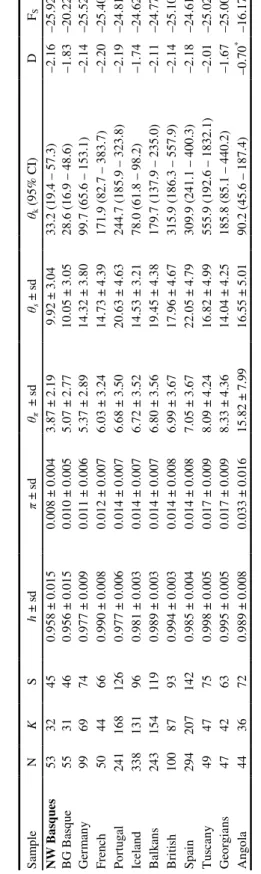
The NW Basque population has lower nucleotide and haplogroup diversity than native Basque, native European, and other European-derived populations (considering only European-specific mtDNA lineages) (Tables 1 and 2). The populations with the lowest diversity measures generally are the Basque and other Iberian populations.
Considering only HVS-1, four out of the five populations with the lowest diversity (in terms of haplotype and nucleotide diversity, and θS and θk) are Basque, the exception being the Acadians of the Gaspe peninsula, Québec—a population that had relatively few initial settlers, and has experienced serial founder events (Moreau et al. 2009).
When considering both HVS-1 and HVS-2, the number of distinct haplotypes increases for all populations, and there is less of a difference between populations in terms of haplotype diversity (h) (Table 2). Although the two Basque populations listed here have lower diversity indices than the other populations, the NW Basques do not have significantly different values of h or π than the BG Basque population (Z-test for comparison of means, per Nei and Kumar (2000). The estimator θπ also shows the NW Basques have the lowest diversity.
All European populations, and all European-derived American populations, have significantly negative values of both TD and Fs (Tables 1 and 2). The only population in this analysis that has a value not significantly different from zero (p < 0.05) is the
Angolan population (Tables 1 and 2). There is a trend of slightly less negative values for relatively isolated populations such as the Basques, Icelanders, and the Svanetian
Georgians. This trend may exist because greater isolation means an increased probability for the genetic diversity of a population to be influenced by genetic drift—which would result in a loss of low-frequency polymorphisms.
The distributions of pairwise mismatches were calculated for the NW Basque and various Spanish Basque populations, for HVS-1 alone, and HVS-1 and HVS-2 combined (Figure 4). The mean of the mismatch distribution is equivalent to the average pairwise difference between sequences (estimated by θπ). Note that the pairwise mismatch distribution for the NW Basques for HVS-1 and HVS-2 exhibited a distinctly ragged appearance.
Haplogroup H is present at a much higher frequency in the NW Basque (~80%) than the Spanish Basque or other Iberian populations (Figure 5). In addition, there has been a loss in the NW Basques of some of the lower-frequency haplogroups, specifically V, I, W, and X. While there is no significant difference in nucleotide or haplotype frequencies between native Basque (BG Basque and French Basque) and NW Basque, the differences in haplogroup frequencies are statistically significant. The haplogroup (gene) diversities are as follows: for the NW Basque 0.3591 ± 0.0185, for the BG Basque 0.6797 ± 0.0126, and for the French Basque 0.6210 ± 0.0151. An exact test of population differentiation in Arlequin found significant differentiation between each population, p < 0.05.
Haplotype Networks
We used haplotype networks to show the relationship between haplotypes based on single nucleotide differences. The HVS-1 network shows that a few common haplotypes are shared between all the Basque populations (Figure 6). The Bizkaian and Gipuzkoan populations have four of the most divergent haplotypes, in terms of mutational distance from the central, common (and presumably ancestral) haplotype. The network for the combined HVS-1 and HVS-2 regions (Figure 7) has considerably more resolution, as expected with more sequence data. The majority of haplotypes along the longest branches (most divergent) are found in the BG Basque individuals. Even with speedy sites removed, the rCRS haplotype is only detected in the NW Basque population.
The mutational distance from the inferred ancestral haplotype is given by the rho statistic. For the BG Basque network, rho = 1.1927 ± 0.40179 (sd), and for the NW Basques, rho = 0.7381 ± 0.38095 (sd). With an estimated mutation rate of one site per sequence per 20,000 years, the age of the BG Basque network is 23,854 yr BP (± 8036 yr, SD), and the age of the NW Basque network is 14,762 yr BP (± 7619 yr, SD). This measure is not expected to correlate with the time of immigration to North America, but rather illustrates a decrease in effective population size consistent with a genetic
bottleneck due to founder effects.
Genetic Differentiation Between Immigrant and Source Populations The NJ tree based on Reynolds’ genetic distance (also called the co-ancestry coefficient, Reynolds et al. [1983]) placed the NW Basques, the BG Basques, and non- Basque Spanish into one cluster (Figure 8).
The relationship between multiple immigrant and source populations, based upon frequencies of Caucasian-specific haplogroups, was visualized with a Principal
Components Analysis (Figure 9). PC1 and PC2 account for 79.4% of the variability in these data. The immigrant populations most separated from the continental European populations are the Amish, the NW Basque, the Gaspe Acadians, and Puerto Ricans.
Other immigrant populations overlap with the European group (Brazil, Argentina, and Cuba). The Spanish (BG Basque) and French Basque populations are positioned near each other in ordination space.
DISCUSSION
This is the first DNA study of an immigrant Basque population. My results almost double the number of Basque control region (HVS-1 and HVS-2) sequences published, and represent the first analysis of the genetic consequences of the Basque Diaspora.
Consistent with theoretical predictions for populations experiencing genetic drift via founder events or population bottlenecks (Nei et al. 1975; Novak and Mack 2005), I have observed both a reduction in mtDNA haplogroup diversity and an alteration of haplotype and haplogroup frequencies in the NW Basques, compared with values previously reported for Spanish and French Basque populations (i.e., the putative source
populations). In addition, I have compared the extent of the founder effect in the NW Basques with other European immigrant populations. These results demonstrate that the founder effects in the NW Basques are similar in magnitude (in terms of changes in haplogroup frequencies) to those of the Acadians of Gaspe, and the Amish of Ohio and Indiana (Moreau et al. 2009; van der Walt et al. 2005).
mtDNA Diversity in NW Basques: Evidence for Founder Effects An interesting and distinguishing feature of the NW Basques is the relatively large proportion of individuals matching the rCRS control-region haplotypes (Figure 2). For HVS-1 only, the proportion observed (35.8 %) is higher than that reported for Bizkaian and Gipuzkoan Basques (27.3%), which was said to be the highest percentage of the rCRS HVS-1 haplotype ever reported (Alfonso-Sanchez et al. 2008). Betranpetit et al.
(1995) found 20% of their Gipuzkoan Basque samples shared this haplotype. In a study of HVS-1 diversity in French populations, a relatively high proportion (27.2%) of French Basques had the rCRS haplotypes (Richard et al. 2007). An immigrant population with an unusually high proportion of this haplotype are the Acadians of Gaspe, with 33.3% of the sampled population (n=99) matching the HVS-1 rCRS (Moreau et al. 2009).
When one considers both hypervariable regions, the observed frequency of the rCRS haplotype is exceptionally high in the NW Basque. For HVS-1 and HVS-2 combined, the rCRS haplotype was detected in four of 53 (7.5%) individuals analyzed in this study (Figure 3). The combined rCRS haplotype is rare in most European populations (0.25%
of all sequences in the EMPOP database), and has never been reported in a Basque
population. However, the absence of this haplotype in native Basques should be regarded as provisional, because fewer studies have been published using both HVS-1 and HVS-2, compared with HVS-1 alone (to date only Alfonso-Sanchez et al. (2008) have published Basque HVS-2 data). Unfortunately, HVS-2 sequence data is lacking for the French Basques. At present, EMPOP does not contain any sequences from French populations, although updates are planned which will include French data (W. Parson, personal communication).
Overall, the frequency of the rCRS haplotypes are consistent with founder effects, which usually result in the loss of rare haplotypes, but can result in an increase in the frequency of intermediate or even rare haplotypes (Moreau et al. 2009). Increased sampling on a microgeographic scale may also reveal European subpopulations which have a higher proportion of the rCRS control region haplotype. Such “microgeographic”
or “regional” sampling has already been shown to capture variation that is not seen when current national borders are used as proxies for populations (Dubut et al. 2004).
Of the 36 HVS-1 and HVS-2 haplotypes detected in the NW Basque population, 18 (50%) are private haplotypes, which is almost identical to the proportion (50.9%) found in the BG Basque sample (Alfonso-Sanchez et al. 2008). These numbers for private haplotypes should not be surprising (even in populations with relatively low nucleotide diversity), given the fact that almost all estimates of haplotype diversity for mtDNA control-region sequences are considered to be underestimates (Helgason et al. 2003;
Pereira et al. 2004). The fact that similar haplotype diversity is seen in the immigrant Basque population can be explained by both the undersampled diversity in the source population, and the relatively long history of Basque migration to North America, which occurred in several waves throughout most of the 19th and 20th centuries (which would result in increased gene flow between American and Basque populations).
Considering only HVS-1, 179 out of the 189 individuals (94.7%) carry either the most common haplotype, or a sequence that is one mutational step removed from the most common haplotype (the rCRS, see Figure 6). A similar pattern is seen in the combined HVS-1, HVS-2 network. Despite the fact that only 7 out of the 30 haplotypes in the network are shared, the majority of individuals (89.8%) are one or two mutational steps from the two most common haplotypes (263G and 263G, 73G).
The fact that most Basque maternal lineages are so closely related may be the result of two factors—each relating to diversity in the native Basque range. First is the high proportion of haplogroup H and H subhaplogroups in both Spanish Basque and French Basque populations (Alfonso-Sanchez et al. 2008; Richard et al. 2007), which would
result in a sampling of more recently diverged control-region lineages, compared to a sample containing all the common European haplogroups (for example, see the haplotype networks in Herrnstadt et al. (2002)). Secondly, the cultural and reproductive isolation of Basques: only recently has there been limited migration within and between Spanish and French Basque regions (possibly due to the importance of familial ties for land
ownership, see Calderón et al. (1993)). Related to this isolation, the Spanish Basque regions (especially Gipuzkoa) have had until recently some of the highest rates of
consanguinity in Europe (Alfonso-Sanchez et al. 2001). Both of these factors will tend to decrease the female effective population size, lowering the number of divergent mtDNA lineages expected in that population.
Despite the relatively low female effective population size of all the Basque populations studied thus far with mtDNA, the signature of demographic expansion can still be detected in these populations (based on the neutrality statistics Tajima’s D and Fu’s Fs), see Tables 1 and 2.
For immigrant populations, an increase in the frequency of pairwise mismatches of zero or one difference is generally an indicator of a genetic bottleneck. For HVS-1 data alone, the NW Basque show this pattern (Figure 4A), and this is concordant with the much greater disparity in nucleotide diversity between the NW Basques and Spanish Basques (Table 1). When HVS-2 is included in the analysis, the classes are virtually identical; the difference being that the entire distribution is shifted toward smaller values, with the NW Basque curve showing a multi-modal and somewhat more “ragged”
distribution (Figure 4B). However, when testing Harpending’s raggedness coefficient (rg) using the coalescent simulation in DnaSP 5.0 (10,000 replicates), the results were
non-significant (rg = 0.0181, p = 0.06). Thus, a model of population growth cannot be rejected. Despite the non-significant results of the rg simulation, the multi-modal appearance of the distribution is qualitatively similar to distributions seen in empirical studies (across a variety of species) of populations that have undergone either recent bottlenecks or admixtures (Melton et al. 2010; Taylor and Keller 2007; Weber et al.
2004).
Co-Ancestry in Immigrant and Source Basque Populations
Despite its usefulness in population genetics, the hypervariable region of mtDNA has long been known to be an unreliable marker for resolving intra-specific phylogenies in humans (Templeton et al. 1992). Indeed, when phylogenetic trees (e.g., maximum parsimony, maximum likelihood, or NJ trees) were constructed using HVS-1 and HVS-2 nucleotide data, no clear patterns among populations could be discerned (data not
shown). Conversely, when genetic distances are assessed with a measure based on shared haplotypes (Reynolds’ distance), a more accurate assessment of recent genetic co- ancestry can be made (for population-level comparisons) (Reynolds et al. 1983). This and similar distance measures (such as Slatkin’s linearized FST) are the most appropriate measures when comparing recent immigrant and source human populations using control-region mtDNA data. These measures based on short-term genetic distance take into account genetic drift, and are based on frequencies of haplotypes and their
distribution among populations, rather than the evolutionary relationships between haplotypes. Thus, although founder effects have altered haplogroup and haplotype
frequencies, the NW and BG Basque populations retain more similarity to each other than to the other European populations considered (Figure 8). The pattern of shared lineages
is independently validated by the historical record of Basque immigration (Bieter and Bieter 2000; Douglass and Bilbao 1975).
Haplogroup distribution in Basque populations
Mitochondrial DNA haplotype and nucleotide diversity in NW Basques has clearly been influenced by recent demographic events. This diversity has also been influenced by the diversity and geographic structure of European haplogroups, which have in turn been shaped by ancient demographic events (Achilli et al. 2004; Richards et al. 2000). The Basques are believed to be descended from some of the earliest human colonists of Europe, and their ancestors appear to have persisted within glacial refugia, remaining relatively isolated from other European populations for much of their history. Certain mtDNA haplogroups found in high frequency in the Basques (but distributed throughout much of Europe) are believed to have originated approximately 15,000 - 30,000 BP, during the Upper Paleolithic. For instance, among European populations, haplogroups H1, H3, and H5a are most prevalent in the Franco-Cantabrian area, which includes the Spanish and French Basque regions (Achilli et al. 2004; Alvarez-Iglesias et al. 2009). In the Iberian peninsula, haplogroup H and its subgroups have comparable haplotype diversity, but lower nucleotide diversity, than other European haplogroups (Alvarez- Iglesias et al. 2009). Any population that is enriched for Iberian H lineages should exhibit this same pattern in haplotype and nucleotide diversity. This pattern seems to hold for both the native BG Basque and immigrant NW Basque populations: both
populations have the lowest diversity (π and θπ) of the populations listed in Table 4. The nucleotide diversity values of the NW Basque are almost identical to those reported for
Iberian populations when only haplogroup H individuals are considered (Alvarez-Iglesias et al. 2009). Thus, both the level and distribution of diversity within the mitochondrial haplogroups in the putative source population appear to play an important role in shaping the diversity of the immigrant NW Basque population.
NW Basques and Other European Immigrant Populations The results for the NW Basque are consistent with founder effects that have been documented in other immigrant populations. Perhaps the best example for comparison involves the inhabitants of the Gaspe peninsula (Québec), which can be partitioned into several groups with differing European ancestries, including the Acadians and Channel Islanders. The Gaspe Channel Islanders derive from settlers who migrated from the English Channel Islands, while the Acadians trace their roots to France. Compared to the English Loyalists and other English-speaking groups, the French Acadians in Québec started with a smaller founding population, and experienced a shorter period of
immigration from France (due to the subsequent British Conquest, Moreau et al. 2009).
The result of dissimilar demographic histories can be seen in the relative positions of the Gaspe sub-populations in ordination space, relative to the pooled population data (Figure 9). Moreau et al. (2009) also find evidence for founder effects in the loss of rare
haplotypes and decreased genetic diversity.
Evidence for a founder effect can also be seen for Puerto Rican and U.S. Hispanic populations (Figure 9). That a founder effect is seen in the Puerto Rican population may seem counter-intuitive, because it has a long immigration history, and a relatively large population. However, because the first settlers were almost exclusively Spanish males,
and the subsequent Spanish immigrant population was relatively small (compared to Native American or African slaves), founder effects are believed to have contributed to its current distribution of haplogroup frequencies (Juan et al. 2005; Martinez-Cruzado et al. 2001). The same arguments can be made regarding the founder effect seen in the haplogroup distribution for North American Hispanics, which have a similar PC value as the Puerto Ricans (Figure 9). In addition, it is known that Hispanic populations in different regions of the US have different sources of maternal lineages—differing in the proportion of European versus Amerindian and African mtDNA (Merriwether et al.
1997). In general, although Hispanic populations are relatively large (compared to specific ethnic sub-populations such as Basques or Acadians), the European component of their mtDNA ancestry is comparatively small. Thus, it appears that just those
American populations that have experienced serial founder effects (Acadians), multiple founder effects with relative isolation (Amish), and/or founding from relatively small European source populations (Acadians, NW Basques, and Puerto Ricans) are those that show the greatest differentiation between immigrant and source haplogroup profiles.
Some European-derived immigrant populations do not show such obvious founder effects (such as in Argentina, Brazil, and Cuba) (Figure 9). This is most likely due to the fact that these populations are descended from multiple sources and/or have been founded by larger populations closer in haplogroup composition to their European source
populations. For many species, large founder populations and multiple introductions have been shown to reduce or counter genetic founder effects (Novak and Mack 2005).
Kin-structured migration (KSM) is a migration pattern seen in many immigrant groups, and is theorized to effect the genetics of populations by increasing variance
between source and migrant pools, and decreasing the effective size of immigrant populations (Fix 2004). Historical studies of European migrations have found evidence for KSM: Ostergren studied the records from 19th-century Sweden, and found kinship networks in the migration patterns both within Sweden and in emigrants to America (Ostergren 1982). Despite this and other studies documenting KSM in humans
(Gonzalez-Martin and Toja 2002; Williams-Blangero 1989), the genetic consequences of KSM are not often addressed. However, this may change with increasing numbers of studies of immigrant and isolated populations. In discussing the lower genetic diversity of the Acadians compared with other Gaspesians, Moreau et al. mentions the fact that the Acadian settler groups included extended families (Moreau et al. 2009). Kin-structured migration was addressed in a recent investigation of North American Mennonite
congregations (Melton et al. 2010). Their results show that the genetic pattern of population subdivision correlates with the known histories of kin-structured fission and fusion. Anecdotal evidence suggests an important role for KSM in Basque migrations (McCall 1968). For example, half of the Basque migrants to Idaho during the period 1897-1902 reported having relatives or acquaintances already in Idaho, and Basque families often reported that half of their children were in America at one time or another (Bieter and Bieter 2000; Douglass and Bilbao 1975). Thus, chain migration is a likely scenario for the NW Basque population, and may have influenced founder effects in this population; unfortunately, the mtDNA data alone cannot be used to rigorously test for kin-structured migration.
Conclusions
By several measures of mtDNA diversity, I have shown that the NW Basque population has been influenced by both recent migrations and ancient demographic events. In addition, this is the first study comparing mtDNA diversity in an immigrant Basque population with the diversity previously reported in the native Basque region. I have found evidence to suggest that the NW Basque have experienced founder
effects/population bottlenecks in association with immigration to the U.S.A. This finding should be further evaluated through the analysis of other immigrant Basque populations in North and South America. Furthermore, immigrant Basques in the American
Northwest and elsewhere should be examined explicitly to assess the genetic
consequences of kin-structured migration using more appropriate genetic markers (e.g., microsatellite DNA).
The historical and genetic links between the NW Basque and Spanish (especially Bizkaian and Gipuzkoan) Basque populations may prove fruitful in future studies of the genetic basis of disease, as has been the case with other populations experiencing founder effects, such as certain French Canadian (Québécois) and Amish populations (Ebermann et al. 2009; van der Walt et al. 2005). Although no increased incidence of genetic disease has been reported in American Basques, it is known that European Basque populations experience an increased incidence of certain specific forms of Alzheimer’s and
Parkinson’s disease (Alvarez-Alvarez et al. 2003; Gonzalez-Fernandez et al. 2007;
Simon-Sanchez et al. 2006). Moreover, comparisons of populations with similar genetic backgrounds in different environments are useful systems for determining genetic versus environmental factors in disease. Thus, despite recent papers that focus on the lack of
genetic distinctiveness of Basque populations (Laayouni et al. 2010), or cast doubts on the appropriateness of using the Basque as a population isolate for medical genetics studies (Garagnani et al. 2009), it is evident that the well-studied genetic traits of Basque populations, and the relative ease of verifying Basque ancestry (using surnames), make the Basque an ideal subject for migration studies. Clearly, the Basque continue to serve as an excellent model system for addressing numerous questions in human population genetics and microevolution.
LITERATURE CITED
Achilli A, Rengo C, Magri C, Battaglia V, Olivieri A, Scozzari R, Cruciani F, Zeviani M, Briem E, Carelli V, Moral P, Dugoujon J-M, Roostalu U, Loogväli E-L, Kivisild T, Bandelt H-J, Richards M, Villems R, Santachiara-Benerecetti AS, Semino O, and Torroni A. 2004. The molecular dissection of mtDNA haplogroup H confirms that the Franco-Cantabrian glacial refuge was a major source for the European gene pool. Am J Hum Genet 75(5):910-918.
Adams SM, Bosch E, Balaresque PL, Ballereau SJ, Lee AC, Arroyo E, Lopez-Parra AM, Aler M, Grifo MS, Brion M, Carracedo A, Lavinha J, Martinez-Jarreta B,
Quintana-Murci L, Picornell A, Ramon M, Skorecki K, Behar DM, Calafell F, and Jobling MA. 2008. The genetic legacy of religious diversity and intolerance:
paternal lineages of Christians, Jews, and Muslims in the Iberian Peninsula. Am J Hum Genet 83(6):725-736.
Alberdi F, Allison AC, Blumberg BS, Ikin EW, and Mourant AE. 1957. The Blood Groups of The Spanish Basques. J R ANTHROPOL INST G 87(2):217.
Alfonso-Sanchez MA, Cardoso S, Martinez-Bouzas C, Pena JA, Herrera RJ, Castro A, Fernandez-Fernandez I, and De Pancorbo MM. 2008. Mitochondrial DNA haplogroup diversity in Basques: a reassessment based on HVI and HVII polymorphisms. Am J Hum Biol 20(2):154-164.
Alfonso-Sanchez MA, Martinez-Bouzas C, Castro A, Pena JA, Fernandez-Fernandez I, Herrera RJ, and de Pancorbo MM. 2006. Sequence polymorphisms of the mtDNA control region in a human isolate: the Georgians from Swanetia. J Hum Genet 51(5):429-439.
Alfonso-Sanchez MA, Pena JA, Aresti U, and Calderon R. 2001. An insight into recent consanguinity within the Basque area in Spain. Effects of autochthony,
industrialization and demographic changes. Ann Hum Biol 28(5):505-521.
Alonso S, and Armour JA. 1998. MS205 minisatellite diversity in Basques: evidence for a pre-Neolithic component. Genome Res 8(12):1289-1298.
Alvarez-Alvarez M, Galdos L, Fernandez-Martinez M, Gomez-Busto F, Garcia-Centeno V, Arias-Arias C, Sanchez-Salazar C, Rodriguez-Martinez AB, Zarranz JJ, and de Pancorbo MM. 2003. 5-Hydroxytryptamine 6 receptor (5-HT(6)) receptor and apolipoprotein E (ApoE) polymorphisms in patients with Alzheimer's disease in the Basque Country. Neurosci Lett 339(1):85-87.
Alvarez-Iglesias V, Mosquera-Miguel A, Cerezo M, Quintans B, Zarrabeitia MT, Cusco I, Lareu MV, Garcia O, Perez-Jurado L, Carracedo A, and Salas A. 2009. New population and phylogenetic features of the internal variation within
mitochondrial DNA macro-haplogroup R0. PLoS One 4(4):e5112.
Alvarez JC, Johnson DL, Lorente JA, Martinez-Espin E, Martinez-Gonzalez LJ, Allard M, Wilson MR, and Budowle B. 2007. Characterization of human control region sequences for Spanish individuals in a forensic mtDNA data set. Leg Med (Tokyo) 9(6):293-304.
Alves-Silva J, da Silva Santos M, Guimaraes PE, Ferreira AC, Bandelt HJ, Pena SD, and Prado VF. 2000. The ancestry of Brazilian mtDNA lineages. Am J Hum Genet 67(2):444-461.
Andrews RM, Kubacka I, Chinnery PF, Lightowlers RN, Turnbull DM, and Howell N.
1999. Reanalysis and revision of the Cambridge reference sequence for human mitochondrial DNA. Nat Genet 23(2):147.
Arnaiz-Villena A, Martinez-Laso J, and Alonso-Garcia J. 1999. Iberia: population genetics, anthropology, and linguistics. Hum Biol 71(5):725-743.
Arrizabalaga M-P. 1986. A Statistical Study of Basque Immigration Into California, Nevada, Idaho, and Wyoming Between 1900 and 1910 [Masters thesis]. Reno, Nevada: University of Nevada Reno.
Avise J. 2000. Phylogeography: the history and formation of species. Harvard: Harvard University Press. 447 p.
Bandelt HJ, Forster P, and Röhl A. 1999. Median-joining networks for inferring intraspecific phylogenies. Molecular Biology and Evolution 16(1):37-48.
Bandelt HJ, Quintana-Murci L, Salas A, and Macaulay V. 2002. The fingerprint of phantom mutations in mitochondrial DNA data. Am J Hum Genet 71(5):1150- 1160.
Bedoya G, Montoya P, Garcia J, Soto I, Bourgeois S, Carvajal L, Labuda D, Alvarez V, Ospina J, Hedrick PW, and Ruiz-Linares A. 2006. Admixture dynamics in Hispanics: a shift in the nuclear genetic ancestry of a South American population isolate. PNAS 103(19):7234-7239.
Behar DM, Rosset S, Blue-Smith J, Balanovsky O, Tzur S, Comas D, Mitchell RJ, Quintana-Murci L, Tyler-Smith C, and Wells RS. 2007. The Genographic Project public participation mitochondrial DNA database. PLoS Genet 3(6):e104.
Bendall K, and Sykes B. 1995. Length heteroplasmy in the first hypervariable segment of the human mtDNA control region. American Journal of Human Genetics 57:224- 226.
Bertranpetit J, Sala J, Calafell F, Underhill PA, Moral P, and Comas D. 1995. Human mitochondrial DNA variation and the origin of Basques. Ann Hum Genet 59(Pt 1):63-81.
Bieter J, and Bieter M. 2000. An enduring legacy: the story of Basques in Idaho. Reno, NV: University of Nevada Press. 191 p.
Bosch E, Calafell F, Gonzalez-Neira A, Flaiz C, Mateu E, Scheil HG, Huckenbeck W, Efremovska L, Mikerezi I, Xirotiris N, Grasa C, Schmidt H, and Comas D. 2006.
Paternal and maternal lineages in the Balkans show a homogeneous landscape over linguistic barriers, except for the isolated Aromuns. Annals of Human Genetics 70(Pt 4):459 - 487.
Boyd WC, and Boyd LG. 1937. New data on blood groups and other inherited factors in Europe and Egypt. Am J Phys Anthropol 23(1):49-70.
Brown WM, George M, Jr., and Wilson AC. 1979. Rapid evolution of animal mitochondrial DNA. Proc Natl Acad Sci U S A 76(4):1967-1971.
Budowle B, Wilson MR, DiZinno JA, Stauffer C, Fasano MA, Holland MM, and Monson KL. 1999. Mitochondrial DNA regions HVI and HVII population data.
Forensic Sci Int 103(1):23-35.
Bush WS, Crawford DC, Alexander C, George AL, Jr., Roden DM, and Ritchie MD.
2009. Genetic variation in the rhythmonome: ethnic variation and haplotype structure in candidate genes for arrhythmias. Pharmacogenomics 10(6):1043- 1053.
Butler J. 2005. Forensic DNA Typing: Biology, Technology, and Genetics of STR markers: Academic Press.
Calafell F, and Bertranpetit J. 1994. Principal component analysis of gene frequencies and the origin of Basques. Am J Phys Anthropol 93(2):201-215.
Calderon R, Carrion M, Perez-Miranda A, Pena JA, Dugoujon JM, and Crouau-Roy B.
2003. Allele variation of DYS19 and Y-Alu insertion (YAP) polymorphisms in Basques: an insight into the peopling of Europe and the Mediterranean region.
Hum Biol 75(1):117-127.
Calderon R, Pena JA, Morales B, and Guevara JI. 1993. Inbreeding patterns in the Basque Country (Alava Province, 1831-1980). Hum Biol 65(5):743-770.
Calderon R, Vidales C, Pena JA, Perez-Miranda A, and Dugoujon JM. 1998.
Immunoglobulin allotypes (GM and KM) in Basques from Spain: approach to the origin of the Basque population. Hum Biol 70(4):667-698.
Cavalli-Sforza L. 1988. The Basque population and ancient migrations in Europe.
Munibe (Antropologia y Arqueologia) Supplemento 6:129-137.
Cavalli-Sforza L, and Cavalli-Sforza F. 1995. The Great Human Diasporas: The History of Diversity and Evolution. Cambridge, Mass.: Perseus.
Census. 2000. U.S. Census. Bureau of the Census.
Chalmers JN, Ikin EW, and Mourant AE. 1949. The ABO, MN and Rh blood groups of the Basque people. Am J Phys Anthropol 7(4):529-544.
Chambers R. 1844. Vestiges of the Natural History of Creation. London: John Churchhill.
Comas D, Mateu E, Calafell F, Perez-Lezaun A, Bosch E, Martinez-Arias R, and Bertranpetit J. 1998. HLA class I and class II DNA typing and the origin of Basques. Tissue Antigens 51(1):30-40.
Corte-Real HB, Macaulay VA, Richards MB, Hariti G, Issad MS, Cambon-Thomsen A, Papiha S, Bertranpetit J, and Sykes BC. 1996. Genetic diversity in the Iberian
Peninsula determined from mitochondrial sequence analysis. Ann Hum Genet 60(Pt 4):331-350.
de Pancorbo MM, Lopez-Martinez M, Martinez-Bouzas C, Castro A, Fernandez- Fernandez I, de Mayolo GA, de Mayolo AA, de Mayolo PA, Rowold DJ, and Herrera RJ. 2001. The Basques according to polymorphic Alu insertions. Hum Genet 109(2):224-233.
Dobzhansky T, and Wright S. 1943. Genetics of natural populations. X. Dispersion rates in Drosophila pseudoobscura. Genetics 28(4):304-340.
Douglass WA, and Bilbao J. 1975. Amerikanuak: Basques in the New World. Reno:
University of Nevada Press. 536 p.
Dubut V, Chollet L, Murail P, Cartault F, Beraud-Colomb E, Serre M, and Mogentale- Profizi N. 2004. mtDNA polymorphisms in five French groups: importance of regional sampling. Eur J Hum Genet 12(4):293-300.
Ebermann I, Koenekoop RK, Lopez I, Bou-Khzam L, Pigeon R, and Bolz HJ. 2009. An USH2A founder mutation is the major cause of Usher syndrome type 2 in Canadians of French origin and confirms common roots of Quebecois and Acadians. Eur J Hum Genet 17(1):80-84.
Edlefsen J. 1948. A Sociological Study of the Basques of Southwest Idaho [PhD Thesis].
Pullman, Washington: State College of Washington.
Etcheverry MA. 1945. El factor rhesus: su genética e importancia clınical. El Dıá Médico 17:1237-1251.
Etcheverry MA. 1947. El factor rhesus en personas de ascendencia Iberia residentes en la Argentina. Sem Med Buenos Aires 54:505.
Excoffier L, Laval G, and Schneider S. 2005. Arlequin (version 3.0): An integrated software package for population genetics data analysis. Evol Bioinform Online 1:47-50.
Fix AG. 2004. Kin-structured migration: causes and consequences. Am J Hum Biol 16(4):387-394.
Francalacci P, Bertranpetit J, Calafell F, and Underhill PA. 1996. Sequence diversity of the control region of mitochondrial DNA in Tuscany and its implications for the peopling of Europe. Am J Phys Anthropol 100(4):443-460.
Fu YX, and Li WH. 1993. Statistical Tests of Neutrality of Mutations. Genetics 133(3):693-709.
Garagnani P, Laayouni H, Gonzalez-Neira A, Sikora M, Luiselli D, Bertranpetit J, and Calafell F. 2009. Isolated populations as treasure troves in genetic epidemiology:
the case of the Basques. Eur J Hum Genet.
Garcia O, Fregel R, Larruga JM, Alvarez V, Yurrebaso I, Cabrera VM, and Gonzalez AM. 2010. Using mitochondrial DNA to test the hypothesis of a European post- glacial human recolonization from the Franco-Cantabrian refuge. Heredity in press.
Gomez A, and Lunt DH. 2007. Refugia within refugia: patterns of phylogenetic concordance in the Iberian Penninsula. In: Weiss S, and Ferrand, Nuno, editor.
Phylogeography of Southern European Refugia: Evolutionary Perspectives on the Origins and Conservation of European Biodiversity. Dordrecht, The Netherlands:
Springer. p 377.
Gonzalez-Fernandez MC, Lezcano E, Ross OA, Gomez-Esteban JC, Gomez-Busto F, Velasco F, Alvarez-Alvarez M, Rodriguez-Martinez MB, Ciordia R, Zarranz JJ, Farrer MJ, Mata IF, and de Pancorbo MM. 2007. Lrrk2-associated parkinsonism is a major cause of disease in Northern Spain. Parkinsonism Relat Disord
13(8):509-515.
Gonzalez-Martin A, and Toja D. 2002. Inbreeding, isonymy, and kin-structured migration in the principality of Andorra. Hum Biol 74(4):587-600.
Gonzalez AM, Garcia O, Larruga JM, and Cabrera VM. 2006. The mitochondrial lineage U8a reveals a Paleolithic settlement in the Basque country. BMC Genomics 7:124.
Gray MP. 1955. A Population and Family Study of Basques Living in Shoshone and Boise, Idaho. [Ph.D.]: University of Oregon.
Griswold CK, and Baker AJ. 2002. Time to the most recent common ancestor and divergence times of populations of common chaffinches (Fringilla coelebs) in
Europe and North Africa: insights into Pleistocene refugia and current levels of migration. Evolution 56(1):143-153.
Grivet D, and Petit RJ. 2002. Phylogeography of the common ivy (Hedera sp.) in Europe:
genetic differentiation through space and time. Mol Ecol 11(8):1351-1362.
Guicking D, Joger U, and Wink M. 2008. Molecular phylogeography of the viperine snake Natrix maura (Serpentes: Colubridae): Evidence for strong intraspecific differentiation. Organisms Diversity & Evolution 8(2):130.
Helgason A, Nicholson G, Stefansson K, and Donnelly P. 2003. A reassessment of genetic diversity in Icelanders: strong evidence from multiple loci for relative homogeneity caused by genetic drift. Ann Hum Genet 67(Pt 4):281-297.
Helgason A, Sigureth ardottir S, Gulcher JR, Ward R, and Stefansson K. 2000. mtDNA and the origin of the Icelanders: deciphering signals of recent population history.
Am J Hum Genet 66(3):999-1016.
Herrnstadt C, Elson JL, Fahy E, Preston G, Turnbull DM, Anderson C, Ghosh SS,
Olefsky JM, Beal MF, Davis RE, and Howell N. 2002. Reduced-Median-Network Analysis of Complete Mitochondrial DNA Coding-Region Sequences for the Major African, Asian, and European Haplogroups. The American Journal of Human Genetics 70(5):1152-1171.
Iriondo M, Barbero MC, Izagirre N, and Manzano C. 1997. Data on six short-tandem repeat polymorphisms in an autochthonous Basque population. Hum Hered 47(3):131-137.
Iriondo M, Barbero MC, and Manzano C. 2003. DNA polymorphisms detect ancient barriers to gene flow in Basques. Am J Phys Anthropol 122(1):73-84.
Izagirre N, Alonso S, and Concepcion de la R. 2001. DNA analysis and the evolutionary history of the Basque population: a review. J Anthropol Res 57(3):325.
Jobling MA, Hurles M, and Tyler-Smith C. 2004. Human evolutionary genetics: origins, peoples, and disease: Abingdon and New York , Garland Science.
Juan CM-C, Gladys T-L, Jorge V-V, Michelle YR-V, Jennifer S, Magda L-E, Alicia R-C, Rebecca R-T, Iris YN-M, Enid G-S, Héctor YC-G, and Patricia V-R. 2005.
Reconstructing the population history of Puerto Rico by means of mtDNA phylogeographic analysis. Am J Phys Anthropol 128(1):131-155.
Kumar S, Nei M, Dudley J, and Tamura K. 2008. MEGA: a biologist-centric software for evolutionary analysis of DNA and protein sequences. Brief Bioinform 9(4):299- 306.
Kurlansky M. 1999. The Basque History of the World: Walker Publishing Company.
Laayouni H, Calafell F, and Bertranpetit J. 2010. A genome-wide survey does not show the genetic distinctiveness of Basques. Hum Genet 127(4):455-458.
Laughlin WS, Gray MP, and Hopkins CE. 1956. Blood group genetics of the Basques of Idaho. Acta Genet Stat Med 6(4):536-548.
Lehuenen J. 1984. The Role of the Basque, Breton and Norman cod fishermen in the discovery of North America from the XVIth to the end of the XVIIIth Century.
Arctic 37(4).
Li JZ, Absher DM, Tang H, Southwick AM, Castro AM, Ramachandran S, Cann HM, Barsh GS, Feldman M, and Cavalli-Sforza LL. 2008. Worldwide Human Relationships Inferred from Genome-Wide Patterns of Variation. Science 319:1100 - 1103.
Librado P, and Rozas J. 2009. DnaSP v5: a software for comprehensive analysis of DNA polymorphism data. Bioinformatics 25(11):1451-1452.
Malyarchuk B, nbsp, A, Grzybowski T, Derenko M, nbsp, V, Czarny J, Wozniak M, and Miscicka-Sliwka D. 2002. Mitochondrial DNA variability in Poles and Russians.
Annals of Human Genetics 66(04):261-283.
Manzano C, Aguirre AI, Iriondo M, Martin M, Osaba L, and de la Rua C. 1996. Genetic polymorphisms of the Basques from Gipuzkoa: genetic heterogeneity of the Basque population. Ann Hum Biol 23(4):285-296.
Martinez-Cruzado JC, Toro-Labrador G, Ho-Fung V, Estevez-Montero MA, Lobaina- Manzanet A, Padovani-Claudio DA, Sanchez-Cruz H, Ortiz-Bermudez P, and Sanchez-Crespo A. 2001. Mitochondrial DNA analysis reveals substantial Native American ancestry in Puerto Rico. Hum Biol 73(4):491 - 511.