DOI : https://doi.org/10.32628/CSEIT195262
Real Time Object Recognition and Classification using Deep Learning
Kiruthiga N, Divya E, Haripriya R, Haripriya V.
Department of Computer science and Engineering, Sri Krishna College of Technology, Coimbatore,
Tamil Nadu, India
ABSTRACT
Navigation in indoor environments is highly challenging for visually impaired person, particularly in spaces visited for the first time. Various solutions have been proposed to deal with this challenge. In this project consider as the real time object Recognition and classification using deep learning algorithms. Object detection mainly deals with identification of real time objects such as people, animals, and objects. Object detection algorithm uses a wide range of image processing applications for extracting the object’s desired portion. This
enables one to identify the objects and calculate the accuracy of the object and deliver through voice. Using this
information, the system determines the user’s trajectory and can locate possible obstacles in that route.
Keywords : Object Detection , Image Processing , Speech recognition , Deep learning, Convolutional neural networks, Background Subtraction.
I. INTRODUCTION
One of the most arduous challenges for individuals with a visual impairment is walking in any new environment. These individuals may not be able to recognize the objects around them . To deal with this problem , the object recognition and classification using deep learning algorithm is implemented . As one of the foremost elementary laptop vision issues, object detection is able to provide valuable information for semantic understanding of images and videos, and is related to many applications, including image classification human behavior analysis , face recognition and autonomous driving. Meanwhile, heritable from neural networks and connected learning systems, the progress in these fields will develop neural network algorithms, and will also have great impacts on object detection techniques which can be considered as learning systems. definition of object detection is to determine where objects are located in a given image[4] (object
localization) and which category each object belongs to (object classification).
So the traditional object detection models can be divided However, because of giant variations in viewpoints, poses, occlusions and lighting conditions,
it’s difficult to perfectly accomplish object detection
II. RELATED WORK
The work done by Kalyan Kumar Hati and
Banshidhar Majhi ,”Intensity Range Based
Background Subtraction for Effective Object
Detection”[1],In this we propose an intensity range
based object detection scheme for videos with fixed background and static cameras.The effectiveness of the theme is shown through comparative analysis with competitive ways. Both visual still as quantitative measures show Associate in Nursing improved performance and also the theme encompasses a sturdy potential for applications in real time police work.The work done by Hajer Fradi Jean-Luc Dugelay, “Robust Foreground Segmentation
Using Improved Gaussian Mixture Model and Optical
Flow”[2], in this context, Gaussian Mixture Model (GMM) background subtraction has been wide used. It is supported a probabilistic approach that achieves satisfactory performance because of its ability to handle advanced background scenes. However, the background model estimation step continues to be problematic, the most problem is to choose that
distributions.The work done by Li Cao Yi Jiang, “An
Effective Background Reconstruction Method for real
time Objects Detection”[3], The background
subtraction is an important method to detect the moving objects, and effective background reconstruction is the key for the background subtraction.
Based on the thought that the pel average showing with high frequency in a picture series is that the background points, the pixel intensity classification (PIC) algorithm can reconstruct background accurately. In this paper, a new background estimation methodology supported the PIC algorithmic program is projected.
III. EXISTING SYSTEM
Background modeling and subtraction in surveillance and security applications are very important, because this the first step in detecting and identifying objects or people in the videos. It is normally used to identify objects and people as the first step in finally detecting and identifying a person. A model of scene background is built and each pixel in the image is analyzed.
A pixel’s deviation in color and/or intensity values is
used to determine whether the pixel belongs to the background or the foreground. This is then grouped together to form regions in the image. There are various problems in background modelling that must be addressed or handled. A few are listed below: gradual and sudden changes in lighting conditions; if a moving object is present during the initialization of the background scene;any shadows that is present at any time; movement through cluttered areas; objects that overlap in the image; effects of moving elements of the scene background (e.g. swaying tree branches); slow-moving objects; if a foreground object becomes motionless, it would appear to be the same as a background object that moves and then becomes motionless; background objects that are inserted or removed from the scene that become/was part of the background; if an object that was part of the background is moved, both it and the part of the background that was behind the object appear to
change; if a foreground object’s pixel characteristics
are almost the same as the background. In this work, a few of the known background subtraction techniques[1] are discussed and compared.
IV.PROPOSED SYSTEM
different pooling layer in CNN for extraction of the feature . In general, each image is composed of set of pixels and each pixel is represented with different values which are useful for perfect classification of images and target detection. It is concerned with the image extraction, analysis and understanding useful information with images. In order to solve the indoor navigation problem for the blind and visually-impaired individuals, researchers have developed a number of methods, such as those using Wireless Fidelity (Wi-Fi), an indoor GPS, and a digital camera that capture the image of object. Although most of these systems are very helpful, they are often inconvenient for daily uses because of the complexity in operation and the size/weight of the systems.
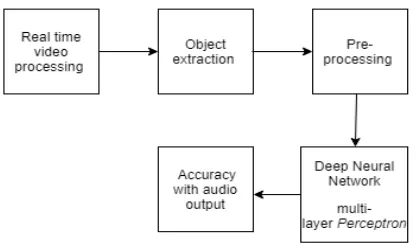
Figure 1: Block diagram of the proposed system
A. Pre-processing
In this image processing Preprocessing[6] is the process of the converting color image to grayscale image. Also resize the input image such as 300*300.
B. Object detection
Object detection in computer vision. It is the process of finding instances of real-time objects such as faces, bicycles, and buildings in images or videos. This algorithms typically use extracted features and learning algorithms to recognize instances of an object category.
C. Uses
Object detection[1] is widely used in computer vision task such as face detection, face recognition, video object co-segmentation. It is used in tracking objects, for example tracking a ball during a football match, tracking movement of a cricket bat, tracking a person in a video.
D. Category
Every object category has its own special options that helps in classifying the category – as an example all circles are spherical. Object class detection uses these special features. For example, once searching for circles, objects that are at a specific distance from some extent (i.e. the center) are sought.
D. Deep neural network
A deep neural network (DNN) is a man-made neural network (ANN) with multiple layers between the input and output layers. ... every mathematical manipulation intrinsically is taken into account a layer, and sophisticated DNN have several layers, thence the name "deep" networks.
Earlier versions of neural networks like the primary perceptions were shallow, composed of 1 input and one output layer, and at the most one hidden layer in between. More than three layers (including input and
output) qualify as “deep” learning.
can avoid this downside because they excel at unsupervised gaining knowledge.
Figure 2 : Deep Neural Network
E. Classification
Classification[10] is that the categorization of the thing supported a previously outlined categories or sorts. While each area unit supported discernible properties of the thing, classification may take discretionary boundaries supported the matter domain and freelance of detection.
F. Audio signal
Audio signals have frequencies within the frequence vary of roughly twenty to twenty,000 Hz (the limits of human hearing). Audio signals could also be synthesized directly, or could originate at a electrical device. Loudspeakers or headphones convert associate electrical audio signal into sound.
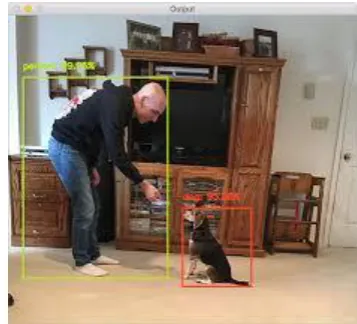
Figure 4 : Object Detection with Accuracy
V. RESULT
Until now, we have detected the particular real-time object with accuracy and voice. It will be useful for blind to detect the object easily . Object is detected and the accuracy is calculated based on the dataset which is matched with the trained dataset .Voice is given for the blind people to detect what object with the correct accuracy.
Figure 3: Real-Time object Detection with Accuracy
VI.CONCLUSION
VII. FUTURE WORK
In addition to the work done the idea can be further developed by giving the wearable glasses or watches to detect the object.
VIII. REFERENCES
[1]. K. K. Hati, P. K. Sa and B. Majhi, "Intensity vary based mostly Background Subtraction for Effective Object Detection," in IEEE Signal process Letters, vol. 20, no. 8, pp. 759-762, Aug. 2013.
[2]. F. Z. Chelali, N. Cherabit and A. Djeradi, "Face recognition system using skin detection in RGB and YCbCr color house," 2015 2d World symposium on web Applications and Networking (WSWAN), Sousse, 2015, pp. 1-7. [3]. P. Liu, "Colour detection and segmentation of
the scene based on Gaussian mixture model clustering," 2017 7th IEEE International Conference on Electronics Information and Emergency Communication (ICEIEC), Macau, 2017, pp. 503-506.
[4]. International Conference on special effects, Imaging and visual image. IEEE, 2009, pp.317–
322.
[5]. F.Labrosse, “Short and long-range visual navigation victimisation crooked wide
pictures,” artificial intelligence and
Autonomous Systems, vol. 55, no. 9, pp. 675–
684,2007.
[6]. W. Junqiu and Y. Yagi, “Integrating color and
shapetexture options for adaptational period
object chase,” IEEE Trans on Image process,
vol.17,no.2,pp.235–240,2008.
[7]. Q. Wang and Z. Gao, “Study on a period Image Object chase System,” in engineering and machine Technology, 2008.
ISCSCT’08.InternationalSymposiumon,vol.2,20
08.
[8]. L. Braun, D.G ”ohringer, T. Perschke, V. Schatz, M. H ”ubner, and J. Becker, “Adaptive
period image process of period Image process, vol. 4, no. 2, pp. 109–125, 2009.
[9]. Y. Meng, “Agent-based reconfigurable design
for period object pursuit,” Journal of period
Image process, vol. 4, no. 4, pp. 339–351,2009. [10]. A. J. Lipton, H. Fujiyoshi, and R. S. Patil,
“Moving target classification and pursuit from period video,” in Applications of laptop Vision,
1998. WACV’98. Proceedings . Fourth IEEE
Workshop on. IEEE, 1998, pp.8–1.
Cite this article as :
Kiruthiga N, Divya E, Haripriya R, Haripriya V., "Real Time Object Recognition and Classification using Deep Learning", International Journal of Scientific Research in Computer Science, Engineering and Information Technology (IJSRCSEIT), ISSN : 2456-3307, Volume 5 Issue 2, pp. 355-359, March-April 2019.
Available at doi :
https://doi.org/10.32628/CSEIT195262