
doi:10.4236/ijcns.2011.410073 Published Online October 2011 (http://www.SciRP.org/journal/ijcns)
Integer Factorization of Semi-Primes Based on Analysis of
a Sequence of Modular Elliptic Equations
*
Boris S. Verkhovsky
Computer Science Department, New Jersey Institute of Technology, Newark, USA E-mail: verb73@gmail.com
Received September 4, 2011; revised October 3, 2011; accepted October 11, 2011
Abstract
In this paper is demonstrated a method for reduction of integer factorization problem to an analysis of a se-quence of modular elliptic equations. As a result, the paper provides a non-deterministic algorithm that computes a factor of a semi-prime integer n=pq, where prime factors p and q are unknown. The proposed algorithm is based on counting points on a sequence of at least four elliptic curves 2
2 2
mod
y x x b n ,
where b is a control parameter. Although in the worst case, for some n the number of required values of pa-rameter b that must be considered (the number of basic steps of the algorithm) substantially exceeds four, hundreds of computer experiments indicate that the average number of the basic steps does not exceed six. These experiments also confirm all important facts discussed in this paper.
Keywords:Integer Factorization, Factorization of Semi-Primes, Non-Deterministic Algorithm, Elliptic Curves, Counting Points on Elliptic Curves, Crypto-Immunity, Dual Elliptic Curves
1. Introduction and Problem Statement
Security of information transmission via communication networks is provided by various cryptographic protocols. Crypto-immunity of these protocols is mostly based on hardness of either the integer factorization or the discrete logarithm problem.
There are several algorithms that factorize a semi- prime n=pq, where n is known, but its integer factors p and q are not. Fermat, Euler and other mathemati-cians/computer scientists introduced various algorithms for integer factorization. A survey of methods for factor-ing is provided in [1], and modern factorfactor-ing algorithms are described in [2]. Various special methods are considered in [3-5]; an application of cubic forms for factorization, as one of these special methods, is pro- vided in [6]. A comparison and analysis of factoring algorithms with exponential time complexity is provided in [7]. Algorithms based on the quadratic sieve (QS) are discussed in [8,9] while integer factoring via the number field sieve (NFS) is provided in [10]. Both the QS and NFS are the algorithms with sub-exponential time complexity. The application of special devises for fac-toring is described in [11,12]. A pioneering paper on
application of quantum computing for integer factoriza- tion is discussed in [13].
A new factoring algorithm proposed in this paper is based on the analysis of several modular elliptic equa- tions {called elliptic curves} and counting how many integer points {integer pairs (x,y)} satisfy these curves. The application of elliptic curves for factoring is de- scribed in [14-17]. Methods of counting points on elliptic curves are considered in [18,19] and more generally on modular equations with several variables in [20,21]. A relationship between integer factorization and constrai- ned discrete logarithm problems is analyzed in [22].
Consider n=pq, where both p and q are multi-digit long primes. There are three special cases: where
1) each factor is congruent to 1 modulo4:
1 mod 4
p q ; (1.1)
2)
pq
mod 4
0; (1.2) 3) p q 3 mod 4
.In this paper we discuss the factorization algorithm for (1.1) and (1.2) cases only.
Consider a sequence of elliptic curves (EC) modulo n:
2 2 2
( , ) : mod
E n b y x x b n
. (1.3)Here b1 is an integer control parameter.
Let denote the number of points on the EC (1.3).
( , )
P n b
2. Integer Factorization Algorithm
Input: n is a semi-prime;
Output:integer factors p and q of n;
1: if nmod4=3, then for a randomly chosen b com-puteP n b( , );
2: {Assign}: p: gcd P n b
, ,n; q:n p; {end of al- gorithm}; (2.1) 3: ifnmod4=1, then computeP n( ,1);4: if , thenp=q=3(mod4): the algorithm is not applicable;
( ,1)
P n n
else for b=2, 3, 5, 7, 11,···co-prime with n compute until four distinct integers A, Q, R, U are found; (2.2)
( , )
P n b
else, ifb that divides n is found, thenp:=b; q:n p; {end of algorithm}; (2.3) 5: Let Q:=max(A, Q, R, U); U:=min(A, Q, R, U); (2.4) 6: Compute S:
Q U A R
4; (2.5) 7: {Assign}:p: gcd
n,S ; q:n p; {end of algorithm}. (2.6) Remark 2.1: For sake of reference, the (2.1)-(2.6) algo-rithm is called the SQUAR-algorithm.Remark 2.2:For large n, computation of A, Q, R and U can be performed in parallel.
Remark 2.3: If b is not co-prime with n, then b divides n, i.e., either p or q is equal b.
Remark 2.4:Notice that Smin (A, Q, R, U). This obser- vation allows us to simplify the computations of S for large n {see the example with “larger” n in the Appendix}.
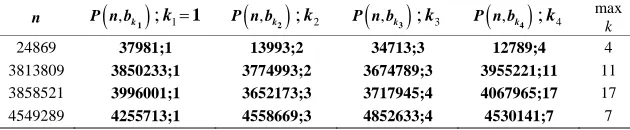
[image:2.595.139.454.326.391.2]3. Numeric Illustrations
Table 3.1. Number of points P n b
, k
on four elliptic curves E(n, b).n
,
1 k
P n b ;k11 P n b
, k2
;k2 P n b
, k3
;k3 P n b
, k4
;k4 maxk
24869 37981;1 13993;2 34713;3 12789;4 4 3813809 3850233;1 3774993;2 3674789;3 3955221;11 11 3858521 3996001;1 3652173;3 3717945;4 4067965;17 17 4549289 4255713;1 4558669;3 4852633;4 4530141;7 7
Table 3.2. Major steps of factorization algorithm.
n A Q R U S p; q
24869 37981 34713 13993 12789 1118 13; 1913
3813809 3955221 3850233 3774993 3674789 51298 1973; 1933
3858521 4067965 3996001 3717945 3652173 34434 1913; 2017
4549289 4852633 4558669 4530141 4255713 142098 pgcdn S,
We leave to readers the computation of p and q for the last semi-prime in Table 3.2.
RSA Factoring Challenge
Consider a product of two integers: n:=pq, where p=34905295108476509491478496199038\ 98133417764638493387843990820577; and q=327691329932667095499619881908344\ 61413177642967992942539798288533.
This n is called a RSA-129 Challenge [23]: given n, it was necessary to find its factors p and q. Since in the RSA-129 nmod4=1 and , therefore the proposed algorithm (2.1)-(2.6) is applicable to solve this problem.
1 mod 4
p q
4. Algorithm Validation
Definition 4.1: A non-zero integer a is called a quad-ratic residue (QR) modulo p if there exists an integer z
such that
2
mod
z a p ; (4.1)
otherwise a is called a quadratic non-residue (QNR) modulo p.
By the Euler criterion [1], if p is a prime, then a is a QR if and only if
( 1)/ 2
mod 1
p
a p .
The algorithm (2.1)-(2.6) is based on the following pro- position.
Conjecture 4.1:If p=q=1(mod4), then there exist two positive integers c<p and d<q, and four sets
such that
1, , 2 3and 4
S S S S
1 : , :
S b P n b U p c qd ; (4.2)
2 : , :
S b P n b A pc qd ; (4.3)
3 : , :
4 : , :
S b P n b Q pc qd
; (4.5)and where for every i j SiSj
5, 7,11,13,; and
; {set of all pri- mes} (4.6)
1 2 3 4
S S S S 1, 2, 3,
Example 4.1: For semi-prime n=1352513 the sets are as follows:
1, , 2 3and 4
S S S S
1 { 1, 2, 7, 41, ; 1267905}
S b U ;
2 5,13,17, 43, 61, 67, 71, 79, ; 1313517
S b A ;
3 3,11, 23, 29,37, 47,59, 73, ; 1389325
S b R ;
4 19,31,53, ; 1439305
S b Q .
A priori it is not obvious how this conjecture can help to factorize n, but, as it is shown below, this is the case. It is assumed in this paper that there exists an efficient algo-rithm that computes A, Q, R and U {see (4.2)-(4.5)}. From the definitions (4.2)-(4.5), it is easy to see that Q>max(A, R) and U<min(A, R),
i.e., that n
pdqc
cd max
A R, ; and
.
min A R, n pdqc cd R A
On the other hand, , otherwise it implies that pd=qc. Since both p and q are primes, the latter equation holds only if c=p and d=q, which is impossible by the conjecture.
Consider the smallest product U and the largest product Q {see (4.2) and (4.5)}.
As a result, we derive a system of three equations with four integer unknowns p, q, c and d:
pq=n;
pc
qd
Q;
pc
qd
U; (4.7) i.e., n(pdqd)cdQ; (4.8)and n(pdqc)cdU. (4.9) Therefore, (4.8) and (4.9) imply that
2.pdqc Q U (4.10)
Now consider another system of three equations with the same four unknowns:
pq=n;
p c q
d
A and
p c q d
R
; (4.11) i.e., n (pd qc) cd A; (4.12) and n(pdqc)cdR. (4.13) Then (4.12) and (4.13) imply that
pd–qc
AR
2; (4.14) and, as a result, from (4.10) and (4.14)
2
2 4qc Q U AR
c. (4.15) Finally, from qcn it follows that
gcd ,
q n q , and pn q. (4.16)
5. Alternative Computation of Factors
It is easy to see that one of the factors is an average
arithmetic of two greatest common divisors
gcd , gcd , 2
p A Q R U , and qn p ; (5.1).
However, computation of (5.1) is twice more complicated than the previously described procedure. Indeed, in (5.1) we must compute the two greatest common divisors and one addition, while in (2.6) it is necessary to compute only one greatest common divisor and three subtractions.
6. Generalized Factorization Algorithm
The factorization procedure described in (2.1)-(2.6) {SQUAR-algorithm} can be generalized and based on one of two following conjectures.
Considera set of modular elliptic curves
2 2
( , ) : mod
E n a y x x a n
, (6.1)where a0 , n=pq, p=q=1(mod4) and P(n, a) denotes the number of points on E(n, a).
Conjecture 6.1:If a is a quadratic residue modulo n, then there exist two positive integers c<p and d<q, and four sets S1, , S2 S3and S4 such that
1 : , 1:
S a P n a u pc qd ; (6.2)
2 : , 2:
S a P n a u p c qd ; (6.3)
3 : , 3:
S a P n a u pc qd ; (6.4)
4 : , 4:
S a P n a u pc qd ; (6.5)
and where for every i j SiSj ;
and S1S2S3S4
set of all QR modulo n
. (6.6)Conjecture 6.2:If a is aquadratic non-residue modulo n, then there exist two positive integers g<p and h<q, and four sets T T1, , 2 T3 and T4 such that
1 : , 1:
T a P n a w pg qh ; (6.7)
: , :
T2 a P n a w2 pg qh ; (6.8)
3 : , 3:
T a P n a w pg qh ; (6.9)
4 : , 4:
T a P n a w pg qh ; (6.10)
and where for every i j TiTj ; and
1 2 3 4 set of all modulo
T T T T QNR n . (6.11)
7. Algorithm Acceleration
The numeric experiments provided in Tables 3.1 and 7.1 show that for n=3813809 it is necessary to compute
six times {for b=1,2,3,5,7and 11} and for
( , )
)
n=3858521 eight times {for b=1,2,3,5,7,11,13 and 17} until four distinct integers A, Q, R and U are found. These numbers can be decreased if the following prop-erty holds.
Let p=q=1(mod4); n=pq and M(n, b) denote the number of points on a dual EC.
2 2 2
( )(mod
y x x b n ; (7.1)
Conjecture 7.1: If primes p and q are randomly se-lected, then with probability 3/4
,1
,1P n M n ; (7.2)
and, as a result, for every integer b
,
P n b M n b, ; (7.3) otherwise for every integer b
,
P n b M n b,
. (7.4) Proposition 7.2: If the factors p and q are congruent to 1 modulo n=pq, then the following identities hold for every positive integer m:
1
1, 2m , 2m
P n M n and
1
, 2m , 2
M n P n m1
. (7.5) A proof is provided in the Appendix.
Proposition 7.3: If the factors p and q are congruent to 1 modulo n=pq, and b1b2
and P n b
, 1
M n b
, 2
,then M n b
, 1
P n b
, 2
. (7.6) Example 7.1: Compute P(3813809,1)=38500233 and M(3813809,1)=3774993.Hence, (7.5) implies that there is no reason to compute P(3813809,2).
Instead, compute P(n,3)=3674789. Since P(n,3) is the third distinct value, thus, (7.2) and (7.3) imply that M(n,3) is the forth distinct value. Indeed, M(n,3)=3955221. There- fore, the algorithm requires only four basic steps instead of six. However, this acceleration does not work in 25% of the cases. For instance, it does not works for n=3858521, since neither (7.2) nor (7.3) hold. Indeed, because
P(3858521,1)=M(3858521,1),
the computation of M(3858521,3) provides no acceleration.
8. Dual Factorization Algorithm
It is assumed that nmod4=1 and , otherwise the algorithm is not applicable.
( ,1)
P n n
[image:4.595.55.288.682.719.2]1) Compute P n( ,1) and M n( ,1) (7.1);
Table 7.1. Excerpts from Table 3.1.
N=3813809 3850233;1 3774993;2 3674789;3 3955221;11
N=3858521 3996001;1 3652173;3 3717945;4 4067965;17
2) Case P n( ,1)M n( ,1):
for b=3, 5, 7, 11,…co-prime with n
compute P n b( , ) until P n b( , *)M n( ,1) and
P n b( , *)P n( ,1) (8.1) ifb that divides n is found, thenp:=b; q:=n/p; {end of algorithm}; (8.2) else compute M n b( , *); {all four distinct integers A,
Q, R, and U are found}; 3) Let
* *
: min ( , ), ( ,1), ( , ), ( ,1)
U P n b M n M n b P n ; (8.3)
* *
: max ( , ), ( ,1), ( , ), ( ,1)
Q P n b M n M n b P n ; (8.4)
and let A and R be other two values,
{i.e., U < A < Q and U<R<Q}; (8.5)
4) Compute S:
Q U |AR| / 4
; (8.6) 5) {Factors}: p: gcd
n S,
; q:=n/p; {end of algori- thm}; (8.7) 6) Case P n( ,1)M n( ,1): forb=3,5,7,11,… co-prime with n compute until four distinct integers A, Q, R, U,are found (2.2);
( , )
P n b
7)LetU:=min(A, Q, R, U); Q:=max(A, Q, R, U) (2.4); 8)Compute S:
Q U |AR| 4
(2.5);9) {Factors}:p: gcd
n,S
; q:=n/p; {end of algorithm} (2.6).For the sake of simplicity of notations,
let Pk :P n b( , k) andMk:M n b( , k) (8.8) Example 8.1: For semi-prime n=6525401 the sets
are as follows:
1, , 2 3and 4
S S S S
1 { 2, 5,13, 23, 37, 59, ; 6055665}
S b U ;
2 3,19, 47, ; 6514053
S b A ;
3 {
S b43, 53, 67,83,;R6519205}; (8.9)
4 1, 7,11,17, 29, 31, 41, ; 7012681
S b Q .
Therefore, the algorithm (2.1)-(2.6) requires at least fifteen basic steps, because 43 is the fourteenth prime (8.9). Yet, P1P2; and P2M1; imply that for every
1
k Pk Mk (7.2)-(7.4). Hence, instead of counting points
1, 2, 3, 5, 7,.., 43 P P P P P P
in fifteen elliptic curves, compute
3 6519205
M .
Thus, the algorithm (8.1-7) requires only four basic steps instead of fifteen.
Proposition 8.1: Let P1P2; and suppose
i Proof: Let assume that Mk Pj P,
where 3 j k 1 and i=1 or i=2.
i
Therefore, (7.5)-(7.6). However, this contradicts with the assumption (8.10). Q.E.D.
3 k j i P M M P
9. Conclusions
An algorithm and its generalizations for the integer fac-torization are proposed. These algorithms are as compu-tationally efficient as an algorithm that counts points on elliptic curves (1.3). Numerous computer experiments demonstrate that, if P(n,b) is computed for sequential values of prime b, then on average there are four distinct values among the first six ones.
The SQUAR-algorithm (2.1)-(2.6) and its enhanced modification (8.1)-(8.7) described above is based on Conjecture 4.1 and its generalization {Conjecture 5.1}. Although an analogous algorithm can be designed on the basis of Conjecture 5.2, such an algorithm is computa-tionally less efficient since it is a time-consuming pro-cedure to find a QNR modulo n.
10. Acknowledgements
I express my appreciation to Professor W. Gruver, Pro- fessor I. V. Semushin and to R. Rubino for constructive suggestions that improved the style of this paper. For computer experiments, the counting of points on the EC is performed with applets created by S. Sadik and by my former student B. Saraswat. I am grateful to them, and to my former students Dr. Y. S. Polyakov and S. Medicherla for their assistance in running computer experiments and to the reviewers for their fruitful comments. I deeply appreciate advice of Dr. D. Kanevsky.
11. References
[1] R. Crandall and C. Pomerance, “Prime Numbers: A Computational Perspective,” Springer, New York, 2001.
[2] H. Cohen, “A Course in Computational Algebraic Num- ber Theory,” Springer-Verlag, New York, 1996.
[3] D. Shanks, “Class Number, a Theory of Factorization and Genera,” Proceedings of Symposium of Pure Mathemat-ics, Vol. 20, 1969, pp. 415-440.
[4] S. Lehman, “Factoring Large Integers,” Mathematics of Computation, Vol. 28, 1974, pp. 637-646.
doi:10.1090/S0025-5718-1974-0340163-2
[5] J. Pollard, “Theorems on Factorization and Primality Testing,” Mathematical Proceedings of the Cambridge Philosophical Society, Vol. 76, 1974, pp. 521-528.
doi:10.1017/S0305004100049252
[6] J. Pollard, “Factoring with Cubic Integers,” The
Devel-opment of the Number Field Sieve, Lecture Notes in Mathematics, Vol. 1554, 1993, pp. 4-10.
doi:10.1007/BFb0091536
[7] C. Pomerance, “Analysis and Comparison of Some Inte-ger Factoring Algorithms,” In: H. W. Lenstra and R. Ti-jdeman, Eds., Computational Methods in NumberTheory, Math Centre Tracts—Part 1, Math Centrum, Amsterdam, 1982, pp. 89-139.
[8] C. Pomerance, “The Quadratic Sieve Factoring Algori- thm,” Advances in Cryptology, Proceedings of Eurocrypt’84, LNCS, Springer-Verlag, Berlin, 1985, 169-182.
[9] R. D. Silverman, “The Multiple Polynomial Quadratic Sieve,” Mathematics of Computation, Vol. 48, 1987, pp. 329-339. doi:10.1090/S0025-5718-1987-0866119-8
[10] J. Buhler, H. W. Lenstra and C. Pomerance, “Factoring Integers with the Number Field Sieve,” In: A. K. Lenstra and H. W. Lenstra, Eds., The Development of the Number Field Sieve, Lecture Notes in Mathematics, Springer-Verlag, Berlin, Vol. 1554, 1993, pp. 50-94.
doi:10.1007/BFb0091539
[11] A. K. Lenstra and A. Shamir, “Analysis and Optimization of the TWINKLE Factoring Device,” Advances in Cryp- tology—EUROCRYPT 2000, Lecture Notes in Computer Science, Springer-Verlag, New York, Vol. 1807, 2000, pp. 35-52.
[12] A. Shamir and E. Tromer, “Factoring Large Numbers with the TWIRL Device,” Advances in Cryptology— CRYPTO 2003, Lecture Notes in Computer Science, Sprin- ger-Verlag, New York, Vol. 2729, 2003, pp. 1-26.
[13] P. W. Shor, “Polynomial-Time Algorithms for Prime Fac- torization and Discrete Logarithms on a Quantum Com- puter,” SIAM Journal on Computing, Vol. 26, No. 5, 1997, pp. 1484-1509. doi:10.1137/S0097539795293172
[14] R. P. Brent, “Some Integer Factorization Algorithms Using Elliptic Curves,” Proceedings of 9thAustralian Computer Science Conference, Canberra, January 1985.
[15] H. W. Lenstra Jr., “Factoring Integers with Elliptic Cur- ves,” Annals of Mathematics, Vol. 126, No. 2, 1987, pp. 649-673.doi:10.2307/1971363
[16] P. L. Montgomery, “A FFT Extension of the Elliptic Curve Method of Factorization,” PhD Thesis, University of California, Los Angeles, 1992.
[17] R. Schoof, “Counting Points of Elliptic Curves over Fi-nite Fields,” Journal de Théorie des Nombres de Bor- deaux, Vol. 7, No. 1, 1995, pp. 219-254.
doi:10.5802/jtnb.142
[18] R. Lencier, D. Lubicz and F. Vercauteren, “Point Count-ing on Elliptic and Hyperelliptic Curves,” In: H. Cohen and G. Frey, Eds., Handbook of Elliptic and Hyperelliptic Curve Cryptography, Chapman & Hall/CRC, Boca Raton, 2006, pp. 407-453.
[20] A. Weil, “Number of Solutions of Equations in Finite Fields,” Bulletin of American Mathematical Society, Vol. 55, 1949, pp. 497-508.
doi:10.1090/S0002-9904-1949-09219-4
[22] Boris S. Verkhovsky, “Integer Factorization: Solution via Algorithm for Constrained Discrete Logarithm Problem,”
Journal of Computer Science, Vol. 5, No. 9, 2009, pp. 674-679. doi:10.3844/jcssp.2009.674.679
[23] “RSA Factoring Challenge,”
http://en.wikipedia.org/wiki/RSA_Factoring_Challenge [21] A. G. B. Lauder, “Counting Solutions to Equations in
Many Variables over Finite Fields,” Foundation of Com- putational Mathematics, Vol. 4, No. 3, 2004, pp. 221-267.
doi:10.1007/s10208-003-0093-y
Appendix
A1: Integer factorization of “larger” n
Suppose that n = 5,912,473,983,049,810,121,582,491,435,559,753. 1. Compute four distinct values A, Q, R, and U {see (2.2) and Table A.1}, where Q > max(A, R) > min(A,R) > U;
2. Reduce Q:Qmod10 ;28 A:Amod10 ;28 R:Rmod10 ;28 U:Umod1028; 3. S: ( Q U |AR|) / 4;
4. p=gcd(n,S) = 59,604,644,783,353,249; 5. q=n/p=99,194,853,094,755,497.
Table A.1.Values of A, Q, R, U and S.
Outputs Number of Points on Elliptic Curves and S
A 5,912,473,961,382,574,071,288,527,255,437,165
Q 5,912,474,044,194,428,121,806,637,304,594,777
R 5,912,474,004,717,045,895,410,530,286,258,045
U 5,912,473,921,905,192,397,824,270,895,949,025
S 19,738,690,974,965,090,844,456,218
A2: Proof of Proposition 7.2
Consider two elliptic curves for an integer positive m:
ECP: 2
2 1
; (A.1) 2m mody x x p
ECN: Y2X X
22m1
modp . (A.2) Let us show that there exist such integers u and w that substitutionsx:=uX modp; and y:=wY modp (A.3) establish an one-to-one correspondence between points of ECP and ECN for every integer m. First of all, from (A.1) we derive
2 2
2 2 1
2m mod
w Y uX u X p . (A.4)
Let us select integers u and w, each co-prime with p, for which hold w2u3
m do p
; (A.5) and 4u u3
modp
; or u2 4 mod
p
. (A.6) If integer solutions of (A.5) and (A.6) exist, then after cancellation of equal terms in both sides of (A.4) we derive (A.2).Therefore, from (A.6) u2 p1 mod
p
; (A.7) and from (A.5) w u3
modp
1
. (A.8) Integer u exists if pmod4=1; since (p–1)/2 is even.
Therefore,
1p1 / 2 modp , i.e., p–1 is a QR.Indeed, 2 1 1 / 2 2 1 / 2 1 1 / 2 mod 1
p p p
p p
p ; (A.9) since, as it shown in Table A.2, both 2 and p1 are simultaneously either QR or QNR modulo p.
Q.E.D.
Table A.2. Parity of quadratic residuosities of 2 and p1.
pmod8 pmod8=1 pmod8=5
2 QNRQR
1
p QNRQR
ExampleA1: Let p=13; find u and w, such that w2u3
mod13
;
and u29 mod13
, i.e., u3 .Then w2u327 mod13
1.
Therefore w=
1 and u=3. Indeed, 123 mod13 ; 33
3 4 3 mod13
.
[image:7.595.185.412.348.375.2]Therefore, ECPx3X y Y; (mod13)ECN.
Table A.3 shows one-to-one correspondence between ECP and ECN
Table A.3. Correspondence between (x,y) and (X,Y).
ECP (0,0) (3,0) (10,0) (2,4) (2,9) (11,6) (11,7)
ECN (0,0) (1,0) (12,0) (5,4) (5,9) (8,6) (8,7)
ExampleA2: Let p=41; find u and w, such that w2u3
mod 41
;and u2 4 37 mod 41
, i.e., u 18. Then w2u3 5832 10 mod 41
,
where both 10 and 31 are QR modulo 41. Therefore w=16; and u=18. Indeed,
2 3 3
16 18 mod 41 ; 18 4 18 mod 41
. Thus, ECPx18X y; 16Ymod 41 ECN.Table A.4 shows one-to-one correspondence between points on ECP and ECN for several non-Blum primes.
Table A.4.(u,w) as function of p.
p 13 29 37 41


![The European Council [Maastricht Summit 1991], Maastricht, 9-10 1991](data:image/gif;base64,R0lGODlhAQABAIAAAP///wAAACH5BAEAAAAALAAAAAABAAEAAAICRAEAOw==)