Sealing ability of AH26 and soft core gutta-percha using
different instrumentations techniques and irrigations
protocol: A SEM evaluation
Ferit Koçani, Blerim Kamberi, Edmond Dragusha
Dental Pathology and Endodontics, Faculty of Medicine/Stomatology, University of Prishtina, Prishtina, Kosovo Email: [email protected]
Received 21 March 2013; revised 26 April 2013; accepted 8 May 2013
Copyright © 2013 Ferit Koçani et al. This is an open access article distributed under the Creative Commons Attribution License,
which permits unrestricted use, distribution, and reproduction in any medium, provided the original work is properly cited.
ABSTRACT
Aim: The aim of this ex vivo study, with SEM, was to determine the effects of the smear layer on the root canal systems after different instrumentation tech- nique and irrigation protocol, obturated with carrier based gutta-percha (Soft Core) and AH26 sealer. Ma- terials & Methods: Forty freshly extracted human teeth were used for this study. The teeth were divided into two major groups according to instrumentation technique (Manual and ProFile) and then each major group into four subgroups according to irrigation protocol (Saline solution, 17% EDTA, 5.25% NaOCl). All of the samples were obturated with AH26 and Soft Core Heating Gutta-percha. The evaluation of the objectives was performed using a Scanning Elec- tron Microscope. Result: ProFile instrumentation fol- lowed with irrigation of 17% EDTA and 5.25% NaOCl, selaed with AH26 Soft Core Heating Gutta- percha provided maximal contact at the S/D interface. The S/D interface had a serrated appearance due to effective penetration of the sealer into the patent den- tin tubules. Conclusions: The adhezion of the respec- tive sealer is more successful in cases when smear layer was removed completely.
Keywords:Smear Layer; Irrigation; AH26; Manual;
ProFile; Sealer Adhesion
1. INTRODUCTION
Successful root canal therapy (RCT) relies on complete and accurate biomechanical preparation followed by a three dimensional obturation of the root canal systems in the absence of injury to periapical tissues [1]. The root filling is thought to be critical for the long-term outcome of root canal treatment [2,3]. A root filling may entomb
the surviving bacteria, and prevent apical and coronal leakage, that is, stop influx of periapical tissue-derived fluid from nourishing the remaining microbiota and pre- vent re-infection of the root canal system [4]. Animal and human outcome studies have shown that the root filling materials and techniques used currently are not optimal, and fail to fulfill the desired requirements [5]. Therefore, the development and maintenance of a seal is desirable and considered a major prerequisite to improve the out- come of root canal treatment. One relatively recent ap- proach to enhance the sealing ability of root fillings has been to apply adhesive concepts to endodontics [6,7]. Moreover, both apical and coronal leakage can occur fol- lowing seemingly successful root canal treatment [8-10]. The intricate nature of root canal morphology compli- cates the instrumentation procedure [11]. Fins, anasto- moses, isthmuses and other irregularities within the root canal system harbor tissue, microorganisms, and micro- bial by products that may lead to failure of root canal therapy [12]. On the other hand, microleakage of the root canal systems is a complex subject because many vari- ables may influence it, such as root filling techniques, the physical and chemical properties of the sealers used and the smear layer [13]. Success of the smear layer removal depends on the instrumentation techniques employed and irrigation solvents used [14,15]. Sodium hypochlorite so- lution has been the commonly used irrigant, especially due to its effective antibacterial properties and its excel- lent action as an organic material solvent [16]. However, the use of only one irrigant is not sufficient to achieve smear layer removal. Many reports have demonstrated the decalcifying capacity of agents such as 10% - 17% EDTA, 17% ethylene glycol tetraacetic acid (EGTA) [17],
val of inorganic components and debris from the instru- mented canals. The decalcifying efficacy of these acidic and chelating agents depends on the root length, applica- tion time, diffusion in the dentine and solution pH [17- 20].
The root canal filling must seal and prevent the ingress of organisms and tissue fluids into the root canal system [21]. The most common recommended obturation mate- rial is gutta-percha combined with a sealer [22-25]. Since gutta-percha is an impervious material, leakage through an obturated root canal system is most likely to occur at the sealer/dentin wall (S/D) and sealer/guttapercha (S/GP) interfaces [7,22,26-30].
On the other hand, with the discovery of the smear layer [31] the knowledge on endodontic instruments has improved and the techniques have advanced. Based on the evaluation of the influence of smear layer on leakage, its removal was advocated in order to reduce micro leak- age [26,32-39]. In contrast, many studies on instrumen- tation and obturation of the root canal systems demon- strate the difficulty (impossibility) to completely seal the root canal system [36]. Furthermore, interfacial micro leakage on S/D interface is demonstrated in different re- search [9,22,24,32,34,36,40,41].
The aim of this ex vivo study, with SEM, was to deter-
mine the effects of the smear layer on adhesion of sealing material after manual and ProFile instrumentation, irriga- tion with 5.25% sodium hypochlorite and 17% EDTA, obturated with carrier based gutta-percha (Soft Core) and AH26 sealer.
2. MATERIAL AND METHOD
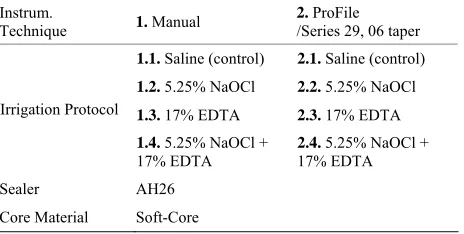
Forty freshly extracted human teeth were used for this study. They were preserved in saline solution. The sam- ples consisted of upper incisors and mandibular premo- lars with single root canal. All the teeth were divided into two major groups according to instrumentation technique and then each major group was divided into four sub- groups according to irrigation protocol. All of the sam- ples were obturated with AH26 and Soft Core Heating Gutta-percha (Table 1).
Group 1: Samples were manually instrumented with
K-file (Edenta, Switzerland). Subgroup 1.1. (Control) was irrigated with saline (DENTSPLY De Trey, GmbH, Ger- many). Subgroup 1.2. was irrigated with 5.25% NaOCl (ADD Vision, Germany). Subgroup 1.3. was irrigated with 17% EDTA (Calcinase, Lege Artis, Germany). Subgroup 1.4. was irrigated with 17% EDTA followed by 5.25% NaOCl. All of the samples in the Group 1 were sealed and obturated with AH26 (DENTSPLY DeTrey GmbH, Germany) sealer and Soft-Core gutta-percha. Soft-Core®
[image:2.595.309.541.123.240.2]Oven (Soft-Core Dental Production Aps, Denmark) cones were used for the heating of gutta-percha.
Table 1. Sample distribution according to instrumentation technique, irrigation protocol, sealing material and core ma- terial.
Instrum.
Technique 1. Manual
2. ProFile /Series 29, 06 taper 1.1. Saline (control) 2.1. Saline (control) 1.2. 5.25% NaOCl 2.2. 5.25% NaOCl 1.3. 17% EDTA 2.3. 17% EDTA Irrigation Protocol
1.4. 5.25% NaOCl +
17% EDTA 2.4. 5.25% NaOCl + 17% EDTA Sealer AH26
Core Material Soft-Core
Group 2: Samples were instrumented with Pro-File
(Series 29, 06 taper, Tulsa Dental Products, Tulsa OK, USA) rotary instruments utilizing the crown-down tech- nique with Endo-It hand piece (Aseptico Inc., USA) at 300 rpm clockwise rotations, 240 gr/cm*. Subgroup 2.1. was irrigated with saline. Subgroup 2.2. was irrigated with 5.25% NaOCl. Subgroup 2.3. was irrigated with 17% EDTA. Subgroup 2.4. was irrigated with 17% EDTA fol- lowed by 5.25% NaOCl. All of the samples in the Group 2 were sealed and obturated with AH26 sealer and Soft- Core Singles gutta-percha (Soft-Core® Singles, a 3rd Ge-
pictures were obtained from each tooth, one for each third (apical, middle and coronal).
3. RESULTS
Group 1(Manual Instrumentation): In the Subgroup 1.1.
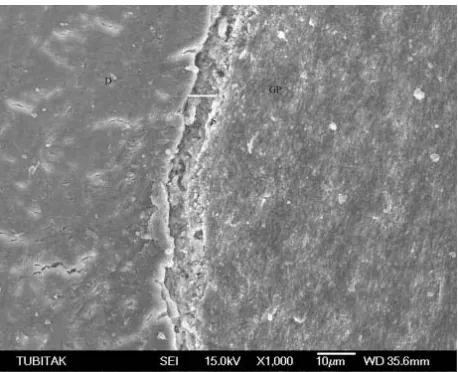
(Control subgroup) irrigated with saline, the smear layer was evident at the dentine/sealer (D/S) interface. The smear layer was equally distributed on every third of the root canal. Along with smear layer, debris was found in all samples of the control group. On visual inspection, the sealer/gutta-percha (S/GP) interface was linear and fully adhered with no interruption along the full length of the root. The contact of the sealer with the smear layer (where present) was weak and exhibiting voids at the in- terface in all control samples (Figure 1).
Subgroup 1.2. samples were irrigated with 5.25% NaOCl and they had a better contact at the S/GP rather than S/D interface.
The S/D interface had no visible smear layer present that enabled full adhesion on SEM evaluation. The D/S interface had full linear appearance. The apical one third of all the samples in this subgroup had free debris par- ticles visible and located in the S/D interface. Subgroup 1.3., irrigated with 17% EDTA, produced a smear layer that covered surfaces affected by instrumentation.
[image:3.595.58.287.524.710.2]The S/D interface presented with voids throughout the root length while S/GP interface had a full linear ad- hesion on SEM evaluation. Subgroup 1.4., irrigated with 5.25 NaOCl and 17% EDTA had a maximum, linear and continual contact at the S/D interface with no smear layer in between. At the coronal one third of the root, the sea- ler had a maximum contact with the dentin wall, the den- tinal tubules were visible and patent. The contact at this interface was linear with a tendency for sealer to pe- netrate patent dentinal tubules. The sealer at the D/S and
Figure 1. The contact of the sealer (S) with the dentine (D), exhibiting voids at the interface.
D/GP intefaces was visually compact with no voids. The middle one third of the roots had also good con- tact with no smear layer in between. Patent dentin tu- bules were visible with some of them being pentrated by sealer “pluggs”. The S/GP interface was linear and con- tinual while the S/D interface was serrated. This shape of contact at the S/D interface is a result of absence of smear layer at the dentin surface of the root canal. At the apical one third of the root the adhesion at S/D interface was weaker due to the derbis present at this level. The S/GP interface was liner and continual as opposed to the S/D interface that was interrupted in several areas along the apical third of the root canal (Figure 2).
Group 2 (ProFile Instrumentation): Subgroup 2.1.
(Control subgroup) irrigated with saline, at the coronal one third of the root canal the S/D interface had a weaker adhesion contact with visible voids, while the S/GP in- terface had a full linear contact. At the middle and apical one third, the S/D interface had voids throughout these root levels and its volume. The S/GP interface had full adhesion on SEM evaluation. Subgroup 2.2. irrigated with 5.25% NaOCl on the instrumented surfaces of the root canal walls produced a smear layer which covered dentin tubules. The S/GP interface had full linear adhe- sion with no voids visible on SEM throughout the length of the root. The S/D interface at the coronal one third was linear with some penetration of the sealer into the patent tubules. At the middle and apical one third of the root, the contact at this interface showed voids filled with free debris particles.
Subgroup 2.3. Irrigated with 17% EDTA on SEM eva- luation showed smear layers in between the S/D interface. The contact at the S/GP interface had full adhesion at all levels of the root. The voids at the S/D interface with smear layer present are more visible at the middle and apical thirds of the root along with remaining debris.
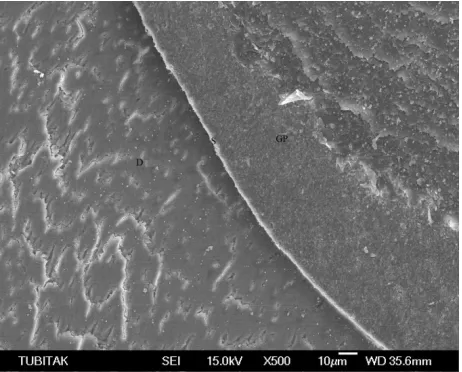
[image:3.595.309.539.524.711.2]Subroup 2.4. irrigated with 17% EDTA and 5.25% NaOCl provided best, maximal contact at the S/D inter- face. (Figure 3). The visual appearance of the S/D inter-
face was linear with absence of smear layer that was ef- ficiently removed with this irrigation protocol.
The S/D interface had a serrated appearance due to ef- fective penetration of the sealer into the patent dentin tu- bules. The S/GP interface was linear at full length of the coronal and middle two thirds of the root. At the apical one third of the root, free debris particles that weaken the adhesion at the S/D interface were evident, as demon- strated with SEM evaluation.
4. DISCUSSION
[image:4.595.57.288.513.699.2]White [42] studied the penetration of the obturation ma- terial into the dentine tubules using scanning electron mi- croscope techniques. In his study, canals were sealed with silicone and gutta-percha using cold lateral condensation technique. The penetration of the obturation material was more evident in the areas of dentinal walls with no smear layer. Saleh [26] with EDS, followed the dispersion of the sealing material and the contact with dentine walls. The results show that when the smear layer was removed, penetration of the sealing material in dentine tubules was evident. In some cases when there was no penetration of the sealing material in the dentine walls the thickness of the material/paste was in form of bonding fat system, in contrast to those cases were the penetration of tubules was evident the sealer layer was very thin. On the other hand, instrumentation and irrigation with 17% EDTA and 5.25% NaOCl, sealed with AH26, CRCS and RSA with lateral condensation of gutta-percha [43], showed that AH26 achieved the best adaptation and deepest pe- netration into dentine tubules. Also, is demonstrated ad-
Figure 3. The appearance of the S/D interface is linear with absence of smear layer that was efficiently removed with ir- rigation protocol.
hesive superiority of AH26/ silverfree sealer at the apical third of the root canal using methylen blu penetration method [24,45]. Soussa [45] evaluated the adhesive pro- perties of Sealapex, Sealer 26, N-Rickert, and Endofill sealers with dye penetration method when irrigating with EDTA, EGTA and CDTA. Dye penetration was measured with a stereomicrocope. They found no correlation be- tween the test for adhesiveness and microleakage since irrigation alone is insufficient for successful removal of smear layer from dentinal walls. Schafer [46] investi- gated the cleaning effectiveness of hand (K-Flexofiles) and automated instrumentation (Ni-Ti ProFile system). Complete cleanliness (debris and smear layer) was not achived by any of the techniques. As well instrumenta- tion result, especially in curved canals, were obtained with rotary ProFile instruments. Hulsman [47] compared root canal preparation using two different rotary Ni-Ti instru- ments, Hero 642 and Quantec. SEM evaluation of clean- ing ability, Hero 642 achieved better result on removing debris and smear layer. Versumer [48] compared several parameters of root canal preparation using two different rotary Ni-Ti instruments, ProFile 0.04 were used in crown- down whereas LightSpeed in step-back technique. For debris and smear layer removal, in the coronal third of the root canal LightSpeed performed significantly better result than ProFile. In the middle and apical thirds the differences were not significant. Both Ni-Ti systems ma- intened the original canal curvature well, with no statis- tical singificance between group. Mayer [49] studied the influence of two rotary preparation technique on clean- liness of the shaped canals, ProFile 0.04 and LightSpeed, and evaluated debris and smear scores after ultrasonically activated irrigants during canal preparation. All groups were irrigated using 5.25% NaOCl and 17% EDTA. Research results show that regardless what instrumen- tation technique is used for root canal treatment, the smear layer will be present and covering the dentin throughut the root canal length if saline is used as an irrgation sol- ution [50-52]. The ability to efectively clean the root ca- nal space depends on the irrigation solution and instru- mentation technique [53].
root canal wall and extending into the dentinal tubules [50,52]. The smear layer produced by instrumentation should be removed because it increases microleakage at the S/D interface. Shaping procedures can be completed more easily, quickly and predictably. However, effec- tive cleaning of the entire root canal system using Ni-Ti rotary instruments has not yet been demonstrated [57]. Comparisons between rotary NiTi instruments and stain- less steel hand instruments suggest that the manual tech- nique with stainless steel instruments results in an equi- valent cleaning ability [58] or even better performance, with significantly less residual debris [59]. Another study showed significantly less smear layer and pulpal debris remaining in the apical third of the root canal compared with coronal and middle thirds, with similar results to the conventional manual technique using stainless steel files or NiTi instruments [58,60]. Rotary NiTi instrumentation of root canals have a superior ability of preserving the original root curvatures [61], however a recent study re- vealed no statistical differences between rotary NiTi in- struments and stainless steel hand instrumentation tech- nique of root canal [62]. Rotary NiTi instruments have significantly better centering ability and decrease the pre- valence and degree of transportation and straightening compared with hand instrumentation technique of root canal [63,64]. Different rotary NiTi systems indicated large untreated areas on the canal wall, these areas tended to be on the convex curvature at midroot and the concave side of the curvature more apically [65]. Irrigants have a predominant role in successful removal of debris and root canal disinfection. Irrigation of root canal space with NaOCl at different concentrations is insufficinet for re- moval of the smear layer regardless of the instrumenta- tion technique. Irrigation with 17% EDTA, creates a smear layer with homogenous appearance that completely co- vers the root canal dentine regardless of the instrumenta- tion technique [66].
5. CONCLUSIONS
Considering that the adhesion of a sealer is directly po- portional to the traction tension, that adhesion will be as great as the force necessary to displace the sample con- taining the sealer. Adhesion to a root canal sealer means its capacity to attach to the dentinal walls of the root ca- nal and provide bonding between it and gutta-percha points.
Conclusivelly, it may be said that the removal of smear layer is possible if irrigation is done with a combination of two solutions (17% EDTA and 5.25% NaOCl), regard- less of the instrumentation technique. Hence the adhe- sion of the respective sealer is more successful in cases when smear layer is removed completely.
6. CLINICAL SIGNIFICANCE
Smear layer contains inorganic and organic substances as well as fragments of odontoblastic processes, microorga- nisms an necrotic debris. Elimination or significant re- duction of irritants from the root canal system is the es- sential elements for successful outcomes.
REFERENCES
[1] Schilder, H. (1967) Filling root canals in three dimen- sions. Dental Clinics of North America, 11, 723-744. [2] Sjögren, U., Hägglund, B., Sundqvist, G. and Wing, K.
(1990) Factors affecting the long-term results of endo- dontic treatment. Journal of Endodontics, 16, 498-504. doi:10.1016/S0099-2399(07)80180-4
[3] Buckley, M. and Spаngberg, W. (1995) The prevalence and technical quality of endodontic treatment in an Ame- rican subpopulation. Oral Surgery, Oral Medicine, Oral Pathology, Oral Radiology and Endodontology, 79, 92- 100.
[4] Sundqvist, G., Figdor, D., Persson, S. and Sjögren, U. (1998) Microbiologic analysis of teeth with failed endo- dontic treatment and the outcome of conservative re-treat- ment. Oral Surgery, Oral Medicine, Oral Pathology, Oral Radiology and Endodontology, 85, 86-93.
doi:10.1016/S1079-2104(98)90404-8
[5] Katebzadeh, N., Hupp, J. and Trope, M. (1999) Histo- logical periapical repair after obturation of infected root canals in dogs. Journal of Endodontics, 25, 364-368. doi:10.1016/S0099-2399(06)81173-8
[6] Leonard, J.E., Gutmann, J.L. and Guo, I.Y. (1996) Apical and coronal seal of roots obturated with a dentine bond- ing agent and resin. International Endodontic Journal, 29, 76-83. doi:10.1111/j.1365-2591.1996.tb01165.x
[7] Mannocci, F. and Ferrari, M. (1998) Apical seal of roots obturated with laterally condensed gutta-percha, epoxy resin cement, and dentin bonding agent. Journal ofEndo- dontics, 24, 41-44. doi:10.1016/S0099-2399(98)80212-4 [8] Ricucci, D. and Langeland, K. (1998) Apical limit of root
canal instrumentation and obturation, part 2. Histological study. International Endodontic Journal, 31, 394-409. doi:10.1046/j.1365-2591.1998.00183.x
[9] Pommel, L., Jacquot, B. and Camps, J. (2001) Lack of Correlation among three methods for evaluation of apical leakage. Journal of Endodontics, 27, 347-350.
doi:10.1097/00004770-200105000-00010
[10] Cobankara, F.K., Orucoglu, H., Sengun, A. and Belli, S. (2006) The quantitative evaluation of apical sealing of four endodontic sealers. Journal of Endodontics, 32, 66- 68. doi:10.1016/j.joen.2005.10.019
[11] Frank, J.V. (1984) Root canal anatomy of the human per- manent teeth. Oral Surgery, Oral Medicine, Oral Pathol- ogy, 58, 589-599. doi:10.1016/0030-4220(84)90085-9 [12] Çalişkan, M.K., Pehlivan, Y., Sepetçioğlu, F., Türkün, M.
Endodontics, 21, 200-204.
doi:10.1016/S0099-2399(06)80566-2
[13] White, R.R., Goldman, M. and Lin, P.S. (1984) The in- fluence of the smeared layer upon dentinal tubule pene- tration by plastic filling materials. Journal of Endodontics,
10, 558-562. doi:10.1016/S0099-2399(84)80100-4 [14] Koçani, F., Kamberi, B., Dragusha, E., Mrasori, S. and
Haliti, F. (2012) The cleaning efficiency of the root canal after different instrumentation technique and irrigation protocol: A SEM analysis. Open Journal of Stomatology, 2, 69-76.
[15] Koçani, F., Kamberi, B. and Dragusha, E. (2012) Manual sonic-air and ultrasonic instrumentation of root canal and irrigation with 5.25% sodium hypochlorite and 17% Ethyl- enediaminetetraacetic acid: A scanning electron micro- scope study. Journal of Conservative Dentistry, 15, 118- 122. doi:10.4103/0972-0707.94575
[16] Moorer, W.R. and Wesselink, P.R. (1982) Factors pro- moting the tissue dissolving capability of sodium hypo- chlorite. International Endodontic Journal, 15, 187-196. doi:10.1111/j.1365-2591.1982.tb01277.x
[17] Sudha, R., Sukumaran, V.R., Ranganathan, J. and Bha- radwaj, N. (2006) Comparative evaluation of the effect of two different concentrations of EDTA at two different PH and time periods on root dentin. Journal of Conservative Dentistry, 9, 36-42. doi:10.4103/0972-0707.41307 [18] Torabinejad, M., Khademi, A.A., Babagoli, J., Cho, Y.,
Johnson, W.B., Bozhilov, K., et al. (2003) A new solu-
tion for the removal of smear layer. Journal of Endodon- tology, 29, 170-175.
doi:10.1097/00004770-200303000-00002
[19] Ballal, N.V., Kandian, S., Mala, K., Bhat, K.S. and Acharya, S. (2009) Comparison of the efficacy of maleic acid and ethylenediaminetetraacetic acid in smear layer removal from instrumented human root canal: A scanning electron microscopic study. Journal of Endodontology,
35, 1573-1576. doi:10.1016/j.joen.2009.07.021
[20] Rai, B., Jain, R., Kharb, S., Miglani, S. and Anand, S.C. (2006) Comparative anti-microbial activity of 15% EDTA and 15% dimercaptosuccinic acid (DMSA). Journal of Conservative Dentistry, 9, 32-35.
doi:10.4103/0972-0707.41306
[21] Goldberg, F., Bernat, M.I., Spielberg, C., Massone, E.J. and Piovano, S.A. (1985) Analysis of the effect of ethyl- enediaminetetraacetic acid on the apical seal of root canal fillings. Journal of Endodontics, 11, 544-547.
doi:10.1016/S0099-2399(85)80200-4
[22] Lares, C. and ElDeeb, M.E. (1990) The sealing ability of the thermafil obturation technique. Journal of endodon- tics, 16, 474-479. doi:10.1016/S0099-2399(07)80176-2 [23] Gençoğlu, N., Samani, S. and Günday, M. (1993) Den-
tinal wall adaptation of thermoplasticized gutta-percha in the absence or presence of smear layer: A scanning elec- tron microscopic study. Journal of Endodontics, 19, 558- 562. doi:10.1016/S0099-2399(06)81286-0
[24] Lee, K.-W., Williams, M.C., Camps, J.J. and Pashley, D.H. (2002) Adhesion of endodontic sealers to dentin and gutta-percha. Journal of Endodontics, 28, 684-688.
doi:10.1097/00004770-200210000-00002
[25] Zielinski, T.M., Baumgartner, J.C. and Marshall, J.G. (2008) An evaluation of gutta flow and gutta-percha in the filling of lateral grooves and depressions. Journal of Endodontics, 34, 295-298.
doi:10.1016/j.joen.2007.12.004
[26] Saleh, I.M., Ruyter, I.E., Haapasalo, M.P. and Ørstavik, D. (2003) Adhesion of endodontic sealers: Scanning elec- tron microscopy and energy dispersive spectroscopy. Jour- nal of Endodontics, 29, 595-601.
doi:10.1097/00004770-200309000-00013
[27] Limkangwalmongkol, S., Burtscher, P., Abbott, P.V., Sand- ler, A.B. and Bishop, B.M. (1991) A comparative study of the apical leakage of four root canal sealers and later- ally condensed gutta-percha. Journal of Endodontics, 17, 495-499. doi:10.1016/S0099-2399(06)81797-8
[28] Oguntebi, B.R. and Shen, C. (1992) Effect of different sealers on thermoplasticized gutta-percha root canal ob- turations. Journal of Endodontics, 18, 363-366.
doi:10.1016/S0099-2399(06)81219-7
[29] Wu, M.-K., De Gee, A.J. and Wesselink, P.R. (1997) Lea- kage of AH26 and ketac-endo used with injected warm gutta-percha. Journal of Endodontics, 23, 331-334. doi:10.1016/S0099-2399(97)80417-7
[30] Nagas, E., Altundasar, E. and Serper, A. (2009) The ef- fect of master point taper on bond strength and apical sealing ability of different root canal sealers. Oral Sur- gery, Oral Medicine, Oral Pathology, Oral Radiology,
and Endodontology, 107, e61-e4. doi:10.1016/j.tripleo.2008.09.020
[31] Mc Comb, D. and Smith, C. (1975) A preliminary scan- ning electron microscopy study of root after endodontic procedures. Journal of Endodontics, 1, 238-242. doi:10.1016/S0099-2399(75)80226-3
[32] Lester, K.S. and Boyde, A. (1977) Scaning electron mi- croscopy of instrumented, irigated and filled root canals.
British Dental Journal, 143, 359-367. doi:10.1038/sj.bdj.4804007
[33] Goldman, M., Goldman, L.B., Cavaleri, R., Bogis, J. and Sun, L.P. (1982) The efficacy of several endodontic irri- gating solutions: A scanning electron microscopic study: Part 2. Journal of endodontics, 8, 487-492.
doi:10.1016/S0099-2399(82)80073-3
[34] Evans, J.T. and Simon, J.H.S. (1986) Evaluation of the apical seal produced by injected thermoplasticized gutta- percha in the absence of smear layer and root canal sealer.
Journal of Endodontics, 12, 101-107.
doi:10.1016/S0099-2399(86)80299-0
[35] Goldman, M., Goldman, L.B., Cavaleri, R., Bogis, J. and Lin, P.S. (1982) The efficacy of several endodontic irri-gating solutions: A scanning electron microscopic study: Part 2. Journal of National Cancer Institute, 8, 487-492. doi:10.1016/S0099-2399(82)80073-3
[36] Gettleman, B.H., Messer, H.H. and ElDeeb, M.E. (1991) Adhesion of sealer cements to dentin with and without the smear layer. Journal of Endodontics, 17, 15-20. doi:10.1016/S0099-2399(07)80155-5
selink, P.R. (1995) Effect of thickness on the sealing abil- ity of some root canal sealers. Oral Surgery, Oral Medi- cine, Oral Pathology, Oral Radiology, and Endodontol- ogy, 80, 338-344. doi:10.1016/S1079-2104(05)80392-0 [38] Kokkas, A.B, Boutsioukis, A.C., Vassiliadis, L.P. and
Stavrianos, C.K. (2004) The influence of the smear layer on dentinal tubule penetration depth by three different root canal sealers: An in vitro study. Journal of Endodon- tics, 30, 100-102.
doi:10.1097/00004770-200402000-00009
[39] Ordinola-Zapata, R., Bramante, C.M., Graeff, M.S.Z., et al. (2009) Depth and percentage of penetration of endo- dontic sealers into dentinal tubules after root canal obtu- ration using a lateral compaction technique: A confocal laser scanning microscopy study. Oral Surgery, Oral Medicine, Oral Pathology, Oral Radiology, and Endo- dontology, 108, 450-457.
doi:10.1016/j.tripleo.2009.04.024
[40] Oruçoğlu, H., Sengun, A. and Yilmaz, N. (2005) Apical leakage of resin based root canal sealers with a new computerized fluid filtration meter. Journal of Endodon- tics, 31, 886-890.
doi:10.1097/01.don.0000164134.79052.b3
[41] Özok, A.R., Van Der Sluis, L.W.M., Wu, M.-K. and Wesselink, P.R. (2008) Sealing ability of a new polydi- methylsiloxane-based root canal filling material. Journal of Endodontics, 34, 204-207.
doi:10.1016/S0099-2399(87)80195-4
[42] White, R.R., Goldman, M. and Lin, P.S. (1987) The in- fluence of the smeared layer upon dentinal tubule pene- tration by endodontic filling materials. Part II. Journal of Endodontics, 13, 369-374.
doi:10.1046/j.1365-2842.2003.01084.x
[43] Sevimay, S. and Dalat, D. (2002) Evaluation of penetra- tion and adaptation of three different sealers: A SEM study. Journal of Oral Rehabilitation, 30, 951-955. doi:10.1046/j.1365-2842.2003.01084.x
[44] Suprabha, B., Sudha, P. and Vidya, M. (2002) A com- parative evaluation of sealing ability of root canal sealers.
Indian Journal of Dental Research, 13, 31-36.
[45] Sousa-Neto, M., Passarinho-Neto, J., Carvalho-Junior, J., Cruz-Filho, A., Pecora, J. and Saquy P. (2002) Evaluation of the effect of EDTA, EGTA and CDTA on dentin ad- hesiveness and microleakage with different root canal sealers. Brazilian Dental Journal, 13, 123-128.
doi:10.1590/S0103-64402002000200009
[46] Schäfer, E. and Zapke, K. (2000) A comparative scanning electron microscopic investigation of the efficacy of manual and automated instrumentation of root canals.
Journal of Endodontics, 26, 660-664. doi:10.1097/00004770-200011000-00007
[47] Hülsmann, M., Schade, M. and Schäfers, F. (2001) A comparative study of root canal preparation with HERO 642 and Quantec SC rotary Ni-Ti instruments. Interna- tional Endodontic Journal, 34, 538-546.
doi:10.1046/j.1365-2591.2001.00431.x
[48] Versümer, J., Hülsmann, M. and Schäfers, F. (2002) A comparative study of root canal preparation using Pro- File.04 and Lightspeed rotary Ni-Ti instruments. Interna-
tional Endodontic Journal, 35, 37-46. doi:10.1046/j.1365-2591.2002.00454.x
[49] Mayer, B.E., Peters, O.A. and Barbakow, F. (2002) Ef- fects of rotary instruments and ultrasonic irrigation on debris and smear layer scores: a scanning electron micro- scopic study. International Endodontic Journal, 35, 582- 589. doi:10.1046/j.1365-2591.2002.00502.x
[50] McComb, D. and Smith, C. (1975) A preliminary scan- ning electron microscopy study of root after endodontic procedures. Journal of Endodontics, 1, 238-242. doi:10.1016/S0099-2399(75)80226-3
[51] Goldman, L., Goldman, M. and Kronman, J. (1981) The efficacy of several irrigating solutions for endodontics: A scanning electron microscopic study. Oral Surgery, 52, 197-204. doi:10.1016/0030-4220(81)90319-4
[52] Mader, C., Baumgartner, J. and Peters, D. (1984) Scan- ning electron microscopic investigation of the smeared layer on root canal walls. Journal of Endodontics, 10, 477-483. doi:10.1016/S0099-2399(84)80204-6
[53] Thompson, S. and Dummer, P. (1997) Shaping ability of ProFile.04 Taper Series 29 rotary nickel-titanium instru- ments in simulated root canals. International Endodontic Journal, 30, 8-15.
[54] Bertrand, M., Pizzardini, P., Muller, M., Médioni, E. and Rocca, J. (1999) The removal of the smear layer using the Quantec system. A study using scanning electron micro- scope. International Endodontic Journal, 32, 217-224. doi:10.1046/j.1365-2591.1999.00231.x
[55] Gambarini, G. (1999) Shaping and cleaning the root canal system: A scanning electron microscopic evaluation of a new instrumentation and irrigation technique. Journal of Endodontics, 25, 800-803.
doi:10.1016/S0099-2399(99)80300-8
[56] Gambarini, G. and Laszkiewicz, J.A. (2002) scanning electron microscopic study of debris and smear layer re- maining following use of GT rotary instruments. Interna- tional Endodontic Journal, 35, 422-427.
doi:10.1046/j.1365-2591.2002.00495.x
[57] Siqueira, J.J., Araújo, P., Garcia, P., Fraga, R. and Sabóia Dantas, C. (1997) Histological evaluation of the effec- tiveness of five instrumentation techniques for cleaning the apical third of root canals. Journal of Endodontics, 23, 499-502. doi:10.1016/S0099-2399(97)80309-3
[58] Prati C, Foschi F, Nucci C, Montebugnoli L and Mar- cionni S. (2004) Appearance of the root canal walls after preparation with NiTi rotary instruments: A comparative SEM investigation. Clinical Oral Investigations, 8, 102- 110. doi:10.1007/s00784-004-0253-8
[59] Ahlquist, M., Henningsonn, O., Hultenby, K. and Ohlin, J. (2001) The effectiveness of manual and rotary technique in the cleaning of root canals: A scanning electron mi- croscopy study. International Endodontic Journal, 34, 533-537. doi:10.1046/j.1365-2591.2001.00429.x
[61] Schafer, E. and Schlingemann, R. (2003) Efficiency of rotary nickel-titanium FlexMaster instruments compared with stainless steel hand K-Flexofile. Part 2. Cleaning ef- fectiveness and instrumentation result in severely curved root canals of extracted teeth. International Endodontic Journal, 35, 514-521.
doi:10.1046/j.1365-2591.2002.00515.x
[62] Guelzow, A., Stamm, O., Martus, P. and Kielbassa, A. (2005) Comparative study of six rotary nickel-titanium systems and hand instrumentation for root canal prepara- tion International Endodontic Journal, 38, 743-752. doi:10.1111/j.1365-2591.2005.01010.x
[63] Yoshimine, Y., Ono, M. and Akamine, A. (2005) The shaping effects of three nickel-titanium rotary instru- ments in simulated S-shaped canals. Journal of Endo- dontology, 31, 373-375.
doi:10.1097/01.don.0000140568.40462.43
[64] Iqbal, M., Firic, S., Tulcan, J., karabucak, B. and Kim, S. (2004) Comparision of apical transportation between Pro- File and ProTaper NiTi rotary instruments. International Endodontic Journal, 37, 359-364.
doi:10.1111/j.1365-2591.2004.00792.x
[65] Peters, O., Peters, C., Schonenberger, K. and Barbakow, F. (2003) ProTaper rotary root canal preparation: Effect of canal anatomy on final shape analyzed by micro CT.
International Endodontic Journal, 36, 86-92. doi:10.1046/j.1365-2591.2003.00626.x
[66] Baumgartner, J. and Mader, C. (1987) A scanning elec- tron microscopic evaluation of four root canal irrigation regimens. Journal of Endodontics, 13, 147-157.