Research Article
a
January
2018
Computer Science and Software Engineering
ISSN: 2277-128X (Volume-8, Issue-1)
A Review on Various Techniques of Image Fusion for
Quality Improvement of Images
Aman Saini
Research Scholar at Department of Computer Science and Engineering, PTU, Punjab, India
Pratibha
Assistant Professor at Department of Computer Science and Engineering, PTU, Punjab, India
Abstract- Image fusion is a significant topic in perspective processing. Image fusion is a process of mixing the appropriate data from some images into a single image where the resulting merged picture will be more useful and complete than any of the input images. Multi focus Image fusion is procedure of combining information of several imagery of a view and consequently has \everywhere in focus "image. Lifting technique allows faster implementation of wavelet transform. It requires half number of computations as compared to traditional convolution approach.
Keywords: dip, Image Fusion, Image Lifting Technique, DCT, DWT, and SWT.
I. INTRODUCTION
1.1 Digital Image Processing
Computerized picture transforming is the utilization of PC calculations to perform picture handling on advanced pictures. As a subcategory or field of advanced sign handling, computerized picture preparing has numerous preferences over simple picture transforming. It permits a much more extensive scope of calculations to be connected to the info information and can stay away from issues.
1.2 Image Fusion
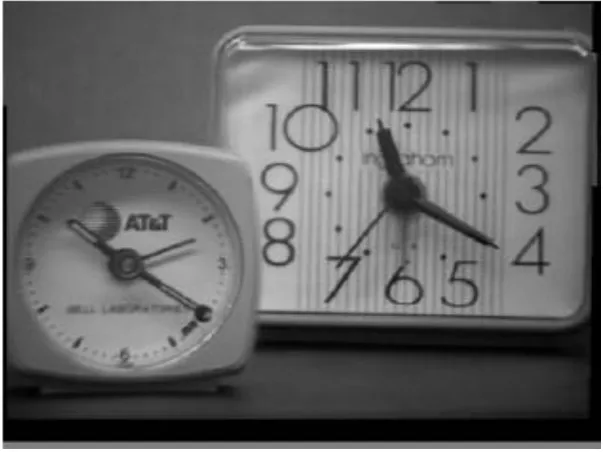
Image fusion is a significant topic in perspective processing. Image fusion is a process of mixing the appropriate data from some images into a single image where the resulting merged picture will be more useful and complete than any of the input images. The objective of image fusion is to make composite image suitable not only for human visual system but also for image processing tasks, for example, enhancement and de-noising, segmentation, compression, feature detection and object recognition.
Image fusion techniques are widely used in various applications such as remote sensing, medical imaging, military and astronomy. Image fusion is a process of combining two or more images to enhance the information content. Image fusion techniques are important as it improves the performance of object recognition systems by integrating many sources of satellite, airborne and ground based imaging systems with other related data sets. Further, it also helps in sharpening the images, improve geometric corrections, enhance certain features that are not visible in either of the images, replace the defective data, complement the datasets for better decision making.
ISSN(E): 2277-128X, ISSN(P): 2277-6451, pp. 107-111
Figure 1.1: Fused Image
Some general requirements must be considered:
The fusion procedure shouldn't discard any information within the source images.
The fusion procedure shouldn't present any artifacts or inconsistencies that may distract or mislead an individual observer or any following vision processing steps.
The fusion procedure should be consistent, strong and have, around probable, the capability to tolerate imperfections such as for instance noise or miss registrations.
1.3 Multi focus image fusion
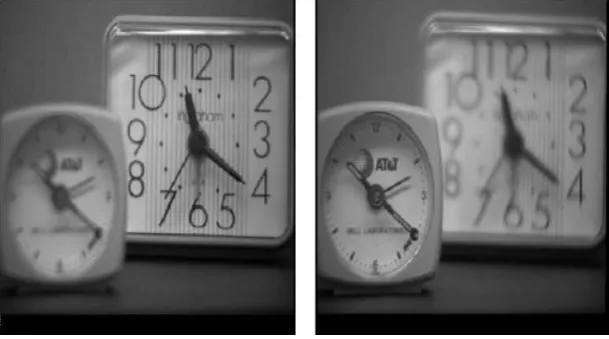
Multi focus Image fusion is procedure of combining information of several imagery of a view and consequently has\everywhere in focus "image. When one view includes points in various distances, the camera could be focused on each point one after one other, producing pair of pictures. When an image of a 3-D view is captured, only scene areas at the target plane look sharp. Scene parts in frontage of or behind the concentration plane look unclear. To be able to make an image wherever all scene parts look sharp, it is necessary to capture image of the scene at different focus levels and mix the image. Then, applying picture fusion technique, an image with better concentration across all regions may be generated.
II. REVIEW OF LITERATURE
W. Wang et al [1] have explored multi-spectral image fusion method based on the features of imaging system.First the method perform multi-resolution decomposition to multi-spectral and panchromatic images adopting with Non-subsample contourlet transform, then create the panchromatic image injection model by examine the characteristics of image system of multi-spectral image in detail,and injects the detail data of panchromatic image to every spectrum to multi-spectral image by this method. Last, final image obtained by decomposition coefficient is reconstructed by inverse non subsample contourlettransform. This method is not give the details of panchromatic image but also spectral features of multi-spectral image better, minimize the spectrum distortion problem efficiently.
Taherdangkoo, M. et al [2] “Segmentation of MR brain images using FCM improved by artificial bee colony (ABC) algorithm” Segmentation of medical images, particularly magnetic resonance images of brain is complex and it is considered as a huge challenge in image processing. Among the numerous algorithms presented in this context, the fuzzy C-mean (FCM) algorithm is widely used in MR images segmentation. These two parameters have been then calculated by other researchers using genetic algorithm (GA) and particle swarm optimization (PSO) algorithm, which although it has reduced the time but no change obtained in the resulted segmentation quality. In this paper we calculate these two parameters using the artificial bee colony (ABC) algorithm aiming to both reduce the time and to reach a higher quality than that obtained by previous reports. Finally, we segment real MR images with our proposed algorithm and compare it with previous presented algorithms.
Yu Li et al [3] “Image Segmentation Using FCM Optimized by Quantum Immune Clone Algorithm”, proposed the
ISSN(E): 2277-128X, ISSN(P): 2277-6451, pp. 107-111
the segmentation results are unsatisfactory when the images are impacted by noise. Considering this shortcoming, in this paper the FCM objective function is improved by adding two kinds of spatial information: the relative position information and the intensity information of the neighborhood. Moreover, Quantum Immune Clone algorithm (QICA) is used to optimize the spatial impact factors in the objective function. The proposed algorithm has been tested in synthetic and real synthetic aperture radar (SAR) images segmentation. Experimental results demonstrate that the proposed algorithm is feasible and effective, and it can lead to higher accuracy.
Beevi, S.Z. et al [4] “A robust fuzzy clustering technique with spatial neighborhood information for effective medical image segmentation: An efficient variant of fuzzy clustering technique with spatial information for effective noisy medical image segmentation”, explained the Segmentation is an important step in many medical imaging applications and a variety of image segmentation techniques do exist. Of them, a group of segmentation algorithms is based on the clustering concepts. In our research, we have intended to devise efficient variants of Fuzzy C-Means (FCM) clustering towards effective segmentation of medical images. The enhanced variants of FCM clustering are to be devised in a way to effectively segment noisy medical images. The medical images generally are bound to contain noise while acquisition. So, the algorithms devised for medical image segmentation must be robust to noise for achieving desirable segmentation results. We proposed the algorithm, which incorporate spatial information into FCM, have shown considerable resilience to noise.
Qin Xinqianget al [5]“Image fusion method based on the local neighborhood feature and no subsampledcontourlet
transform” In order to improve image fusion quality, a novel image fusion method based on the local neighborhood feature and NSCT is proposed. Firstly, the NSCT is performed on the source image to obtain the low frequency sub-band and the high frequency sub-bands in each direction; Secondly, a weighted fusion strategy based on the gray mean deviation is adopted for the low frequency sub-band, and a weighted fusion strategy based on the local region energy is used for the high frequency sub-bands; Finally, the fused image is obtained by NSCT inverse transform. The simulation results show that the method we proposed has good fusion effect on multi-focus images, medical images and infrared and visible light images.
Qamar Nawazet al [6]“Multi-modal medical image fusion using 2DPCA” Two-dimensional PCA rectifies this problem
by directly dealing with two-dimensional images without prior requirements of vectorization. In this paper, we proposed a novel multi-modal medical image fusion algorithm that is based on two-dimensional PCA. Experiments are conducted to fuse three image-sets of multi-modal images of the brain. Fusion results of proposed algorithms are compared with fusion results of PCA based image fusion algorithm by using seven widely used image quality assessment matrices. The comparison shows the superiority of proposed algorithm over existing PCA based image fusion algorithm.
III. APPROACHES USED
DCT: A discrete cosine transform (DCT) expresses a finite sequence of data points in terms of a sum of cosine functions oscillating at different frequencies. DCTs are important to numerous applications in science and engineering, from lossycompression of audio and imagesto spectral methods for the numerical solution of partial differential equations.The use of cosine rather than sine functions is critical for compression, since it turns out that fewer cosine functions are needed to approximate a typical signal, whereas for differential equations the cosines express a particular choice of conditions. In particular, a DCT is a Fourier-related transform similar to the discrete Fourier transform (DFT), but using only real numbers. DCTs are equivalent to DFTs of roughly twice the length, operating on real data with even symmetry (since the Fourier transform of a real and even function is real and even), where in some variants the input and/or output data are shifted by half a sample. There are eight standard DCT variants, of which four are common.
Lift Wavelet Transformation
Lifting wavelet transformation is a new approach for constructing wavelet, which is also called as second generation wavelet. The main aim of LWT is transform the signal that is coarser signal sn-1 into a detailed signal dn-1. Hence, LWT is an efficient method for calculating the filtering operations. Furthermore wavelet theory has been taken into as one special type of decomposition. After one level decomposition of image has been divided into four frequency bands. That is LL (low-low), LH (low-high), HH (high-high), and HL (high-low). The next level decomposition is just applied to the LL band of the current decomposition stage. Constructing wavelet using lifting scheme can be divided into following three steps:
ISSN(E): 2277-128X, ISSN(P): 2277-6451, pp. 107-111
Lifting technique allows faster implementation of wavelet transform. It requires half number of computations as compared to traditional convolution approach. In this technique no auxiliary memory is required and original signals are transformed with wavelet transform. In lifting scheme perfect reconstruction is possible for lossless compression. It is easier to implement and understand. It can be used for irregular sampling.
DWT: Discrete Wavelet Transform (DWT): The DWT of an image xis calculated by passing it through a series of filters.
First the samples are passed through a low pass filter with impulse response gresulting in a convolution of the two: The image is also decomposed simultaneously using a high-pass filter h. The outputs give the detail coefficients (from the high-pass filter) and approximation coefficients (from the low-pass filter). It is important that the two filters are related to each other and they are known as a quadrature mirror filter. However, since half the frequencies of the signal have now been removed, half the samples can be discarded
SWT: Stationary Wavelet Transform: The Stationary wavelet transform (SWT) is similar to the DWT except the signal is never sub-sampled and instead the filters are up sampled at each level of decomposition. The SWT is an inherent redundant scheme, as each set of coefficients contains the same number of samples as the input. So for a decomposition of N levels, there is a redundancy of 2N.
IV. CONCLUSION
Image fusion gives an effective approach to blend the visual data from various pictures. The intertwined picture contains complete data for better human or machine discernment and PC handling assignments, Picture combination should be possible in pixel level, signal level and highlight based. To propose multi-level LWT fusion technique that will utilize the fifth level decomposition will require less computation, memory and will produce high quality fused image. Trilateral filter is used in order to improve the results further as shown will degradetheirregularity of edges in image and will remove the mixnoisefrom images. DWT, SWT, DWT+SWT algorithm will be applied to experiments of multi-focus image fusion on the basis of various fusion rules and analyze the performance of fused image with the existing methods
REFRENCES
[1] W. Wang, and J. Jingling, “Multi-spectral Image Fusion based on the characteristic of Imaging System",
International Conference on Information and Automation, pp. 643-647, 2013.
[2] Taherdangkoo, M “Segmentation of MR brain images using FCM improved by artificial bee colony (ABC) algorithm” IEEE Conf. on Information Technology and Applications in Biomedicine (ITAB), 2010, pp. 1 – 5. [3] Yu Li “Image Segmentation Using FCM Optimized by Quantum Immune Clone Algorithm”, IEEE Conf. on
Intelligent Systems Design and Engineering Applications (ISDEA), 2014, pp. 537 – 540.
[4] Beevi, S.Z “A robust fuzzy clustering technique with spatial neighborhood information for effective medical image segmentation: An efficient variant of fuzzy clustering technique with spatial information for effective noisy medical image segmentation”, IEEE Conf on Computing Communication and Networking Technologies (ICCCNT), 2010, pp. 1 – 8.
[5] Qin Xinqiang; ZhengJiaoyue; Hu Gang “Image fusion method based on the local neighborhood feature and no subsampledcontourlet transform”, Image, Vision and Computing (ICIVC), 2017, pp. 2-10.
[6] Qamar Nawaz; Xiao Bin; Li Weisheng; Isma Hamid “Multi-modal medical image fusion using 2DPCA”, :
Image, Vision and Computing (ICIVC), 2017, pp. 200-212.
[7] M. Hossny; S. Nahavandi; D. Creighton; C. Lim; A. Bhatti “Enhanced decision fusion of semantically segmented images via local majority saliency map”, Electronics Letters, 2017, pp. 1036 – 1038.
[8] A. Noskov;A. Priorov “Application of rank correlation at multi-focused image fusion quality assessment”, Systems of Signal Synchronization, Generating and Processing in Telecommunications, 2017, pp. 500-512. [9] XinChen;Jun Wu;ShaoyanSun;Qi Tian “Multi-index fusion via similarity matrix pooling for image retrieval”,
Communications (ICC), 2017 IEEE International Conference, 2017, pp. 234-247.
[10] Yu Liu;XunChen;Juan Cheng;Hu Peng “A medical image fusion method based on convolutional neural networks”, Information Fusion (Fusion), 2017 20th International Conference, 2017, pp. 20-34.
[11] ChunyuWei;BingyinZhou;Wei Guo “A three scale image transformation for infrared and visible image fusion”,Information Fusion (Fusion), 2017, pp. 110-124.
[12] Yong Yang;Min Ding;ShuyingHuang;YueQue,Multi-focus Image Fusion via Clustering PCA Based Joint Dictionary Learning”, IEEE Access, 2017, pp. 1-1.
ISSN(E): 2277-128X, ISSN(P): 2277-6451, pp. 107-111
[14] Systems (ICACCS),2017, pp. 32-40.
[15] ChaobenDu;SheshengGao “Image Segmentation-Based Multi-Focus Image Fusion Through Multi-Scale Convolutional Neural Network”, 2017, pp15750 – 15761.