Heavy Civil Estimating Learning Module for
CM 314
Tony Roberts
California Polytechnic State University San Luis Obispo, CA
In the past, through engagement with students that have gone through the Heavy Civil class, it has been found that student understanding of typical heavy civil operations is subpar. Through an updated course module that focuses on estimating the four major operations, Earthwork, Underground, Asphalt, and Concrete, students will gain a deeper understanding of the heavy civil field of construction. The module consists of four assignments that pertain to the previously mentioned operations. Each contain a lecture detailing typical crew compositions and cycle times, reference material and resources the student can use when completing the assignments. This new module will challenge student critical thinking skills and provide a deeper understanding of heavy civil operations.
Key Words: Estimating, Heavy Civil, Course, Templates, Production Rate
Introduction
Project Development
Given that the primary focus of the new learning module was to be heavy civil estimating, the first step in project development was to determine what scopes of work would be most beneficial for students to learn. To determine the proper scope of work to focus on in this learning module, the existing course learning plan and syllabus was first examined. Upon analysis of the existing course, the major scope of work was determined to include the operations of underground construction, earthwork, road paving, minor and major concrete work, cranes, pile driving, and trucking. After this initial narrowing of topics, the next step was to compare this scope to the ASC Region 7 Heavy Civil competition expectations for student knowledge of heavy civil estimating. The pre-problem statement provided by Granite Construction, and given to all student teams, states that it expected students have a solid understanding of earthwork, underground, paving, and concrete operations. Using the two resources of the pre-problem statement, and the existing course syllabus, it was determined that four main scopes of work would be focused on in the development of the new learning module. These four scopes include the operations of underground construction, earthwork, asphalt paving, and concrete work. The topic of trucking was also decided to be addressed as it is a support function to many of the core four operations. The concepts of trucking are ingrained in the asphalt paving assignment.
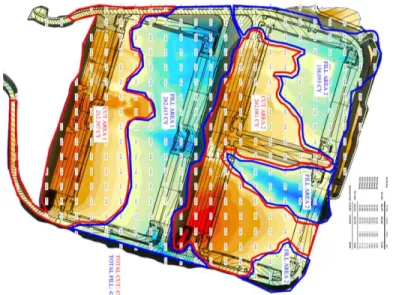
Figure 1. cut/fill map for the earthwork assignment
civil drawings, and yet was complex enough of a project to challenge the critical thinking of the students. No plan set that was available fit this criteria so it was determined that each operation for the module would have its own unique plan set. The plan sets for the module were provided by the ASC Reno Heavy Civil Team and included previous problems and plan sets that were utilized on prior competitions.
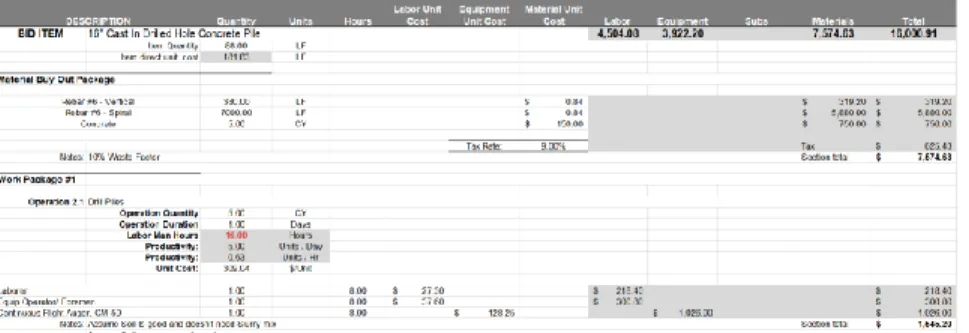
Once the plan sets for each of the four topics were determined, the final step in the design of the assignments was to develop several templates and calculators that the class could utilize to aid in the estimating process. The main template developed is a Microsoft Excel document that is modeled after the bid breakdown sheets in the estimating software Heavy Bid. This template allows the students to input crew information, production rates, unit costs, and man-hours all in one organized sheet that auto populates total cost, total man-hours, and total durations based upon the data that is entered. This template would be the main deliverable for each assignment as it showcases all the critical concepts that the module is teaching. Several additional Microsoft Excel sheets were also created to be utilized by the class. These templates include scraper haul calculators, trucking calculators, crew composition examples, material weight conversions, and trucking capacities.
Figure 2. Example of Master Estimate Template
Classroom Application
After development of the module was complete, it was determined the best course of action would be to teach the module in the class to serve as a trial run. This was decided to be the best course of action as it would allow for effectiveness of this estimating module to be evaluated and adjusted to optimize learning objectives. Four class times were set aside for the new module to be taught alongside the existing course. Each assignment was to be given after the main course had touched on the topic. For example, after the professor had discussed excavators, trench safety, and underground construction the underground estimating assignment would be given.
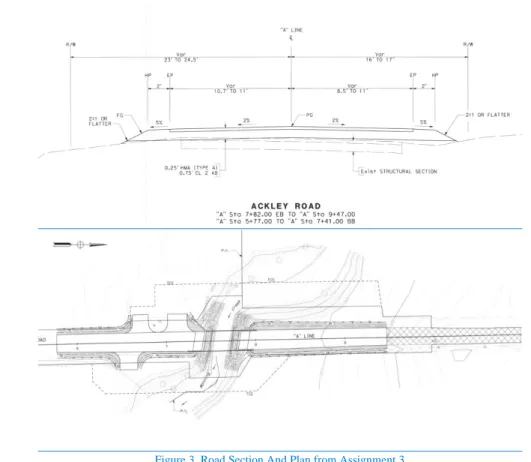
The second assignment, concrete, was focused on estimating minor concrete for a roadway improvement. This included sidewalk, curb and gutter, and driveways. This assignment was designed to be their first attempt at filling out the template without guidance from the lecturer to ensure they had a solid grasp of the base concepts of crew composition and production rates. The lecture simply included an overview of the plan sheets with the students to ensure they understood what they were looking at before they undertook their individual estimates.
Figure 3. Road Section And Plan from Assignment 3
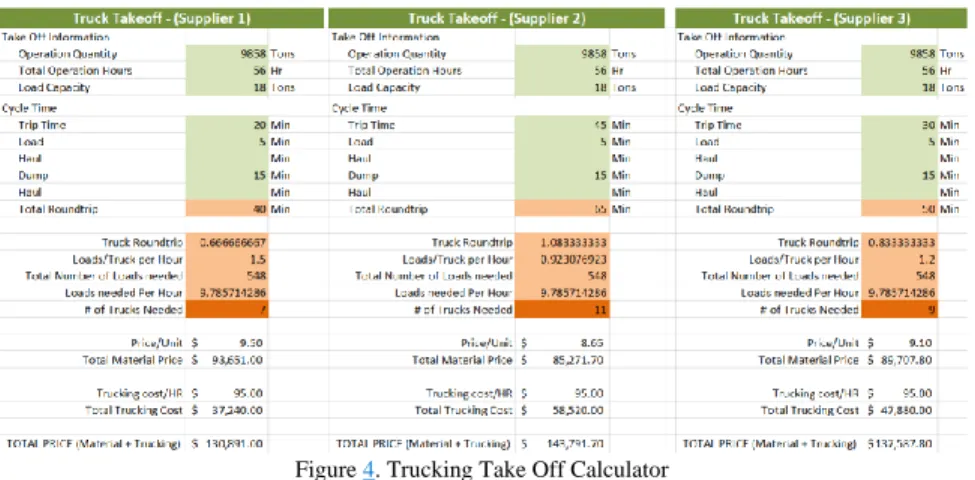
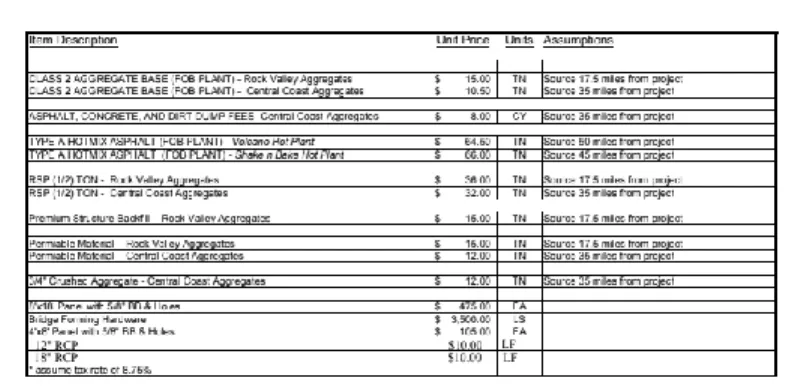
needed as well as the total price of material and trucking while also allowing comparison to different suppliers.
Figure 4. Trucking Take Off Calculator
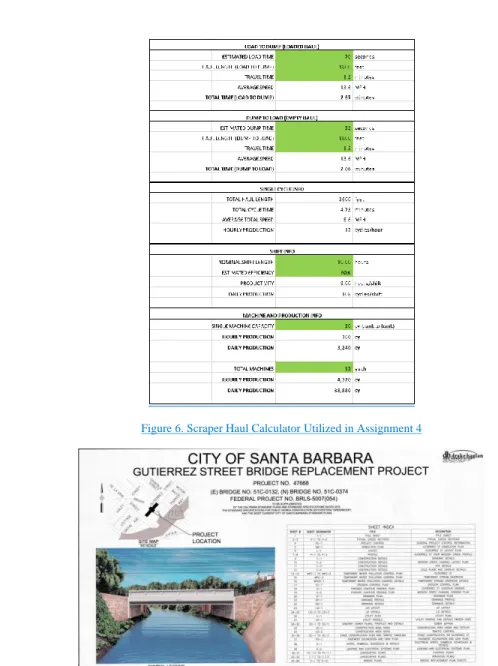
The fourth and final lecture was on earthwork. This lecture was modeled, to include the plan reading section with accompanying question and answer. To increase academic rigor, a new calculator was provided to the students to aid in the estimating of scraper hauls. The developed calculator took haul lengths, speeds, machine capacity, total machines, shift length, and efficiency factors and gave the students an overall daily production rate based on these variables. By this point in the lecture series, the students had a firm grasp on all the templates and estimating techniques that were taught in the previous assignments. Because of this, the assignment included the master bid template, their scraper haul calculator for each cut to fill, and a trucking take off for all of the excess cut in the project.
Results
Upon the completion of all four sections to the learning module, all the assignments completed by the students were graded to evaluate the success of the module. Given that there was no one right answer for these kinds of assignments, the grading rubric had to reflect the varying nature of the assignments. The rubric was based on 3 main criteria. The first criteria was to evaluate how well the templates were completed and utilized. This was due to, if the template was properly completed, it was much easier to follow the thought process of all the students. The second criteria was crew composition. If students’ crews made sense in the context of the project, and showed that they had a proper understanding of the operation, they received full points. The final criteria was production rates and operation durations. Students received full points in this section as long as their productions and durations were within reason of the context of their estimated crews. Data collected from the student’s grades showed that the average grade for the assignments, based upon the students that actually submitted them, was:
• Twenty-one out of twenty-five possible points for assignment two
• Nineteen out of twenty-five possible points for assignment three
• Twenty out of twenty-five possible points for assignment four
All averages show a substantial understanding of the operations, with the weakest subject for students being asphalt paving and the strongest topic being underground construction. Overall the average grade per assignment was in the eighty percent range which demonstrates a better than average understanding of the material.
Conclusion
Overall, this proposed module demonstrates success. However, it does offer opportunity for improvement. While the existence of an estimating module in the heavy civil class is important, the way it is given in this proposed course module is only an entry venue toward the correct direction for this topic. Of all the items compiled and created for this module, the ones of greatest value are the templates and calculators that the students utilized to estimate the projects that they were given. These templates are tools that can be adopted to updated estimating modules for the course and updated as seen fit by the professors and students of the class. The apparent weakness in this module are the plan sets and the assignments themselves. While the data collected from the classroom application showed a firm grasp on the concepts, it would be more beneficial to the students to estimate a singular project. This would allow visualization of how an entire job is built from beginning to end. It would force students to think about the logistics of a jobsite and how to best build crews, not just for a singular operation, but for an entire job. Students would have to utilize critical thinking skills to determine crews that could be uniform throughout the job lifespan. Another addition to the module that would be beneficial to the education of the students, would be to put together a group project where teams of four to five students work to estimate the project and put together a bid package. This final project could emulate a real-life bid scenario and promote friendly competition between the students which would push them to put more effort into the project. All in all, this proposed module, noted short comings, is a success and a step in the right direction for teaching estimating concepts to the students of the heavy civil lab.
Appendix & Figures
Figure 6. Scraper Haul Calculator Utilized in Assignment 4