Damping Power System Oscillations Controlled By Using STATCOM
P Sri Rama Ganesh*1,G Venkateswara Rao2M.Tech Student, Department of EEE, KIET-II, Kakinada India.1 Asst. Professor, Department of EEE, KIET-II, Kakinada, India2
Abstract—This paper manages the plan of a versatile power oscillation damping (POD) controller for a static synchronous compensator (STATCOM) outfitted with vitality stockpiling. This is accomplished utilizing a flag estimation procedure in view of a changed recursive Least square (RLS) calculation, which permits a quick, specific, and versatile estimation of the low-recurrence electromechanical motions from privately measured signs amid power framework unsettling influences. The proposed strategy is compelling in expanding the damping of the framework at the frequencies of intrigue, additionally on account of framework parameter instabilities and at different association purposes of the compensator. To begin with, the investigation of the effect of dynamic and responsive power infusion into the power framework will be completed utilizing a basic two-machine framework demonstrate. A control technique that upgrades dynamic and responsive power infusion at different association purposes of the STATCOM will be determined utilizing the streamlined model. Little flag investigation of the dynamic execution of the proposed control procedure will be completed. Fluffy controller is executed in this venture improve the framework operation with quick reaction. The viability of the proposed control technique to give control swaying damping independent of the association purpose of the gadget and within the sight of framework parameter instabilities will be checked through recreation comes about.
Key words- STATCOM, POD, RLS, E-STATCOM. .
I.INTRODUCTION
Static Synchronous is a key gadget for support of the strength in an air conditioner control framework. This gadget has been connected both at dissemination level to alleviate control quality marvels and at transmission level for voltage control and power swaying damping (POD) [1]–[3]. Albeit commonly utilized for responsive power infusion just, by outfitting the STATCOM with a vitality stockpiling associated with the dc-connection of the converter, a more adaptable control of the transmission framework can be accomplished [4], [5]. An establishment of a STATCOM with vitality stockpiling is as of now found in the U.K. for power stream administration and voltage control [6]. The presentation of wind vitality and other appropriated era will prepare for more vitality stockpiling into the power
framework and helper soundness improvement capacity is conceivable from the vitality sources [7]. Since infusion of dynamic power is utilized briefly amid transient, In corporating the steadiness upgrade work in frameworks where dynamic power infusion is essentially utilized for different purposes [8] could be appealing. Low-recurrence electromechanical motions (ordinarily in the scope of 0.2 to 2 Hz) are normal in the power framework and are a reason for concern with respect to secure framework operation, particularly in a frail transmission framework [9]. In such manner, FACTS controllers, both in shunt and arrangement setup, have been broadly used to improve soundness of the power framework [1]. In the particular instance of shunt associated FACTS controllers [STATCOM and static var compensator (SVC)], first swing strength and POD can be accomplished by tweaking the voltage at the purpose of basic coupling (PCC) utilizing responsive power infusion. In any case, one downside of the shunt setup for this sort of uses is that the PCC voltage must be managed inside particular points of confinement (regularly between 10% of the evaluated voltage), and this diminishes the measure of damping that can be given by the compensator. In addition, the measure of infused receptive power expected to balance the PCC voltage relies on upon the short out impedance of the framework seen at the association point. Infusion of dynamic power, then again, influences the PCC-voltage point (transmission lines are successfully receptive) without differing the voltage extent essentially. The control of STATCOM with vitality stockpiling (named from this point forward as E-STATCOM) for power framework solidness upgrade has been talked about in the writing [10]–[12]. In any case, the effect of the area of the E-STATCOM on its dynamic execution is normally not treated. At the point when dynamic power infusion is utilized for POD, the area of the E-STATCOM significantly affects its dynamic execution. Also, the average control procedure of the gadget for POD accessible in the writing is like the one used for power framework stabilizer (PSS) [9], where a progression of wash-out and lead-slack channel connections are utilized to produce the control input signals. This sort of control technique is compelling just at the working point where the plan of the channel connections is improved, and its speed of reaction is constrained by the recurrence of the electromechanical motions. In this paper, a control procedure for the E-STATCOM when utilized for POD will be explored. Because of the chose neighborhood flag amounts measured in the framework, the control technique
Damping Power System Oscillations Controlled By Using STATCOM
P Sri Rama Ganesh*1,G Venkateswara Rao2
M.Tech Student, Department of EEE, KIET-II, Kakinada India.1 Asst. Professor, Department of EEE, KIET-II, Kakinada, India2
Abstract—This paper manages the plan of a versatile power oscillation damping (POD) controller for a static synchronous compensator (STATCOM) outfitted with vitality stockpiling. This is accomplished utilizing a flag estimation procedure in view of a changed recursive Least square (RLS) calculation, which permits a quick, specific, and versatile estimation of the low-recurrence electromechanical motions from privately measured signs amid power framework unsettling influences. The proposed strategy is compelling in expanding the damping of the framework at the frequencies of intrigue, additionally on account of framework parameter instabilities and at different association purposes of the compensator. To begin with, the investigation of the effect of dynamic and responsive power infusion into the power framework will be completed utilizing a basic two-machine framework demonstrate. A control technique that upgrades dynamic and responsive power infusion at different association purposes of the STATCOM will be determined utilizing the streamlined model. Little flag investigation of the dynamic execution of the proposed control procedure will be completed. Fluffy controller is executed in this venture improve the framework operation with quick reaction. The viability of the proposed control technique to give control swaying damping independent of the association purpose of the gadget and within the sight of framework parameter instabilities will be checked through recreation comes about.
Key words- STATCOM, POD, RLS, E-STATCOM. .
I.INTRODUCTION
Static Synchronous is a key gadget for support of the strength in an air conditioner control framework. This gadget has been connected both at dissemination level to alleviate control quality marvels and at transmission level for voltage control and power swaying damping (POD) [1]–[3]. Albeit commonly utilized for responsive power infusion just, by outfitting the STATCOM with a vitality stockpiling associated with the dc-connection of the converter, a more adaptable control of the transmission framework can be accomplished [4], [5]. An establishment of a STATCOM with vitality stockpiling is as of now found in the U.K. for power stream administration and voltage control [6]. The presentation of wind vitality and other appropriated era will prepare for more vitality stockpiling into the power
framework and helper soundness improvement capacity is conceivable from the vitality sources [7]. Since infusion of dynamic power is utilized briefly amid transient, In corporating the steadiness upgrade work in frameworks where dynamic power infusion is essentially utilized for different purposes [8] could be appealing. Low-recurrence electromechanical motions (ordinarily in the scope of 0.2 to 2 Hz) are normal in the power framework and are a reason for concern with respect to secure framework operation, particularly in a frail transmission framework [9]. In such manner, FACTS controllers, both in shunt and arrangement setup, have been broadly used to improve soundness of the power framework [1]. In the particular instance of shunt associated FACTS controllers [STATCOM and static var compensator (SVC)], first swing strength and POD can be accomplished by tweaking the voltage at the purpose of basic coupling (PCC) utilizing responsive power infusion. In any case, one downside of the shunt setup for this sort of uses is that the PCC voltage must be managed inside particular points of confinement (regularly between 10% of the evaluated voltage), and this diminishes the measure of damping that can be given by the compensator. In addition, the measure of infused receptive power expected to balance the PCC voltage relies on upon the short out impedance of the framework seen at the association point. Infusion of dynamic power, then again, influences the PCC-voltage point (transmission lines are successfully receptive) without differing the voltage extent essentially. The control of STATCOM with vitality stockpiling (named from this point forward as E-STATCOM) for power framework solidness upgrade has been talked about in the writing [10]–[12]. In any case, the effect of the area of the E-STATCOM on its dynamic execution is normally not treated. At the point when dynamic power infusion is utilized for POD, the area of the E-STATCOM significantly affects its dynamic execution. Also, the average control procedure of the gadget for POD accessible in the writing is like the one used for power framework stabilizer (PSS) [9], where a progression of wash-out and lead-slack channel connections are utilized to produce the control input signals. This sort of control technique is compelling just at the working point where the plan of the channel connections is improved, and its speed of reaction is constrained by the recurrence of the electromechanical motions. In this paper, a control procedure for the E-STATCOM when utilized for POD will be explored. Because of the chose neighborhood flag amounts measured in the framework, the control technique
Damping Power System Oscillations Controlled By Using STATCOM
P Sri Rama Ganesh*1,G Venkateswara Rao2
M.Tech Student, Department of EEE, KIET-II, Kakinada India.1 Asst. Professor, Department of EEE, KIET-II, Kakinada, India2
Abstract—This paper manages the plan of a versatile power oscillation damping (POD) controller for a static synchronous compensator (STATCOM) outfitted with vitality stockpiling. This is accomplished utilizing a flag estimation procedure in view of a changed recursive Least square (RLS) calculation, which permits a quick, specific, and versatile estimation of the low-recurrence electromechanical motions from privately measured signs amid power framework unsettling influences. The proposed strategy is compelling in expanding the damping of the framework at the frequencies of intrigue, additionally on account of framework parameter instabilities and at different association purposes of the compensator. To begin with, the investigation of the effect of dynamic and responsive power infusion into the power framework will be completed utilizing a basic two-machine framework demonstrate. A control technique that upgrades dynamic and responsive power infusion at different association purposes of the STATCOM will be determined utilizing the streamlined model. Little flag investigation of the dynamic execution of the proposed control procedure will be completed. Fluffy controller is executed in this venture improve the framework operation with quick reaction. The viability of the proposed control technique to give control swaying damping independent of the association purpose of the gadget and within the sight of framework parameter instabilities will be checked through recreation comes about.
Key words- STATCOM, POD, RLS, E-STATCOM. .
I.INTRODUCTION
Static Synchronous is a key gadget for support of the strength in an air conditioner control framework. This gadget has been connected both at dissemination level to alleviate control quality marvels and at transmission level for voltage control and power swaying damping (POD) [1]–[3]. Albeit commonly utilized for responsive power infusion just, by outfitting the STATCOM with a vitality stockpiling associated with the dc-connection of the converter, a more adaptable control of the transmission framework can be accomplished [4], [5]. An establishment of a STATCOM with vitality stockpiling is as of now found in the U.K. for power stream administration and voltage control [6]. The presentation of wind vitality and other appropriated era will prepare for more vitality stockpiling into the power
streamlines the infusion of dynamic and responsive energy to give uniform damping at different areas in the power framework. It will be demonstrated that the actualized control calculation is powerful against framework parameter vulnerabilities. For this, an adjusted recursive minimum square (RLS)- based estimation calculation as depicted in [13], [14] will be utilized to separate the required control signals from privately measured signs. At long last, the adequacy of the proposed control procedure will be approved by means of reenactment confirmation.
II. SYSTEM MODELING FOR CONTROLLER DESIGN
A rearranged control framework model, for example, the one delineated in Fig. 1, is utilized to concentrate the effect of the E-STATCOM on the power framework progression. The researched framework approximates a total model of a two-territory control framework, where every range is spoken to by a synchronous generator. The synchronous generators are displayed as voltage wellsprings of steady size and dynamic rotor points behind a transient reactance. The transmission framework comprises of two transformers spoken to by their proportionate spillage reactance and a transmission line with identical reactance. The misfortunes in the transmission framework are dismissed for less difficult diagnostic expressions. On the off chance that the mechanical damping in the generators is disregarded, the general damping for the examined framework is equivalent to zero. Consequently, the model is suitable to permit a moderate approach of the effect of the E-STATCOM when utilized for steadiness examines [14]. For investigation reason, the electrical association purpose of the converter along the transmission line.
Fig.1. Simplified two-machine system with E-STATCOM.
Fig.2. Block diagram of the control of E-STATCOM.
Fig. 3. Equivalent circuit for two-machine system with E-STATCOM.
In this paper, the external control circle is thought to be a POD controller, and the detail of the piece will be portrayed . Thus, we accept that the infused dynamic and receptive powers in the relentless state are zero. When outlining a fell controller, the speed of external control circle is commonly chosen to be much slower than the inward one to ensure soundness. This implies the present controller can be considered limitlessly quick when outlining the parameters of the external controller circle. Subsequently, the E-STATCOM can be displayed as a controlled perfect current source, as portrayed in the proportionate circuit in Fig. 3, for investigation reason. The level of energy wavering damping given by the converter relies on upon how much the dynamic power yield from the generators is balanced by the infused current, . For the framework in Fig. 3, the adjustment in dynamic power yield from the generators because of infused dynamic and receptive power.
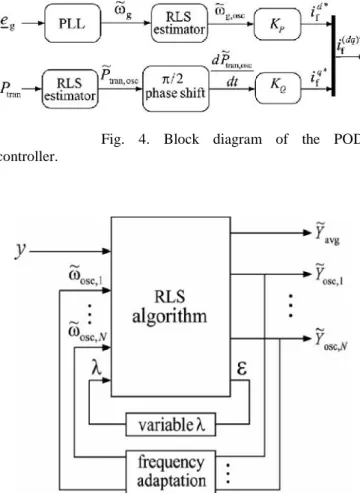
Fig. 4. Block diagram of the POD controller.
Fig. 5. Block diagram of the modified RLS estimator for multiple oscillationmodes.
III.FUZZY LOGIC CONTROL
FLC controlled by the arrangement of etymological tenets. The scientific displaying is not required in fluffy controller because of the transformation of numerical variable into etymological factors. FLC comprises of three section: a. Fuzzification, b. Impedance motor, c. Defuzzification. The fluffy controller is described as; For each information and yield there are seven fluffy sets. For effortlessness an enrollment capacities is Triangular. Fuzzification is utilizing persistent universe of talk. Suggestion is utilizing Mamdani's "min" administrator. Defuzzification is utilizing the "tallness" technique. FLC piece graph as appeared in figure 6.
Fig. 6. Fuzzy Logic Controller
a. Fuzzification
Membership function values are assigned to the linguistic variables, using seven fuzzy subsets: NB(Negative Big), NM(Negative Medium), NS (Negative Small), ZE (Zero), PS (Positive Small),PM(Positive Medium) and PB (Positive Big). The partition of fuzzy subsets and the shape of membership function adapt the shape up to appropriate system. Input error E(k) and change in error CE(k) of values which is normalized by an input scaling factor as shown in table 1.
Table1:Fuzzy Rules
Fig.7 Input1 Membership function
In this system the input scaling factor is between -1 and
+1 has design. The triangular shape of the membership function of this arrangement presumes that for any particular input there is only one dominant fuzzy subset . The input error E(k) and change in error C(k) for the FLC is given as
Fig.8 Input2 Membership function
IV.SIMULINK MODELLING AND RESULTS 4.1 Two-Area Four Machine Power System
The below figure 4.1 shows the simplified block diagram of two-area four machine power system
FIG.4.1 Two-Area Four Machine Power System 4.2 Simulation Block Diagram
Simulink is a graphical expansion to MATLAB for displaying and recreation of frameworks. One of the primary favorable circumstances of Simulink is the capacity to display a nonlinear framework, which an exchange capacity can't do. Another favorable position of Simulink is the capacity to go up against starting conditions. At the point when an exchange capacity is constructed, the underlying conditions are thought to be zero. In Simulink, frameworks are drawn on screen as square charts. Numerous components of square graphs are accessible, for example, exchange capacities, summing intersections, and so on., and additionally virtual information and yield gadgets, for example, work generators and oscilloscopes. Simulink is coordinated with MATLAB and information can be effectively exchanged between the projects.
4.2.1 Simulation Block Diagram of Two Area Four Machine Power System with STATCOM
driven power plants (G1, G2, G3, and G4) associated through long transmission line is taken as appeared in Figure 6.2. Here blend of machine G1 and machine G2 speaks to the region 1 and mix of machine G3 and machine G4 speaks to the zone 2. To enhance the transient solidness of the test-framework after unsettling influences (flaws or substantial stacking), a post moving controller based CSC-STATCOM is associated at the mid-purpose of transmission line (at ansport 7).
FIG.4.2 Simulation Block Diagram of Two Area Four Machine Power System With STATCOM
The control scheme for controlling DC link voltage as well as d and q axes current of STATCOM simultaneously as shown in Fig.6.2 is implemented with MATLAB SIMULINK with the parameters given in Table. 6.1.
SI Parameters Symbol Values
1 Generator Rating S 900
MVA
2 Transmitted Active Power
Ptran 400MW
3 TRANSFORMER RATING
V 20/230
KV
TABLE.4.1 MATLAB SIMULINK with the parameters
4.2.2 Simulation Block Diagram of Single Area Power System
In this section, single-area four-machine power system is considered for the test system study. For this type of test system, a transmission system with two hydraulic power plants (G1 and G2) connected through long transmission line is taken as shown in Figure 6.3
FIG.4.3 Simulation Block Diagram of Single Area Power System
4.2.3 Simulation Block Diagram of STATCOM
FIG.4.4 Simulation Block Diagram of STATCOM
FIG.4.5 Simulation Block Diagram Of Simulation Control Unit
4.3 Simulation Results of Two-Area Four Machine Power System
4.3.1 Simulation result of 7th Bus with PI Controller
FIG.4.6 Measured Transmitted Active Power Output Following A Three-Phase Fault
With E-STATCOM connected at Bus 7 POD by Only Active Power
FIG.4.7 Measured Transmitted Active Power Output Following A Three-Phase Fault
With E-STATCOM connected at Bus 7 POD by Only Reactive Power
FIG.4.8 Measured Transmitted Active Power Output Following A Three-Phase Fault
With E-STATCOM connected at Bus 7 POD by Active Power and Reactive Power
With E-STATCOM connected at Bus 7 without POD 4.3.4 Simulation Result of 7th Bus with Fuzzy Controller
Fig.4.19 Measured Transmitted Active Power Output
Following A
Three-Phase Fault With E-Statcom Connected At
Bus 7
Only Active Power With Fuzzy Controller
Fig.4.20 Measured Transmitted Active Power Output
Following A
Three-Phase Fault With E-Statcom Connected At
Bus 7
Only Reactive Power With Fuzzy Controller
Fig.4.21 Measured Transmitted Active Power Output
Following A
Three-Phase Fault With E-Statcom Connected At
Bus 7
Active & Reactive Power With Fuzzy Controller
V.CONCLUSION
REFERENCES
[1]Mebtu Beza, Student Member, IEEE, and Massimo Bongiorno, Member, IEEE”An Adaptive Power Oscillation Damping Controller by STATCOM With Energy Storage” IEEE TRANSACTIONS ON POWER SYSTEMS, VOL. 30, NO. 1, JANUARY 2015
[2]N. G. Hingorani and L. Gyugyi, Understanding FACTS.
Concepts and Technology of Flexible AC Transmission Systems. NewYork,NY, USA: IEEE, 2000.
[3] G. Cao, Z. Y. Dong, Y. Wang, P. Zhang, and Y. T. Oh,
“VSC based STATCOM controller for damping multi-mode
oscillations,” in Proc. mIEEE Power and Energy Soc. General Meeting—Conversion and Delivery
of Electrical Energy in the 21st Century, Jul. 2008, pp. 1–8. [4] Z. Yang, C. Shen, L. Zhang,M. L. Crow, and S. Atcitty,
“Integration of a statcom and battery energy storage,” IEEE Trans. Power Syst., vol. 16, no. 2, pp. 254–260, May 2001.
[5] A. Arulampalam, J. B. Ekanayake, and N. Jenkins,
“Application study of a STATCOM with energy storage,”
Proc. Inst. Electr. Eng.—Gener., Transm. and Distrib., vol.
150, pp. 373–384, July 2003.
[6] N. Wade, P. Taylor, P. Lang, and J. Svensson, “Energy
storage for power flow management and voltage control on
an 11 kV UK distribution network,” Prague, Czech
Republic, CIRED paper 0824, Jun. 2009.
[7] A. Adamczyk, R. Teodorescu, and P. Rodriguez,
“Control of full-scale converter based wind power plants for
damping of low frequency system oscillations,” in Proc. IEEE PowerTech, Trondheim, Norway, Jun. 2011, pp. 1–7.
[8] H. Xie, “On power-system benefits, main-circuit design,
control of Statcoms with energy storage,” Ph.D. dissertation,
Dept. Electr. Energy Conversion, Royal Inst. Technol., Stockholm, Sweden, 2009.