1
The London School of Economics
and Political Science
The Influence of Physical Activity on Information
Processing in Consumer Decision Making
Laura Zimmermann
A thesis submitted to the Department of Management of the London School of Economics and Political Science for the degree of Doctor of Philosophy,
2
Declaration
I certify that the thesis I have presented for examination for the PhD degree of the London School of Economics and Political Science is solely my own work other than where I have clearly indicated that it is the work of others (in which case the extent of any work carried out jointly by me and any other person is clearly identified in it).
The copyright of this thesis rests with the author. Quotation from it is permitted, provided that full acknowledgement is made. This thesis may not be reproduced without my prior written consent.
I warrant that this authorisation does not, to the best of my belief, infringe the rights of any third party.
3
Abstract
When people engage in physical activity they often report that it alters the way they think and feel. These lay beliefs are generally supported by research on the cognitive benefits of physical activity. But despite the evidence on benefits of physical activity for cognition, little research has investigated whether physical activity has any effect on judgment and decision making, particularly in unrelated domains such as consumer decision making.
This thesis presents seven empirical studies which demonstrate that both regular and single bouts of physical activity influence consumers’ product judgments and decision making. Specifically, the key results indicate that physical activity leads decision makers to weigh different product information more appropriately. The results were robust to the inclusion of various control variables.
In the first part of this thesis, five studies investigate the effect of physical activity on decision makers’ ability to rely on relevant versus irrelevant information. Past research has shown that when faced with irrelevant product information, consumers often find it difficult to ignore the irrelevant information, and typically dilute their judgments (i.e. their judgments are less extreme). In contrast, the results of this research show that regular physical activity aids people’s ability to focus on relevant information and ignore irrelevant information in product judgments.
4
Acknowledgment
I am grateful to many wonderful people who inspired me during this journey, and provided encouragement and support to accomplish this research project. First of all, I would like to thank my supervisor Professor Amitav Chakravarti for his academic mentorship, his inspiration, and for his kindness. During our long discussions I learned a tremendous amount about what it means to be a good researcher. On top of it he made my PhD journey much more fun and exciting. Thank you for all of this, Amitav.
I am grateful to Dr Barbara Fasolo for introducing me to the fascinating field of judgment and decision making. She encouraged me to pursue a PhD in the first place and supported me throughout the last seven years. I would like to thank her for the confidence she had in me.
My research has also benefitted greatly from Dr Heather Kappes’ advice and suggestions. She is my methodological role model and a true inspiration.
Besides working on my research, I taught brilliant students, presented my research around the world and made friends for a lifetime with wonderful people from other universities. I am extremely grateful to LSE and the people who make up this university for providing me these opportunities.
I had the privilege of receiving a LSE PhD scholarship, various travel stipends from the LSE postgraduate travel fund and the Department of Management research support fund. Without this financial support I would not have been able to do a PhD. I would also like to thank the European Association of Decision Making for awarding me the Wagenaar Memorial Travel Scholarship which allowed me to travel to Israel to attend the SPUDM conference. My research has improved significantly thanks to feedback from participants in a number of conferences (ACR, SJDM, SPSP, SPUDM), and seminars at London Business School, the University of Amsterdam and the Max Planck Center for Adaptive Behavior and Cognition.
5 I would also like to thank all PhD students and former students at the Department of Management for the many stimulating discussions and their support during the last four years. Thank you for your input during my PhD seminar presentations, especially Dr Katsuhiko Yoshikawa, Rebecca Campbell and Dr Zhuoqiong Chen. I had the luck of completing my PhD in a very welcoming environment and this was due to having wonderful PhD colleagues that became friends. Thank you to the NAB crew - Kanchana Ambagahawita, Dr Ceren Erdem, Dr Enrico Rossi, Dr Kyung Ryul Park, Dr Adeline Pelletier, Dr Kari Stardust Koskinen, Karin King, Andrea Cute Paletti, Salma Raheem and Dr Zeynep Kaparoglu.
I would also like to thank my dear friends outside academia Sibel, Siona, Vanii, Blair, Tiff, Kasia, Sarah and Anna for reminding me what ‘normal’ life is like, and what the important things are.
Apart from the tremendous academic support I received, I could always rely on my family’s support. I’m extremely grateful for all the advice and unconditional help I received from them. Thank you to my sister Lisa, the first doctor in the family. Her achievements made me believe that I can do it too. Whenever I had to make an important decision, I asked my parents for their invaluable advice. They always encouraged me to learn more and to aim higher. With them standing behind me I feel like I can achieve anything I want. Thank you so much.
6
Table of Contents
Declaration ... 2
Abstract ... 3
Acknowledgment ... 4
Table of Contents ... 6
List of Tables ... 9
List of Figures ... 10
Chapter 1.
Introduction ... 11
1.1 Overview of the Research ... 14
1.2 A Definition of Physical Activity ... 16
1.3 Health Benefits of Physical Activity ... 19
Chapter 2.
Theoretical Background ... 22
2.1 The Effect of Physical Activity on Cognitive Functions ... 22
2.2 Physical Activity and Judgment and Decision Making ... 30
2.2.1 Research in Sport and Exercise Psychology ... 30
2.2.2 Research in Sports-Unrelated Decision Domains ... 32
2.2.3 Research in Consumer Psychology ... 33
2.3 Proposition Tested in This Thesis: Physical Activity and Information Processing ... 38
2.4 Two Attribute Weighing Paradigms ... 41
2.4.1 The Dilution Effect ... 42
2.4.2 The Desirability-Feasibility Choice Conflict ... 49
Chapter 3.
Physical Activity and the Dilution Effect ... 53
3.1 Study 1: Regular Physical Activity and the Dilution Effect ... 53
Methodology ... 54
Results ... 57
Discussion ... 63
3.2 Study 2: A Direct Replication and Test of Alternative Accounts ... 64
Methodology ... 66
Results ... 70
Discussion ... 81
3.3 Study 3: A Quasi Experimental Field Study at the Gym ... 83
Methodology ... 85
Results ... 88
7
3.4 Study 4: Seasoned Runners’ Performance in the Dilution Task ... 96
Methodology ... 96
Results ... 99
Discussion ... 104
3.5 Study 5: A Lab Experiment Manipulating Physical Activity ... 106
Methodology ... 106
Results ... 109
Discussion ... 112
Chapter 4.
Physical Activity and Desirability-Feasibility
Considerations ... 115
4.1 Study 6: Physical Activity and Desirability-Feasibility Considerations – A Quasi-Experimental Field Study at the Gym ... 116
Methodology ... 117
Results ... 119
Discussion ... 122
4.2 Study 7: Regular Physical Activity and Desirability-Feasibility Considerations... 123
Methodology ... 124
Results ... 126
Discussion ... 129
4.3 Study 8: Predicting Desirability-Feasibility Choice by Running Performance ... 130
Methodology ... 131
Results ... 132
Discussion ... 134
Chapter 5.
General Discussion ... 136
5.1 Summary of Findings ... 136
5.1.1 Ruled Out Alternative Explanations ... 139
5.1.2 Process Findings ... 142
5.2 Limitations and Future Research ... 146
5.3 Practical Implications... 150
8
References ... 154
Appendices ... 167
Appendix A. Dilution Effect Stimuli ... 167
Appendix B. International Physical Activity Questionnaire ... 172
Appendix C. Necker Cube Pattern Control Test ... 174
Appendix D. Stroop Colour Word Interference test ... 175
Appendix E. Visual Search Task ... 176
Appendix F. Lab Experiment Material ... 177
Appendix G. Desirability-Feasibility Trade-off Tasks ... 179
Appendix H. Construal Level Measures ... 181
Appendix I. Self-Control Decision Making Measures ... 183
9
List of Tables
Table 1-1. Examples of physical activity in the leisure and work domain ... 19
Table 2-2. Summary of the literature on physical activity and the effects
on cognitive functions ... 27
Table 2-1. Summary of physical activity research in judgment and
decision making and related domains... 36
Table 3-1. Descriptive statistics of regularly physically active and
inactive participants in study one ... 62
Table 3-2. Average product rating and test statistics across conditions in
studies one and two ... 73
Table 3-3. Descriptive statistics of regularly physically active and
inactive participants in study two ... 75
Table 3-4. Average product rating and test statistics across conditions in
study three ... 90
Table 3-5. Descriptive statistics of regularly physically active and
inactive participants in study three ... 94
Table 3-6. Average product ratings across conditions and test statistics
in study four ... 101
Table 3-7. Control variables and process measures collected in studies
one to five ... 114
Table 4-1. Average focus on desirability and feasibility information and
test statistics in study six ... 121
Table 4-2. Descriptive statistics of regularly physically active and
inactive participants in study seven ... 127
Table 4-3. Likelihood to buy across conditions in study seven ... 129
Table 4-4. Differences in running time, mood and demographics by
desirability-feasibility choice ... 133
Table 4-5. Control variables and process measures collected in studies
10
List of Figures
Figure 1-1. Overview of the research conducted in this thesis ... 16
Figure 3-1. Effect of the type of information on the product rating in
physically active and inactive individuals ... 60
Figure 3-2. Replication of the interaction effect between the type of
information and regular physical activity ... 72
Figure 3-3. Recognition test: Average percentage of correct responses
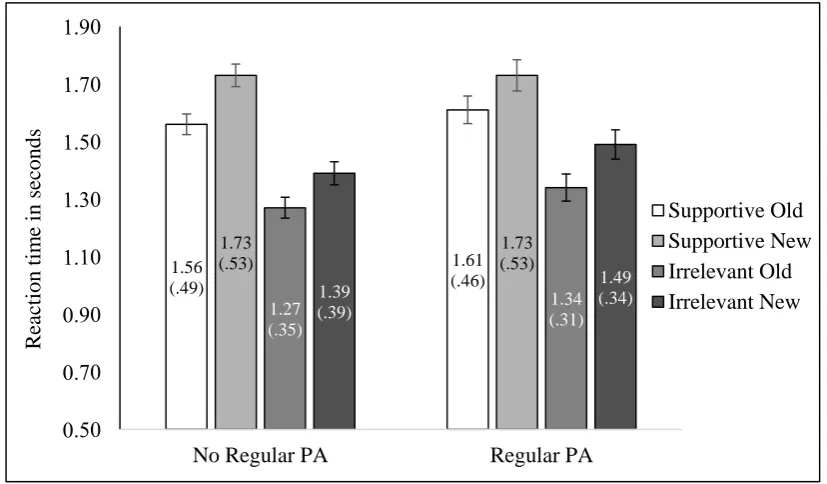
across the type of information and physical activity ... 76
Figure 3-4. Recognition test: Average reaction time across the type of
information and physical activity ... 77
Figure 3-5. Stroop test: Average percentage of correct responses in congruent and incongruent trials for physically active and
inactive individuals ... 79
Figure 3-6. Stroop test: Average reaction time in congruent and incongruent trials for physically active and inactive
individuals ... 79
Figure 3-7. Necker Cube: Average number of orientation flips for
physically active and inactive individuals ... 81
Figure 3-8. Effect of the type of information on the product rating in physically active and inactive individuals before and after
exercising ... 90
Figure 3-9. Time spent per product replicate before and after the gym in
the control and dilution condition ... 91
Figure 3-10. Visual Search: Percentage of physically active and inactive individuals who correctly identified the target before and
after exercising ... 93
Figure 3-11. Experimental flow of the within-subjects design of the
dilution effect stimuli used in study four ... 97
Figure 3-12. Effect of the type of information and the order on the product
rating in seasoned runners ... 100
Figure 3-13. Effect of the type of information and the order on the time
spent per product replicate in seasoned runners ... 102
Figure 3-14. Scatterplot of the dilution score and the running frequency in
each order condition ... 104
Figure 4-1. Effect of a single bout of physical activity on the desirability
and feasibility focus ... 120
Figure 4-2. Likelihood to buy in the desirability-feasibility conditions for
11
Chapter 1.
Introduction
Why do people engage in physical activity? It’s annoying, it’s boring and it hurts. When asking avid exercisers for their reasons to engage in physical activity, they swear by the positive effects of it. Not only do they report improvements of their physical health, but they also claim that physical activity changes the way they feel emotionally, and the way they think. Physical activity supposedly lifts their mood and clears their mind. People who regularly engage in physical activity often report a plethora of other benefits they experience, in addition to the health benefits. From antique philosophers to modern politicians and business managers, there are numerous quotes about the benefits of physical activity for the body and mind.
Generally, these lay beliefs in the benefits of physical activity are supported by empirical research investigating effects of physical activity on mental wellbeing and cognitive functions. For example, beneficial effects of physical activity have been found for emotional health (Hopkins, Davis, Vantieghem, Whalen, & Bucci, 2012; Lathia, Sandstrom, Mascolo, & Rentfrow, 2017), memory (Floel et al., 2010) and executive functions (Barenberg, Berse, & Dutke, 2011). Overall, studies indicate that physical activity enhances cognitive functions and protects against the development of neurodegenerative diseases (Kramer & Erickson, 2007). These cognitive benefits have been found for experimental manipulations using single bouts of physical activity (Tomporowski, 2003) as well as long-term interventions and cross-sectional studies (Jacobson & Matthaeus, 2014; Smith et al., 2010).
Despite the abundant evidence of physical activity benefits for cognition, little research has investigated the effect of physical activity on judgment and decision making. We know little about whether physical activity has any effect on how people form judgments and make decisions; and we know even less about whether physical activity has any effect on how people form judgments and make decisions in domains that are unrelated to the physical activity itself.
12 Similarly, would you expect a person who is a regular, persistent exerciser to make different judgments and choices than someone who is mostly sedentary? What about decisions in domains that are unrelated to exercising such as consumer decisions?
People’s lay beliefs in the positive effects of physical activity would certainly support the notion of improved decision making capabilities. However, we often don’t have great insight into how we make decisions and the factors that influence us (Nisbett & Wilson, 1977). Thus, such lay belief must be tested empirically. Studies on the cognitive benefits of physical activity indeed indicate that there might be differences in exercisers’ information processing, which could influence judgments and decision making in unrelated consumer domains.
Contribution of this research
13 It is important to examine the effect of physical activity on judgment and decision making for a number of reasons. First, this research contributes to the literature on benefits of engaging in physical activity. It extends the research to a new domain that has previously not been considered in the physical activity literature – judgment and decision making. The results can help promote physical activity uptake among sedentary people and strengthen perseverance among those who are already physically active, by further establishing the importance of physical activity for general health and wellbeing, including individual decision making capabilities.
Second, this research adds to the literature on spillover effects in consumer decision making (Khan & Dhar, 2006). It is one of the first investigations of spillover effects of physical activity on subsequent, unrelated judgments and decisions in the consumption domain. There are a number of practical applications of the research. For example, marketing managers at gyms or stores in the vicinity of exercise facilities can use the findings to better promote their products. Products targeted at physically active individuals such as exercise gear (or even products and services unrelated to exercising) could be promoted in a way that corresponds to the findings of this research.
Third, the findings shed light on potential remedies against bias in situations when people tend to make suboptimal consumer decisions. The research in this thesis presents physical activity as a simple strategy to de-bias and improve decision making. Hafenbrack, Kinias, and Barsade (2014) showed that it is possible to de-bias people with a 15 minute mindfulness meditation. Their research focuses on a specific aspect of decision making - the sunk-cost bias. Research is needed to investigate the potential of physical activity to de-bias decision making in other applied domains such as information processing in consumer decisions.
14 extrapolate the findings to related domains in management, and hopefully stimulate research on the effects of physical activity for decision making in the workplace.
1.1
Overview of the Research
The results reported in this thesis shed light on whether physical activity affects unrelated judgments and decision making in the consumer domain, and how this occurs. Across seven empirical studies outlined in chapter three and four, physical activity leads to altered judgments and decision making in unrelated decision domains. Specifically, I find that physical activity leads consumers to weigh different pieces of information more appropriately and improves reliance on relevant as opposed to irrelevant product information.
Before detailing the theoretical background in chapter two, I will define the concept of physical activity and briefly give an overview of the health benefits. Before presenting the respective empirical studies, I will review studies investigating the effect of physical activity on cognitive functions as well as the underlying neuro-physiological mechanisms. I will also discuss the relevant literature on decision making processes in sports, and studies investigating the effects of physical activity on sport decision making. This will be complemented by a review of research studies investigating the effect of physical activity on sport-unrelated decision making, including spillover effects on consumers’ food choices.
Based on this literature, I propose a novel benefit of physical activity for information processing in consumer decision making. Two experimental paradigms which require attribute weighting – the dilution effect and the desirability-feasibility choice conflict - will be introduced. The effect of physical activity on information processing in these two decision making paradigms will be tested in chapter three and four.
15 activity. Studies four and eight investigate seasoned runners’ consumer decision making and relate their decisions to their past running performances.
The methodologies were varied in order to increase the external validity of the results. This was particularly important since physical activity is a real world activity. Solely conducting highly controlled laboratory experiments did not seem like a comprehensive approach to study the effects of physical activity on unrelated consumer decision making, since it cannot represent adequately how and why people are exercising in the real world.
A number of different sample populations with varying characteristics were used to improve the generalizability of the research beyond a particular sample. Studies one, two and seven investigate Amazon Mechanical Turk workers living in the United States. Study three investigates London gym members from socially diverse backgrounds, while studies four and eight investigate seasoned runners who participate in organized park-runs across the UK. Study five investigates a student sample at the LSE Behavioural Research Lab, while study six tests student and staff gym members at the LSE Students’ Union gym.
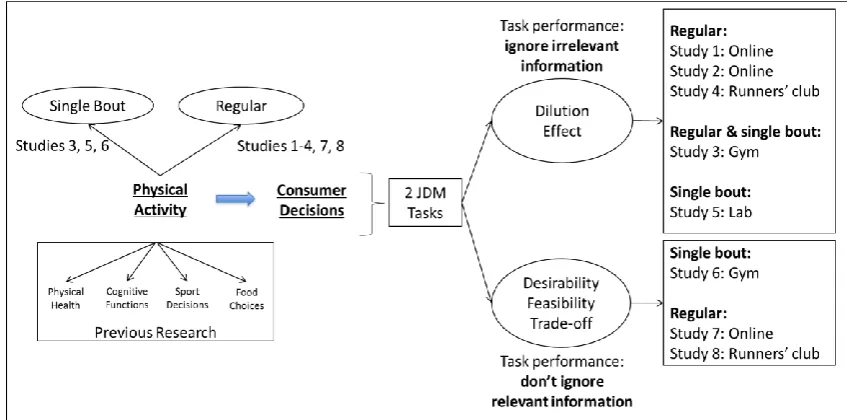
Figure 1-1 provides a graphical overview of the structure and aims of the research conducted in this thesis. While previous research has investigated the effect of physical activity on other domains, this research is one of the first to investigate unrelated consumer decision making. Specifically, I explore the effect of a single bout of physical activity as well as regular physical activity on two judgment and decision making paradigms which require complex processing of relevant and irrelevant information. As shown in Figure 1-1, the dilution effect paradigm requires people to ignore irrelevant information in order to perform well in the task. The task performance in the dilution effect paradigm was investigated in study one to five. The desirability feasibility trade-off paradigm on the other hand requires people not to ignore relevant information. This was investigated in study six to eight.
16
Figure 1-1. Overview of the research conducted in this thesis
In Chapter 5, I will discuss the key results of this thesis and reflect on different process findings and alternative explanations which were ruled out. I will outline the limitations of the studies and propose new directions for future research, before concluding with the practical implications of this research.
1.2
A Definition of Physical Activity
Physical activity is generally defined as “any bodily movement produced by the contraction of skeletal muscle that increases energy expenditure above a basal level” (Caspersen, Powell, & Christenson, 1985, p. 126). What is common to most conceptualizations of physical activity is that it causes a significant increase in heart rate and respiration compared to a resting state. Heart rate - measured in number of beats per minute – is usually divided into three categories: resting heart rate (typically around 70-80 beats per minute), maximum heart rate during peak physical exertion (typically around 220 beats per minute minus a person’s age), and the target heart rate (60% - 85% of the maximum heart rate). This heart rate is most beneficial for heart and lungs.
17 Jordan, & Atkins, 2012). Since such sophisticated equipment is often not available, physical activity researchers instead use a simple self-report measure of exertion - the Borg scale of perceived exertion. This commonly used scale is a highly validated self-report measure showing correlations with exerciser’s heart rate, lactate levels, percentage of VO2 max and breathing rate (Borg, 1998).
Aerobic physical activity can be distinguished from anaerobic physical activity based on the physiological processes that are happening in the muscle cells. During aerobic physical activity the muscle movement uses oxygen to burn carbohydrates and fats in order to produce energy. Cardiovascular physical activity is generally considered being aerobic and includes activities such as jogging, cycling or swimming. Anaerobic physical activity on the other hand entails shorter bursts of intense activity such as sprinting or heavy weightlifting. It increases physical strength as opposed to endurance. During this type of physical activity more energy is released than can be supplied by the aerobic metabolism. This leads muscle cells to switch to burning carbohydrates only, but not fats. This metabolism does not require any oxygen (hence it is called ‘anaerobic’). The downside of the anaerobic metabolism is that it produces certain waste molecules which ultimately lead to fatigue. Therefore anaerobic physical activity cannot be sustained over a longer period of time (Skinner & Mclellan, 1980). Practically, anaerobic physical activity must entail a certain level of aerobic physical activity. Thus, physical activity is never purely anaerobic, but a mix of both of aerobic and anaerobic.
In everyday language the terms physical activity and physical exercise are often used interchangeably, but they do relate to slightly different concepts. Physical exercise is a subset of physical activity and is determined by the motivation to increase or maintain physical fitness. Caspersen et al. (1985) define physical exercise as “physical activity that is planned, structured, repetitive, and purposive in the sense that improvement or maintenance of one or more components of physical fitness is an objective” (p. 128). In this thesis I am investigating the broader category of physical activity (entailing physical exercise) and its effect on consumer decision making; although I will occasionally refer to people who are physically active as ‘exercisers’ for the sake of readability.
18 three or more days, of at least 20 minutes per day and of vigorous intensity, or five or more days of at least 30 minutes per day and of moderate intensity, or
five or more days of any combination of moderate or vigorous intensity achieving at least 600 metabolic equivalent (MET)-minutes per week, whereby the MET formula takes into account differences in metabolic expenditure for vigorous and moderate intensity activity.1
This categorisation is based on the recommendations by the World Health Organisation (World Health Organization, 2010) and the Chief Medical Officers of the UK (Davies, Burns, Jewell, & McBride, 2011). When engaging in physical activity of vigorous intensity, breathing should be fast and it should be difficult to talk at the same time. When engaging in physical activity of moderate intensity, breathing should be increased compared to rest but it should still be possible to talk at the same time. A single bout of physical activity is defined as physical activity that is performed for at least 10 minutes continuously, of at least moderate intensity.
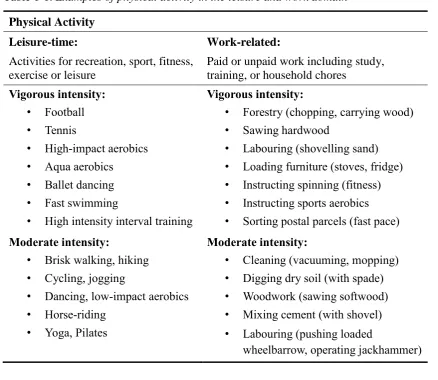
Further, I distinguish between two underlying motivations. Leisure-time physical activity is performed as a recreational activity (i.e., activities solely for recreation, sport, fitness, exercise or leisure. Examples of leisure-time physical activity include brisk walking, dancing, hiking or swimming). Work-related physical activity is performed as part of someone’s paid or unpaid work (i.e., work activities including study/training, household chores, harvesting food, labouring). Table 1-1 provides an overview of moderate and vigorous intensity physical activity during work or leisure time.
1 Moderate MET-minutes per week = 4 * moderate-intensity activity minutes * moderate days;
19 Table 1-1. Examples of physical activity in the leisure and work domain
Physical Activity
Leisure-time: Work-related:
Activities for recreation, sport, fitness, exercise or leisure
Paid or unpaid work including study, training, or household chores
Vigorous intensity: Vigorous intensity:
• Football • Forestry (chopping, carrying wood)
• Tennis • Sawing hardwood
• High-impact aerobics • Labouring (shovelling sand)
• Aqua aerobics • Loading furniture (stoves, fridge)
• Ballet dancing • Instructing spinning (fitness)
• Fast swimming • Instructing sports aerobics
• High intensity interval training • Sorting postal parcels (fast pace)
Moderate intensity: Moderate intensity:
• Brisk walking, hiking • Cleaning (vacuuming, mopping)
• Cycling, jogging • Digging dry soil (with spade)
• Dancing, low-impact aerobics • Woodwork (sawing softwood)
• Horse-riding • Mixing cement (with shovel)
• Yoga, Pilates • Labouring (pushing loaded
wheelbarrow, operating jackhammer)
1.3
Health Benefits of Physical Activity
Physical activity is beneficial for one’s health. The positive effects of physical activity on physiology and health have been investigated for decades, and led the World Health Organisation to emphasize the significant role of physical activity as a preventative measure to reduce the health and socioeconomic burden caused by chronic diseases. Insufficient physical activity is the fourth leading ‘modifiable behavioural risk factor’ behind smoking, high blood pressure, and overweight/obesity, and is responsible for approximately 3,200,000 deaths per year worldwide (World Health Organization, 2010).
20 different types of cancer, including breast, lung and colon cancer. The more people exercised the more their cancer risk reduced (Moore et al., 2016). Of course, there are also exceptions to this. Moore et al. (2016) also found the opposite trend for melanoma and slow growing prostate tumours. People often exercise outdoors and are more likely to get sunburned, which is a major cause for melanoma. Physically active individuals also tend to be more health conscious and go to check-up appointments more regularly. This might explain the increased incidence of (otherwise dormant) slow growing prostate tumours in physically active men.
In one of the earliest studies linking physical activity and longevity, Morris, Heady, Raffle, Roberts, and Parks (1953) investigated the effect of physical activity at work on the risk to falling ill with coronary artery disease. They compared London bus drivers, who sat for over 90% of their shift, to bus conductors, who climbed up to 750 steps in the double-decker buses per working day. They found that the physically active bus conductors had lower rates of coronary artery disease during middle-age; in cases where they did suffered from it, it was less severe and it was developed later in life than in their sedentary bus driver colleagues. These findings were replicated with sedentary civil servants and physically active postal workers who delivered the post on their bicycles. They concluded that physical activity - as a natural defence mechanism of the body - can protect the aging heart against coronary artery disease, and therefore lead to a longer life. Warburton et al. (2006) provide a more recent, extensive review of the health benefits of physical activity.
The Chief Medical Officers of the UK have set guidelines on physical activity for adults in order to produce these health benefits. The guidelines recommend engaging in physical activity of at least moderate intensity, for at least 150 minutes per week in bouts of ten minutes or more. Alternatively, physical activity of vigorous intensity should be performed for at least 75 minutes per week, or a combination of both vigorous and moderate intensity physical activity. Physical activity should be performed regularly and aerobically using major large muscle groups steadily and rhythmically, to raise heart rate and breathing significantly (Davies et al., 2011).
22
Chapter 2.
Theoretical Background
This chapter provides an overview of the literature on physical activity and its effect on cognitive functions and decision making, and develops the theoretical foundation for the subsequent empirical chapters. First, I will review research on effects of physical activity on cognitive functions. This will include neuro-scientific evidence, which forms the basis for the conjectures tested in this thesis. Secondly, I will assess the current literature which investigates physical activity and decision making behaviour. This includes research from the area of exercise psychology, consumer psychology (in particular food choices) and other judgment and decision making domains (e.g., risk judgments). Thirdly, I will introduce two consumer decision making paradigms which involve attribute weighing – the dilution effect and the desirability-feasibility choice conflict – and how they relate to the outlined physical activity literature.
2.1
The Effect of Physical Activity on Cognitive Functions
The physiological health benefits of physical activity have been known for decades. But physical activity also seems to positively affect brain functions and psychological wellbeing. Regular physical activity, specifically aerobic exercise, lowers the risk of suffering from neurodegenerative diseases such as Parkinson’s and Alzheimer disease (Ahlskog, Geda, Graff-Radford, & Petersen, 2011). Randomised controlled trials show that physical activity interventions attenuate the symptoms of cognitive decline in patients suffering from dementia or mild cognitive impairment compared to sedentary controls. Improved memory functions and increased hippocampal brain volume after long-term physical activity interventions have also been found for healthy seniors. These results are supported by cross-sectional brain imaging studies which report larger grey matter and hippocampal volume for physically active seniors compared to sedentary or unfit seniors. In addition, fMRI studies in adults over their 50s show that physical activity interventions between six to twelve months can improve the functional connectivity between different brain areas (Erickson & Kramer, 2009; Northey, Cherbuin, Pumpa, Smee, & Rattray, 2017).
23 involving children have examined executive functions. Best (2010) provides a recent overview of experimental research investigating the effect of physical activity on children’s executive functions. For example, Hillman et al. (2014) investigated the effect of a nine month afterschool physical activity program on children’s electrical brain activity and their performance on behavioural measures of executive control in a randomised controlled trial. They found significantly greater improvements in cognitive flexibility (in a colour-shape switch task) and attentional inhibition (in the Flanker task) among the physically active group compared to the waiting list control group. Improvements after long-term physical activity interventions have also been found for children’s working memory (Kamijo et al., 2011), planning and mathematic achievement (Davis et al., 2011).
A range of different methods including cross-sectional, correlational studies, randomised controlled trials and neuro-level experiments have been used to investigate the effects of physical activity on cognitive functions in healthy adults. Barenberg et al. (2011) conducted a systematic literature review of physical activity interventions and cognitive functions. The goal was to establish whether executive functions can benefit from term and short-term physical activity. They found that eight out of nine long-term physical activity interventions (of duration between ten and 40 weeks) and ten out of 14 short-term single bout interventions provided empirical evidence of improvements of executive functions due to physical activity. While long-term interventions had positive effects on all kinds of executive functioning tasks, short-term interventions had significant positive effects on tasks which predominantly required inhibition, i.e. a deliberate suppression of dominant, automatic, or pre-potent responses (e.g., Stroop test, Flanker task, Go/No-go, Paced Auditory Serial Addition Test). They also found occasional, positive effects of a single bout of physical activity for tasks requiring complex working memory processes (e.g., operation span task, reading span task, Wisconsin card sorting test, Sternberg test, and alternate uses test).
24 found that participants reported a decrease in stress and state anxiety when exercising for four weeks and an increase in positive mood on exercise days compared to non-exercise days. Dietrich and Audiffren (2011) summarize that moderate, aerobic physical activity generally has a positive effect on people’s affect, which reaches well into the post-exercise period: physical activity reduces stress, depression and anxiety and induces analgesia and sedation. In their ‘reticular-activating hypofrontality’ model of acute exercise, they attribute these positive effects to an increase of serotonin (which has an antidepressant effect) as well as an increase of endorphins and endocannabinoids, leading to a general sense of wellbeing. They further argue that exercise induces a state of hypofrontality – a deactivation of the frontal cortex during physical activity. This reduces the processing of information which cause stress, anxiety and negative thinking. Thus, physical activity diminishes negative emotional processes, such as rumination.
Although it is possible that affective changes caused by physical activity lead to differences in people’s judgments and decision making, this was not the main focus of the research in this thesis. The majority of the empirical studies I conducted included different measures of affect as control variables.
Neurophysiological Explanations
Several neurophysiological explanations of why and how physical activity influences cognitive functions have been proposed. On a neuronal level, non-human animal research has examined the molecular and cellular processes triggered by physical activity. Physical activity leads to increased cell proliferation and survival of neurons in several brain areas. Most commonly observed is a positive effect of physical activity on the neurons in the dentate gyrus of the hippocampus. In addition, it has been observed that physical activity leads to an increase in brain-derived neurotrophic factor (BDNF), which is a molecule associated with brain plasticity. BDNF leads to increased neuronal outgrowth, improved synaptic functions and survival of neurones. It has been described as one of the most fundamental neuronal factors for learning, memory and general cognition (Hillman, Erickson, & Kramer, 2008).
25 Lee, Kim, Yoo, & Kim, 2007). Furthermore, physical activity leads to the formation of new blood vessels in various brain areas such as the cortex, the cerebellum, the striatum and the hippocampus.
Exercise-induced structural and functional brain changes have not only been observed in animals but also in humans. For example, physical activity has been shown to increase cerebral blood flow in areas associated with cognition, memory and executive functions. Pereira et al. (2007) used MRI technology to map cerebral blood flow in the human hippocampal formation. Healthy participants followed an aerobic exercise regime for three months and showed a significant increase of cerebral blood flow in the hippocampus. This was accompanied by an improved performance on the Rey Auditory Verbal Learning Test (a test of verbal memory).
Ruscheweyh et al. (2011) tested the effect of a six months physical activity regime of medium or low intensity on episodic memory functions in healthy, elderly subjects. They found that physical activity led to an increase in local grey matter volume in the prefrontal and cingulate cortex, and higher levels of BDNF. They also found a significant increase in memory scores on the Rey Auditory Verbal Learning Test in both conditions (medium and low intensity physical activity) compared to a control group without physical activity.
26 The authors found a significantly enhanced positive association between the MN and the FPN for the endurance runners. This indicates that endurance runners had improved connectivity between parts of the brain that aid executive functions and attention. At the same time the results also showed an anti-correlation between the MN and the DMN (associated with lack of focus and mind wandering). DMN de-activation has been shown to be associated with improved cognitive performance. Additionally, they found a positive linear association between the brain connectivity values, participants’ self-reported time spent being physically active and their fitness levels. The more active the participants were, the stronger the connectivity values.
It is important to note that these results were found in healthy, young adults during a resting state. This shows that physical activity may lead to lasting changes in brain functions, cognition and potentially people’s behaviour even at times when they are not active. Therefore, research designs which compare the consumer behaviour of people who are regularly physically active, to those who are sedentary, could be a valuable addition to research designs which focus on the effect of a single bout of physical activity.
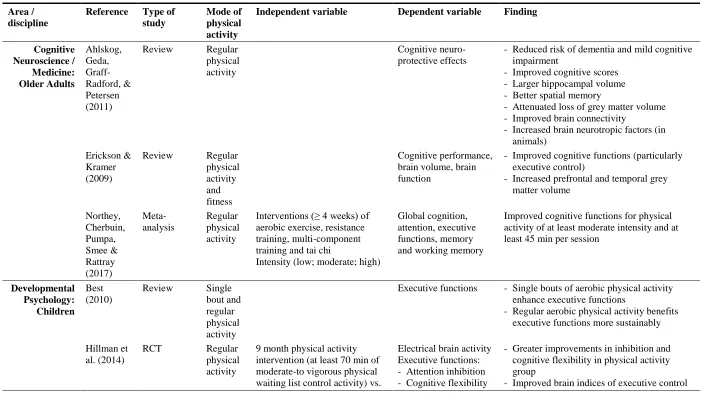
Although the above outlined research studies indicate that physical activity leads to improvements of cognitive functions (e.g., attention control, mind wandering), it remains unclear how these improvements relate to specific decision making processes (in the consumer domain or more generally). The types of cognitive tasks usually examined in the previously outlined research studies do not examine processes that typically constitute ‘decision making processes’. Specifically, decision processes like the weighing of different pieces of information (e.g., decision attributes) and the integration of this information to form a final judgment or choice, have not been examined in the literature so far. Table 2-1 provides an overview of the literature on regular and single bouts of physical activity and their effect on cognitive functions.
27
Table 2-1. Summary of the literature on physical activity and the effects on cognitive functions Area /
discipline
Reference Type of study
Mode of physical activity
Independent variable Dependent variable Finding
Cognitive Neuroscience / Medicine: Older Adults Ahlskog, Geda, Graff-Radford, & Petersen (2011)
Review Regular
physical activity
Cognitive neuro-protective effects
- Reduced risk of dementia and mild cognitive impairment
- Improved cognitive scores - Larger hippocampal volume - Better spatial memory
- Attenuated loss of grey matter volume - Improved brain connectivity
- Increased brain neurotropic factors (in animals)
Erickson & Kramer (2009)
Review Regular
physical activity and fitness
Cognitive performance, brain volume, brain function
- Improved cognitive functions (particularly executive control)
- Increased prefrontal and temporal grey matter volume Northey, Cherbuin, Pumpa, Smee & Rattray (2017) Meta-analysis Regular physical activity
Interventions (≥ 4 weeks) of aerobic exercise, resistance training, multi-component training and tai chi
Intensity (low; moderate; high)
Global cognition, attention, executive functions, memory and working memory
Improved cognitive functions for physical activity of at least moderate intensity and at least 45 min per session
Developmental Psychology: Children
Best (2010)
Review Single
bout and regular physical activity
Executive functions - Single bouts of aerobic physical activity enhance executive functions
- Regular aerobic physical activity benefits executive functions more sustainably
Hillman et al. (2014)
RCT Regular
physical activity
9 month physical activity intervention (at least 70 min of moderate-to vigorous physical waiting list control activity) vs.
Electrical brain activity Executive functions: - Attention inhibition - Cognitive flexibility
- Greater improvements in inhibition and cognitive flexibility in physical activity group
28
Kamijo et al. (2011)
RCT Regular
physical activity
9 month physical activity intervention (at least 70 min of moderate-to vigorous physical activity) vs. waiting list control
Working memory Electrical brain activity
Improved cognitive control of working memory in the intervention group
Davis et al. (2011)
RCT Regular
physical activity
13 week aerobic physical activity programme (20 or 40 min/day) vs. control group
Cognitive functions fMRI brain activity Academic achievement
- Improved cognitive performance - Improved math achievements - Increased prefrontal cortex activity - Reduced posterior parietal cortex activity
Animal Research Hillman, Erickson & Kramer (2008)
Review Regular
physical activity
Various indices of brain health in the mouse brain
- Increased cell proliferation and cell survival in the hippocampus
- New blood vessel growth in different brain areas
- BDNF up-regulation Kim, Lee,
Kim, Yoo, & Kim (2007)
Experiment Regular physical activity
Pregnant control group vs. running group (daily forced treadmill run for 30 min at mild-intensity)
Short term memory, Hippocampal neurogenesis, BDNF in rats
Maternal physical activity increased BDNF expression, enhanced cell survival and improved short term memory
Cognitive Neuroscience: Healthy Adults Barenberg et al. (2011)
Review Single
bout and regular physical activity
Long term interventions of moderate and vigorous intensity (≥ 10 weeks);
Single bout interventions of at least 20 min (treadmill running, ergometer cycling)
Executive functions: shifting, inhibition, dual task coordination, complex requirements
Long term interventions:
- Improved executive functions in 8 of 9 studies
- Effects on all types of executive functions - Occasional effect on tasks with complex
requirements
Single bout interventions:
- Improve executive functions in 10 of 14 studies
- No effect on shifting
- Consistent effect on inhibition tasks Hopkins et
al. (2012)
Experiment Single bout and regular physical activity
4 week physical activity programme + physical activity on final test day vs. 4 week physical activity program + no physical activity on the final test
Novel object recognition memory, state anxiety,
depression, perceived stress, positive and negative mood
- Single bout + regular physical activity improved recognition memory and decreased perceived stress
29
day vs. single bout of physical activity vs. sedentary
Pereira et al. (2007)
Experiment Regular physical activity
3-month aerobic physical activity intervention (4 times per week)
Cerebral blood volume in the hippocampus Rey Auditory Verbal Learning Test
- Physical activity increases cerebral blood volume in the dentate gyrus
- Cerebral blood volume correlated with aerobic fitness and cognitive function
Ruscheweyh
et al. (2011)
RCT Regular
physical activity
6-month intervention, 3 times per week for 50 min
Control vs. low intensity aerobic physical activity vs. medium intensity aerobic physical activity
Episodic memory, neurotrophin and catecholamine levels, grey matter volume
- Increased memory scores, no difference between intensity groups
- Increased grey matter volume in prefrontal and cingulate cortex
- Increased BDNF levels
Raichlen et al. (2016)
Correlational Regular physical activity
Endurance runners vs. sedentary controls
Resting state functional connectivity of brain areas which link executive functions with motor control
- Difference in functional brain connectivity - Dose response relationship between
connectivity strength and physical activity engagement Voss, Kramer, Basak, Prakash & Roberts (2010) Meta-analysis Regular physical activity
Athletes (professional and university-level) vs. non-athletes
Attentional cueing, processing speed, attention tasks
- Improved processing speed and performance in attention tasks among athletes
Heisz, Clark, Bonin & Paolucci (2017)
RCT Regular
physical activity
6 week intervention, 3 times per week for 20 min
Physical activity training (high intensity interval) vs. physical activity + cognitive training vs. no training control
High-interference memory task, general recognition memory, serum neurotrophic factors brain-derived neurotrophic factor, insulin-like growth factor-1.
- Improve performance on high-interference memory task for physical activity groups - No improvement of general recognition - Greater fitness improvement associated with
greater increase of BDNF and insulin-like growth factor-1
- Higher responders to physical activity benefitted most from the combined training
30
2.2
Physical Activity and Judgment and Decision Making
Does physical activity influence how people form judgments and make choices? Surprisingly, few studies have investigated this question. As Johnson (2006) notes research which experimentally investigates the influence of physical activity on judgment and decision making has been limited. Even though from a methodological point of view this domain provides great opportunities to investigate decision making in a natural setting (e.g., before, during, after physical activity; regular vs. single bouts of physical activity; aerobic vs. anaerobic physical activity).
2.2.1 Research in Sport and Exercise Psychology
The research in sport and exercise psychology which investigates decision making can generally be categorized into two main fields. The first research field focuses on
decision making within a particular sport. Research studies within this field investigate which decision making processes are prevalent and optimal while a particular sport is played, and how these decision making processes vary depending on a person’s experience. Fast, automatic processing of relevant stimuli is often necessary in sports in order to perform well. Several studies have shown that in sport deliberating over decisions can lead to worse outcomes than intuitive, heuristic decision making. This is particularly valid for experts in a specific sport who develop an implicit knowledge structure through years of practice. Such knowledge structures must first be learned deliberatively before they can transition into automatic decision making processes.
Beilock, Bertenthal, McCoy and Carr (2002) showed that experienced golf players performed worse when they were asked to pay attention to their swing, promoting a deliberative style of thinking. Novices on the other hand performed better using a deliberative style of decision making. These findings have been replicated with experienced handball players who performed better when they had no time to think rather than when viewing a scene from a game for 45 seconds before deciding (Johnson & Raab, 2003). Raab and Johnson (2008) provide an overview over intuitive and deliberative decision making processes in sport.
sport-31 specific decision making tasks (e.g., response accuracy, response time, visual search, spatial memory) than non-experts.
Even though this expert performance approach provides valuable insights into decision processes within a specific sport and the role of expertise, it does not shed light on decision making that is unrelated to the sport itself. The applicability to other decision domains is limited, since only sport-specific decisions were investigated.
The second field of research uses experimental lab studies to investigate effectsof physical activity on decision making within sports. These studies generally investigate specific processing aspects of decision making in a particular type of sport (e.g., the time it takes to react and choose an action like passing the ball to another player). Comparable designs have been used for these lab experiments. During and / or shortly after a physical activity manipulation, subjects view slides or video clips of a scenario depicting a sports match (usually football or handball scenes). Participants then have to indicate how they would react if they were the player in the presented situation. The choice alternatives are provided (e.g., passing the ball, shooting, dribbling, or running). The two dependent variables that are measured are response speed and decision accuracy, which is evaluated using expert ratings.
The research group around Terry McMorris conducted several experiments using variations of such a design (McMorris & Graydon, 1996a, 1996b, 1997; McMorris et al., 1999). Whilst cycling on an ergometer at different intensities, subjects watched football scenes and had to choose between four potential play responses. The decision accuracy of the responses was scored by experts. They found a facilitating effect of physical activity on decision response speed in all of their studies. While physically active participants made faster decisions, they found no effect of physical activity on decision making accuracy, apart from one study - a finding they interpreted as an artefact.
32 accuracy and response speed, in a sample of experienced football players who viewed football video clips during a treadmill run.
The results of the existing research studies on physical activity and decision making are often not generalizable to other contexts, such as consumer decision making, because only very specific decision situations in sport were investigated. Additionally, some of the research on physical activity lacks external validity since only lab experiments with a high degree of artificiality were used. Real-life physical activity in the field, such as that of gym visitors and their subsequent decision making, has not been investigated. I believe that it is important to investigate physical activity in its natural setting since it is an activity that is strongly influenced by people’s motivation and the context.
2.2.2 Research in Sports-Unrelated Decision Domains
Only very few studies have investigated the effect of physical activity on unrelated judgments and decision making. Using a correlational design, Jacobson and Matthaeus (2014) investigated whether physical activity status (once or more per week / less than once per week), sport type (self-paced like running / externally paced like football) and sport level (high-skilled / recreational) were associated with the performance in a sport-unrelated decision making task among other cognitive tests. To measure decision making they used the Tower of Hanoi test.2 Decision making speed (time-per-move ratio) and accuracy (move-accuracy ratio) were used as response variables. The authors found no association between the physical activity variables and decision making performance in the Tower of Hanoi test. This null effect might be due to a lack of sensitivity of this test as a measure of decision making performance in a healthy sample. Although the test has high validity in detecting frontal lobe dysfunctions and decision making impairments (Sullivan, Riccio, & Castillo, 2009), it might not be sensitive enough to distinguish nuanced differences in decision making capability in a healthy population. Jacobson and Matthaeus (2014) did however find that physically active participants performed better on an inhibition task (a modified Stroop test).
Raue, Streicher, Lermer, and Frey (2015) investigated the effect of physical activity on people’s judgments of risks. Backcountry skiers and indoor climbers judged the respective sport-related risks before, during and after engaging in the activity. Sport unrelated risk judgments were also investigated during and after a physical activity
2 Subjects create a tower by moving circular disks of different sizes on and off pegs. Subjects cannot
33 manipulation in the laboratory using a stationary bicycle. Participants were asked to estimate the probability of being affected by ten general risks, such as getting a severe illness. In three studies the authors found that people’s judgments of risks were lower for sport-related as well as unrelated risks during and after engaging in physical activity compared to beforehand. They hypothesized that risk judgments might be lower because of an increased release of adrenaline and dopamine leading to elevated mood states and reduced anxiety. Lower risk judgments might have consequences for decision making under risk. In particular, physical activity might lead to more risk taking behaviour.
In the domain of creative thinking, Oppezzo and Schwartz (2014) found in four experiments that participants performed better on divergent thinking tasks during and shortly after they were physically active. Improved creative thinking may in turn influence decision making, in particular in situations which require people to think of a decision problem in novel ways or to generate alternative options. Using a walking manipulation they found that 81% of participants improved their scores on the Guilford’s alternate uses test of divergent thinking compared to a seated control condition. The boost in creative thinking was particularly strong when participants walked outdoors. They hypothesized that a complex causal pathway led to these findings, including elevated mood, an increased activity of people’s associative memory and a relaxed inhibition of unusual thoughts.
Based on this literature it is unclear whether physical activity has any effect on unrelated judgments and decisions in the consumer domain. Furthermore, the outlined studies provide limited insight into the underlying mechanisms or pathways through which physical activity influences decision making. Therefore, it is difficult to make predictions about the effect of physical activity on consumer decision making.
2.2.3 Research in Consumer Psychology
34 it depends on people’s motivation and perception of the physical activity. For example, Fenzl, Bartsch, and Koenigstorfer (2014) found that physical activity led to increased food consumption, but only in people with low behavioural regulation and when the physical activity was labelled as ‘fat-burning’ as opposed to ‘endurance exercise’. Similarly, Werle, Wansink, and Payne (2015) showed that the framing of physical activity can affect subsequent food choices. When they labelled the physical activity as ‘fun’, participants ate less dessert and fewer hedonic snacks afterwards than when it was labelled as ‘exercise’. Similar results were found by Chang and Lin (2015). They only found a licensing effect of physical activity on food consumption for dieters, but not for non-dieters. The licensing effect was present after participants had engaged in physical activity and also when they anticipated to engage in physical activity in the future. Supporting the previous studies a ‘fun’ framing of physical activity reduced this licensing effect. In an earlier study Werle, Wansink, and Payne (2011) found that one doesn’t even have to engage in physical activity for a licensing effect on food choices to occur. They showed that just reading about physical activity also led to compensatory behaviour (i.e., participants served themselves more snacks).
From a theoretical perspective, engaging in physical activity and making food choices can be considered highly related behaviours, since they represent multiple, albeit different paths to achieve the same health-related goal. Kruglanski, Pierro, and Sheveland (2011) define this as ‘equifinality’. They showed that if people have a number of different means available to achieve the same goal, it can reduce their commitment to the specific means, but at the same time strengthen their overall goal commitment.
A smaller number of research studies also support the notion of a promoting spillover effect of physical activity - physical activity leading to consumer behaviour which works in the same direction (e.g. more health-conscious food choices). For example, correlational studies have found a negative association between regular leisure time physical activity and the consumption of high-fat food, independently of a number of demographic and behavioural confounding variables (e.g., Simoes et al., 1995). In an experimental study, van Kleef, Shimizu, and Wansink (2011) showed their participants commercials about exercising or car insurance, and investigated their food choices during a subsequent lunch. Watching the exercise ads led to a reduction of participants’ calorie intake by 21.7% compared to the control group.
36
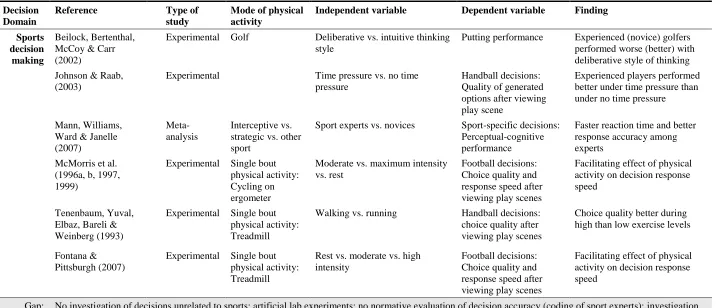
Table 2-2. Summary of physical activity research in judgment and decision making and related domains Decision
Domain
Reference Type of
study
Mode of physical activity
Independent variable Dependent variable Finding
Sports decision making
Beilock, Bertenthal, McCoy & Carr (2002)
Experimental Golf Deliberative vs. intuitive thinking style
Putting performance Experienced (novice) golfers performed worse (better) with deliberative style of thinking
Johnson & Raab, (2003)
Experimental Time pressure vs. no time
pressure
Handball decisions: Quality of generated options after viewing play scene
Experienced players performed better under time pressure than under no time pressure
Mann, Williams, Ward & Janelle (2007)
Meta-analysis
Interceptive vs. strategic vs. other sport
Sport experts vs. novices Sport-specific decisions: Perceptual-cognitive performance
Faster reaction time and better response accuracy among experts
McMorris et al. (1996a, b, 1997, 1999)
Experimental Single bout physical activity: Cycling on ergometer
Moderate vs. maximum intensity vs. rest
Football decisions: Choice quality and response speed after viewing play scenes
Facilitating effect of physical activity on decision response speed
Tenenbaum, Yuval, Elbaz, Bareli & Weinberg (1993)
Experimental Single bout physical activity: Treadmill
Walking vs. running Handball decisions: choice quality after viewing play scenes
Choice quality better during high than low exercise levels
Fontana & Pittsburgh (2007)
Experimental Single bout physical activity: Treadmill
Rest vs. moderate vs. high intensity
Football decisions: Choice quality and response speed after viewing play scenes
Facilitating effect of physical activity on decision response speed
Gap: No investigation of decisions unrelated to sports; artificial lab experiments; no normative evaluation of decision accuracy (coding of sport experts); investigation of decision making during physical activity, but not after physical activity
Sport-unrelated decision making Jacobson & Matthaeus (2014)
Correlational Regular physical activity
Frequency (once or more per week vs. less than once per week);
Sport type (self-paced vs. externally paced); Sport level (high-skilled vs. recreational)
Tower of Hanoi: Decision speed (time-per-move ratio) Accuracy (move-accuracy ratio)
37
Raue, Streicher, Lermer & Frey (2015)
Experimental Single bout of physical activity
Before vs. during vs. after: Backcountry skiing Climbing
Rest vs. Cycling on stationary bike with medium intensity
Risk judgments: Sport-related (skiing, climbing)
Unrelated (e.g. illness)
Physical activity decreases the perceived likelihood of related and unrelated risks
Oppezzo & Schwartz (2014)
Experimental Single bout of physical activity
Sitting vs. walking (treadmill) vs. walking (outdoors) vs. sitting (outdoors)
Guilford’s alternate uses test of divergent thinking
Improved creative thinking during and shortly after physical activity
Gap: No investigation of decision making in the consumer domain
Spillover effects on food choices
Fenzl, Bartsch & Koenigstorfer (2014)
Experimental Single bout of physical activity
Cycling labelled as ‘fat-burning’ or ‘endurance’ training
Amount of Pretzels eaten post-exercise
Increased food consumption in people with low behavioural regulation and when physical activity labelled as ‘fat-burning’ Werle, Wansink &
Payne (2015)
Experimental and
correlational
Single bout of physical activity
Walking labelled as ‘fun’ or ‘exercise’
Amount of desert and hedonic snacks eaten post-exercise
Reduced food consumption when physical activity labelled as ‘fun’
Chang & Lin (2015) Experimental Single bout of physical activity
Dieter vs. non-dieter;
Jogging & jumping rope before vs. after eating;
Work-frame vs. fun-frame vs. no-exercise
Amount of potato chips eaten
Increased food consumption for dieters after and before physical activity, when physical activity labelled as ‘work’
Werle, Wansink & Payne (2011)
Experimental None Reading about physical activity labelled as ‘fun activity’ vs. ‘tiring exercise’
Amount of snacks served Increased amount of snacks served after reading about physical activity
Simoes et al. (1995) Correlational Regular leisure time physical activity
Inactive vs. Irregular vs. Regular and not intense vs. Regular and intense
Consumption of 13 high-fat foods
Physical activity associated with lower consumption of high fat food
van Kleef, Shimizu & Wansink (2011)
Experimental None Watching exercise commercial
vs. car insurance commercial
Food intake at a subsequent lunch meal
Reduced calorie intake after exposure to exercise commercial
38
2.3
Proposition Tested in This Thesis: Physical Activity and
Information Processing
We often think of physical activity as a highly repetitive, automated motor task which doesn’t require much thinking. However, motoric functions have to be combined with cognitive functions in order to engage in physical activity. Before engaging in physical activity you first have to plan the activity (e.g., on Saturday morning I will go for a run). You have to inhibit distractors (e.g., to party on Friday night), and activate a sequence of behaviours (e.g., getting dressed and leaving the house). While exercising you have to integrate complex information from internal sources (unconscious motor information like balancing or gait as well as conscious information like feelings of exertion and pain) and external sources (e.g., a sudden obstacle in the running path). Failing to focus on important information can have costly consequences (e.g., when you fall over the obstacle). On the other hand, some information like the urge to stop running, has to be ignored or suppressed.
When seeing physical activity from this perspective, it can be argued that engaging in physical activity can train our ability to integrate several pieces of information; in particular, physical activity may train the ability to 1) focus on what is important or relevant to achieve a goal and 2) ignore the unimportant or conflicting information. In order to successfully achieve the goal of engaging in regular physical activity, individuals repeatedly have to ignore the unimportant features and not neglect the important, goal-relevant features of their decision environment. This ability might spillover and benefit people in situations that are unrelated to exercising but require integrating several different pieces of information.
39 In the physical activity domain, Voss, Kramer, Basak, Prakash, and Roberts (2010) performed a meta-analysis of 20 laboratory studies investigating differences between athletes (professional and university-level) and non-athletes on measures of cognition in non-sport contexts. Indeed, they found that on measures of processing speed and attention, athletes performed better than non-athletes.
In today’s world we are confronted with a huge amount of information all day long. Quite often a big part of that information is irrelevant for the decisions that we have to make. For consumers, filtering out irrelevant product information is becoming an increasingly desirable skill if they want to make good product choices. On the other hand, decision makers should focus on all information that is relevant for their choices. Failing to consider relevant information can be costly. Most consumption choices entail some sort of trade-off between different product attributes (e.g. a highly desirable product has a higher price than a less desirable product). Since such trade-offs can be difficult to make, it can lead to choice deferral or the use of non-compensatory, trade-off avoiding decision making strategies (Weber, Baron, & Loomes, 2001). For example, consumers compare products on one single attribute and ignore all other potentially important attributes. This can lead to sub-optimal choices (apart from specific circumstances).3 Optimal decision making usually requires consumers 1) to ignore irrelevant information, and 2) to consider all information that is relevant and make compensatory trade-offs when product attributes are negatively correlated.
If physical activity trains and improves the information integration of disparate stimuli as supported by the cognitive