A Game Engine based Networked Infrastructure to
Create and Share 3D Abstract Art
Abstract— Online communities have been proactive in producing collaborative creative content such as music, games and other social interactions. Online collaboration has enabled contributors to peer produce and share masses of creative content. Examples range from information sharing such as Wikipedia to open source software and other specific art projects. Software vendors have recently introduced low cost 2D and 3D content authoring tools allowing user communities to generate and share creative content. Emerging networking programming interfaces available inside modern game engines allow contributors to implement multiplayer or multiuser interaction relatively easily. This paper presents a 3D art creation framework to be used over networked infrastructure in a multiuser environment. Contributors will be able to create 3D sculptures at runtime, share with other users in a common networked working environment and critique each other’s work. Experimental work also involved evaluating procedurally generated meshes versus instantiation of primitive mesh objects. Saving and loading mesh information in an optimum way is also explored.
Keywords – 3D Art; online collaboration; interactive art; networking; game engine; procedural meshes; performance analysis;
I. INTRODUCTION
With the proliferation of IT devices and networking infrastructures, online content creation and
sharing has become extremely popular. Online
communities have produced huge quantities of shared content in disciplines ranging from written articles to music and other interactive applications such as computer games. A good example of such content is the Scratch online project [1]. The contributors of Scratch have produced in excess of 10 million interactive projects. Recent developments in information technology such as smart phones and improved networking infrastructure has enabled contributors to contribute on the go [2]. Millions of users have shared creative content in an online collaboration called Newgrounds [3]. In this project, we have created a framework that implements the concept of multiplayer using the Unity Game Engine [4]. Users can create 3D abstract sculpture in a dedicated space and share with other collaborating users.
II. BACKGROUND AND MOTIVATION
This work is motivated by the fact that people who work as a community are likely to perform better than working as individuals. In a study conducted by Burke and Burr on song writing, it was discovered that people who took advantage the social features of the collaborative website performed much better than the ones did not [5]. The participants were encouraged to interact and share song writing with others. Some users did not treat the website as a community and kept their work private. These individuals wrote half as many songs.
It is not only that the direct collaboration that stimulates creativity and productivity, stigmergic aspect of online collaboration works equally well [6]. In this study, an online collaborative tool called ‘Picbreeder’ was used. The applet randomly generates images which are modified by users and published online. The other users can download these images and then continue to further evolve. This way, users collaboratively creative very complex art without direct communication. In a sense, Picbreeder stimulates creativity but in a stigmergic sense.
There is a strong evidence of collaborative work in many diverse fields and professions. Cross discipline online collaboration enables designers and engineers with different backgrounds work together to produce innovative products [7]. An online collaboration tool enables designers and engineers to evaluate the design process and contribute to enhance product design. The outcome is a much-refined product since the contributors can visualise the product from different perspectives.
Creative thinking is becoming absolutely essential in all areas including engineering, medicine, art, entrepreneurship and education [8]. In this study, a web-based application was used for contributors to share ideas, comment and document the process. This shared area was seen as social gathering space, which positively influenced social and spatial psychological distance. A self-contained app also provided a
GSTF Journal on Computing (JOC)
DOI: 10.5176/2251-3043_
5
.
1
.3
49
ISSN:2251 - 3043 ; Volume 5, Issue 1; 2016 pp.
29-3
4
© The Author(s) 2016. This article is published with open access by the GSTF.
| GSTF Journal on Computing (JOC) Vol.5 No.1, August 2016
Bal Singh
School of Computing, Creative Technologies and Engineering
Leeds Beckett University Leeds, United Kingdom [email protected]
Pauline de Souza
School of Art and Digital Industries University of East London London, United Kingdom
framework to comment on other people’s work and vote if necessary. The results showed an increase in personal and collaborative creativity.
Collaborative practice enhances user experience and exists in many fields. One example is a transmedia application that combines mobile augmented reality and with television content [9]. A typical television show encourages viewing children to interact with the broadcast and reveal missing words using the mobile app. The evaluation of this study was carried out by monitoring 6 to 10 year old boys and girls. It was reported that interactive technology enabled participants to provide immediate feedback to close the loop quicker than any other means. Players collaborated with each other, discussing which word or image to seek and encouraged each other finding them. This resulted in more richer and challenging engagement with an educational television programme.
Mobile devices such as tablets are being used more and more in school learning environment. In many cases, students only refer to pre-prepared content. However, collaborative content generation and sharing makes learning more engaging and fun. In a pilot study, an application called Media Enhanced Learning (MEL) was developed and employed on Android devices [10]. The application combines tutor generated pedagogical scripts and user generated multimedia content. 81% of the total participants indicated that they enjoyed learning with this app and would use this for their further studies. The most popular module was biology. Students enjoyed taking photographs of plants and shared with others on a common server.
III. IMPLEMENTATION
[image:2.595.323.543.403.646.2]In our earlier work, we created an application to sketch shared content in the form of 2D graffiti. We used a head-mounted device to provide rich and immersive user experience inside the Tuscany demo scene by Oculus as shown in fig. 1.
Figure 1: Collaborative graffiti using a head-mounted display
In our current project, we have implemented the creation of abstract 3D art in a shared environment. Each user can utilise a dedicated working space to create a 3D sculpture. They will be
able to tag their work to claim identity and share with other collaborative users. For implementation, we used the Unity game engine. Its current version has a new networking Application Programming Interface (API) that allows users to creative multiuser environment relatively easily. The application can be extended to mobile devices so that the participants can collaborate on the go. The networking architecture follows the server-client relationship as explained below.
Network Components
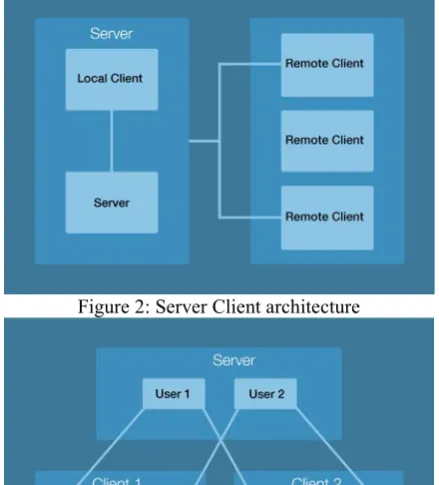
The unity networking system consists of a server and multiple clients. In the absence of a dedicated server, any client can act as a ‘host’. The host consists of server and client within the same process as shown in fig 2. However, the client within the host is a special type of client called Local Client. The local client communicates with the server directly within the same process whereas the remote clients use the network to talk to the server. The benefit of this type of networking is that the local and remote clients share the same code. Hence in many cases, the developers need to write the code only once for both type of clients.
[image:2.595.49.277.502.644.2]When new users are created on a network, they are seen by all clients connected to that network as shown in fig 3. Each individual user is capable of existing independently and can interact with other users. Unity’s online services are hosted in the Cloud and provide a relay server to implement a server less configuration. This service routes traffic between users and eliminates Network Address Translation (NAT) and firewall issues.
Figure 2: Server Client architecture
Figure 3: The server and clients see all connected users
Bal Singh and Pauline de Souza
In our implementation, each user runs an application on their device. One user acts as a server and has
networks address. The subsequent users can all connect to this IP address as clients. On successful connection, they all have their own dedicated player and can also see the other connected users. When the application is launched, the user has the option to connect as a client or act as a server as shown in fig 4.
Figure 4: Application on launch
[image:3.595.319.537.119.305.2]Figure 5: Server instance
Figure 6: Client instance
In this example, only two users are connected as shown by two grey cubes. O Computing (JOC) Vol.5 No.1, August 2016nce instantiated, each user can click and create a series of blobs to construct a 3d Sculpture as shown in fig 7.
Figure 7: Two connected users
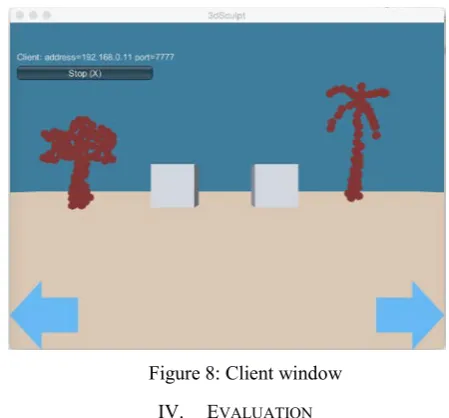
[image:3.595.52.272.135.707.2]The client window also sees the exact same content as the host as shown in fig 8.
Figure 8: Client window IV. EVALUATION
A focus group comprising of students studying on a games design course was held to evaluate the effectiveness of this application. These students are familiar with the concept of 3D art and networked multiplayer implementation. The following criteria was used for evaluation:
Table 1: Evaluation criteria
Criteria Response This will allow me to share my ideas with others 93%
This will allow me to learn from other users 87% This will stimulate creativity amongst participants 87% I’d like to tag my creation to claim ownership 67% I’d like to critique others’ work 93% I’d like to receive feedback and criticism on my own work 87% It will enable me to make new friends in an art context 80%
I’d like to use this app on A mobile device/desktop 33%/87%
[image:3.595.317.542.338.547.2]Bal Singh and Pauline de Souza
$OWKRXJKWKHVL]HRIWKHIRFXVJURXSLVIDLUO\VPDOOEXWWKH UHVSRQVHV DUH YHU\ SRVLWLYH 7KH UHVXOWV RI WKH IRFXV JURXS HYDOXDWLRQDUHVKRZQLQFKDUW7KHFDWHJRULHVµWKLVZLOODOORZ PH WR VKDUH P\ LGHDV ZLWK RWKHUV¶ DQG µ,¶G OLNH WR FULWLTXH RWKHUV¶ ZRUN¶ VFRUHG IDYRXUDEO\ ZHOO7KHFDWHJRU\ WKDWGHDOV ZLWKWKHRZQHUVKLSGLGQRWVFRUHWKDWZHOO3HUKDSVWKH\ZRXOG OLNHWRVWD\DQRQ\PRXVDQGVWLOOEHSDUWRIDODUJHFRPPXQLW\ 6XUSULVLQJO\PRVWSHRSOHSUHIHUUHGWRXVHWKHDSSRQDGHVNWRS FRPSXWHU6RPHJHQHUDOFRPPHQWVLQFOXGHG
x ,¶G OLNH WR VHH D UHILQHG YHUVLRQ LQ FRQMXQFWLRQ ZLWKD95GHYLFHDQGDJHVWXUHVHQVLQJFRQWUROOHU
x $ FRRO LGHD SHUKDSV FDQ EH D SOXJLQ IRU D ' DXWKRULQJSDFNDJH
&KDUW)RFXVJURXSHYDOXDWLRQUHVXOWV
9 352&('85$/9(568635,0,7,9(*(20(75<&5($7,21 3URFHGXUDO PRGHOOLQJ 30 KDV UHFHQWO\ JDLQHG D ORW RI SRSXODULW\ DQG KDV EHFRPH D YHU\ KRW UHVHDUFK WRSLF 30 LV DSSOLHG LQ D ZLGH UDQJH RI DUHDV VXFK DV FUHDWLQJ SODQWV EXLOGLQJVWHUUDLQVURDGVDQG'DUWWRQDPHDIHZ>@,WLV SRVVLEOH WR JHQHUDWH EHDXWLIXO WHUUDLQV DQG RWKHU DUWHIDFWV E\ DGGLQJVRPHIRUPRIQRLVHWRSURFHGXUDOO\JHQHUDWHGJHRPHWU\ >@ )LJ VKRZV D GHIRUPDEOH WHUUDLQ JHQHUDWHG E\ FUHDWLQJ SURFHGXUDO FXEHV ZKHUH SHUOLQ QRLVH LV DGGHG WR LQWURGXFH UDQGRPQHVV
)LJXUH$GHIRUPDEOHSURFHGXUDOWHUUDLQ
7KLVDSSURDFKLQYROYHVJHQHUDWLRQRIFXEHVE\ILUVWFUHDWLQJ VL[ IDFHV RI D FXEH ,W LV D YHU\ FRPSOH[ SURFHVV ZKLFK LQYROYHV FUHDWLRQ RI YHUWLFHV 89V WULDQJOHV WDQJHQWV EL WDQJHQWVDQGQRUPDODVVKRZQLQILJ
)LJXUH$SURFHGXUDOO\JHQHUDWHGIDFH
$VLWFDQEHVHHQWKLVSURFHVVLVYHU\FRPSOH[DQGUHTXLUHV JHQHUDWLRQRI IDFHVDVVKRZQLQ ILJDQGWKHQFRPELQLQJ RIVXFKIDFHVWRJHQHUDWHRQHFXEH7KHREMHFWFUHDWLRQSKDVH KHQFHLVYHU\&38LQWHQVLYH)LJVKRZVSDUWRIWKHSURILOHU ZLQGRZ IRFXVHG RQ SURFHGXUDOO\ FUHDWLRQ RI D FXEH ([DPLQLQJ WKH PHWKRG WR LPSOHPHQW WKLV LQGLFDWHV WKDW WKH &38WLPHWDNHQWRFUHDWHDFXEHLVZKLFKVHHPVWREH UDWKHUKLJK
)LJXUH3HUIRUPDQFHDQDO\VLVRISURFHGXUDOPHVKFUHDWLRQ
$OWKRXJKLWLVDVKRUWGXUDWLRQVSLNHLQ&38XVDJHLWFDQ DGGXSWRDODUJHRYHUKHDGLIDXVHULVFUHDWLQJDODUJHQXPEHU RI REMHFWV ,W ZLOO DOVR UHVXOW LQ ORQJHU QHWZRUN GHOD\V ZKHQ GUDZLQJ WKH VDPH JHRPHWU\ RQ RWKHU FRQQHFWHG FOLHQW PDFKLQHV
$OWHUQDWLYHDSSURDFKLVWRXVHDSULPLWLYHREMHFWVXFKDVD FXEH DQG FUHDWH FORQHG LQVWDQFHV RI LW WR FUHDWH D GHVLUHG VWUXFWXUH 7KLV SURFHVV LQFXUV PXFK VPDOOHU RYHUKHDG DV FRPSDUHGWRDSURFHGXUDODSSURDFK)LJVKRZVSDUWRIWKH SURILOHU ZLQGRZ KLJKOLJKWLQJ WKH SHUIRUPDQFH DQDO\VLV ZKHQ LQVWDQWLDWLQJ D SULPLWLYH ,W LV QRWDEOH WKDW WKH &38 XVDJH WR LQVWDQWLDWH D SULPLWLYH LV RQO\ 7KLV DQDO\VLV GHPRQVWUDWHV WKDW D SURFHGXUDO PHVK FUHDWLRQ UHVXOWV LQ RYHU &38 XVDJH DV FRPSDUHG WR LWV SULPLWLYH LQVWDQWLDWLRQ FRXQWHUSDUW 7KH FRPSURPLVH LV WKDW WKH PHVKHV LQVWDQWLDWHG IURP SULPLWLYHV DUH QRW LQKHUHQWO\ HGLWDEOH $GGLWLRQDO PHWKRGVFDQEHGHYHORSHGVKRXOGDXVHUUHTXLUHLPSOHPHQWLQJ
%DO6LQJKDQG3DXOLQHGH6RX]D
DQ HGLWDEOH PHVK 7KLV KRZHYHU ZLOO LPSURYH SHUIRUPDQFH VLJQLILFDQWO\ VLQFH ZH DUH RQO\ PRGLI\LQJ IHZHU PHVKHV DW UXQWLPH 7KLV FDQ EH D YDOXDEOH LPSURYHPHQW HVSHFLDOO\ LI D FOLHQWLVFRQQHFWHGXVLQJDPRELOHGHYLFH
)LJXUH3HUIRUPDQFHDQDO\VLVRIDSULPLWLYHLQVWDQWLDWLRQ
9, 6$9,1*$1'/2$',1*0(6+(6
:KHWKHU WKH JHRPHWU\ LV SURFHGXUDOO\ JHQHUDWHG RU LQVWDQWLDWHG VDYLQJ ' REMHFWV LV QRW SRVVLEOH 6LQFH WKH WUDQVIRUP FRRUGLQDWHV RI HDFK REMHFW DQG RWKHU PHVK SDUDPHWHUV DUH NQRZQ WKHVH FDQ EH VDYHG LQ D WH[W ILOH 7KLV GDWD FDQ EH VDYHG DQG UHFDOOHG XVLQJ WKH %LQDU\ )RUPDWWHU FODVV7KHGDWDFDQEHVHULDOL]HGDQGGHVHULDOL]HGVRWKDWLWLV QRW KXPDQ UHDGDEOH DQG KHQFH QRW RSHQ WR DEXVH 6LQFH WKLV GDWDLVSULPDULO\WH[WVDYLQJDQGORDGLQJGRHVQRWLQFXUKHDY\ SHQDOWLHV )LJ VKRZV OLVWLQJ RI VXFK ILOH ZKHUH LW LV QRW SRVVLEOHWRLQWHUSUHWGDWDLQDQ\VHQVLEOHZD\
)LJXUH6HULDOL]HGGDWDILOH
9,, &21&/86,21$1')857+(5:25.
:H KDYHFUHDWHGD QHWZRUNHGSURWRW\SH WKDWHQDEOHV XVHUV WR FUHDWH ' DEVWUDFW DUW DQG VKDUH ZLWK RWKHUV 7KH DSS LV LPSOHPHQWHG XVLQJ D PRGHUQ JDPH HQJLQH FDOOHG µ8QLW\¶ WKDW DOORZV XV WR FUHDWH ' DUW :H WHVWHG WKH DSS RQ D FRUSRUDWH QHWZRUNLQJ LQIUDVWUXFWXUH DQG GLG QRW H[SHULHQFH DQ\ ILUHZDOO LVVXHV7KHIRFXVJURXSUHVXOWVVKRZDZLOOLQJQHVVWRXVHVXFK DSSOLFDWLRQ LQ RUGHU WR VKDUH LGHDV ZLWK RWKHUV OHDUQ IURP RWKHUV¶ H[SHULHQFH JLYH IHHGEDFN DQG HQKDQFH SHUVRQDO FUHDWLYLW\ 3URFHGXUDO PHVK FUHDWLRQ YHUVXV SULPLWLYH LQVWDQWLDWLRQ KDV DOVR EHHQ H[SORUHG 5HVXOWV LQGLFDWH WKDW DOWKRXJK SURFHGXUDO PHVK FUHDWLRQ KDV LWV EHQHILWV LW FDXVHV KXJH RYHUKHDGV LQ WHUPV RI &38 ORDGLQJ ,W LV IHOW WKDW LQVWDQWLDWLQJSULPLWLYHVLVIDUPRUHFRVWHIIHFWLYHDQGVKRXOGEH XVHG ZKHUHSRVVLEOH0HVK HGLWLQJ FDQEHLPSOHPHQWHGRQDQ DGKRFEDVLVWRDOORZXVHUVWRPRGLI\JHRPHWU\VKRXOGWKHQHHG DULVHV 6DYLQJ DQG ORDGLQJ RI VFXOSWXUHV FDQ EH LPSOHPHQWHG XVLQJ WKH ELQDU\ IRUPDWWHU FODVV :H IHHO WKDW WKHUH LV D ELJ SRWHQWLDO WR GHYHORS WKLV FRQFHSW IXUWKHU )XWXUH ZRUN ZLOO
LQFOXGHUHILQLQJDQGRSWLPLVLQJ'PHVKGDWD7KHHYDOXDWLRQ ZLOO DOVR EH FDUULHG RXW RQ D PXFK ODUJHU VFDOH WR LQFOXGH SDUWLFLSDQWV RI YDU\LQJ GHPRJUDSKLF $OWHUQDWLYH PHWKRGV RI YLVXDOLVDWLRQVXFKDV9LUWXDO5HDOLW\95GLVSOD\VFDQDOVREH XVHG WR SURYLGH ULFK LPPHUVLYH H[SHULHQFH (PHUJLQJ JHVWXUH VHQVLQJGHYLFHV FDQEHLQWHJUDWHG ZLWK 95GHYLFHV WRSURYLGH LQQRYDWLYHZD\VRILQWHUDFWLRQ
5()(5(1&(6
>@ 6FUDWFK3URJUDPPLQJIRU$OOKWWSVFUDWFKPLWHGX
>@ %HQNOHU < 7KH :HDOWK RI 1HWZRUNV +RZ 6RFLDO 3URGXFWLRQ 7UDQVIRUPV 0DUNHWV DQG )UHHGRP <DOH 8QLYHUVLW\ 3UHVV 1HZ +DYHQ DQG/RQGRQ
>@ 1HZJURXQGVKWWSZZZQHZJURXQGVFRP >@ 8QLW\*DPH(QJLQHKWWSZZZ8QLW\GFRP
>@ 0%XUNHDQG%6HWWOHV³3OXJJHGLQWRWKHFRPPXQLW\6RFLDOPRWLYDWRUV LQ RQOLQH JRDOVHWWLQJ JURXSV´ ,Q3URF ,QW &RQI &RPPXQLWLHV DQG 7HFKQRORJLHV& 7$&0±
>@ -LPP\ 6HFUHWDQ 6WLJPHUJLF GLPHQVLRQV RI RQOLQH FUHDWLYH LQWHUDFWLRQ&RJQ6\VW5HV0DUFK
>@ 7 0DJDO5R\R % -RUGD$OELxDQD - *RQ]DOH] GHO 5LR 2 $PSXHUR &DQHOODV -/ *LPHQH]/ySH] 2QOLQH &ROODERUDWLYH (QYLURQPHQWV LQ WKH&UHDWLYH3URFHVVRI3URGXFW'HYHORSPHQWIRU(QJLQHHULQJ6WXGHQWV 3URFHGLD 6RFLDO DQG %HKDYLRUDO 6FLHQFHV 9ROXPH SS ,661
>@ $GLQD &RFX (PLOLD 3HFKHDQX ,RDQ 6XVQHD 6WLPXODWLQJ &UHDWLYLW\ WKURXJK &ROODERUDWLRQ LQ DQ ,QQRYDWLRQ /DERUDWRU\ 3URFHGLD 6RFLDO DQG %HKDYLRUDO 6FLHQFHV 9ROXPH 0D\ 3DJHV ,661
>@ *OHQGD 5HYHOOH (PLO\ 5HDUGRQ .ULVWLQ &RRN /RUL 7DNHXFKL 5DIDHO %DOODJDV .RLFKL 0RUL +LURVKL +RULL +D\HV 5DIIOH 0DULD 6DQGEHUJ DQG 0LUMDQD 6SDVRMHYLF (OHFWULF $JHQWV &RPELQLQJ &ROODERUDWLYH 0RELOH $XJPHQWHG 5HDOLW\ DQG :HE%DVHG 9LGHR WR 5HLQYHQW ,QWHUDFWLYH 7HOHYLVLRQ &RPSXW (QWHUWDLQ $UWLFOH )HEUXDU\
>@ -DQQH /DKWL (UNNL 6LLUD DQG 9LOL 7|UPlQHQ 'HYHORSPHQW DQG HYDOXDWLRQ RI PHGLDHQKDQFHG OHDUQLQJ DSSOLFDWLRQ ,Q3URFHHGLQJV RI WKH WK ,QWHUQDWLRQDO &RQIHUHQFH RQ 0RELOH DQG 8ELTXLWRXV 0XOWLPHGLD080$&01HZ<RUN1<86$
>@ 5 0 6PHOLN 7 7XWHQHO 5 %LGDUUD DQG % %HQHV ³$ VXUYH\ RQ SURFHGXUDO PRGHOOLQJ IRU YLUWXDO ZRUOGV´&RPSXWHU *UDSKLFV )RUXP YROQRSS±
>@ /DJDH HW DO ³6WDWH RI WKH DUW LQ SURFHGXUDO QRLVH IXQFWLRQV´ LQ &RPSXWHU*UDSKLFV)RUXP(XURJUDSKLFV¶6WDWHRIWKH$UW5HSRUWV 0D\
%DO6LQJKDQG3DXOLQHGH6RX]D
Bal Singh is senior lecturer at Leeds Beckett University in the School of Computing, Creative Technologies and Engineering in the faculty of Arts Environment and Technology. He plays a key role in the running of faculty’s App Development Studio and games design course in the school. His skillset includes game design, digital asset creation and game programming. His research interests include interaction with virtual environments using real world signals and machine learning for the classification of neurodegenerative disorders. He is also research active in applying Virtual Reality in the field of art, medical and gameplay environments. He is a senior fellow of the Higher Education Academy.
Pauline de Souza is senior lecturer in the School of Arts and Digital Industries in the University of East London. She was awarded the Fellowship to the Higher Education Academy in 2011. As a programme leader for the Contemporary Art and Visual Media undergraduate degree in the Visual Theories Department based at Docklands campus, she has guided students to explore the historical and contemporary art scene. She has a keen interest in contemporary art.
©The Author(s) 2016. This article is published with open access by the GSTF.