i
An Exploration of Net-Centric Systems in the Workplace
Elizabeth. M. J. Maxwell
A thesis submitted in fulfilment of the requirements of
the University of East London for the degree of
Professional Doctorate in Occupational Psychology
ii
ABSTRACT
Purpose: The purpose of this dissertation is to explore the experience of the net-centric systems (for example Intranet and Cloud) phenomenon that is prevalent in the modern workplace. By understanding this experience, organisations can
reconsider existing net-centric systems, and future systems design and deployment can be based on a research based approach.
Design/methodology/approach: This was a mixed method design. The quantitative stream uses statistical analysis on the 117 responses to the self-report survey. For the qualitative stream Interpretative Phenomenological Analysis (IPA) was used on the transcripts of 5 interviews. Quantitative data analysis involved Principal
Component Analysis (PCA), hierarchical multiple regression, followed by moderation using PROCESS (Hayes, 2013), and mediation analysis.
Findings: Findings were extensive for both study streams and their triangulation. The quantitative stream found overall psychological well-being improved. There existed an appreciation of technology, that specific job roles experienced negative aspects of ambivalence that related positively to psychological well-being, and that age predicts psychological well-being. The qualitative stream had many findings, such as feeling overwhelmed by the volumes of information, dependency on
systems, increased professional confidence and collaboration. Triangulation across studies found the existence of ambivalence, openness to embrace such systems, distraction due to hyperlinks, and manifestations of stress.
Practical Implications: With considerable investment in net-centric systems, finding that psychological well-being is improved by their existence is reassuring for
iii
systems, it makes their presence well-received in the main. However, due to the employee’s inability to find the information they need, that they are distracted, and feel dependent on such systems, there exists organisational challenges to address.
Value: As no focused research exists in this area, this study provides exploration of net-centric systems in the workplace, so laying a foundation for further research and application of practical implications of what has been discovered by this study.
Keywords
Intranet, Cloud, Workplace, Computers, Portal, TechnoStress, Attitude,
iv
ACKNOWLEDGEMENTS
There are an incredibly important handful of people who have helped me to achieve this doctorate. There are no words powerful enough to express my gratitude for their support, without which I would have been lost.
I would like to express my sincere gratitude to Bill and Millie Maxwell for installing the belief in me that I was capable of achieving my doctorate, and for all those hours and indeed days, of editing and reviewing. I dedicate this doctorate to them.
Then to John who never said ‘no’ when I asked him to reread something to check it made sense, and always provided me with a challenge on my grammar. John never missed a comma, and even after so many words I probably still place the apostrophe incorrectly, but I am learning.
Without this powerful group of people this work would read a ‘little’ differently. My sincere gratitude for all their patience and unwavering support.
Lastly, to Rob who assisted me with the extensive statistical analysis you will find in this volume. He was always patient, and calm, while addressing all my endless and ‘stupid’ questions. I have learned so much from you, many thanks.
v
ABSTRACT ... ii
ACKNOWLEDGEMENTS ... iv
APPENDICES OVERVIEW ... xii
PREFACE ... xiii
CHAPTER 1- LITERATURE REVIEW ... 1
1. INTRODUCTION ... 1
1.1 Technology as Part of Our Existence ... 1
1.2 Technology as Part of Our Workplace ... 2
1.2.1 Net-Centric System Adoption ... 5
1.2.2 Net-Centric System Rate of Change ... 6
1.2.3 Net-Centric Systems and Productivity ... 6
1.3 Technology’s Impact on the Organisation ... 7
2 PSYCHOLOGICAL RESEARCH - ‘NET-CENTRICITY’ ... 9
2.1 Psychological Well-Being ... 12
2.1.1 Psychological Well-being in the Workplace ... 12
2.1.2 Cloud – Social Perspective Positive Impacts on Psychological Well-Being. ... 14
2.1.3 Cloud – Social Perspective Negative Impacts on Psychological Well-Being. ... 16
2.2 Stress and Technology ... 18
2.2.1 Stress and Technology – Theoretical Perspective ... 18
2.2.2 TechnoStress ... 21
2.3 Attitude ... 25
2.3.1 Attitude Formation Relative to ICT ... 27
2.3.2 Attitude and ICT Systems Adoption ... 29
2.4 Information ... 32
2.4.1 Needs Gratification in the Cloud ... 33
2.4.2. Information Anxiety and Overload ... 34
2.4.3. Organisational Experience of Information Availability ... 34
3. ORGANISATIONAL NET-CENTRIC SYSTEM PORTALS ... 38
4. THE RESEARCH QUESTION ... 41
CHAPTER 2 – METHODOLOGY... 44
1. INTRODUCTION ... 44
2. THE MIXED METHODS METHODOLOGY ... 45
2.1 Paradigms Related Arguments ... 45
2.2 Pragmatism... 47
2.3 Rationale for Utilizing the Method Appropriate to Research ... 49
2.4 Limitations for Utilizing the Method Appropriate to Research ... 53
3. DESIGN OVERVIEW ... 53
3.1 Stream 1: Quantitative ... 55
3.2 Stream 2: Qualitative ... 56
3.3 Triangulate ... 56
CHAPTER 3 – ETHICAL AND LEGAL ISSUES ... 58
1. ETHICAL CONSIDERATIONS ... 58
2. CONSENT... 59
3. CONFIDENTIALITY ... 60
vi
CHAPTER 4 – QUANTITATIVE STREAM ... 62
1. INTRODUCTION ... 62
2. RELEVANT VARIABLES AND THEORY ... 62
2.1 Statement of Variables ... 62
2.2 Relevant Theory ... 64
2.2.1 Psychological Well-being ... 64
2.2.2 Stress ... 65
2.2.3 Attitude ... 66
2.2.4 Frequency of Usage ... 67
3. METHOD... 67
3.1 Data Collection Procedure ... 67
3.1.1 Study Approval Challenges ... 69
3.1.2 Eliciting Survey Completion Challenges ... 70
3.1.3 Using and Processing a Survey ... 72
3.1.4 Participants ... 73
3.1.5 Design ... 77
3.1.6 Research Variables ... 77
3.1.7 Research Tools ... 77
3.1.8 Data Processing ... 82
4. RESULTS... 86
4.1 Data Cleaning ... 86
4.2 Data Screening ... 87
4.2.1 Item Correlations for Original Measures ... 87
4.2.2 Exploratory Factor Analysis – Principal Component Analysis (PCA) .. 87
4.2.3 PCA- Assumptions ... 87
4.2.4 Factor Extraction ... 89
4.2.5 Factor Rotation ... 90
4.2.6 Reliability ... 91
4.2.7 Data Screening Implications to Hypotheses ... 94
4.3 Descriptive Results ... 100
4.4 Regression Assumptions ... 102
4.4.1 Sample Size ... 102
4.4.2 Multicollinearity ... 103
4.4.3 Residuals ... 103
4.5 Main Effects Aggregate Population ... 105
4.6 Main Effects Sub-Populations ... 107
4.6.1 Gender ... 107
4.6.2 Job Role ... 109
4.6.3 Age ... 110
4.7 Analysis Next Step Summary ... 112
4.8 Moderation in the Aggregate Population ... 113
4.8.1 Age & Ambivalent Orientation – Negative to Technology ... 113
4.8.2 Age & Appreciative Embracing Orientation to Technology ... 115
4.9 Moderation Relative to Sub-Populations ... 117
4.10 Mediation ... 117
4.11 Relationship Summary ... 119
CHAPTER 5 - QUALITATIVE STREAM ... 122
1. INTRODUCTION ... 122
vii
2.1 Needs Gratification ... 123
2.2 Information Anxiety and Overload ... 123
2.3 Networked Information ... 125
3. THE METHOD ... 126
3.1 The Data Collection: Interview ... 126
STEP 1: Define Participation Criteria ... 126
STEP 2: Achieve Consent To Be Interviewed & Set Appointment ... 128
STEP 3: Conduct Recorded Semi-Structured Interview ... 128
STEP 4: Transcribe Interviews. ... 130
STEP 5: Load Data into MAXQDA Version 10 ... 131
3.2 Data Analysis: Interpretive Phenomenological Analysis (IPA) Process 131 IPA STEP 1: Reading and Rereading Transcripts of Interview ... 134
IPA STEP 2: Initial Noting ... 134
IPA STEP 3: Developing Emergent Themes ... 136
IPA STEP 4: Checking for Connections Across Themes ... 136
IPA STEP 5: Move onto Next Transcript ... 137
IPA STEP 6: Investigate Patterns Across Cases ... 137
3.3 Addressing Limitations ... 138
3.3.1 Fidelity and Validity ... 139
4. THE RESULTS ... 140
Super-ordinate 1: Impact of Magnitude of Information Available ... 144
Super-ordinate 2: Pace of Work Changed ... 150
Super-ordinate 3: Frustrations that Limit Engagement ... 156
Super-ordinate 4: High Dependence on Data ... 158
Super-ordinate 5: Collaboration ... 163
Super-ordinate 6: Increases Confidence ... 171
Super-Ordinate 7: Excitement to Embrace ... 179
4.1 Summary of Results ... 181
CHAPTER 6 - DISCUSSION ... 184
1 INTRODUCTION ... 184
2 SUMMARY AND DISCUSSION OF FINDINGS ... 185
2.1 Quantitative Stream ... 185
2.1.1. Ambivalence... 189
2.1.2. Appreciating and Embracing ... 192
2.1.3. The Impact of Job Role ... 193
2.1.4. The Impact of Age ... 195
2.1.5. Improved Psychological Well-Being ... 197
2.1 Qualitative Stream ... 198
2.1.2 The Magnitude of Information ... 200
2.1.3 Pace of Work ... 202
2.1.4 Frustrations Limiting Engagement ... 203
2.1.5 High Dependency on Systems ... 204
2.1.6 Collaboration ... 205
2.1.7 Increased Confidence ... 206
2.1.8 Excitement to Embrace ... 207
2.2 Triangulation of Quantitative and Qualitative Findings ... 208
2.2.2 Overall Impressions - Ambivalence ... 209
viii
2.2.4 Counter Productive ... 211
2.3 Implications ... 212
2.3.2 Contributions to Existing Knowledge ... 212
2.3.3 Implications for Practice ... 213
2.4 Limitations ... 218
2.4.2 Sample & Response Limitations ... 219
2.4.3 Capturing the Experience ... 220
2.4.4 Re-Evaluating the Data ... 220
2.4.5 Transferability and Generalizability ... 221
2.5 Recommendations for Future Research ... 221
2.6 Conclusions... 223
REFERENCES ... 225
APPENDICES ... 258
REFLECTION ... 305
ix
FIGURES
Chapter 1
Figure 1.1. Schematic representation of McGrath’s process model of work stress.
19
Figure 1.2. A model of the five stages in the
innovation-decision process adapted from diffusion of innovation (Rogers, 2003, p. 170).
28
Chapter 2
Figure 2.1. Triangulation design: parallel concurrent convergence model.
54
Chapter 4
Figure 4.1. Interaction of variables. 63
Figure 4.2. PCA Process technique flow. 83
Figure 4.3. Model of new relationships for exploration using regression (component independent variables, dependent variable and control variables).
104
Figure 4.4. Moderating interaction effect–age & ambivalent orientation – negative to technology.
114
Figure 4.5. Moderator model interaction – age & ambivalent orientation - negative to technology
114
Figure 4.6. Moderating Interaction effect – age & appreciative embracing orientation to technology
115
Figure 4.7 Moderator model interaction– age & appreciative embracing orientation to technology.
116
Figure 4.8. Mediation effect – potential to influence paths ‘a’ and ‘b’. 118 Figure 4.9. Statistical relationship summary from quantitative
results.
x Chapter 5
Figure 5.1. Data collection procedure. 126
Figure 5.2. IPA process. 133
Chapter 6
Figure 6.1. Statistical relationship summary from quantitative results.
xi
TABLES
Chapter 4
Table 4.1 Quantitative Hypotheses Summary 64 Table 4.2. Summary of Component Reliability 92 Table 4.3. Summary of Rotated Factor Loadings of
Exploratory Analysis
96
Table 4.4. Status of Hypotheses 100
Table 4.5. Means, Standard Deviations and Zero-Order Correlation Matrix for Study Variables (N = 117)
101
Table 4.6 Hierarchical Multiple Regression: Main Effects Aggregate Population (N=117)
106
Table 4.7 Linear Regression - Main Effects Sub-Population Gender
108
Table 4.8 Linear Regression - Main Effects Sub-Population Job Role
110
Table 4.9 Linear Regression - Main Effects Sub-Population Age
112
Table 4.10 Moderation Interaction Effect – Age & Ambivalent Orientation to Technology
115
Table 4.11 Moderation Effect – Age & Appreciative Embracing Orientation to Technology
117
Table 4.12 Mediation Effects 119
Chapter 5
Table 5.1 Qualitative Participants Summary 130
Table 5.2 Recurrent Themes 141
Table 5.3 Super-ordinate & Sub-Themes 141
Table 5.4 Summary of IPA Theme Results 182
Chapter 6
Table 6.1 Quantitative Hypotheses Summary 188
xii
APPENDICES OVERVIEW
Appendix A – Consent form Qualitative Appendix B – Cover Letter Quantitative Appendix C – Consent form Quantitative
Appendix D – PTSI Development and Characteristics Appendix E – PWB Development and Characteristics Appendix F – ATCU Development and Characteristics Appendix G – Complete Administered Survey
Appendix H –Interview Opening Questions Qualitative Appendix I – Researcher’s Bracketing
Appendix J – Example Coded Transcript Appendix K – MAXQDA Coded Themes Appendix L – MAXQDA Flexibility of Use
xiii
PREFACE
This research aims to explore the experience of net-centric systems (such as Cloud and Intranets) within the workplace. The objective of this preface is to produce a map of the dissertation by charting the path that this research will follow. The research goal is to present a transparent and repeatable process by providing detail of all aspects of the research process for the mixed methodology harnessed, being quantitative and qualitative methods. In the following chapters the reader will find this account laid out for review in what is intended to be a logical and clear manner.
Our daily usage of computer device technology is pervasive, both personally and within our work environments. Weil and Rosen (1997) state that we would be challenged to function without it. Many companies are deploying more computer systems as central points of communication, in some cases even replacing ‘new’ ways of communicating such as e-mail. We seem to be creating layers of computer solutions through net-centric system portals that provide access to many different data repositories, organisational applications, blogs and communication feeds and so on. However, do we ever question the impact of these systems on the workforce and their ability to work? This study aims to explore this question by trying to capture the experience of the net-centric system phenomenon, with the objective of further understanding their impacts and implications on employees within the work
xiv
The researcher has attempted to provide a coherent view of this research by slightly flexing the traditional framework of a dissertation. Each chapter adds another piece to the picture by drawing on the research background and process, building up the results and discussion, the end point of what we have learned, and the implications and limitations of the current study. Let us understand the chapter sequence and objectives.
Chapter 1 – This chapter aims to highlight to the reader the extent of the
pervasiveness of technology in our lives, with particular focus on our particular experience of the business usage of net-centric systems in the workplace, an unexplored area of research to date. As this chapter is serving two masters, being qualitative and quantitative research, it will provide a comprehensive view of relevant literature to date, covering theory and research for both. For the quantitative stream of the study, it walks us through the predominate variables researched in the wider field of Information Communication Technology (ICT) research as determined as capturing aspects of the experience, which it signposts for us as we go. For the qualitative study it highlights an additional dimension of ICT experience that is anticipated as being very relevant to the research in this specific area. It ends by describing the background to the specific corporate net-centric system under study in the quantitative stream. After reading this chapter the reader should have a good grasp of which variables are being studied in the quantitative stream and which are prominent to the qualitative stream that informs the rest of the current research.
Chapter 2 – The researcher employed a mixed methods approach to the current
xv
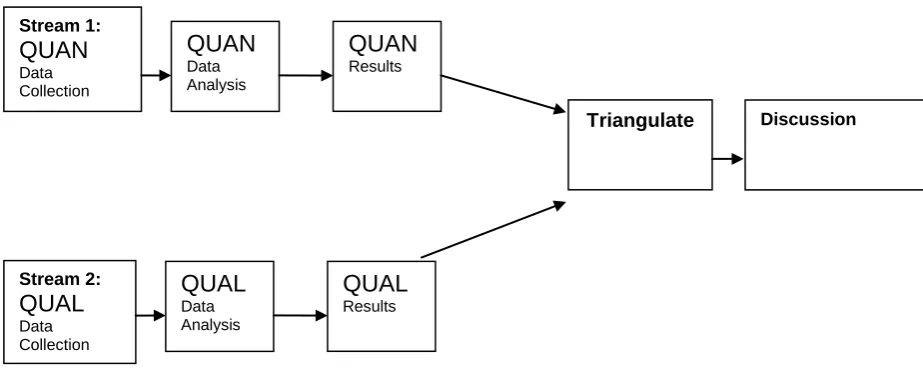
approach and explain the relevant thoughts on epistemological position. The chapter will also outline the research plan, a parallel design of two streams, being qualitative and quantitative research. Upon completion of this chapter the reader should have grasped the general approach to the study and why this has been selected.
Chapter 3 – As both streams of the study operate based on one ethical and legal
framework, the researcher decided to overview this as a foundation stone of the study rather than as disparate parts in the various stream chapters. So, this brief chapter addresses these aspects for the reader to review both the ethical and legal responsibilities of the study and how they were addressed.
Chapter 4 - This chapter outlines the process and results of the quantitative stream of the present study. It details the steps performed from conceptualisation of the study within the organisation and how these steps were then executed. This is the traditional method section of the study. It guides the reader through the data analysis process and then progresses to provide the results of the analysis. It was decided to package the method and results into a single chapter as this represented a logical unit for presentation to the reader. After reading this chapter the reader should understand the research process and appreciate the statistical findings of the quantitative stream.
xvi
the reader should be familiar with the research process, and the thematic results of the qualitative stream of the study.
Chapter 6 – This is the last and in some ways the most important, from a real world
perspective, as it discusses the findings from the qualitative and quantitative
streams, and grounds them in relevant theory and research. After this discussion it moves on to outline the triangulation of the study. Lastly it highlights some
limitations, and very importantly for research in the real world, the practical implications of the results to organisations, being the main reason for doing the study.
1
CHAPTER 1- LITERATURE REVIEW
1. INTRODUCTION
It is commonly observed that the pace of modern life is incessantly accelerating, with a dominant catalyst being the pervasive technology we encounter daily driving our ‘progress’ (Gackenbach, 1998). In the 20th
and 21st centuries a major technological agent of transformation has been, and still is, computer-based technology (Cooper, Dewe & O'Driscoll, 2001). It is argued technological ‘progression’ will improve our lives by bringing knowledge, power, pleasure, personal liberation, and even personal salvation (Brooke & Boal, 1995). Such technology can be found at the operational heart of most businesses, and in turn many employee’s work experience.
1.1 Technology as Part of Our Existence
We cannot argue with the fact that technology is an integral part of our daily existence, and that we would be challenged to function without it (Weil & Rosen, 1997). Indeed, 86 per cent of the adult population in the UK use the internet
(“National office for Statistics", 2013). Each advancement aims to make life easier. However, this is not always the case, as much technology leaves us alienated, stressed, dependent and incompetent (Weil & Rosen, 1997). Indeed, we seem to be complacent or unaware of the growing evidence that suggests technology will
become increasingly difficult to live with (Laura & Chapman, 2009).
2
actually the case has not been satisfactorily answered by research to date (Weinberg & Cooper, 2007). New technology has come to represent a sign of anecdotal progress rather than being factually proven.
Experience of life today involves connection to digital communication, immersing us in an attention provoking environment of visual and auditory information in both our personal and work lives. Indeed, contemporary society is characterised by
technologies that ‘extend our knowledge, power, experience, and a sense of presence over vast extents of time and space’ (Gackenbach, 1998, p. 322). To many people this means they are always ‘on’ and linked into the pulse of society and work, regardless of locations or time zone (Wallace, 2004).
The tools we use are more than just something to make a task easier. They change the way people think, even how people approach tasks, and can be the catalyst to unimagined wider social changes (Joinson, 2003). As Laura and Chapman state ‘we no longer simply use technology; we live it’ (2009, p. 292). So, what about our usage of technology in the workplace?
1.2 Technology as Part of Our Workplace
During the last 30 years the importance of information has driven knowledge workers, and the supporting information technology, to the very forefront of
3
of information and communication technology (ICT) was typically employed by
production and manufacturing companies. However, during the 1990’s, there was an exponential growth in the utilisation of ICT, requiring a flexible and responsive
workforce suited to the demands created by globalisation of the business
environment. Technology of this kind also sits at the heart of global competition (O’Driscoll & O’Driscoll, 2010).
Tarafdar, Tu,& Ragu-Nathan (2011) describe organisational use of information as:
‘complex, real-time, ubiquitous, functionally pervasive, often requiring
users to process information simultaneously and continually from
different applications and devices’ (p. 304).
Electronic information is conveyed over a distributed network consisting of many data repositories, operating systems and applications. This is achieved usually through a portal, or application, which can be hosted in the Cloud or on a Local Area Network (LAN). As these terms may be unfamiliar to some they will now be defined.
From an ICT perspective there are various kinds of ‘nets’, or networked systems, consisting of linked computing devices, such as servers and communication
networks. The largest and most extensive is the internet or the ‘Cloud’. According to Gartner’s Ben Pring the Cloud is a metaphor for the internet, and Knorr and Gurman (2011) highlight that analysts and vendors provide broad definitions of the Cloud such as being any computer system being utilised beyond the organisations firewalls. This is the definition used in the present study, and so ‘the Cloud’ is
4
the organization itself and typically within the internal security systems, or behind the ‘firewall’. An intranet is an ICT system within a firewalled environment, thus providing security for an organisational internal community. Due to the nature of distributed systems, it is unclear to a user if the information being accessed is internally or externally hosted, that is by the Cloud or Intranet. A Portal is an application that provides a common access point to systems and data, such as an intranet and the Cloud, for work related use. As the study investigates ‘net-centric’ systems the main proviso is that the systems are networked and so both types of ‘nets’ are relevant to the study, being Cloud and Intranet. In this study such portal systems will be referred to as net-centric systems.
These net-centric systems offer access to unequalled quantities of information and knowledge, while being comparatively low cost paralleled with traditional sources (Bakos, 1998). Such systems have had dramatic effects on the ways in which we conduct and support business and there have been turbulent times as we
experiment with its potential exploitation. Net-centric systems achieve
5
1.2.1 Net-Centric System Adoption
The Cloud began to grow in the 1990’s (Kelley-Milburn & Milburn, 1995), and has developed exponentially since 1995. In the UK, 66.4 per cent of the 60.6 million inhabitants have accessed the Cloud (“Internet World Stats”, 2008) with 16 per cent originating from the workplace (“Omnibus Survey”, 2008). Beyond the UK, data confirms that the majority of American workers use ICT to perform their work, although level and type of use varies by industry and profession (Madden & Jones, 2008). In an Oxford Internet Survey (Dutton & Blank, 2011) usage for informational purposes such as ‘look up a fact’ was a major reason for going on-line. Schiffman, Sherman and Long (2003) also found that 50 per cent of people use the Cloud for learning or gathering information.
In November 2010, The National Office of Statistics (2010) published that during 2009, 91.1 per cent of UK businesses had Cloud access. For businesses employing over 1,000 people, ICT training was part of standard policy for employees with 85.8 per cent being trained. In small businesses consisting of 10 to 49 people, training was standard for 22.3 per cent of employees (“National Office of Statistics”, 2010).
6
the largest businesses that utilised this function the most, 73.2 per cent. The number of people using computers in their work for significant parts of their duties during the day has been studied by Statistics Sweden (1999) showing that in Sweden one third of people at work used a computer for at least 50 per cent of their time. So, as we can see from the statistics business provision of intranets, with Cloud access, is undisputedly pervasive in the workplace. As mentioned the present study
encapsulated these systems as net-centric technologies that are targeted to achieve business objectives, and they form the particular focus of the present study.
1.2.2 Net-Centric System Rate of Change
Advancements in computerisation and net-centric technologies such as the Cloud have triggered explosions of innovation that change organisational structures and impact the business landscape (Wallace, 2004). The thrust of new technology has been towards improving the speed and delivery of essential resources (Weinberg & Cooper, 2007). Indeed the flow of information has quickened. As the fastest growing mechanism for electronic markets is the Cloud, this means that organisational
performance is dependent on employees utilizing the Cloud and intranets, all part of net-centric system, appropriately (Lee & Kim, 2009). The rate of change is so fast that we often find ourselves in a continual process of adjustment (Fry, 2006). While businesses expand their adoption of technology, and in doing so change the
business environment, it is not necessarily the case that people adapt to the same extent (Weinberg & Cooper, 2007).
1.2.3 Net-Centric Systems and Productivity
7
deploy new technology with the objective of improving efficiency and productivity (Arnold, Sylvester, Petterson, Robertson, Cooper & Burnes, 1998). And, ICT systems are increasingly being sought to improve workplace efficiency and
knowledge management (Rizzuto & Reeves, 2007, p. 226). There is considerable empirical evidence that the implementation of ICT in the workplace improves organisational productivity and effectiveness (O’Driscoll & O’Driscoll, 2010). For example, the economic evidence points to a relationship between widespread ICT adoption and workplace productivity gains (Brynjolfsson & Hitt, 2000; Stiroh, 2002; Fernald & Ramnath, 2004; Dos Santos & Sussman, 2000; Kudyba & Diwan, 2002). Organisations also deploy technology with the aim of saving costs (Weinberg & Cooper, 2007).
However, less than half of technology projects have the desired business outcomes (Clegg & Palmer, 1996). Although, some studies have shown adoption of net-centric systems lead to employees feeling that it enabled them to work faster and with less complexity (Cooke & Kroeze, 2004).
There are three main factors that make these technologies very attractive to companies. Firstly, worldwide access through the global address system uniform resource identifier (URI). Secondly, they provide easy integration of different text, graphic, audio and video formats. And thirdly, it is easy to link these resources to each other with hyperlinks (Kaiser, 2000).
1.3 Technology’s Impact on the Organisation
8
consequences. However, researchers argue that the impact of using ICTs is not always evident, and that indeed some unplanned consequences could be
counterproductive (Ayyagari, Grover & Purvis, 2011).
Organisations should understand application of these systems to ensure they serve their long term strategies, and shape how they can be beneficial to their employees. The present study aims to understand the experience of business focused
net-centric systems within work contexts, with the objective of providing information to support long term organisational strategic decision making that shapes procedures, and so to address both employees and economic interests.
Although information systems are embraced by organisation’s empirical data, addressing the psychological effects of its use, are equivocal. Measuring perceptions about the impact of technology on aspects of work is important.
Worker’s perceptions of their performance, their work demands, and time pressures, predict important organizational outcomes, such as absenteeism and turnover, and are also linked to indicators of physical and mental health (Kurland & Bailey, 1999; Levine & Norenzayan, 1999; Bellavia & Frone, 2005; Duxbury, Lyons & Higgins, 2008).
The BBC (2003) quoted that 9 out of 10 people using computers at work are
9
majority of cases according to Huang, Yang, Jin, and Chiu (2004), user satisfaction is still the most prevalent measure to gauge the success of an information system, and the most important as it has psychological impacts.
So, what is the experience of net-centric systems in the context of work? Is their existence experienced as productive, positive and satisfying or is it counter-productive, negative and detrimental? The present study aims to explore and understand this phenomenon within the work context.
As social scientists we need to define what we know from research of these important net-centric systems in the workplace and how we can expand this understanding in the current study. At the moment there is much research investigating ICT, including Cloud, usage as a general category of technology. However, the researcher found no research looking specifically at net-centric systems created by organisations for business usage as a specific subset of ICT research.
The researcher will now outline predominant psychological research in the wider area of general ICT and Cloud usage relevant to the quantitative study variables, and then the qualitative study.
2 PSYCHOLOGICAL RESEARCH - ‘NET-CENTRICITY’
10
workers believe ICT use has improved their ability to do their job (Madden & Jones, 2008), being presumably positive for the employee and the organisation. And 46 per cent of workers believe that ICTs increase demands that they work more hours (Madden & Jones, 2008), presumably detrimental to employees and beneficial to organisations.
Empirically the majority of previous survey research has focused more broadly on the use of ICT generally, or the broad use of the Cloud (Chesley, 2010). Cloud
studies have sometimes attended to differences in outcomes associated with the use of various applications like e-mail (Boneva & Kraut, 2002), general information
gathering, and engagement in economic activities such as banking or shopping (Meszaros, 2004). More frequently, studies have grouped these activities into a single empirical measure such as ‘time spent in the Cloud’ (Nie, Hillygus & Erbing, 2002). Most existing ICT related research looks at the existence of technology as nominal rather than the various artefacts of the technology, and their impact on the experience of the work place (Orlikowski & Iacona, 2001). There is a call for research to both disassemble the components of the experience of technology into artefacts and to focus research on formulating understanding of these artefacts and their unintended consequence that may be problematic in usage and engagement (Orlikowski & Iacona, 2001). This is an aim of the present study with its specific focus on business users net-centric technology usage, as the psychological experience of net-centric systems is unknown.
11
Therefore, as social scientists, we have a responsibility to increase our
understanding of the relationship between people and technology, and to support socio-technological development strategies (O’Driscoll & O’Driscoll, 2010). The present study engages with this responsibility.
Most ICT related research is focused on what ICT can do for a person. However, an important question for organisation is ‘what technology can do to you?’ (Ayyagari et
al., 2011). Given how pervasive ICT is in our work lives, it is important that its impacts are understood (Ayyagari et al., 2011).
How can we understand the impact of this usage on employees? The next sections aim to review the variables for the quantitative study based on an assessment of what current research has determined as significant, related to existing general ICT and Cloud psychological research. The researcher will build a picture of variables that will be tested for significance in relation to the specific area of net-centric system usage within the workplace. This approach has been taken as it enables the
researcher to test if existing findings are echoed when looking at this specific phenomenon. The researcher will now outline the most relevant variables from existing research as being psychological well-being, TechnoStress and attitude.
12
2.1 Psychological Well-Being
In 1998, the American Psychological Association presidential address called for the creation of Positive Psychology, being research focused on well-being and optimal human functioning (Seligman & Csikszentmihalyi, 2000; Snyder & Lopez, 2002). Theories of psychological well-being are derived from an eudaimonic approach. This focuses on the extent that a person is considered to be ‘fully functioning’ as reflected by personal growth and achieving meaning in life (Ryan & Deci, 2001).
If we look at the workplace and exclude accidents and hazardous working
conditions, we find that psychological well-being presents as an important variable as a determinant of success that is directly impacted by the work environment (Robertson & Cooper, 2011). Why is ensuring that employees are in a state of psychological wellness important to organisations? Let us now explore the impact of positive psychological well-being in the workplace.
2.1.1 Psychological Well-being in the Workplace
13
Another impact of increased psychological well-being was established by Harter et al. (2009) who found that it encourages engagement, resulting in increased work performance. Moliner, Martinez-Tur, Ramos, Peiro and Coropanzano (2008) found that staff with higher levels of well-being were willing to ‘go the extra mile’. A further impact is that staff well-being is also positively correlated to customer satisfaction (Leiter, Harvie & Frizell, 1998; Dorman & Kaiser, 2002). People who have
psychological well-being possess psychological capital having optimism, resilience and belief in their own abilities (Avey, Luthans, Smith & Palmer, 2010). All of the above represent characteristics that organizations would see as desirable in their staff (Robertson & Cooper, 2011).
Well-being leads to not only personal happiness, but also positive outcomes for the various societies in which people exist (Lyubomirsky, King & Diener, 2005). Let us not forget that work creates a society of workers. However, what do we know specifically of psychological well-being related to net-centric systems usage in the workplace? There has been much research around ICT usage in relation to
14
2.1.2 Cloud – Social Perspective Positive Impacts on Psychological
Well-Being.
As the Cloud is seen as a vehicle for personal progression it would seem rational that it is capable of improving psychological well-being, whether it is at work or socially. Indeed, research into Cloud usage showed significant correlation to
psychological well-being, communication, and social-involvement (Kraut et al. 2002).
The vast majority of existing studies investigating the relationship between the Cloud and psychological well-being have done so from a social perspective. Although this study is taking a business perspective it seemed appropriate that existing findings are overviewed briefly.
Much existing social focused research found psychological well-being improvements with Cloud access, with key findings on dimensions such as loneliness, depression, control, and connection with others. Indeed, studies of general Cloud usage have shown that substantial benefits can be gained from just being connected. Cloud access fosters a sense of belonging, as even if a person is not interacting with anyone in the Cloud, there is still an impression of being a member of a group of people with shared interests. This creates a sense of greater social support enhancing personal identity (Bennett & Sani, 2004) and increases feelings of well-being.
well-15
being (Skitka & Sargis, 2005; Kraut, Kiesler, Boneva, Cummings, Helgeson & Crawford, 2002).
Some studies have focused on the information availability facilitated by the Cloud. Weiser (2001), using students, found that Cloud usage for goods and information acquisition favourably affected psychological well-being as social integration and connectivity increased.
Some findings from Howard, Rainie and Jones (2001) show that American citizens surveyed felt Cloud access improved the way they worked and their ability to learn new things. However, again this study was not focused on the specific usage of ICT systems within the work environment in support of business objectives.
Although there have been many studies discovering the positive impact of Cloud usage, there are no studies exploring if these same impacts are present when investigating the usage of purpose built net-centric systems in the work setting. Even although we know general Cloud usage can be beneficial, we do not know if this translates to the work environment when using business focused net-centric systems. Is it the case that we experience improved psychological well-being, and all its associated positive outcomes for the organisation when using such systems?
16
2.1.3 Cloud – Social Perspective Negative Impacts on Psychological
Well-Being.
Although again the current research was not focused on purely business dimensions of ICT, the following general studies of the Cloud will briefly be overviewed to provide some background as to the negative impacts on well-being.
In a meta-analysis conducted of Cloud usage, considering 40 studies representing a total sample size of 21,258, Huang (2010) found the relationship between Cloud usage and psychological well-being to be small and negative. Indeed, not all studies showed that Cloud usage was positive in its impact on social involvement, and psychological well-being, as time spent on the Cloud is time away from face-to-face communications (Thompson & Nadler, 2002). This is termed the ‘displacement hypothesis’ (Huang, 2010) and it proposes that online contact replaces required real-life interaction.
Negative effects on social involvement and an increase in depression have been found among Cloud users (Kraut, Patterson, Lundmark, Kiesler, Mukophadhyay & Scherlis, 1998), but these may have been specific to novice users (Kraut et al., 2002; LaRose, Eastin, & Gregg, 2001). For example in adolescents it was found that online contact reduces quality of contact, and in turn it reduces psychological well-being (Valkenburg & Peter, 2007).
17
questionnaire to capture 85 students who volunteered to participant in the study. The questionnaire measured dimensions such as neuroticism, extroversion, loneliness and Cloud usage against various Cloud services such as gaming, seeking
information related to work, studies in general, shopping, and news. The study was not aimed at net-centric business systems, and it did not exclusively involve people within work environments. So, although the findings are related to Cloud usage the focus area of the current study is quite different in target population and environment compared with the Amichai-Hamburger and Ben-Artzi (2003) study.
Small and frequent frustrations when using technology have been shown to create a cumulative negative impact on physical and psychological well-being (Weil & Rosen, 1997). Frustration is often reported in research on ICT (O’Driscoll & O’Driscoll, 2010) and this can have a negative impact on psychological well-being.
With the prevalence of ICT, it may be impossible for workers to escape exposure to it, which can lead to feelings of impotence and reduced mood, impacting feelings of psychological well-being (O’Driscoll & O’Driscoll, 2010). These studies support the growing perception that rapid advancements in technology are leading to more stress in our lives.
18
stream of the present study. The research will now continue to outline the remaining independent variables in the quantitative study.
It would seem that stress is a potential consequence of using ICT, and so net-centric systems as they are ICT systems. Let us now turn our attention to stress within the specific domain of technology usage.
2.2 Stress and Technology
Stress as a psychological construct and area of research started in 1956 with the work of Hans Selye (Jex, 1998). There has been much research in this area since the late seventies. Due to the complex nature of the phenomenon, understanding still requires development. However, even after saying this, occupational stress is very much in the minds of organisations and is cited as the largest problem in the British workplace (Talkheath Partnership, 2013). It is estimated that the cost of stress to the British economy is £3.7 billion per year, with in excess of 13 million employees at risk from the mental issues as a result in the workplace (Talkhealth Partnership, 2013). When people are stressed, but carry on working, it leads to reduced concentration and ineffective decision making. This state of ‘stressed’ and still in attendance at work is called ‘presenteeism’, and it is estimated to cost the British economy £15.1 billion per year in decreased productivity (Talkhealth Partnership, 2013).
2.2.1 Stress and Technology – Theoretical Perspective
19
resultant negative way in which an employee responds to stressors. Strains tend to manifest mentally, physically and behaviourally.
There are a few theoretical models conceptualising the construct of stress.
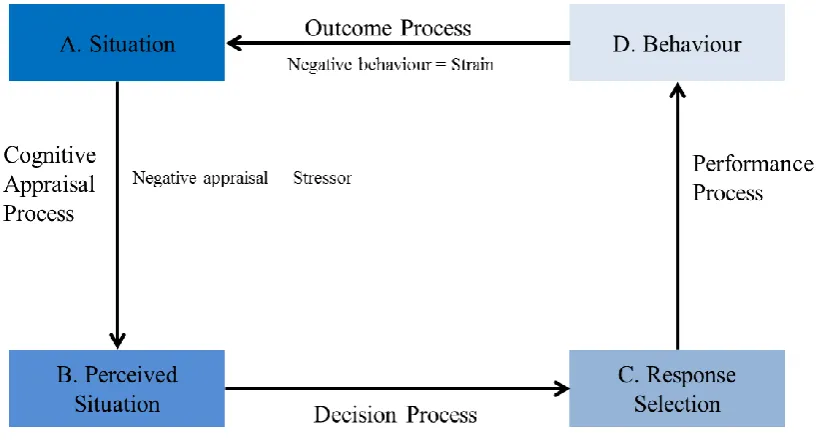
[image:35.595.78.488.332.552.2]McGrath’s process model (1976) may be of particular interest in this research. Figure 1.1 outlines this closed loop process. This model starts with a ‘situation’ that is cognitively appraised, then is perceived by the individual in order that a decision can be made of how to respond. The last item is the selection of a behaviour seen as appropriate to deal with the situation at hand.
Figure 1.1. Schematic representation of McGrath’s process model of work stress.
20
There is no doubt that the workplace has changed with the advent of the Cloud. For example the Cloud transcends time zone boundaries being 100 per cent available by nature, and provides an equally constant connect to others regardless of place or time. Additionally, change is rapid and relentless, with people within the work environment experiencing new or evolving software within precipitously changing, both technically and business operational conditions, resulting in stress (Arnetz, 1997). Indeed research has determined that the pace of change is at a rate quicker than people can adjust to with comfort (Pascarella & Zellars, 1999), and so creates potentially stressful conditions at work through usage.
With rate of change in mind, Karasek’s (1979) theory of stress is important to consider. This model relates stress to situations in which the employee has high demands placed on them but has little control over these demands, called job decision latitude. A need for perceived control within an environment is nothing new to behavioural science literature (Averill, 1973; Cooper, Dewe & O'Driscoll, 2001). Feelings of control are important in the workplace with employees suffering stress when they lack a sense of control (Spector, 1986). In the modern day workplace the adoption of technology is not a decision made by employees, but a modern tool of the job (Weil & Rosen, 1997), hence there is little control over adoption.
21
of apathy, tension, depression and alienation (Salvendy, 1972) and their related negative impacts on psychological well-being, as well as job performance. Stress encountered in the workplace is linked to both health and quality of life challenges (Cooper, Liukkonen & Cartwright, 1996; Tennant, 2001), so reducing stress will reduce absenteeism (Ayyagari et al., 2011). All of these discussed factors are important to organisations and should be further understood by occupational psychological research.
We have discussed some theories of stress that are relevant in the workplace. Now let us consider stress experienced when using ICT systems.
2.2.2 TechnoStress
In order to encapsulate a term for this new factor in people’s work lives, Brod (1984), a clinical psychologist, created the term ‘TechnoStress’. He described TechnoStress as a modern disease of adaption caused by an inability to cope with new computer technologies. This terminology has been adopted in stress research by many. Arnetz & Wikholm (1997) have used this term to account for the arousal, mental and physiological, detected in people entrenched in technology in the workplace.
22
2.2.2.1 TechnoStress Impact on the Organisation
An organisation’s effectiveness is largely dependent on the performance of its employees (Campbell, 1990). Thus, organisations should facilitate conditions
supporting job performance (Jex, 1998). However, general research into workplace computerisation found it resulted in workers suffering higher levels of stress (Kinman & Jones, 2005; Korunka & Vitouch, 1999; Coovert, Thompson & Craiger, 2005).
When TechnoStress is present, studies determined many counterproductive
impacts, such as reduced organisational commitment diminished productivity (Weil & Rosen, 1997; Tarafdar, Tu, Ragu-Nathan & Ragu-Nathan, 2011; Tarafdar, Tu & Ragu-Nathan, 2011), decreased work satisfaction (Weil & Rosen, 1997), and diminished organisational and continuance commitment (Ragu-Nathan, Tarafdar, Ragu-Nathan & Tu ,2008).
With so many counterproductive impacts of TechnoStress it is vital to understand if this phenomenon is present in relation to the specific area of net-centric systems. As the reason organisations are implementing such systems is to support the business, and so be productive, rather than create stress with all its mentioned impacts. Some relevant studies will now be outlined.
23
overload, inability to deal with complexity and uncertainty of ICT, and pace of change in ICT creating insecurity. Other findings were that women, older people and formally educated people experienced less TechnoStress. Although this study focused on business users and provided insight into the dimensions leading to stress, it did so for general ICT business use rather than a specific aspect such as net-centric systems.
Secondly, is the study conducted by Ayyagari et al. in 2011 establishing if the TechnoStress phenomenon existed in a sample of 661 working professionals using ICT. The sample was generated by a market research company who filtered
eligibility based on full time employment and ICT technologies. This research represents one of the few studies found that addresses a specific sample of
business users, as the present study intends to do. Ayyagari et al. (2001) aimed to understand the technological characteristics that induce stress in working individuals. The research used a questionnaire and all items required completion before
24
investigated before, the present study aims to explore if indeed TechnoStress is experienced in relation to net-centric systems.
The phenomenon of stress specifically related to using technology within the workplace has not received much attention in research (Ayyagari et al., 2011). The main studies in this context are mentioned above. Indeed Cooper et al. (2001) and Weber (2004) suggest research should investigate stress related to usage and new ways of working as the present study intends to do.
The various theories of stress touched upon in this section on TechnoStress have a shared conceptualisation of stress. This involves encountering a challenging
demand, psychological thoughts and behaviours are activated, and then a complex collection of consequences impacting well-being are involved (Kahn & Byosiere, 1992). If we consider our dependent variable discussed in the previous section in relation to TechnoStress we know that the presence of TechnoStress results in a reduced sense of well-being as a result of anxiety from general ICT usage (O’Driscoll & O’Driscoll, 2010). Thus, the researcher will consider TechnoStress as an
independent variable in the quantitative stream of the present study with specific reference to net-centric systems. In relation to psychological well-being the following hypothesis has been constructed from the review for testing:
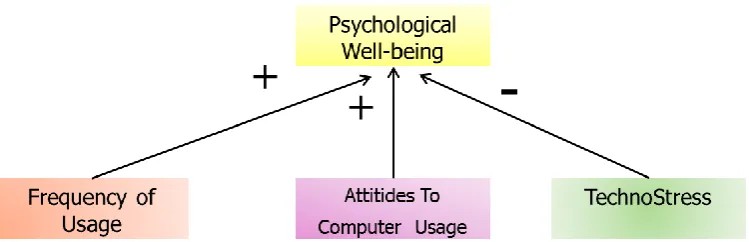
The existence of TechnoStress reduces psychological well-being.
25
model of stress the emphasis is on an assessment of the stressor, termed an ‘appraisal’ (Lazarus, 1966). In this case, perception is defined in terms of an appraisal process involving a primary appraisal where meaning is given to a situation, then a secondary appraisal involves assessment of resources to cope (Cooper et al., 2001). Understanding a person’s appraisal, being a belief
manifesting as an attitude, could determine the potential stressful impact of the usage of net-centric on psychological well-being. The researcher will now review attitudes in general and specifically in relation to ICT, and the Cloud, in order to build a basis for investigation into this specific net-centric phenomenon in the workplace.
2.3 Attitude
An important consideration of any experience of a phenomenon is the person’s set of beliefs, motivations, and anticipated outcomes. In psychology, this represents an internal affective orientation that explains a person’s actions (Reber, 1995), termed an ‘attitude’. Attitudes are not one dimensional constructs. Indeed, contemporary theory encompasses many aspects, such as cognitive, affective, evaluative and conative (Reber, 1995).
26
aspects can be in different polar states, and so not highly correlated while still encompassing an attitude (Breckler, 1984). For example, a person can have a positive affective orientation to their work while simultaneously having a negative cognitive view of various operational aspects such as the bonus structure. The attitude present at the time is dependent on whether a person is operating from an affective or cognitive stance as per the explicit object (Millar & Tesser, 1989). The explicit object in the example was ‘work’ and ‘bonus structure’, representing different levels of object granularity.
If we consider the behavioural aspect of attitudes we understand that this dimension is additionally impacted by both mood and values (Arnold (et al., 1998). This means that although a person many have for example a negative attitude to certain aspects of work, such as being available to respond to e-mails after hours, that they may still respond to such e-mail as they place professional value on being responsive
regardless of hour. This may seem like behaviours are at odds with attitudes, and one may wonder if attitudes predict behaviour at all. This is an important question as attitudes are often the target of adjustment in order to shape behavioural change. Early research found that behaviour was only marginally predictive of behaviour (Wicker, 1969). However, the design and generalisation of the early concept of attitude has been questioned (Arnold et al., 1989). There are indeed cases when attitudes have a significant relationship to behaviour, such as when the object in question is specific and relevant, when attitude is potent, and the person possesses complex knowledge about the object (Pratkanis & Turner, 1994). But, if these
27
theory of planned behaviour rather views that intentions coupled with belief in ability, in conjunction with a combination of attitudes and social norms, form a model that predicts behaviour. So, attitude can predict behaviour under the right conditions or as part of a model of interaction.
The researcher will now try to encapsulate this multi-faceted concept of attitude and understand it in terms of psychological research in the specific area of ICT.
2.3.1 Attitude Formation Relative to ICT
Recent research in ICT focuses on diffusion innovation theory (Rogers, 2003) in the formation of attitudes regarding technologies. As Roger’s Theory (2003) is specific to innovations, such as net-centric technology, it is an appropriate foundation for this specific area of research. Let us define what is meant in Roger’s conceptualisation of an innovation, being an ‘idea, practice, or object that is perceived as new by an individual or other unit of adoption’ (Rogers, 2003, p. 12).
Attitudes relative to this theory are inherent to complexity innovations (Rogers, 2003) and this means the emphasis on human computer interactions is on the technology rather than on the individual’s characteristics (Morris, Gullekson, Brendan &
Popovich, 2009). However, an individual’s attitude to the characteristics of an innovation, such as net-centric technologies, exerts substantial influence on both their adaption and usage of the innovation.
28
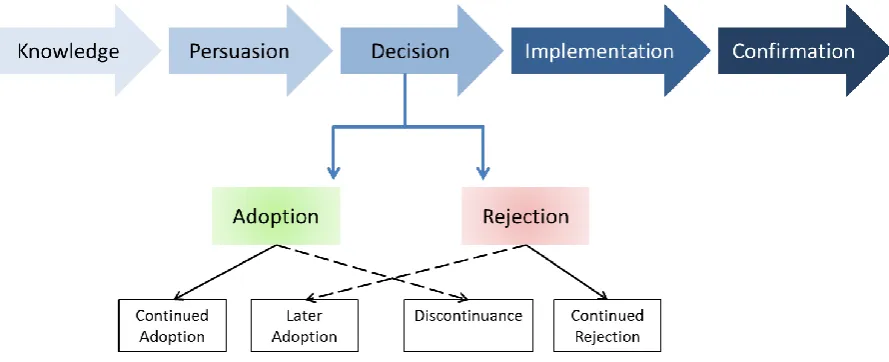
period of time, to the members of a social system (Rogers, 2003). The period of time from first exposure to the innovation through to the establishment of an attitude to the innovation, is called the ‘innovation-decision process’. Figure 1.2 depicts how an attitude is formed through the innovation-decision process.
Figure 1.2. A model of the five stages in the innovation-decision process adapted from diffusion of innovation (Rogers, 2003, p. 170).
The formation of an attitude in the diffusion of innovation model involves first gaining knowledge of the innovation and how it functions; this is an active process of seeking knowledge (Rogers, 2003). An attitude is formed in the persuasion stage and then the person reaches the decision stage where activities related to adoption, or
rejection, are performed. This is followed by using the innovation, the implementation stage, and then the confirmation stage in which the person again seeks information to reinforce their adoption or rejection decision.
[image:44.595.73.518.208.389.2]
29
understood when exploring people’s reactions to ICT, and in turn the psychological outcomes of such usage (Morris et al., 2009) that lead to the adoption or rejection of an innovation and the related organisational outcomes.
2.3.2 Attitude and ICT Systems Adoption
Understanding what motivates people to adopt or reject information technology is both an important and difficult challenge in ICT research (Davis, Bagozzi & Warsaw, 1989). Many studies have shown that attitudes are one of the strongest predictors of behavioural intentions (Ajzen, 2001; Armitage & Corner, 2001; Fazio & Petty, 2008), and a major influence on adoption (Al-Khaldi & Al-Jabri, 1998; Winter, Chudoba & Gutek, 1998; Anderson, 1996). Indeed, studies by Herbert and Benbasat (1994) found that attitudes towards computers determined 77 per cent of lack of usage. Cognitions about computers are significant in determining the performance and contentment, or satisfaction, with tasks involving the computer (Bailey & Pearson, 1983; Rivard & Huff, 1988). Let us explore the impacts of a positive attitude in ICT research.
2.3.2.1 Positive Attitudes to ICT Systems
30
the Cloud predicts both. Cloud experience has been linked with more positive computer attitudes and lower computer anxiety (Durndell & Haag, 2002).
In a study of ICT workers, Beas and Salanova (2004) found that people showing positive attitude coupled with feelings of competence, experienced significantly reduced burnout (emotional exhaustion and cynicism) and less anxiety and exhaustion. ICT research established that competency and control significantly improve psychological well-being (O’Driscoll & O’Driscoll, 2010).
A significant relationship has been established between technological perception and psychological well-being (Vieitez, Carcia & Rodriguez, 2001; O’Driscoll & O’Driscoll, 2010). There is considerable evidence demonstrating the relationship between doubts in a person’s ability to cope, and therefore engage with ICT, and the
individual’s well-being. In summary, most ICT research exploring attitudes found a positive association between attitude and the general experience of using ICT.
However, attitudes toward ICT seem to be two-sided, with many users being generally positive towards ICT and seeing opportunities in using it, but at the same time perceive risks (Gustafsson,Dellve, Edlund, & Hagberg, 2003).
2.3.2.2 Negative Attitudes to ICT Systems.
31
Tarafdar et al. (2011) surveyed 233 business users from two organisations who used ICT as part of their daily role. ICT usage was typically bespoke systems processing transactions, word processing, and spreadsheet applications. Most participants were middle managers. This study focused on, among other aspects, negative cognitions as influencing ICT satisfaction and performance, resulting in
TechnoStress. Findings were that factors such as the uncertainty of upgrades affected perceptions, cognitions of usefulness, accuracy, and ease of use of
applications. As cognitions are components of attitudes, ICT stress could be seen as impacting attitude towards ICT usage and engagement for business users. This study differs from the present study in that is focused on middle managers and general ICT type applications. The present study takes all job roles into account and purely focuses on net-centric systems.
Further research determined that experience mitigates feelings of anxiety (Beckers & Schmidt, 2003). However, even when gaining proficiency through experience,
attitudes still play an influencing role. Beas and Salanova (2004) showed that attitudes to ICT moderated the impact of ICT training on professional
self-confidence, with people having low levels of positive attitude showing decreased professional confidence.
From this review of research into attitudes, in relation to general ICT usage, it would seem that attitudes are important and also impact psychological well-being
(O’Driscoll & O’Driscoll, 2010). However, the investigation of the impact of attitude related to net-centric systems in the workplace is unexplored. In support of
32
computers as an independent variable in the quantitative part of the current study. In relation to psychological well-being the following hypothesis has been constructed from the review for testing in a net-centric system environment:
Attitude to computer usage determines psychological well-being, such as a positive attitude to computers resulting in increased psychological well-being
The researcher has now concluded the exploration of the psychological constructs that form the variables for the quantitative study. In summary, the dependent variable is psychological well-being, and the independent variables are TechnoStress and attitude.
The researcher will now progress to outline one further aspect of working with ICT that is expected to be highly relevant to the qualitative study, and is therefore
appropriate to mention in this literature review. This is the effect of the magnitude of the information that workers now experience as a result of ICT.
2.4 Information
33
2.4.1 Needs Gratification in the Cloud
The Cloud is thought to have positive effects on groups and organisations (Sproull & Keisler, 1991). Access through the Cloud, a highly decentralised system, defies regulation (Amichai-Hamburger, 2008) supporting an open culture of information exchange without restriction (Gackenbach, 1998). This means that specialist information is no longer exclusively in the domain of the professional or expert.
The Cloud has increased the general public’s access to information and so
34
2.4.2. Information Anxiety and Overload
Information overload has been termed over the years as Information Fatigue Syndrome (Reuters, 2010) and Data Smog (Shenk, 1997). Data smog refers in particular to information repositories such as net-centric information. ICT systems increase the potential of overload, due to the increased information availability that they facilitate. There is a school of thought that says that electronic media overloads people with too much information as a potential stressor (Christensen & Griffiths, 2000) leading to unhealthy levels of anxiety (Rodman & Fry, 2011), termed
‘information anxiety’ (Wurman, 1980). Information overload creates challenges when both the quantity and quality of information creates high levels of external stimulation leading to increased fatigue (Thomee, 2007; Yellowlees & Brooks ,1999).
2.4.3. Organisational Experience of Information Availability
From an organisational perspective we have seen equally exponential growth in digitally stored information. With net-centric technologies the boundaries are undefined or uncertain, in that they extend beyond the office walls into the global arena, providing a ‘desktop gateway to the world’ with far-reaching effects (Wallace, 2004, p. 2). Employees now have access to varying data repositories with, in many cases, duplication and out of date information impacting trust in information (Pitt et al., 2003).
If people are wary of the Cloud, and intranets, facilitation of collaboration and
35
Within organisations people are predominately engaged in information processing (Amichai-Hamburger, 2008) used for judgement formation, and in turn decision formation that shapes behaviour. Amichai-Hamburger (2008) surveyed 50 web surfers that were categorised as experienced, by profiling the time they spend weekly on various Cloud services. Participants were all volunteers and this study was not focused on business users exclusively. As a result of principle component factor analysis (PCA) one of the factors was that people use the Cloud for what has been termed ‘professional services’, including functions such as messaging for work purposes and gathering information. However, the PCA also determined a factor called ‘social services’ that included general knowledge gathering. So, although the Cloud was used for seeking knowledge, there was not a single factor that
encompassed all types of knowledge seeking. This shows not only that the Cloud is used for informational purposes, but that there is a difference in social and
professional informational gathering activities when using this medium. It stands to reason that net-centric systems will elicit a particular type of information gathering specific to business purposes.
Wilson (1999) defines these information processing behaviours as the activities we use when identifying our information needs, seeking the information and then using that information. We know the raw materials are there, but Wallace (2004) asks, how do people select what is important? Indeed the very proliferation of data is making it inaccessible (“The Economist”, 2010). Often employees create and distribute
36
consider how we teach industry to effectively engage with the abundance of electronic information we have access to.
Goldhaber (1997) argues that economics is the study of how society uses its scarce resources, but that information is no longer scarce. Are we overloaded with
information, with not enough time to read and analyse in order to make efficient informed decisions (Wallace, 2004)? The scarce resource is now people’s attention. Indeed, we no longer live in an ‘information economy’ but instead in an ‘attention economy’ (Davenport & Beck, 2001) where attention is the new currency of business. The quality of our attention is a vehicle for our effective activity
(Gackenbach, 1998) that determines our growth. For employees there is a lot of information to keep abreast of or respond to and ‘this extra burden of attention can be intolerable’ (Wallace, 2004, p. 287). Next, the researcher will present a study investigating the impact of information overload at a management level.
2.4.3.1. Information Overload in Managers
A study was conducted by Reuters Business Information Services (2010) looking at 1300 managers across United States, Australia, Hong Kong, Singapore and
England. This study is highly relevant to net-centric system usage in organisations aimed at business objectives. It showed that 33 per cent reported ill-health as a result of information overload, and 66 per cent reported increased tension and reduced job satisfaction due to information overload (Waddington, 2006).
37
respondents said that information collection distracted them from their main responsibilities.
Managers found it difficult to develop information processing strategies. This linked information overload with workplace stress. A further finding was the relationship of information overload with interpersonal tension and loss of job satisfaction. Other effects attributed to information overload were ill-health due to stress, having to cancel private activities to keep abreast of information and being too tired to participate in leisure activities due to processing information.
Managers reported that the technologies deployed for handling electronic information were not a business solution, but instead created a problem in the business. They described the ‘M25 effect’ of information channels where an increase in lanes, or channels, simply creates increased traffic, not better flow.
A reason cited for the increase in information managers were being exposed to in the Reuters Study (2010) was an increase in business communication through forums such as the Cloud. This study provides a perspective on information usage relative to managers in the workplace. It has taken into consideration mediums such as e-mails as the main focus area of the study. So, although it provides some
valuable insight into ICT usage, it does not capture the work experience from
multiple job perspectives of the particular usage of net-centric system as the present study aims to do.
More studies are required to understand the impact of this phenomenon of
38
All the research mentioned in the previous sections of this literature review has a few things in common. Firstly, they do not specifically address net-centric systems in a work context. Secondly, none of the studies utilise a mixed methodology as this study will. These two facets alone would make this study unique to psychological research.
This concludes the review of the researcher’s coverage of relevant research and literature for both streams of the present study. The researcher will now outline the specific net-centric system that is under study for the quantitative stream of the present study.
3. ORGANISATIONAL NET-CENTRIC SYSTEM PORTALS
In today’s business world is it common for organisations to have a net-centric systems for ‘business to employee’ (B2E) communication, catering for things like bulletin boards, memos and other forms of communications (Sinickas, 2005; Lamb, 2011). Theses net-centric systems act as the primary source where employees go to for work-related documents, company news, and collaboration (Sinickas, 2005). These systems are varied in their abilities and complexity. Some are simple and involve purely document sharing, while others involve interaction with employees, such as collaboration and proactive communication. Many systems facilitate collaboration between employees, called ‘employee to employee (E2E)’