http://dx.doi.org/10.4236/ajac.2014.54033
How to cite this paper: Almario, Á.A.A. and Cáceres, R.L.T. (2014) Electronic Tongue and Neural Networks, Biologically In-spired Systems Applied to Classifying Coffee Samples. American Journal of Analytical Chemistry, 5, 266-274.
http://dx.doi.org/10.4236/ajac.2014.54033
Electronic Tongue and Neural Networks,
Biologically Inspired Systems Applied to
Classifying Coffee Samples
Álvaro A. Arrieta Almario
1*, Rosa L. Tarazona Cáceres
21Grupo de Investigación DANM/Desarrollo y Aplicación de Nuevos Materiales, Universidad Pontificia
Bolivariana, Montería, Colombia
2Grupo de Investigación GIE, Universidad Pontificia Bolivariana, Montería, Córdoba
Email: *[email protected]
Received 9 February 2014; revised 10 March 2014; accepted 17 March 2014 Copyright © 2014 by authors and Scientific Research Publishing Inc.
This work is licensed under the Creative Commons Attribution International License (CC BY).
http://creativecommons.org/licenses/by/4.0/
Abstract
In this paper, the possibility to use an electronic tongue based on a polypyrrole sensor array in classifying coffee samples has been studied. Each sensor shows a distinguished electrochemical response when exposed to the studied solutions, providing signals with a high degree of cross-se- lectivity. The sensor array electrochemical response is related to the interaction of the ionic and non-ionic solution compounds and to the surface of the sensors polymeric matrix. Furthermore, the electronic tongue was used to perform an analysis on coffee samples. In this case, each sensor showed a particular response to each coffee sample. Data obtained from the registered signals were used to perform a discrimination of the samples. The analysis with neural networks of the principal components (NNPC) done on the electronic tongue response to five types of commercial coffee, allows to achieve a clear differentiation of samples.
Keywords
Electronic Tongue; Coffee; Electrochemical Sensors
1. Introduction
In the food industry, the commercial success of a product is determined by many factors, such as appearance, aroma and flavor. The growing customers’ demand on food quality makes the inspection and approval of prod-ucts more rigorous every day. In order to guarantee the quality of commercial drinks, specifically coffee,
developed to search for a way to emulate its capacity to classify and differentiate complex substances [4]-[6]. These biologically inspired systems are known as electronic noses and tongues. Thus, a certain analogy can be established between the human taste system and the electronic one in order to detect flavors (electronic tongues), so that some approximations can be found in its structure and functioning principles (Figure 1).
Electronic systems to measure flavors or electronic tongues are some of the most promising tendencies to de-velop a fast, cheap and objective method to evaluate food taste. Since the dede-velopment of the first prototype in 1990 by K. Toko, [7] a certain number of research groups have focused their efforts on the improvement and-perfection of those systems by utilizing diverse strategies and measuring techniques. There are several types of sensors that can be utilized in electronic tongues. The most important ones are based on electrochemical tech-niques such as potentiometry and voltammetry. In the bibliography there are diverse papers where these types of instruments have found numerous applications [4]-[6] [8]-[11]. However, it is also possible to use sensors based on other types of transduction, such as, optical or gravimetric sensors [12]-[14].
The information given by electronic tongue instruments is analyzed through multi-variant statistical tech-niques [15] [16]. The selection of the statistical analysis method depends on the type of study being carried out and the type of given data. The most utilized techniques to treat data from electronic tongues are different me-thods of recognizing patterns, such as the Principal Component Analysis (PCA), Cluster Analysis, Discriminant Analysis (DA) and so on. Undoubtedly, PCA is the most utilized chemometric method in studies made with electronic tongues because of its accessibility, simplicity in interpretation and low informatics cost. The Princip-al Component AnPrincip-alysis is a linePrincip-al method used to reduce variables or dimensions. It has been widely used in unnumbered applications. Nonetheless, being a lineal method, it is not always the most appropriate one because it generates redundancy when expressing data and it is possible to ignore important information when consider-ing the array response as a lineal system. To solve this problem, some non-lineal PCA methods are proposed. However, many of the non-lineal methods have a constraint. The number of components to utilize should be pre-determined and an explicit order of the components is not given. Bearing in mind that the PCA should not be utilized in non-lineal complex systems, this project proposes the use of a non-lineal adaptive system based on neural networks.
On the other hand, a new voltammetric sensor array based on polypyrrole is utilized in this work, whose sig-nals are rich in information because its sensors’ interactions with the analyzed samples can modify the redox potential of the electrode material (polypyrrole). The polypyrrole catalytic electroactivity can ease the oxidation or reduction of compounds present in the sample, and the sensors’ response is related to the capacity to generate counterions diffusion between the matrix and the analyzed sample to keep its electroneutrality. Consequently, the given information reflects the specificities of each sample and its interaction with the electrode material, providing signals that are converted in a fingerprint of each sample that allos discrimination and classification of the samples under study. Experiments were made in this research utilizing coffee samples to test the capacity to differentiate the sensor array, and neural networks are utilized as principal components for the data treatment, thus, two biologically inspired technologies are implemented to classify coffee samples.
2. Experimental
2.1. Reagents and Samples
Figure 1. Functional analogy between the human taste system and the elec- tronic system of flavors detection.
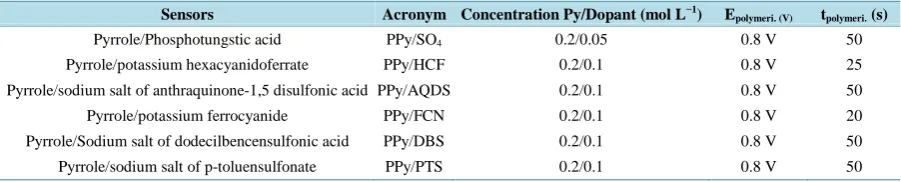
ferrate (II), sodium salt of anthraquinone-1,5-disulfonic acid, potassium ferrocyanide (III), Sodium salt of dode-cylbenzensulfonic acid and sodium salt of p-toluensulfonate) and solutions were prepared with ultra purified water with a Milli-Q quality. Coffee samples were taken from five commercial brands (La Bastilla, Córdoba, Almendra Tropical, Sello Rojo and Universal) and they were prepared according to regulation NTC 3566 (sam-ple preparation to use in sensory analysis), 7 grams of sam(sam-ple were weighed and prepared in 100 ml of water. For that purpose, the water was heated in the heater up to the boiling point, 100 ml were measured and they were poured in a beaker. The infusion was decanted for 5 min, then remains were eliminated from the solution surface and the solution was cooled to room temperature.
2.2. Electronic Tongue (Measuring Instrument)
Measures on coffee samples were made with an electronic device developed in the laboratory composed by a sensor array coupled to a multichannel measuring module elaborated at LabVIEW with cards or modules for data input and output. For the acquisition of data, modules NI9263, analogous output voltage module of 16 bit and four channels, and the NI9203, input module of analogous current of 16 bit of 8 channels were used. These modules were mounted in a framework NI Compact DAQ USB especially designed for this type of cards.
S-1. It was necessary for each measure to primarily make 10 voltamperograms to stabilize signals, and then measures were collected to feed the system of data treatment. Seven measures were made to each sample to test the method repetitiveness. In data treatment, an algorithm for neural networks was utilized for principal compo-nents available in the Statistica V7 software. Data were analyzed with no previous treatment of signals. For data interpretation, results of first components (scores) were graphed.
3. Results and Discussion
As established in previous works with this type of research, before starting the research on differentiation of com-plex substances such as coffee, which is the case in this study, a preliminary test should be done to determine if the electronic tongue instrument is able to differentiate simple substances with diverse chemical and taste proper-ties. [9] [17] [18]. In order to evaluate the discrimination capability of the sensor array, the instrument was used with a series of five simple substances whose properties are related to coffee including the specificity of basic flavors. Thus, to initially evaluate the differentiation capacity of liquids from the voltammetric and electronic tongue, measures were made on five solutions representing basic flavors related to coffee; NaCl (0.1 mol L−1), sucrose (0.1 mol L−1), citric acid (0.1 mol L−1), caffeine (0.1 mol L−1) y vainillin (0.1 mol L−1). On the experi-ments, seven replicas of each measure were made to evaluate the capacity of reproduction of signals given by the sensor array. On the different registered signals, it was observed that each sensor presents a particular response (‘fingerprint’) to a type of substance with a determined taste property, producing a sign with informationon the analyzed substance. It is important to point out that with the sensor array it is possible to get voltammetric signals with well-defined peaks (with information on the analyzed method) from non-electroactive substances, differing from that obtained with the use of traditional voltammetric and metallic sensors utilized by other authors [19] [20].
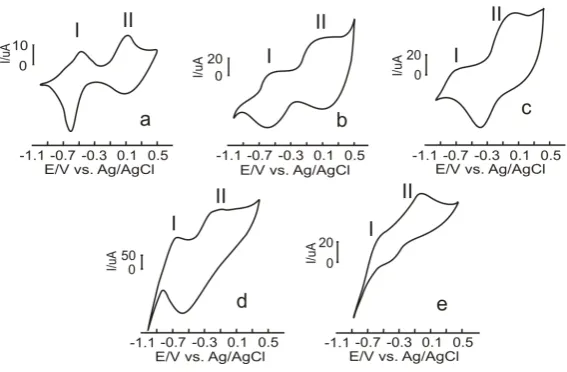
The response of sensor PPy/DBS to the solutions shows a good example of the crossed selectivity from the sensors. The electrochemical behavior from the polypyrrole redox pair to the solutions is shown on Figure 2. The cyclic voltammetry of the PPy/DBS electrodes in contact with NaCl (salty), citric acid (sour) and caffeine (bitter) showed two redox couples (Figures 2(a)-(c)). The figure shows that the cathodic sweeps were dominated by one sharp reduction peak (at −0.63 V, −0.58 V and −0.48 V for NaCl, citric acid and caffeine, respectively) and one smaller, broader peak at ca. 0.09 V, −0.08 V and 0.20 V for NaCl, citric acid and caffeine, respectively. Two re-dox processes were also observed in the anodic branch (at −0.55 V and 0.08 V for NaCl, −0.63 V and −0.05 for citric acid and −0.71 V and −0.07 V for caffeine). The CV from PPy/DBS in vanillin and sucrose (tow sweet compounds) showed two redox processes. The anodic peaks appear at −0.75 and −0.25V for vanillin and −0.69 and −0.15 for sucrose. In the corresponding reverse scan, the cathodic wave of the first redox couple was not clearly observed, whereas that of the second redox process appeared at −0.57 V and −0.45 V for vanillin and su-crose respectively. According to the literature, these peaks can be assigned respectively to the formation of the polaron and bipolaron [21].
During the first redox process occurring at lower potentials (peak I), the doping anions remain immobilized in-side the film, whereas cations are exchanged with the surrounding solution to maintain the electroneutrality. In the second process (peak II), occurring at higher voltages, the PPy film gets highly oxidized and anions from the electrolyte are inserted into the film to maintain the charge balance [22] [23].
[image:4.595.88.539.101.192.2]Figure 2. PPy/DBS sensor response against: (a) NaCl, (b) citric acid, (c)
caffeine, (d) vanillin y (e) sucrose.
cally controlled ion-exchange process. The exact nature of the ion-exchange process is not clearly deciphered, but it has been established that during the first redox process occurring at lower potentials (peak I), the doping anions remain immobilized inside the film, whereas cations are exchanged with the surrounding solution to maintain the electroneutrality. In the second process (peak II), occurring at higher voltages, the PPy film gets highly oxidized and anions from the electrolyte solution are inserted into the film to maintain the charge balance [24]. The chem-ical basis of the electrochemchem-ical responses can be explained as follows:
On the first reduction/oxidation process for reasons of electroneutrality, the PPy film behaves as a cation ex-changer: The reduction/oxidation process leading to the second reduction/oxidation process can be formulated as follows:
In this case, the electroneutrality makes the film behave as an anion exchanger.
The PPy symbolizes a segment of the polypyrrole chain, the subscript indicates that the species is in the solu-tion phase and is in the PPy matrix.
The above results indicate that the shape and position of the peaks depend on the nature of the doping anion. Therefore, a rich variety of sensor responses was achieved by changing the doping agent entrapped inside the po-lypyrrole films. On the other hand, the ability to incorporate and expel ionic species during the redox transforma-tions for preserving the macroscopic electroneutrality of the electrode can be used to produce analytically useful signals.
In order to study the lifetime of the electrodes, they were recurrently exposed (twenty exposures per day in seven successive days) to an electrolytic solution of 0.1 mol L−1 NaCl. Then, the coefficients of variation (%CV) of the peak heights were calculated. The electrodes showed good stabilities up to the fifth day of exposition, with %CV values below 15%. On the seventh day, the %CV increased drastically (30% in all cases).
The voltammograms on the different solutions show a double process of oxidation/reduction typical of the po-lymer but in each case the sign is completely different and the potential varies from one solution to the next. The other sensors also showed crossed selectivity, that is, they showed a particular behavior to each substance. Be-sides, each sensor responds differently to a unique type of substance. Thereby, it is evident that each sensor shows a characteristic response to each solution. These changes are mainly due to variation on forms, positions of redox peaks and relative intensities. This way, the matrix data built from the intensity values of the signals given by the sensor array allowed to make the work of differentiating the substances through an NNPC analysis.
In order to evaluate the discrimination capabilities of the voltammetric sensors, NNPC analysis was conducted by combining the information obtained from the PPy electrodes system. Then, the array of electrodes was im-mersed in the samples and seven replicates of each sample were registered. Because the voltammograms com-prise a large amount of information with a large number of current–potential pairs and since a CV is a bi-valuated curve, the anodic scan was selected to build the matrix used for the pattern recognition techniques.
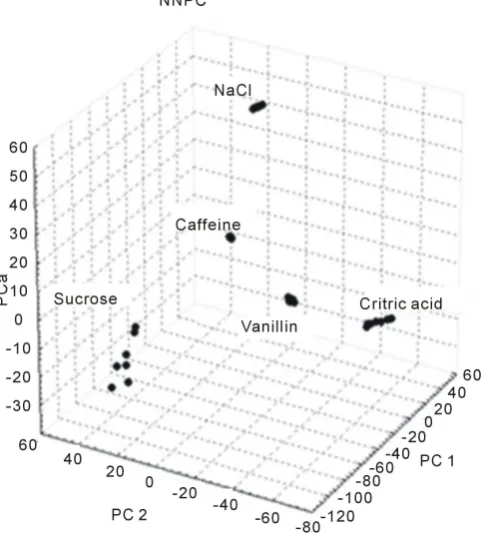
Figure 3 shows results obtained from the NNPC analysis. This representation of the primary three principal
[image:5.595.172.456.82.268.2]signals from the sensor array can be utilized to differentiate and classify coffee samples with no need to analyze its particular components.
From the registered signals, a data matrix was built which allowed classifying the coffee samples through an NNPC analysis. Figure 5 shows the resultant graph from the NNPC analysis done from the obtained data. The three primary and principal components summarize 87.0% of information; the first component collects a 53.9%, the second one a 23.6% and the third 9.7%. As observed, each of the clusters resulting from the analyzed sample are perfectly differentiated, consequently the sensor array allows to clearly classify the analyzed coffee samples. These results demonstrate that the developed electronic tongue instrument with polymeric sensors can be utilized to perform experiments on classifying coffee samples.
4. Conclusion
[image:6.595.192.434.427.694.2]An electronic tongue elaborated from a polymeric sensors array was used to classifying coffee samples. The electrochemical responses to the analyzed samples were collected through an electronic instrument of multi-channel measures (multi-potentiostat) which was able to differentiate a group of substances with different taste
Figure 4. Electronic tongue registered signals against Córdoba coffee: (a) PPy/ AQDS, (b) PPy/DBS, (c) PPy/FCN, (d) PPy/HCF, e) PPy/PWA y (f) PPy/PTS.
Figure 5. NNPC Analysis based on the electronic tongue res- ponse against commercial coffee samples.
properties. The classification of the substances was made through an NNPC analysis and the resultant graphic shows an excellent separation of clusters representing each studied sample. In addition, when this device was used with coffee samples, it showed signals that were converted to a samples’ fingerprint since each sensor pro-vides a particular curve that can be used to differentiate the samples using NNPC. This opens the possibility of using these devices as the sensing units of an electronic tongue in the analysis of other beverages and sample types (water, drugs, beer, etc.).
Acknowledgements
Financial support of Departamento Administrativo de Ciencia, Tecnología e Innovación Colciencias—SENA and Universidad Pontificia Bolivariana—Montería (proyecto RC-675-2008, Código: 1425-452-21195).
References
[image:7.595.202.425.290.517.2][8] Parra, V., Arrieta, A.A., Fernández Escudero, J.A., Rodríguez Méndez, M.L. and De Saja, J.A. (2006) Electronic Ton- gue Based on Chemically Modified Electrodes and Voltammetry for the Detection of Adulterations in Wines. Sensors
and Actuators B: Chemical, 118, 448-453. http://dx.doi.org/10.1016/j.snb.2006.04.043
[9] Wei, Z. and Wang, J. (2011) Detection of Antibiotic Residues in Bovine Milk by a Voltammetric Electronictongue System. Analytica Chimica Acta, 694, 46-56. http://dx.doi.org/10.1016/j.aca.2011.02.053
[10] Chen, Q., Zhao, J. and Vittayapadung, S. (2008) Identification of the Green Tea Grade Level Using Electronic Ton- gueand Pattern Recognition. Food Research International, 41, 500-504.
http://dx.doi.org/10.1016/j.foodres.2008.03.005
[11] Woertz, K., Tissen, C., Kleinebudde, P. and Breitkreutz, J. (2011) A Comparative Study on Two Electronic Tongues for Pharmaceutical Formulation Development. Journal of Pharmaceutical and Biomedical Analysis, 55, 272-281. http://dx.doi.org/10.1016/j.jpba.2011.02.002
[12] Sun, H., Mo, Z.H., Choy, J.T.S., Zhu, D.R. and Fung, Y.S. (2008) Piezoelectric Quartz Crystal Sensor for Sensing Taste-Causing Compounds in Food. Sensors and Actuators B: Chemical, 131, 148-158.
http://dx.doi.org/10.1016/j.snb.2007.12.014
[13] Leonte, I.I., Sehra, G., Cole, M., Hesketh, P. and Gardner, J.W. (2006) Taste Sensors Utilizing High-Frequency SH- SAW Devices. Sensors and Actuators B: Chemical, 118, 349.
[14] Veríssimo, M.I.S., Oliveira, J.A.B.P. and Gomes, M.T.S.R. (2010) Contribution of Compressional Waves to the Identification and Quantification of a Water Contaminant. Sensors and Actuators B: Chemical, 151, 21-25.
http://dx.doi.org/10.1016/j.snb.2010.09.065
[15] Bogomolov, A. (2011) Multivariate Process Trajectories: Capture, Resolution and Analysis. Chemometrics and Intel-
ligent Laboratory Systems, 108, 49-63. http://dx.doi.org/10.1016/j.chemolab.2011.02.005
[16] Oliveri, P., Casolino, M.C. and Forina, M. (2010) Chapter 2—Chemometric Brains for Artificial Tongues. Advances in
Food and Nutrition Research, 61, 57-117. http://dx.doi.org/10.1016/B978-0-12-374468-5.00002-7
[17] Pioggia, G., Di Francesco, F., Marchetti, A., Ferro, M., Leardi, R. and Ahluwalia, A. (2007) A Composite Sensor Ar- ray Impedentiometric Electronic Tongue Part II. Discrimination of Basic Tastes. Biosensors and Bioelectronics, 22, 2624-2628. http://dx.doi.org/10.1016/j.bios.2006.10.025
[18] Arrieta, A., Rodriguez-Mendez, M.L. and De Saja, J.A. (2003) Langmuir-Blodgett Film and Carbon Paste Electrodes Based on Phthalocyanines as Sensing Units for Taste. Sensors and Actuators B: Chemical, 95, 357-365.
http://dx.doi.org/10.1016/S0925-4005(03)00438-6
[19] Tian, S., Deng, S. and Chen, Z. (2007) Multifrequency Large Amplitude Pulse Voltammetry: A Novel Electrochemical Method for Electronic Tongue. Sensors and Actuators B: Chemical, 123, 1049-1056.
http://dx.doi.org/10.1016/j.snb.2006.11.011
[20] Söderström, C., Borén, H., Winquist, F. and Krantz-Rülcker, C. (2003) Use of an Electronic Tongue to Analyze Mold Growth in Liquid Media. International Journal of Food Microbiology, 83, 253-261.
http://dx.doi.org/10.1016/S0168-1605(02)00375-6
[21] Arrieta, A., Apetrei, C., Rodríguez Méndez, M.L. and De Saja, J.A. (2004) Voltammetric Sensor Array Based on Con- ducting Polymer-Modified Electrodes for the Discrimination of Liquids. Electrochimica Acta, 49, 4543-4551. http://dx.doi.org/10.1016/j.electacta.2004.05.010
[22] Martini, M. and De Paoli, M. (2002) Effect of the Electrolyte Cations and Anions on the Photocurrent of Dodecylsul- phate Doped Polypyrrole Films. Solar Energy Materials and Solar Cells, 73, 235-247.
[23] Syritski, V., Opik, A. and Forsen, O. (2003) Ion Transport Investigations of Polypyrroles Doped with Differentanions by EQCM and CER Techniques. Electrochimica Acta, 48, 1409-1417.
http://dx.doi.org/10.1016/S0013-4686(03)00018-5