
N A N O R E V I E W
Open Access
Biomedical Applications for Gold
Nanoclusters: Recent Developments and
Future Perspectives
Navdeep Kaur
1†, Robby Nur Aditya
2†, Arshdeep Singh
1†and Tsung-Rong Kuo
2,3*Abstract
Gold nanoclusters (AuNCs) have been extensively applied as a fluorescent probe for biomedical applications in imaging, detection, and therapy due to their unique chemical and physical properties. Fluorescent probes of AuNCs have exhibited high compatibility, superior photostablility, and excellent water solubility which resulted in remarkable biomedical applications for long-term imaging, high-sensitivity detection, and target-specific treatment. Recently, great efforts have been made in the developments of AuNCs as the fluorescent probes for various biomedical applications. In this review, we have collected fluorescent AuNCs prepared by different ligands, including small molecules, polymers, and biomacromolecules, and highlighted current achievements of AuNCs in biomedical applications for imaging, detection, and therapy. According to these advances, we further provided conclusions of present challenges and future perspectives of AuNCs for fundamental investigations and practical biomedical applications.
Keywords:Gold nanoclusters, Imaging, Detection, Therapy; ligand, Small molecules, Polymers, Biomacromolecules
Background
Recent biomedical applications have revealed the significant roles of nanomaterials in the developments of nanoscience and nanotechnology [1–10]. In comparison with bulk mate-rials, nanomaterials have shown unique physical and chem-ical properties, making them promising building blocks [11–18]. Among the different nanomaterials, a specific type of gold nanomaterials, gold nanoclusters (AuNCs), with sizes up to hundreds of gold atoms have been extensively investigated in biomedical applications due to their well-defined structure, facile surface modification, and highly stable optical property [19–34]. Without a distinct surface plasmon resonance, AuNCs have exhibited fluores-cence in the broad region from visible to near-infrared with long lifetime and large Stokes shift [35–37]. Great efforts have been made for the uses of AuNCs as the fluorescent
probes in biomedical applications for the fields of imaging, detection, and therapy [38–40]. In comparison with organic fluorophores and quantum dots, fluorescent AuNCs have shown high compatibility, superior photostablility, and excellent water solubility for long-term imaging, high-sensitivity detection, and target-specific treatment [41–49]. The intensive developments of AuNCs as fluorescent probes have brought significant impacts in the applications of imaging, detection, and therapy.
The extensive developments of AuNCs in biomedical applications have been achieved in recent years. Several outstanding review papers of AuNCs with the point of view in analytical applications have been focused on the analyses of drugs, environmental contaminants, and biological samples [50–53]. In this review, we empha-sized on the recent advances for the uses of AuNCs con-jugated with three types of ligands including small molecules, polymers, and biomacromolecules in the ap-plications for imaging, detection, and therapy. Relevant challenges and future perspectives of AuNCs for funda-mental researches and biomedical applications were also provided in the“Conclusions.”
* Correspondence:[email protected]
†Navdeep Kaur, Robby Nur Aditya and Arshdeep Singh contributed equally
to this work.
2
International Ph.D. Program in Biomedical Engineering, College of Biomedical Engineering, Taipei Medical University, Taipei 11031, Taiwan
3Graduate Institute of Nanomedicine and Medical Engineering, College of
Biomedical Engineering, Taipei Medical University, Taipei 11031, Taiwan Full list of author information is available at the end of the article
© The Author(s). 2018Open AccessThis article is distributed under the terms of the Creative Commons Attribution 4.0 International License (http://creativecommons.org/licenses/by/4.0/), which permits unrestricted use, distribution, and reproduction in any medium, provided you give appropriate credit to the original author(s) and the source, provide a link to the Creative Commons license, and indicate if changes were made.
Kauret al. Nanoscale Research Letters (2018) 13:302
Small Molecule-Conjugated AuNCs
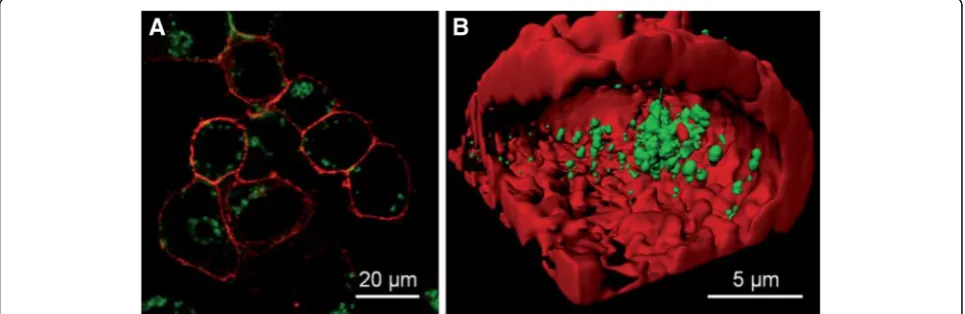
Small molecules have been extensively applied as li-gands to prepare AuNCs. With the conjugations of small molecules on the surfaces, AuNCs have exhibited different functions for imaging and detection. For ex-ample, D-penicillamine conjugated with gold nanoclus-ters (DPA-AuNCs) possesses pretty good characteristics such as small size, high colloidal stability, and bright-ness which imparts them with an immense perspective as fluorescent probes and thus can be utilized for bio-logical imaging. Human cancer (HeLa) cells were im-aged by internalization of DPA-AuNCs. Then, after 2 h of incubation of cancer cells with DPA-AuNCs, con-focal microscope was used for imaging the cells with two-photon excitation technique [54]. The membrane dye DiD was used as a reference, and the emission in-tensities of both DPA-AuNCs and DiD dye were col-lected in green and red colors, respectively. The bright luminescence emitted by the HeLa cells due to inges-tion of nanoparticles is shown in Fig. 1a. Also, for 3D rebuilding, different images at various z-positions were taken as shown in Fig.1b [55].
The dihydrolipoic acid (DHLA)-AuNCs were internal-ized in HeLa cells for investigating the fluorescence life-time imaging (FLIM) application for the first life-time. Hela cells without DHLA-AuNCs showed auto-fluorescence with a lifespan between 1.5 to 4 ns. The intensity and lifetime images of Hela cells are shown in Fig.2a, b. But after exposing Hela cells to DHLA-AuNCs for 1 h, the cells were marked luminescent emittance which exhib-ited a long fluorescence lifetime of 500 to 800 ns. The intensity and FLIM images of Hela cells with DHLA-AuNCs are shown in Fig.2c, d [56].
Wang et al. found that when cancerous cell lines such as HepG2 (human hepatocarcinoma cell line), K562 (leukemia cell line) was incubated with chloroauric acid (a biocompatible molecular Au(III) species) solutions in
micromolar concentrations, and AuNCs get spontan-eously biosynthesized by these cell lines [57]. But the phenomenon did not happen in non-cancerous cell line, L02 (human embryo liver cells) which were utilized as controls. As a result, the abovementioned method can be subjugated as a novel method for in vivo self-bio-imaging of tumors. Another trypsin-stabilized gold nanoclusters (try-AuNCs) possessing near-infrared fluorescence were synthesized by Liu et al. for dual purposes; one of the ap-plicability includes biosensing of heparin which is built on surface plasmon-enhanced energy transfer (SPEET) and another includes folic acid (FA)-modified try-AuNCs for in vivo cancer fluorescence imaging (Fig. 3). The SPEET mode and in vivo cancer imaging with high targeting abil-ity possessed by try-AuNCs showed an immense potential as multifunctional biomaterials for biosensing biomole-cules [58].
The o-quinone-containing ligands are known to form complexes with Ferric (Fe3+
) ions [59, 60]. So the AuNCs containing dopaquinone as ligands were devel-oped and evaluated by Ho et al. for the sensing of Fe3+ based on a mechanism of the formation of a complex between Fe3+ ions and o-quinone moiety of dopaqui-none in solution. It was found from the studies that a large complex is formed with dimensions more than 500 nm through aggregation of AuNCs in the presence of Fe3+ions. Thus, AuNCs can be used for detection of Fe3+ions in water and other liquids [61].
Acidic functional groups are reported to form a stable complex with metal ions and biothiols; similarly, 11-mercaptoundecanoic acid-conjugated gold nanoclusters (MUA-AuNCs) were thought to sense Hg2+ions in solu-tions and bithiols which can be regarded as one of the sensing applicability of AuNCs [62, 63]. The fluores-cence intensity of MUA-AuNCs in complex with Hg2+ ions is shown in Fig. 4 [64]. Furthermore, the complex of Hg2+-thiol was reported to be more stable than Hg2
[image:2.595.57.540.545.702.2]+
-COOH complex [65]. Therefore, complex of MUA-AuNCs was used to detect bithiols which can be further regarded as it is another application in sensing of metal ions in various solutions [64].
The vancomycin stabilized gold nanoclusters (Van-AuNCs) were designed and synthesized by Yu et al. for detection of Fe3+in tap water, lake water, river water, and sea water as one of its application in environmental sam-ple analysis [66]. Chitosan-functionalized gold nanoclus-ters (AuNCs@Chi) were produced and developed for the
use as a detecting material of hydrogen sulfide (H2S)
employing Förster resonance energy transfer (FRET) mechanism [67]. The reason for the researchers to detect H2S is that hydrogen sulphide is involved in many
bio-logical processes which include vasodilation [68, 69], anti-inflammation [70,71], and neurotransmission [72].
Liu et al. laid down a foundation for the synthesis of glutathione (GSH)-stabilized gold nanoclusters (GSH-AuNCs) having high selectivity, rapid response, and excellent photostability which were utilized for the
Fig. 2Intensity (a,c) and FLIM (b,d) images of Hela cells only (a,b) and Hela cells incubated with DHLA-AuNCs for 1 h (c,d). All scale bars are 10μm [56]
Fig. 3Near-infrared fluorescent try-AuNCs as surface plasmon-enhanced energy transfer biosensor and in vivo cancer imaging bioprobe [58]
[image:3.595.56.539.87.372.2] [image:3.595.58.539.551.713.2]detection and sensing of lysine and cysteine (amino acids) [73]. In recent times, FRET (Forster resonance energy transfer) assembly has been developed by Yu et al. using gold nanoclusters capped by glutathione (AuNCs@GSH). The assembly was found to be highly selective for amino acid cysteine which may be employed in future for diagnos-ing of cysteine-related diseases [74]. The cysteine-rich protein-templated AuNCs were prepared using silver(I) ion. Keratin is a cysteine-rich structural proteins found abundant in hair, wool, feathers, etc. Therefore, silver ions based keratin-templated AuNCs were synthesized and eval-uated for their sensing application of mercury ion (Hg2+) [75]. Based on dual-emission carbon dots-gold nanoclusters (C-AuNCs) functionalized with dithiothreitol (DTT), a ratiometric fluorescence sensor for the sensitive detection of mercury ions (Hg2+)in water samples has recently been reported [76]. The above two reported applications of AuNCs may act as of great significance for monitoring the quality of water. Cyclodextrin-capped AuNCs have been re-ported for detection of cobalt ions (Co2+) and display fluorescence-based selective and sensitive Co2+ion sensing. Cellular internalization of AuNCs was also observed during the sensing of Co2+ions [77].
Recently, the ultrasmall AuNCs conjugated with bio-compatible surface ligand of GSH have been synthesized as the metabolizable and efficient radiosensitizers for cancer radiotherapy [78]. The ultrasmall nanoconstructs of GSH-AuNCs have revealed attractive properties in-cluded strong radiotherapy enhancement from the Au core and good biocompatibility from the surface coating GSH. Moreover, the GSH-AuNCs have been preferentially
accumulated in tumor via the improved enhanced perme-ability and retention effect leading to strong enhancement for cancer radiotherapy than that of much larger gold nanoparticles. The enhanced radiotherapy can be attrib-uted to the fact that the DNA damage caused by the photoelectric effect and Compton scattering of the Au25
nanoclusters. The remarkable decrease in the volume and weight of U14 tumor has been achieved by using the GSH-AuNCs as the radiosensitizer. Furthermore, after the treatment, the GSH-AuNCs can be efficiently cleared by the kidney, minimizing any potential side effects be-cause of the accumulation of Au25 nanoclusters in the
animal models.
Polymer-Conjugated AuNCs
Polymers have also emerged as the important ligands for preparations of AuNCs in biomedical applications. For example, AuNCs were prepared by capping with multidentate thioether-terminated poly(methacrylic acid) (PTMP-PMAA) ligand which were found to be highly photostable candidates and were used to label the normal (cord blood mononuclear cells; CBMC) and hematopoietic cells (K562 cancer cells) (Fig. 5) [79]. It was revealed from the results that cancer cells ingested these molecules to a much larger extent than normal cells [80]. It has been reported [81] that gold nanoparticles are easily penetrable to more mature cells such as granulocytes and lymphocytes which are part of hematopoietic system. Similarly, AuNCs can also be applicable in selective labeling, imaging, and target drug delivery in the hematopoietic system and related cancers such as chronic myeloid leukemia.
Aldeek et al. designed fluorescent polyethylene glycol-and zwitterion-functionalized gold nanoclusters by using bidentate ligands made of lipoic acid anchoring groups conjoined with either a poly(ethylene glycol) short chain or a zwitterion group [82]. To determine the role of these nanoclusters in biology, various tests were per-formed like pH-dependent stability and stability in the presence of excess salt. The hypothesis given by the au-thor reveals that these tests are in relevancy to the use of these AuNCs as fluorescent platforms for imaging and sensing in biology. It is further described in the re-port that various biological abnormalities are related to pH and thus can provide an indication for progression of several diseases such as cancer metastasis, chronic fatigue, and depression [83, 84]. These clusters are also thought to manage the physical behavior of proteins and nucleic acids [85–87]. One of the additional benefit of these clusters is their use in in vivo (deep-tissue) im-aging. Chen et al. developed a pH-dependent amphi-philic polymeric system containing luminescent AuNCs that were found to be photostable and biocompatible in the form of nanocomposite for diagnostic activities
which includes detection and therapy of folate over-expressing cancerous cells [88]. Luminescent AuNCs were restrained with amphiphilic copolymer (poly(DBAM-co-NASco-HEMA) (PDNH)) to form L-nAuNCs/FA-modified PDNH (or L-AuNCs/FA-PDNH) nanocomposite. Further-more, hydrophobic drug paclitaxel was assembled with L-AuNCs/FA-PDNH and thus can be utilized for both im-aging and treatment of cancer (Fig.6).
Polycations-functionalized water-soluble polyethyle-neimine gold nanoclusters (PEI-AuNCs) were designed and synthesized for appropriate and safe gene therapy applications along with cell imaging [89]. Due to the
enthralling optical properties of PEI-AuNCs, these clusters are reported as a promising candidate for bioi-maging, which was confirmed by incubating cancer cell lines (HepG2) with PEI-AuNCs and showed re-markable photoluminescence and the cells giving strong intense red fuorescence. Gold nanoclusters pro-tected by ovalbumin (fluorescent probe) linked with folic acid (targeting ligand) (FA-Ova-AuNCs) and a ho-mopolymer N-acryloxysuccinimide as the linker is being developed by Qiao et al. and was utilized for the detection of cancer through cancer cell imaging (Fig.7). As folic acid receptors are over-expressed in HeLa cells, it is thought
Fig. 6Fabrication of L-AuNCs/FA-PDNH nanocomposite for imaging and therapy [88]
Fig. 5Labelling of normal and cancer cells with AuNCs and quantum dots (QDs) [79]
[image:5.595.59.541.87.255.2] [image:5.595.59.540.452.717.2]that Hela cells would ingest FA-Ova-AuNCs. In this work, specific staining of HeLa cells by FA-Ova-AuNCs has been demonstrated [90].
For the application in detection, highly phosphores-cent molecular gold(I) cluster in a macroporous polymer film has been designed and synthesized for the detection of cyanide through colorimetric detection technique. The gold nanoclusters can be used to detect cyanide ions in red wine, coffee, juice, and soil. As cyanide is ex-tremely toxic and hazardous and may lead to death [91], there was a need to find highly selective, sensitive, and cost-effective sensors that can help determine the cyan-ide levels in the environment, water, and food [92]. So, this gold nanocluster may act as benediction which may help to save a number of lives [93].
Biomacromolecule-Conjugated AuNCs
Biomacromolecules with thiol groups have also been ap-plied as commonly used ligands to prepare AuNCs in different biomedical applications. Recently, transferrin (Tf )-functionalized gold nanoclusters (Tf-AuNCs)/gra-phene oxide (GO) nanocomposite (Tf-AuNCs/GO) was manufactured as a turn-on near-infrared (NIR) fluores-cent probe which can be utilized for bioimaging of cancer cells and small animals [94]. The ability of NIR fluorescent probe for imaging Tf receptor (TfR) on can-cer cells was evaluated using two different cancan-cer cell lines, i.e., Hela (high expression level of TfR) and HepG-2 (low expression level) and one normal mouse cell line (3T3) with different levels of TfR as shown in Fig.8. The fluorescent probe was obviously ingested only by Hela
cells, and noticeable fluorescence was observed after 4 h of incubation.
Sahoo et al. have developed a quick one-step green synthesis (2 min) of highly luminous AuNCs on DNA, using a single heating and cooling cycle as in polymerase chain reaction (PCR). The intensity of luminescence nanoclusters was found to increase with the number of DNA, offering an easy way to quantify DNA (Fig.9). As a powerful fluorescent probe for DNA quantification, the capability of AuNCs is shown in two different cancer cell lines included HeLa and A549 [95]. The formation of AuNCs was found to be influenced by the amount of precursors (HAuCl4) used in synthesis. The intensity of
luminescence emissions and the quantum results of nanoclusters are seen based on the cluster dimensions formed on various amounts of gold. The AuNCs were prepared by different base pairs, which consisted of A, T, G, and C, and produced the same luminescence for different base pair compositions and the same sequence lengths. Furthermore, the identification of the emission-intensity dependence of nanoclusters on DNA quantities provides a unique way of testing. Analysis of gene amplifi-cation and relative expression can be obtained. Moreover, the biocompatibility of AuNCs further emphasizes its use as a probe compared with the traditional cytotoxic proper-ties of dyes. Quantitative analysis of the level of gene ex-pression in various cancer cell lines can be used to demonstrate a simple, portable, and low cost equipment as an alternative to complicated, powerful, and expensive PCR energy machine. Furthermore, with the uses of lumi-nescent AuNCs as signal-generating agents, this tool
[image:6.595.58.541.87.334.2]enables reverse transcriptase PCR and array-based analysis of multiple genes/proteins at the same time using switch-able holders and specially designed software. Devices and approaches were developed to assess gene profiles associ-ated with apoptosis in HeLa cancer cells and also to meas-ure the expression of glutathione-S-transferase (GST) protein and GST-tagged human granulocyte macrophage colony-stimulating factor (GSThGMCSF) recombinant protein extracted formEscherichia coli[96].
High-speed preparation of biocompatible signal-producing agents of AuNCs in DNA and proteins allows qualitative de-tection. Moreover, it provides synthetic methods of AuNCs as common probes for both DNA and protein studies (in fluids as well as samples on membranes), PCR amplicon ana-lysis, and membrane-based researches in a single instrument.
The instrument is capable of delivering 95% PCR amplifica-tion efficiency as compared to commercially available ma-chines. Most important, the materials are all environmentally friendly. Taking the advantages, integrated tool and approach can create a novel application to existing techniques with the incorporation of nanotechnology and biology.
Nguyen et al. develop double ligand of stabilizing AuNCs and fabricate AuNCs/graphene nanocomplex as a “turn-on” fluorescent probe to detect matrix-related matrix metalloproteinase-9 cancer [97]. A smooth, one-step method was investigated for the bio-medical application of AuNCs using peptides and mer-capto undecanoic acid as co-templating ligands. The peptide with metalloproteinase-9 cleavage site serves as a stabilizer and also as a targeting ligand for enzyme
Fig. 9The method for the synthesis of luminescent AuNCs by emulating the PCR condition [95]
Fig. 8Fabrication of the Tf-AuNCs/GO conjugation as a turn-on NIR fluorescent probe for bioimaging in cancer cells with TfR over expression [94]
[image:7.595.57.540.88.282.2] [image:7.595.57.542.523.714.2]sensing. With enzymes, because of the excellent quenching properties and negligible background of gra-phene oxide, the AuNCs/gragra-phene nanomaterial produces a strong “turn-on” fluorescent response, which is highly correlated with enzyme concentrations. The limit of detec-tion of the nanomaterial is 0.15 nM for enzyme. The fluor-escent nanomaterial was successfully demonstrated for detection of “turn-on” metalloproteinase-9 secreted from MCF-7 cancer cell with high sensitivity and selectivity. Fur-thermore, the fluorescent AuNCs provide significant reduc-tions in time, cost, and sensory complexity compared to previous studies. The platform has also shown great poten-tial for detecting different biological molecules in diverse fields including environmental and analytical researches. Similarly, Song et al. develop the label-free, sensitive, and simple method for detecting protein kinases based on the selective aggregation of phosphorylated-gold nanoclusters peptides (AuNCs-peptides) induced by the coordination of Zr ion [98]. The AuNCs were prepared by peptides without a strong reducing agent, which prevents peptides from being disturbed. A study of label-free, green, sensitive, and simple fluorescence using the AuNC-peptides to measure the activity of the protein kinase CK2 has been developed. Compared with the recent established kinase fluorescence test, the uses of AuNC-peptides have several important advantages, including label-free, green, and simple experi-mental processes.
Selvaprakash et al. develop AuNCs using low-cost chicken egg white proteins (AuNCs@ew) as a switch-on sensing probe to detect phosphate-containing metabolites such as adenosine-50-triphosphate (ATP) and pyrophosphate (PPi) [99]. A cost-effective and straight-forward approach to pro-ducing fluorescent AuNC probes for phosphate-containing molecules such as ATP and PPi has been obtained. By add-ing cheap egg whites with tetrachloroauric, AuNCs@ew can be easily synthesized by microwave heating. In this work, AuNCs@ew mainly dominated by AuNCs@ovalbumin through careful characterization. Since ovalbumin is a glyco-protein and contains abundant glycine ligands, the possibility for the use of AuNCs@ew as the fluorescent probes for ConA, which contains the glycans binding site, has been suc-cessfully proven in Selvaprakash’s work.
Wu et al. use bovine serum albumin (BSA) and GSH to synthesize gold nanoclusters (BSA/GSH-AuNCs) with excitation and emissions at 330 nm and 650 nm, respectively [100]. In this approach, BSA and GSH serve primarily as a limitation and reducing agents, re-spectively. With the help of GSH, only 30 μM BSA is needed to synthesize photostable BSA/GSH-AuNCs. With the use of GSH, the use of large amounts of expensive proteins such as BSA and transferrin is no longer necessary for the development of fluorescent proteins/GSH-AuNCs. This strategy provides a low-cost approach for the synthesis of protein-AuNCs and
also simplifies the refining of the established AuNCs. Wu et al. also found that quenching triggered by NO2−
at pH 3.0 was efficient and specific. With high salt tolerant, sensitivity, and selectivity, BSA/GSH-AuNCs have great potential for measurement of complicated NO2samples. Cao et al. investigate pH-induced
fluores-cence changes from AuNCs@BSA and appropriate con-formational changes of ligand proteins by fluorescence, circular dichroism (CD), and IR spectral measurements. In this work, BSA in AuNCs@BSA undergoes identifi-able conformational changes at the level of secondary and tertiary structures. CD and IR results interpret a significant change from the second structure on ex-treme acidity and alkaline, where more irregular struc-tures are obtained [101]. The difference in secondary structural change trends between AuNCs@BSA and the original BSA was shown. The extreme alkaline condi-tion (pH 11.43) induces a change from exposure to the buried helix. Moreover, the large tryptophan fluores-cence gap between AuNCs@BSA and the original BSA implies that the gold nuclei live near tryptophan in the BSA. This study lays the groundwork for understanding the behavioral conformation of ligand proteins in con-jugated AuNCs.
Ghosh et al. investigate the effects of AuNCs on CD and enzymatic activity of α-chymotrypsin (ChT) (against sub-strate hydrolysis,N-succinyl-L-phenylalanine p-nitroanilide) [102]. The CD spectrum shows that on binding to AuNCs, ChT is completely exposed, producing almost zero ellipti-city. The ChT-coated AuNCs show virtually no enzymatic activity. The additional GSH or oxidized GSH restores en-zyme activity a ChT by 30–45%. The activity of ChT is irre-versibly lost on the binding surface of AuNCs. This lost activity can be recovered when ChT closes AuNCs treated with GSH or oxidized GSH. In the cell, the enzyme activity can be revived by GSH as shown in this work. Since cancer cells are characterized by elevated levels of glutathione, there will be differences in the absorption of enzyme-lined gold groups between cancer cells and normal cells.
of the CL1-5 tumor by intraoperative fluorescence guidance. The strong fluorescence enhancement of resected tumor is based on in vivo imaging system data to prove the successful molecular targeting using fluorescent AuNC conjugates. This work has demonstrated great advantages of using the target-specific fluorescent AuNC conjugates in vivo that are able to provide long-term fluorescent imaging times, high photostability, dual imaging functions, and feasible surface modifications with specific-targeted molecules in com-parison to most organic contrast agents currently used. In addition, this work has brought an advanced concept in the field of biomedical imaging and therapeutics using functionalized AuNCs.
Conclusions
Overall, we have provided a mini review of the recent advances in fluorescent AuNCs prepared with small
[image:9.595.57.546.312.732.2]molecules, polymers, and biomacromolecules for the ap-plications in bioimaging, detection, and therapy (Table1). These works have shown that fluorescent AuNCs can be promising fluorescent probes due to their unique prop-erties such as excellent biocompatibility, high photosta-blility, and easy surface modification. Although AuNCs have been demonstrated in various biomedical applica-tions, however, their fluorescence quantum yields (QYs) are still low (usually less than 20%). The first challenge to extend the applications of AuNCs is focused on the preparation of AuNCs with high fluorescence QY. With low fluorescence QY, the synthesis of AuNCs with uniform size will be an alternative way to improve their fluorescence QY. Furthermore, with the uniform size, fluorescent AuNCs with a narrow emission spectrum will increase their benefit in biomedical applications. The second challenge for AuNCs is the control of ligand on their surface because
Table 1Colors, detection targets, and applications of AuNCs with various ligands in this review
Type Ligand Color Target Application Ref.
Small molecules D-Penicillamine Orange-red HeLa cell Imaging [55]
Dihydrolipoic acid Red HeLa cell Imaging [56]
Chloroauric acid Green Chronic myeloid leukemia Imaging [57]
Trypsin Red Hela tumor Imaging [58]
Dopaquinone Green-yellow Fe3+ Detection [61]
11-Mercaptoundecanoic acid Orange Hg2+ Detection [64]
Vancomycin Blue Fe3+ Detection [66]
Chitosan Green H2S Detection [67]
Glutathione Red Lysine Detection [73]
Cysteine Red Hg2+ Detection [75]
Dithiothreitol Orange-red Hg2+ Detection [76]
Cyclodextrin Orange-red Co2+ Detection [77]
Glutathione Red U14 tumor Therapy [78]
Polymers Poly(methacrylic acid) Red K562 cell Imaging [79]
Poly(ethylene glycol) Red Deep tissue Imaging [82]
Poly(DNH) Orange HeLa tumor Imaging and therapy [88]
Poly(ethyleneimine) Pink HepG2 cell Imaging and therapy [89]
Poly(N-acryloxysuccinimide) Red HeLa cell Imaging [90]
Poly(acrylonitrile) Red CN− Detection [93]
Biomacromolecules Transferrin Red Transferrin receptor Imaging [94]
β-Actin Orange-red DNA Detection [95]
Bovine serum albumin Orange-red HeLa cell andE. coli Detection [96]
Peptide (GPLGMWSRGLC) Red Metalloproteinase-9 Detection [97]
Peptide (CCYRRRADDSD) Violet CK2 kinase Detection [98]
Chicken egg white proteins Orange-red Concanavalin A Detection [99]
Bovine serum albumin Red NO2− Detection [100]
Bovine serum albumin Orange-red Bovine serum albumin Detection [101]
Chymotrypsin Red Chymotrypsin Detection [102]
AS1411 aptamer Orange-red CL1–5 tumor Imaging and therapy [103]
the chemical and physical properties of AuNCs can be sig-nificantly affected by their surface modification. Therefore, the theoretical and practical studies of AuNCs are still needed to have a better understanding of their structure, optical characteristic, and physicochemical property. Espe-cially, for physicochemical property, recent studies have proven that AuNCs are potential fluorescent probes for biosensing, bioimaging, and cancer therapy. Accordingly, to realize the biomedical applications, we still have a lot of works to push the biomedical applications of AuNCs in im-aging, detection, and therapy. Overall, with the great efforts, we believe that AuNCs will be served as a significant fluor-escent probe in biomedical application in the near future.
Abbreviations
AuNCs:Gold nanoclusters; BSA: Bovine serum albumin; CBMC: Cord blood mononuclear cells; CD: Circular dichroism; Chi: Chitosan; ChT: Chymotrypsin; DHLA: Dihydrolipoic acid; DPA: D-penicillamine; DTT: Dithiothreitol; FA: Folic acid; FLIM: Fluorescence lifetime imaging; FRET: Förster resonance energy transfer; GSH: Glutathione; GST: Glutathione-S-transferase; MUA: 11-Mercaptoundecanoic acid; Ova: Ovalbumin; PCR: Polymerase chain reaction; PDNH: Poly(DBAM-co-NASco-HEMA); PEI: Polyethyleneimine; PPi: Pyrophosphate; PTMP-PMAA: Multidentate thioether-terminated poly(methacrylic acid); SPEET: Surface plasmon-enhanced energy transfer; Tf: Transferrin; Try: Trypsin; VAN: Vancomycin
Acknowledgements
This work was supported by DP2-107-21121-01-N-09, MOST 107-2622-E-038-001-CC2 and Taipei Medical University.
Funding
Authors declare that there is no funding for the review.
Availability of Data and Materials
The datasets supporting the conclusions of this article are included within the article.
Authors’Contributions
All authors read and approved the final manuscript.
Ethics Approval and Consent to Participate
Not applicable
Consent for Publication
Not applicable
Competing Interests
The authors declare that they have no competing interests.
Publisher’s Note
Springer Nature remains neutral with regard to jurisdictional claims in published maps and institutional affiliations.
Author details
1School of Pharmacy, College of Pharmacy, Taipei Medical University, Taipei
11031, Taiwan.2International Ph.D. Program in Biomedical Engineering, College of Biomedical Engineering, Taipei Medical University, Taipei 11031, Taiwan.3Graduate Institute of Nanomedicine and Medical Engineering,
College of Biomedical Engineering, Taipei Medical University, Taipei 11031, Taiwan.
Received: 16 July 2018 Accepted: 18 September 2018
References
1. Cheng L, Wang C, Feng L, Yang K, Liu Z (2014) Functional nanomaterials for phototherapies of cancer. Chem Rev 114:10869–10939
2. Ray PC, Khan SA, Singh AK, Senapati D, Fan Z (2012) Nanomaterials for targeted detection and photothermal killing of bacteria. Chem Soc Rev 41: 3193–3209
3. Sharifi S, Behzadi S, Laurent S, Laird Forrest M, Stroeve P, Mahmoudi M (2012) Toxicity of nanomaterials. Chem Soc Rev 41:2323–2343 4. Yuan Q, Duan HH, Li LL, Sun LD, Zhang YW, Yan CH (2009) Controlled
synthesis and assembly of ceria-based nanomaterials. J Colloid Interface Sci 335:151–167
5. Rao CNR, Cheetham AK (2001) Science and technology of nanomaterials: current status and future prospects. J Mater Chem 11:2887–2894 6. Liu H, Li Y, Xiao S, Gan H, Jiu T, Li H, Jiang L, Zhu D, Yu D, al XB (2003)
Synthesis of organic one-dimensional nanomaterials by solid-phase reaction. J Am Chem Soc 125:10794–10795
7. Bai C, Liu M (2012) Implantation of nanomaterials and nanostructures on surface and their applications. Nano Today 7:258–281
8. Yanlian Y, Ulung K, Xiumei W, Horii A, Yokoi H, Shuguang Z (2009) Designer self-assembling peptide nanomaterials. Nano Today 4:193–210
9. Garca I, Marradi M, Penadés S (2010) Glyconanoparticles: multifunctional nanomaterials for biomedical applications. Nanomedicine 5:777–792 10. Bilecka I, Niederberger M (2010) Microwave chemistry for inorganic
nanomaterials synthesis. Nanoscale 2:1358–1374
11. Comini E (2006) Metal oxide nano-crystals for gas sensing. Anal Chim Acta 568:28–40
12. Portney NG, Ozkan M (2006) Nano-oncology: drug delivery, imaging, and sensing. Anal Bioanal Chem 384:620–630
13. Hong Z, Zhang P, He C, Qiu X, Liu A, Chen L, Chen X, Jing X (2005) Nano-composite of poly(L-lactide) and surface grafted hydroxyapatite: mechanical properties and biocompatibility. Biomaterials 26:6296–6304
14. Aeschlimann M, Bauer M, Bayer D, Brixner T, García De Abajo FJ, Pfeiffer W, Rohmer M, Spindler C, Steeb F (2007) Adaptive subwavelength control of nano-optical fields. Nature 446:301–304
15. Juan ML, Righini M, Quidant R (2011) Plasmon nano-optical tweezers. Nat Photonics 5:349–356
16. Kawata S, Inouye Y, Verma P (2009) Plasmonics for near-field nano-imaging and superlensing. Nat Photonics 3:388–394
17. Kosako T, Kadoya Y, Hofmann HF (2010) Directional control of light by a nano-optical Yagi-Uda antenna. Nat Photonics 4:312–315
18. Zayats AV, Smolyaninov II, Maradudin AA (2005) Nano-optics of surface plasmon polaritons. Phys Rep 408:131–314
19. Li G, Jin R (2013) Atomically precise gold nanoclusters as new model catalysts. Acc Chem Res 46:1749–1758
20. Qian H, Zhu M, Wu Z, Jin R (2012) Quantum sized gold nanoclusters with atomic precision. Acc Chem Res 45:1470–1479
21. Lin CAJ, Yang TY, Lee CH, Huang SH, Sperling RA, Zanella M, Li JK, Shen JL, Wang HH, Yeh HI et al (2009) Synthesis, characterization, and
bioconjugation of fluorescent gold nanoclusters toward biological labeling applications. ACS Nano 3:395–401
22. Wen F, Dong Y, Feng L, Wang S, Zhang S, Zhang X (2011) Horseradish peroxidase functionalized fluorescent gold nanoclusters for hydrogen peroxide sensing. Anal Chem 83:1193–1196
23. Chen W, Chen S (2009) Oxygen electroreduction catalyzed by gold nanoclusters: strong core size effects. Angew Chem Int Ed 48:4386–4389 24. Häkkinen H, Abbet S, Sanchez A, Heiz U, Landman U (2003) Structural,
electronic, and impurity-doping effects in nanoscale chemistry: supported gold nanoclusters. Angew Chem Int Ed 42:1297–1300
25. Miyamura H, Matsubara R, Miyazaki Y, Kobayashi S (2007) Aerobic oxidation of alcohols at room temperature and atmospheric conditions catalyzed by reusable gold nanoclusters stabilized by the benzene rings of polystyrene derivatives. Angew Chem Int Ed 46:4151–4154
26. Hasobe T, Imahori H, Kamat PV, Tae KA, Seong KK, Kim D, Fujimoto A, Hirakawa T, Fukuzumi S (2005) Photovoltaic cells using composite nanoclusters of porphyrins and fullerenes with gold nanoparticles. J Am Chem Soc 127:1216–1228
27. Tsunoyama H, Sakurai H, Negishi Y, Tsukuda T (2005) Size-specific catalytic activity of polymer-stabilized gold nanoclusters for aerobic alcohol oxidation in water. J Am Chem Soc 127:9374–9375
28. Xie J, Zheng Y, Ying JY (2009) Protein-directed synthesis of highly fluorescent gold nanoclusters. J Am Chem Soc 131:888–889
30. Wu Z, Jin R (2010) On the ligand’s role in the fluorescence of gold nanoclusters. Nano Lett 10:2568–2573
31. Jin R (2010) Quantum sized, thiolate-protected gold nanoclusters. Nanoscale 2:343–362
32. Lewis LJ, Jensen P, Barrat J (1997) Melting, freezing, and coalescence of gold nanoclusters. Phys Rev B 56:2248–2257
33. Garzón IL, Michaelian K, Beltrán MR, Posada-Amarillas A, Ordejón P, Artacho E, Sánchez-Portal D, Soler JM (1998) Lowest energy structures of gold nanoclusters. Phys Rev Lett 81:1600–1603
34. Herzing AA, Kiely CJ, Carley AF, Landon P, Hutchings GJ (2008) Identification of active gold nanoclusters on iron oxide supports for CO oxidation. Science 321:1331–1335
35. Chen L-Y, Wang C-W, Yuan Z, Chang H-T (2014) Fluorescent gold nanoclusters: recent advances in sensing and imaging. Anal Chem 87: 216–229
36. Zhang L, Wang E (2014) Metal nanoclusters: new fluorescent probes for sensors and bioimaging. Nano Today 9:132–157
37. Luo Z, Zheng K, Xie J (2014) Engineering ultrasmall water-soluble gold and silver nanoclusters for biomedical applications. Chem Commun 50:5143– 5155
38. Chen WY, Lan GY, Chang HT (2011) Use of fluorescent DNA-templated gold/silver nanoclusters for the detection of sulfide ions. Anal Chem 83: 9450–9455
39. Lin YH, Tseng WL (2010) Ultrasensitive sensing of Hg2+and CH 3Hg+based
on the fluorescence quenching of lysozyme type VI-stabilized gold nanoclusters. Anal Chem 82:9194–9200
40. Liu CL, Wu HT, Hsiao YH, Lai CW, Shih CW, Peng YK, Tang KC, Chang HW, Chien YC, Hsiao JK et al (2011) Insulin-directed synthesis of fluorescent gold nanoclusters: preservation of insulin bioactivity and versatility in cell imaging. Angew Chem Int Ed 50:7056–7060
41. Hu L, Deng L, Alsaiari S, Zhang D, Khashab NM (2014)“light-on”sensing of antioxidants using gold nanoclusters. Anal Chem 86:4989–4994 42. Liu JM, Chen JT, Yan XP (2013) Near infrared fluorescent trypsin stabilized
gold nanoclusters as surface plasmon enhanced energy transfer biosensor and in vivo cancer imaging bioprobe. Anal Chem 85:3238–3245 43. Teng Y, Jia X, Li J, Wang E (2015) Ratiometric fluorescence detection of
tyrosinase activity and dopamine using thiolate-protected gold nanoclusters. Anal Chem 87:4897–4902
44. Huang P, Lin J, Wang S, Zhou Z, Li Z, Wang Z, Zhang C, Yue X, Niu G, Yang M et al (2013) Photosensitizer-conjugated silica-coated gold nanoclusters for fluorescence imaging-guided photodynamic therapy. Biomaterials 34:4643–4654
45. Zhang C, Zhou Z, Qian Q, Gao G, Li C, Feng L, Wang Q, Cui D (2013) Glutathione-capped fluorescent gold nanoclusters for dual-modal fluorescence/X-ray computed tomography imaging. J Mater Chem B 1: 5045–5053
46. Chevrier DM, Chatt A, Zhang P (2012) Properties and applications of protein-stabilized fluorescent gold nanoclusters: short review. J Nanophotonics 6:064504
47. Pyo K, Thanthirige VD, Kwak K, Pandurangan P, Ramakrishna G, Lee D (2015) Ultrabright luminescence from gold nanoclusters: rigidifying the Au(I)-thiolate shell. J Am Chem Soc 137:8244–8250
48. Tam JM, Murthy AK, Ingram DR, Nguyen R, Sokolov KV, Johnston KP (2010) Kinetic assembly of near-IR-active gold nanoclusters using weakly adsorbing polymers to control the size. Langmuir 26:8988–8999
49. Palmal S, Jana NR (2014) Gold nanoclusters with enhanced tunable fluorescence as bioimaging probes. Wiley Interdiscip Rev Nanomed Nanobiotechnol 6:102–110
50. Lin CAJ, Lee CH, Hsieh JT, Wang HH, Li JK, Shen JL, Chan WH, Yeh HI, Chang WH (2009) Synthesis of fluorescent metallic nanoclusters toward biomedical application: recent progress and present challenges. J Med Biol Eng 29:276–283
51. Zheng Y, Lai L, Liu W, Jiang H, Wang X (2017) Recent advances in biomedical applications of fluorescent gold nanoclusters. Adv Colloid Interf Sci 242:1–16 52. Chen LY, Wang CW, Yuan Z, Chang HT (2015) Fluorescent gold nanoclusters:
recent advances in sensing and imaging. Anal Chem 87:216–229
53. Maity P, Xie S, Yamauchi M, Tsukuda T (2012) Stabilized gold clusters: from isolation toward controlled synthesis. Nanoscale 4:4027–4037
54. Glaschick S, Röcker C, Deuschle K, Wiedenmann J, Oswald F, Mailänder V, Nienhaus GU (2007) Axial resolution enhancement by 4Pi confocal fluorescence microscopy with two-photon excitation. J Biol Phys 33:433
55. Shang L, Dörlich RM, Brandholt S, Schneider R, Trouillet V, Bruns M, Gerthsen D, Nienhaus GU (2011) Facile preparation of water-soluble fluorescent gold nanoclusters for cellular imaging applications. Nanoscale 3: 2009–2014
56. Shang L, Azadfar N, Stockmar F, Send W, Trouillet V, Bruns M, Gerthsen D, Nienhaus GU (2011) One-pot synthesis of near-infrared fluorescent gold clusters for cellular fluorescence lifetime imaging. small 7:2614–2620 57. Wang J, Zhang G, Li Q, Jiang H, Liu C, Amatore C, Wang X (2013) In vivo
self-bio-imaging of tumors through in situ biosynthesized fluorescent gold nanoclusters. Sci Rep 3:1157
58. Liu J-M, Chen J-T, Yan X-P (2013) Near infrared fluorescent trypsin stabilized gold nanoclusters as surface plasmon enhanced energy transfer biosensor and in vivo cancer imaging bioprobe. Anal Chem 85:3238–3245 59. Gordon DJ, Fenske RF (1982) Theoretical study of o-quinone complexes of
iron. Inorg Chem 21:2916–2923
60. Dikalov S, Rumyantseva G, Piskunov A, Weiner L (1992) Role of quinone-iron (III) interaction in NADPH-dependent enzymic generation of hydroxyl radicals. Biochemistry 31:8947–8953
61. J-a AH, Chang H-C, Su W-T (2012) DOPA-mediated reduction allows the facile synthesis of fluorescent gold nanoclusters for use as sensing probes for ferric ions. Anal Chem 84:3246–3253
62. Knecht MR, Sethi M (2009) Bio-inspired colorimetric detection of Hg2+ and Pb2+ heavy metal ions using Au nanoparticles. Anal Bioanal Chem 394:33–46 63. Huang C-C, Chang H-T (2007) Parameters for selective colorimetric sensing of mercury (II) in aqueous solutions using mercaptopropionic acid-modified gold nanoparticles. Chem Commun 12:1215–1217
64. Chang H-C, Chang Y-F, Fan N-C, Ho J-a A (2014) Facile preparation of high-quantum-yield gold nanoclusters: application to probing mercuric ions and biothiols. ACS Appl Mater Interfaces 6:18824–18831
65. Ravichandran M (2004) Interactions between mercury and dissolved organic matter-a review. Chemosphere 55:319–331
66. Yu M, Zhu Z, Wang H, Li L, Fu F, Song Y, Song E (2017) Antibiotics mediated facile one-pot synthesis of gold nanoclusters as fluorescent sensor for ferric ions. Biosens Bioelectron 91:143–148
67. Yu Q, Gao P, Zhang KY, Tong X, Yang H, Liu S, Du J, Zhao Q, Huang W (2017) Luminescent gold nanocluster-based sensing platform for accurate H 2 S detection in vitro and in vivo with improved anti-interference. Light Sci Appl 6:e17107
68. Holwerda KM, Karumanchi SA, Lely AT (2015) Hydrogen sulfide: role in vascular physiology and pathology. Curr Opin Nephrol Hypertens 24: 170–176
69. Li L, Rose P, Moore PK (2011) Hydrogen sulfide and cell signaling. Annu Rev Pharmacool Toxicol 51:169–187
70. Szabo C (2012) Roles of hydrogen sulfide in the pathogenesis of diabetes mellitus and its complications. Antioxid Redox Signal 17:68–80
71. Lan A, Xu W, Zhang H, Hua X, Zheng D, Guo R, Shen N, Hu F, Feng J, Liu D (2013) Inhibition of ROS-activated p38MAPK pathway is involved in the protective effect of H2S against chemical hypoxia-induced inflammation in PC12 cells. Neurochem Res 38:1454–1466
72. Kulkarni KH, Monjok EM, Zeyssig R, Kouamou G, Bongmba ON, Opere CA, Njie YF, Ohia SE (2009) Effect of hydrogen sulfide on sympathetic neurotransmission and catecholamine levels in isolated porcine iris-ciliary body. Neurochem Res 34:400
73. Liu G, Feng D-Q, Hua D, Liu T, Qi G, Wang W (2017) Fluorescence enhancement of terminal amine assembled on gold nanoclusters and its application to ratiometric lysine detection. Langmuir 33:14643–14648 74. Yu X, Zhang C-X, Zhang L, Xue Y-R, Li H-W, Wu Y (2018) The construction of
a FRET assembly by using gold nanoclusters and carbon dots and their application as a ratiometric probe for cysteine detection. Sens Actuators B Chem 263:327–335
75. Wang J, Ma S, Ren J, Yang J, Qu Y, Ding D, Zhang M, Yang G (2018) Fluorescence enhancement of cysteine-rich protein-templated gold nanoclusters using silver (I) ions and its sensing application for mercury (II). Sens Actuators B Chem 267:342–350
76. Liu W, Wang X, Wang Y, Li J, Shen D, Kang Q, Chen L (2018) Ratiometric fluorescence sensor based on dithiothreitol modified carbon dots-gold nanoclusters for the sensitive detection of mercury ions in water samples. Sens Actuators B Chem 262:810–817
77. Lakkakula JR, Divakaran D, Thakur M, Kumawat MK, Srivastava R (2018) Cyclodextrin-stabilized gold nanoclusters for bioimaging and selective label-free intracellular sensing of Co2+ ions. Sens Actuators B Chem 262:270–281
78. Zhang X-D, Chen J, Luo Z, Wu D, Shen X, Song S-S, Sun Y-M, Liu P-X, Zhao J, Huo S et al (2014) Enhanced tumor accumulation of Sub-2 nm gold nanoclusters for cancer radiation therapy. Adv Healthc Mater 3:133–141 79. Huang X, Luo Y, Li Z, Li B, Zhang H, Li L, Majeed I, Zou P, Tan B (2011)
Biolabeling hematopoietic system cells using near-infrared fluorescent gold nanoclusters. J Phys Chem C 115:16753–16763
80. El-Sayed IH, Huang X, El-Sayed MA (2006) Selective laser photo-thermal therapy of epithelial carcinoma using anti-EGFR antibody conjugated gold nanoparticles. Cancer Lett 239:129–135
81. Wiwanitkit V, Sereemaspun A, Rojanathanes R (2009) Identification of gold nanoparticle in lymphocytes: a confirmation of direct intracellular penetration effect. Turk J Haematol 26:29–30
82. Aldeek F, Muhammed MH, Palui G, Zhan N, Mattoussi H (2013) Growth of highly fluorescent polyethylene glycol-and zwitterion-functionalized gold nanoclusters. ACS Nano 7:2509–2521
83. Alberts B; American Association for the Advancement of Science, 2008 84. Gerweck LE, Seetharaman K (1996) Cellular pH gradient in tumor versus
normal tissue: potential exploitation for the treatment of cancer. Cancer Res 56:1194–1198
85. Batalia MA, Kirksey TJ, Sharma A, Jiang L, Abastado J-P, Yan S, Zhao R, Collins EJ (2000) Class I MHC is stabilized against thermal denaturation by physiological concentrations of NaCl. Biochemistry 39:9030–9038 86. Terry CA, Fernández M-J, Gude L, Lorente A, Grant KB (2011) Physiologically
relevant concentrations of NaCl and KCl increase DNA photocleavage by an N-substituted 9-aminomethylanthracene DYE. Biochemistry 50:10375–10389 87. Moore R, Morrill G (1976) A possible mechanism for concentrating sodium
and potassium in the cell nucleus. Biophys J 16:527
88. Chen D, Luo Z, Li N, Lee JY, Xie J, Lu J (2013) Amphiphilic polymeric nanocarriers with luminescent gold nanoclusters for concurrent bioimaging and controlled drug release. Adv Funct Mater 23:4324–4331
89. Tao Y, Li Z, Ju E, Ren J, Qu X (2013) Polycations-functionalized water-soluble gold nanoclusters: a potential platform for simultaneous enhanced gene delivery and cell imaging. Nanoscale 5:6154–6160
90. Qiao J, Mu X, Qi L, Deng J, Mao L (2013) Folic acid-functionalized fluorescent gold nanoclusters with polymers as linkers for cancer cell imaging. Chem Commun 49:8030–8032
91. Burdick GE, Lipschuetz M (1950) Toxicity of ferro- and ferricyanide solutions to fish, and determination of the cause of mortality. Trans Am Fish Soc 78: 192–202
92. Xu Z, Chen X, Kim HN, Yoon J (2010) Sensors for the optical detection of cyanide ion. Chem Soc Rev 39:127–137
93. Zong C, Zheng LR, He W, Ren X, Jiang C, Lu L (2014) In situ formation of phosphorescent molecular gold (I) cluster in a macroporous polymer film to achieve colorimetric cyanide sensing. Anal Chem 86:1687–1692
94. Wang Y, Chen J-T, Yan X-P (2013) Fabrication of transferrin functionalized gold nanoclusters/graphene oxide nanocomposite for turn-on near-infrared fluorescent bioimaging of cancer cells and small animals. Anal Chem 85: 2529–2535
95. Sahoo AK, Sailapu SK, Dutta D, Banerjee S, Ghosh SS, Chattopadhyay A (2018) DNA-templated single thermal cycle based synthesis of highly luminescent Au nanoclusters for probing gene expression. ACS Sustain Chem Eng 6:2142–2151
96. Sailapu SK, Dutta D, Sahoo AK, Ghosh SS, Chattopadhyay A (2018) Single platform for gene and protein expression analyses using luminescent gold nanoclusters. ACS Omega 3:2119–2129
97. Nguyen P-D, Cong VT, Baek C, Min J (2017) Fabrication of peptide stabilized fluorescent gold nanocluster/graphene oxide nanocomplex and its application in turn-on detection of metalloproteinase-9. Biosens Bioelectron 89:666–672
98. Song W, Wang Y, Liang R-P, Zhang L, Qiu J-D (2015) Label-free fluorescence assay for protein kinase based on peptide biomineralized gold nanoclusters as signal sensing probe. Biosens Bioelectron 64:234–240
99. Selvaprakash K, Chen Y-C (2014) Using protein-encapsulated gold nanoclusters as photoluminescent sensing probes for biomolecules. Biosens Bioelectron 61:88–94
100. Wu B-Y, Wang C-W, Chen P-C, Chang H-T (2017) Glutathione assisted preparation of gold nanoclusters using minimum amount of protein. Sens Actuators B Chem 238:1258–1265
101. Cao X-L, Li H-W, Yue Y, Wu Y (2013) pH-induced conformational changes of BSA in fluorescent AuNCs@ BSA and its effects on NCs emission. Vib Spectrosc 65:186–192
102. Ghosh C, Mondal T, Bhattacharyya K (2017) Enzyme activity ofα -chymotrypsin: deactivation by gold nano-cluster and reactivation by glutathione. J Colloid Interface Sci 494:74–81
![Fig. 3 Near-infrared fluorescent try-AuNCs as surface plasmon-enhanced energy transfer biosensor and in vivo cancer imaging bioprobe [58]](https://thumb-us.123doks.com/thumbv2/123dok_us/8845035.932529/3.595.56.539.87.372/infrared-fluorescent-surface-enhanced-transfer-biosensor-imaging-bioprobe.webp)
![Fig. 5 Labelling of normal and cancer cells with AuNCs and quantum dots (QDs) [79]](https://thumb-us.123doks.com/thumbv2/123dok_us/8845035.932529/5.595.59.540.452.717/fig-labelling-normal-cancer-cells-auncs-quantum-dots.webp)
![Fig. 7 Schematic of the formation of FA-Ova-AuNCs for cancer cell imaging [90]](https://thumb-us.123doks.com/thumbv2/123dok_us/8845035.932529/6.595.58.541.87.334/fig-schematic-formation-ova-auncs-cancer-cell-imaging.webp)
![Fig. 8 Fabrication of the Tf-AuNCs/GO conjugation as a turn-on NIR fluorescent probe for bioimaging in cancer cells with TfR overexpression [94]](https://thumb-us.123doks.com/thumbv2/123dok_us/8845035.932529/7.595.57.542.523.714/fabrication-auncs-conjugation-fluorescent-probe-bioimaging-cancer-overexpression.webp)

