ScholarWorks @ Georgia State University
ScholarWorks @ Georgia State University
Middle-Secondary Education and Instructional Technology Dissertations
Department of Middle-Secondary Education and Instructional Technology (no new uploads as of Jan. 2015)
2-7-2007
African American Eighth-Grade Female Students' Perceptions and
African American Eighth-Grade Female Students' Perceptions and
Experiences as Learners of Science Literacy
Experiences as Learners of Science Literacy
Sharan Renee' Crim
Follow this and additional works at: https://scholarworks.gsu.edu/msit_diss
Part of the Education Commons
Recommended Citation Recommended Citation
Crim, Sharan Renee', "African American Eighth-Grade Female Students' Perceptions and Experiences as Learners of Science Literacy." Dissertation, Georgia State University, 2007.
https://scholarworks.gsu.edu/msit_diss/13
This Dissertation is brought to you for free and open access by the Department of Middle-Secondary Education and Instructional Technology (no new uploads as of Jan. 2015) at ScholarWorks @ Georgia State University. It has been accepted for inclusion in Middle-Secondary Education and Instructional Technology Dissertations by an authorized administrator of ScholarWorks @ Georgia State University. For more information, please contact
This dissertation, AFRICAN AMERICAN EIGHTH-GRADE FEMALE STUDENTS’ PERCEPTIONS AND EXPERIENCES AS LEARNERS OF SCIENCE LITERACY, by SHARAN RENEE’ CRIM, was prepared under the direction of the candidate’s
Dissertation Advisory Committee. It is accepted by the committee members in partial fulfillment of the requirements for the degree Doctor of Philosophy in the College of Education, Georgia State University.
The Dissertation Advisory Committee and the student’s Department Chair, as representatives of the faculty, certify that this dissertation has met all standards of excellence and scholarship as determined by the faculty. The Dean of the College of Education concurs.
_______________________________ _______________________________ Mary P. Deming, Ph.D. Asa G. Hilliard III, Ed.D.
Chair Committee Member
_______________________________ _______________________________ Mary Ariail, Ph.D. Nydia R. Hanna, Ph.D.
Committee Member Committee Member
_______________________________ Date
_______________________________ Joyce E. Many, Ph.D.
Associate Chair, Department of Middle-Secondary Education & Instructional Technology
_______________________________ Ronald P. Colarusso, Ed.D.
By presenting this dissertation as a partial fulfillment of the requirements for the
advanced degree from Georgia State University, I agree that the library of Georgia State University shall make it available for inspection and circulation in accordance with its regulations governing materials of this type. I agree that permission to quote, to copy from, or to publish this dissertation may be granted by the professor under whose direction it was written, by the College of Education’s director of graduate studies and research, or by me. Such quoting, copying, or publishing must be solely for scholarly purposes and will not involve potential financial gain. It is understood that any copying from or publication of this dissertation, which involves potential financial gain, will not be allowed without my written permission.
All dissertations deposited in the Georgia State University library must be used in
accordance with the stipulations prescribed by the author in the preceding statement. The author of this dissertation is:
Sharan Renee’ Crim 575 Cativo Drive SW Atlanta, Georgia 30311
The director of this dissertation is:
Dr. Mary P. Deming College of Education Georgia State University
Sharan Renee’ Crim
ADDRESS: 575 Cativo Dr. SW Atlanta, Georgia 30311
EDUCATION:
Ph.D. 2006 Georgia State University
Teaching and Learning (Language and Literacy Education)
M.Ed. 1996 Georgia State University Science Education
B.S. 1980 University of Georgia College of Agriculture
PROFESSIONAL EXPERIENCE:
2006-present Science Teacher
Westlake High School, Fulton County, GA
2004-2006 Science Teacher
Sandtown Middle School, Fulton County, GA
2001-2004 Instructional Liaison Specialist
Young Middle School, Atlanta Public Schools, GA
2000-2001 Adjunct Professor (Bridge Program) Atlanta Metropolitan College, GA
1996-2001 Science Teacher
Grady High School, Atlanta Public Schools, GA
1994-1995 Math/Science Teacher
Galloway School, Atlanta, GA
1989-1994 English Teacher
Ahad Haam High School, Tel Aviv, Israel
PRESENTATIONS
• Student Support Team Duties and Calendar, Young Middle School, 2003 • Georgia Criterion Referenced Test Item Analysis, 2003
• Curriculum Information, Young Middle School, 2002, 2003, 2004 • Curriculum Notebooks, Core Subjects, 2001, 2002, 2003, 2004 • Georgia Read Write Now Conference, Georgia State University, 2000 • Teachers as Leaders Workshop, Atlanta Public Schools, 1999
RESEARCH
• Interpretive Theory and Educational Resilience, 2004
• Educational Resilience and African American Students, 2003
• Connecting Two Expert Educators with Academic Success for African American Students, 2001
• Global Thinking, 1996
HONORS
• Pi Lambda Theta, International Honor Society and Professional Association in Education, 1996, 2006
• Nominated for Who’s Who Among Teachers, 2000
PROFESSIONAL AND COMMUNITY ASSOCIATIONS
• Delta Kappa Gamma, Society for Excellence in Education for Women Educators, 2001
AFRICAN AMERICAN EIGHTH GRADE FEMALE STUDENTS’ PERCEPTIONS AND EXPERIENCES AS LEARNERS OF SCIENCE LITERACY
by Sharan R. Crim
The National Assessment of Educational Progress (2000) reports an achievement gap
between male and female students and majority and minority students in science literacy.
Rutherford and Ahlgren (2000) describe a scientifically literate person as one who is
aware that science, mathematics, and technology are interdependent human enterprises
with strengths and limitations; understands key concepts and principles of science; is
familiar with the natural world and recognizes both its diversity and unity; and uses
scientific knowledge and scientific ways of thinking for individual and social purposes.
The purpose of this qualitative case study research was to investigate African American
eighth grade female students’ perceptions and experiences as learners of science literacy.
A social learning theory (Bandura, 1986) and constructivist theory (Vygotsky, 1977)
served as a guide for the researcher. Two questions were explored:
1. What are African American eighth grade female students’ perceptions and
experiences as learners of science literacy?
2. In what ways do the perceptions and experiences of African American
eighth grade female students influence their learning of science literacy?
Purposeful sampling (Merriam, 1998) was used with four African American
an open-ended questionnaire, two in-depth interviews with each participant (Seidman,
1991); classroom observations, participant reflective journals, student artifacts, and a
researcher’s log. Data were analyzed through the constant comparative method (Glaser
& Strauss, 1967), and richly descriptive participant portraits and qualitative case studies
(Merriam, 1998) were used to report the findings. Three themes emerged from the study
that positively affected the perceptions and experiences of African American eighth grade
female students as learners of science literacy: 1) the influence of family members,
especially mothers and grandmothers, 2) the personal connections made to science
concepts and real life, 3) the creative student-researched and designed projects, labs, and
experiments.Trustworthiness and rigor were established through adherence to guidelines
for establishing credibility, confirmability, dependability, and transferability (Lincoln &
by Sharan R. Crim
A Dissertation
Presented in Partial Fulfillment of Requirements for the Degree of
Doctor of Philosophy in
Teaching and Learning in
the Department of Middle-Secondary Education & Instructional Technology in
the College of Education Georgia State University
ii
ACKNOWLEDGMENTS
Many people have supported and assisted me during the various stages of
pursuing this degree. My great appreciation goes to the participants of this study who
gave of their time and their personal stories to provide rich sources of information for
this study. I am truly indebted to them and their willingness to participate. My sincere
appreciation goes to my science colleague for her belief in the value of this study and
her willingness to share her classroom and her students with me.
I thank my advisor and committee chair, Dr. Mary P. Deming, who held me to
task and encouraged me to “hang in there” to complete my writing to perfection. I thank
all of my committee members for their availability, helpful comments, and encouraging
words. I thank the administration, faculty, and staff at Townsend Middle School for
encouraging me to complete my degree by the daily greeting of “Doctor”. I thank those
who gave their time and expertise to read my narratives.
With great emotion, I thank all of my family for their unconditional love and
support: my mother and father, Alonzo and Gwendolyn Crim, who put education before
everything else and gave me the courage to find my path, my brother and sister,
Timothy Crim and Dr. Susan Crim McClendon, for loving me, supporting me, and
encouraging me “no matter what.” I thank my children, Dionn Renee, Alexander Lavon,
and Gabriell Lanee, who have always believed in me and have stood strong through each
iii
being there to proof read, offer technological support, and share in my triumphs and
iv
TABLE OF CONTENTS
Page
List of Tables ... vi
List of Figures... vii
Chapter 1 INTRODUCTION ...1
Purpose of Study...4
Rationale of Study...5
Theoretical Framework...6
Guiding Research Questions...8
Methodological Overview ...8
Human as Instrument ...9
Assumptions...12
Limitations ...13
Definitions of Terms...14
Significance of Study...19
2 REVIEW OF THE LITERATURE ...20
Students’ Perceptions of Themselves as Learners...21
Student Achievement and Science Literacy ...26
Social Cognitive Theory ...32
Summary...36
3 METHODOLOGY ...37
Qualitative Research ...38
Limitations ...39
Context of the Study ...39
Participants...41
Data Collection and Analysis...43
Establishing Rigor...52
Data Management Procedures ...54
Reseacher’s Role...55
v
4 RESULTS ...58
Karen...61
Latoi ...72
Sabrina ...80
Nicole...87
Summary...93
5 DISCUSSION AND CONCLUSIONS ...95
Cross-Case Themes...96
Real-Life Connections ...97
Strong Parental Support ...98
Instructional Strategies...100
Triangulation of Findings ...106
Summary and Recommendations for Further Study...107
Implications for Educators...109
References...114
vi
LIST OF TABLES
Table Page
vii
LIST OF FIGURES
Figure Page
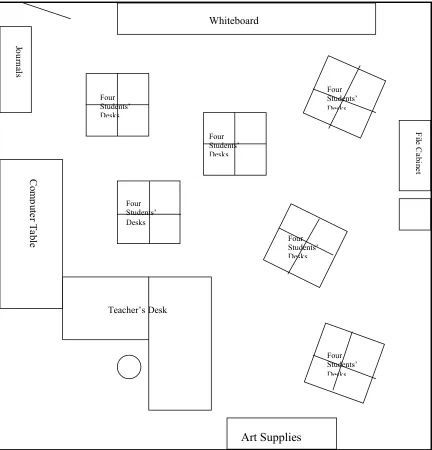
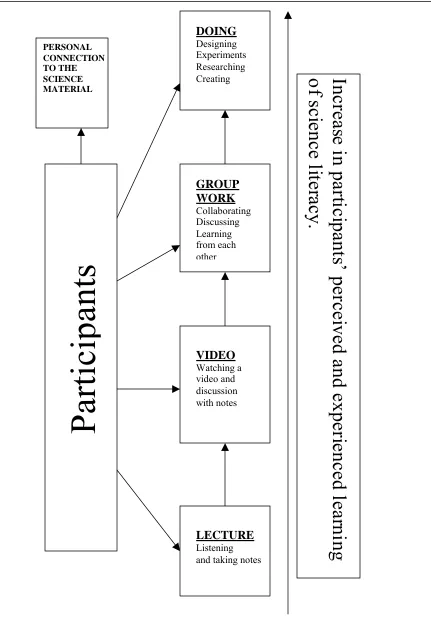
1 Ms. Steim’s Classroom ...61 2 Increase in participants’ perceived and
1
INTRODUCTION
Students often judge their academic ability and worth as individuals by the
evaluations they receive from their teachers (National Research Council [NRC], 2000).
Teacher biases and attitudes affect student learning, interactions among peers, and
self-perceptions (NRC, 2000). These effects are among the factors that contribute to the
alarming achievement gaps that exist between boys and girls and between white and
non-white students in the areas of math and science (NRC, 2000). According to the National
Assessment of Educational Progress (2000),
Males showed higher composite average scale scores in science than females at grades 4 and 8. The average scale score for males in fourth grade was 153.3, while females scored 147. The average scale score for eighth-grade boys was 154 while females scored 147. (p. 15)
All students are entitled to an opportunity to attain equity in science by being provided
with equal opportunities, resources, and outcomes.
Of the myriad performance standards required in the science classroom, the
primary premise for inquiry-based science is to promote students’ motivation for science,
not just in the classroom, but also as an area of interest and enjoyment outside academic
settings. When students enjoy learning about science in their science classes, they will
most likely engage in the tasks at hand and try to persevere in behaviors that should
Most science teachers advocate that all students should have fair and equal
opportunities to attain high levels of scientific literacy (Barton, 2000). Most often, the
challenge for science teachers is finding a way to help all students feel connected to
science. By connecting curricula to issues that interest students or affect them directly,
students can see that science relates to their lives and will be relevant to them outside the
classroom and after the class has finished.
Incorporating investigations, technology, and collaborative group activities is
believed to foster interest and motivation in addition to supporting and enhancing
learning.
The primary goal of a pluralistic curriculum process is to present a truthful and meaningful rendition of the whole human experience. This is not a matter of ethnic quotas in the curriculum for "balance"; it is purely and simply a question of validity. Ultimately, if the curriculum is centered in truth, it will be pluralistic, for the simple fact is that human culture is the product of the struggles of all
humanity, not the possession of a single racial or ethnic group (Hilliard, 1989, p. 21).
Science literacy has become the cornerstone by which science education has
restructured and strengthened its foundation in the educational community. According to
the American Association for the Advancement of Science (AAAS), science literacy
includes understanding key concepts, principles and ways of thinking drawn from the
natural and social sciences, mathematics and technology. Science literacy also implies
being familiar with some of the ways in which the science endeavor connects to other
human endeavors such as literature, history, the arts, work and governance (AAAS,
1997).
To be effective in our society, science literacy should be useful in everyday ways
Science literacy should help citizens participate intelligently in making social and
political decisions on matters involving science and technology (AAAS, 1997).
“Knowledge of science should, like great literature, contribute to the ability and
inclination of people to ponder, on occasion, the enduring questions of human meaning
our origin, place in the universe and significance” (Hirsch, 1988, p.35). To be
scientifically literate is to possess, at least to a degree, some of the values, attitudes and
skills characteristic of science. The National Center for Educational Statistics (1993),
states that, science literacy consists of a respect for the use of evidence and logical
reasoning in making arguments; computational skills, including the ability to make
certain mental calculations rapidly and accurately; communication skills, including the
ability to express basic ideas; and critical-response skills that enable people to judge
carefully public assertions, especially those that invoke the mantle of science.
Self-perceptions are an essential component of a student’s academic achievement
and success. Self-perceptions also play an important role in science and math
achievement, especially for girls. Research shows that self-esteem and academic
achievement among girls begin to decline during middle school (Backes, 1994). Girls
often exhibit a loss of self-confidence by age 12 (Orenstein, 1994). As a result, many
girls underachieve in science and math simply because they choose to participate in
activities in which success is almost assured. Attitudes also contribute to the
underachievement of girls in science and math. “Although middle school girls take more
high-ability courses than boys and make comparable or higher grades, their attitudes
toward science and math are less positive, and they are less likely to participate in related
Unfortunately, since research shows that social attitudes tend to become fixed
during middle school and early in high school, girls who develop negative attitudes
toward science and math during this period of development are unlikely to acquire the
academic background necessary for careers in science, math, or engineering. In essence,
girls’ and boys’ abilities are the same; their self-perceptions and attitudes are different.
Interestingly, self-efficacy researchers have focused nearly exclusively on the
academic areas of language arts and mathematics, and they have paid scant attention to
the critical area of science, particularly at academic levels at which these sorts of
self-beliefs begin to take root. This may be due to the priority placed on language arts and
mathematics achievement and to the more clear-cut, criteria-based measures available in
mathematics. However, this is an unfortunate omission. Science courses hold a prominent
place in the academic curriculum, and academic success in these courses is especially
imperative in this age of rapid scientific and technological progress. Moreover, it is at the
middle school level that academic self-beliefs become more pronounced and gender
differences begin to appear.
Purpose of the Study
The purpose of the present study was to investigate African American
eighth-grade female students’ perceptions and experiences as learners of science literacy.
Framed by the constructivist theory and social learning theory, this investigation was
guided and conceptualized within the framework of the literature on Ancient African
females in science, African American female middle school students, science
achievement, science literacy, self-concepts, student perceptions, gender differences, and
and experiences as learners affected their learning of science literacy. Through a case
study approach, data collection from participant interviews, participant questionnaires,
researcher observation and field notes were employed. This study presented a view of
African American female eighth-grade students and served as an instrument to amplify
their voices and add invaluable vision into African American female eighth-grade
students’ perceptions and experiences as learners of science literacy.
Rationale of the Study
The information gathered through this inquiry provides a wealth of information
that adds to the knowledge and literature in the field of science education. This
investigation accentuates the budding research that whispers the voices of eighth-grade
African American female students’ perceptions and experiences as learners of science
literacy. This information is extremely worthwhile and is a crucial development in
understanding the delicate balances of the classroom environment including the teacher
and student relationship; the student and student relationship; and the student and content
relationship.
This study was limited to eighth-grade African American female students because
research reported the achievement gap existing between minority and majority students
and gender. Since I am an African American female science educator, and mother of two
African American daughters and one son, this issue has a great deal of importance to me.
On a daily basis in my classroom, I see science achievement by female students ranging
the spectral extremes from high to low, but the majority of females exhibit greater
achievement than their male counterparts do. Although there has been research conducted
urban elementary science classrooms (Osborne & Calabrese-Barton, 2001), there is little
about African American female eighth-grade students’ perceptions and experiences as
learners of science literacy. This research study investigated eighth-grade African
American female students’ perceptions and experiences as learners of science literacy in
an urban public middle school classroom located in an upper middle socioeconomic
community that services a lower to upper socioeconomic African American population.
Theoretical Framework
The theoretical framework is an integral aspect of an investigation, especially in
qualitative research. Each type of qualitative research has its own theoretical perspective,
its own approach to the gathering of data, the types of data that constitute viable areas
investigation, and the appropriate types of analyses for these data. Social Constructivist
Theory and Social Learning Theory were used as frameworks and lenses that guided this
inquiry. The research conducted in this study recorded the perceptions and experiences of
African American eight grade females as learners of science literacy. The concept of
when learning occurs was crucial when the study was conducted. In the broadest sense,
“learning occurs when experience causes a relatively permanent change in an individual’s
knowledge and/or behavior” (Maurer, 2000b, p.52). Over the years, many theories have
been developed in an attempt to understand and explain human learning, including
behaviorism, information processing, constructivism and generative learning. “When the
theories and the strategies derived from them are combined, they have greater potential
for improving students learning” (McInerney & McInerney, 1998, p. 65).
Albert Bandura’s Social Learning Theory (1986) seeks to expand the traditional
events, personal factors, such as thinking and motivation, and behavior interact, each
influencing the others in the process of learning (Maurer, 2000b). One of the central
principles of the Social Learning Theory is observational learning.
According to Bandura (1986), human learning occurs in a social setting and is a
function of observing the behavior, attitudes and emotional reactions of others. Other
researchers support Bandura’s beliefs of human learning, “Observational learning is
governed by four elements: attention, retention, reproduction and motivation” (Cobb,
1998, p 5). Attention and motivation are affected by one’s self-efficacy including the
beliefs about one’s own abilities in certain situations (Berk, 1997 & Woolfolk, 1995).
Self-efficacy expectations can include views of task difficulty, verbal persuasion,
vicarious experiences, and beliefs about the perceptions of others, past performance,
attribution and abilities (Maurer, 2000b).
The constructivist view of learning emphasizes that learners are active and create
or construct their own knowledge through acting on and interacting with the world. Jean
Piaget (1984) influenced this view of learning by focusing attention on mental processes
and their role in behavior. According to Piaget, cognitive development is dependent upon
maturation and the individual’s exploration of the world. “Real learning occurs when old
information is restructured or replaced by new information or experiences” (Piaget,
1984). Learning occurs almost independently of other individuals, social practices and
the cultural environment. Lev Vygotsky, a Russian psychologist and contemporary of
Piaget has, challenged this view by proposing a theory that viewed learning as occurring
through the individual’s interaction with the socio-cultural environment and it is this
the Social Constructivist Theory because it considers the social context in which learning
occurs and emphasizes the importance of social interaction in cognitive development.
“Vygotsky believed that all higher cognitive functions have their origins in the social
interaction with more competent partners, that is, people learn from and with other
people” (Woolfolk, 1995, p. 67).
Guiding Research Questions
Two research questions guided this study:
1. What are African American eighth-grade female students’ perceptions and
experiences as learners of science literacy?
2. In what ways do the perceptions and experiences of African American
eighth-grade female students influence their learning of science literacy?
Methodological Overview
This study addressed the guiding research questions through use of a naturalistic
qualitative design. Individual case studies were used by applying a variety of data
sources. These included interviews, observations, field notes, and participants’ journal
entries and work samples. I used purposeful sampling (Merriam, 1998) and researched
four African American eighth-grade female students who were selected as participants
for this study. Data collection and analysis occurred from February to August in a single
year. Data sources included an open-ended questionnaire, two in-depth interviews with
each participant (Seidman, 1991); classroom observations, participant reflective journals,
student artifacts, and a researcher’s log.
Data were analyzed through the constant comparative method (Glaser & Strauss,
1998) revealed the findings. Trustworthiness and rigor were established through
adherence to guidelines for establishing credibility, confirmability, dependability, and
transferability (Lincoln & Guba, 1985).
Human as Instrument
The human construction of knowledge is under constant scrutiny. To gauge the
generation of knowledge in those other than ourselves includes the consideration of
unfamiliar and differing world-views. “Knowledge of the other is generated by research
that takes a category of person, such as student, and seeks to describe, analyze and
interpret the world-view of a sample of people who represent that category” (McCleod,
2001, p. 34). This form of knowledge is highly useful. All individuals are socialized into
stereotyped views of many groups and may have little access to the groups to explore
feelings and perceptions of these groups, and occasionally, alternate epistemological
universes. Additionally, there may be barriers of class, gender, ethnicity, race, sexuality,
and power that inhibit gaining a rich understanding of the world of others. Qualitative
research; therefore, gives these groups of individuals a “voice,” and thus potentially
empowers them.
Qualitative research involves systematic inquiry that is designed to collect,
analyze, and interpret data. The researcher is the instrument in qualitative inquiry.
Qualitative research, according to Lincoln and Guba (1985), is characterized by the fact
that the researcher constructs the reality that he or she sees. Along with this idea is the
notion that each person involved in the inquiry, as either participant or subject, constructs
epistemological foundations of qualitative research are based on values and value
judgments, not facts.
In a common view held in the field of qualitative research, qualitative researchers
claim that the researcher's values guide and shape the research conclusions because the
researcher is busy constructing the reality of the inquiry. At the same time, the researcher
has to be sensitive to the realities created by others involved and the consequent changes
and differences in values. All findings in a qualitative study, and; therefore, all "truth"
claims, are socially negotiated.
In conducting this study, I was engaged as a research instrument. I had to identify
my biases and my perceptions about African American eighth-grade female students’
perceptions and experiences as learners of science literacy. I had to establish my belief
system that my science colleagues were expert educators, and each female student was
receptive to the instruction. The participants were not my students, but the students of my
colleagues. My colleagues were graciously allowing me a view into their classroom and
their teaching practices. In my career as an educator, I have been an advocate of the
African American students, the education of African American students, and science
literacy.
This study is important to me because of my concern of the academic
achievement of African American students where science achievement is documented as
falling below the proficient level and where female science achievement falls behind their
male counterparts. The perceptions of student achievements are well documented from
the teacher perspectives, but the students’ perceptions of themselves as learners of
greater responsibility for their own learning, they need to hear their voices resonate
through their lessons and through their achievements. As an educator of African
American students, I am interested if eighth-grade African American female students’
perceptions and experiences as learners of science literacy influence their learning of
science literacy.
Students’ lives and experiences have become more integral to classroom practice
since the constructivist paradigm in science education started to gain supporters in the
1980’s. During the last fifteen years constructivism in general and radical constructivism
in particular have been advocated as an epistemological and pedagogical framework
useful for thinking through and using the experiences of students as means for instruction
in science. “Advocates of this framework take the position that knowledge is constructed
and legitimated whenever it makes sense to an individual in a particular experiential
context” (Eisenhart, Finkel & Marion, 1996, p. 112). Here, the emphasis in learning is not
on the correspondence with an external authority but on the construction by the learner of
schemes, which are coherent and useful to him or her.
The purpose of this study was to explore the perceptions and experiences of
eighth-grade African American female students as learners and to investigate if these
perceptions and experiences influenced their learning of science literacy. Science
education, based on conceptual change theory reports Stepans (1995), requires
assessments of what knowledge students bring to instruction. However, there is little
research that supports the perceptions and experiences African American children bring
Science education can no longer ignore the experiences brought to the science
classroom by others. This investigation was able to determine what scientific knowledge
and skills do African American eighth-grade female students use in their daily lives, and
how this knowledge is associated with what the students have already been exposed to in
previous school experiences. This investigation possibly provided a window lighting how
the cultural assumptions, frames of reference, perspectives, and biases within a discipline
influence the ways in which others culturally construct knowledge. The goal of this study
was to observe and record the sense-making African American female eighth-grade
students bring into a science learning situation and how this knowledge informs science
literacy.
Assumptions
My assumptions as I developed and implemented this study involved my
relationship with the participants and their involvement in this study’s progress. I
assumed that the participants were chosen through purposeful sampling would be
cooperative, open, and honest in their forthrightness and their willingness to provide
information necessary to gain knowledge about various aspects of their personal and
classroom identities. I assumed as an African American female educator relating to
African American female eighth-grade students, there would be a comfortable and
welcoming interaction between us. These assumptions included the ideas that the
participants’ belief structures would inform their perceptions, knowledge, and learning
practices.
My own lens and biases were also instrumental in this investigation. I would use
female eighth-grade students prior knowledge and the constructs the students created in
their learning and achievement in science. Making meaning involved situating encounters
with the world in the appropriate cultural contexts. Culture assigned meanings to things
in different settings on particular occasions. “Although meanings are in the mind, the
meanings have their origins and their significance in the culture in which they are
created” (Bruner, 1996, p. 28).
The notion of culture, as related to science, concerns language, attitudes, beliefs,
and values that predicate how people act, judge, and solve problems, but social and
cultural factors influence science (Lederman & Abd-el-Khalick, 1998). Children have
constructed views about topics of science from a young age and prior to formal learning
of science. As an African American educator of African American students; a science
educator; an advocate for the academic excellence of African American students,
constructivist learning, and a mother of three African American children, I examined
these constructed views in my classroom and in my home. My attempt in this study was
to acknowledge my assumptions and biases, and that I entered this investigation the sum
of my beliefs, perceptions, experiences, life history, and desires, as did the participants.
Limitations
The limitations in this study were breaking through the guardedness of 12 to 13
year old African American females to get to their true thoughts in response to my
interviews and questionnaires. The participants were not my students, so I attempted to
establish a rapport to collect truthful data. Much of the data that were collected and used
for this study involved student interviews and student questionnaires. The researcher’s
this study were volunteer African American females and the researcher was an African
American female. Although this study provided a glimpse into the instructional practice
of another teacher’s classroom, the intent was to give a voice to the African American
eighth-grade female students who had been quieted through the maelstrom of reform,
curriculum revisions, and standardized testing.
Definitions of Terms
Science Literacy
The National Science Education Standards (1996) offered the following definition
for scientific literacy to be used by both researchers and practitioners: “Scientific literacy
is the knowledge and understanding of scientific concepts and processes required for
personal decision making, participation in civic and cultural affairs, and economic
productivity” (NSES, p. 67). This means that a scientifically literate person can ask for,
find, or determine answers to questions derived from curiosity about everyday
experiences. A scientifically literate person is able to:
1. Describe, explain, and predict natural phenomena.
2. Read with understanding articles about science in the popular press. 3. Engage in social conversation about the validity of the conclusions of
these articles.
4. Identify scientific issues underlying national and local decisions. 5. Express positions on current issues that are scientifically and
technologically informed.
6. Evaluate the quality of scientific information on the basis of its source and the methods used to generate it.
7. Pose and evaluate arguments based on evidence and apply conclusions from such arguments appropriately. (1996, p. 68)
In addition, the goals of science should include developing the ability to inquire
and gain new knowledge through inquiry. The National Science Education Standards
(NSES) identified seven abilities students need in order to inquire:
2. Design and conduct scientific investigations.
3. Use technology and mathematics to improve investigations and communications.
4. Formulate and analyze alternative explanations and models. 5. Recognize and analyze alternative explanations and models. 6. Communicate and defend a scientific argument.
7. Develop understandings about scientific inquiry. (NSES, 1996, p. 70) The American Association for the Advancement of Science (AAAS) advocates
that, “The goal of science instruction is the achievement of scientific literacy” (AAAS,
1997, p.78). In science the instruction is often designed to develop the skills of inquiry or
understanding the inquiry process. Literacy instruction has many goals but a major goal is
enhancing the student’s comprehension of the content he or she is reading, writing,
listening to, speaking, or viewing. The challenge of classrooms today is to bring the
supportive skills from literacy and inquiry science together in a truly integrated way to
support the goal of learning science content. These classrooms would use an integrated
approach that effectively combines learning from text, discussions, and encounters with
real world laboratory investigations, field trips, and classroom projects.
Language of Science
“Science education reform efforts around the world are focusing on teaching and
assessing science learning with emphasis on inquiry where the learners construct their
own knowledge” (NCERT, 2000, p.45). This concept of knowledge construction, often
called constructivism, has revolutionized teaching and learning of mathematics and
science. Glasersfeld (1992) emphasizes that the foundation of any learning process is
language and the meaning different people assign to objects, events, and experiences.
Mental abstractions of sensory materials construct concepts.
Bloom (2001) further explains how this process of inquiry and knowledge
distinctly apart from day-to-day life discourses and may even be categorized as a
discourse in a “new” language – the language of science” (Lemke, 1990). “Language of
science is like an “Auntie-Tongue” – the language of the elite” (Dasgupta, 1993, p.82).
“These discourses influence the inscriptions (written descriptions) of both the learner
(student) and the learned (teacher)” (Arora, 1997, p.75). Ultimately, these discourses and
inscriptions establish the assessment and evaluation practices and their results. By
recording and analyzing the above described experiences, educators and researchers are
able to shed more light on the complex process of learning and teaching and hopefully be
able to help ourselves and others in becoming better learners and teachers of science.
Self-Efficacy
Social learning theorists define self-efficacy as a sense of confidence regarding
the performance of specific tasks. Bandura (1986, p. 391) defines “self-efficacy” as
people’s judgments of their capabilities to organize and execute courses of action
required to attain designated types of performances. Self-efficacy is not concerned with a
person’s skills but with the judgments the person employs when exhibiting the skills he
or she possesses.
Self-efficacy influences aspects of behavior that are important to learning. “Some
behavioral learning aspects are the choice of activities that a student makes, the effort put
forth and persistence in accomplishing a task” (Bandura, 1977, p.322). Bandura theorizes
that individuals develop general anticipation regarding cause and effect based upon
experience, and that individuals develop particular beliefs about their ability to cope with
beliefs about learning, it would be logical to predict that children with high academic
self-efficacy would be likely to demonstrate greater success.
Bandura, in his social cognitive theory (1986), argues that self-referent thought
mediates knowledge and action and is consistent with others who argue that an
individual’s beliefs are a “filter through which new phenomena are interpreted and
subsequent behavior mediated” (Pajares, 1996, p. 544). Therefore, self-efficacy beliefs
can determine if learning environments are perceived positively or negatively.
Middle school students have to manage changes in biological, educational, and
social roles. Lorsbach and Jinks (1998) record Bandura stating that, adolescents must
manage not only pervasive pubertal changes, but difficult educational transitions as well.
The transition to middle level schools involves major environmental change that taxes
personal efficacy. Adolescents move from a personalized school environment of familiar
peers to an impersonal, departmentalized one with curricular tracking into college
preparatory, general, or vocational paths.
Under these new social structural arrangements, they have to reestablish their
sense of efficacy, social connectedness, and status within an enlarged heterogeneous
network of new peers and multiple teachers in rotating class sessions. “During the middle
school adaptational period, young adolescents sense some loss of personal control,
become less confident in themselves, are more sensitive to social evaluation, and suffer
some decline in self-motivation” (Eccles & Midgely, 1989, p.234).
Students’ Perceptions
Students' perceptions of their educational experiences generally influence their
success in a given subject area is generally assumed to lead a student to continue
persisting in that area. However, researchers point out that, students' beliefs about the
reasons for their success will determine continued success (Weiner, 1985). Students'
attributions for failure are also important influences on motivation.
When students have a history of failure in school, it is particularly difficult for
them to sustain the motivation to keep trying. Students who believe that their poor
performance is caused by factors out of their control are unlikely to see any reason to
hope for an improvement. “If students attribute their poor performance to a lack of
important skills or to poor study habits, they are more likely to persist in the future”
(Weiner, 1985, p.187).
Bandura (1986) has long argued that competence beliefs best predict achievement
outcomes when the beliefs assessed carefully correspond to the outcomes with which
they are compared. Findings regarding the strong competence beliefs of African
American students have resulted primarily from studies in which the beliefs assessed or
self-concept of ability did not carefully match the achievement outcomes. When the
beliefs assessed closely correspond to the outcomes in a study, results can differ.
Pajares and Kranzler (1995) found that the mathematics self-efficacy of African
American students was lower than that of their White peers, and Pajares and Johnson
(1996) found that the writing self-efficacy of Hispanic high school students was lower
than that of non-Hispanic, White students. In each case, minority students reported
positive mathematics self-concepts. Pajares (1997) has suggested that the assessment of
beliefs at differing levels of specificity might help explain the relationship between
to other motivation constructs, and whether the origins of these beliefs differ for minority
children and across socioeconomic levels. Graham (1994) acknowledged that
self-efficacy is an important component of academic motivation but noted that it has been too
sparsely examined in studies of minority students.
Significance of Study
Investigations of the perceptions and experiences that eighth-grade African
American female students have about their learning and if this influences their learning of
science literacy is negligibly represented in the vast research on students and their science
literacy acumen. The continuing widening of the achievement gap in science literacy
demonstrates the need for further study in this area. The absence in the literature of the
voices of the African American students and their perceptions and experiences of their
learning of science literacy resonate the need to garner clearer understanding about this.
This study may employ the voices of the African American eighth-grade female students
to echo poignantly the importance and the dire necessity of incorporating the student’s
20
REVIEW OF THE LITERATURE
The purpose of my study was to investigate African American eighth-grade
female students’ perceptions and experiences as learners of science. My investigation was
guided by two research questions:
1. What are African American eighth-grade female students’ perceptions and
experiences as learners of science literacy?
2. In what ways do the perceptions and experiences of African American
eighth-grade female students influence their learning of science literacy.
To prepare myself for the investigation I conducted, I reviewed the literature
focusing on three specific areas.
The first area of investigation was student perceptions of themselves as learners.
Specifically, I looked for published studies that related students’ perceptions of
themselves as learners with their success or failure in school. In the first part of this
chapter, I present an overall discussion of students’ perceptions of themselves as learners
and then two more focused discussions of research describing (a) students’ perceptions of
themselves as learners of science and (b) African American students’ perceptions of
themselves as learners. I focused in these particular areas because my participants would
be African American students in science classes.
The second area of investigation was student achievement and science literacy.
there would be a relationship between student achievement in science and science
literacy. Additionally, I intended to assess my participants’ science literacy through my
interviews with them.
The third and final area of investigation involved a review of Social Cognitive
Theory (Bandura, 1986, 1989), with a focus on the influences of self-efficacy on
learning. As I discussed in Chapter 1, Social Cognitive Theory is a salient element of my
theoretical framework with regard to the study of learning. Prior to interviewing the
participants in my study, I expected that they would have a high sense of self-efficacy
because they were successful in their science classes.
Students’ Perceptions of Themselves as Learners
Perception is influenced by one’s mental state, experience, knowledge,
motivations, and many other factors (Slavin, 1988). Research on students’ thought
processes promises to enhance understanding of teaching and its outcomes by providing
information about the perception of students as learners (Whitrock, 1986). Children’s
perceptions of the causes of their academic successes or failures develop from a relatively
undifferentiated state to more analytic conception of the relations among ability, effort,
and achievement.
For example, Whitrock (1986) states that at age six, children do not separate
ability, effort, and achievement, but at about seven to eight years of age, children
distinguish these three concepts from one another and causally relate effort, but not
ability, to achievement. Whitrock (1986) continues that at about ages nine to 11, ability
also becomes a cause of achievement, but these children still believe that people who
children realize that effort and ability are relatively independent of each other and are
causally related to achievement (Whitrock, 1986). Students’ perceptions about their own
abilities to perform a task are believed to affect their learning (Debacker & Nelson,
2000). Eccles and Wigfield (1997) indicate that students’ self-perceptions of their
academic ability decline as students make the transition from elementary to junior high
school.
Students’ attitudes toward school learning and achievement become increasingly
negative as they progress through the school system (Boggiano & Pittman, 1992). As
students progress through the grades, the school environment becomes more impersonal,
more formal, more evaluative, and more competitive. The educational process shifts from
the process of learning to an evaluation of products or outcomes (Brookover, Beady,
Flood, Schweitter, & Weisenbaker, 1979).
Students’ Perceptions of Themselves as Learners of Science
Students’ perceptions of their experience of school science have rarely been
investigated (Osborne & Collins, 2001). Of the studies that have been conducted, many
have used questionnaires to collect student information. A student’s self concept of his or
her ability to perform in science is positively correlated with achievement (Oliver &
Simpson, 1988). Osborne and Collins (2001) report that because attitude is an unstable
construct that should be evaluated in the context of the object of inquiry, relatively few
studies of pupils’ attitudes to science have adopted a qualitative approach seeking to
explore in some depth pupils’ view and their rationale. Osborne and Collins (2001) also
believe that adopting a qualitative, interview-based approach to explore in some depth the
and quality. These findings are important because they reveal what experiences engage
and interest students, and they also offer an explanation of the root causes of successes
and failures.
If educators are going to engage students in learning science, educators must
attach as much importance to student beliefs and how different teaching practices affect
those beliefs as they do to the content.
Educators must recognize that when materials are presented in formal, abstract ways, using unnecessary technical jargon, and when the assigned homework and exam problems are correspondingly abstract and can be completed by following memorized recipes, we are teaching more than just content. (Wieman, 2005, p. 101)
To a student who does not share a teacher’s experience and expert insight, their
perceptions are reinforced that science is a subject that is abstract and disconnected from
the real world, that problem solving is basically rote memorization, and that there is no
use for solving a science problem other than to pass a course.
Consideration of students' perceptions and experiences can help teachers create
literacy learning environments that are more student-focused and engaging to the learner.
Certainly, a better understanding of the type, extent, and direction of teacher-student
perception discrepancies can provide content teachers with valuable insights into their
students’ views of the literacy learning process and sensitize teachers to their needs.
Without assigning blame to either side of the teacher-student perception dichotomy, we
must accept that discrepancies exist (Wieman, 2005).
In a recent study using the Colorado Learning Attitudes about Science Survey,
Wieman (2005) found that students who believed strongly in personal responsibility for
learning, learning for understanding, and the tentativeness of scientific knowledge were
those taking responsibility for their own learning and those with a preference for learning
for understanding, have a view that scientific knowledge changes over time in the light of
new evidence. At the other extreme students with low levels of belief were characterized
as expecting others to take responsibility for their learning, preferring to memorize facts
when learning and regarding scientific ideas as fixed and unchanging (Wieman, 2005).
African American Students’ Perceptions and Learning
In a narrative review of published studies of African American students and their
achievement motivation, Graham (1994) found little support for the general hypothesis
that African American students should have lower expectancies for success or lower
self-concepts of ability because of their poor school achievement or general economic
disadvantage. In terms of expectancy for success, Graham reviewed 14 experimental
studies that used a common format of presenting a task to African American and White
children and then asking them to predict their likelihood of success. In addition, some of
the studies involved asking the students to make judgments of their expectancy for
success after being told they had succeeded or failed on the exercise irrespective of their
actual performance. In 12 out of the 14 studies, African American students had higher
expectations for success than White children. Graham also reviewed 18 studies that
examined self-concepts of ability. Again, she found very little evidence for the idea that
African American students have lower self-concepts of ability. Only two of the 18 studies
reported group differences in favor of White children, seven favored African American
children, and the remaining nine had mixed or no significant differences between the two
African Americans in terms of the adaptive nature of maintaining optimistic expectancies
and self-concept beliefs in the face of relative social and economic disadvantage.
Some researchers found that self-perceptions of ability or efficacy are linked to
academic achievement in the same fashion as moderate positive correlations for
minorities and other groups. However, Graham (1994) noted that in many of the studies
she reviewed, the actual performance measures, such as grades or standardized
achievement tests, showed that African Americans had lower levels of performance yet
they had higher self-perceptions of ability. This would suggest that the relation between
self-perceptions of ability and actual achievement is not as strong in African American
students as it is in White students. There have been many reasons proposed to explain this
weaker relation.
For example, some researchers such as Fordham and Ogbu (1986) and Steele
(1988, 1992) have suggested that the motivational dynamics are different for Black
children, who may devalue academic achievement, a task-value belief, because of their
repeated school failures. In this case, they may have relatively high self-perceptions of
competence or relatively low perceptions, but perceptions of competence are not linked
as closely to actual achievement as they are in White children. Other reasons include the
use of different social comparison groups. For example, African Americans compare
themselves to other African Americans rather than the more advantaged White group,
thereby maintaining high self-perceptions (Rosenberg & Simmons, 1971). They may also
attribute their lower performance to external factors such as prejudice, thereby
Student Achievement and Science Literacy
Gender and Science Achievement
In most research studies when a gender difference is found, the difference is that
female participants have lower self-perceptions of ability than male participants
(Wigfield, Eccles, & Pintrich, 1996). This is particularly surprising because many studies
that have involved actual achievement or performance (e.g., Linn & Hyde, 1989) show
that there are few gender differences and that in many cases, female students actually
outperform male students. Although this discrepancy between actual achievement and
perceptions of ability may be due to a response bias, with boys being more
self-congratulatory and girls being more modest (Eccles, Adler, & Meece, 1984; Wigfield et
al.), the difference appears often enough to be taken seriously.
Eccles and Wigfield (1997) and their colleagues have consistently found gender
differences in self-perceptions of ability. Boys have higher self-perceptions in math and
sports, whereas girls have higher self-perceptions of their ability in English (Eccles,
1983; Eccles et al., 1989; Wigfield et al., 1996). Marsh (1989) also reports gender
differences in his data on self-concept. Although he finds that the gender differences only
account for 1% of the variance in concept, he finds that boys have higher
self-concept scores for their self-ratings of physical appearance, physical ability, and math,
whereas girls have higher self-ratings for verbal and reading tasks and general school
self-concept (Wigfield et al., 1996).
Phillips and Zimmerman (1990) also found that girls had lower perceptions of
their competence than boys had of theirs, although the gender difference did not emerge
found that gender differences in ability perceptions do emerge at earlier grades. For
example, Entwisle and Baker (1983) and Frey and Ruble (1987) found that even in early
elementary age children, girls were more likely to have lower self-perceptions of ability
than boys. Clearly, there is a need for more research into the nature of these differences
as well as more programs to change school and classroom practices that may give rise to
these gender differences.
Science Literacy and Science Achievement
U.S. students in grades K-12 perform below average in both science and
mathematics compared with students in other developed nations by the time they reach
high school (Third International Mathematics and Science Study, 1996). Contemporary
high school graduates know less science than did their counterparts 30 years ago (The
Nation’s Report Card: Science, 2000). The levels of achievement among members of
some ethnic minorities are even more disturbing. For example, only 3% of
African-American students achieve at or above proficiency compared with an already
unacceptably low 23% of White students.
Many teachers are uncomfortable teaching science because of the inadequacy of
their own science literacy. The result is a populace that is poorly prepared to understand
and participate in an increasingly science- and technology-based society. This hurts the
United States because its prosperity, security, and health depend on the educational
achievements of the general population, not just those in science and engineering.
“Science continues to fall out of favor with the public, and this creates a potential disaster
The major purpose of standardized testing in science today is to determine the
level of scientific literacy in the United States (NAEP, 1996; NRC, 1996). The 21st
century has arrived, yet many U.S. citizens lack even the most rudimentary knowledge
about scientific concepts that were established in the nineteenth century (NSF, 1996).
Carl Sagan (1995) very aptly described why scientific literacy, "a candle in the dark," is
essential in modern society.
For much of our human history, we were so fearful of the outside world, with its unpredictable dangers, that we gladly embraced anything that promised to soften or explain away the terror. Science is an attempt, largely successful, to understand the world, to get a grip on things, to get hold of ourselves, to steer a safe course. Microbiology and meteorology now explain what only a few centuries ago was considered sufficient cause to burn women, accused as witches, to death. (Sagan, 1995, p. 26)
To assess scientific literacy in the United States, international and national science
assessments have been conducted. These assessments have consistently ranked the
United States low in comparison to those of other developed countries (Medrich &
Griffith, 1992). For example, the Third International Mathematics and Science Study
(TIMMS) ranked the performance of U.S. eighth-grade students 17th out of the 41
countries studied in science (TIMMS, 1996). The TIMMS was repeated four years later
as The Third International Mathematics and Science Study Repeat (TIMMS-R). The
TIMMS-R found no change in eighth-grade science achievement in the United States
(National Center for Education Statistics, 2000). National science tests that were
conducted in 1996 by National Assessment of Educational Progress (NAEP) indicated
that 43% of high school seniors did not meet basic standards of science knowledge as
adopted by the National Assessment Governing Board (Bourque, Champagne &
Chrissman, 1997). Thus, international and national standardized tests in science have
The Language of Science
With a constructivist paradigm dominating the field, language is being explored
for its role in facilitating and assessing learning and in understanding complex
interactions related to science teaching and learning (Kamen, 1997). Science education
standards at national and state levels have an increased emphasis on meaningful
discussions between students. The National Science Education Standards (1996) includes
a statement that teachers should orchestrate discourse among students about scientific
ideas.
Discourse is a highly complex phenomenon that requires multiple perspectives to
understand. Jay Lemke (1995c) discusses the variety of approaches that can be involved
in trying to understand language.
To study the role of language in science learning, researchers need access to a variety of tools and conceptual perspectives on language itself. Language can be conceptualized as a purely formal system of syntactic and semantic units, or as a system of resources for making meaning in context, an aspect of human social behavior, a communicative code, a mediational means in activity, a form of cultural capital, a tool for social action, a semiotic system, etc. We can study it analytically,
developmentally, historically, interactively, socially, psychologically, culturally, comparatively, dynamically, politically, philosophically, educationally, and even biologically and physically. Each of these perspectives produces tools and research methods that may be of use in analyzing and interpreting particular kinds of data on science learning. (Lemke, 1995, p. 2)
The role that language plays in the science classroom is not simple, and there are
numerous ways in which the interaction between language and learning is important to
the classroom teacher. Teachers encourage children to use language for both learning and
assessment. Authentic assessment advocates make claims that these language-based
assessment strategies help to give teachers a more complete picture of what children
at a disadvantage (Rudner, 1993), and there is a need to allow children to find a variety of
ways to express their thoughts. (Hein & Price, 1994)
In addition to exploring how language facilitates learning, it is important to
understand ways in which language may be a barrier to understanding. Osborne and
Freyberg (1985) discuss problems created by the different meanings that children and
adults may have for specific words. Science teachers must be very careful with their
assumptions about how students understand words. This is further complicated by the
increasing linguistic diversity in classrooms.
As children are given increasing opportunities to talk during science class, there is
a corresponding increase in focus on the importance of the role of language in science
learning and an on-going need to explore and understand it from a variety of
perspectives. The issues that surround research on language and learning are complex.
As researchers explore the role of language in science learning, it is important to
go beyond teacher-student discourse and to learn from the interactions between students.
In classrooms where science is effectively taught, important learning is often forged from verbal negotiations as well as from evidence and experience. The teacher has traditionally been the focus of research by focusing on the language of questioning and student responses. However, interest in the role of language in teaching has grown beyond teacher-directed discourse to include student discourse in small groups as well as teacher-student interactions in a wide variety of contexts." (Flick, 1995, p. 10)
Students’ Experiences and Motivation for Literacy
In a classroom in which students' voices are honored, the teacher gains access to
information about children's perspectives and subjective experiences that promotes
responsiveness to children's educational, social, affective, and physical needs (Dewey,
(2002) suggested that language is at the heart of the process of becoming literate.
Oldfather (2002) stated that participants in classroom cultures collaboratively construct
understandings about the nature of literacy, the values of literate activity, and ways that
individuals and groups participate together as the curriculum is enacted. Reciprocally,
Oldfather (2002) continued, through participation in these interactions, individual
students construct a sense of self as readers, writers, and thinkers within the culture of
each particular classroom. These constructions are salient to students' development of
motivation for literacy learning (Johnston, 1992). Oldfather (2002) suggested that if
literacy is a social accomplishment, the roots of motivation for literate activity are deeply
embedded in the socio-cultural contexts of literacy learning, and the trans-active
processes occurring in those particular contexts.
Oldfather (2002) goes on to say that researchers cannot assume that adult or
‘outsider’ perceptions will coincide with those of students within classroom cultures. In
fact, Le Compte and Preissle (1992) state that ethnological analysis of interpretive studies
that focus on children's experiences in school indicates that what students view as
significant in the classroom is likely to be quite different from what adults see. In
Oldfather’s (2002) research on motivation in literacy, she notes that caring for the student
is more important than that of the subject. She mentions Nel Noddings’ suggestion of
educators viewing the student as infinitely more important than the subject, at that time,
eduators will be more likely to respond to children's motivational struggles in ways that
empower and motivate them, rather than in ways that make them feel powerless and
alienated. Oldfather (2002) determined that the responsive classroom environment has
work of Belenky, Clenchy, Goldberger, & Torule in Women's Ways of Knowing (1986)
further exploring the concept of caring and nurturing in education and articulating the
process of connected teaching.
It is essential for teachers to develop an atmosphere where students feel
comfortable and respected while at the same time challenged and engaged in their own
learning. Providing a nurturing yet challenging environment will allow students to
contribute to their own knowledge in the classroom. Connected teaching is based on a
constructivist epistemological stance that all knowledge is constructed and that the
knower is an intimate part of that which is known (Belenky et al., 1986). The constructive
process of each individual learner is respected. The teacher shares the ownership of
knowing (Oldfather, 1992). This stance changes the power relations in the classroom.
Connected teachers create a caring community of learners that encourages risk taking.
Everyone in the community (including the teacher) teaches as well as learns. Connected
teachers invite students' collaboration in the construction of meaning, and they nurture
students' voices by facilitating the having of wonderful ideas (Duckworth, 1987). In such
an environment, students become more fully engaged in their learning.
Social Cognitive Theory
Social Cognitive Theory stemmed from the Social Learning Theory, which has a
rich historical background dating back to the late 1800s. Albert Bandura began
publishing his work on Social Learning Theory in the early 1960s. In 1986, Bandura
officially launched Social Cognitive Theory with his book,Social Foundations of
in the discipline of psychology, with its early foundation being laid by behavioral and
social psychologists.
Social Cognitive Theory defines human behavior as a triadic, dynamic, and
reciprocal interaction of personal factors, behavior, and the environment (Bandura, 1977,
1986, 1989). According to this theory, an individual's behavior is uniquely determined by
each of these three factors. While Social Cognitive Theory upholds the behaviorist notion
that response consequences mediate behavior, it contends that behavior is largely
regulated antecedently through cognitive processes. Therefore, response consequences of
a behavior are used to form expectations of behavioral outcomes. The ability to form
these expectations gives humans the ability to predict the outcomes of their behavior
before the behavior is performed. In addition, Social Cognitive Theory posits that most
behavior is learned vicariously. “The Social Cognitive Theory's strong emphasis on one's
cognitions suggests that the mind is an active force that constructs one's reality,
selectively encodes information, performs behavior on the basis of values and
expectations, and imposes structure on its own actions” (Jones, 1989, p.189).
Through feedback and reciprocity, a person's own reality is formed by the
interaction of the environment and one's cognitions according to Bandura. In addition,
cognitions change over time as a function of maturation and experience, ability to form
symbols. An understanding of the processes involved in one's construction of reality
enables human behavior to be understood, predicted, and changed so that learning can
begin to take place.
Self-efficacy theory grows out of Bandura's original social learning theory