Reduction of Noise by Dual-Tree Complex
Wavelet Transform Shrinkage
Manisha V Gawai , Prof. R.R.Bhambare
Department of Electronics and Telecommunication, Savitribai Phule Pune University, Sir Visveswaraya Institute of Technology, Nasik, India
Abstract
This paper presents a novel way to reduce noise introduced or exacerbated by image enhancement methods, in particular algorithms based on the random spray sampling technique, but not only. According to the nature of sprays, output images of spray based methods tend to exhibit noise with unknown statistical distribution. To avoid inappropriate assumptions on the statistical characteristics of noise, a different one is made. In fact, the non-enhanced image is considered to be either free of noise or affected by non-perceivable levels of noise. Taking advantage of the higher sensitivity of the human visual system to changes in brightness, the analysis can be limited to the luma channel of both the non-enhanced and enhanced image , the analysis is performed through the dual-tree complex wavelet transform (DTWCT). Unlike the discrete wavelet transform, the DTWCT allows for distinction of data directionality in the transform space. For each level of the transform, the standard deviation of the non-enhanced image coefficients is computed across the six orientations of the DTWCT, then it is normalized. The result is a map of the directional structures present in the non-enhanced image. Said map is then used to shrink the coefficients of the enhanced image. The shrunk coefficients and the coefficients from the non-enhanced image are then mixed according to data directionality. Finally, a noise-reduced version of the enhanced image is computed via the inverse transforms.
Keywords: Dual-tree complex wavelet transform (DTWCT), image enhancement, noise reduction, random sprays, shrinkage.
1. Introduction
The dual-tree complex wavelet transform (CWT) is a relatively recent enhancement to the discrete wavelet transform (DWT), with important additional properties: It is nearly shift invariant and directionally selective in two and higher dimensions. If we use image enhancement algorithms based on random spray sampling a specific image quality problems are raised to remove that this paper introduces a novel multi-resolution denoising method. We can apply this proposed approach for other image enhancement methods that either introduce or exacerbate noise. This work builds and expands based on a previous article by Fierro et al. [1]. Random sprays are a two-dimensional collection of points with a given spatial distribution around the origin. Sprays can be used to sample an image support in place of other techniques, and have been previously used in works such as Provenzi et al.
[2], [3] and Kolås et al. [4]. Random sprays have been partly inspired by the Human Visual System (HVS). In particular, a random spray is not dissimilar from the distribution of photo receptors in the retina, although the underlying mechanisms are vastly different. Due to the peaked nature of sprays, a common side effect of image enhancement methods that utilize spray sampling is the introduction of undesired noise in the output images. The magnitude and statistical characteristics of said noise are not known exactly because they depend on several factors such as image content, spray properties and algorithm parameters. Some of the most commonly used transforms for shrinkage based noise reduction are the Wavelet Transform (WT) [5]– [7], the Steerable Pyramid Transform [8]–[10], the Contourlet Transform [11]–[13] and the Shear let Transform [14]–[15]. With the exception of the WT, all other transforms lead to over-complete data representations. Over completeness is an important characteristic, as it is usually associated with the ability to distinguish data directionality in the transform space. We Independently of the specific transform used, the general assumption in multi-resolution shrinkage is that image data gives rise to sparse coefficients in the transform space. Thus, denoising can be achieved by shrinking those coefficients that compromise data sparsely. Such process is usually improved by an elaborate statistical analysis of the dependencies between coefficients at different scales. Yet, while effective, traditional multi-resolution methods are designed to only remove one particular type of noise (e.g. Gaussian noise). Furthermore, only the input image is assumed to be given. Due to the unknown statistical properties of the noise introduced by the use of sprays, traditional Approaches do not find the expected conditions, and thus their action becomes much.
2. Literature Review
2.1 Noise Redution Based on bivariate shrinkage functions
distribution, SAR image denoising modal based on bsf and dual-tree complex wavelet transform (DT-CWT)is constructed and reduced. Local variance estimation and wiener filter are used to estimate noise variance and noisy wavelet coefficients variance respectively, and they are used to choose an appreciated threshold to denoise SAR image. Experiment results demonstrate that PSNR and ENL values of denoised images are extremely larger than the speckle denoising algorithms based on discrete wavelet transform (DWT) and edge features have
been perfectly preserved. The SAR image is produced by coherently receiving echo. Echo overlapping inevitably produced speckle noise. Speckle is a serious obstacle of SAR image object recognition and even makes some ground features disappear. (Xiao Guochao et. al,2001) So speckle has to be removed before any interpretations. Prof. Donoho (David Donoho L., 1995) in 1995 has proposed the soft thresholding algorithm, and proved that the filtered image could be computed by nonlinear threshold of wavelet coefficients.f (x) But the soft-thresholding has two problems. One is that the real biorthogonal wavelet transform (RBWT) has a disadvantage ,lack of shift invariance. It means that a shift of the input image can produce aliasing in the reconstructed image. (NickKingsbury et al., 1997) RBWT without sub-sample can produce shift invariance with huge redundancy. Prof. Nick Kingsbury(Nick Kingsbury, 1998a; Nick Kingsbury, 1998b; Peter de Rivazet al., 2001) has developed a dual tree algorithm with a real biorthogonal wavelet basis, and an approximate shift invariance can be obtained with limited redundancy by doubling the sampling rate at each scale, which is achieved by computing two parallel sub-sampled wavelet trees respectively. (Yi Xiang et al., 2004; Yang Mengzhao et al., 2005; Yi Xiang et al., 2005; WangHongxia et al., 2005) Zhang Chunhua et al. (Zhang Chunhua etal., 2005) have used soft-thresholding and hard-thresholding based on DT-CWT to despeckle SAR images, and proved DT-CWT was better than RBWT in speckle denoising. The other problem of the soft-thresholding is that the dependences between the coefficients of two adjacent scales have been neglected. In fact they are significantly dependent, since the wavelet coefficients of child scale are derived from the parent scale. Yi Xiang et al. (Yi Xiang et al., 2005) used an interscale model to classify the coefficients into two classes: significant coefficients and insignificant coefficients. Then the former was denoised with the MAP estimator based on an intramodel, and the later was denoted as noise and set zero. But their inter scale model couldnt exactly describe the relationship of the wavelet coefficients of two adjacent scales.
WangHongxia et al. (Wang Hongxia et al., 2005) used only one threshold to judge the dependency, which was only effective on some particular conditions. Levent
Sendurand Ivan W.Selesnick (LeventSendur et al., 2002a; LeventSendur et al.,2002b; LeventSendur et al., 2002c) have analyzed the dependencies between the child and parent coefficients in detail and proposed 4 models of bivariate shrinkage functions (bsf).
2.2 Image Denoising with the Non-local Means Algorithm
At present there are a variety of methods to remove noise from digital images, such as
Gaussian filtering, Wiener filtering etc. Due to certain assumptions made about the frequency content of the image, many of these algorithms remove details from images in addition to the noise. The non-local means algorithm assumes the concept of self-similarity, instead of making the above mentioned assumptions. This concept of
self-similarity is used in the NLM algorithm to perform image denoising. This project will implement the non-local means algorithm and compare it to two other denoising
methods, Gaussian filtering and Wiener filtering. Image denoising is one of the most important concepts in computer vision. It is widely used in various image related applications, MRI analysis, 3-D object detection etc. Most digital images contain some degree of noise. The goal of image denoising is to restore the details of an image by removing unwanted noise. Theoretically, the denoised image should not contain any form of noise.
2.3 Nonlinear Wavelet Image Processing: Variational Problems, Compression, and Noise Removal Through Wavelet Shrinkage
This examines the relationship between wavelet-based image processing algorithms and variational problems. Algorithms are derived as exact or approximate minimizers of variational problems; in particular, we show that wavelet shrinkage can be considered the exact minimize of the following problem: Given an image on a square I; Both theoretical and experimental results indicate that our choice of shrinkage parameters yields uniformly better results than Donoho and Johnstones Visu Shrink procedure; an example suggests, however, that Donoho and Johnstones Sure Shrink method, which uses a different shrinkage parameter for each dyadic level, achieves lower error than our procedure.
3. Proposed System
distinguish the data orientation in transform space and DTWCT is relatively simple. The human visual system (HVS) is more sensitive to changes in the achromatic plane (brightness), than chromatic ones [15]. Hence, the proposed algorithm first converts the image in a space where the chrome is separated from the luma (such as YCbCr), and operates on the wavelet space of the luma channel. The choice to use only the luma channel does not lead to any visible color artifact. Finally the input image is considered to be either free of noise, or contaminated by non perceivable noise. If such an assumption holds, the input image contains the information needed for successful noise reduction.
Fig 1- Block diagram of proposed system
Fig 2- Luma channels of both the non enhanced and the enhanced images are transformed using the DTCWT
4. DUAL-TREE COMPLEX WAVELET
TRANSFORM (DTCWT)
The Discrete Wavelet Transform (DWT) is important one for all applications of digital image processing: from denoising of the images to pattern recognition, passing through image encoding and more. The Discrete Wavelet Transform which does not gives the analysis of data orientation because it has a phenomenon known as “checker board” pattern, and the DWT is not shift
invariant because of that reason it less useful for methods based on the computation of invariant features. To overcome the problems affected by the DWT concept of Steerable filters was introduced by Freeman and Adel son [12], this Steerable filters can be used to decompose an image into a Steerable Pyramid, SPT is the shift-invariant and as well as it has the ability to appropriately distinguish data orientations. But the SPT has the problems: the filter design can be difficult, perfect reconstruction is not possible and computational efficiency can be a concern. After that the SPT was developed by involving the use of a Hilbert pair of filters to compute the energy response, has been accomplished with the Complex Wavelet Transform Similarly to the SPT, this CWT is also efficient, since it can be computed through separable filters, but it still lacks the Perfect Reconstruction property. Therefore, Kingsbury also introduced the Dual-tree Complex Wavelet Transform (DTCWT), it has the additional characteristic of Perfect
Reconstruction at the cost of approximate shift-invariance [7].
The 2D Dual Tree Complex Wavelet Transform can be implemented using two distinct sets of separable 2D wavelet bases, the dual-tree complex wavelet transform (CWT) is a recent enhancement of the discrete wavelet transform (DWT), with important properties like it is nearly shift invariant and directionally selective in two and higher dimensions. It achieves with a redundancy factor of only 2d for d-dimensional signals, which is substantially lower than the un decimated DWT. The multidimensional (M-D) dual-tree CWT is non separable but is based on a computationally efficient, separable filter bank (FB). We use the complex number symbol C in CWT to avoid confusion with the often-used acronym CWT for the (different) continuous wavelet transform.
4.1 Wavelet Coefficients Shrinkage
The 2D Dual Tree Complex Wavelet Transform can be implemented using two distinct sets of separable 2D wavelet bases, as shown below.
ᵠ
1,1(x,y) =ᶲ
h(x)ᵠ
h(y) ,ᵠ
2;1(x; y) =ᶲ
g(x)ᵠ
g(y),ᵠ
1,2(x,y) =ᵠ
h(x)ᶲ
h(y),ᵠ
2;2(x; y) =ᵠ
g(x)ᶲ
g(y) … (1)ᵠ
1,3(x, y) =ᵠ
h(x)ᵠ
h(y)ᵠ
2,3(x, y) =ᵠ
g(x) g(y)ᵠ
3,1(x, y) =ᶲ
g(x) h(y),ᵠ
4,1(x, y) =ᶲ
h(x) g(y),ᵠ
3,2(x, y) =ᵠ
g(x)ᶲ
h(y),ᵠ
4,2(x, y)=ᵠ
h(x)ᶲ
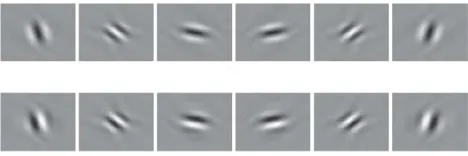
g(y) …(2)Fig 3- Quasi-Hilbert pairs wavelets used in the dual-tree complex wavelet transform.
The relationship between wavelet filters h and g is shown below
g0(n) = ho(n-1), for j=1 … (3)
go(n)= h0(n-0.5), for j>1 … (4)
where j is the decomposition level.
When combined, the bases give rise to two sets of real, two-dimensional, oriented wavelets
ᵠ
i(x, y) =1/√2(ᵠ
1,i (x; y) -ᵠ
2,i (x, y)) … (5)ᵠ
i + 3(x, y) =1/√2 (ᵠ
1,i (x,y) +ᵠ
2,i (x, y)) … (6)ᵠ
i(x,y) =1/√2 (ᵠ
3,i (x, y) +ᵠ
4,i (x, y)) … (7)ᵠ
i + 3(x,y) =1√2 (ᵠ
3,i (x,y) +ᵠ
4,i (x,y)) … (8)The most interesting characteristic of such wavelets is that they are approximately Hilbert pairs. One can thus interpret the coefficients deriving from one tree as imaginary, and obtain the desired 2D DTCWT.
4.4 RSR AND RACE
This are two image enhancement algorithm. This Section, describes the process of Random Spray Sampling, then introduces Random Spray Retinex
(RSR) and RACE (the fusion of RSR and ACE), two algorithms that utilize said sampling method.
A. Random Spray Sampling
Random Spray sampling was first introduced by Provenzi et al. Random sprays are an elaboration over the physical spatial scanning structure used by Land in his seminal work on Retinex. In his experiments, Land used a structure resembling a set of paths departing from a central point, on which he mounted a number of photo-detectors.
Land’s model gave rise to the path-wise family of Retinex algorithms, which directly transposed Land’s machinery into piece-wise linear paths used to scan the input image. A subsequent thorough mathematical analysis of Retinex allowed the model to be significantly simplified, leading, in turn, to Random Sprays and RSR.
A single point of a random spray may be generated using the following formulation, and the whole spray is obtained by reiterating the process
p = [ρ cos (θ) ; ρsin (θ)] … (9)
where ρ = rand(0;R) and θ = rand(0; 2) and rand indicates the uniform random distribution. In particular, R is going to be set as the diagonal of the image, so that the spray can cover its entirety.
Each spray is then used to sample the image by transforming its points as follows
~p = p + i …(10)
where i = [ix; iy] are the coordinates of the pixel used as reference for sampling.
4. Results
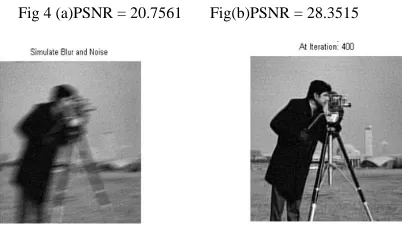
Fig 4 (a)PSNR = 20.7561 Fig(b)PSNR = 28.3515
Fig 5 (c)PSNR = 29.3447 Fig(d)PSNR = 29.4845
5. Conclusion
The technique is faster and gives better results. The shift invariance of the dual-tree complex wavelet transform has been presented. The DTCWT is shown to possess good shift invariance properties, given suitably designed biorthogonal or orthogonal wavelet filters. These properties extend to multiple dimensions. By using this technique, the noise is getting reduced and also we can get the originality of the image and also improved signal to noise ratio. This work presented a novel approach to noise reduction, especially point-wise noise. The proposed algorithm is expected to be applied as post-processing on the output of an image enhancement method. To achieve noise reduction, the proposed method exploits the data orientation discriminating power of the Dual Tree Complex Wavelet Transform, as well as the information contained in the non-enhanced image. Wavelet coefficient shrinkage and selection are then the basic mechanisms underlying the iterative processing. In contrast to other methods, the proposed approach requires no prior knowledge of the statistical properties of noise. The only explicitly required parameter is the depth of the DTCWT. The performance was tested in three ways. First, noise with different statistical properties was added to images with a well known reference. The proposed approach was able to achieve great improvements in the PSNRs. known prior and Gaussian noise with varying standard deviation. The proposed method has shown consistent increases in PSNR by about 9 dBs on average.
.
References
[1] A. Foi and G. Boracchi,\Foveated self-similarity in nonlocal image filtering", Proc. SPIE, vol. 8291, p. 829110, Jan. 2012.
[2] A. Buades, B. Coll, and J.-M. Morel,\A non-local algorithm for image denoising", in Proc. IEEE Comput. Soc. Conf. Comput. Vis. Pattern Recognition., vol. 2. Jun. 2005, pp. 6065. [3] A. Chambolle, R. De Vore, N.-Y. Lee, and B. Lucier,\Nonlinear wavelet image Processing: Variational problems, compression, and noise removal through wavelet shrinkage", IEEE Trans. Image Process., vol. 7, no. 3, pp. 319335, Mar. 1998.
[4] D. Cho, T. D. Bui, and G. Chen, \Image denoising based on wavelet shrinkage using neighbor and level dependency", Int. J. Wavelets, Multiresolution Inf. Process., vol. 7, no. 3, pp. 299311, May 2009.
[5] Devanand Bhonsle and Sandeepa Dewangan, \Comparative Study of dual-tree complex wavelet transform and double density complex wavelet transform for Image Denoising Using Wavelet Domain", International Journal of Scientific and Research Publications, vol. 2, Issue 7, pp. 1-5, July 2012.
[6] I. W. Selesnick, R. G. Baraniuk, and N. G. Kingsbury, \The dual-tree complex wavelet transform: A coherent framework for multiscale signal and image Processing", vol. 22, no. 6, pp.123151, Nov. 2005.
[7] K. Li, J. Gao, and W. Wang, \Adaptive shrinkage for image denoising based on contourlet transform", in Proc. 2nd Int. Symp. Intell. Inf. Technol. Appl., vol. 2. Dec. 2008, pp. 995999. [8] Kunal Narayan Chaudhury, Student Member, IEEE, and Michael Unser, Fellow,\IEEE On the Shift ability of Dual-Tree Complex Wavelet Transforms" ,IEEE transactions on signal processing", vol. 58, no. 1, January 2010.
[9] Massimo Fierro, Ho-Gun Ha, and Yeong-Ho Ha, Senior Member, \IEEE Noise Reduction Based on Partial Reference",\Dual-Tree Complex Wavelet Transform Shrinkage" ,\IEEE transactions on image processing", vol. 22, no. 5, may 2013.
[10] Mr.D.Suresh,.Mr.P.Suseendhar, \Impulse Noise Reduction In Images Using Dual Tree Complex Wavelet Transform", international Journal of Emerging Trends And Research (IJETR) Volume 1, Issue 1,Nov. 2013.
[11] Mr. R. K. Sarawale1, Dr. Mrs. S.R. Chougule1 ,\Image Denoising using Dual-Tree Complex DWT and Double-Density Dual-Tree Complex DWT" ,International Journal of Advanced Research in Computer Engineering Technology (IJARCET) Volume 2, Issue 6, June 2013.
[12] Mr.D.Suresh,.Mr.P.Suseendhar ,\Noval method for image denoising using wavelet transform and dual tree complex wavelet transform", international journal of graphics and image processing(IJGIP) volume 3,issue 4,Nov 2013.
[13] Mhih-Yuan Lien, Chien-Chuan Huang, Pei-Yin Chen, Member, IEEE, and Yi-Fan Lin An Efficient Denoising Architecture for Removal of Impulse Noise in Images IEEE transactions on computers, vol. 62, no. 4, April 2013.
[14] N. G. Kingsbury, \The dual-tree complex wavelet transform: a new technique for shift invariance and directional filters", Proceedings of the IEEE Digital Signal Processing Workshop, 1998.
[15] Shan Lal, Mahesh Chandra, Gopal Krishna Upadhyay, Deep Gupta, ,\Removal of Additive Gaussian Noise by Complex Double Density Dual Tree Discrete Wavelet Transform", MIT International Journal of Electronics and Communication
Manisha V Gawai has completed B. E.in Electronics and Telecommunication from Sant Gadge Baba Amravati University and Pursuing M. E. E&TC (VLSI design and Embedded System) from Sir Viesveswaraya Institute of Technology, Nasik. . Her field of interest are signal processing, image processing.