O R I G I N A L R E S E A R C H
Single-Use Autoinjector Functionality And
Reliability For At-Home Administration Of
Benralizumab For Patients With Severe Asthma:
GRECO Trial Results
This article was published in the following Dove Press journal: Journal of Asthma and Allergy
Gary T Ferguson1
Jeremy Cole2
Magnus Aurivillius3
Paul Roussel4
Peter Barker4
Ubaldo J Martin 4
On behalf of the GRECO study investigators
1Pulmonary Research Institute of
Southeast Michigan, Farmington Hills, MI,
USA;2OK Clinical Research, LLC,
Edmond, OK, USA;3AstraZeneca,
Mölndal, Sweden;4AstraZeneca,
Gaithersburg, MD, USA
Purpose: Accessorized prefilled syringes (APFS) have demonstrated functionality and reliability for subcutaneous (SC) delivery, including self-administration, of benralizumab 30 mg in the clinic or at home. The multicenter, open-label GRECO study (NCT02918071) assessed functionality and reliability of a single-use autoinjector (AI) for at-home benrali-zumab administration by patients or their caregivers.
Patients and methods:Adults with severe asthma received benralizumab SC injections at the study site at Weeks 0, 4, and 8. Thefirst dose was administered by health care providers. Patients/caregivers had the option of administering the second dose and were required to administer the third dose under supervision. At Weeks 12 and 16, patients/caregivers administered benralizumab via AI at home. After each administration, patients/caregivers completed questionnaires concerning administration and device functioning. All AI devices used were returned for evaluation.
Results:A total of 595 AIs were used for 121 patients (mean age 48.5 years; 64% female) in the clinic and at home. Of 116 participants, 113 (97.4%; 95% confidence interval [CI]: 92.63–99.46) and 112 (96.6%; 95% CI: 91.41–99.05) successfully administered benralizu-mab at home at Weeks 12 and 16, respectively; 108 (93.1%; 95% CI: 86.86–96.98) were successful on both occasions. Throughout the study, 10 (1.7%) AI administrations were unsuccessful: 8 (1.3%) because of user error, 1 (0.2%) with undetermined cause, and 1 (0.2%) because of a manufacturing defect. Benralizumab efficacy (assessed by Asthma Control Questionnaire 6 score) and pharmacokinetics for patients using the AI were compar-able to published results for patients receiving benralizumab via syringe in a clinical setting. No new or unexpected safetyfindings were observed.
Conclusion:AIs were functional, reliable, and performed well in the clinic and at home. Nearly all patients and caregivers successfully administered SC benralizumab via AI. Benralizumab availability in AI and APFS could provide patients with choices for self-administration.
Keywords:Autoinjector, benralizumab, biologic, clinical trial, delivery system, eosinophil, prefilled syringe, subcutaneous
Plain Language Summary
Why Was The Study Done?
With some asthma medicines, patients need to see their doctors for every injection. We know patients can self-inject the asthma medicine benralizumab with prefilled syringes. We studied
Correspondence: Gary T Ferguson Pulmonary Research Institute of Southeast Michigan, 29255 West 10 Mile Road, Suite A, Farmington Hills, MI 48336, USA
Tel +1-248-478-6806 Fax +1-248-478-6908 Email [email protected]
Journal of Asthma and Allergy
Dove
press
open access to scientific and medical research
Open Access Full Text Article
Journal of Asthma and Allergy downloaded from https://www.dovepress.com/ by 118.70.13.36 on 24-Aug-2020
another option, autoinjectors (AI for short), which look like large pens (seeFigure 1B). AIs are used for self-injections of many medicines.
When activated, AIs inject medicine through a small needle.
What Did The Researchers Do And Find?
We studied AI use by patients with severe asthma and their caregivers. Patients receivedfive injections of benralizumab with the AI. Thefirst
three injections were at a doctor’s office. A doctor gave the first injection. Patients and caregivers had a choice for the second injec-tion. They could use the AI while their doctors watched or have the
doctors use the AI. Patients or caregivers used the AI for the third injection, then they used the AI at home for the next two injections.
Almost all patients and caregivers (93%) successfully gave both at-home injections with the AI. Patients’blood had expected amounts of benralizumab after they used the AI, and asthma symptoms improved, meaning the medicine was working. Some patients had
colds or other infections, asthma symptoms, or headaches during the study. Eight patients had pain, redness, or itching at the injection site. These were mild and lasted 1–8 days. No patients had allergic reac-tions to benralizumab.
Total study duration: 30 weeks Benralizumab 30 mg SC at V2, 3, 4, 5, 6
Screening EOT Follow-up
visit V6
at-home administration
Week 16 V5
at-home administration
Week 12 V2
Week 0 V1
Week −2
V1A Spirometry
V3 Week 4
V4 Week 8
V7 Week 20
V8 Week 28
120 patients enter treatment
period
V5 and V6 components:
Part A Visit reminder call
within 48 hours before benralizumab
at-home administration
Part B At-home administration by the patient or caregiver
Part C Follow-up site visit ideally within 48 hours
after benralizumab at-home administration
A
B
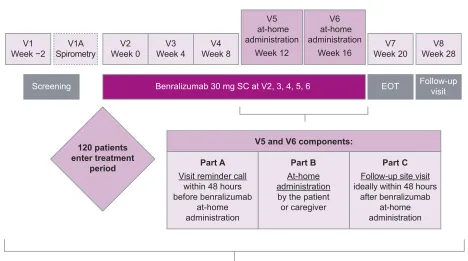
Figure 1GRECO study design (A) and single-use autoinjector (B).
Abbreviations:EOT, end of treatment; SC, subcutaneously; V, visit.
Journal of Asthma and Allergy downloaded from https://www.dovepress.com/ by 118.70.13.36 on 24-Aug-2020
What Do These Results Mean?
Patients and caregivers can use AIs to inject benralizumab. AIs and prefilled syringes offer more choices for patients receiving benralizumab for severe asthma and allow patients to self-inject at places such as home.
Introduction
Eosinophilic asthma is often severe, with patients experi-encing increased exacerbation frequency, impaired lung function, and poor asthma control.1–3 Benralizumab is a humanized, afucosylated monoclonal antibody that binds to the alpha subunit of the human interleukin-5 receptor on the surface of blood eosinophils with high affinity and specificity. This leads to nearly complete depletion of blood and tissue eosinophils through enhanced antibody-dependent cell-mediated cytotoxicity, an apoptotic process involving immune effector cells such as natural killer cells and macrophages.4,5 Benralizumab significantly reduces annual asthma exacerbation rates and oral corticosteroid use and improves lung function and disease-specific patient-reported outcomes for patients with blood eosino-phil counts ≥150 cells/µL.6–9Like all currently available biologic treatments for asthma, benralizumab is an inject-able medication. Patients now receive benralizumab 30 mg as a subcutaneous injection in a clinical setting every 8 weeks (first three doses every 4 weeks). However, many patients prefer at-home self-administration of injectable medications to administration by health care professionals in a clinical setting.10–12
Options for administration of injectable medications include single-use accessorized prefilled syringes (APFS) and autoinjectors (AI). APFS have demonstrated function-ality for administration of fixed doses of biologics for the treatment of allergic asthma or severe, uncontrolled eosi-nophilic asthma.13,14 In a study of benralizumab self-administration, most patients and caregivers (≥98%) used APFS successfully.14Of 573 APFS used, one malfunction and two user errors resulted in unsuccessful at-home administrations. Injection-site reactions were mild to mod-erate and resolved in 1–15 days.14 Efficacy, pharmacoki-netic, and pharmacodynamic assessments confirmed that benralizumab exposure following at-home use of APFS was comparable to exposure following administration by health care professionals at clinical sites.14A further study of benralizumab with healthy volunteers demonstrated that pharmacokinetics following a single injection were similar between APFS and AI.15
The aim of the current study was to assess patient- or caregiver-reported functionality and reliability of AI for benralizumab administration, including self-administra-tion, in a home setting. This study also assessed efficacy and pharmacokinetics of benralizumab administered via AI.
Materials And Methods
Study Design And Population
GRECO (NCT02918071) was a multicenter, nonrando-mized, open-label Phase III trial conducted at 25 sites in the United States and Canada (Supplemental Table 1). The study included a 2-week screening period, a site-adminis-tration treatment period (Weeks 0–8), a home-administra-tion treatment period (Weeks 12–16), an end-of-treatment visit (Week 20), and a follow-up visit (Week 28;
Figure 1A).
Eligible patients were men and women aged 18–75 years who had severe, uncontrolled asthma and weighed
≥40 kg. Evidence of asthma was defined as airway reversi-bility based on history and an increase in postbronchodila-tor forced expirapostbronchodila-tory volume in 1 second (FEV1) of≥12%
and≥200 mL at screening orfirst treatment visit. Patients were also required to have documented history of current treatment with inhaled corticosteroids and long-actingβ2
-agonists, morning prebronchodilator FEV1>50% predicted
normal at screening orfirst treatment visit, and asthma that was“not well-controlled.”Not–well-controlled asthma was defined as an Asthma Control Questionnaire 6 (ACQ-6) score≥1.5, peak expiratoryflow 60–80% predicted normal, or ≥1 exacerbation requiring oral or systemic corticoster-oids in the previous year. Exclusion criteria included clini-cally important pulmonary diseases other than asthma; medical disorders that, in the opinion of the investigator, were not stable and could affect patient safety, study results, or patient completion of the trial; drug or alcohol abuse in the previous year; and status as a current smoker or smoking history of≥10 pack-years.
Ethics
An independent ethics committee or institutional review board for each study center approved thefinal study proto-col. All patients provided written informed consent prior to study initiation. This study was performed in accordance with the Declaration of Helsinki, International Council for Harmonisation/Good Clinical Practice guidelines, the
Journal of Asthma and Allergy downloaded from https://www.dovepress.com/ by 118.70.13.36 on 24-Aug-2020
applicable regulatory requirements, and AstraZeneca policy on bioethics.
Data-Sharing Statement
Data underlying the findings described in this manuscript may be requested in accordance with AstraZeneca’s data sharing policy described at https://astrazenecagroup-dt.
pharmacm.com/DT/Home.
Procedures
Benralizumab (manufactured by AstraZeneca, Gaithersburg, MD, USA) was administered as a 30-mg/mL solution in a 1-mL single-use AI device (Figure 1B). Patients received open-label benralizumab during study site visits at Weeks 0, 4, and 8. At Week 0, benralizumab was administered by a health care professional via the AI. At Week 4, patients/caregivers had the option of allowing a health care professional to administer benralizumab via the AI or using the AI themselves under the supervision of a health care professional. At Week 8, patients/ caregivers were required to use the AI to administer benrali-zumab under the supervision of a health care professional. Patients received written instructions on AI use for reference at home. At Weeks 12 and 16, patients/caregivers administered benralizumab at home via the AI and completed a question-naire on functionality and administration.
After each at-home administration, patients/caregivers returned for a study visit within 48 hrs, bringing the ques-tionnaire and used AI with them. Study sites returned the used AI to the study sponsor for evaluation of functionality.
Outcomes
The primary objective was to assess patient- or caregiver-reported functionality and reliability of the AI device in an at-home setting and the performance of the AI after use. Outcome measures for this objective were the percentage of patients/caregivers who successfully administered benrali-zumab at home via the AI device, percentage of AI devices used to administer benralizumab at home that were consid-ered functional, and percentage of AI devices used to administer benralizumab that were considered malfunction-ing (at home or in the clinic). Secondary endpoints were change from baseline in mean ACQ-6 score, benralizumab pharmacokinetics and immunogenicity, and change in blood eosinophil counts. Safety endpoints included assessment of adverse events (AEs) and serious AEs.
Successful benralizumab administration via the AI was defined as a completed injection, answers of “yes” to all five questionnaire items, and satisfactory
examination of the returned device after use. The ques-tionnaire asked (yes/no) whether patients/caregivers could 1) view the liquid through the AI viewing win-dow, 2) start the injection, 3) hold the AI in place until the injection was completed, 4) see the blue plunger in the viewing window after injection, and 5) confirm the needle guard slid down to cover the needle following injection. A central quality control unit examined the AI devices after use and conducted a visual inspection to assess physical integrity, presence of any disassembled components, whether the plunger was able to completely depress to deliver a full dose, and whether the needle guard fully deployed. The central control unit also tested the needle guard to ensure the safety mechanism stayed locked in place when pressure was applied. Serum ben-ralizumab concentration and the presence of serum anti-drug antibodies (ADA) were measured predose (Week 0) and at Weeks 8, 20, and 28. Blood eosinophil counts were measured as part of the routine hematology assess-ments at Weeks 0, 20, and 28.
The ACQ-6 is a shortened version of the ACQ that assesses asthma symptoms (night-time awakenings, symp-toms on awakening, activity limitation, shortness of breath, and wheezing) and short-acting β2-agonist use,
omitting the FEV1 measurement from the original
ACQ.16 For each item, patients were asked to rate their experiences during the previous week on a 7-point scale ranging from 0 (totally controlled) to 6 (severely uncon-trolled). Answers to all items were averaged to determine overall ACQ-6 score. Scores ≤0.75 indicated well-con-trolled asthma, scores >0.75 and <1.5 indicated partially controlled asthma, and scores ≥1.5 indicated poorly con-trolled asthma.16 Decreasing ACQ-6 scores indicated improving asthma symptoms. A decrease of 0.5 in ACQ-6 score was considered to indicate clinically important improvement.
Statistical Analysis
No hypotheses were tested statistically. An estimated sam-ple size of 120 patients was based on a target of 100 patients completing the study, with an estimated dropout rate of 17% (20 patients). Summary data were presented in tabular format, and categorical data are summarized by the number and percentage of patients in each category. Continuous data are summarized by descriptive statistics including number, mean, standard deviation (SD), median, and range. Change from baseline was computed as
Journal of Asthma and Allergy downloaded from https://www.dovepress.com/ by 118.70.13.36 on 24-Aug-2020
baseline value subtracted from visit value. If either value was missing, change from baseline was set to missing.
All analyses were performed with the full analysis set except the pharmacokinetic analysis, which used the phar-macokinetic analysis set. The full analysis set included all patients receiving benralizumab, regardless of their protocol adherence and continued participation in the study. Patients with at least one quantifiable serum benralizumab concen-tration after the first dose were included in the pharmaco-kinetic analysis set. All data were analyzed with SAS System version 9.2 (SAS Institute Inc., Cary, NC, USA).
Results
Patient Disposition
Patients were screened at 25 centers and received treatment at 23 centers. Of 121 patients who received at least one dose of benralizumab,five (4.1%) discontinued treatment during the study (Figure 2). Four patients discontinued before at-home administration via the AI for the following reasons: AE (Herpes zoster), lost to follow up, inability to complete Visit 4 within the study time frame, and development of study-specific discontinuation criteria (patient unwilling to administer benralizumab at home). One patient discontinued after one successful at-home administration because of a decision to discontinue birth control.
Demographics And Baseline Clinical
Characteristics
Demographics and baseline clinical characteristics repre-sented the intended target population of patients with uncon-trolled asthma (Table 1). Mean age was 48.5 years (SD: 14.95), and median body mass index was 30.4 kg/m2 (range: 20–64 kg/m2). Most patients were white (80.2%), and nearly two-thirds were female (63.6%). Median time since asthma diagnosis was 20.0 years (range: 0.1–61.0 years). Mean percentage predicted normal prebronchodilator FEV1was 69.3% (SD: 12.7%). Mean baseline ACQ-6 score
was 2.42 (SD: 0.96), which was consistent with expected values for patients with uncontrolled asthma. Mean number of exacerbations in the past 12 months was 0.8 (SD: 1.5); approximately half of patients (53.7%) had none. Other key respiratory diseases included allergic rhinitis (72.7% of patients) and nasal polyps (10.7% of patients).
Functionality, Reliability, And
Performance Of Autoinjectors
Study-Site Administration
Benralizumab was successfully administered at the study site to 121 patients (100%) at Week 0. At Week 4, 119 of 121 administrations were successful. Both unsuccessful administrations were performed by patients. One patient
118 patients completed the study
1 patient discontinued treatment after first at-home administration
(patient decision)
116 patients completed treatment
1 patient did not complete follow-up visit and withdrew
from study
116 patients completed follow-up visit
168 patients screened for eligibility
121 patients received at least one dose of benralizumab
52 patients did not meet eligibility criteria 116 patients met
eligibility criteria
4 patients discontinued treatment before at-home administration
(1 discontinuation criteria; 1 AE; 1 lost to follow up; 1 other reasons) 117 patients eligible for at-home administration and
received at least one dose of benralizumab 4 eligible patients did
not receive benralizumab
112 eligible patients received benralizumab
9 patients, initially ineligible, allowed to receive benralizumab
43 patients did not receive benralizumab
2 patients completed follow-up visit
2 patients did not complete follow-up visit and withdrew
from study
Figure 2Patientflow diagram.
Abbreviation:AE, adverse event.
Journal of Asthma and Allergy downloaded from https://www.dovepress.com/ by 118.70.13.36 on 24-Aug-2020
did not keep the AI pressedfirmly against the injection site for the entire injection. The other patient lifted the AI away from the skin before the injection was complete. Both patients completed the study, and all their subsequent administrations were successful. At Week 8, 118 of 119 administrations were successful. The single unsuccessful administration occurred because the patient did not keep the AI pressed firmly against the injection site for the entire injection. This patient completed the study and was able to perform all subsequent injections successfully.
At-Home Administration
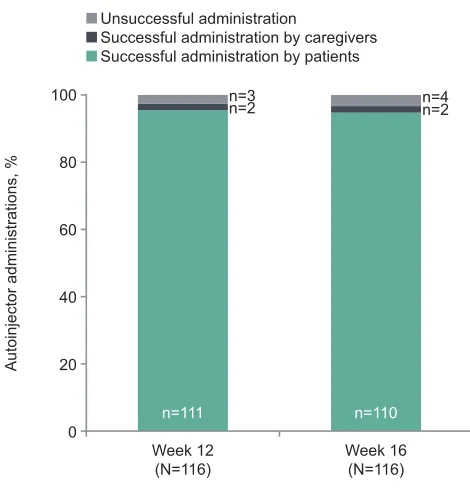
One AI used at home at Week 12 was not returned by the patient and could not be inspected after use. Of 116 patients/caregivers who administered benralizumab at home at Week 12 and returned their devices, 113 (97.4%; 95% confidence interval [CI]: 92.63–99.46) were successful (Figure 3). The three unsuccessful administra-tions were caused by lifting the AI away from the skin before the injection was complete, prematurely activating the AI during removal of the cap, and the need to manually retract the needle guard on the device. Once the needle guard was retracted, the patient was able to inject the full dose. All three patients with unsuccessful administrations at Week 12 completed the study, and all their subsequent administrations were successful. At Week 16, 112 (96.6%;
Table 1Demographics And Baseline Clinical Characteristics
Demographics/Clinical Characteristics Benralizumab
30 mg N=121
Age [years], mean (SD) 48.5 (14.95)
Age group [years], n (%)
≥18 to <50 54 (44.6)
≥50 to <65 50 (41.3)
≥65 17 (14.0)
Sex, n (%)
Female 77 (63.6)
Race, n (%)
White 97 (80.2)
Black or African-American 14 (11.6)
Asian 9 (7.4)
Other 1 (0.8)
Ethnic group, n (%)
Hispanic or Latino 26 (21.5)
BMI [kg/m2], median (range) 30.4 (20–64)
Blood eosinophil count [cells/µL], median (IQR) 230 (150–360)
Prebronchodilator FEV1[L], mean (SD) 2.126 (0.676)
Prebronchodilator FEV1[% PN], mean (SD) 69.3 (12.7)
Prebronchodilator FVC [L], mean (SD) 3.097 (1.008)
Prebronchodilator FVC [% PN], mean (SD) 81.0 (15.2)
FEV1reversibility [%], mean (SD) 20.0 (10.0)
Time since asthma diagnosis [years], median (range) 20.0 (0.1–61.0)
ACQ-6 score, mean (SD) 2.42 (0.96)
Exacerbations in the previous 12 months, mean (SD)
0.8 (1.5)
0, n (%) 65 (53.7)
1, n (%) 40 (33.1)
2, n (%) 6 (5.0)
3, n (%) 7 (5.8)
≥4, n (%) 3 (2.5)
Number of exacerbations in the last 12 months resulting in:
Hospitalization, mean (SD) 0.1 (0.3)
ED visit, mean (SD) 0.1 (0.4)
Diagnosis of allergic rhinitis, n (%) 88 (72.7)
Nasal polyps, n (%) 13 (10.7)
OCS use, n (%) 4 (3.3)
Abbreviations:ACQ-6, Asthma Control Questionnaire 6; BMI, body mass index; ED, emergency department; FEV1, forced expiratory volume in 1 second; FVC, forced vital capacity; IQR, interquartile range; OCS, oral corticosteroid; PN, pre-dicted normal; SD, standard deviation.
Week 12 (N=116)
Autoinjector administrations, %
100
80
60
40
20
0
n=3 n=2
n=111
n=4 n=2
n=110
Week 16 (N=116) Unsuccessful administration
Successful administration by caregivers Successful administration by patients
Figure 3 Success of at-home benralizumab administration via autoinjector. Successful administration was defined as a completed injection, an answer of “yes” to allfive questions in the administration questionnaire, and satisfactory evaluation of returned devices.
Journal of Asthma and Allergy downloaded from https://www.dovepress.com/ by 118.70.13.36 on 24-Aug-2020
95% CI: 91.41–99.05) of 116 patients/caregivers used the AI successfully. Unsuccessful administrations were caused by delayed retraction of the needle guard, possible pre-mature activation of the AI, removing the AI from the skin before completion of the injection, and losing control of the AI device. Most patients were able to self-administer both benralizumab injections at home (93.8%; 95% CI: 87.65–97.47). All caregivers (100%; 95% CI: 15.81– 100.00) successfully completed both at-home benralizu-mab administrations with the AI.
The two patients who prematurely activated their AI devices (one at Week 12 and one at Week 16) received replacements. These patients returned both their original devices and the replacements. Hence, the number of AI following both the Week 12 and Week 16 at-home benrali-zumab administrations was 117, one more than the number of patients assessed. Of the AI returned after Weeks 12 and 16, 114 (97.4%) and 113 (96.6%), respectively, were deemed functional by patients/caregivers. All returned AI were also evaluated for functionality by a central quality unit. Of 595 AI used in this study, 10 (1.7%) administra-tions were unsuccessful: three at the study site and seven at home. Examination by the quality unit indicated that two AI malfunctioned (one because of a manufacturer defect). The root cause of the other could not be definitively identified. Unsuccessful administration with the remaining eight AI were determined to be caused by user error.
Benralizumab Ef
fi
cacy, Pharmacokinetics,
Pharmacodynamics, And Immunogenicity
By the end of treatment (Week 20), mean ACQ-6 score decreased from baseline, and approximately one-third of patients had asthma that was well-controlled (Figure 4,
Table 2). The anti–IL-5 receptor alpha properties of benrali-zumab were evident in that nearly complete depletion of blood
eosinophils occurred by Week 20 (median: 20 cells/µL; inter-quartile range: 10–30 cells/µL) and was maintained to Week 28 (median: 20 cells/µL; interquartile range: 10–50 cells/µL). Geometric mean serum benralizumab concentrations were 698 ng/mL at Week 8, 788 ng/mL at Week 20, and 63 ng/ mL at Week 28 (Table 3).
No patients were ADA positive at baseline. However, 7.5% of patients (9 of 120) developed ADA after treatment began. Thus, both the prevalence and incidence of ADA were 7.5%. The presence of neutralizing antibodies did not alter the pharmacodynamics of benralizumab, as demon-strated by comparable blood eosinophil counts at Week 20 for ADA-positive and ADA-negative patients (both med-ian: 20 cells/µL).
Safety Of Subcutaneous Benralizumab 30
Mg Administered Via Autoinjectors
Benralizumab was well-tolerated, and mean duration of exposure was 110 days (range: 27–148 days). Of 121 patients, 74 (61.2%) had at least one AE during the study
(Table 4). Most AEs were mild to moderate. Four patients
(3.3%) experienced severe AEs: asthma (three patients) and retinal detachment (one patient). One incidence of asthma was also considered a serious AE. No severe or serious AEs were considered related to study drug or the AI device. One patient discontinued treatment because of an AE ofHerpes
zoster that was considered related to the study drug. The
most common AEs (reported for >5% of patients), were viral upper respiratory tract infection, asthma, upper respira-tory tract infection, and headache (Table 4). Mild systemic AEs that the investigators considered to be related to ben-ralizumab administration occurred for 13 patients (10.7%): Baseline
(n=121)
Mean ACQ-6
score
3.0
2.5
2.0
1.5
1.0
0.5
0.0 2.42
Week 4 (n=121) 1.79
Week 8 (n=119) 1.51
Week 12 (n=117) 1.35
Week 20 (EOT) (n=116)
1.39
Week 16 (n=116) 1.28
Figure 4Mean ACQ-6 score by time point. ACQ-6 score is the average of thefirst six items on the ACQ regarding symptoms, activity limitations, and rescue medica-tion use.
Abbreviations:ACQ-6, Asthma Control Questionnaire 6; EOT, end of treatment.
Table 2 Asthma Control Status Based On ACQ-6 Score At Baseline And End Of Treatment
Benralizumab (N=121)
Baseline, n (%)
≤0.75 (well-controlled) 5 (4.1)
>0.75 to <1.5 (partly controlled) 6 (5.0)
≥1.5 (not well-controlled) 110 (90.9)
Missing, n (%) 0
End of treatment (Week 20), n (%)
≤0.75 (well-controlled) 40 (33.1)
>0.75 to <1.5 (partly controlled) 23 (19.0)
≥1.5 (not well-controlled) 53 (43.8)
Missing 5 (4.1)
Abbreviation:ACQ-6, Asthma Control Questionnaire 6.
Journal of Asthma and Allergy downloaded from https://www.dovepress.com/ by 118.70.13.36 on 24-Aug-2020
two patients each experienced administration-site pruritus, fatigue, injection-site induration, injection-site pain, and injection-site pruritis; one patient each experienced admin-istration-related reaction, headache, Herpes zoster, injec-tion-site erythema, and inflammation. Injection-site reactions were reported by eight patients (6.6%); all were mild and resolved in 1–8 days.
Discussion
The GRECO study evaluated the functionality, reliability, and performance of AIs for at-home administration, including self-administration, of benralizumab for patients with severe, uncontrolled asthma. AIs performed well in the clinic and at home and were successfully used for subcutaneous administration of benralizumab by health care providers, patients, and caregivers.
Only one manufacturer defect was detected in an AI, and one AI had a defect for which the root cause could not be identified. Eight administrations via AI failed because of user error. The most common error was lifting the AI away from the skin before the injection was complete.
Incidence of such errors could be reduced with additional training or instruction. Overall results of this study indi-cate that health care providers and almost all patients and caregivers were adequately trained to administer benrali-zumab subcutaneously via AI in the clinic or at home.
The mean 1-point improvement in ACQ-6 score during this 28-week study is within the range of improvements observed over 1 year in the SIROCCO and CALIMA studies and over 20 weeks in GREGALE, and indicates clinically important improvement.6,9,14 Furthermore, a nearly complete depletion of blood eosinophils after benra-lizumab 30-mg injection was observed in GRECO, similar to results in the GREGALE trial and in AMES, a pharma-cokinetic study of single-dose benralizumab administration in a clinical setting.6,8,9,14,15Pharmacokinetics of benralizu-mab administered via AI were stable during treatment, similar to that observed with APFS in the GREGALE study.14These similarities confirm that patient and caregiver use of AI at home resulted in benralizumab exposure com-parable to that observed in other clinical trials.
The safety profile of benralizumab administered via AI in this study was comparable to safety profiles from pub-lished clinical trials of benralizumab administered by health care providers at clinical sites and from the GREGALE study of benralizumab administered via APFS in both clin-ical and at-home settings.6,8,9,14,17 The incidence of AEs related to injection site in GRECO (6.6% of patients) was numerically greater than that observed in the 12-week BISE and week ZONDA studies (up to 3% of patients), 28-week GREGALE study (4% of patients), and 1-year SIROCCO and CALIMA studies (both 2%).8,14,17 In AMES, incidence of injection-site reactions was even smal-ler (1% for AI, none reported for APFS).15
Our results are consistent with those of studies in other therapeutic areas concerning self-administration of biolo-gic treatments via AI.18–22Pharmacokinetics, efficacy, and
Table 3Serum Benralizumab Concentrations
Visit
Baseline (n=120) Week 8 (n=118) Week 20 (n=115) Week 28 (n=117)
n <LLOQ 113 3 3 17
Geometric mean [ng/mL] (CV [%]) BLQ 698 (186) 788 (281) 63 (469)
Arithmetic mean [ng/mL] (SD) 18 (116) 1,000 (663) 1,241 (747) 151 (147)
Median [ng/mL] (range) BLQ
(<LLOQ–1,020)
877
(<LLOQ–3,890)
1,170
(<LLOQ–3,330)
106
(<LLOQ–640)
Abbreviations:BLQ, below limit of quantification; CV, coefficient of variation; LLOQ, lower limit of quantification (3.86 ng/mL); SD, standard deviation.
Table 4AEs During The Study Period
AEs, n (%) Benralizumab 30 mg
(N=121)
Patients with≥1 serious AE 1 (0.8)a
Patients with≥1 AEb 74 (61.2)
AEs experienced by≥5% of patients:
Viral upper respiratory tract infection 18 (14.9)
Asthma 11 (9.1)
Upper respiratory tract infection 10 (8.3)
Headache 8 (6.6)
Notes:a
This patient experienced asthma as a serious AE.b
Patients with >1 AE in the same category were counted only once in that category, and patients with AEs in >1 category were counted once in each category.
Abbreviation:AE, adverse event.
Journal of Asthma and Allergy downloaded from https://www.dovepress.com/ by 118.70.13.36 on 24-Aug-2020
safety were comparable when biologics were administered via AI or syringes.18,19,22 Patients had high success rates when self-administering biologic treatments via AI.20,21 Studies also reported that patients viewed AI favorably and found them easy to use.22,23
The ability of patients to self-administer biologic asthma medications in an unsupervised setting may raise concerns regarding the potential for nonadherence to treat-ment. Physicians should certainly use their clinical judg-ment regarding which patients should continue to be treated in the clinic and which patients would do well with at-home administration. Endocrinologists, rheumatol-ogists, gastroenterolrheumatol-ogists, and dermatologists have been prescribing biologics for at-home injection for many years. The best-known example, insulin, has been in use for nearly 100 years.24 At-home self-administration has the potential to reduce the burden on specialty clinics and allow physicians time to treat more patients with severe asthma. This would be especially important in medically underserved areas. For many patients, the convenience of at-home self-administration every 8 weeks could poten-tially improve adherence, especially where local clinic access is limited. Patients who live far from a treatment center or who find it difficult to make time for appoint-ments would be among the potential candidates for at-home self-administration.
A limitation of this study is the inclusion of only adult patients and their caregivers, as benralizumab is indicated for patients aged 12 years or older with severe eosino-philic asthma. We cannot exclude the possibility that other user errors or issues would have been observed with adult caregivers using AI to administer benralizu-mab to patients aged 12–18 years with asthma. Patients in this study received the same treatment regimen as was used in the GREGALE study (four doses of benralizumab 30 mg at 4-week intervals)14 for best comparison of results between the two studies. However, the approved regimen for treatment of severe, uncontrolled eosinophi-lic asthma is benralizumab 30 mg every 8 weeks (first three doses every 4 weeks). It should be noted that this was not a study of benralizumab safety or efficacy. We would not expect the difference in dosing frequency to have any influence on the functionality of AIs for at-home administration. An interval of 8 weeks rather than 4 weeks between the two at-home administrations could potentially have resulted in differences in the number or type of user errors observed.
Conclusions
The use of AI at home or in the clinic is a well-tolerated and reliable method for administering subcutaneous ben-ralizumab 30 mg as an add-on treatment for patients with severe, uncontrolled asthma. Providing options for benra-lizumab self-administration (in a clinical setting or at home) may improve patient satisfaction and treatment adherence. Giving patients the opportunity to choose how, when, and where they receive their asthma treatments could play a substantial role in their treatment outcomes and overall experience.
Abbreviations
ACQ-6, Asthma Control Questionnaire 6; ADA, anti-drug antibodies; AE, adverse event; AI, autoinjectors; APFS, accessorized prefilled syringes; CI, confidence interval; FEV1, forced expiratory volume in 1 second; IL,
interleu-kin; SD, standard deviation.
Acknowledgments
We thank the investigators, health care providers, research staff, and patients who participated in the GRECO study. We thank Mark Odorisio (AstraZeneca, Gaithersburg, MD) and Melanie Sundsbo Hughes (AstraZeneca, Gaithersburg, MD) for their clinical operations leadership in this study. Editorial support was provided by Jennie G. Jacobson, PhD, CMPP, of JK Associates, Inc., and Michael A. Nissen, ELS, of AstraZeneca.
Author Contributions
Gary T. Ferguson and Ubaldo J. Martin designed the study. All authors contributed to the clinical work for the study. All authors contributed to data analysis, drafting and revis-ing the article critically for important intellectual content, gave final approval of the version to be published, and agree to be accountable for all aspects of the work.
Disclosure
AstraZeneca employees contributed to the design of the trial, the conduct of the trial, the data analysis and inter-pretation, and the writing of the manuscript. AstraZeneca funded medical writing support for the writing and sub-mission of the manuscript. The GRECO trial was funded by AstraZeneca. Gary T Ferguson reports grants, personal fees, and nonfinancial support from AstraZeneca during the conduct of the study; grants, personal fees, and non-financial support from Boehringer Ingelheim, Novartis,
Journal of Asthma and Allergy downloaded from https://www.dovepress.com/ by 118.70.13.36 on 24-Aug-2020
AstraZeneca, Pearl Therapeutics (a member of the AstraZeneca group), and Sunovion; grants and personal fees from Theravance; and personal fees from Verona, Mylan, Innoviva, GlaxoSmithKline, and Circassia, outside the submitted work. Magnus Aurivillius, Paul Roussel, Peter Barker, and Ubaldo J Martin are employees of AstraZeneca. Jeremy Cole reports no conflicts of interest. Some of these data were presented in a poster at the American Academy of Allergy, Asthma and Immunology (AAAAI) Annual Meeting, February 22–25, 2019, San Francisco, CA, USA as a poster presentation. The poster abstract was published in The Journal of
Allergy and Clinical Immunology:https://www.jacionline.
org/article/S0091-6749(18)32034-7/fulltext.
The authors report no other conflicts of interest in this work.
References
1. Belda J, Parameswaran K, Lemiere C, Kamada D, O’Byrne PM, Hargreave FE. Predictors of loss of asthma control induced by corticosteroid withdrawal. Can Respir J. 2006;13(3):129–133. doi:10.1155/2006/189127
2. Price D, Wilson AM, Chisholm A, et al. Predicting frequent asthma exacerbations using blood eosinophil count and other patient data routinely available in clinical practice. J Asthma Allergy.2016;9:1– 12. doi:10.2147/JAA.S97973
3. Talini D, Novelli F, Bacci E, et al. Sputum eosinophilia is a determi-nant of FEV1decline in occupational asthma: results of an
observa-tional study. BMJ Open. 2015;5(1):e005748. doi:10.1136/bmjopen-2014-005748
4. Pham TH, Damera G, Newbold P, Ranade K. Reductions in eosinophil biomarkers by benralizumab in patients with asthma. Respir Med.
2016;111:21–29. doi:10.1016/j.rmed.2016.01.003
5. Kolbeck R, Kozhich A, Koike M, et al. MEDI-563, a humanized anti-IL-5 receptor alpha mAb with enhanced antibody-dependent cell-mediated cytotoxicity function. J Allergy Clin Immunol. 2010;125 (6):1344–1353.e1342. doi:10.1016/j.jaci.2010.04.004
6. FitzGerald JM, Bleecker ER, Nair P, et al. Benralizumab, an anti-interleukin-5 receptor α monoclonal antibody, as add-on treatment for patients with severe, uncontrolled, eosinophilic asthma (CALIMA): a randomised, double-blind, placebo-controlled phase 3 trial. Lancet. 2016;388(10056):2128–2141. doi:10.1016/S0140-6736 (16)31322-8
7. Goldman M, Hirsch I, Zangrilli JG, Newbold P, Xu X. The associa-tion between blood eosinophil count and benralizumab efficacy for patients with severe, uncontrolled asthma: subanalyses of the Phase III SIROCCO and CALIMA studies.Curr Med Res Opin.2017;33:1– 26.
8. Nair P, Wenzel S, Rabe KF, et al. Oral glucocorticoid-sparing effect of benralizumab in severe asthma.N Engl J Med.2017;376(25):2448– 2458. doi:10.1056/NEJMoa1703501
9. Bleecker ER, FitzGerald JM, Chanez P, et al. Efficacy and safety of benralizumab for patients with severe asthma uncontrolled with high-dosage inhaled corticosteroids and long-acting β2-agonists
(SIROCCO): a randomised, multicentre, placebo-controlled phase 3 trial. Lancet. 2016;388(10056):2115–2127. doi:10.1016/S0140-6736 (16)31324-1
10. Tetteh EK, Morris S, Titcheneker-Hooker N. Discrete-choice model-ling of patient preferences for modes of drug administration.Health Econ Rev.2017;7(1):26. doi:10.1186/s13561-017-0162-6
11. Stoner KL, Harder H, Fallowfield LJ, Jenkins VA. Intravenous versus subcutaneous drug administration: which do patients prefer? A sys-tematic review. Patient. 2014;8:145–153. doi:10.1007/s40271-014-0075-y
12. Scalone L, Sarzi-Puttini P, Sinigaglia L, et al. Patients’, physicians’, nurses’, and pharmacists’preferences on the characteristics of biolo-gic agents used in the treatment of rheumatic diseases.Patient Prefer Adherence.2018;12:2153–2168. doi:10.2147/PPA.S168458 13. Somerville L, Bardelas J, Viegas A, D’Andrea P, Blogg M, Peachey
G. Immunogenicity and safety of omalizumab in pre-filled syringes in patients with allergic (IgE-mediated) asthma.Curr Med Res Opin.
2014;30(1):59–66. doi:10.1185/03007995.2013.844115
14. Ferguson GT, Mansur AH, Jacobs JS, et al. Assessment of an acces-sorized pre-filled syringe for home-administered benralizumab in severe asthma.J Asthma Allergy.2018;11:63–72. doi:10.2147/JAA. S157762
15. Martin UJ, Fuhr R, Forte P, et al. Comparison of autoinjector with accessorized prefilled syringe for benralizumab pharmacokinetic exposure: AMES trial results. J Asthma. 2019. doi:10.1080/ 02770903.2019.1663428. [Epub ahead of print].
16. Juniper EF, Bousquet J, Abetz L, Bateman ED. GOAL committee. Identifying‘well-controlled’and‘not well-controlled’asthma using the Asthma Control Questionnaire. Respir Med.2006;100(4):616– 621. doi:10.1016/j.rmed.2005.08.012
17. Ferguson GT, FitzGerald JM, Bleecker ER, et al. Benralizumab for patients with mild to moderate, persistent asthma (BISE): a rando-mised, double-blind, placebo-controlled, phase 3 trial.Lancet Respir Med.2017;5(7):568–576. doi:10.1016/S2213-2600(17)30190-X 18. Callis Duffin K, Bagel J, Bukhalo M, et al. Phase 3, open-label,
randomized study of the pharmacokinetics, efficacy and safety of ixekizumab following subcutaneous administration using a prefilled syringe or an autoinjector in patients with moderate-to-severe plaque psoriasis (UNCOVER-A). J Eur Acad Dermatol Venereol.2017;31 (1):107–113. doi:10.1111/jdv.13768
19. Ramael S, Van Hoorick B, Tiessen R, et al. Similar pharmacokinetics of the adalimumab (Humira®) biosimilar BI 695501 whether
admi-nistered via subcutaneous autoinjector or prefilled syringe (VOLTAIRE®-AI and VOLTAIRE®-TAI): phase 1, randomized,
open-label, parallel-group trials. Rheumatol Ther. 2018;5(2):403– 421. doi:10.1007/s40744-018-0119-1
20. Sheikh SZ, Hammer AE, Fox NL, et al. Evaluation of a novel autoinjector for subcutaneous self-administration of belimumab in systemic lupus erythematosus.Int J Clin Pharmacol Ther.2016;54 (11):914–922. doi:10.5414/CP202623
21. Cohen S, Klimiuk PA, Krahnke T, Assudani D. Successful adminis-tration of BI 695501, an adalimumab biosimilar, using an autoinjector (AI): results from a phase II open-label clinical study (VOLTAIRE® -RL). Expert Opin Drug Deliv. 2018;15(6):545–548. doi:10.1080/ 17425247.2018.1472572
22. Stauffer VL, Sides R, Lanteri-Minet M, et al. Comparison between prefilled syringe and autoinjector devices on patient-reported experi-ences and pharmacokinetics in galcanezumab studies.Patient Prefer Adherence.2018;12:1785–1795. doi:10.2147/PPA.S170636 23. Vermeire S, D’Heygere F, Nakad A, et al. Preference for a prefilled
syringe or an auto-injection device for delivering golimumab in patients with moderate-to-severe ulcerative colitis: a randomized crossover study. Patient Prefer Adherence. 2018;12:1193–1202. doi:10.2147/PPA.S154181
24. Heinemann L, Beals JM, Malone J, et al. Concentrated insulins: history and critical reappraisal. J Diabetes. 2018;11:292–300. doi:10.1111/1753-0407.12861
Journal of Asthma and Allergy downloaded from https://www.dovepress.com/ by 118.70.13.36 on 24-Aug-2020
Journal of Asthma and Allergy
Dove
press
Publish your work in this journal
The Journal of Asthma and Allergy is an international, peer-reviewed open-access journal publishing original research, reports, editorials and commentaries on the following topics: Asthma; Pulmonary physiology; Asthma related clinical health; Clinical immunology and the immunological basis of disease; Pharmacological interventions and
new therapies. The manuscript management system is completely online and includes a very quick and fair peer-review system, which is all easy to use. Visit http://www.dovepress.com/testimonials.php to read real quotes from published authors.
Submit your manuscript here:https://www.dovepress.com/journal-of-asthma-and-allergy-journal
Journal of Asthma and Allergy downloaded from https://www.dovepress.com/ by 118.70.13.36 on 24-Aug-2020