
Leave no-one behind: Responding to new evidence and guidelines for the management of cryptococcal meningitis in low- and middle-income countries
Summary (200 words)
In 2018, the WHO issued guidelines for the diagnosis, prevention and management of HIV-related cryptococcal disease. Two strategies are recommended to reduce the unacceptably high mortality associated with HIV-related cryptococcal meningitis in low- and middle-income countries (LMICs): 1) Optimised combination therapies for confirmed meningitis cases and 2) Cryptococcal antigen (CrAg) screening programs for ambulatory people living with HIV (PLHIV) accessing care. The WHO
preferred therapy for the treatment of HIV-related cryptococcal meningitis in LMICs is one week amphotericin B deoxycholate (AmB) plus flucytosine (5FC) and alternative therapy is two weeks of fluconazole plus 5FC. In the ACTA trial, short course AmB plus 5FC resulted in a 10 week mortality of 24% [CI 16-32] and two weeks of fluconazole and 5FC resulted in 35% [CI 29-41] mortality at 10 weeks. However, with widely used fluconazole monotherapy, HIV-related cryptococcal meningitis mortality is currently approximately 70% in many African LMIC settings. Therefore the potential to transform the management of HIV-related cryptococcal meningitis in resource limited settings is significant. Sustainable access to essential medicines including 5FC and AmB in LMICs is however paramount and the focus of this personal view.
Introduction
Recent evidence from randomized controlled trials clearly supports the urgent need for the addition of flucytosine (5FC) to regimens for safe and effective treatment of cryptococcal meningitis for people living with advanced HIV disease [1]. HIV-related cryptococcal meningitis remains the commonest cause of meningitis in many low-income and middle-income countries (LMICs) [1,2,3]. Effective treatments for HIV-related cryptococcal meningitis in resource-limited settings consist of 5FC in combination with either fluconazole or conventional deoxycholate or liposomal formulations of amphotericin B (AmB). However, 5FC is currently unavailable in LMICs and currently unregistered in any African country. This is despite 5FC being an old, off-patent and easy to manufacture
medicine [2,3]. Herein we present the latest burden of disease and clinical trial data that underline the need for urgent action to ensure access to 5FC and AmB in LMICs and highlight the publication of new WHO guidelines on HIV-related cryptococcal disease [4]. We review the good safety profile of 5FC for the treatment of HIV-related cryptococcal meningitis, outline the barriers around access to standard formulations of 5FC, and standard and liposomal formulations of AmB, and highlight the need for better adapted, modified-release formulations of 5FC.
Burden of cryptococcal meningitis and factors associated with ongoing high mortality
Recently published data has shown that cryptococcal meningitis causes 15%-20% AIDS-related mortality [5]. Cryptococcal meningitis is caused by the fungus Cryptococcus neoformans. Mortality for cryptococcal meningitis in resource-limited settings is approximately 70%, with most centres in LMICs having no access to cryptococcal antigen lateral flow assay (CrAg LFA) tests and essential medicines including 5FC [5]. CrAg LFAs have revolutionised the diagnosis of cryptococcal disease providing highly sensitive and specific testing of blood and cerebrospinal fluid (CSF) samples. There are an estimated 223,100 cases of cryptococcal meningitis annually, with close to three quarters of these cases occurring in Africa [5]. In sub-Saharan Africa alone there are an estimated 135,900 deaths annually, with the vast majority of people living with HIV (PLHIV) receiving suboptimal fluconazole monotherapy, if they are diagnosed [5]. Importantly, and unlike in high-income
despite the roll-out of ART and the Joint United Nations Programme on HIV/AIDS (UNAIDS)/World Health Organization (WHO) 90-90-90 continuum of HIV care targets [1,6,7,8,9]. In fact half to three quarters of patients presenting with cryptococcal meningitis in LMICs are now ART-experienced [1,6,8,10].
Trial data: Treatment and prevention of cryptococcal meningitis
In order to reduce the unacceptably high mortality associated with cryptococcal meningitis two strategies have emerged: 1) New combination treatments that are more effective and safe to administer in resource-limited settings [1,11] and 2) Cryptococcal antigen (CrAg) screening programs that can detect cases earlier or prevent the development of cryptococcal meningitis through pre-emptive antifungal treatment of PLHIV with advanced disease (CD4 cell count ≤200 cells/µL) who screen CrAg positive [4,12,13] [Figure 1].
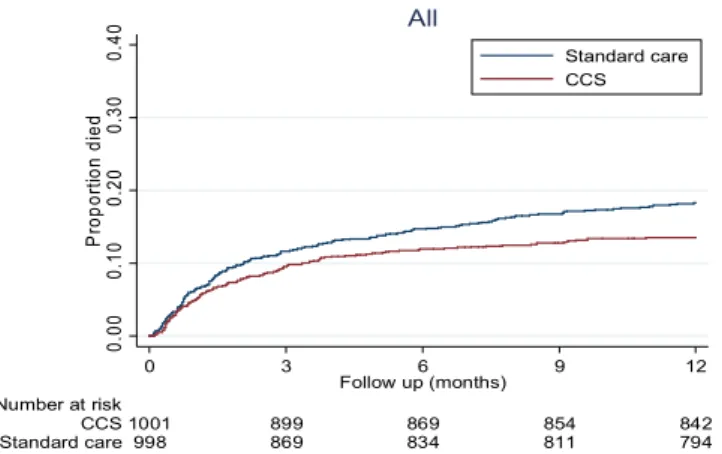
In the acute care setting, for cases of confirmed cryptococcal meningitis, the focus of recent research has been on finding alternative treatments to the previous gold standard of two weeks’ conventional amphotericin B (AmB) and 5FC, which is either unavailable in the case of 5FC, or relatively unsafe to use in resource-limited settings without intensive monitoring that can be difficult to obtain. AmB administration is intravenous and requires hospitalisation and careful laboratory monitoring and management. On the other hand, the mortality observed in routine care resource-limited settings with more easily available and commonly prescribed fluconazole monotherapy for HIV-related cryptococcal meningitis is approximately 70% [5]. The results of the ACTA trial demonstrated firstly that short course (1 week) AmB and 5FC could cut 10 week mortality to 24% [95% CI 16-32] [1]. Secondly, two weeks’ of 5FC and fluconazole performed well and reduced mortality to 35% [95% CI 29-41] [Figure 2]. Mortality in the 2 week amphotericin B comparator groups at ten weeks was 39.7% at 10 weeks [1]. Two alternative combination induction therapy options for the management of HIV-related cryptococcal meningitis in resource limited settings have thus emerged: 1) short course (1 week) AmB and 5FC and 2) an easily implementable oral combination therapy of two weeks of 5FC and fluconazole. Both combination treatment strategies can enable PLHIV to be discharged from hospital before the end of the two week induction treatment period, reducing hospital care costs significantly. Lastly, the ACTA trial showed that compared to fluconazole, 5FC is a more effective companion drug for AmB-based induction therapy [1] [Figure 3]. This is important as in many LMIC settings where 5FC is unavailable but AmB can be administered safely, AmB is
currently given in combination with fluconazole for the treatment of HIV-related cryptococcal meningitis [1]. 0. 00 0. 10 0. 20 0. 30 0. 40 P ro p or tio n di ed
998 869 834 811 794
Standard care
1001 899 869 854 842
CCS Number at risk
0 3 6 9 12
Follow up (months)
Standard care CCS
All
Figure 2. Cumulative incidence of all-cause mortality by week 10 according to the ACTA treatment strategies [1].
Figure 3. Cumulative incidence of all-cause mortality by week 10 according to amphotericin B partner treatment (fluconazole or 5FC) within the ACTA trial [1].
Programs to pre-emptively treat asymptomatic PLHIV with advanced disease who are asymptomatic but with detectable cryptococal atigen (CrAg) in blood also offer the opportunity to reduce
enhanced adherence counselling compared to standard of care for PLHIV with advanced disease [13]. However, despite pre-emptive therapy with two weeks’ of fluconazole, the mortality of CrAg positive PLHIV remains consistently higher (2-3 times greater) than the mortality of PLHIV screening CrAg negative [13]. In addition, there is consistent and increasing evidence that as many as 40% of PLHIV with advanced disease who screen CrAg positive have sub-clinical meningitis, irrespective of symptoms [14-17]. 5FC may therefore prove important for the optimal treatment of CrAg positive PLHIV who are likely to benefit from more aggressive pre-emptive treatment. Two weeks of fluconazole and 5FC is an easily implementable and safe oral induction treatment option for high-titre CrAg-positive PLHIV presenting to primary care centres where intravenous administration of medicines is not generally feasible. The presence of high CrAg titres correlates with the presence of cryptoccocal meningitis and can be detected with new, second-generation CrAg LFAs [14,18]. 5FC safety profile
The evidence from pooled cohorts of over 1000 patients treated in resource-limited settings in Africa and Asia indicates that, at current recommended doses (100mg/kg/day for 2 weeks), oral 5FC can be administered safely with conventional amphotericin B or fluconazole to HIV-infected patients [2,19]. Furthermore, in this patient population, 5FC drug level monitoring is not required [1,2,20].
Historically there have been concerns about the safety of 5FC relating to early studies that used a high dose of 5FC dose given for >2 weeks, or in other populations such as premature infants and patients with renal failure in critical care. While the safety profile is much improved when used at current recommended doses and durations (100mg/kg/day for two weeks), some routine laboratory monitoring (ie baseline and day 7 full blood count and creatinine) is still advisable, if possible, with 5FC dose adjustments in case of neutropaenia and/or renal impairment.
Barriers to 5FC and AmB access in LMICs
The standard formulation of 5FC is a good example of a market failure in resource-limited settings where the need is greatest [2,3]. Currently, specific barriers to access include: 5FC not being listed in countries’ national essential medicine lists (despite being on the WHO Essential Medicine List (EML) since 2013), lack of in-country registration, high cost and too few generic manufacturers interested in developing this product. 5FC is currently unregistered in any African country. In South America, 5-FC is registered in Brazil, Argentina, Colombia and French Guiana, but only available in the last two nations. While there are currently several Stringent Regulatory Authority-approved generic 5-FC manufacturers, none are supplying 5FC in countries with the most need. Ministries of Health (MOH), national drug regulatory authorities (NDRAs), international funders, and drug manufacturers must collaborate to ensure 5FC is listed in national formularies, registration is expedited (via the WHO Collaborative Registration mechanism where possible) and that the 5FC market failure is addressed. In addition, there is low and unpredictable demand from countries and a lack of financing for a disease that causes up to 20% HIV-related mortality. Increased awareness of the safety and efficacy of one-week intravenous-based therapy or a two-week oral course of fluconazole and 5FC, will significantly increase demand and uptake of 5FC.
Barriers to AmB access in LMICs include: high cost, lack of widely accessible training programs for safe AmB administration and uncoordinated funding, procurement and drug distribution [3]. Liposomal AmB (L-AmB) has comparable efficacy and superior tolerability compared to AmB and in combination with high-dose fluconazole has recently been shown to be effective for the treatment of cryptococcal meningitis [21, 22,23]. A single dose of L-AmB (10mg/kg) combined with fluconazole and 5FC is being evaluated in an ongoing phase 3 clinical endpoint trial [isrctn 10248064]. High cost and lack of registration remain the biggest barriers to less toxic L-AmB formulations being used in resource-limited settings [3].
Modified-release formulations of 5FC
The current dosing schedule for 5FC (100 mg/kg/day in 4 divided doses) is problematic, particularly for resource-limited settings where healthcare facilities are overcrowded and routine care staff overburdened. In addition, most cryptococcal meningitis patients have a reduced level of consciousness, with current standard formulations being crushed and given by naso-gastric (NG) tube. The development of once or twice daily administered modified-release formulations of 5FC, better adapted to effective administration via NG tube and dose adjustment, is a priority for such patients. However, the development of modified release formulations must not detract from registration and increased access to available standard formulations of 5FC in LMICs.
New WHO guidelines for the management of HIV-related cryptococcal disease
New 2018 WHO guidelines recommend both short course AmB with 5FC and two weeks of 5FC + fluconazole as induction regimens for cryptococal meningitis [4]. CrAg screening for all adults and adolescents with advanced HIV disease, with pre-emptive therapy if CrAg-positive, is also
recommended [4]. These recommendations will become the new gold standard treatments and standard of care for resource-limited settings [4].
Conclusion
Reducing the persistent mortality of PLHIV with advanced disease, affecting approximately one third of patients presenting to care in LMICs, is now an important focus in keeping with WHO’s 2017 guidelines on Managing Advanced HIV disease [24]. Tackling the significant mortality of HIV-related cryptococcal meningitis in LMICs is paramount, and access to 5FC and AmB are critical (Panel). Panel
Actions to increase access to safe, effective treatment for cryptococcal meningitis
Incorporate latest WHO guidance on HIV-related cryptococcal disease and management of advanced HIV disease into countries’ national guidelines, supported by national
dissemination and training.
Expedite registration of existing 5FC formulations in high burden LMICs, including through the use of the WHO Collaborative Procedure for Accelerated Registration.
Include 5FC, conventional deoxycholate and liposomal formulations of amphotericin B in the essential medicines lists (EMLs) of LMICs.
Ensure capacity for sustainable supply of CrAg diagnostic tests, 5FC, AmB and L-AmB to meet country demands as they implement the latest WHO guidelines and scale up.
LMICs to work with partners to quantify amounts of CrAg tests and essential medicines needed and include these estimates in Global Fund applications and/or CDC/PEPFAR agreements.
Contributions
The concept of this personal view was conceived during a meeting of the cryptococcal meningitis action group (cryptoMAG). AL wrote the first draft of the manuscript and then incorporated key input from all the authors. All authors reviewed the manuscript.
Conflicts of interest
NG reports personal fees from Astellas, non-financial support from MSD, outside the submitted work. JD reports personal fees from Viamet Pharmaceuticals, outside the submitted work. JJ reports grants from Gilead Sciences Europe, outside the submitted work. TB reports grants and personal fees from Gilead Sciences Inc, outside the submitted work. RSH reports grants from Medical Research Council, grants from Wellcome Trust, during the conduct of the study. TH reports grants from MRC (UK), grants from ANRS (France), other from Immunomycologics, personal fees from Viamet, grants from Gilead Sciences, personal fees from Gilead Sciences, personal fees from Pfizer, during the conduct of the study. OL reports personal fees from MSD, Astellas, Pfizer, Gilead, outside the submitted work. DD and family hold Founder shares in F2G Ltd, a University of
Manchester spin-out antifungal discovery company. DD acts or has recently acted as a consultant to Scynexis, Cidara, Quintiles, Pulmatrix, Pulmocide, Zambon, Roivant and Fujifilm. In the last 3 years, he has been paid for talks on behalf of Astellas, Dynamiker, Gilead, Merck, Mylan and Pfizer. He is a longstanding member of the Infectious Disease Society of America Aspergillosis Guidelines group, the European Society for Clinical Microbiology and Infectious Diseases Aspergillosis Guidelines group and the British Society for Medical Mycology Standards of Care committee. DD has a patent Assays for Fungal Infection licensed.
References
1. Molloy SF, Kanyama C, Heyderman RS et al. Antifungal combinations for the treatment of cryptococcal meningitis in Africa. New England Journal of Medicine 2018; 378: 1004-17. Doi 10.1056/NEJMoa1710922. In press. Publication date 15th March 2018.
2. Loyse, A, Dromer F, Day J, Lortholary O & Harrison TS. Flucytosine and cryptococcosis: time to urgently address the worldwide accessibility of a 50 year old antifungal. Journal of Antimicrobial Chemotherapy 2013; 68(11): 2435-2444.
3. Loyse A, Thangaraj H, Easterbrook P et al. Cryptococcal meningitis: improving access to essential antifungal medicines in resource poor countries. Lancet Infect Dis. 2013; 13(7): 629–637.
4. WHO guidelines for the diagnosis, prevention and management of cryptococcal disease in HIV-infected adults, adolescents and children. Supplement to the 2016 consolidated guidelines on the use of antiretroviral drugs for treating and preventing HIV infection. WHO. Geneva. Published March 2018.
http://www.who.int/hiv/pub/guidelines/cryptococcal-disease/en/ (accessed 16th March
2018)
5. Rajasingham R, Smith RM, Park BJ, Jarvis JN, Govender NP, Chiller TM, Denning DW, Loyse A, Boulware DR. Global Burden of Disease of HIV-Associated Cryptococcal Meningitis: an Updated Analysis. Lancet Infectious Diseases 2017; 17(8): 873-881.
7. Tenforde M, Mokomane M , Leeme T, et al. Advanced Human Immunodeficiency Virus Disease in Botswana Following Successful Antiretroviral Therapy Rollout: Incidence of and Temporal Trends in Cryptococcal Meningitis. Clin Infect Dis. 2017 Sep 1;65(5):779-786. doi: 10.1093/cid/cix430
8. Day JN, Chau TH, Wolbers M et al. Combination antifungal therapy for cryptococcal meningitis. NEJM. 2013; 368(14):1291–302.
9. UNAIDS 90-90-90 An ambitious treatment target to help end the AIDS epidemic. Joint United Nations Programme on HIV/AIDS. Geneva. 2014.
http://www.unaids.org/en/resources/documents/2017/90-90-90 (Accessed 12th March 2018)
10. Osler M, Hilderbrand K, Goemaere E, Ford N, Smith M, Meintjes G, Kruger J, Govender NP, Boulle A. The Continuing Burden of Advanced HIV Disease Over 10 Years of Increasing Antiretroviral Therapy Coverage in South Africa. Clin Inf Dis 2018. 66;suppl 2: S118–S125. 11. Nussbaum JC, Jackson A, Namarika D et al. Combination flucytosine and high dose
fluconazole is superior to fluconazole monotherapy for cryptococcal meningitis: a randomized trial in Malawi. Clin Infect Dis. 2010; 50:338–44.
12. Jarvis JN, Harrison TS, Lawn SD et al. Cost effectiveness of cryptococcal antigen screening as a strategy to prevent HIV-associated cryptococcal meningitis in South Africa. PLoS One. 2013; 8(7): e69288.
13. Mfinanga S, Chanda D, Kivuyo SL et al. Cryptococcal meningitis screening and community-based early adherence support reduces all-cause mortality among HIV-infected people initiating antiretroviral therapy with advanced disease: a randomised-controlled trial in Tanzania and Zambia. Lancet. 2015; 385:2173–82.
14. N.Longley, JN Jarvis, G Meintjes et al. Cryptococcal antigen screening in patients initiating ART in South Africa: A prospective cohort study. CID 2016;62(5): 581-7
15. R.M Wake, E Britz, C Sriruttan et al. High cryptococcal antigen titers in blood are predictive of subclinical cryptococcal meningitis among Human Immunodeficiency Virus-infected patients. CID 2017/doi/10.1093/cid/cix872/4349512
16. A.T Makadzange, A Hlupeni, KF Boyd et al. High prevalence of CNS dissemination with asymptomatic cryptococcal antigenaemia. CROI 2017
http://www.croiconference.org/sessions/high-prevalence-cns-dissemination-asymptomatic-cryptococcal-antigenemia.
17. Beyene T, Zeude AG, Balcha A et al. Inadequacy of high-dose fluconazole monotherapy among cerebrospinal fluid cryptococcal antigen (CrAg)-positive Human Immunodeficiency Virus-infected persons in an Ethiopian CrAg screening program. CID 2017; 65(12): 2126-9. 18. Temfack E, Kouanfack C, Mossiang L et al. Cryptococcal Antigen Screening in Asymptomatic
HIV-Infected Antiretroviral Naïve Patients in Cameroon and Evaluation of the New Semi-Quantitative Biosynex CryptoPS Test. Frontiers in Microbiology 13 March 2018.
19. Bicanic T, Bottomley C, Loyse A et al. Toxicity of Amphotericin B deoxycholate-based induction therapy in patients with HIV-associated cryptococcal meningitis. Antimicrobial Agents and Chemotherapy 2015; 59(12): 7224-31.
20. Brouwer AE, Van kan HJM, Johnson E et al. Oral versus intravenous flucytosine in patients with Human Immunodeficiency Virus-associated cryptococcal meningitis. Antimicrobial Agents and Chemotherapy 2007; 51(3): 1038-1042.
22. Hamill R, Sobel JD, El-Sadr W et al. Comparison of 2 Doses of Liposomal Amphotericin B and Conventional Amphotericin B Deoxycholate for Treatment of AIDS-Associated Acute
Cryptococcal Meningitis: A Randomized, Double-Blind Clinical Trial of Efficacy and Safety. Clinical Infectious Diseases 2010; 51(2):225–232.
23. Jarvis JN, Leeme TB, Chofle AA et al. AMBITION-CM: High-dose liposomal amphotericin for HIV-related cryptococcal meningitis. Abstract 82. CROI 2017, Washington, US.
http://www.croiwebcasts.org/p/2017croi/croi33485 (accessed 16th March 2018) 24. WHO guidelines for managing advanced HIV disease and rapid initiation of antiretroviral
therapy. WHO. Geneva. Published July 2017.
![Figure 2. Cumulative incidence of all-cause mortality by week 10 according to the ACTA treatment strategies [1].](https://thumb-us.123doks.com/thumbv2/123dok_us/944361.1115147/3.892.125.663.189.516/figure-cumulative-incidence-cause-mortality-according-treatment-strategies.webp)
