Education and Human Development Master's
Theses Education and Human Development
Spring 5-21-2017
Bullying in Our Schools: The Impact of the Olweus
Bullying Prevention Program
Kaylee Mitchell
The College at Brockport, [email protected]
Follow this and additional works at:http://digitalcommons.brockport.edu/ehd_theses
Part of theEducation Commons
To learn more about our programs visit:http://www.brockport.edu/ehd/
This Thesis is brought to you for free and open access by the Education and Human Development at Digital Commons @Brockport. It has been accepted for inclusion in Education and Human Development Master's Theses by an authorized administrator of Digital Commons @Brockport. For more information, please [email protected].
Repository Citation
Mitchell, Kaylee, "Bullying in Our Schools: The Impact of the Olweus Bullying Prevention Program" (2017).Education and Human Development Master's Theses. 715.
Bullying in Our Schools: The Impact of the Olweus Bullying Prevention Program Kaylee Mitchell
Abstract
Bullying has been an issue in school throughout the years in communities across the world. Most students have either been a victim of bullying, been the bully, or have witnessed bullying no matter what school they attend, or grade level. Many schools struggle to find ways to educate students on the effects of bullying and how to teach students to deal with bullying
situations they may face in school. This study focused on a small suburban school district who sought out a bullying prevention program called Olweus Bullying Prevention Program. The study examined the effects the program had within its first year of implementation, and looked into the perceptions of the program by both staff members and students. Both qualitative and quantitative data were collected throughout this research study. Students were interviewed by the myself in the form of open-ended questions. Staff members were given the opportunity to
respond to an anonymous online survey. Several findings were discovered. Findings suggested that although staff members at the school were not totally sold on the program, the students were gaining important information and strategies to help deal with bullying and that the program was making a difference in the day-to-day lives of the middle school students.
Table of Contents
Chapter 1: Introduction 5
Problem Statement and Research Question 6
Significance of Problem 6
Rationale 7
Chapter 2: Literature Review 8
Bullying Definitions 9
Bullying Programs 11
School Transition Impact 15
Conclusion 16
Chapter 3: Applications and Evaluations 18
Participants and Procedures 18
Data Collection and Analysis 20
Student Interviews 21
Staff Surveys 21
Chapter 4: Results 22
Findings 22
Students Understand the Purpose of the Olweus Program 23
Students Apply Strategies Taught in the Olweus Program 25
Staff Members Have Not Noticed a Change in Bullying 27
Paraprofessionals Are Lacking Information to Help Implement Olweus 29
Chapter 5: Conclusions and Implications 30
Conclusions 30
Limitations 34
Research Suggestions 35
Overall Significance 35
References 36
Chapter 1: Introduction
Between one in four and one in three students in the United States have reported being bullied. The majority of this bullying happens in a middle school setting. In response to this, many schools throughout the United States have begun implementing school-wide programs in an effort to decrease bullying behaviors. Some schools struggle to find a program that works best for their students and staff members. One program that has been used in thousands of schools across the country is the Olweus Bullying Prevention program. According to the Owelus (Olweus, 1999), the program has three major goals:
reduce existing bullying problems among students
prevent the development of new bullying problems
achieve better peer relations at school
Bullying prevention can play a critical part of student’s success in school, and desire to come to school. Approximately 160,000 students do not come to school each day due to fear of being bullied by their peers (Barber and Olsen, 2004). Students who are bullied report multiple issues such as lack of confidence, decrease desire to attend school, anxiety, academic
deficiencies, trouble concentrating, and feelings of guilt. Although less common, bullying can also lead to attempts and deaths by suicide. Bystanders of bullying can become anxious that bullying may happen to them, or they may even choose to engage in bullying due to fear. Many studies have shown a correlation between students who bully and other negative behaviors, such as criminal behavior or substance abuse. It is clear that the effects of bullying dig much deeper than words spoken to others, and can have lifelong impacts.
All of these effects from bullying play a part in a school’s success. If students are not coming to school due to fear and anxiety, they are missing classwork, which may put them behind and decrease their test scores. If students are coming home each day complaining of being bullied, parents may not feel that the school is a safe environment for their child. Programs like Olweus may decrease these bullying behaviors, which could lead to a positive, nurturing learning environment for all students. Knowing the effects of bullying, it is imperative that schools take a step to decrease the behaviors that are seen in grades kindergarten through twelfth grade. As a teacher, it is vital to make sure students feel safe and respected when they come into school each day.
Focusing in on one particular suburban school in Western New York, the goal of my research is to determine what impacts on bullying the implementation of Olweus has made in grades sixth through eight. The Olweus program is relatively new in this district, with its first year of implementation starting in 2015. While the program began the implementation process in 2015, the program didn’t fully become integrated into the middle school until the beginning of 2016. Through interviews with faculty and students, I hope to gain insight to the bulling behaviors throughout the school, and to see if students are taking the information they learn in Olweus classroom meetings with them into the hallways and cafeterias. All members of the school will have the opportunity able to express their thoughts about the impacts of the program, and if they have seen any significant changes, positive or negative, in behavior from the students.
Problem Statement and Research Question
While it’s evident that bullying is a major problem in schools across the country, resources available to school districts to help manage the problem seem to be scarce. Although
many schools have a policy to punish students when they get caught in a bullying act, there isn’t many programs in place that give strategies and ideas for when the encounter a bullying situation in school. Besides just the actual student engaging in the bullying activity, there is also a
substantial amount of research that suggests that bystanders can play a pivotal role in facilitating bullying behavior (Datta, Cornell & Huang, 2016). Although bystanders and other students can cause more harm, they can also play a role in stopping the deterring the bully. Throughout my research, and in my own experiences in schools as a student and as a teacher, I have seen few successful programs to teach students how to handle negative interactions and different
approaches they can take when faced with these types of situations. While a program can sound like a great idea, only the students and staff members involved in the implementation of the program can accurately give critique and feedback about the effects it may or may not be having within the schools. This study had two research questions: What impact has the Olweus Bullying Prevention Program had on the students and staff members at a district that has implemented it? and; what perceptions do the students and staff members have about the Olweus Program?
Significance of the Problem
The research in this study is significant because of how common bullying is in schools, especially within middle and high schools. As addressed in the introduction, students who are targets of bullying can be prone to lifelong problems for students including low self-esteem, fear of attending schools, and possibly suicide or self-harm. Students who bully others are at a higher risk of drug problems or criminal records later on in life. In my experience as a teacher, few programs have concrete ways to combat bullying, including teaching students strategies for how to deal with this major issue.
Rationale
I am interested in this research for several reasons. As a sixth grade teacher, I see bullying and negative interactions happening daily within the school. Prior to receiving a full time position, I spent time substitute teaching in many districts. While bullying was a problem in all districts, few schools had tangible ideas and goals to decrease bullying in their school. While punishments were given to students who engaged in bullying acts, I saw few instances of
proactive approaches to combat bullying. I frequently engage in conversations with colleagues, some who have been teaching for a number of years, and few have answers to deal with the challenge of bullying. The Olweus program is relatively new within the school district, and staff members have varying thoughts about the program. While staff members often discuss the program, it isn’t typical to hear the students perspective on the program. Their feelings about the program may be the most important since they are the audience that is directly involved in the issue of bullying. This study will help me determine if the program is causing a positive impact on the students, and what changes could be made to the program to make it as successful as possible for both the students and the staff.
Chapter 2: Literature Review
American schools are reporting bullying as their number one problem (Christie, 2005). Throughout the course of a normal school day, teachers and faculty at schools are seeing acts of bullying occurring in the hallway, cafeteria, locker room, and even in their own classrooms. While bullying happens throughout all grade levels, an influx of harsh behaviors seems to appear in middle school grades. Bullying can lead to a variety of effects on students, including
lowered self-esteem (Seals & Young, 2003). While all of these issues are troubling, it is
especially troubling for middle school students to deal with these issues at such a transitional and sensitive phase in their life. Students entering middle school, between sixth and seventh grade, are at a time known as the transitional phase. They are transitioning from an elementary type classroom to a less-structured middle school setting. As a sixth grade teacher, I see students deal with this transition and increase in independence in a variety of ways. In some cases, students take advantage of this independence and interaction with new students and engage in negative interactions.
While all schools view bullying as a problem, the real problem is finding a way to combat these behaviors from students. Although many programs have emerged over the years, it’s difficult for schools to find a program that works for them. As educators know, students change from year to year and dynamics of a classroom or district may change. Schools are buying into programs that support the fight against bullying using a variety of techniques such as school-wide programs, assemblies, classroom lessons and activities and staff training. Not only must schools address the issue of bullying, but they must also teach students appropriate
reactions when faced with a bullying situation (Studer & Mynatt, 2015). While many schools are taking a step in the right direction, bullying is a complex and serious problem that requires immediate attention and action nationally. 71% of attackers in school shooting situations have been linked to the attackers being bullied or picked on by peers (Graham, 2011). If attention is not drawn to this matter, it could lead to more school shootings and premature deaths across our nation.
What is bullying?
Olweus defines bullying as harassment or victimization that includes the following aspects: 1- aggressive or intended harm; 2- carried out repeatedly over time; and 3- occurs in an interpersonal relationship where a power imbalance exists (Olweus, 1999). Recent studies have shown that bullies tend to show less empathy towards others and display negative social skills towards peers including not looking them in the eyes, scaring others, breaking promises, etc. (Deniz & Esroy, 2016). This particular study aimed to find a correlation between social skills, problem solving and bullying in adolescents. The study used three tools to collect data including a problem solving inventory, bully/victim questionnaire and a social skills scale. This study also showed a correlation between students bullying behaviors and their problem solving skills. Students who had limited problem solving skills were found to be more likely to bully other students than their peers. It’s also important to note that the study mentions that although students may have problem solving skills, they may be less likely to use these skills when involved in a bullying situation.
Victims
Victims are the target of bullying situations. While victims are in the most danger within bullying instances, there is little research about why victims are chosen by their peers and if there’s any personality traits that bullies particularly target. Furthermore, there are limited studies that address how likely victims are to confide in an adult about bullying. One of the largest problems with researching victims is that it’s impossible to know how many bullying incidents actually occur since a large amount go unreported. A recent study aimed to find a connection between sources students have at their disposal (school, at home, etc.) compared to how they responded to a stressful situation (Ševčíková, Macháčková, Dědková & Černá, 2015). The study collected data from 24 primary and secondary schools including students ages 9-16. Students
were exposed to graphics depicting various forms of cyberbullying and bullying that could occur at school (offline victimization) and were asked to report if they had experienced anything similar. The reseracher compared this data to parental attachment from an attachment scale, which asked students about their relationship with their parents and a peer rejection scale, which asked students questions about how they perceived their peers looked at them. Results showed that girls who were victims of cyberbullying were four times as likely to see support compared to boys. All students (male and female) who reported positive parental attachment were more likely to seek support. Since all students can be targets of bullies, some students who do not have positive parental attachment may be victims of bullying. It is important to note that in this study, those students were less likely to seek support from outside sources. This study confirms that a large number of bullying incidents may go unreported to teachers and other school officials.
Bully-Victims
Bully victims are children who bully others, but are also victimized themselves (Yang & Salmivalli, 2013). While these types of students are less prevalent than pure bullies, or pure victims, these individuals tend to engage in more intense bullying acts. In Yang and Salmivalli’s 2013 study, they looked a large sample size of 26,837 students from grades 1-8. The students filled out anonymous questionnaires in their school during school hours. The study found that bully-victims are typically males and engage in larger amounts of physical and verbal bullying towards their peers. Many of these students noted that they may “deserve” bullying since they had bullied others (Yang & Salmivalli, 2013). Although a small subgroup, this is a particularly vulnerable population of students who would benefit from a bullying program addressing both victim strategies and anti-bullying discussions with their peers and staff members at their school.
Olweus as a school-wide program
The Olweus program works at three levels of intervention: school-wide interventions including staff training, school-wide rules, and coordinated supervision during break periods; classroom-level interventions including regular classroom meetings and class parent meetings; and individual-level interventions including individual meetings with children classified as bullies, meetings with targets of bullying and meetings with parents involved in any aspect (The Olweus Bullying Prevention Program, 2005). Many schools who have implemented this program have reported a decrease in bullying behavior within their schools, including two schools in Oslo who saw their bullying problems drop over 40% after one year of implementation (Olweus, 1994). The program aims to not only reduce the number of students reporting bullying in their school, but also to counteract against bullying behaviors and stop them before they start.
While there are numerous programs targeted to address bullying behavior, a recent study shows the impact the Olweus program had on 2,500 students’ grades 5-8 over a period of 2.5 years (Limber, 2011). This study differed from the average studies as it looked at a time period of longer than a school year. Students self-reported cases of bullying incidents within their school. The findings indicated a 62% reduction in student self-reports of being bullied within the first 8 months of implementation of the program and 64% after 20 months. Students reporting bullying others were reduced by 33% after 8 months and 53% after 20 months. Other positive effects included self-reports that students were engaging in less antisocial behavior, and students overall perceptions of the school climate improved. Similar studies were implemented across the U.S in states such as South Carolina, Pennsylvania, Washington and California. Although not as high, all studies showed a decrease in bullying behaviors after the Olweus program was
implemented for a length of time (Limber, 2011). It’s clear that Olweus makes a positive impact on school districts that choose to implement the program into their curriculum.
Other successful anti-bullying programs
While many studies address the success of the Olweus program, it should be noted that there have been many other successful programs implemented in schools globally. One program, KiVa, was developed in Finland and has been implemented in countries around the world, including the United Kingdom, to target bullying with students between 7 and 15 years old (Hutchings & Clarkson, 2005). In contrast to the Olweus program, the KiVa program focuses on the role of the bystander in bullying situations rather than the actual bully or victim. This study followed the KiVa program in 17 schools across Wales who piloted the program. An internet survey was used for most of the data collection. The study aimed to determine if bullying acts would decrease throughout their schools, hoping that more students might step in against bullying situations. The conclusion of the study showed a major decline in victimization and bullying behaviors. Students in the post-survey indicated that the lessons were suitable to reduce bullying in their school. With the success of the program, most schools involved opted to
continue using the program in their school.
A unique program, Theater of the Oppressed, showed promising results in a middle school in the United States. This study focused on a small sample size of 13 students in grades six to eight who participated in a theater club after school that focused on role-playing exercises surrounding bullying (Bhukhanwala, 2014). Students were given different prompts addressing bullying behaviors in their school, such as creating images of a good day in school, a bad day in school and different activities that took place throughout the school day. These were considered warm-up exercises. The students then participated in role-playing tasks and students who were
watching were asked to intervene as they saw fit. The researcher found that student’s expressions changed when they were asked to depict a good day in school, versus a bad day in school. Their body language was much different. Many students also reported that after participating in the role-playing, they had “increased awareness” about bullying situations and triggers that may lead to bullying behaviors in their school. Students in the study haId several ideas that they felt like were not being addressed in their school regarding bullying, such as number of police officers on campus, creating awareness and teachers intervening when bullying was happening.
Bhukhanwala concludes the study by suggesting several implications such as exploring empathy with students, using perspective-taking role-playing activities and having an after-school space for students to address bullying concerns in their school. This study was extremely beneficial, however it only was implemented with a small number of students in a school who were part of an after-school program. The program had similar components to Olweus, but did not address the entire population of the school like Olweus and KiVa.
Youth Matters, a curriculum for schools to adopt, believes the best mechanisms for reducing bullying behavior are a change in student’s perceptions, attitudes and the belief that they themselves can take action against bullying (Jenson, Brisson, Bender & Williford, 2013). The study consisted of 876 students in grades fourth through sixth. In their respective schools, one group of the participants were exposed to curriculum modules from the Youth Matters program. The other group was not. The Youth Matters curriculum focuses mostly on developing skills to address bullying issues in school and problem solving skills for students. Data measures were through surveys done at the beginning of the year through the end of the year. The
researchers found that for the most part, the students involved in the Youth Matters program transitioned from bully, or victim, to an uninvolved group at a much higher rate than students
who were part of the Youth Matters program. Students who were immersed in the program reported experiencing less bullying and victimization than students in the control group who were not exposed to the program. Similar to Olweus, this was a school-wide program that impacted all students at the school.
P.R.E.S.S aims to stop bullying, especially in middle schools. Different from other programs, P.R.E.S.S not only focuses on students but includes adults invested in the school in their program including teachers, administrators and other stakeholders. After being piloted in a middle school in 2009, teachers became more present in situations where bullying may occur, and were in the hallways during transition times (Hester, Bolen, Thomas, & Heatherly, 2011). Administrators were also present during lunchtime and had frequent meetings with students. Assistant principals also engaged in sessions with the students where they discussed types of bullying and other situations that needed to be investigated in the school. There were notepads that students could use to leave notes about behaviors or dangerous situations happening throughout the school, without putting their name on it. All of these efforts paid off. Fighting incidents, incidences defying authority and overall recorded number of discipline incidents dropped significantly according to school records.
School Transition Impact
Transitional Phase
While all students experience bullying throughout years of school, studies have shown that more bullying occurs at the middle school level than other grade levels. Across the country, schools differ when it comes to grade levels for middle school. Some schools opt to have sixth grade students stay in an elementary setting, while other districts consider sixth grade to be part
of the middle school and these students are immersed with older students in a more independent environment. Regardless of when, this transitional time where students are moving from an elementary school to a middle school is known as the transitional period. Students experiencing the transitional phase may experience difficulties such as functioning lower academically, quality of school life, and mental health issues (Barber and Olsen, 2004). Even without bullying being a factor, this can be a difficult time for middle school students as they try to adapt to new
surroundings and new classmates.
Studies have shown that bullying can affect students differently depending on when they transition from elementary to middle school. One study looked at 698 students, half of which transitioned to middle school between fifth and sixth grade and half who stayed in an elementary setting for sixth grade (Wang, Brittain, McDougall, & Vaillancourt, 2016). Data was collected through a paper and pencil survey, teacher observations and a teacher survey. . The study found that bullying statistics remained the same, but peer victimization changed especially with males. Males were more likely to report peer victimization if their sixth grade class stayed in an
elementary school setting. This may have occurred because the students felt more comfortable reporting issues to their teacher that they spent more time with, or they possibly felt more comfortable at the school as they had spent more time there.
Conclusion
While there is a variety of research relating to bullying and bullying prevention programs available, many studies use statistics to create conclusions about bullying in schools. These statistics typically come from self-reported incidents from students using a survey or
questionnaire. While some of this information may be valuable, it must also be noted that this method doesn’t always provide truthful information. Many students may rush to get questions
answered to move onto something else, or may not understand what is being asked. Although some surveys may be anonymous, students who have been bullied still may not feel comfortable answering a question for fear of retaliation by the bully.
It’s also important to note that while many studies have shown great success in schools after programs have been implemented, all schools are different with different populations and different resources. It’s impossible to find a program that fits the needs of all schools. Some larger schools may not benefit or be able to implement a program to all their students like some smaller schools. Other schools may have more incidents relating to bullying than others who may need to find an approach that will work fast, while other schools may not be experiencing such intense issues yet but want to prevent them from happening in the future. All schools hope to address the issue of bullying in their schools, but each school needs to find a program that works best for the school, students, staff and administrators.
Many studies focus on multiple schools, or schools with a large population of students. There are few studies that focus on a small group of students in a rural area. This study examines the effect of one program, the Olweus Bullying Prevention Program, on a small school in
Western New York. This program is in its second year of implementation at the district. Using staff surveys and semi-structured interviews, I hope to develop an understanding about the impact this program has had on staff and students at the school. I also hope to gain insight to the perceptions of the program from staff, students and administrators. With student safety on the line, it is the hope of all individuals that Olweus is decreasing bullying incidents in the school.
Chapter 3: Applications and Evaluation
The purpose of this study is to determine the impact the Olweus Bullying Prevention Program has had in its initial phases at a small school in Western, New York. I hope to gain insight into perceptions the students, staff members and administrators have on the program. With bullying posing a major problem across the world, schools are working to find programs that work in their schools to combat bullying. It’s important for educators, students, and other stakeholders in the community to see a program making a difference in the day to day life and safety of students. Both qualitative and quantitative forms of data were collected throughout the study.
Participants and Procedures :
This study will focus on a group of approximately 15 sixth grade students, and
approximately 23 faculty members. Students involved were selected randomly out of a pool of 45 sixth grade students after receiving parental consent. Staff members were given the option to fill out a survey, sent to them by school e-mail. Ages of these staff members range from 24-55, and ages of the students range from 11-13 years old. 12 of the students involved in the interviews were Caucasian, and 3 students were minority students. 9 of the students who participated in the interview qualified for free or reduced lunch. All of the students involved have been students in the district for at least three years. Staff members who responded to the survey were anonymous, but all staff members within the school had been exposed to the Olweus program for a minimum of one year.
The study took place in a middle/high school in a rural town in Western, New York. The school services grade levels 6-12. Interviews took place in my sixth grade classroom with selected students. Administrators, teachers, and other staff members took the online survey anonymously. All staff members were invited to participate in the survey. The survey was sent
via e-mail through the school’s secure e-mail system. Every measure was taken to get a mix of staff members and students to participate to best represent the school district.
Students who were asked to participate in the study needed to obtain parental consent, as well as give their own consent to be part of the study. Selected students met in my classroom to be interviewed. Interviews were recorded, unless students opted not to have themselves recorded. Students were asked a series of semi-structured questions about the Olweus program, and their day to day life in school. I took detailed notes during the interview process, and prompted students with other questions if other ideas came up throughout the interview process that were not immediately asked to the students.
Staff members were sent an online, anonymous survey. They had to give their consent by checking a box before they completed the survey. The survey took approximately 15 minutes and was 9 questions. Results were sent directly to my locked computer.
To analyze the data, I used the constant comparison method to find trends, and interpret results. Recorded interviews were transcribed on my laptop or desktop computer in my
classroom. I spent time coding data to determine what the impact of the Olweus program has been on the school district, what types of trends occur throughout the data, and what type of perceptions staff and students have about the program. This was done through a color coding process, with each color representing a different theme that frequently appeared in the data.
All documents in this study were stored in secure locations. Paper materials were stored in a locked filing cabinet in the my locked classroom. Digital data was stored on a password protected computer. Students who choose to participate in the study did not receive any impact
(positive or negative) on their grade with the teacher. Staff members who choose to complete the interview completed it anonymously.
Data Collection and Analysis
Various forms of data were collected throughout the study. Prior to beginning the study, I looked at previous Olweus survey data given to me by an administrator. Every year, the Olweus Program requires districts to give a survey to students asking them questions about bullying problems in their school. All students within the district take this survey and the results are given to administrators. I looked at data from September of 2015, which was the year Olweus started strict implementation in the middle/high school. Information from this survey was intended to provide insight to how the students felt about bullying in their school prior to the Olweus program being implemented. While important, information from this survey was not a central focus of the research.
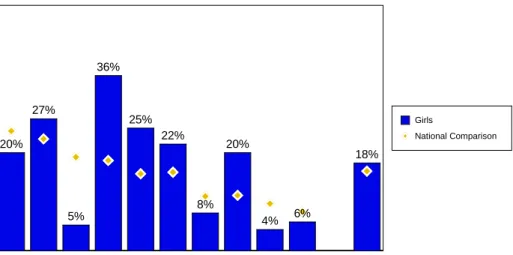
Figure A: Data collected from Olweus student survey in 2015 (girls)
0% 10% 20% 30% 40% 50% 3rd 4th 5th 6th 7th 8th 9th 10th 11th 12th Total 20% 27% 5% 36% 25% 22% 8% 20% 4% 6% 18% Girls National Comparison
Graph 3a. Percentage of girls who have been bullied "2-3 times a month" or more (Q4 dichotomized)
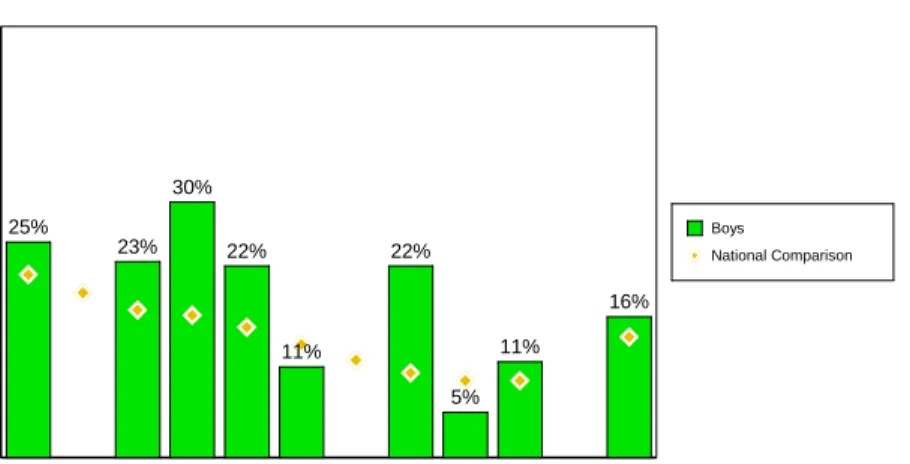
Figure B: Data collected form Olweus student survey in 2015 (boys)
The sixth graders were the focus of my study. This data indicated that many students, both males and females, were reporting being bullied 2-3 times per month prior to September 2015. Compared to the national comparison, the sixth grade boys and girls in this district were reporting higher amounts of bullying than other students around the nation. The sixth graders also reported the highest amount of bullying in relationship to the other grade levels at the school district. This indicated a major problem with this particular group of students.
Student Interviews. Fifteen students were chosen to answer semi-structured interview questions
in the my classroom about the Olweus program. Students were interviewed in groups of 2-3, and were given the opportunity to choose not to respond to certain questions. The students were asked ten open-ended questions about the program including what students felt was the purpose of the program, questions about bullying behaviors they witness in school, and their thoughts and opinions about the program and the classroom meetings. During the interviews, I recorded audio files of some of the sessions. I also took extensive notes of the conversations and answers that
0% 10% 20% 30% 40% 50% 3rd 4th 5th 6th 7th 8th 9th 10th 11th 12th Total 25% 23% 30% 22% 11% 22% 5% 11% 16% Boys National Comparison Graph 3b. Percentage of boys who have been bullied "2-3
the students gave throughout the interview. The notes were later typed up, and the audio files were replayed and transcribed onto my locked computer to code and analyze.
Staff Survey. Staff members within the school district were sent a 10 question survey asking
questions about their opinion and perceptions about the Olweus program. Out of the total of 120 staff members the survey was sent to, 19% responded and took the survey. The survey was anonymous. Answers from the survey were compiled on the survey website, Survey Monkey, and were analyzed by myself. I used coding and looked for themes and common responses from staff members about the Olweus program.
Chapter 4: Results
Findings
Student interviews lasted approximately 3 weeks. During that time, the staff survey was left open for members to complete. After the three-week period was up, I took the survey down and began to analyze the results. I also spent time reviewing the audio recordings of the student interviews and looked for common themes in responses from students, and answers they gave about the Olweus program. All of the data from both staff members and students were examined and analyzed using the constant comparative method of data analysis. I constantly went back and forth reviewing data from all parties to find specific findings and themes. Color coding was used throughout the process to identify major ideas. The themes and common responses helped me to identify four major findings of the entire study on the Olweus program. The findings were as follows: 1) Students understand the purpose behind the Olweus Anti-Bullying Prevention Program; 2) Students apply strategies taught in the Olweus Classroom Meetings to bullying situations they face at school; 3) Staff members have not noticed a change in bullying behavior
since the implementation of Olweus; and 4) Paraprofessionals are lacking information to help implement the program within the school.
Finding One: Students understand the purpose behind the Olweus Anti-Bullying Prevention Program
One of the major findings of the study was that the students understand what the Olweus program is, and why the school district has implemented it. During the interviews, several questions led students to explain what they thought the Olweus program was and the purpose behind it. All fifteen students were able to indicate the purpose of the program. All students referred to the program as being used to “stop bullying.” Through my own teaching of the
program, I know that the students had never been explicitly told what the purpose of the program was, and why the school was using it. Students were also able to identify key terms and
differences taught to them in classroom lessons. Several students offered the idea that there was a decrease in “bystanders” in bullying situations. The term bystanders had been the topic of one of the classroom lessons. One of the main focuses of a few of the classroom meetings was teaching the students the differences between bullying and “messing around.” Many students are quick to call something bullying that doesn’t necessarily have the typical characteristics of a bullying situation. All of the students interviewed were able to denote the difference. Most students identified that bullying is consistent, and happens frequently and that messing around typically happened with friends. They also noted that bullying has a more serious tone and could be physical.
According to their website, Olweus lists the goal of the program as “designed to improve peer relations and make schools safer, more positive places for students to learn and develop.” 100% of the students surveyed were able to identify at least part of the actual goals of Olweus. Several students discussed that the program was trying to make the school a safer place. With all of the negative impacts bullying can have on students, feeling unsafe is a top effect that students who get bullied may feel which could impact their want to come to school. Other students indicated that the program helped them understand “what bullying does to people” and the effects bullying can have on their peers. In order to stop bullying, it’s important for the students to understand the impact it can have. Many students, especially students who aren’t typically targets of bullying, may not be able to fully comprehend the serious impacts bullying behaviors can have on students. The program includes classroom lessons, one of which explores the consequences bullying can have on middle school students and gives real life stories of students who have experienced a lot of bullying. This indicated that the students were paying attention during these lessons and understood why the classroom meetings were being held.
For the program to be effective, the students have to understand the purpose and buy into the program. If the student’s don’t understand what exactly the program’s purpose is, they might not be as apt to get involved in the classroom meetings and learn from the program. Another question on the survey asked the students if they enjoyed the Olweus Activities. Many of the students indicated that they did enjoy them, but not because they were fun or enjoyable. Students expressed that they enjoyed the classroom meetings because it teaches them ways to be safer in school and what to do/what not to do when they see bullying happening. One student expressed that even though the activities can be boring, “you might want to listen because bullying does happen and we learn about the basics of it and how to avoid bullying and the effects it could
have on our school.” Regardless if students enjoyed the program or not, the majority of students were able to note that it was important.
Finding Two: Students apply strategies taught in the Olweus Classroom Meetings to bullying situations they face at school
One of the most powerful findings of the study was that the students were actually able to identify specific ways the program had impacted them or another student when faced with a bullying situation. 10 out of 15 of the students indicated that they had seen someone use a
strategy taught in the classroom meetings when confronted by a bully, or experiencing a negative interaction with a peer. Several students pointed out that they felt that the amount of
“bystanders” in bullying situations decreased since the implementation of the program. In
classroom meetings, students had been specifically taught the term bystanders and how a student can avoid being a bystander and get involved in the situation in an effective way. Other students indicated that since the program started, students are more likely to stand up to bullies because they know that it’s wrong, and the effects it might have on other students. Another student said if they were being bullied by someone, they would walk away instead of engaging in an argument.
Although not all students were able to identify a specific instance where they had seen someone do something taught in the program, many of the students said they thought about something that they learned from the program when they witnessed or were involved in a negative interaction between students. Many students said they would want to intervene, but were too afraid of negative consequences. A few students identified that when they saw bullying happening, they put more thought into the effects it might have on the student being targeted. While some of these students said they wouldn’t get involved, it’s important that they’re thinking about the consequences bullying might have. This could lead them to possibility get involved in
situations later on, or stop them from engaging in bullying or negative interactions with other students.
The fact that students are learning these terms and strategies to handle bullying, could show that the amount of bullying could be a reflection of what the students are learning from the program. Students were asked in the interview if they had noticed a change in bullying behavior versus the previous year. This would be after these students had a full year of the Olweus
program and classroom meetings. 9 out of 15 students said that they had noticed a difference for the better. A few students said that bullying was not happening as frequently, and other students pointed out that students were more likely to have a consequence for bullying another student so students weren’t engaging in as many negative behaviors. Students also noted that the types of bullying they see most is verbal bullying. 13 out of 15 students described verbal bullying to be the top bullying problem in school, They also indicated that they rarely saw physical bullying. One student commented that the previous year, there were a few instances of physical bullying and fights but he hadn’t seen any this year, even from the older kids who also participate in the Olweus program.
Throughout the conversation, many students said that the most frequent places they saw bullying in the schools were in unstructured areas such as the cafeteria, gym, hallways and the locker rooms. Most of the students shared that they frequently see bullying from the older kids and not from students their age.
Finding 3: Staff members have not noticed a change in bullying behavior since the implementation of Olweus
Although the students seemed to be affected in a positive way with the Olweus program, the staff members did not express the same reactions to the bullying prevention program. Staff members responded to an anonymous online survey asking for their feedback to the program via multiple choice and short answer questions. Overall, 23 staff members responded to the survey. One of the questions on the survey asked staff members if they had noticed a decrease in
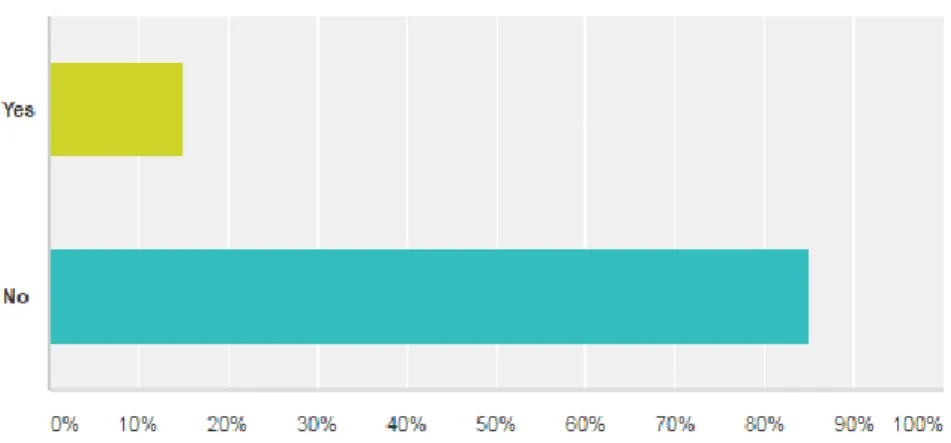
bullying behavior since the implementation of the program. Three participants chose to skip that question. Of the 21 who answered, two staff members said that they had noticed a change while 19 responded that they had not seen a change.
Figure D: Graph of teacher response from online survey
While it was clear the majority of the teachers had not seen a change in behaviors, the survey also asked if the staff members were satisfied with the program overall. All participants responded to this question and had the choice between very satisfied, somewhat satisfied or not satisfied. One participant said they were very satisfied, while the rest of the participants indicated that they were somewhat satisfied or not satisfied with the program. Both of these responses
indicate that teachers are overall not happy with the program, and feel that the students are not benefiting from the program. Teachers also rated student engagement during the lessons. Most teachers responded that students were typically engaged, on task, participating, and respectful to peers during the Olweus lessons.
The program requires teachers to hold classroom meetings with a small group over students once or twice a month. Teachers are given lesson plans and may need to modify the lesson plans as they see fit for their students. Since the program is for students in grades 3-12, sometimes the lesson plans may not be appropriate for younger students. Staff members do not get time to modify these lesson plans and often spend their time working on them. This may cause a negative connotation with the Olweus program.
Figure E: Graph from teacher survey ranking student engagement during Olweus
Finding 4: Paraprofessionals are lacking information to help implement the program within the school
While teachers at the school district did not share the same insights about the Olweus program as the students, one group of staff members seemed to be left out of the implementation of the Olweus program completely. The Olweus program calls for teachers to lead monthly
classroom meetings, hang posters promoting the Olweus program in their classroom, and frequently use Olweus terms with students. Teachers were also part of the process of fitting the Olweus program into the curriculum, mapping out lessons and getting the program started within the school district. Para-professional staff were not part of the implementation, and are not involved in the classroom meetings.
The lack of knowledge about Olweus with the para-professional staff became evident in survey results. As stated in a previous finding, staff members were asked whether they were satisfied with the program and the majority indicated that they were somewhat satisfied, or satisfied. Later on in the survey, staff members were asked if they would change anything about the program and were able to add in an optional comment about what they would change. Out of the five comments left in the survey, three of them mentioned “all staff” being involved in the Olweus classroom meetings and implementation of the program. One staff member commented that para-professionals were not involved in classroom meetings and were “left out” of the entire process. While the survey was anonymous, it was clear that several staff members felt that para-professionals were being left out of the implementation completely.
During the Olweus classroom meetings, the entire school dedicates 30 minutes to whichever lesson is scheduled for that day. Every teacher has a group of 7-8 students that they work with for the entire school year. All students, grades 6-12, work through a lesson together on similar topics depending on grade level. During this 30 minutes, para-professional staff are typically working on other school-related jobs and are not involved in the meetings. Through the staff survey, one participant commented that only one para-professional was involved on the “steering committee” that helped get the program started within the school. It became clear
through the survey that there was a major gap in the knowledge the para-professionals had about the Olweus program as the teachers and administrators.
Chapter 5: Conclusions and Implications
While this survey only used the results of a small population, enough data was collected to determine some conclusions about the Olweus program. Through semi-structured interviews and staff surveys, I was able to draw several conclusions about the impacts and perceptions the students and staff members have about the program at one particular school.
Through my research and analysis, I have concluded that the Olweus program is making a positive impact on the students who attend the school district. Working with a population of students who are typically engaged in bullying activity or negative behavior, all of the students interviewed understood the purpose of the program. Even if the students did not enjoy the classroom meetings, the students were able to identify that the program was to help the school remain a positive atmosphere and to keep students safe. Several students were able to identify situations when a tactic from the Olweus program was used, or seen, to handle a bullying situation appropriately. Through the semi-structured interview, I was able to gain insight about the program through the eyes of the students. It was clear that the program is having a positive impact on them on a day-to-day basis.
While the program is influencing the students at the school in a positive way, I have also concluded that more work needs to be done for the staff members to fully embrace the program and to have a more positive outlook on the program. Through the staff survey, it was evident that the staff members were not happy about the program. Staff members were also not seeing the
positive effects of the program like the students were. Most staff members reported that they had not seen a decrease in bullying behaviors since the program was implemented.
As with any new program in a school district, it is apparent that it will need some tweaking to be perfect and to work to its fullest potential. Although the majority of staff
members reported that they would change something about the Olweus program, few had ideas about what they would change as only five responded to the open-ended comment about what exactly they would change. While the program has been beneficial for the students within its first couple years of implementation, I have concluded that more changes need to be made to the program and that the staff members, administrators and students need to collaborate to ensure the success of such an important program within the school district.
Implications
Several important implications for students, staff members and administrators were apparent from the findings and analysis of this study. As the researcher, and a staff member who uses and implements the Olweus program, I believe that several suggestions can be taken from this study to help the program work to its highest potential.
When a school implements any type of new program, they should make sure the lesson plans are teacher-friendly. While the Olweus program provides lesson plans and maps out lessons for the staff, the lessons are typically lengthy and need modifications. Since the program is used through grade levels 3-12, they are often not age appropriate for every age group. The lessons also often require materials that need to be copied, written on smartboard slides, or written on whiteboards. Although lessons can be taught without these things, it would not be the best and most impactful version of the lesson. It would also be difficult to teach these lessons
without the suggested materials. Teachers are not given any time to go through the lesson plans and modify them for their student needs, or get materials ready for copying. Many teachers have enough work to finish during their planning time and cannot devote time to working through these lessons. This leads to frustration from teachers, and/or incomplete lessons that may not produce the intended benefits. If the lessons were written out with materials included, teachers would have a most positive view on the lessons and would be more excited and willing to teach them to the best of their ability. If administrators are expecting staff members to teach these lessons, they should have materials and lesson plans ready to ensure the best possible lesson for the students.
While the program was implemented within the district in 2015, limited professional development and staff training was provided to teachers relative to learning the program. Many teachers do not fully understand the intent of the program, the expectations, or the reasoning of implementing the program within the district. It was clear when the program was implemented that there was a lack of knowledge about the program, and how to teach it. Many teachers experienced frustration and confusion when the program was first beginning to be implemented in the district and were not sure how to approach and teach the lessons. When a new program is implemented within a district, administrators should take time to train staff members on the program and explain the purpose behind the program to ensure the success of the program.
Besides staff trainings and professional development opportunities, it is important that all staff members in the school are involved in the implementation of a new program. This includes para-professionals and other staff members. In order for the program to be successful, all staff members should understand the program and be committed to using it, especially when it comes to a topic as important as bullying. Many bullying situations happen in areas of the school that
are typically monitored by para-professionals, including the cafeteria, computer labs, hallways and buses. The lack of knowledge about the program of these staff members can lead to
miscommunication in how bullying problems should be handled and appropriate strategies that could be taught to the students when faced with these situations. Having the entire school community involved would help the students understand the importance of the program, and keep all staff members on the same page when dealing with a problem as significant as bullying.
Through conversations with the students involved in the program, and observations made on a daily basis, it is evident that verbal bullying is the most significant problem within the school. Several studies and statistics have suggested that verbal bullying is one of the most common forms of bullying within schools and among teenagers. Using the semi-structured interview, I was able to have open conversations with the students about the most common types of bullying they see and hear. Verbal bullying was the most common form of bullying that the students mentioned through the interviews. The Olweus program, and many other anti-bullying programs typically focus on physical bullying because it is more dangerous and threatening to students. There are a limited number of lessons in the Olweus program that focus on verbal bullying and strategies that students can use to handle situations when they are being verbally bullied by another students. Schools should find new ways to address verbal bullying and teach students new strategies to deal with this common type of bullying.
Limitations
While several conclusions and implications were drawn from this study, some limitations did exist throughout this study. One limitation of the study was the size of the population studied. Only 15 students and 23 staff members were able to participate in this study. A larger population of students and staff members could lead to more specific results and conclusions.
Another limitation of this study was the grade level of the students interviewed. All of the students who were interviewed in this study were in the same grade level and had the same experience with the program. Other students in different grade levels within the school were unable to be interviewed for this study. Interviewing students in other grade levels would be an interesting and more specific way to see how the Olweus program was affecting other students in the school.
One final limitation of the study was the time that the program had been implemented prior to the study beginning. The Olweus program was only in its third year of implementation at the time of the study. The district has not been using it for a significant amount of time.
Research suggestions
Based on the conclusions from my research, I believe that more research could be done to understand the affects a bullying prevention program, specifically Olweus, could have on a school district. One suggestion would be for a study to be done in a district that was using Olweus for an extended period of time, possibly longer than five years. This would be able to determine the long-term impacts that the program may have on students and staff members in a district. More research could also be done on other anti-bullying prevention programs that may be more teacher friendly than the Olweus program, and how effective they have been with different populations.
Overall Significance of Study
The findings in this study have provided insight into the effects and perceptions of the Olweus program at one school district within its first few years of implementation. As with many new programs adopted by school districts, it is clear that some work needs to be done with the
program to ensure that it is as effective as possible. While some work should be done with teachers and administrators, it is clear that the program is having a positive impact on the students within the district. Bullying remains a major problem in schools across the world. Finding a program that could have a positive impact on combating the issue of bullying is important for all schools. While the program is not perfect, the program is leading this district in the right direction, making this study significant.
References
Barber, K. & Olsen, A. (2004). Assessing the transitions to middle and high school. Journal of Adolescent Research, 19, 3-30.
Bhukhanwala, F. b. (2014). Theater of the oppressed in an after-school program: Middle school students' perspectives on bullying and prevention. Middle School Journal, 46(1), 3-12. Christine, K. Stateline. (2005). Phi Delta Kappan, June 725-726.
Datta, P., Cornell, D., & Huang, F. (2016). Aggressive attitudes and prevalence of bullying bystander behavior in middle school. Psychology In The Schools, 53(8), 804-816. Graham, S. (2011). Bullying: A module for teachers. American Psychological Association. Hester, J., Bolen, Y., Thomas, B., Vinson, B. M., & Heatherly, B. (2011). Middle school
infractions decrease with the implementation of an aggressive anti-bullying initiative - p.r.e.s.s. Review of Higher Education & Self-Learning, 4(13), 103-107.
Hester, J., Bolen, Y., & Hyde, L. (2014). Involving community to strengthen a successful middle school bullying program. Review of Higher Education & Self-Learning, 7(25), 76-82. Hutchings, J., & Clarkson, S. (2015). Introducing and piloting the KiVa bullying prevention
programme in the UK. Educational & Child Psychology, 32(1), 49-61.
Limber, S. (2011). Development, evaluation, and future directions of the olweus bullying prevention program. Journal Of School Violence, 10(1), 71-87.
Olweus, D. (1994). Bullying at school basic facts & effects of a school-based intervention program. Journal of Child Psychology and Psychiatry, 35, 1171-1190.
The Olweus Bullying Prevention Program: A proven school-based program to reduce bullying. (2005). Brown University Child & Adolescent Behavior Letter, 21(4), 1-6.
Seals, D., & Young, J. (2003). Bullying and victimization: Prevalence and relationship to gender, grade level, ethnicity, self-esteem, and depression. Adolescence, 38, 735-747.
Ševčíková, A. a., Macháčková, H., Wright, M. F., Dědková, L., & Černá, A. (2015). Social support seeking in relation to parental attachment and peer relationships among victims of cyberbullying. Journal of Psychologists & Counselors in Schools, 25(2), 170-182. Yang, A., & Salmivalli, C. (2013). Different forms of bullying and victimization: Bully-victims
versus bullies and victims. European Journal of Developmental Psychology, 10(6), 723-738.
Wang, W., Brittain, H., McDougall, P., & Vaillancourt, T. (2016). Bullying and school transition: Context or development? Child Abuse & Neglect, 51. 237-248.
Appendices
Student Semi-Structured Interview Questions
1- What do you think the purpose of the Olweus Bullying Prevention Program is? 2- Do you enjoy the Olweus Bullying Activities? Why or why not?
3- Have you noticed a change (versus last school year) in bullying behavior? If yes, what is a specific example?
4- What areas do you see bullying happen the most? What areas do you see bullying happen the least?
5- Do you think students take the Olweus Bullying activities seriously?
6- What are typical bullying behaviors that happen in your school? Can you give an example?
7- What is the difference between bullying and just “messing around”?
8- Have you ever seen someone do or say something taught in an Olweus bullying lesson? 9- When you have seen/participated in bullying, have you ever thought about something we
discussed in an Olweus bullying lesson?
10-Do you think bullying has gotten worse or better since you were in elementary school? If yes, why do you think that happened?
Staff Olweus Survey
1. By completing this survey, I give the researcher permission to use my responses in data collection
Yes
2. Overall, how satisfied are you with the Olweus Bullying Prevention Program?
Very Satisfied Somewhat Satisfied Not Satisfied
0-10 minutes 10-30 minutes More than 30 minutes
4. During the program, the students in your classroom are:
Always Usually Sometimes Rarely Never
Engaged Engaged Always Engaged Usually Engaged Sometimes Engaged Rarely Engaged Never On Task On Task Always On Task Usually On Task Sometimes On Task Rarely On Task Never Participating
Participating Always Participating Usually Participating Sometimes Participating Rarely Participating Never Respectful of
Peers Peers AlwaysRespectful of Peers Usually Respectful of Peers SometimesRespectful of Peers Rarely Respectful of Peers Never Respectful of
5. Since the implementation of the program, have you noticed a decrease in bullying behaviors at Wheatland Chili Middle/High School?
Yes No
If you answered yes, what differences have you noticed?
6. Overall, what best describes your feelings about the topics for Olweus classroom meetings?
Very relevant to my students Somewhat relevant to my students Not relevant to my students
7. Would you change anything about the Olweus bullying prevention program?
Yes No
If you answered yes, please briefly describe what you would change
8. Please include any other information about Olweus that you feel might be relevant to my research study:
9. I am a teacher/staff member at:
Middle/High School Prefer not to answer