RUXI W ANG - Corporate Envir onmentalism in China
Corporate Environmentalism
in China
Erasmus University Rotterdam (EUR) Erasmus Research Institute of Management
Mandeville (T) Building Burgemeester Oudlaan 50
3062 PA Rotterdam, The Netherlands P.O. Box 1738
3000 DR Rotterdam, The Netherlands T +31 10 408 1182
E [email protected] W www.erim.eur.nl
has been confronted with unprecedented, overwhelming pressures to address its severe environmental challenges, both from domestic and international societies—all the more since the world has become increasingly critical on non-sustainable developmental strategies. While the corporate environmentalism literature has shed light on how different stakeholders such as government, industry, and civil society can exert their influences on corporate environmentalism in developed economies, there is a dearth in both theories and empirics that explain (1) the complexity within a single constituent that could be impactful through multiple and sometimes contradictory expectations on firm behaviors, (2) the environmental strategies in the business group form that is prevalent in Asian and emerging economies, and (3) how the world’s largest emerging economy, China, is addressing its environmental problems in an almost utterly different context.
I build on corporate environmentalism, business group, and China studies literatures in an attempt to reveal a comprehensive picture of how different external and internal forces jointly influence the corporate environmental strategies in the emerging economy of China. Findings from two empirical studies exploring corporate environmental strategies in Chinese firms suggest that (1) the Chinese state has multiple faces at different levels in the political hierarchy, exerting non-concerted influences on corporate environmental practices, (2) there is heterogeneity among Chinese business group affiliates on environmental strategies caused by their pressure sensitive and pressure resistant attributes.
Jointly, these two studies offer a novel, more nuanced understanding of the mechanisms that impact corporate environmentalism. The findings from this dissertation are not only applicable to China but also to other settings, including developed federal states where decentralized autonomy prevails as well as other emerging economies where the business group is an important economic force.
The Erasmus Research Institute of Management (ERIM) is the Research School (Onderzoekschool) in the field of management of the Erasmus University Rotterdam. The founding participants of ERIM are the Rotterdam School of Management (RSM), and the Erasmus School of Economics (ESE). ERIM was founded in 1999 and is officially accredited by the Royal Netherlands Academy of Arts and Sciences (KNAW). The research undertaken by ERIM is focused on the management of the firm in its environment, its intra- and interfirm relations, and its business processes in their interdependent connections.
The objective of ERIM is to carry out first rate research in management, and to offer an advanced doctoral programme in Research in Management. Within ERIM, over three hundred senior researchers and PhD candidates are active in the different research programmes. From a variety of academic backgrounds and expertises, the ERIM community is united in striving for excellence and working at the forefront of creating new business knowledge.
ERIM PhD Series
Research in Management
iii
Corporate Environmentalism in China
Milieugedrag van bedrijven in China
Thesis
To obtain the degree of Doctor from the Erasmus University Rotterdam
by command of the Rector Magnificus Prof.dr. H.A.P. Pols
and in accordance with the decision of the Doctorate Board.
The public defense shall be held on Thursday 01 June 2017 at 11:30 hrs
by
Ruxi Wang
Doctoral Committee
Promotor: Prof.dr. P.P.M.A.R Heugens
Copromotor: Dr. F. Wijen
Other members: Prof. dr. J.P. Cornelissen Prof.dr. C. Marquis
Dr. F. Bridoux
Erasmus Research Institute of Management – ERIM
The joint research institute of the Rotterdam School of Management (RSM) and the Erasmus School of Economics (ESE) at the Erasmus University Rotterdam Internet: http://www.erim.eur.nl
ERIM Electronic Series Portal:
ERIM PhD Series in Research in Management, 417 ERIM reference number: EPS-2017-417-S&E ISBN 978-90-5892-473-5
© 2017, Ruxi Wang Design: Icon Images
This publication (cover and interior) is printed by Tuijtel on recycled paper, BalanceSilk® The ink used is produced from renewable resources and alcohol free fountain solution.
Certifications for the paper and the printing production process: Recycle, EU Ecolabel, FSC®, ISO14001. More info: www.tuijtel.com
All rights reserved. No part of this publication may be reproduced or transmitted in any form or by any means electronic or mechanical, including photocopying, recording, or by any information storage and retrieval system, without permission in writing from the author.
i
PREFACE
In my final year of high school, I claimed that I would go for business schools after getting some sophisticated knowledge of mathematics and logical way of thinking from an engineering school. As I look back now, I am not sure whether I really knew what it meant back then, as I did not even know what engineering or business was. Oddly enough, I really followed that track, even though I made some “detours” to an economic school after college. RSM “happened” to be the only management school for PhD studies on my application list. But after I had a Skype interview with Pursey and Frank, I felt that was it. I still remember the first days when I could not understand anything in the field. Coming with engineering and economics background, every paper here to me was a nice piece of story. Luckily, the more time I spend in this field, the more fascinating I find conducting research in a management school is. There are such a numerous variety of theoretical domains, empirical settings, and intriguing phenomenon that I could touch upon solely based on my interest, refreshing my mindset and keeping me excited all the time.
I was concerned about the natural environment that I had been living in before I started my PhD project. In 2012, there was news indicating that seven out of the ten most polluted cities in the world were in China. Doing the PhD not only enriched my academic skills, but offered me deeper and more positive insights on the severe environmental challenges China faces with. The more I look into how the environmental issues have been addressed in China, the less negative I became. In September 2016, of the world’s ten most polluted cities released by the WHO, two cities were from China. Admittedly the smog in China will not disappear in a day, but I believe that things are moving towards a positive direction. With the strong hands of the Chinese state, the increasingly compliant and voluntarily responsible firms, and the ever-improved awareness of environmental issues in the civil society, the effectiveness of the environmental institutions will make great progress eventually.
This dissertation would not exist had it not been the support I got from, but not limited to, the people and organizations I thank below. I can not thank enough for the great guide my promoter, Professor Pursey Heugens, has offered me. He has shaped my attitude
ii
towards being an academic, encouraged me to enjoy conducting research out of my own interest, and showed me how a sharp mind should work. His wisdom also enlightened my perception of the world. I am incredibly grateful for his unconditional and unlimited support for me and his unreserved trust on me throughout my doctoral trajectory. He is the mentor of my career and my life.
Dr. Frank Wijen is my daily supervisor. I would not have realized the improvement in so many aspects such as my language skills, logical thinking, and even the way I deal with people if it were not Frank’s patient guidance. He gave me many insightful and professional advices, generously passing on to me his experiences and lessons on both research and teaching activities. Such knowledge will equip me for my whole career. I am extremely grateful that I could have this great supervisory team that not only are great co-authors to collaborate with, but truly light up the future for me both in career and life.
I am also very fortunate to have been encouraged by many magnificent individuals. Professor Jianjun Zhang, my host in Guanghua Management School at Peking University, I thank him for sharing his wisdom and knowledge on so many topics we have discussed. His understanding of the Chinese context has always inspired me. I would like to thank Professor Chris Marquis for his invaluable advice to me on different occasions throughout my entire PhD trajectory as well as for being such a generous and supporting referee during my job application process. Professor Gengshen Zhao, I thank him for his tremendous support and effort in recommending me to a lot of contacts for my field study. The insights I got from the qualitative study are immeasurable. Special thanks also to Dr. Jochem Kroezen and Dr. Mia Raynard for many insightful feedback on my research projects during the early stages of my PhD.
My colleagues and my friends made my PhD journey colorful. Roxana and Jacomijn, I can not imagine how bored I would have been in Room T7-01 if it were not them alongside me all the time. Pengfei, my academic older brother, I will miss his sarcasm and the sweet ladies of his family. Qiushi, glad we explored almost every piece of the Netherlands together (I still have four provinces left that we can go in the future!). Wenting, I do not feel lonely having her in Rotterdam. Heather, thanks for all the fun at home and the thoughtful conversations. I hope we will continue with the help of Internet and letters. Debbie, Diana, Dongnan, Guoliang, Hendra, Ingrid, Jing Li, Jing Wu, Jingjing
iii
Liu, Kati, Joost, Lameez, Mirko, Qiaomei, Qin Su, Qinghong, Riccardo, Rick, Saeedeh, Thijs, Ting Xiao, Wei Sun, Yanwei, Yang Feng, Yifei, Ying Feng, Ying Geng, Ying Zhang, Yingjie, Yiyun, Yuanyuan, Yunlong, and many other individuals, thank you all for the good memories we share. I look forward to meeting each of you in every corner of the world in the next ten years. I would also like to take this chance to thank Carolien, Patricia, Miho, Kim, Tineke, Natalija, and Marleen for their kind and patient support on all kinds of administrative issues. I must also thank CSC, my department of Strategic Management and Entrepreneurship at RSM, ERIM, and Erasmus Trustfond for their generous support.
I would like to express my deepest love with my family. My parents, my grandparents, aunt Ren and uncle Zhao, my parents in law, Xiaoxiao, and Xiangyun, thank you that you have always been there for me. I will make every effort to make sure that we see each other more often from now on. ZUO Wei, we have had so many sweet memories since 2009, and I look forward to continuing our exciting lives together.
WANG Ruxi 王汝曦
Beijing, April, 2017
v
Table of Contents
Chapter 1. Introduction ... 1
1.1 Corporate Environmentalism ... 1
1.2 Research Questions ... 4
1.3 Environmental Protection in China ... 5
1.3.1 Structure in the state for environmental issues ... 6
1.3.2 Structure in business for environmental issues ... 7
1.4 Dissertation Overview ... 8
1.4.1 Study 1: Government’s green grip: Multifaceted state influence on corporate environmental practices in China ... 10
1.4.2 Study 2: Differences in Environmental Management System Adoption among Chinese Business Group Affiliates ... 10
1.5 Declaration of Contribution ... 11
1.6 Conclusion ... 12
Chapter 2. Government’s Green Grip: Multifaceted State Influence on Corporate Environmental Practices in China ... 15
2.1 Introduction ... 16
2.2 Environmental Governance in China ... 19
2.3 Government Influence on Corporate Environmental Practices ... 22
2.3.1 Hierarchical government influence ... 23
2.3.2 Moderating effects on hierarchical influence ... 25
2.4 Methodology ... 28
2.4.1 Sample and data ... 28
2.4.2 Variables and measures ... 30
2.4.3 Regression method ... 36
2.4.4 Supplementary interviews ... 36
2.5 Results ... 37
2.5.1 Statistical results ... 37
2.5.2 Qualitative evidence ... 46
2.6 Discussion and Conclusion ... 48
2.6.1 The multifaceted influence of the Chinese state ... 48
2.6.2 Towards a phenomenological understanding of state influence in China ... 49
2.6.3 Theoretical contributions ... 50
vi
2.6.5 Conclusion ... 52
Chapter 3. Differences in Environmental Management System Adoption among Chinese Business Group Affiliates ... 55
3.1 Introduction ... 56
3.2 Business Group Prevalence and Strategy ... 59
3.3 Strategic Importance of Environmental System Adoption ... 64
3.4 Hypotheses: Pressure-Sensitive and Pressure-Resistant Affiliates ... 68
3.4.1 Environmental strategy adoption among group affiliates—drivers of pressure sensitivity ... 68
3.4.2 Environmental strategy adoption among group affiliates—drivers of pressure resistance ... 72
3.5 Methods ... 75
3.5.1 Sample and data ... 75
3.5.2 Variables and measures ... 77
3.5.3 Regression method ... 80
3.6 Results ... 81
3.6.1 Hypotheses tests ... 81
3.6.2 Robustness checks... 86
3.7 Discussion ... 86
3.7.1 Summary of main findings ... 86
3.7.2 Implications ... 87
3.7.3 Limitations and future research ... 88
3.7.4 Conclusion ... 89
References ... 91
Appendix 1 Measuring the Administrative Hierarchical Distance ... 105
Appendix 2 Interviewee List ... 107
Summary ... 113
Samenvatting ... 115
vii
About the author ... 119 Portfolio ... 121 The ERIM PhD Series ... 123
ix
List of Tables
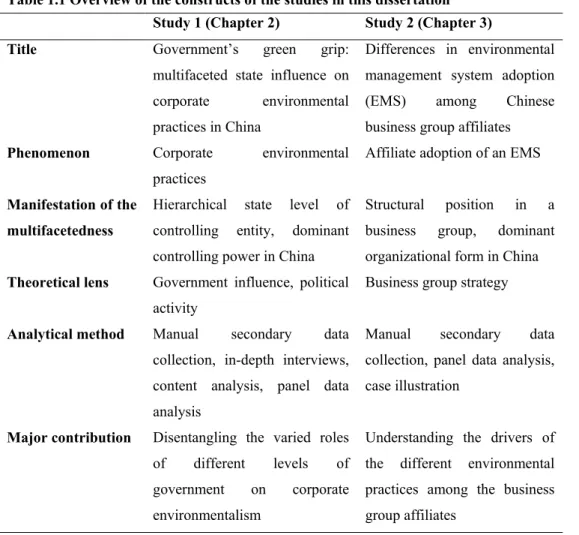
Table 1.1 Overview of the constructs of the studies in this dissertation ... 9
Table 2.1 Labels used to measure corporate environmental practices in Chinese listed firms ... 32
Table 2.2 Hierarchical distance to the central government ... 33
Table 2.3 Descriptive statistics and correlations ... 38
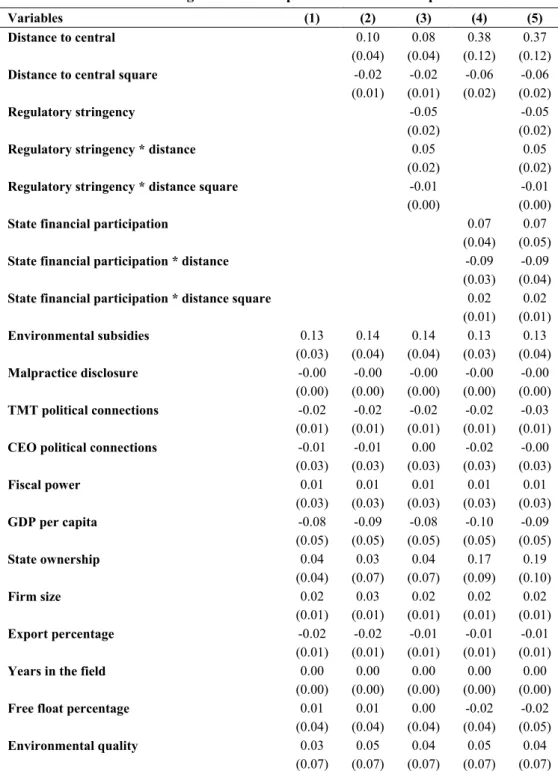
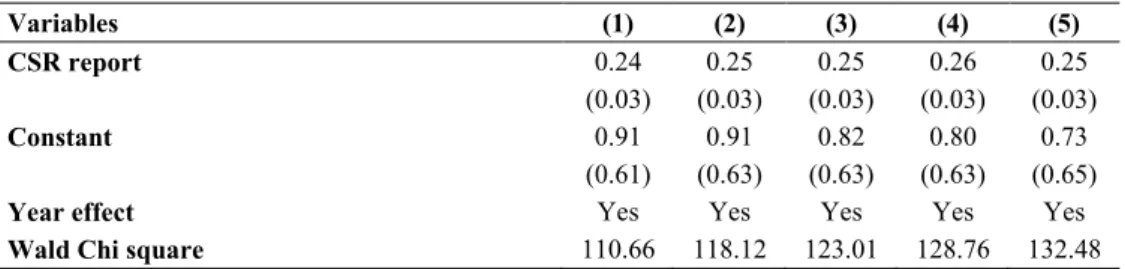
Table 2.4 Random effects regression for corporate environmental practices ... 39
Table 3.1 Descriptive Statistics and Correlations ... 82
Table 3.2 Influence of Pressure-Sensitive and Pressure-Resistant Factors on the Adoption of an EMS ... 83
Table 3.3 Marginal Influences of Pressure-Sensitive and Pressure–Resistant Factors on EMS Adoption ... 85
xi
List of Figures
Figure 2.1 Growth rates of CO2 emission, energy consumption, and GDP in China ... 19
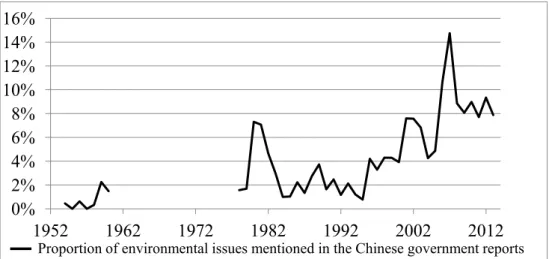
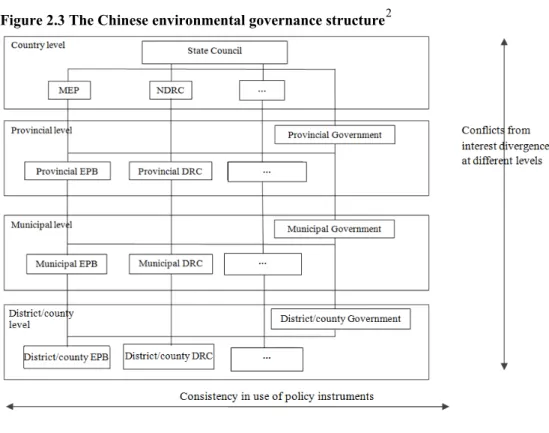
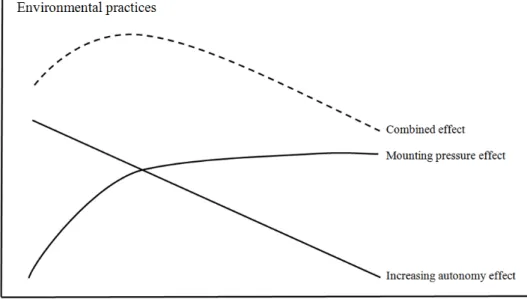
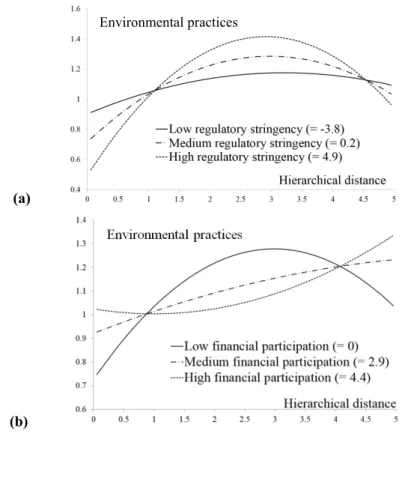
Figure 2.2 Proportion of environment-related issues in Chinese annual government reports ... 20 Figure 2.3 The Chinese environmental governance structure ... 22 Figure 2.4 Combined effect of hierarchical distance and environmental practices ... 25 Figure 2.5 Moderating effects of (a) regulatory stringency and (b) state financial
participation ... 41 Figure 3.1 Contribution to World GDP Based on PPP by Percentage ... 66 Figure 3.2 Comparison of CO2 emissions and energy consumption as a Percentage of Total
World Emissions of the US and China ... 67 Figure 3.3 The Number of Firms that have Adopted an ISO 14001 Environmental
Management System ... 67 Figure A.1 Examples of structural relations between a firm and its controlling
1
Chapter 1.
Introduction1.1 Corporate Environmentalism
The world’s largest economy (measured by Gross Domestic Product by purchasing power parity), China, has caught tremendous attention over the globe in the past decade as the world’s largest greenhouse gases emitter and energy consumer (World Bank, 2015). China is also a prominent example of an emerging economy whose environmental impact has been non-negligible yet studied relatively little compared with the research already done in developed countries. An in-depth investigation on the management of the natural environment and energy consumption in emerging economies, especially China is, therefore, of paramount importance. Research shedding light on how corporate environmental practices in China is (in)effectively addressed and reinforced by the public and private sectors, as will be shown in this dissertation, is profoundly meaningful and closely relevant to the welfare of mankind and the way business and society interact and move forward together.
Since the degradation of the natural environment over the globe manifested in global warming, deforestation, air pollution, etc., increasingly extensive concerns, discussions, and debates among policy makers, civil society, and industrial firms have been invoked in the past several decades. With this trend, the perceptions and interpretations of corporate environmentalism among firms, government, and the public has been ever-changing and evolving (Banerjee, 2001; Chru Hoffman, 2001). In the 1970s, firms carried out environmental performances as required by law, given such activities were considered a threat to the ultimate corporate goal of the maximization of profit (Hoffman, 2001). Later, both societal and scholarly emphasis on
2
corporate benign environmental practice started to change dramatically. Environmental issues have always been brought up as a more pressing and salient topic, especially after the Rio de Janeiro Earth Summit in 1992 (Etzion, 2007).
From the 1990s, scholars have started to use various theoretical lenses such as corporate political activities, resource-based view, and stakeholder theory to investigate the mechanisms driving firms to behave environmentally responsibly and assess the related financial and societal impacts. Studies have shown that firms perform in an environmentally friendly way to comply with government regulations (Delmas and Toffel, 2004), to outcompete their rivals in the market (Bremmers et al., 2007), and to respond to
demands by their local communities and customers (Henriques and Sadorsky, 1996). The terminology on corporate environmental strategies ranges from phrases such as “corporate environmental commitment”, “ecologically sustainable strategies”, and “sustaincentric paradigm” to “corporate environmentalism” (Banerjee, 2002). By definition, corporate environmentalism is “the process by which firms address environmental issues and develop environmental management strategies” (Banerjee, 2001: 489-490), integrated together with the financial goals into their corporate mission (Etzion, 2007). Below, I provide a brief description of each of the major theoretical arenas explaining the mechanisms for the effectiveness of corporate environmentalism.
The first group of scholars view corporate environmentalism as a type of political activity. Through activities such as lobbying and building political connections, firms reduce uncertainty and exert influence in the policy-making process (Hillman, Keim, and Schuler, 2004). In the context of corporate environmentalism, instead of showing how the firms could “manipulate” or shape the regulatory decisions, studies have shown that firms practice in an environmentally friendly way in order to seek for political legitimacy as a critical strategic resource (Marquis and Qian, 2014; Luo, Wang and Zhang, 2016). In such an intersection of corporate political strategies and corporate environmentalism, research has been featuring studies on corporate environmental and social practices in China, the largest yet complicated autocratic country in the world facing increasingly severe environmental and social challenges. This line of research takes the perspective that the government is the dominant actor which sends out strong signals through both coercive
3
and normative channels by issuing stringent regulations and supportive guidelines to push forward corporate environmentalism (Child, Lu, and Tsai, 2007).
Scholars using a resource-based view argue that the possession of resources and capabilities that are valuable and hard to imitate are the premise to sustain a competitive advantage (Hart, 1995). In the context of corporate environmentalism, not only scholars but also the industries have been aware that the capability of balancing economic and environmental sustainable developments has become a crucial competitive advantage (Hart, 1995; Judge and Douglas, 1998; Sharma and Vredenburg, 1998). The resources and legitimacy firms gain through corporate environmental practices secure their survival and growth (Russo and Fouts, 1997; Chrun et al., 2016). In China, in particular, firms carry out
environmental performances in order to seek for legitimacy from the government and the society as a strategic resource for their future development (Li, Meng, Zhang, and Zhou, 2008; Marquis and Qian, 2014). For instance, the strategic usage of political connections and the possession of business group resources endows firms with competitive advantages and drives them to respond to environmental pressures differently. This line of research attributes the various corporate environmental performances to the necessity to remain legitimate or the privilege firms bolster because of the critical resources the firms retain.
The research stream of stakeholder theory centers on the importance of maintaining a good relationship with groups or individuals that can affect or are affected by the firms (Freeman, 1984). The incentive of practicing corporate environmentalism is emanated from the recognition of stakeholder interests (Banerjee, 2001). While some studies showed that legitimacy or reputation might be sustained among the stakeholders at the expense of shareholders’ interests (Jensen, 2002), others contend that competitive advantage could be achieved with a sustainable strategy (Hart and Milstein, 2003; Porter and Vander Linde, 1995). In the context of corporate environmentalism, stakeholders primarily consist of governments who are the environmental regulators (Henriques and Sadorsky, 1999), public interest groups such as local community and environmental activists (Berry and Rondinelli, 1998), and market-related actors such as customers and suppliers (Darnall, Henriques and Sadorsky, 2010).
In pluralistic and democratic societies, stakeholder theory is normally the most preferred lens, as the multiple stakeholders mentioned above function almost equivalently
4
in those contexts. In the western societies, non-government organizations (NGOs) raise the public environmental awareness in civil society, and forcefully push the progress of environmental regulatory actions (Child et al., 2007; Egri and Herman, 2000; Yaziji and
Doh, 2009). On the other hand, in a state featuring centralization and autocracy such as China, environmental initiatives are planned and designed by the state, implemented by its different departments and local branches, and if any, only morally supported by the NGOs and in the civil society. Therefore, in such contexts like China where environmental requirements from multiple stakeholders are rare, corporate political activity and resource-based view appear to be much more relevant for the exploration of corporate environmentalism.
1.2 Research Questions
The discussion of the literature in the field of corporate environmentalism has revealed a few major theoretical and empirical puzzles. First, understanding how the complexity within a single entity could bring any differentiated impact to corporate environmental performances requires both nuanced theoretical lens and rich empirical context. The current literature has an underlying assumption that every constituent sets consistent expectations and thus exerts monolithic influences on firms. So far, we have limited understanding of the multifacetedness in a seemingly unitary entity and its related impact on corporate environmental performances. Especially when studying governmental influences on corporate environmentalism, most of the studies solely focused on a state’s consistent and coercive functions with a clear set of expectations vis-à-vis firms. We have little knowledge of how firms react if different levels of a state exert divergent demands. Moreover, when such a multifaceted state is of dominant importance to business development, it is more crucial for firms to respond strategically to the different demands. The different priorities between economic and sustainable development the Chinese central and local government hold offer an extraordinary context to investigate such a research gap. As such, the first research question I address in this dissertation is:
1. What is the influence of the multifaceted state on corporate environmentalism in China?
5
Second, the transition in organizational forms as global industrial production shifts from the West to especially China has been largely overlooked. In other words, to get a comprehensive view of how the effectiveness of environmental institutions could be achieved in the largest economy in the world, China, the field of corporate environmentalism begs for a much more careful check on the most prevalent and impactful organizational form, business group in this economy. Students have explored the separate influences of the state, civil society, and industry on the firm. Moreover, scholars in the arena of business group studies have shed much light on the comparison between business group and standalone firms. Yet, both fields have remained silent on business group affiliates and their environmental strategies as a specific unit of analysis. The important number of Chinese business group affiliates, the complex nature within the business groups they belong to, and their contribution to the Chinese economy, or even the world economy, have provided a rich context to address this research gap. As such, the second research question I address in this dissertation is:
2. What economic and political factors can exert influences on the propensity of a Chinese business group affiliate to adopt an environmental management system?
In order to set the stage for the aforementioned central research questions, in the rest of this chapter, I will first provide an overview of the ongoing situation of environmental protection in China and then summarize each of the two studies in this dissertation.
1.3 Environmental Protection in China
Since the Open-door Policy in 1978, China has started to resume its prominent leading position in the world economy as it did multiple times centuries ago. It is unfortunate that as a developing economy, China followed the developmental trajectories of presently developed western countries by sacrificing the natural environment for economic prosperity (World Resources Institute, 2014). On the positive side, China has been restructuring its major sectors and has made great effort for more sustainable economic development. On September 3, 2016, the eve of the G20 summit, together with the former
6
US president Barack Obama, the Chinese President Xi Jinping announced that the world’s two biggest greenhouse emitters will formally ratify the Paris climate change agreement (The Guardian, 2016). This signifies that the Chinese central government and the leading party commit themselves to conserving resources and protecting the environment, also specified as one of the fundamental national policies. As a matter of fact, the environmental protection issue requires efforts from not only the government but also corporations and civil society. I will provide a general overview of how the government and business are addressing the environmental issues in China together in this section. More details will be discussed in separate chapters in this dissertation.
1.3.1 Structure in the state for environmental issues
As the largest autocratic country in the world, China has a highly hierarchical political system. The National People’s Congress (NPC), the State Council, and the Communist Party of China (CPC) Central Committee are the three supreme state organs on the central level that are empowered with the top rights for country level decisions and administration. One of the nine special committees under the NPC, the Environmental Protection and Resources Conservation Committee, takes the responsibility to examine and draw up bills and to assist the NPC and its Standing Committee in their legislative and oversight work related to the environmental field. As important parts of the State Council, several coordinating organs, ministries and commissions take charge of issues related to the environment, energy and climate change, namely, the National Development and Reform Commission (NDRC), the Ministry of Environmental Protection (MEP), the Ministry of Industry and Information Technology (MIIT), the Ministry of Land and Resources (MLR), the Ministry of Civil Affairs, the National Leading Group on Climate Change (NLGCC), the State Council Energy Conservation and Emissions Reduction Leading Group (SCECERLG), and the National Energy Commission (NEC).
A set of targets on the country level will be issued by one or several relevant governmental organs at the ministerial level under the State Council first to address a major issue according to the strategic plan from the Central Committee of CPC, the State Council, and the NPC for the country. Then all the relevant governmental organs at the ministerial (state) level work out detailed regulations, laws, plans, measurements, or standards to implement the plans. Almost each of the organizations at the central
7
government level (the NPC and the different departments of the State Council) has branches in local areas, ranging from provincial, to municipal, county, and township levels. In the detailed plans, tasks will be allocated from the central government to local levels through the political hierarchy. Later, specific targets will be made for each involved corporation to complete the assigned tasks in the local area.
The implementation of the corporate environmental targets is primarily supervised by the different levels of the Chinese state, rarely with the help of the civil society and the media. Activities that might invoke conflicts, spontaneously or with the help of NGOs, are implicitly not advocated and very often restricted in China (Ho, 2001). Therefore, environmental NGOs in China seek to guide the public to be aware of the environmental issues and to serve as helping hands for the government, rather than generate more conflicts in society and complaining about the government’s performances (China Development Brief, 2013; Ho, 2001).
One drawback of the state’s multi-level branches in the local area is that they have dual identities: they are governed both vertically and horizontally (Tsang and Kolk, 2010). Thus, a local branch is vertically governed through a vertical hierarchy by its relevant ministry at the central level; meanwhile, it is a part of the geographical local government horizontally. The vertically related organizations have the same goal of solving issues in a certain field, while the horizontal relationship requires a focus on local development. When the local government and the organs from the State Council have different demands and expectations on how a region should develop, a conflict of interests emerges (Child et al., 2007; Luo et al., 2016). I will elaborate on the conflict of interests within the Chinese
government and its impact on corporate environmentalism among local firms in further details in Chapter 2.
1.3.2 Structure in business for environmental issues
Hierarchy prevails in Asian cultures, especially China, not only in the political system but also in the structure of business. In the most prevalent organizational form of business group in China, execution and supervision of regulations are also implemented through the hierarchy within the groups. Confronted with the social and regulatory pressures brought along by their environmental challenges, firms not only listen to the pertinent government
8
(Child et al., 2007) but also are obliged to complete the tasks their business groups have
assigned to them as subordinates (Vissa et al., 2010).
As illustrated in Section 1.3.1, targets and plans on environmental performances are firstly worked out by the central state, followed by concrete implementation led by local governments. At this stage, detailed targets are assigned, specifically for many related firms individually to complete the assigned tasks, not only for the state but also for the business groups. On the one hand, firms listen to the local government or their controlling government and strategically carry out environmental performances in order to balance the different demands from different levels of the state (for a detailed elaboration, see Chapter 2). On the other hand, the environmental performances of business group affiliates are also monitored and regulated through the hierarchical system within their own business groups. For instance, if a business group receives environmental obligatory targets from the central level, it will act accordingly by specifying and assigning more concrete targets and tasks to all of its affiliates across the country. Just as the Ministry of Environmental Protection has its local branches of the Environmental Protection Bureau in the political system, an affiliated firm also has a Department of Environmental Protection/Energy Saving as a corresponding unit to the Section of Environmental Protection/Energy Saving at the group level to receive orders and implement corporate plans. The environmental practices among business group affiliates, as evidenced in Chapter 3, diverge as well, not only because they belong to different business groups but also because different organizational factors encourage or dissuade such practices among the affiliates. I will further investigate these attributes at both the group and the affiliate levels in Chapter 3.
1.4 Dissertation Overview
The dissertation consists of two studies that have several attributes in common. First, both studies aim to expand the current scope of corporate environmentalism to China, a major economic context that has received scant scholarly attention despite the major environmental implications of its economic activities. Second, each study explores corporate environmental performances and their related strategies as they are influenced by external constituencies, such as the state and business group attributes. Third, both studies
9
employ a specific quantitative method, panel data analysis, to test the proposed statistical models. Other than these similarities, the two studies are quite distinct from each other. An overview showing how the studies in Chapters 2 and 3 of the dissertation explored the multifacetedness of the state and business group influence, respectively, is provided in Table 1.1. In the remaining sections of this chapter, a brief summary is provided for each of the two studies.
Table 1.1 Overview of the constructs of the studies in this dissertation
Study 1 (Chapter 2) Study 2 (Chapter 3)
Title Government’s green grip:
multifaceted state influence on corporate environmental practices in China
Differences in environmental management system adoption (EMS) among Chinese business group affiliates
Phenomenon Corporate environmental
practices
Affiliate adoption of an EMS
Manifestation of the multifacetedness
Hierarchical state level of controlling entity, dominant controlling power in China
Structural position in a business group, dominant organizational form in China
Theoretical lens Government influence, political
activity
Business group strategy
Analytical method Manual secondary data
collection, in-depth interviews, content analysis, panel data analysis
Manual secondary data collection, panel data analysis, case illustration
Major contribution Disentangling the varied roles
of different levels of government on corporate environmentalism
Understanding the drivers of the different environmental practices among the business group affiliates
10
1.4.1 Study 1: Government’s green grip: Multifaceted state influence on corporate environmental practices in China
The first study probes into the impact of the multiple governments at different levels within the Chinese autocratic state on corporate environmentalism in China. In this study, I challenge the assumption in the extant literature that governmental influence on corporate environmental performances is monolithic, with clear and consistent expectations vis-à-vis firms. In the Chinese context, on the one hand, inferior levels of the state listen to their superiors as power travels through the political hierarchy, pushing corporate environmentally friendly performances. On the other hand, due to the political autonomy also granted by the central government, local states at the farther end from the central on the political hierarchical spectrum become impactful as well, with an inclination to prioritize regional economic development. I investigate how such a complex state apparatus in China spurs different reactions among firms, as evidenced by their environmental practices.
I manually collected 480 firm-year observations, spanning the period from 2008 to 2012. Using content and panel data analysis (random effect regressions), I show that the hierarchical level of the state body controlling a firm and the firm’s environmental practices are related in an inverted U-shaped way. In addition, further analysis reveals that such an inverted U-shaped influence is strengthened by regulatory stringency, and weakened by state financial participation. To facilitate the interpretation of the statistical results, I have also conducted over 60 hours of in-depth interviews with representatives of Chinese firms, different levels of government, and environmental NGOs. The qualitative evidence from these interviews helps us to more deeply understand the multifaceted state influence. This paper primarily contributes to the corporate environmentalism literature by exploring the influence exerted by the diversity of power and expectations from and within a single state on corporate environmental practices.
1.4.2 Study 2: Differences in Environmental Management System Adoption among Chinese Business Group Affiliates
The second study unpacks the influence of pressure sensitivity and pressure resistance on the different strategic adoption of an environmental management system (EMS). In this study, I distinguish the factors that make business group affiliates pressure sensitive and
11
pressure resistant. I argue that pressure sensitivity stems from the social needs the affiliates need to maintain their social capital and brand image. On the other hand, pressure resistance emanates from the privileges the affiliates enjoy because of their organizational and group-level attributes.
I manually collected 732 firm-year observations of 166 business group affiliates spanning the period of 2008 to 2012. These observations are all listed firms with their main business in the traditional environmentally demanding sectors. Using panel data analysis (probit and logit random effect regressions), I show that being affiliated with a family-owned business group and having a Business-to-Consumer model increases the sensitivity the affiliates are confronted with, pushing them to adopt an EMS. Furthermore, being a core member of a business group and having corporate political connections adds to the resistance towards the adoption of an EMS. In this study, I have two major contributions. First, I extend the ongoing conversation from a comparison of business group affiliates and standalone firms to a discussion on the different strategic choices among business group affiliates. Second, as the center of global economic development has shifted from developed countries to emerging economies, I explore the most prevalent organizational form in the largest emerging economy in China, the business group.
1.5 Declaration of Contribution
I (hereinafter ‘the author’) declare my contribution to each of the chapters in this dissertation and acknowledge the contributions of other people that have been involved.
Chapter 1: The author has completed this chapter primarily on her own, with the feedback from the supervisory team.
Chapter 2: The majority of the work in this chapter has been completed by the author in collaboration with her supervisory team (i.e. Professor Dr. Pursey P.M.A.R. Heugens and Dr. Frank Wijen). Different versions of this paper has been presented in several international conferences, one of which was collected in the best paper proceedings at a conference, and a recent version is currently under review at a top management journal. The author is the first author, the daily supervisor second, and the promoter third.
Chapter 3: The majority of the work in this chapter has been completed by the author in collaboration with her supervisory team. This paper has been presented in an
12
international conference, and is currently in preparation to submit to a top management journal. The author of this dissertation is the first author of the paper, the promoter second, and the daily supervisor third.
1.6 Conclusion
The research presented in this dissertation aims to advance the understanding of the corporate environmentalism in China. Theoretically, it offers novel perspectives to unveil the complexity of the influence a single entity, the state, exerts on corporate environmentalism, and to unpack the factors causing the heterogeneity in strategic choices within a same organizational form, the business group. Empirically, the dissertation covers the major mechanisms through which corporate environmental practices in Chinese listed firms could be affected by external formal influences, including two opposing effects, (mounting pressure and increasing autonomy) brought along by the different expectations and priorities of various levels of the state, as well as the pressure resistance and pressure sensitivity business group affiliates possess. Practically, it is impactful as it plots a deep and comprehensive picture for practitioners around the globe to better understand the effectiveness of the environmental institutions in China. For instance, performing business with China under the backdrop of a sustainable developmental strategy advocated by the central government, firms or governments from developed economies could understand and/or cooperate with their Chinese competitors or partners better by sorting out where they are positioned in the political hierarchy and business group structure, analyze the environmental pressures they might be confronted with, and attune the development of their strategies. It also reminds the public policy makers for environmental solutions to keep a closer eye on the conflicts from within the bureaucratic system rather than from the outside.
As China is facing increasingly important environmental challenges and worldwide critique, especially over the past five to ten years, as the largest emitter of greenhouse gases and the leading consumer of non-renewable energy, its influence on the global climate change begs for immediate, effective, and united actions to solve its major environmental problems. Given the importance of the Chinese economy, the outcomes of this study have repercussions stretching beyond the Chinese context. This dissertation
13
appears timely for scholars and practitioners in rethinking better and more effective environmental institutions as well as making a deliberate attempt to eventually solve environmental challenges. Moreover, the economic and environmental impact China brings along is non-negligible. Given that China has been the world’s largest economy by purchasing power parity from 2014 onwards, doing business with Chinese firms becomes unavoidable, lucrative, yet challenging in the age of globalization. Despite of the culture difference, considering that China actually is in a development stage in which it prioritizes economic development, whereas the western society has moved on from this stage and is now pursuing sustainable development, there will be a lot of differences in the mindsets, corporate practices, and ultimate goals between the two contexts when doing business together. This dissertation offers a careful investigation of two critical actors, the autocratic state and the dominant business group, in pushing environmentally sustainable economic development in China. The dissertation’s insights will help different relevant players, including government, business, and NGOs, in the world get a more comprehensive view of the current semi-institutionalized environmental institution in China.
15
Chapter 2.
Government’s Green Grip: Multifaceted State Influence on CorporateEnvironmental Practices in China1
Abstract
Emerging economies such as China enjoy economic expansion but also face dramatic environmental challenges. China’s government is a central actor in both stimulating economic activities and pursuing environmental protection. Drawing on panel data and in-depth interviews, we examined the influence of the state on environmental practices of Chinese publicly listed firms at different levels of administrative hierarchy. The results show that corporate environmental practices follow an inverted U-shape as control of environmental practices moves from the central government to the most decentral administrative level. This curvilinear relationship is positively moderated by regulatory stringency and negatively by state financial participation in the corporate ownership structure. We conclude that state influence on corporate environmental practices in China is multifaceted and subject to ‘policy-policy decoupling’.
16
2.1 Introduction
The government is a key driver of corporate environmental practices (Delmas and Toffel, 2004; Henriques and Sadorsky, 1996; Marquis and Qian, 2014; Porter and Van der Linde, 1995). Government instruments like regulation, pollution levies, and subsidies induce firms to develop and implement environmentally friendly policies (Kemp, Soete, and Weehuizen, 2012). The influence of government has been studied extensively in the context of Western societies (Bansal and Hoffman, 2012; Wijen, Zoeteman, Pieters, and Van Seters, 2012), but scholars have only to a limited extent investigated how the government affects environmental practices in emerging economies (Marquis and Raynard,
2015). This is surprising, as the combination of high economic growth, shifts in global industrial production patterns, and important governance challenges (Hoskisson, Eden, Lau, and Wright, 2000) has led to major environmental problems in many emerging economies (UNEP, 2012).
The quintessential example is China. After decades of sustained growth, China became the world’s biggest economy in terms of purchasing power parity in 2014 (IMF, 2015). China also became the world’s largest emitter of greenhouse gases in 2006, and the leading consumer of (non-renewable) energy in 2009 (World Bank, 2015), even though the country made some progress in terms of resource efficiency and clean product development (Mol and Carter, 2006; Li and Shui, 2015). The growing magnitude of the environmental challenges facing emerging economies, therefore, calls for a better understanding of their environmental governance.
While researchers have recognized the central role of the government in environmental governance, they have treated its influence on corporate environmental practices as monolithic, consisting of a clear and consistent set of expectations (e.g. Delmas and Toffel, 2008; Sharma and Henriques, 2005). However, the government exerts influence at different levels, from the central state to the village — the most decentral governmental organ. Previous studies have suggested that the Chinese government is a dominant actor with a complex organizational structure and multiple levels of administrative hierarchy, each of which may influence corporate behavior in different ways (Child et al., 2007; Carter and Mol, 2006; Luo et al., 2016). While the Chinese
17
served as the major driver of sustainable development, lower-level administrative branches have not always prioritized sustainable development to the same degree (Qi et al., 2008).
As one Chinese proverb capturing the mindset of lower-tiered magistrates states, the emperor is as far away as the sky (tian gao huang di yuan, in Chinese). Local governments
thus have their own development agendas for the firms they control, which need not be consistent with central governmental policies emphasizing environmental protection.
We focus on the multifaceted impact of the government on corporate environmentalism. In the absence of objective performance measures, we seek to explain company-reported practices, thereby addressing two essential issues. First, we discuss how administrative hierarchical distance — the degree of power separation between the central government and the level of government holding the monitoring and control rights over a firm — affects environmental practices. We identify nine levels of administrative hierarchy in China, and assess their impact on corporate environmental practices. Second, we focus on regulatory stringency and state financial participation in firm ownership as contextual factors that may moderate the focal relationship. We thus unpack the multifaceted influence of the Chinese government, a seemingly unitary yet internally plexiform actor, on corporate environmental practices. China’s transitional market offers an excellent context for examining how a single constituent can exert multiple and sometimes contradictory influences on firms. As firms are both the source of and solution to environmental problems (Bansal and Hoffman, 2012), we study their corporate environmental practices, defined as the extent to which Chinese firms evidence “the recognition and integration of environmental concerns into a firm’s decision-making process” (Banerjee, 2002: 177). Our leading research questions are: (1) what is the
influence of administrative hierarchical distance on corporate environmental practices in China; and (2) what government-related factors moderate this influence?
Using content analysis and panel analysis on data collected on Chinese listed firms between 2008 and 2012, we theorized and found the relationship between administrative hierarchical distance and corporate environmental practices to follow an inverted U-shaped pattern. Two opposing forces produce this phenomenon. On the one hand, firms experience mounting pressure, meaning that environmental compliance
18
centralized political system (Lin, 2011), we expect the pressures emanating from more central governmental levels to carry greater weight than those exerted at more decentral levels. On the other hand, we expect firms to experience increasing autonomy, as local
governments in China tend to use their distance from the central government to prioritize economic development over environmental protection. Since the careers of lower-tiered magistrates in China are often determined by their track record for stimulating economic growth (Li and Zhou, 2005), we expect autonomy to prevail at local governmental levels. Moreover, we expect the contextual factors of regulatory stringency and state financial participation to moderate the balance between the two forces in different ways. Firms subject to more stringent regulation conduct more environmental practices at intermediate levels of administrative control, whereas state ownership reduces such activities at those levels.
Our study makes two contributions. First, we add to the corporate environmentalism literature by disentangling the varied roles of different levels of government. Most prior studies have treated governments as unitary entities, assuming that they operate in consistent and concerted ways across hierarchical levels (Delmas and Toffel, 2008; Sharma and Henriques, 2005). Contrastingly, we show that governments have multiple faces, and that governmental bodies operating at different levels can exert alternate and even conflicting influences on corporate environmental practices. This may be true not only in emerging economies, but also in developed nations, especially in federal states with high levels of local autonomy, like Germany and the United States.
Second, our empirical examination of environmental governance in an emerging economy adds new perspectives to the literature on corporate environmentalism. The existing body of work has privileged investigations of environmental governance in developed economies, in which civil society provides an important complementary ‘check’ on firms’ environmental behavior (Bansal and Hoffman, 2012; Wijen et al., 2012).
Nonetheless, many contemporary nations facing important environmental challenges— including China and Russia—are characterized by far greater involvement of the government in both corporate ownership and environmental custodianship. Since civil society is a much weaker force in these contexts (Earnhart et al., 2014), our existing
19
the influence of non-governmental organizations (NGOs)—are also less applicable. Shedding light on the influence of the government on environmental practices in an emerging economy like China furthers our understanding of the ways in which the world’s rapidly growing environmental challenges can be contained more effectively.
2.2 Environmental Governance in China
In the aftermath of its economic success, China faces important environmental challenges. The similar patterns displayed in the growth rates of carbon dioxide (CO2) emissions,
energy consumption, and gross domestic product (GDP) in Figure 2.1 suggest that economic development in China has been inextricably linked to environmental degradation.
Figure 2.1 Growth rates of CO2 emission, energy consumption, and GDP in China
(World Bank, 2014)
Growth rate of CO2 emissions in China
Growth rate of energy consumption in China Growth rate of GDP in China
In China, the largest autocratic country in the world, the state is the dominant actor in terms of advancing corporate environmentalism (Beeson, 2010; Marquis and Qian, 2014). NGOs play a supporting role in this process (Ma and Ortolano, 2000), relieving pressure on the government by educating civil society on environmental issues (Spires, 2011). The central government has become increasingly aware of its environmental challenges. For instance, the former State Environmental Protection Administration (SEPA)
-40
-30
-20
-10
0
10
20
30
40
1955
1965
1975
1985
1995
2005
2015
20
was officially promoted to the highest level of governance in the Chinese political structure, and became the Ministry of Environmental Protection (MEP) in 2008. Clear, obligatory environmental targets were set in the 11th Five-Year Plan in 2006, whereas the
12th Five-Year Plan in 2011 tightened them further. As shown in Figure 2.2, almost one
tenth of the central government’s 2012 annual report was focused on environmental protection, as compared to only one percent in 1985.
Figure 2.2 Proportion of environment-related issues in Chinese annual government reports
(Central People’s Government of the People’s Republic of China, 2014)
In China, both local governments and the central state have the power to allocate significant resources to the development of industries and regions (Luo et al., 2016;
Marquis and Qian, 2014). Policy enforcement differs across administrative hierarchical levels, however, as local governments have pursued development strategies that vary from those of the central government for historical reasons. After the establishment of the People’s Republic of China in 1949, priority was given to the development of heavy industry for economic reconstruction. The 1978 Open Door Policy, with its decentralization of revenue appropriation and investment allocation from the provincial governments down to individual enterprises, was conducive to the establishment of a market regime (Oi, 1995). When local governments began to be evaluated primarily in terms of GDP growth from 1985 onwards, environmental protection laws and regulations
0%
2%
4%
6%
8%
10%
12%
14%
16%
1952
1962
1972
1982
1992
2002
2012
21
effectively became dead letters. Local governments had “strong incentives to circumvent those policies adopted in Beijing that might constrain local growth” (Lieberthal, 1995: 316). Profitable firms in heavy industry often enjoyed the protection of local governments (Marquis, Zhang, and Zhou, 2011). Differences in regional development policies between central and local governments quickly became apparent. As the Chinese saying goes, “local policies trump central governmental policies” (shang you zheng ce, xia you dui ce).
When the central government later began to regulate environmental issues, local governments thus rarely followed in lockstep (Child et al., 2007).
Irrespective of these differences, there is also consistency within the administrative system. The state categorically uses a variety of policy instruments, implemented through local ministerial branches, to achieve its environmental protection targets. The local Environmental Protection Bureaus (EPBs, branches of the MEP) and the local Development and Reform Bureaus (DRBs, branches of the National Development and Reform Commission) use rules to enhance the environmental performance of local firms. They set targets for emission reduction and energy conservation, and apply administrative penalties. Local DRBs, together with the local Bureaus of Economy and Information Technology and with branches of the Ministry of Industry and Information Technology at the central level, also grant subsidies to local firms for clean production, energy saving, and emission reduction. In 2012, subsidies amounting to RMB 200 billion (about USD 32 billion) were allocated to energy saving and environmental protection purposes (National Bureau of Statistics of China, 2012). The EPBs also use environmental performance disclosure to create public reputational impact. Saving face (mian zi) is
crucial for firms, as reputation is a major social currency in Chinese society (Park and Luo, 2001). An overview of the Chinese environmental governance structure is presented in Figure 2.3.
22
Figure 2.3 The Chinese environmental governance structure2
2.3 Government Influence on Corporate Environmental Practices
Firms adopt environmental strategies to maintain legitimacy in light of compliance pressures from the government, local communities, and the market (Delmas and Toffel, 2011; Henriques and Sadorsky, 1999). Cited as the greatest source of pressure on firms (Henriques and Sadorsky, 1996), government influence manifests itself in a variety of ways (Kemp et al., 2012), including the enforcement of regulation (Russo, 1992; Delmas
and Montes-Sancho, 2011) and signaling desired behaviors (Marquis and Qian, 2014). As firms seek to reduce uncertainty and advance private ends (Hillman et al., 2004), they must
meet governmental expectations.
The Chinese case offers an extraordinary opportunity to investigate how firms use corporate environmentalism as a political strategy, through which they respond to the multifaceted demands of the state (Marquis and Qian, 2014). Corporate political strategies
2 For the sake of simplicity, we do not distinguish between municipalities, districts, and towns that are at or under
23
are complex in China, where grassroots movements without official supervision are restricted (Spires, 2011), the administrative hierarchy is rife with struggles (Carter and Mol, 2006), and multiple policy instruments are used in conjunction but not always in concert (Shi and Zhang, 2006). We develop new arguments on how Chinese firms respond to multiplicitous government demands.
2.3.1 Hierarchical government influence
Two concurrent, opposing forces drive the cumulative impact of all administrative hierarchical layers on corporate environmental practices. We label the first mounting
pressure. Firms feel pressed to increasingly engage in environmental practices as
administrative hierarchical distance rises, although additional pressure will accumulate at a diminishing rate. As distance from the central government grows, a larger number of governmental bodies at different hierarchical levels are simultaneously involved in firm supervision (Xu, Tihanyi, and Hitt, 2014). Firms that are controlled directly by the central government only face a singular set of compliance pressures, leading to fewer constraints on corporate behavior (Gedajlovic and Shapiro, 1998). Many firms in China, however, are controlled by local governments, which serve as delegates (Qi et al., 2008) or agents
(Wong, 2000) of their superior authorities. The central government delegates power and responsibilities to the provincial governments, requiring the latter to implement centrally formulated targets and plans in all policy areas, including environmental management. Seen from the perspective of firms controlled directly by the provinces, however, provincial governments add a layer of environmental compliance pressure, cumulating on top of the central government’s dictums (Marquis and Qian, 2014; Luo et al., 2016). These
pressures keep mounting with additional administrative hierarchical distance, as provincial governments, in their turn, delegate power to municipal governments, and so on. Delegating governmental bodies retain the right to intervene in lower-order affairs and continue to regulate the relevant larger policy areas. Compliance pressures cumulate at a decreasing rate, however, because in China’s centralized political system (Lin, 2011), higher-level agencies are primarily rule makers and lower-level bodies are mostly rule takers. Since governmental bodies at very decentral levels hardly add any environmental regulation of their own, the mounting pressure effect eventually levels off.
24
The second, opposing force we identify is increasing autonomy, which captures
the effect that local governments tend to wield their discretionary power to prioritize economic growth over environmental conservation. With increasing administrative hierarchical distance, the central government becomes less able to oversee the extent to which local governments enforce its intentions rigorously. Governmental pressure to conduct environmental practices will thus be lower for firms operating at greater administrative hierarchical distance from the central government, also because the governmental agencies controlling them acquire more autonomy themselves (Qi et al.,
2008). Centrally developed environmental regulations are often intentionally crafted in ambiguous terms to offer discretion to local governments, and the latter use this power pragmatically (Ma and Ortolano, 2000). When lower-level governments control firms, environmental policy instruments tend to be implemented only partially to favor local employment, boost fiscal revenues, and advance lower-tiered magistrates’ careers, which heavily rely on economic performance (Morduch and Sicular, 2000; Qi et al., 2008; Zheng,
Singh, and Mitchell, 2015). When profitable firms display environmentally disruptive behavior, local governments often avoid taking measures that would lead to environmental compliance at the expense of tax revenues (Morduch and Sicular, 2002; Shi and Zhang, 2006). The increasing autonomy effect continues to augment with administrative hierarchical distance, because decentrally controlled firms enjoy greater bargaining power vis-à-vis local governments. The latter depend on income from local businesses (Ma and Ortolano, 2000) and are therefore susceptible to firms threatening to shift their activities to localities with more lenient environmental regimes (Kalamova and Johnstone, 2012). This allows firms to co-opt officials (Zheng et al., 2015) and circumvent environmental
regulations (Child and Tsai, 2005).
While the mounting pressure effect increases yet levels off, firms’ autonomy vis-à-vis local governments thus keeps growing. We therefore expect that these two forces will jointly produce an inverted U-shaped relationship (Haans, Pieters, and He, 2016) between administrative hierarchical distance and corporate environmental practices. Figure 2.4 plots this combined effect. The first part of the curve is dominated by the mounting pressure effect, inducing firms to increasingly conduct environmental practices. At higher levels of administrative hierarchical distance, however, the cumulative pressure levels off and is
25
overtaken by the increasing autonomy effect, resulting in decreasing environmental practices pressure. See Hypothesis 2.1.
Hypothesis 2.1: Administrative hierarchical distance has an inverted U-shaped effect on corporate environmental practices.
Figure 2.4 Combined effect of hierarchical distance and environmental practices
2.3.2 Moderating effects on hierarchical influence
To further probe into the influence of the state, we explore how several government-related factors moderate the impact of administrative hierarchical distance on corporate environmental practices. Drawing on insights from corporate political strategies (Hillman
et al., 2004) and corporate environmentalism (Delmas and Montes-Sancho, 2011; Marquis
and Qian, 2014), we argue that the focal relationship is likely to be moderated by two contextual factors: regulatory stringency and the state’s financial participation in the ownership structure of the focal firm.
Regulatory stringency
Governments frequently rely on regulation to promote, facilitate, or enforce environmentally benign corporate behavior (Kemp et al., 2012). We expect that both the
26
practices will intensify with regulatory stringency, resulting in a steepened inverted U-shaped relationship (cf. Jourdan and Kivleniece, 2016). Regulation intensifies the mounting pressure effect, as governments use regulation to control inputs (e.g. banning toxic substances), production (e.g. requiring cleaner production technologies), and outputs (e.g. establishing bounds on pollution levels). Certain sectors are more stringently regulated than others, because their activities are perceived to be more environmentally disruptive (Hoffman and Ocasio, 2001; Fiorino, 1996). Firms facing more stringent environmental regulations suffer from a lack of legitimacy, as they are considered to adversely affect the natural environment. They therefore tend to engage proactively in environmental practices (Jaffe and Palmer, 1997; cf. Marquis and Qian, 2014). With the central government becoming increasingly aware of the severity of environmental issues (Child et al., 2007; Luo et al., 2016), it has allocated more resources to the monitoring of
the environmental compliance of more disruptive sectors and it has urged local governments to enforce environmental regulations more tightly (Lo and Tang, 2006; Shi and Zhang, 2006). Consequently, firms in stringently regulated sectors experience greater pressure to carry out their environmental actions. As a political strategy, environmental practices are instrumental for firms in environmentally disruptive sectors, as they signal their compliance with stringent requirements and help them acquire, retain, or regain their legitimacy (Banerjee, 2002; Marquis and Qian, 2014; Porter and Van der Linde, 1995).
We similarly expect the increasing autonomy effect to be amplified in more regulated sectors. Traditional sectors have majorly contributed to the Chinese economy’s sustained growth (Li and Leung, 2012). Industries like basic metals, chemicals, coal, and consumer goods have generated employment, income, and tax revenues. Since China’s fiscal and investment policies were decentralized (Oi, 1995), local governments have been the primary beneficiaries of this economic expansion (Morduch and Sicular, 2000; Qi et al.,
2008; Zheng et al., 2015). Given their higher level of vested interests in traditional sectors,
lower-tiered magistrates will make every effort to protect these activities. While these sectors are environmentally demanding, high economic stakes make local governments relatively lenient when it comes to issuing and implementing environmental regulations— also to avoid firms relocating towards more lenient regions (Kalamova and Johnstone,