R E S E A R C H P A P E R
Zinc proteome interaction network as a model to identify
nutrient-affected pathways in human pathologies
Guido Leoni•Antonio Rosato •Giuditta Perozzi• Chiara Murgia
Received: 17 July 2014 / Accepted: 8 October 2014 / Published online: 4 November 2014 ÓSpringer-Verlag Berlin Heidelberg 2014
Abstract Zinc is an essential micronutrient playing fun-damental roles in cellular metabolism. It acts mostly through binding a wide range of proteins, thus affecting a broad spectrum of biological processes, which include cell division, growth and differentiation. Full annotation of zinc-binding proteins showed them to represent about 10 % of the human proteome, with over 300 enzymes containing zinc ions within their catalytic domains. Also, hundreds of key regulatory proteins, including transcription factors, require zinc for their activity. In this study, the whole set of zinc-binding proteins together with their direct interactors was listed and defined as the zinc proteome (ZNP). We interrogated pathway analysis tools to identify the cellular processes that are predicted to be affected by zinc avail-ability. Network and functional enrichment analyses highlighted biological processes potentially affected by deregulated zinc homeostasis. This computational approach was also tested on a real case study: The possible involvement of ZNP network proteins in Crohn’s disease
pathogenesis was assessed on genes transcriptionally reg-ulated in the intestine of patients affected by this condition. The analysis produced a network of pathways likely to be influenced by zinc and associated with Crohn’s disease. These results highlight a central role for zinc in the tissue remodeling process which occurs upon gut inflammation, pointing at novel disease pathways whose effect could be worsened by zinc dyshomeostasis and impaired zinc fluxes in specific damaged areas. Overall, our computational approach could provide novel insights into pathological conditions and could therefore be used to drive mechanistic research in under-investigated fields of research. An interactive version of the determined ZNP network is available at URLhttp://93.63.165.11/ZNnetwork/. Keywords ZincPathway analysisCrohn’s disease Abbreviations
ZNBP Zinc-binding proteins
ZNP Zinc proteome (ZNBP ?interactors) BP Biological processes
IBD Inflammatory bowel diseases CD Crohn’s disease
UC Ulcerative colitis IECs Intestinal epithelial cells
Introduction
The group XII metal zinc is an essential micronutrient playing fundamental housekeeping roles in physiology, cellular metabolism and gene expression. After iron, zinc is the most abundant transition metal ion in living organisms, being strictly required for a wide variety of biological
Electronic supplementary material The online version of this
article (doi:10.1007/s12263-014-0436-0) contains supplementary material, which is available to authorized users.
G. LeoniG. PerozziC. Murgia (&)
CRA-NUT, Food and Nutrition Research Center, Agricultural Research Council, Via Ardeatina 546, 00178 Rome, Italy e-mail: [email protected]
Present Address: G. Leoni
Department of Physics, Sapienza University of Rome, Piazzale Aldo Moro 5, 00185 Rome, Italy
A. Rosato
Department of Chemistry and Magnetic Resonance Center, University of Florence, Via L. Sacconi 6,
functions. Zinc needs to be taken up from the diet through specific membrane transporters (Huang and Tepaamornd-ech 2013; Liuzzi et al. 2004; Liuzzi and Cousins 2004), whose expression and/or membrane localization is tightly regulated in a tissue/cell type-specific manner. It is espe-cially enriched in protein-rich foods such as meat, seafood and legumes. The World Health Organization (WHO) recommends a daily zinc intake of 10 mg/day for children, 12 mg/day for women and 15 mg/day for men (WHO and Organization 1996). Specific population groups such as children and adolescents, pregnant women and the elderly display higher zinc requirements and a corresponding increased risk of deficiency. Previous work reporting complete annotation of zinc-containing proteins has con-tributed to further understanding of the biological role of zinc, showing that zinc-containing proteins represent about 10 % of the human proteome, with over 300 enzymes containing zinc ions within their catalytic domains (And-reini et al.2009; Bertini et al.2010).
Several lines of evidence point to zinc and to its metabolism as important players in the onset and/or in the progression of multifactorial diseases. Due to its wide-spread functions throughout the body, zinc unbalance in specific tissues is likely to contribute to several diseases (Devirgiliis et al.2007). Zinc dyshomeostasis was associ-ated with Alzheimer’s disease and altered deposition of extracellular amyloid-b plaques (Craddock et al. 2012). Decreased zinc content was also described in post-mortem pancreata of diabetic individuals over 75 years ago (Scott and Fisher1938), and the role of this metal ion in insulin secretion and glucose homeostasis was confirmed since then by several reports (Chimienti 2013; Sladek et al. 2007). Airways inflammation, one of the main hallmarks of asthma, has also been associated with deregulated zinc homeostasis (Zalewski et al.2005). Gut mucosal integrity also requires zinc, and zinc dyshomeostasis has been associated with several intestinal pathologies. Inflamma-tory bowel diseases (IBD) represent complex disorders, including both Crohn’s (CD) and ulcerative colitis (UC), which are both characterized by chronic inflammation of the gastrointestinal tract. CD and UC display a strong genetic component, but they are also influenced by envi-ronmental factors, including the diet (Ferguson2010; Tysk et al.1988). Current clinical interventions to treat IBD are based on anti-inflammatory steroid therapy; positive results in controlling CD symptoms have also been obtained with therapeutic strategies including specific monoclonal anti-bodies that neutralize the effect of the inflammatory cyto-kine TNFa(Chowers and Allez2010). The management of CD is rapidly changing with the development of a number of promising drugs that will broaden and improve the spectrum of treatment options (Cheifetz2013). Nutritional management of IBD through the application of controlled
diets to restraint gut inflammation would also be highly desirable, but it is still difficult to achieve mainly because limited information is presently available on the mecha-nisms of action of the specific food components that were suggested to exert positive effects in CD-affected patients (Ferguson et al.2007). It is therefore extremely important to gain further knowledge on the modulatory role of spe-cific nutrients in gut homeostasis, both in healthy and in pathological conditions.
Low levels of plasma zinc have frequently been asso-ciated with IBD, while zinc supplementation was reported to improve intestinal barrier function in CD patients, as well as in animal models, by contributing to the resolution of alterations in permeability of the gut mucosa and to reducing the risk of relapse (Hering and Schulzke 2009; Matsui 1998; Sturniolo et al. 2001, 2002). Marginally, zinc-deficient diets were shown to worsen experimentally induced colitis in rats (Iwaya et al. 2011), and in vitro evidences have shown that mild zinc deficiency renders intestinal cells susceptible to inflammatory cytokine-induced apoptosis, therefore contributing to epithelial barrier disruption (Ranaldi et al.2013).
In the study presented here, we aimed at characterizing the complex of biological processes enriched in zinc-binding proteins (ZNBP) and in their interactors, which we here define as the zinc proteome (ZNP). The network and func-tional enrichment analyses that we have performed high-lighted physiological functions potentially affected by deregulated zinc homeostasis. To verify the applicability of our computational approach to pathological processes in real life, we performed a case study in which we re-analyzed the results of a previously published work on differentially regulated genes in the intestinal mucosa of CD patients, which validated the results of our ZNP network analysis.
Materials and methods
Determination of the zinc proteome (ZNP)
filter the results obtained by mining the reference genome with the input domain list. This reduces the rate of false positives (Andreini et al. 2009). Refseq sequences har-boring at least one zinc-binding pattern were selected. ZNBP refseq codes map 2,066 protein coding genes from Ensembl genome version 69.
Network building and functional enrichment analysis The ZNP network was built with the MIMI bionet builder plug in of Cytoscape (Shannon et al. 2003) browsing experimentally validated protein–protein and gene–protein interactions from public databases. Enrichment of biolog-ical processes annotated in gene ontology was estimated with the DAVID web server (da Huang et al. 2009). Overrepresented BPs were selected by comparing the ZNP versus the starting reference genome. BPs annotated in gene ontology (level 5) were selected only if significantly enriched with a p value threshold\0.01 corrected with Benjamini method.
Pairwise semantic similarities between overrepresented BPs were calculated by the REVIGO server (Supek et al. 2011), utilizing the Resnik measure as metric distance. PCA and cluster analysis
PCA was performed with FactoMineR (Le et al. 2008) package part of R software on ZNBPs further characterized by degree, topological coefficient and number of enriched biological processes in which each ZNBP was involved. The degree and number of BPs were preliminarily scaled on the unit variance to make them comparable with topo-logical coefficient.
Hierarchical clustering was performed with the cluster-ing utility included in FactoMineR, selectcluster-ing the Ward method and the Euclidean distance as distance metric. Best number of clusters was determined by silhouette score.
Results
Constitution of the zinc proteome network
Our analysis highlighted 3,643 proteins in 2,066 human genes harboring at least one zinc-binding domain, corre-sponding to 9.4 % of the total number of protein coding genes annotated in the reference genome (PRJNA168). We reasoned that protein functions affected by zinc availability and intracellular zinc fluxes would not be represented only by proteins that bind the metal ion directly, but also by their interactors. Therefore, we expanded the zinc prote-ome by including proteins previously shown to interact with at least one ZNBP. The final zinc proteome (ZNP)
consisted of 6,680 proteins (supplementary table S1a) connected in a network of 68,358 interactions including both protein–protein and protein–gene interactions as annotated in public databases. An interactive version of this ZNP network is available at URL http://93.63.165.11/ ZNnetwork/.
Properties of the ZNP network
To evaluate biological processes most likely affected by zinc balance, we characterized our ZNP network by per-forming functional enrichment analysis of biological pro-cesses (BP) annotated in the gene ontology database (GO). Functional analysis resulted in enrichment of 308 BP, all annotated in GO (supplementary data table S1b and http://93.63.165.11/ZNnetwork/). We calculated pairwise semantic similarities between the overrepresented BPs and built a network in which BPs are nodes connected by edges indicating the semantic distance within the lowest 3 % of the entire range of observed distances.
As expected, ZNP network proteins are involved in a wide range of diverse functional processes, some of which were already known to be affected by zinc fluxes. For example, pathways enriched in the ZNP network were implicated in controlling apoptosis and cell proliferation/ survival. The enrichment analysis also showed an involvement of ZNP proteins in development and differ-entiation pathways in several tissues. Several BPs regu-lating DNA metabolism and repair were also found to be enriched in ZNP network proteins (Table S1b). Specific examples of this latter group of proteins are PARP1, a poly (ADP-ribose) polymerase and primary sensor of DNA breakage though specialized zinc-finger protein domains (Ali et al. 2012), and the zinc-finger transcription factor SP1, which also plays a central role in DNA double-strand break recognition.
Topological analysis of the ZNP network
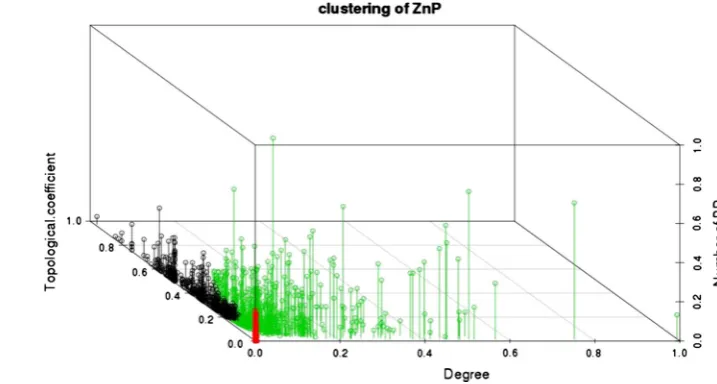
interactions linked to a single node and the topological coefficient is a relative measure of the extent to which a node shares neighbors with other nodes. A node with many shared neighbors is in a central position within the ana-lyzed network. To more accurately estimate the importance of ZNBPs in mediating a biological response, we estimated also the number of overrepresented BPs to which each node belongs. To identify the most relevant properties of ZNBPs in relation to these three above-mentioned param-eters, we grouped the nodes through hierarchical cluster analysis based on the variance along the principal com-ponents identified by principal component analysis (PCA). The first two principal components capture 81 % of the variance in the three parameters monitored.
Clustering highlighted three major clusters (Fig.1; table S2) separating the central ZNBPs that share several inter-actors (cluster 1), from ZNBPs displaying fewer interactions, located in the peripheral regions of the network (cluster 2), and ZNBPs present in most of the overrepresented BPs with a high number of ‘‘specific’’ interactors (cluster 3).
Although sharing several interactions, proteins in cluster 1 belong to few BPs, suggesting that they play a central role in specific pathways. Due to their high topological coefficient, we expected that functional alteration of these proteins would result in a systemic effect.
An example of the descriptive potential of our analysis is provided by the distribution of the poly [ADP-ribose] polymerase 1 (PARP) family among the three clusters. This protein family includes a group of related enzymes that detect and signal single-strand DNA breaks, and catalyze post-translational modification of proteins by adding mul-tiple ADP-ribose moieties. Ribose addition is a crucial step in the repair of single-strand DNA nicks. This process is called base excision repair (BER), and both PARP1 and PARP2 are involved in the mechanism as a functional
hetero-dimer. Of the two monomers, PARP1 alone is known to be associated with increased apoptosis in response to genotoxic stress and to modulate transcription of several genes. Our analysis places PARP1 in cluster 3, while PARP2, centrally involved only in the BER process, is listed in cluster 1 (Ali et al. 2012).
As a further example, cluster 3 includes the tumor suppressor protein TP53 (or P53), a zinc-finger transcrip-tion factor with a crucial role in tumor suppression. Mutations in this gene are associated with a variety of human cancers, including hereditary cancers. TP53 responds to diverse cellular stresses by regulating the expression of specific target genes, thereby inducing cell cycle arrest, apoptosis, senescence, DNA repair or meta-bolic changes (Dai and Gu2010; Lane1992).
An example of cluster 1 protein is the F-box protein FBOX11, which interacts with the E3 ubiquitin–protein ligase complex that mediates ubiquitination and subsequent proteasomal degradation of target proteins involved in diverse biological process (Duan et al. 2012), which therefore can be predicted to be sensitive to zinc avail-ability. Of the 20 top ZNBPs in cluster 3, twelve are involved in gene expression either directly, as transcription factors (tumor suppressor genes P53, P63, BCL6, SSH, PML, SMAD2, SMAD3, SMAD4, SMAD7), or indirectly, as regulators of the DNA dwelling or DNA repair processes (HDAC4, HDAC5, BRCA1).
The top 20 ZNBPs in cluster 1, on the other hand, are represented by enzymes involved in hydrolytic and prote-olytic activities (KLK10, MAN2A1, GNL1, GNL2, CCDC42, NEIL3, ZDHCC12), or by structural proteins of larger protein complexes (ZNF189, ZCRB1, ZRSR2, ZNF254, RNF26, BCL2L14, TRIM54, TRIM59, GAS2L1), G-protein coupled receptors (MC3R, MC2R, NPY5R) and only one transcription factor (CDCA7).
Fig. 1 Cluster analysis of
Case study application of the ZNP network/functional enrichment analysis
To test the potential of our analysis in unraveling novel aspects of physiology in healthy and pathological condi-tions, as well as to link it with the underlying biological effects, we applied the ZNP network/functional analysis to a real case scenario. Zinc was shown to represent a key factor in maintaining the integrity of the intestinal epithe-lium, both in vitro and in vivo (Iwaya et al.2011; Sturniolo et al. 2001,2002). Several lines of evidence suggest that intestinal epithelial cells play a critical role in gut homeostasis in chronic inflammatory bowel disorders such as Crohn’s disease (CD) and ulcerative colitis (UC). Therefore, we explored the possible involvement of ZNP network proteins in CD pathogenesis by re-analyzing pre-viously reported differential expression profiles resulting from transcriptomic studies and by comparing gene expression in healthy tissues with that in inflamed and non-inflamed CD tissues. To this aim, we selected microarray gene expression profiles from the published study descri-bed by Noble et al. (Noble et al.2010), which was per-formed on 172 biopsies from endoscopic samples of CD and control subjects, taken at ileo-colonoscopy from five specific anatomical locations (Table1).
Expression values of differentially expressed probe-sets were re-mapped on the reference genome reflecting the ZNP network. We estimated the likelihood of enrichment in ZNP genes modulated in diseased tissues, comparing by hypergeometric distribution the fraction of ZNP network
genes represented in the expression profiles under exami-nation, with the percentage of ZNP network genes present in the human genome. The results of such analysis revealed ZNP network genes as significantly overrepresented within the profile of differentially expressed genes in samples collected from the inflamed mucosa of CD patients, when compared with samples collected from the non-inflamed area. This observation highlights the involvement of the ZNP in inflammatory processes occurring in the intestine of CD patients.
The genes encoding ZNP network proteins and their corresponding expression profiles in both inflamed and non-inflamed tissue biopsies from CD patients are listed in Table S3 (supplementary information). Mapping of the modulated genes on the overall ZNP network (Fig.2) highlighted a group of 101 genes connected by 117 inter-actions and displaying two clearly identifiable major groups of interactions. The largest group constitutes the right arm of the interaction graph and includes six extra-cellular matrix proteins, all of which interact with fibro-nectin 1 (FN1). FN1 is a ZNBP thought to regulate epithelial response to injury during inflammation (Kolac-hala et al.2007). It is a major component of the extracel-lular matrix interacting with adhesion receptors such as integrins, and it mediates cell anchorage and triggers spe-cific signaling pathways regulating survival and differen-tiation. FN1 is expressed in the gut, where it promotes cell adhesion and wound healing, and it shows as a down-regulated gene in inflamed CD with respect to non-inflamed CD tissue, while GLUL, GLRX and TGM2 (involved in promoting glutamine biosynthesis) are up-regulated (Noble et al. 2010). FN1 pathway is, therefore, potentially affected by altered zinc homeostasis.
On the left arm of the largest gene cluster shown in Fig.2, we detected a group of seven genes encoding pro-teins that operate key steps in DNA replication: SUPT16H affects nucleosome disassembly, POLR2D encodes RNA polymerase 2, SNRPE functions in the U7 snRNP complex involved in histone 30-end processing, RBMX promotes mRNA splicing, MCM4, MCM6 and CDC2 encode DNA unwinding enzymes. Almost all of them (except RBMX) were down-regulated in CD versus control biopsies.
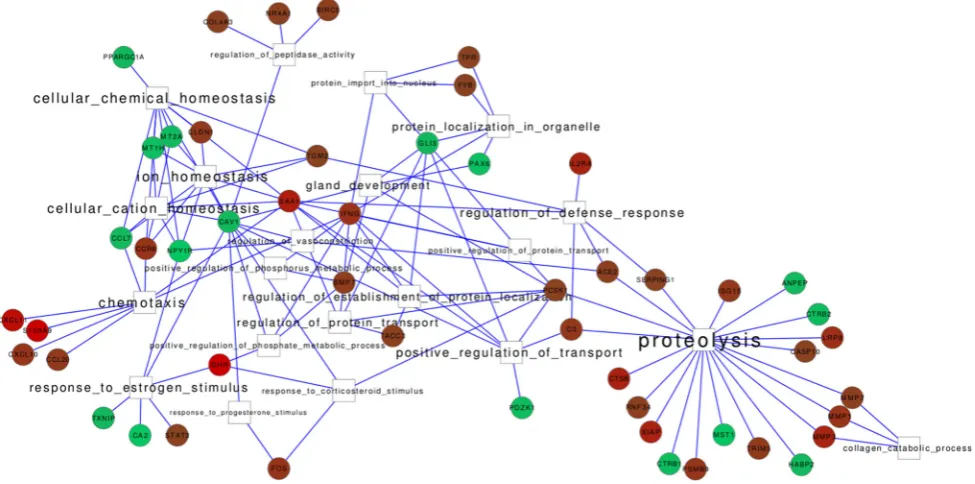
Further indications that the ZNP network is involved in tissue remodeling and repair in the inflammation process occurring in the gut of CD patients came from the analysis of ZNP BPs enriched in genes that are modulated in the inflamed intestine, as compared to BPs enriched in genes regulated in the non-inflamed mucosa (Fig.3). In inflamed CD, 20 BPs are significantly enriched in the ZNP. The three most overrepresented BPs (proteolysis, regulation of defense response and collagen catabolic processes) under-lie a shared set of 23 ZNP coding genes, 12 of which are specifically up-regulated in inflamed CD. This latter group
Table 1 Number of genes encoding ZNP network proteins and
number of total genes modulated in inflamed and non-inflamed tissue from CD patients
Parallels Modulated ZNP
Modulated genes
Hypergeometric distribution (ZNP MA vs. ZNP in genome) pvalue
1. Inflamed CD versus non-inflamed CD
152 382 0.003
2. Non-inflamed CD versus control
179 511 0.56
3. CD versus control terminal ileum
591 1,667 0.49
4. Inflamed CD versus control
87 311 0.99
includes nine genes encoding peptidases which inhibit complement activation (SERPING1), regulate apoptosis (CASP10 and RNF34) and vasodilatation (ACE2),
determine breakdown of the extracellular matrix (MMP3, MMP7), or are involved in protein degradation as ubiquitin modifiers (TRIM5) or as proteasome subunit (PSMB9).
Fig. 3 Overrepresented ZNP BPs within the expression profiles of inflamed versus non-inflamed CD tissues.Red and green nodesindicate
up-regulated and down-up-regulated ZNP network genes, respectively. Nodes are connected through edges to the corresponding BPs
Fig. 2 Network of ZNP interactions extracted from the microarray
experiments of Noble et al. (2010). Genes are represented by nodes and interactions by edges. Green-colored nodes indicate down-regulated genes, red color variations refer to up-regulated genes.
A group of five genes belonging to proteolytic pathways (ANPEP, MST1, HABP2, CTRB1, CTRB2) were shown to be down-regulated in the inflamed gut of CD patients in comparison with the non-inflamed portions of terminal ileum (TI). It is worth noting that these genes encode specific functions of the differentiated and functional intestinal enterocyte. The ANPEP protein is located within the microvillar membrane and plays a role in the final digestion of small peptides generated by gastric and pan-creatic proteases. The CTRB1 and CTRB2 genes encode 2 of the 3 chymotrypsin isozymes, including a serine prote-ase which also acts in the final stages of protein digestion. HABP2 is an extracellular serine protease that binds hyaluronic acid and is involved in cell adhesion. As for MST1, its specific receptor is the RON tyrosine kinase, which is associated with significantly increased crypt cell proliferation, possibly leading to susceptibility to tumor initiation in the non-transformed intestinal epithelium. All of the above-described, down-regulated zinc-dependent proteins are typical of the enterocytes, and their function may be impaired in the terminally differentiated epithelium of the heavily inflamed mucosa of CD patients. On the other hand, the five genes up-regulated in inflamed CD tissue (C3, MMP1, LRP8, CTSB, XIAP) encode proteins acting in proteolytic pathways. In particular, the inhibitor of caspases XIAP, whose activity leads to repression of apoptosis and promotion of cell survival, is known to be rapidly degraded under zinc-deficient conditions (Makhov et al.2008; Ranaldi et al. 2013).
Discussion
The application of systems biology to nutrition aims at highlighting molecular links between diet and health in an integrated manner (van Ommen et al.2008). Interactome models have been increasingly used, especially protein– protein interaction (PPI) networks which provide an abstraction of the complex relationships among different molecular components—spanning from nutrients and their metabolites to diet-modulated transcription factors (Ngu-yen et al. 2011). Nutritional systems biology has a tre-mendous potential to provide comprehensive predictions of nutrient dyshomeostasis in biological processes (Doring and Rimbach2014). Zinc, being involved in such a large number of protein activities, is an ideal micronutrient to be studied in an integrated framework. Complete annotation of zinc-binding protein genes revealed that this micronu-trient is bound to 2,066 proteins (Bertini et al.2010). Using these findings as a starting point, we have reported here a bioinformatics analysis extending the zinc proteome net-work to protein–protein interactions, with the aim of pro-viding more holistic basis toward the identification of
potentially zinc-regulated pathways in health and disease. Pathway analysis highlighted biological processes that are likely affected by zinc fluxes. While most BPs were already known to be influenced by zinc, the power of our analysis drew the attention on biological functions not yet experimentally linked to zinc availability and therefore needing further investigation.
We observed that several pathways involved in regu-lating apoptosis and cell survival were enriched in ZNP network proteins, confirming a number of previously published experimental evidences linking zinc availability to apoptosis, among which our own studies (Ranaldi et al. 2013; Truong-Tran et al. 2003), as well as reports from other group (Allen-Redpath et al. 2013). Expansion of these observations in the directions suggested by our computational analysis can therefore strengthen the pro-posed central role of zinc in the balance between cell death and survival. The enrichment analysis reported in our work also highlighted involvement of ZNP network proteins in development and differentiation pathways in several tis-sues, which is likely due to the key role played by zinc-binding transcription factors that are largely represented in these pathways. Much less information is presently avail-able on the role of zinc in the DNA damage response, although we identified several BPs involved in DNA metabolism and repair and zinc-binding proteins among those enriched in the ZNP network. For example, PARP1, a poly (ADP-ribose) polymerase and a primary sensor of DNA breakage though specialized zinc-finger protein domains (Ali et al.2012). Therefore, we showed the ZNP network to be significantly enriched in proteins involved in DNA damage response pathways, although the biological effect on DNA repair of deregulated zinc homeostasis is yet to be investigated.
features which led to their listing in cluster 2 might derive to incomplete annotation in public databases.
Another important advantage provided by our listing of ZNBPs and of their interactors is the potential to be ana-lyzed within the context of pathological conditions, thus indicating a role for zinc fluxes in specific physio-patho-logical mechanisms. To test the usefulness of our compu-tational approach in this direction, we performed a case study, in which we investigated the presence of ZNP net-work proteins encoded by differentially expressed genes in the intestine of CD patients (Noble et al.2010). The output of this analysis was a model network of functional path-ways associated with this pathology and likely affected by zinc, which can be used to drive mechanistic research in this area. In particular, our results highlighted a central role for zinc in tissue remodeling that occurs in patients affected by CD upon gut inflammation, pointing at novel pathways that could be worsened by zinc dyshomeostasis and impaired zinc fluxes in specific areas. For example, the FN1 network emerging from our analysis indicated a new possible role for zinc in the regulation of tissue architec-ture, which is potentially relevant in the mucosal inflam-matory response occurring in CD. These results also suggested that marginal zinc deficiency, due to either insufficient dietary intake and/or a predisposing genetic make-up, might negatively affect the healing potential of inflamed intestinal mucosa in CD patients. An interesting case is represented by the caspase inhibitor protein XIAP, as our analysis highlighted that the corresponding gene is up-regulated in gut-inflamed mucosa of CD patients com-pared to non-inflamed tissue. This up-regulatory process might also be important for post-inflammation response in the damaged epithelium, as low zinc levels were demon-strated to lead to XIAP degradation in several cell types, including enterocytes (Makhov et al.2008; Ranaldi et al. 2013). Zinc deficiency might thus impair crucial healing steps.
In conclusion, the zinc proteome emerging from our computational approach appears as a highly complex net-work with potential for further development, as many of the annotations regarding the direction of regulatory interactions are not yet present in public databases. This makes it still hard to predict the downstream effects that zinc may exert in pathological contexts. In this work, we have sought to provide a backbone model that can be used to address specific questions. The accompanying case study that we have performed provides an example of how the backbone can be used. We thus believe that the ZNP net-work resulting from a computational approach represents an important starting point to investigate the involvement and relevance of zinc in specific biological processes, as it can provide novel insights into pathological conditions.
This approach could also be successfully extended to other nutrients.
Acknowledgments We thank Dr. Gabriele Cavallaro for help with
RDGB calculations. This work was supported by Grant ‘‘NUME’’ (DM 3688/7303/08) from the Italian Ministry of Agriculture Food and Forestry (MiPAAF) and by EU Marie Curie Actions—International Research Staff Exchange Scheme (IRSES); ‘‘Microgennet’’ funded by the EU Marie Curie action program IRSES Grant 26921 (www.
microgennet.org).
Conflict of interest None.
References
Ali AA et al (2012) The zinc-finger domains of PARP1 cooperate to recognize DNA strand breaks. Nat Struct Mol Biol 19:685–692.
doi:10.1038/nsmb.2335
Allen-Redpath K, Ou O, Beattie JH, Kwun IS, Feldmann J, Nixon GF (2013) Marginal dietary zinc deficiency in vivo induces vascular smooth muscle cell apoptosis in large arteries. Cardiovasc Res 99:525–534. doi:10.1093/cvr/cvt114
Andreini C, Bertini I, Rosato A (2004) A hint to search for metalloproteins in gene banks. Bioinformatics 20:1373–1380.
doi:10.1093/bioinformatics/bth095
Andreini C, Bertini I, Rosato A (2009) Metalloproteomes: a bioinformatic approach. Acc Chem Res 42:1471–1479. doi:10. 1021/ar900015x
Andreini C, Bertini I, Cavallaro G, Decaria L, Rosato A (2011) A simple protocol for the comparative analysis of the structure and occurrence of biochemical pathways across superkingdoms. J Chem Inf Model 51:730–738. doi:10.1021/ci100392q
Bertini I, Decaria L, Rosato A (2010) The annotation of full zinc proteomes. J Biol Inorg Chem 15:1071–1078. doi:10.1007/ s00775-010-0666-6
Cheifetz AS (2013) Management of active Crohn disease. JAMA 309:2150–2158. doi:10.1001/jama.2013.4466
Chimienti F (2013) Zinc, pancreatic islet cell function and diabetes: new insights into an old story. Nutr Res Rev 26:1–11. doi:10. 1017/S0954422412000212
Chowers Y, Allez M (2010) Efficacy of anti-TNF in Crohn’s disease: how does it work? Curr Drug Targets 11:138–142
Craddock TJ, Tuszynski JA, Chopra D, Casey N, Goldstein LE, Hameroff SR, Tanzi RE (2012) The zinc dyshomeostasis hypothesis of Alzheimer’s disease. PLoS One 7:e33552.
doi:10.1371/journal.pone.0033552
da Huang W, Sherman BT, Lempicki RA (2009) Systematic and integrative analysis of large gene lists using DAVID bioinfor-matics resources. Nat Protoc 4:44–57. doi:10.1038/nprot.2008. 211
Dai C, Gu W (2010) p53 post-translational modification: deregulated in tumorigenesis. Trends Mol Med 16:528–536. doi:10.1016/j. molmed.2010.09.002
Devirgiliis C, Zalewski PD, Perozzi G, Murgia C (2007) Zinc fluxes and zinc transporter genes in chronic diseases. Mutat Res 622:84–93. doi:10.1016/j.mrfmmm.2007.01.013
Doring F, Rimbach G (2014) Nutri-informatics: a new kid on the block? Genes Nutr 9:394. doi:10.1007/s12263-014-0394-6
Ferguson LR (2010) Nutrigenomics and inflammatory bowel diseases. Expert Rev Clin Immunol 6:573–583. doi:10.1586/eci.10.43
Ferguson LR, Shelling AN, Browning BL, Huebner C, Petermann I (2007) Genes, diet and inflammatory bowel disease. Mutat Res 622:70–83. doi:10.1016/j.mrfmmm.2007.05.011
Hering NA, Schulzke JD (2009) Therapeutic options to modulate barrier defects in inflammatory bowel disease. Dig Dis 27:450–454
Huang L, Tepaamorndech S (2013) The SLC30 family of zinc transporters: a review of current understanding of their biolog-ical and pathophysiologbiolog-ical roles. Mol Asp Med 34:548–560.
doi:10.1016/j.mam.2012.05.008
Iwaya H, Kashiwaya M, Shinoki A, Lee JS, Hayashi K, Hara H, Ishizuka S (2011) Marginal zinc deficiency exacerbates exper-imental colitis induced by dextran sulfate sodium in rats. J Nutr 141:1077–1082. doi:10.3945/jn.111.138180
Kolachala VL et al (2007) Epithelial-derived fibronectin expression, signaling, and function in intestinal inflammation. J Biol Chem 282:32965–32973. doi:10.1074/jbc.M704388200
Lane DP (1992) Cancer. p53, guardian of the genome. Nature 358:15–16. doi:10.1038/358015a0
Le S, Josse J, Husson F (2008) FactoMineR: an R package for multivariate analysis J Stat Softw 25(1):1–18
Liuzzi JP, Cousins RJ (2004) Mammalian zinc transporters. Annu Rev Nutr 24:151–172
Liuzzi JP, Bobo JA, Lichten LA, Samuelson DA, Cousins RJ (2004) Responsive transporter genes within the murine intestinal-pancreatic axis form a basis of zinc homeostasis. Proc Natl Acad Sci USA 101:14355–14360
Makhov P et al (2008) Zinc chelation induces rapid depletion of the X-linked inhibitor of apoptosis and sensitizes prostate cancer cells to TRAIL-mediated apoptosis. Cell Death Differ 15:1745–1751. doi:10.1038/cdd.2008.106
Matsui T (1998) Zinc deficiency in Crohn’s disease. J Gastroenterol 33:924–925
Nguyen TP, Scotti M, Morine MJ, Priami C (2011) Model-based clustering reveals vitamin D dependent multi-centrality hubs in a network of vitamin-related proteins. BMC Syst Biol 5:195.
doi:10.1186/1752-0509-5-195
Noble CL et al (2010) Characterization of intestinal gene expression profiles in Crohn’s disease by genome-wide microarray analysis. Inflamm Bowel Dis 16:1717–1728. doi:10.1002/ibd.21263
Ranaldi G et al (2013) Intracellular zinc is required for intestinal cell survival signals triggered by the inflammatory cytokine TNFal-pha. J Nutr Biochem 24:967–976. doi:10.1016/j.jnutbio.2012.06. 020
Scott DA, Fisher AM (1938) The insulin and the zinc content of normal and diabetic pancreas. J Clin Invest 17:725–728. doi:10. 1172/JCI101000
Shannon P et al (2003) Cytoscape: a software environment for integrated models of biomolecular interaction networks. Genome Res 13:2498–2504. doi:10.1101/gr.123930313/11/2498
Sladek R et al (2007) A genome-wide association study identifies novel risk loci for type 2 diabetes. Nature 445:881–885. doi:10. 1038/nature05616
Sturniolo GC, Di Leo V, Ferronato A, D’Odorico A, D’Inca R (2001) Zinc supplementation tightens ‘‘leaky gut’’ in Crohn’s disease. Inflamm Bowel Dis 7:94–98
Sturniolo GC, Fries W, Mazzon E, Di Leo V, Barollo M, D’Inca R (2002) Effect of zinc supplementation on intestinal permeability in experimental colitis. J Lab Clin Med 139:311–315
Supek F, Bosnjak M, Skunca N, Smuc T (2011) REVIGO summarizes and visualizes long lists of gene ontology terms. PLoS One 6:e21800. doi:10.1371/journal.pone.0021800
Truong-Tran AQ, Grosser D, Ruffin RE, Murgia C, Zalewski PD (2003) Apoptosis in the normal and inflamed airway epithelium: role of zinc in epithelial protection and procaspase-3 regulation. Biochem Pharmacol 66:1459–1468
Tysk C, Lindberg E, Jarnerot G, Floderus-Myrhed B (1988) Ulcerative colitis and Crohn’s disease in an unselected popula-tion of monozygotic and dizygotic twins. A study of heritability and the influence of smoking. Gut 29:990–996
van Ommen B, Cavallieri D, Roche HM, Klein UI, Daniel H (2008) The challenges for molecular nutrition research 4: the ‘‘nutri-tional systems biology level’’. Genes Nutr 3:107–113. doi:10. 1007/s12263-008-0090-5
WH Organization (WHO) (1996) Trace element in human nutrition and health. WHO, Geneva