OpenBU http://open.bu.edu
Theses & Dissertations Boston University Theses & Dissertations
2014
Second language reading of
adolescent ELLs: a study of
response to retrospective miscue
analysis, error coding methodology
and transfer of L1 decoding skills in
L2 reading
https://hdl.handle.net/2144/11113 Boston University
SCHOOL OF EDUCATION
Dissertation
SECOND LANGUAGE READING OF ADOLESCENT ELLS: A STUDY OF RESPONSE TO RETROSPECTIVE MISCUE ANALYSIS,
ERROR CODING METHODOLOGY AND TRANSFER OF Ll DECODING SKILLS IN L2 READING
by
MELISSA ANNE LATHAM KEH B.A. Tufts University, 2000 M.A. Tufts University, 2006
Submitted in partial fulfillment of the requirements for the degree of
Doctor of Education 2014
First Reader
Second Reader
Third Reader
Mary Catherine O'Connor, Ph.D. Professor of Education and Linguistics
Associate Professor of Language and Literacy Education
Mamie Reed,
Associate Professor of Language and Literacy Education
Fourth Reader J
I wish to express my deep gratitude to my dissertation committee, my students and my friends and family for their wisdom, generosity and support as I've brought this dissertation to completion.
First, I am grateful to my first reader, Professor Catherine O'Connor, for her patience and insight. This project would not have been possible without her belief in the value of my inquiry and her advocacy of my research. Her willingness to mentor me as a novice researcher and strengthen my understanding of methodology and presentation made it possible for me to complete a project that I am proud of. I am also grateful to Professor Melanie Kuhn for her gentle and supportive comments on my drafts. Her kindness in providing even critical feedback helped me grow. I am grateful to Professor Mamie Reed for her valuable guidance as to how my work can contribute to existing second language acquisition research. I would not have arrived at my topic without her feedback. Professor Julie Coppola has supported me academically and professionally and given me knowledge about the need for applicable, practical research. Her passion for the children in American public schools has inspired me to ground my work in the day-to-day of classroom teaching and learning.
I am also grateful to the nine young adults who gave unselfishly of their time to participate in this study. Their openness to learning something new, in a place and at a time when so much must have seemed new to them, is a gift that deserves profound acknowledgement. This research would also have been impossible without the support
Lindsey Rinder, and Assistant Superintendent Janice Darius.
Finally, I wish to acknowledge all of my friends and family, who have traveled with me on this journey. In particular, I am grateful to my mother and father, who have supported me in more ways than I can name here and who cultivated in me the fundamental, intrinsic motivation to learn that got me here. I am thankful to my many friends who have commented on parts of my work and just listened when I needed them to. And finally, I am grateful to my husband, John, who encouraged me without fail.
A STUDY OF RESPONSE TO RETROSPECTIVE MISCUE ANALYSIS, ERROR CODING METHODOLOGY AND TRANSFER OF
Ll DECODING SKILLS IN L2 READING MELISSA ANNE LATHAM KEH Boston University, School of Education, 2014
Major Professor: Mary Catherine O'Connor, Ph.D., Professor of Education and Linguistics
ABSTRACT
It is well documented that ELLs face significant challenges as they develop literacy skills in their second language (N CES, 2007, 2011). This population is diverse and growing rapidly in Massachusetts and across the nation (Massachusetts Department of Elementary and Secondary Education, 2013; NCELA, 2011; Orosco, De Schonewise, De Onis, Klingner, & Hoover, 2008). Yet, this population is often left out of reading studies because of the range of variables they present (Klingner, 201 0). This research focuses on the effects of a reading approach on adolescent ELLs, the power of coding systems to capture ELLs' reading errors and how exposure to a second writing system develops metalinguistic skills.
In the first study of this dissertation, I examine the effects of an approach called Retrospective Miscue Analysis (RMA; Goodman & Marek, 1996) on six subjects in a school setting, using an n-of-one design to evaluate changes in their reading attributable to RMA. RMA has been researched with diverse learners in case studies; however, data had not been collected to demonstrate whether it could change subjects' fluency or
readers. My results suggest that students had positive feelings about RMA and believed that they had learned new ways to read, but the results do not point to immediate changes in their decoding accuracy, reading comprehension or fluency with RMA. This approach may have latent effects on overall reading performance by increasing motivation and self-confidence, but it did not appear to have immediate effects on my subjects' reading performance.
The second study of this dissertation provides a methodological exploration of two coding systems. The first coding system, Reading Miscue Inventory (RMI; Goodman, Watson, & Burke, 2005) originated in miscue analysis research. The second coding system was developed by Cheng and Caldwell-Harris (to appear) to code oral reading errors Chinese readers made when reading Chinese, and it was also used by the researchers to code native English speakers' oral reading errors. Interview data from RMA was used as an additional lens for understanding the power of coding systems to reveal information about reading miscues, or oral reading errors. The results indicate that RMI needs revision for use with English language learners (ELLs), especially in the Meaning Construction category, but RMI also reminds us to consider miscues within the context of connected text. Cheng and Caldwell-Harris' system, on the other hand, appears to accurately illuminate general relationships between a target word and a reader's error but is limited to word-level analysis of oral reading errors.
The third study of this dissertation examined patterns of oral reading errors according to ELLs' first language (Ll) background to explore how Ll reading
in their L2. Statistical analysis of real word versus nonword oral reading errors subjects made revealed distinct patterns in L2 readers who had learned to read in Chinese versus Cyrillic writing systems. I argue that this difference in errors made by Chinese and Cyrillic readers supports Koda's (2009) Transfer Facilitation Model, which states that metalinguistic awareness reflects the systematic differences in writing systems readers become accustomed to. This difference in errors also appears to contradict predictions that transfer is less operable across unalike orthographies. I also explore Koda's (2009) hypothesis that experience reading a L2 should lead to changes in metalinguistic skills over time. My findings suggest that experienced L2 readers' decoding skills may not change, or may take significant time to change, with exposure to a second writing system.
Page
ACKNOWLEDGEMENTS ... iv
ABSTRACT ... vi
TABLE OF CONTENTS ... viii
LIST OF TABLES ... ··· ... XV LIST OF FIGURES ... xviii
CHAPTER 1: INTRODUCTION ... 1
1.1 Background and Rationale ... 1
1.2 Study One: The Retrospective Miscue Analysis Approach ... 3
1.3 Study Two: Comparison of Coding Systems for Analysis of Oral Reading Errors ... 7
1.4 Study Three: Patterns in ELLs' Oral Reading Errors and What They Can Tell Us About the Influence of L 1 ... 1 0 1.5 Organization of the Dissertation ... 13
1.6 References ... 14
CHAPTER 2: USING RETROSPECTIVE MISCUE ANALYSIS WITH ADOLESCENT ENGLISH LANGUAGE LEARNERS ... 22
2.1 Background ... 22 2.2 Methodology ... 26 2.2.1 Focal School. ... 28 2.2.2 Investigator. ... 30 2.2.3 Participants ... 30 2.2.4 Instruments ... 33 ix
2.2.4.2 Peabody Picture Vocabulary Test ... 35
2.2 .4 .3 Qualitative Reading Inventory ... 3 6 2.2.4.4 Qualitative Interview Questions ... 38
2.2.4.5 Reading Miscue Inventory ... 39
2.2.5 Procedure ... 43 2.3 .5 .1 Phase 1 ... 44 2.3.5.2 Phase 2 ... 49 2.3.5.3 Phase 3 ... 51 2.2.6 Data Analysis ... 51 2.3 Results ... 52 2.3.1 Ana ... 52 2.3.2 Marco ... 56 2.3.3 Bat. ... 59 2.3.4 Bao-yu ... 62 2.3.5 Lan ... 65 2.3.6 Eiko ... 68 2.3.7 Group Results ... 71 2.3.8 Sociocultural Factors ... 74
2.3.9 Limitations of Baseline Assessments ... 79
2.4 General Discussion ... 81
2.5 References ... 84
ERRORS: A METHODOLOGICAL EXPLORATION ... 89 3.1 Introduction ... 89 3.2 Methodology ... 91 3.2 .1 Participants ... 91 3.2.2 Instruments ... 92 3 .2 .2 .1 RMI. ... 92
3.2.2.2 Cheng and Caldwell-Harris' Codes for Oral Reading Errors .... 93
3.2.2.3 RMA Interview Data ... 93
3.2.3 Procedure and Data Analysis ... 93
3.3 Results ... 95
3.3 .1 Reading Miscue Inventory (RMI) and Retrospective Miscue Analysis (RMA) Explorations of Oral Reading Errors ... 95
3.3.1.1 The Types of Errors L2 Learners Make ... 99
3.3.1.2 Word Knowledge Errors in RMI Coding ... .lOO 3 .3 .1.3 L2 Phonology Errors in RMI Coding ... 111
3 .3 .1.4 Grammatical Morpheme Errors in RMI Coding ... 121
3.3.1.5 Special Errors in RMI Coding ... 128
3.3.1.6 Summary of Findings about RMI Coding ... 132
3.3.2 Cheng & Caldwell-Harris' Explorations of Oral Reading Errors ... 133
3.3.2.1 Word Knowledge Errors in Cheng and Caldwell-Harris' Coding System ... 136
Coding System ... 139
3.3.2.3 Grammatical Morphemes in Cheng and Caldwell-Harris' Coding System ... 140
3.3.2.4 Special Errors in Cheng and Caldwell-Harris' Coding System ... 142
3.4 Discussion ... 145
3.5 References ... 149
CHAPTER 4: PATIERNS IN ELL STUDENTS' READING ERRORS: WHAT CAN THEY TELL US ABOUT THE INFLUENCE OF L1 ORTHOGRAPHY IN DECODING L2? ... 155
4.1 Background ... 155
4.1.1 The Dual Route Cascaded Model ... 159
4.1.2 The Universal Phonological Principle ... 160
4.1.3 Transfer Facilitation Model. ... 161
4.1.4 Reading in Chines.e ... 162
4 .1.5 Reading in Alphabets ... 167
4.1.6 The Cyrillic Alphabet. ... 168
4.1.7 Transfer Studies ... 169
4 .1.8 Lexical Experiments. . . . . . 17 4 4 .1.9 The Scope of the Current Study ... 17 6 4.2 Methodology ... 178
4.2 .2 Instruments ... 17 8
4.2.2.1 Cheng and Caldwell-Harris' Coding System ... 178
4.2.2.2 Word/Nonword Coding ... 179
4.2.2.3 QRI Reading Passages ... 179
4.3 Results ... 180
4.3.1 ELLs and Native English Speakers Reading English ... 180
4.3.2 Cyrillic Readers and Chinese Readers Reading English ... 182
4.3.3 Word and Non word Errors ... 186
4.3.4 Do L2 Readers' Errors in English Reading Change Over Time? ... 188
4.3.5 Cyrillic and Chinese Readers' Error Patterns in Qualitative Data ... 191
4.4 Discussion ... 200
4.5 References ... 203
CHAPTER 5: GENERAL DISCUSSION AND CONCLUSIONS ... 212
5.1 The Retrospective Miscue Analysis (RMA) Study ... 213
5.2 The Methodological Study: Coding English Language Learners' (ELL) Oral Reading Errors ... 217
5.3 The Study of Error Patterns: L1 Influence on L2 Decoding? ... 222
5.4 References ... 225
APPENDICES ... 228
Appendix A: Questionnaire for Study Participants ... 228
Appendix B: Burke Interview Modified for Older Readers (BIMOR) ... 230 xiii
Appendix D: Concluding Interview Questions ... 233
Appendix E: Marco's Miscue Analysis In-Depth Procedure Coding Form ... 234
Appendix F: Cheng and Caldwell-Harris' Coding ... 236
Appendix G: Informed Consent and Assent Forms ... 238
BIBLIOGRAPHY ... : ... 244
CURRICULUM VITAE ... 264
Table 1: Three Types of Writing Systems ... 11
Table 2: Background Information Study Participants ... 31
Table 3: Which kinds of material do you read at home? ... 32
Table 4: Are you motivated to learn English? ... 32
Table 5: Do you work hard in school? ... 32
Table 6: MEPA Performance Level Descriptions, Grades 3-12 ... 33
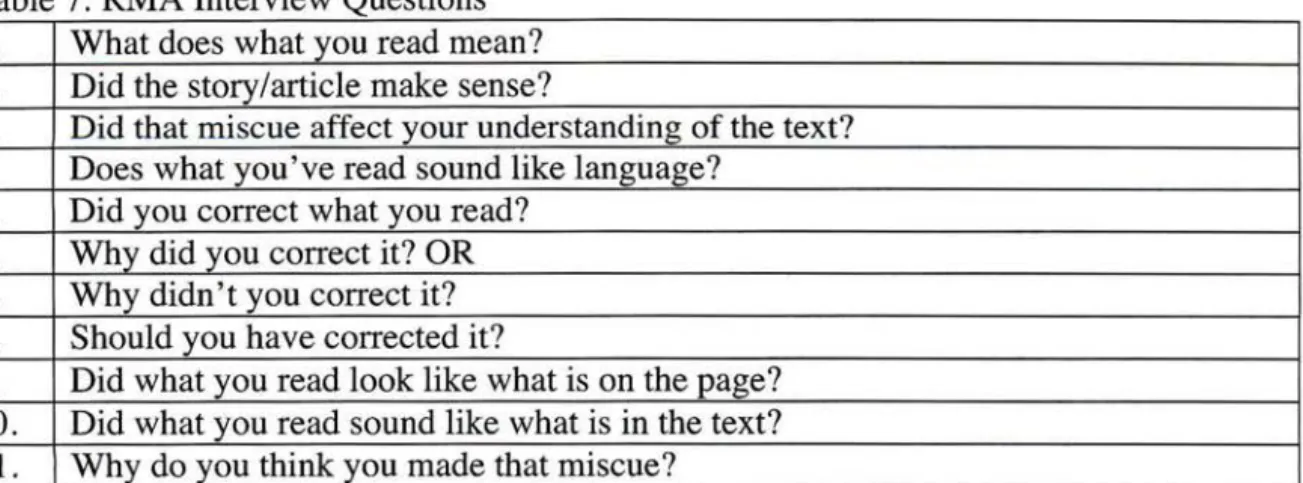
Table 7: RMA Interview Questions ... 38
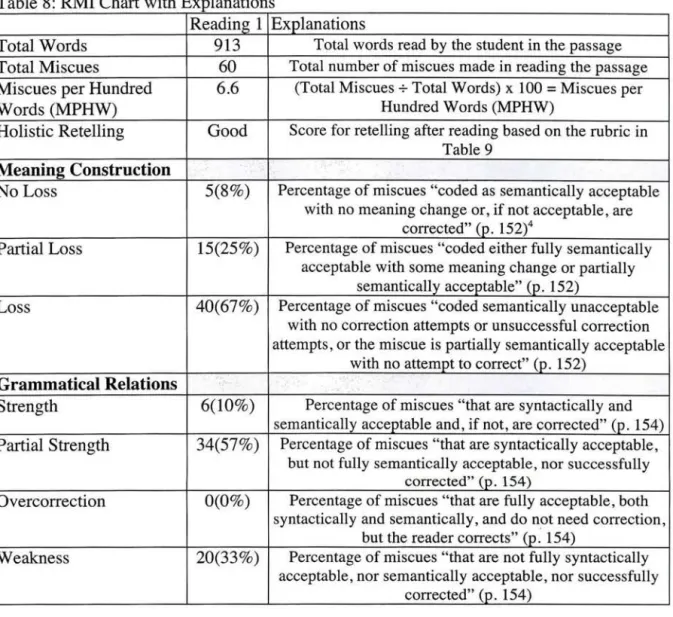
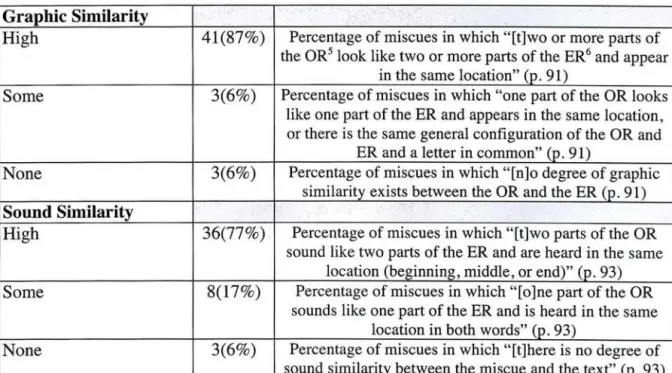
Table 8: RMI Chart with Explanations ... 41
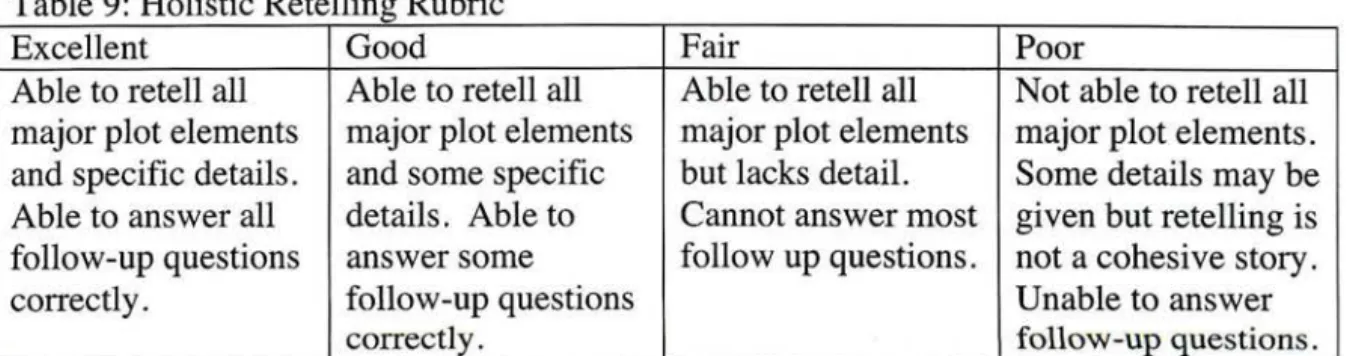
Table 9: Holistic Retelling Rubric ... 43
T~ble 10: Guidelines for Determining Reading Level from Isolated Word Lists ... 45
Table 11: Determining Reading Level by Word Reading in a Passage ... .48
Table 12: Determining Total Passage Level on the QRI-5 ... .49
Table 13: Ana's RMI Scores Across Four RMA Sessions ... 54
Table 14: Marco's RMI Scores Across Four RMA Sessions ... 57
Table 15: Bat's RMI Scores Across Four RMA Sessions ... 60
Table 16: Bao-yu's RMI Scores Across Four RMA Sessions ... 63
Table 17: Lan's RMI Scores Across Four RMA Sessions ... 66
Table 18: Eiko's RMI Scores Across Four RMA Sessions ... 69
Table 19: Pre-and Post-RMA Fluency Scores in the QRI-5 ... 72
Table 20: Pre-and Post-RMA Miscues per 100 Words in the QRI-5 ... 74
Table 22: Examples of Students' Answers About Why They Miscued (in Their Own
Words and in Mine) ... 99
Table 23: RMI Coding for Bat's Miscue "Certain" for "Curtain" ... 105
Table 24: RMI Coding for Bao-yu's Miscue [oblidld] for "Obeyed" ... 106
Table 25: RMI Coding for Ana's Miscue [lior] for "Leather" ... 107
Table 26: RMI Coding for Bao-yu' s Miscue [protafiolo] for "Portfolio" ... 109
Table 27: Coding for Chong's Miscue of [wajnd] for "Wind" and Lan's miscue of [ w IndiiJ] for "Winding" ... 116
Table 28: Goodman Taxonomy of Reading Miscues Graphic Similarity Examples ... 119
Table 29: Goodman Taxonomy of Reading Miscues Graphic Similarity Examples ... .119
Table 30: Errors from Section 3.3.1.2 Coded with Cheng and Caldwell-Harris' System ... 137
Table 31: Errors from Section 3.3.1.3 Coded with Cheng and Caldwell-Harris' System ... 139
Table 32: Errors from Section 3.3.1.4 Coded with Cheng and Caldwell-Harris' System ... 140
Table 33: Errors from Section 3.3.1.4 Coded with Cheng and Caldwell-Harris' System ... 142
Table 34: Oral Reading Errors with No Code ... 143
Table 35: Types of Morphemes and Examples in Chinese and English ... .166
Table 36: Cyrillic and Chinese Readers' Word and Non-Word Errors ... 186 xvi
Figure 1: The Cycle of Revaluing ... 6
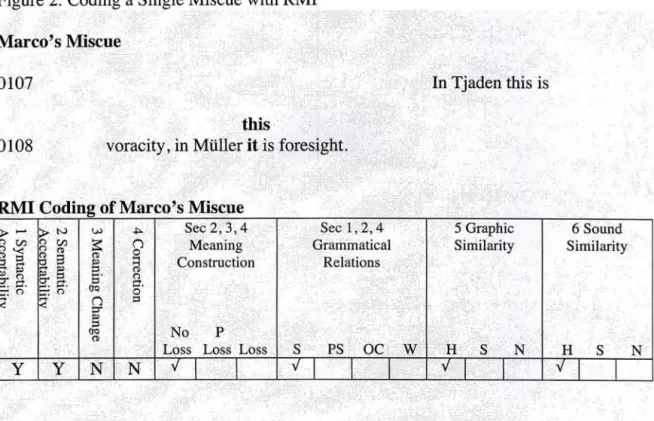
Figure 2: Coding a Single Miscue with RMI. ... 39
Figure 3: CWPM Read by Participants in Each Reading Session ... 72
Figure 4: Number of Miscues per 100 Words Read by Participants in Each Reading Session ... 73
Figure 5: Cheng & Caldwell-Harris' Coding with English Examples ... 135
Figure 6: ELL Students' Oral Reading Errors ... 181
Figure 7: Native and Nonnative Speaker Oral Reading Errors ... 182
Figure 8: Cyrillic Readers' Oral Reading Errors in English L2 ... 184
Figure 9: Chinese Readers' Oral Reading Errors in English L2 ... 184
Figure 10: Cyrillic Readers' Real Word Errors in English Reading Over Time ... 189
Figure 11: Chinese Readers' Real Word Errors in English Reading Over Time ... 190
Figure 12: Bao-yu's Reading of "Cats: Lions and Tigers in Your House" ... 192
Figure 13: Ana's Reading of "Cats: Lions and Tigers in Your House" ... 195
Figure 14: Bat's Reading of "Cats: Lions and Tigers in Your House" ... 198
CHAPTER 1: INTRODUCTION 1.1 Background and Rationale
Reading is essential for success in school and society. The International Reading Association (IRA) Commission on Adolescent Literacy has stated:
Adolescents entering the adult world in the 21st century will read and write more than at any other time in human history. They will need advanced levels of literacy to perform their jobs, run their households, act as citizens, and conduct their personal lives. They will need literacy to cope with the flood of information they will find everywhere they tum. They will need literacy to feed their imaginations so they can create the world of the future (Moore, Bean, Birdyshaw, & Rycik, 1999, p. 3)
Yet, despite the high standards of literacy that adolescents must achieve as they transition into the adult world and the difficulty that many experience meeting these, government initiatives in literacy focus primarily on developing reading programs designed for preschool- through middle school-aged students. Further, few high schools provide literacy interventions outside of special education programs (Ehren, Lenz, & Deshler, 2004).
One subgroup of adolescents that performs particularly poorly on reading measures is English language learners (ELLs; NCES, 2007). The 2011 National Assessment for Educational Progress (NAEP) reported that only 29 percent of ELLs in eighth grade scored at the basic level or higher in reading, compared to 78 percent of non-ELLs (NCES, 2011). The ELL population in the United States is diverse and
growing (Orosco, De Schonewise, De Onis, Klingner, & Hoover, 2008); for example, between 1995-2010 the limited English proficient (LEP) population attending U.S. schools grew 63.54%, compared to the 4.44% for the entire K-12 population (NCELA, 2011). And in 2012-2013, Massachusetts reported 73,217 ELL students, 36% of whom were enrolled in grades 6-12 (Massachusetts Department of Elementary and Secondary Education, 2013). Yet this population is often left out of research because of the range of additional variables that they present (Klingner, 201 0). The research in this dissertation investigates the reading patterns of this often-overlooked population.
Adolescent English language learners, who begin schooling in English after the age of twelve, face the dual challenge of learning to speak a second language and grasping cognitively-challenging academic content through sophisticated texts written in that language (Kieffer, 2009). And, they are unique from young monolingual English-speaking children with whom most literacy research is conducted. Younger monolingual English-speakers learning to read have had less experience reading, but, unlike second language learners, they are fluent in the language they are decoding. On the other hand, ELLs with reading experience in their first language usually master the ability to decode English quickly and catch up with their English-speaking peers on benchmark assessments in this area. It is vocabulary and reading comprehension that continue to be challenges (August & Shanahan, 2006; Carlo & Bengochea, 2011; Jimenez, Garda, & Pearson, 1995, 1996; Kieffer & Lesaux, 2010). This disparity is especially problematic in the upper grades when students must read for information. For these reasons, studies of younger children and findings on instructional approaches cannot easily generalize to
older ELLs. Indeed, more research is needed on ways to foster strong literacy skills for these learners through the high school years. This dissertation contains three studies that speak to this focus. Each is described below.
1.2 Study One: The Retrospective Miscue Analysis (RMA) Approach Response to Intervention (Rti) is an approach to providing early identification and support to learners who do not meet learning benchmarks, and it has been adopted by many public schools across the nation. In Rtl, research-based practices are used to accelerate learning before a learner is evaluated for learning disabilities, and the student's progress is closely and frequently monitored (Fuchs & Fuchs, 2006). With this model, practitioners need research-backed interventions that can be implemented effectively with adolescent second language learners in the school context. As part of this process, this study first investigated the effectiveness of Retrospective Miscue Analysis (RMA; Goodman & Marek, 1996), a reading approach that had positive outcomes with native English-speakers of all ages and proficient adult second language speakers of English.
Miscue analysis was designed as a tool for teachers and researchers to better understand the reading process (Goodman, 1969; Goodman & Burke, 1972; Goodman & Marek, 1996; Goodman, Watson, & Burke, 2005; Goodman, Wang, Iventosh, & Goodman, 2012; Leu, 1982) as well as a means of helping readers within the classroom environment (Goodman & Marek, 1996). It was first found effective at increasing adult and middle school struggling readers' self-confidence, helping them to conceive of reading as a meaning-making endeavor (Goodman, & Marek, 1996; Marek, 1987). This
approach emerged from the beliefs that (a) reading is a transactional, sociolinguistic process that results in making meaning with a text and that (b) " [ w ]hat the reader brings to the text-experience, attitudes, concepts, cognitive schemes-is as important as what the author brought to it in creating it. The reader's act is creative, too; meaning is created in response to the text" (Goodman & Marek, p. 15). In RMA, students are taught to analyze their own miscues from recordings of their oral reading and think about them as evidence of their interaction with a text rather than their deviation from the text. This is meant to empower struggling readers, reevaluating themselves as readers and focusing on meaning over text-level features.
Goodman and Marek (1996) define a miscue as "an observed response that differs from what is expected" (p. 21). Over the course of the RMA process, readers are guided to the recognition that all readers make miscues and that some miscues disrupt meaning more than others. First, the reader records his/her reading of a text while the teacher or
researcher listens and marks miscues on a copy of the text. Next, the researcher listens to the miscues and creates a Reading Miscue Inventory (RMI; Goodman, Watson, & Burke, 2005) to capture patterns in the reader's errors (e.g., the number and types of miscues and the degree to which these change the text's meaning). Procedures for generating a RMI are outlined in full in Section 2.2.4.6.
In the next RMA session, the reader and the researcher listen to the audio recording of the reading and discuss the miscues. Sometimes the miscues are preselected by the researcher, and sometimes the student guides the RMA session. The researcher asks the reader questions such as: Did this miscue change your understanding of the
text?; Did you need to correct it?; Why do you think you made this miscue? (see Table 7, below, for a complete list of interview questions). Although RMA was originally developed for use with struggling readers, in recent research Wurr, Theurer, and Kim (2008) used RMA with proficient adult English-as-a-second-language (ESL) readers to increase subjects' awareness of syntactic, semantic, graphophonic and pragmatic cueing systems.
Perhaps because its developers focused on sociolinguistic and transactional aspects of the reading process in their research or perhaps because they support a whole language approach to reading instruction, they make no claims about the effect of RMA on any of the areas of reading emphasized by the National Literacy Panel (phonological awareness, alphabetic principle/phonics, fluency, vocabulary, and comprehension) or the two additional areas found by the National Literacy Panel to be highly important for the development of second language reading (oral language and motivation; August &
Shanahan, 2006). Theurer (2011), in fact, claims that evaluating the effect of RMA on fluency would contradict the transactional theory of reading that undergirds the procedure, as "[t]he goal of reading is not to read at an ever increasing speed with 100% word identification accuracy" (p. 174) but rather to construct "meaning and a personal text parallel to the published text" (Paulson & Goodman, 2008, p. 33).
The case studies that have used RMA documented improvements in individual readers' quality of miscues (i.e., they made fewer miscues that changed meaning) and quantity of miscues over time (Marek, 1987) with the Reading Miscue Inventory (RMI) coding system (Goodman, Watson, & Burke, 2005). Yet, the goals and methodology of
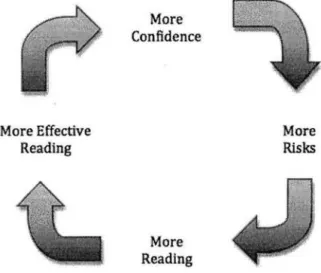
previous RMA studies make it difficult to unequivocally attribute growth to RMA. RMA' s developers theorize that reading improves as a result of RMA due to the cycle of revaluing (see Figure 1), and RMA may, in fact, target and develop a belief about reading that cannot be detected by measures of decoding, fluency, vocabulary or comprehension. Nonetheless, it is still important (and especially so with the adoption of Rtl) to investigate changes in ELL readers' skills in these areas during and after RMA. Such information would help practitioners assign the procedure to students who would benefit most from it.
Figure 1: The Cycle of Revaluing (from Goodman & Marek, 1996, p. 206)
More Effective Reading More Confidence More Reading More Risks
I selected RMA because this procedure can help me identify patterns in second language reading and it is minimally invasive, allowing me to collect authentic data in an authentic setting. I was also interested in evaluating whether RMA had an effect on students' decoding skills, fluency or reading comprehension, or whether it only affected patterns seen with the RMI and student interviews. This approach differs from previous research, which has evaluated RMA with the RMI and student interviews only (Goodman
& Marek, 1996; Marek, 1987; Wurr, Theurer, & Kim, 2008).
This study evaluated whether participants demonstrated improvement in their reading after using RMA for four weeks. I used the measures (RMI and interviews) previous researchers had developed for evaluating RMA along with more widely used measures of decoding accuracy, fluency, vocabulary, and comprehension (the PPVT -4 and QRI-5). I also used an n-of-one design so I had a baseline of students' reading and oral language proficiency before RMA both to compare to a post-RMA measure and to account for any changes in students' English proficiency that may have affected results. Finally, students were interviewed before and after RMA to gather information about motivation and engagement.
13 Study Two: Comparison of Coding Systems for Analysis of Oral Reading Errors During the Retrospective Miscue Analysis process I recorded a wealth of oral reading miscues. The miscues that readers make when reading aloud are fascinating-what causes one to say something different from fascinating-what is printed on a page? Yet, unequivocal answers to this question are hard to come by. In the second study, I explored the methodological challenges of coding miscues, or oral reading errors'.
Existing research on RMA (Goodman, & Marek, 1996; Marek, 1987; Theurer, 2010; Wurr, Theurer, & Kim, 2008) has employed RMI (Goodman & Burke, 1972; Goodman, Watson, & Burke, 2005) for coding miscues, but as I used this system, I
1
Goodman, Watson and Burke (2005) call instances when readers read something different from the printed text a miscue. The second coding system I employed calls these instances oral reading errors (Cheng & Caldwell-Harris, to appear).
realized it didn't allow for representation of some patterns in the data I felt were unique to second language readers. To explore such patterns, I also coded all data with another coding system that was developed for psycholinguistic research with Chinese readers and had been used with English speakers as well (Cheng & Caldwell-Harris, to appear). Finally, I looked at 134 conversations I had during RMA with students about their miscues to see if the way the coding systems characterized oral reading errors matched students' thoughts about their errors. Readers are not always conscious of the processes they are engaging in when they read, but these conversations provided a fascinating and valuable counter-point to external assessment tools.
For example, one of my subjects read the following sentence m an adapted version of The Phantom of the Opera:
2723 One day a little boy and his governess walked
~
lone
2724 I on the beach near Christine and her father.
The bold words show the text (on the bottom) and the miscue (on the top). The boxed ~ indicates that the reader corrected this error before moving on. The Reading Miscue Inventory (RMI) used in Retrospective Miscue Analysis (RMA) characterizes this miscue as one that results in no loss of meaning and demonstrates strong grammatical relations because it was corrected. It also codes this miscue as having high graphic similarity to the original text and some sound similarity. The Goodman Taxonomy of Reading Miscues (Goodman, 1969) would additionally guide the researcher to consider that the word "one" occurs in the text at the beginning of the sentence and is in the reader's
peripheral vision. Cheng and Caldwell-Harris (to appear) would code this error as an orthographic substitution error because the target word and the read word have letters in common. In their system, at least two phonemes need to be alike in the target and actual word for the error to be considered a phonological substitution. When I interviewed this reader about his error, he told me it occurred because he just wasn't thinking. He didn't feel it sounded the same and only agreed it looked a little the same when I told him I
thought it looked the same. Taken together, the coding of the RMI, the coding of Cheng & Caldwell-Harris' system and the information from the interview with the reader indicate the many dimensions of a simple miscue.
Employing these various systems, I was able to draw conclusions about benefits and drawbacks of each as a lens for examining second language reading. Furthermore, the results provide insight on ways instructors can be more accurate in evaluating the miscues, or oral reading errors, of ELLs.
1.4 Study Three: Patterns in ELLs' Oral Reading Errors and What They Can Tell Us About the Influence ofLl
In the third part of my research, I highlight reading patterns of ELLs and explore the hypothesis that L 1 reading experiences influence the strategies and skills these readers use when decoding a second language (L2) orthography. Significant research from the fields of reading and psycholinguistics suggests that, despite the challenges adolescent ELLs face in reading a new language, their Ll literacy may give them advantages that younger learners do not have as they learn to read their L2. Namely,
most have already learned to read and bring metalinguistic skills from this experience to reading in their second language (Holm & Dodd, 1996; Koda, 1998; Leong, Hau, Cheng, & Tan, 2005; Liow & Lau, 2006; Wang, Koda, & Perfetti, 2003; Wang & Geva, 2003).
Research has explored the role of metalinguistic skills, particularly phonological awareness, in young Spanish-speakers' English reading development (August &
Shanahan, 2006; Bernhardt, 2000; Klingner, Hoover, & Baca, 2008; Koda & Zehler, 2008; Lenski & Verbruggen, 2010; Shatz & Wilkinson, 2010). However, there is less research on the development and interaction of metalinguistic skills in older, literate second language learners and learners who speak and read languages that do not use a Roman alphabet. Subjects recruited for this study initially learned to read and write either in a non-alphabetic orthography (Chinese) or in an alphabetic orthography that is not based on the Roman alphabet (Cyrillic).
For an experienced reader, learning to read in a second language is affected by both the universal properties of reading and the metalinguistic skills that are developed in the process of learning to speak and read in the first language. However, the world's writing systems differ in how they encode language, and a reader's repeated engagement in reading a particular writing system develops varying metalinguistic skills, depending on the linguistic and orthographic properties of the language read (Holm & Dodd, 1996; Koda, 2008b; Muljani, Koda & Moates, 1998). For example, if the writing system encodes sounds at the phoneme level, the reader will usually develop strong phonemic awareness, but if the writing system encodes sound at the syllable level, phonemic awareness may not be as acute (Holm & Dodd, 1996; Read, Zhang, Nie, & Ding, 1986).
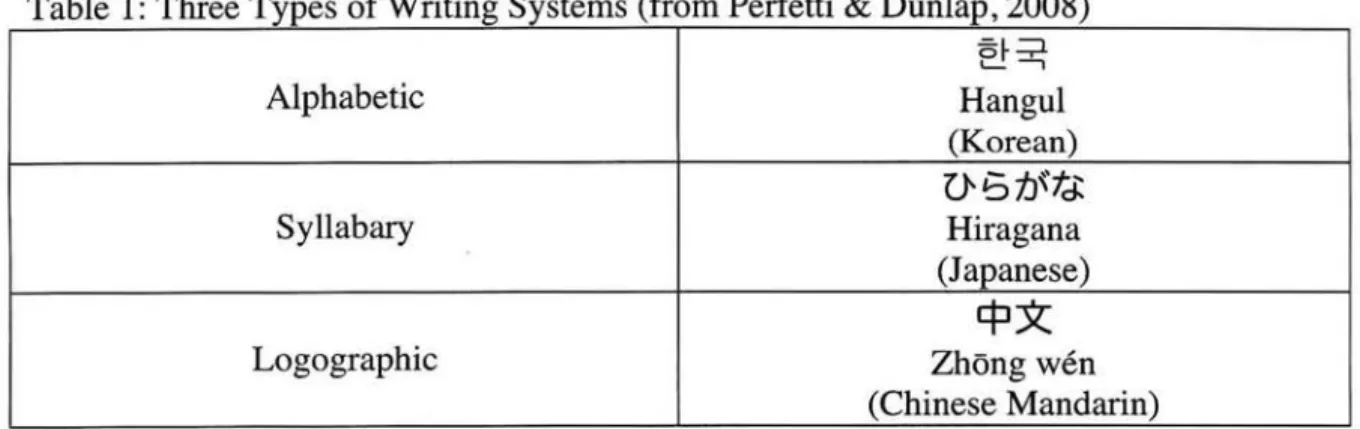
Generally speaking, reading is "embedded in a spoken language and its writing system, and as such, its acquisition universally requires all learners to make links between language elements and the graphic symbols representing them" (Koda, 2008b, p. 223); however, the way in which these universal properties are encoded (and decoded) varies cross-linguistically. In some languages, for example, the primary mapping unit is phonology (i.e., graphemes represent the sounds of speech-phonemes or syllables-used to make words); in others, it is morphology (i.e., graphemes represent semantic units of words; Perfetti & Dunlap, 2008). In alphabets, such as the Roman or Cyrillic alphabets, graphemes in a written word usually correspond to one sound. In syllabic Japanese Hiragana, each grapheme corresponds to one syllable. In logographic Chinese, each grapheme (or character) corresponds to one morpheme (see Table 1). Of course, in each of these writing systems sounds and morphemes are represented in print, but the primary mapping systems differ. Therefore, experience in the L1 orthography develops particular phonological, morphological and semantic awareness competencies, which may or may not transfer to reading in a new orthography.
Table 1: Three Types of Writing Systems (from Perfetti & Dunlap, 2008) e!~ Alphabetic Hangul (Korean) V'6tJ~'t;J. Syllabary Hiragana (Japanese)
cp)t
Logo graphic Zhong wen
Metalinguistic awareness "enables learners to analyze and segment language forms ... [, and] the language-specific facets of metalinguistic awareness are seen as outcomes of literacy, closely attuned to the linguistic and orthographic properties of the language in which literacy is learned" (Koda, 2008b, p. 223). When first and second language writing systems are similar (two alphabetic orthographies vs. an alphabetic and a logographic orthography), reading performance in the second language is more rapid and accurate (Koda, 2008a; Perfetti & Dunlap, 2008). Studies (e.g., Akamatsu, 1999; Brown & Haynes, 1985; Green & Maera, 1987) suggest that adult "second-language learners with typologically diverse first-language backgrounds use qualitatively different procedures when reading the same (target) second language" (Koda, 2008a, p. 72). Since orthographies differ in how they encode linguistic information and languages also differ in linguistic properties, the degree to which metalinguistic skills are available in second language reading can be expected to differ too, depending on how similar the first and second languages and their writing systems are, how developed proficiency in the second language is, and how much experience the individual has in his/her first language.
Studies of individuals who are literate in different first languages and are learning to read English (L2) have begun to demonstrate the influence of the first language and first writing system on their English reading. For example, at least one study (Wang, Koda, & Perfetti, 2003) suggests that adult Chinese (L1) readers of English may apply a lexical decoding strategy, while Korean (L1) readers of English may apply a sublexical decoding strategy (using either phonological or morphological information to read words), despite the fact that Korean uses an alphabet that differs significantly from the
Roman alphabet used in English. In fact, "[r]ecent brain imaging research suggests that the brain network for reading accommodates to properties of the writing system, although this may be truer for learning Chinese than for learning an alphabetic system" (Perfetti & Dunlap, 2008, p. 35), due to the fact that the whole word reading strategy applied in reading Chinese can be applied to reading an alphabet, but Chinese cannot be decoded phonemically.
This study was limited in its ability to determine transfer of metalinguistic skills because subjects were not administered reading measures in their native languages, but it provides qualitative and quantitative data on the metalinguistic skills second language readers from diverse first language backgrounds use as they develop reading skills in English. The longitudinal nature of data collection during RMA also enabled me to explore second language readers' metalinguistic skills over time.
1.5 Organization of the Dissertation
This dissertation is organized into five chapters. In this first chapter, I provide a general introduction to the research conducted with adolescent ELL readers and the need for such research. In Chapter 2, I discuss the RMA approach and how the ELLs in my study responded to it. In Chapter 3, a methodological study, I compare three ways of analyzing miscues, or oral reading errors, and discuss the types of insight each can provide on the reading processes of ELLs. In Chapter 4, I present an analysis of the error patterns exhibited by Cyrillic (Ll) and Chinese (Ll) readers when they read in their second language and discuss what these patterns may suggest about the influence of the
L1 orthography. In Chapter 5 I draw general conclusions about the body of research and discuss implications for educators as well as directions for future research.
The specific research questions posed in this dissertation are:
1. What effect does Retrospective Miscue Analysis have on adolescent ELLs' reading? (Study 1; Chapter 2)
2. What are the strengths and limitations of Reading Miscue Inventory and Cheng and Caldwell-Harris' coding system for coding ELLs' miscues? (Study 2; Chapter 3)
3. What do patterns in L2 reading errors suggest about transfer of L1 decoding skills? (Study 3; Chapter 4)
In sum, to teach adolescent second language readers, who must acquire fluency and comprehension quickly in order to be successful in school, it is essential that we understand how reading instruction impacts this population's reading, how different tools measure their skills, and what patterns they are likely to exhibit in reading their second language.
1.6 References
Akamatsu, N. ( 1999). The effects of first language orthographic features on word recognition processing in English as a second language. Reading and Writing 11(4), 381-403.
learners: Report of the National Literacy Panel on language-minority children and youth. Mahwah, NJ: Erlbaum.
Bernhardt, E. B. (2000). Second-language reading as a case study of reading scholarship in the 201h century. In M. Kamil, P. Mosenthal, P. Pearson, & R. Barr (Eds.),
Handbook of reading research (3rd ed., pp. 791-811). Mahwah, NJ: Lawrence Erlbaum.
Brown, T., & Haynes, M. (1985). Literacy background and reading development in a second language. InT. H. Carr (Ed.), The development of reading skills (pp. 19-34). San Francisco, CA: Jossey-Bass.
Carlo, M.S., & Bengochea, A. (2011). Best practices in literacy instruction for English language learners. In L. M. Morrow & L. B. Gambrell (Eds.), Best practices in literacy instruction (4th ed., pp. 117-137). New York, NY: Guilford Press. Cheng, H-W. (2012). Semantic and phonological activation in first and second
language reading. (Unpublished doctoral dissertation). Boston University, Boston,MA.
Cheng, H-W., & Caldwell-Harris, C. (To appear). Orthography shapes semantic and phonological activation in reading. Proceedings of the 36111
Annual Meeting of the Berkeley Linguistics Society. University of California, Berkeley, USA.
Ehren, B., Lenz, B., & Deshler, D. (2004). Academic interventions for adolescents with language learning disabilities. In A. Stone, E. Siliman, B. Ehren, & K. Appel (Eds .) , Enhancing literacy proficiency with adolescents and young adults (pp. 681-701). Boston, MA: Guilford Publishing.
Fuchs, D., & Fuchs, L. S. (2006). Introduction to response to intervention: What, why, and how valid is it? Reading Research Quarterly, 41(1), 93-99.
Goodman, K., Wang, S., Iventosch, M.S., & Goodman, Y. (Eds.). (2012). Reading in Asian languages: Making sense ojwritten texts in Chinese, Japanese, and
Korean. New York, NY: Routledge.
Goodman, Y. M., & Marek, A.M. (1996). Retrospective miscue analysis: Revaluing readers and reading. Katonah, NY: Richard C. Owen Publishers.
Goodman, Y. M., Watson, D. J., & Burke, C. L. (2005). Reading miscue inventory: From
evaluation to instruction (2"d ed.). Katonah, NY: Richard C. Owen Publishers. Green, D. W., & Maera, P. (1987). The effects of script on visual search. Second
Language Research, 3, 102-117.
Holm, A., & Dodd, B. (1996). The effect of first written language on the acquisition of English literacy. Cognition, 59, 119-14 7.
Jimenez, R. T., Garcia, G. E., & Pearson, P. D. (1995). Three children, two languages, and strategic reading: Case studies in bilingual/monolingual reading. American Educational Research Journal, 32,67-97.
Jimenez, R. T., Garcia, G. E., & Pearson, P. D. (1996). The reading strategies of bilingual Latino/a students who are successful English readers: Opportunities and obstacles. Reading Research Journal, 27,427-71.
Kieffer, J. M. (2009). The development of morphological awareness and vocabulary knowledge in adolescent language minority learners and their native
School of Education, Cambridge, Massachusetts.
Kieffer, M. J., & Lesaux, N. K. (2010). Morphing into adolescents: Active word learning for English language learners and their classmates in middle school. Journal of Adolescent & Adult Literacy, 54,47-56.
Klingner, J. (2010, May). Considerations when implementing RTf with English language learners. Speech presented at Response to Intervention (Rtl): Operative
Implementation for English Language Learners, Chestnut Hill, MA.
Klingner, J. K., Hoover, J. J., & Baca, L. M. (Eds.). (2008). Why do English language learners struggle with reading?: Distinguishing language acquisition from
learning disabilities. Thousand Oaks, CA: Corwin Press.
Koda, K. (1998). The role of phonemic awareness in second language reading. Second Language Research, 14(2), 194-216.
Koda, K. (2008a). Impacts of prior literacy experience. InK. Koda, & A.M. Zehler (Eds.), Learning to read across linguistics: Cross-linguistic relationships in first-and second-language literacy development (pp. 68-96). New York, NY:
Routledge.
Koda, K. (2008b). Looking back and thinking forward. InK. Koda, & A.M. Zehler (Eds.), Learning to read across linguistics: Cross-linguistic relationships in first-and second-language literacy development (pp. 222-234). New York, NY:
Routledge.
Koda, Z. & Zehler, A.M. (2008). Introduction: Conceptualizing reading universals, cross-linguistic variations, and second language literacy development. InK.
Koda, & A.M. Zehler (Eds.), Learning to read across linguistics:
Cross-linguistic relationships in first- and second-language literacy development (pp. 1-9). New York, NY: Routledge.
Kuo, L. & Anderson, R. (2008). Conceptual and methodological issues. InK. Koda, &
A.M. Zehler (Eds.), Learning to read across languages: Cross-linguistic relationships in first and second-language literacy development. (pp. 39-67). New York, NY: Routledge.
Lenski, S., & Verbruggen, F. (2010). Writing instruction and assessment for English language learners K-8. New York, NY: The Guilford Press.
Leong, C. K., Hau, K. T., Cheng, P. W., & Tan, L. H. (2005). Exploring two-wave reciprocal structural relations amount orthographic knowledge, phonological sensitivity, and reading and spelling of English words by Chinese students. Journal of Educational Psychology, 97(4), 591-600.
Leslie, L. & Caldwell, J. S. (2011). Qualitative reading inventory (5th ed.). Boston, MA: Allyn & Bacon.
Liow, S. J. R., & Lau, L. H. S. (2006). The development of bilingual children's early spelling
in English. Journal of Educational Psychology, 98(4), 868-878.
Massachusetts Department of Elementary and Secondary Education (20 13). District analysis and review tool (DART) for English language learners: Annual snapshot: Student demographics, 2012-2013. Malden, MA.
adult readers. (Unpublished doctoral dissertation). University of Arizona, Tucson, AZ.
Moore, D. W., Bean, T. W., Birdyshaw, D., & Rycik, J. A. (1999). Adolescent literacy: A position statement for the Commission on Adolescent Literacy of the International
Reading Association. Newark, DE: International Reading Association.
Muljani, M., Koda, K., & Moates, D. (1998). Development ofL2 word recognition: A connectionist approach. Applied Psycholinguistics, 19,99-114.
National Center for Education Statistics [NCES], (2007). National assessment of education progress, 2007, reading assessments. Washington, DC: U.S. Department of Education, Institute of Education Sciences.
National Center for Education Statistics [NCES] (2011). The nation's report card: Reading 2011 (NCES 2012-457). National Center for Education Statistics, Institute of Education Sciences, U.S. Department of Education, Washington, D.C. National Clearinghouse for English Language Acquisition [NCELA] (2011). The
growing number of English learner students. U.S. Department of Education, Office of English Language Acquisition, Language Enhancement and Academic Achievement for Limited English Proficient Students (OELA). Washington, DC: NCELA. Retrieved from
http://www .ncela.gwu.edu/files/uploads/9/growing EL 0910 .pdf
Orosco, M. J., De Schonewise, E. A., De Onis, C., Klingner, J. K., & Hoover, J. (2008). Distinguishing between language acquisition and learning disabilities among English language learners: Background information. In J. K. Klingner, J. J.
Hoover, & L. M. Baca (Eds.), Why do English language learners struggle with reading: Distinguishing language acquisition from learning disabilities (pp.
5-16). Thousand Oaks, CA: Corwin Press.
Paulson, E. J., & Goodman, K. S. (2008). Reading eye-movement research: Support for transactional models of reading. In A. D. Flurkey, E. J. Paulson, & K. S.
Goodman (Eds.), Scientific realism in studies ofreading (pp. 25-47). New York, NY: Lawrence Erlbaum Associates.
Perfetti, C. A., & Dunlap, S. (2008). Learning to read: General principles and writing system variations. InK. Koda, & A.M. Zehler (Eds.), Learning to read across languages: Cross-linguistic relationships in first and second-language literacy development (pp. 13-38). New York, NY: Routledge.
Read, C., Zhang, Y. F., Nie, H. Y., & Ding, B. Q. (1986). The ability to manipulate speech sounds depends on knowing alphabetic writing. Cognition, 24,31-44. Shatz, M., & Wilkinson, L. C. (2010). The education of English language learners:
Research to practice. New York: The Guilford Press.
Theurer, J. L. (2010). Retrospective miscue analysis and the socialization of one young adult reader. Journal of Instructional Psychology, 37,63-70.
Theurer, J. L. (2011). Does accuracy make a difference? Examining the miscues of proficient and less than proficient adult readers. Literacy Research and Instruction, 50(3), 173-182.
Wang, M., & Geva, E. (2003). Spelling performance of Chinese children using English as a second language: Lexical and visual-orthographic processes. Applied
Psycholinguistics, 24, 1-25.
Wang, M., Koda, K., & Perfetti, C. A. (2003). Alphabetic and non-alphabetic L1 effects in English word identification: A comparison of Korean and Chinese English L2 learners. Cognition, 87, 129-149.
Wurr, A. J., Theurer, J. L., & Kim, K. J. (2008). Retrospective miscue analysis with proficient adult ESL readers. Journal of Adolescent and Adult Literacy, 52(4), 324-333.
CHAPTER 2: USING RETROSPECTIVE MISCUE ANALYSIS WITH ADOLESCENT ENGLISH LANGUAGE LEARNERS
2.1 Background
Retrospective Miscue Analysis (RMA) is an approach born out of a sociopsycholinguistic, transactional reading theory "that engages readers in reflecting upon and evaluating the reading process through analyzing their oral reading miscues" (Goodman & Marek, 1996, p. ix). Its developers stress their belief that both successful readers and struggling readers deviate from the printed text, and these errors differ in the extent to which they disrupt meaning. According to its designers, understanding that not all miscues are bad can help individuals
... come to revalue themselves as readers. Through analyzing their own reading, readers discover for themselves that reading is a process of predicting, inferring, sampling, confirming, and correcting ... Readers become aware that graphophonic, syntactic, and semantic cuing systems in language provide information as readers construct meaning from print. Most important, they dismantle the notion that good reading is represented by error-free reproductions of text. (pp. ix-x)
Furthermore, teachers may also learn something from RMA about the reading process. In fact, a second goal of the RMA approach is for instructors to glean both information about an individual reader's strengths and weaknesses and knowledge about the reading process in general.
RMA (Goodman & Marek, 1996) has been shown to increase adult and middle school struggling readers' self-confidence and help them conceive of the reading process as a meaning-making endeavor (Goodman & Marek, 1996; Goodman, Watson, & Burke, 2005a; Marek, 1987). To help struggling readers revalue themselves as readers and focus on meaning over text-level features, during RMA, students are recorded while reading texts aloud and are taught to analyze their own miscues by listening to those recorded oral readings. The goal is for participating readers to recognize that all readers make miscues but some disrupt meaning more than others.
Consider the following two miscues: /jutard/
4722 He uttered these words: "I'm not going
4723 to leave~!
In the first sentence the student read /jut;)rdP instead of 'uttered'. According to the Reading Miscue Inventory (RMI) system for coding errors, this miscue would result in a loss of meaning because it is a nonword. In the second sentence, the student omitted the word 'you' from his reading. According to the RMI system, this miscue would result in no loss of meaning because the sentence 'I'm not going to leave' is the same as 'I'm not going to leave you' in the context of this story. In RMA, the researcher or teacher would guide the reader to see the second miscue as higher in quality, acceptable, and perhaps even a more authentic phrasing for the reader.
Although RMA was originally developed for use with struggling readers, Wurr,
2
Theurer, and Kim (2008) used this procedure with proficient adult ESL readers and found it to increase subjects' awareness of syntactic, semantic, graphophonic and pragmatic cueing systems.
The three case study participants in Wurr, Theurer, and Kim's (2008) study each read three to four texts. The time span for these readings was not noted for the first participant, but was indicated to be two months for the second participant. The researchers noted an improvement for the first participant in meaning construction and grammatical relationships as indicated by the number of miscues that preserved text meaning and grammar. The percentage of miscues that resulted in a loss of meaning across the three readings was 52%, 42% and 46% respectively. The percentage of miscues that demonstrated grammatical weakness across the three readings was 56%, 30%, and 7%.
The decrease in grammatical weakness suggested by these percentages is impressive, but, upon closer examination, there are methodological issues that should preclude an unequivocal conclusion about improvement. First, this was based on a relatively small sample of miscues (a total of 25 miscues in the first reading; 26 miscues in the second reading; and 13 miscues in the third reading). Goodman, Watson, and Burke (2005a) recommend that a text used for miscue analysis with older readers should have 500 words (the third text above had only 401 words), and "recommend 25-50 consecutive miscues be coded to arrive at patterns of readers' strategies and to understand their knowledge of language" (p. 131). They go on to warn: "if students don't produce enough miscues for analysis, the data will be insufficient to compile a representative
profile of their reading" (p. 54). On average across the three participants, the subjects in Wurr, Theurer, and Kim's (2008) study made 26 miscues per reading, but only 56% of the 9 readings had at least the recommended 25 miscues.
A second methodological issue arises from inconsistency in text selection. Wurr, Theurer, and Kim (2008) do not explain how or if they made certain that the different texts their subjects read were matched to the subjects in reading level. The study also provides no information about how text difficulty was controlled across the three trials, which is surprising as the question of text difficulty in miscue analysis studies has been a concern for a number of years (Leu, 1982).
Wurr, Theurer, and Kim (2008) concluded that their second case study participant demonstrated increased confidence and understanding of the reading process after RMA based on interview data. However, there was not noticeable improvement in this subject's miscues that preserved meaning construction or grammatical relationships as measured by Reading Miscue Inventory. The third case study participant demonstrated improvement in meaning construction, as measured by the RMI, and understanding of the reading process but did not improve in grammatical relationships. The researchers concluded that, in general, RMA helped readers to tap into and transfer their Ll reading skills in order to make meaning of text and to focus less on their L2 accuracy. In sum, the quantitative data provided in the Reading Miscue Inventories of this study may be inconclusive in their ability to illuminate how this analysis impacted these L2 readers, but the qualitative data indicate attitudinal changes about reading.
(Leu, 1982) that have compared readers to each other. This is because the types of miscues readers make may differ not only because of their underlying approaches to reading but because of the relative difficulty a text presents to them. In other words, if two readers read the same text but it is an independent level text for one of the readers and a frustration level text for the other, the two readers are likely to make different types of errors due to text difficulty.
The current study is designed to address the methodological issues described above and determine whether RMA improves reading performance as measured by (a) RMI and interviews and/or (b) more traditional measures of decoding, fluency, vocabulary and comprehension.
2.2 Methodology
The study was conducted in an authentic school setting. The Massachusetts Department of Elementary and Secondary Education classified the focal school as a medium-incidence English language learner (ELL) district; therefore, the number of ELL students who could participate in the study was small. A combination of quantitative and qualitative measures allowed me to address the methodological problems noted in previous RMA research, while studying reading patterns and reading growth with this small sample of students in the school setting.
First, the study used a single subject 'n-of-one' design to establish a baseline for each student in the study; these measurements were used as a comparison for changes observed during and after RMA. Second, all reading miscues observed for each subject
over the time period of the study were recorded. Third, interview data was collected before, during and after the study. Interviews before and after the study focused on the readers' perceptions of themselves as readers and their evaluation of the RMA sessions. Interviews during RMA focused on students' explanations for the source of their miscues and feelings about whether they should have corrected individual miscues. Together, these measures provided a rich picture of each individual student's reading.
In order to measure reading skills before and after RMA, I used the Qualitative Reading Inventory-5 (QRI-5) (Leslie & Caldwell, 2011). This tool provides information about a subject's overall reading level, number of miscues, reading fluency and text comprehension. I additionally calculated the number of miscues, fluency and comprehension for RMA reading sessions and coded miscue data using the Reading Miscue Inventory (RMI; Goodman, Watson, & Burke, 2005a).
Second language learners vary considerably in their rate of L2 acquisition (Hakuta, Butler, & Witt, 2000). Some may take years to catch up with native speaking peers, while others demonstrate rapid growth in measures of language proficiency, including vocabulary, fluency, pronunciation and grammar, over short periods of time. At the time when the Massachusetts English Proficiency Assessment (MEP A) was administered in Massachusetts, it was not unusual for students in my district to test 1-2 proficiency levels higher on the exam after just six months in the United States. The Massachusetts Department of Elementary and Secondary Education's Guide to Understanding the 2011 Annual Measurable Achievement Objectives (AMAO) Reports
"make progress" according to those standards, ELLs who scored Level 1 Low- Level 3 Low on the fall administration of the MEP A needed to advance two steps by the spring administration of the MEPA, and students who had scored Level 3 High - Level 4 High needed to advance one step.
Since language proficiency plays a role in reading ability, I also needed to account for this variable in my baseline and post-RMA measurements. I used the Massachusetts English Language Assessment-Oral (MELA-0) (2010) to measure oral language proficiency and the Peabody Picture Vocabulary Test-4 (PPVT-4) (Dunn & Dunn, 2007) to measure knowledge of English vocabulary as part of the baseline and post-RMA measures. All measures are described in detail below.
2.2.1 Focal School
Schoenberg3 High School is in an exceptionally high-performing public school district. According to the District Analysis and Review Tool (DART) for Schools, compiled by the Massachusetts Department of Elementary and Secondary Education (February 2012), in 2011-2012, the year data was collected, Schoenberg High School served 1,083 students from the town of Schoenberg, a suburb of Boston, Massachusetts. 2.1 percent of the high school population was limited English proficient (LEP), making the school a medium-incidence district according to the Massachusetts Department of Elementary and Secondary Education. One hundred percent of the high school student population scored proficient or above on the English language arts (ELA) section of the
3
Massachusetts Comprehensive Assessment System (MCAS) in 2011, and 98% scored at proficient or higher on the Mathematics section of the same exam. Additional data from the Massachusetts Department of Elementary and Secondary Education from 2010-2011 indicate 95% of the student body graduated in four years and 98% of the 2011 graduating class planned to attend a 2- or 4-year college. Average Scholastic Aptitude Test (SAT) scores for Schoenberg High School students who took the exam in 2009-2010 were 603 in Reading, 605 in Writing and 627 in Math. State averages for the SAT in 2009-2010 were 509,505 and 524, respectively.
At the time the study was conducted, there were 26 students at Schoenberg High School who were limited English proficient, and 24 of these students were enrolled in the English language education (ELE) program. The native languages of the students in the ELE program in the 2011-2012 school year were Bulgarian (2), Chinese (9), Danish (1), Japanese (2), Korean (4), Mongolian (1), Nepali (2) and Russian (3). Students in the ELE program receive tutoring for 30 to 240 minutes a week, depending on their proficiency level. Additionally, lower proficiency students were enrolled in a Transitional English class as an alternative to a mainstream English class. Although the population of ELL students at Schoenberg High School is so small that it is difficult to make generalizations about performance trends on state and national tests, the DART (Massachusetts Department of Elementary and Secondary Education, 2012) indicated that three of the nine ELL students in 11th or 12th grade during the 2011-2012 school year were enrolled in at least one Advanced Placement (AP) course, and all of the graduating seniors who
either received ELE services or were monitored as Formerly Limited English Proficient (FLEP) during their senior year (n = 7) were accepted into 2- or 4-year colleges.
2.2.2 Investigator
I am a teacher at Schoenberg High School. Six of the nine participants in the study were in my Transitional English course, for which they received a grade and also received English tutoring from me. The other three students received ungraded ELL tutoring from me. In order to reduce the likelihood that students would feel pressure to participate in the study because I was their teacher, I used a video of a co-investigator to obtain assent from participants (see Appendix F for informed consent and assent forms). RMA sessions took place either during scheduled tutoring time, if students had no academic work they needed assistance with, or during their free time.
2.23 Participants
All subjects were nonnative speakers of English. I invited all students who were in the Transitional English class of the Schoenberg High School ELE program during the 20 10-20 11 or 2011-20 12 school year and were still attending the school at the time of the study to participate. In order to establish that students met basic background criteria for age of exposure to English, educational history and motivation, I created a short questionnaire (see Appendix A). This questionnaire also included two additional questions about literacy instruction for Chinese participants, as one study (Holm & Dodd, 1996) suggested differences between the metalinguistic skills of individuals who learned
to read using Pinyin and individuals who did not use Pinyin.
Six of the nine subjects who began RMA completed four sessions and the post-RMA measures. One additional student who had transferred from another school without records of English language services volunteered and was included, though she did not complete all four reading sessions. The students were between the ages of 14-17, and none had begun schooling in an American school before the age of 13.
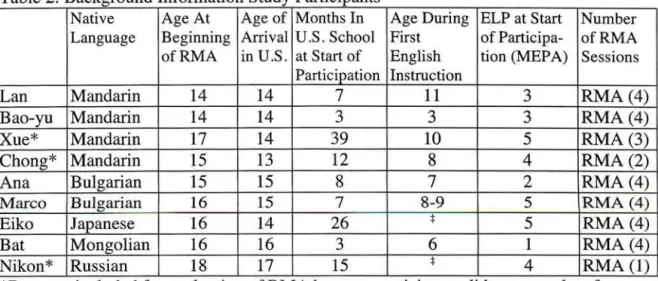
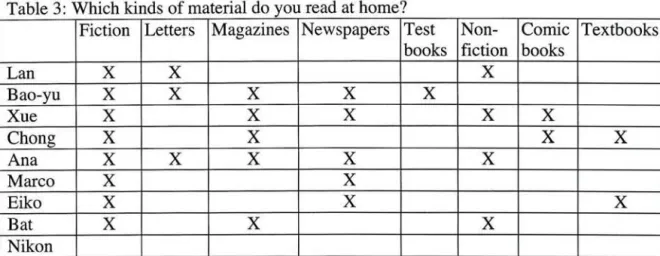
Of the six students who completed all measures, two spoke Chinese as a first language, two spoke Bulgarian as a first language, one spoke Mongolian as a first language, and one spoke Japanese as a first language (see Table 2). According to a preliminary questionnaire (see Appendix A), none of the students had stopped going to school for more than three months. All students had literacy skills (see Table 3) and reported being motivated to learn English and work hard in school (see Tables 4 and 5).
Table 2: Background Information Study Participants
Native Age At Age of Months In Age During ELP at Start Number Language Beginning Arrival U.S. School First of Participa- ofRMA ofRMA in U.S. at Start of English tion (MEPA) Sessions
Participation Instruction
Lan Mandarin 14 14 7 11 3 RMA(4)
Bao-yu Mandarin 14 14 3 3 3 RMA(4)
Xue* Mandarin 17 14 39 10 5 RMA (3)
Chong* Mandarin 15 13 12 8 4 RMA (2)
Ana Bulgarian 15 15 8 7 2 RMA(4)
Marco Bulgarian 16 15 7 8-9 5 RMA (4)
Eiko Japanese 16 14 26 :j:
5 RMA (4)
Bat Mongolian 16 16 3 6 1 RMA(4)
Nikon* Russian 18 17 15 :j:
4 RMA (1)
*Data not mcluded for evaluatiOn of RMA because participants did not complete four sessions.
Table 3· Which kinds of material do you read at home?
Fiction Letters Magazines Newspapers Test Non- Comic Textbooks
books fiction books
Lan X X X Bao-yu X X X X X Xue X X X X X Chong X X X X Ana X X X X X Marco X X Eiko X X X Bat X X X Nikon
Table 4· Are you motivated to learn English?
Always Usually Sometimes Rarely Never
Lan X Bao-yu X Xue X Chong X Ana X Marco X Eiko Bat X Nikon
Table 5: Do you work hard in school?
Always Usually Sometimes Rarely Never
Lan X Bao-yu X Xue X Chong X Ana X Marco X Eiko Bat X Nikon